
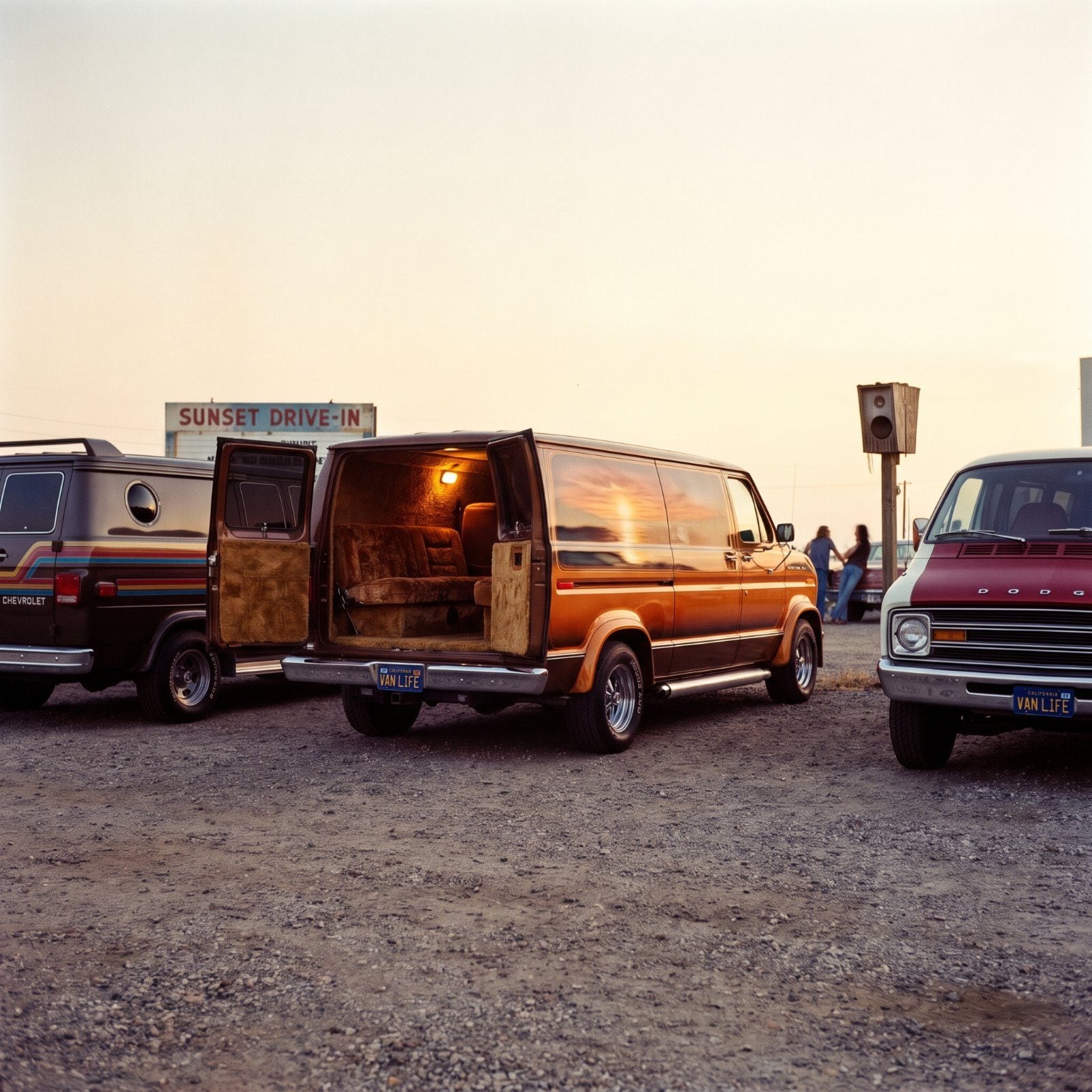
Smoked glass, a muffler note you felt in your chest, a parking lot full of Econolines with names painted on the quarter panels. The custom-van boom wasn’t a trend you read about. It was a Friday night with the back doors open and somebody’s eight-track playing too loud. These were rolling living rooms built by hand out of shag, velvet, and pure nerve. The details below ran the whole thing, and most of them vanished the second the fad cooled.
Please note that some of the images in this article were created with the assistance of AI.
49. Floor-to-Ceiling Shag Carpet That Trapped Everything
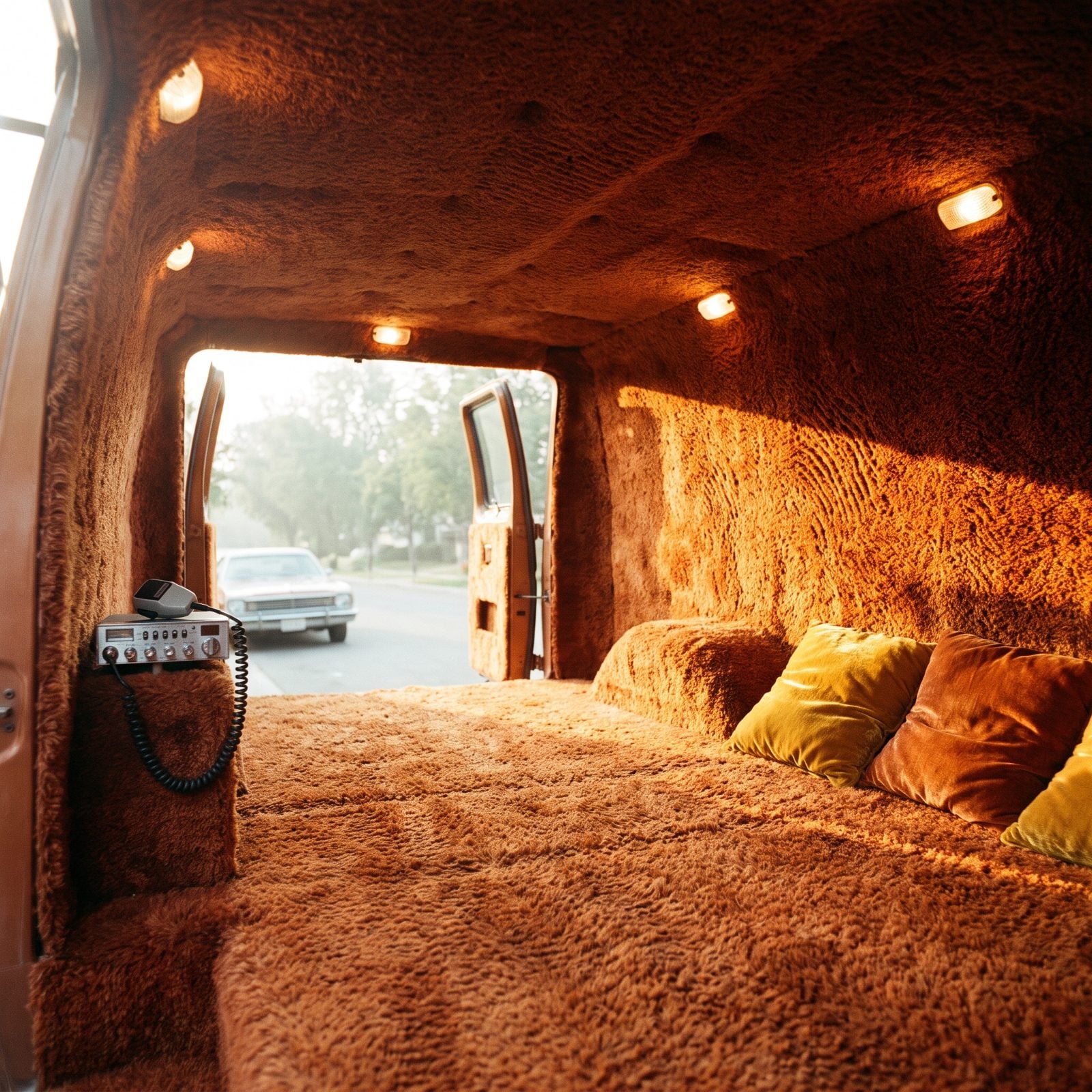
The shag went everywhere. Floor, walls, ceiling, sometimes the doghouse over the engine. You didn’t furnish a 1970s van so much as upholster the inside of it like a jewelry box, and that carpet was what made a sheet-metal shell feel like somewhere you’d actually want to blow a whole Saturday night.
It trapped everything too. Loose change, popcorn, French fries, the little chrome cap off a CB mic, a guitar pick you’d been hunting since Labor Day. You raked it with your fingers to make it stand up again, like mowing a lawn you happened to live inside of. And vacuuming it? A two-hour commitment nobody ever actually made.
48. Airbrushed Fantasy Murals Spanning Entire Body Panels
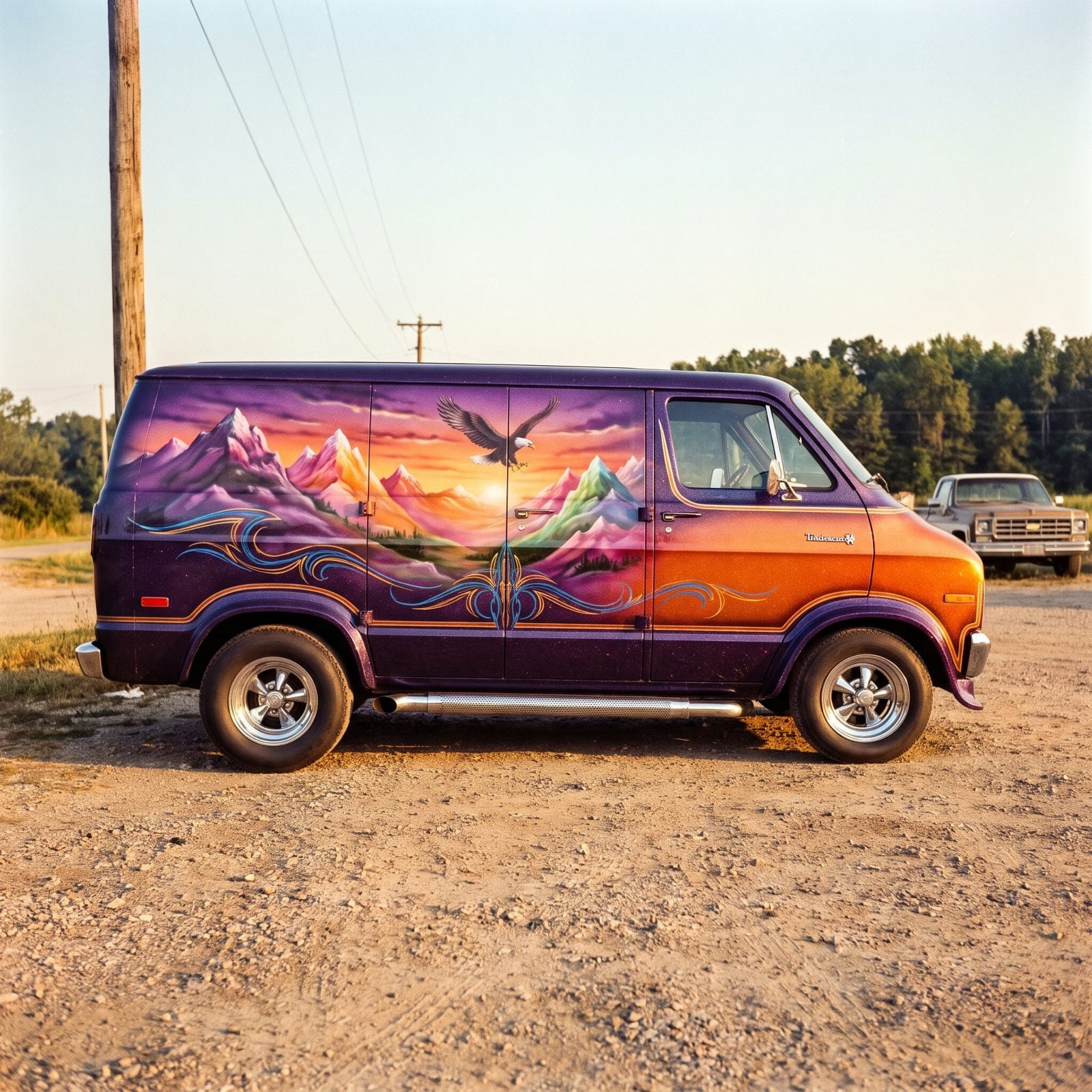
You could hear a van like this described before you ever laid eyes on it. Somebody down at the gas station would say “the one with the wizard on the side,” and everybody knew exactly which one.
The murals were real airbrush work, done by some guy in a rented bay who charged by the panel and took two weeks about it. Sunsets, eagles, galloping horses, Conan-grade barbarians, a wave curling over the quarter panel. The paint had metalflake in it, so the whole thing shimmered and moved when the sun hit. Commissioned art on a daily driver, and nobody thought that was the least bit strange.
47. A Wall-to-Wall Mattress as the Main Furnishing
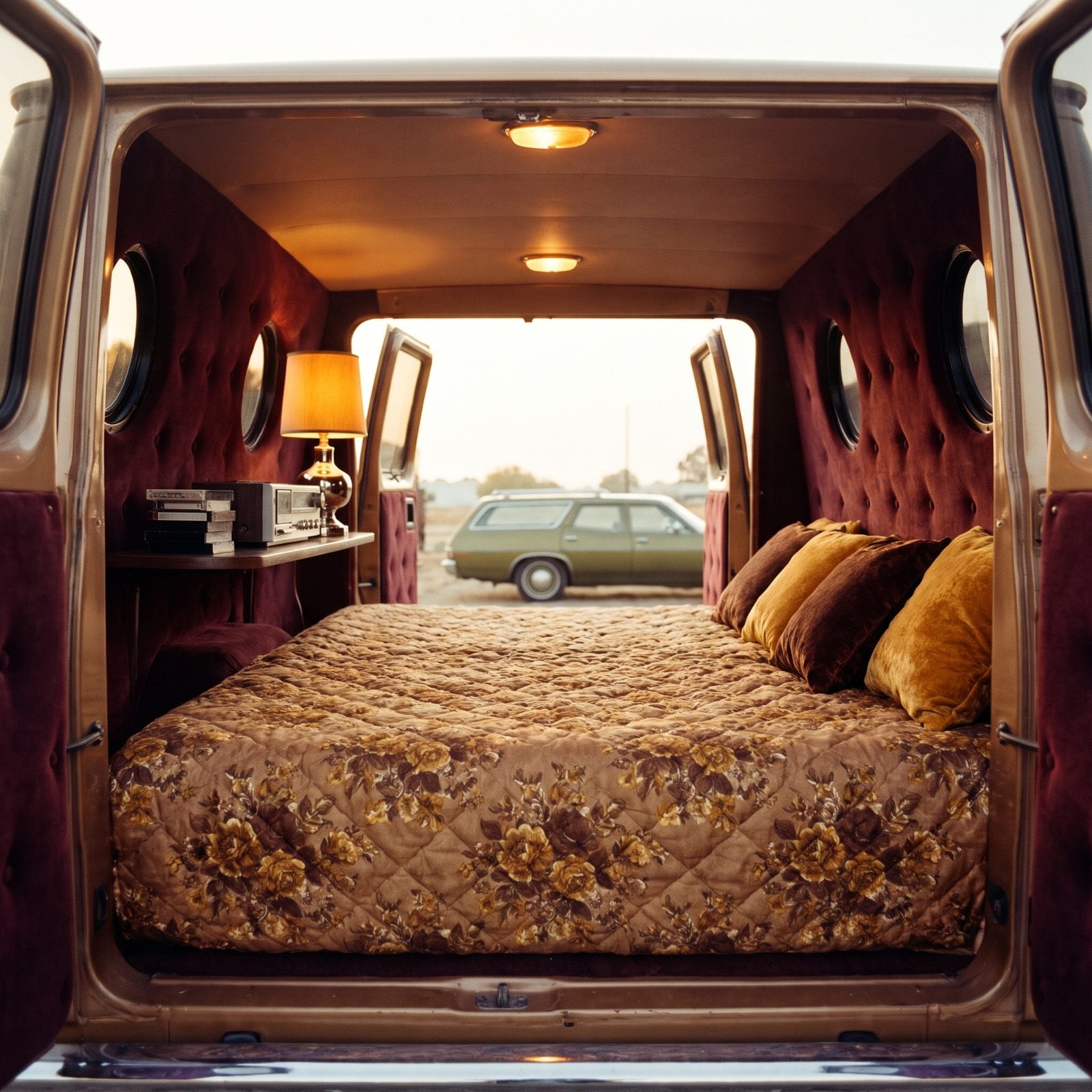
The mattress wasn’t a feature. It was the floor plan.
Pull the back doors open and most of the cargo area was one big foam slab, covered in a quilted bedspread that probably matched nothing else in the van. No seats back there, no fold-out anything. Just a bed, an eight-track, and maybe a little swing-arm lamp bolted to the paneling.
It made the van honest about what it was for. Camping trips, concert parking lots, drive-ins, the long haul out to a buddy’s cabin where four people slept across two vans. A van with a real bed in it meant you never had to go home early, and in 1976 that was the whole ballgame.
What Our Readers Say
- When Jalopy Talk readers loved a vehicle photo and tapped a reason, “nostalgic” came out on top at 28%, just ahead of “body style” at 25%.
From Jalopy Talk reader polls and votes.
46. Porthole Windows That Sacrificed the View for Style
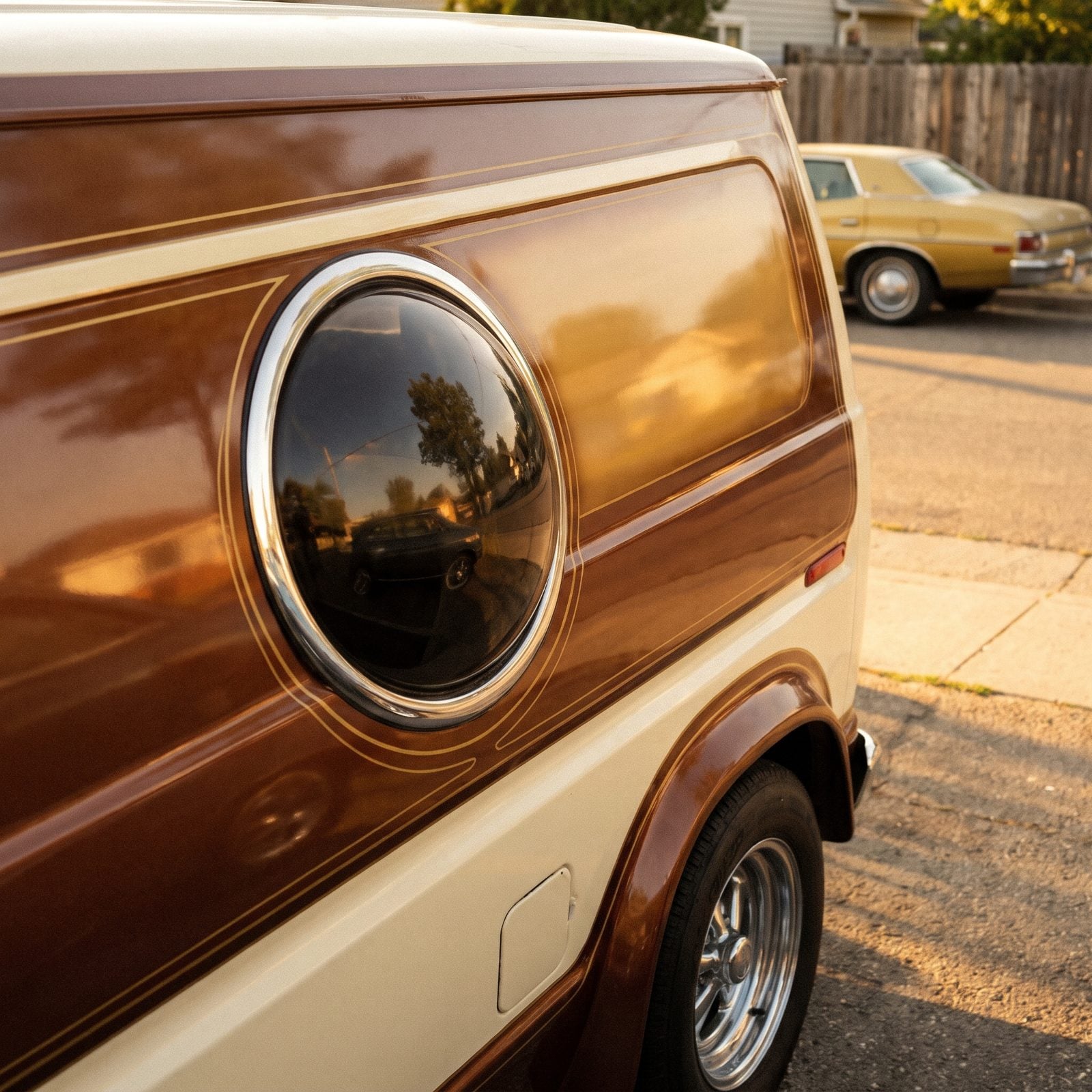
Round windows on the sides, sometimes a teardrop or a diamond, almost always chrome-ringed and smoked so dark you couldn’t really see out of them. That was fine. Seeing out was never the point.
They were jewelry, plain and simple. A flat sheet-metal panel got one or two portholes to break it up, give the airbrush something to wrap around, and signal that this was a built van and not a plumber’s work truck. The bubble ones bulged out like a ship’s window, framing the smoked glass against the candy paint on a good custom. You looked at them a lot more than you ever looked through them.
45. Every Serious Van Having Its Own Hand-Lettered Name
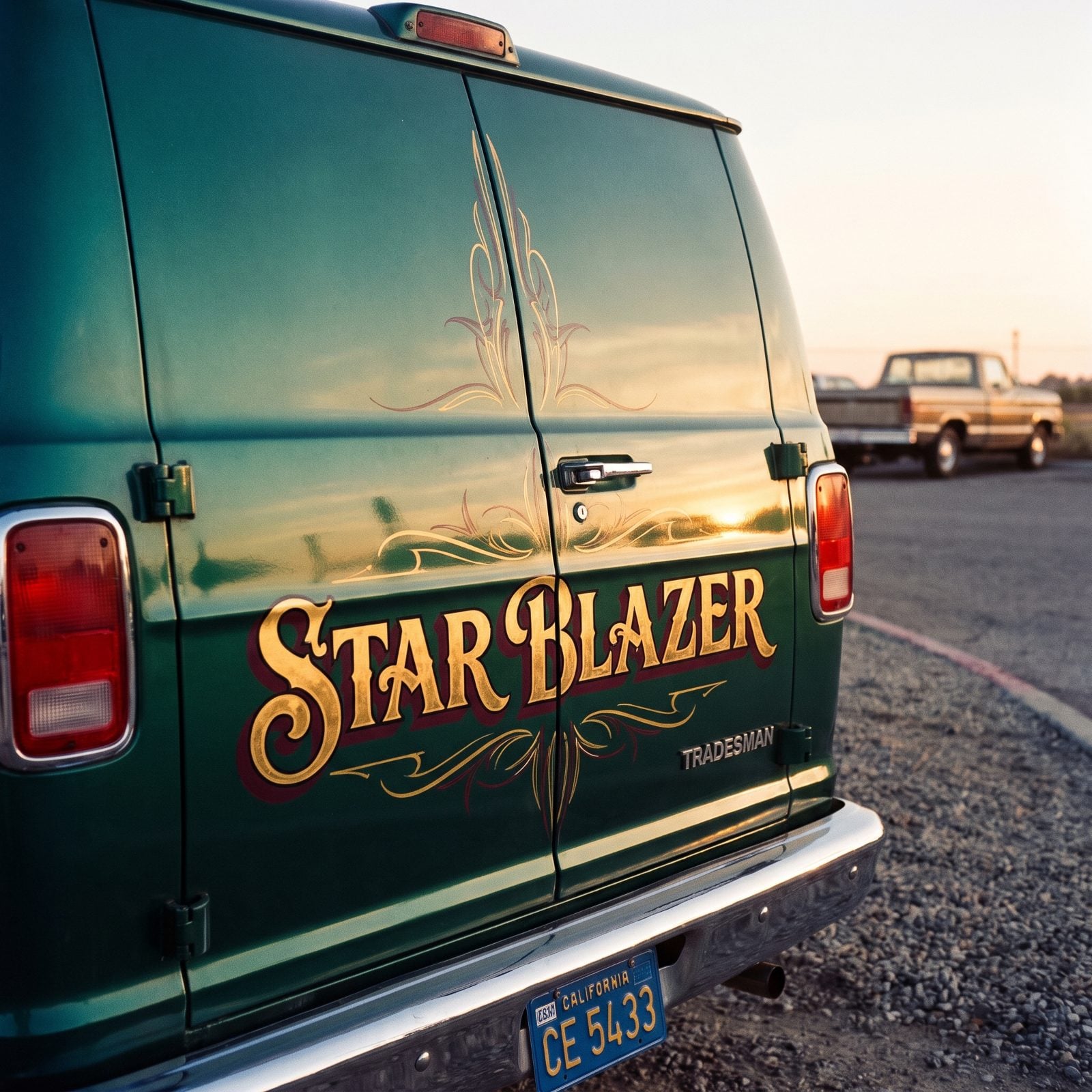
You named your van. That was just understood. A sign painter with a mahl stick and a steady hand would letter it across the back doors in gold-leaf script with a drop shadow and a little pinstripe curl, and then it wasn’t a van anymore, it was somebody.
The names ran from the romantic to the ridiculous. Fantasy words, puns, something lifted off an album cover, the owner’s CB handle. You read them off the back of each other in traffic the way you’d read horse names at a track.
44. Hand-Button-Tufted Crushed-Velvet Walls and Seats
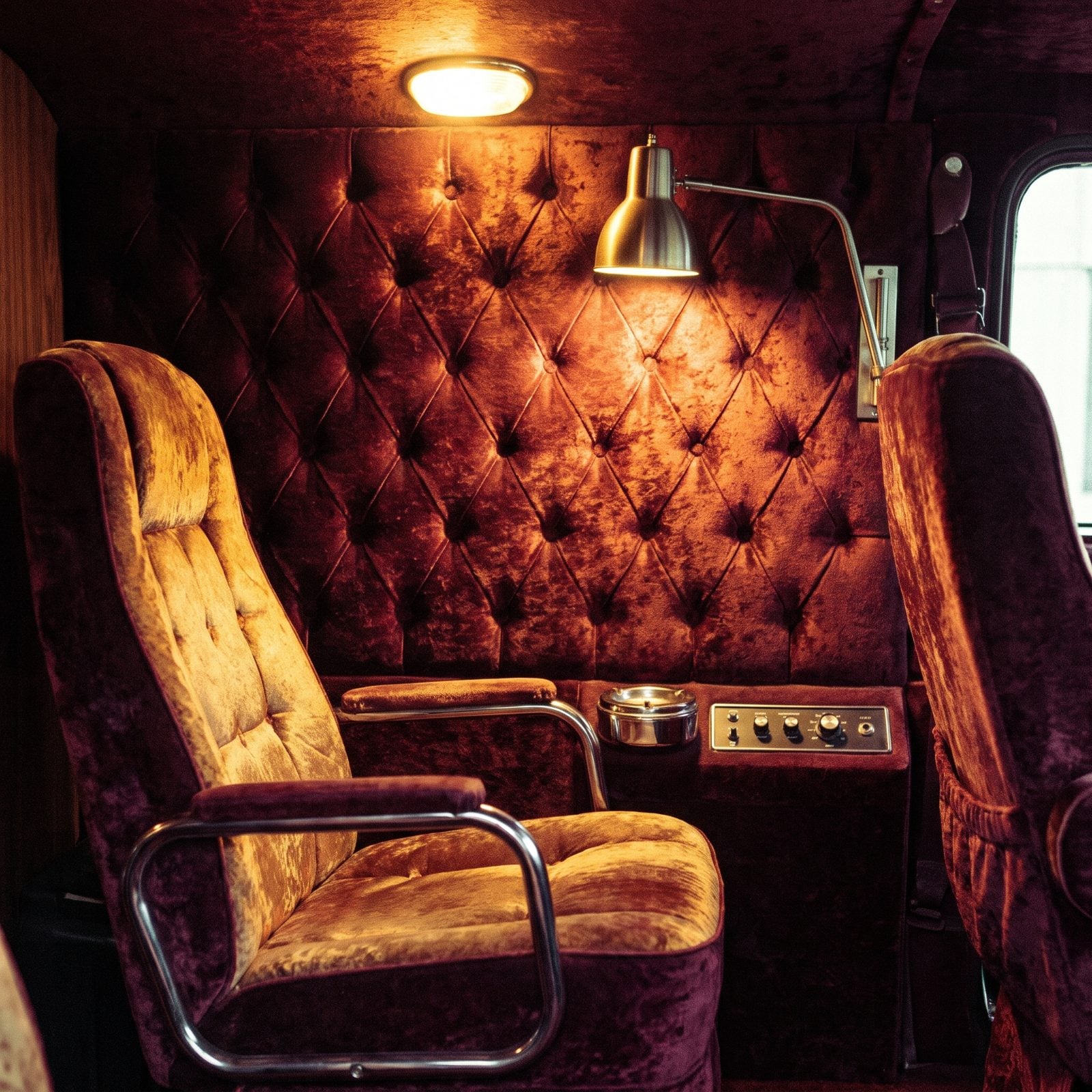
Run your hand across it and the nap changed color, dark one direction, bright the other. Crushed velvet did that. And 1970s van builders upholstered whole walls in the stuff, button-tufted into diamonds by hand, every button cinched down into its own little dimple.
The high-back captain’s chairs got the same treatment, usually in a color that clashed on purpose. It was the kind of work that cost a trim shop a weekend and a sore thumb to install, pulling each tuft tight through foam and plywood. Nobody does this now. Nobody did it then either, except the people who really meant it.
43. Faux-Wood Paneling That Turned the Van Into a Den
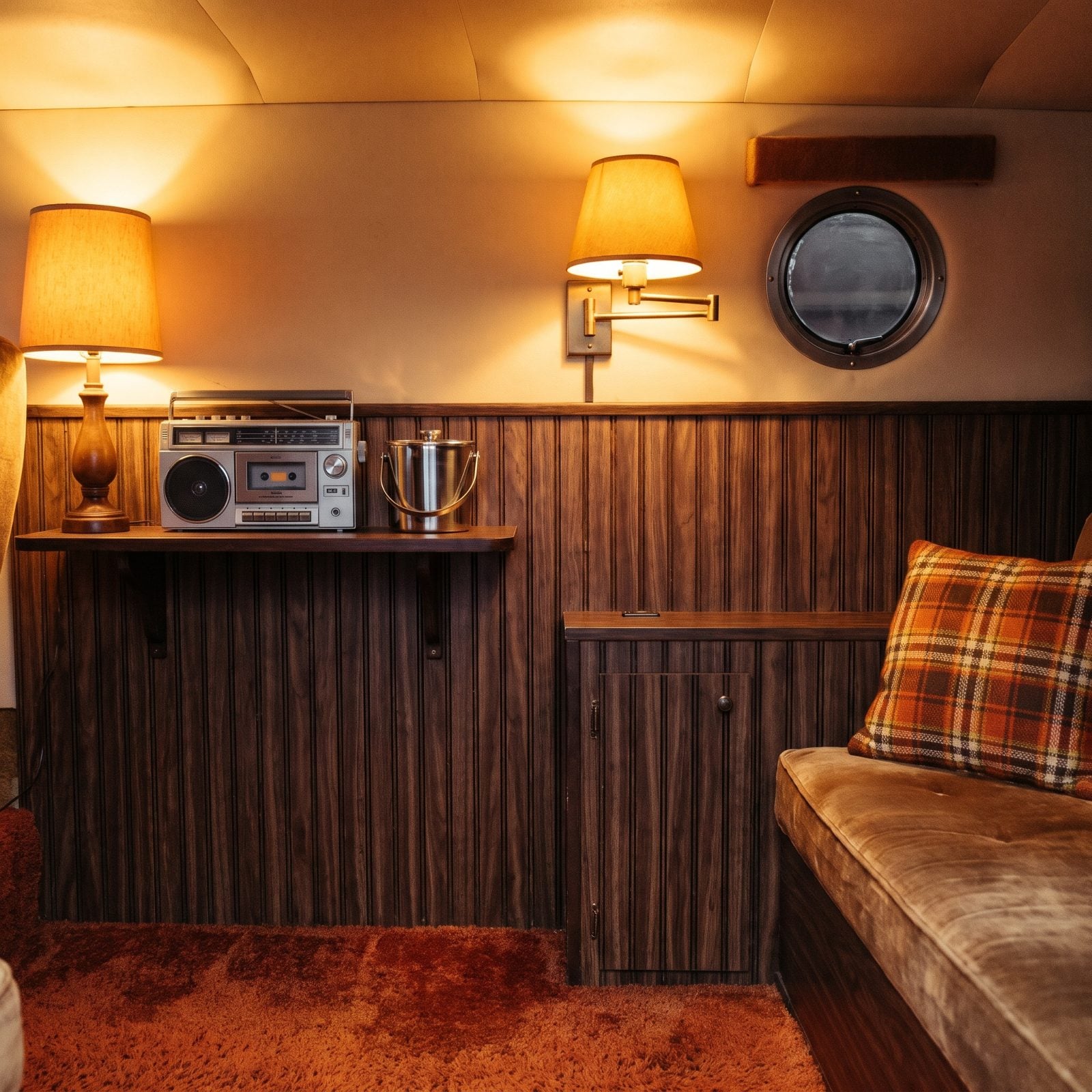
Somebody looked at their basement rec room and thought: this, but it should move.
Faux-wood paneling, the same printed walnut laminate screwed to half the finished basements in America, went right into the van. It paneled the lower walls, faced the little built-in bar cabinet, framed the shelf where the cassette deck lived. Pair it with shag on the floor and an amber-shaded lamp and you had a den doing 55 on the interstate.
And it was warm in a way chrome and glass never managed. You climbed in, the dome light came on amber, the wood grain glowed, and it felt like somebody’s finished basement had rolled over to pick you up for the drive-in.
42. Mirrored Ceilings in a Moving Vehicle
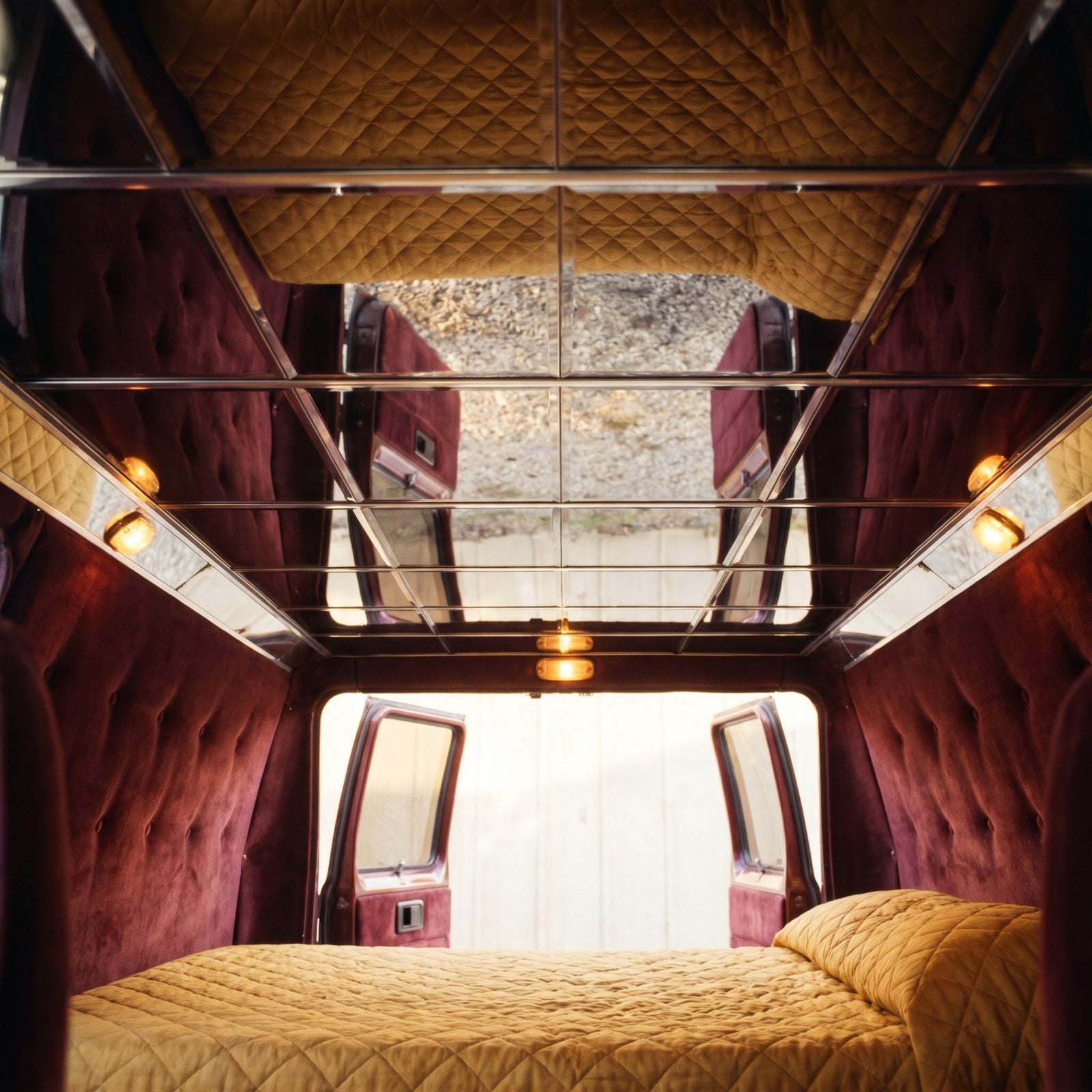
Mirror tiles on the ceiling, chrome strips between them, reflecting the whole velvet interior back down at you. In a vehicle. One that drove on public roads.
Nobody has ever fully explained the mirrored ceiling, and nobody who installed one felt they owed you an explanation. It doubled the lights, made the little space feel bigger, and it was exactly the sort of flourish that separated a custom van from a panel truck. You’d lie on the mattress, look up, and there was the whole plush cave again, hanging upside down over your head.
41. Chrome Side Pipes That Looked Faster Than They Were
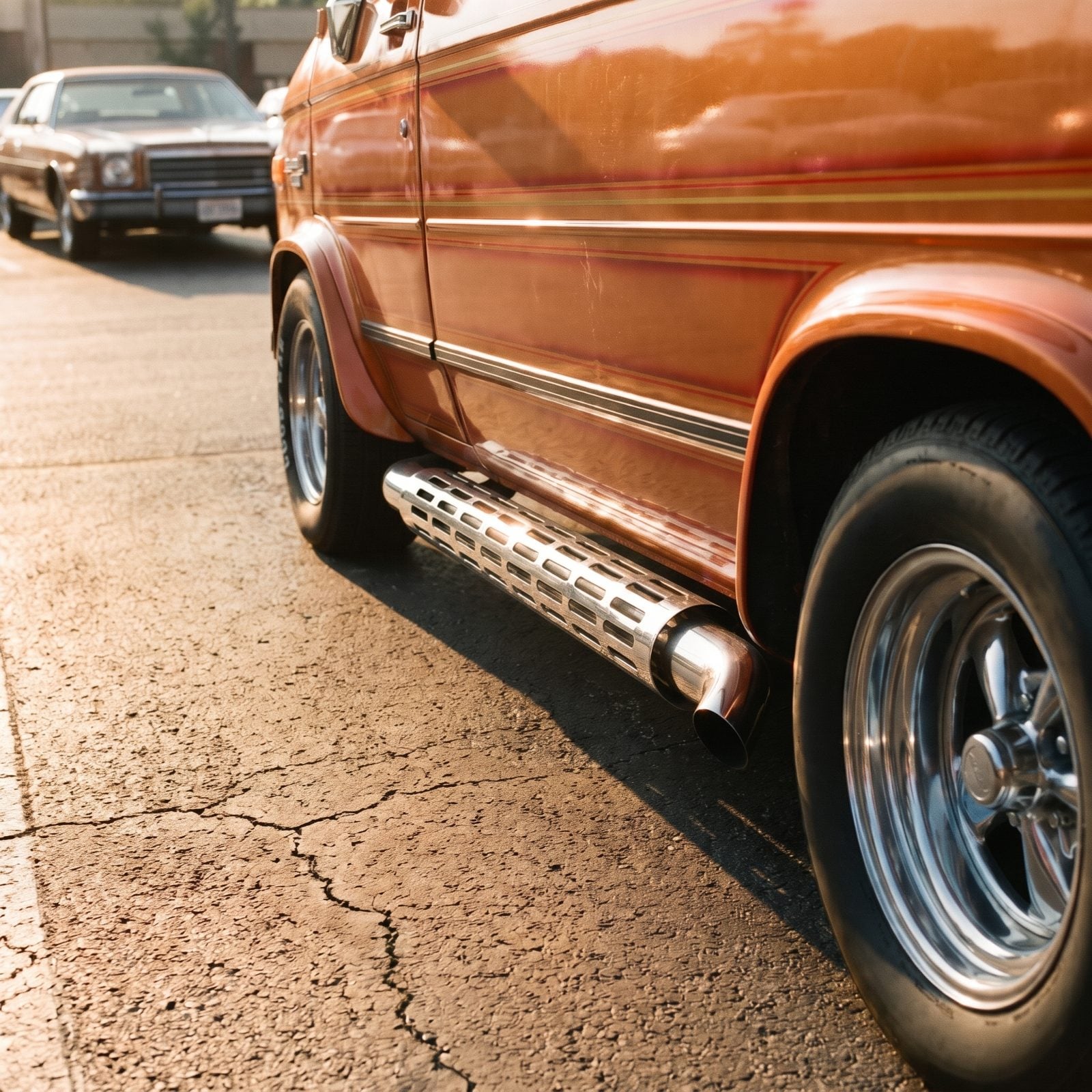
You heard it before you saw it, and the side pipes were half the reason why. Chrome exhaust running along the rocker below the door, slotted heat shields, tips angled out just ahead of the rear wheel. They threw a hard, barking note that made a stock 302 sound like something it absolutely was not.
Performance? They did almost nothing. A set of side pipes on a loaded-down van full of shag and velvet wasn’t shaving anybody’s quarter-mile times. But they looked fast sitting dead still, they sounded serious pulling out of the A&W, and burning your calf on one in cutoff shorts was a rite of passage nobody warned you about.
Chrome still pulls people in: in our reader votes, car photos with lots of chrome got hearts 88% of the time, versus 82% for the other images in the same articles.
40. Deep-Dish Mag Wheels With Fat Rear Tires
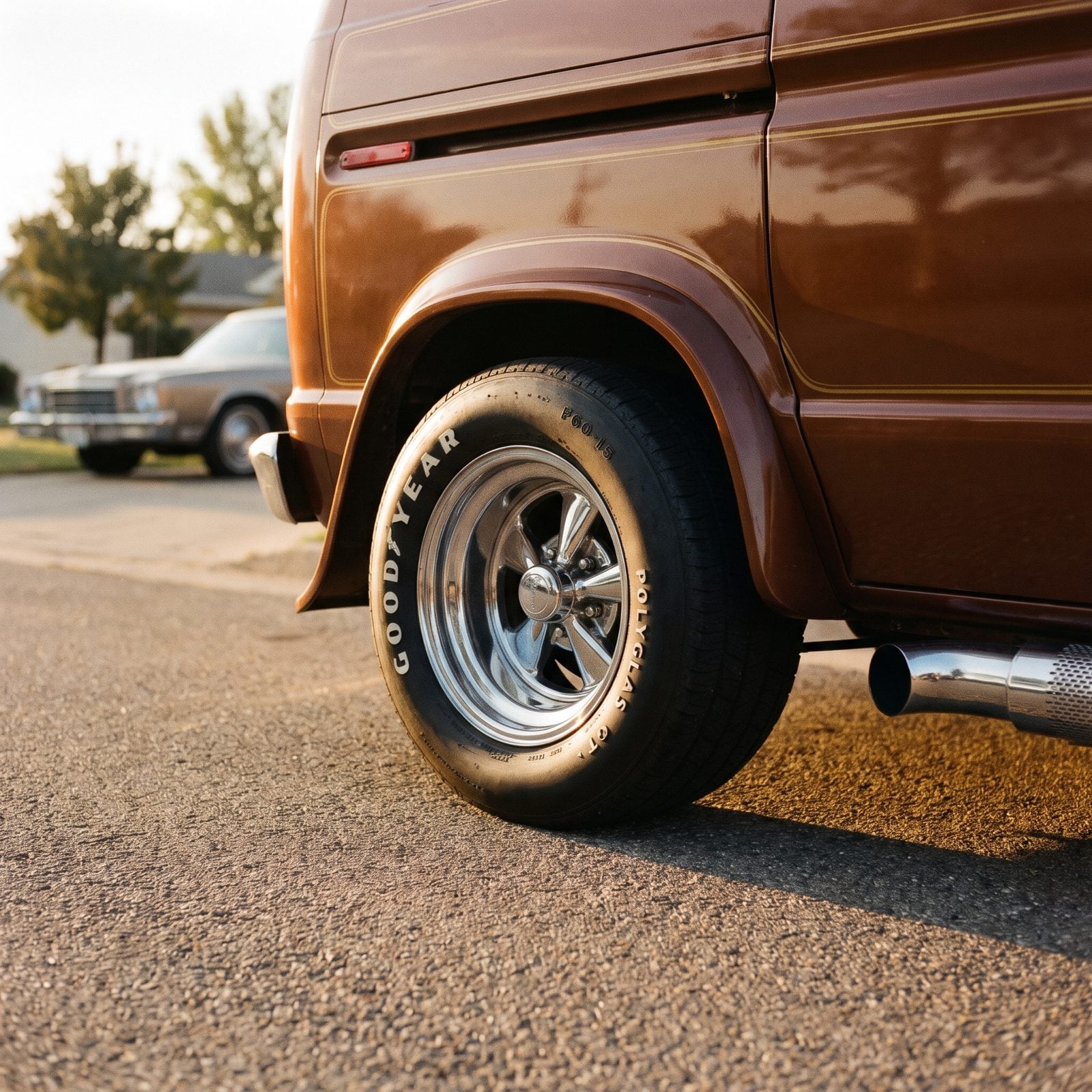
The stance told you everything. Nose down a touch, fat raised-white-letter rubber out back, deep-dish chrome mags with a polished lip that caught the streetlight. A van rolling on steelies and hubcaps was a work truck. A van squatting on a staggered set of deep-dish fives had something to say.
Those big rear tires didn’t help the ride and they chewed up the gas mileage that was already dismal, but they filled the wheel wells and gave a two-ton box of velvet the look of something that could get out of its own way. Half the build budget went above the shag. The other half went straight to the floor.
Most of these vans are gone now. Rusted out, parted out, or sitting under a tarp behind somebody’s barn. But you still catch one at a show every so often, chrome dishes gleaming, a name painted on the doors, and the whole decade comes flooding back in a single look.
39. Swiveling Captain’s Chairs That Spun to Face the Party
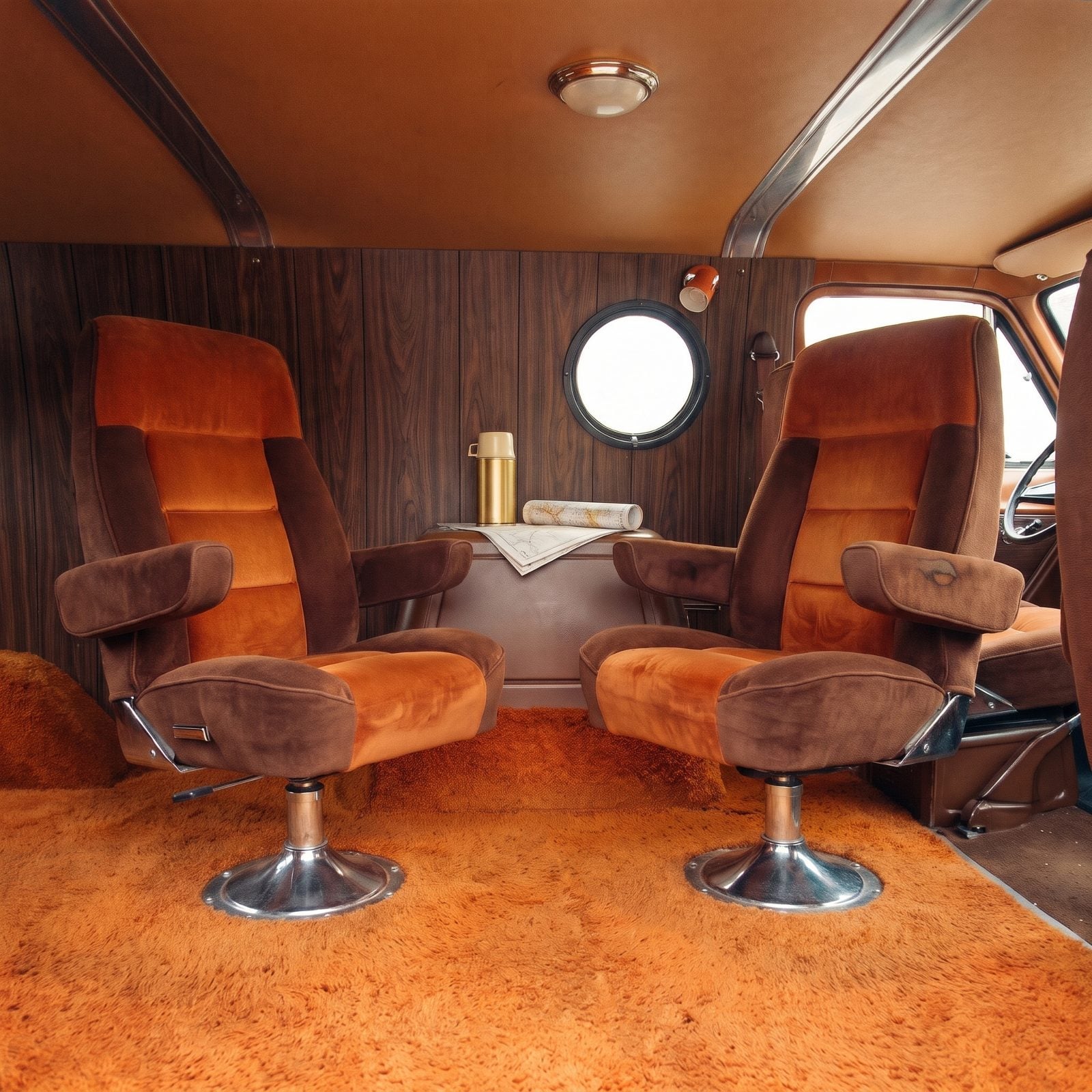
The chairs in back turned around, and that was the whole revolution. Pull a lever, spin the base, and your rear lounge chair squared up to face whoever was riding with you, while the driver’s seat stayed pointed at the road.
These were captain’s chairs lifted straight from the aftermarket catalog, wrapped in velour thick enough to nap on, perched on round chrome pedestal bases bolted through the shag to the floor. Burnt orange is the color everyone remembers. A van parked at the drive-in with both rear chairs spun to face each other was announcing itself — this is a room now, not a cockpit.
Anyone who sat in the real thing remembers it: the swivel never locked quite straight, so you’d drift a few degrees every time the van took a corner.
38. The Chain-Link Steering Wheel That Bit Your Palms
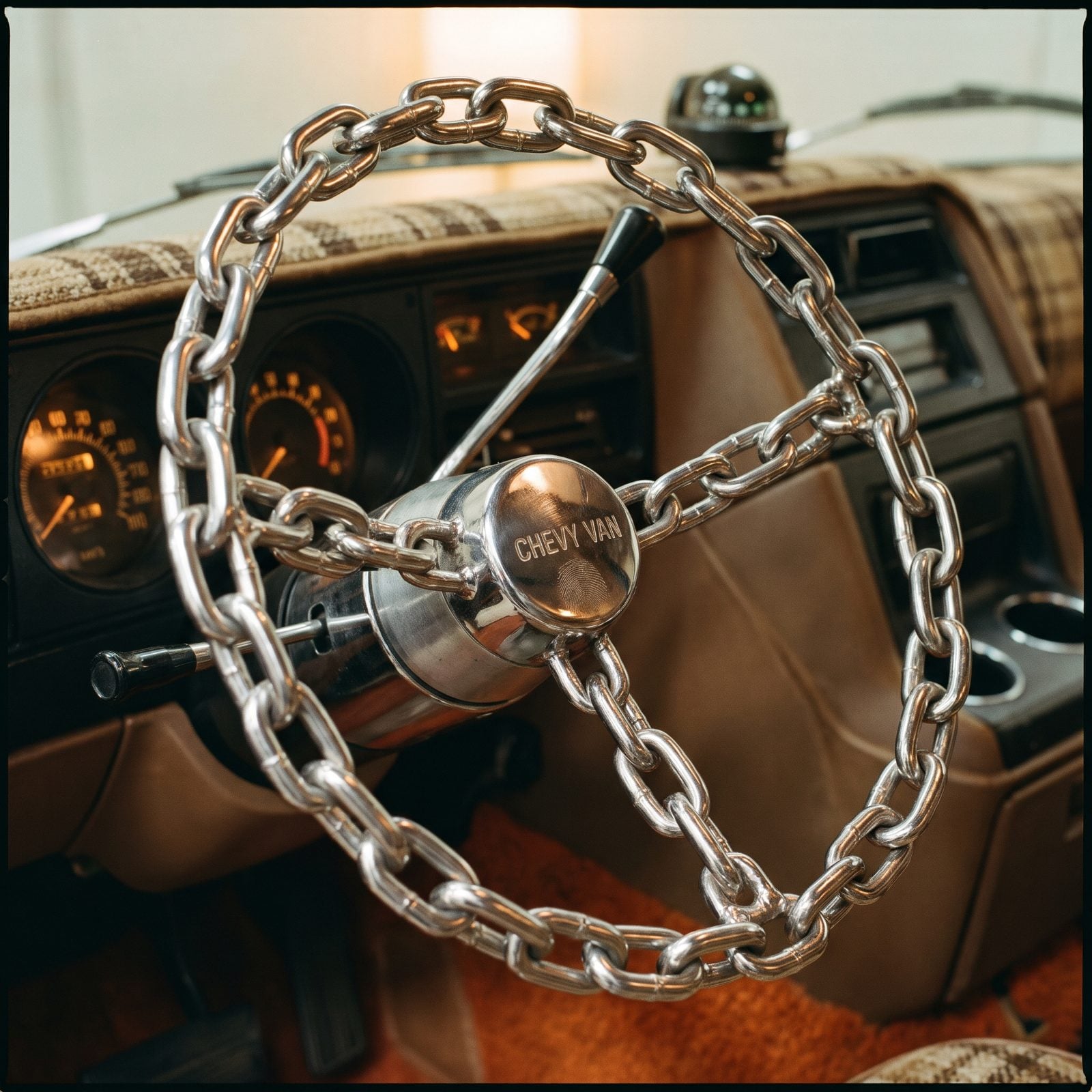
Nobody put a chain-link wheel in a van because it was comfortable. It was gorgeous and it was punishing, and everyone who installed one knew both things going in.
Welded chrome chain, polished until it threw light around the cabin, bolted onto a tilt column where the stock wheel used to be. Cold on a January morning. Hot by August afternoon. On a long haul it left the pattern of the links pressed into your palms like a waffle iron.
You gripped it anyway. A chain wheel told you the owner cared more about how the cockpit looked parked than how it felt at seventy on the interstate — a trade that made perfect sense to a lot of us back then.
37. A CB Radio Bolted Under the Dash, Chrome Mic Swinging
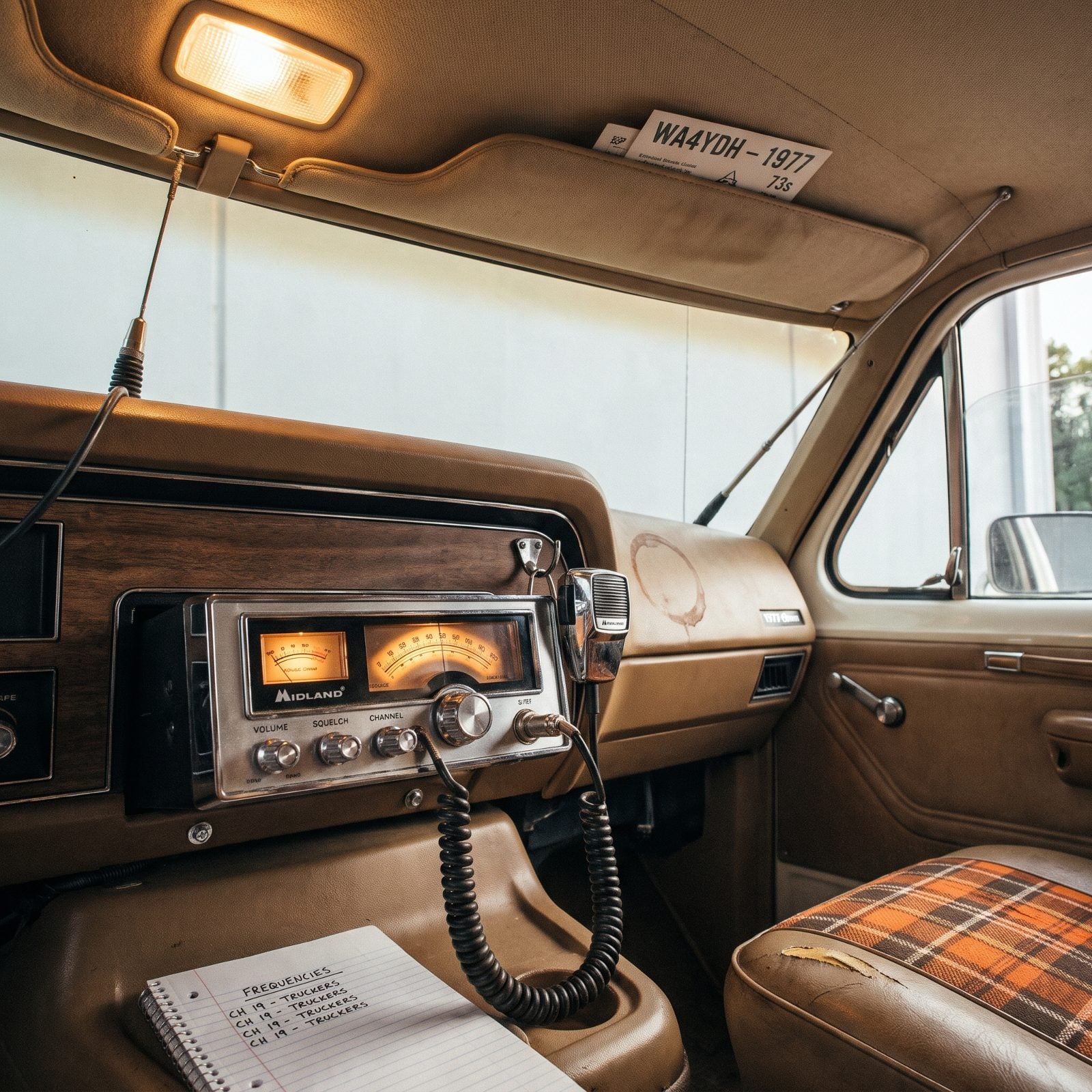
The chrome mic hung from a hook on the dash beside the radio, cord coiled like a spring, ready to grab the second you had something to say to the convoy. Breaker breaker. What’s your twenty.
Every self-respecting van ran a CB by the mid-seventies, with an antenna whip clamped to the mirror bracket and the radio tucked where you could reach the squelch knob without looking. The dial glowed amber in the dark, and on a long night run you had company on channel 19 whether you knew them or not.
Then the smash hit record landed, the trucker movie hit theaters, and suddenly the whole country was talking in handles. The boom burned hot and burned out fast.
36. An 8-Track Deck and the Shoebox of Tapes That Fed It
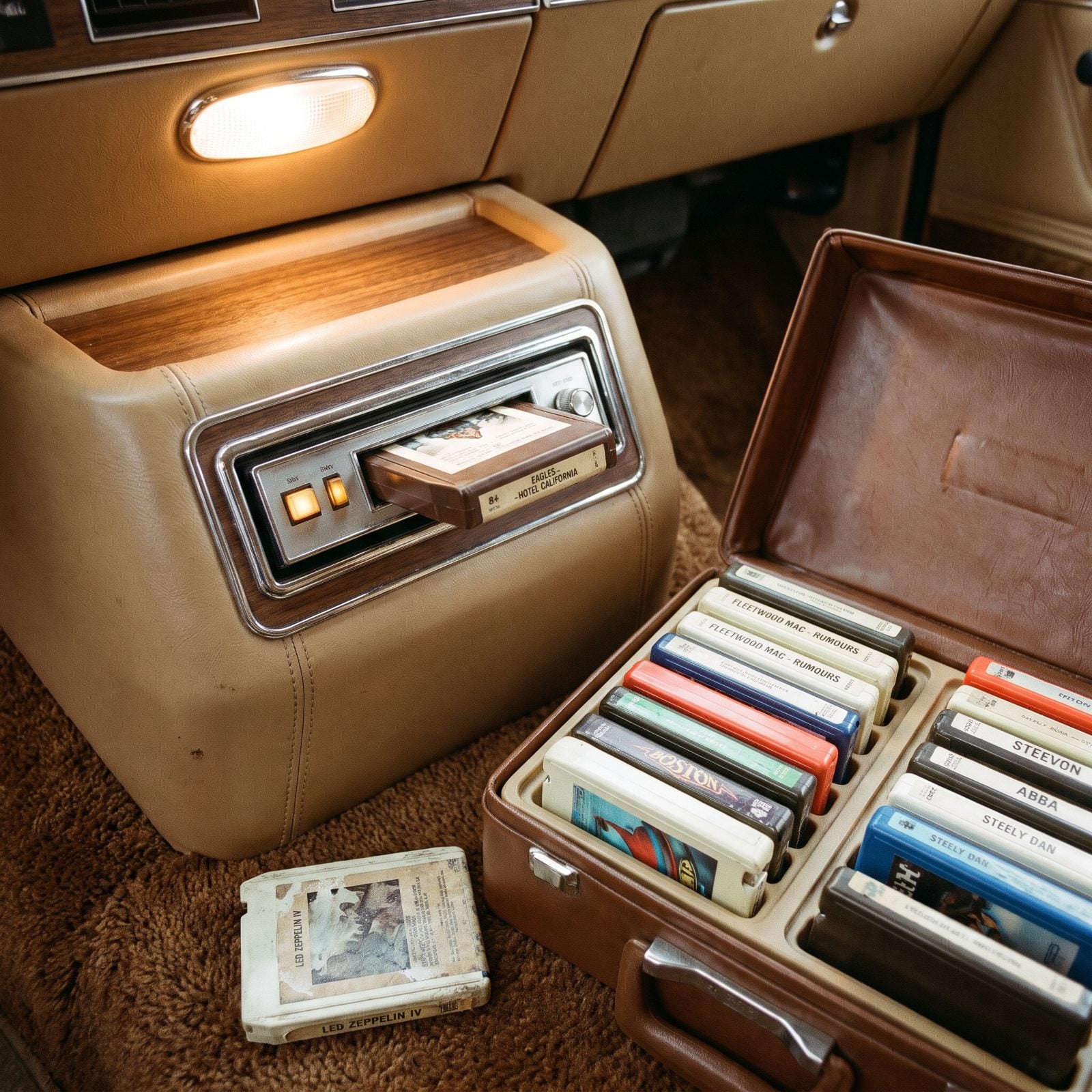
The music never stopped. It just lurched. Right in the middle of the good part, the deck would clunk, the song would fade, and a mechanical ker-chunk dropped you into the next program with the chorus already half over.
The 8-track lived in the console and ate those fat plastic cartridges, which lived in turn in a vinyl case the size of a lunchbox. Every van had a shoebox of tapes sliding around the floor, labels worn soft from handling.
We put up with the clunk because nothing else played loud through the back of a moving van. For a few years it was the only game in town. Then the cassette quietly pulled the floor out from under it.
35. Home Hi-Fi Speakers Bolted Into Plywood Boxes
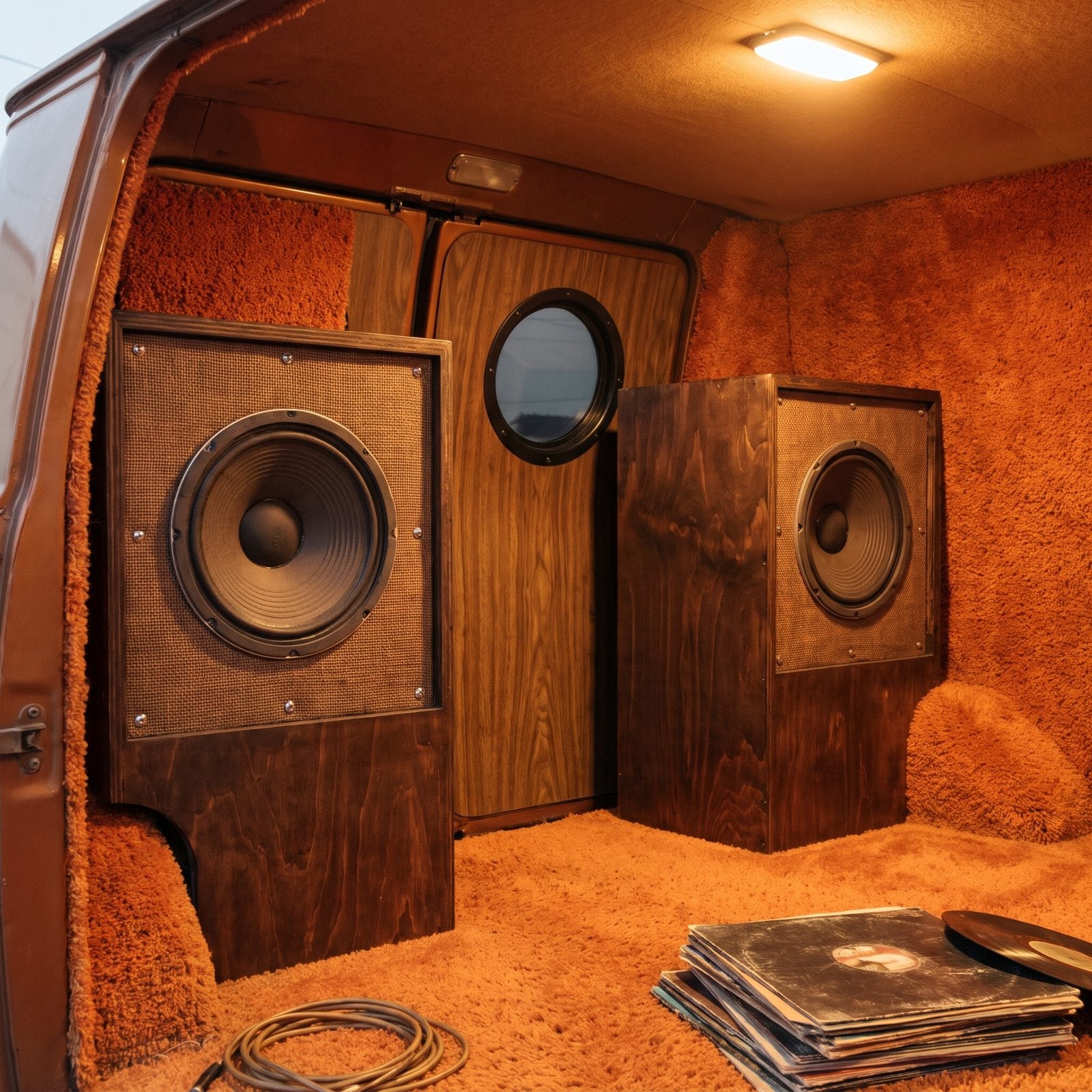
These weren’t car speakers. These were the living-room speakers — the big ones, pulled out of the stereo cabinet and bolted into plywood boxes a guy cut by hand in his garage on a Saturday.
You’d find them in the rear corners, wrapped in that brown burlap grille cloth, 12-inch woofers facing into the cabin. The bass moved the carpet pile. Parked at a cruise night with the back doors open, a van like this was the sound system for the whole lot.
34. Color-Organ Lights Pulsing With Every Bass Note
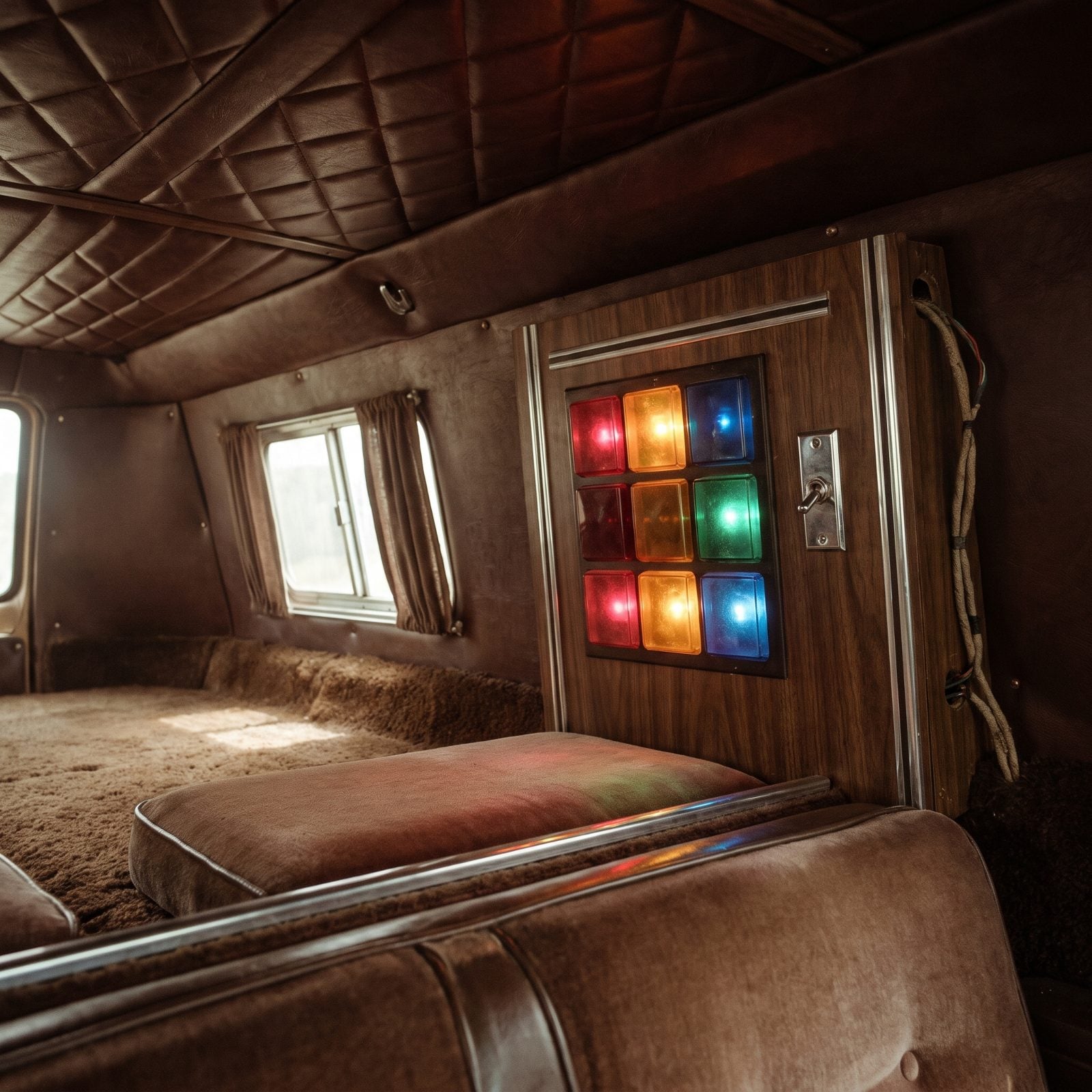
Red for the bass, green for the mids, something up high for the cymbals. The color organ turned the music into light — a wall panel of colored squares that flickered and surged with whatever was pounding out of those corner boxes.
It ran off the speaker signal through a little box of bulbs and filters, and it lived on the side wall where everyone in back could watch it breathe. Low-fi and gorgeous. Half disco, half science-fair project.
On a dark night with the doors shut and the music up, the whole cabin pulsed. That was the entire point of the exercise.
33. Blacklight Posters Glowing on Velvet-Flocked Walls
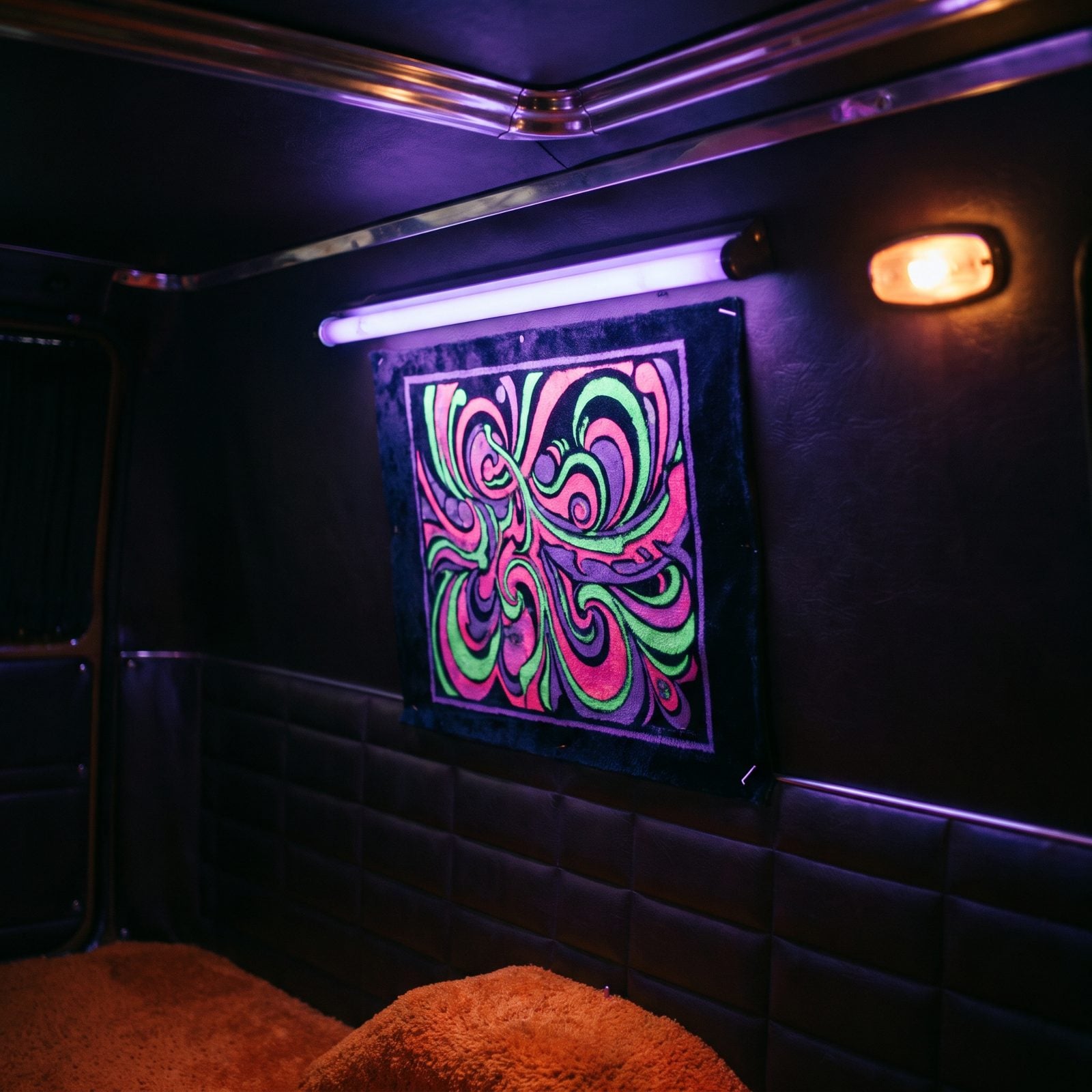
Flip the blacklight switch and the wall came alive. Velvet-flocked posters that looked dull and fuzzy in daylight suddenly glowed neon purple and electric green, the flocking catching the UV like frost on glass.
You stapled them to the padded wall right next to the shag climbing up from the floor. Psychedelic swirls, a tiger, a van cresting a wave of flame. The art mattered less than the glow.
A blacklight and a flocked poster cost next to nothing, which is exactly why every van had one. Cheap magic has always been the best kind.
32. Fringed Privacy Curtains Hung on Every Window
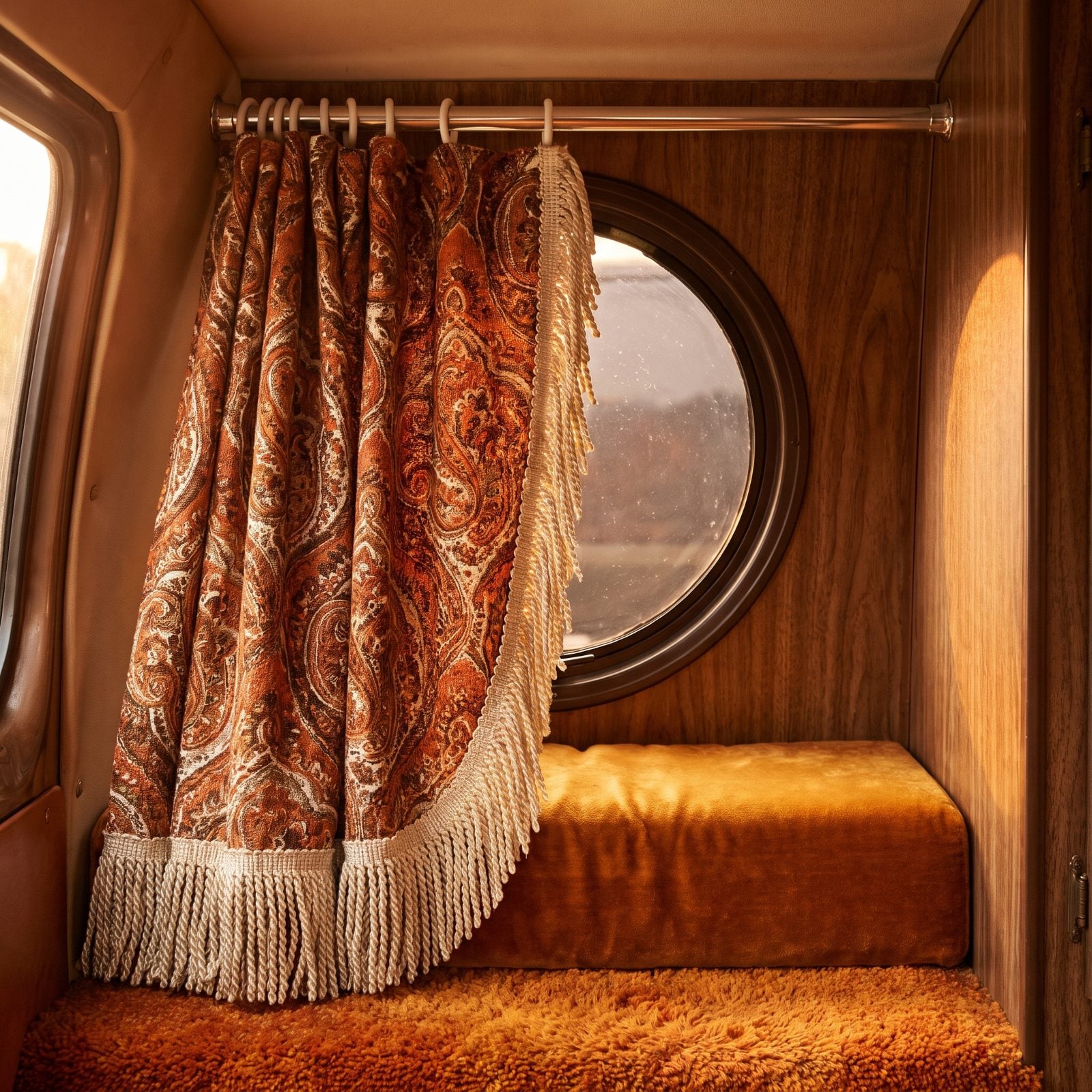
The curtains closed and the van became a private world. Burnt-orange paisley, hung on a chrome rod with plastic rings, fringe swinging along the bottom edge every time you took a corner.
Every window got one — the rear portholes, the back doors — so a van parked anywhere turned into a sealed little room. Somebody’s mom or girlfriend ran these up on a sewing machine, and the hems were never perfectly straight.
That fringe caught the afternoon light and threw soft shadows across the shag. For privacy, sure. But mostly because a bare pane of smoked glass looked unfinished, and an unfinished van was no van at all.
31. A Tiny Wet Bar Tucked Into the Rear Corner
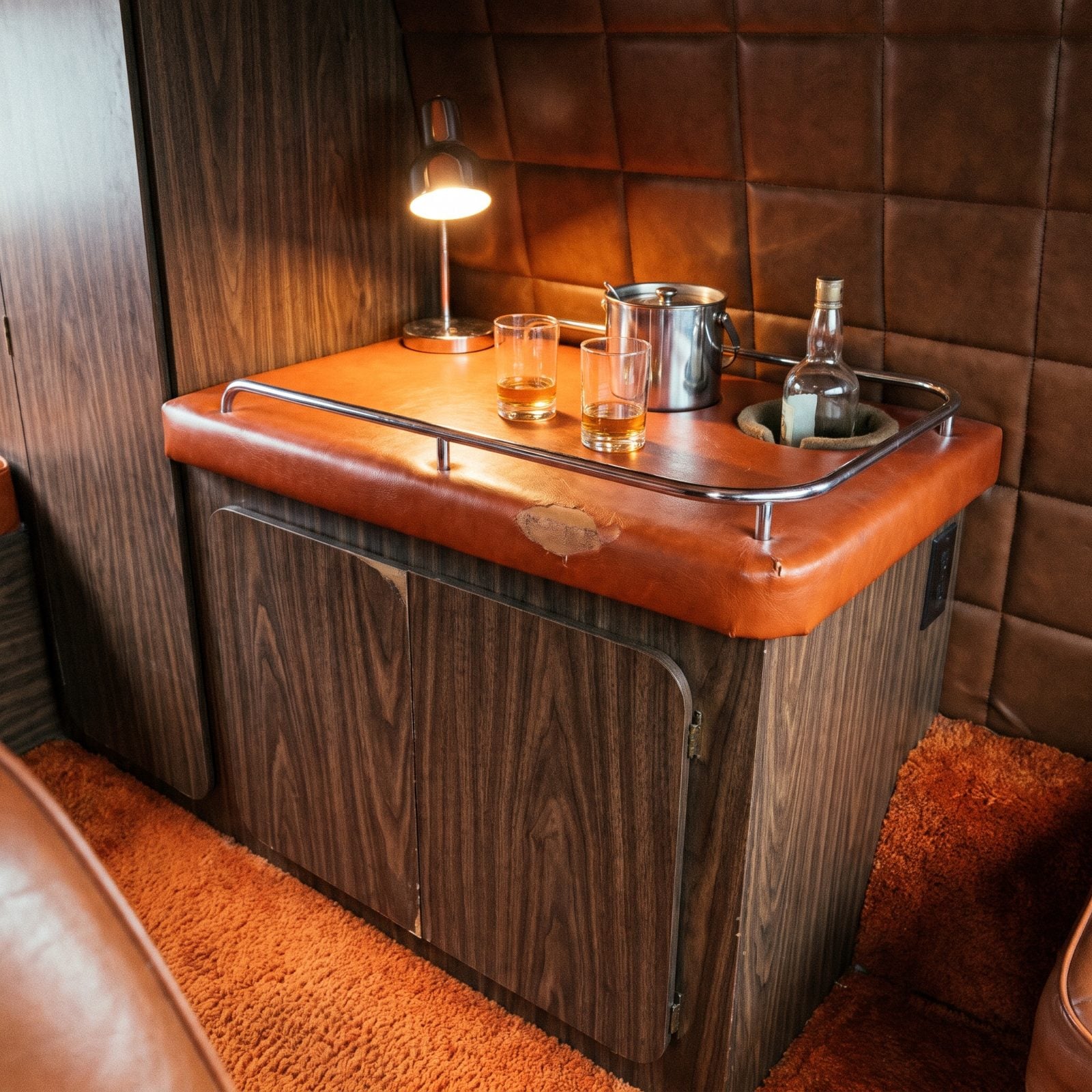
It held maybe two glasses and an ice bucket, and it was the most important four square feet in the van.
Built into the rear corner, faced in wood-grain veneer with a padded vinyl top and a chrome rail so the bottles didn’t roll when you cornered. A felt-lined cutout for the good stuff. A little rack for the highball glasses.
Nobody was mixing elaborate drinks back there. The wet bar was mostly furniture, a signal that this van was built for sitting still and hanging out, parked at the lake with the doors open and the music up. Cabinetry as a social statement. A guy with a wet bar in his van had plans for the weekend.
30. Incense Burning Against the Gasoline and Carpet Glue
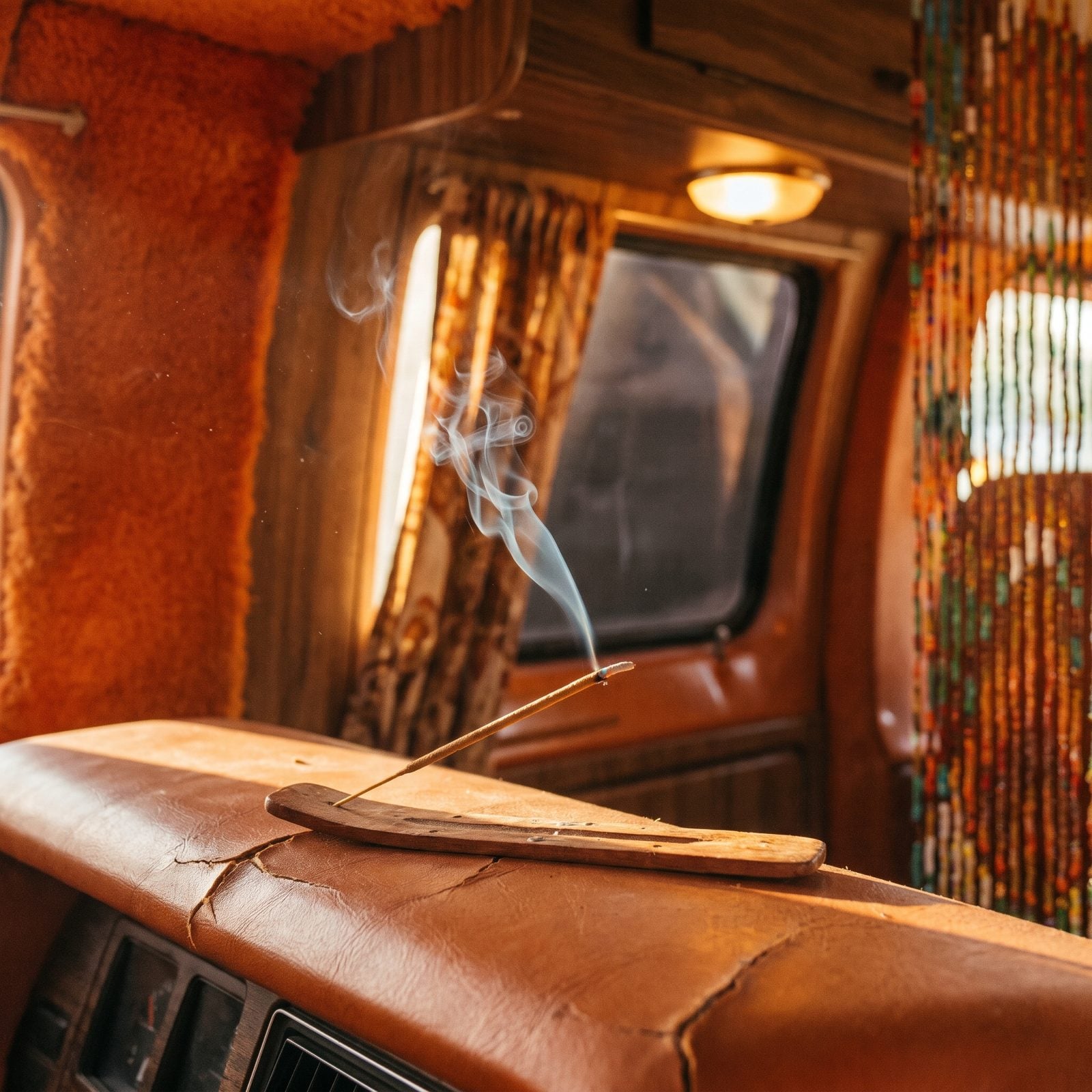
Open the door of a seventies van and the smell hit you before anything else. Sandalwood incense doing its level best against leaded gasoline, fresh carpet glue, and whatever the shag had soaked up over three summers.
A stick burned in a little wooden holder on the dash, a thin ribbon of smoke curling up past the beaded curtain. It never won the fight. The glue fumes from carpeting the walls lingered for months, and the gas smell was just part of owning the thing.
But that mingled smell is the one that comes back hardest. Close your eyes in an old service bay and it’s right there. Incense, gas, warm vinyl — the whole decade in one breath.
29. Built-In Ashtrays and a Permanent Cigarette Haze
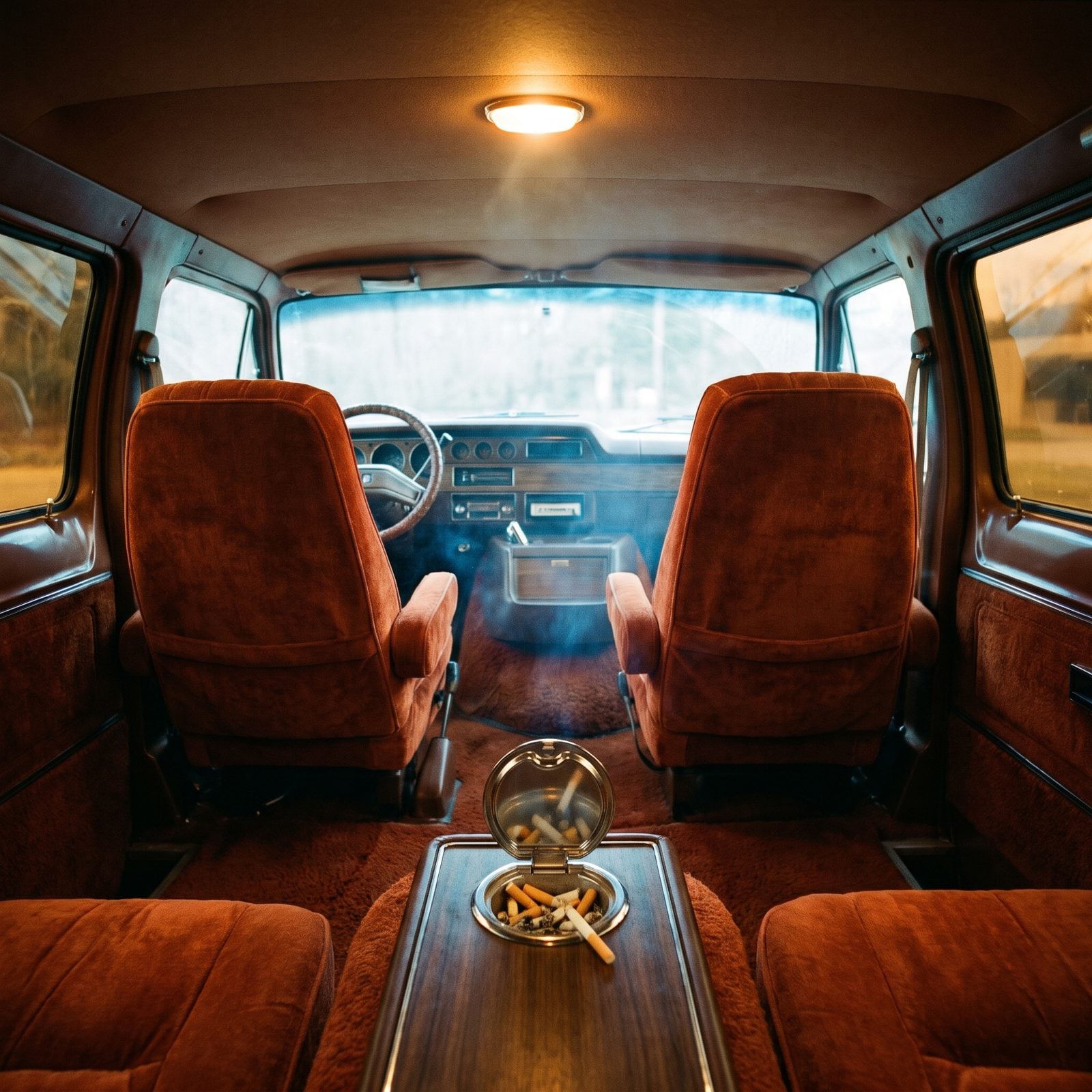
Every van had ashtrays, and plenty had more than the factory ever installed. A little chrome pop-out in the dash, another screwed into the side panel by the lounge, sometimes a heavy glass one riding on the wet-bar counter and sliding around on every turn.
Back then smoking indoors was normal, so smoking in a sealed box on wheels was just Tuesday. The haze settled into everything. The velvet held it, the shag held it, the headliner turned faintly yellow by the second summer. You could buy a used custom van ten years later and still smell its whole social history the second you opened the side doors.
28. Rear Lounges With No Seat Belts at All
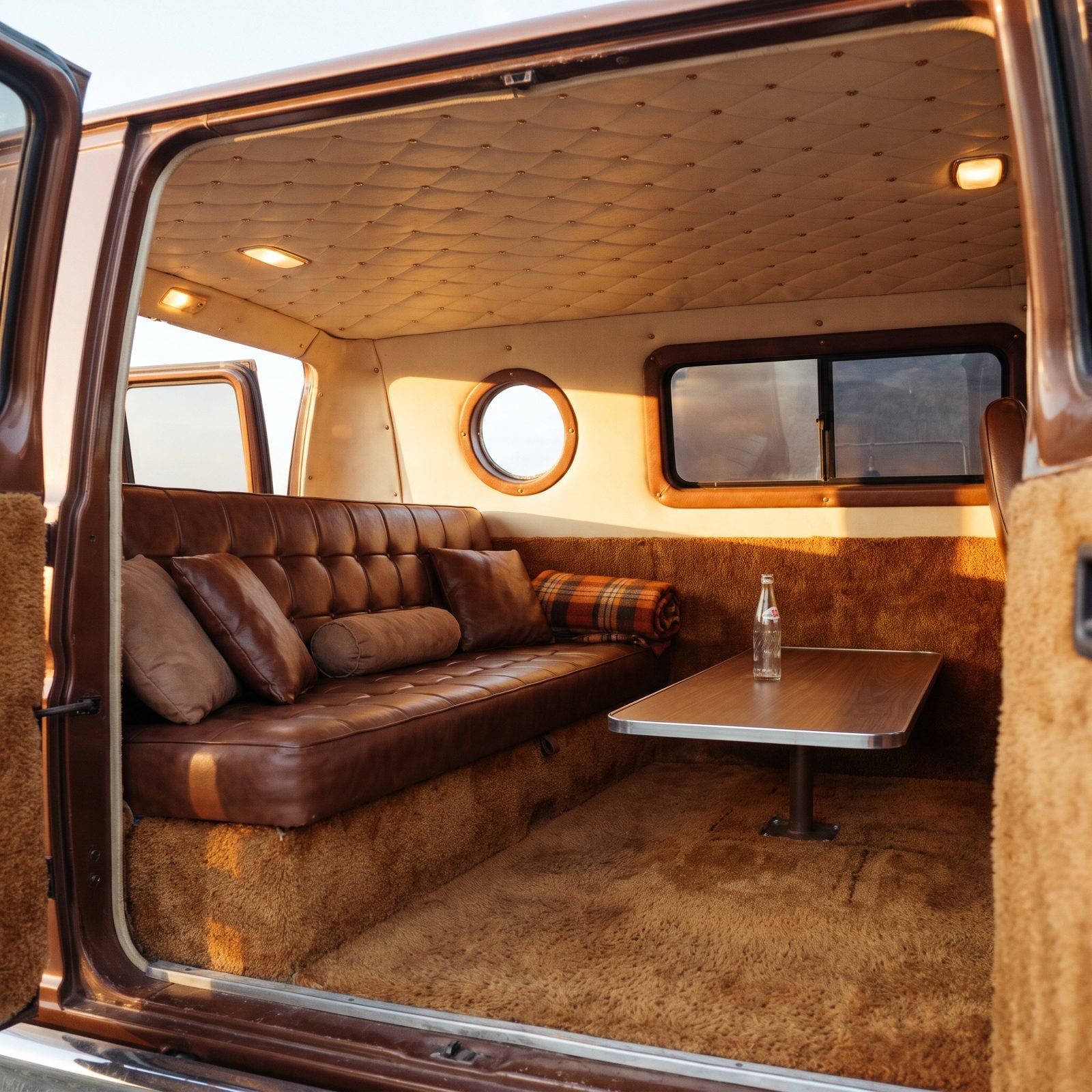
Up front you had lap belts, at least in theory. In back you had a plush bench or a wraparound lounge built from plywood and foam, and not a single anchor point anywhere near it.
Nobody thought twice. Five people sprawled across the rear cushions doing fifty-five on the interstate, feet up, a can of something resting on a knee. The lounge was furniture, and you don’t buckle into furniture. A hard stop sent everyone sliding toward the captain’s chairs in a heap of elbows and spilled pretzels, and then everyone laughed and climbed back up.
Looking back, it’s a minor miracle more of those rides didn’t end badly. At the time it just felt like riding in a living room.
27. Beanbag Chairs With No Way to Secure Them
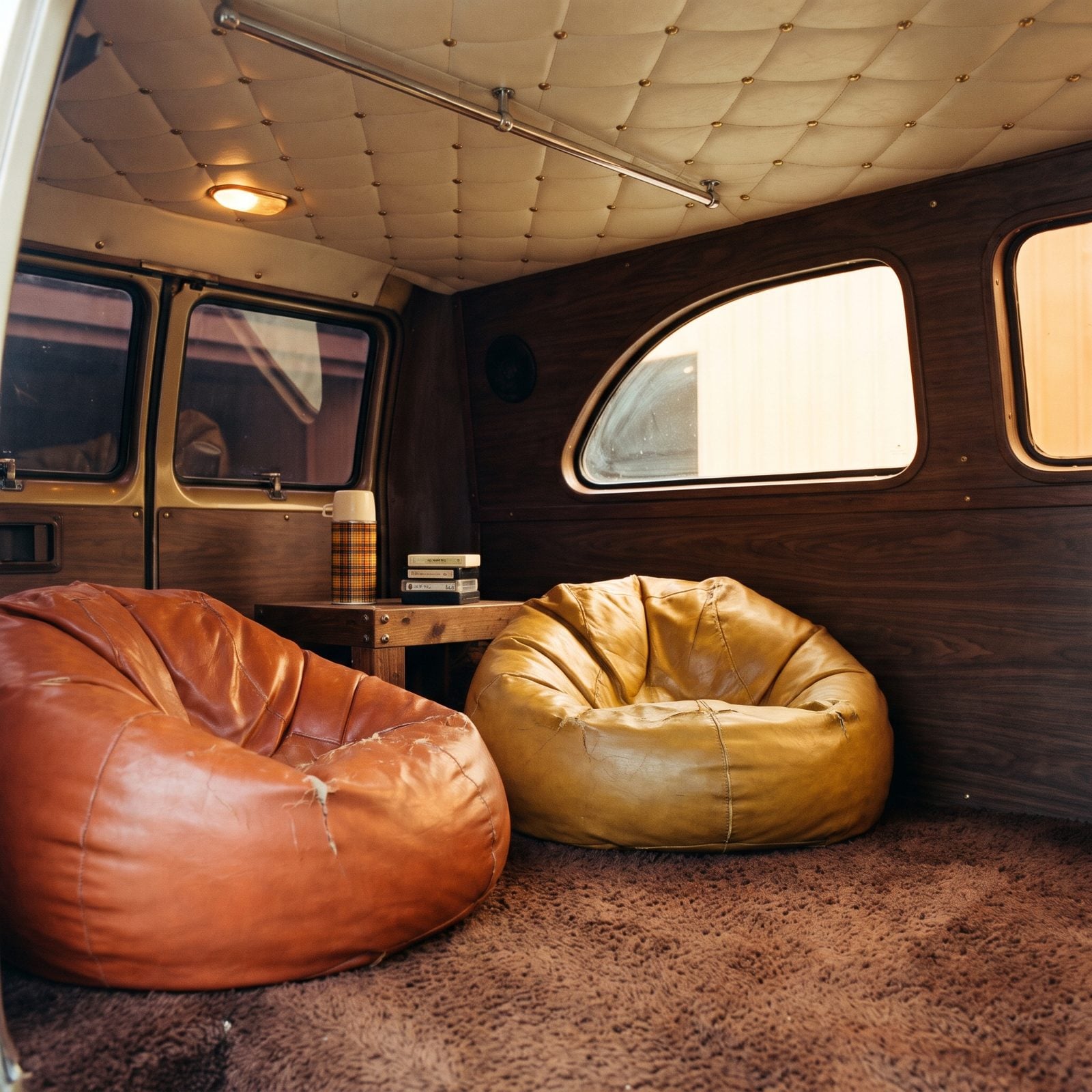
Some builders skipped the bench entirely and just tossed a couple of vinyl beanbags into the back. Instant seating, instant mood, no carpentry required.
There was nothing holding them down, of course. Corner a little hard and the beanbags drifted across the floor with whoever was sinking into them. Brake suddenly and they surfed forward toward the doghouse. Riders learned to brace a foot against the wheel well and ride it out.
And once a beanbag split a seam, you’d be finding those little foam pellets in the shag for the rest of the van’s natural life.
26. The Engine Doghouse Between the Front Seats
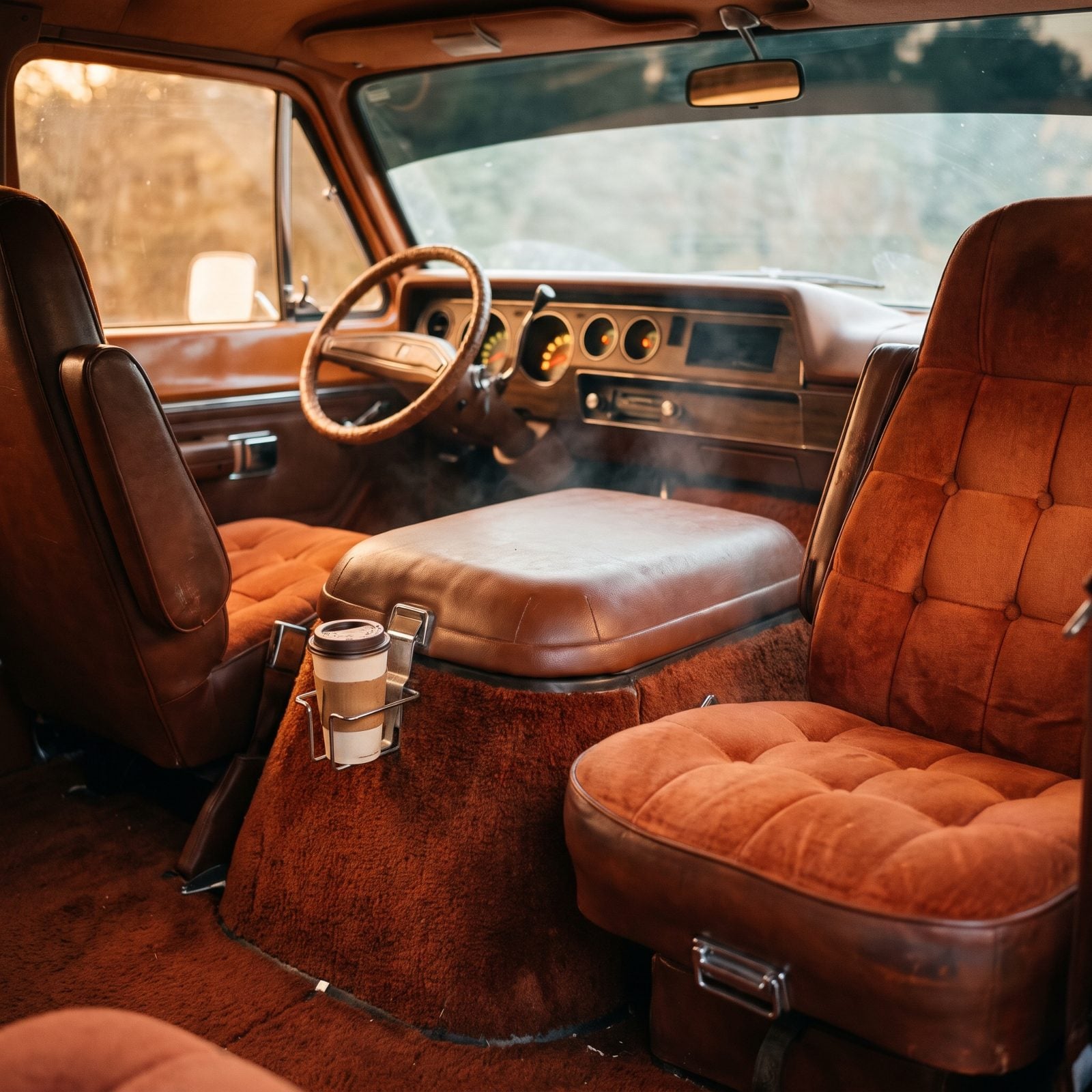
The engine didn’t live out front under a hood the way it did in a car. In an Econoline, Chevy Van, or Dodge, it sat between the two front seats under a big removable cover everyone called the doghouse.
It made a decent armrest, a decent cup shelf, and a terrible place to rest your leg in July. The cover radiated heat right into the cabin, and every rev of the V8 came through it loud and clear. Customizers carpeted it, padded it, built consoles over it, and still couldn’t hide the fact that a running engine was sitting about eight inches from your right knee.
Need to check the oil or change the plugs? You unlatched the doghouse and did the work from inside the van, hunched over in your seat.
25. A Rear Cabin That Became an Oven Without Air Conditioning
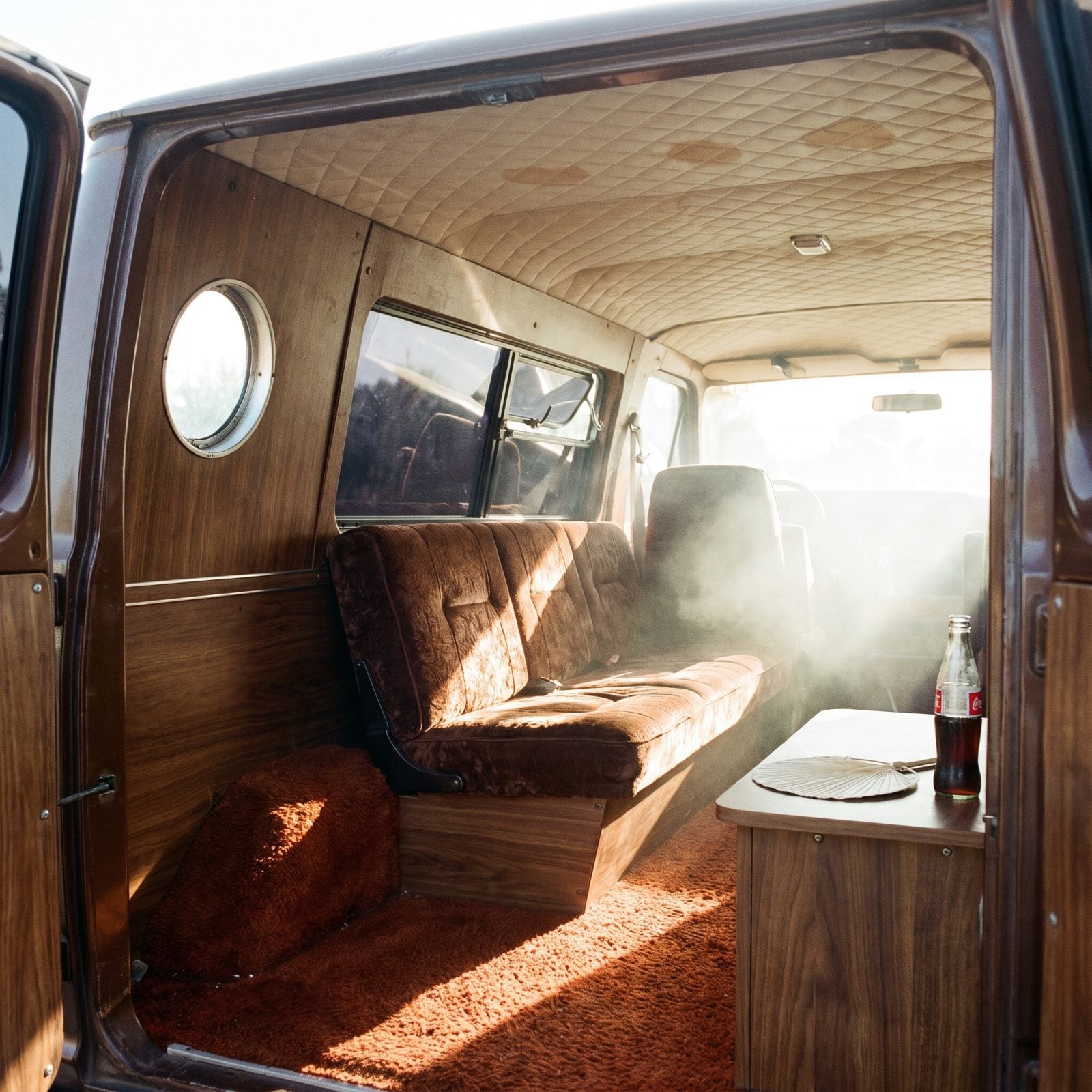
Factory air conditioning existed, but plenty of custom vans didn’t have it, and even when they did, the cold barely made it past the front seats. Everything behind them was a sheet-metal box under the sun.
Now add the insulation that wasn’t really insulation: shag on the walls, velvet on the ceiling, dark smoked glass, little porthole windows that barely opened. By mid-afternoon in August, the back of a parked van could feel like the inside of a clothes dryer.
The fix was a roof vent, every window cranked open, and both rear doors swung wide the moment you parked. That’s half the reason those Friday-night lots always had the back doors open. It wasn’t just style. It was survival.
24. Fighting Crosswinds With Continuous Steering Corrections
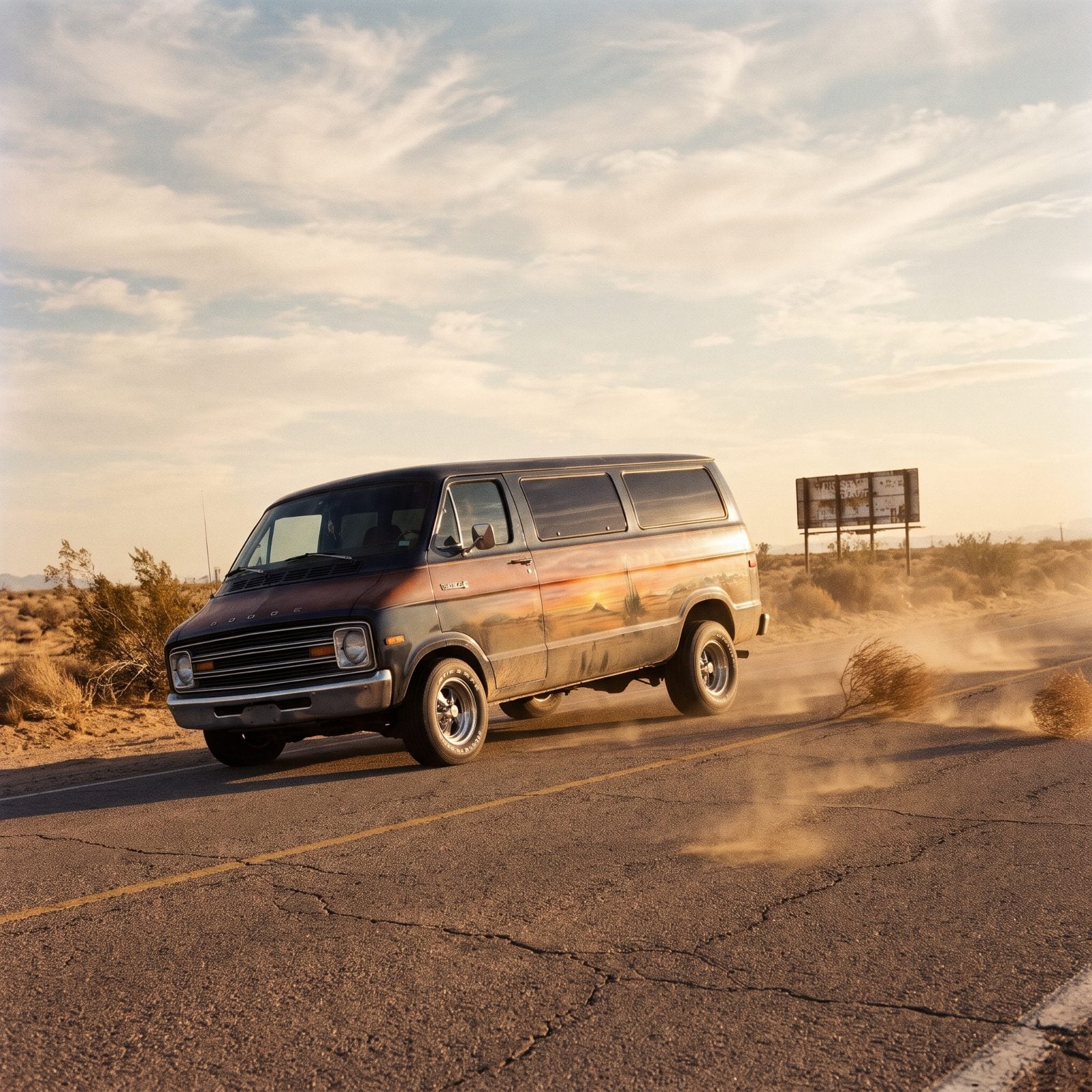
A full-size van was basically a tall flat wall on four wheels, and the wind treated it like a sail. Pass a semi on the highway or cross an open bridge on a gusty day and you felt the whole van lean and wander toward the next lane.
So you never really held the wheel still. You nudged it constantly, a little left, a little right, correcting before the drift turned into a problem. On a long open stretch of prairie interstate it was a workout for your forearms and your nerves at the same time.
Drivers who grew up with it remember the feeling exactly. Modern drivers mostly never have to learn it.
23. The Arm Workout of Parking With Manual Steering
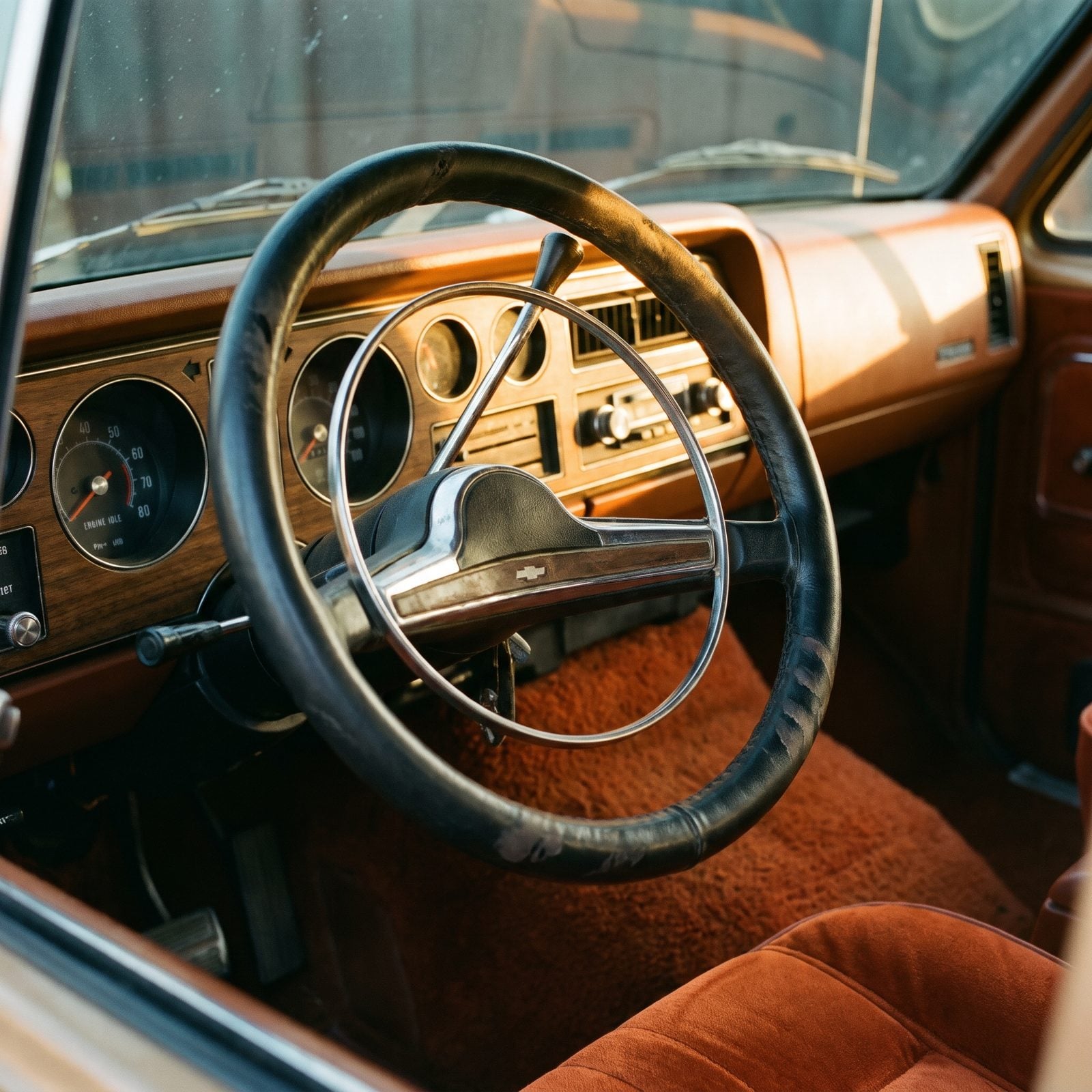
Power steering was an option, and plenty of vans rolled out without it. On the highway, fine. In a grocery store parking lot, you earned every space.
At low speed the wheel fought you. Cranking a heavy V8 van into a tight spot meant hand-over-hand turns, leaning your shoulder into it, maybe rocking the van forward a few inches to take the load off the front tires. Parallel parking on a city street was a full upper-body event, and a chain-link wheel didn’t make it any friendlier on your palms.
You could always spot a manual-steering van owner. They picked the spot at the far end of the lot where they could just pull straight through.
22. Leaving Extra Distance for Drum-Brake Stops
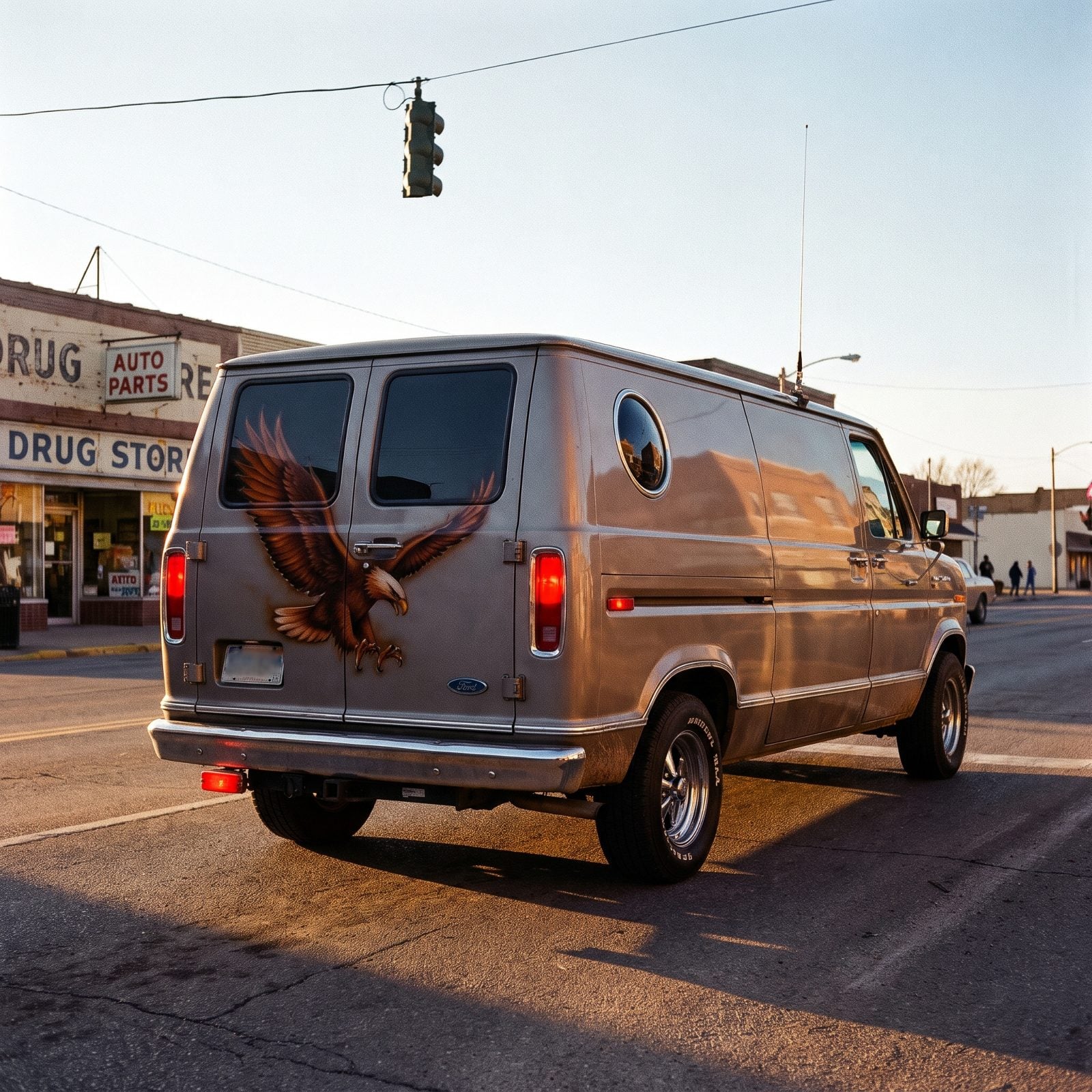
Stopping took planning. Plenty of 1970s vans, especially the earlier ones, rode on drum brakes at all four corners, and stopping a heavy van loaded with plywood, a bed, and a bar was never going to be quick.
So you left room. A lot of it. You watched the brake lights three cars ahead, you started slowing long before the light, and you learned that a long downhill grade could heat the drums until the pedal got soft and the van just kept rolling. Drive through a deep puddle and the wet brakes might barely grab for the next few stops.
Nobody called it defensive driving. It was just how you drove a van if you wanted to keep the front bumper attached.
21. Pumping the Accelerator to Start a Cold Carbureted Engine
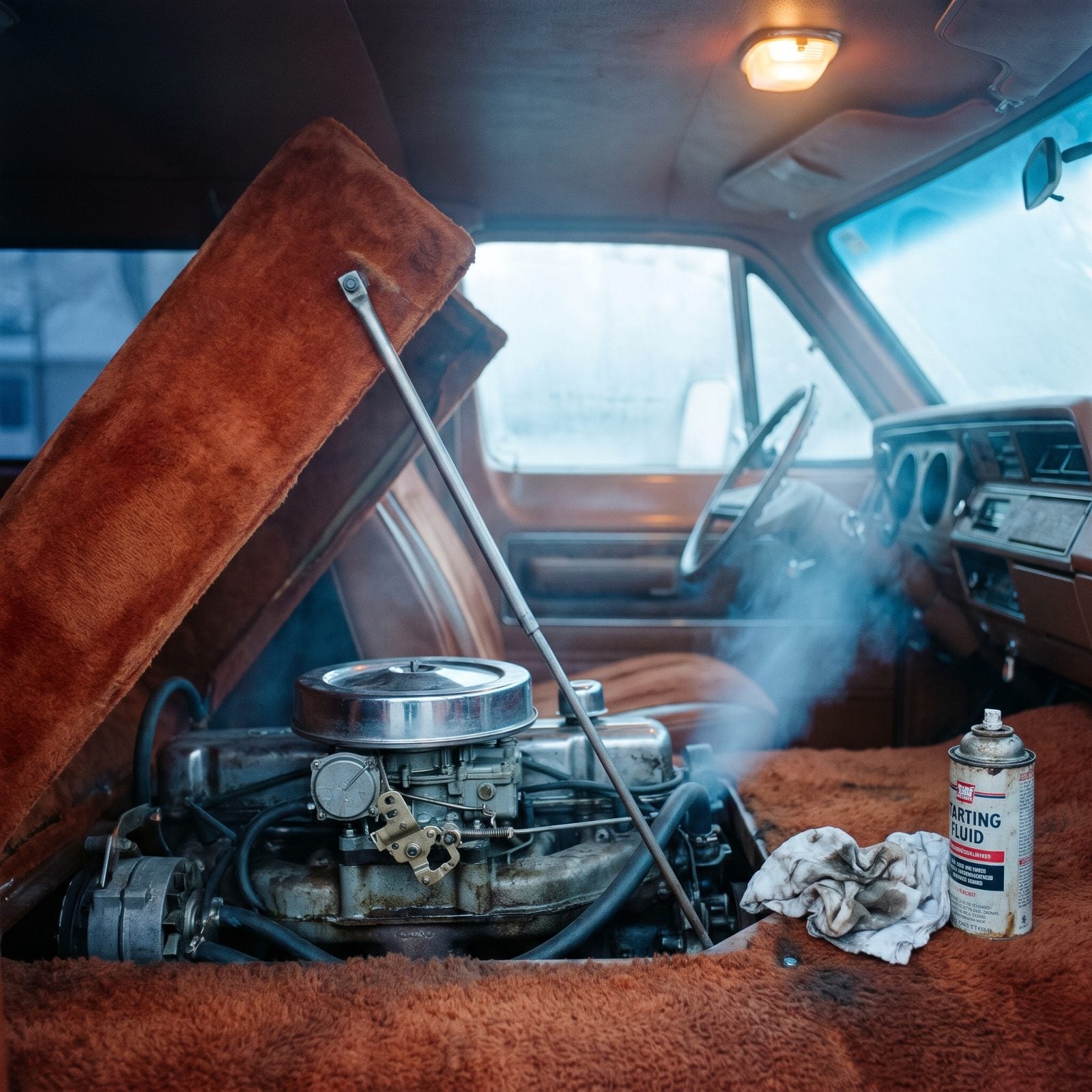
Cold morning, carbureted V8, and a ritual every van owner knew by heart. Before you touched the key, you pressed the gas pedal to the floor once or twice and let it come back up. Then you cranked it.
If it caught, you babied it with a little throttle while it sputtered and settled. If it didn’t, you flipped up the carpeted engine cover between the seats, popped the lid off the chrome air cleaner, and gave the carburetor a short shot of starting fluid from the can, with a greasy rag close by. Then you tried again and prayed you hadn’t flooded it. Pump too much and the smell of raw gas filled the cab, and then it was the opposite trick: pedal held to the floor, cranking until the extra fuel cleared out.
Fuel injection made all of this disappear. No more pedal-pumping, no more cans of starting fluid riding on the engine cover. Today you turn a key or push a button and the engine just figures it out.
20. Waiting Out Vapor Lock on the Roadside
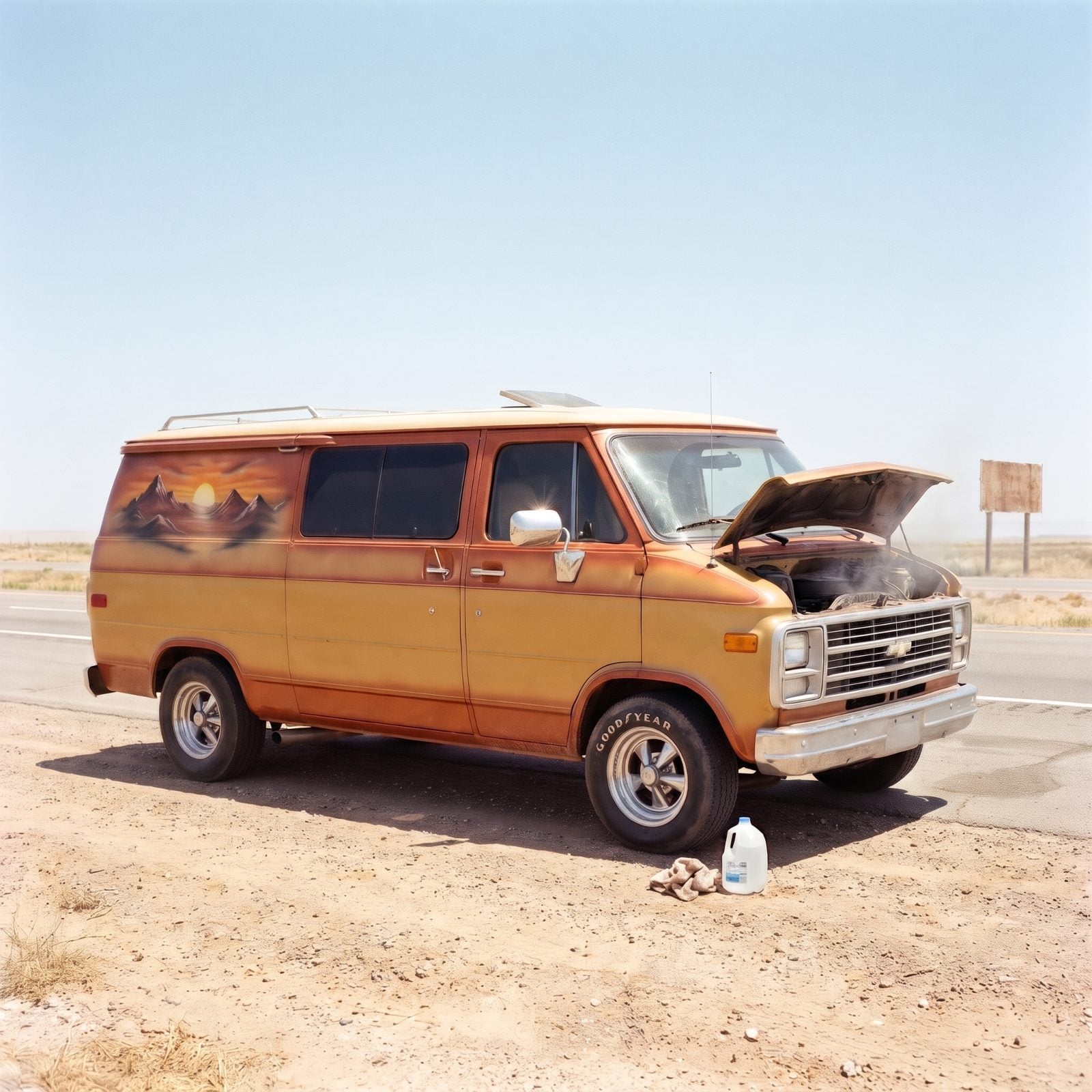
Hot day, long climb, engine tucked under the doghouse with nowhere for the heat to go. Then the van started to stumble, lost power, and died, and no amount of cranking would bring it back.
That was vapor lock. The gasoline got so hot it boiled into vapor in the fuel line or pump, and the engine starved. There was no real fix on the spot. You coasted to the shoulder, propped the hood open to let the heat out, and sat there waiting for things to cool down.
Some owners swore by keeping a rag and a jug of water by the front wheel to cool the fuel pump or line and speed it up. Mostly you just left the van parked on the dirt shoulder and watched the empty highway until the van decided it was ready again.
19. Accepting Single-Digit Fuel Economy as the Price of Style
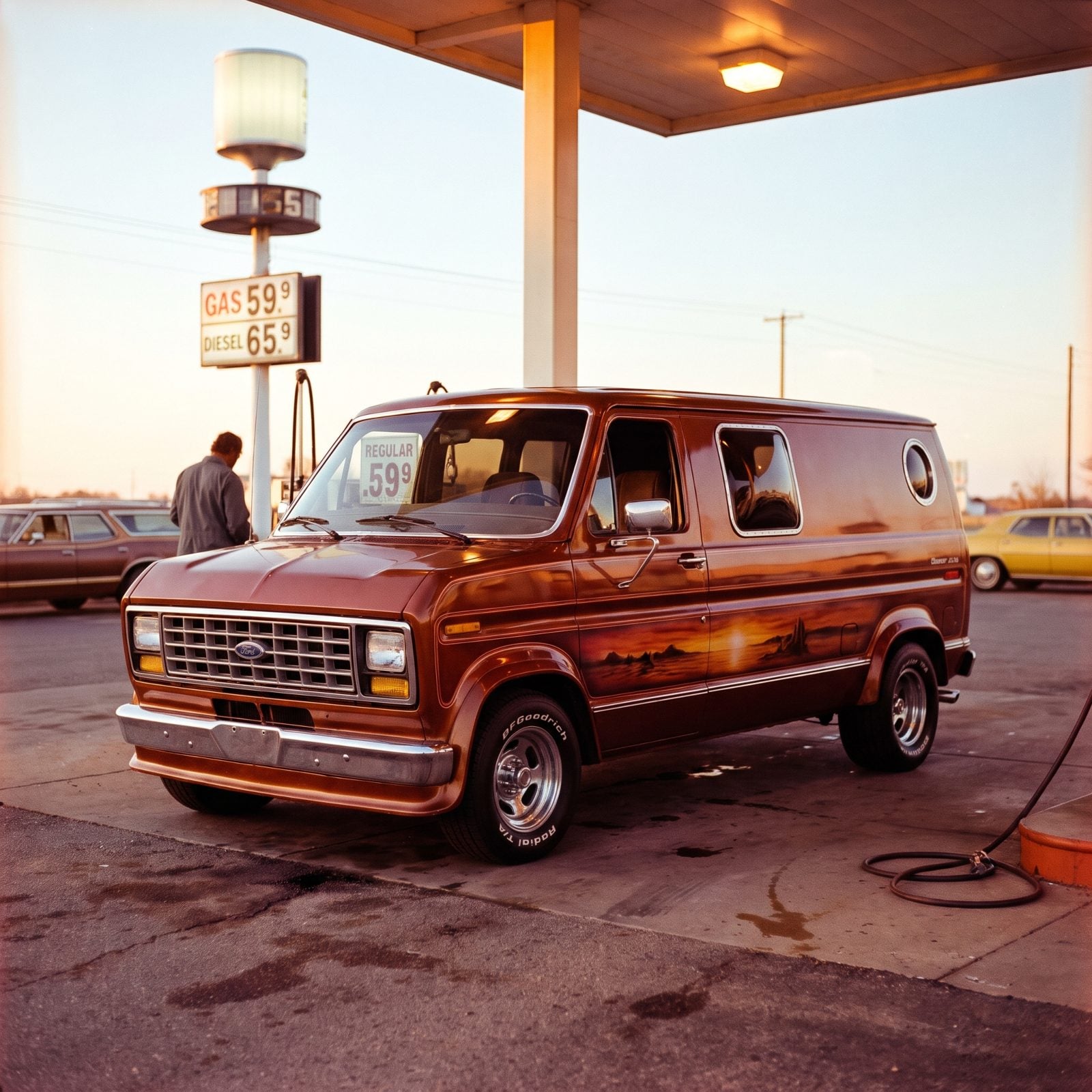
Nine miles to the gallon, maybe eleven downhill with a tailwind. You knew the number going in and you paid it gladly. A customized full-size van ran a big V8 hauling a mural, a bed, shag carpet on the walls, and enough plywood to frame a small cabin, so economy was never remotely the point.
The math was simple and a little insane. You traded dollars at the pump for the look of something nobody else on the block had, and every fill-up stung while every drive earned it right back.
18. Sitting in Gas-Crisis Lines Under Odd-Even Fuel Rationing
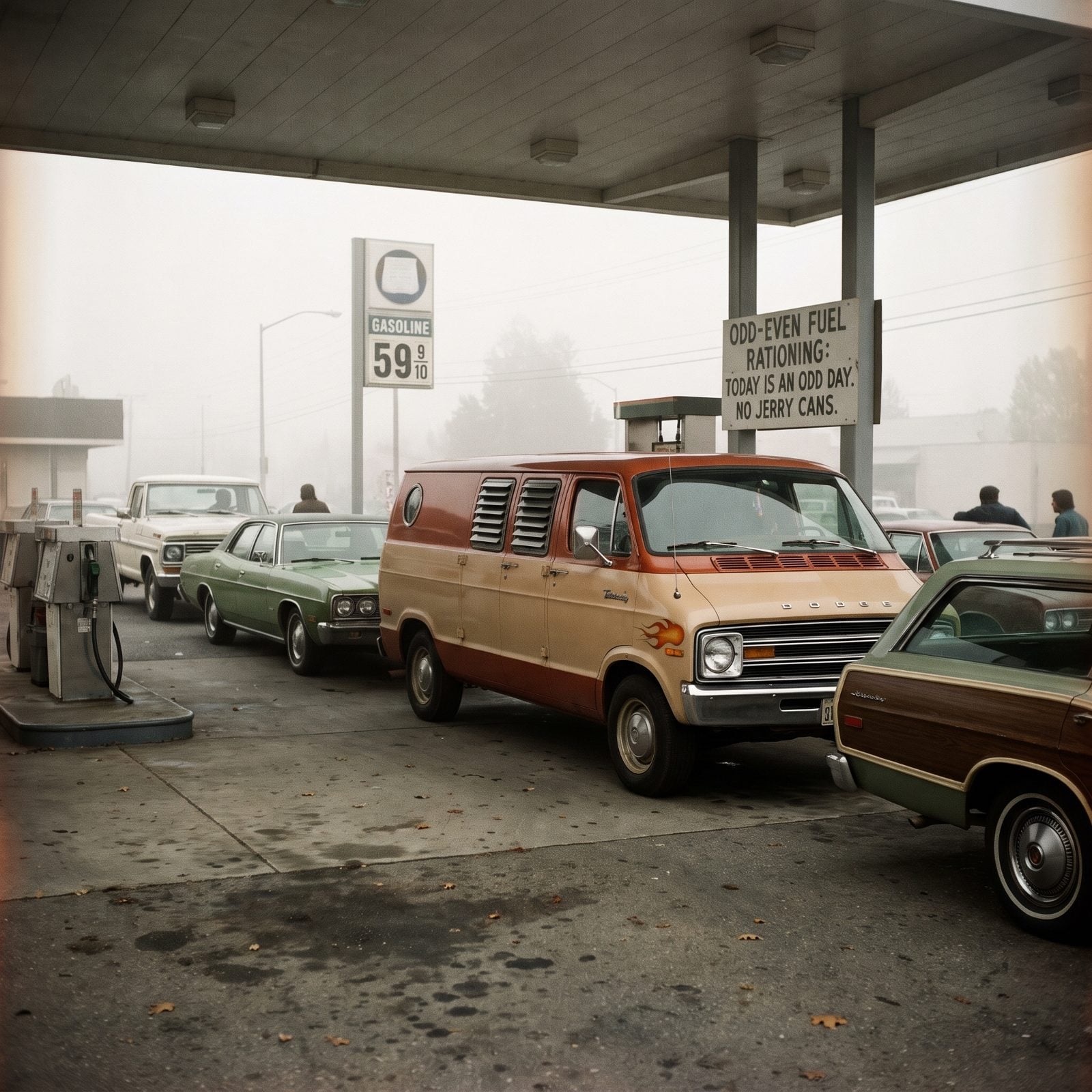
Odd plate on odd days, even on even. You learned the rule fast, because the alternative was an empty tank and a very long walk. The lines wrapped around blocks, engines idling, and some folks shut them off to save the fuel they were waiting to buy.
A thirsty custom van made the wait feel personal. You sat there watching the price sign tick up, doing grim little sums about whether today’s quarter-tank limit would even move the needle on something that drank the way yours did.
17. Enormous Blind Zones Behind Solid Side Panels
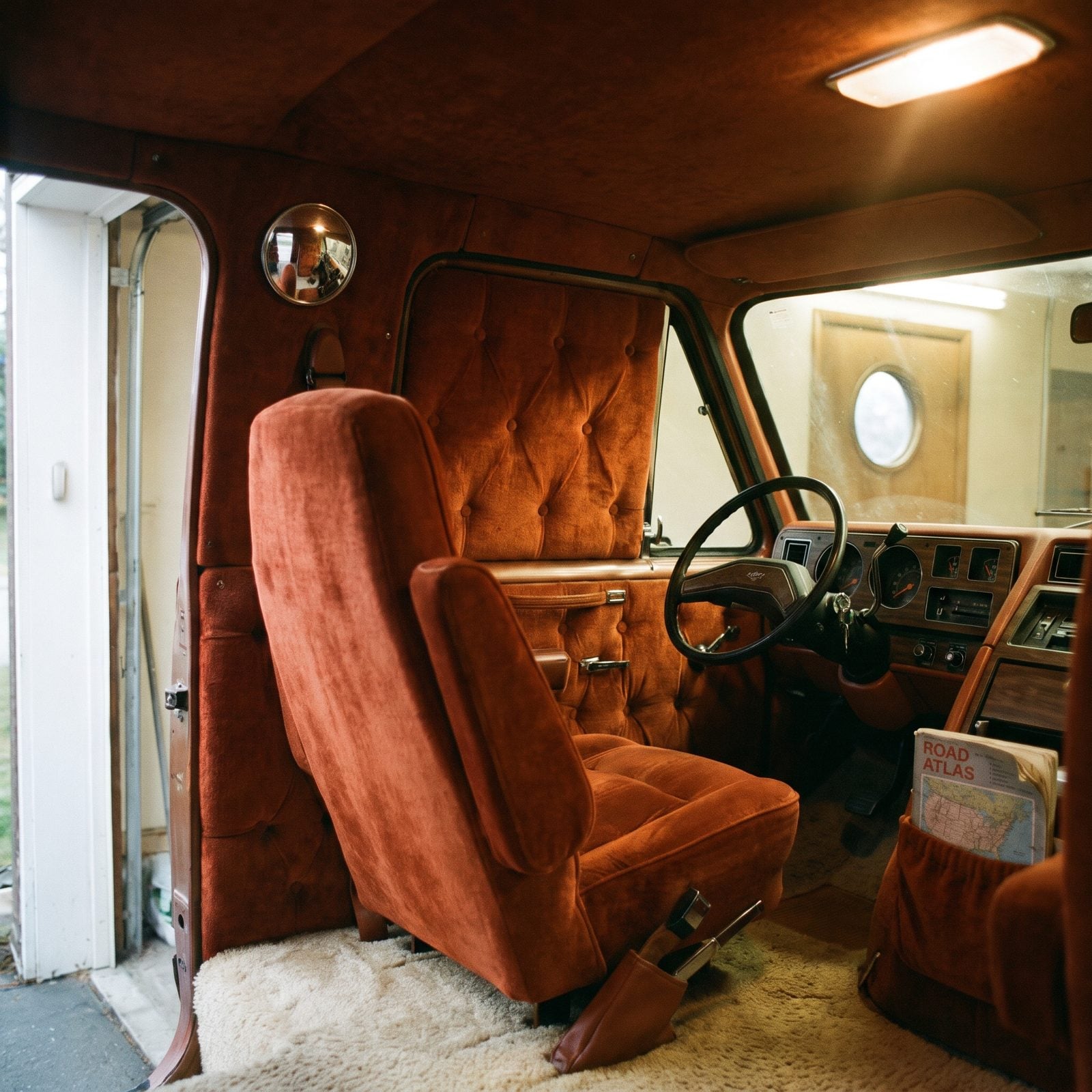
Those solid side panels looked incredible from the outside — clean canvas for a mural, a single round porthole, maybe a chrome scoop. Inside, they hid a solid wall of tufted velour with barely any glass, just a little round convex mirror. From the driver’s seat, those panels turned the whole back of the van into a guessing game.
You backed out of driveways on faith and a prayer. That little round convex mirror helped some, but mostly you craned your neck, cracked a window, and learned every parking lot by feel. Merging on the highway? An act of trust.
16. Crouching Inside Because the Roof Was Still Stock Height
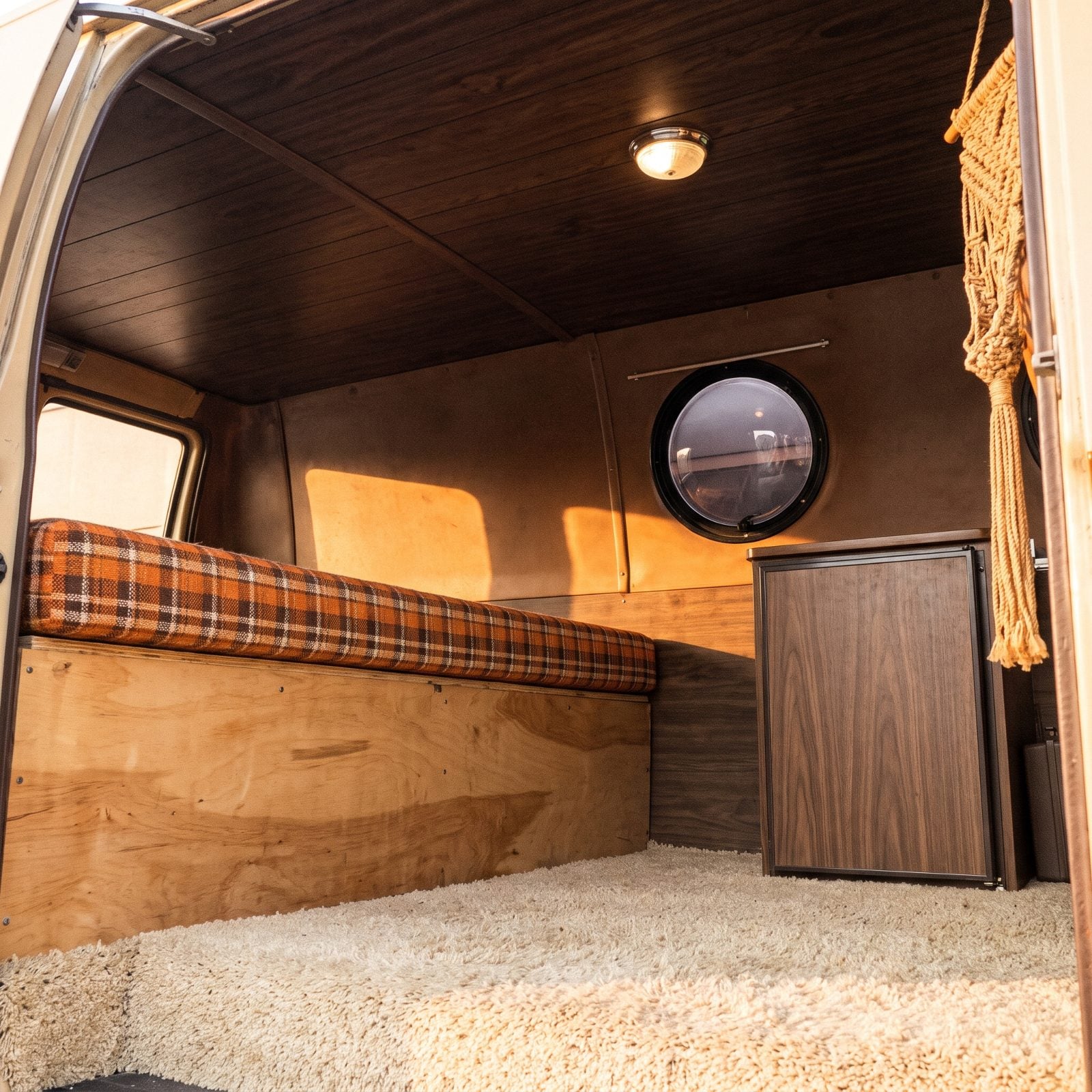
Before the fiberglass high-tops became common, most of these vans kept the factory roof, which meant you lived your interior life bent at the waist. You duck-walked from the captain’s chairs to the bed in back, head grazing the dome light the whole way.
Nobody complained much. The payoff was a van that still looked low and mean on the road. Standing up straight was for people with less interesting vehicles.
15. Cutting Window and Vent Holes With a Handheld Saw
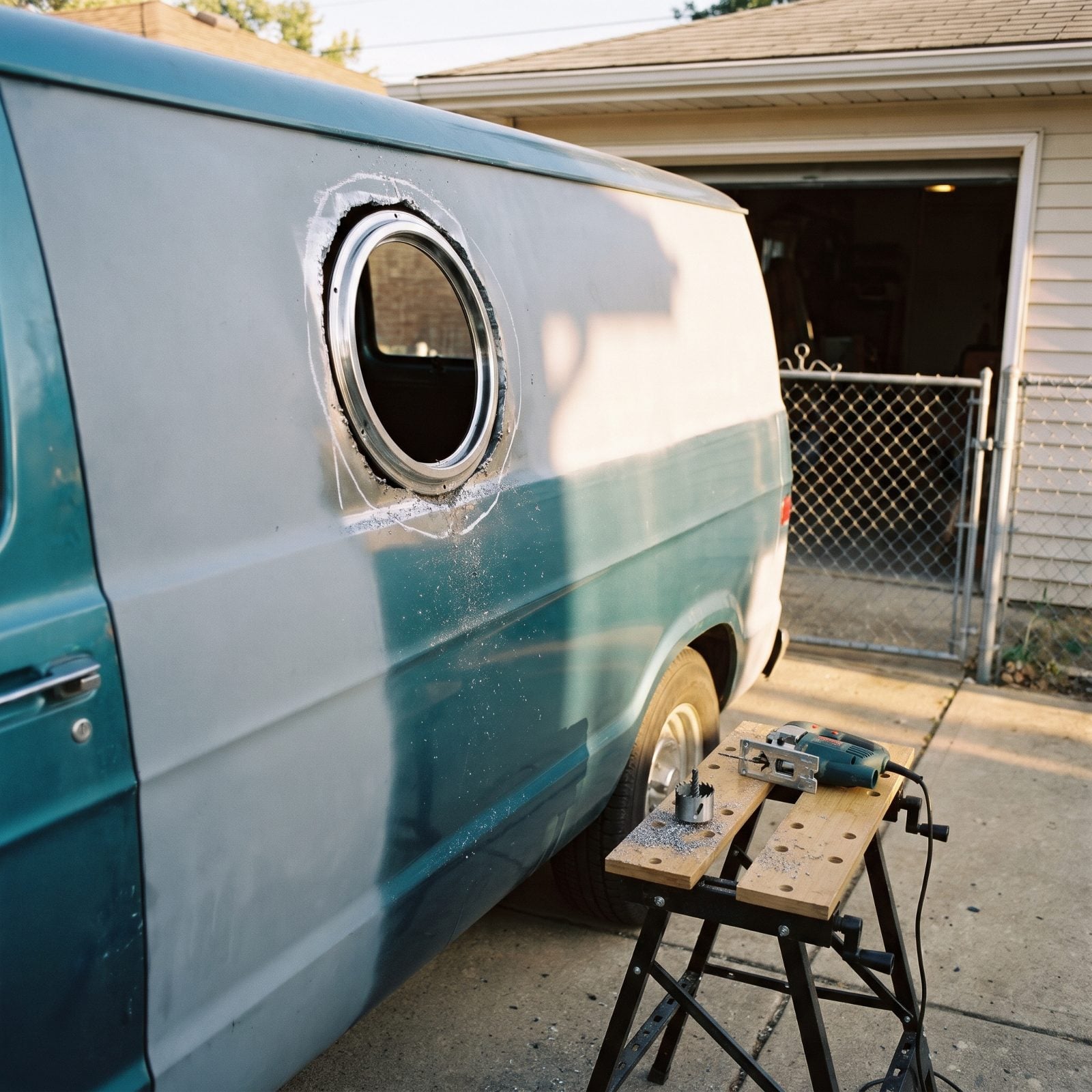
No kit. No clean template. You taped your cut line, said a quiet word, and went at the sheet metal with a corded jigsaw, and the sound was awful while the smell of hot steel filled the driveway.
Get it right and you had a porthole, a vent, a bubble window framing your interior. Get it crooked and, well, you learned to love Bondo. Every custom van in the neighborhood wore at least one hole somebody made freehand on a Saturday.
14. Building an Entire Interior From Hardware-Store Plywood
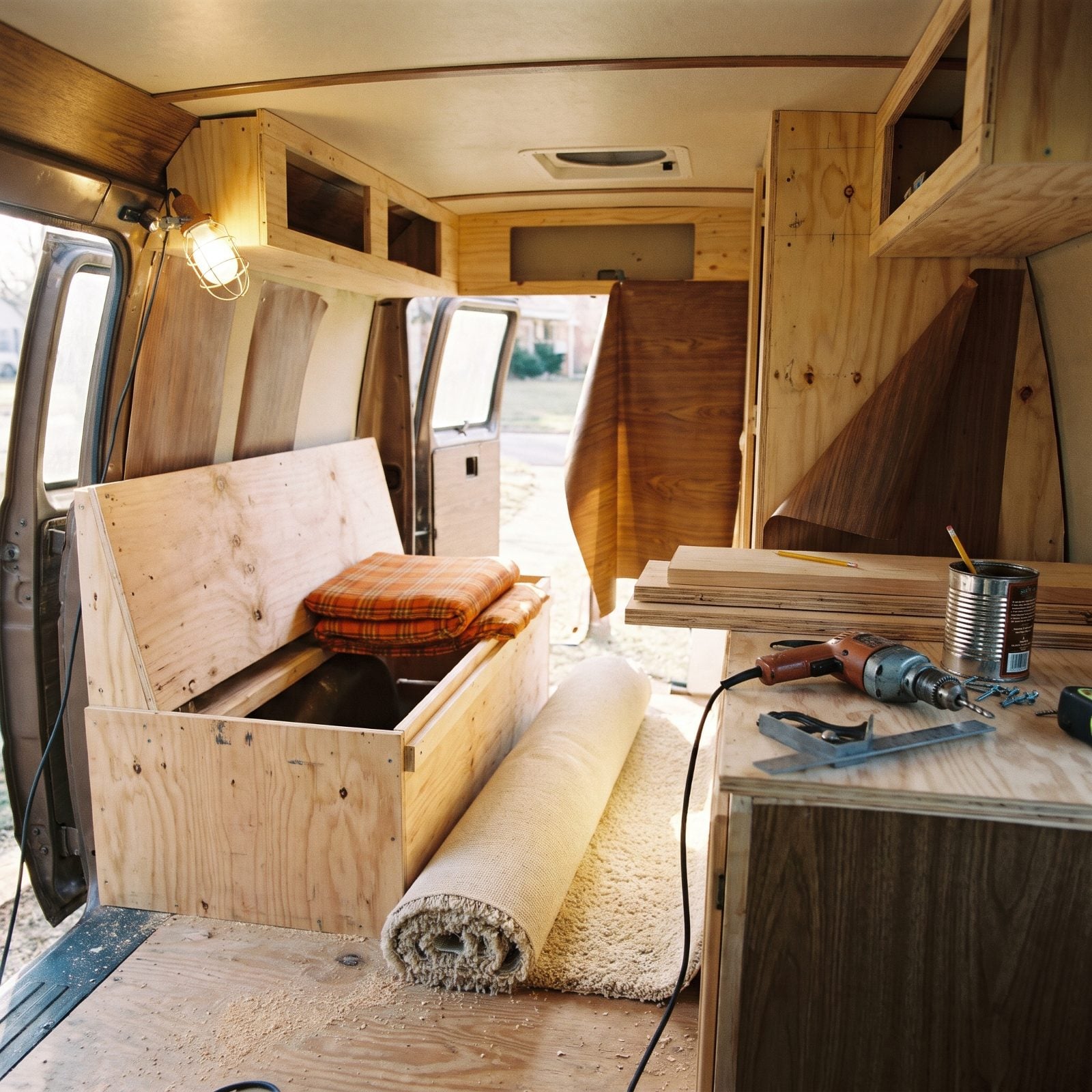
Three-quarter-inch plywood from the lumberyard became your bed frame, your cabinets, your little galley counter, your bench seat that folded down. You cut it in the driveway and screwed it into the van’s ribs, sometimes into thin air and a lot of hope.
Then came the wood-grain contact paper and the shag and the plaid cushions. A whole livable room, built by someone who’d never built furniture before, held together by drywall screws and stubbornness.
The best vans weren’t bought. They were assembled, one weekend at a time, out of whatever the hardware store had in stock.
13. Working in a Cloud of Contact-Cement Fumes
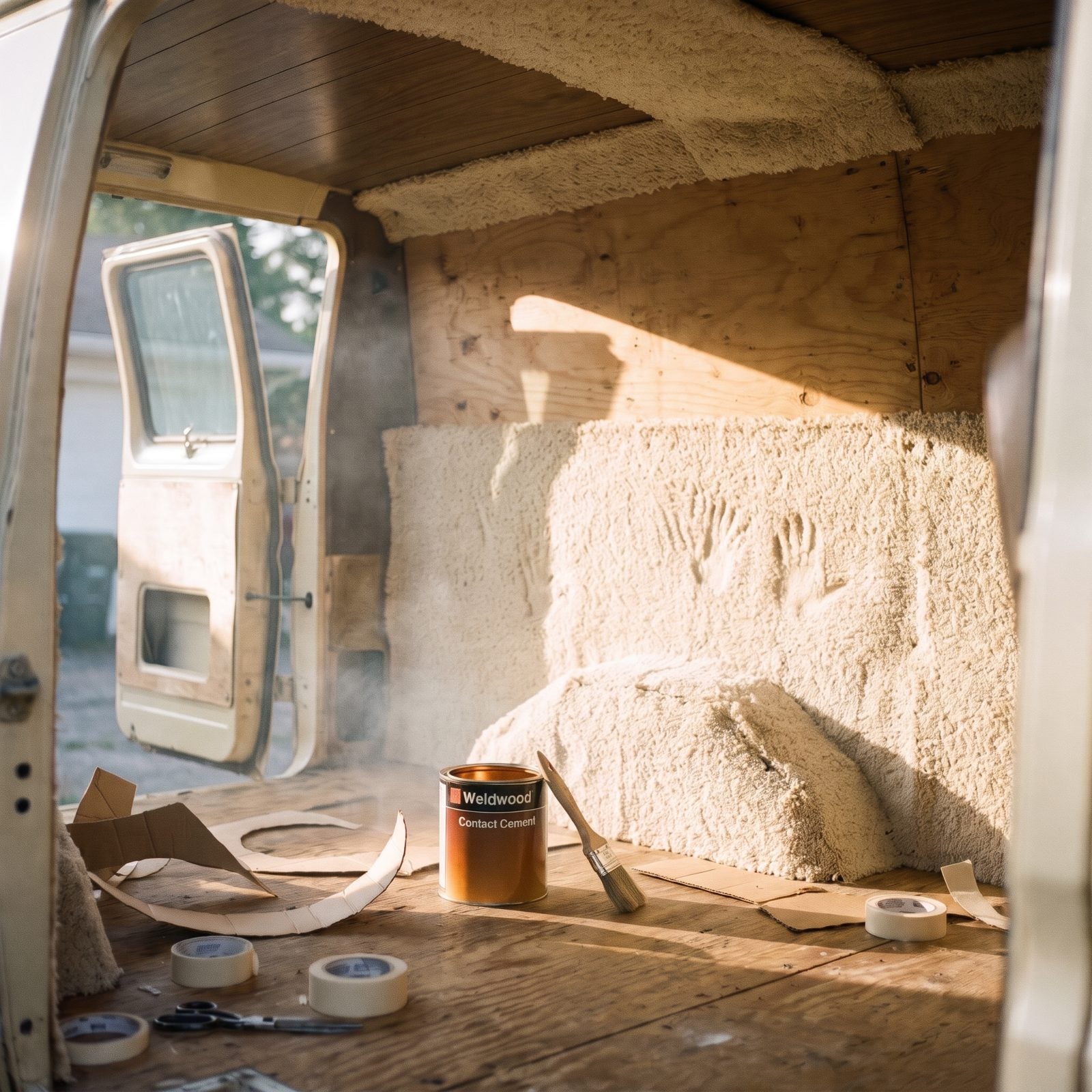
Contact cement is how you got carpet to stick to a plywood van wall and stay there. You brushed it on both surfaces, waited for the tack, then pressed — one shot, grabbing instantly and forever.
The fumes were something else. You worked with the doors open and your head spinning a little, gluing carpet to the plywood walls with a van full of solvent vapor hanging in the window light. Ventilation was a concept you discovered somewhere around panel four.
12. Ordering Custom Parts From Thick Paper Catalogs
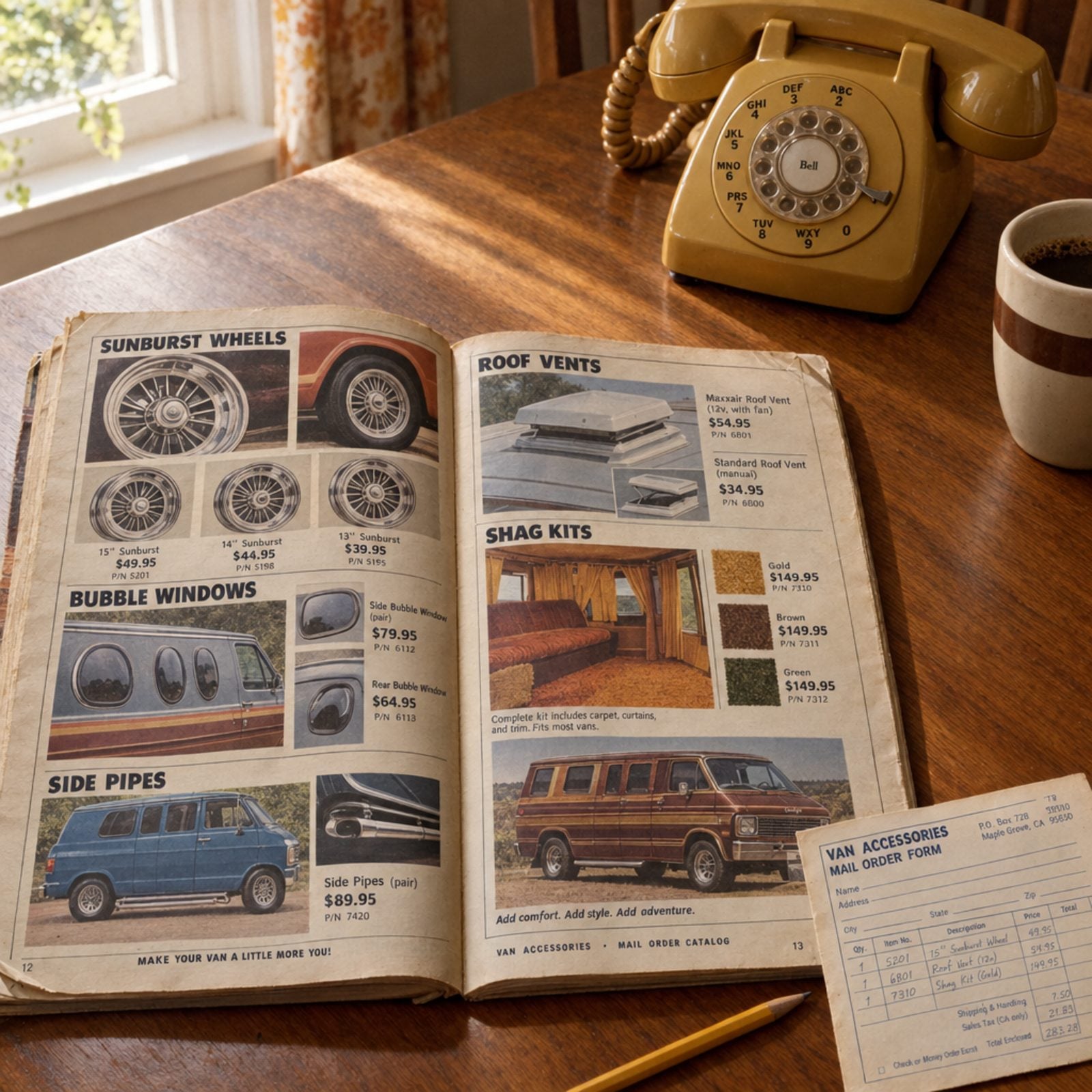
Before the internet, the catalog was the whole world of possibility. Pages thick as a phone book, full of bubble windows, side pipes, sunburst mags, roof vents, shag kits — every piece you needed to turn a cargo hauler into a rolling living room.
You circled things in pencil, filled out the order form, mailed a check, and waited weeks. When the box finally landed on the porch, Christmas came in July. Then you figured out how to install it, usually without instructions worth the paper they were printed on.
11. Hunting Junkyards for Handles, Lights, and Chrome Trim
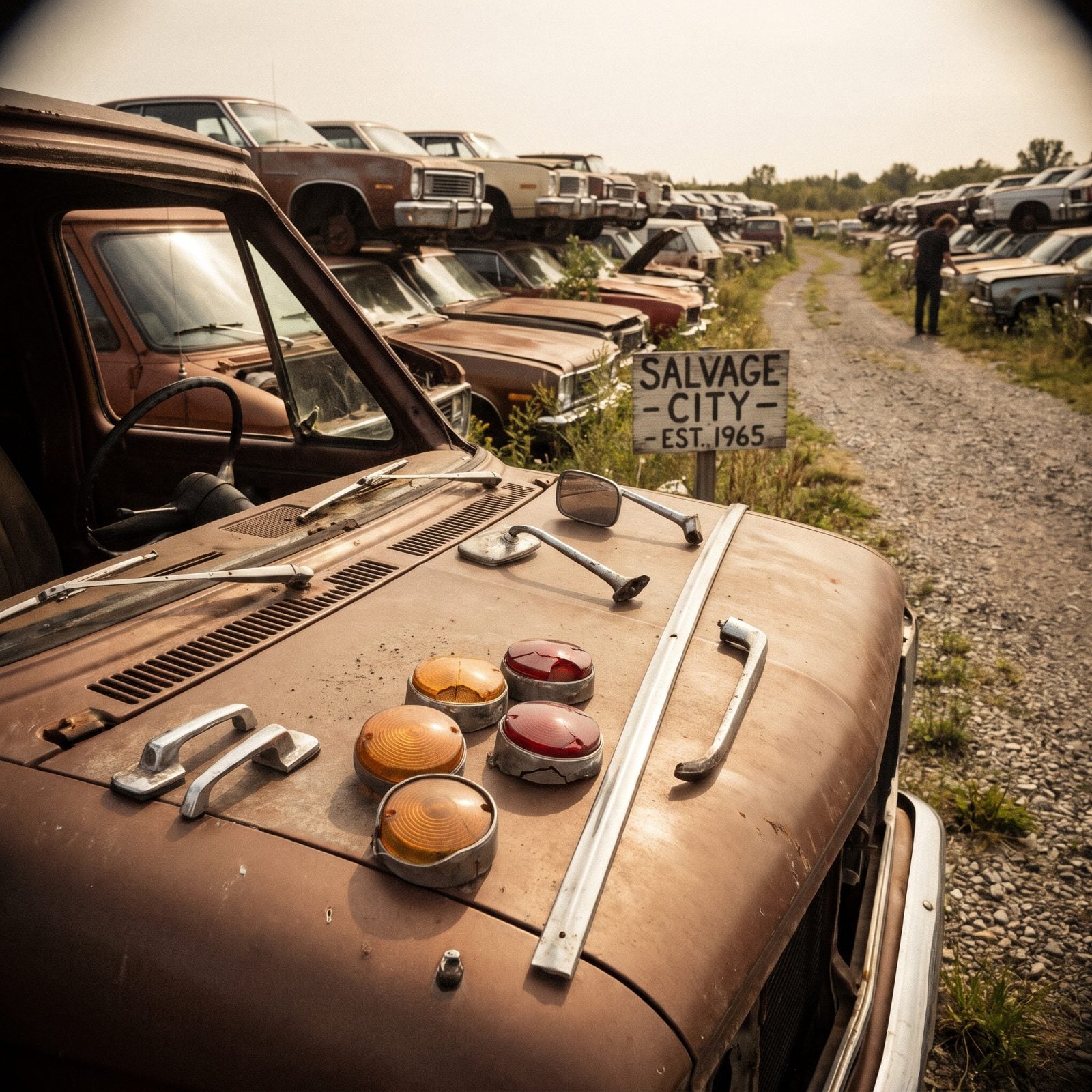
New chrome cost money. The junkyard cost an afternoon and a willingness to get filthy. You walked the rows with a screwdriver and a pair of pliers, pulling door handles off dead sedans, prying taillight lenses, hunting a strip of trim that would fit your porthole.
Half the fun was the find. You’d walk in needing a mirror and walk out with that mirror, two marker lights, and a grille nobody could use but you had to have anyway. The yard dog watched. The parts were cheap. The haul was yours.
10. Ford Econoline, Chevy Van, and Dodge Tradesman Rivalries
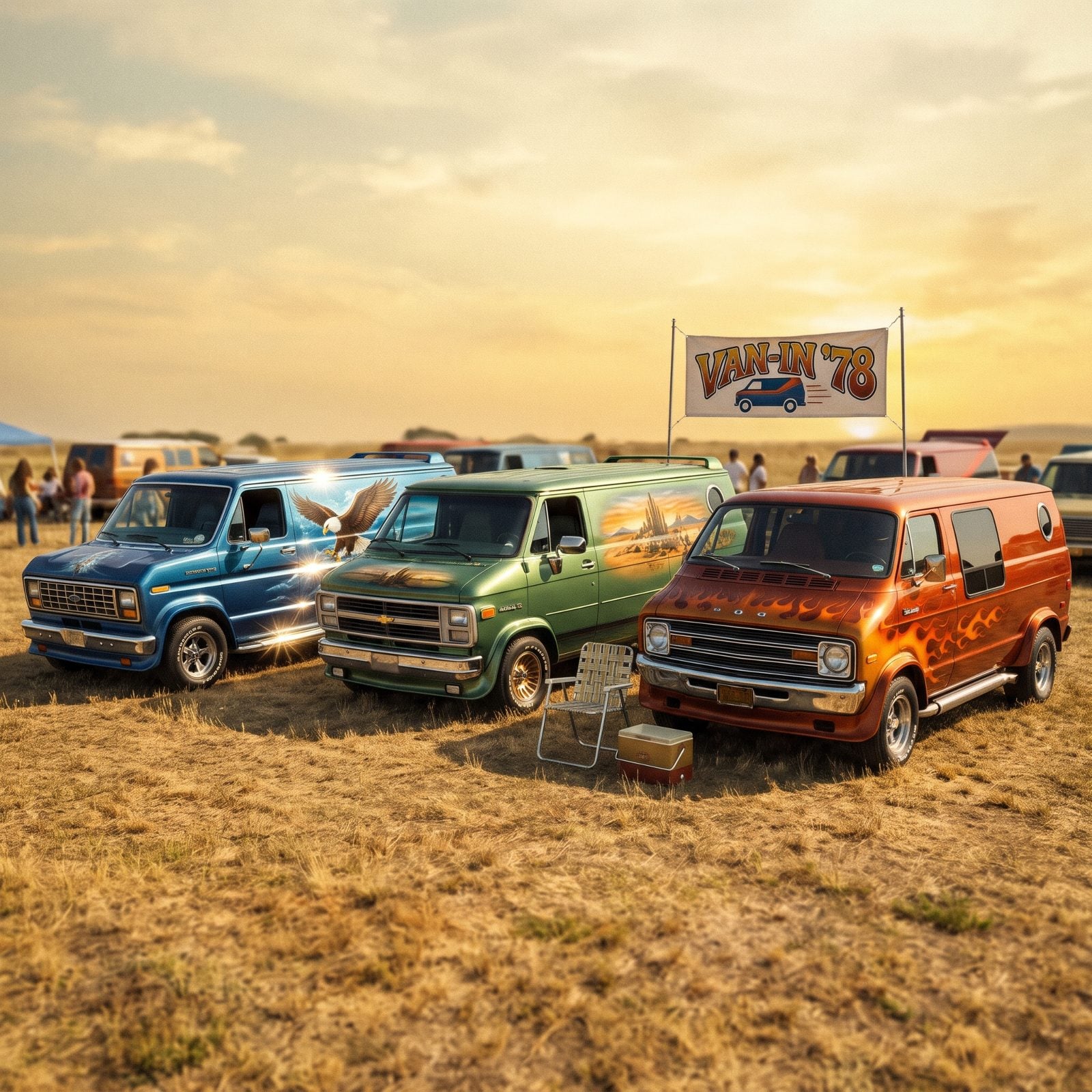
You ran a Ford, a Chevy, or a Dodge, and your allegiance was not up for debate. Econoline guys swore by the flat nose and the wheelbase. Chevy G-van people pointed at the drivetrain. Dodge Tradesman owners just grinned and kept the slant-six jokes to a minimum.
At the van-ins and club meets, the rivalry ran friendly but real. Everyone compared murals, wheels, side pipes, interiors — then you defended your brand like family and helped the other guy fix his carburetor in the parking lot an hour later.
9. Chrome Van-Club Plaques Bolted Below the Rear Bumper
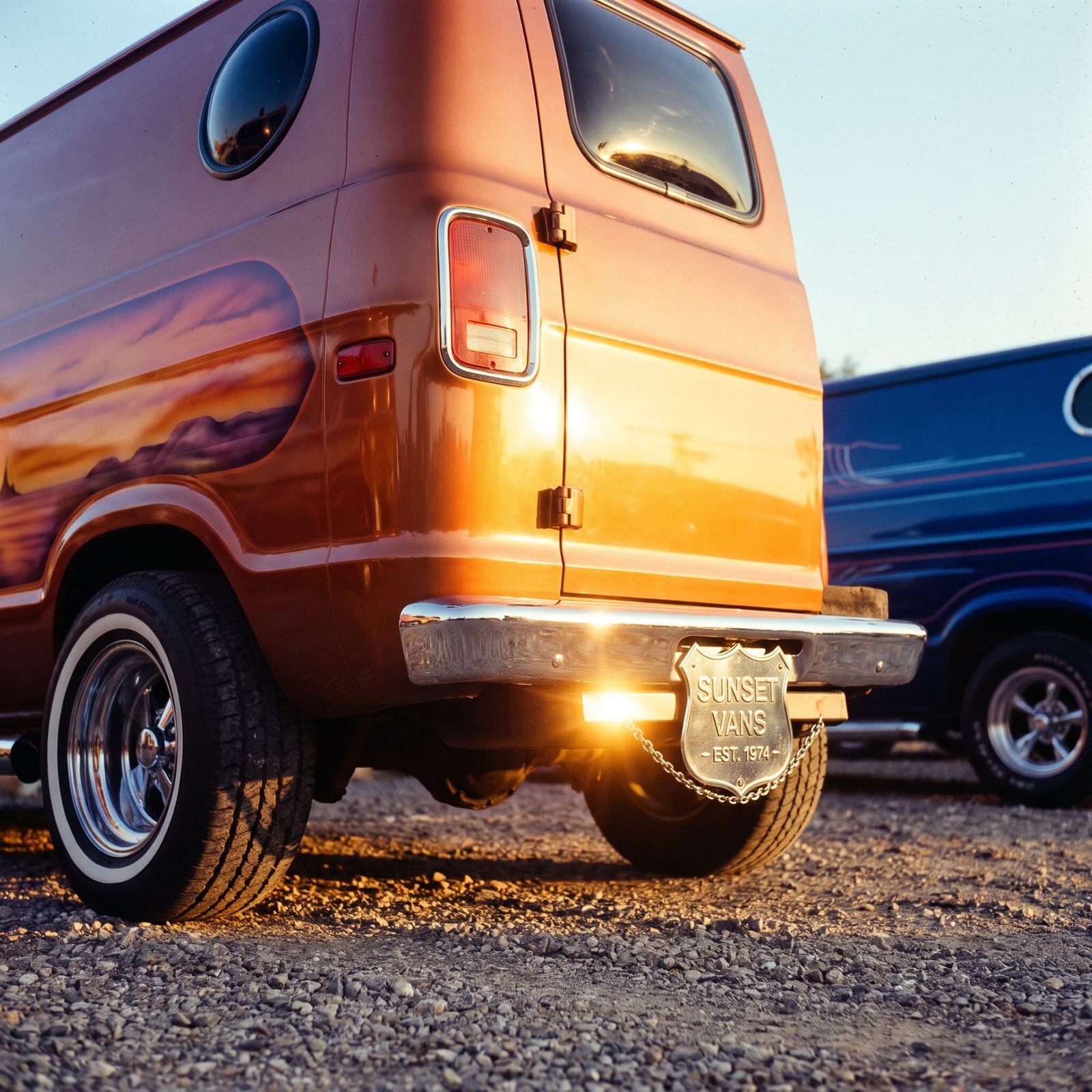
Walk behind any club van and you’d find it hanging there, a cast chrome plaque bolted under the rear bumper or chained to the hitch, the club’s name raised in letters you could read from three cars back. It was the same idea hot-rod clubs had used for decades, carried straight over into the van world.
That plaque meant you belonged somewhere. You’d earned it by showing up to meetings, pitching in on runs, and building a van the rest of the members didn’t laugh at. Stealing one was a serious offense. Losing one on a washboard road was a minor tragedy, and plenty of guys drilled a second bolt just in case.
8. Matching Satin Club Jackets With the Van Airbrushed on the Back
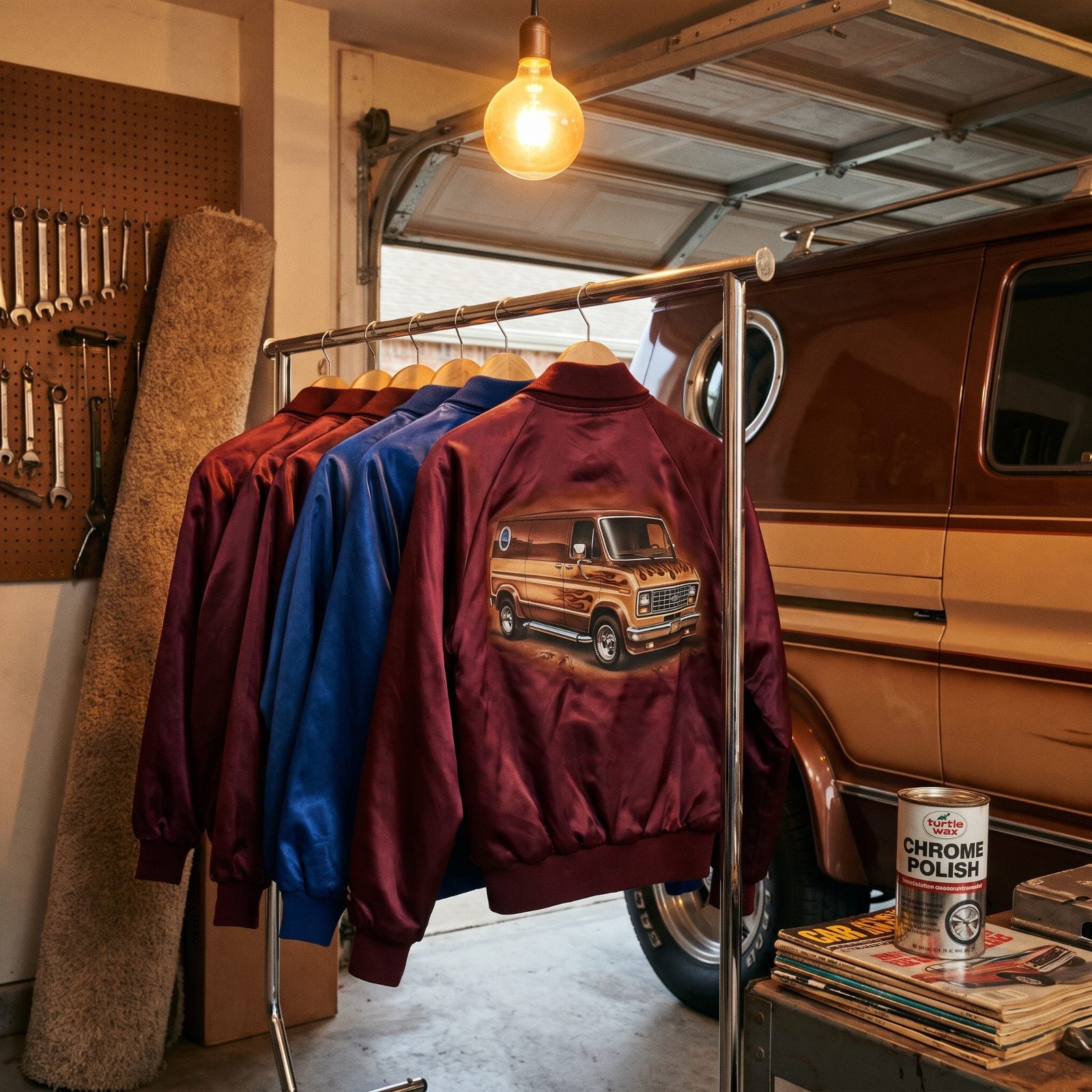
Satin, snap-front, usually in a color that matched nothing in nature. The club jacket had no lettering at all, just matching colors and, if you were really committed, your own van airbrushed across the back, mural and all, by the same artist who’d painted the real thing.
You wore it to the gas station. You wore it to the grocery store. It told strangers exactly what you drove before they ever saw it in the lot. Satin didn’t breathe and it wasn’t warm, but nobody bought one for the weather. They bought it so the van could follow them indoors.
7. Printed Calling Cards Swapped Between Van Owners
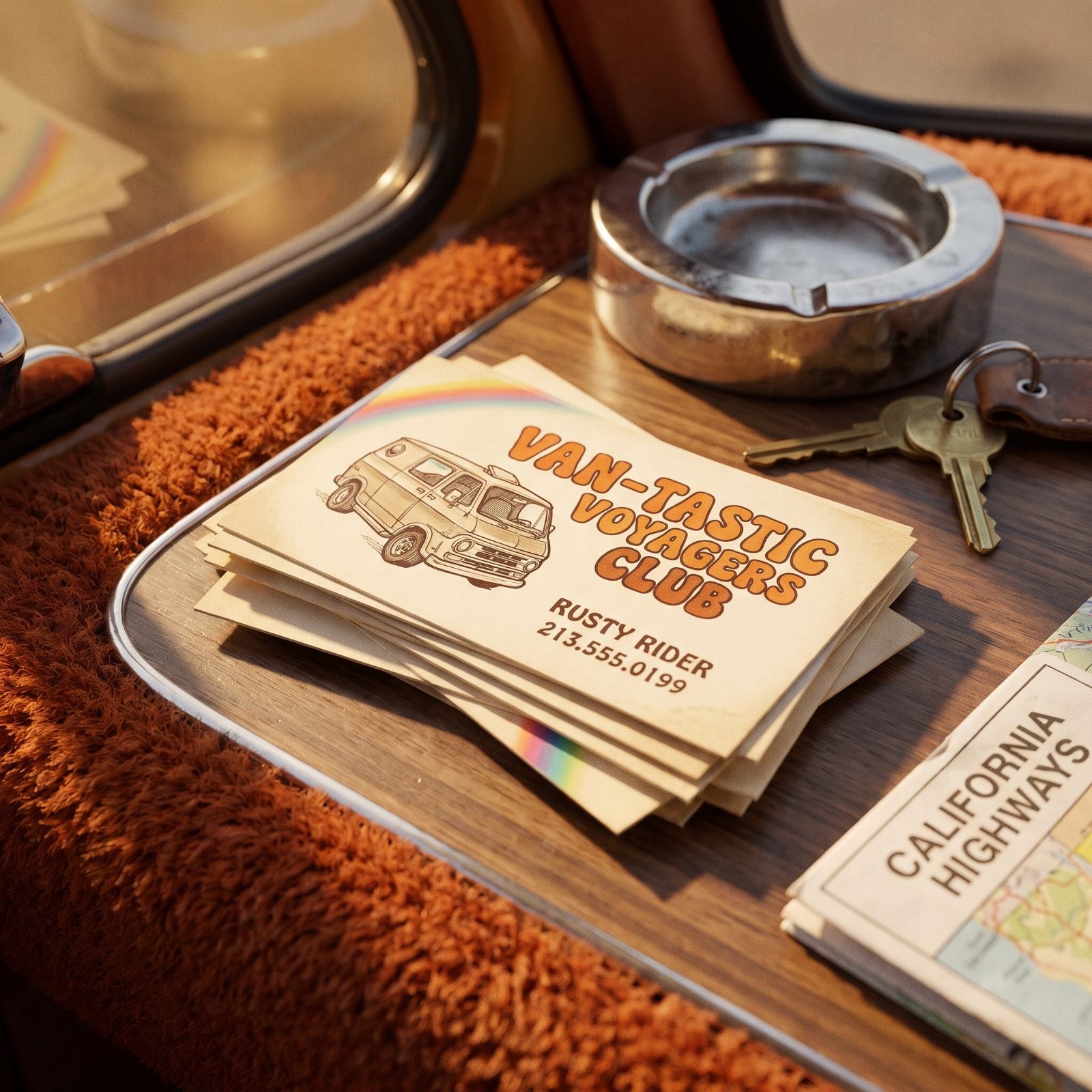
Van people carried business cards for a vehicle. Little printed rectangles with the van’s name, the club, maybe the owner’s CB handle, sometimes a tiny line drawing of the van itself. You handed them out at shows, tucked them under wiper blades, and traded them in parking lots the way kids swapped baseball cards.
A shoebox full of them was a record of every weekend you’d spent on the road. There was no other way to keep track of the people you met. No phone numbers saved, no profiles to look up later. Just a stack of cards held together with a rubber band and a vague memory of which one had the waterbed.
6. Weekend Van-Ins That Turned a Field Into a Temporary Village
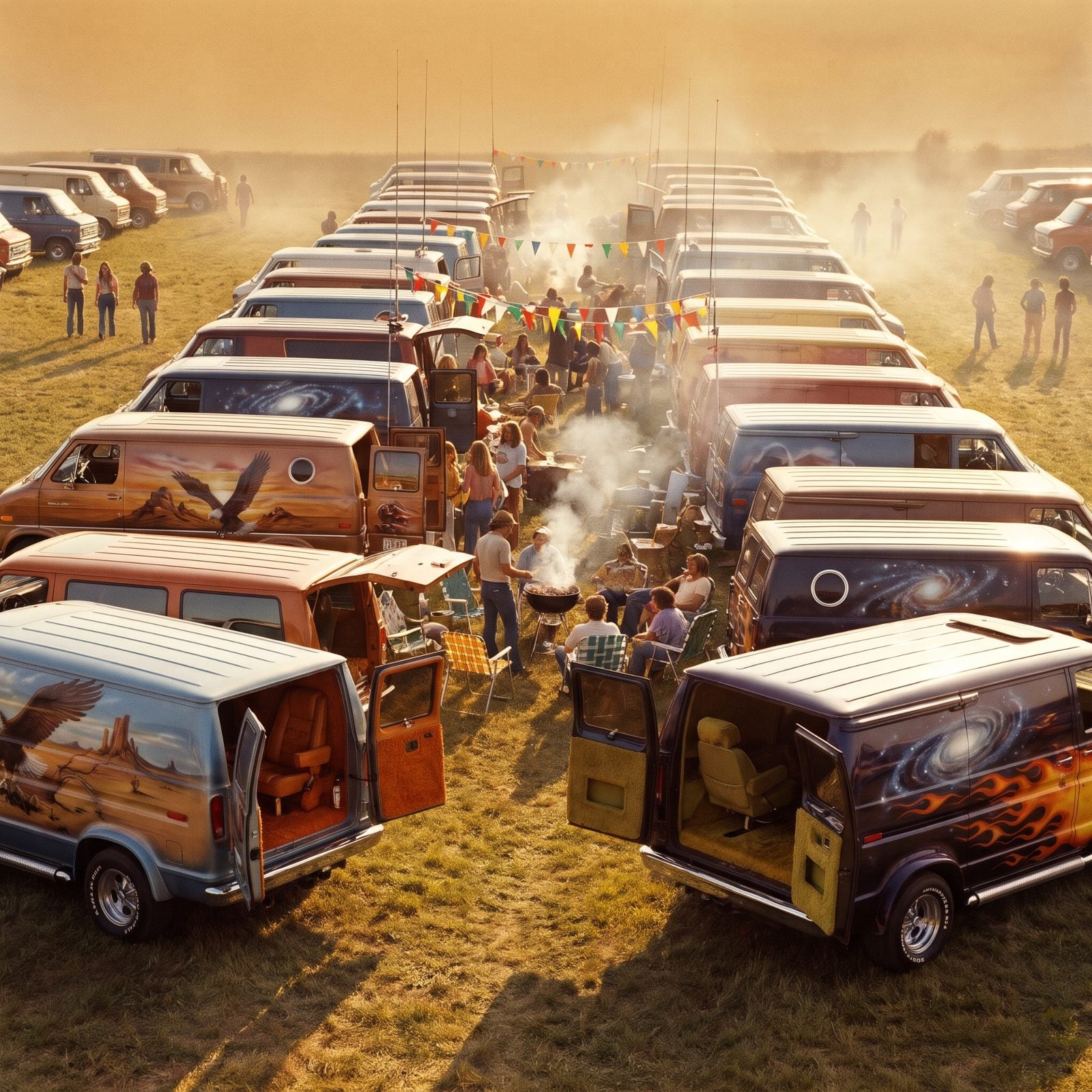
Friday afternoon it was an empty fairground or a farmer’s back pasture. By Saturday night it was a town. Hundreds of vans circled up with their back doors flung open, awnings stretched out, lawn chairs everywhere, and a dozen different eight-tracks fighting for the same patch of air.
You wandered from van to van all weekend, peering into strangers’ interiors like open houses. There were judging contests, games, cookouts, and at least one guy who never seemed to sleep. Sunday morning the whole village packed up and rolled out, leaving flattened grass and a lot of new names in your card box.
5. Show Vans Roped Off With Mirrors Underneath and a Typed Detail Card
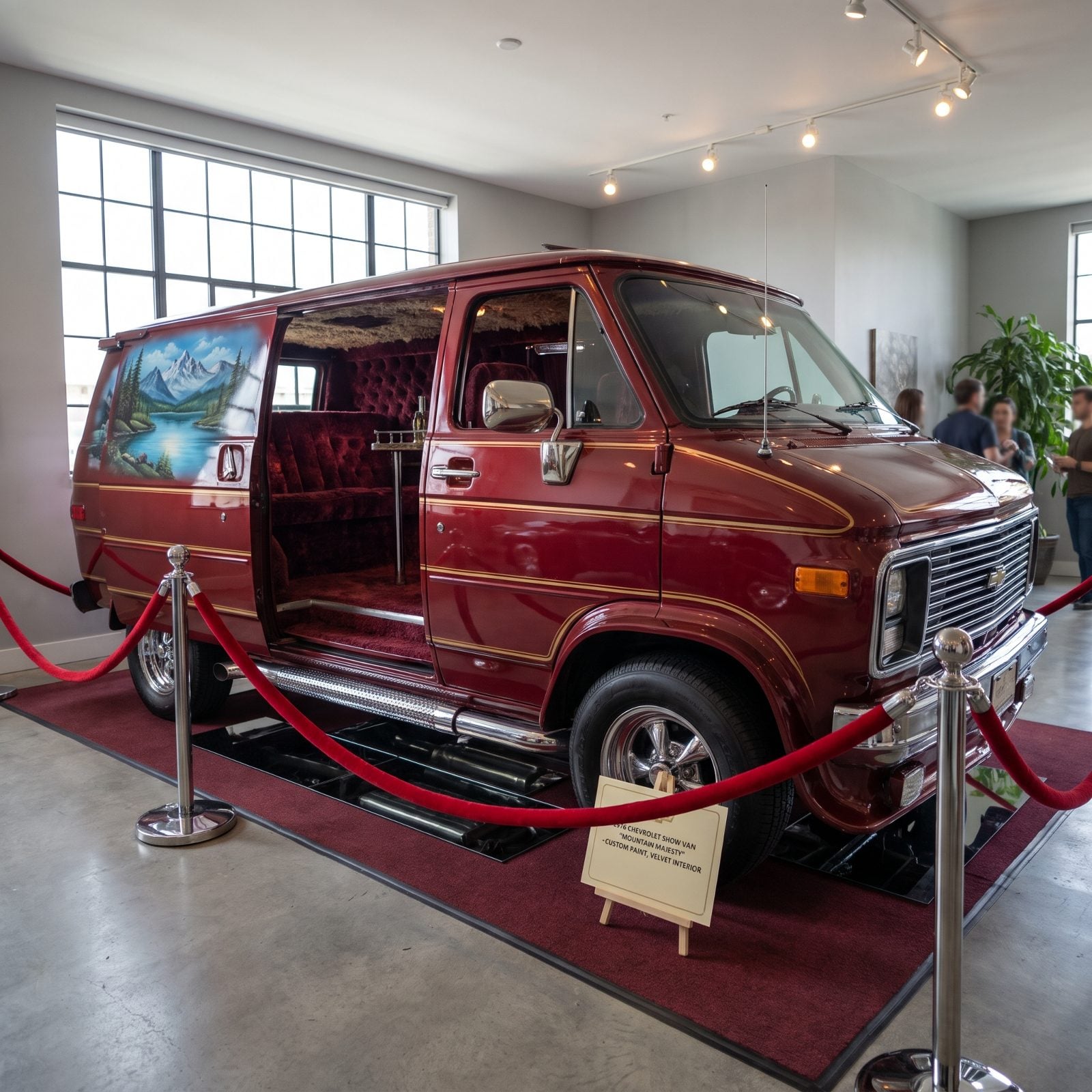
At an indoor show the serious vans got the full treatment. Velvet rope on chrome stanchions, mirrors laid flat on the floor so you could bend down and admire the polished undercarriage, and a typed card on an easel listing every modification down to the brand of carpet glue.
The mirrors were the giveaway. If you were willing to show off the underside, it meant you’d detailed parts nobody normally saw, scrubbing frame rails and painting the differential. Spectators shuffled past slowly, reading the cards like museum placards. For a few hours, a van that hauled plywood on weekdays was treated like fine art.
4. Custom-Van Magazines Spread Open as the Only Inspiration Feed
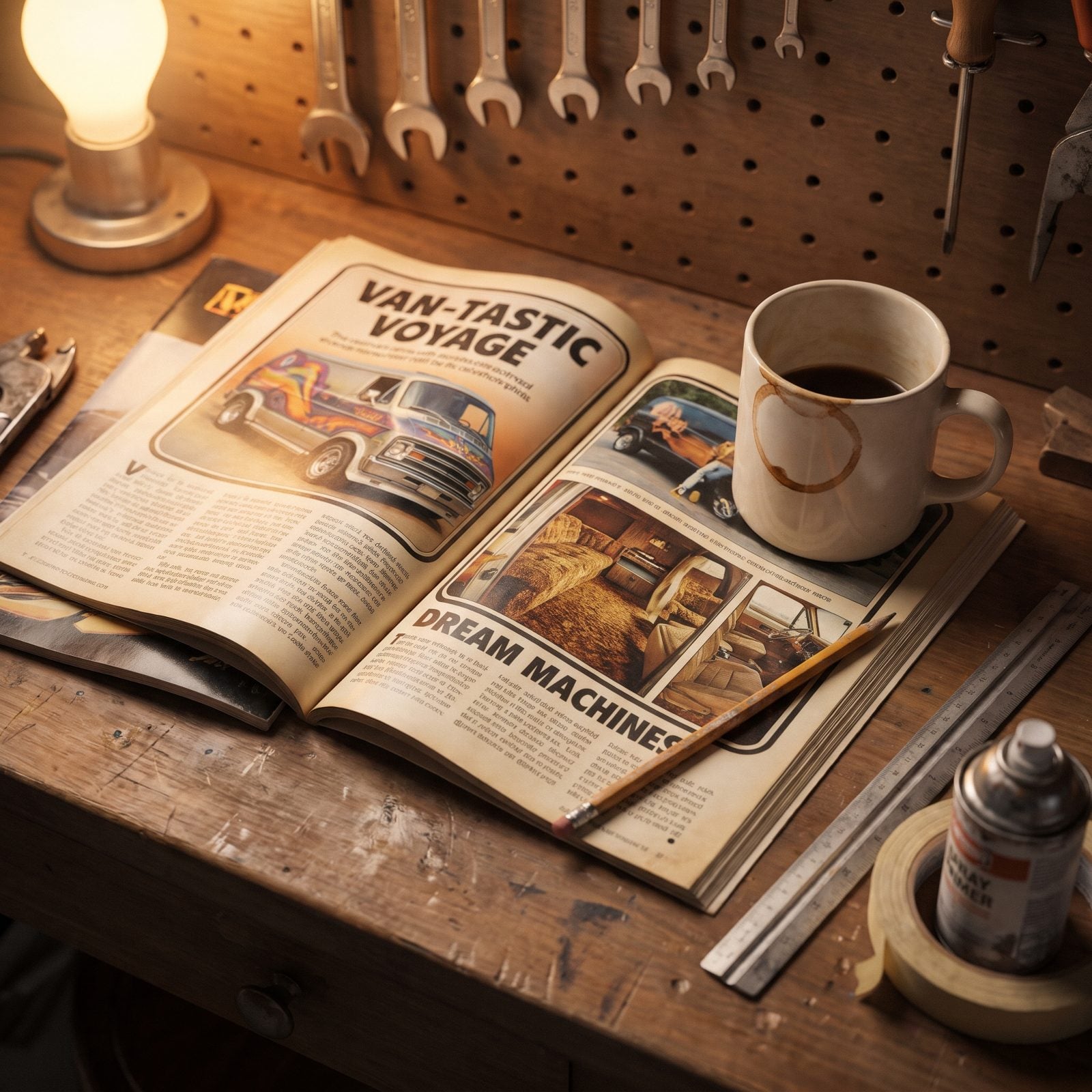
There was no endless scroll of other people’s builds. If you wanted ideas, you bought a van magazine off the rack at the drugstore and wore it out. Glossy feature spreads, interior close-ups, ads for portholes and bubble windows, all of it read until the staples loosened.
Builders kept those issues open on the workbench with a coffee can holding the page flat. You’d study a single photo of somebody’s tufted ceiling for an hour trying to figure out how they did it. When a new issue came out, you didn’t skim it. You absorbed it, then lent it to a buddy and hoped it came back.
3. Sleeping Outside the Concert Before Anybody Called It Van Life
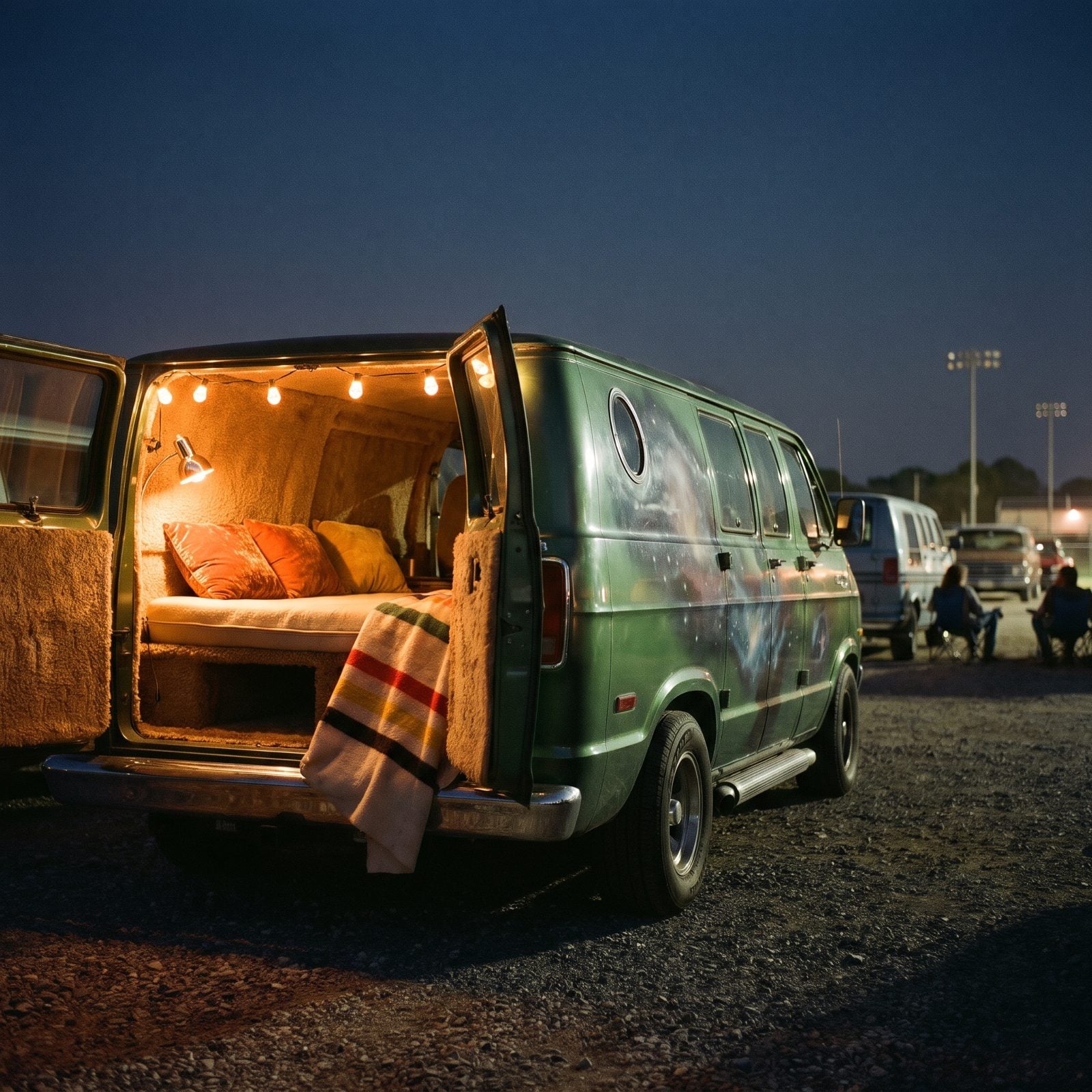
The tickets said the doors opened at seven. You got there the night before. Vans lined the stadium lot or the field outside the festival, back doors open, coolers out, a dozen radios tuned to whatever the local rock station was playing to build hype for the show.
Nobody called it a lifestyle. It was just the obvious thing to do when your vehicle had a mattress in it. You slept on shag with your boots still on, woke up stiff and sunburned, and still had a better spot in line than the people who’d driven in that morning. The hashtag came decades later. The idea was already parked in the lot.
2. Stripping the Lounge Interior Before Monday’s Work Run
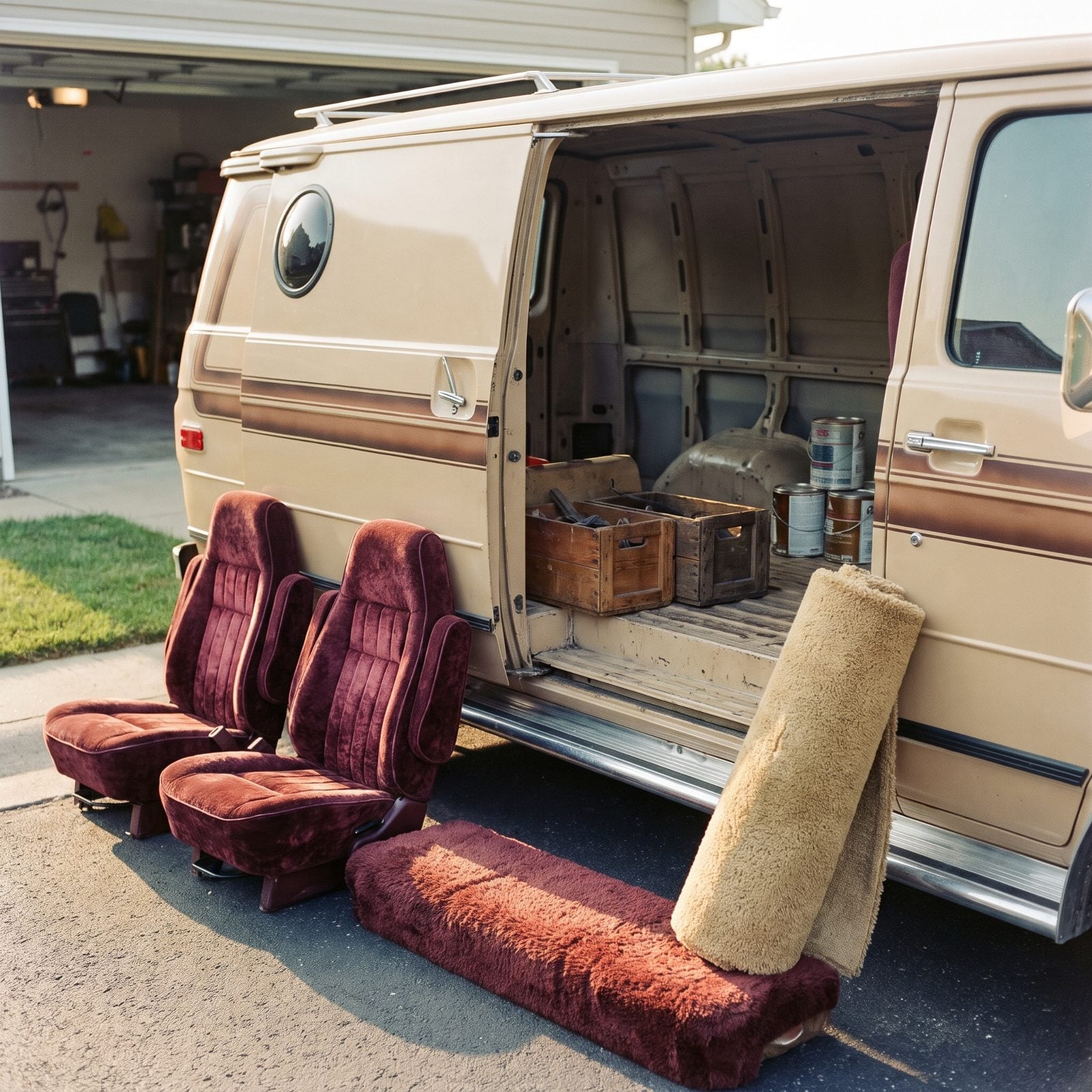
Plenty of custom vans still had day jobs. So Sunday night the lounge came apart. Cushions out, beanbags dragged into the garage, the cooler emptied, maybe a sheet of plywood laid over the carpet so the tools and lumber didn’t shred it.
By Monday morning the same van that had hosted a party in a cow pasture was hauling drywall to a job site with the mural still blazing down the side. It was a weekly double life, and the shag never fully recovered. You’d be pulling sawdust out of the pile on Friday, right before you hauled the cushions back in and started all over.
1. The Van’s Unshakable Reputation as a Rolling Make-Out Machine
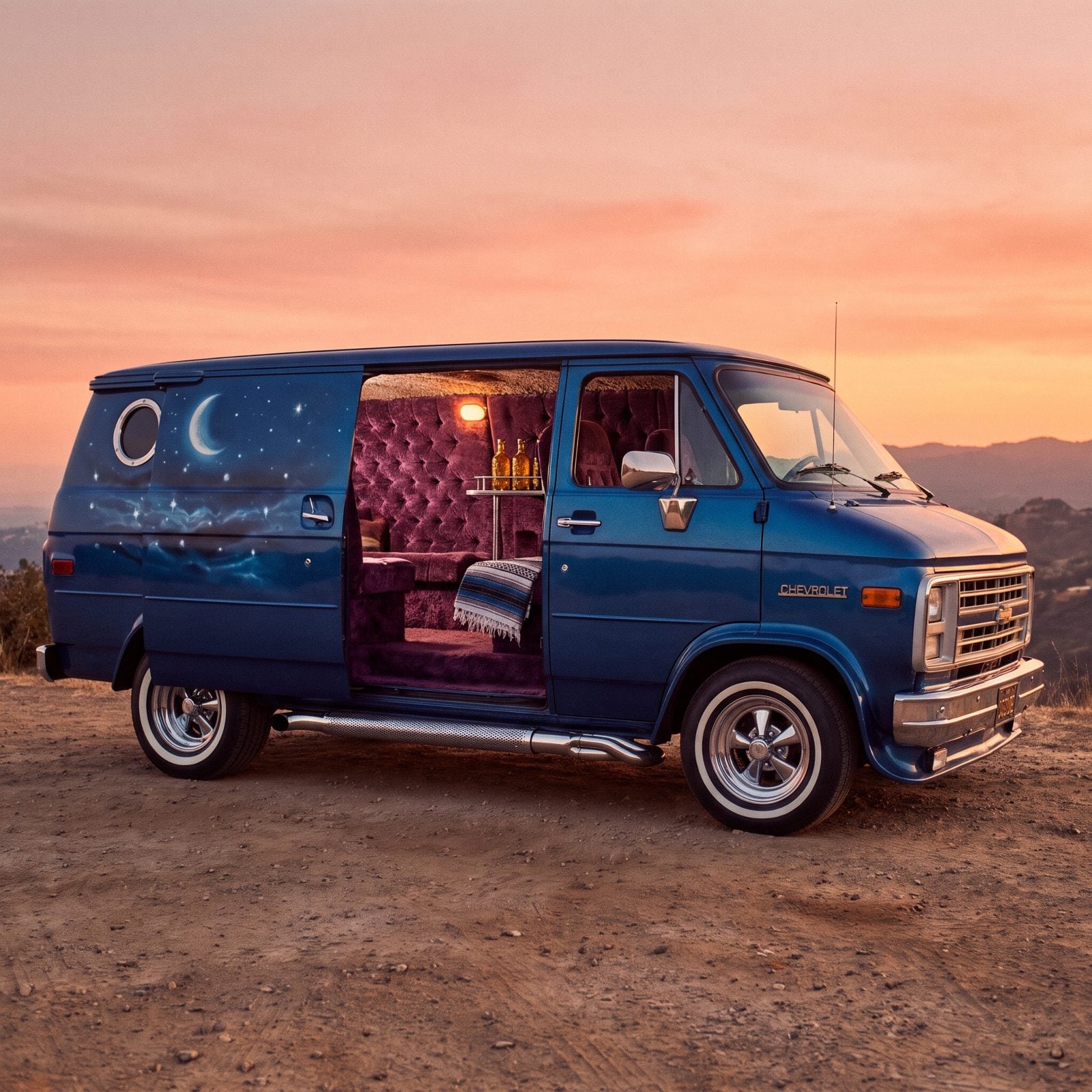
Every van owner heard the joke before they ever turned the key. Shag on the walls, a bubble window with a curtain, a bench that folded flat — and suddenly the whole neighborhood had theories about what went on in the parking lot.
The reputation wasn’t entirely unearned. A van with crushed velvet, a chrome bar, and an eight-track playing soft rock was built for exactly one kind of evening, and everybody understood the math. Teenagers at the drive-in understood it. So did the parents, which is why a few of them lost sleep when a shag-lined Econoline idled up the driveway on prom night.
Most owners just shrugged it off. The interior they obsessed over, the tufting they stitched by hand, the mural they saved three paychecks for — all of it meant more than the wink-wink gossip. The van was a living room you could drive, and what happened inside stayed between you and the upholstery.
Then gas prices climbed and the insurance companies stopped laughing, and the whole era faded. But park a restored ’77 Tradesman at a show today and watch the grins spread. Some reputations outlive the explanation.