
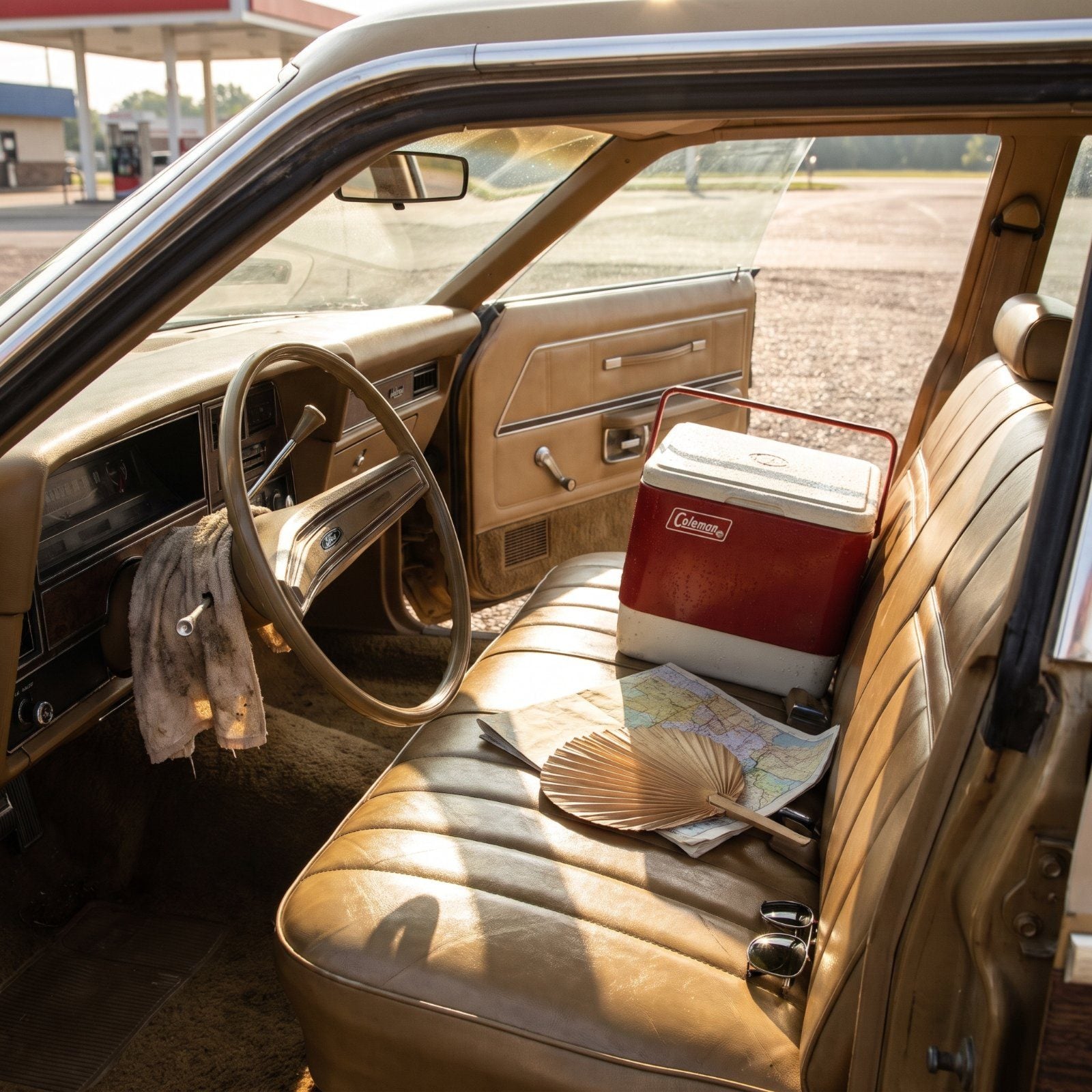
The back of your thighs knew before your brain did. One slide onto a black vinyl bench seat that had been baking in a parking lot since noon, and the whole family understood summer had arrived. No air conditioning — just four cranked-down windows, a plastic cooler sweating on the floor, and the thin hope that the car would start moving before anyone passed out. If you rode through a 1970s August in a station wagon, this list will drag it all back.
Please note that some of the images in this article were created with the assistance of AI.
41. Black Vinyl Seats That Could Brand Bare Legs
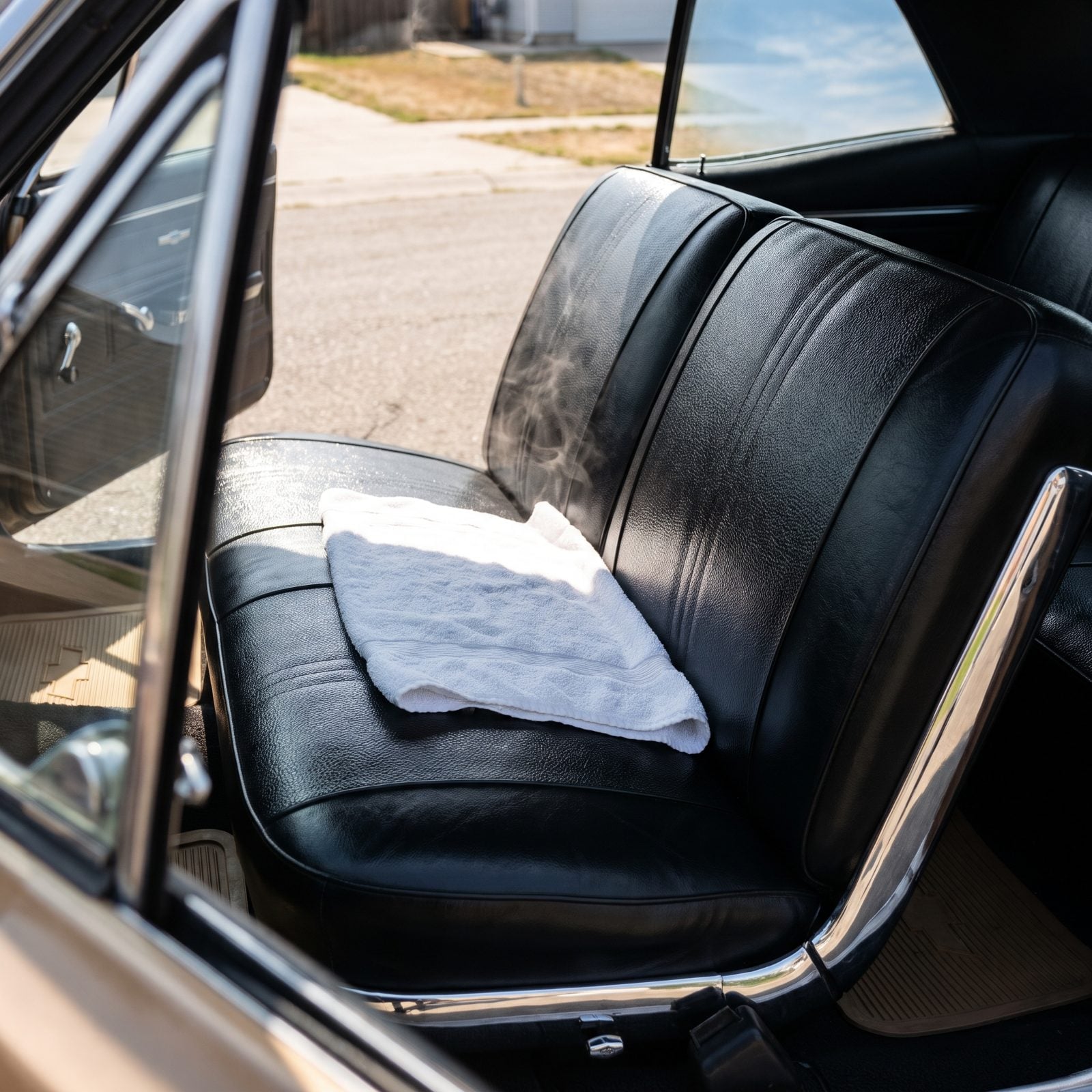
You learned to sit down in stages. Toe first, then a controlled hover, then the slow commitment, because a black vinyl bench seat at two in the afternoon held heat like a griddle and shorts offered no protection at all. The vinyl found the backs of your knees and left a pink waffle pattern pressed into your skin.
Smart families kept a beach towel folded on the seat. Everyone else just gritted their teeth and did the little hovering dance until the surface cooled to merely unpleasant. I still flinch at the squeak of hot vinyl.
Drawing on his experience with injury claims, a personal injury attorney warns that “Seating surfaces of leather and vinyl can actually get hot enough to result in skin irritation or a first-degree burn with direct contact.”
40. The Steering Wheel Was Too Hot to Touch
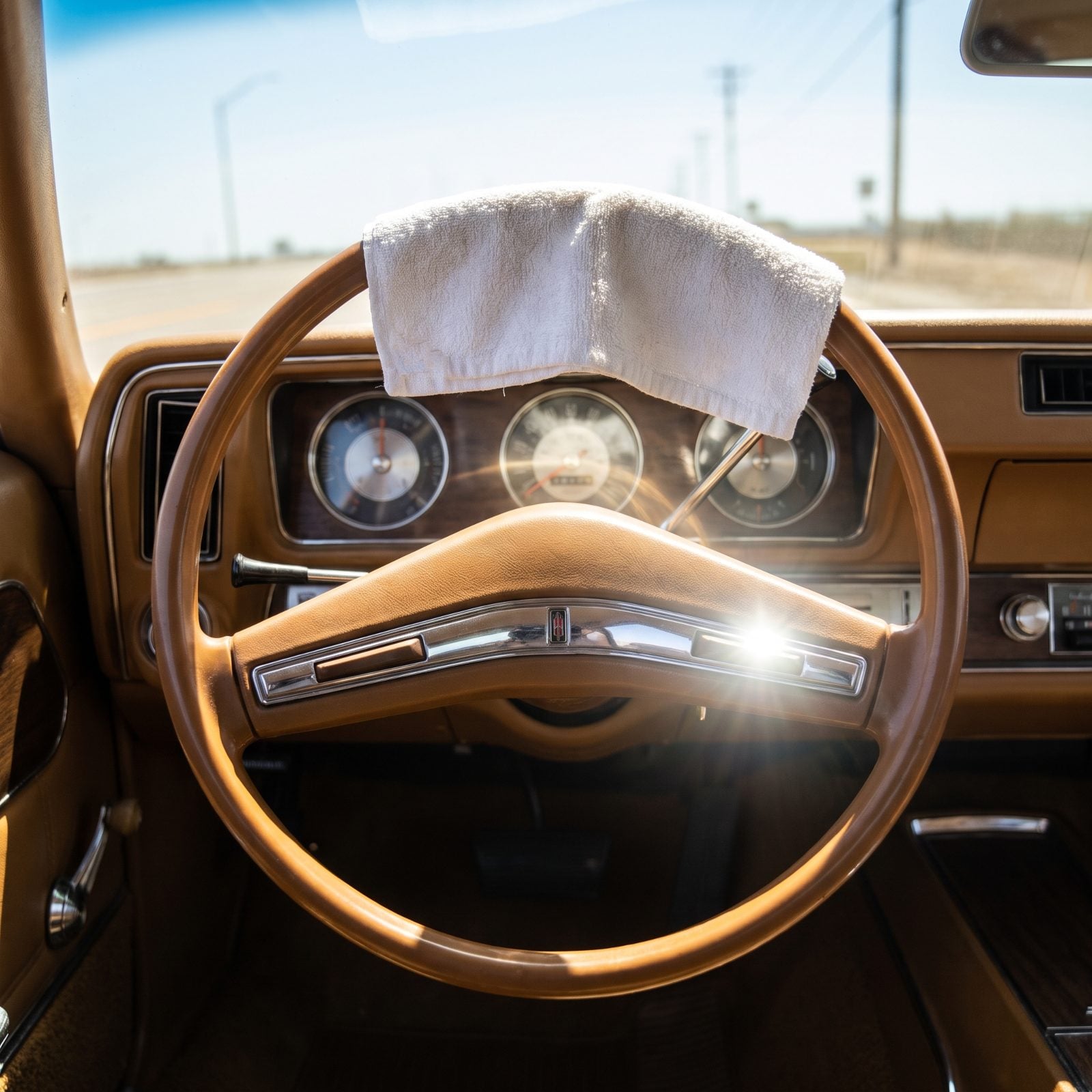
The wheel left in the sun was a two-handed problem solved with no hands. You’d drive the first few blocks steering with your palms barely grazing the rim, fingers splayed off the hot plastic, hoping a left turn didn’t arrive before the thing cooled down.
The chrome horn ring was the real villain. Touch that at high noon and you’d pull back fast. Drivers kept a towel over the wheel, or steered through a shirttail, or just suffered. A padded wheel cover counted as a genuine luxury upgrade.
39. Chrome Seat-Belt Buckles Became Tiny Branding Irons
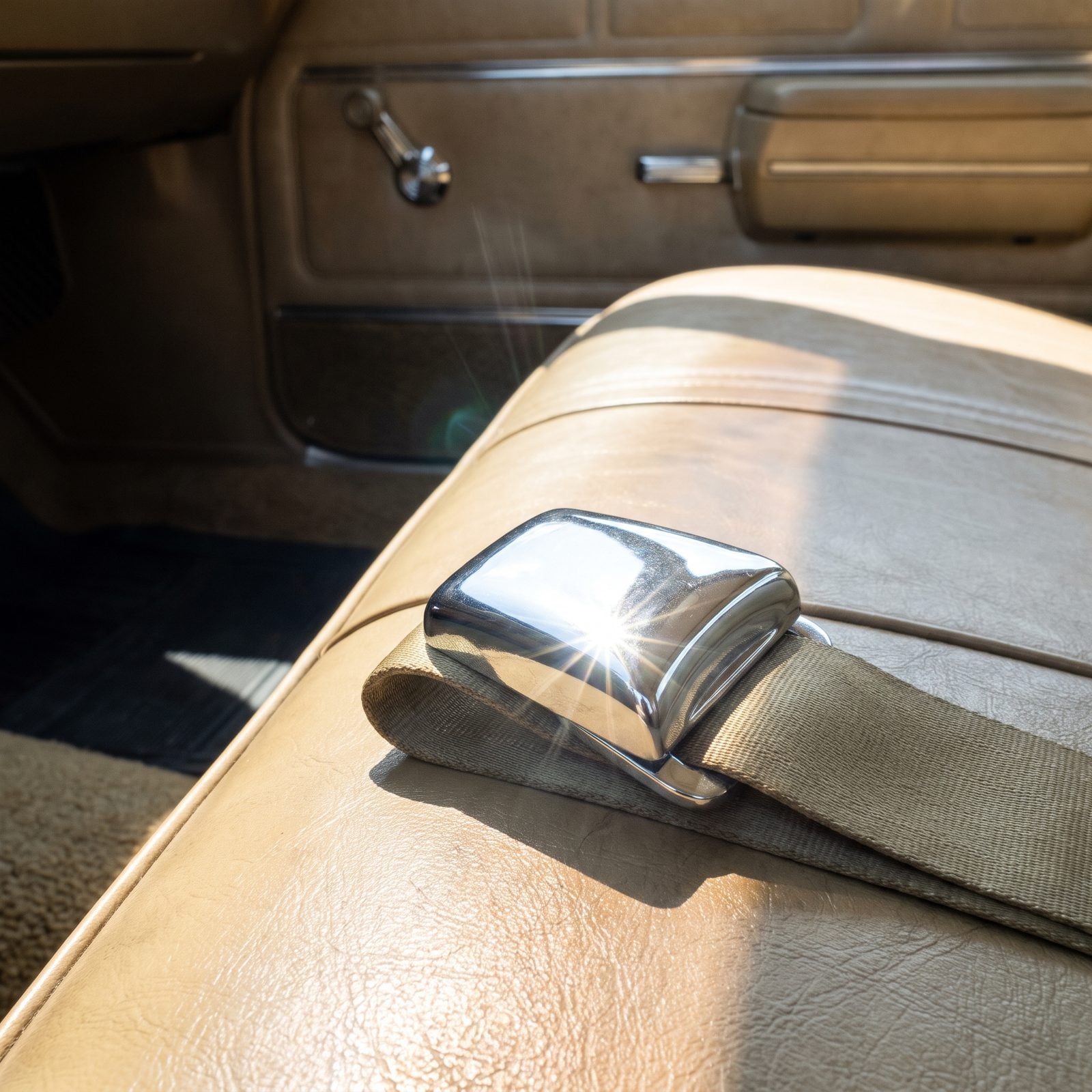
The lap belt buckle was a small chrome rectangle that sat in a patch of sun all afternoon, quietly collecting heat. Then you’d fumble it across your lap, the metal found bare skin right at the hip bone, and you’d yelp.
Everyone developed the fingertip-only grip for buckling up. You’d flick the latch closed and let go fast, like handling something off a stovetop.
38. Every Window Had to Be Cranked Down by Hand
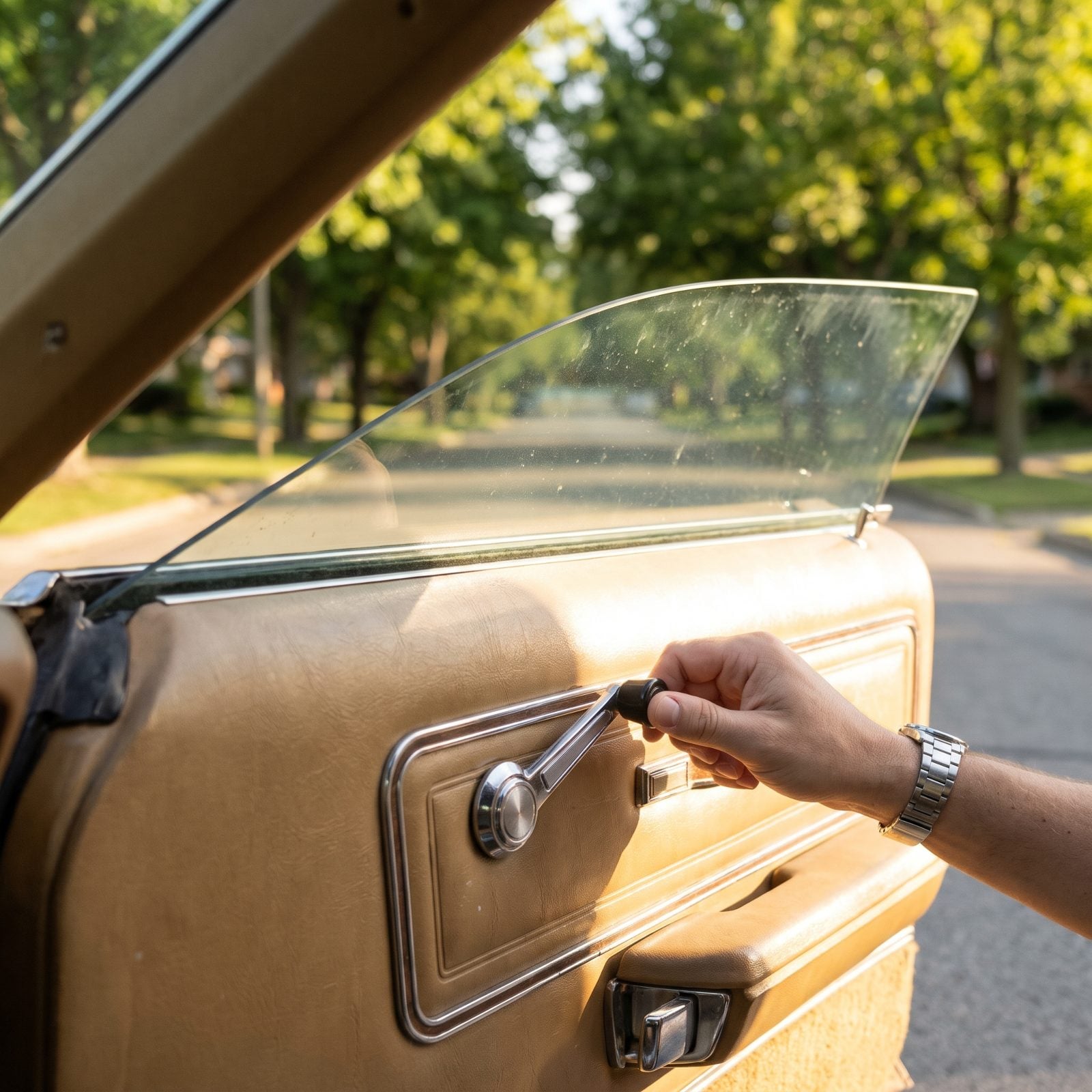
Four windows, four cranks, and a strict seating hierarchy. Whoever sat by a crank controlled the airflow for a whole section of the car, which turned the middle seat into a special kind of purgatory. You’d twist that handle through a dozen turns to drop the glass, elbow working like a fishing reel.
Dad’s command from the front never changed: get those windows down before we pull out. And the kid stuck dead center, with no crank of their own? Left to negotiate.
What Our Readers Say
- When Jalopy Talk readers loved a car photo and tapped a reason, “nostalgic” came out on top at 26%, ahead of body style and would drive.
- In our reader votes, cars with wood paneling got more hearts than the other images in the same articles, 84% versus 74%.
From Jalopy Talk reader polls and votes.
37. Vent Windows Were Aimed Directly at Your Face
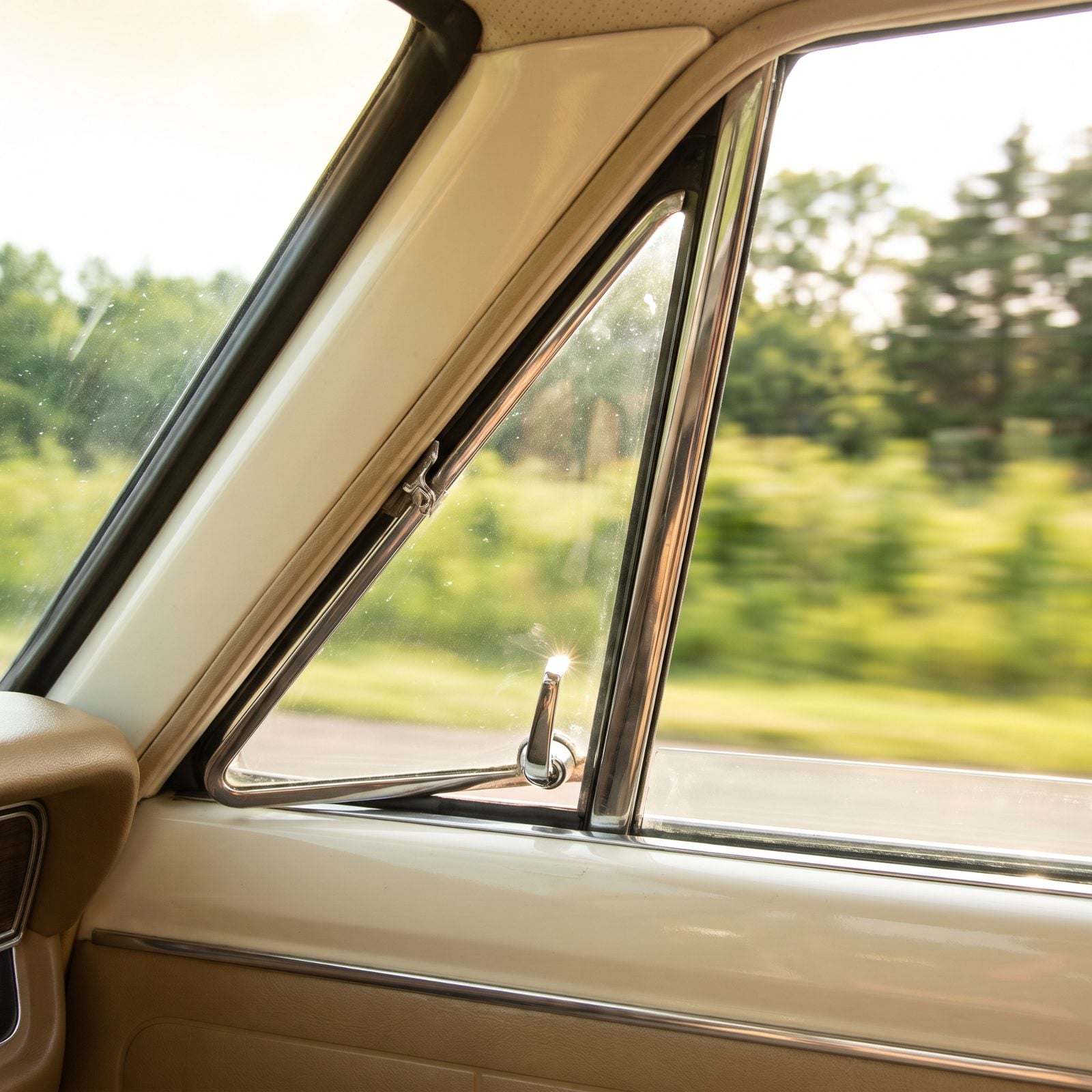
Before dashboards had proper vents, you had the wing window — a little triangle of glass up front that pivoted open on a chrome latch. Crack it at the right angle and it scooped a cone of moving air and fired it straight at your face. At forty miles an hour it felt like a miracle.
Front-seat passengers guarded that angle jealously. Tilt it too far and it screamed like a kettle. Tilt it just right and you had the single best seat in a car with no air conditioning.
The wing window was the closest thing to a personal climate control knob, and it ran on nothing but speed.
36. Cowl Vents Supplied the Closest Thing to Fresh Air
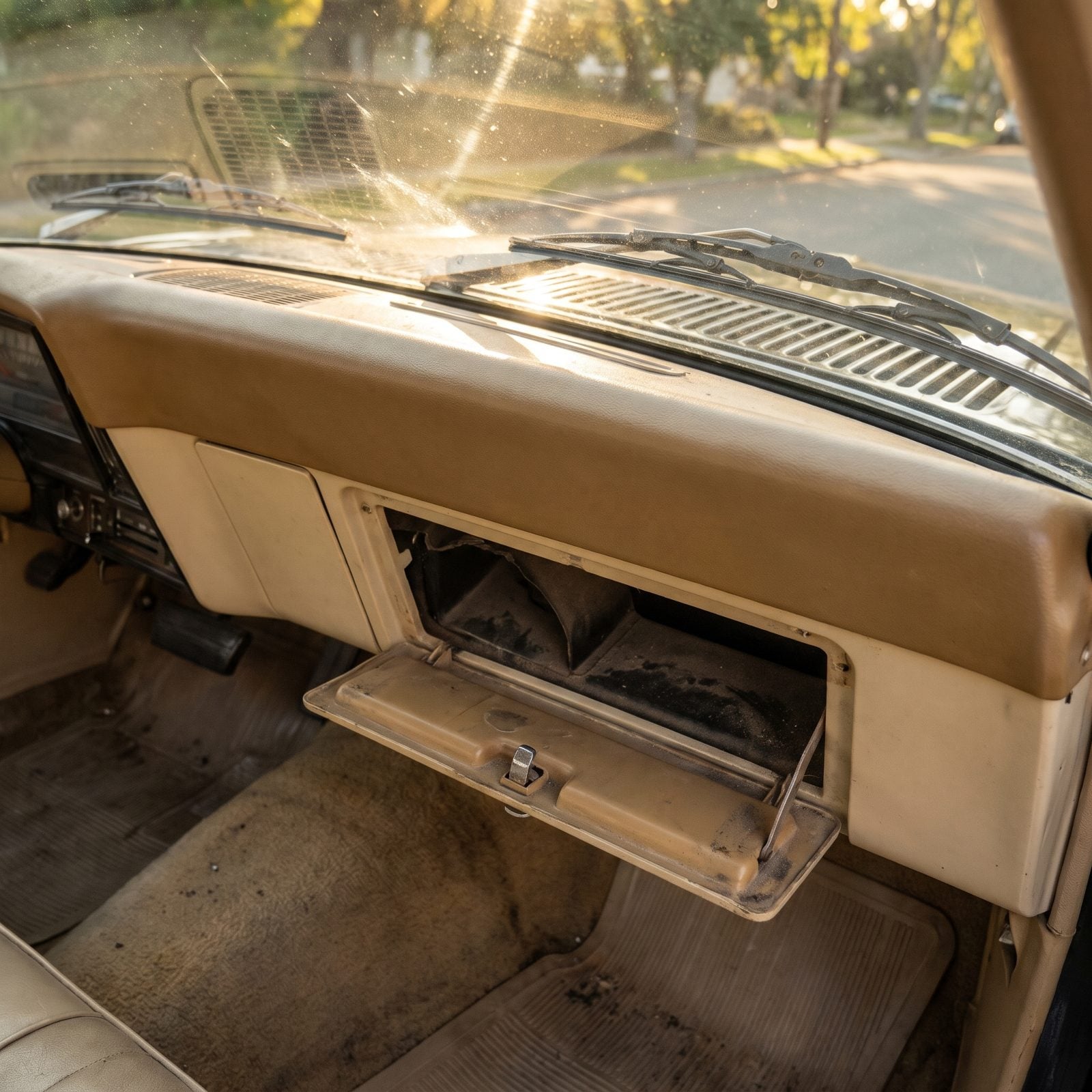
Down near your shins sat a little lever that opened a flap, and outside air funneled in through the cowl — the grille at the base of the windshield. Pull it and you got a draft across your ankles that smelled like road, cut grass, and sometimes a bug that made it through.
That was the car’s whole ventilation system. No cold air, no real setting, just a flap and the forward motion of the car. It beat nothing, barely. On a highway it beat quite a lot.
35. The Car Had to Be Moving Before Any Cooling Began
Parked, the car was a sealed box slowly cooking its contents. No relief at a red light, none in the driveway, none at all until the wheels turned and air started flowing through the cabin. The first real breeze didn’t arrive until you hit twenty-five or thirty.
So the whole family sat there at the start of every trip, sticky and silent, waiting for Dad to get the thing rolling. When it came, the relief hit physical and immediate — a cross-draft that pulled the oven-air out and swapped in something you could actually breathe.
34. A Traffic Jam Turned the Cabin Into a Greenhouse
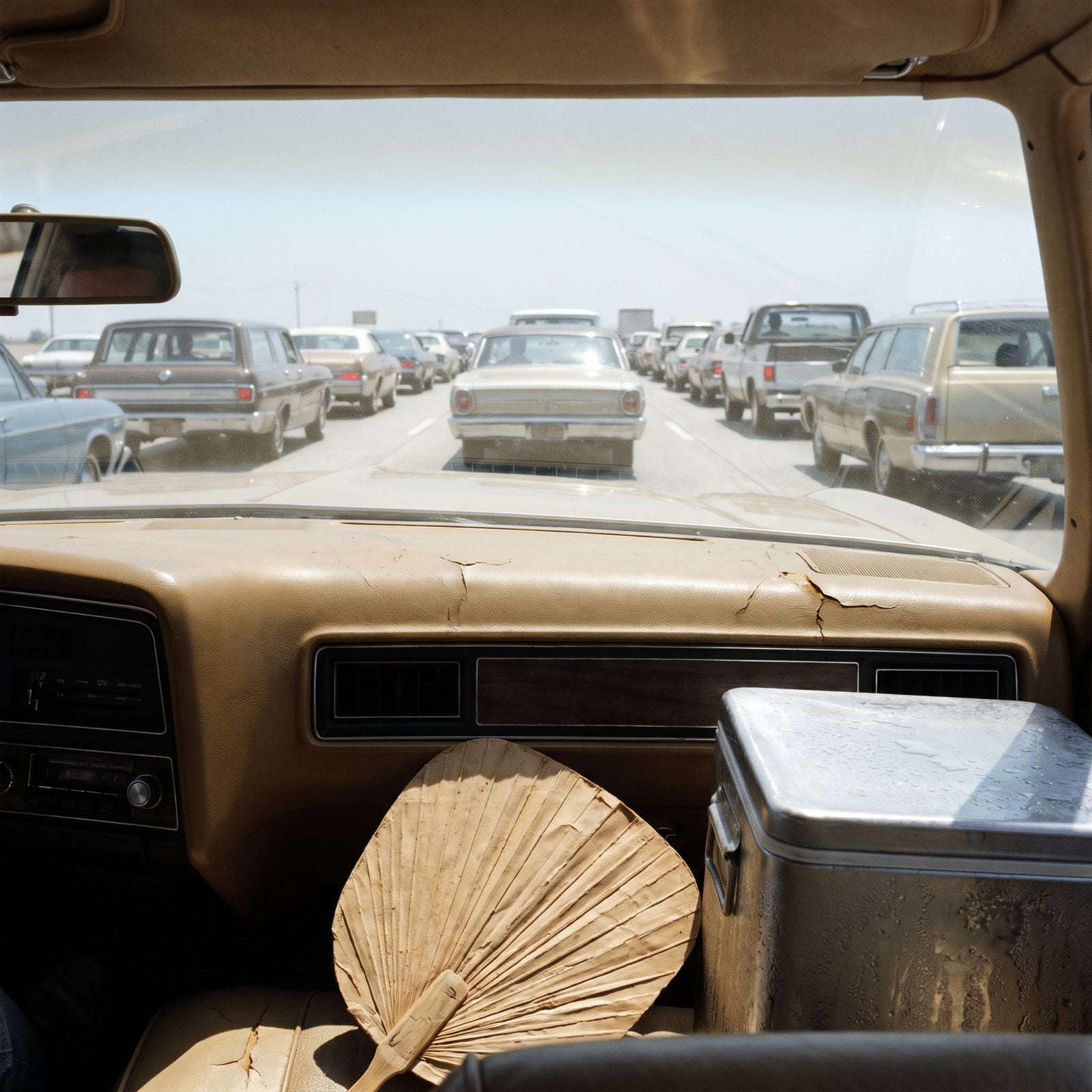
Everything worked right up until traffic stopped. Then the airflow died, the sun kept pouring through the windshield, and the cabin temperature climbed by the minute. Shirts stuck to backs. Arms stuck to the window ledge. Tempers rose right along with the thermometer.
Out came the cardboard fan — the one from the funeral home or the church pew, worked furiously by whoever was nearest meltdown. A damp washcloth on the back of the neck became the family’s entire cooling strategy. You prayed for the brake lights ahead to go dark.
33. Beach Towels Became Permanent Seat Covers
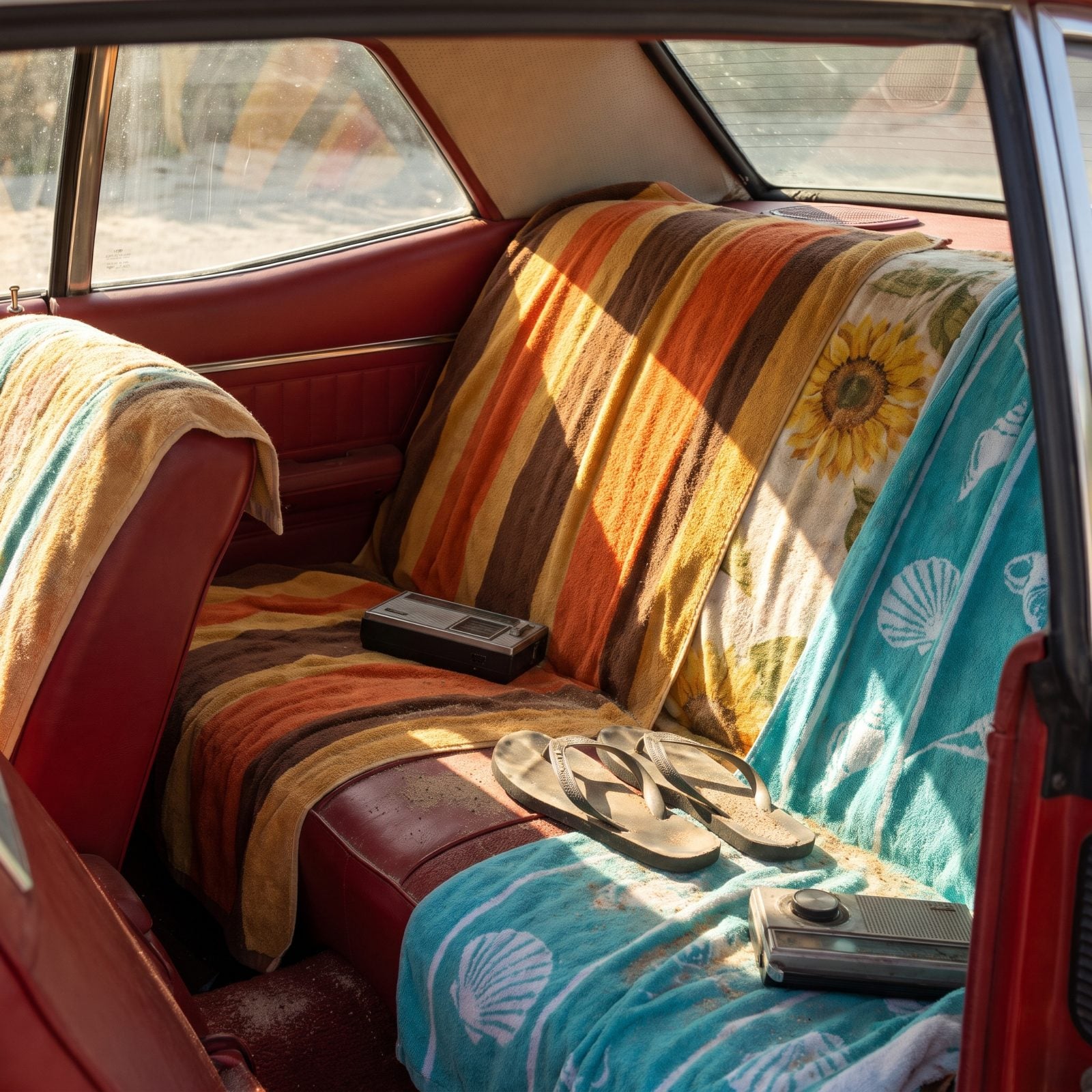
Sometime around Memorial Day, a beach towel went down on the front seat and simply never came back up. It lived there all summer, faded from the sun and stiff from drying in the car, smelling of chlorine, sunscreen, and whatever had spilled on it in July.
It never stayed put, either. Slide in and it bunched up behind you, leaving a strip of bare, scorching vinyl exactly where your leg landed. Some families eventually bought proper terry-cloth seat covers. Most just kept tugging the towel back into place and called it upholstery.
32. Parking Strategy Revolved Around Finding One Tree
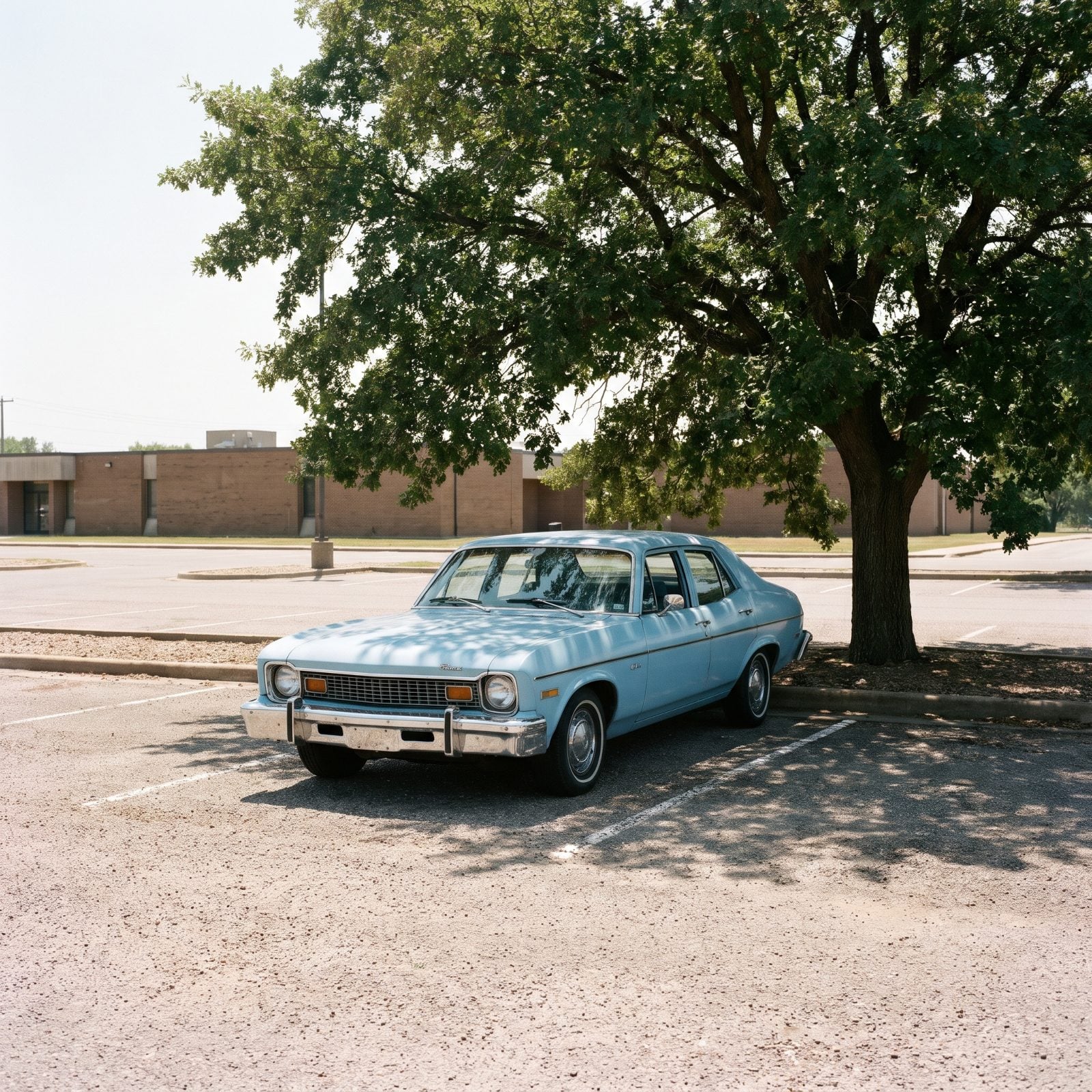
Pulling into a lot meant one slow lap to find the only tree. If there was a sliver of shade anywhere, you parked in it, even if it meant walking twice as far to the store.
The catch was that shade moves. Leave at ten in the morning with the hood under a maple, come back at two, and the sun had swung around and found the driver’s seat dead-on. Then there was the tree itself, which could drop sap or invite birds. Families debated those trade-offs like real estate.
31. A Wet Washcloth on the Neck Counted as Climate Control
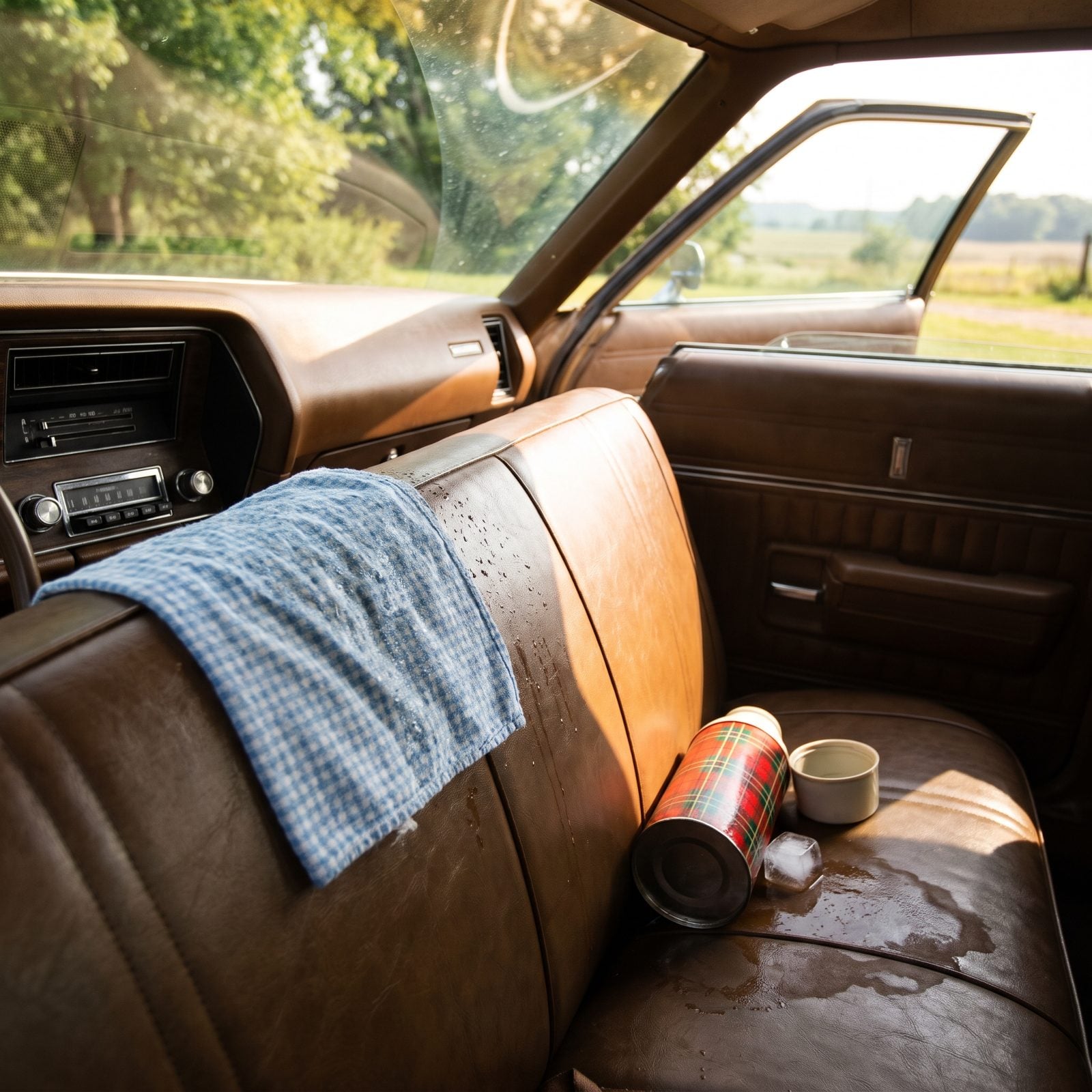
The most advanced cooling system in a lot of family cars was a washcloth dunked in the cooler and draped across the back of somebody’s neck. With the windows open and the car moving, the wet cloth actually worked for a while. It felt like a cool hand resting on your skin.
Then it warmed up to body temperature and dried stiff, and the whole ritual started over. Dip it in the meltwater, wring it out, pass it back. On a long drive, that cloth made more trips than the map did.
30. The Ice Chest Took Up Valuable Floor Space
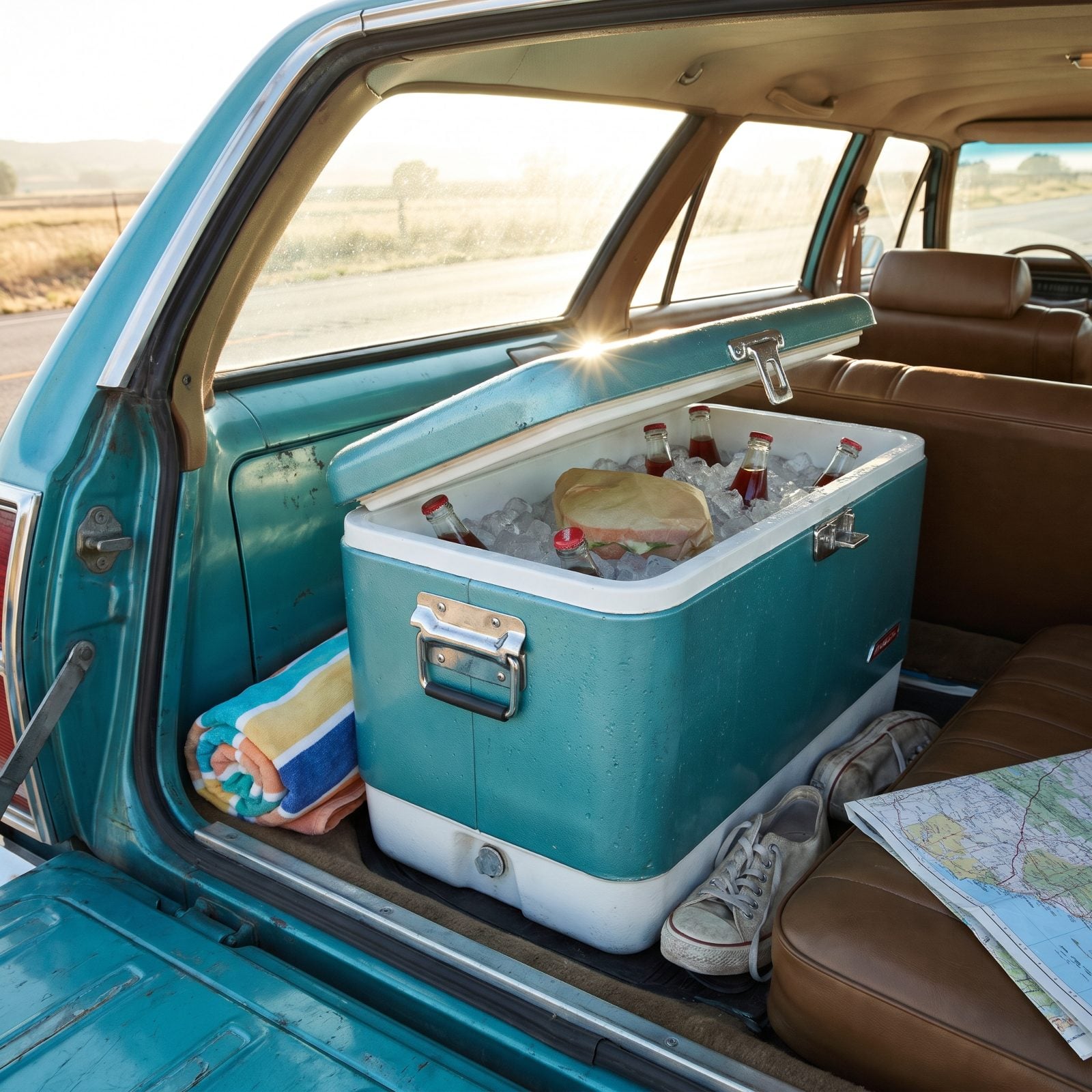
The cooler rode in the back, and it didn’t care what else needed the room. A hard-sided ice chest filled with block ice, sandwiches, and bottles of pop was a big, heavy box, and in a station wagon it ate most of the cargo floor.
Beach towels, sneakers, and road maps got wedged into whatever space was left around it. Every few hours the ice melted a little more, the water sloshed with every turn, and a leaky drain plug could send a cold trickle across the floor mat. Nobody complained much. That box was the only cold thing in the car.
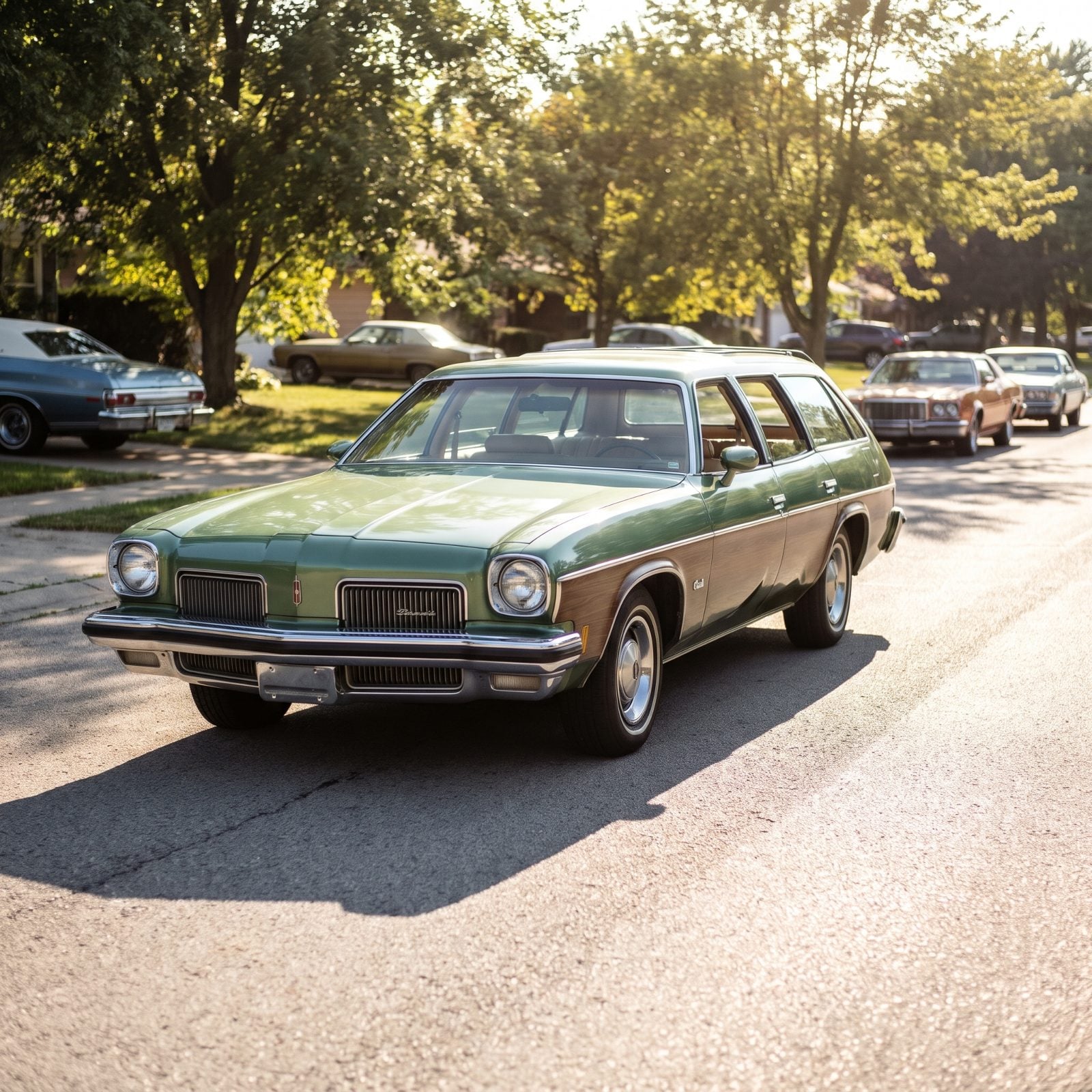
Hot as they were, station wagons still do well with our readers: photos of them got more hearts than the other images in the same articles, 83% versus 78%.
29. Cars Offered Nowhere Convenient to Hold a Cold Drink
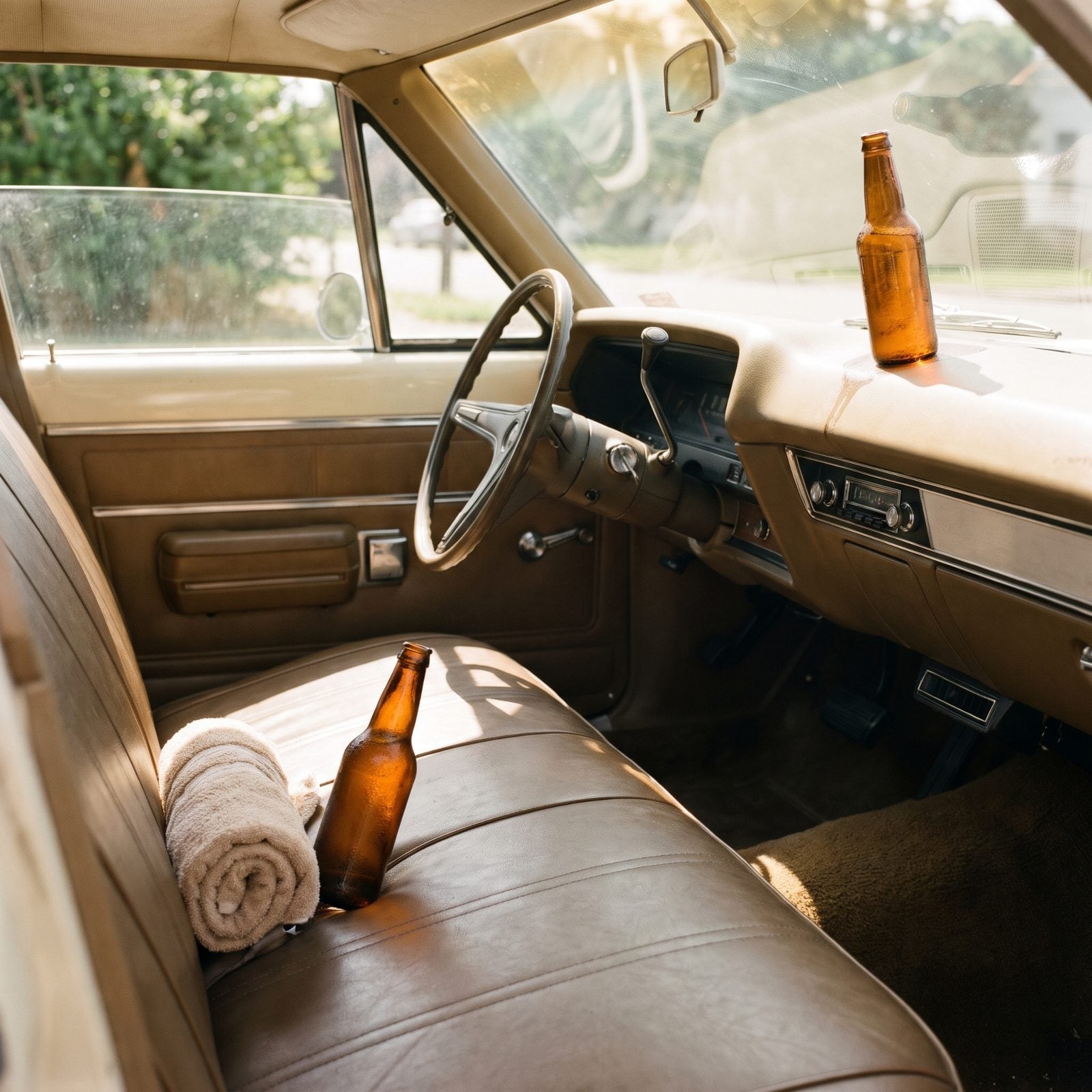
Cupholders weren’t standard equipment. You held your drink, period. Cans and glass bottles rode between your knees, sweating condensation onto your shorts, and every stop sign threatened a spill.
Some people bought clip-on holders that hooked over the window edge, and those worked until somebody rolled the window. Others balanced a bottle on the dash and watched it slide toward the windshield on the first curve. Mostly we just drank fast, because a soda left alone in that heat went warm and flat before you could finish it.
28. Roadside Shade Breaks Were Part of the Journey
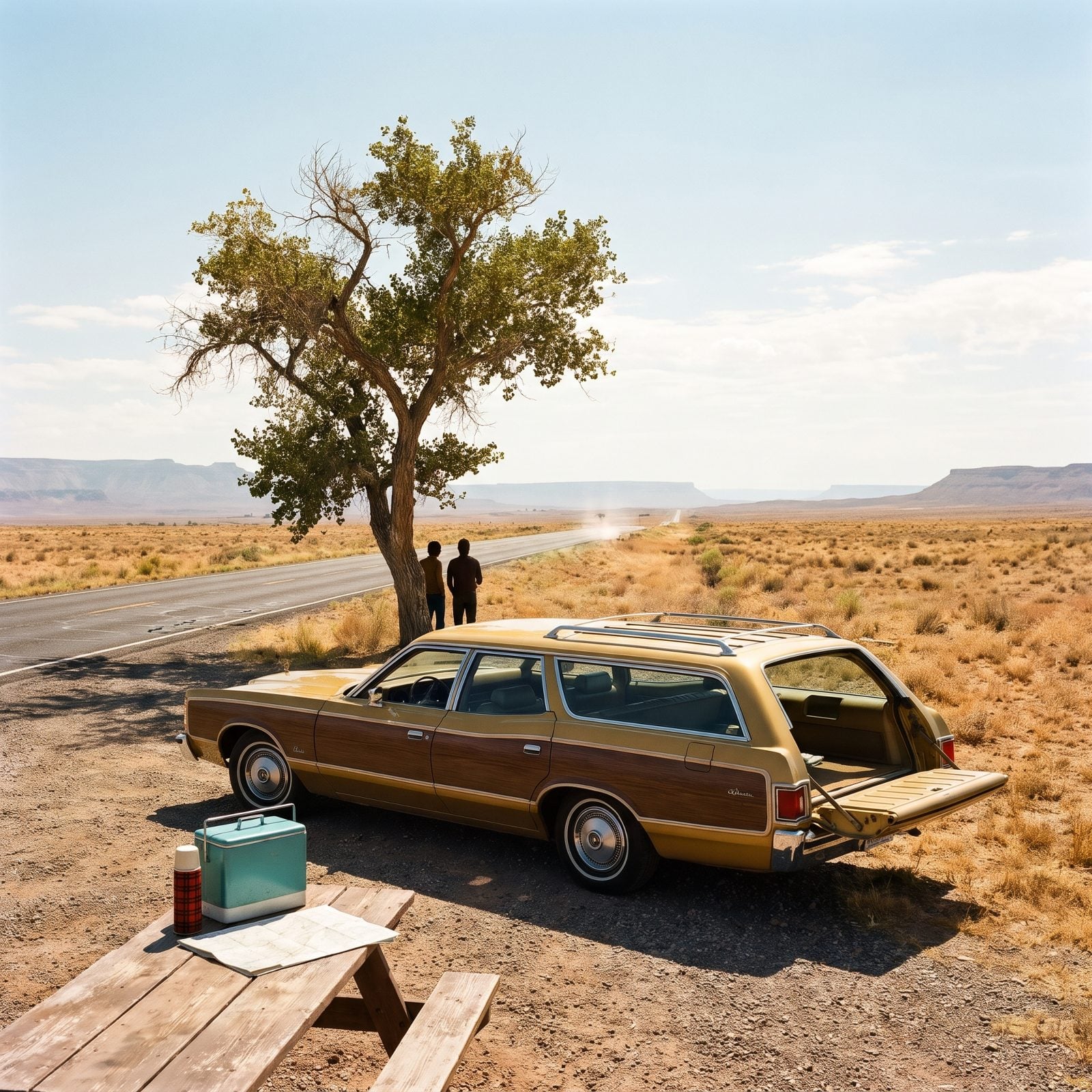
A road trip had stops built in that had nothing to do with gas. When the car got unbearable, you looked for a rest area with a few trees and a picnic table, pulled over, and let everybody climb out and peel themselves off the seats.
The tailgate hung open to let the heat escape. The two grown-ups wandered over to the edge of the road to stretch their legs and look out at the mesas. Somebody refilled the cooler at a gas station or a roadside stand. Twenty minutes in the shade did more for morale than any amount of hurrying, and the mileage the family covered in a day was planned around it.
27. The One-Sided Sunburn Every Driver Wore Like a Badge
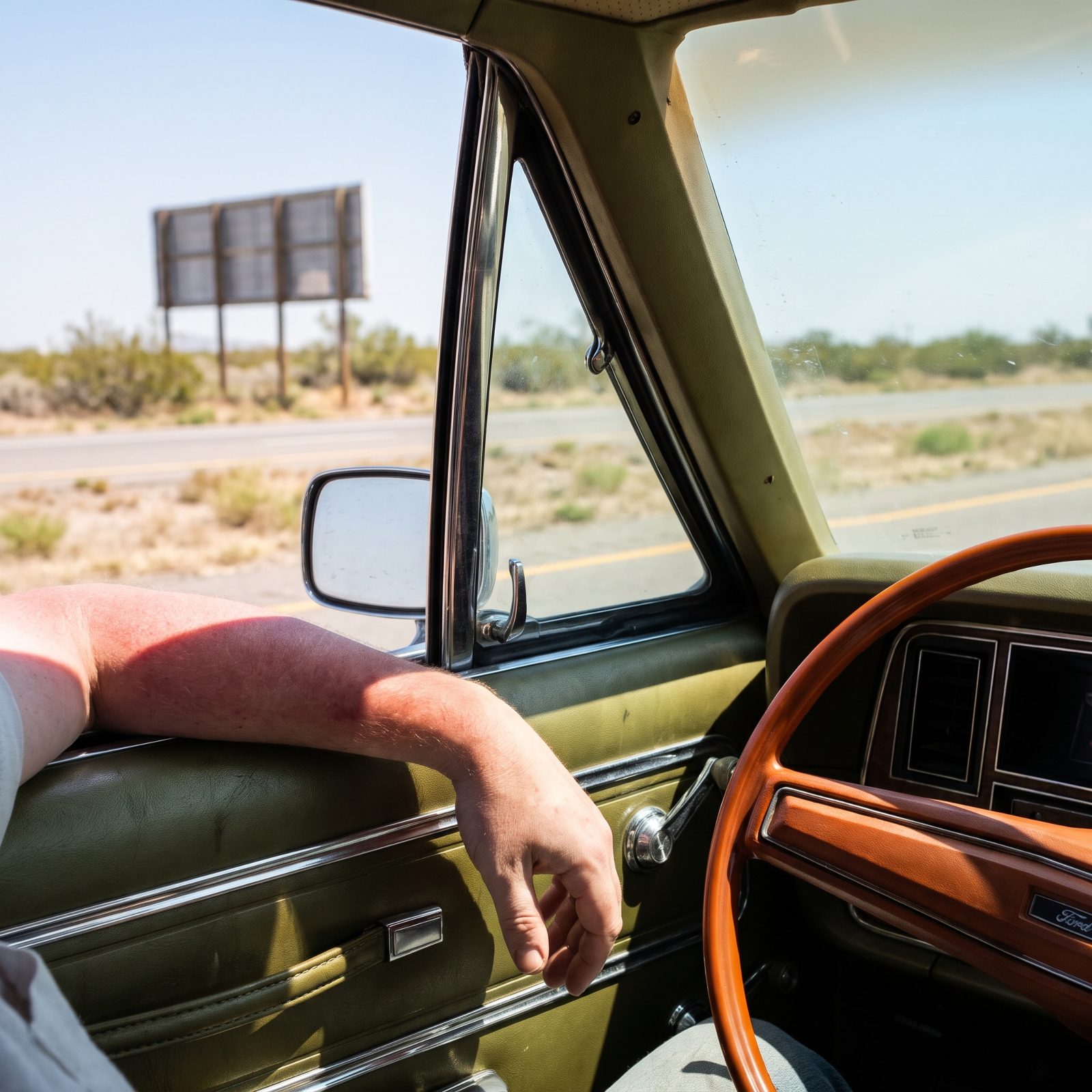
You could tell a long-haul summer driver by the arm — left side cooked a deep farmer’s brown, right side pale as a pillowcase. The window stayed down because the alternative was an oven, and the elbow lived on that chrome ledge for three hundred miles at a stretch.
Dad’s left arm by August looked like it belonged to a different man than his right. Nobody called it a trucker tan back then. It was just what happened when AC was a factory option most families skipped and the sun did the rest, one lane at a time.
26. Sweaty Palms and a Steering Wheel That Wouldn’t Hold Still
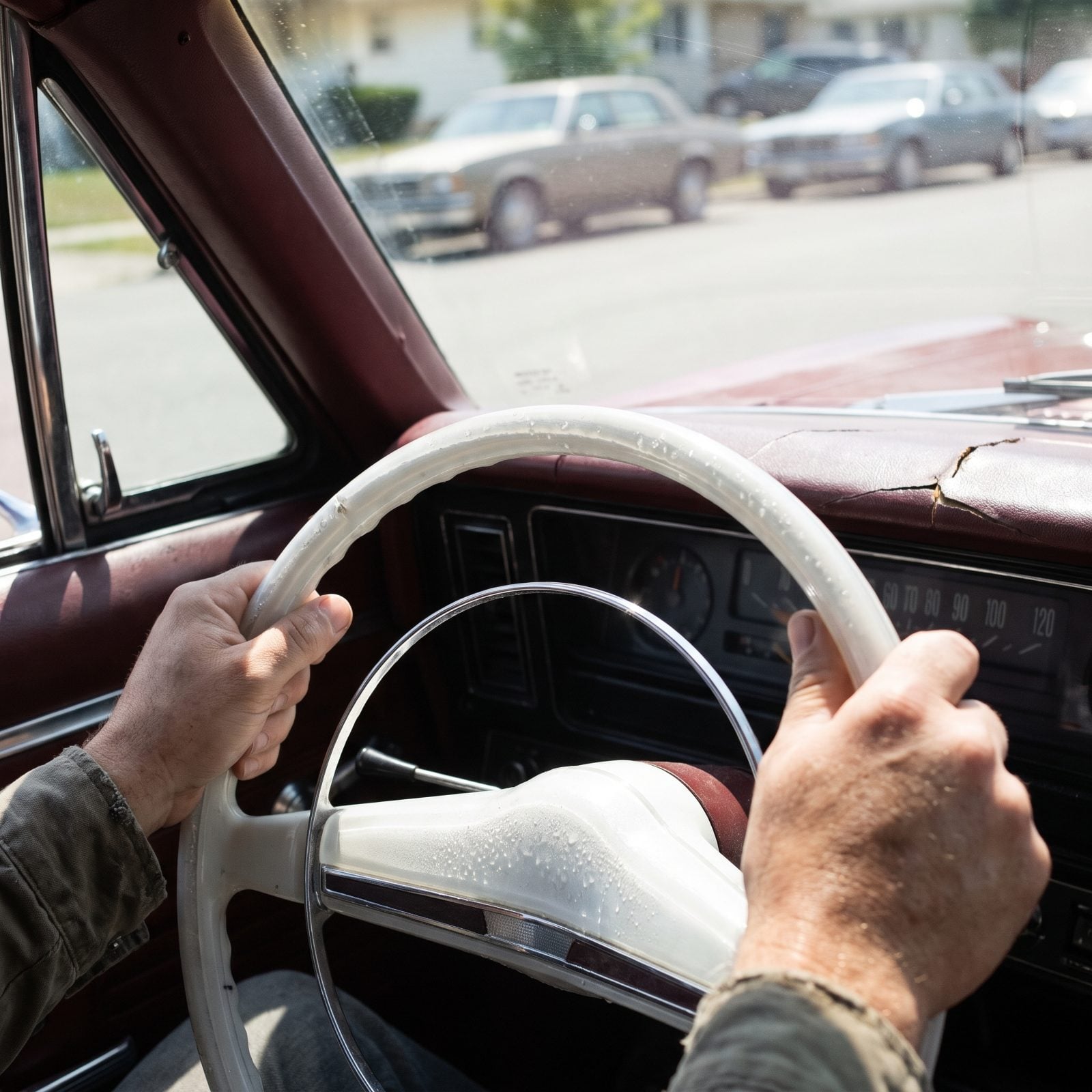
Hard plastic wheels and sweaty hands made a bad marriage. You’d take a corner and feel your grip creep, the whole wheel going slick under your palms like a bar of soap. Wipe one hand on your pant leg, re-grip, do the other.
Some folks bought those lace-up leather wheel covers from the parts store just for traction. Others wrapped a hand towel around the rim at twelve o’clock. I still say the towel worked better, and I’ll take the ribbing for it.
25. The Fresh Shirt That Arrived Wrinkled and Soaked
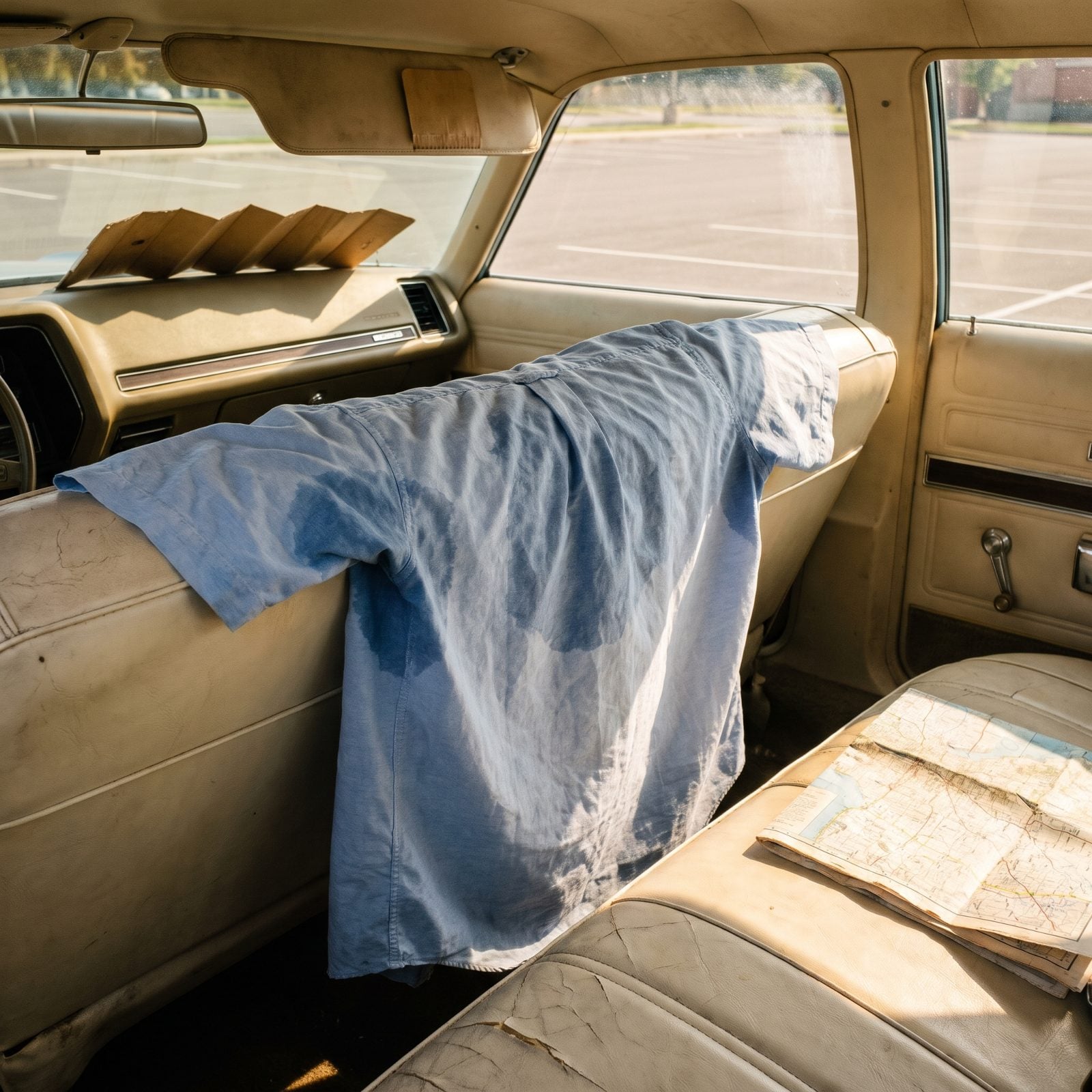
You left the house pressed and presentable. You arrived looking like you’d been through a car wash with the windows down. On a July drive to a wedding or a job interview, the back of your shirt stuck to the vinyl and peeled off with a sound I won’t describe at dinner.
The smart ones hung the good shirt on the coat hook above the back door and drove in an undershirt, swapping in the parking lot. Everybody else just showed up damp and pretended not to notice.
24. Pantyhose in a Hot Car Was Its Own Special Torture
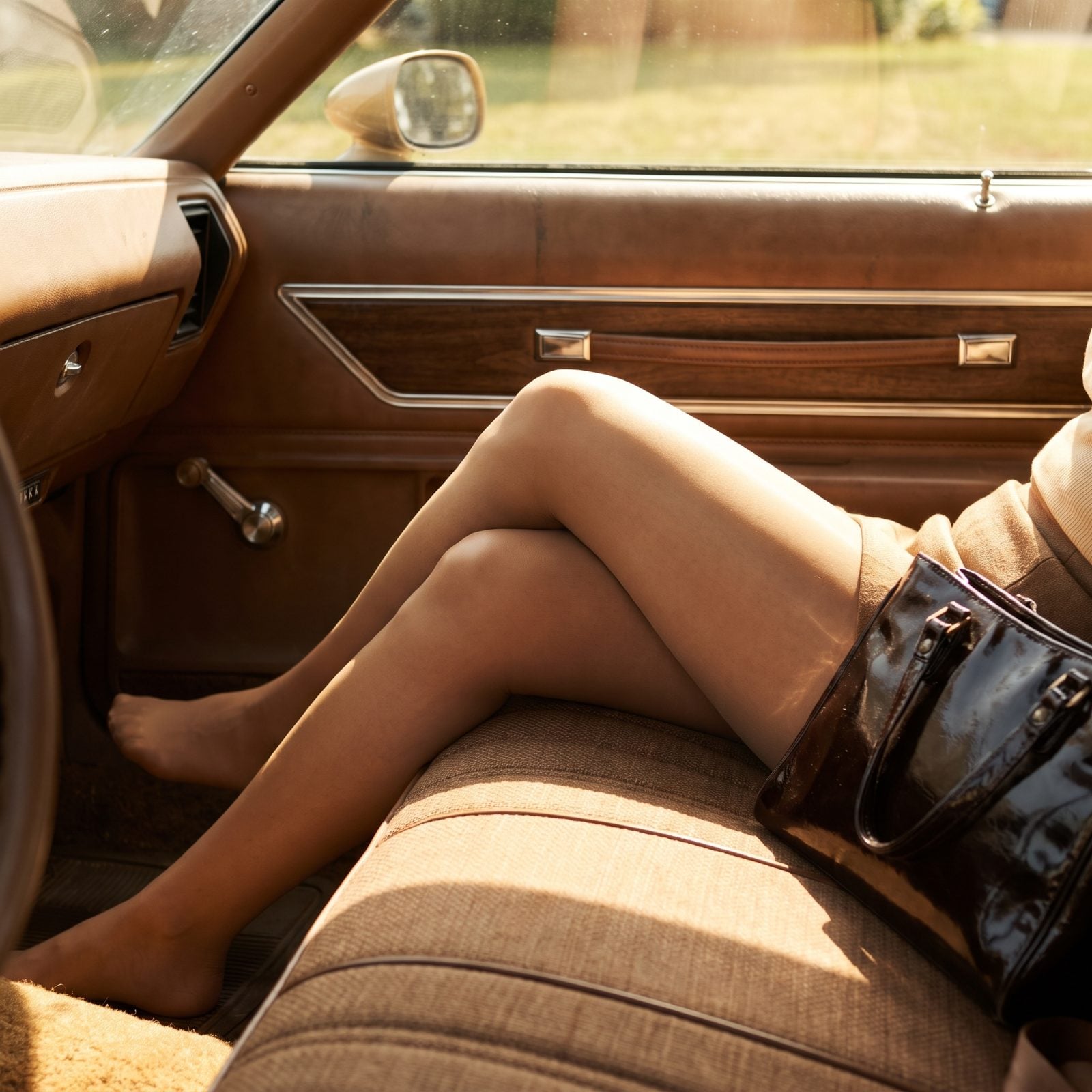
Ask any woman who drove to work in a 1970s summer with no air conditioning. Nylon against hot vinyl was misery in its purest form — clinging, bunching, going damp at the back of the knee before you hit the second stoplight.
The dress code didn’t care that the car was ninety-five degrees inside.
Offices still expected hose with a skirt, so there wasn’t a graceful way out. Some kept a spare pair in the glovebox for the inevitable run. And that kitchen-drawer trick — clear nail polish to stop a run from spreading — got a real workout in more than one parking lot.
23. Styled Hair Versus the Open Window, and the Window Always Won
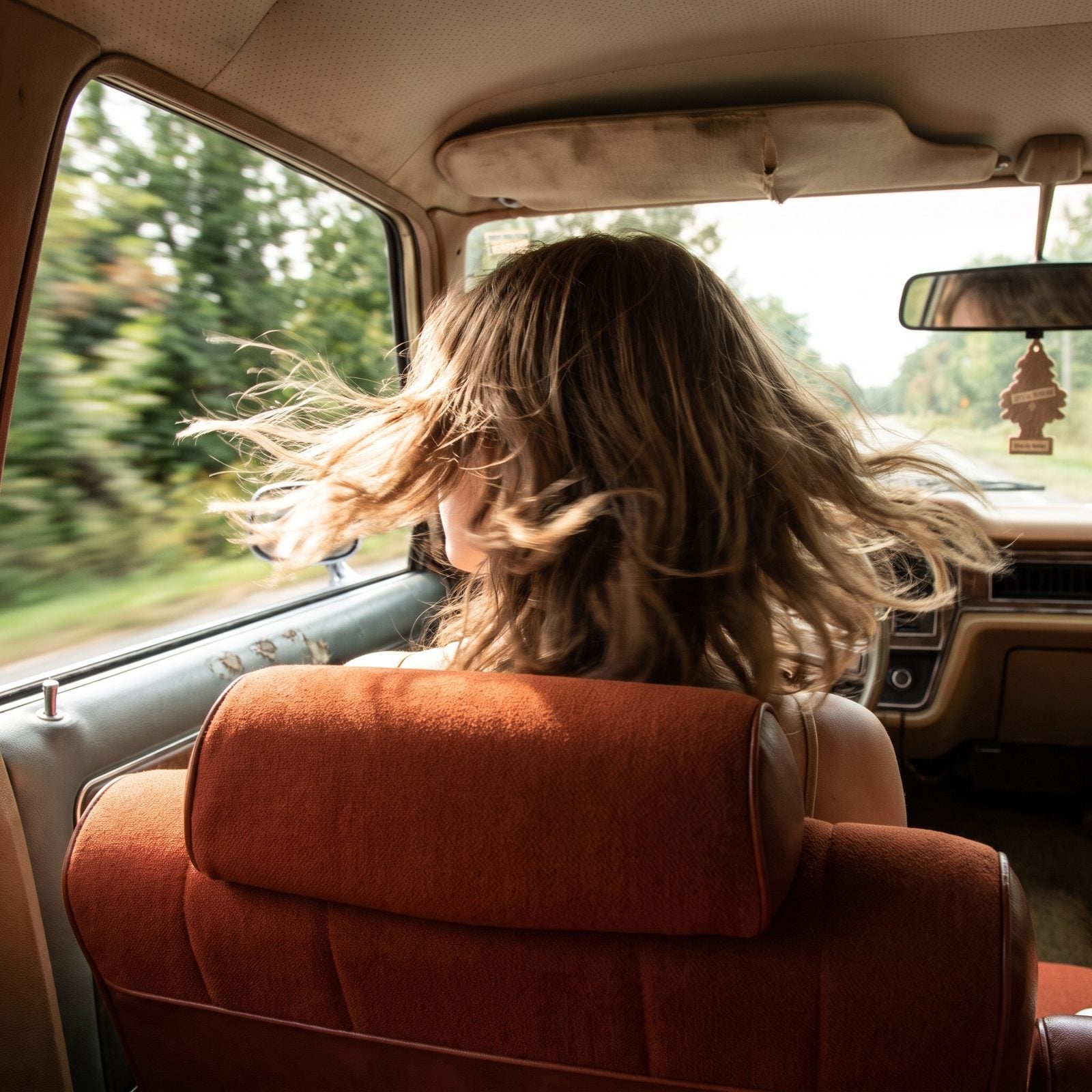
An hour with rollers and a can of Aqua Net, undone in ninety seconds of highway. The feathered Farrah flip, the carefully set waves — all of it surrendered the moment someone cranked a window down past the first notch.
Head scarves tied under the chin were the countermove, half practical and half glamorous. Short of that, you cracked your window exactly one inch and prayed the person up front did the same.
22. The Paper Road Map That Fought Back
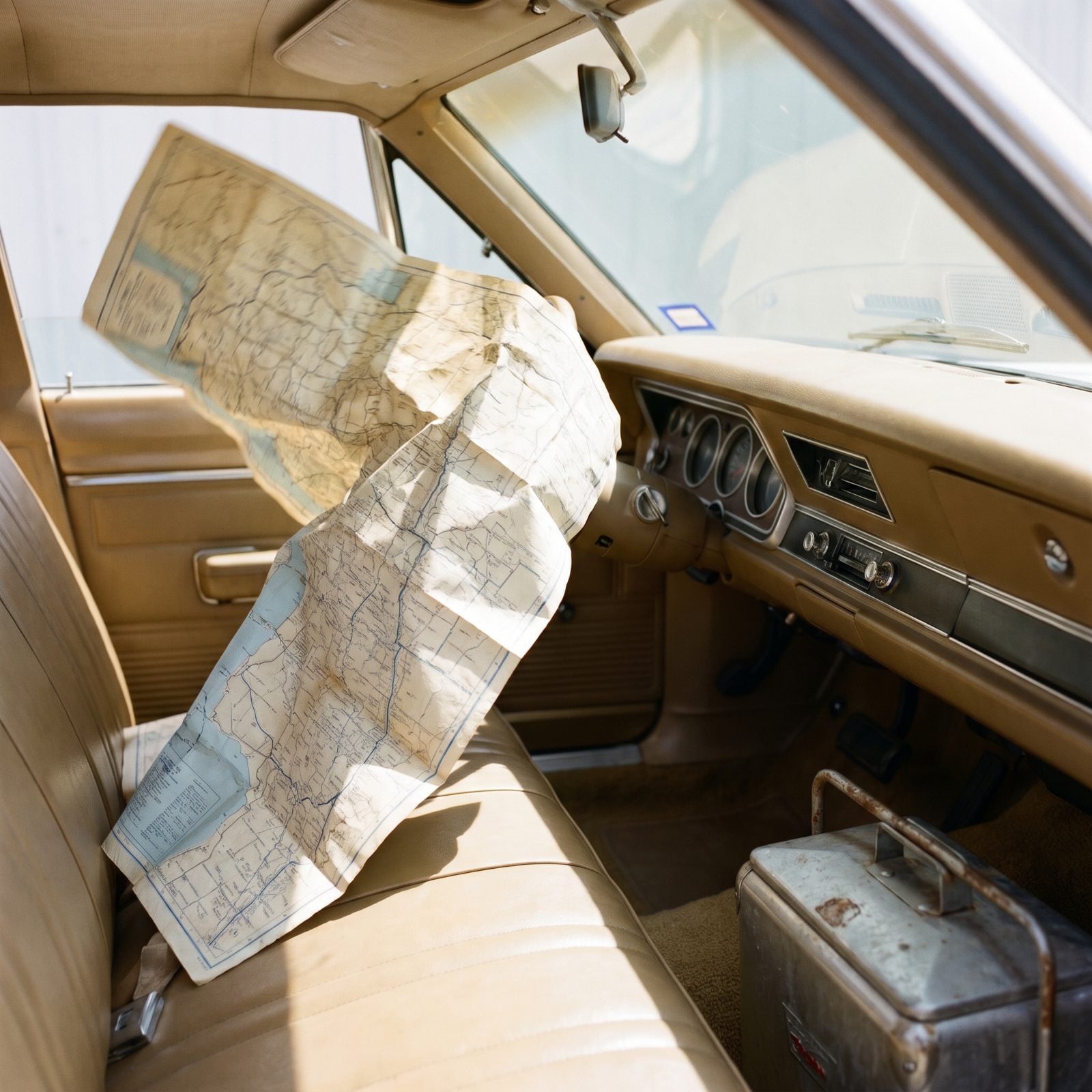
Long before anything with a screen, there was the gas-station map — big as a tablecloth, folded along eighteen stubborn creases, and absolutely allergic to being read in a moving car.
The navigator in the passenger seat would get it open, a window gust would catch it, and suddenly you’re both wearing a map whose fine print was too blurry to read anyway. Refolding it correctly was a lost art. Most ended up jammed in the glovebox in a wad, which is exactly where mine always lived.
21. The AM Radio That Lost Every Fight With the Wind
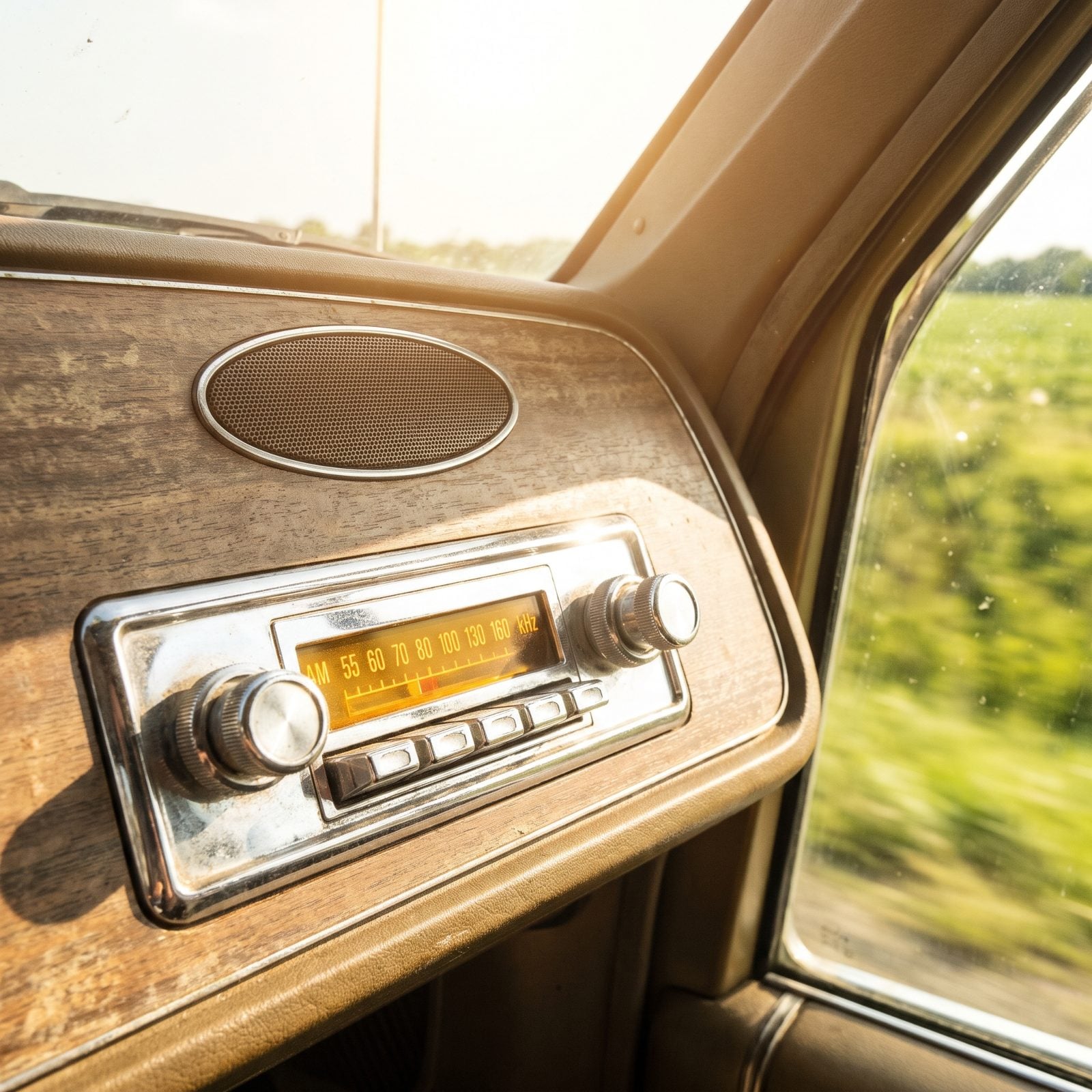
One tinny speaker in the middle of the dash never stood a chance against the wind roaring past the glass at sixty, even with the windows rolled up. You’d catch a verse of a song, lose the chorus to a gust, then reach down and crank the volume until the little cone speaker buzzed.
Rolling the windows up never quieted it enough — and with the sun pouring through the glass, you were cooking. So you leaned in, turned it up past comfort, and sang the parts you could still make out. Half the lyrics everyone remembers from that decade are probably wrong, all thanks to the wind.
20. Cigarette Ash That Went Out the Window and Came Right Back
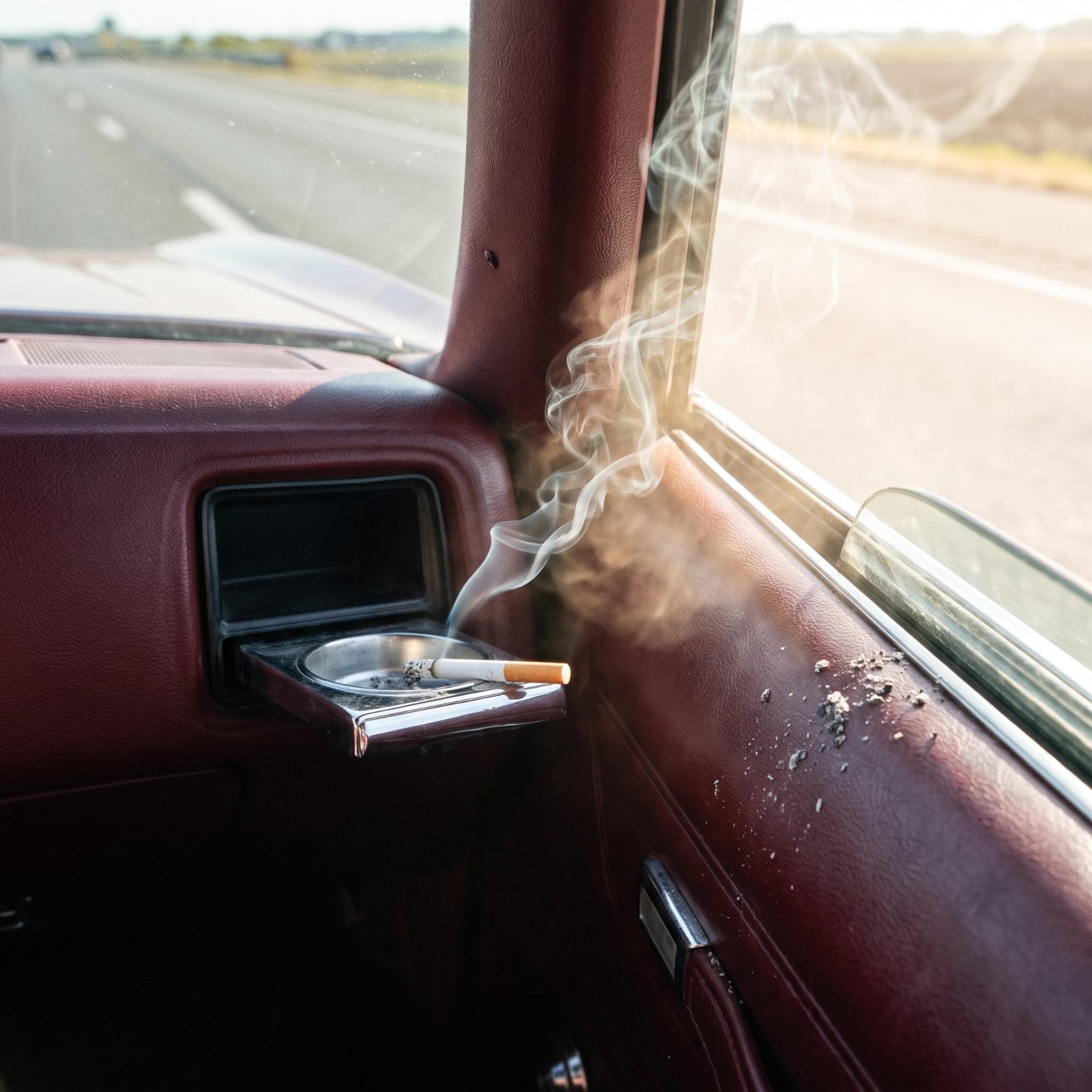
The physics never worked in the smoker’s favor. Flick the ash toward the window, the slipstream grabbed it, and it swirled straight back into the rear seat where the kids were. Half the family vacation was somebody in back yelping about an ember on their arm.
Everybody smoked in cars then, and the ashtrays were built right into the armrests, front and back. You’d find grey streaks on the headliner by Labor Day. We didn’t think twice about it — which tells you something about how the decade worked.
19. Every Open Window Was an Open Invitation for Bugs
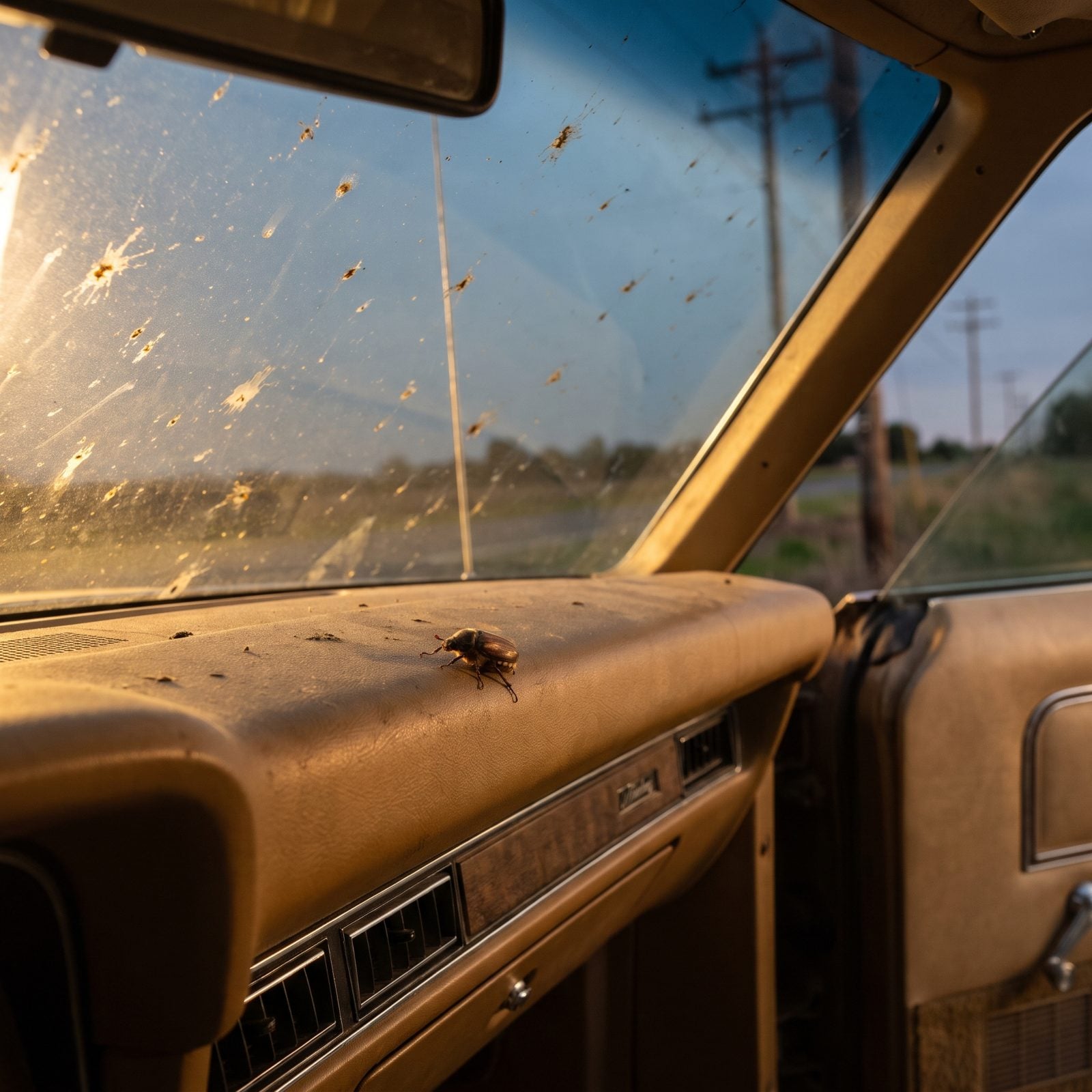
Dusk on a country road with the windows down meant company. Moths, June bugs, the occasional horsefly that buzzed the whole car into chaos while Dad swatted one-handed and kept the wheel steady with the other.
By August the windshield looked like a battlefield, and the gas-station squeegee only smeared it worse in the heat. You’d pull over, wait for a bug to find its own way out, and roll the window up just long enough to sweat through your shirt again.
18. The Fine Coat of Dust That Settled on Everything
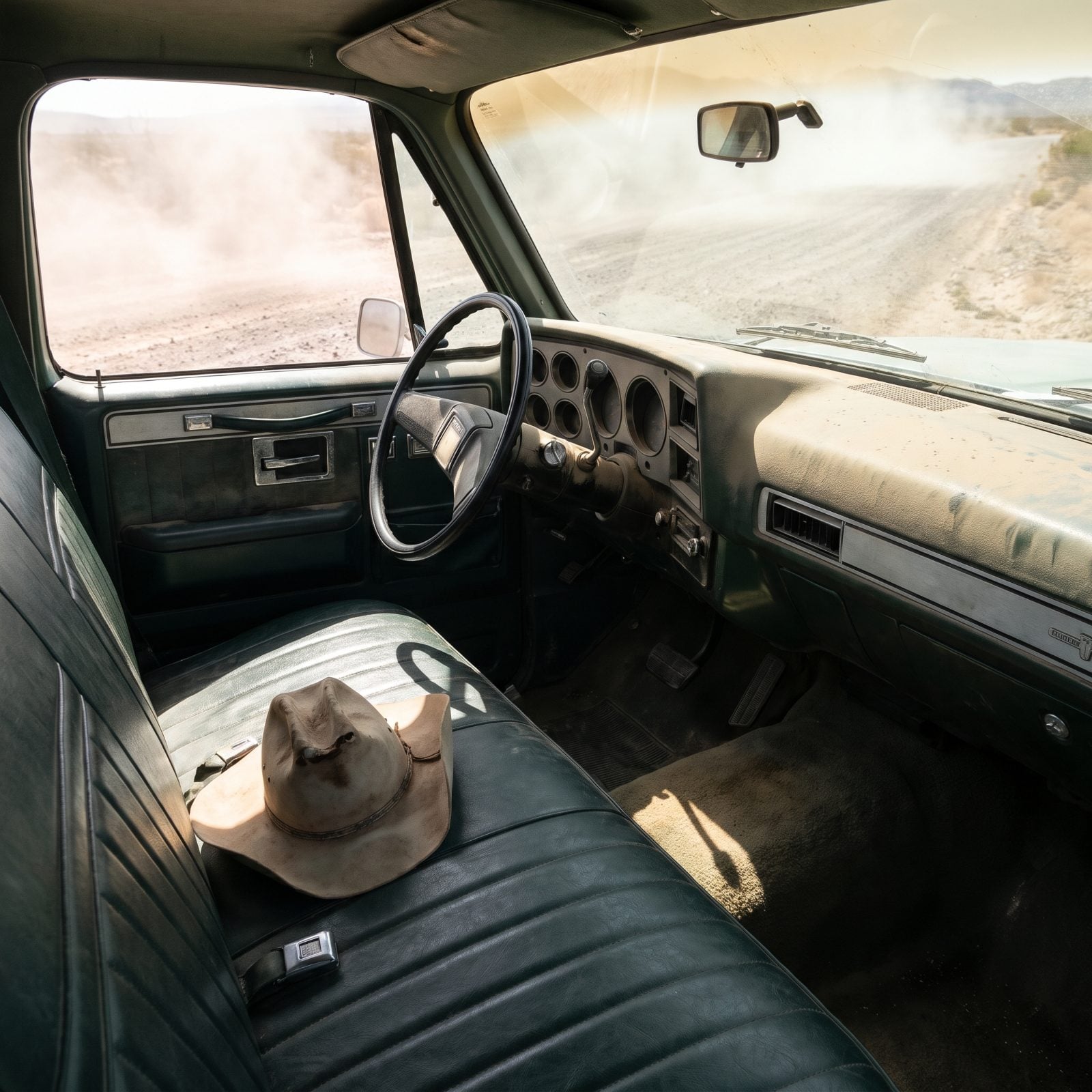
Take the shortcut down the dirt road with the windows open and you paid for it. A fine tan powder worked into the dash vents, the seat seams, the pleats of your slacks. Run a finger along the glovebox and it came away grey.
Roll the windows up and bake, or leave them down and breathe grit — most of us picked grit. By the time you hit pavement again the whole cab wore a dull film, and the wind through the cracked window just rearranged it. That dust is probably still in some of those old trucks, if you know where to look.
17. Exhaust Fumes Drifted In Through Open Windows
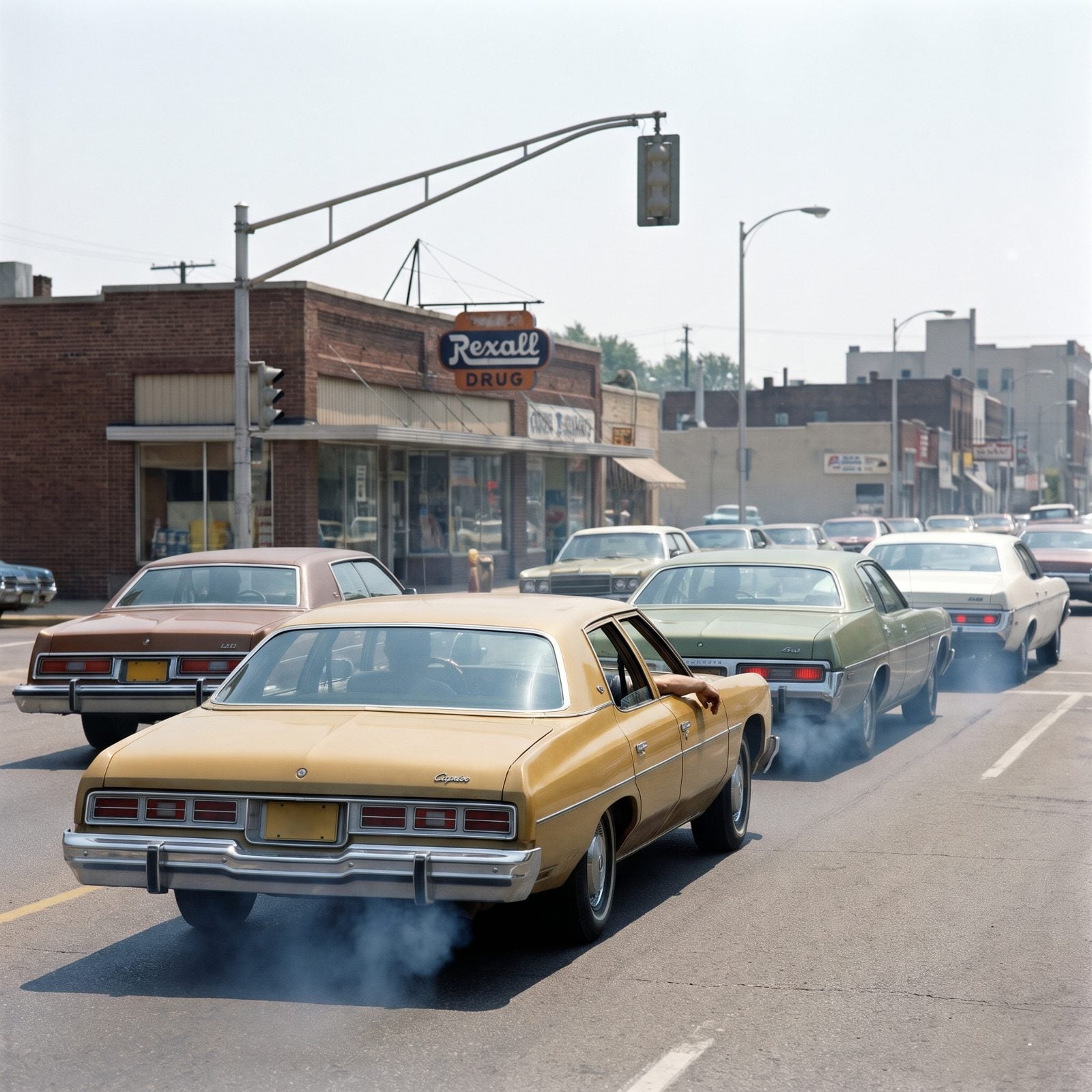
You rolled the windows down for relief and got a lungful of the car ahead of you instead. Leaded gas had a smell — thick, sweetish, a little oily — and it rolled right into the cabin every time traffic stopped and the tailpipes lined up at window height.
City driving was the worst of it. Stop, idle, breathe the LTD in front of you, creep forward, do it again. By the time you got where you were going, your eyes stung a little and your shirt smelled like the road.
16. Summer Rain Forced a Choice Between Heat and Soaking
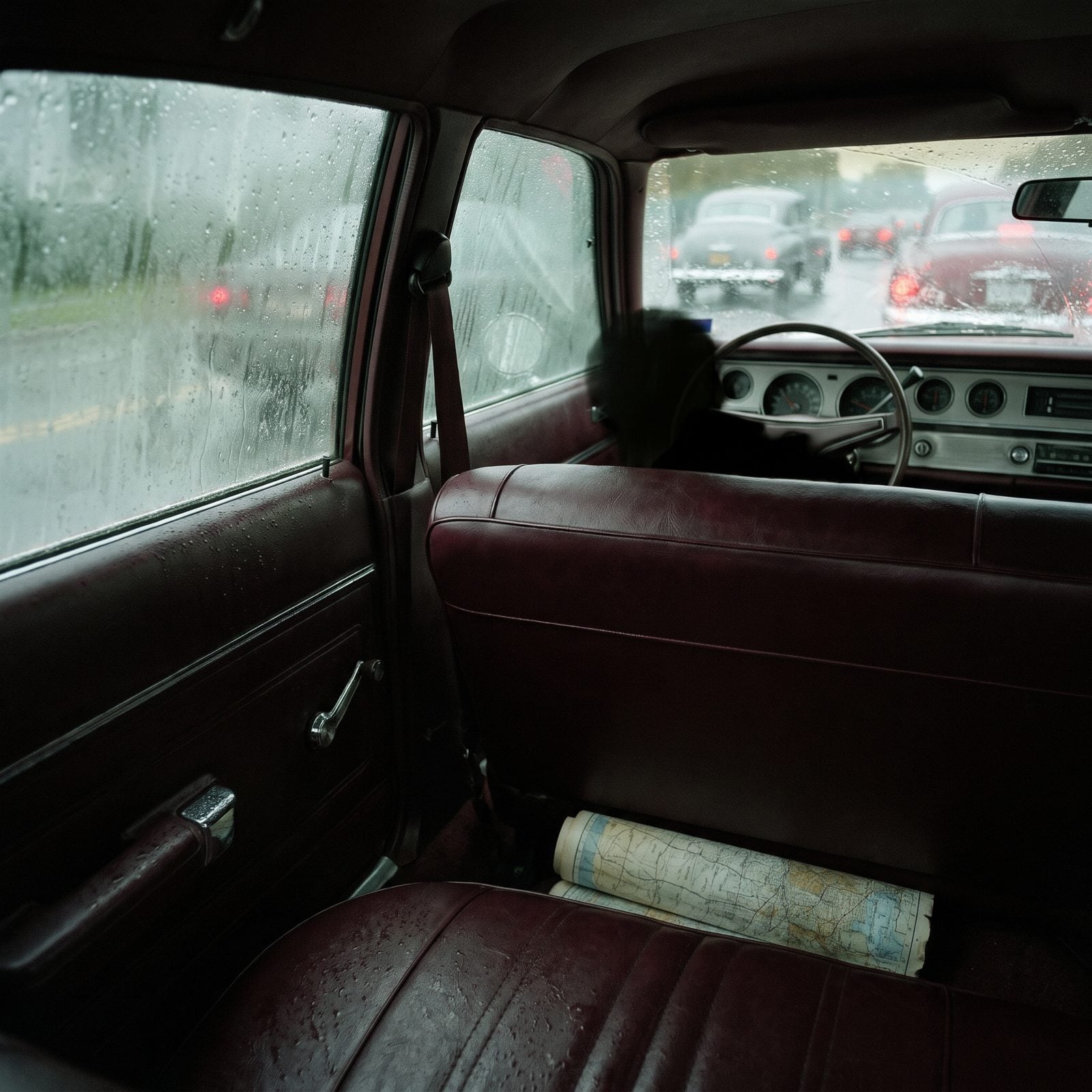
Here was the summer rain trap. Windows up turned the cabin into a sauna within a minute, glass fogging over faster than you could wipe it, while windows cracked meant rain spitting in on your shoulder and the seat going damp.
Neither option was any good. So you usually split the difference — cracked the window an inch, drove hunched away from it, and arrived both sweaty and spotted with rain. The defroster, if you bothered to run it, just blew warm air at a windshield that was already warm.
15. A Construction Flagger Could Stop the Only Cooling Breeze
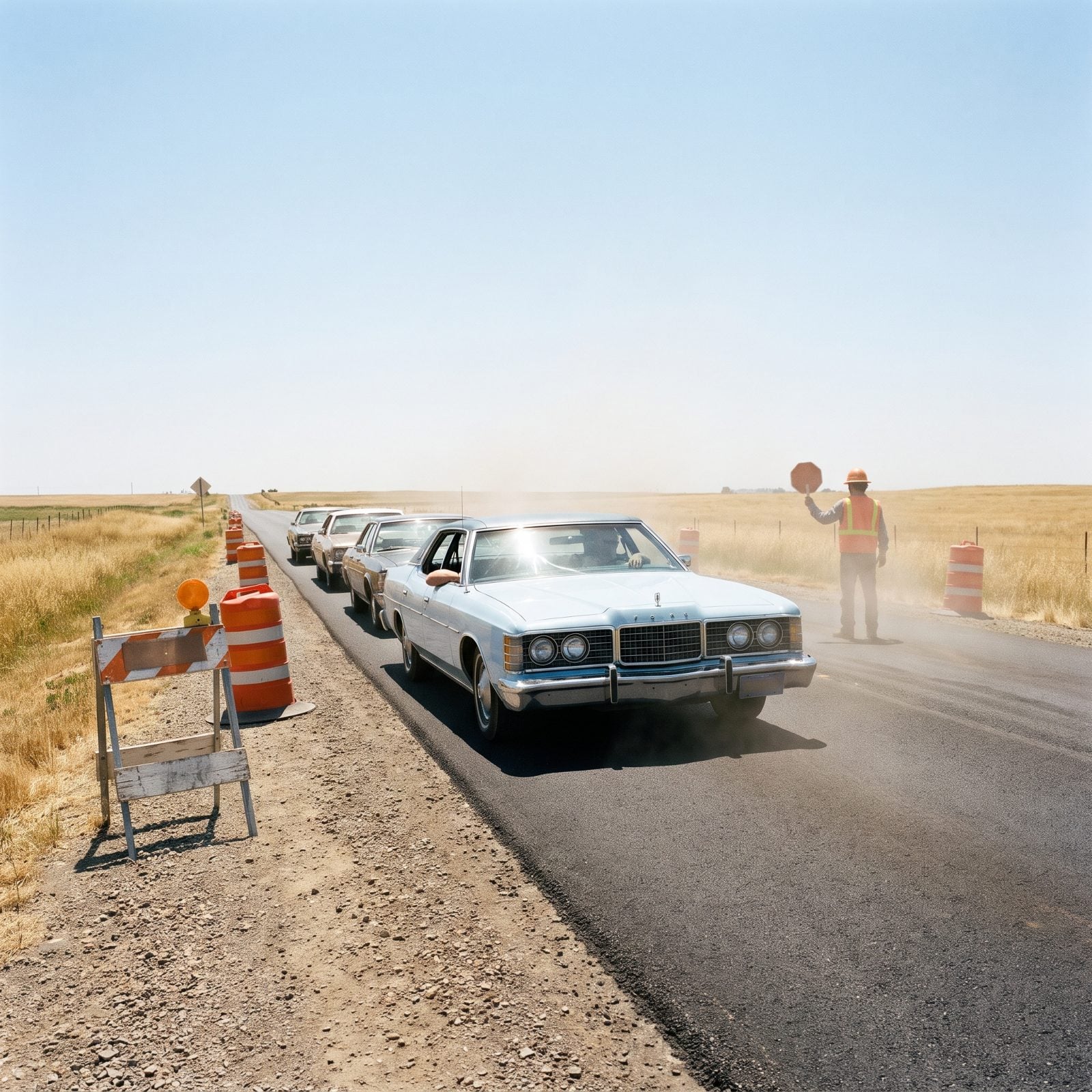
Movement was the whole cooling system. Thirty-five miles an hour with the windows down gave you something close to a breeze, while zero miles an hour gave you a metal box in the sun.
So the flagger with the paddle was a small heartbreak. You’d watch that SLOW sign flip to STOP, feel the air die with it, and sit there baking on fresh tar while heat came up through the floor. Three minutes felt like fifteen. The whole family went quiet and still, like moving might make it worse.
14. The Transmission Tunnel Radiated Heat Into the Cabin
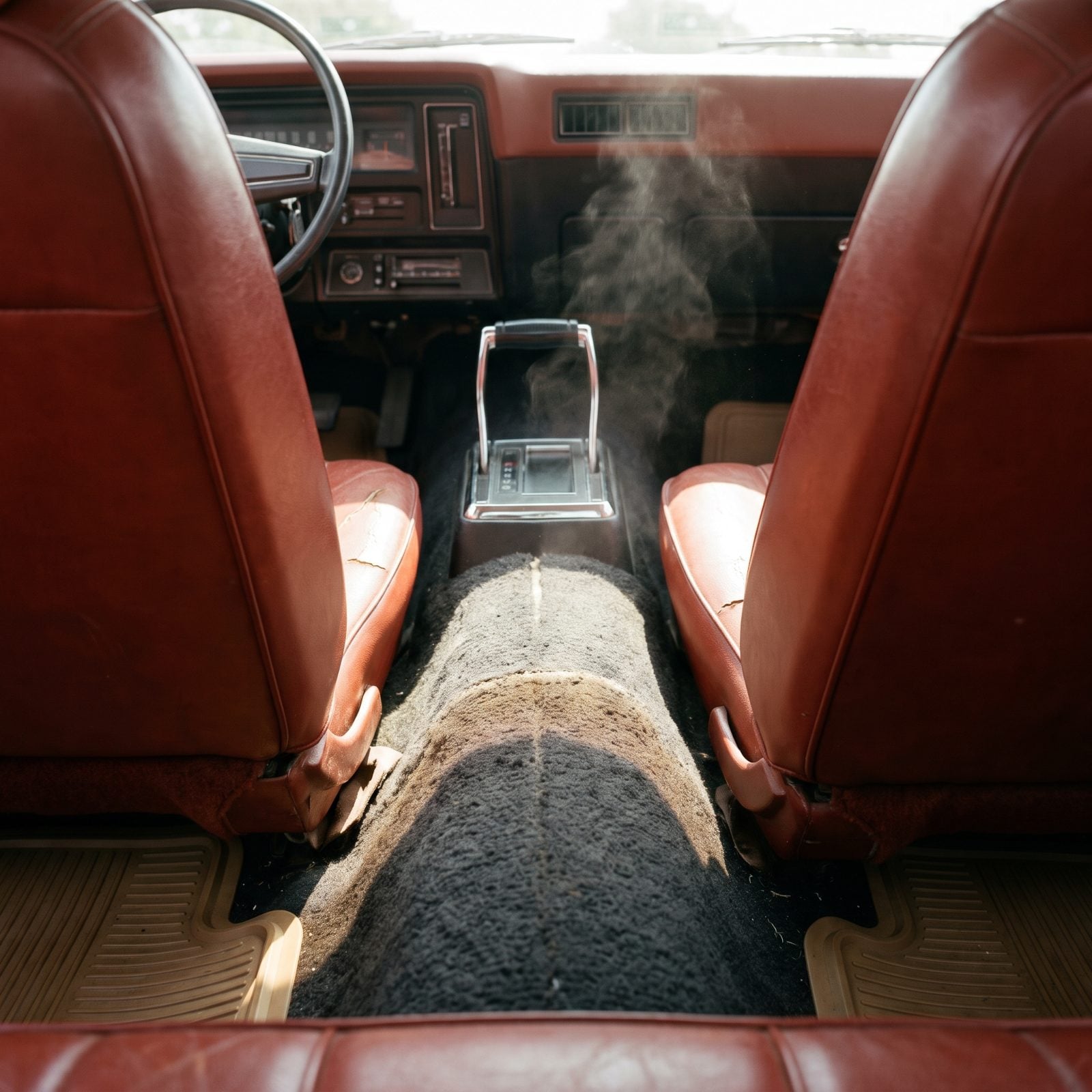
Anybody who rode the middle hump learned this one. The transmission tunnel ran right down the center of the floor, and under that thin carpet sat the gearbox and the exhaust pipes, both throwing off heat all day long. Some days a wisp of smoke even curled up from under the dash beside the shifter, which was your cue to pull over and find out what was cooking.
Middle seat was the short straw. Your calves pressed against warm carpet, your feet straddled the hottest spot in the car, and there was no leg room to escape it. Kids fought over who didn’t have to sit there.
13. Vapor Lock Could Strand the Car in Peak Heat
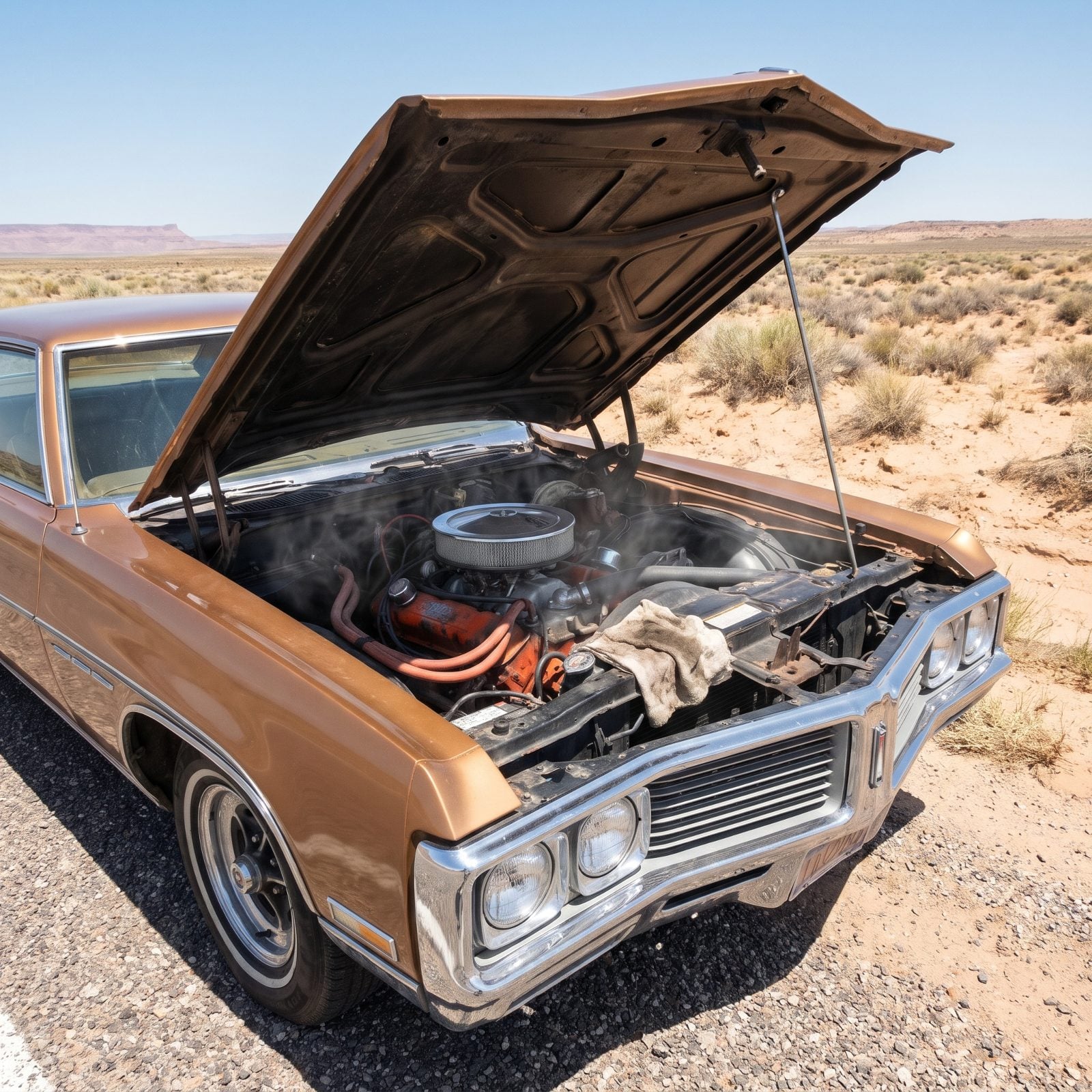
You’d be rolling along fine, then the engine would stumble, sputter, and quit. No warning. Just dead on the shoulder with the heat pressing down.
Vapor lock happened when the fuel in the lines got hot enough to boil before it reached the carburetor. The pump tried to push vapor instead of liquid, and the engine starved. On a scorching day, climbing a grade, it was always lurking.
And the fix was patience you didn’t have. Pop the hood, let it all cool, maybe lay a wet rag over the fuel line, and wait. Half an hour on the shoulder, flies buzzing, cars whistling past, before you dared turn the key again.
12. Desert Air Felt Like a Giant Hair Dryer
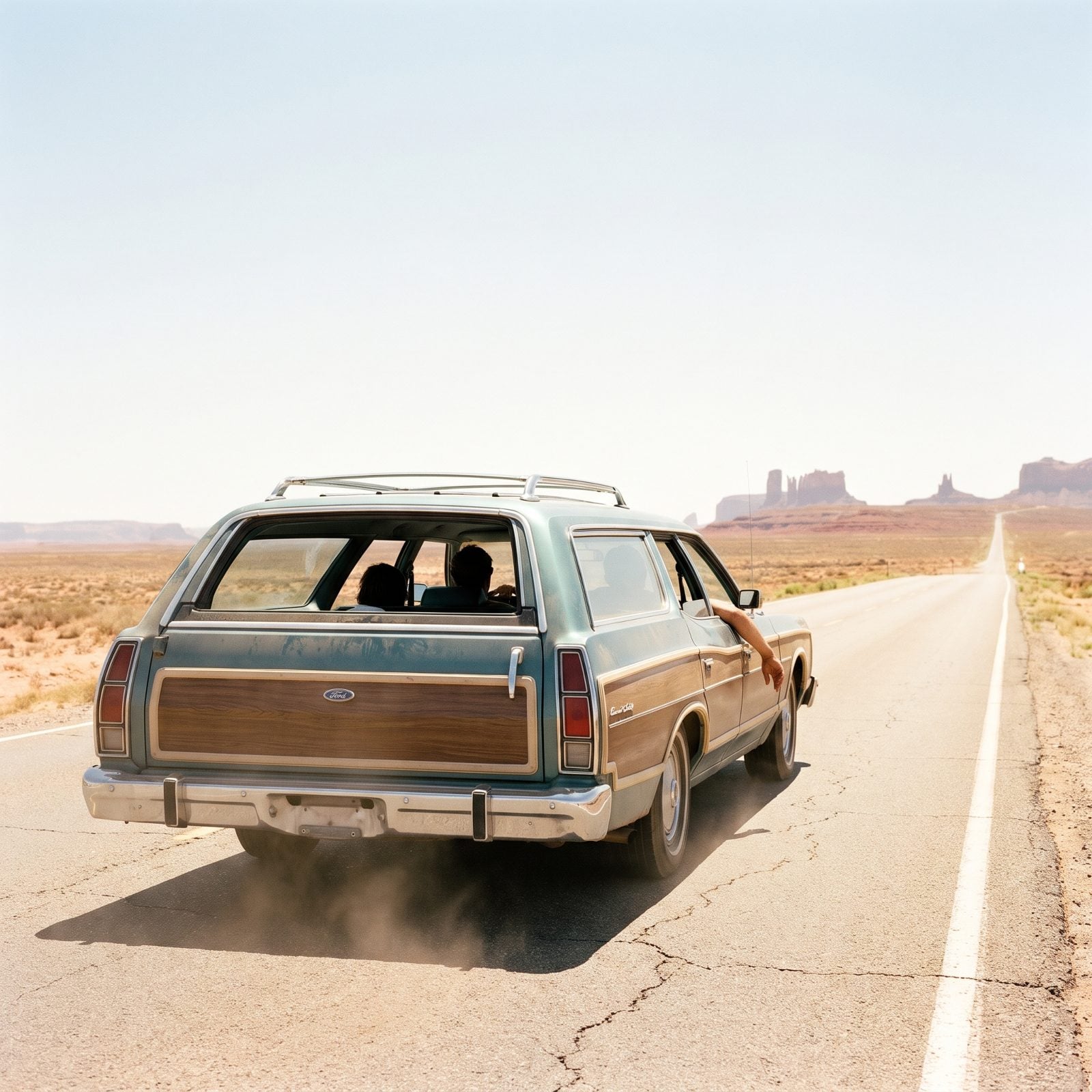
People think open windows in the desert meant air conditioning for free. It meant the opposite. At highway speed the wind poured in hot and bone dry, dry enough to pull the moisture right off your skin and out of your throat.
Picture a hair dryer on high, aimed at your face, for a hundred miles. Your lips cracked. Your eyes went gritty. You drank warm water from a thermos and it never seemed to help. Rolling the windows up was worse. No winning here — only degrees of baked.
11. Drive-In Movies Offered Almost No Moving Air
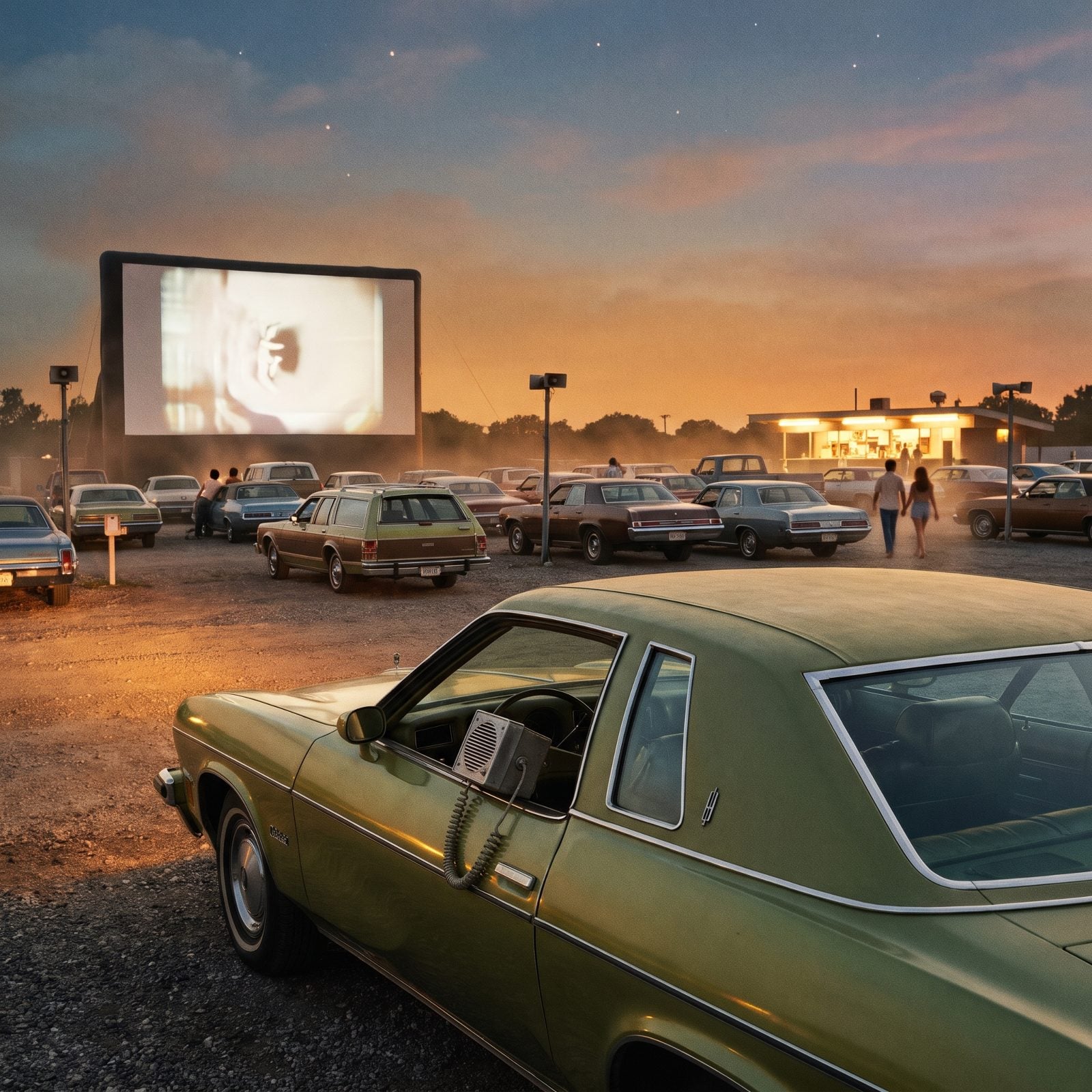
The drive-in was the only time all day the car sat still on purpose, which meant no breeze at all. You parked nose-in, hooked the speaker over the window, and all the heat the metal had soaked up since noon came seeping back out around you.
You cracked the windows for the mosquitoes to find you and fanned yourself with the snack-bar flyer. Kids ended up in pajamas in the way-back of the wagon, sprawled on a sheet, too hot to sleep and too tired to care. Still the best two dollars a carload anybody ever spent.
10. Beach Sand Stuck to Every Sweaty Surface
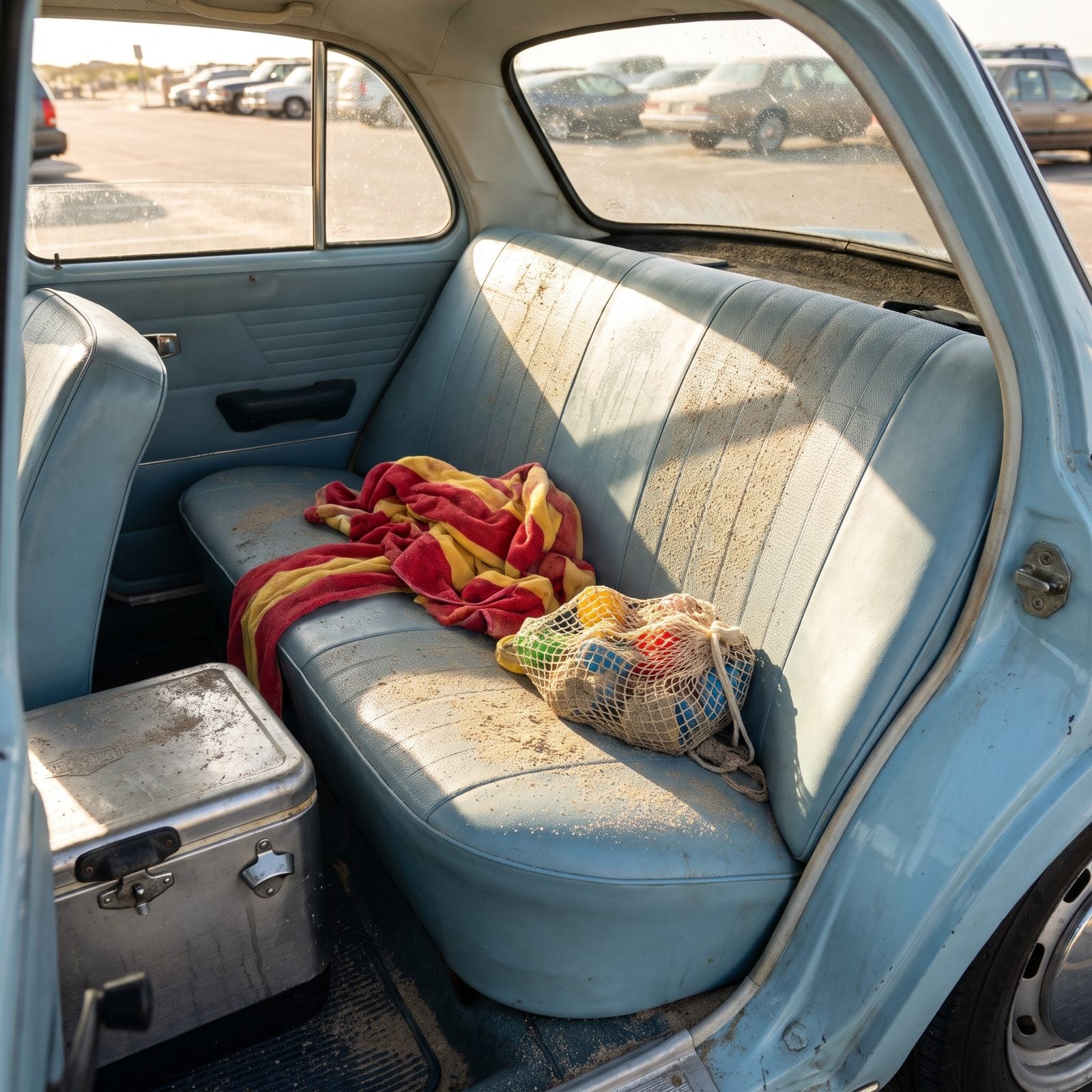
Sand plus sweat equals a coating. You climbed into the car damp from the water, already sweating in the heat, and every grain on your legs and towel bonded to the vinyl seat and to you.
And you’d keep finding it for weeks — in the seat seams, down in the carpet, between your toes, in the folds of the towel you swore you shook out. The seat itself was too hot to sit on bare, so you perched on the gritty towel and drove home peeling it off your thighs at every stop.
9. Crayons Liquefied on Seats and Package Shelves
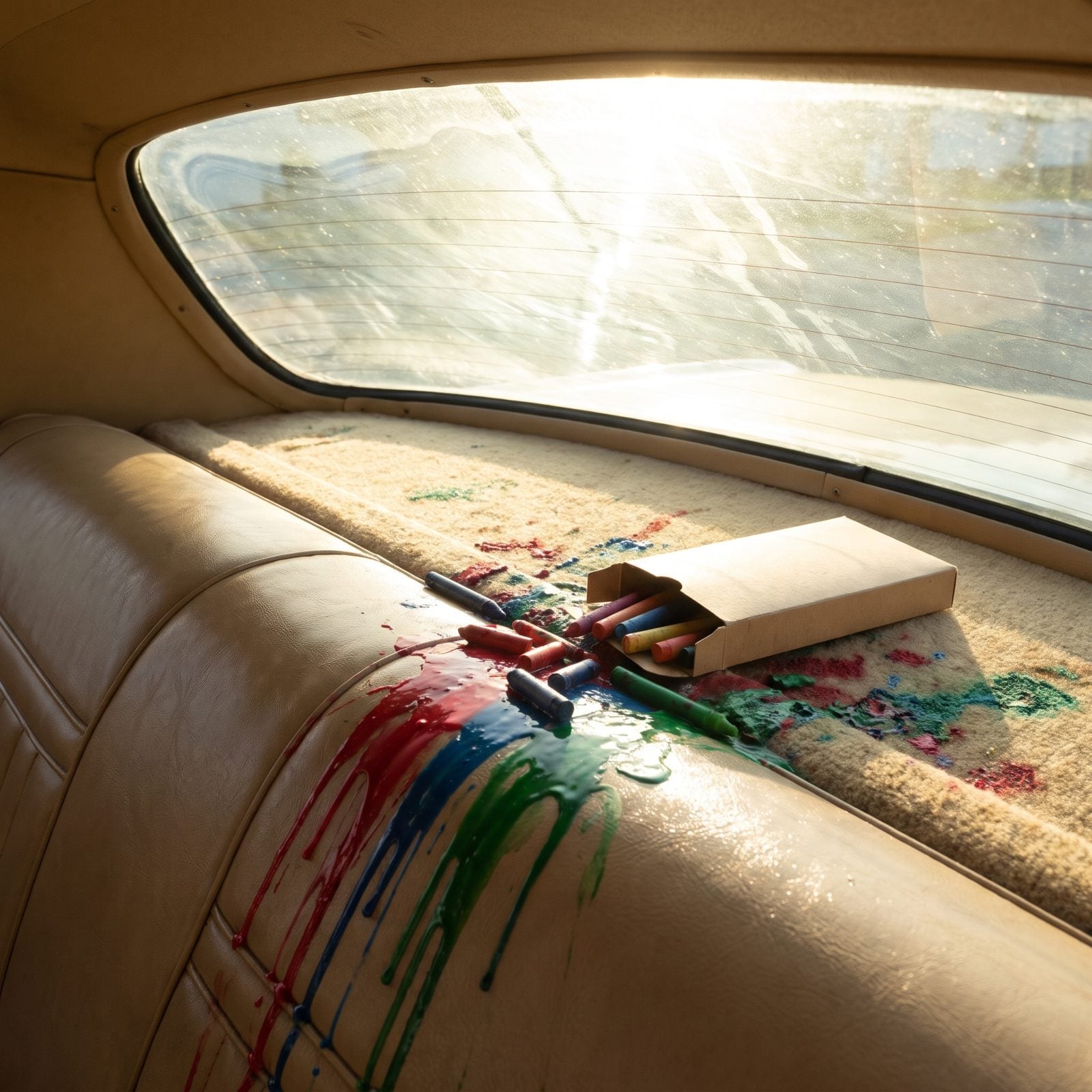
Leave a crayon on the package shelf and come back to abstract art. That big flat rear window turned the shelf into a solar oven, and anything a kid dropped back there in the morning was a colored puddle by lunch.
Crayons were the classic casualty. Red and blue smeared into the vinyl and never fully came out. Cassette tapes warped. A chocolate bar in the glovebox became a decision about whether you still wanted it. The whole car was a low oven, and summer taught you the hard way what you could and couldn’t leave inside it.
8. Heat-Warped 8-Track Tapes and the Cases That Cooked on the Dash
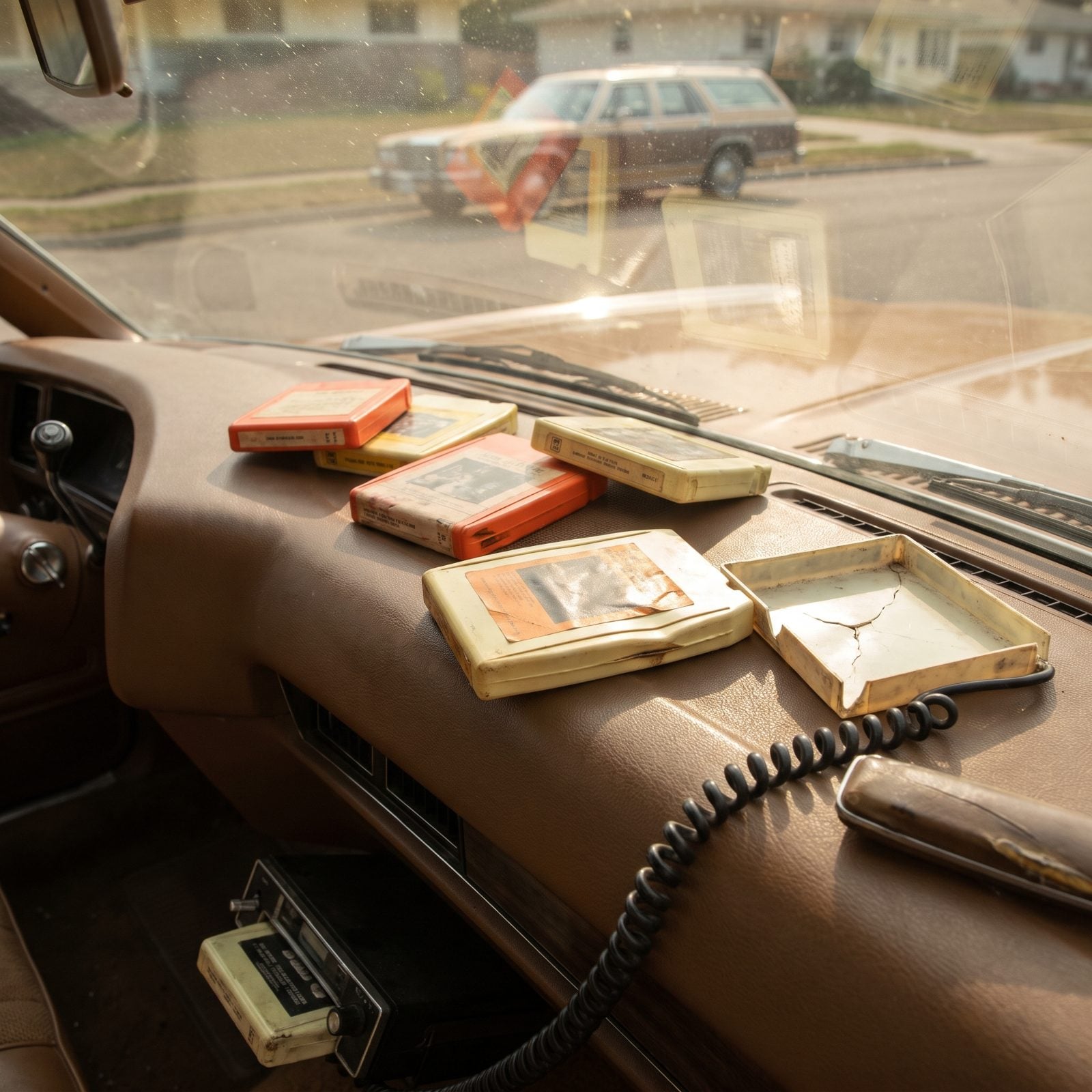
Every 8-track lived in danger the minute you left the car. Toss a cartridge on the dashboard during a stop for gas, and twenty minutes later it came back soft-cornered and slightly bowed, the plastic shell bent just enough that it no longer slid cleanly into the player.
Shove it in anyway and the music came out wobbling, Fleetwood Mac sounding like they’d been underwater. Push your luck too far and the machine ate the tape outright, leaving nothing on the dash but an empty case and a thin black cord coiled beside it. The smart ones kept their tapes in a shoebox under the seat. The rest of us learned the hard way, one ruined album at a time.
7. Buying Ice Cream Turned Into a Race Against the Sun
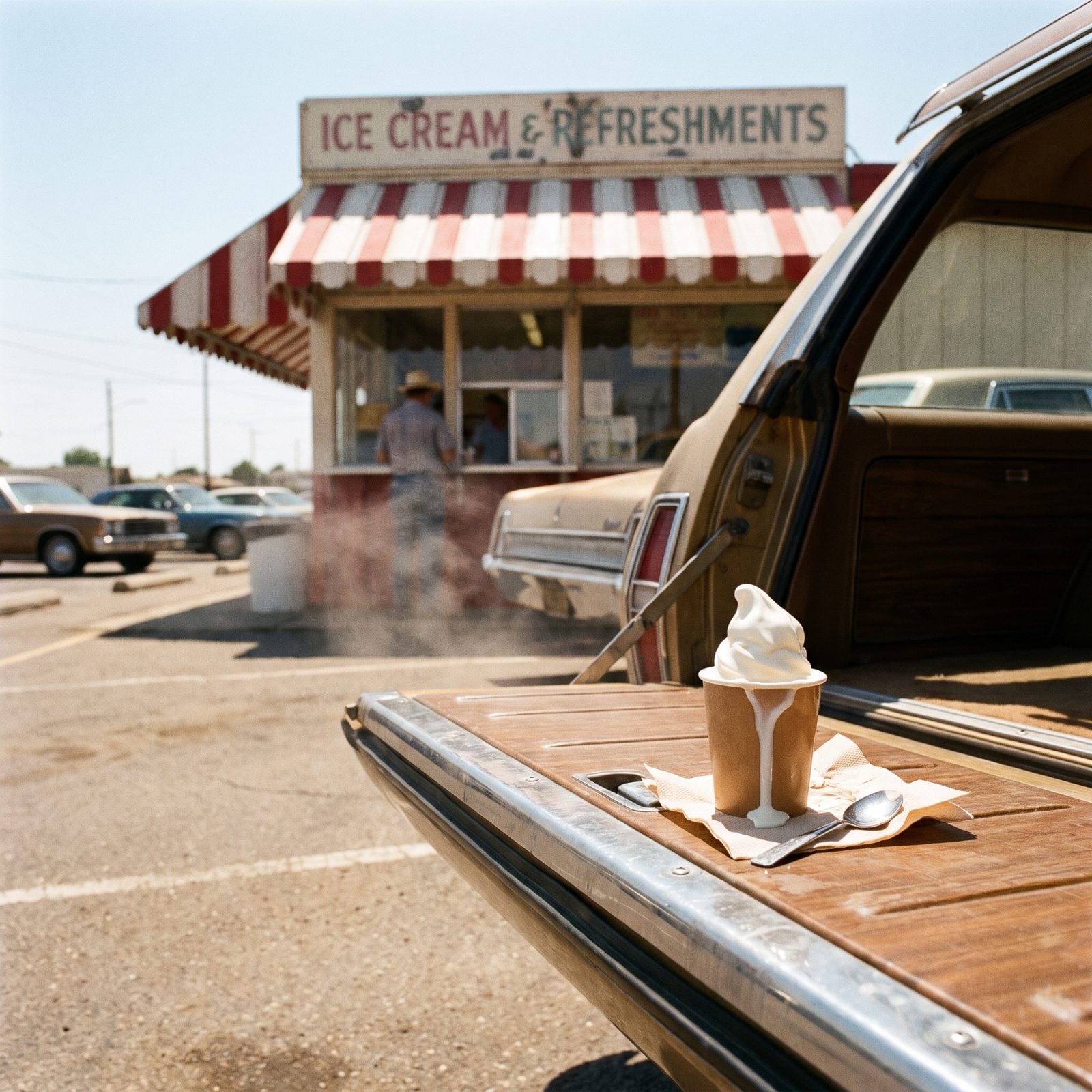
A stop at the soft-serve stand was the high point of any summer drive, and also the start of a losing battle. The cup was dripping before you made it back to the car, and once you set it down on that baking tailgate, the race was on.
You spooned around the edges in frantic circles while vanilla ran down the sides of the paper cup and pooled on the metal. Little brothers lost the top scoop entirely to the heat. Moms set out napkins that never stood a chance. Nobody ever finished one without sticky fingers that stayed sticky until the next gas-station sink, and the tailgate held the evidence for days.
6. Makeup That Melted Somewhere Around the County Line
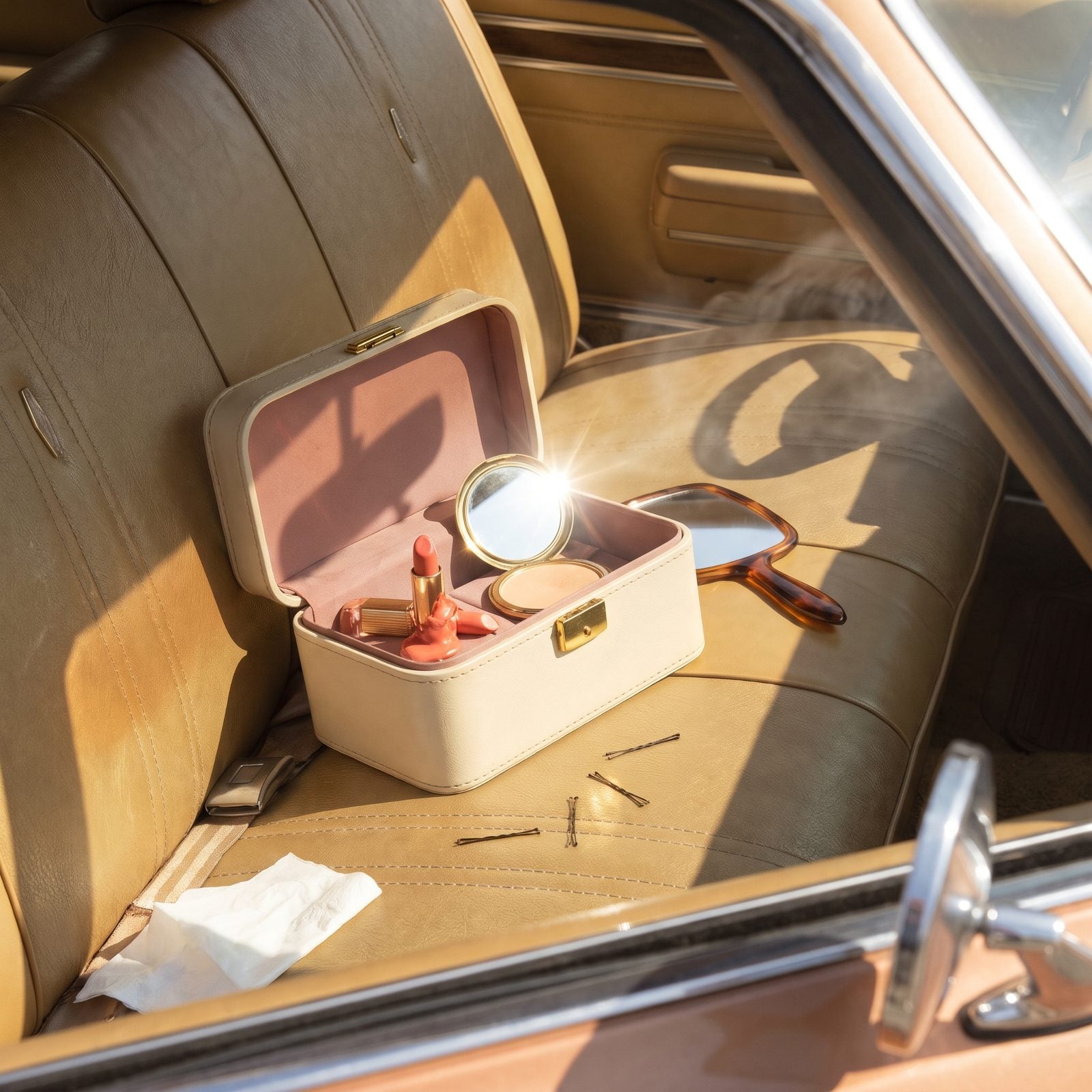
Getting dressed up for a family visit meant doing your face at home, in a cool bathroom mirror, knowing full well it wouldn’t survive the trip. Somewhere around the county line, foundation started to slide, powder turned to paste, and mascara drifted south in faint gray streaks.
The lipstick in the purse fared no better. Leave it in the sun on the seat and it oozed out the bottom of its tube into a sticky puddle while the bullet stood untouched. Arrival meant a quick dash to the relatives’ bathroom before hugging anyone, blotting with toilet paper and rebuilding the whole look from scratch in borrowed light.
5. Every Car Earned Its Own Signature Hot-Vinyl Smell
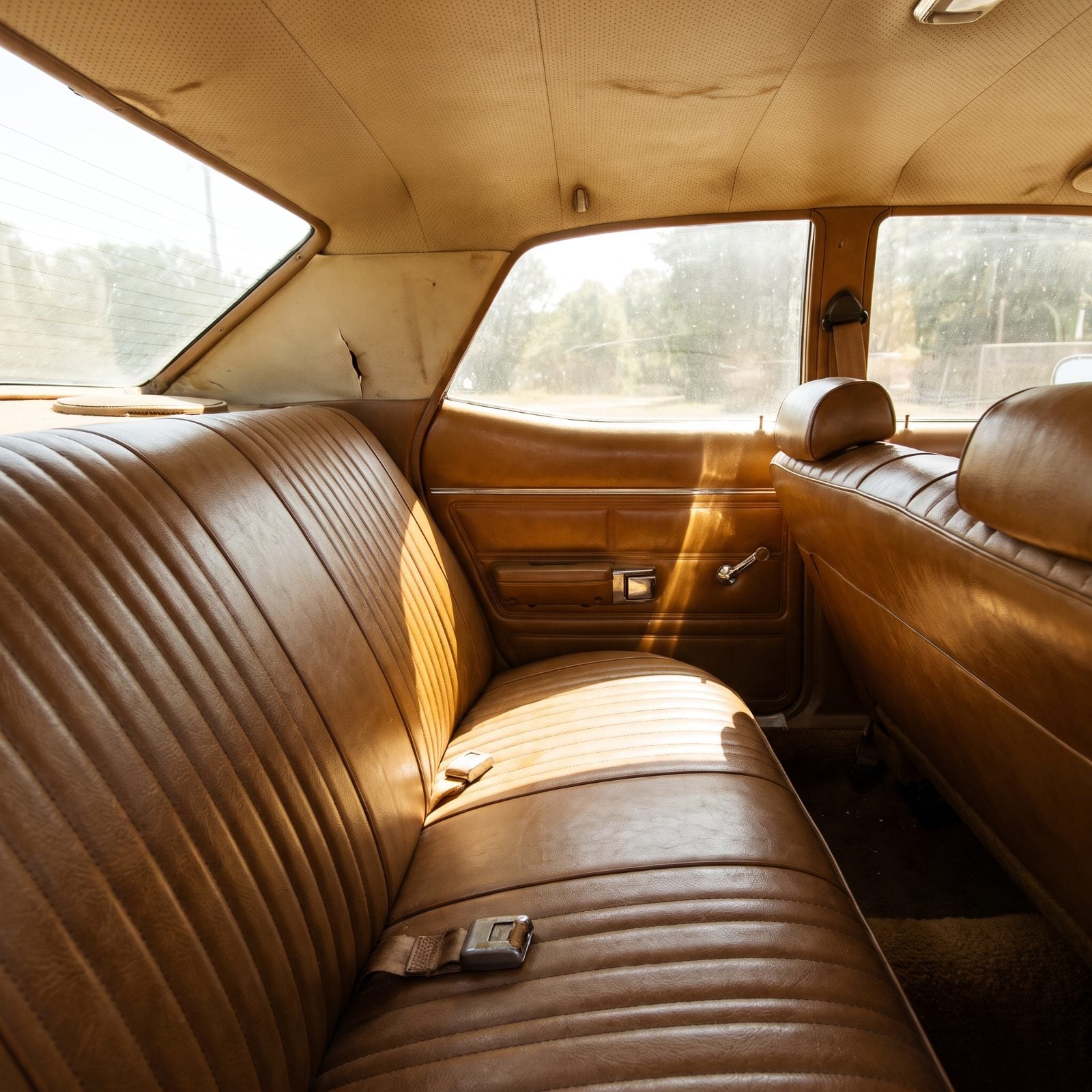
Open the door of any car that had been parked in the sun and the smell hit you before the heat did. Hot vinyl had a scent all its own, sharp and a little chemical, and every car mixed it with its own private blend of ingredients.
In one it was vinyl and old cigarettes. In another it was vinyl, coconut suntan lotion, and the french fry that slid under the seat back in June. That baked-in perfume also left a greasy haze on the inside of the windshield that turned headlights into starbursts at night. We wiped it with a napkin and smeared it worse. Catch even a whiff of it today in an old car at a show, and the whole decade comes rushing back.
4. Sweat Silhouettes Left Behind on the Seatbacks
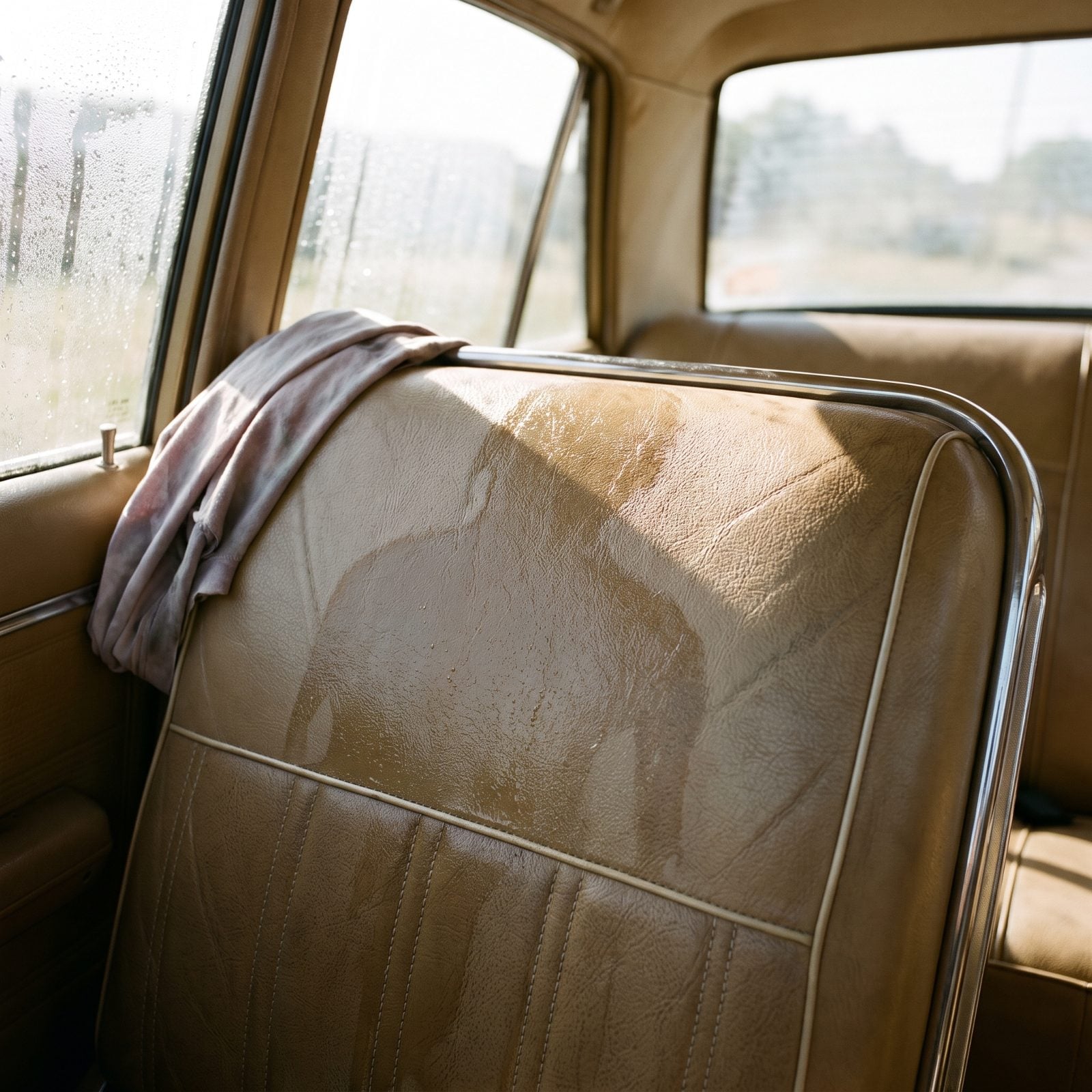
When you finally peeled yourself out of the back seat after a long haul, you left a ghost behind. A dark, damp outline of your shoulders and spine sat on the seatback, perfectly shaped, like a chalk outline at a crime scene drawn in sweat.
Getting up was its own event. Shirts unstuck from vinyl with a slow, wet rip, and bare arms came away with a sound nobody wanted to hear. Kids would compare silhouettes during gas stops. The prints faded in a few minutes, but on a hot enough day they never fully dried before everyone climbed back in and made fresh ones.
3. Rear Quarter Windows and Their Token Gesture Toward Fresh Air
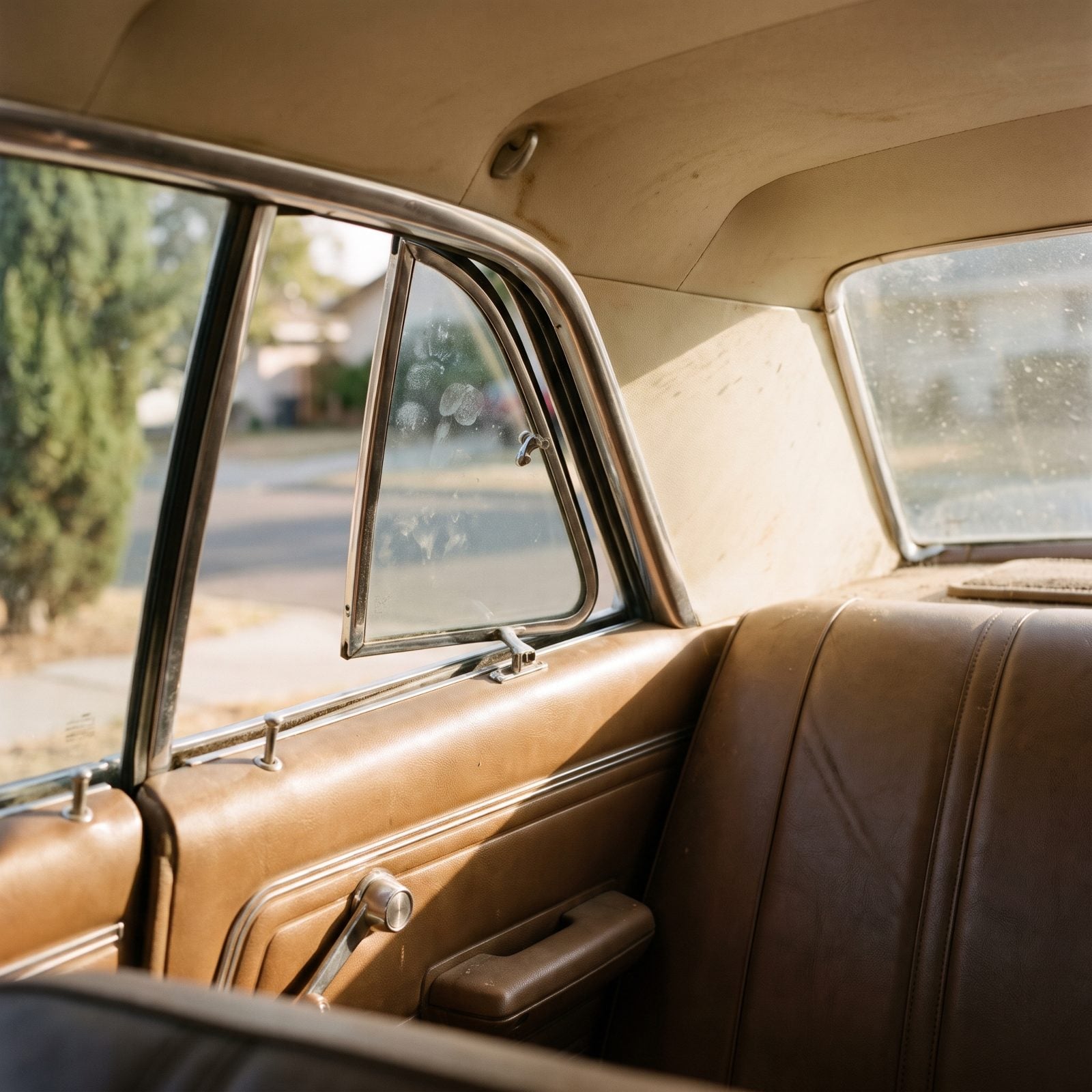
Back-seat riders got the short end of the window deal. On plenty of four-door sedans, the rear door glass only rolled partway down because the wheel well was in the way, leaving a stubborn slab of glass sticking up no matter how hard you cranked.
Two-doors and compacts were even stingier. Many had pop-out rear windows that swung open an inch or two on a hinge and a little latch, just enough to let you feel like something was happening. At highway speed they mostly whistled. Kids pressed their faces against that narrow gap anyway, hunting for the faintest breath of moving air while the front seat enjoyed the real thing.
2. Clip-On Dashboard Fans That Mostly Pushed the Heat Around
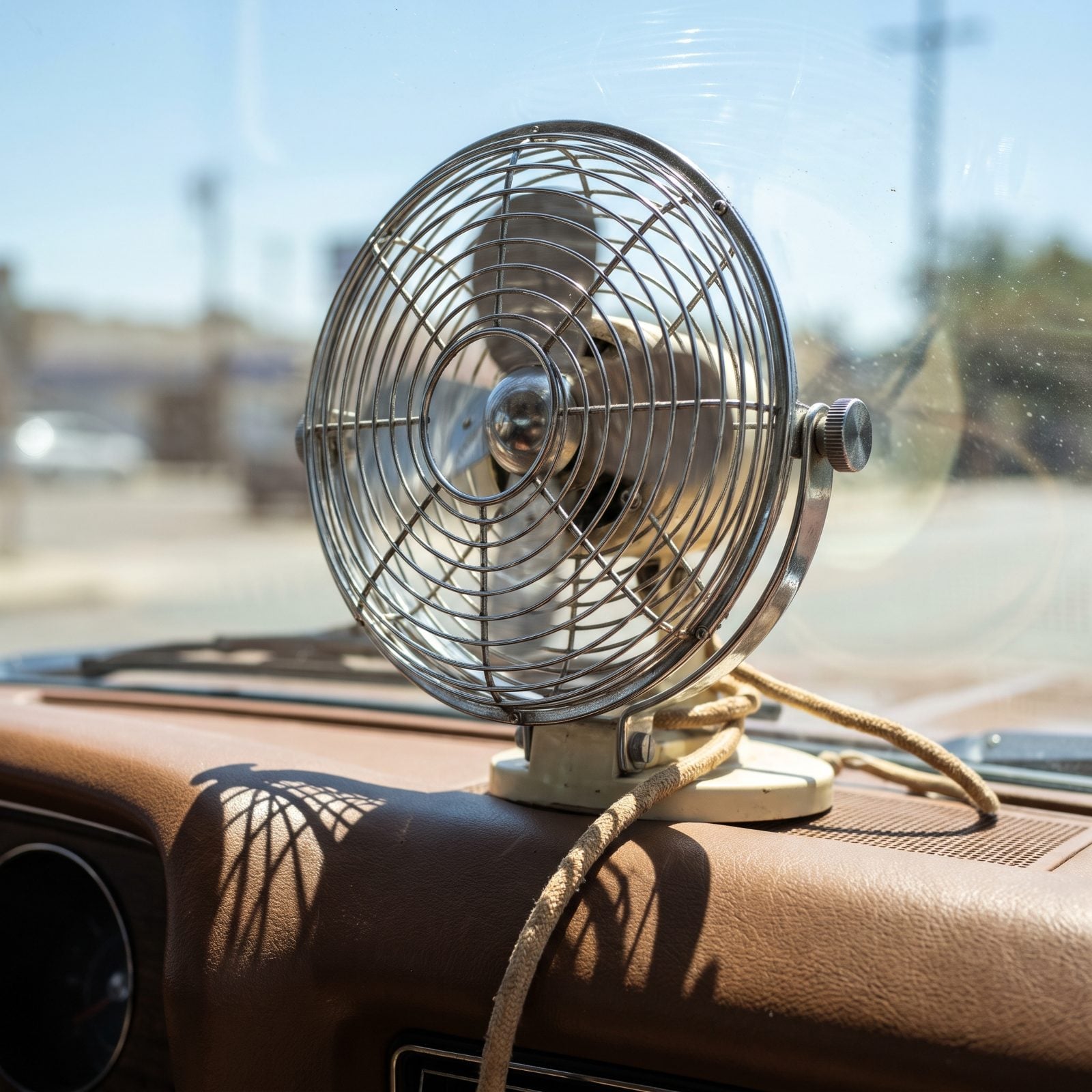
Some families fought back with a little electric fan that clipped onto the dash or the edge of the vent window and plugged into the cigarette lighter. It had small plastic blades, a buzz like a trapped hornet, and a cord that always seemed to dangle right where the driver’s hand needed to go.
Switch it on and it did exactly one thing: it took the hot air already in the car and blew it at you harder. On a humid afternoon that was a convection oven, not a breeze. Still, aimed at a sweaty face, it beat nothing, and whoever sat in its narrow path held that position like prime real estate.
1. Window-Mounted Swamp Coolers Still Riding Shotgun on the Highway
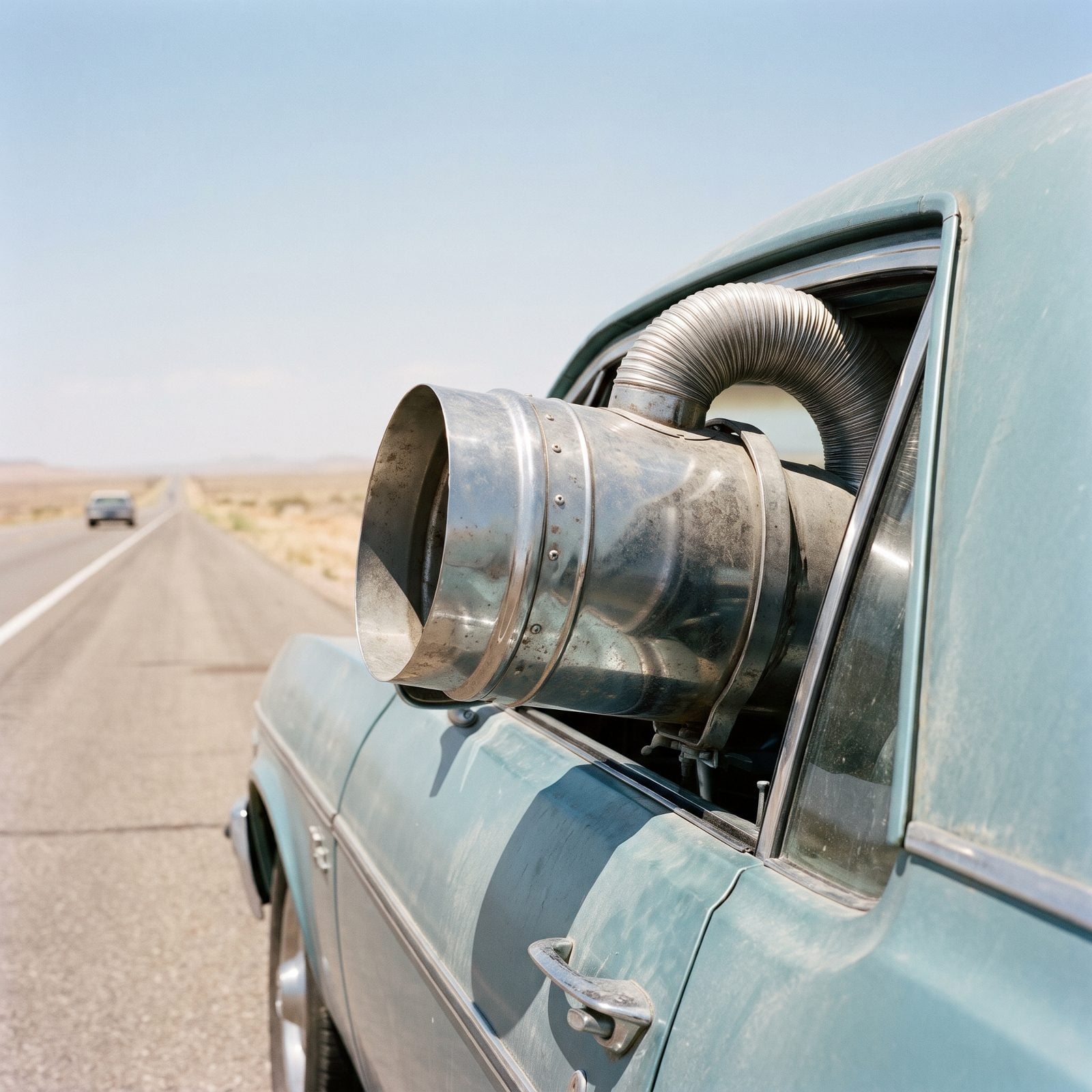
In the desert Southwest, you could still spot them in the 1970s: tall, riveted metal drums hanging off the driver’s window of older cars, a curved elbow scoop jutting from one side. You filled them with water, and as the car moved, air rushed through a wet pad inside and came out noticeably cooler on the other side.
They looked ridiculous and they actually worked, at least where the air was dry. You topped off the water at every gas stop and watched the cool breeze fade as the tank ran low. Take one into humid country, though, and it turned into a gadget that pumped damp air into an already sticky cabin.