
Would you like to save this?
A seasoned mechanic knows whether a car has been loved or neglected before it finishes parking. The seller talks. The car confesses. A dry crank, a flickering warning light, the shudder of an engine that should be sitting still — none of it costs a dime to notice, and all of it tells you more than any sales pitch ever will. Here are the things a mechanic clocks in the time it takes you to find your checkbook. Learn to read them yourself and you’ll walk away from a lot of bad cars grinning.
39. How Long the Engine Takes to Start

A healthy engine catches almost before you finish turning the key — half a second, maybe less. When the starter grinds on for two or three seconds before it lights, something’s tired: a weak battery, a lazy fuel pump that bleeds pressure overnight, or a starter motor circling the drain.
Count it in your head. A long crank on a warm engine is worse than on a cold one, because warm should be the easy start. We’ve watched sellers crank and crank and then say, “she just needs a minute.” No. She needs a mechanic.
38. Whether the Engine Is Truly Cold When You Arrive

Before anything else, lay the back of your hand on the hood. Cold metal means the car has sat overnight, and that’s exactly how you want to inspect it. A warm hood when the seller swore it hadn’t run all day? Somebody warmed it up on purpose.
Why hide a cold start? Because cold is when the ugly stuff shows — the blue smoke, the rattle, the rough idle, the long crank. A pre-warmed engine is a rehearsed engine.
37. Whether the Warning Lights Complete Their Self-Test

Turn the key to the on position, don’t start it yet, and watch the dash light up like a Christmas tree. Every lamp should glow for its self-test — oil, battery, airbag, ABS, check-engine — and then most of them wink out when the engine fires.
Here’s the trick. If the check-engine light never comes on at all during that bulb check, be suspicious. Someone may have pulled the bulb or tinted it out so a real fault can’t announce itself. A missing light is louder than a lit one.
36. A Check-Engine Light That Was Recently Cleared
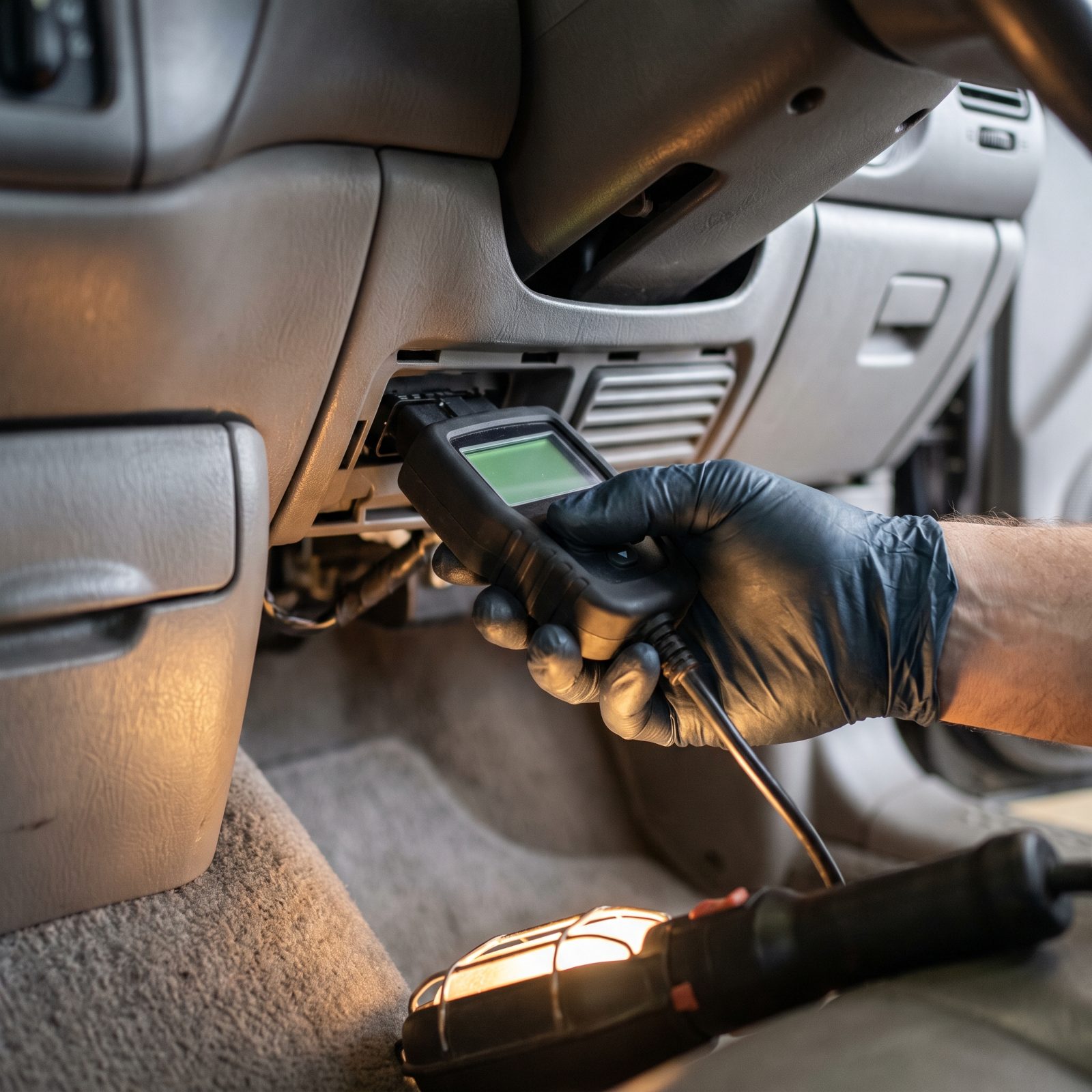
A scan tool tells on a car fast. Plug it in and pull the readiness monitors. If they all read “not ready” or “incomplete,” the fault codes got wiped clean within the last handful of drive cycles.
People clear codes right before a sale so the dash stays dark long enough to get your signature. The computer forgets the code but not the fact that it was reset. Those unfinished monitors are the fingerprints left at the scene.
35. The Brief Rattle of a Dry Timing Chain
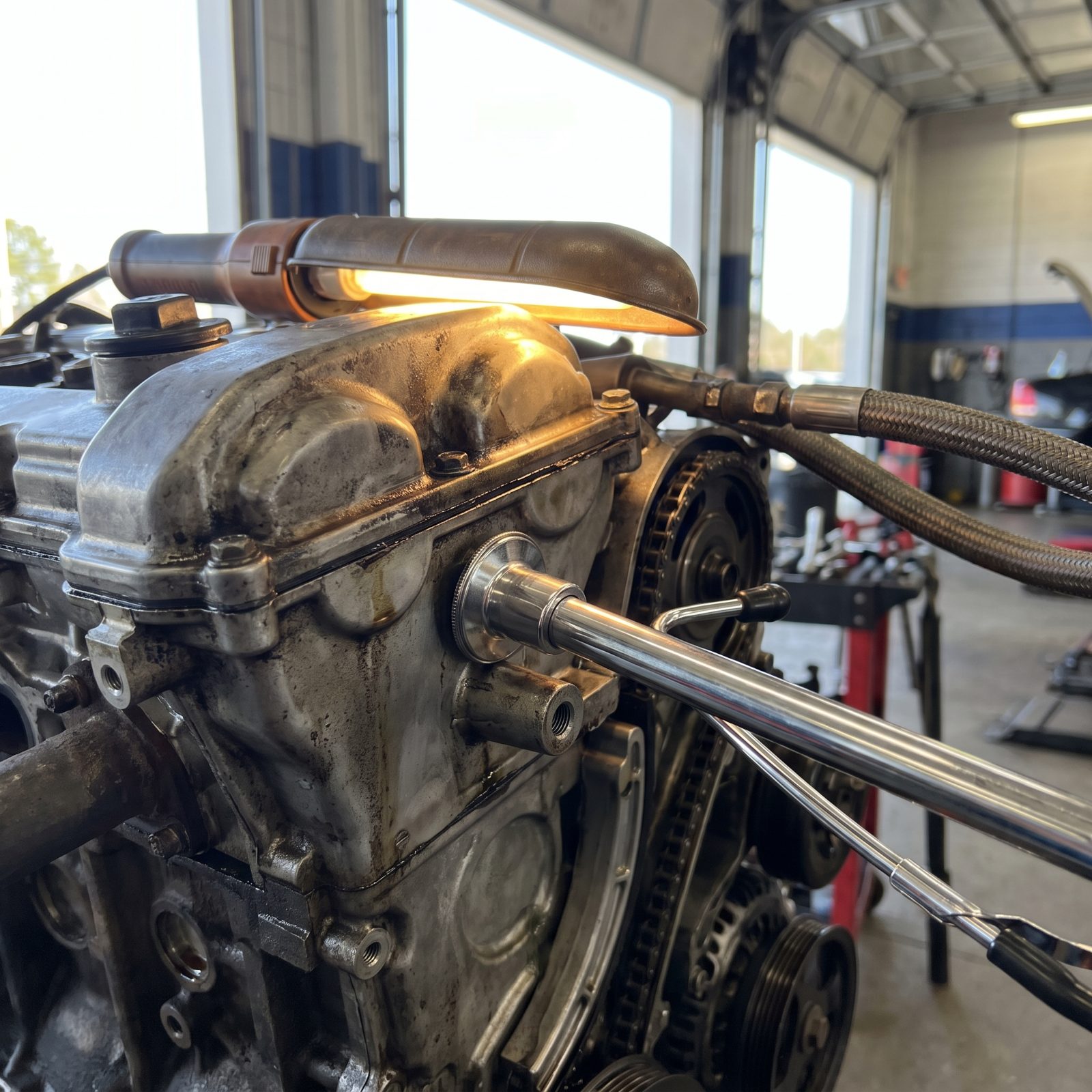
Listen in the first two seconds after a cold start. A chain-driven engine that rattles like a handful of marbles for a moment, then falls quiet once oil pressure builds, is telling you the tensioner is weak or the chain itself has stretched.
It’s easy to miss because it clears up so quick, and that’s exactly the danger. A stretched chain never gets better. On some engines it jumps a tooth and bends every valve in the head — a cheap repair now, a short block later.
34. Blue Smoke at Startup

Watch the tailpipe the instant it fires cold. A puff of bluish smoke that drifts off after a few seconds means oil is sneaking past worn valve seals and burning on startup.
Blue is oil. White is coolant. Black is too much fuel. Learn those three colors and you’ve picked up half of diagnostics for free.
Valve seals are an annoying job but not a death sentence. The real trouble starts when that blue smoke keeps coming under acceleration too, which points at worn rings — and worn rings mean the engine is breathing its last.
33. An Idle That Hunts Up and Down

A good engine settles into a steady idle and holds it there like a metronome. One that wanders — revving up, sagging low, climbing again — is hunting. The computer is chasing a problem it can’t quite correct.
Usually it’s a vacuum leak, a dirty throttle body, or a lazy idle air control valve. Sometimes it’s the first sign of a dying sensor. Watch the tach needle sway while it idles in park. A steady car doesn’t need to keep adjusting itself.
32. A Misfire You Can Feel Through the Seat

Sit in the car at idle and pay attention to your own backside. A misfire sends a rhythmic shudder up through the seat and shifter, a little hiccup that repeats. A smooth engine you barely feel at all.
Don’t trust your ears alone. For a steady low-speed misfire, the seat is a better sensor than your eardrums. Cheapest fix is a spark plug or coil. The worst case is a dead cylinder with no compression left, and that’s a whole different conversation.
31. Excessive Engine Movement at Idle
Would you like to save this?
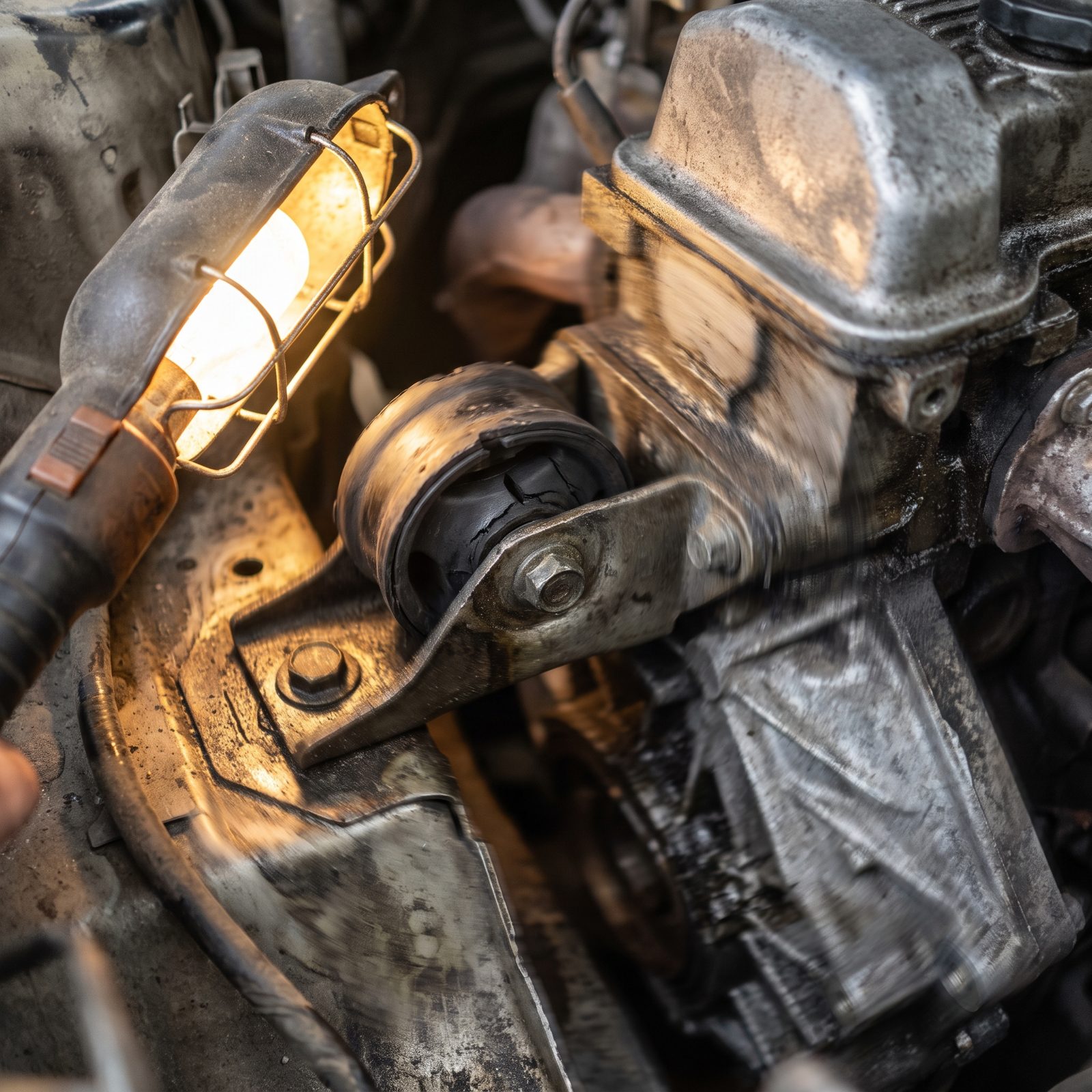
Pop the hood with the engine running and watch the whole engine, not any one part. It should quiver gently. If it rocks hard, lurching when you blip the throttle, the motor mounts are worn out or torn.
Tired mounts let the engine slam against the body. You feel it as a clunk when you drop it into gear and a shudder at stoplights. Not a catastrophe on its own — but it’s a window into how the car was driven, and folks who shred motor mounts tend to be hard on everything else too.
30. A High-Pitched Vacuum Leak
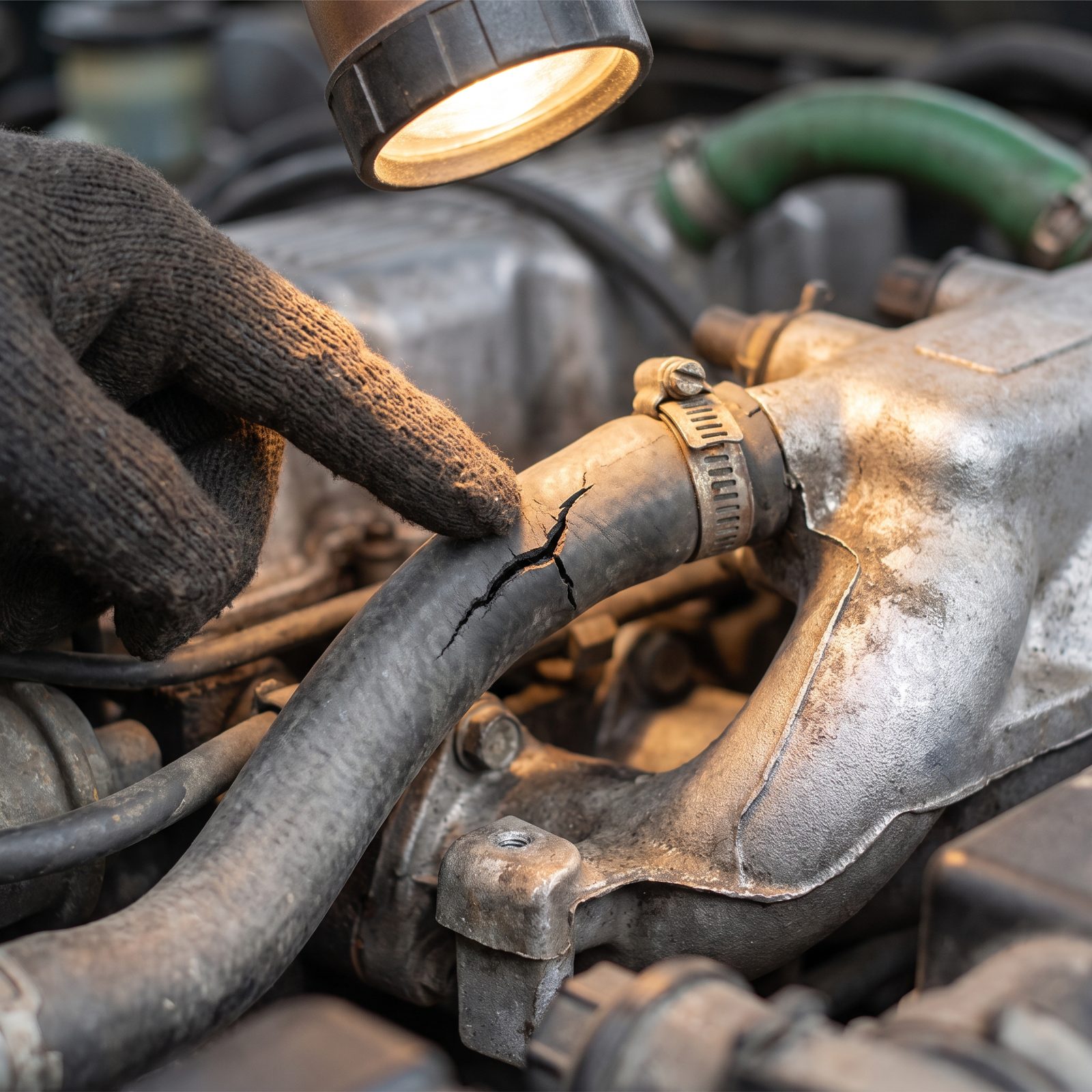
Shut off the shop chatter and just listen near the engine. A vacuum leak whistles — a faint high hiss that rides above the idle. It’s air sneaking in where it shouldn’t, through a cracked hose or a split intake gasket.
That hiss is why the idle hunts, why the fuel trims go haywire, why the check-engine light eventually comes on. Trace it with your ear and you can often find the culprit in under a minute. A dried-out, perished rubber hose costs a few dollars. Ignore it and you’re buying extra fuel every week to feed an engine running lean.
29. A Ticking Exhaust-Manifold Leak
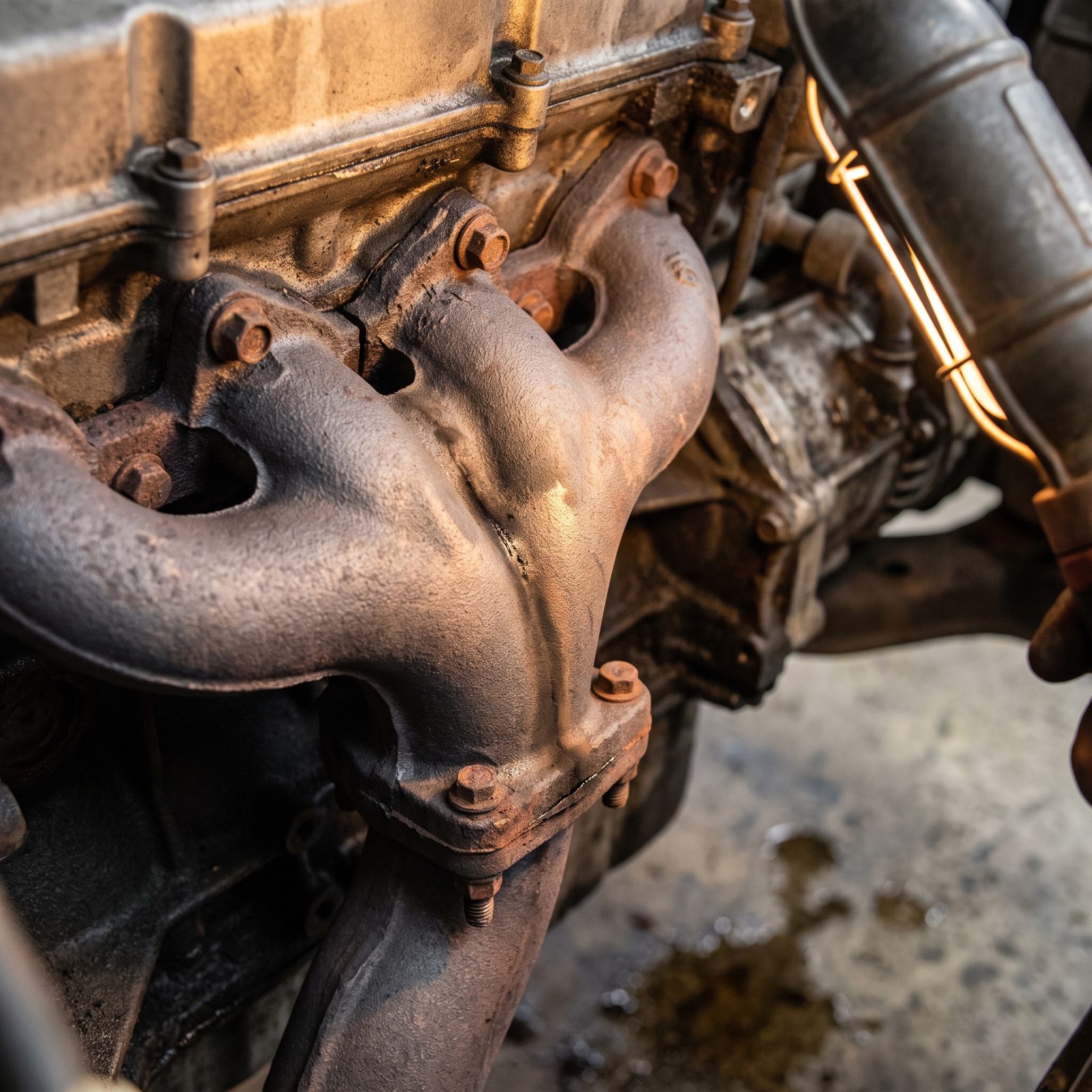
You hear it at cold start. A rapid tick-tick-tick, loudest the moment the engine fires, fading as everything warms and the metal expands shut. That’s not a lifter. That’s exhaust gas escaping a cracked manifold or a blown gasket, firing out in little pressure pulses faster than valvetrain noise.
After he hears it, a mechanic hunts for a sooty black feather around the leak, where carbon paints itself onto the iron. Ignore it and the crack grows, the sound goes constant, and you start breathing fumes you shouldn’t.
28. A Squealing Accessory Belt

That high, wet squeal when you fire up on a cold morning? Or the one that screams when you crank the wheel into a tight parking spot? Belt. Almost always.
A worn or glazed belt loses grip and slips across the pulleys, and the friction sings. Look at the ribbed side. If it’s shiny instead of matte, it’s slipping. Cheap to replace, too — a quality serpentine belt and a few minutes beats a roadside breakdown when the thing finally shreds. We ignored a squeal for a month once and lost our alternator, power steering, and water pump drive all at a red light. Lesson learned the hard way.
27. A Growling Pulley Bearing
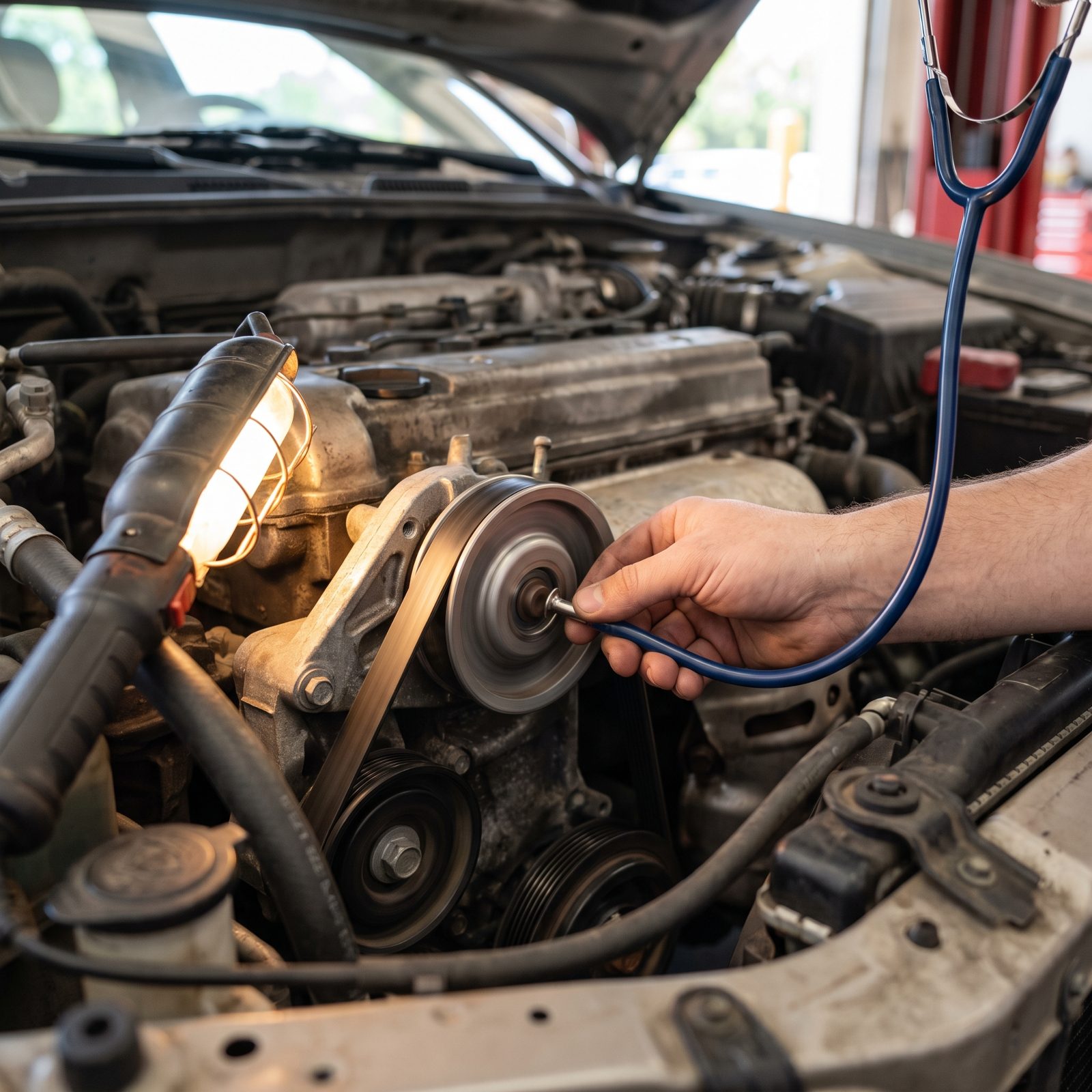
A squeal is rubber. A growl is metal. Big difference, and a good mechanic can separate the two from across the shop.
Dry or failing bearings in an idler pulley, tensioner, or water pump put out a low, rumbling grind that rises and falls with engine speed. Press a long screwdriver handle to your ear and the metal tip against each pulley housing — the bad one roars straight into your skull. Poor man’s stethoscope. Works every time.
26. The Sweet Smell of Leaking Coolant
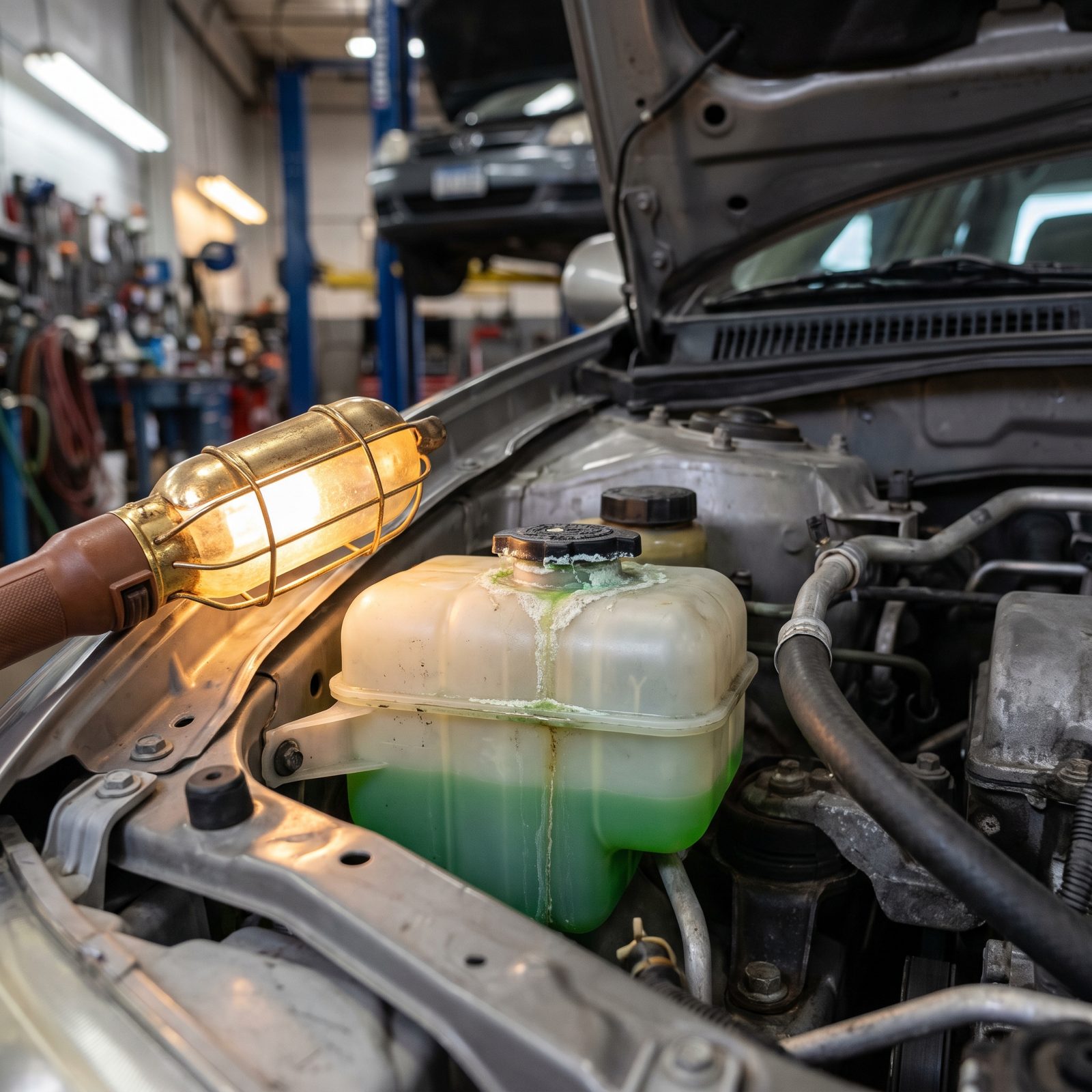
You know the smell even if you can’t name it. Faintly sweet, almost like warm maple syrup, hanging in the air after you park. That’s ethylene glycol, and it means coolant is cooking off somewhere it shouldn’t be.
A mechanic follows his nose to the source — a weeping hose, a seeping water pump, a hairline in the reservoir. Sweet smell, low coolant, a little sticky residue: that’s the whole story told before a pressure test ever confirms it.
25. The Burnt Smell of Overheated Oil
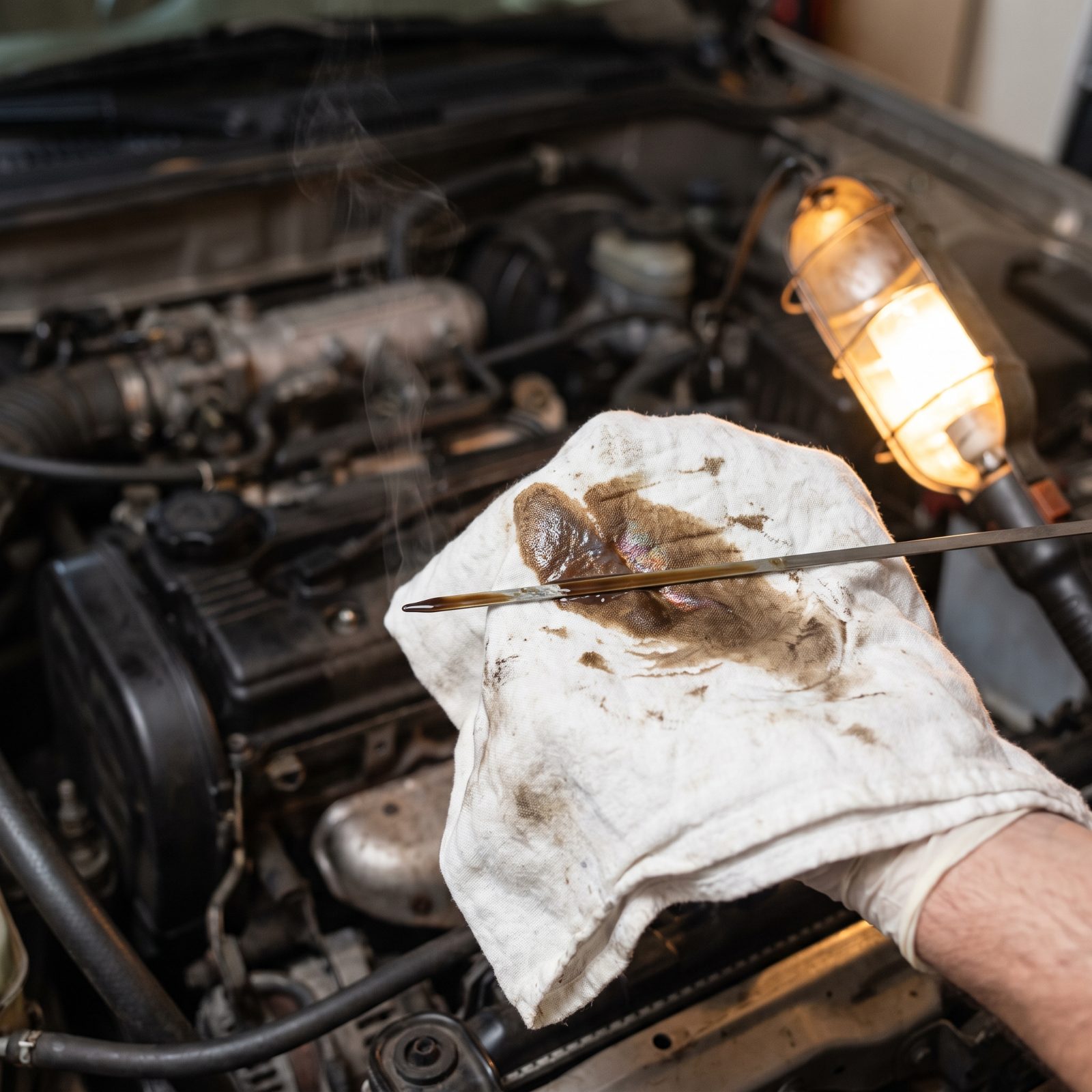
Sharp, acrid, a little like scorched toast with a chemical edge. That’s engine oil hitting metal it was never meant to touch — usually a hot manifold or exhaust pipe where a leak is dripping onto heat.
Where coolant smells sweet, cooked oil smells burnt and angry. A mechanic sniffs it, then hunts for the smoke or the wet shine on a hot surface. Caught early it’s a gasket. Ignored, it’s the smell that comes right before an underhood flare-up.
24. Black Soot Around the Tailpipe
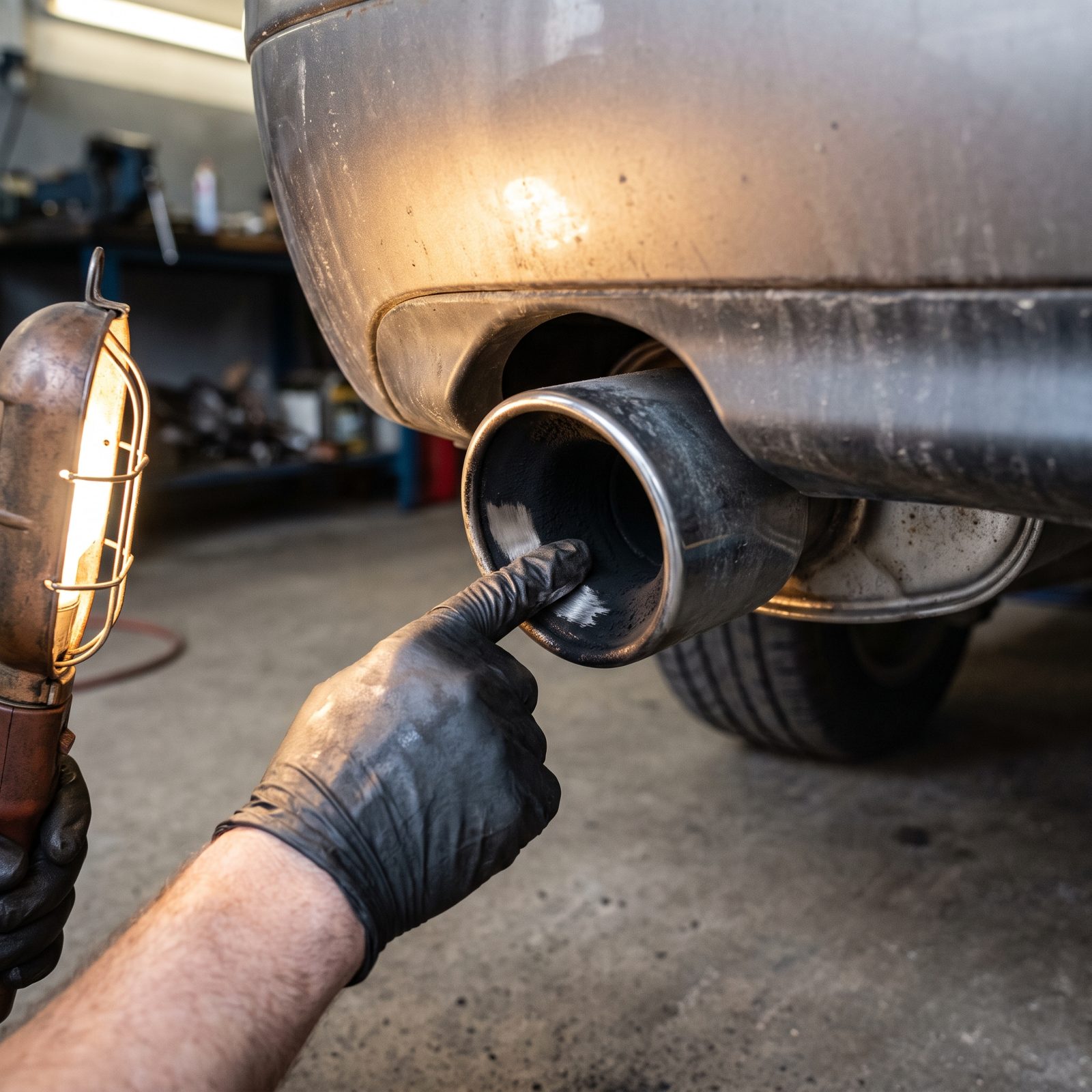
Swipe a finger inside the tailpipe. Dry, powdery black soot that smears off easy means the engine is running rich, dumping more fuel than it’s burning. Could be a tired oxygen sensor, a clogged air filter, or a sticking injector.
Healthy combustion leaves a light gray-tan film. Wet, oily black is a whole different problem, and a mechanic reads the texture the way you’d read a dipstick.
23. Fresh Fluid Spots Under the Car
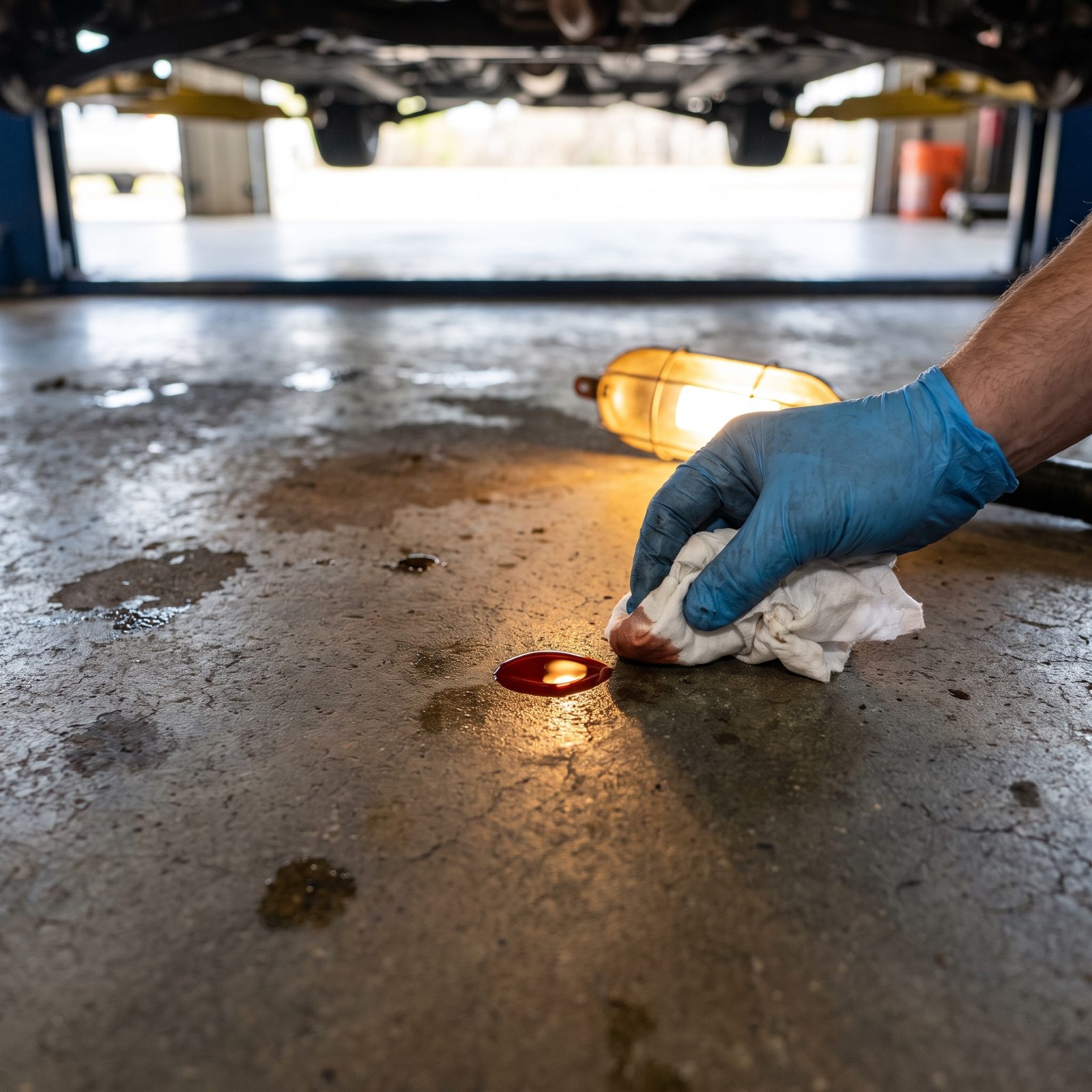
A mechanic reads a puddle like a fortune teller reads tea leaves. Color and location tell him most of what he needs.
- Bright red or pink toward the middle or rear usually means transmission or power steering fluid.
- Amber to dark brown under the engine is motor oil.
- Bright green, orange, or pink up front is coolant, and it’s sticky to the touch.
- Clear and watery near the passenger side? Relax. That’s just A/C condensation, totally normal.
Slide a clean rag under a fresh drop and the color gives it away in seconds.
22. Old Oil Coating the Bottom of the Engine
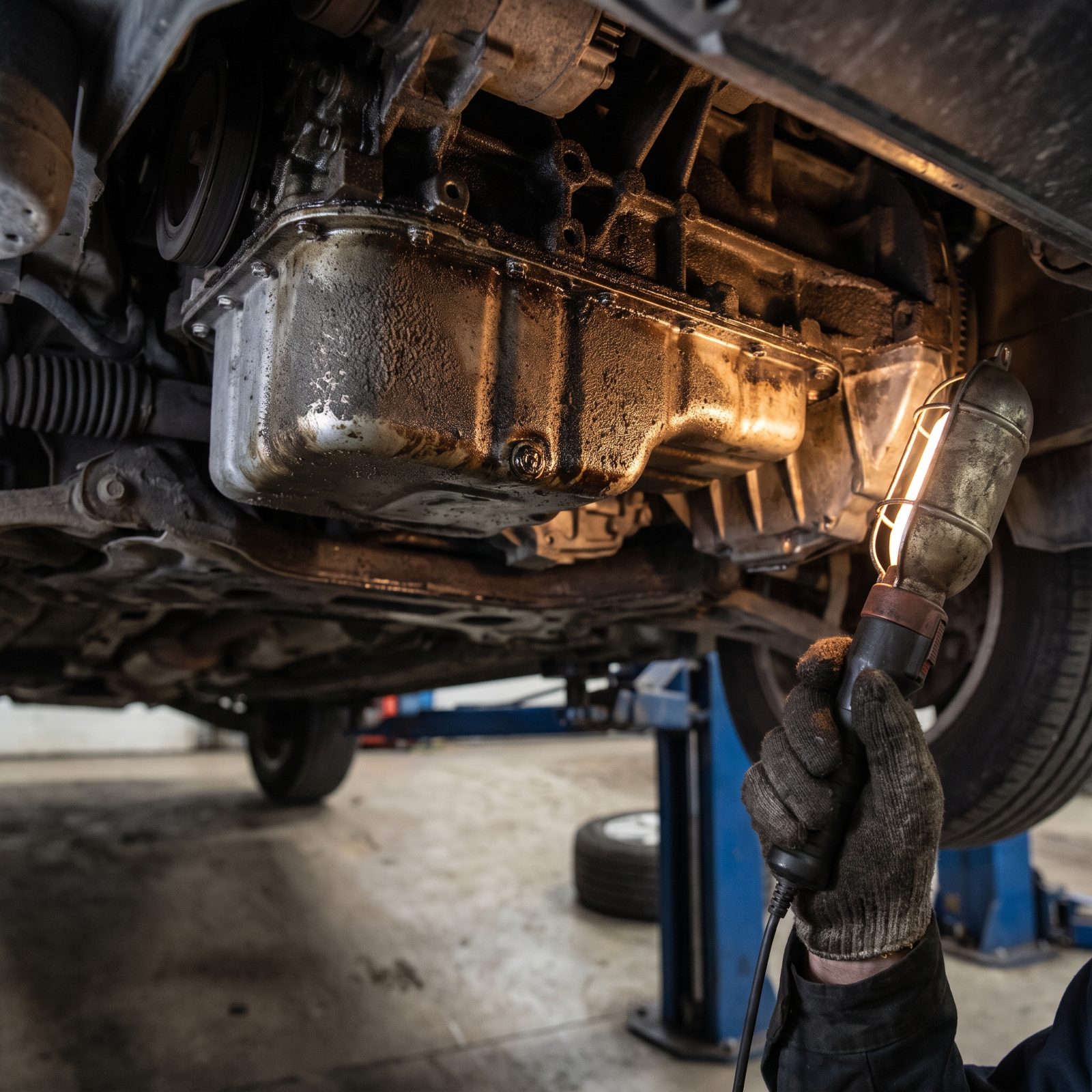
A clean engine bottom tells you nothing’s been leaking. A black, grimy, dust-caked underside tells a longer story.
Let oil seep for months from a valve cover or rear main seal and it coats the pan and block, then catches road dust into a dark felt. An experienced eye traces that coating upward to the highest wet point, because oil runs down. Whatever sits at the top is where the leak actually lives.
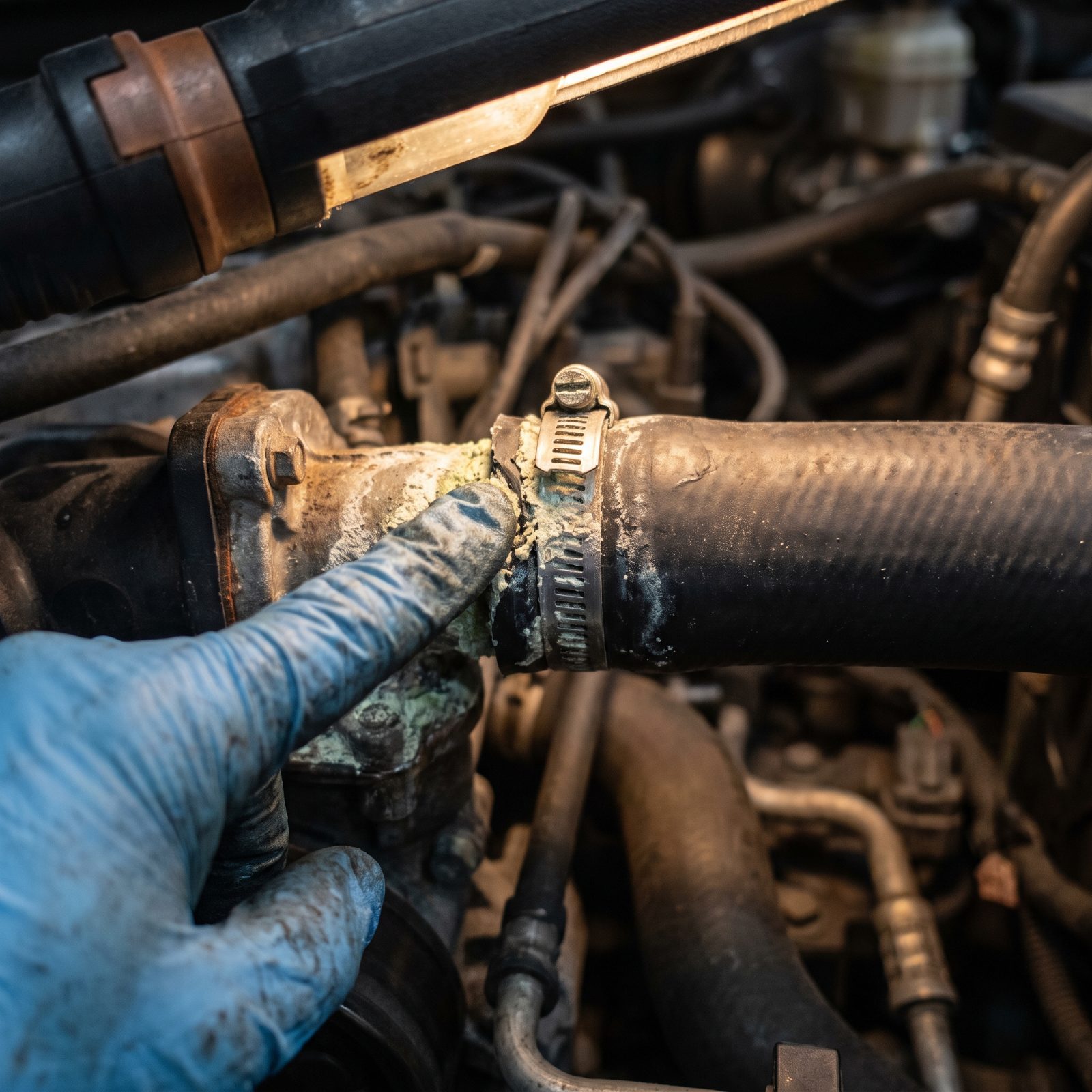
21. Coolant Crust Around Hose Connections
Would you like to save this?
Slow coolant seeps don’t always drip. Sometimes they just evaporate and leave their minerals behind, and that residue is a dead giveaway.
Look for a chalky white, green, or pink crust ringing a hose clamp, a thermostat housing, or the radiator neck. It’s dried coolant that weeped, dried, weeped again, building a little reef over time. Fresh clamp, maybe a new hose, and you’ve headed off an overheat on the highway. We check these before every long trip now. A fresh set of stainless hose clamps is cheap insurance.
20. Engine Oil That Looks Milky
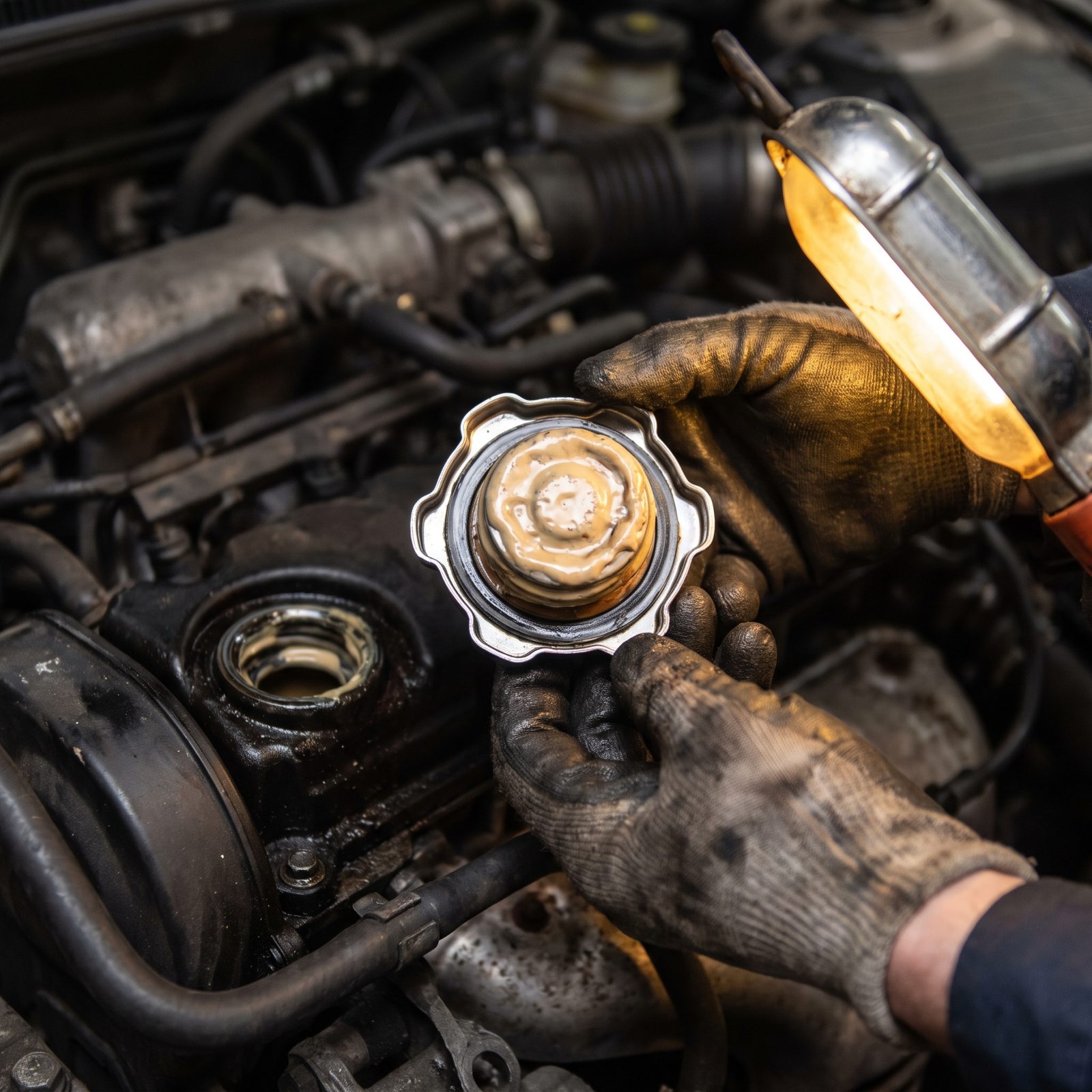
This is the one that stops a mechanic cold. Pull the oil cap or the dipstick and instead of amber oil you find a tan, foamy paste the color of coffee with too much creamer.
That milkshake is coolant mixing into the oil, and it points at a head gasket, a cracked head, or a failing intake gasket. None of them are small. On rare short-trip winter cars a light cap film can just be condensation — but milky oil on the dipstick itself is serious.
19. Cloudy or Contaminated Brake Fluid
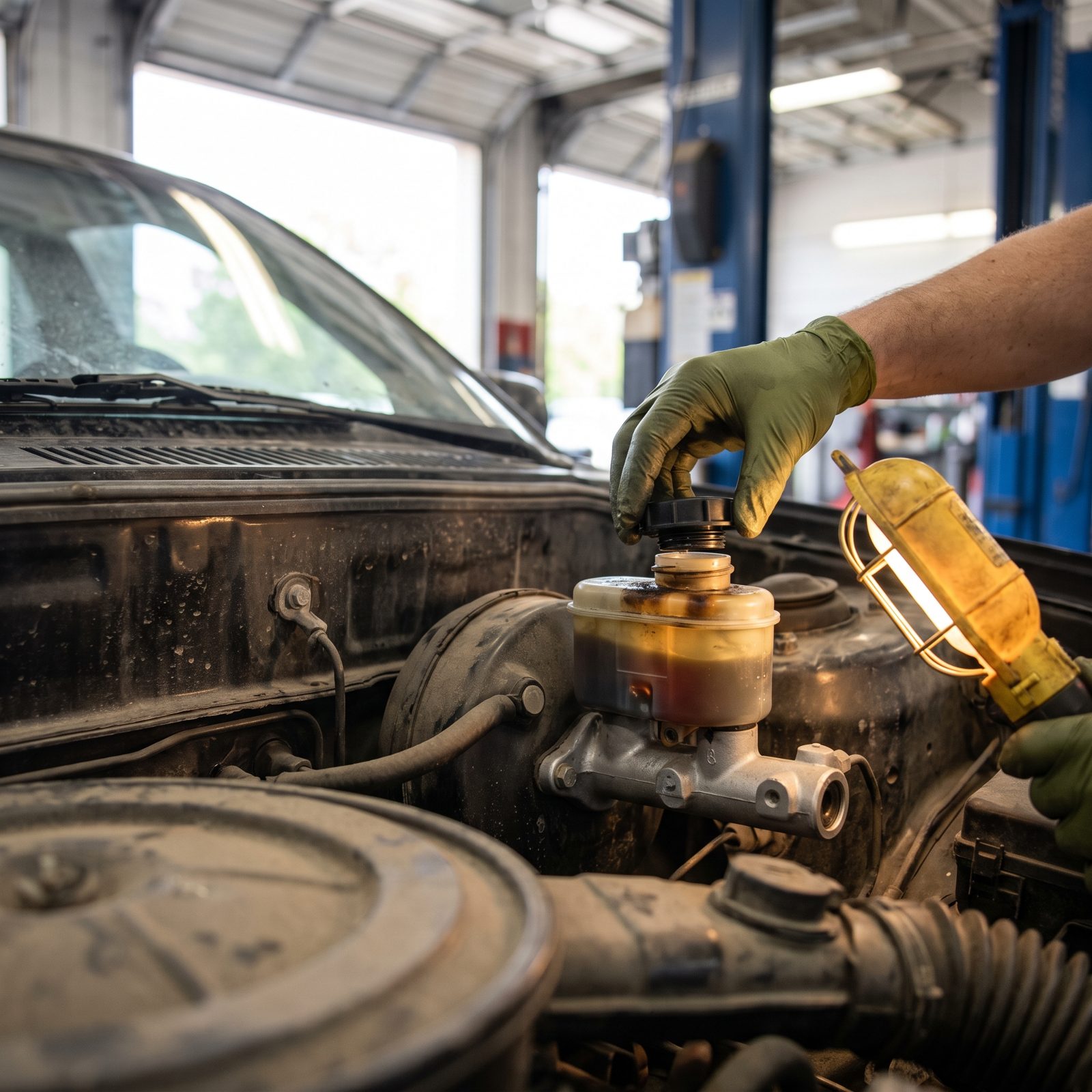
Fresh brake fluid is nearly clear, the color of weak tea. When it goes dark and cloudy, it has soaked up water from the air, and water in your brakes is a problem that shows up at the worst possible moment. Heavy braking down a long grade boils that moisture, your pedal goes soft, and now you’re stopping on vapor.
A mechanic pops the cap and reads the color in two seconds. Can’t see clean through it? It’s overdue. Most people never crack this reservoir open in the life of the car, and that’s exactly how the trouble sneaks up.
18. Transmission Fluid That Smells Burnt
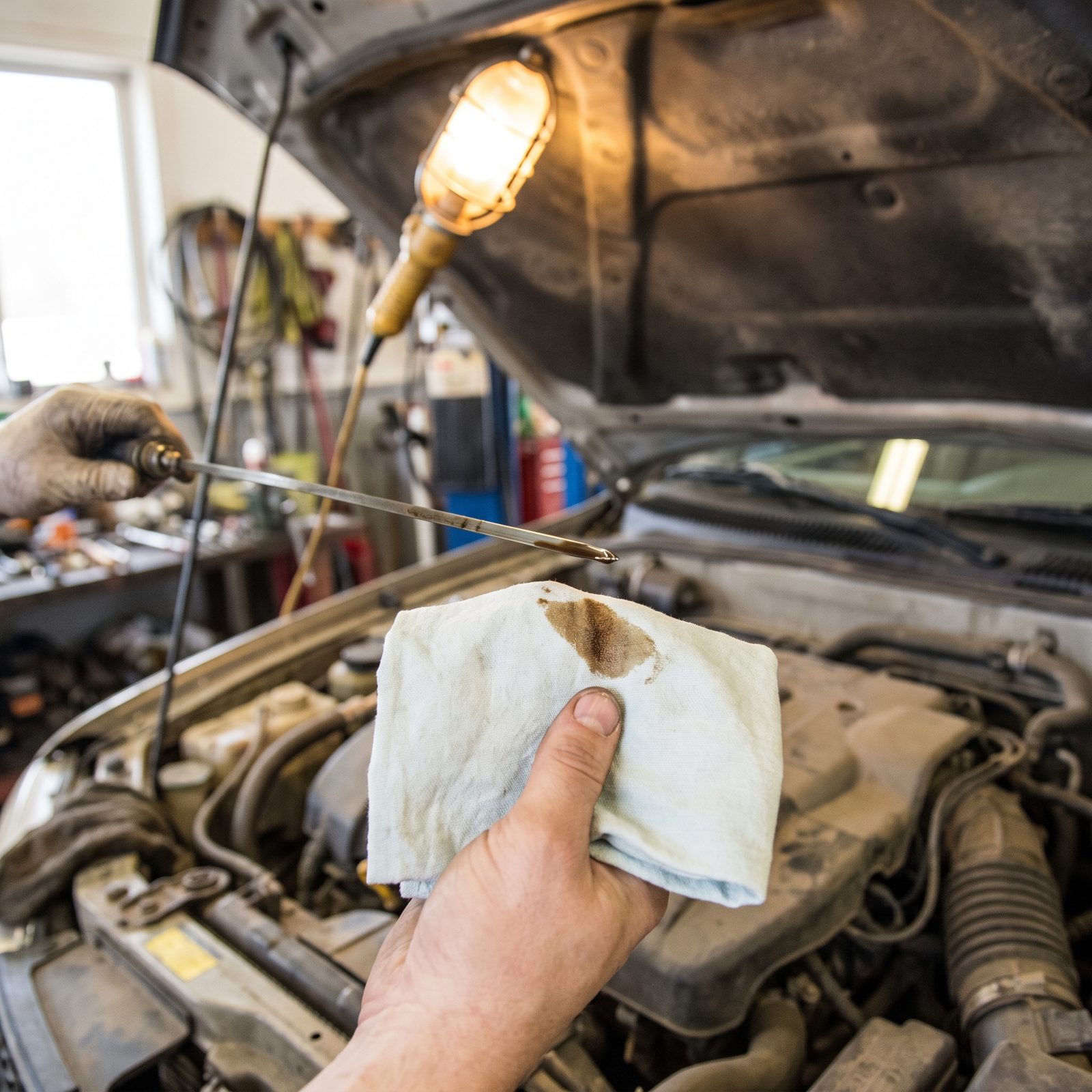
Good automatic transmission fluid is bright red and smells faintly sweet. When it turns brown and carries a sharp burnt odor, like scorched toast, the clutches inside have been cooking. That smell is friction material that gave up.
No scan tool needed here. He wipes the dipstick on a rag, holds it to the light, and sniffs — and the nose tells him more than the color ever does. A burnt-smelling transmission is often months from a slip you’ll feel on the highway, and a rebuild costs more than most people want to hear.
17. A Coolant Reservoir Filled With Plain Water
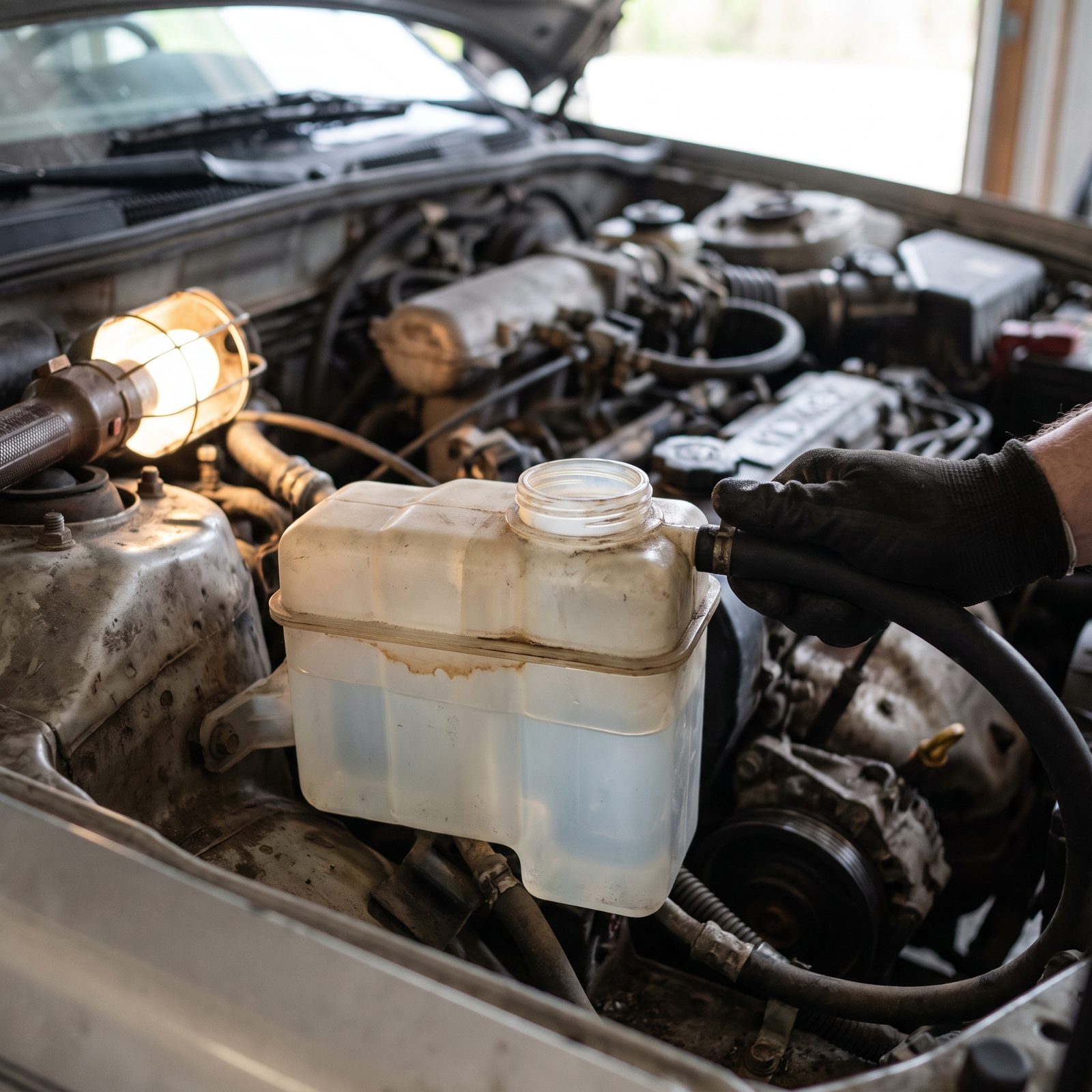
Pop the reservoir and it should hold green, orange, or pink coolant depending on the car. Clear as tap water? Somebody topped it off from the garden hose and called it a day.
Plain water boils sooner, freezes in the cold, and does nothing to stop corrosion inside the block. A mechanic reads that clear reservoir as a sign the car has been limped along on the cheap — an owner chasing a leak who never once fixed it.
16. Power-Steering Fluid Foaming in the Reservoir
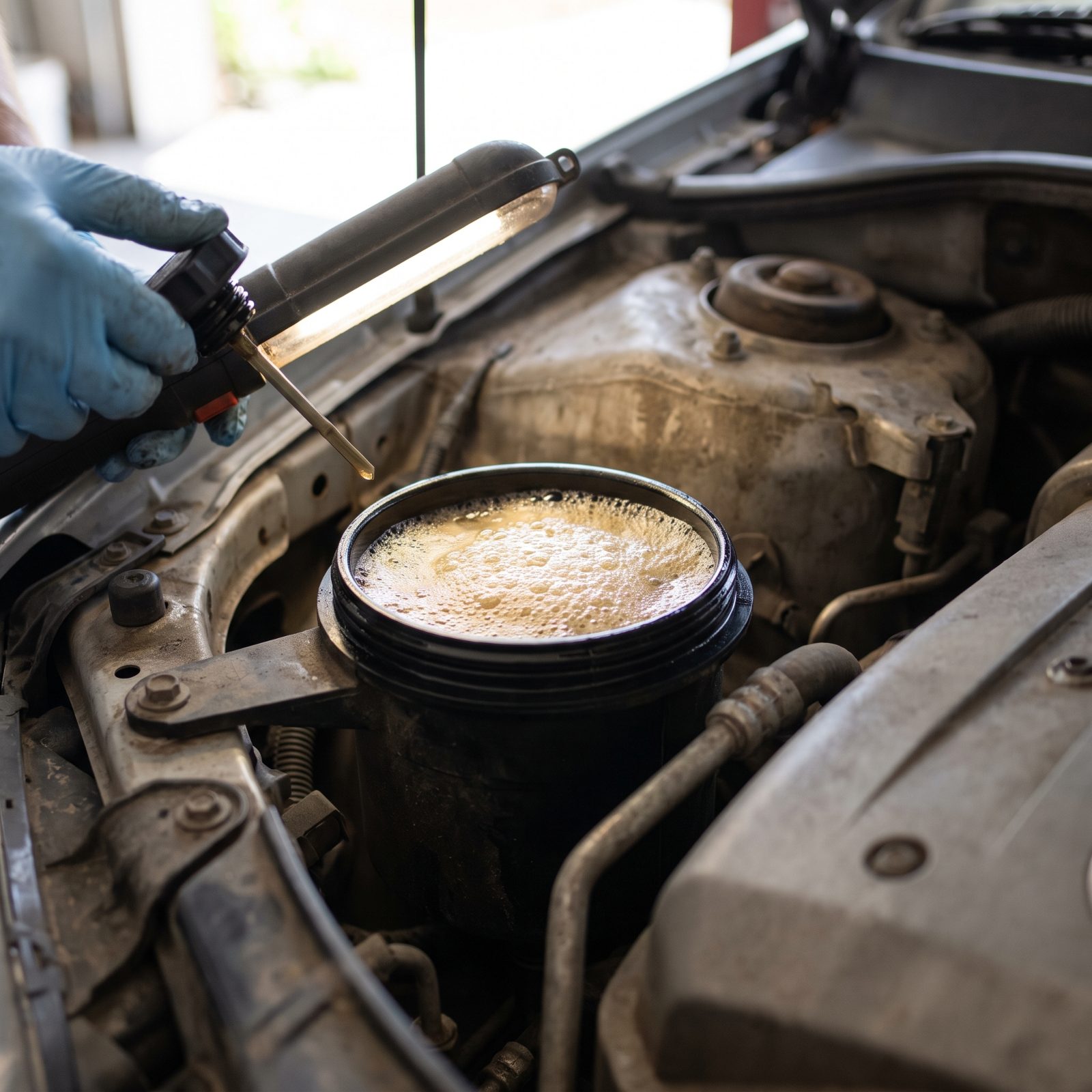
Foam on top of the power-steering fluid means air is getting in where it shouldn’t, and air in the system is why your steering groans at low speed and feels notchy turning into a parking spot.
He catches it by eye. Smooth fluid is healthy. A frothy, whipped surface means a sucking leak on the low-pressure side, usually a cracked return hose or a loose clamp — cheap to fix, but ignore it and the pump starves itself to death.
15. Corrosion on the Battery Terminals
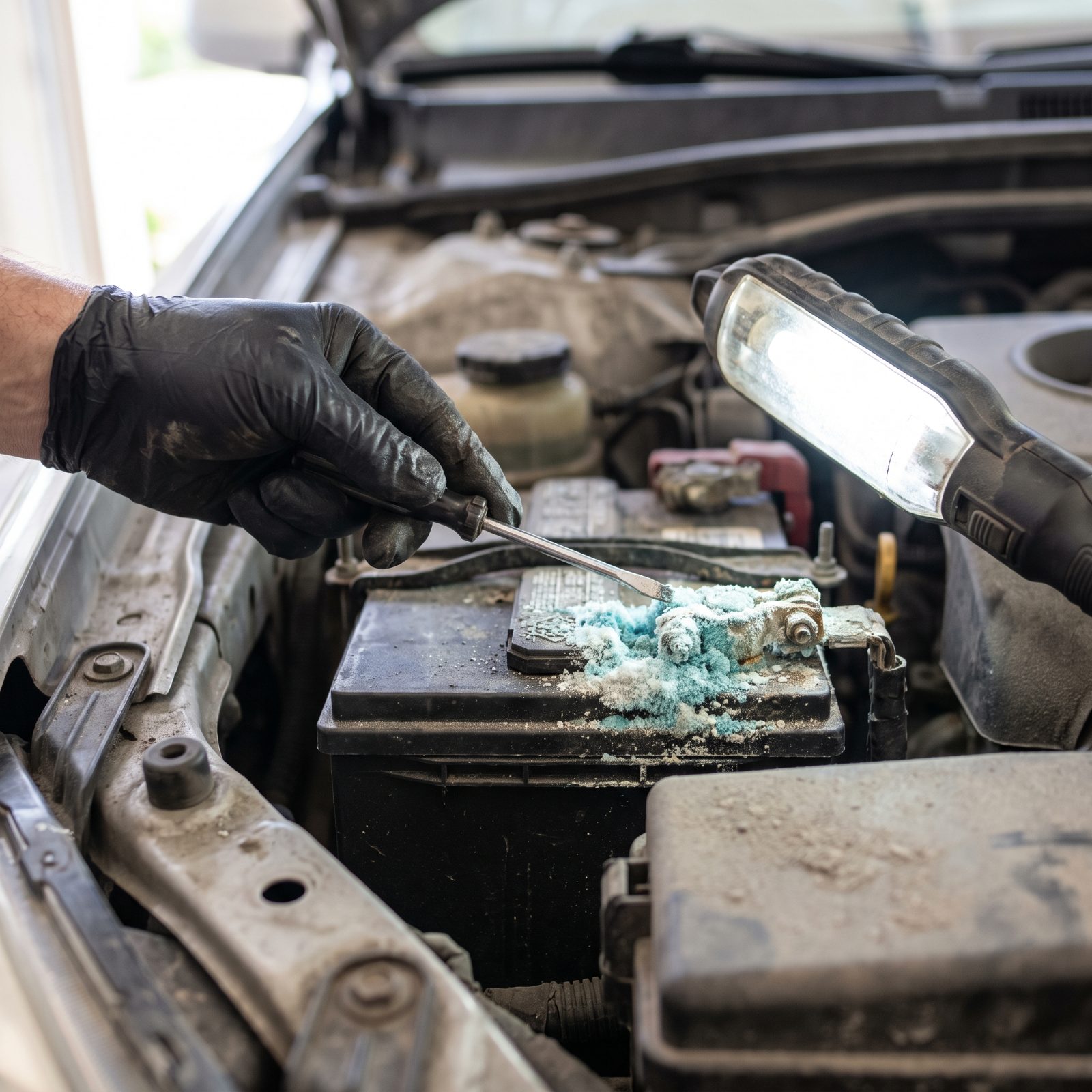
That fuzzy blue-green crust on the terminal isn’t just ugly. It’s resistance, and resistance is why your car cranks slow on a cold morning or won’t start at all. The corrosion jams a bad connection between the battery and everything that needs its juice.
A quick glance tells the whole story. Light powder means it’s starting. A thick white-and-green bloom means the connection has been fighting itself for a while. Cleaning it takes ten minutes, yet people drive on it for years and keep blaming the battery.
14. A Swollen or Misshapen Battery Case
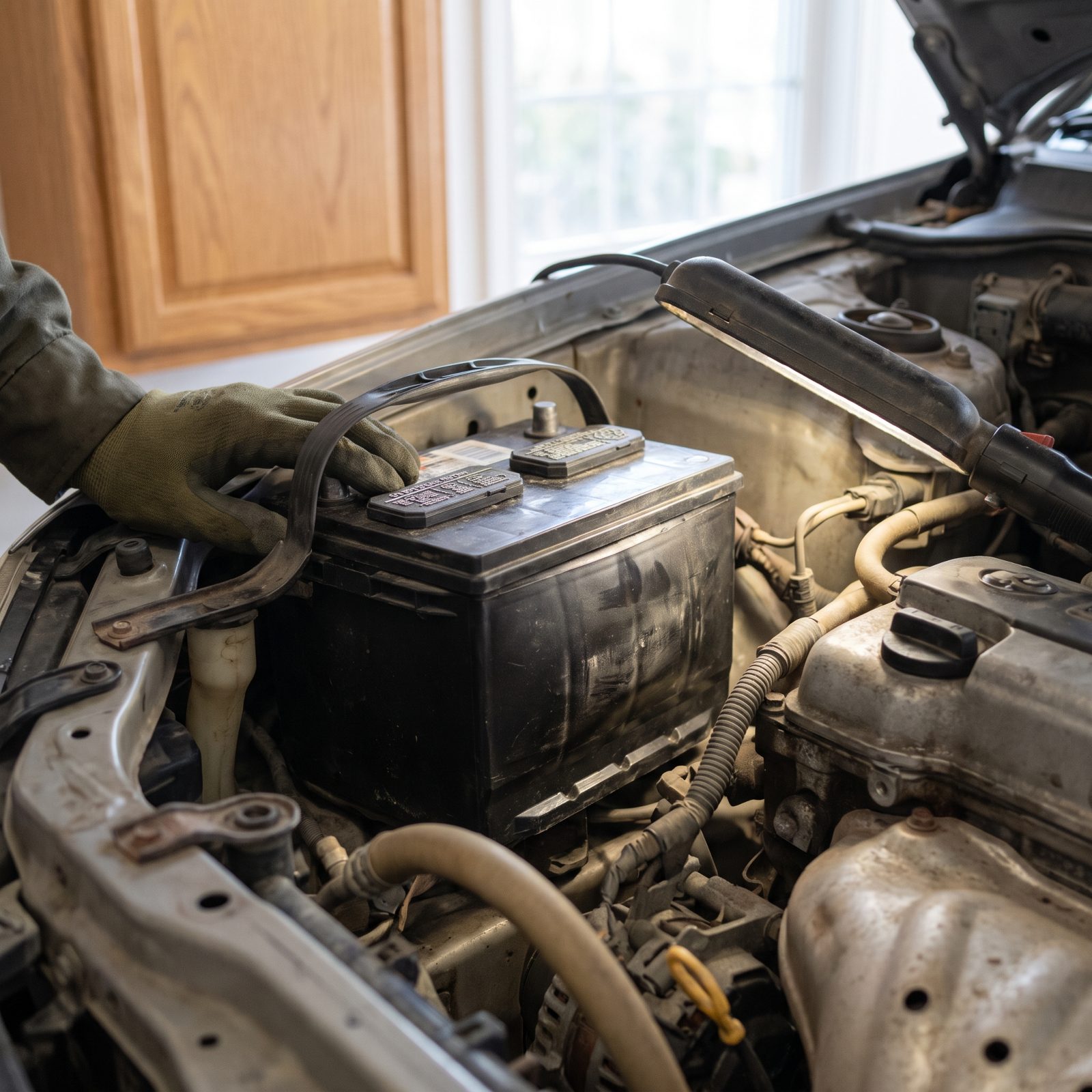
A healthy battery is a clean rectangle with flat sides. When the case bulges out like it ate too much, the battery has been overcharged or baked by underhood heat, and the gasses inside pushed the walls out.
This one he won’t even touch twice. A swollen battery is done, and it can leak or fail with no warning, so he reads the shape from a foot away and reaches for a replacement. The alternator or voltage regulator usually deserves a second look too — something let the thing cook.
13. Uneven Tire Wear Across the Tread

Run a hand across the tread and you learn more than the tire gauge tells you. Worn on one edge and fat on the other means the alignment is off. Worn down the middle means overinflation. Worn on both shoulders? It’s been running low on air for months.
A mechanic reads tire wear like a doctor reads a chart, because the rubber records every bad habit and every bent part underneath. By the time you can see the wear with your eyes, something in the suspension or the air pressure has already been wrong a long, long time.
12. Cracks That Reveal Old Tire Rubber

Tread depth looks fine, but the sidewall is laced with fine cracks like a dried mud flat. That’s dry rot. The rubber has aged out regardless of how many miles are on it, and a tire with plenty of tread can still be unsafe once the compound goes brittle.
He checks the date code stamped on the sidewall and runs a thumb along the cracks. Rubber doesn’t last forever just because it isn’t worn. A tire baking in the sun for the better part of a decade is living on borrowed time, tread or no tread.
11. Four Mismatched Tires

Would you like to save this?
Four tires, four different tread patterns. One’s nearly bald, one looks brand new, two land somewhere in between. To a mechanic, this has nothing to do with brand loyalty. It tells him the car has been kept alive one emergency at a time, each blowout patched with whatever was cheapest that week.
Mismatched tires can confuse all-wheel-drive systems and make the car behave strangely in a panic stop. But the real story runs deeper than the rubber — it’s a window into how the whole machine has been treated, and that kind of neglect rarely stops at the wheels.
10. A Car Sitting Lower at One Corner

Stand back and look at a car head-on before you ever touch it. If one corner droops lower than the others, a spring or a shock has given out, or the frame has an issue you really want to find now rather than later.
Oldest trick in the book. A mechanic eyeballs ride height the moment the car rolls in, before the hood is even up. A sag on one side changes how the car handles, chews the tires on that corner faster, and piles extra strain on everything around it. Your car is telling you exactly where it hurts — you just have to look at it from the right angle.
9. Different Gaps Around Adjacent Body Panels

Factory panel gaps are boringly consistent because the robots that built the car don’t have a bad day. So when the space between the fender and door runs tight up top and wide down low, somebody has been in there with a wrench and a prayer.
Run your eye down the seam. A gap that tapers, or a door standing proud of the fender, usually means a panel came off and got rehung after a hit. Not always a dealbreaker — but it tells you the car has a history the seller somehow forgot to mention.
8. Paint That Changes Shade Between Panels
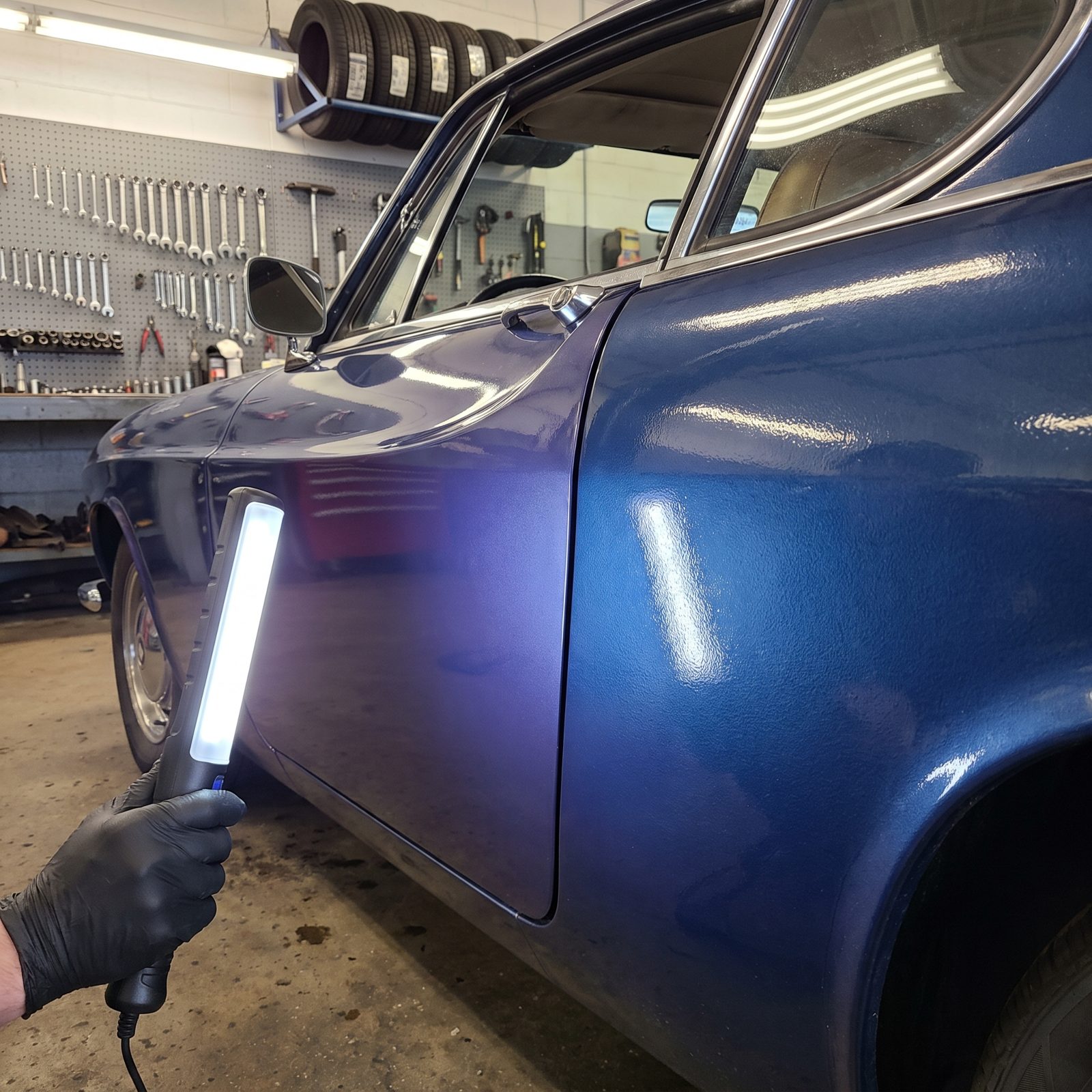
Metallic paint is a liar unless you catch it at the right angle. Stand square to a repainted panel and it looks fine. Crouch down and sight along it toward a light source, though, and a resprayed fender will flash a hair bluer or browner than the one next to it.
The flake never lands quite the same way twice. Shops get close. They rarely get perfect, and a shade shift that only shows at an angle is one of the oldest tells there is — still working after all these years.
7. Overspray on Rubber Seals and Trim
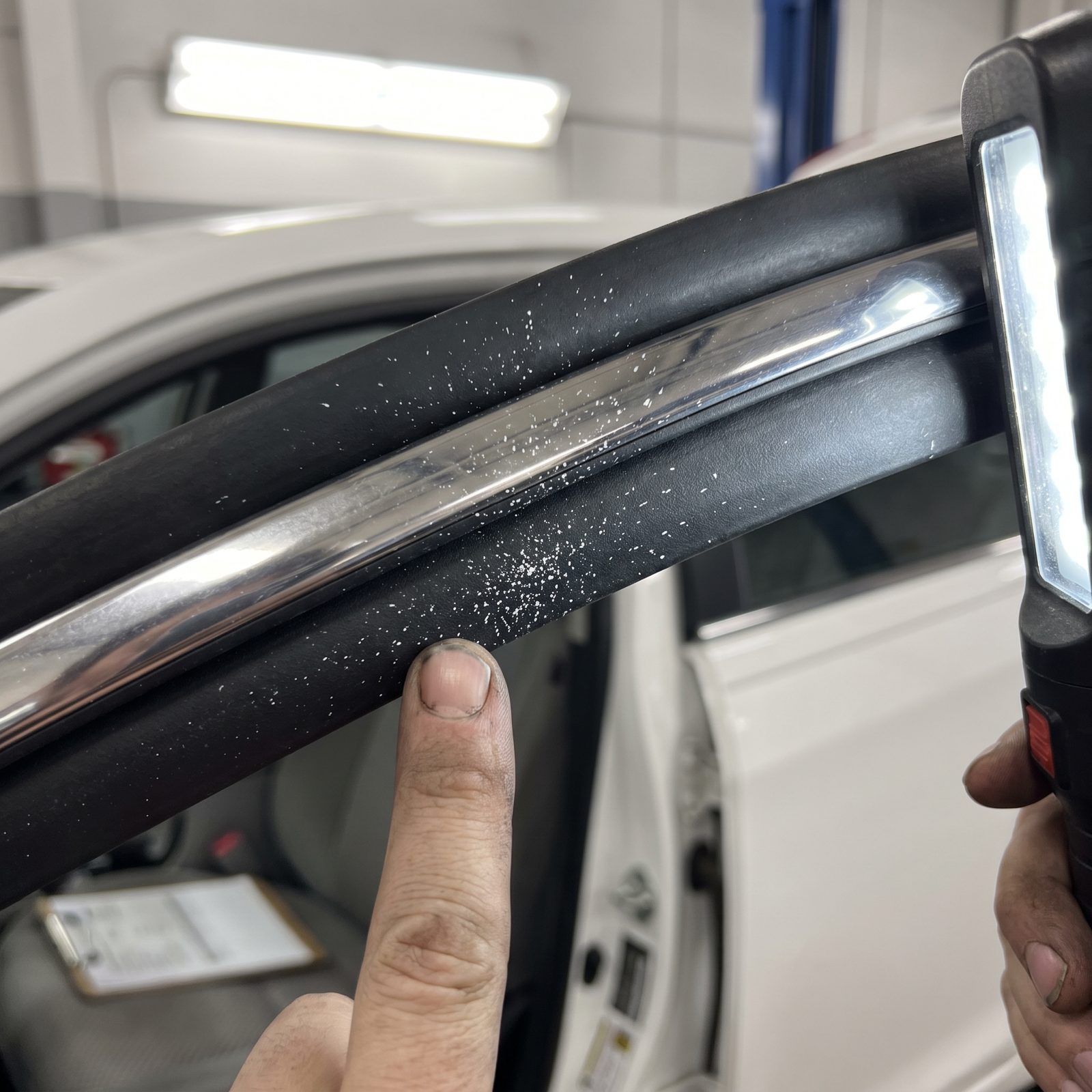
A good body shop masks everything. A rushed one doesn’t, and the giveaway hides where nobody ever buffs — the matte black rubber around the windows, the inside lip of the fuel door, the rough plastic tucked under the trim.
Run a fingernail along the door seal. Feel a gritty haze of paint flecks on rubber that ought to be clean and dead-flat black? That panel got sprayed with the trim still on. Overspray won’t wipe away, which is exactly why it tells the truth.
6. Tool Marks on Fender and Hood Bolts
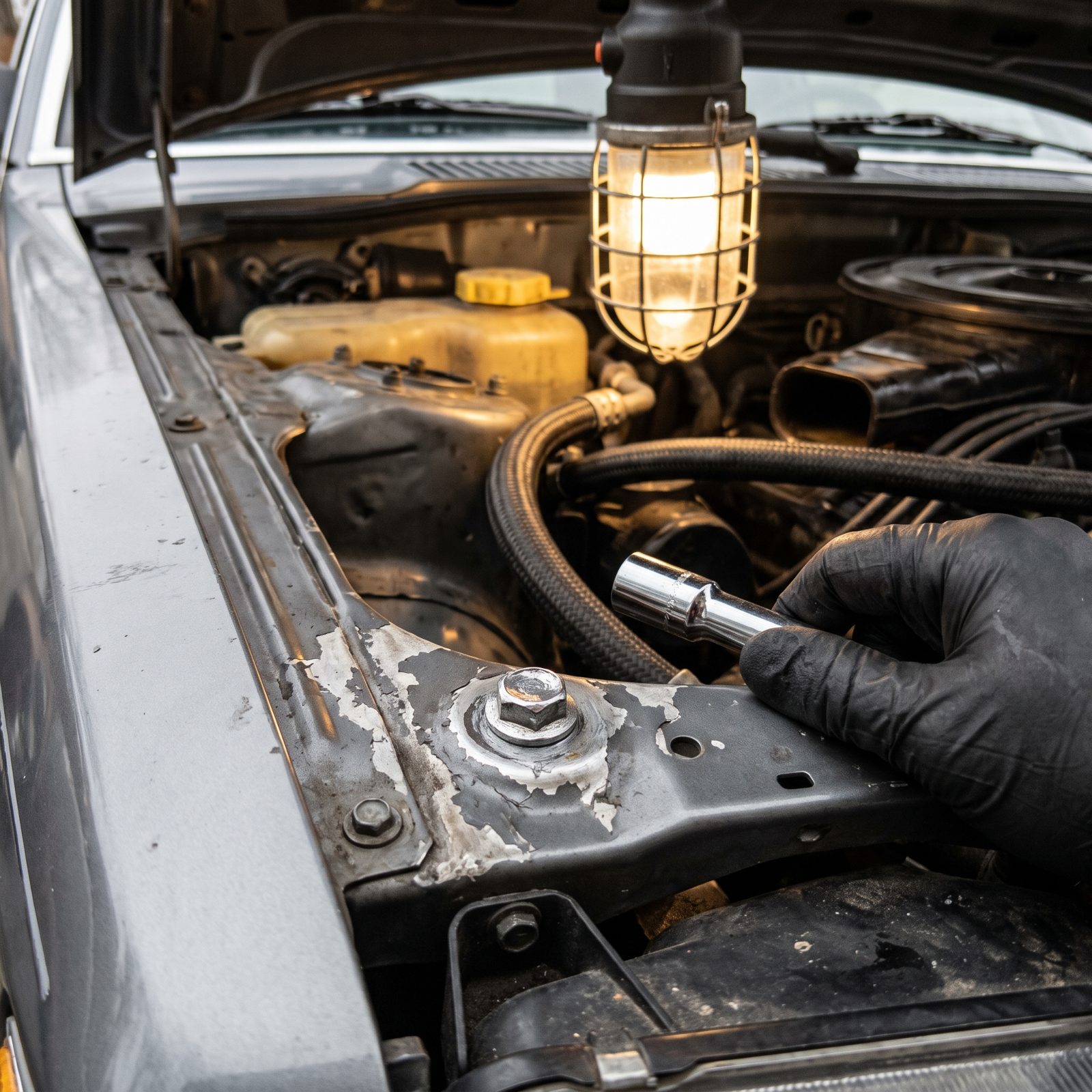
Factory bolts wear a thin coat of paint applied after the panel went on. Untouched, they look uniform, the paint bridging the bolt head and the surrounding metal in one unbroken film.
Crack that film and it never comes back. A fender bolt with chewed edges, chipped paint, or bare silver showing through means a socket has been on it. Hood bolts say the same. Pop the hood, look at the two hinge bolts and the fender bolts near the strut towers. Pristine means original. Scuffed means somebody took the front end apart — and now you get to ask why.
5. Condensation Trapped Inside a Headlamp
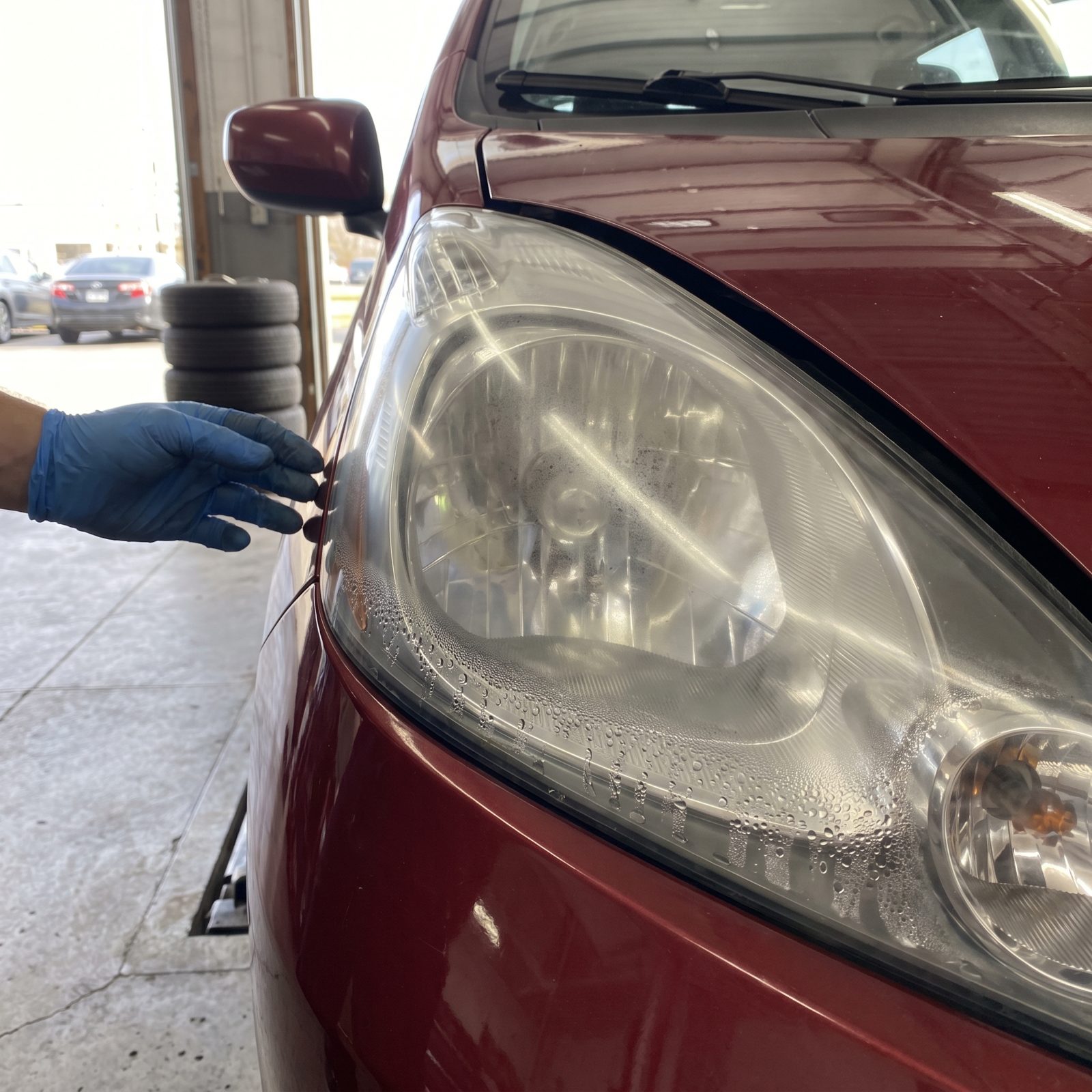
Fog inside a headlight is rarely about the headlight. A sealed housing holds water on the inside of the lens because its gasket failed or its case cracked. By itself, a cheap fix.
But water gets inside the same way a front-end knock does. An impact that cracked a headlamp mounting tab often lets moisture in, so that fogged lamp is quietly pointing at a repair nobody mentioned. Does the fog sit on one side only? Even aging across both lamps is normal. One foggy, one clear — that’s a conversation starter.
4. A Brake Pedal That Slowly Sinks

Start the engine, rest steady pressure on the brake, and wait. The pedal should hold firm under your foot like a wall. If it creeps slowly toward the floor over fifteen or twenty seconds, you’ve just found a problem you can’t see.
That slow sink almost always means the master cylinder is bypassing internally, leaking pressure past its own seals. No puddle on the ground, no warning light, just a pedal quietly giving up. One of the few failures you can diagnose without a single tool — and one of the most important.
3. Excessive Free Play in the Steering Wheel

Sit in the driver’s seat, engine off, and rock the wheel gently left and right. On a tight car the front wheels start to move almost the instant you do. A loose one lets you wag the wheel an inch or two before anything down below so much as twitches.
That dead zone is slack — in the joints, the box, or the tie-rod ends. A little is normal on older cars. A lot means worn linkage that wanders at highway speed and makes the whole car feel vague, like it’s negotiating rather than obeying. Ten seconds to feel it. And just as easy for a seller to never bring up.
2. A Clutch That Engages Near the Top of Its Travel
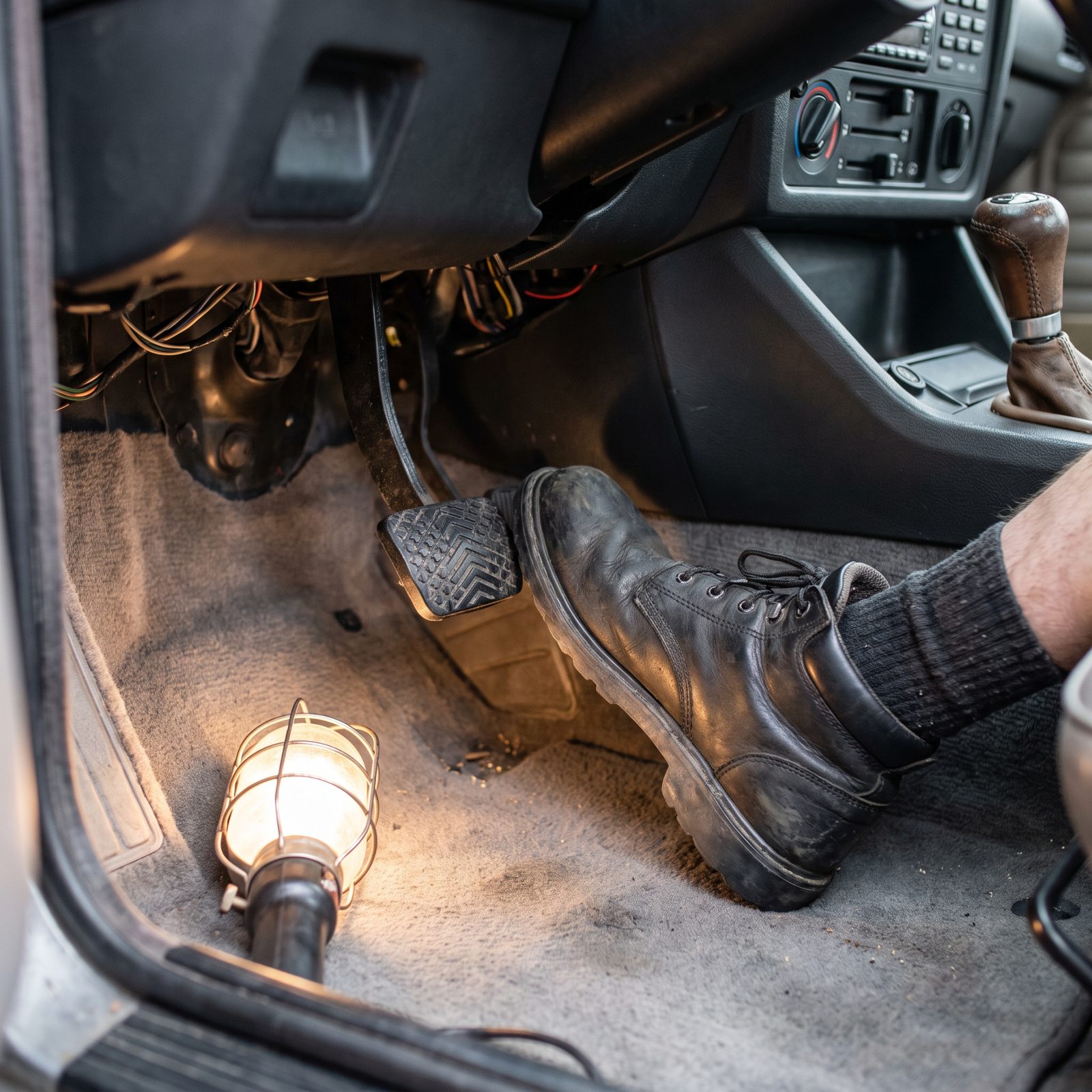
A healthy clutch grabs somewhere in the middle of the pedal travel. Drive one where the clutch won’t bite until the pedal is almost all the way up, nearly brushing your shin, and you’re feeling a worn friction disc running out of material.
It’s been self-adjusting toward the top for a reason — there’s barely any lining left. Might soldier on another year. Might start slipping under load on the very next hill. A high engagement point is the clutch telling you its remaining life in plain language, and swapping one is never cheap.
1. Maintenance Stickers That Contradict the Odometer

That little oil-change sticker up in the corner of the windshield is a paper trail most people forget to peel off. It carries a date and a mileage figure, handwritten by the last shop that touched the car.
Now read the odometer. If the sticker claims the oil got changed at a higher mileage than the dash currently shows, somebody rolled the numbers back. Glovebox receipts, the inspection tag, even the mileage scribbled on a brake-pad box — they all tell on each other. Odometers can be spun. The scraps of paper people leave behind are far harder to fake all at once.