
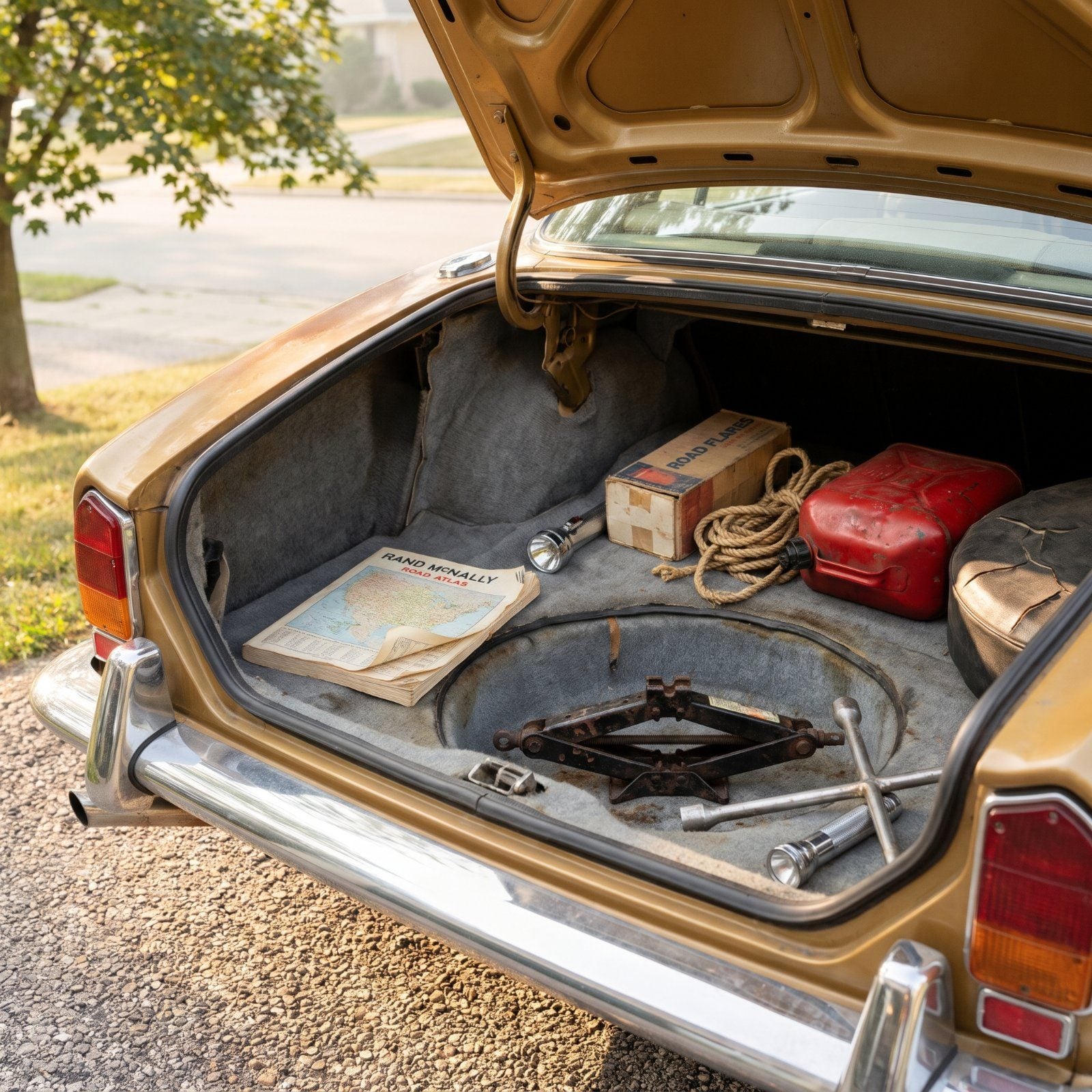
Pop the trunk on any family sedan in 1974 and you’d find the same quiet little museum. Oily rags, a jack that fought you, a road atlas gone soft as a paperback from glovebox heat. None of it was glamorous, and all of it was there because Dad had been stranded once and swore it wouldn’t happen again. This stuff rode shotgun to a thousand summer vacations and dead-battery mornings. See how many you remember.
Please note that some of the images in this article were created with the assistance of AI.
39. The Dog-Eared Rand McNally Road Atlas
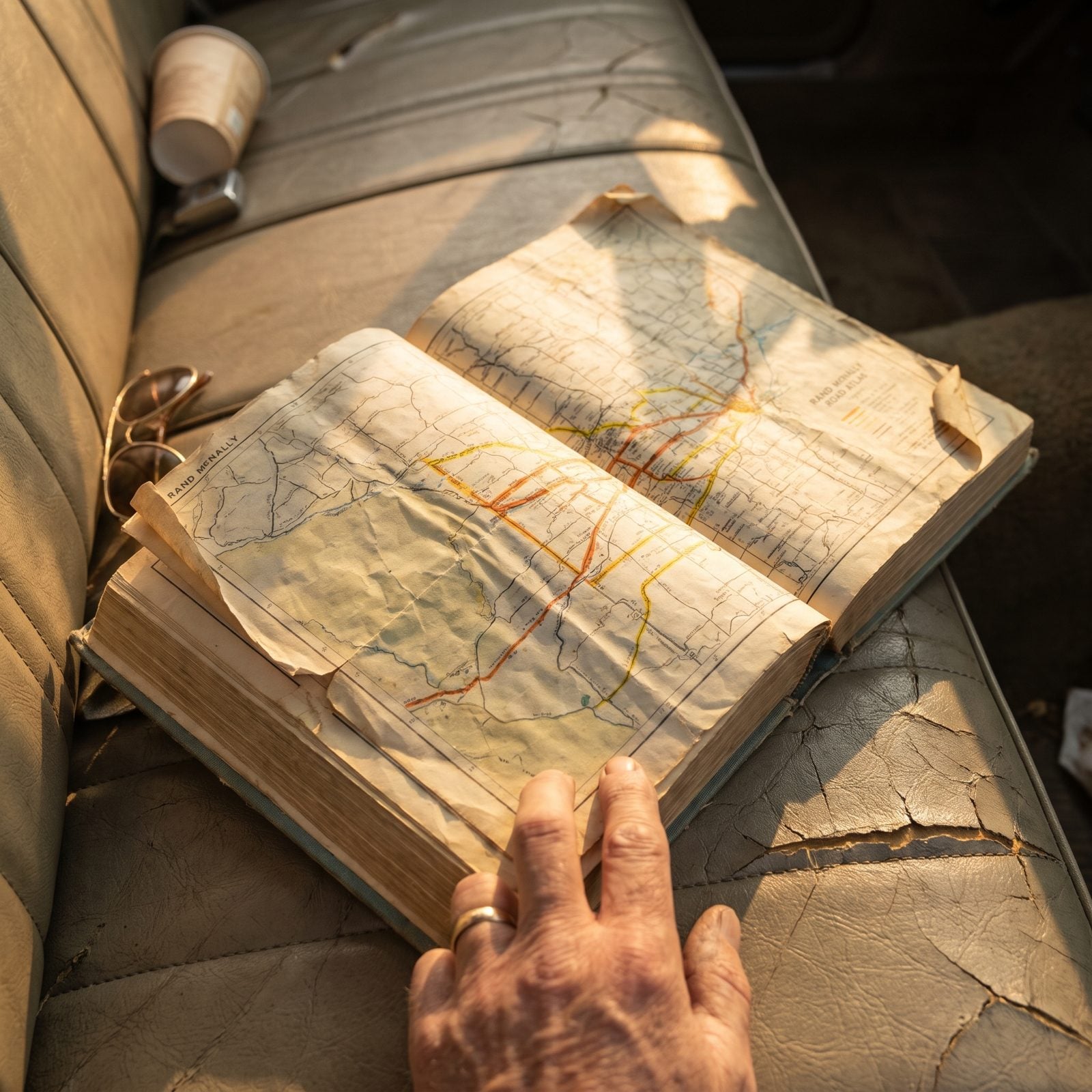
Before the dashboard talked to you, there was the atlas. Thick as a dictionary, its paper cover worn from riding under the rear window all summer, spine cracked in the middle where everybody opened it to the same three states.
Dad never followed it exactly. He’d glance at it once at a rest stop, grunt, thump it shut, and drive on memory and stubbornness. The real navigation happened in the passenger seat, where somebody held it upside down and argued about which exit.
38. The Four-Way Lug Wrench
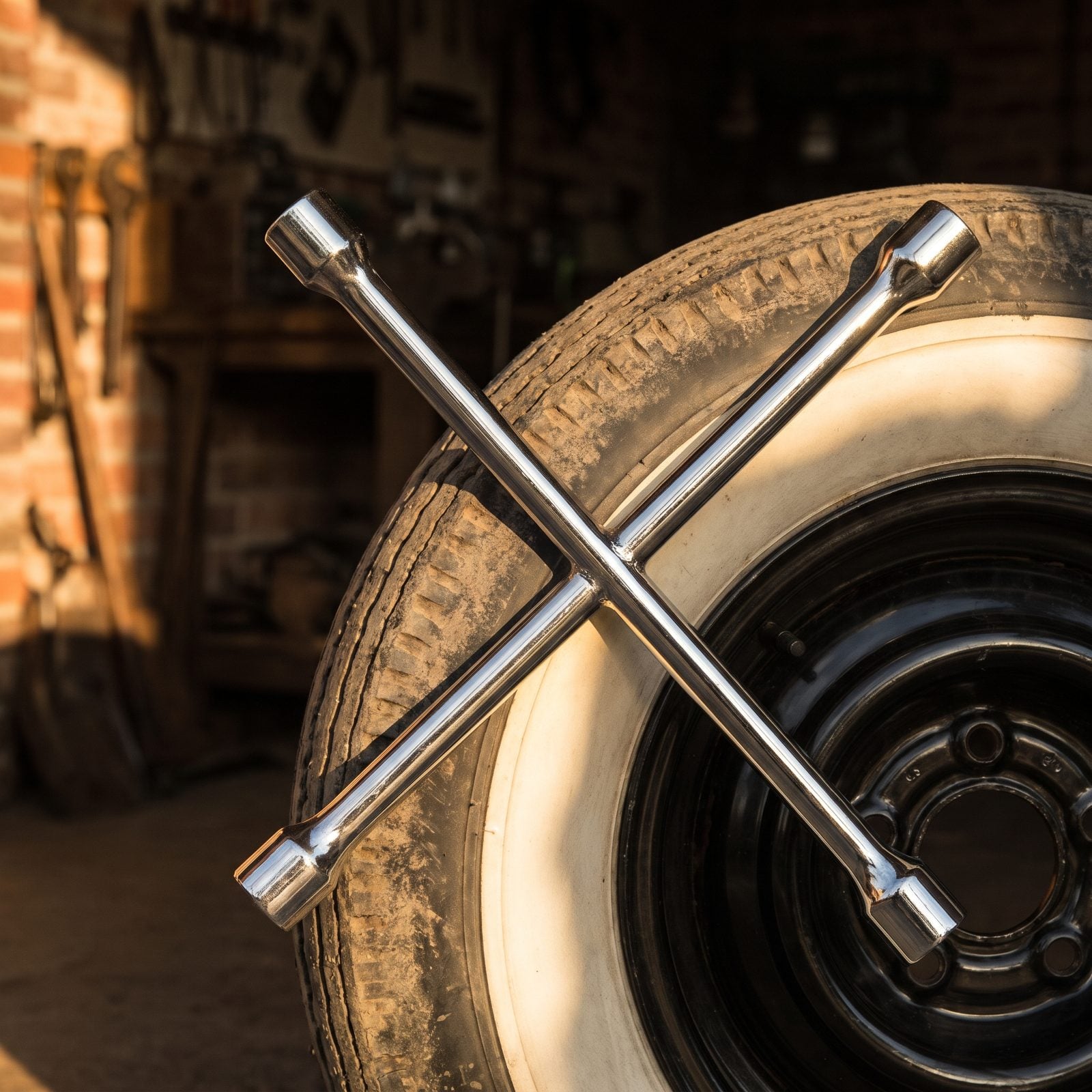
The jack came with the car. The four-way, Dad bought himself, because the stamped-tin wrench in the kit rounded off a lug nut the first time he leaned on it.
Cross-shaped, long enough to stand on, it turned a stuck wheel bolt into a non-event. You pushed down with your whole weight and it broke free with a satisfying crack, and that sound meant you were getting home. A little rust never slowed it down.
37. The Little Scrap of Wood for the Jack
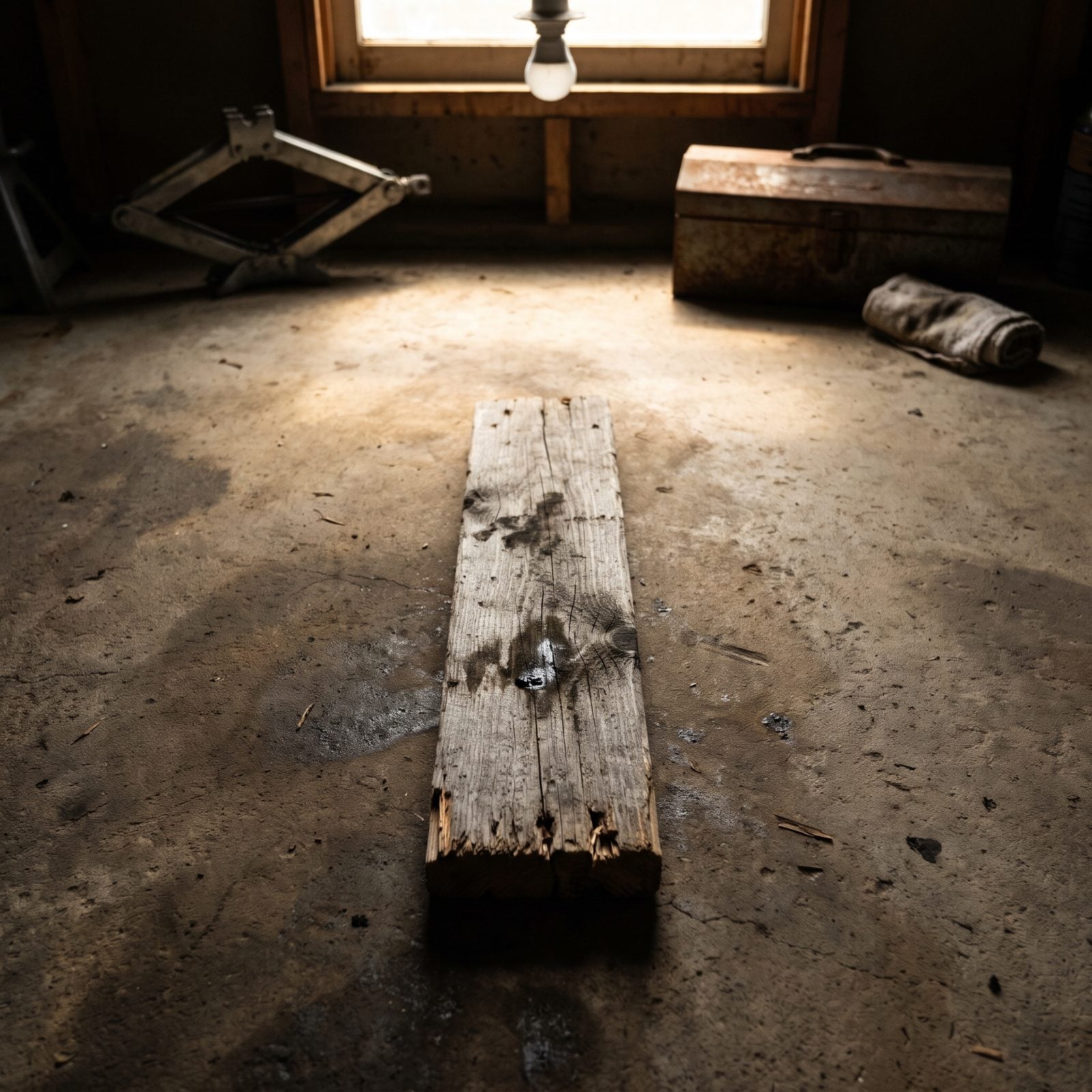
Every good trunk had one: a random hunk of two-by-four, gray and splintered, saved for exactly one job. On soft shoulder gravel or a hot asphalt driveway, the jack base would sink or slide, so the wood went underneath to spread the load.
Nobody bought it. It just appeared, rescued from a lumber pile years earlier, and it rode around for a decade doing absolutely nothing until the one afternoon it kept the whole car from tipping off the jack. Humble little MVP.
What Our Readers Say
- When Jalopy Talk readers loved a car photo and tapped a reason, “nostalgic” topped the list at 26%, just ahead of “would drive” at 21%.
- In our readers’ heart votes, full-size land yachts got more hearts than the other images in the same articles, 79% versus 73%.
From Jalopy Talk reader polls and votes.
36. The Cardboard Box of Road Flares
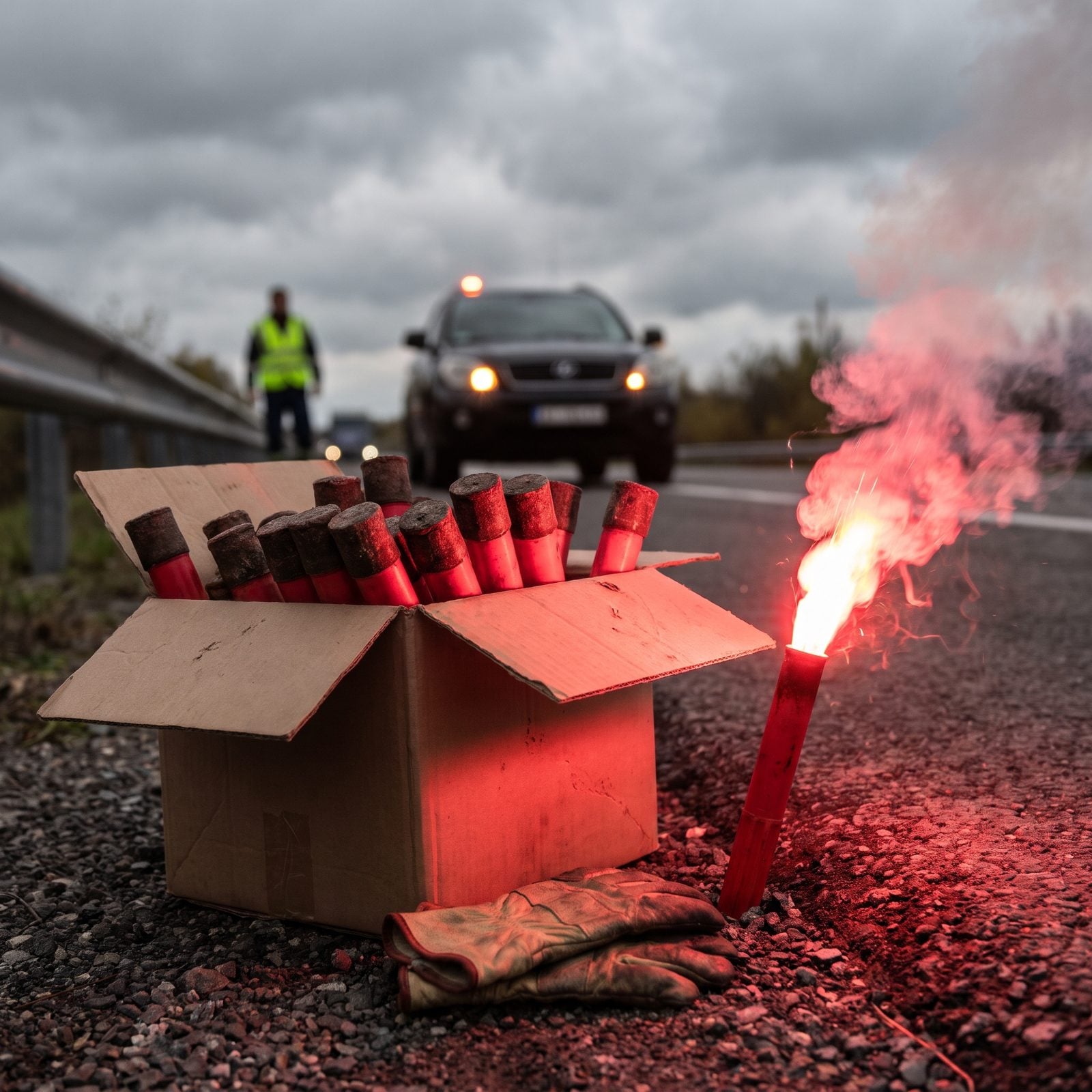
They lived in a battered cardboard box, those fat red cylinders with the sandpaper cap, waiting for a breakdown that mostly never came. You struck them like a giant match and they hissed to life with a pink flame and a smell you never forgot.
Dad set them out behind the car on the one stormy night the alternator died, and you watched the magnesium glow from the back seat thinking your father could handle anything. He probably couldn’t. But that night, with the flares burning, it sure looked like it.
35. The Flashlight That Ate D Batteries
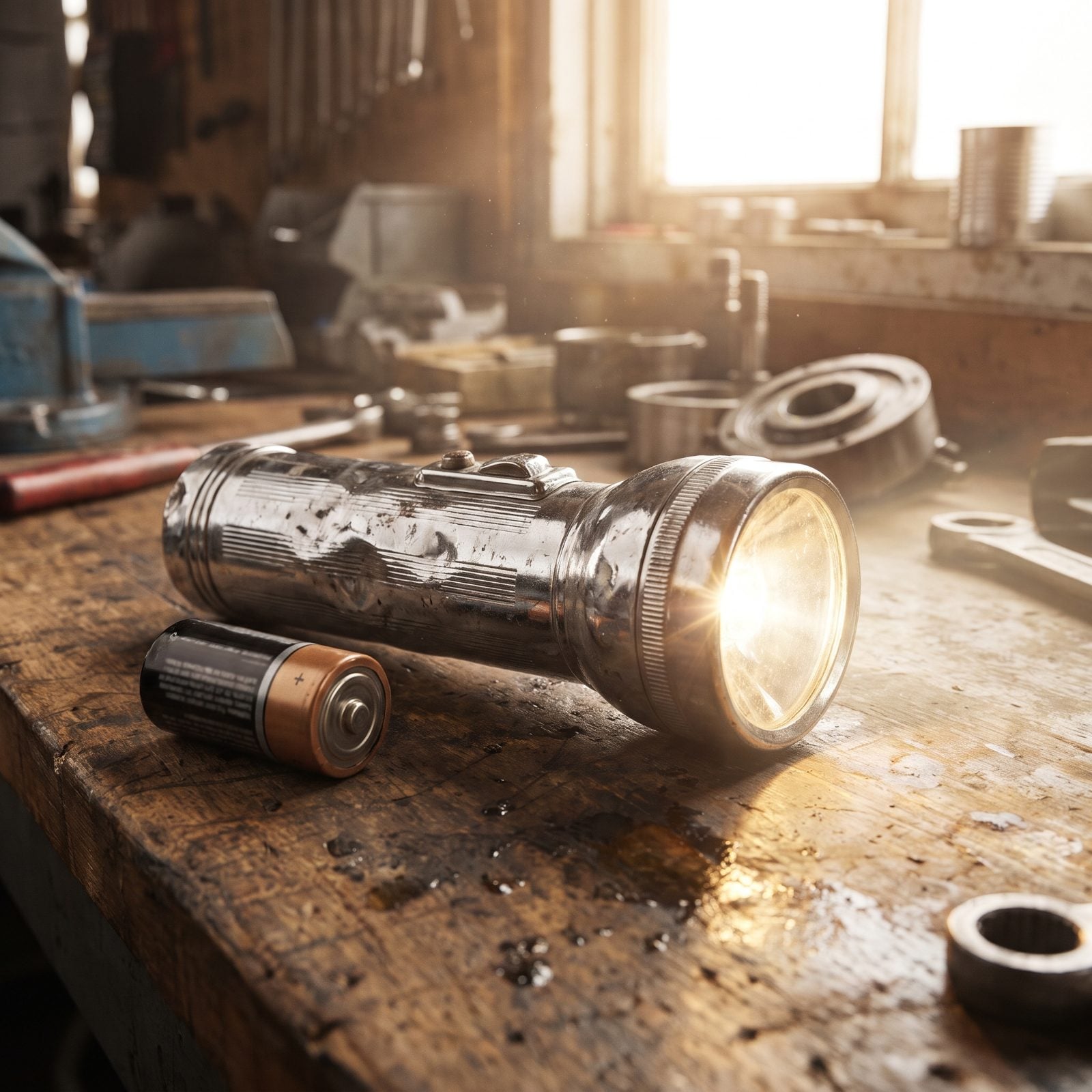
Heavy as a billy club, chrome barrel dented from being dropped on the garage floor. It took two or three D batteries, and those batteries were always dead when you needed it, because the switch would jostle on under a stack of trunk junk and quietly drain itself over the winter.
You shook it. You smacked it against your palm. Sometimes that worked. And when it did light up, the beam was a dim yellow cone just bright enough to find the jack and lose your knuckles on the lug nuts.
34. The Red Metal Gas Can
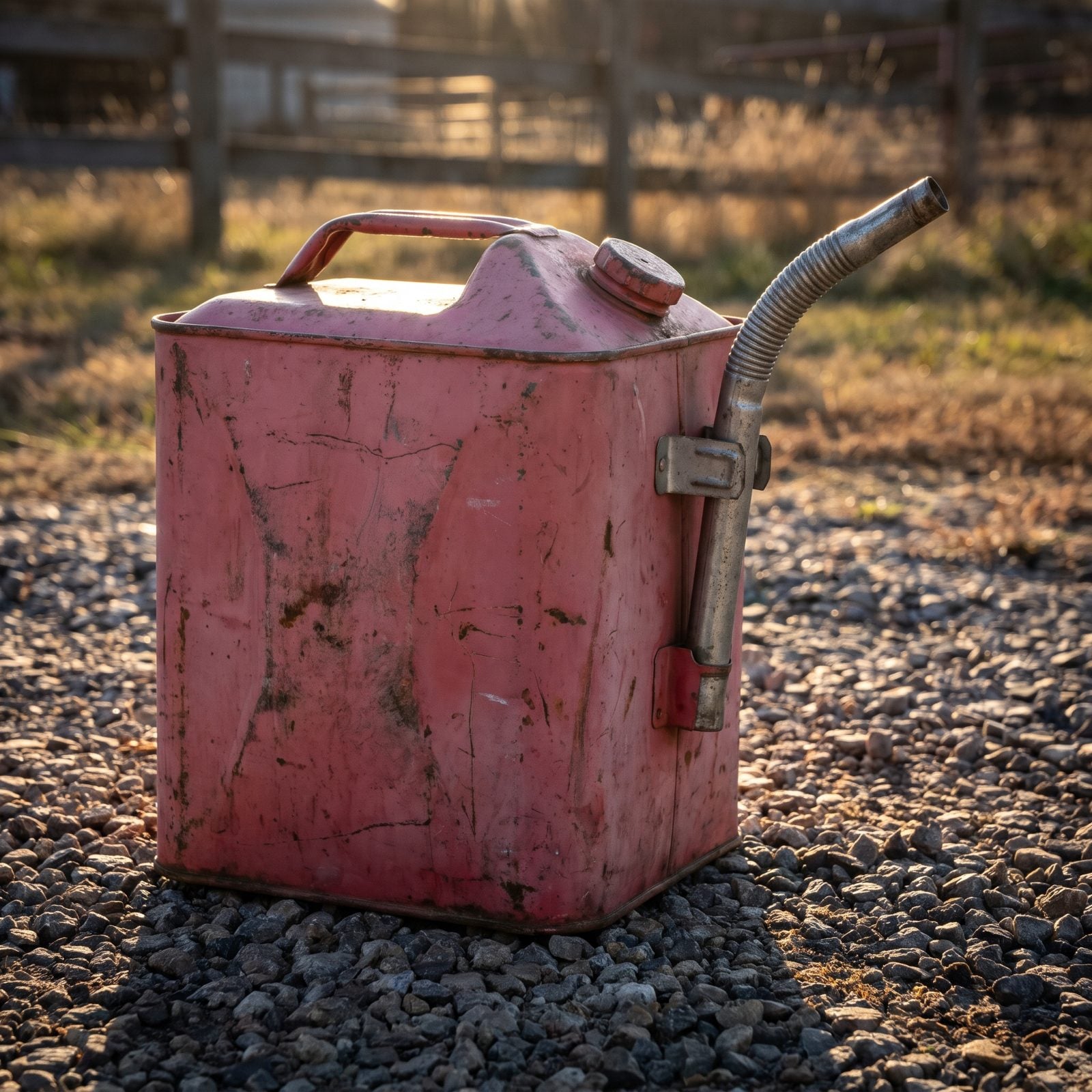
Actual steel, painted a red that faded to a chalky rose, with a bendy metal spout you clipped to the side and a little vent screw you were supposed to loosen first and never did.
It rode in the far corner of the wagon, and the whole trunk smelled faintly of gasoline forever, which nobody minded. You ran out of gas on a back road exactly once as a kid, and the walk to the station with that empty can swinging from Dad’s hand is a memory that outlasts most birthdays.
33. The Frayed Manila Tow Rope
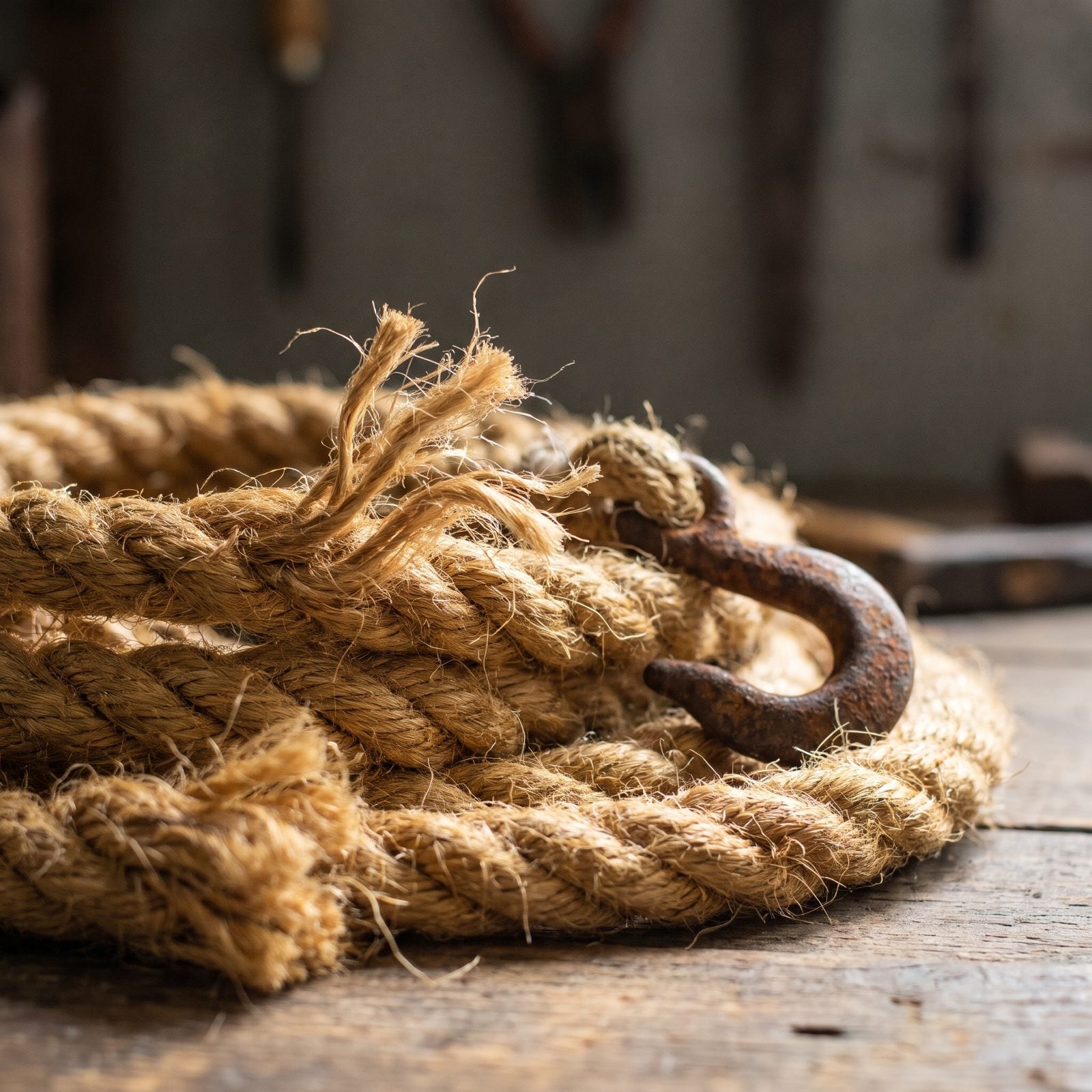
Stiff, scratchy, the color of old rope because it was old rope, with a crude loop tied in one end and a rusty hook jammed in the other. It was never rated for anything. Dad’s trust in it was based entirely on the fact that it had worked last time.
Towing a dead car on that rope was a two-man opera: hand signals, a long slow start, and plenty of shouting out the window. Somehow you always made it to the shop.
32. The Heavy Set of Tire Chains
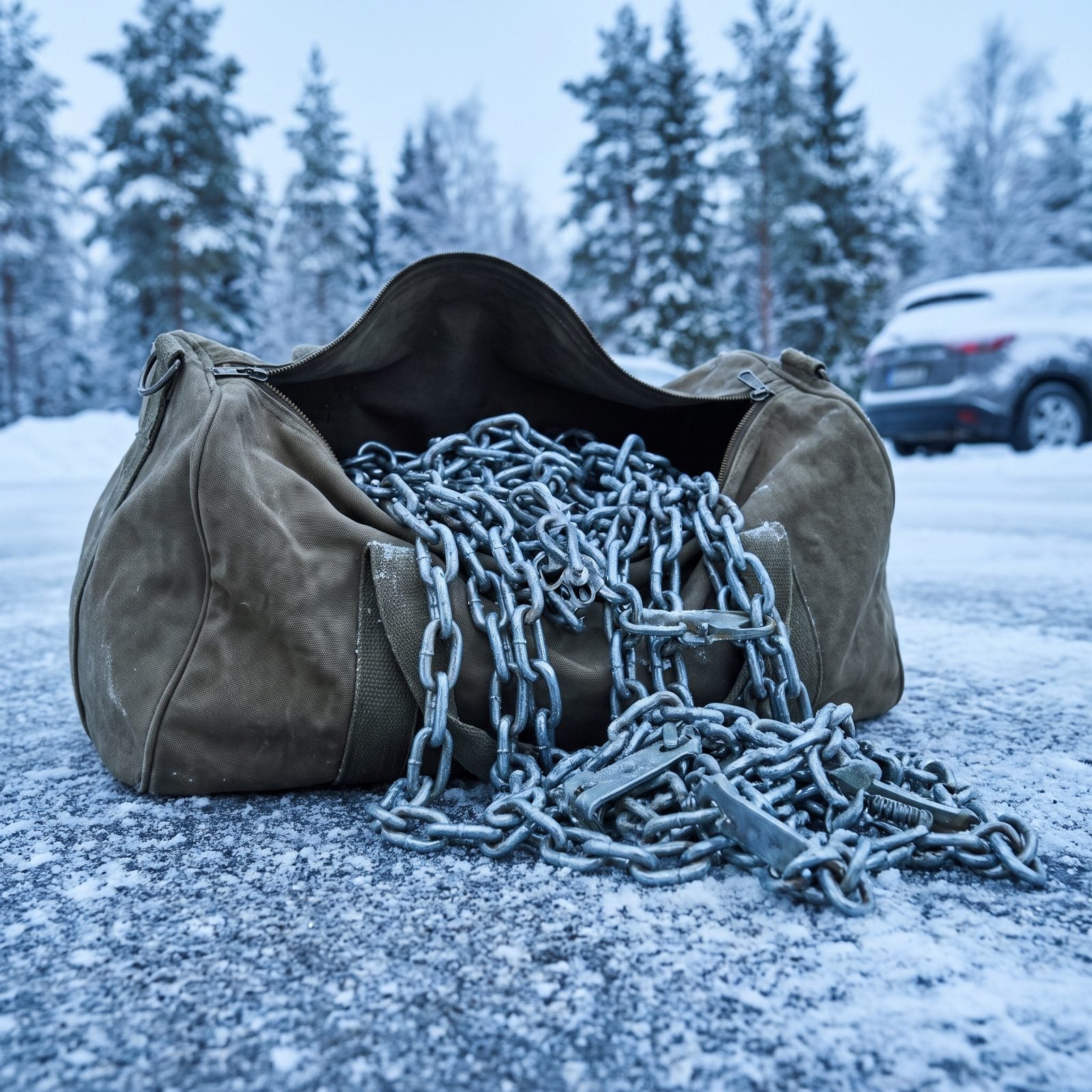
They weighed a ton and lived in a canvas bag that never fully closed, links clinking every time you took a corner. Come the first real snow, Dad would lay them out flat behind the rear tires, back up onto them in the driveway, and wrestle the frozen hooks closed with bare red hands and a vocabulary he saved for exactly this.
Then you drove to church at fifteen miles an hour, chains roaring on pavement the plow had already cleared, everyone pretending it was necessary. It was, for about four blocks a year. He kept them anyway — that was what a trunk meant back then. Not what you used. What you’d never be caught without.
31. The Quart Can of Motor Oil That Always Leaked a Little
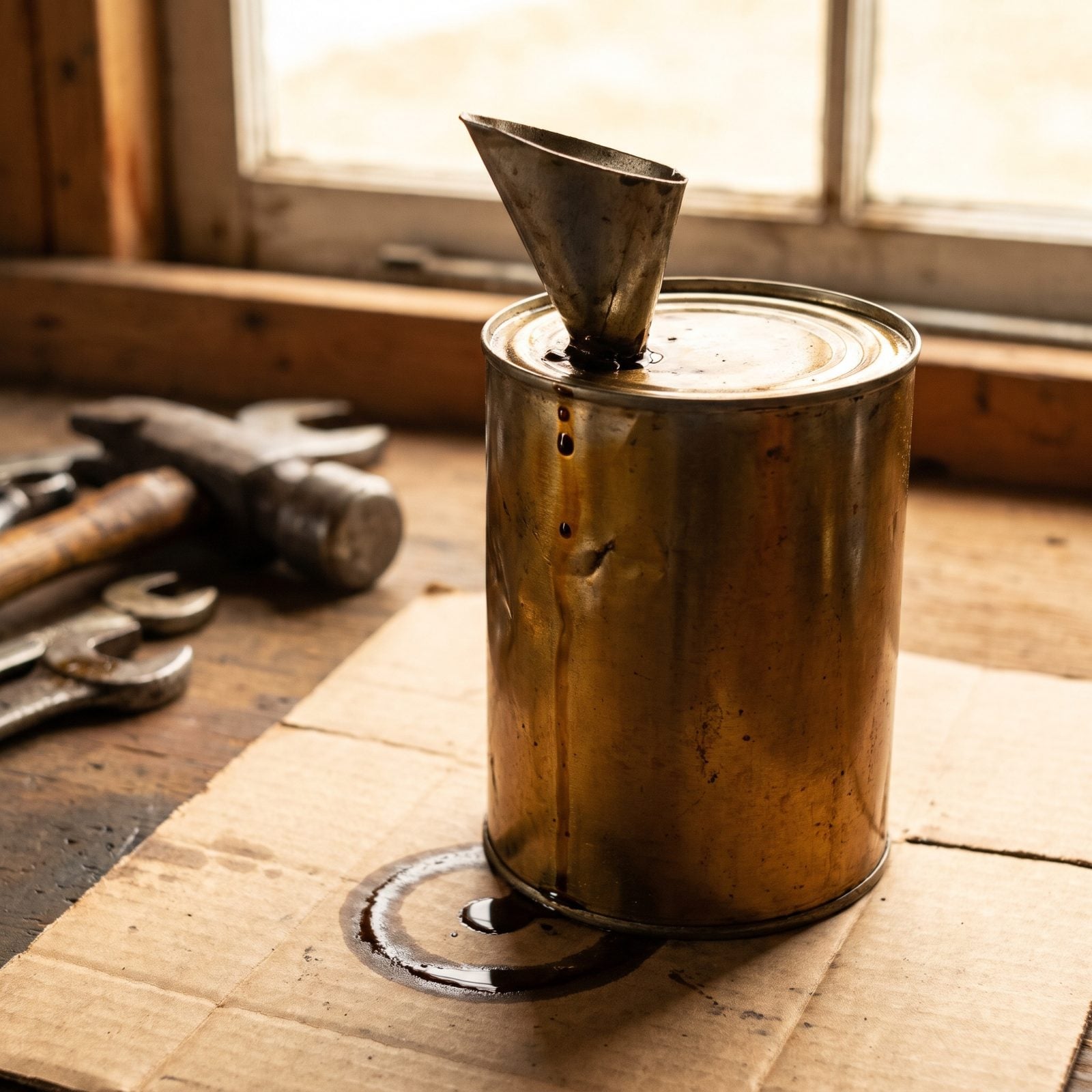
Before oil came in plastic bottles, it came in steel cans you stabbed open and jammed a funnel into. That triangular church-key punch was its own small ritual. One hole, with a funnel wedged in it, wide mouth up.
Every trunk had a can riding loose back there, and every can leaked a little from the puncture, which is why the carpet in that corner was permanently dark and smelled like a garage forever after. Dad topped off between oil changes because a quart low was normal and a tow was expensive.
30. The Emergency Fan Belt Coiled Like a Sleeping Snake
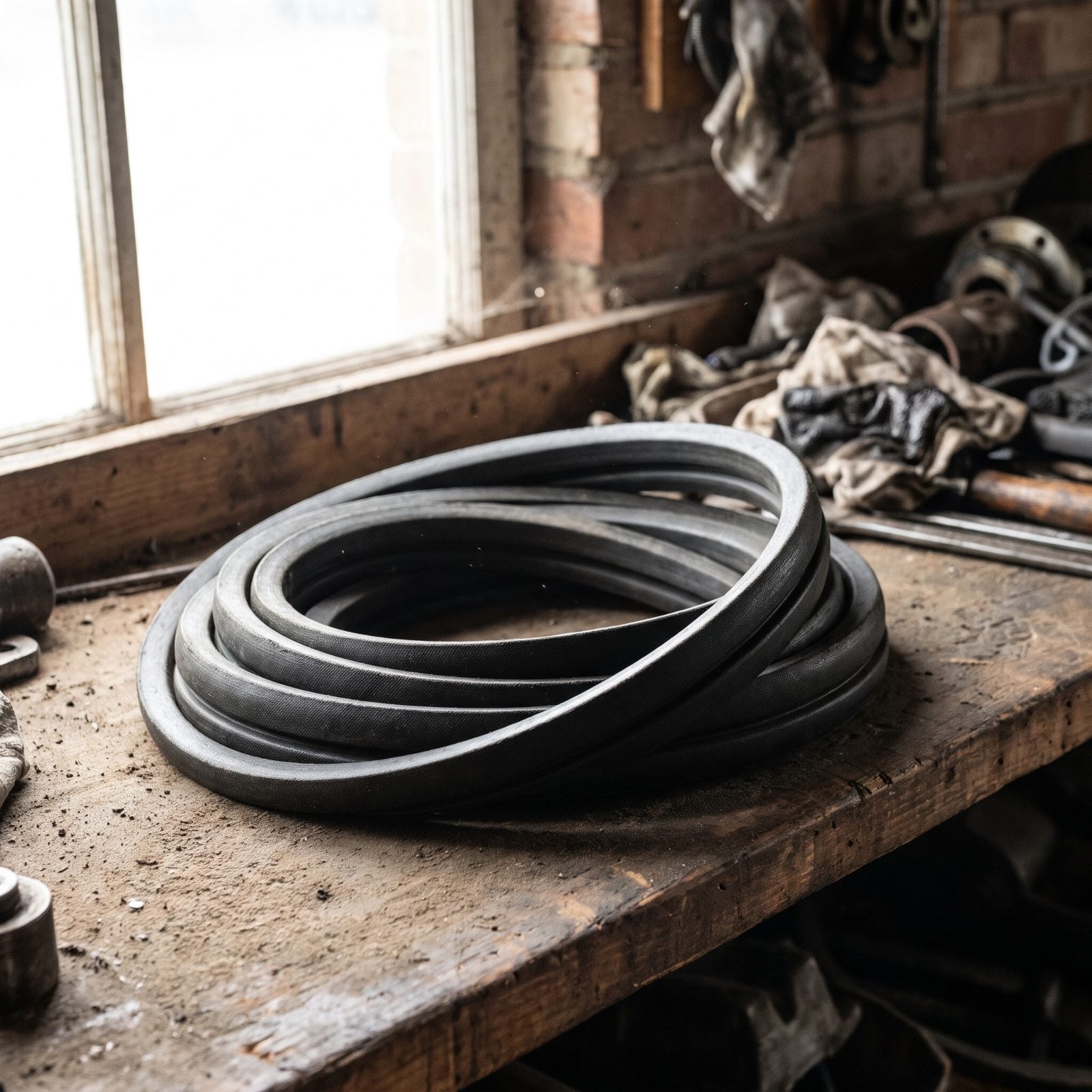
A fan belt let go with a shriek and a cloud of steam, and if you didn’t have a spare, your afternoon was over. So Dad kept one coiled back there, the right size for this car, bought once and forgotten until the day it earned its keep.
Changing one on the roadside meant barked knuckles and a wrench you could barely fit behind the pulley. But you could do it yourself, right there on the gravel. That was the appeal.
A spare belt in the trunk was the difference between a twenty-minute delay and a very long walk to a pay phone.
29. The Little Box of Replacement Spark Plugs
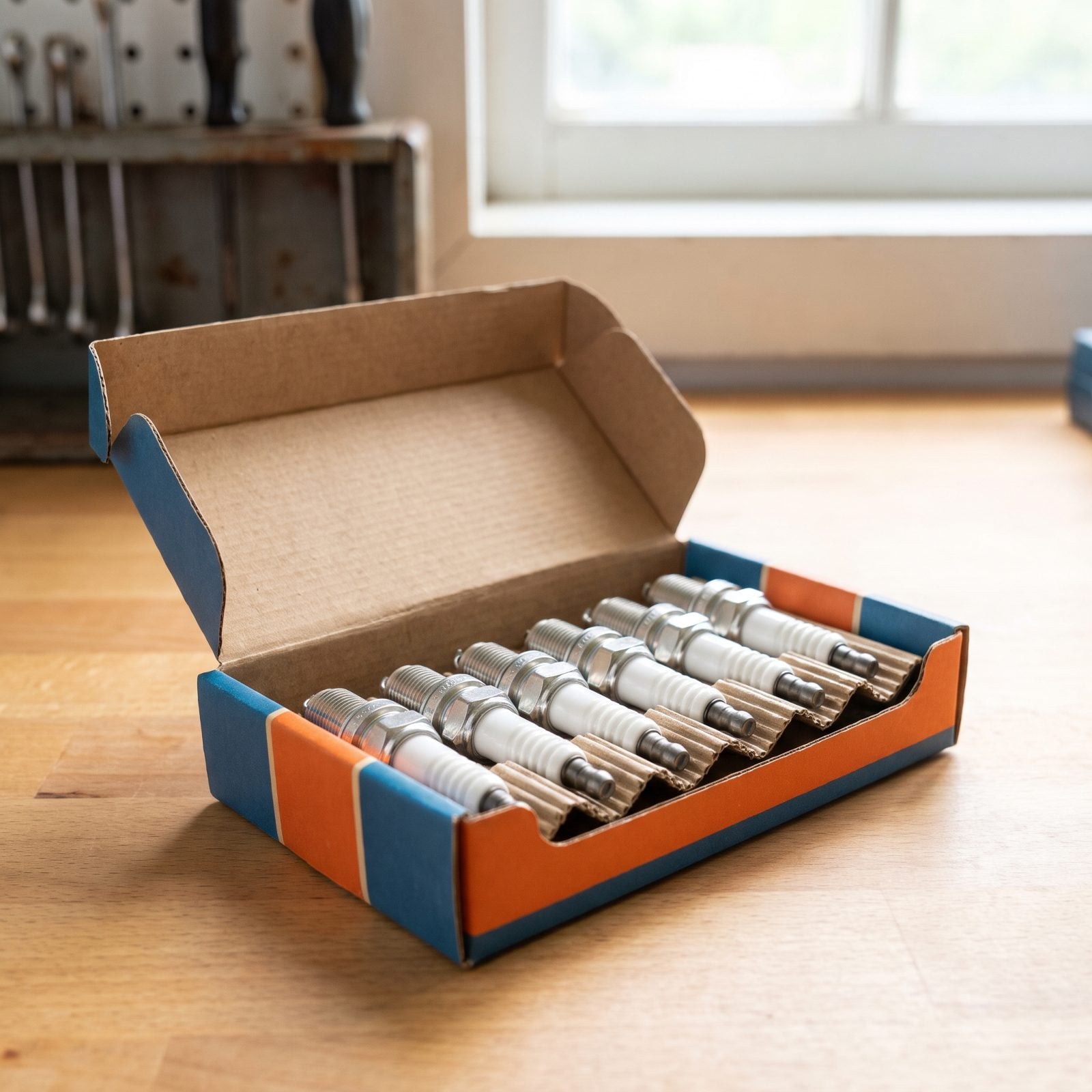
These lived in the glovebox more often than the trunk, but a thorough dad kept a fresh set back here too, ceramic insulators gleaming white before the engine fouled them black. A rough idle or a cold-morning miss meant it was time to swap them in.
Gapping a new plug with a little coin gauge, feeling for that slight drag, was a job you did in the driveway on a Saturday with the radio on. Six plugs, a socket, an hour. Nobody thought twice about it.
28. The Points-and-Condenser Tune-Up Kit in the Flat Cardboard Sleeve
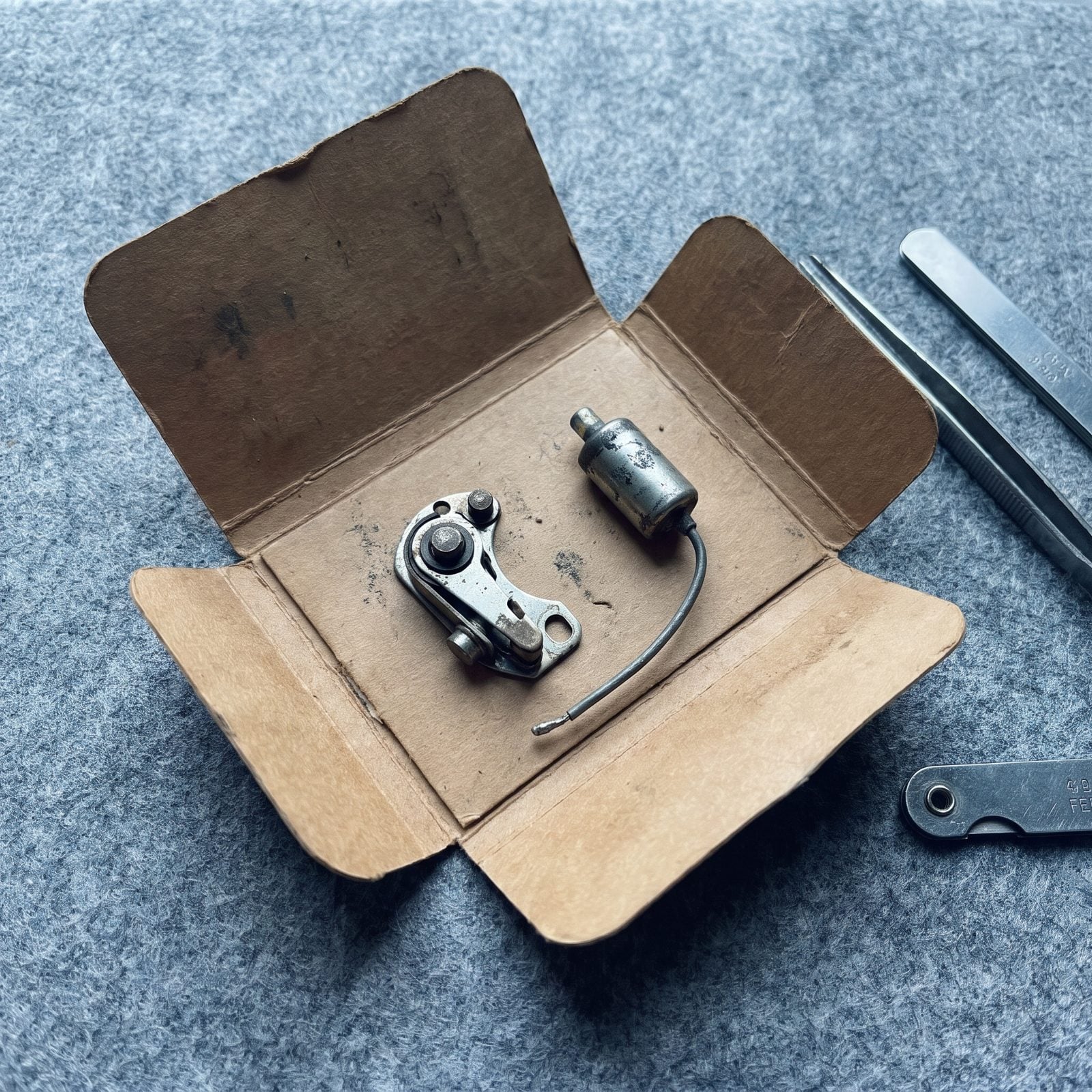
If you don’t know what points and a condenser are, your car has never left you stranded on a two-lane at dusk. Lucky you.
Before electronic ignition took over, this little flat kit was the heart of a tune-up. You set the point gap with a feeler gauge, dabbed the cam with grease, and the engine ran clean again. A good ear could tell when the points were burning out just from the way the car idled.
It was fiddly work, hunched over a warm distributor with a tiny screwdriver. But it was knowable work, and that’s the part we miss.
27. The Spare Distributor Cap Wrapped in a Shop Rag
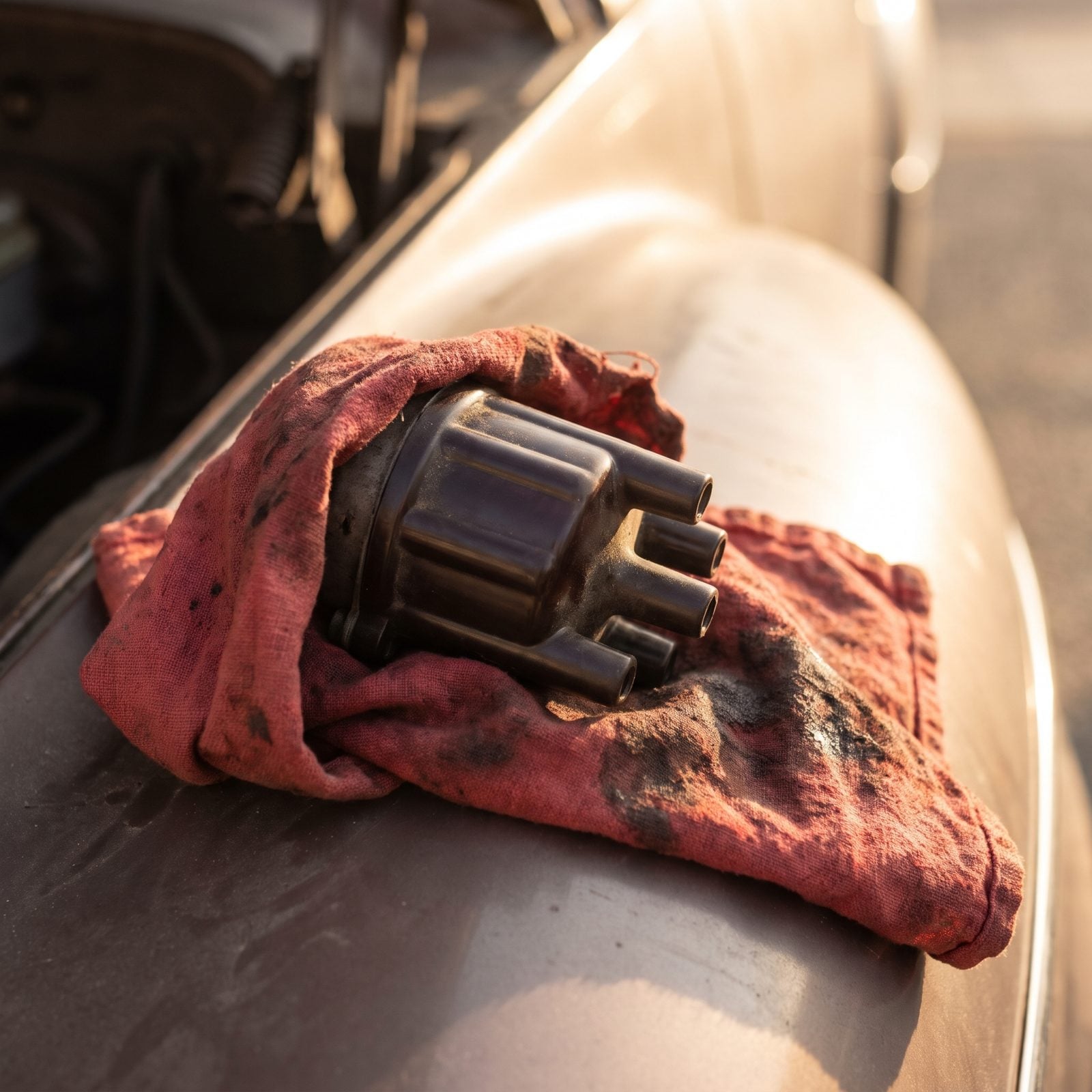
A cracked distributor cap would leave you cranking and cursing, no spark, no start, and no idea why until you pulled it and saw the hairline fracture. So you kept a spare wrapped in a rag, brass contacts protected, waiting for its day.
Swapping one meant popping the clips, matching the wires one tower at a time, and praying you got the firing order right. Mix up two plug wires and the engine would backfire hard enough to make the neighbors look up.
26. The Metal Tin of Glass Automotive Fuses
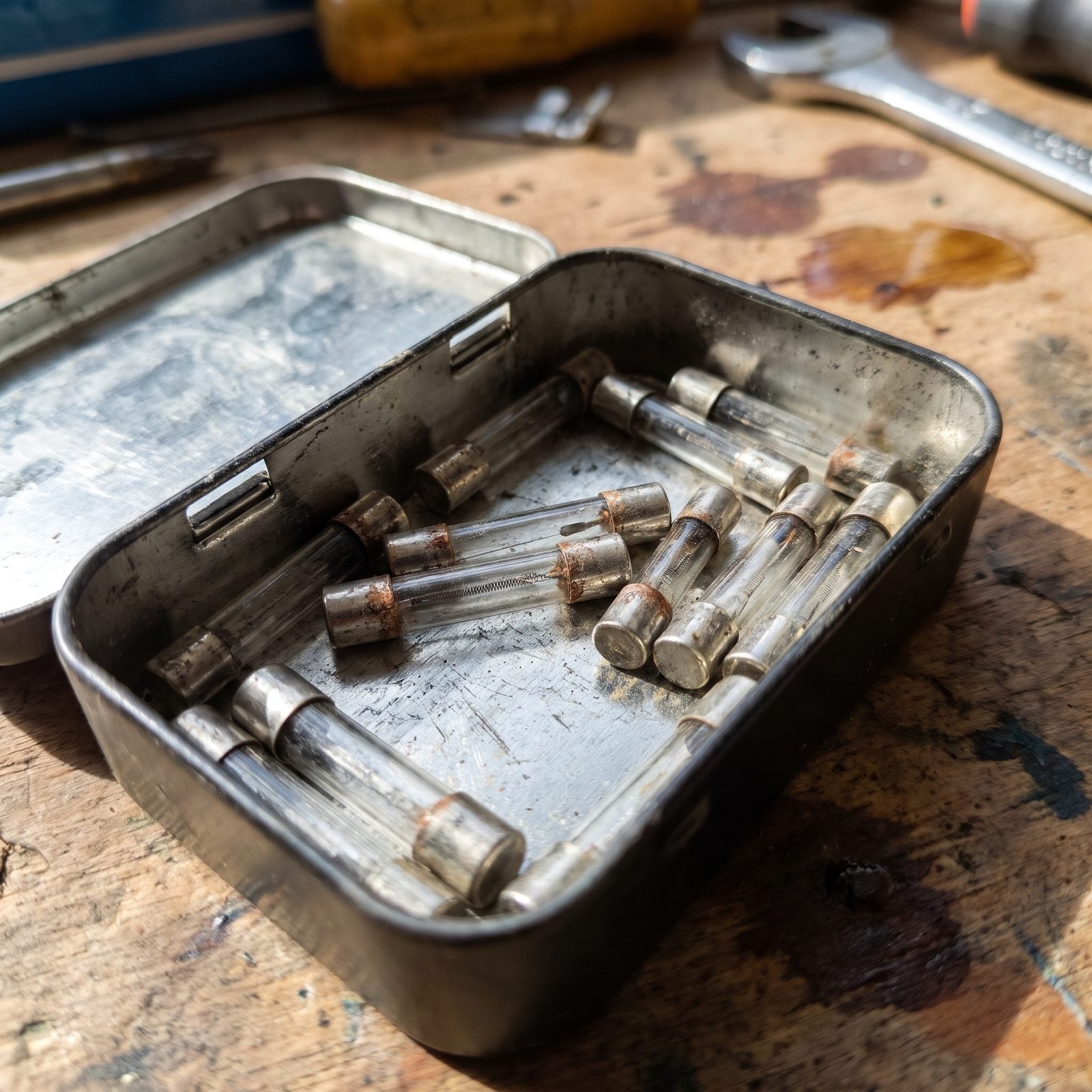
When the dash lights or the radio died, it was almost always a fuse, a little glass tube with a filament you could see had burned through. You kept a tin of them, every amperage, rattling around back there.
Pulling a blown fuse and dropping in a fresh one was a thirty-second fix that looked like wizardry to the kids in the back seat. In a pinch, a desperate man wrapped the dead fuse in foil from a gum wrapper, which worked right up until it didn’t.
25. The Length of Amber Rubber Siphon Hose
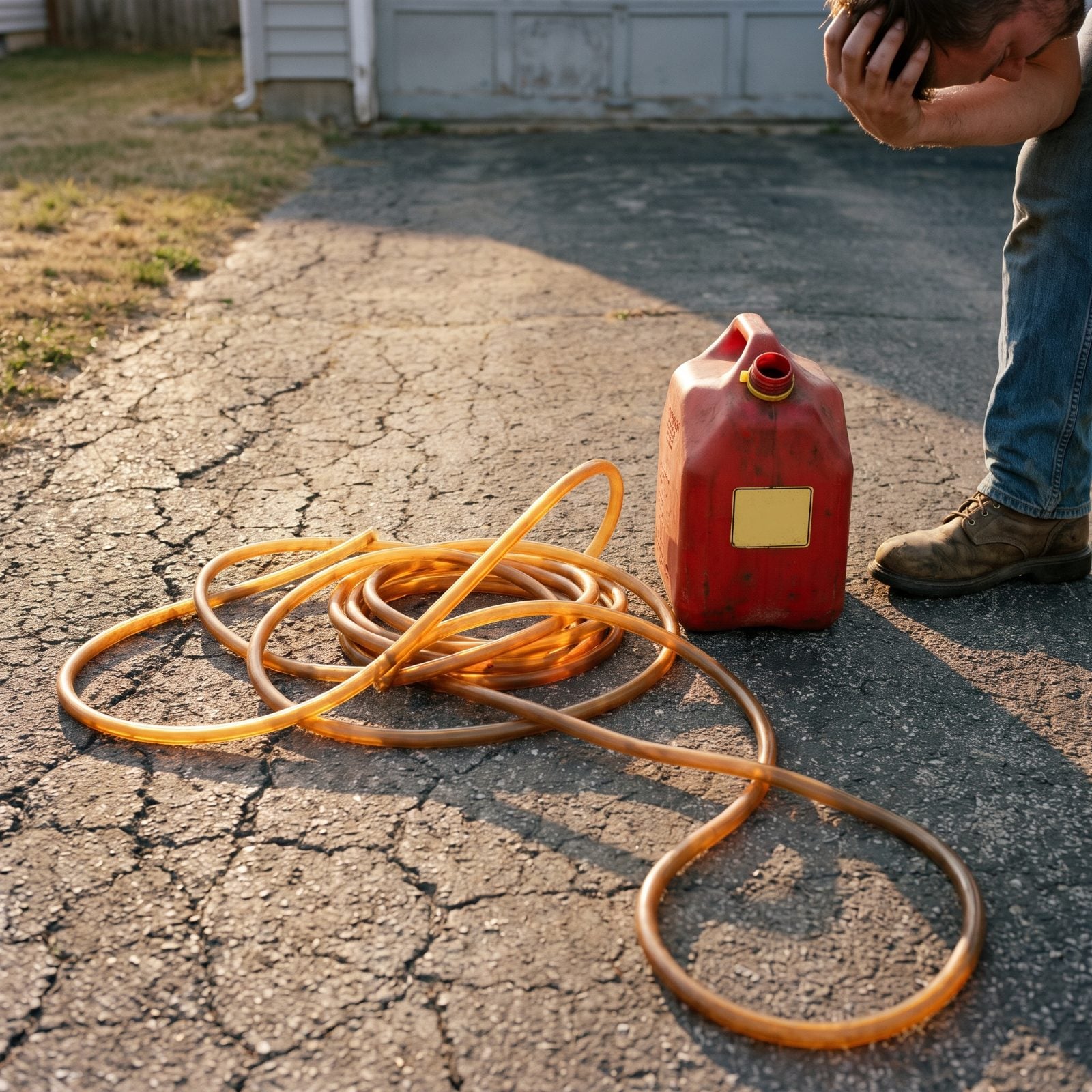
Run out of gas a mile from the station and that coil of amber hose was your salvation. One end in a friendly stranger’s tank, a quick mouthful of fumes you’d regret for an hour, and you were pulling enough fuel to limp to the pumps.
It was the most honest tool in the trunk. Low-tech, slightly disreputable, absolutely reliable. Dad knew how to work one without getting a mouthful, mostly, and kids learned the trick by watching, the way you learned everything back then. Lit gold by the afternoon sun, that hose meant you were never truly stuck.
24. The Red Cloth Roadside Warning Flag, Folded in the Corner Where It Always Lived
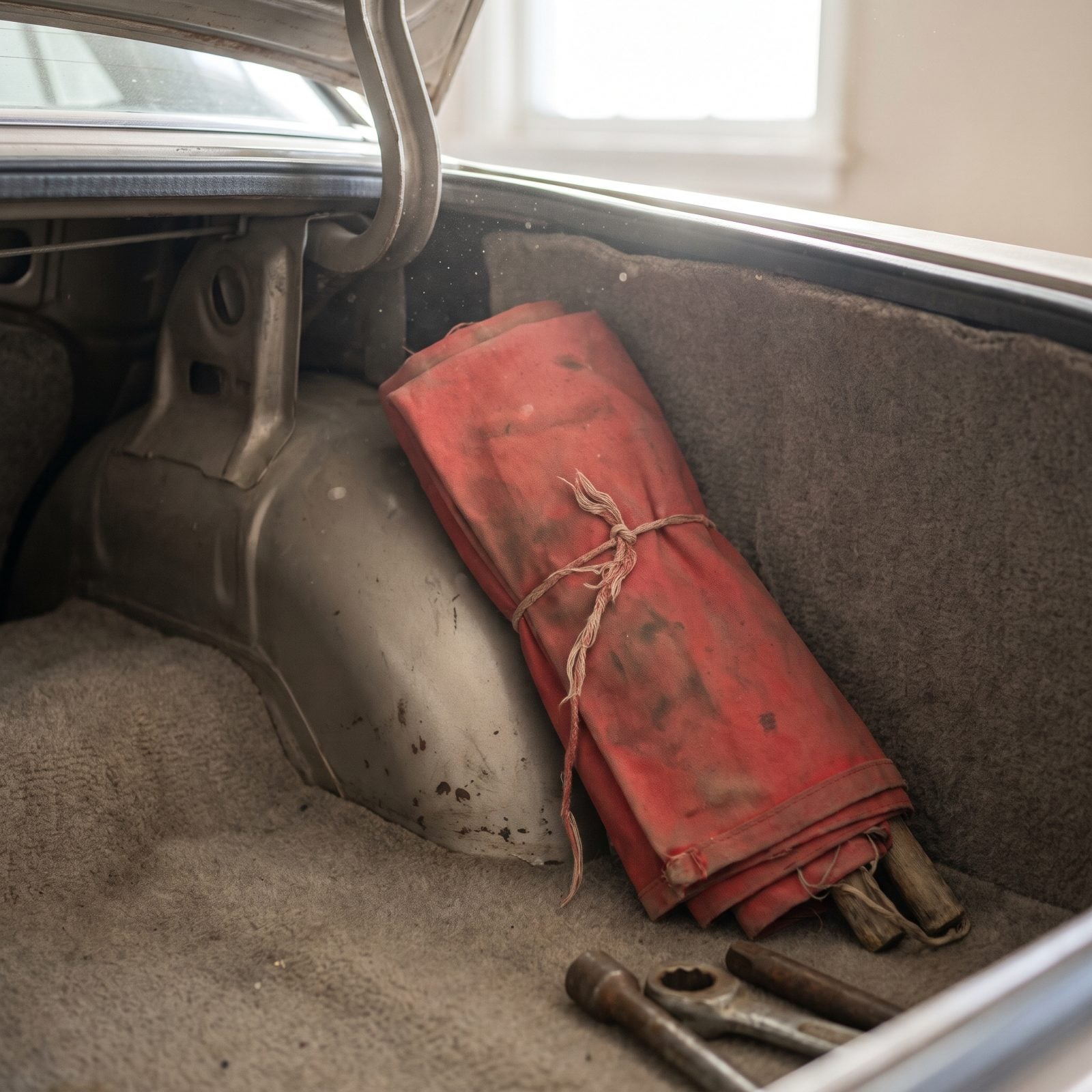
Every long load got one. A plank sticking past the bumper, a Christmas tree lashed to the roof, a door hauled home from the lumberyard — out came the red rag on a stick, tied to the end so the guy behind you knew to back off.
It lived folded in the trunk corner for years between uses, the sun fading it toward orange and the dowel splitting while nobody could tell you where it came from. It just was there, the way the jack and the spare were there.
23. The Military-Style Folding Shovel That Smelled Faintly of Old Ammo Cans
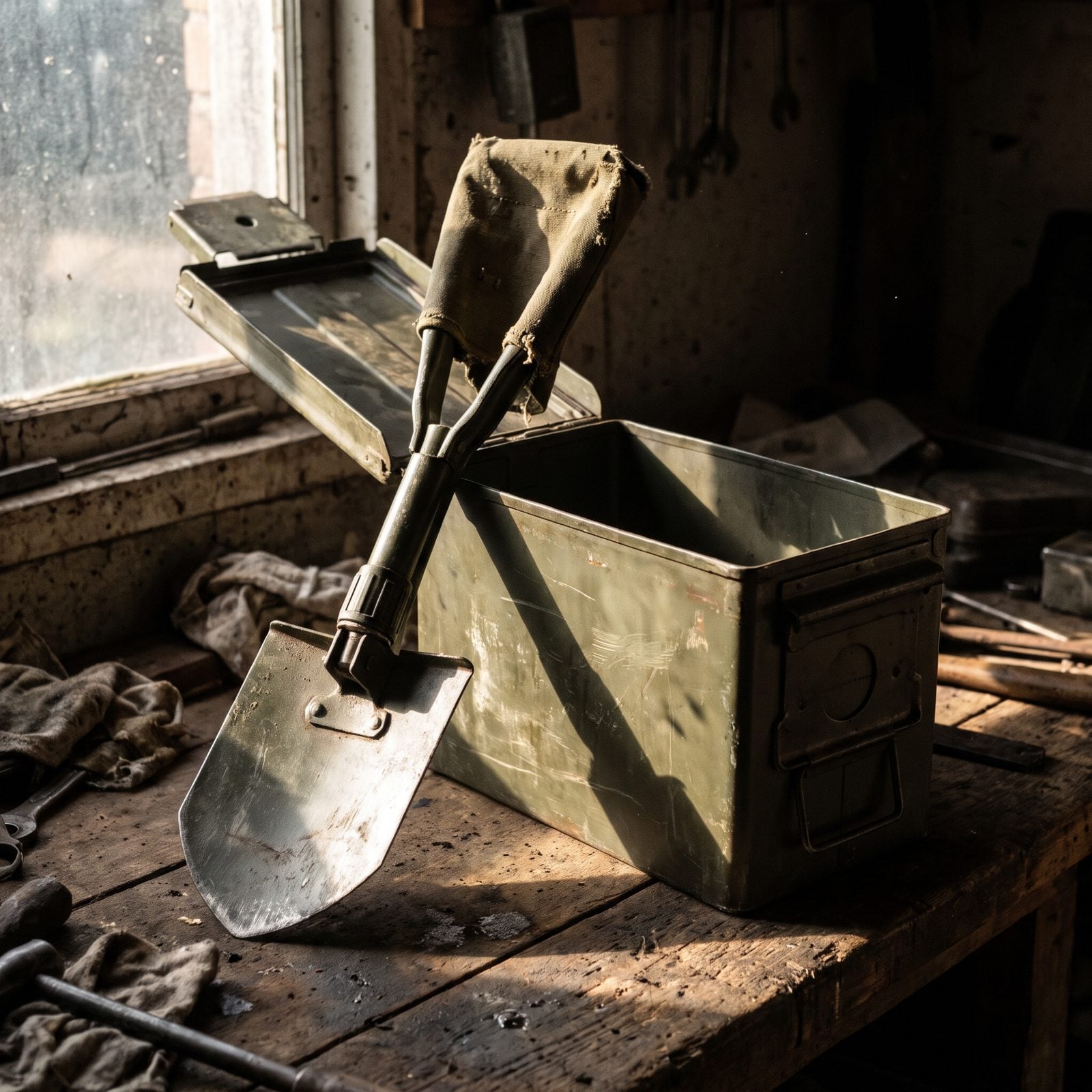
Half the dads who carried one of these had never dug a foxhole in their lives. The folding shovel was army surplus, bought for a couple bucks at a store that smelled of canvas and gun oil, and it rode in the trunk for the one morning a decade you actually needed it.
That morning was always February. Back wheels spinning in a snowbank, you’d unlock the hinge, pop the blade flat, and dig out the slush packed behind the tires. And it worked — the handle bit your palm and the blade bent a little and it worked.
Plenty of dads kept one for years out of pure superstition. Never used it once. Wouldn’t have dreamed of selling it.
22. A Sack of Sand for Winter Traction, Riding Over the Rear Axle All Season
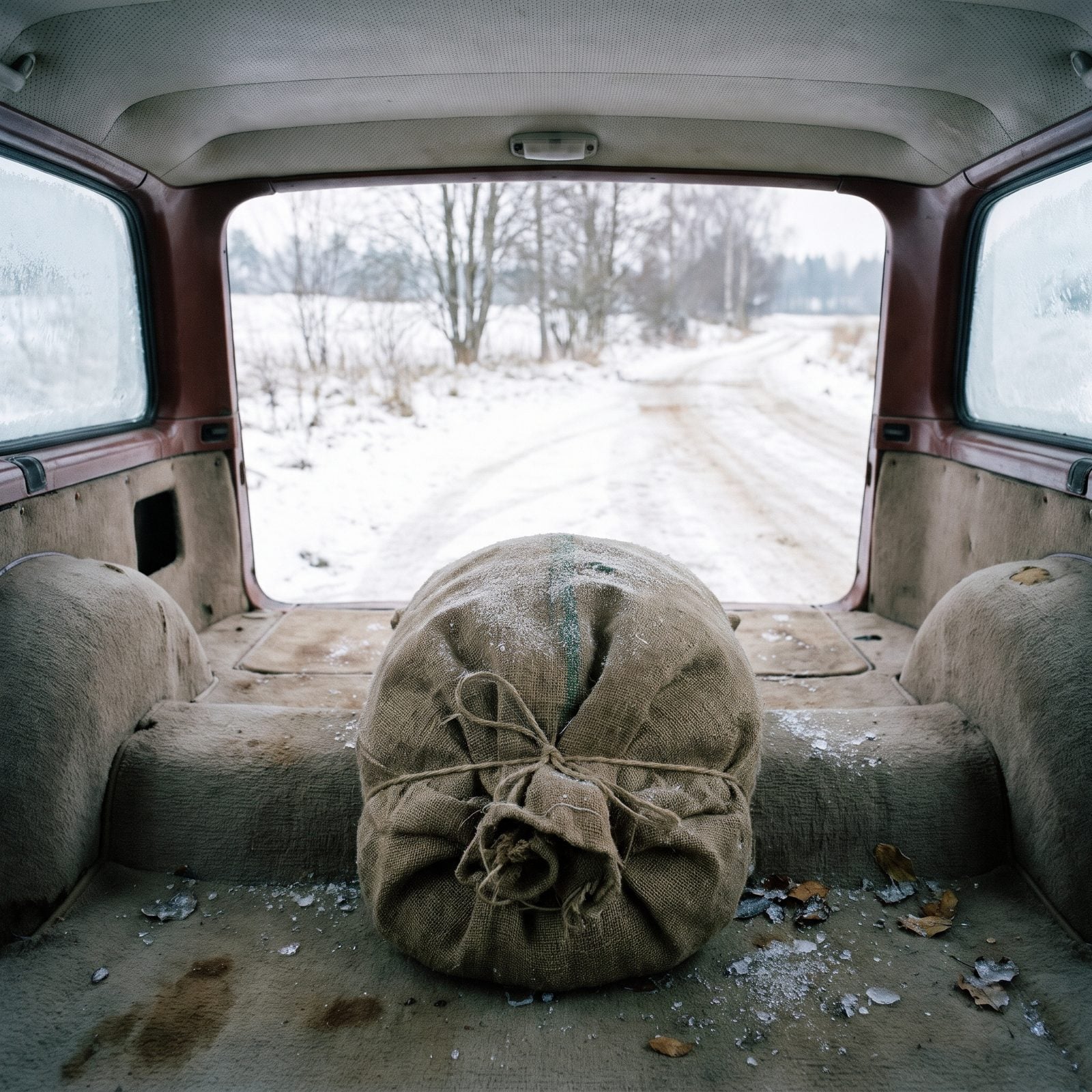
Rear-wheel-drive cars floated like canoes on ice, so the fix was ballast. A sack of play sand went in the trunk come November and sat over the back axle until the thaw — fifty pounds pressing the drive wheels down, and when all else failed you had a bag of traction grit right there to scatter under the tires.
The bag always sprang a leak by March. You’d find a little dune of sand in the spare-tire well every spring, sweep it out, and swear you’d buy a better bag next year. You never did.
21. The Greasy Mechanic’s Coveralls Balled Up Behind the Spare Tire
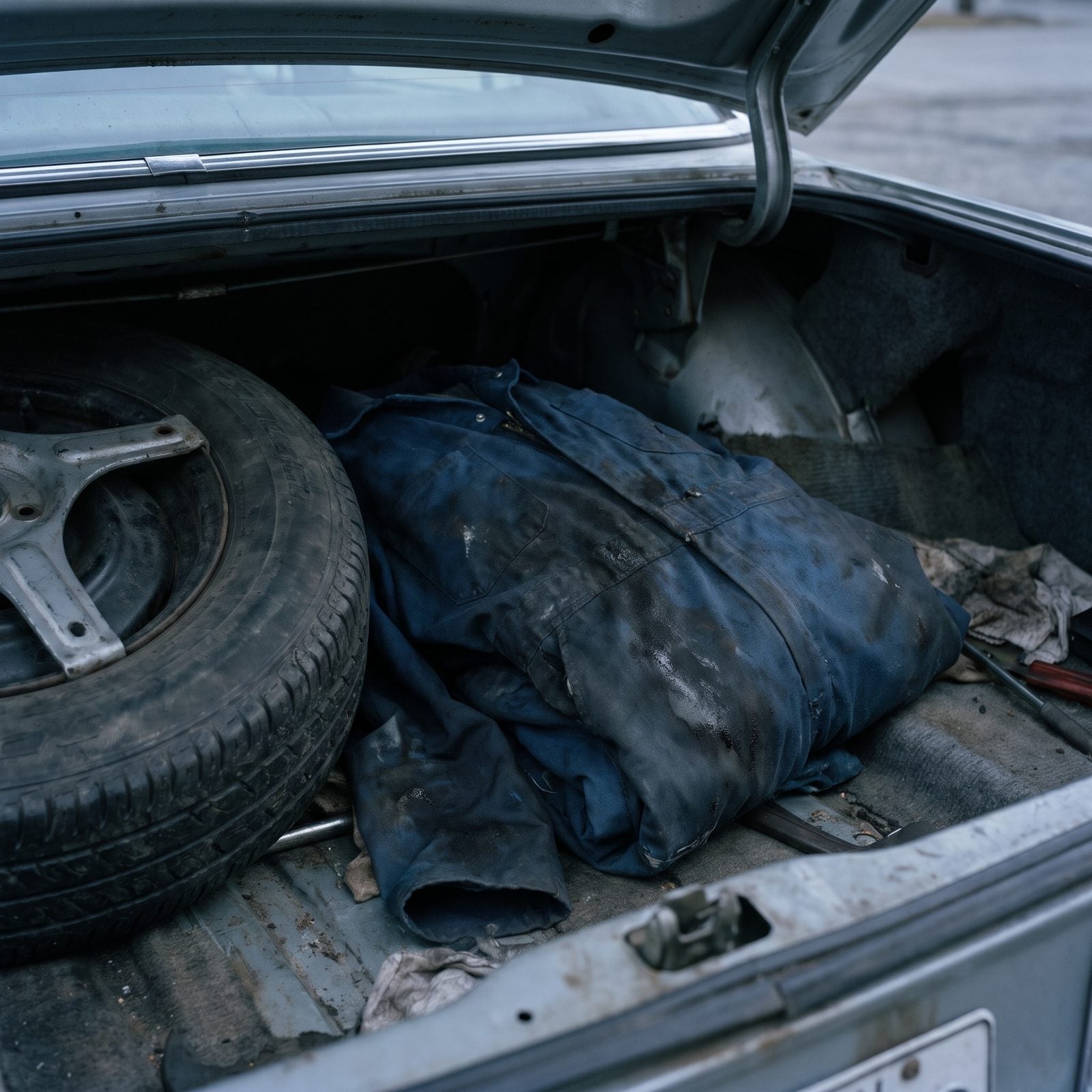
Not every dad kept these, but the ones who turned their own wrenches did. A pair of navy coveralls, stiff with ground-in oil at the knees, balled up behind the spare for the roadside repair that always came at the worst possible time.
The idea was you’d pull over, step into the coveralls, and crawl under the car without ruining the slacks you wore to work. The reality? You forgot they were there, lay down on the shoulder in your good clothes, and found the coveralls a week later when you went looking for the lug wrench. Still, when they worked, they saved a shirt.
20. The Tin of Pumice Hand Cleaner That Took Three Scrubs to Work
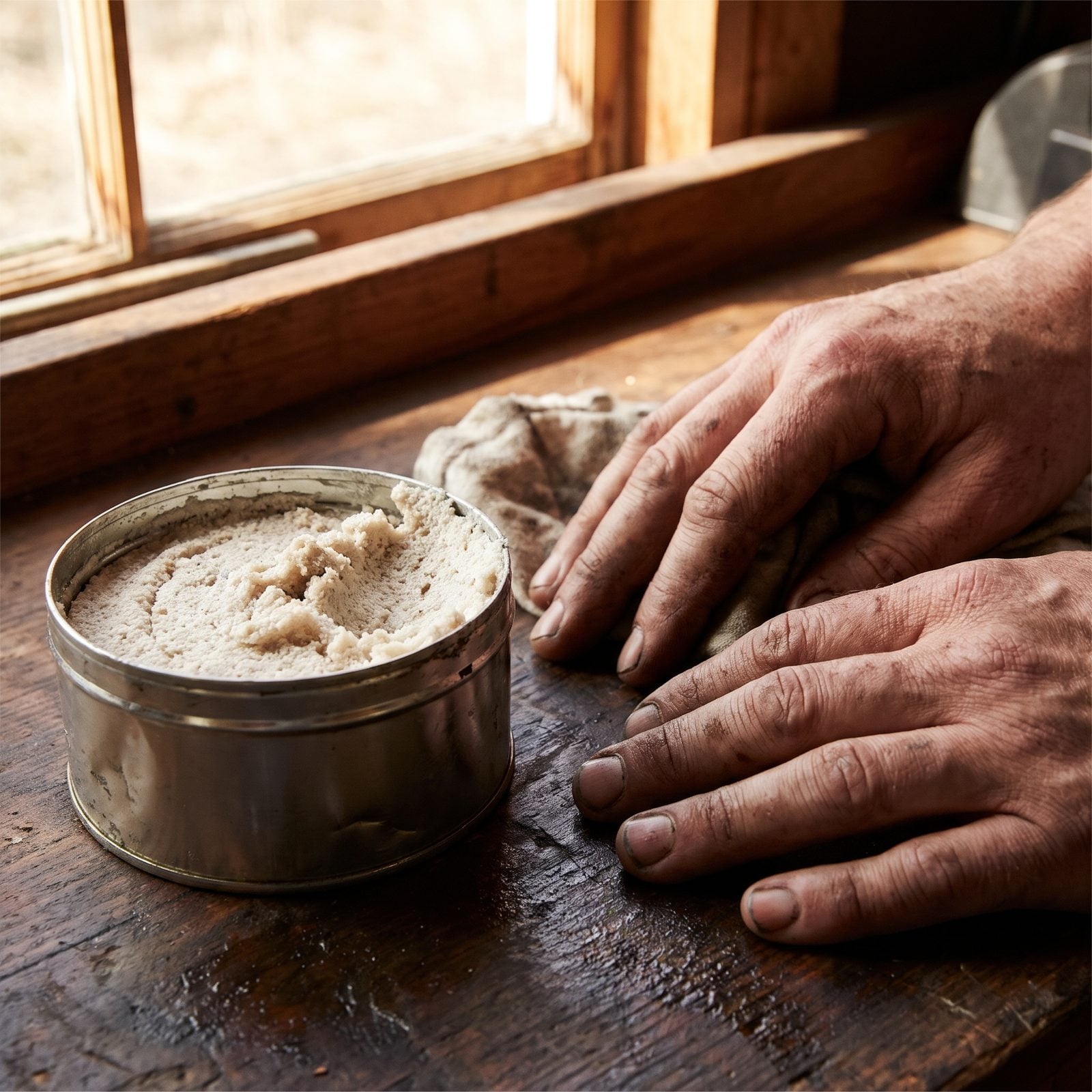
Nothing cut engine grease like this stuff. Soap just smeared the black around. This was a thick waterless paste full of pumice grit, and you scooped a glob into your palms and ground your hands together like you were starting a fire.
The first pass turned gray. The second got the knuckles. By the third your hands were raw and almost clean and smelling of that specific orange-solvent chemical tang that meant somebody in the house had been working on the car. Every garage sink and every trunk had a tin.
19. The Steel Cantilever Toolbox With the Chipped Red Paint and the Tray That Never Sat Flush
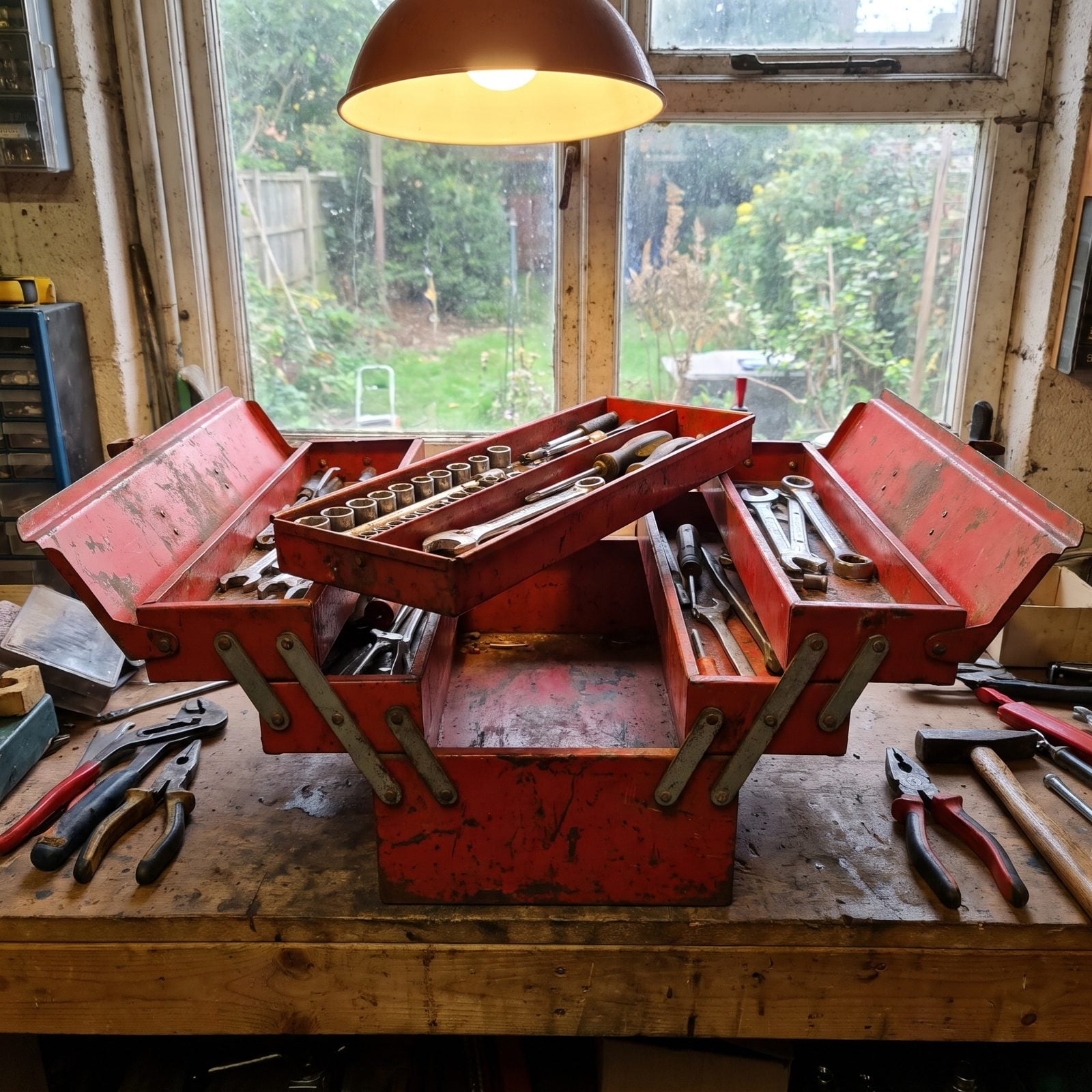
You could hear it before you saw it — that specific clatter of loose sockets shifting in a steel tray every time the car took a corner, a sound so familiar nobody in the back seat even noticed it anymore.
The cantilever design folded open like an accordion, each tray lifting and spreading to show the layer below. Red paint chipped off the corners first. The top tray never sat quite flush because a stray bolt always rolled into the hinge, and inside lived a half-set of wrenches, a hammer, and roughly four hundred mystery parts that might be useful someday.
A man’s toolbox told you more about him than his wallet did.
18. The Clamp-On Trouble Light With the Caged Bulb and the Fifty Feet of Tangled Cord
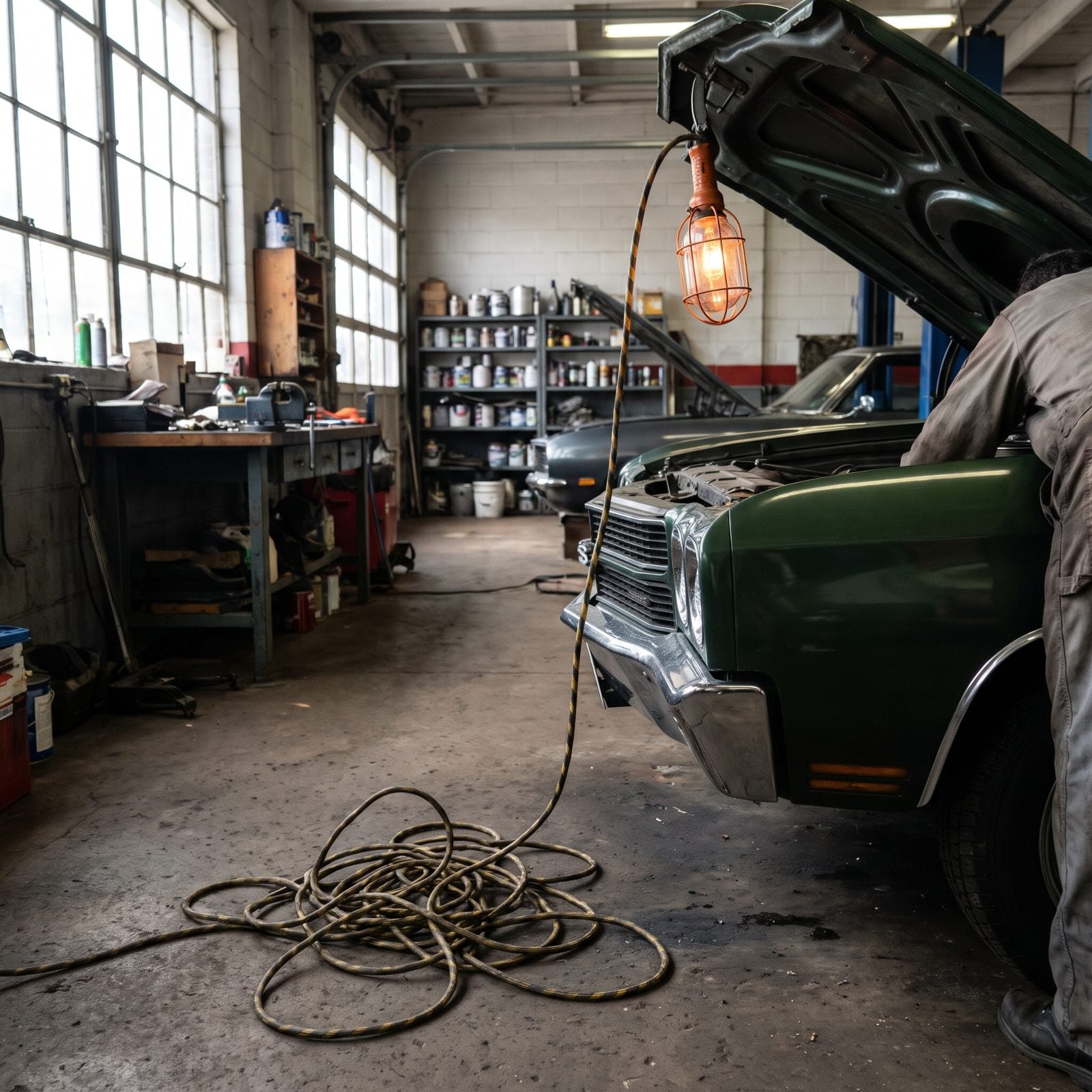
The bulb ran hot enough to brand your forearm, and everyone learned that exactly once. You’d clamp the caged light to the top edge of the raised hood, it would dangle out over the garage floor instead of the engine, and you’d spend the next hour cursing at a carburetor by whatever spill there was from a sixty-watt bulb.
The cord was the enemy. Fifty feet of it, perpetually knotted, running from the garage outlet out to wherever the car had died — you’d drag it across the oily floor, snag it on the bumper, and swear you’d coil it properly next time. The light flickered when a truck went by. Then it steadied. You kept working.
17. The Folding Feeler-Gauge Set With the Thin Steel Blades Fanned Like a Pocketknife
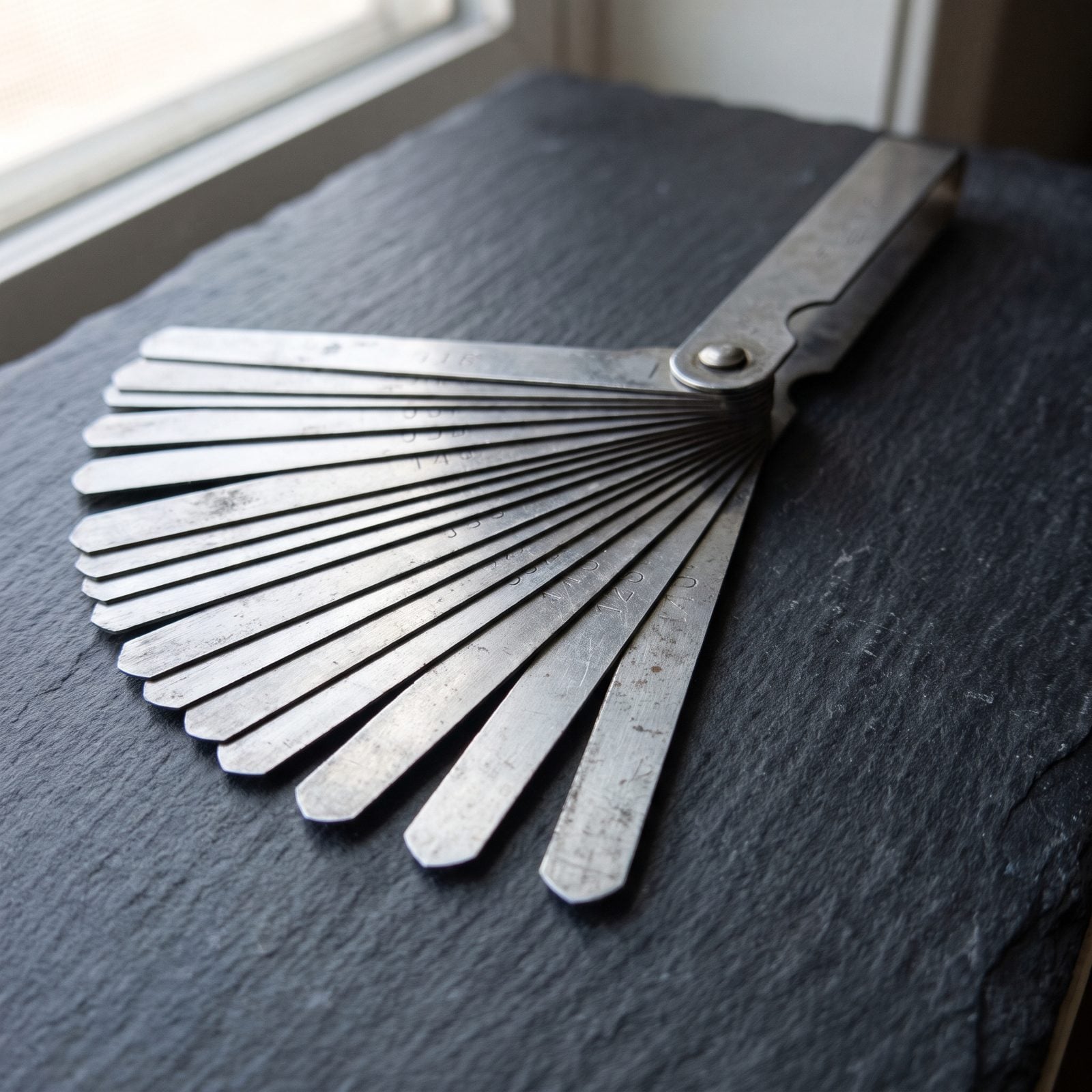
Setting a spark-plug gap or a valve clearance came down to this little fan of steel. You slid the right blade into the gap and felt for the drag, that slight resistance that told you the clearance was dead on. Too loose and it rattled through; too tight and it wouldn’t go. You learned the feel in your fingertips.
The blades folded into the handle like a jackknife, and the whole thing fit in a shirt pocket. Dropping it was a disaster because the thin blades bent, and a bent feeler gauge lied to you. Plenty of teenagers bent one and never told their fathers. The statute of limitations has probably run out.
16. The Glass Battery Hydrometer With the Little Floating Beads That Told You the Bad News
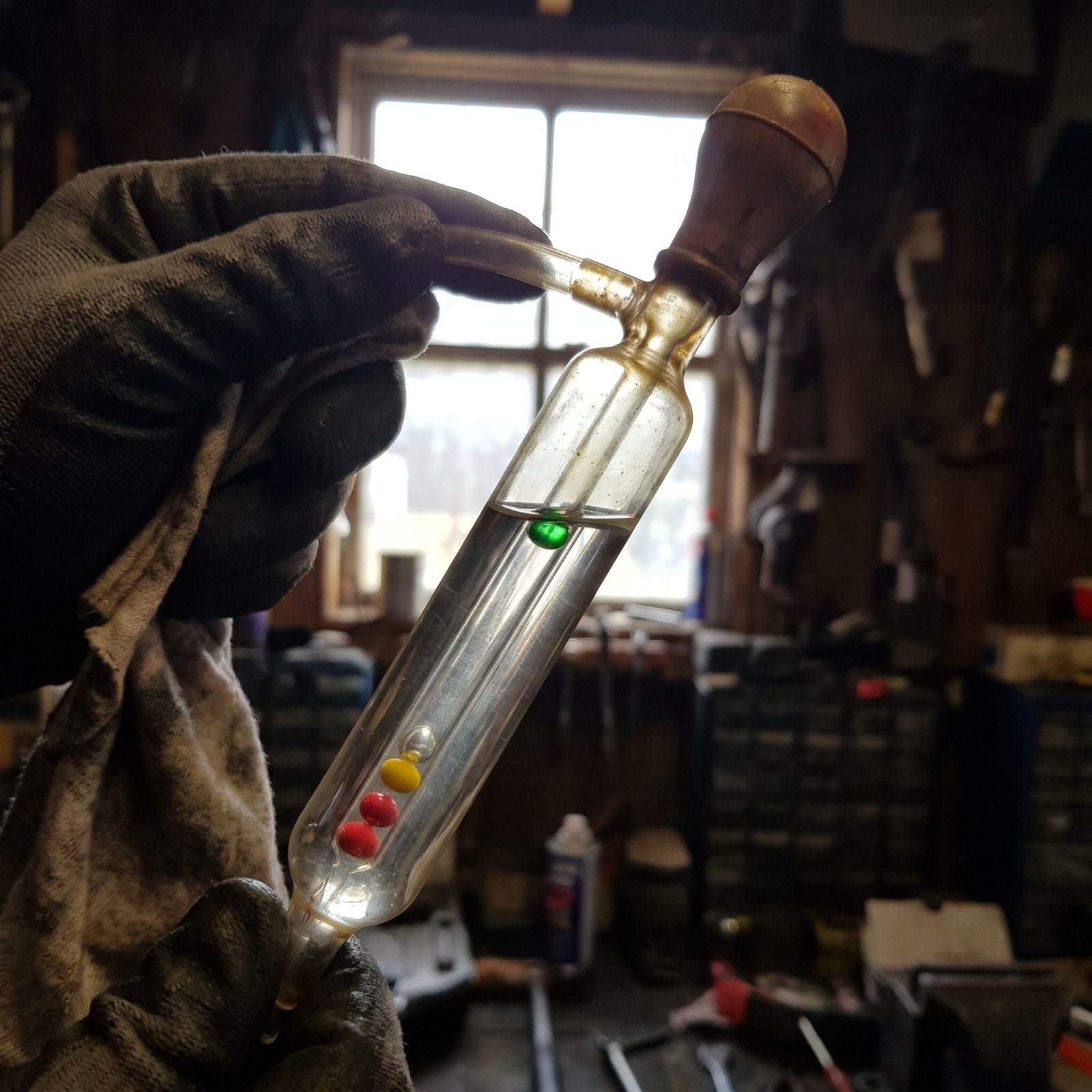
Before anything had a warning light, you found out if your battery was dying by getting acid into a glass tube. You’d pop the battery caps, draw off a little electrolyte from a cell, and ease the slug into the tube through its open glass neck, where a little float or a row of colored beads bobbed up and told you the charge in each cell.
Green meant you were fine. Red meant trouble. The glass was fragile and the acid ate holes in your pants if you dripped it, so you worked slow and held your breath. Crack the tube and you were buying a new one at the parts counter, where the guy would nod like you’d confessed a sin.
15. The Coil of Baling Wire That Held Half the Cars in the Neighborhood Together
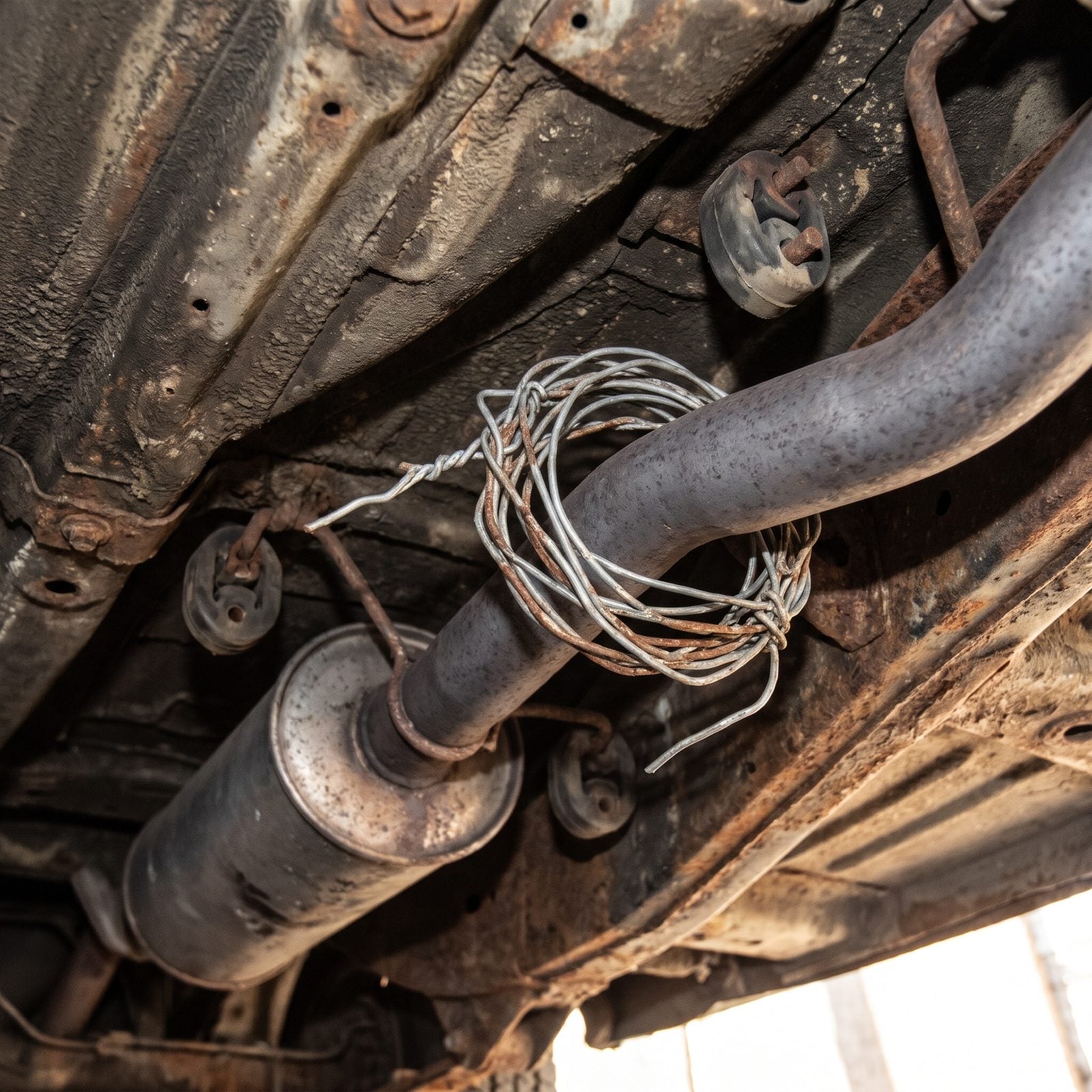
A muffler hanging by a thread. A bumper sagging after a parking-lot tap. A tailpipe dragging sparks down the highway. The answer, always, was baling wire.
You’d cut a length with the pliers, twist it tight around whatever was falling off, and drive another two years on a repair that was supposed to last until the weekend. Nobody ever got around to doing it right. The wire held. Dads kept a coil in the trunk the way they kept their word — quietly and without ceremony, ready for the next thing to come loose.
14. A Coffee Can Full of Nuts and Bolts
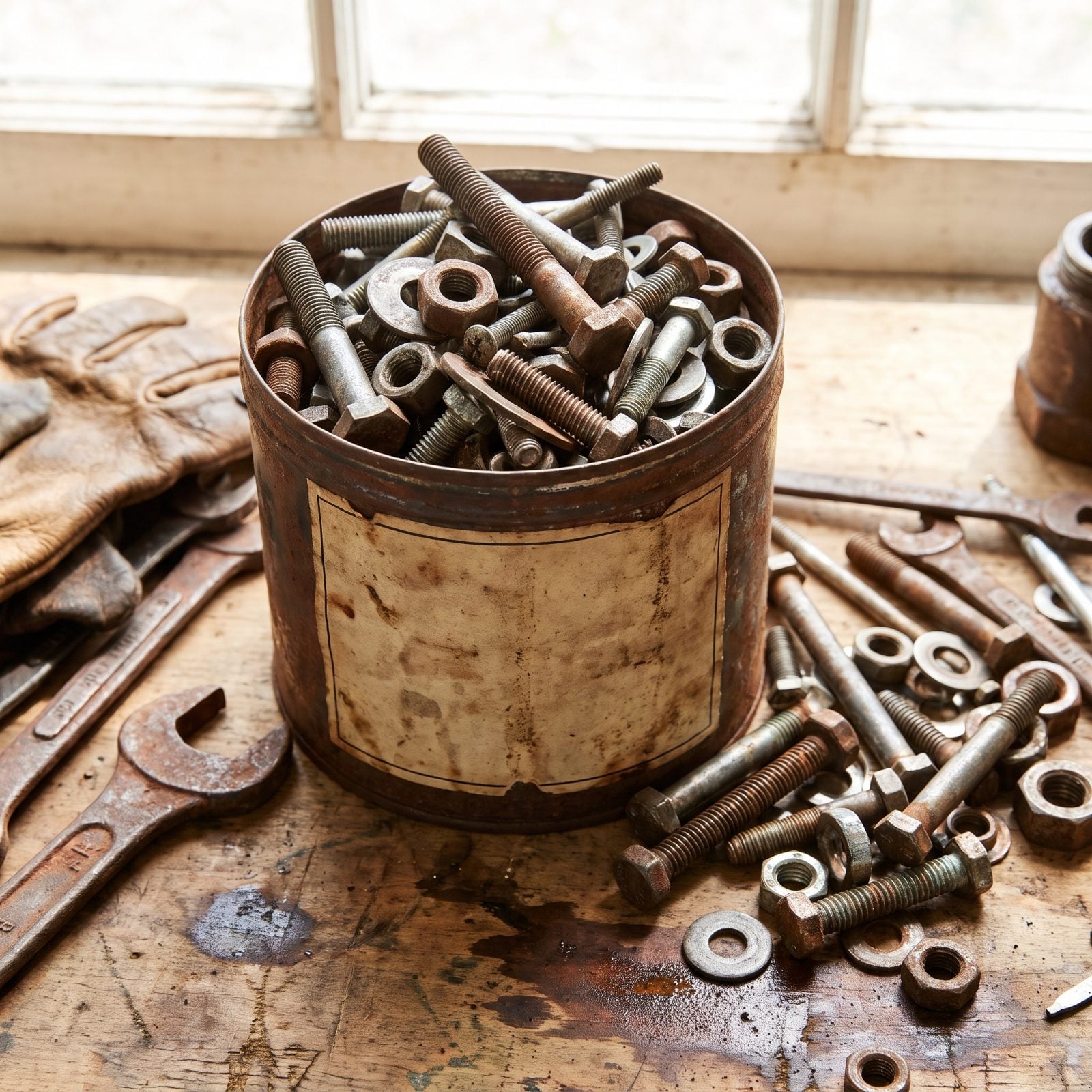
Every dad had one. It used to hold Maxwell House, then it held forty years of leftovers — loose bolts that fit nothing in particular, washers in six sizes, a couple of wing nuts, a bent cotter pin, and three pennies that somehow always worked their way to the bottom.
You never bought a bolt in those days if you could help it. You dug through the can, shook it, spread the contents on the trunk lid, and sorted by feel. Nine times out of ten the thing you needed was in there, because the can was really a slow savings account of every repair since the car rolled off the lot new.
13. A Bar of Soap for Sealing a Fuel Leak
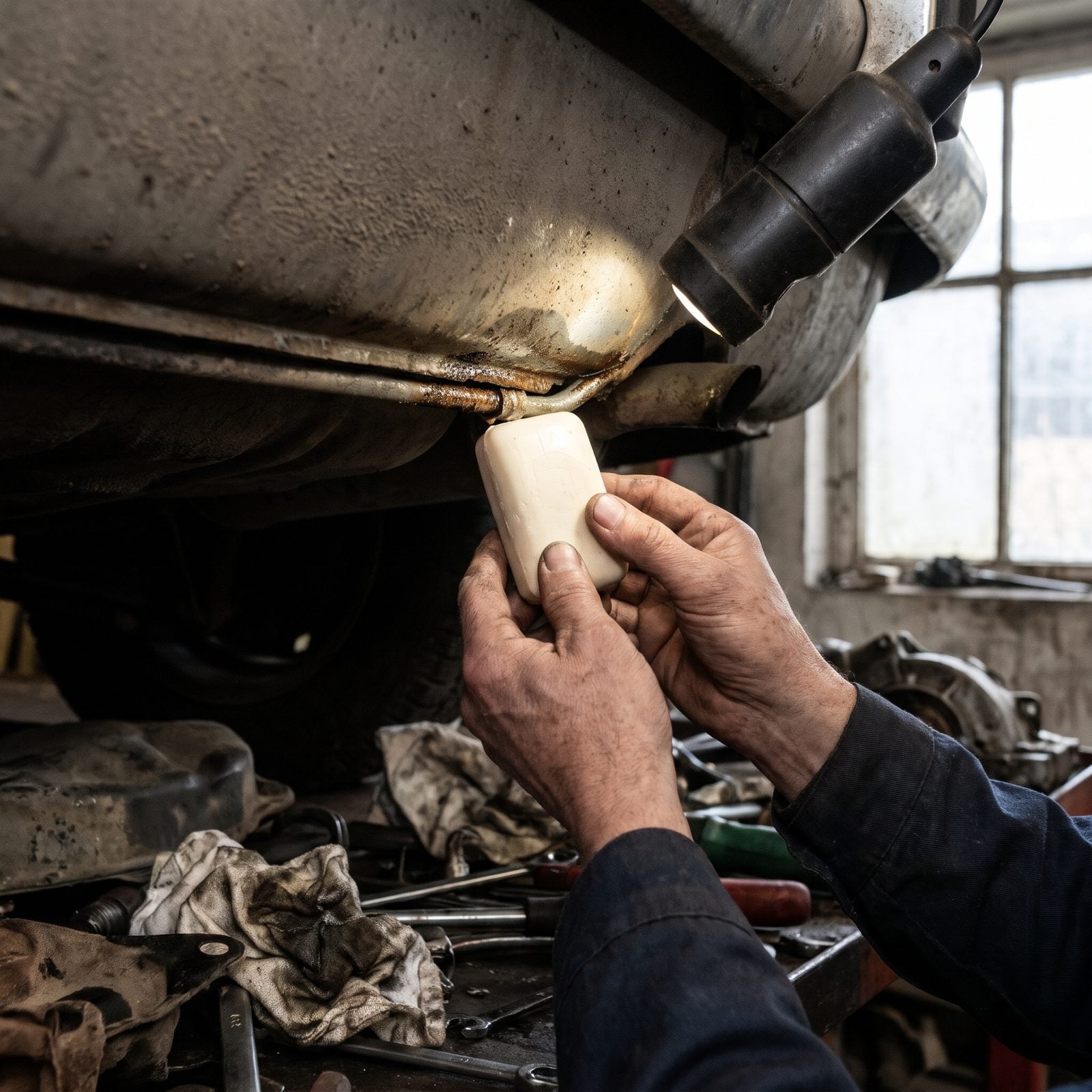
Here is a trick that sounds like a tall tale until you’ve watched it work. Pinhole in a gas tank, or a weeping fuel line? A dad would rub a bar of hard soap hard against the spot. Gasoline won’t dissolve dry soap the way water does, so it sealed — at least long enough to limp home.
Was it a real fix? No. It was a gamble that got you to the shop, and that was half of old-car ownership: knowing enough field tricks to turn a dead-stop disaster into a mere inconvenience. The same bar doubled for sticky drawer runners and squeaky door hinges. It earned its spot in the trunk.
Calling it an absolute last resort, an automotive repair writer confirms the old trick: “If your gas tank springs a pinhole leak, rubbing a coat of bar soap over the hole will seal it temporarily.”
12. A Grease Gun Wrapped in Newspaper
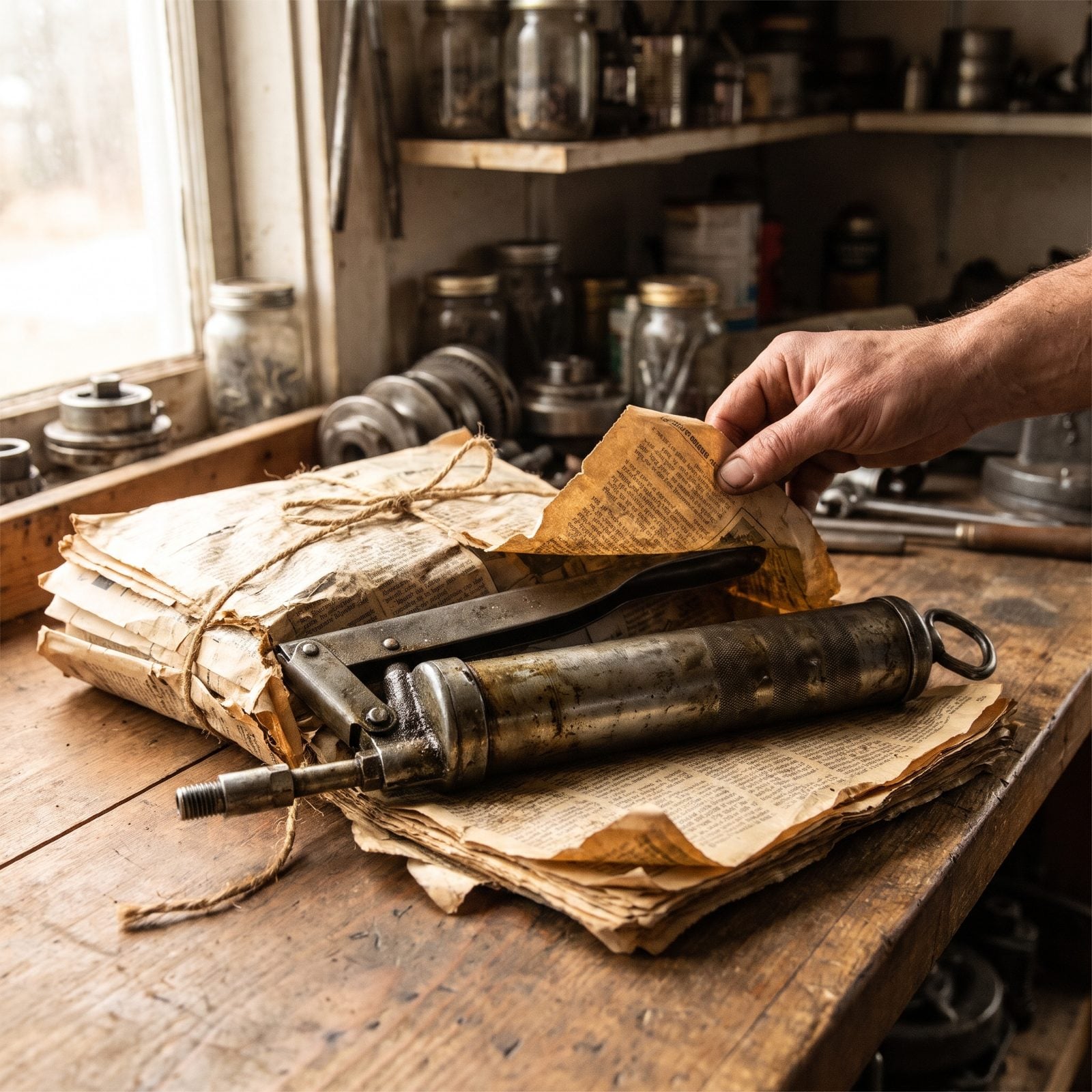
The newspaper wasn’t decoration. An unwrapped grease gun smears its black mess across everything it touches, and it touches everything, so dads swaddled the thing in yesterday’s sports section. The paper soaked up the weep and could be tossed and replaced for free.
Chassis lubrication used to be a Saturday job, not a dealer upcharge. You’d slide under on the creeper, find the zerk fittings, snap the coupler on, and pump till fresh grease oozed from the joint. Tie rods, ball joints, U-joints — each got its shot. A car that got greased regularly ran quiet. One that didn’t announced every bump with a chorus of squeaks.
11. A Can of Ether Starting Fluid
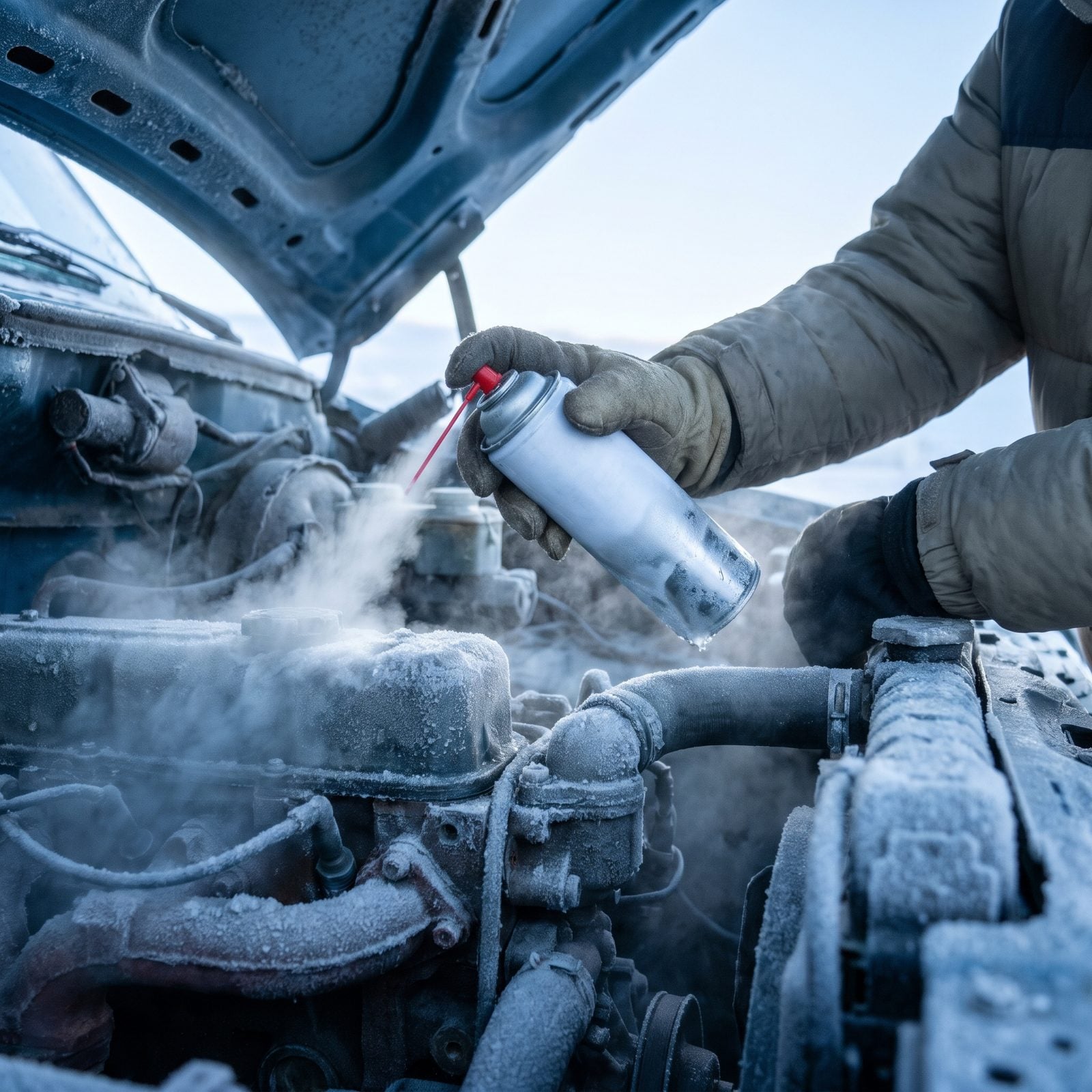
Twenty below, and the old six-cylinder would turn over but refuse to catch. That’s when the ether came out. A quick shot into the carburetor throat while somebody cranked, and the engine barked to life in a cloud of blue smoke.
You respected the stuff. Too much and you could kick an engine backward or crack a piston clean through. So dads used it sparingly, air cleaner off, the spray timed to the crank. It smelled sharp and sweet, and it hung in the cold garage air long after the car was running.
10. A Hard Cake of Simoniz Car Wax
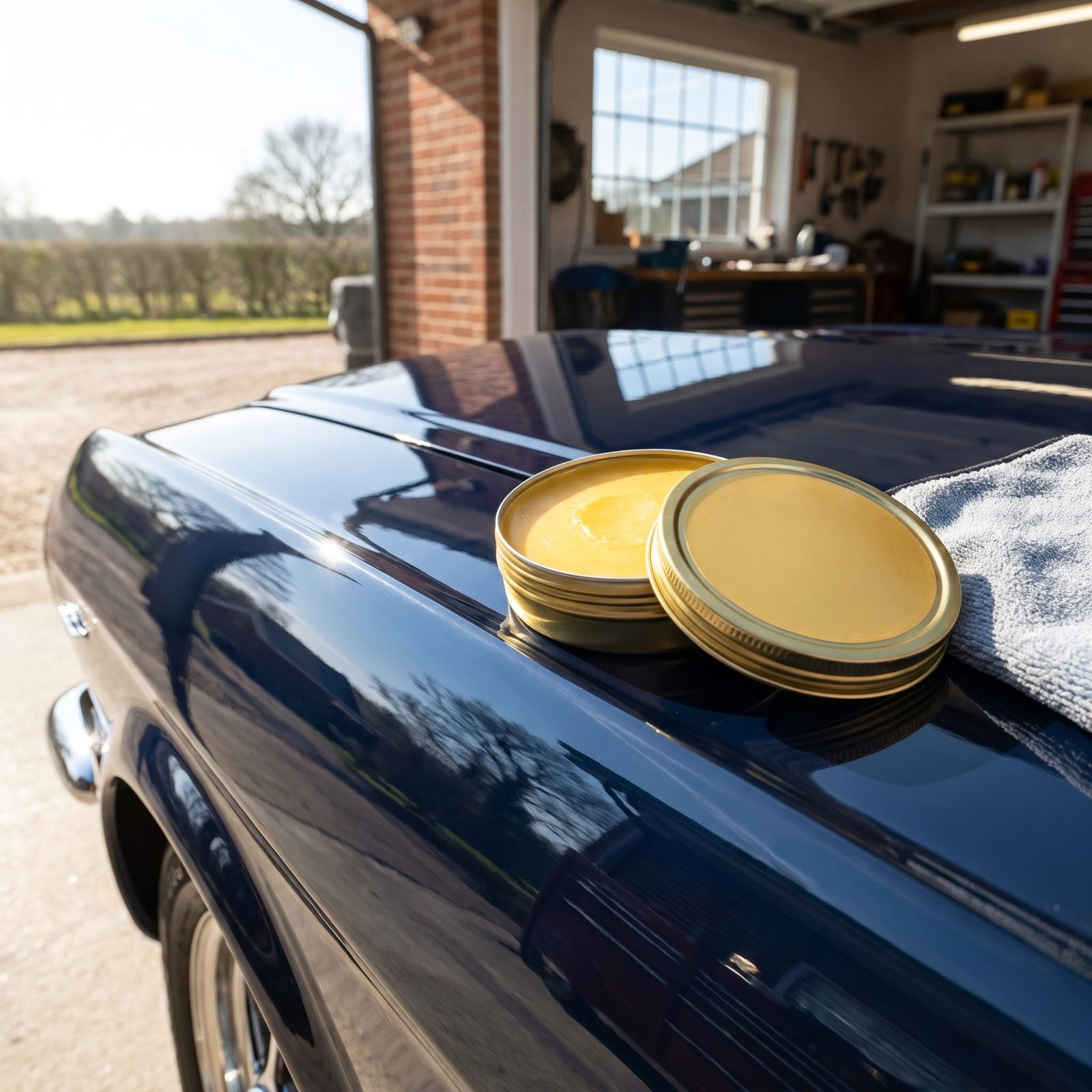
Not the liquid stuff. The tin. A flat tin of hard paste wax you swirled the applicator through in circles to load it up, and your fingers ached by the time you’d finished the hood.
Waxing the car was a ritual — usually Saturday, usually with a transistor radio going. You laid it on thin, let it haze over to a chalky white, then buffed it off by hand with an old cotton diaper or a chamois. The arms burned. The finish came up like glass. And every man had an opinion about the right number of coats, which he would share whether you asked or not.
9. A Plaid Wool Emergency Blanket
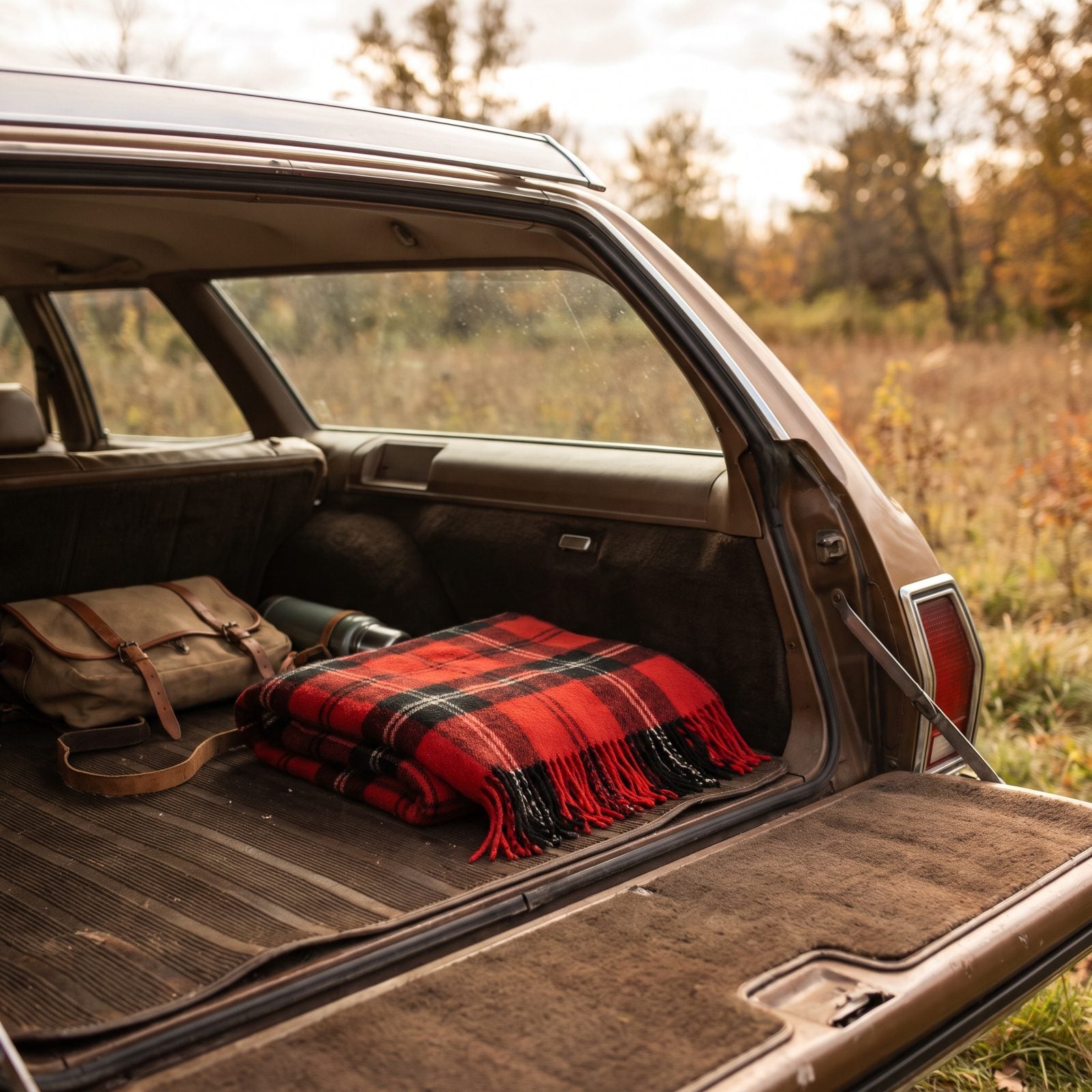
Scratchy, heavy, smelling faintly of the trunk and faintly of motor oil. The wool blanket lived back there year-round, but it earned its keep in winter, when a stall on a lonely road meant real trouble.
It doubled as a lot of things — a tarp to lay on under the car, a picnic ground cover, a warm wrap for a kid who conked out on the drive home from the drive-in. Wool holds its warmth even damp, which cheap blankets never managed, so dads trusted it. That same plaid turned up on thermos cups and hunting coats for a reason. It just read as reliable.
8. A Metal Thermos With a Cork Stopper

Before the stopper was a plastic twist cap, it was a real cork — stained brown and smelling permanently of coffee no matter how you scrubbed it. The outer cup was the only mug anybody used on a fishing trip.
These things were nearly indestructible on the outside and heartbreakingly fragile within. Drop one and you’d hear the glass liner shatter inside with a dull tinkle, and that was that. So dads carried them like they were carrying eggs, wedged against the spare where they wouldn’t roll, full of coffee that somehow stayed hot from the kitchen table clear to the lake.
7. A Canvas Water Bag
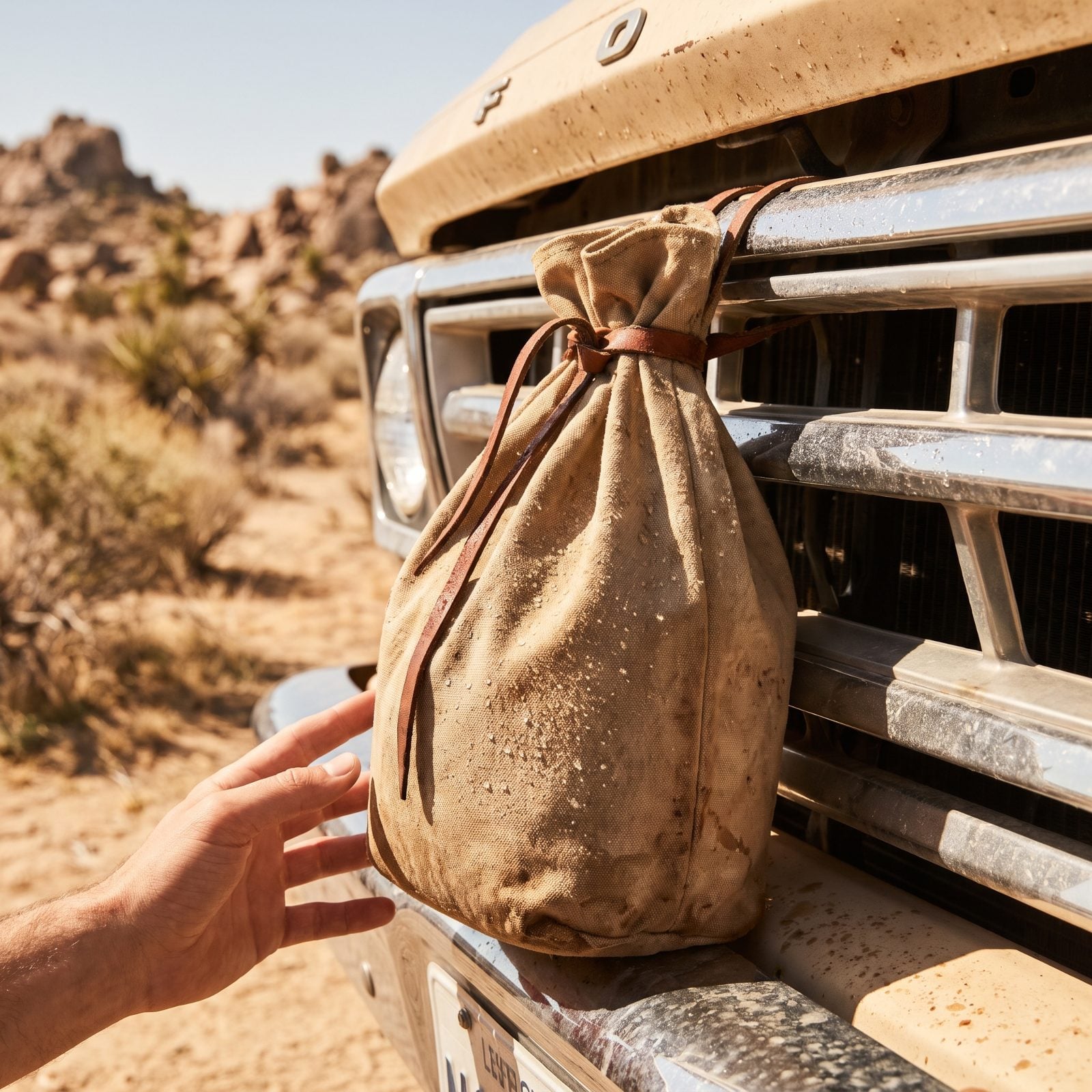
You hung it off the hood ornament or the grille, and it looked wrong until somebody explained the trick. The canvas was supposed to seep. A little water worked through the weave, evaporated in the wind, and that evaporation cooled whatever stayed inside. Desert physics, no ice required.
Crossing the Southwest before every car had decent cooling, a family counted on that bag. Water for the radiator if she ran hot. Water for the kids who were about to die of thirst in the back seat, according to themselves. It tasted faintly of canvas and warm rubber, and nobody minded one bit at mile two hundred in Arizona.
6. A Wicker Roadside Picnic Basket

Not a cooler. A basket. Fitted wicker with little leather straps inside that held the thermos upright and kept the cups from clattering, built back when a car trip meant pulling over at a roadside table instead of a drive-through window.
Mom packed it, usually, but dad carried it, and he knew exactly where it rode so nothing spilled. Egg-salad sandwiches wrapped in wax paper. A bottle opener tied on with string so it never wandered off. Those roadside stops were half the point of the trip — you spread the blanket, somebody swatted a wasp away from the lemonade, and the interstate hadn’t yet made stopping feel like a waste of time.
5. A Pocket Transistor Radio
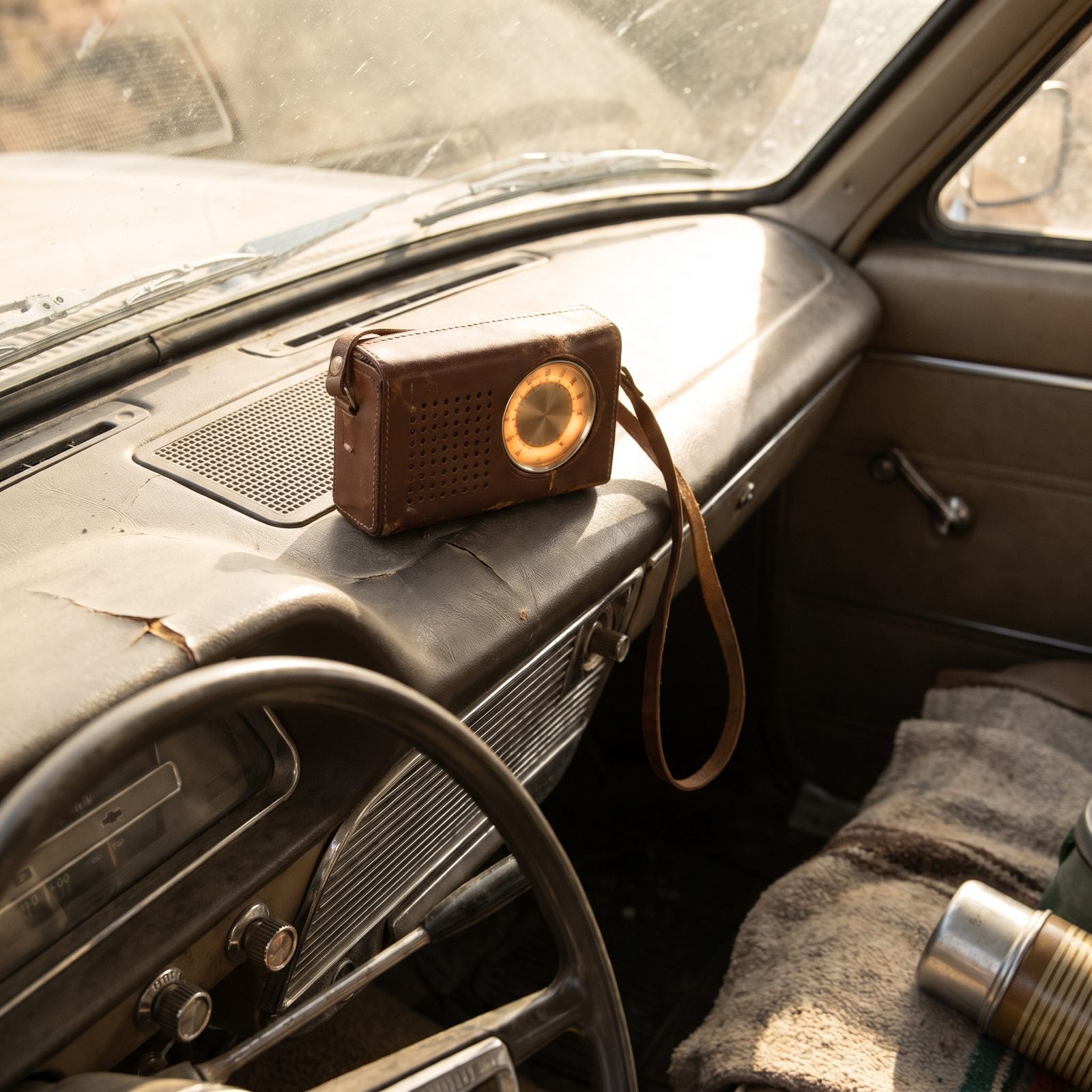
Held together with a leather strap and run on a nine-volt that always seemed to die right at the good part of the ballgame. The pocket transistor was freedom in a plastic box — you could take the game out to the garage, out to the driveway, out to the fishing hole.
Dad kept one in the trunk for working on the car, because a repair goes faster with company, even if the company is just a tinny AM announcer. You’d fiddle the dial with greasy fingers, chasing a signal through the static, and lock onto the station right as the volume faded. Then he’d knock it with a knuckle. Sometimes that helped. Usually it didn’t, but the sound carried anyway, thin and warm, across a long Saturday afternoon.
4. The Dog-Eared Motel and Motor Court Directory He Trusted Over Any Billboard
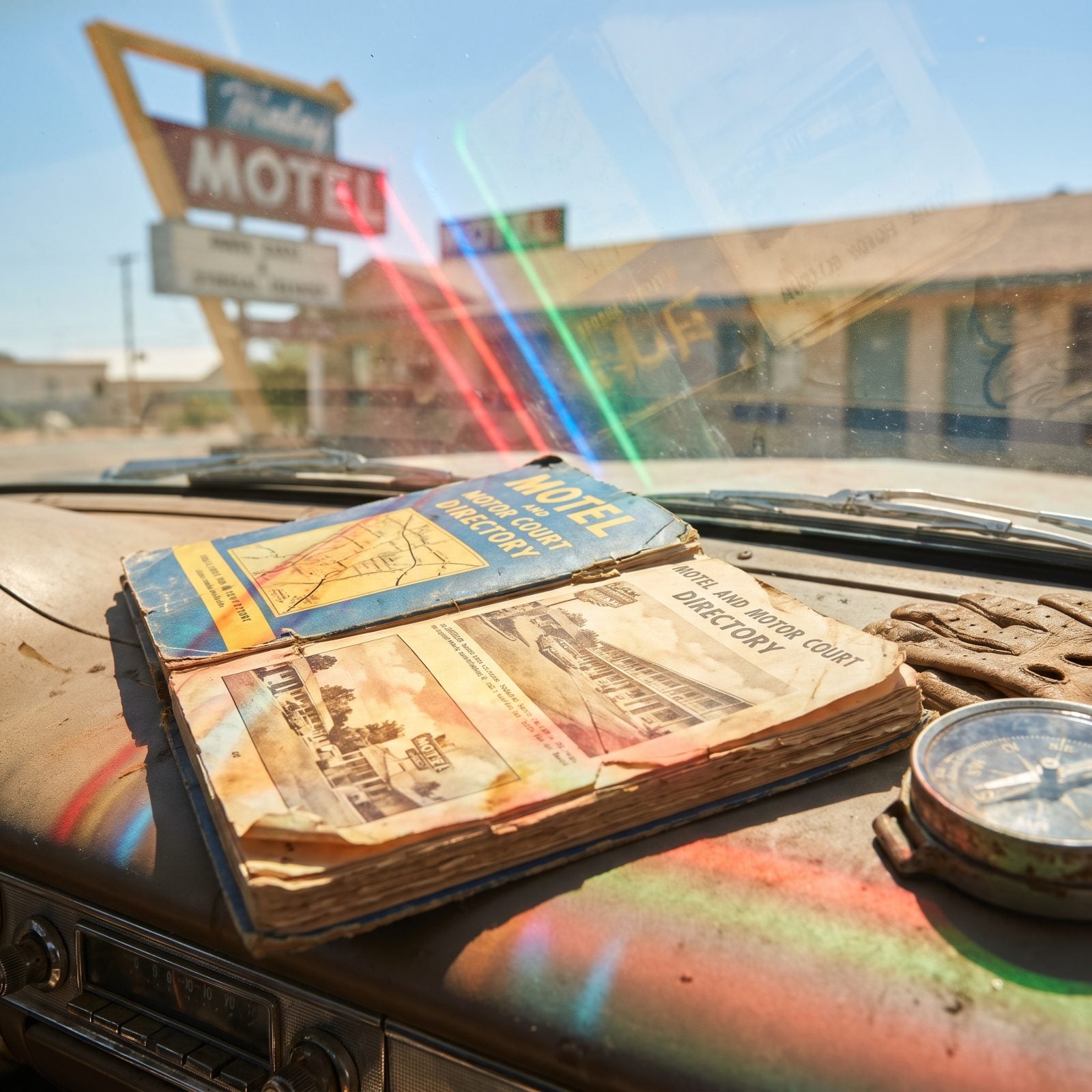
Pulling into a strange town after dark, you didn’t trust the biggest neon sign. You trusted the book. This fat little directory packed its dog-eared pages with tight columns of tiny print and grainy black-and-white snapshots of motor courts and motels.
Dad marked it up over the years. A checkmark meant we’d stayed there and it was fine. A folded corner meant come back. And a pencil line through an entry meant never again — he never explained why, you just knew that place was dead to him.
3. The Pocket Address Book Built for a World Run on Payphones
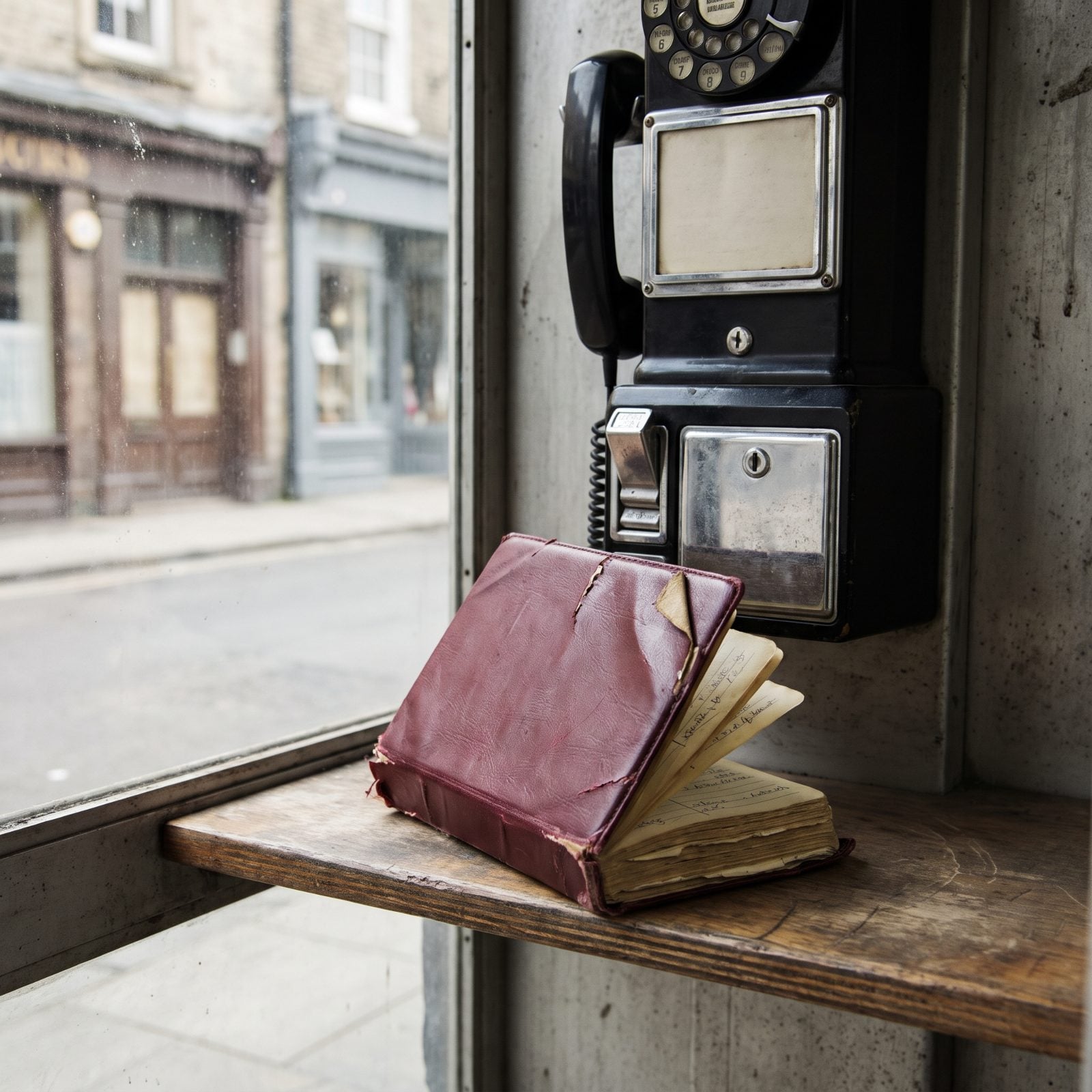
No number lived in your head back then. It lived in a thick, battered hardcover book nearly as wide as the phone itself, kept where you could grab it at a payphone with a dime already in hand.
Dad’s was a glorious mess. Crossed-out entries, a cousin’s third address written over the second, a garage number he trusted more than his own doctor’s. Flip through it and you could trace where everybody he knew had drifted over twenty years. Nobody ever quite got erased.
2. The Monogrammed Bowling Ball Riding Shotgun in Its Zippered Case
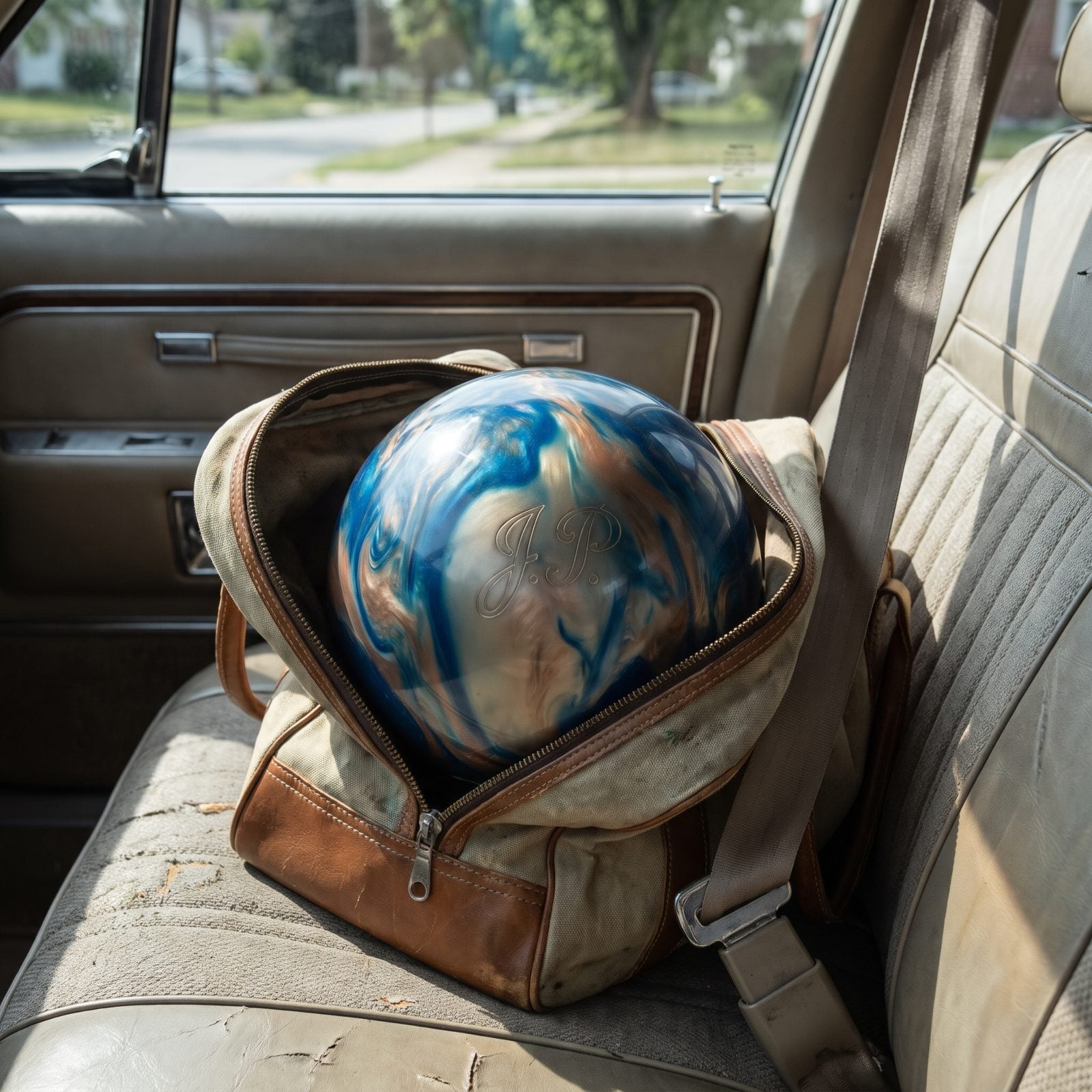
Some trunks carried jumper cables. Dad’s carried a bowling ball — his initials swirled right into the marbled finish, zipped into a tan vinyl case gone soft at the handles.
League night was a standing appointment, and a man did not bowl with the house ball. His had the right weight and the finger holes drilled to his own hand, so it lived in the trunk year-round. You could hear it thud against the spare tire on every hard left turn. Nobody ever moved it.
1. The Pair of Pantyhose That Could Limp a Car Home on a Broken Belt
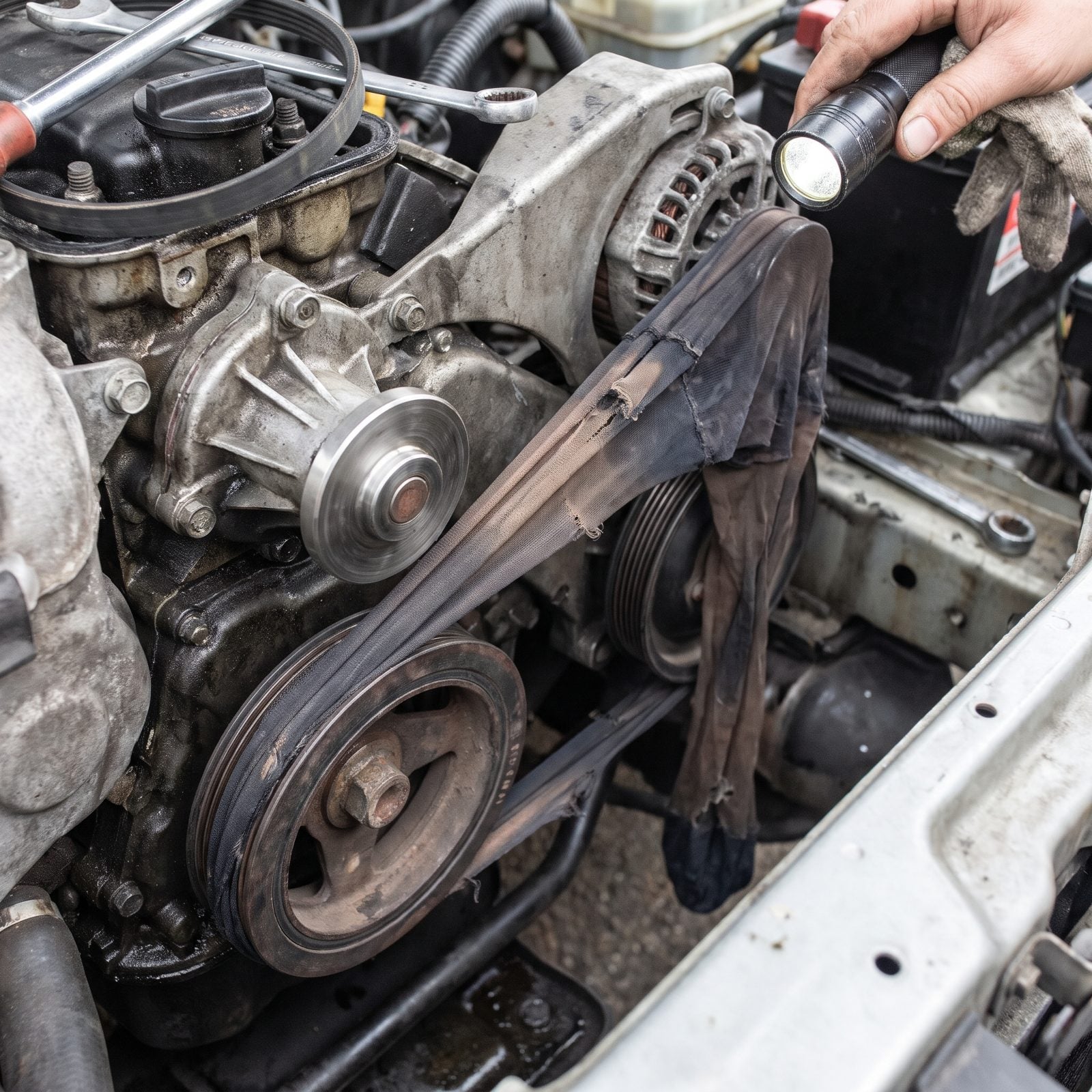
Now here’s the trick that sounds like a tall tale until you’ve done it yourself. A snapped fan belt on a lonely road used to mean a tow and a long wait — unless somebody in the car had a spare pair of pantyhose.
You wound the nylon around the pulleys where the belt used to run, frayed loose end and all, and it held just long enough to get you to the next town. It wouldn’t last, and it wasn’t meant to. A roadside miracle rated for exactly one emergency, which is why plenty of folks kept a fresh pair stashed in the trunk for that reason alone.
People have sworn by it for generations. Resourcefulness was the only roadside assistance most families had, and it got the job done more often than it had any right to.