
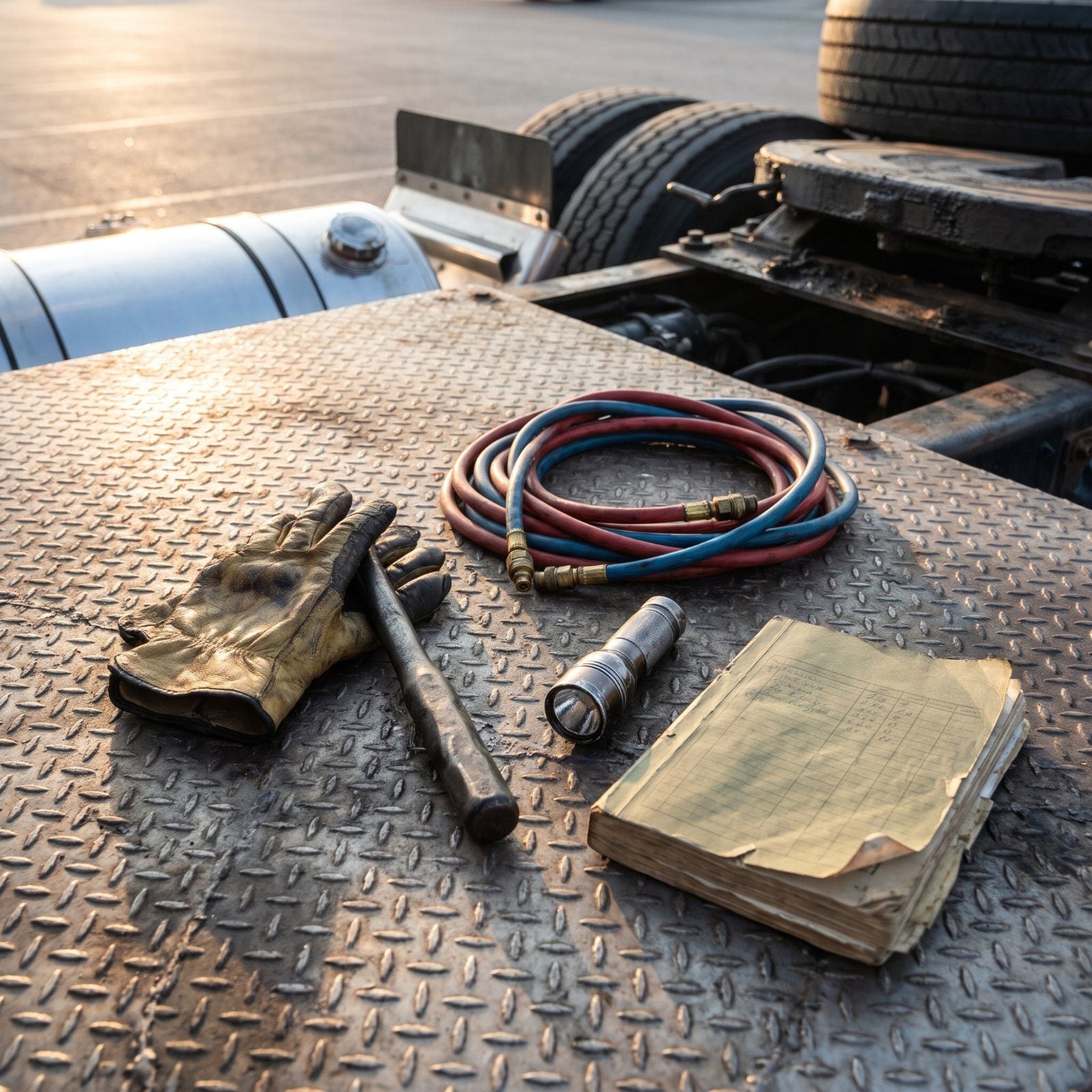
Watch an old hand walk around a rig and you’ll notice something. He’s not reading a checklist. His hands already know where to go — thumping a tire, glancing under the trailer, tugging a glad-hand connector, all while he’s telling you about last winter’s run through Donner Pass. Thirty years of cold predawn truck stop lots will do that to a man. The habits below separate the driver who keeps his CDL from the one who learns everything the hard way. None take long. All of them have saved a load, a trailer, or a life more than once.
Please note that some of the images in this article were created with the assistance of AI.
36. Thump Every Tire Before Rolling
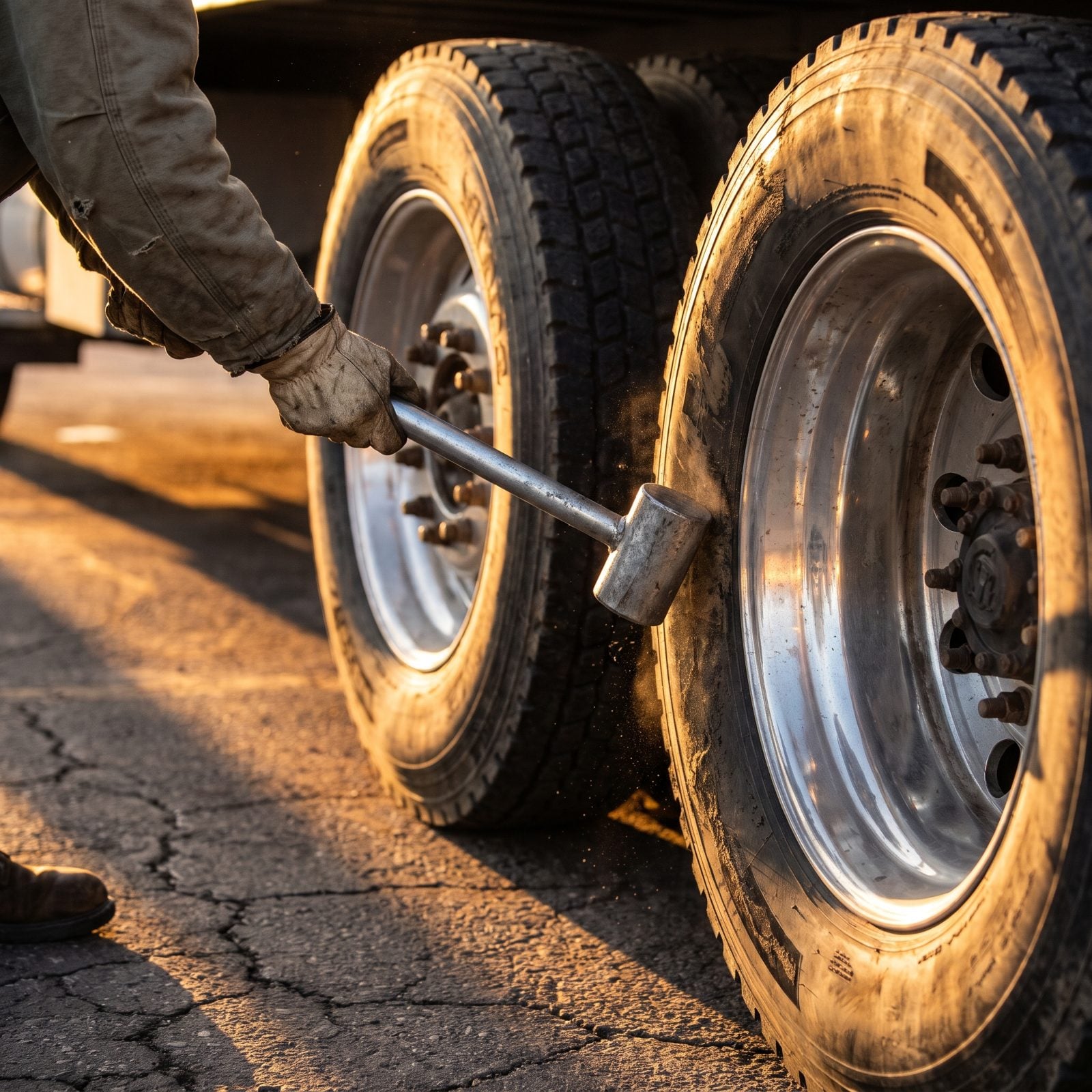
A low tire doesn’t announce itself. It rides fine right up until it’s shredding at 68 on a Kansas interstate, and by then you’ve got rubber tearing fenders off and a repair bill you won’t enjoy. The thump tells you what a gauge won’t bother to in the thirty seconds you’ve actually got. A healthy tire rings back tight; a soft one gives you a dull, dead thud, and you’ll hear the difference the moment you’ve done it a thousand times.
Old hands thump every position, not just the ones they can see. The inside dual is the sneaky one — it hides a problem until it drags its neighbor down with it.
35. Scan the Pavement for Fresh Leaks
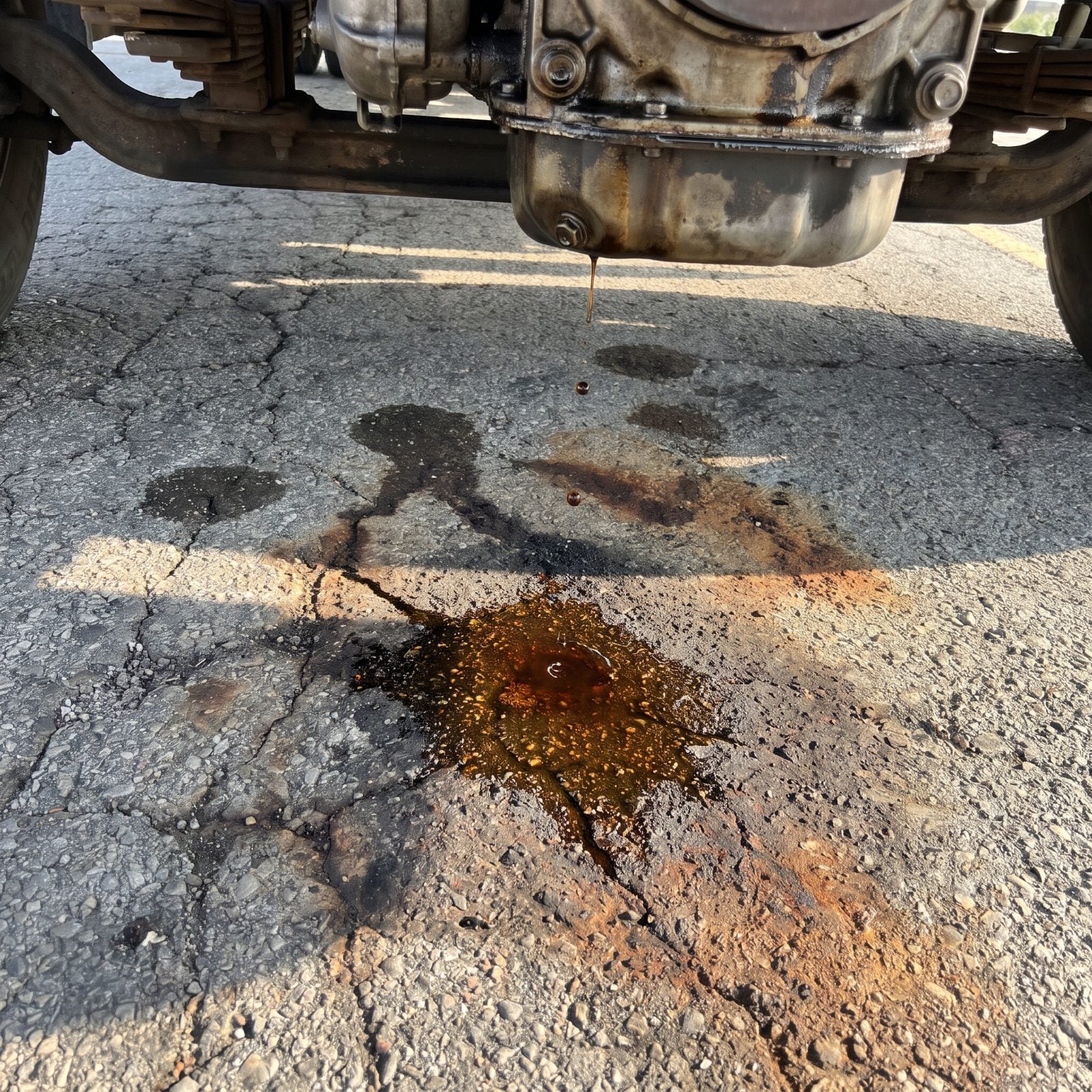
Before the tractor moves, the ground under it tells a story. A veteran steps back and reads the whole footprint — engine, transmission, differentials, the hub faces, the air tanks. Fresh and wet means right now. Dark and crusted means old news, probably the last guy who parked here. Knowing which is which only comes from looking at the same clean lot morning after morning until a new spot practically shouts at you.
Coolant is sweet and bright. Oil is dark and slow. Fuel evaporates and leaves a ring. Learn the puddle and you’ll catch the trouble while it’s still cheap to fix.
34. Check the Kingpin and Fifth-Wheel Height
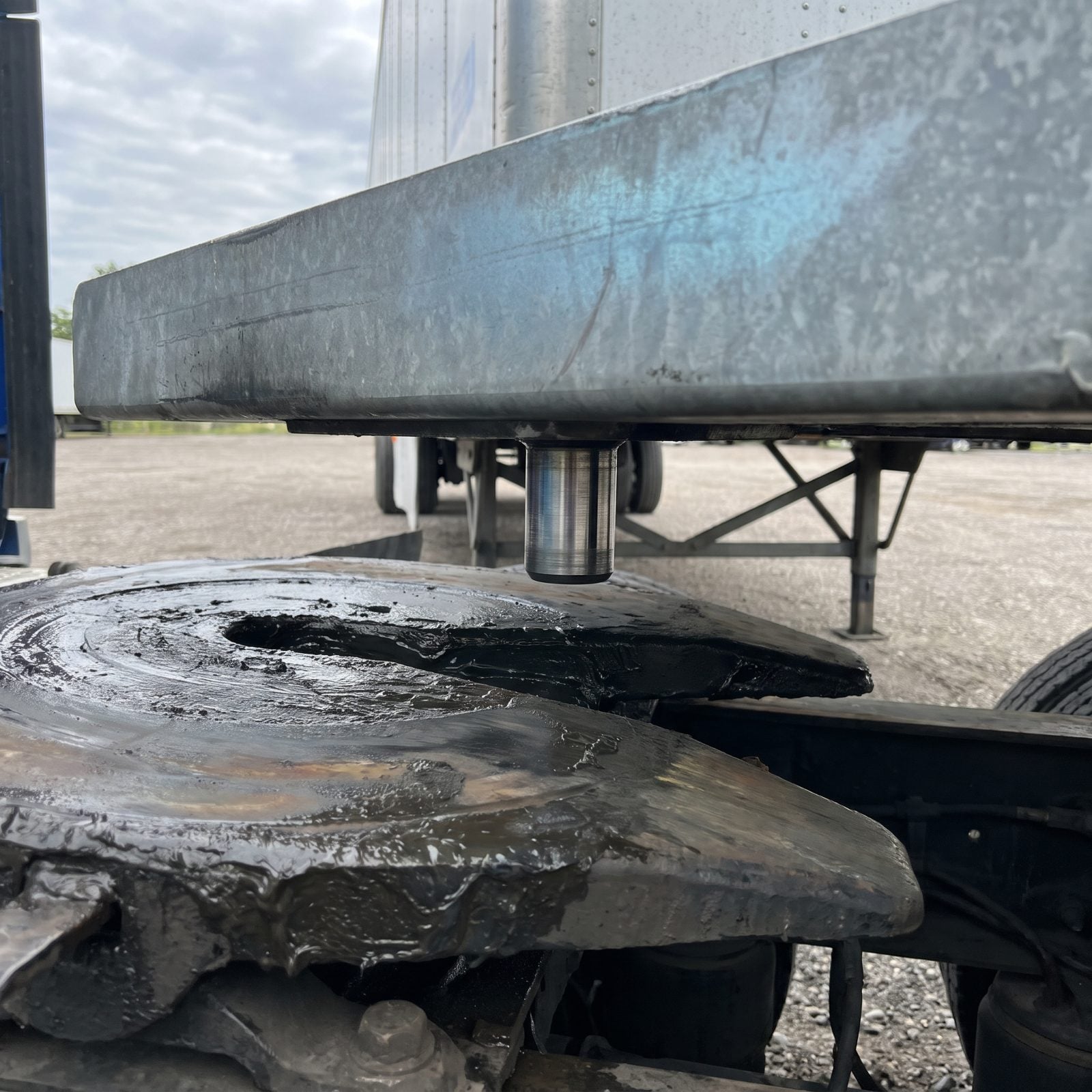
Set the trailer too high and you’ll ride right under it, the kingpin skating over the top of the fifth wheel instead of dropping into the jaws. Set it too low and you’ll shove the whole nose and bend something expensive. A seasoned driver eyeballs it before he ever backs in. If the kingpin hangs several inches clear of the fifth wheel, the trailer’s sitting too high. Crank the landing gear to lower it until the trailer’s underside just kisses the top of the fifth-wheel plate — maybe tipping it a hair downhill so the pin slides home clean.
33. Crank the Landing Gear Fully Up
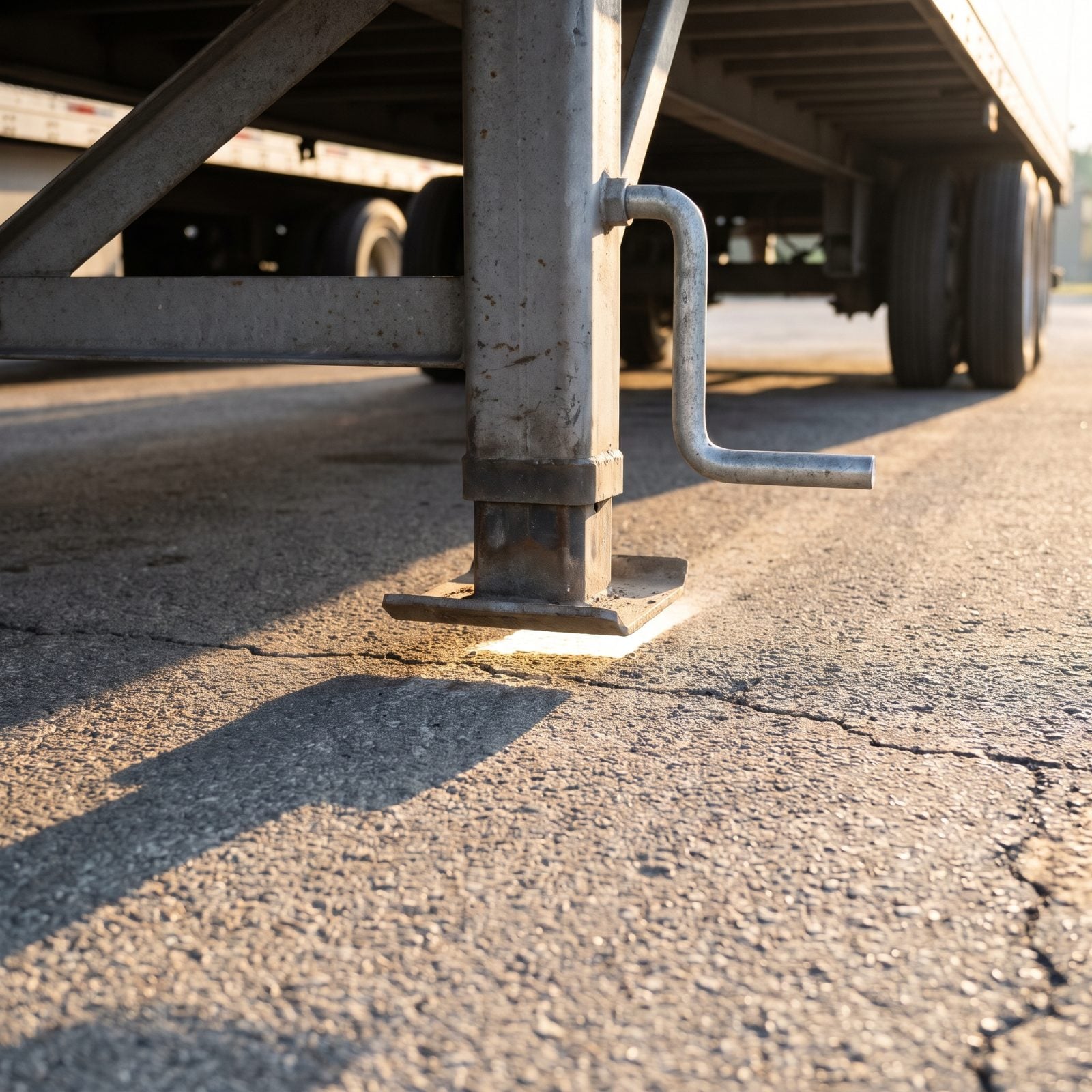
Landing gear has to come all the way up, because stopping at half-up with the feet an inch or two off the ground is a trap. The legs clear most curbs and railroad crossings, so you forget about them, and then one grabs a dock approach or a rough crossing and you’ve sheared a leg clean off. The habit is simple. Crank until it won’t crank anymore, pop the handle to high gear and spin it those last few turns so the feet tuck up tight, then fold the handle into its clip.
Plenty of drivers walk off and leave the crank handle sticking straight out. It’ll catch the first thing it finds. Clip it.
32. Check the Trailer Latches and Seal
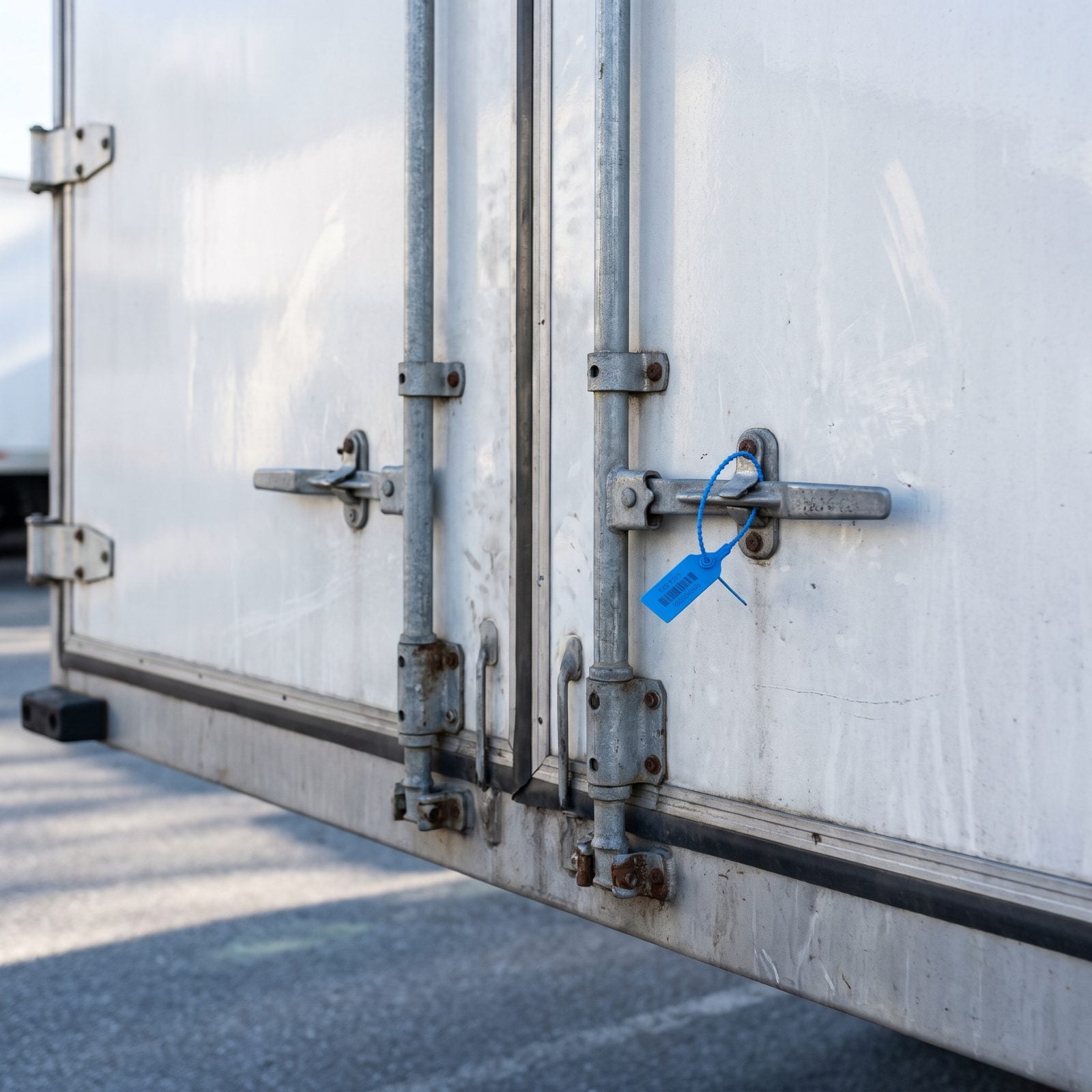
The doors are closed. But are they latched? There’s a difference, and you learn which one when they swing open at highway speed and your freight becomes somebody’s road hazard. A veteran pushes down on each cam handle, confirms it’s seated in the keeper, and checks the seal number against the paperwork.
That little plastic seal matters more than most people figure. Show up at the receiver with a broken or mismatched seal and suddenly the whole load is your problem. Snap a photo of the number before you pull out — it’s rescued more than one driver from an argument he couldn’t win.
31. Walk the Rig With the Lights On
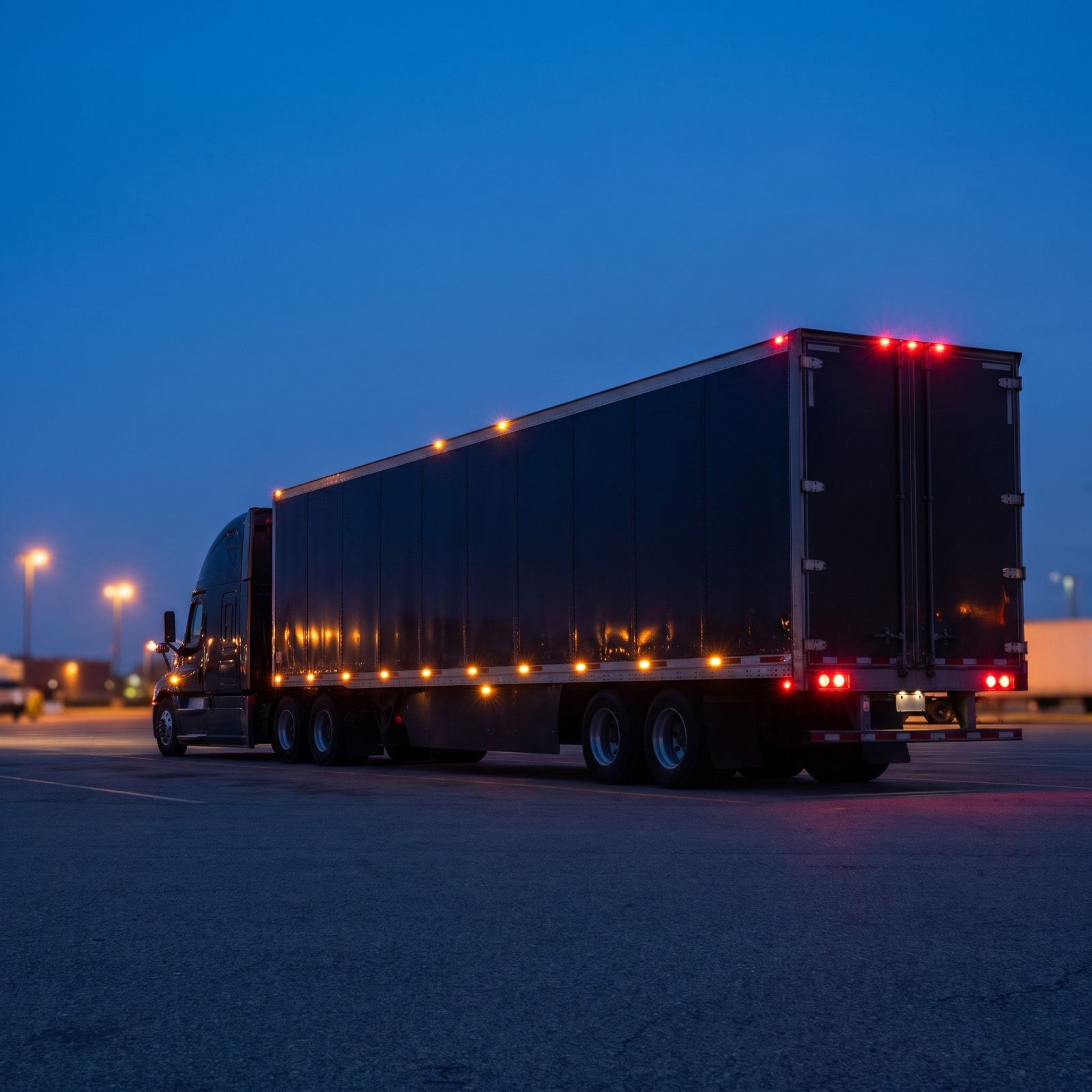
Flip on the four-ways and the running lights, then walk the whole rig. Every marker, every clearance light, the tails, the turn signals, that plate light nobody ever remembers. A dead light is a chat with a bear you’d rather skip, and after dark a black trailer side is how some poor soul ends up under your tandems.
Old hands take this one slow. Front to back on one side, back to front on the other, tapping each lens, catching the one that flickers before it quits for good. Two minutes now beats a roadside inspection later.
30. Wait for Full Air Pressure
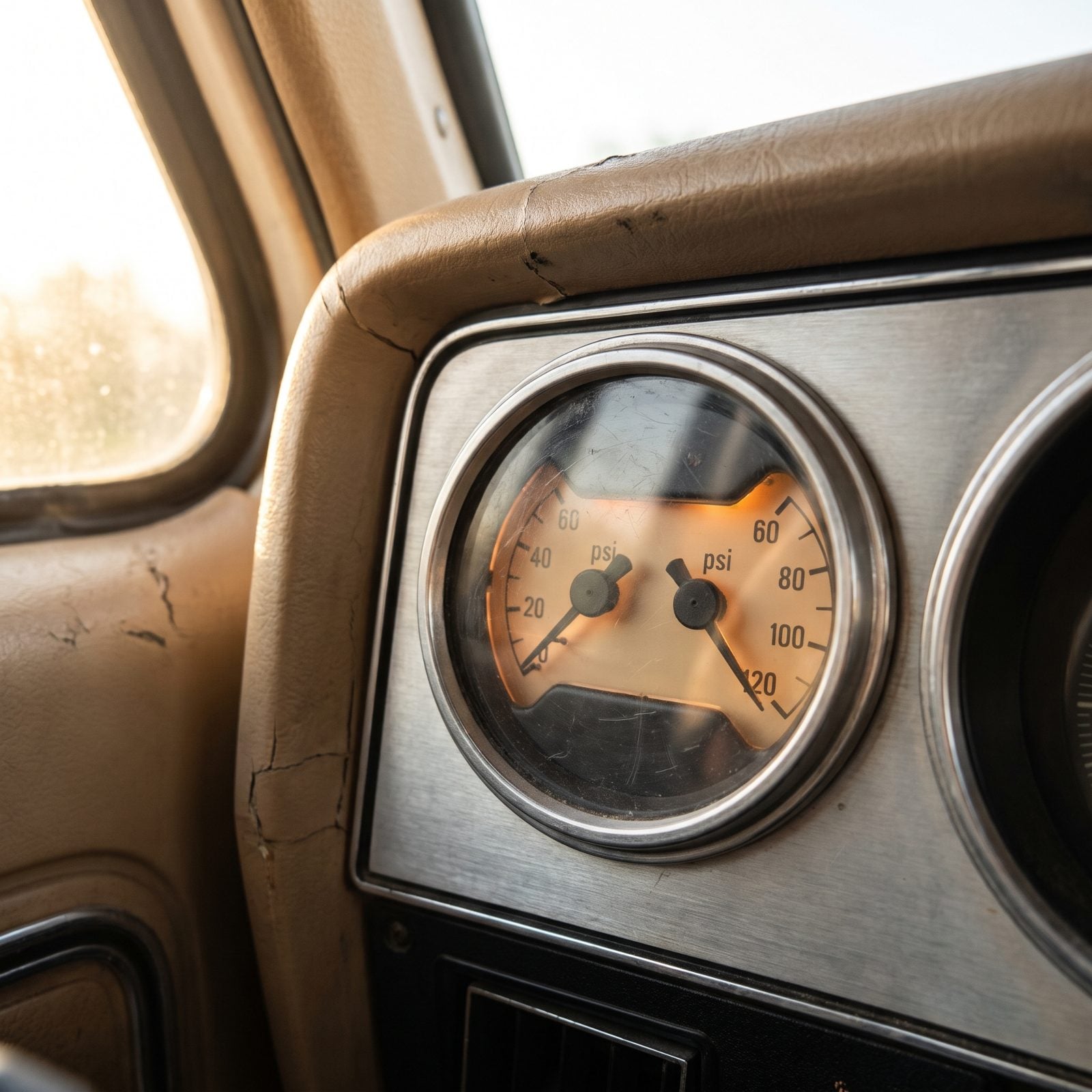
Nobody enjoys sitting while the compressor builds. But pull the valves and roll before you’ve got full air and you’ll meet brakes that fade on the first real stop. The patient driver lets the needles climb to the governor cut-out, watches them hold, then listens for the cut-in when he pumps the pedal a few times.
You also want proof the system doesn’t leak. A pressure drop test, done right there in the lot, tells you whether the air’s going somewhere it shouldn’t before you ever release the parking brakes.
29. Perform Both Brake Tug Tests
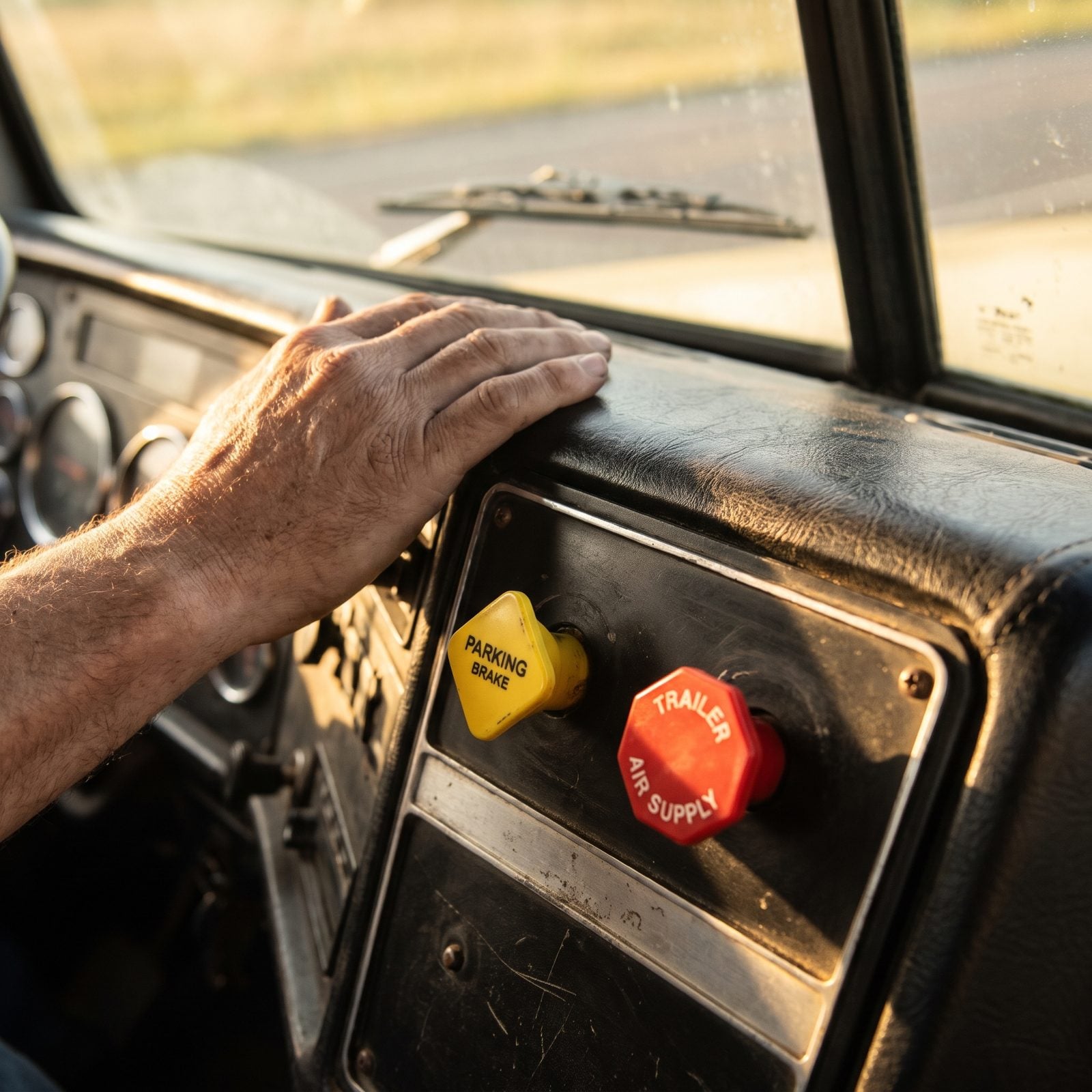
The last thing before you roll, and the one that proves your brakes actually hold. Trailer brake test first: set only the trailer brake, pull gently forward in low gear, and the rig should flat refuse to move. Then the tractor test — release everything, let the rig creep a few feet at idle, and stomp the service brake to feel it grab and stop square.
Do both. A trailer that holds doesn’t promise you a tractor that stops, and the reverse holds just as true. Thirty seconds confirms the one system between you and a runaway on a six-percent grade.
28. Scout the Route for Low Bridges Before You Roll
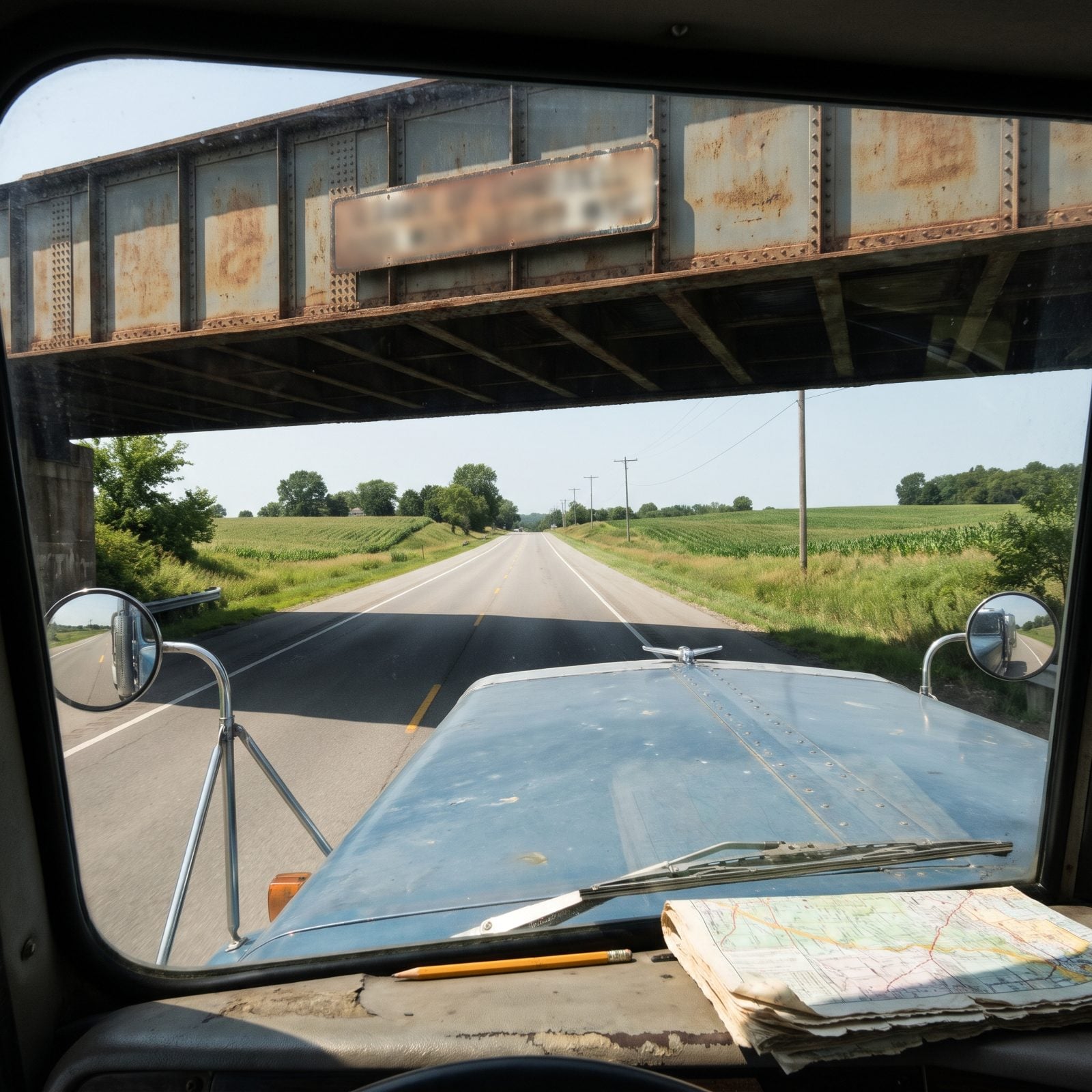
Thirteen feet six inches. A veteran knows that number the way he knows his own birthday, and he knows his particular trailer might run taller.
The GPS on the dash doesn’t care about your height. Truck-specific routing helps, sure, but the old-timers learned before any of that existed — reading the atlas the night before and circling the low bridges in pencil. That habit never left them. A bridge strike is one of the costliest mistakes in the business, and it’s completely preventable.
The driver who measures his load and knows every clearance on his route before he rolls isn’t being paranoid. He’s being employed next week.
27. Sweep the Mirrors in a Steady, Unbroken Rhythm
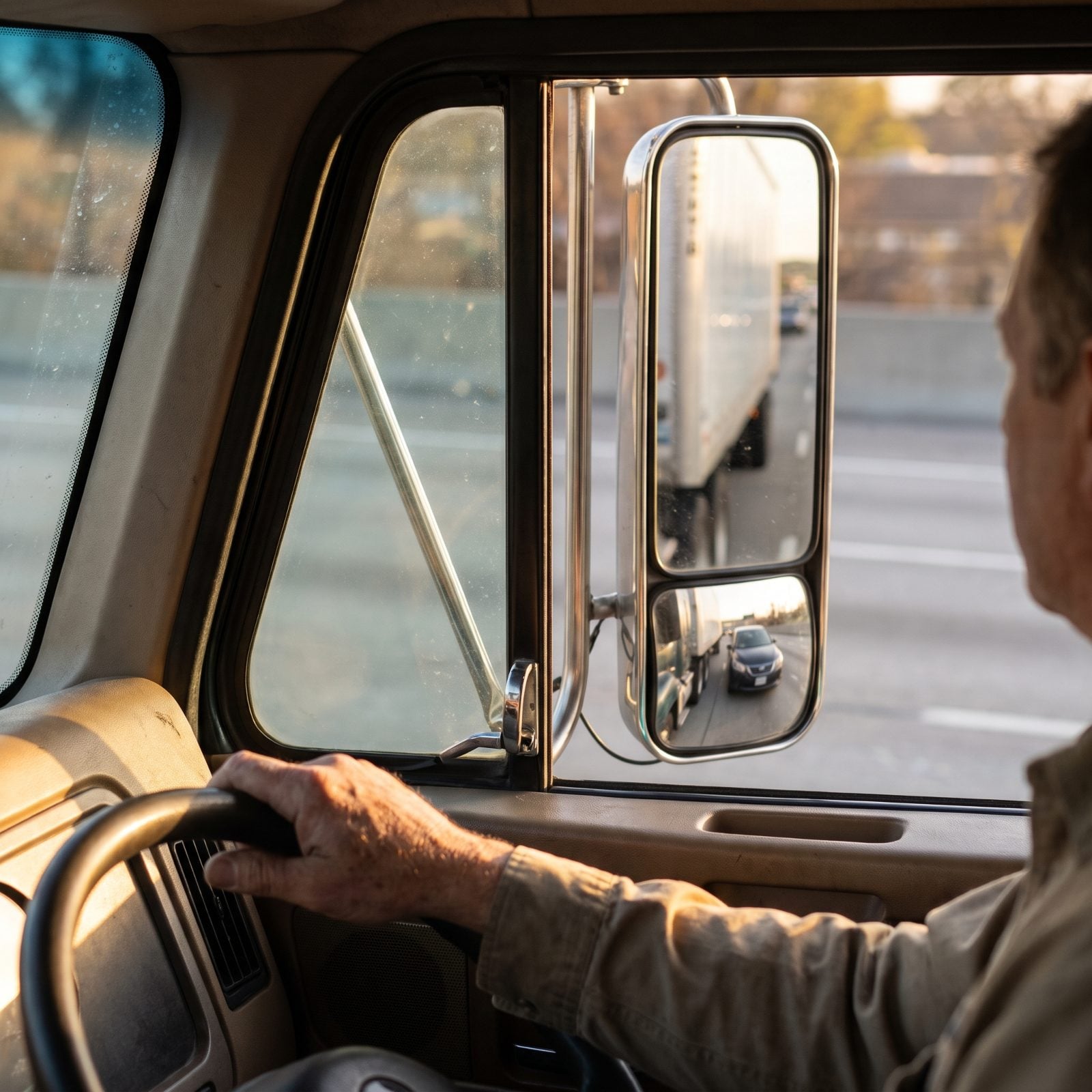
Every few seconds, like a metronome nobody set. Left mirror, instruments, right mirror, road ahead, and back again. A rookie checks his mirrors when something prompts him, while a veteran checks them because the clock in his head said it was time.
The point isn’t catching a problem once it’s already happening. It’s building a running picture of everything around you, so that when a car darts into the lane beside your tandems, you knew it was coming. You saw it three sweeps ago.
26. Watch Where the Trailer Tandems Are Tracking
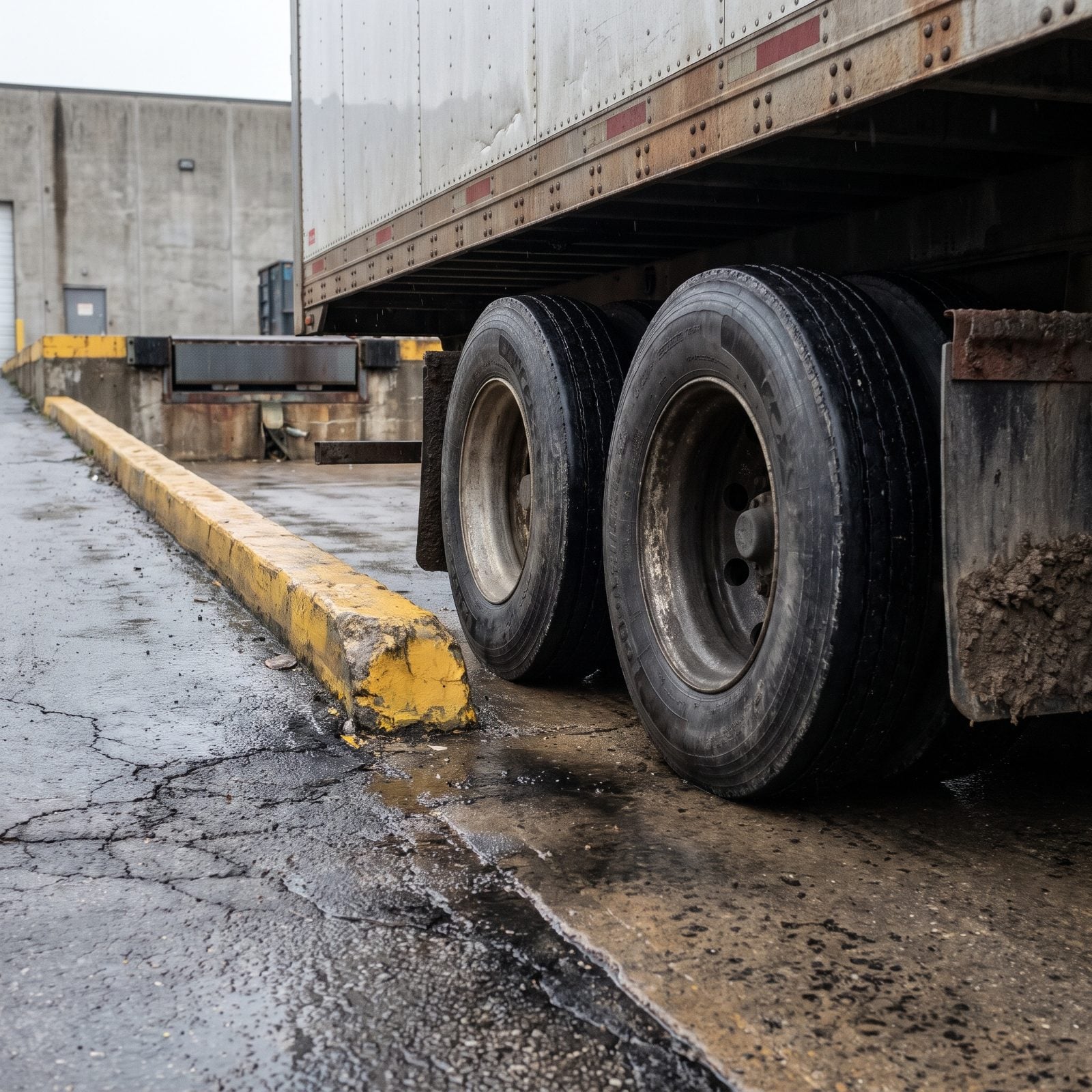
The front of the truck goes where you point it. The back of the trailer goes somewhere else entirely, and that somewhere is what clips the curb, the parked car, the fire hydrant.
Experienced drivers don’t really steer the tractor. They steer the trailer tandems, placing those rear wheels through the turn in their heads before the cab ever enters it. On a right turn the tandems cut inside the path of the steer tires by several feet. Forget that and you’ll drag the whole trailer over whatever’s hugging the inside corner.
25. Set Up Your Wide Turns Long Before the Corner
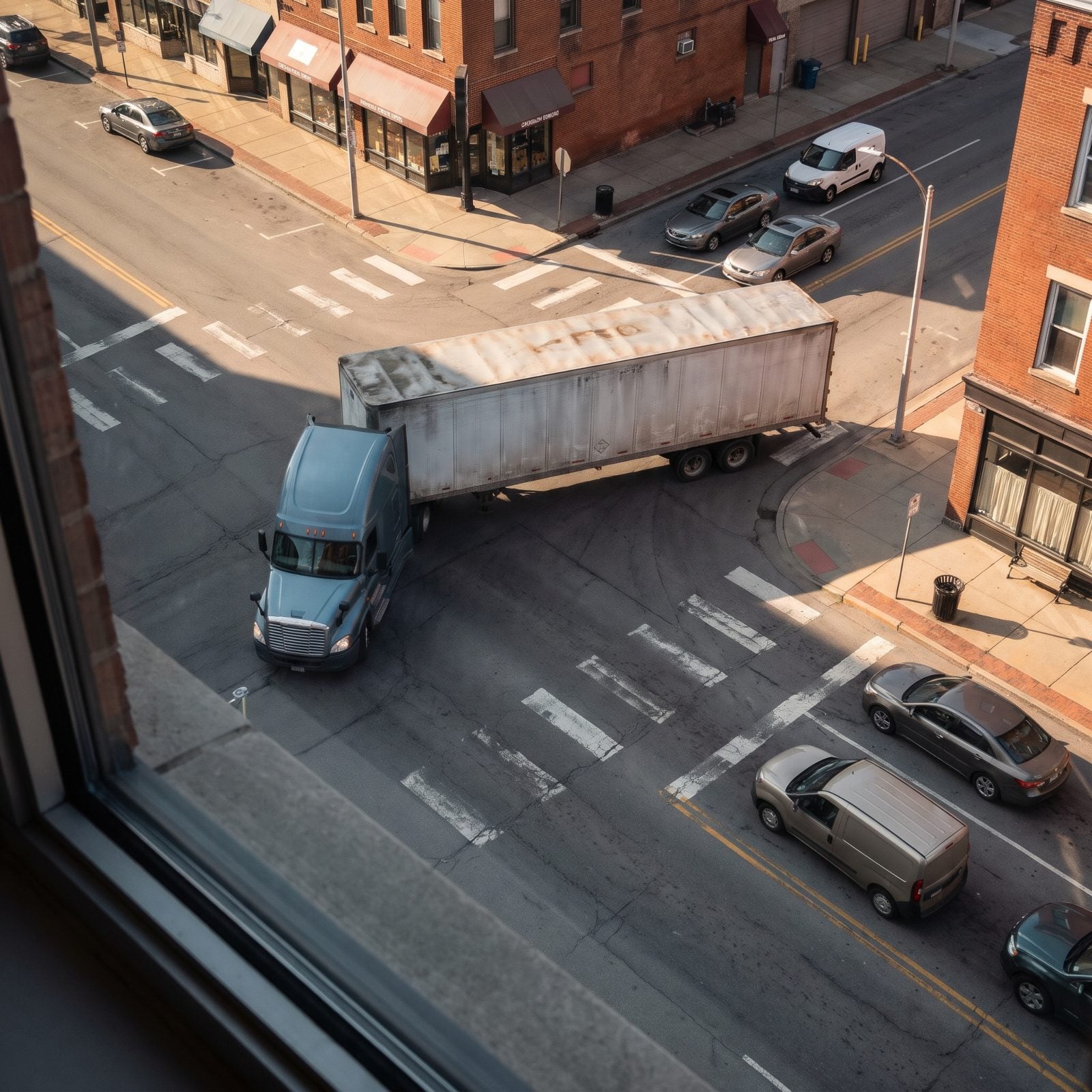
A good wide turn looks like it takes forever. It takes patience and a whole lot of lane, and the veteran commits to it the moment the corner comes into view — not when he’s sitting right on top of it.
What everyone gets wrong early on is turning the wrong direction first. You don’t hug the curb to make the right. Swing out, give the trailer the geometry it needs, and let the rear wheels sweep through clean. Rush it and that’s how you climb a curb or pin a car against the inside line.
24. Start Braking Long Before the Intersection Fills In
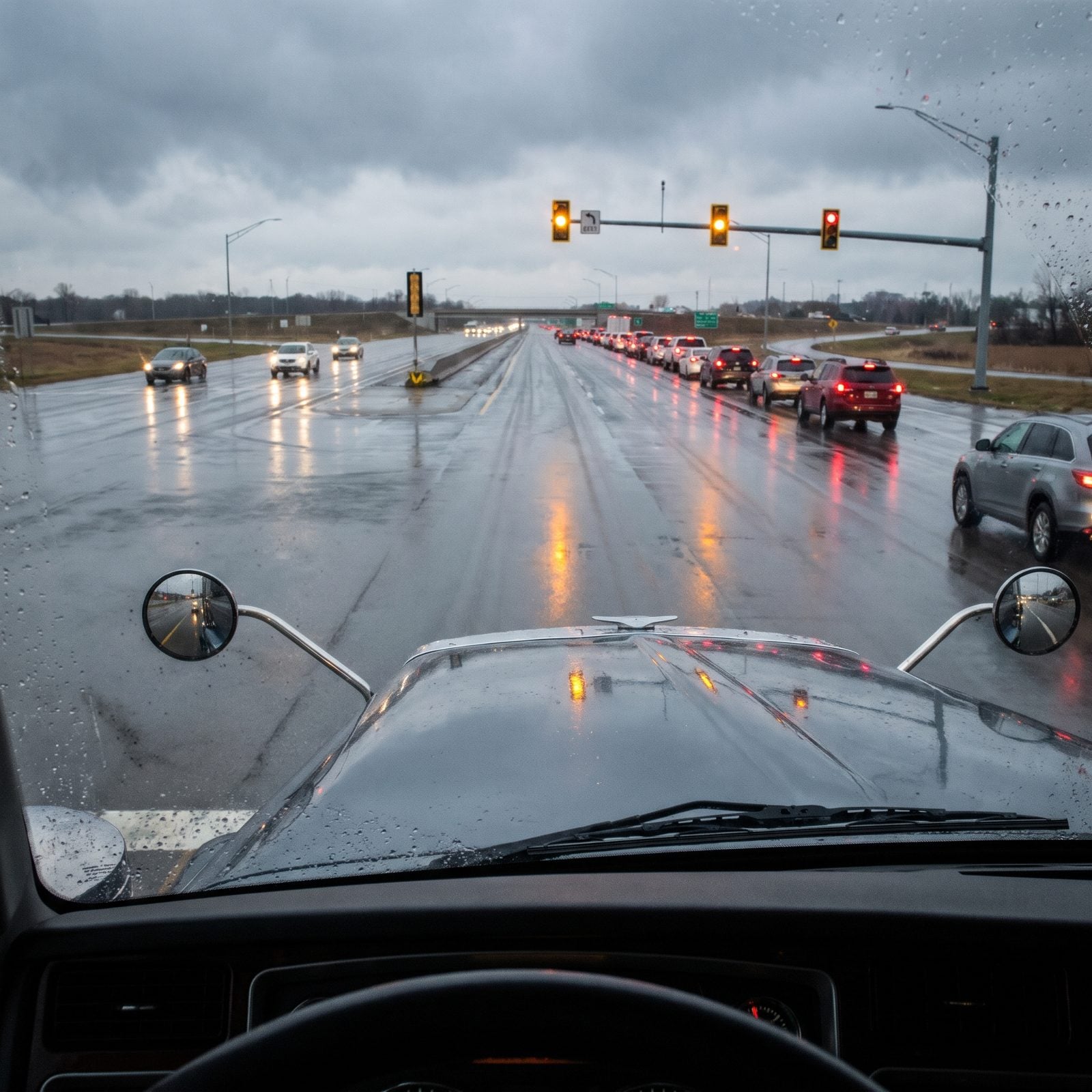
Eighty thousand pounds does not stop like your pickup. A loaded rig at highway speed needs the length of a couple football fields to come to a halt, and that figure gets downright ugly on a downgrade or wet pavement.
Veterans read the signal timing from way back and start shedding speed early and smooth, letting the engine and a light brake application do most of the work. The whole cab stays settled. No lurch, no diving nose, no cargo slamming forward. Hard braking is a last resort, and the good drivers hardly ever need it because they saw the stop coming.
23. Let the Following Gap Open Up on Its Own
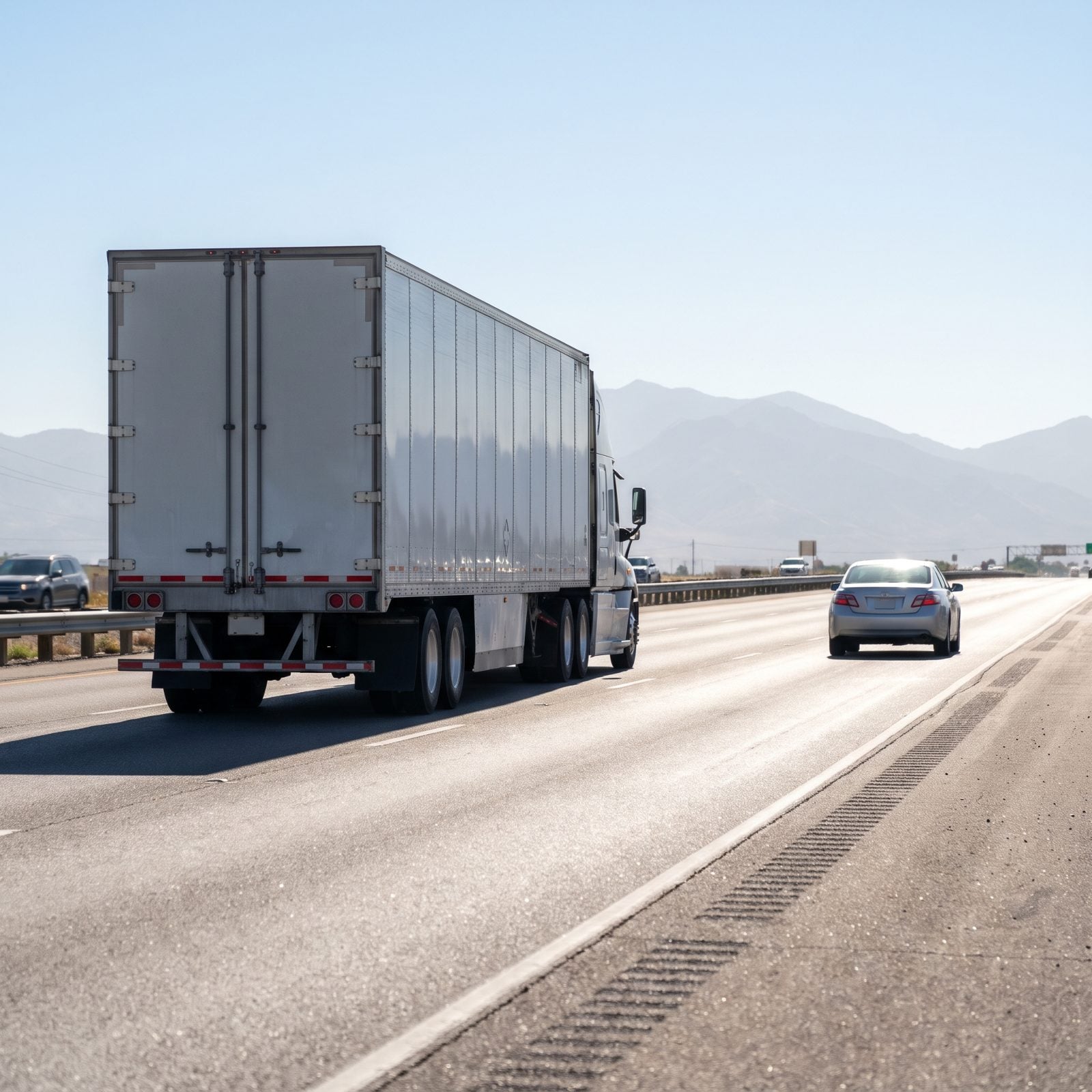
Cars will fill it. That’s just the interstate for you, and a veteran accepts it without getting worked up.
He leaves a gap big enough to make a four-wheeler nervous, something close to a full seven or eight seconds at highway speed, and when a car cuts in and swallows it he simply backs off and rebuilds it. No cursing, no tailgating to make a point. That gap is his stopping distance, and he isn’t about to gamble it away over wounded pride.
22. Read the Traffic Several Vehicles Up the Road
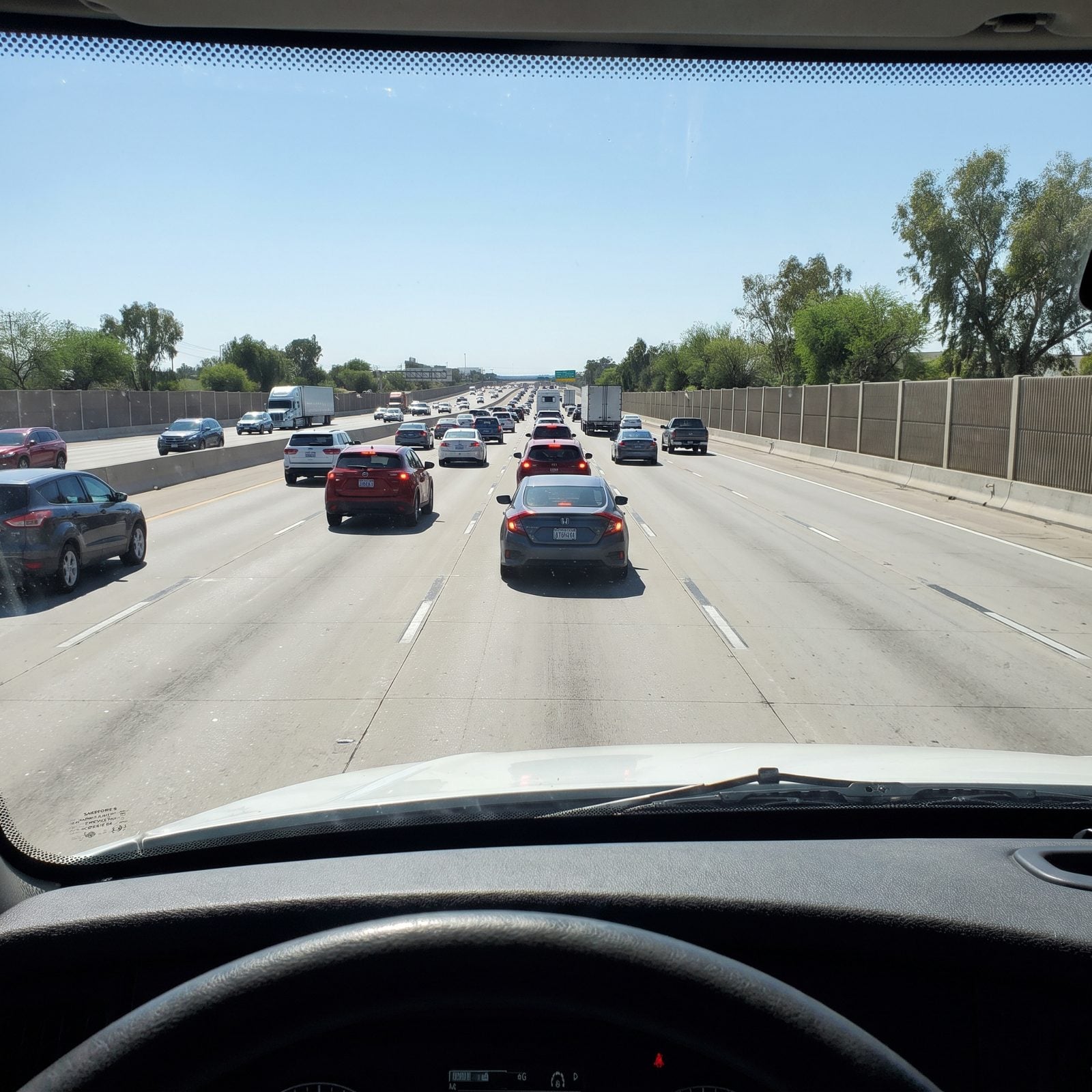
Sitting high in the cab is the biggest edge a trucker has over the cars around him, and the good ones squeeze every inch of advantage out of it.
A veteran isn’t staring at the bumper in front of him. He’s reading the fourth car up, where the first brake lights flicker, where a lane starts to bunch, where a merge is about to go sideways. By the time the trouble reaches the driver directly ahead, his foot’s already off the fuel. He’s answering the cause, not the symptom.
21. Judge the Grip of Wet Pavement by Tire Spray
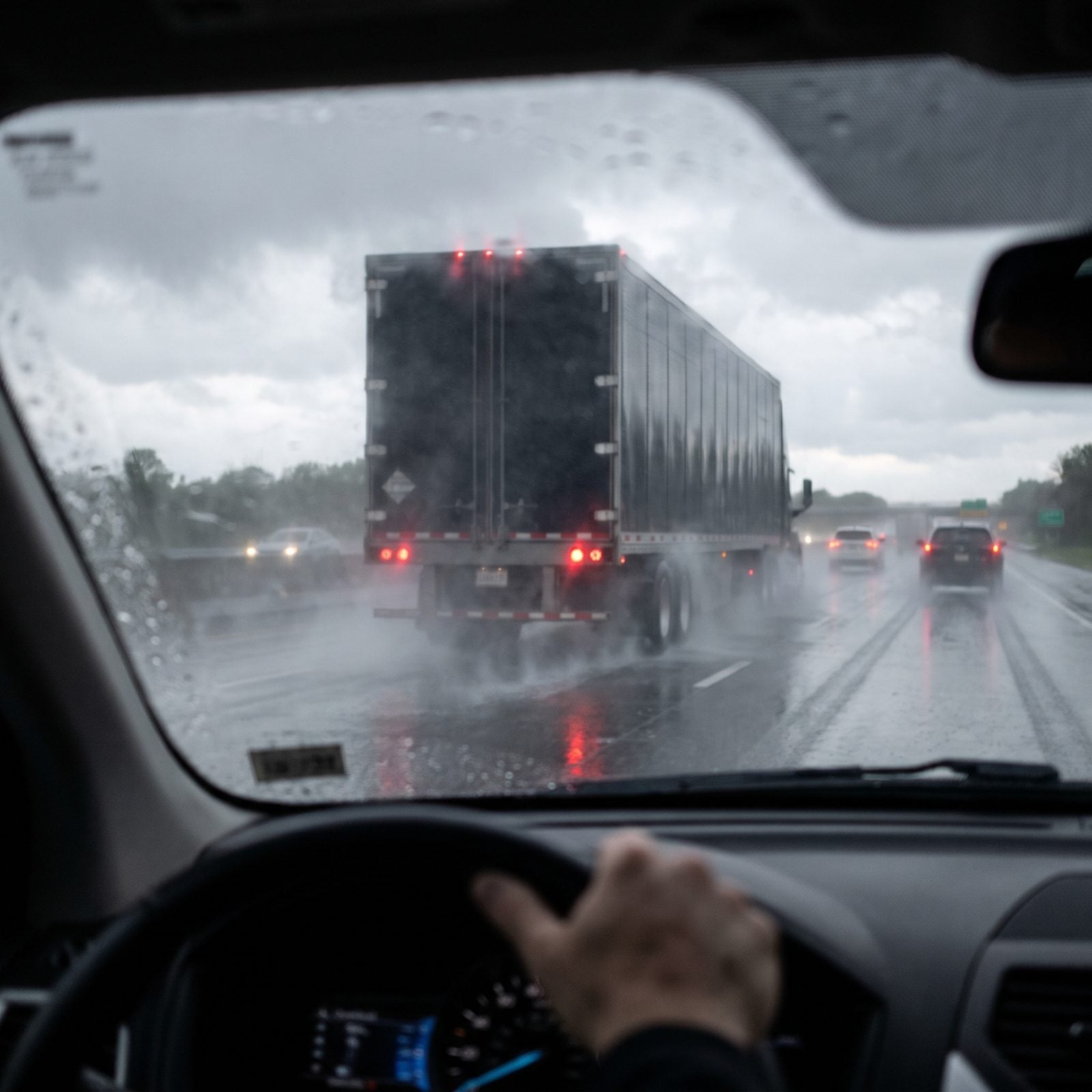
Watch the trucks ahead when it rains. A heavy mist off their tires means the water’s draining and you’ve still got grip. When that spray suddenly drops to almost nothing, the water on the road may be freezing — ice territory.
Veterans read the whole scene at once. Tire spray, the sheen on the pavement, whether the first drops are mixing with weeks of caked oil and film. The worst moment isn’t the downpour. It’s the first few minutes of light rain on a dry road, when everything turns greasy before it finally rinses clean.
20. Notice New Vibrations Through the Seat
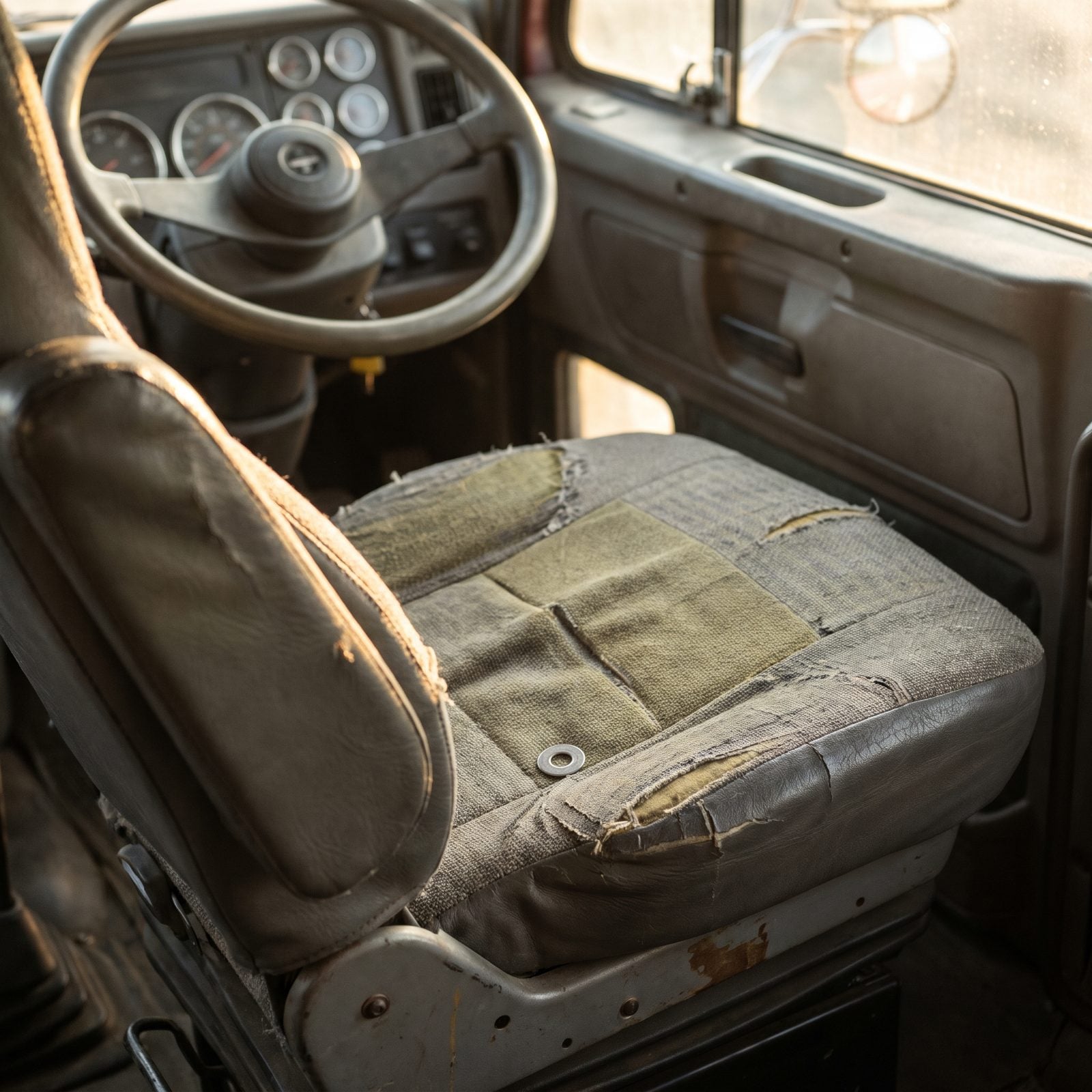
The seat is a sensor. Long before a light blinks, a driver feels the change — a new shimmy at 58 that wasn’t there yesterday, a faint drumming that means a trailer tire is losing air and starting to flat-spot. Your backside logs a baseline over thousands of miles, and anything off that baseline reads loud as a shout.
Rookies miss it because they’re busy with the road and the phone and the dash all at once. The old hand feels it, asks himself the question, and pulls off at the next ramp to walk the tires before it blows at 70. That’s the whole difference.
19. Choose a Descent Gear Before the Crest
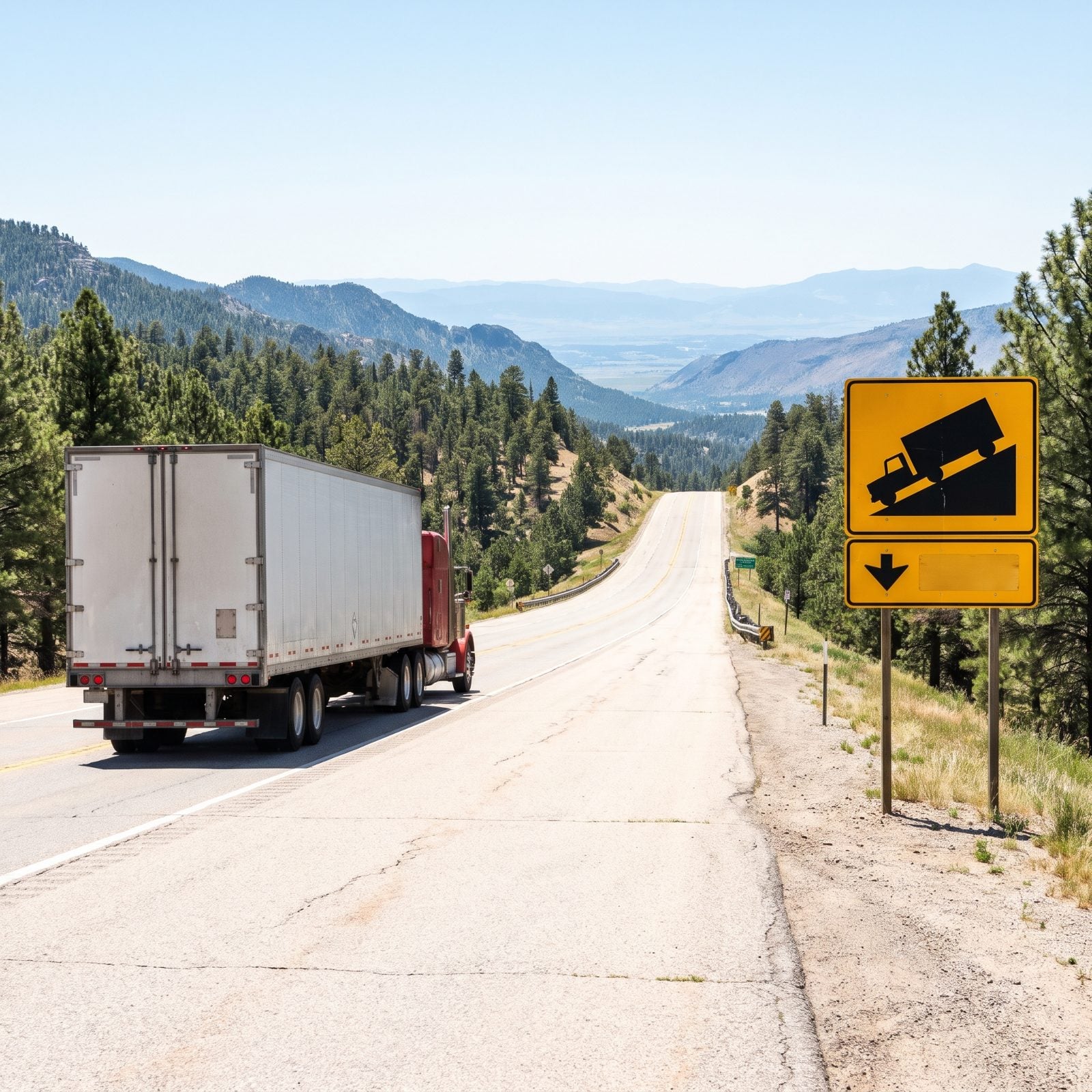
You pick the gear at the top, not halfway down. There’s an old line passed around truck stops: you can go down a hill too slow as many times as you want, but you can only go down too fast once. Grab the right low gear before the nose tips over the crest, while the truck is still slow and the transmission will still cooperate.
Try to downshift mid-descent with a loaded trailer shoving you along and you may find no gear at all. Now you’ve got 80,000 pounds and only brakes, and brakes fade. The veteran commits early and rides it down steady.
As a mountain driving school owner in British Columbia puts it, “If you get into the wrong gear, the time to fix that is at the top of the hill before the brakes get too hot”
18. Use the Engine Brake Selectively
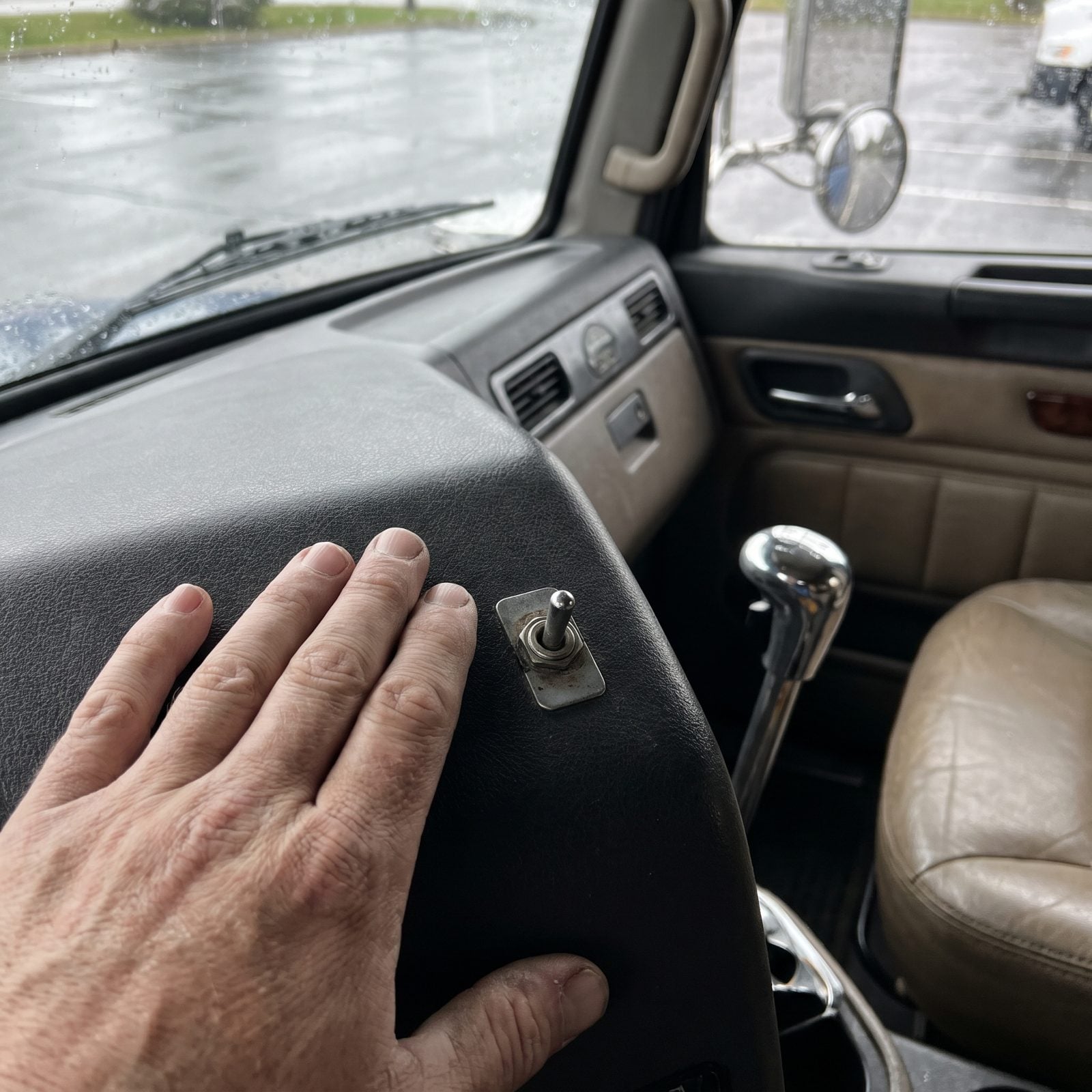
The Jake brake is a tool, not a toy. On a dry grade it saves the service brakes and holds a steady line. On wet or snow-packed pavement, that same device can break traction on the drive tires and start the trailer coming around. The old hand knows exactly when to flip it off.
He also knows the towns that ban it, the residential stretches where the rattle wakes the dead, and the plain courtesy of killing it coming through a sleepy main street at 2 a.m. Selective means mechanical judgment and manners in the same reach of the hand.
Writing about mountain descents, a trucking fleet safety director cautions “You shouldn’t rely on engine brakes in poor traction; and you shouldn’t need to use snub braking much in good conditions when the AMT is designed to do the work.”
17. Brace Smoothly for Open-Country Crosswinds
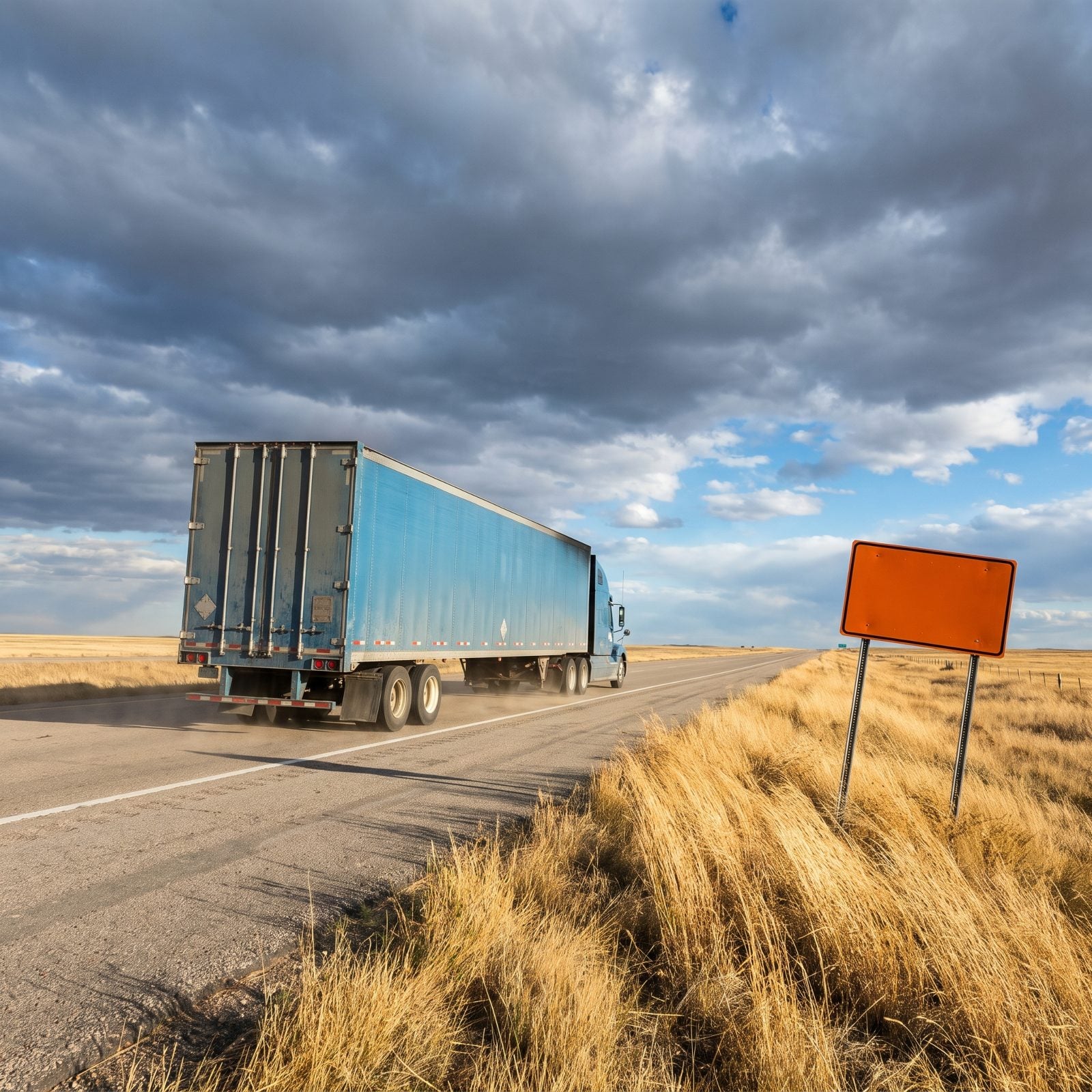
A loaded box riding high in a crosswind is a sail, and the open plains of Wyoming or the Texas panhandle will remind you fast. The veteran drops a few miles an hour, loosens his grip instead of white-knuckling, and keeps corrections smooth and small. Jerky steering in a gust is how a trailer starts to wander.
He reads the land too — the gap between hills, the end of a windbreak, the mouth of a canyon where the gust will punch hardest. The hands answer the wind before it finishes arriving.
16. Switch Off Cruise Control on Slick Roads
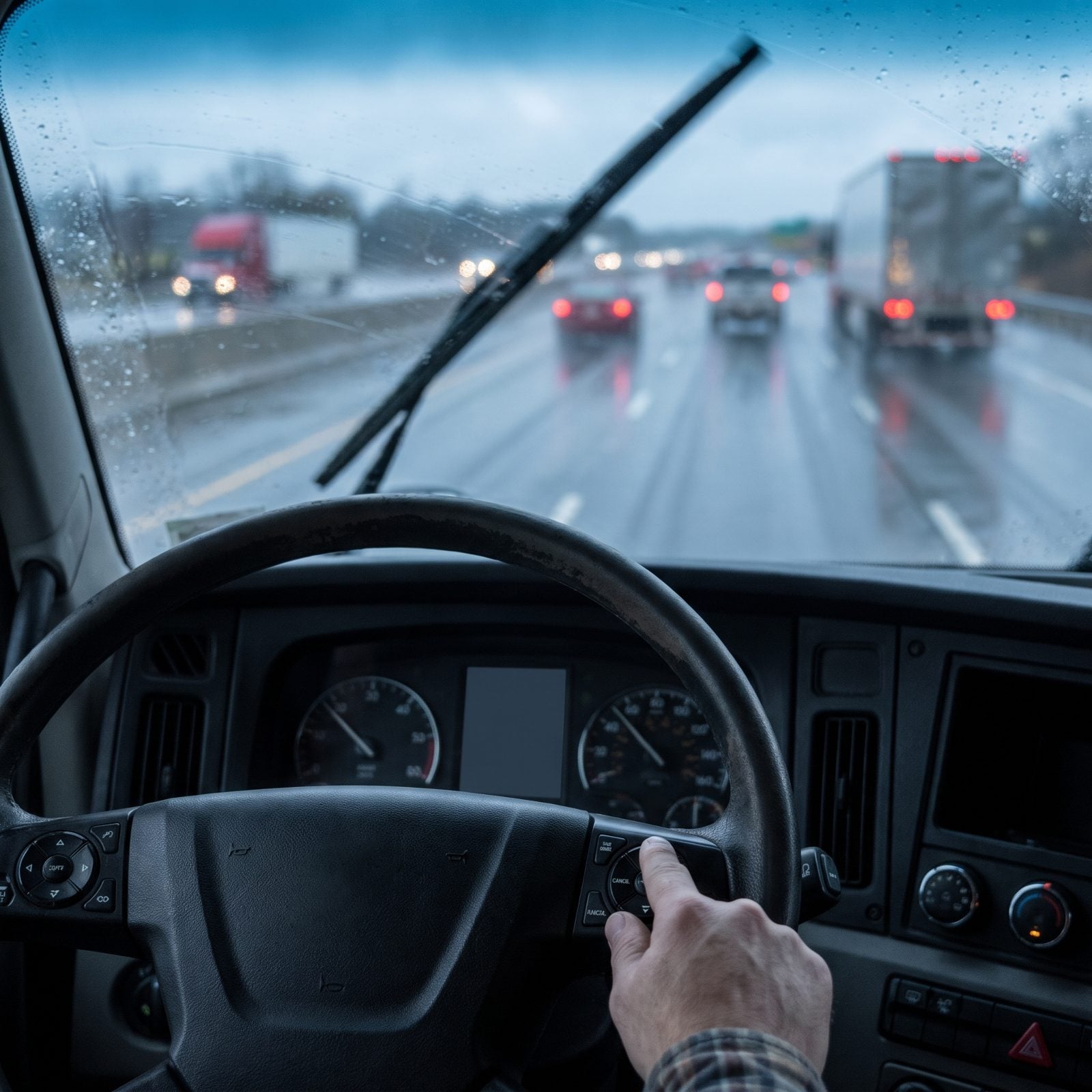
Cruise control holds a speed by feeding power, and on wet or icy pavement that extra power is precisely how the drive tires let go. A set of drives spinning on cruise in the rain will swing a trailer before you’ve touched a thing. Killing it the second the road turns greasy is one of the deepest habits a hauler owns.
I’ve heard too many stories that start with “I had it on cruise and” to treat this as optional. The thumb hits the center button on the wheel’s cruise pad before the mind finishes the sentence.
15. Expect Ice on Bridges Before Pavement
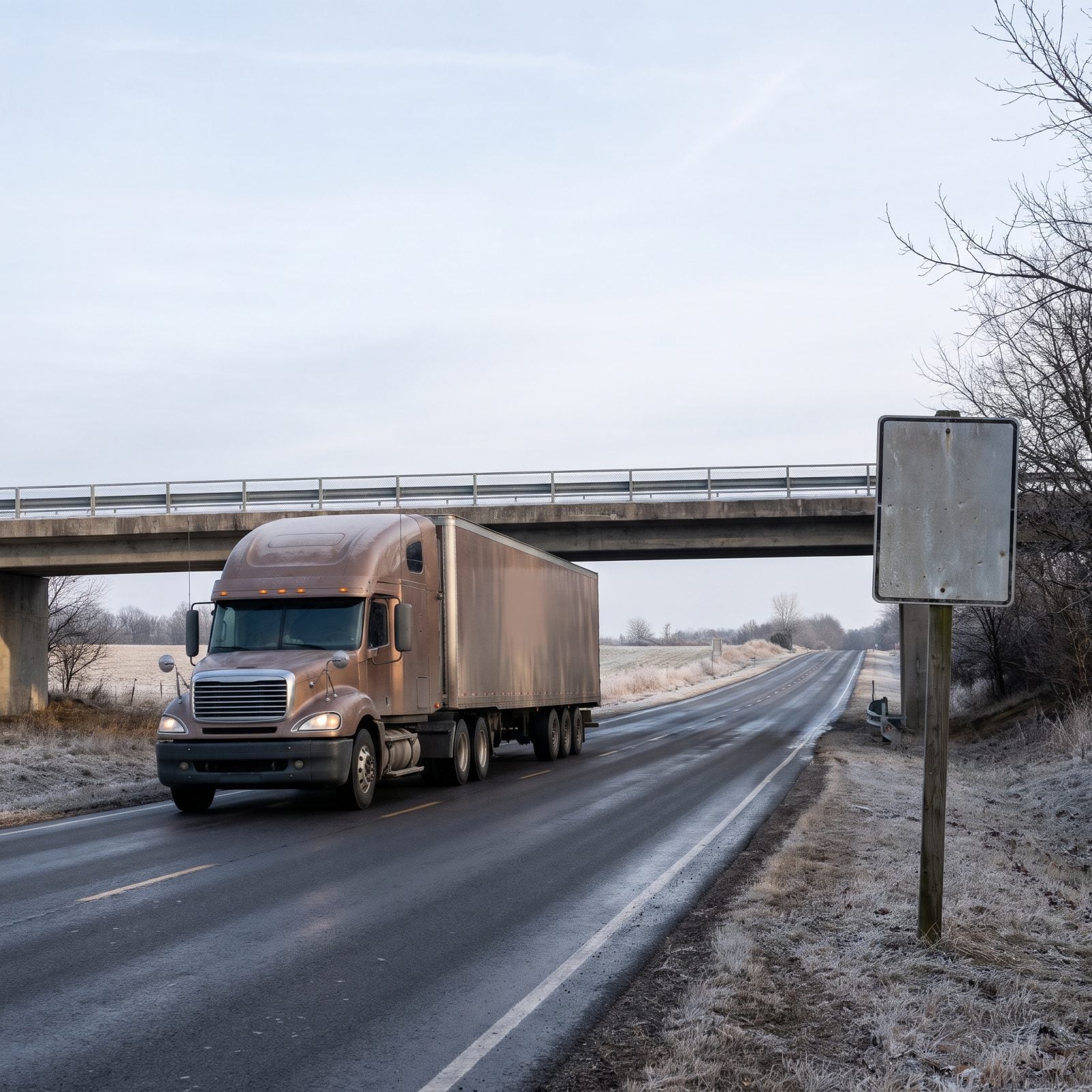
A bridge has cold air on all sides, top and bottom, so it freezes while the road on solid ground is still just wet. Every veteran trusts the posted signs. The habit is to come off the throttle before the deck, hold steady across it, and leave the brakes alone until the tires are back over dirt.
Same goes for shaded cuts, the north side of a hill, and that last underpass before dawn. Experience turns a weather forecast into a map of exactly where the road will try to kill you.
14. Ensure the Whole Trailer Clears Railroad Tracks
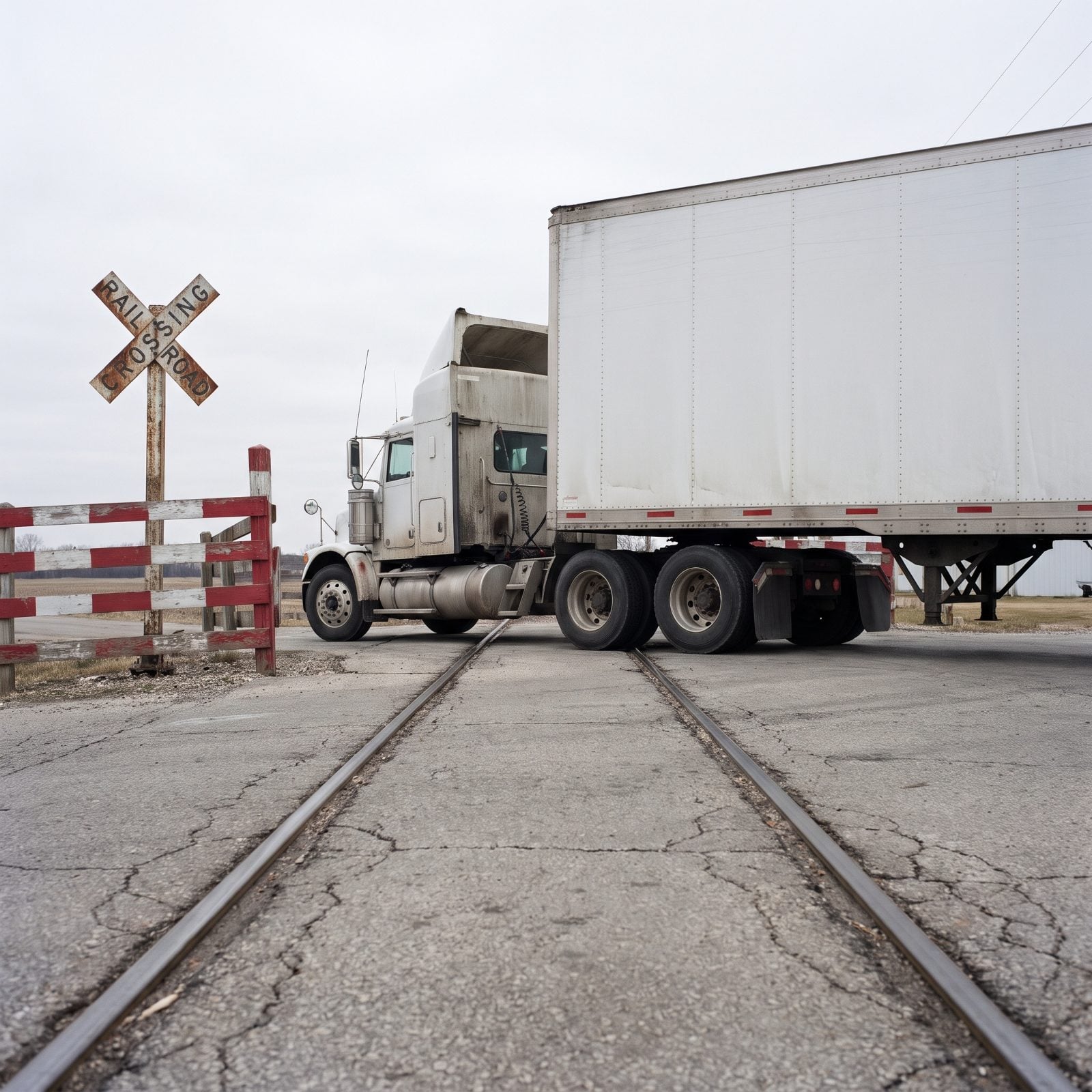
You never roll onto tracks until there’s room on the far side for the entire rig, tractor and trailer both, with daylight to spare. A long trailer stopped straddling the rails because traffic bunched up ahead is the nightmare every old hand has pictured a hundred times.
Low-slung trailers hang up on humped crossings too, and some crossings post the warning for exactly that reason. The habit is simple and absolute. No clear exit, no entry. Wait. A train cares nothing for your schedule, and it never, ever stops in time.
13. Move Over Early for Shoulder Vehicles
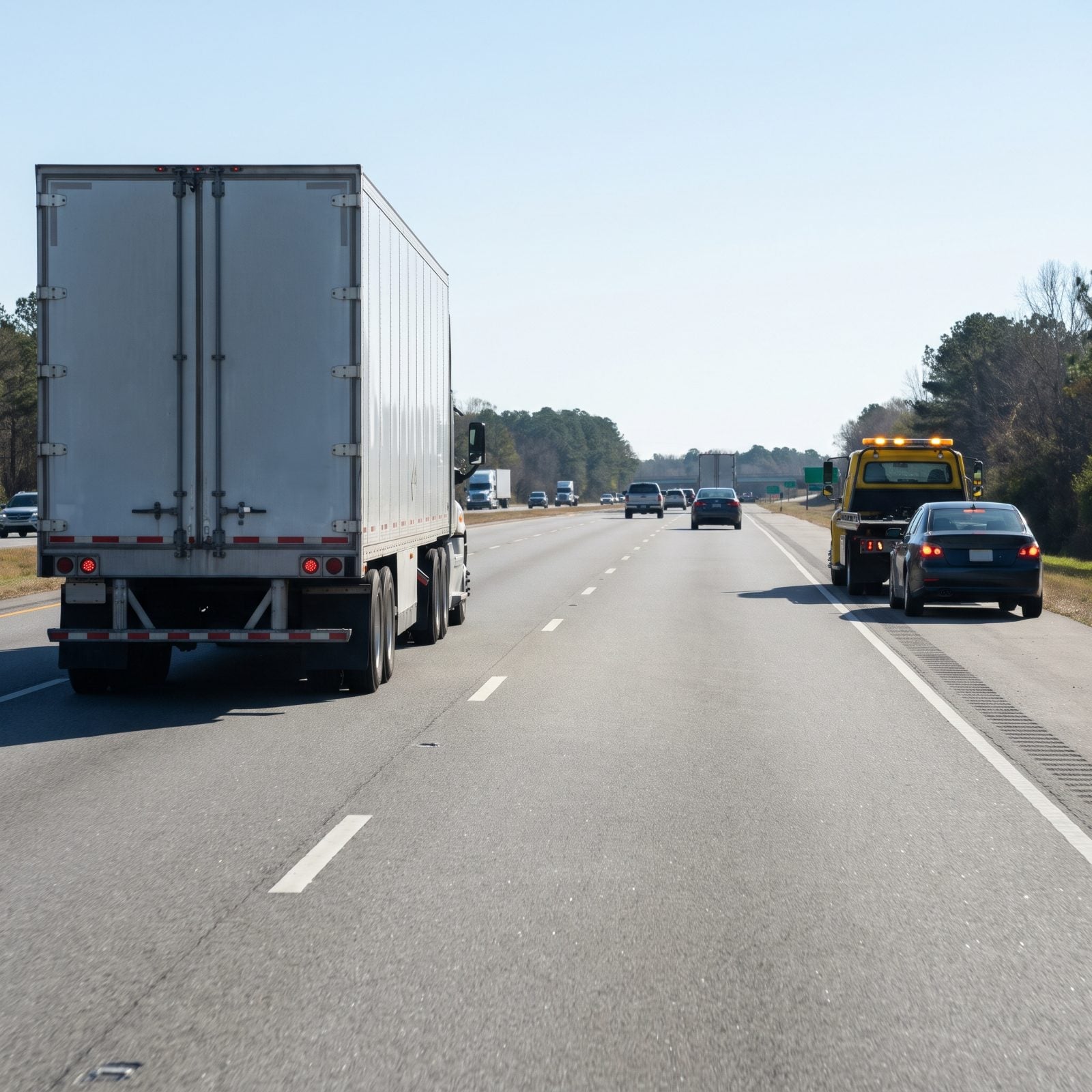
Move Over laws exist on paper, but the veteran did this long before the signs went up. He spots the beacons, the raised hood, the trooper on the shoulder, then signals and slides over a lane with plenty of room to spare — not at the last second with a trailer swaying behind him.
Early matters here. A big truck changing lanes is a slow, telegraphed thing, and the person standing a foot off the fog line deserves every inch of that space. Costs you nothing but a lane and five seconds. I’ve never once regretted giving it.
12. Hit the Flashers Before Traffic Stacks Up
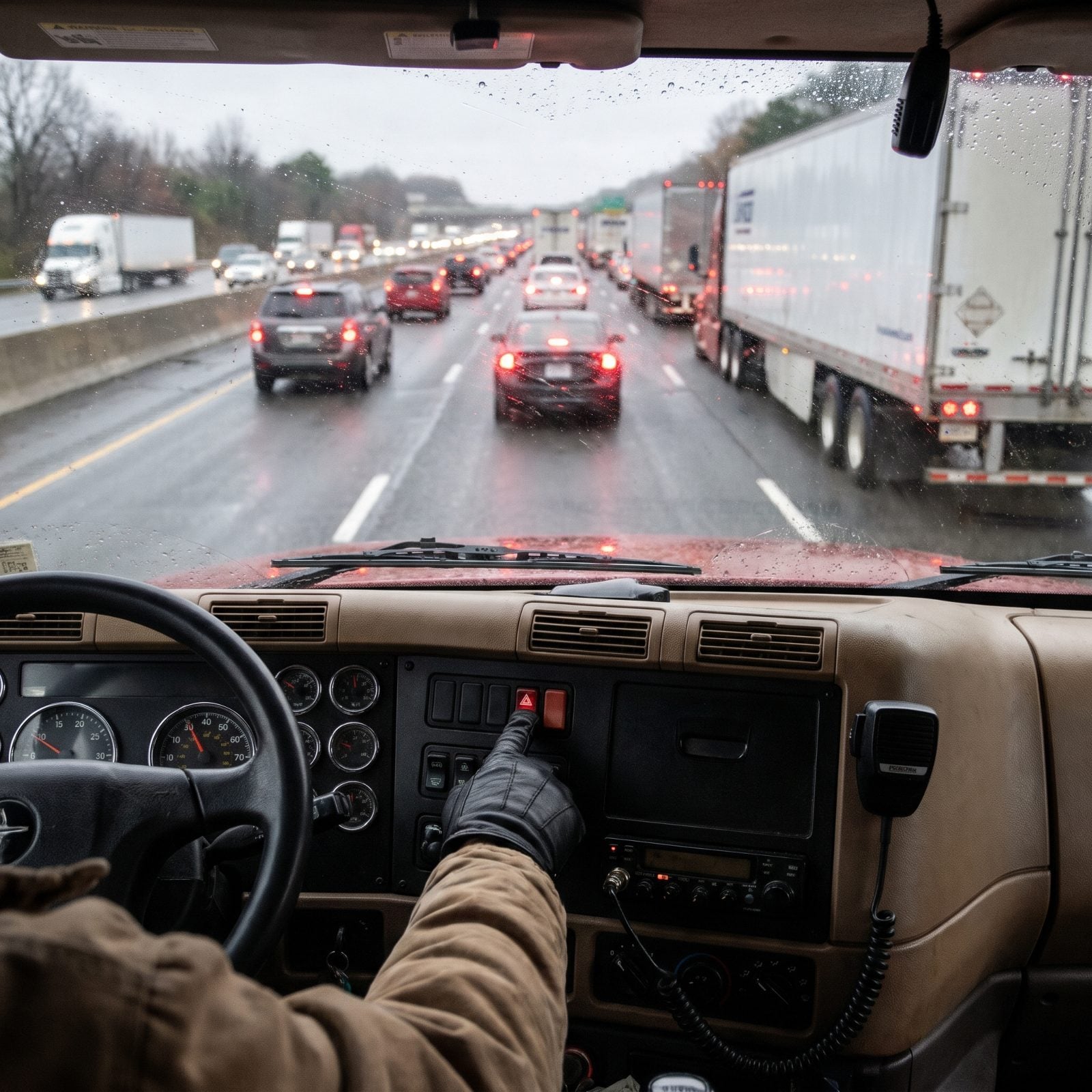
The flashers go on the instant the brake lights ahead turn into a wall. Not after you’ve stopped. Before. A loaded truck takes the length of a football field to haul down, and the four-wheeler coming up behind you at highway speed has no idea the interstate just parked itself. Those blinking triangles buy that driver the half-second that keeps him out of your bumper.
Veterans do it so early it looks like a twitch — they spot the brake lights bunching a quarter mile up and the thumb’s already moving. You can’t un-rear-end somebody. The flashers are free.
11. Don’t Loiter Alongside Another Rig’s Trailer
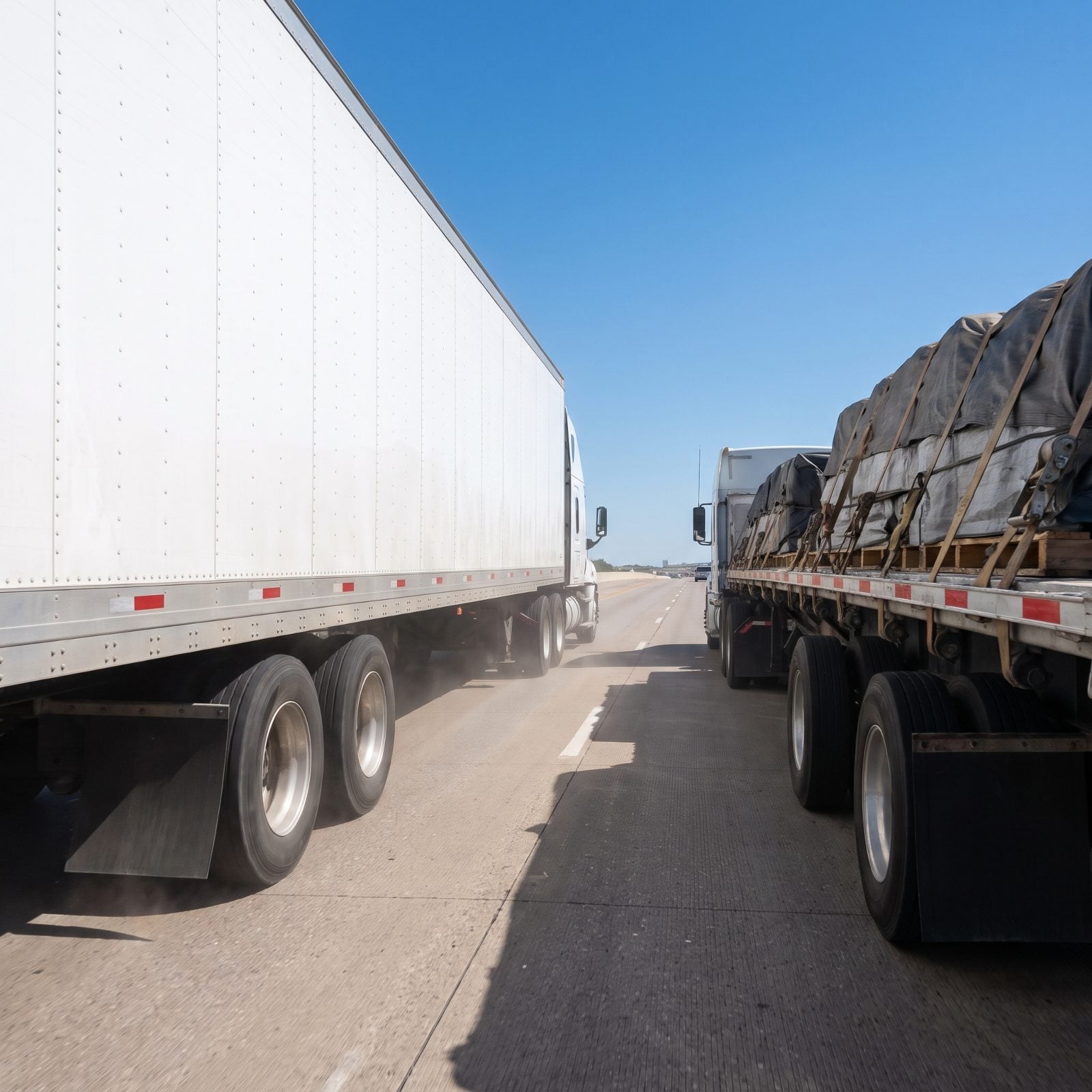
Running wheel-to-wheel with another trailer is dead time where nothing good can happen. Blow a steer tire up there, or drift, and you’re boxed with nowhere to go. Experienced drivers treat the space beside a trailer like a doorway you walk through, never a room you sit in.
Either get ahead clean or back off and let him go. Lingering in that pocket means trusting a driver you’ve never met to hold his lane for the next ten miles. That’s a lot of faith in a stranger.
10. Clear the Whole Trailer Before You Move Over
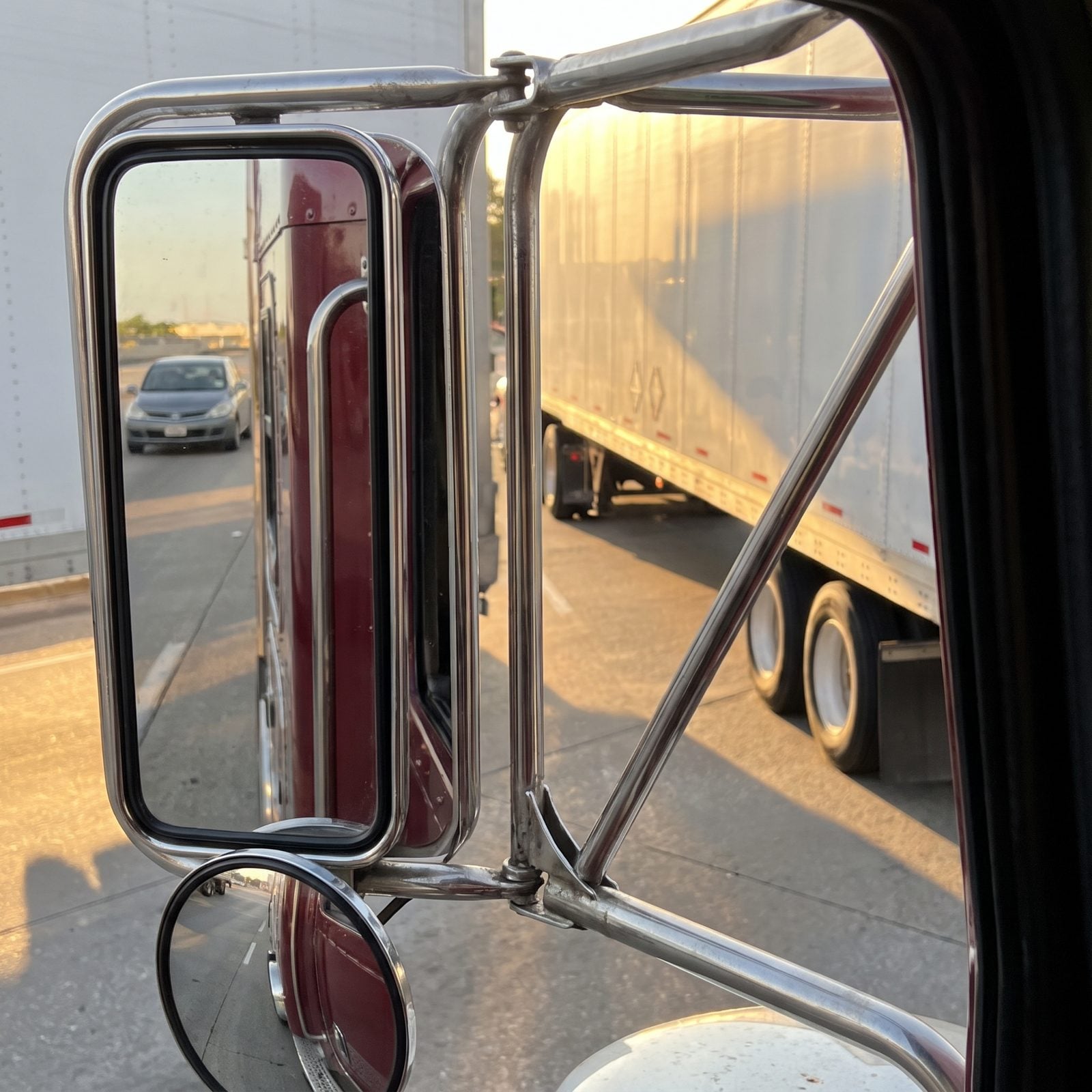
A car that’s clear of your mirror is not clear of your trailer. Thirty-plus feet of blind steel trails behind that cab, and the move most newer drivers get wrong is cutting over the second they can’t see the vehicle anymore. That’s exactly when it’s hiding beside your tandems.
The old hands count it out. See the whole car in the mirror, watch it fall back a truck length, signal, then move. Patient to the point of looking slow.
9. Roll the Window Down While You Back

Half of backing is listening. Window down, you hear the crunch of a curb, a spotter’s shout, the scrape of a mirror you’re about to lose, the beep of somebody wandering into the lane behind you. Glass up, you’re backing deaf.
It’s one of those tells. A driver who cracks the window before touching reverse has done this ten thousand times. The ones who leave it sealed are usually the ones who find out about the bollard the hard way.
8. Steer in Small Bites, Not Big Swings
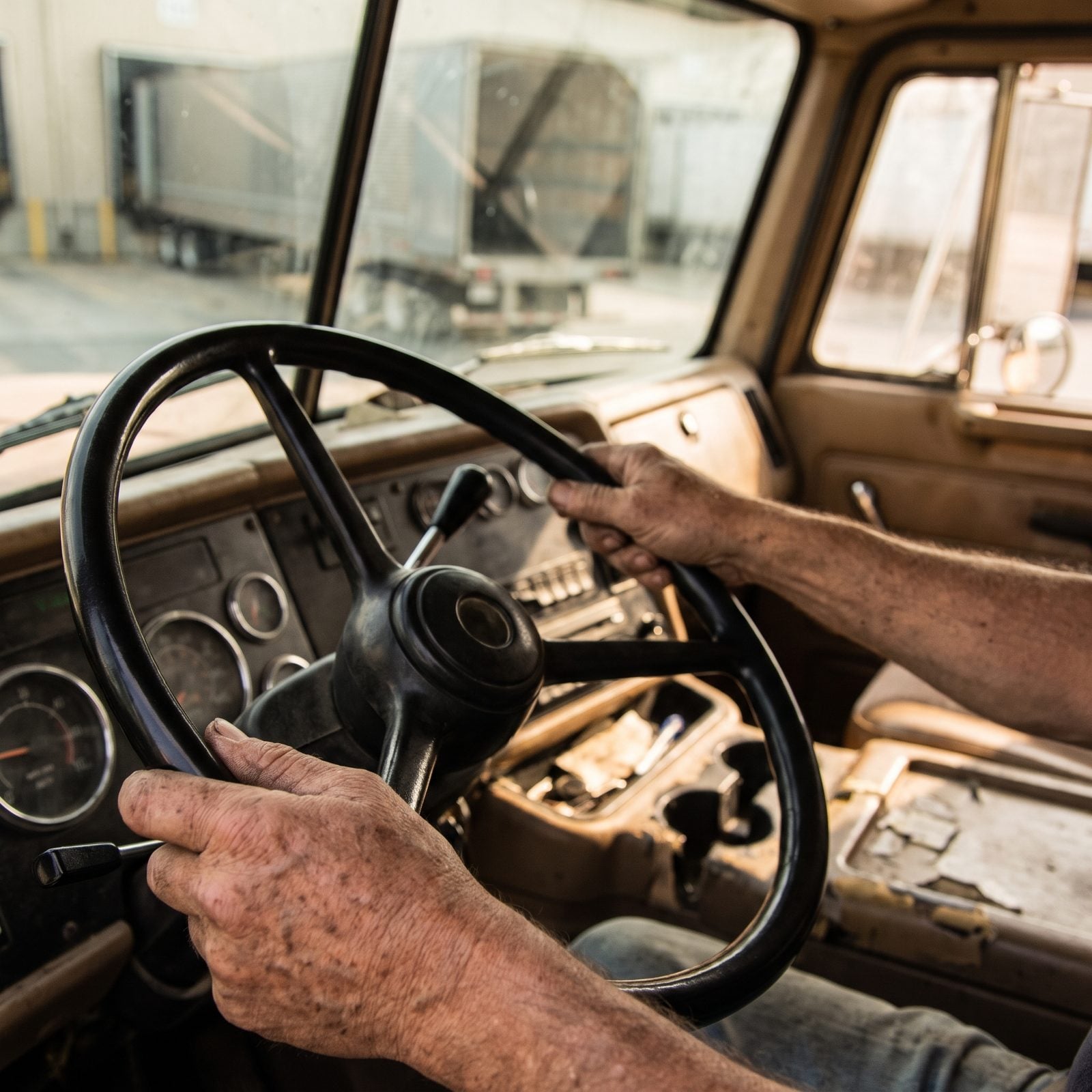
Trailers answer slow and then all at once. Crank the wheel hard and by the time you see the result you’ve already overcorrected — now you’re sawing back and forth chasing a line you’ll never catch. Veterans back with little nudges. Wait. Read the trailer. Nudge again.
I watched a trainer once hold up a finger and say, “an inch of wheel is a foot of trailer back there.” Rough math, totally right. Patience beats muscle every time you drop that thing into reverse.
7. Keep the Blindside Behind You Whenever You Can

Sight-side backing lets you watch your trailer come in through the driver’s window. The blindside asks you to thread it in leaning on the right mirror and a lot of hope. Given any choice at all, the seasoned driver sets up for the sight side, even if it costs him an extra lap around the lot.
Sometimes the spot won’t allow it. Then you get out and look, twice, and take it slow. But nobody picks the blindside on purpose.
6. Pull In Thinking About How You’ll Pull Out

The exit gets decided when you park, not when you leave. Veterans size up the departure before they ever commit the nose: which way does the lane run, where’s the traffic, can I just roll straight out at dawn without a prayer and a seven-point turn?
Backing in tired at night so you can pull out easy in the morning is the trade every old hand makes without blinking. Future-you is exhausted and in the dark. Give him the easy way out.
5. If the Spotter Vanishes, You Stop
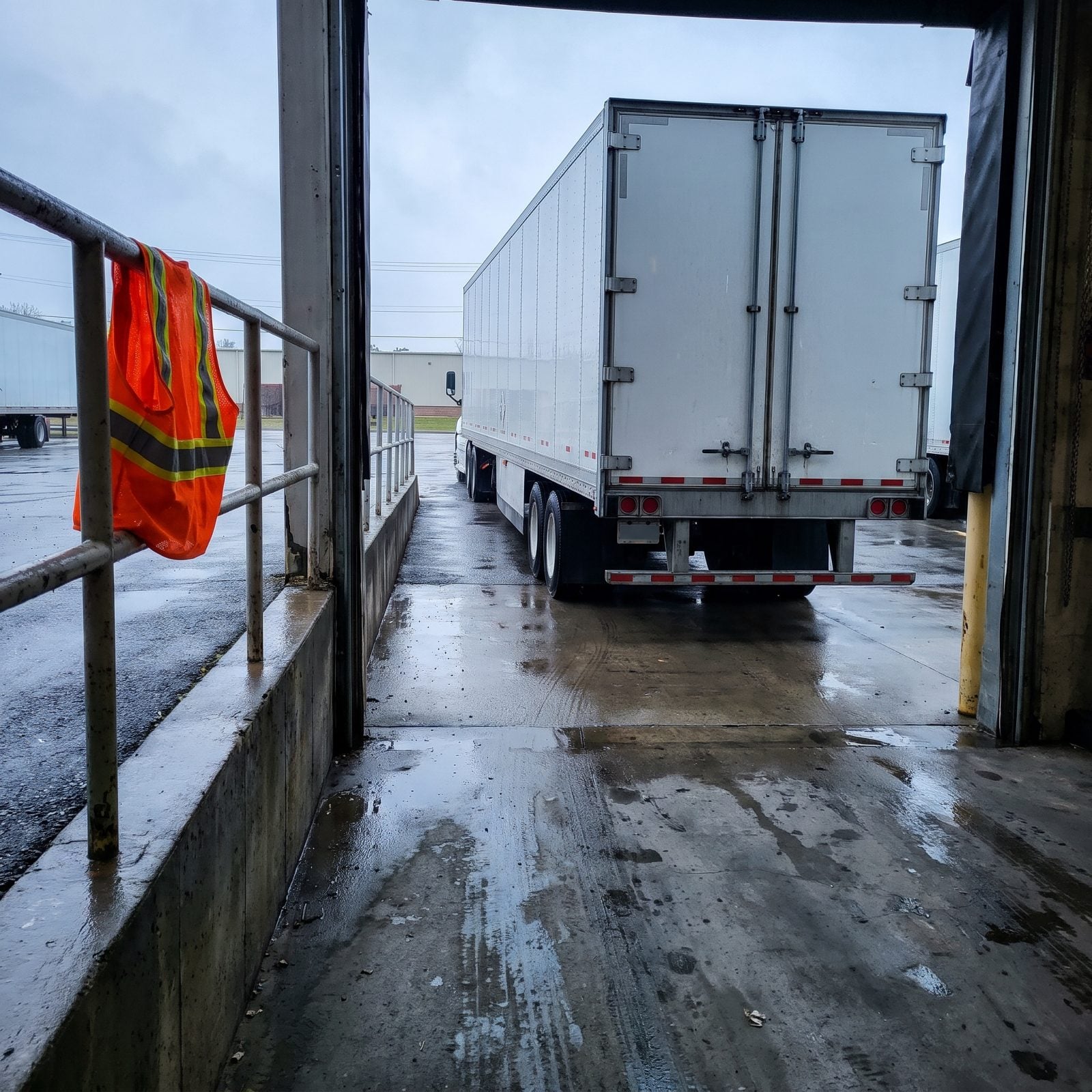
The rule here is simple and absolute. Lose sight of your spotter in the mirror, stop the truck. Don’t guess where he went. Don’t assume he stepped clear. People get pinned between a trailer and a wall because a driver kept creeping while the one set of eyes that could see behind him walked out of frame.
A good spotter and a good driver have a deal: he stays visible, and the moment he isn’t, the wheels quit turning. No exceptions. Not even for an easy foot of travel.
4. Scan for Overhangs, Pipes, and Bollards First
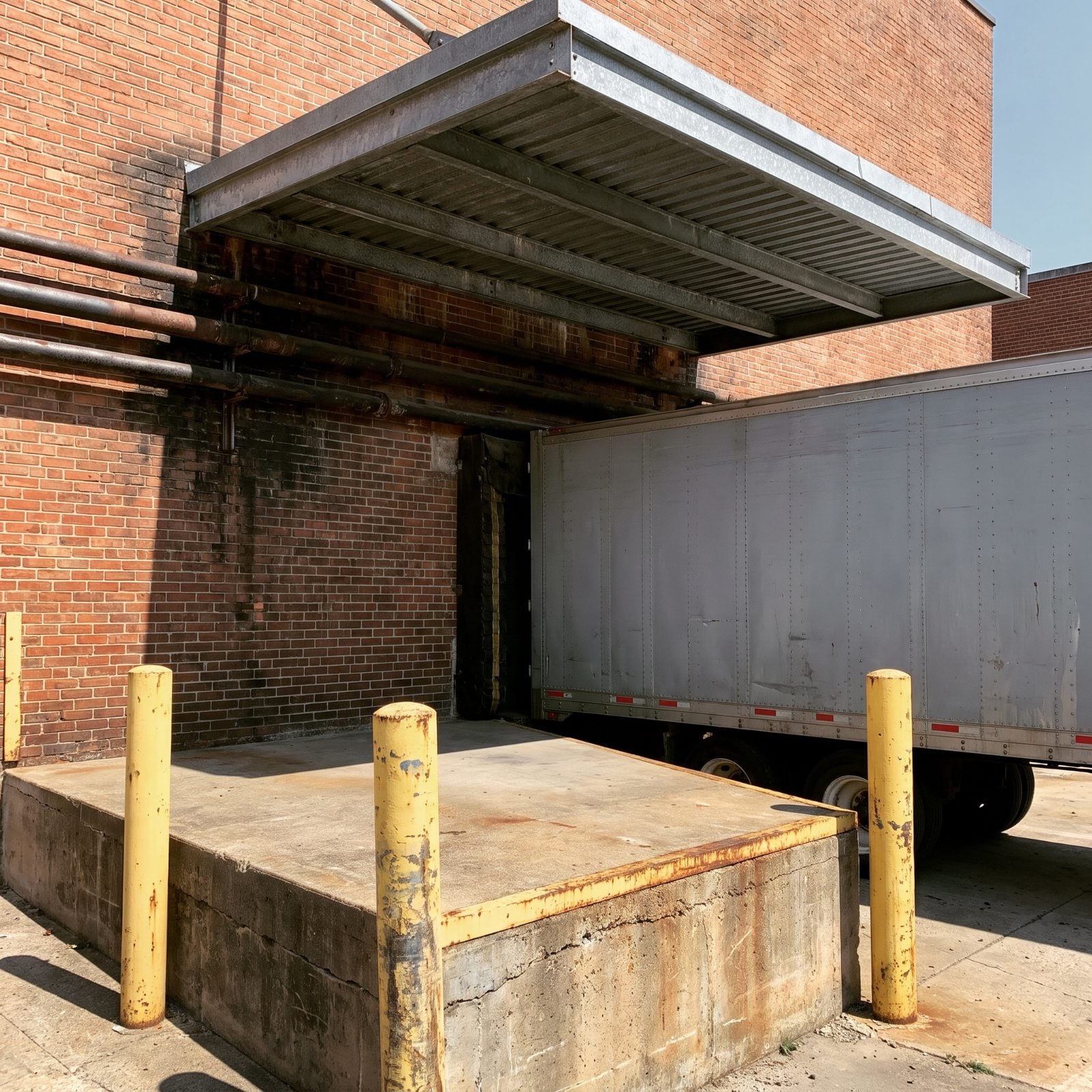
Trailer roofs find things. A low canopy, a run of pipe, a utility box bolted to the wall, a bollard the last truck forgot about. Experienced drivers walk the dock before they back — eyes up at the overhang, down at the corners — because the damage you can’t see coming is the expensive kind.
Five minutes on foot beats a torn roof or a sheared-off mirror. Old docks are full of surprises, and most of them are made of concrete and steel.
3. Plan Overnight Parking Before Dusk
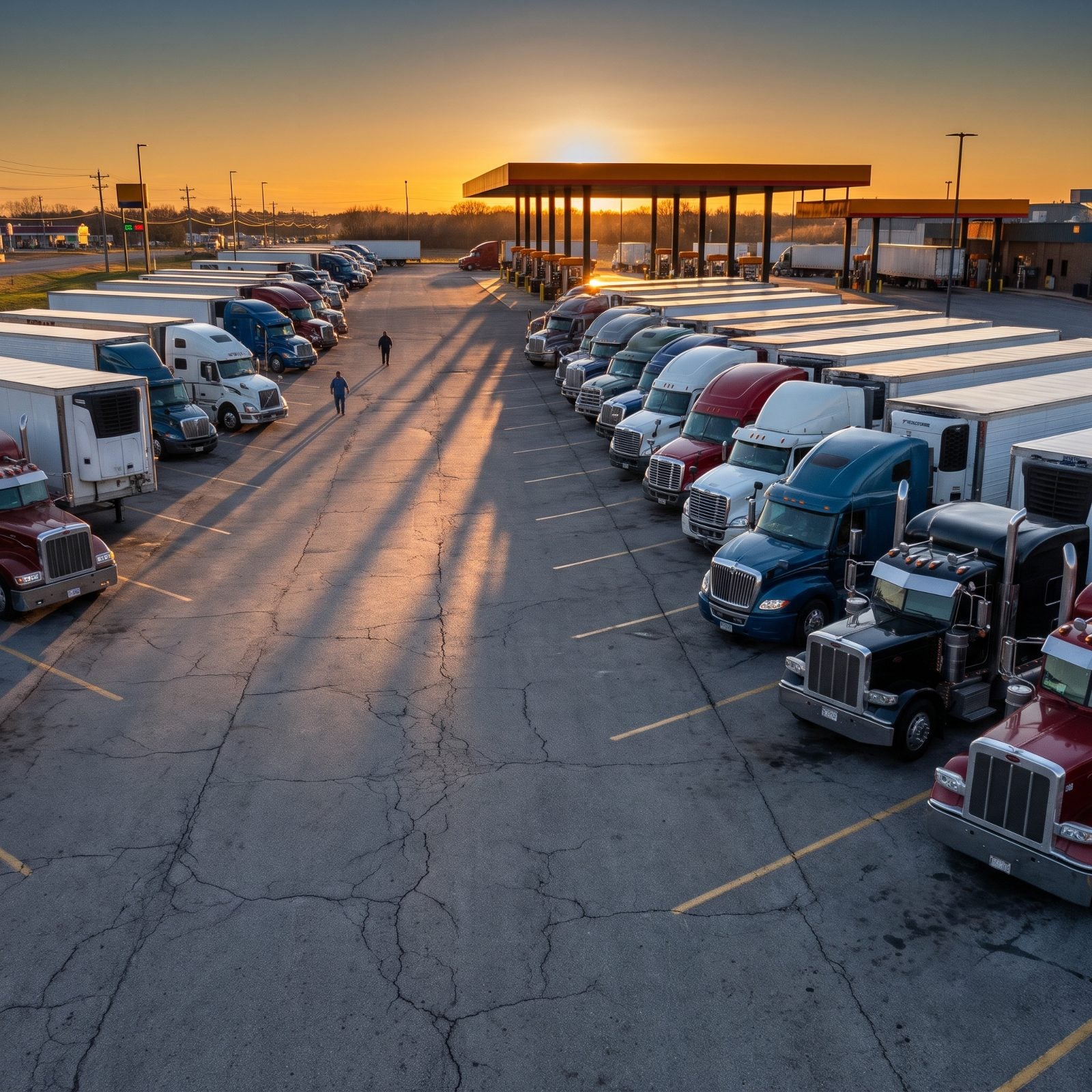
Half empty at four, packed by seven. Any driver who’s circled a jammed truck stop at midnight — hours of service burning down, nowhere legal to shut down — only makes that mistake once.
So veterans quit planning for where they want to be and start planning for where they can safely stop. They know which stops fill early and which rest areas close, and they’ll trade thirty miles of progress for a solid spot while the sun’s still up. Parking isn’t the end of the day. It’s a call you make at lunch.
2. Blink the Marker Lights to Say Thanks

You let a loaded truck pass, and once he’s alongside you in the dark he can’t see much. So when his trailer clears your bumper and he’s safe to pull back in, you flick your headlights — and he answers with two blinks of his marker lights. Thanks. Message received.
It’s a language older than CB radio, and it still runs the right lane at night. Nobody teaches it in a classroom. You pick it up on the receiving end of a few courtesies, then learn to pay them forward.
1. Get Out and Look Before a Difficult Back
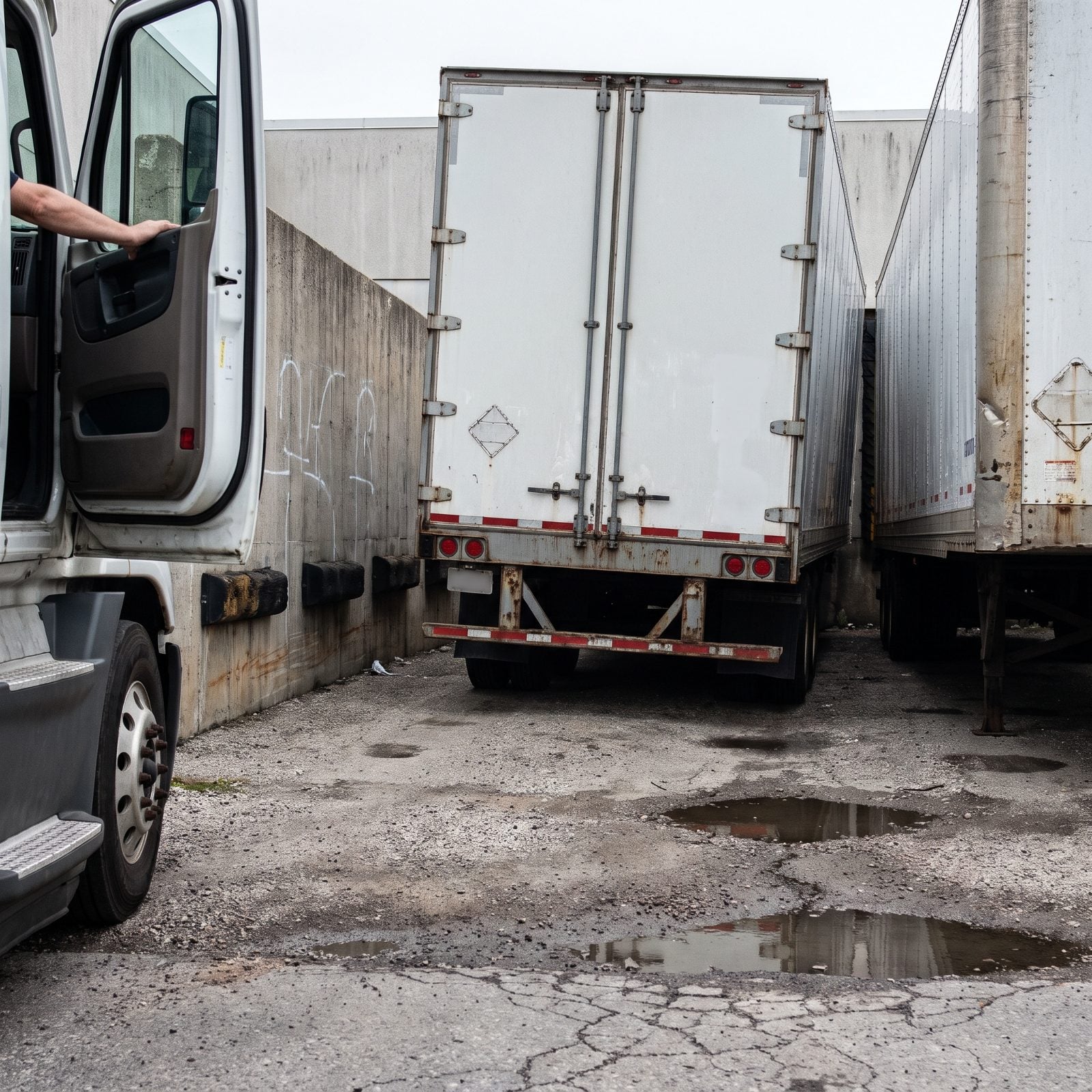
G.O.A.L. Get Out And Look. Four letters that have saved more bumpers, dock plates, and careers than any backup camera ever will. A cocky driver trusts his mirrors into a blind hole. A veteran stops, sets the brakes, and walks back to see what the mirrors can’t.
Tight docks hide things — trailers, light poles, dumpsters, the front corner of a rig parked where nobody expected it. You get out once to set your line, and you get out again the second anything feels off. Those two minutes beat the paperwork you’ll fill out if you skip them, every single time.
The best drivers aren’t the ones who never get out to look. They’re the ones who get out twice.
Recalling a mistake from training, one truck driver writes “I hit a staircase and now it’s in my record. I really wish I had GOALed. Taking a second to get out would’ve saved me a lot of trouble in the future.”