
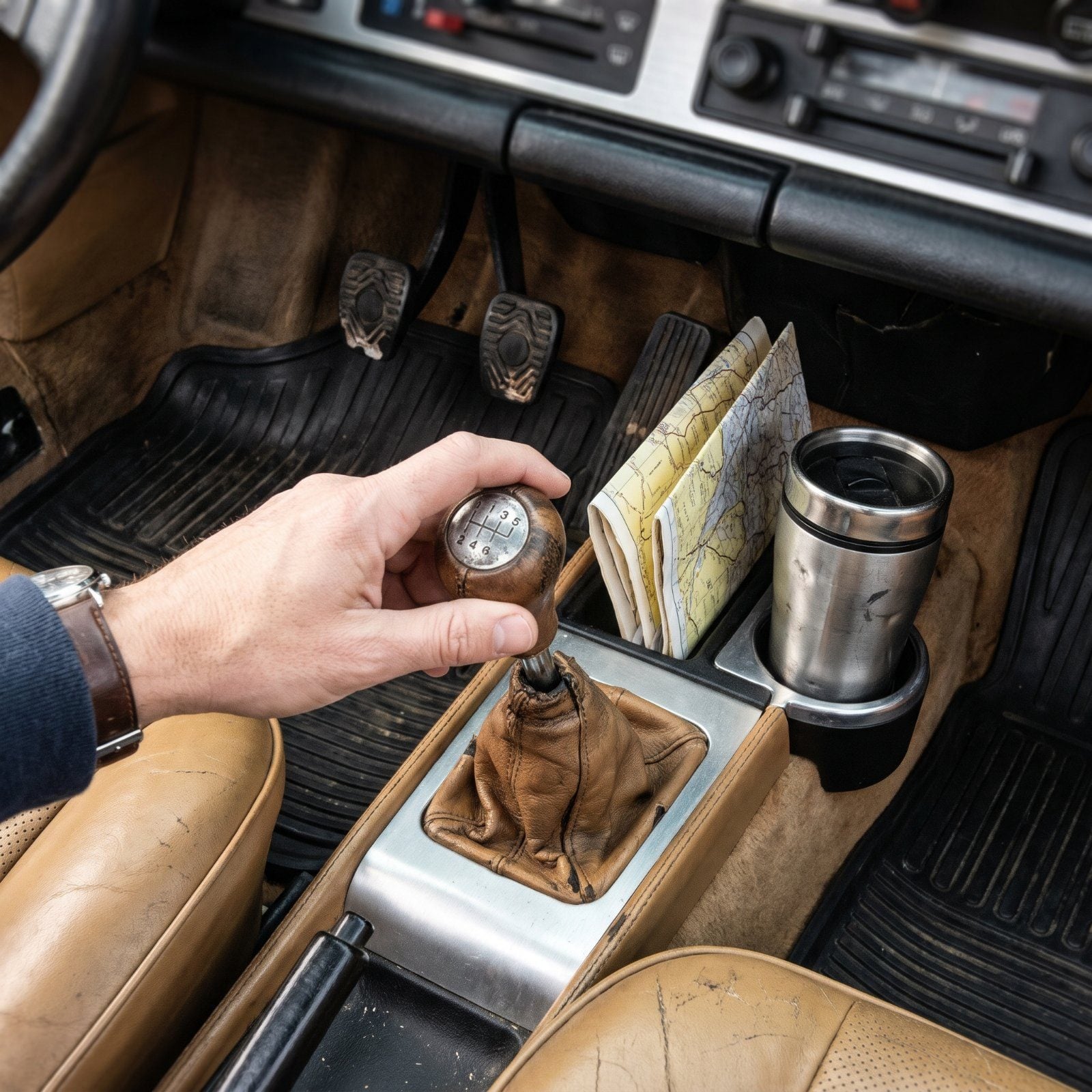
The left foot knows before the brain does. That’s the strange part about driving a stick for thirty years. You stop thinking about the clutch the same way you stopped thinking about walking, and somewhere in there the hand starts finding third on its own while the ear catches a lug before the dash ever flickers. Nobody teaches most of this. It just builds, one commute and one mountain pass at a time, until the car feels less like a machine and more like an extension of your own nervous system. Here are the reflexes that separate a lifelong manual driver from someone who merely passed the test.
Please note that some of the images in this article were created with the assistance of AI.
33. Wiggle the Shifter to Confirm Neutral
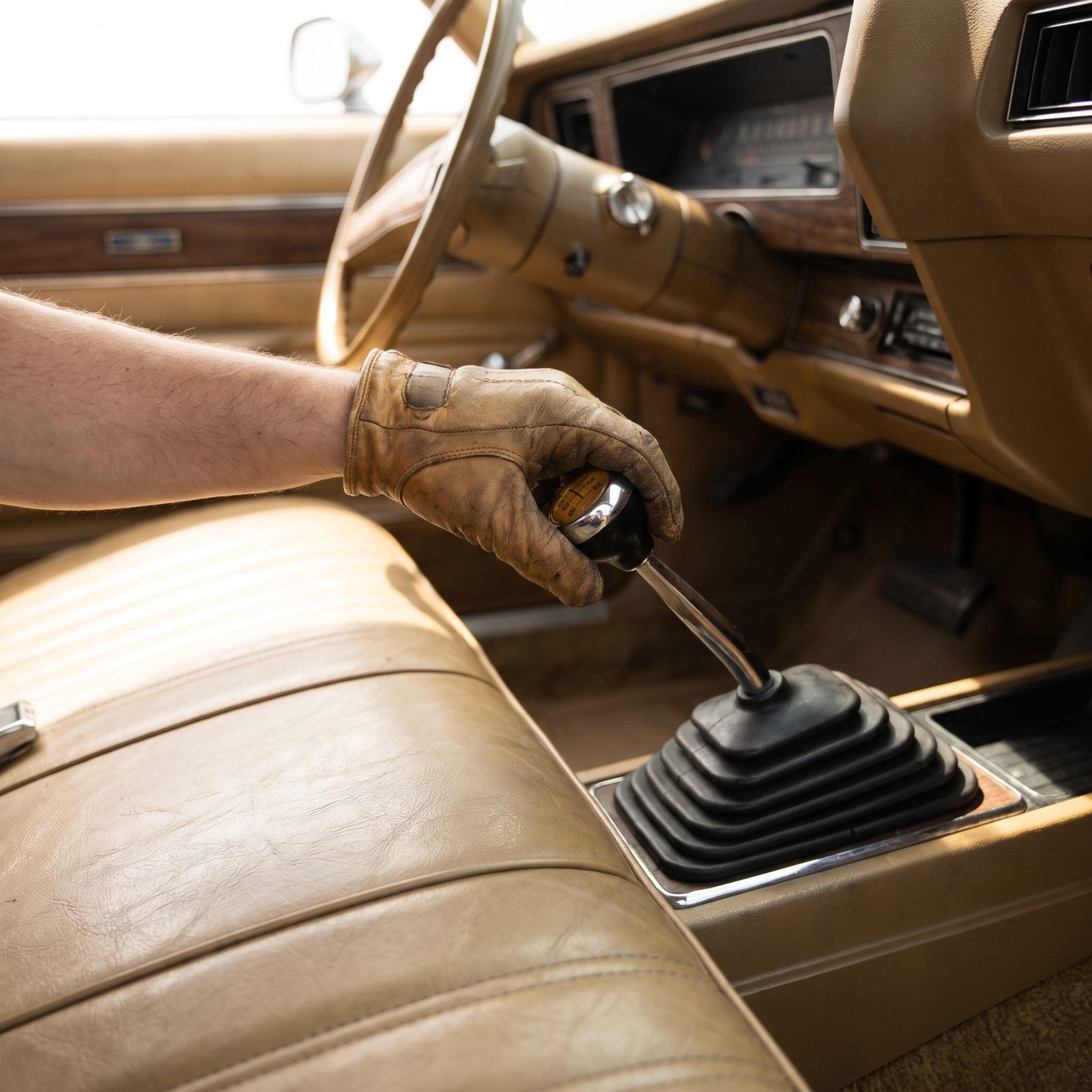
Before the key ever turns, the hand gives the shifter a little side-to-side shake. Loose and sloppy means neutral. Firm resistance means you’re still in gear, which is the difference between a smooth start and a lurch into the garage wall.
You do it without looking. The wrist reads the slack the way a fisherman reads a line, and it’s the smallest possible insurance policy you can take out on a car — one that has saved more bumpers than anyone would admit.
32. Press the Clutch Before Turning the Key
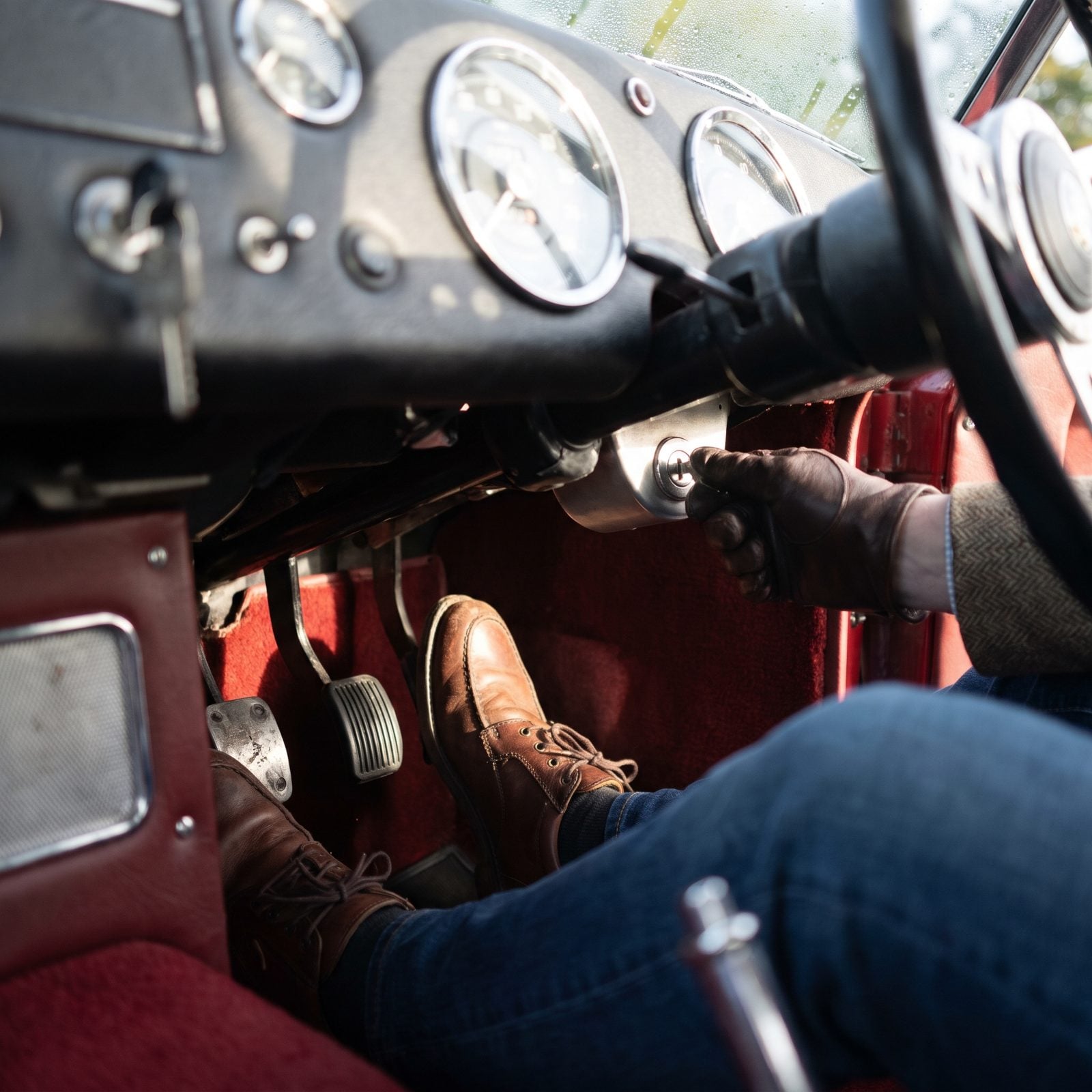
Left foot goes to the floor, then the key turns. Newer cars demand it with a safety switch. Older cars never did, and lifelong drivers do it anyway out of pure habit.
It’s simple mercy on the starter. Spinning the engine without the driveline hanging off it means less load, faster cranking, and a cleaner catch on a cold day. The foot is down before the brain files a request.
31. Recognize Every Gear by the Shifter’s Position
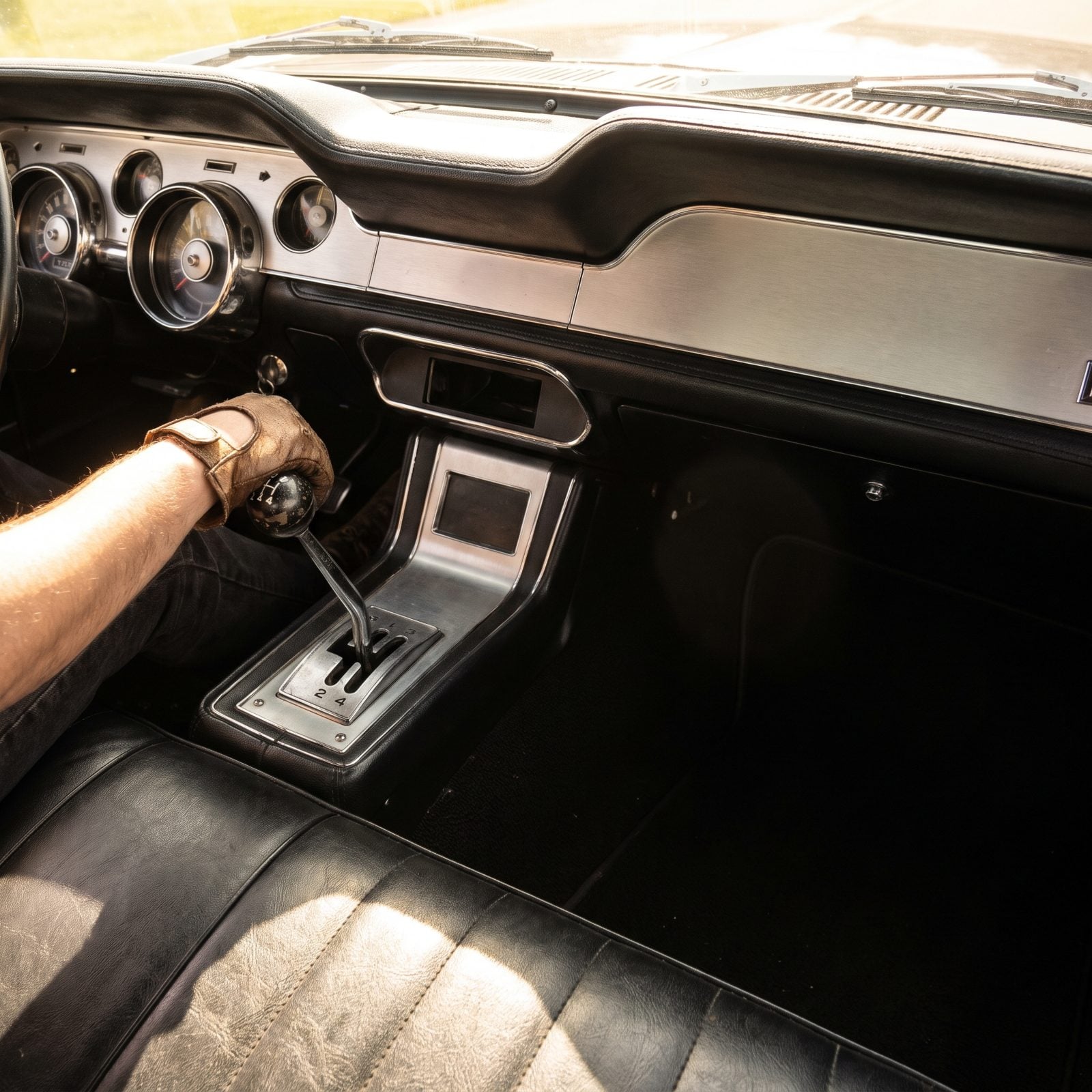
The H-pattern lives in your hand, not your head. You never glance down. The palm feels where it sits in space, maps it against the grid, and the next gear is already chosen before the clutch is fully in.
Five-speeds, six-speeds, that cussed dogleg layout on an old Alfa where first is down and to the left. Each one rewires itself into muscle memory within a few hundred miles. Swap cars after years and your hand hunts for the old pattern for about a day, then quietly updates without telling you.
You don’t read the shift knob. You already know where everything is, the way you know where the light switch is in a dark bedroom.
What Our Readers Say
- When Jalopy Talk readers loved a car photo and tapped a reason, “nostalgic” came out on top at 30%, ahead of “body style” and “would drive.”
From Jalopy Talk reader polls and votes.
30. Find an Unfamiliar Clutch’s Bite Point Immediately
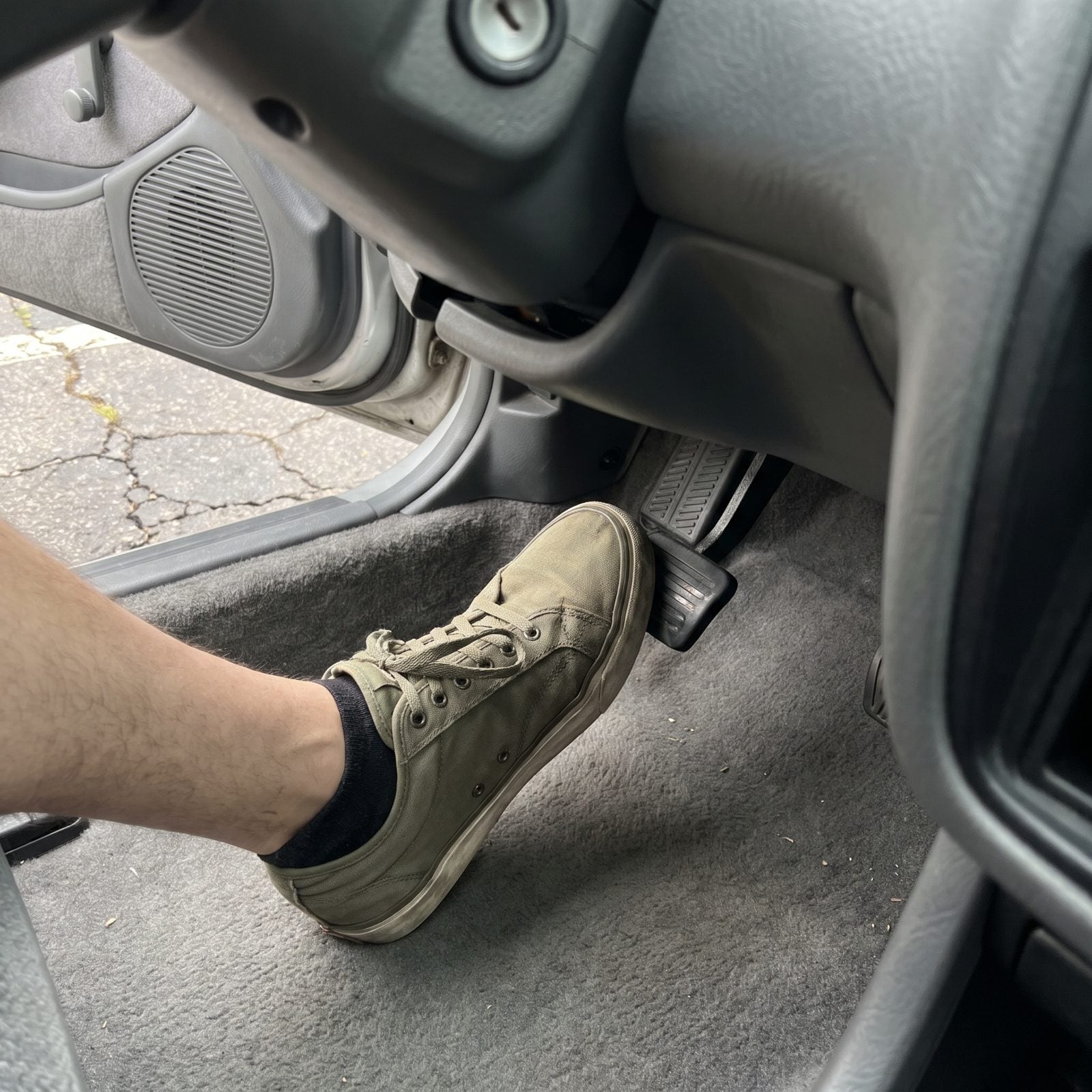
Climb into a rental, a buddy’s truck, a car you’ve never touched. Within the first roll out of the parking space, your left foot has already found exactly where that clutch grabs.
You feel for it — a tiny lift, a listen to the revs dipping, the first shudder of engagement coming up through the pedal. High and grabby or low and lazy, you’ve calibrated before you reach the exit. New drivers stall in a strange car. You never do, and honestly you’d be a little embarrassed if you did.
29. Shift by Engine Sound Instead of the Tachometer
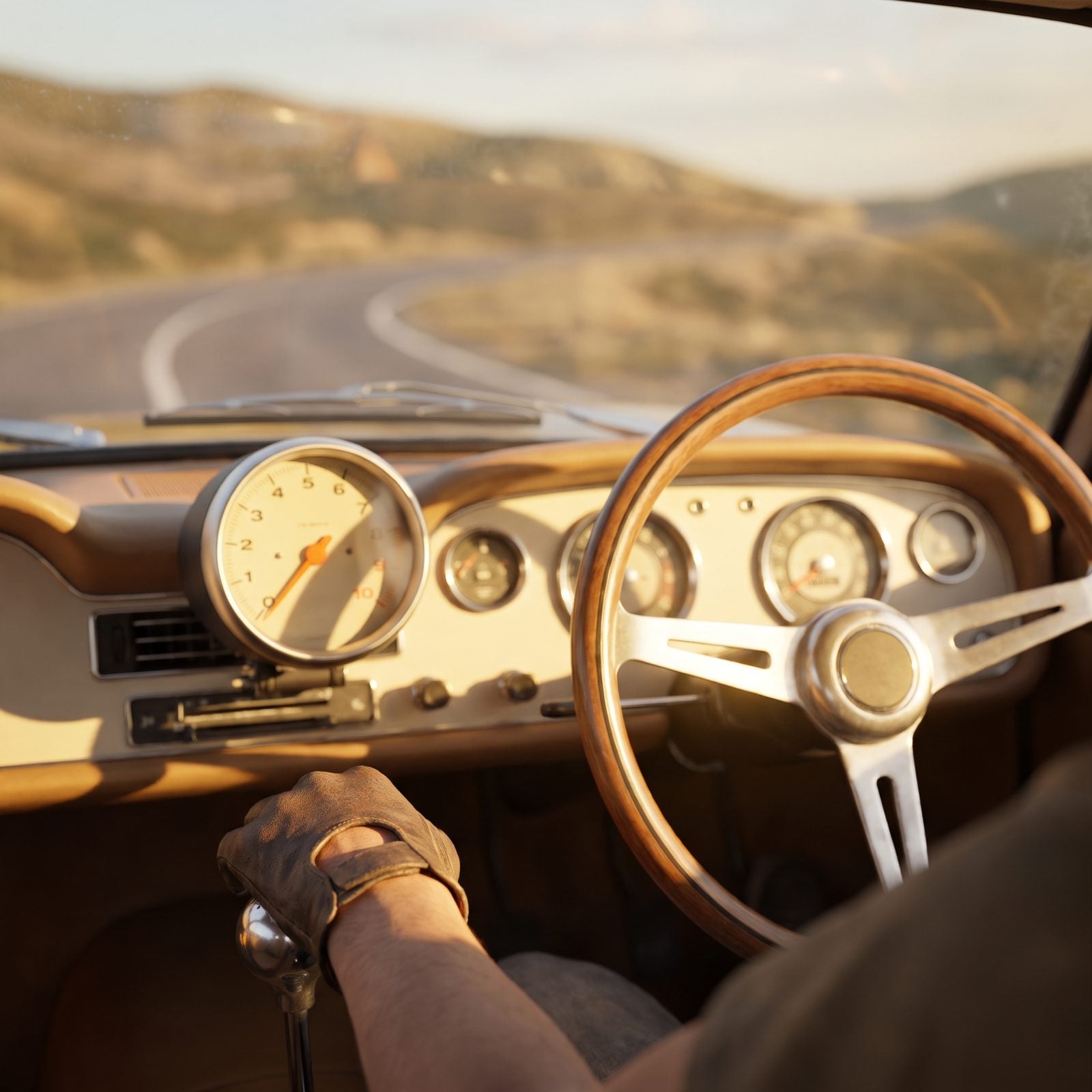
The needle is a suggestion. The engine note is the truth.
You hear the pitch climb, the valvetrain opening up, that moment just before it starts to strain — and there’s your upshift cue. The ear beats the eye by a half-second every time, so you keep your eyes on the road and still land each change right in the meat of the powerband.
28. Feel Through the Seat When the Engine Wants Another Gear
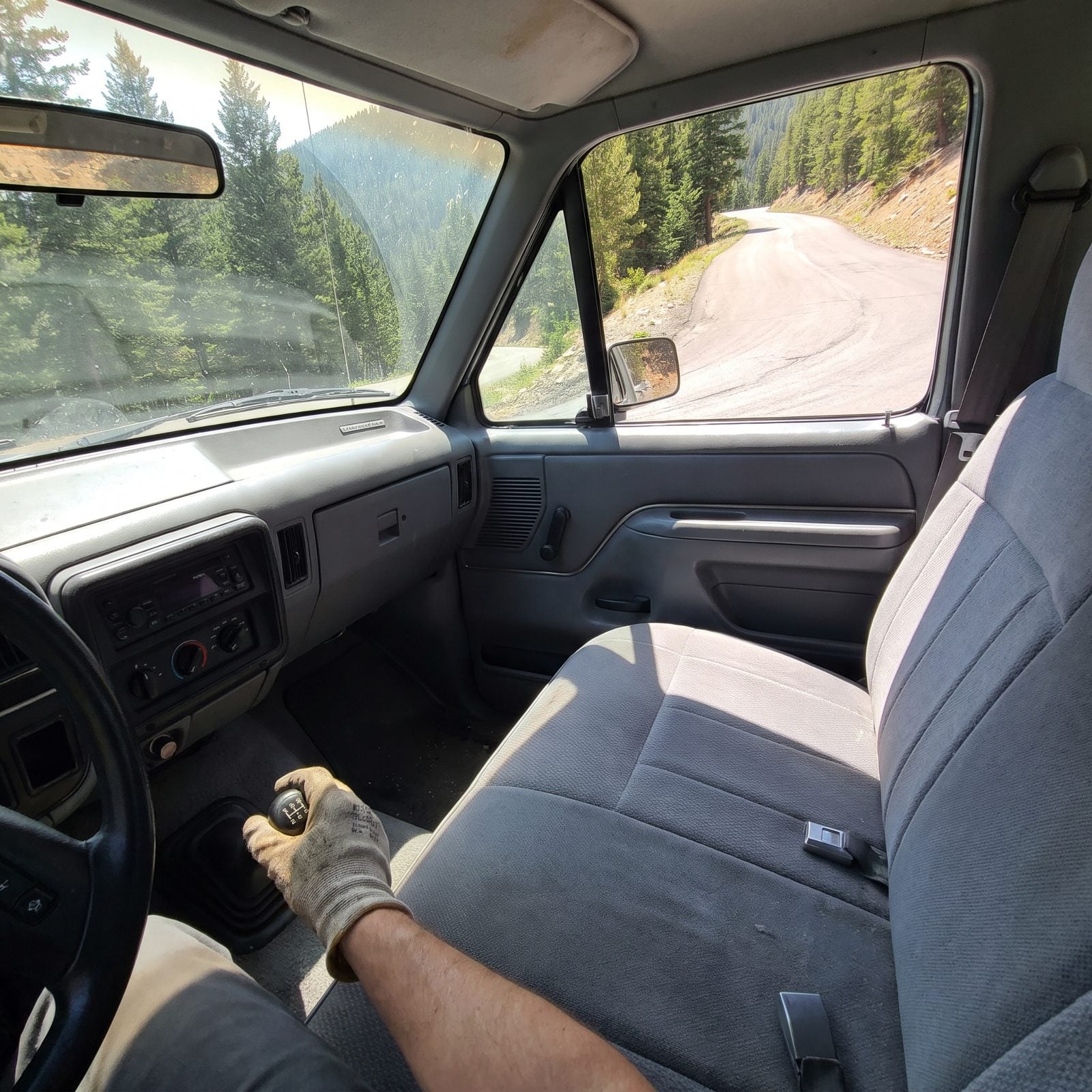
Lugging has a texture. Before the engine complains out loud you feel it in your backside — a faint buck, a hollow hesitation, the car no longer pulling clean. That’s the seat telling you to drop a gear on the grade.
Decades of driving turn the chassis into a second set of nerves. Load, incline, strain, all of it comes through contact with the seat before any gauge reacts. Climb a long pass and you’re downshifting a beat early, keeping the engine happy instead of punishing it.
27. Blend Clutch and Throttle Without Thinking
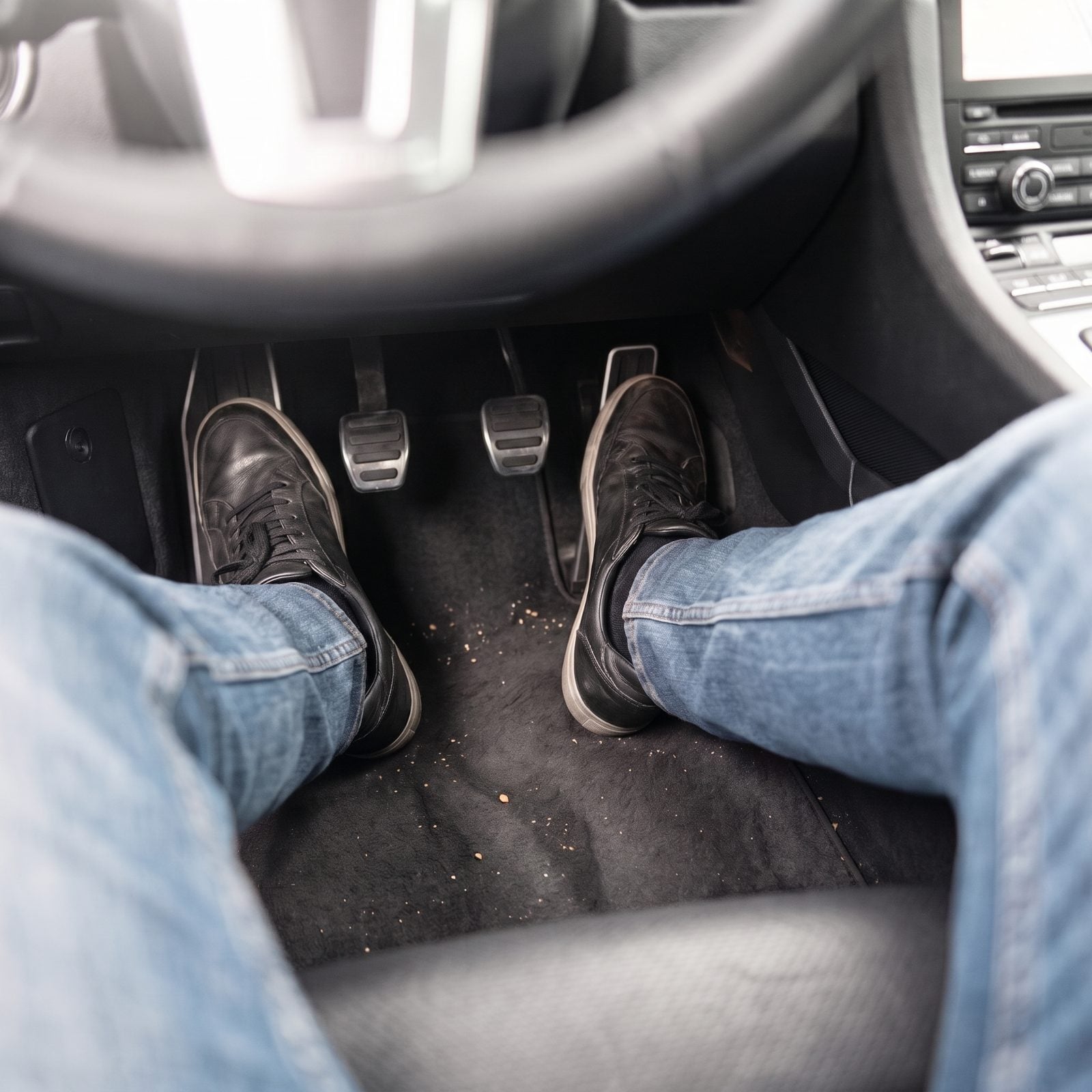
One foot comes up as the other goes down, and the handoff is invisible. No jerk, no flare of revs, no dip — just one continuous motion that rolls the car off the line like the two pedals are talking to each other.
This is the one that takes the longest to learn and the first thing you forget you ever struggled with. A smooth launch from a dead stop, uphill, loaded down, in the rain. The feet negotiate the whole thing on their own while you think about lunch.
26. Keep the Left Foot Completely Off the Clutch
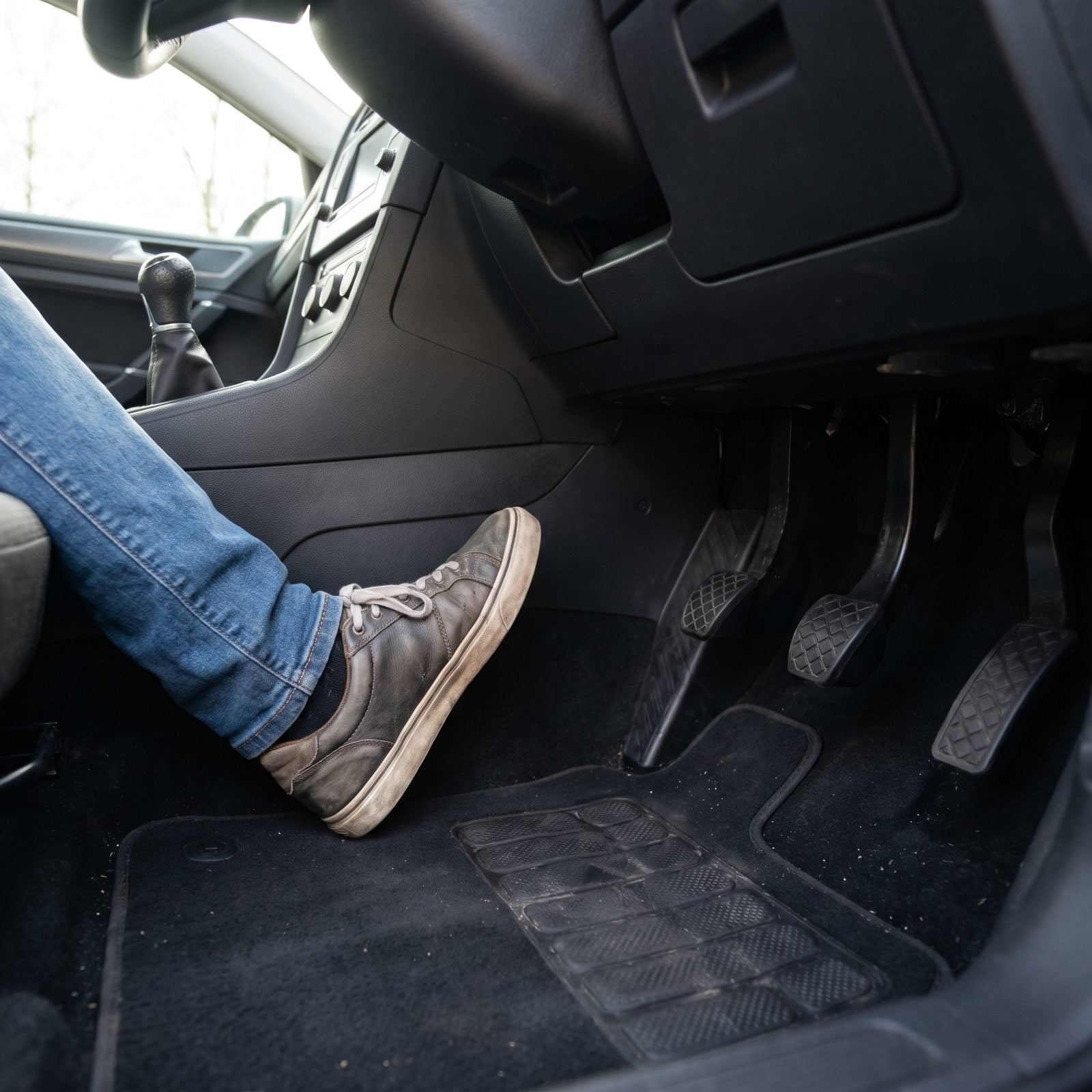
Once the gear is engaged, the left foot goes to the dead pedal and stays there. Not hovering. Not resting half an ounce on the clutch. Completely off.
Riding the clutch is the most expensive habit a new driver carries, slowly cooking the friction disc while they have no idea it’s happening. A lifelong driver’s left foot treats that pedal like a hot pan, touching it only when there’s a reason, and the release plate thanks you for about a hundred thousand miles.
25. Take a Resting Hand Off the Gearshift
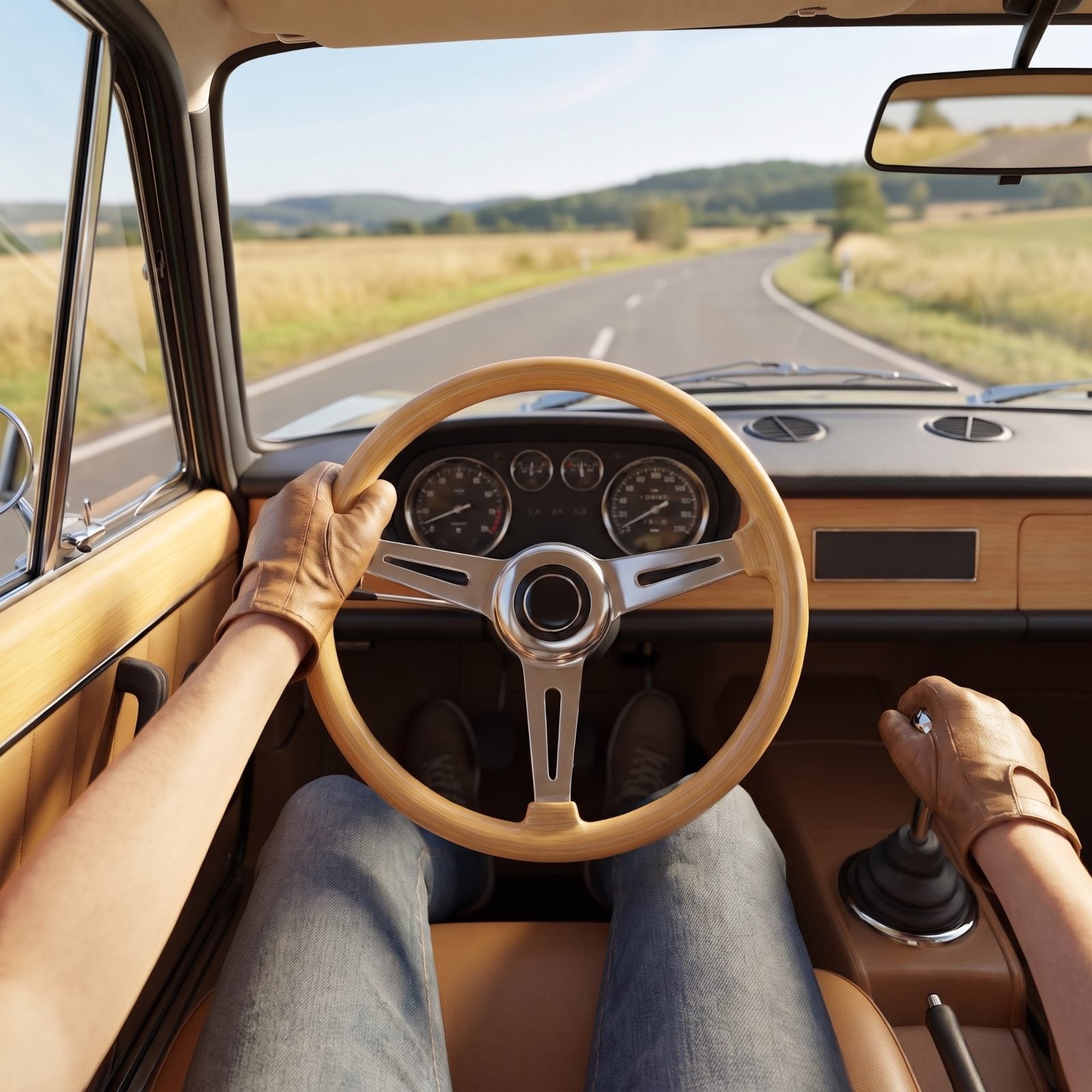
Cruising on the highway, the hand leaves the shifter and returns to the wheel. It isn’t about looking tidy.
A hand resting on the lever puts constant light pressure on the shift forks inside the gearbox, pressing them against synchros that were never meant to carry a load while you drive. Years of that wears them early. So the hand only visits the knob when there’s a shift to make, then goes home to the wheel.
24. Select Neutral at a Long Red Light
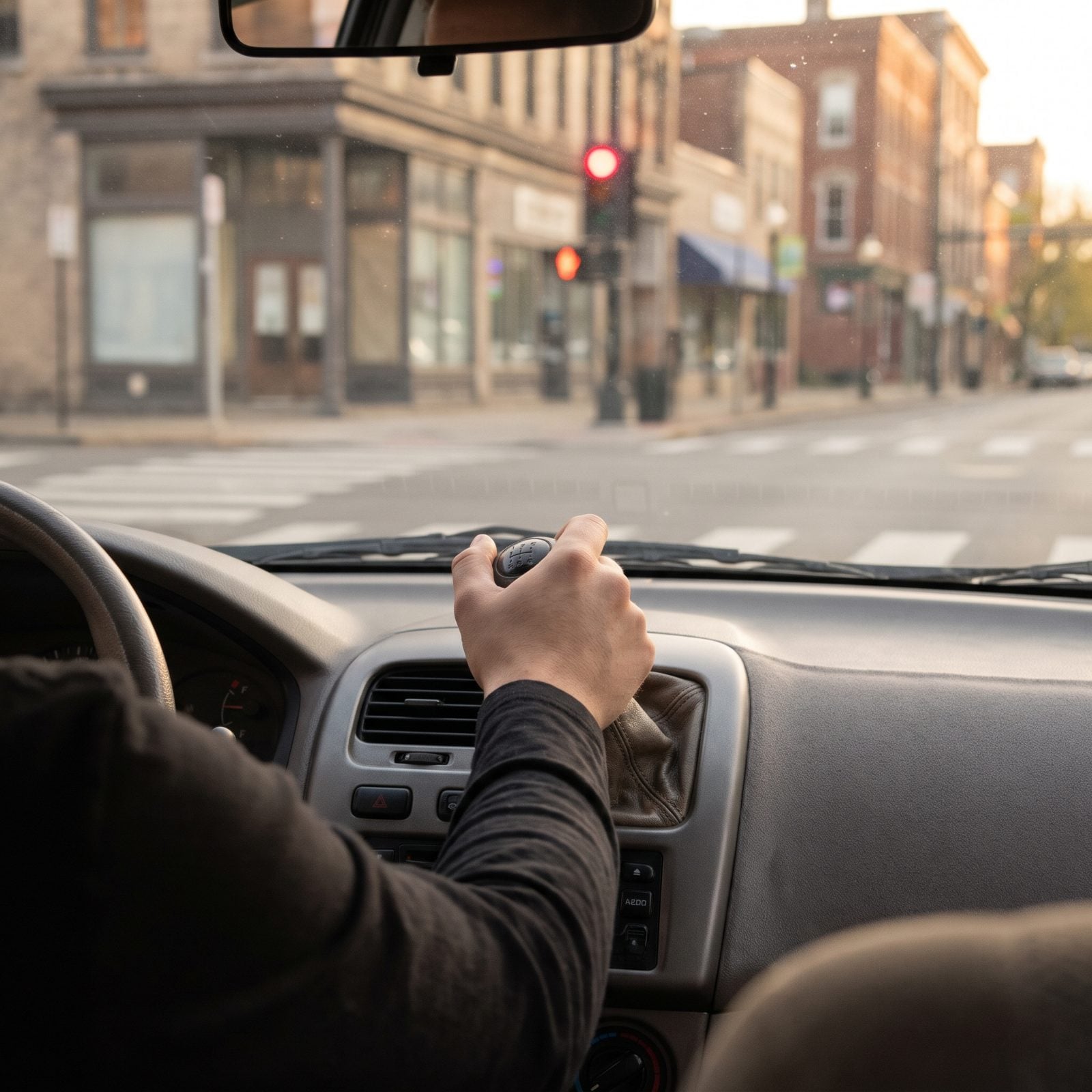
At a light that’s going to sit a while, into neutral it goes, foot off the clutch, car settled and waiting.
Hold the clutch down at every red for years and the throwout bearing spins constantly with nothing to do but wear out. Neutral gives it a rest and gives your leg one too. There’s a quiet debate among drivers about whether it’s worth the trouble for a short light, and the honest answer is that it depends on how long the light is and how tired your leg gets in traffic.
Short light, stay in gear ready to go. Long one, neutral and relax. You sort it out automatically by the length of the queue ahead.
23. Watch the Cross-Traffic Light to Time Your Launch
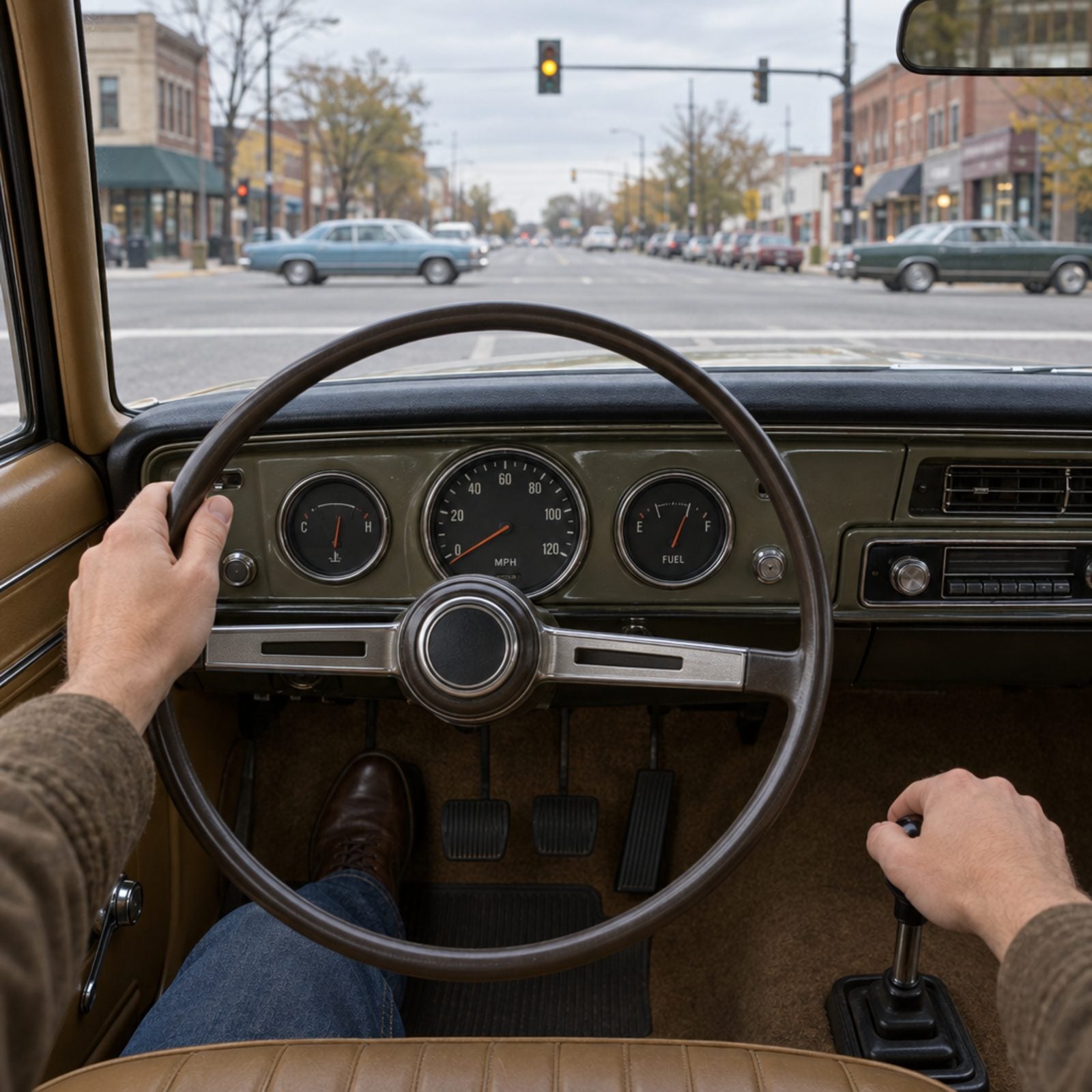
The cross-traffic light tells you everything if you’re actually watching it. The moment it drops to yellow, you’ve got a few seconds before your green — exactly long enough to dip the clutch, pick your gear and get ready to roll.
Automatic drivers sit and wait for the color to change in front of them. You’re reading the whole intersection like a row of dominoes tipping over. By the time your signal goes green, you’re already rolling while the car beside you is still rubbing its eyes.
22. Leave a Rolling Gap in Stop-and-Go Crawl
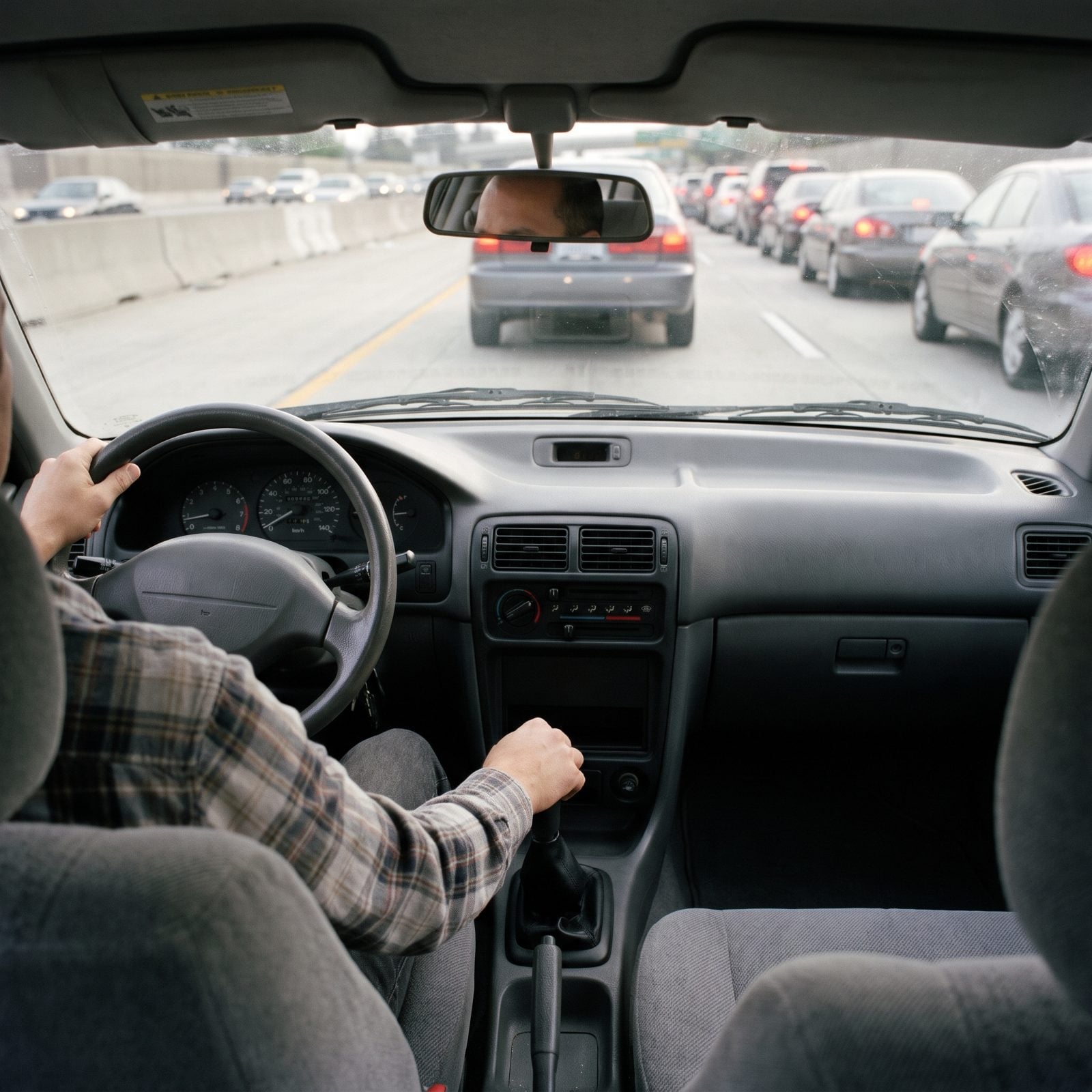
Stick drivers hate dead stops. Every one means clutch in, neutral, wait, then the whole shuffle again — so you learn to never fully stop if you can help it.
You leave a gap and let it eat up the distance at a crawl, barely off idle, letting the concertina of traffic ahead sort itself out before you have to touch anything. The guy riding the bumper up front is working ten times as hard and arriving at the same red light. You conserve. Your clutch leg isn’t screaming by mile marker twelve.
21. Crawl in First Gear Without Touching the Clutch
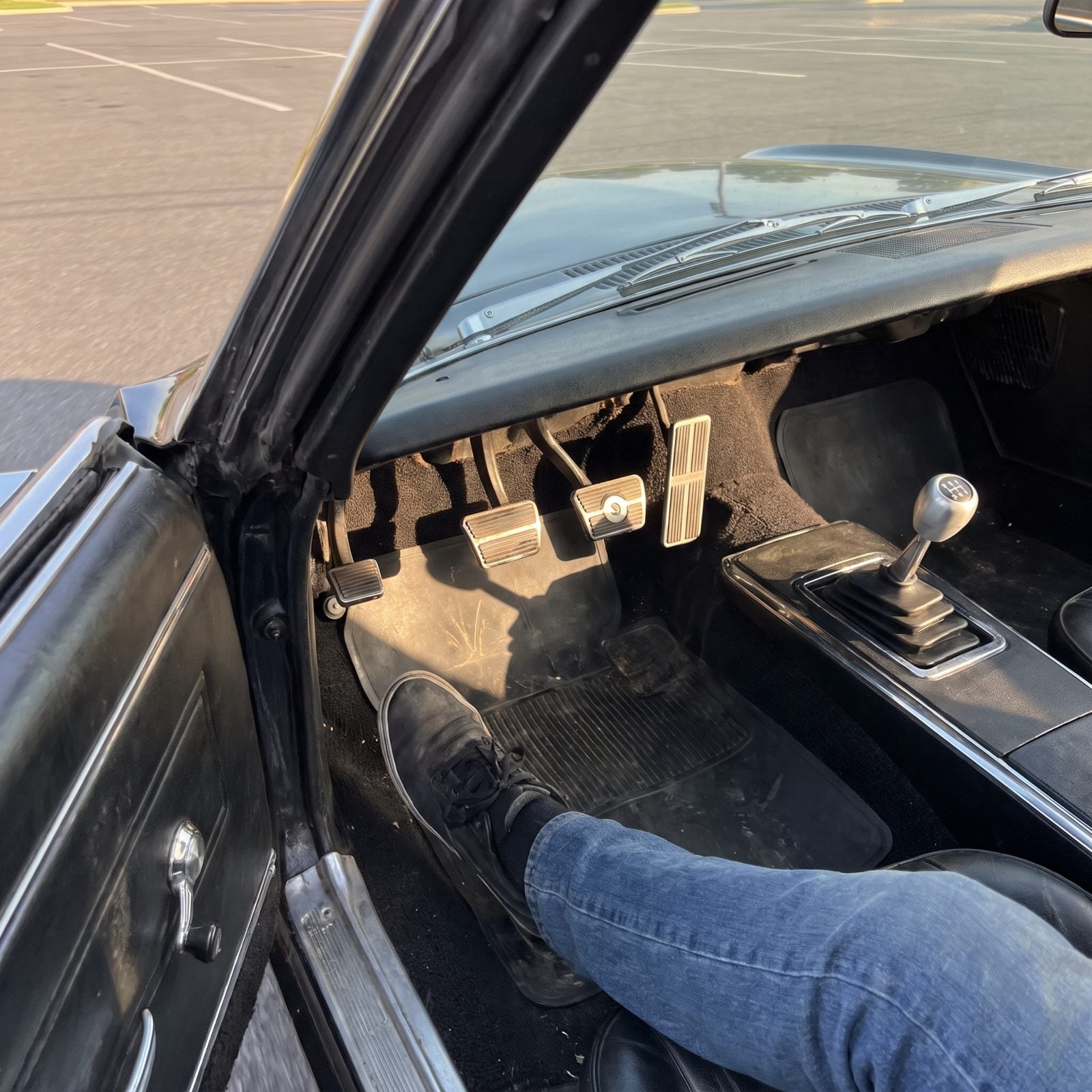
Idle speed moves a car. Most people never figure that out because they were taught to feather the clutch through every low-speed moment, and feathering is what cooks clutches to a glaze.
Someone who’s done this a while just drops into first, lets the clutch all the way out, and lets the engine idle the car forward at walking pace. Parking lots, drive-thru lines, inching toward a toll booth — clutch either fully in or fully out, almost never caught halfway. That one habit is the difference between a clutch that sails past 150,000 miles and one that gets yanked out early.
20. Use the Parking Brake for a Clean Hill Start
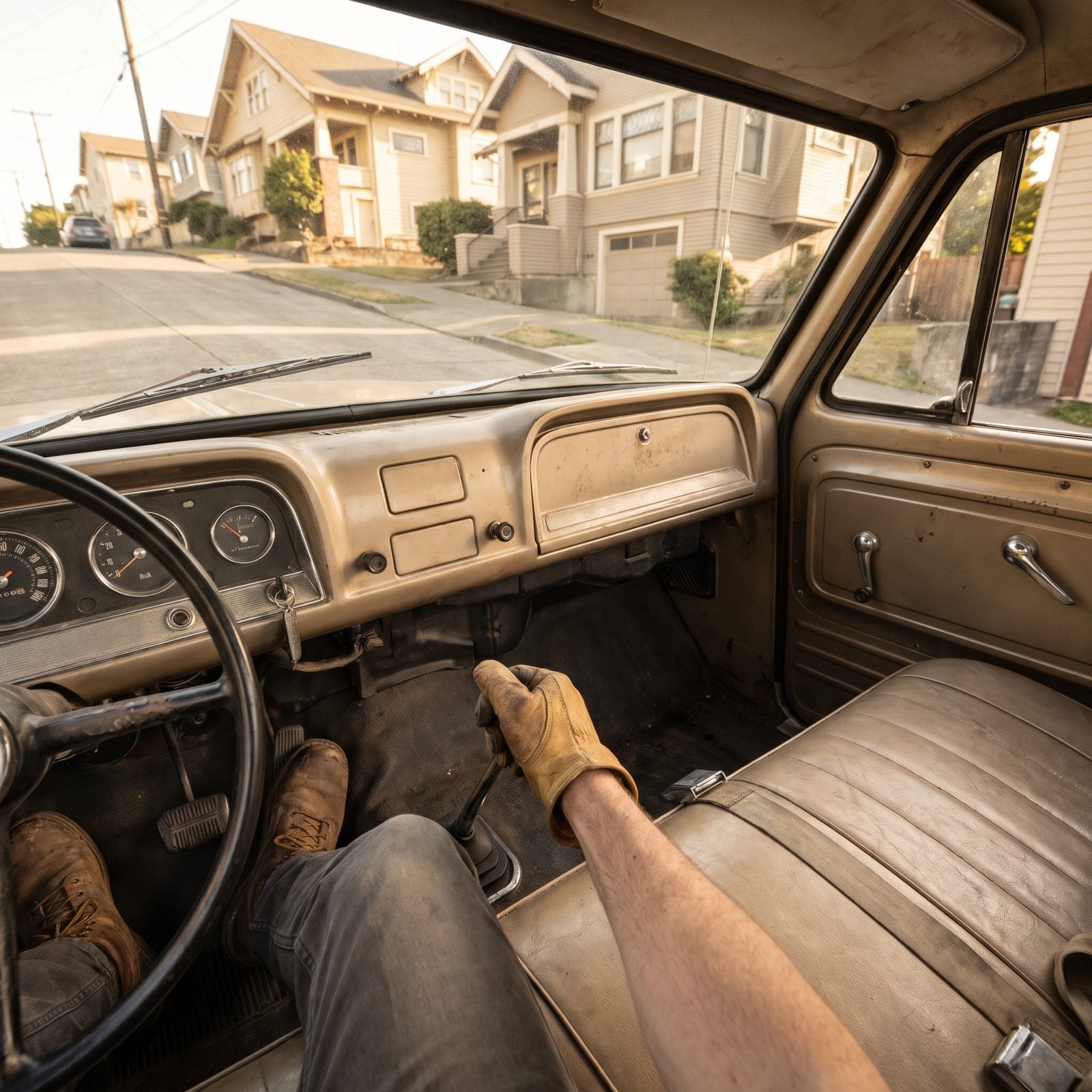
The handbrake start is how you keep from rolling into the car behind you on a steep grade. Hold it up, bring the clutch to the bite point, feed in gas, and release the brake exactly as the car starts to pull. For a split second that parking brake holds you while both feet are busy working.
Nobody who’s mastered this ever rolls backward on a hill. From the car behind, it looks like a magic trick. It’s only timing — and timing is what the years hand you.
19. Hold on a Grade With the Brake, Never the Clutch
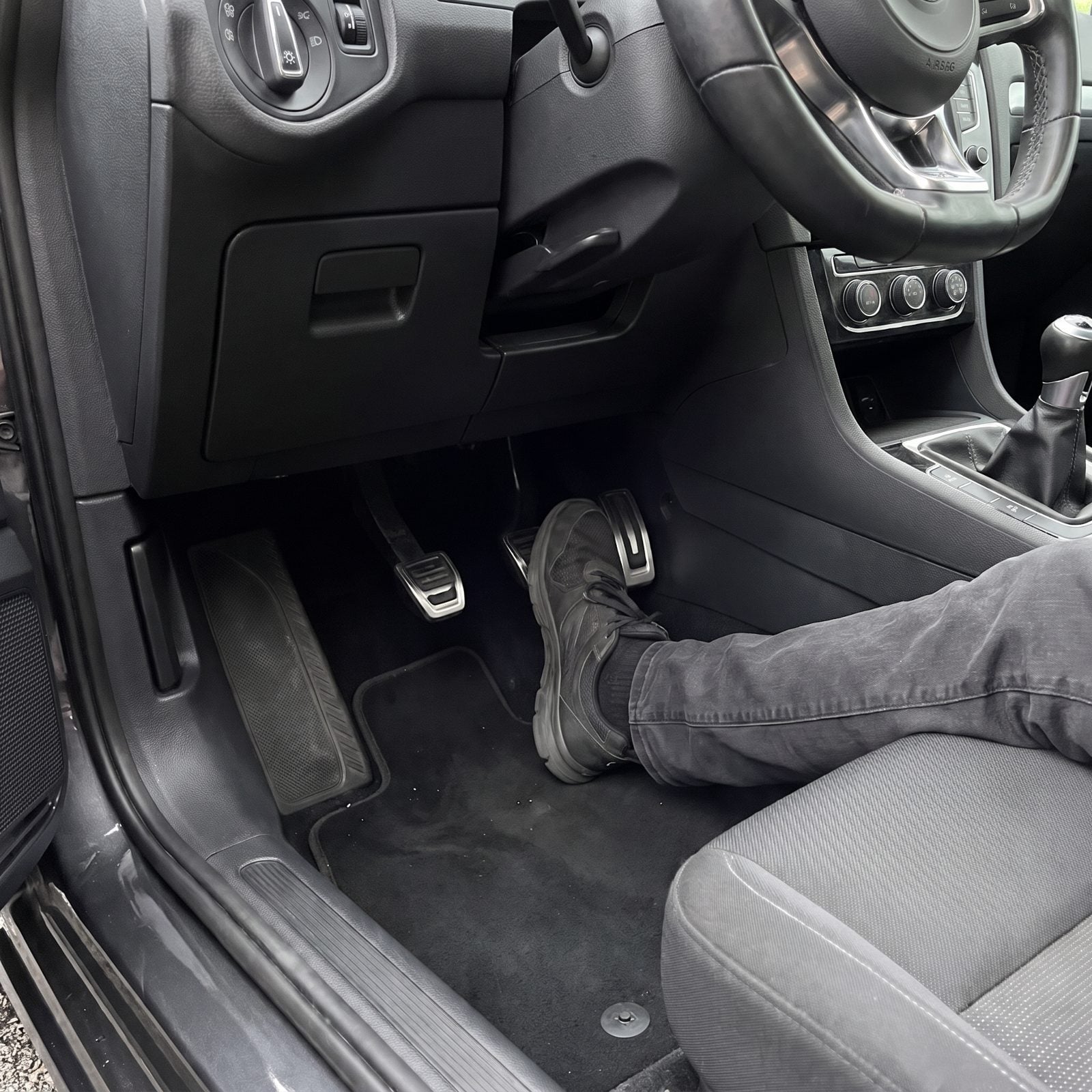
Riding the clutch to hold against a hill is the oldest rookie sin there is. You balance the car on the bite point, your right foot on the accelerator, engine straining, clutch slipping, and you grind weeks of life out of the thing every single time a light stays red on a slope.
The fix is boring and correct: get off the accelerator. Neutral, hold the brake, wait. The clutch isn’t a hover mechanism — it’s a connection switch, on or off, nothing in between. Everyone who learned that lesson paid for it the expensive way at least once.
A clutch held at the bite point on a hill is a clutch being sanded down in real time.
18. Pick a Lower Gear Before the Climb, Not Partway Up
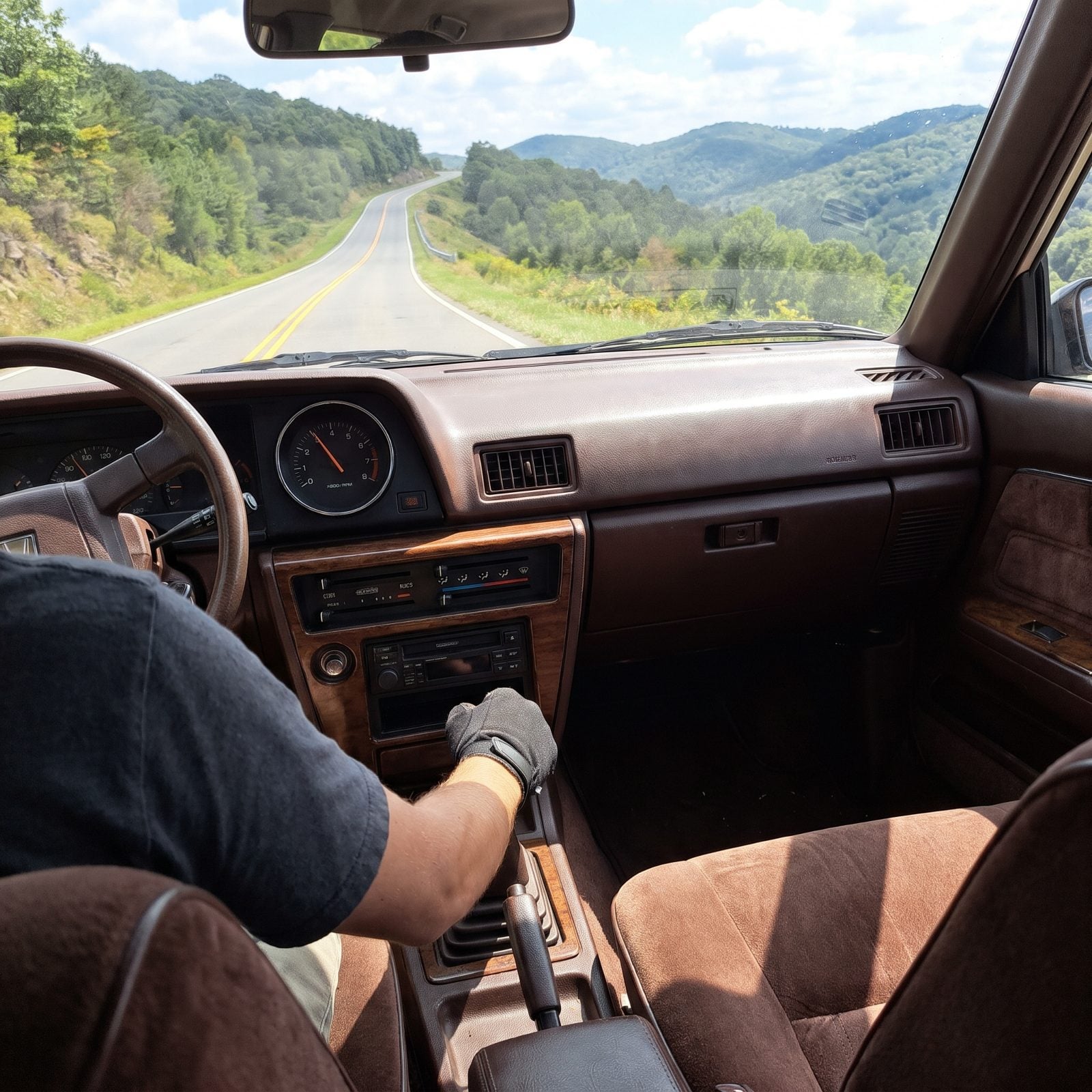
You read the hill before you reach it. A long grade coming means you shift down while you’ve still got momentum behind you, not when the engine is already lugging and gasping at the bottom.
Downshift early and the engine stays in its powerband the whole way up, pulling steady. Wait too long and you’re stuck forcing a mid-hill downshift that bleeds off speed you can’t claw back. The hill tells you what it wants — if you listen before you’re on top of it.
17. Let the Engine Do the Braking on a Long Descent
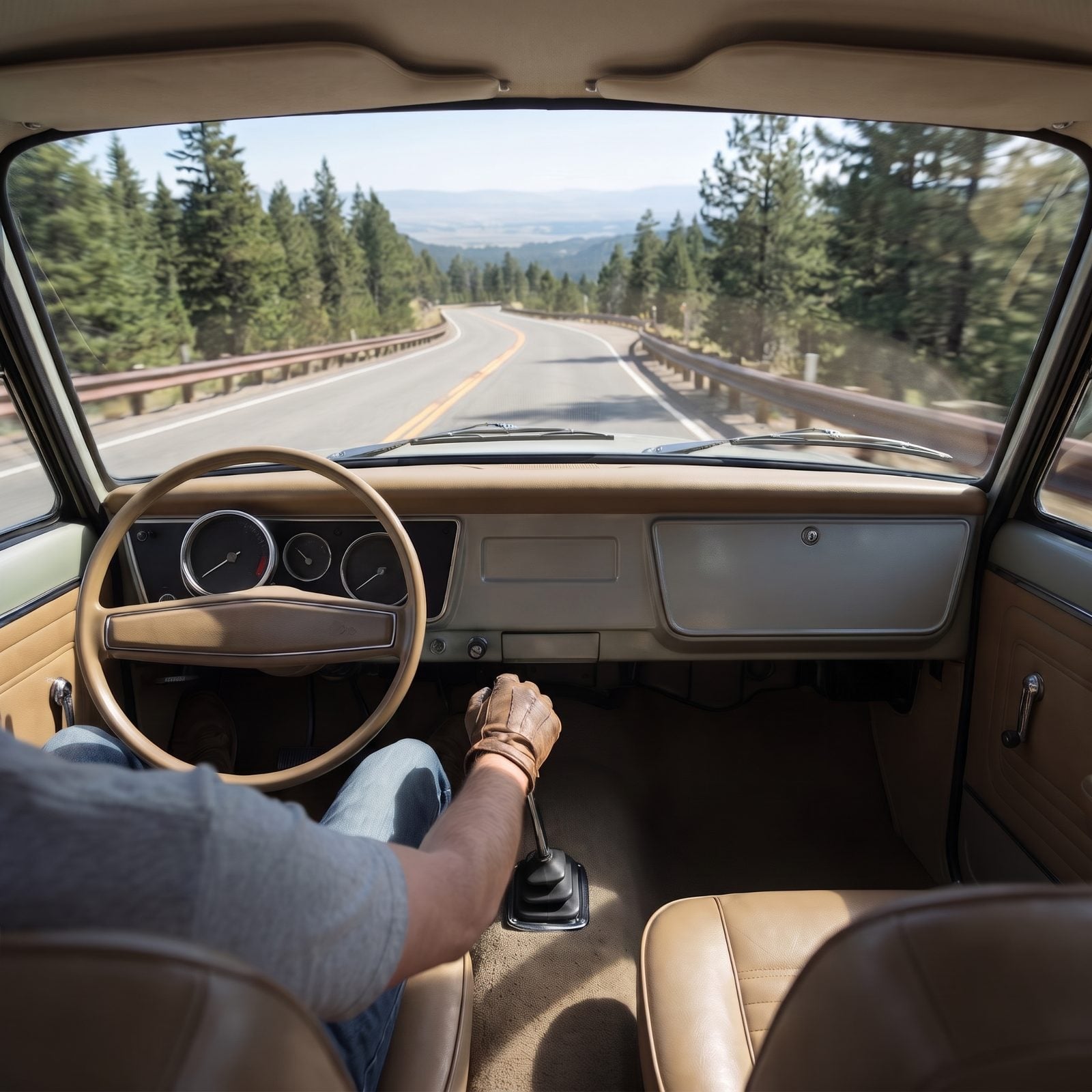
Ride the brakes down a long mountain and they’ll fade to mush before you see the bottom. That’s not a maybe. Heat kills brakes, and a steady descent on friction alone builds heat with nowhere to dump it.
So you drop a gear and let compression hold the speed instead. The engine note climbs, the car settles into a steady pace, and your right foot barely grazes the brake. Truckers live by this. Anybody who’s taken a loaded car down a real grade learned it fast — usually right after a close call they’d rather not talk about.
16. Set the Right Gear Before the Corner, Not In It
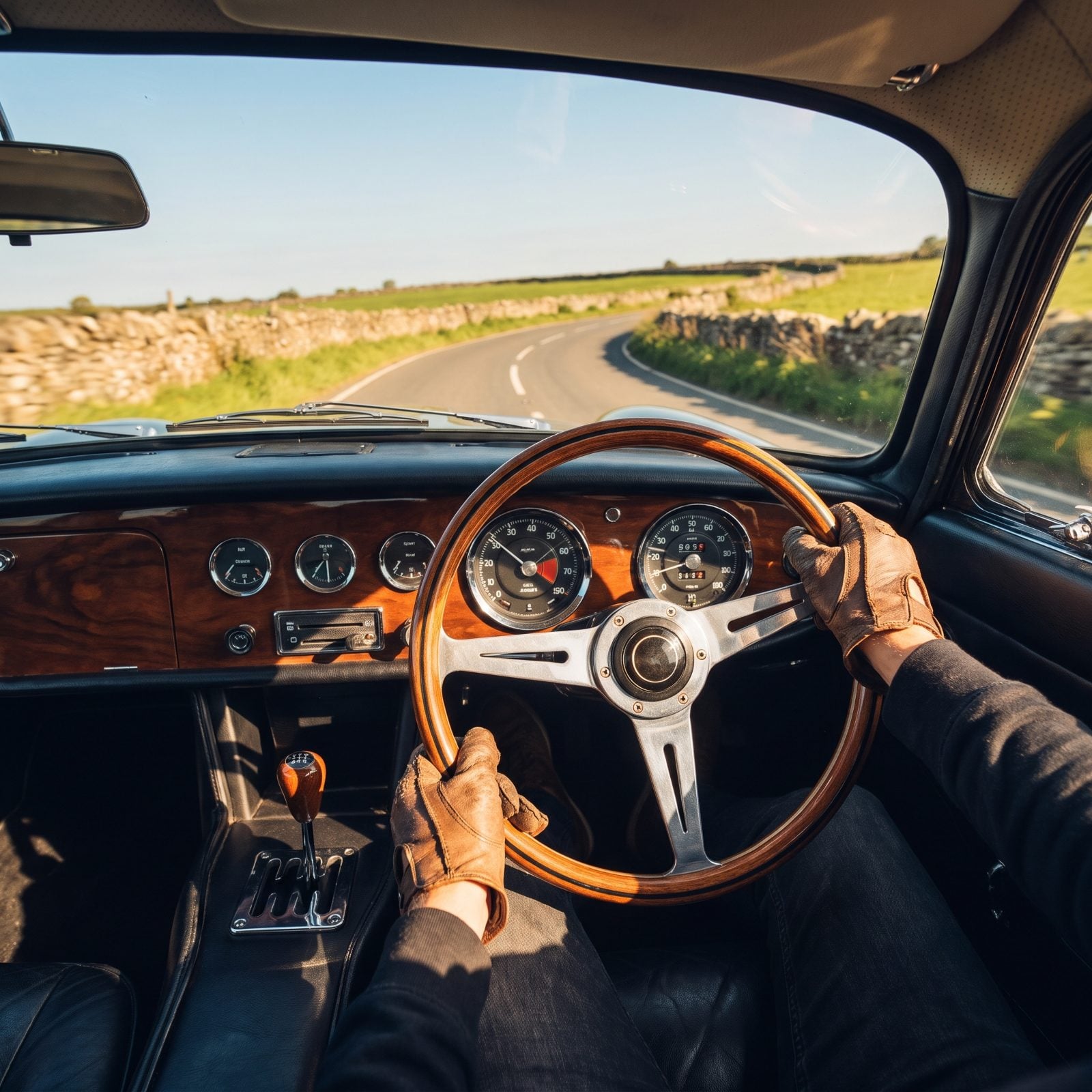
The old rule is slow in, fast out — and the gear is the part everybody forgets. You brake and downshift in a straight line before the turn, so that once you’re actually in the corner, both hands are on the wheel and the gear’s already loaded and waiting.
Shift mid-corner and you unsettle the car and split your attention at the worst possible instant. Sort the gear out early and the whole bend becomes one smooth motion: in, around, out on the power.
15. Drop a Gear Before You Pull Out to Pass
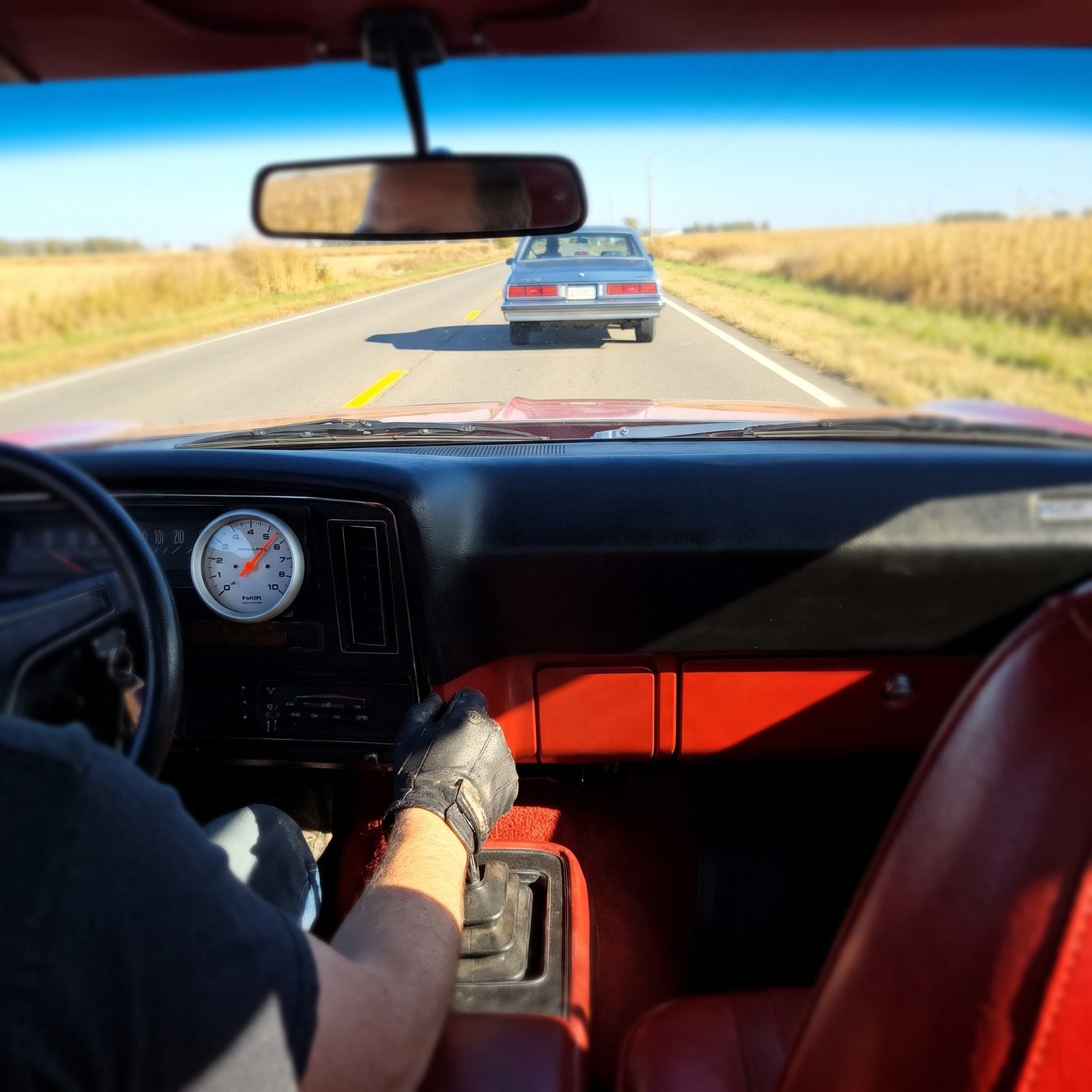
You never pull out to pass in top gear. No power up there — just a weak, dawdling surge while you sit exposed in the oncoming lane, praying the car ahead doesn’t suddenly decide to race you.
Downshift first. Drop into the gear that puts the engine right where it pulls hardest, then swing out with everything already coiled and ready. You’re past and tucked back in before the gap closes. One gear down is almost always what separates a clean pass from a white-knuckle one.
14. Match the Revs by Ear on the Way Down
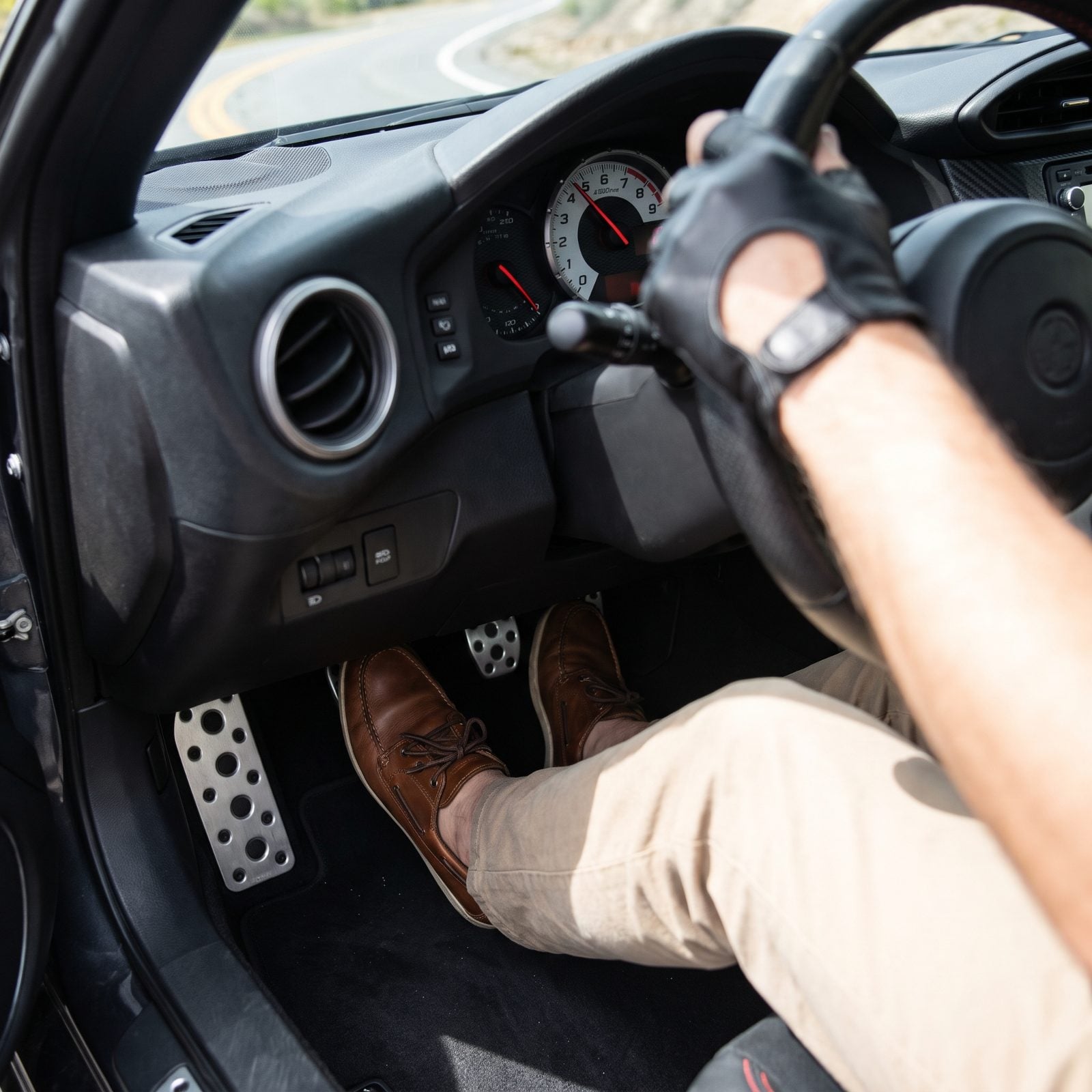
This one takes years to earn and feels great to own. You downshift, and while the clutch is in, you blip the throttle to bring the revs up to meet the lower gear.
Done right there’s no lurch, no jolt, no chirp of a drivetrain scrambling to catch up — just a clean drop into gear, like the car wanted to be there the whole time. You stop watching the tach because your ear already knows the sound of a matched rev. Hands and right foot do it together, no committee meeting required.
It takes years to stop thinking about it. Then you can’t do it any other way, and a passenger almost never notices a thing happened. Which is sort of the whole idea.
13. Double-Clutch a Stubborn Old Gearbox Into Place
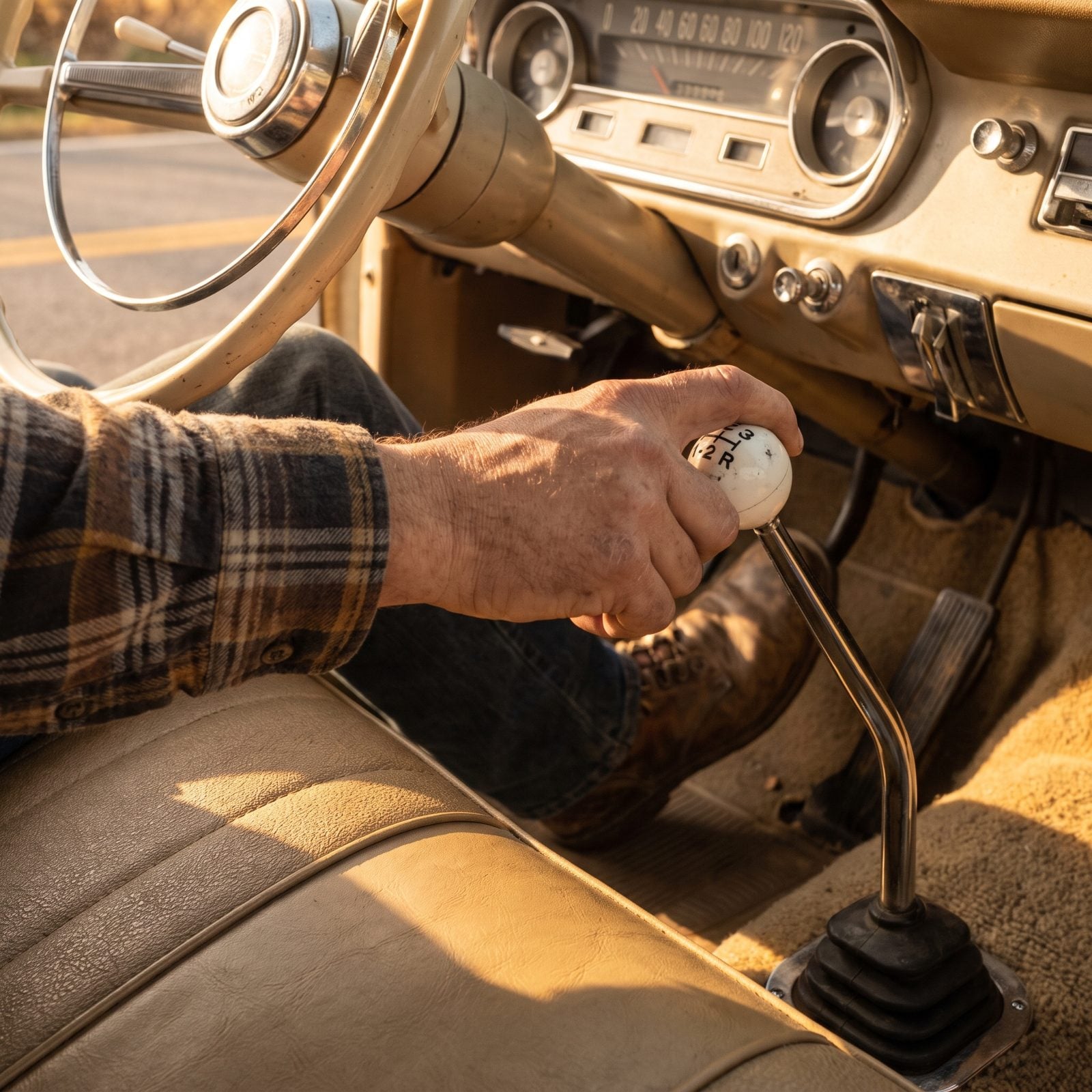
Some old gearboxes have no synchros, or ones so tired they might as well not. You feel it the first time: the shift just won’t go, like pushing a door that’s bolted. That’s when double-clutching stops being a party trick and becomes survival.
Clutch in, to neutral, clutch out, blip the throttle to match the gear speed, clutch in again, slot it home. Do it a thousand times and your left foot taps that rhythm on its own, no thinking required. The reward? A shift that drops in clean instead of grinding like a coffee mill.
12. Skip a Gear Entirely When the Road Lets You
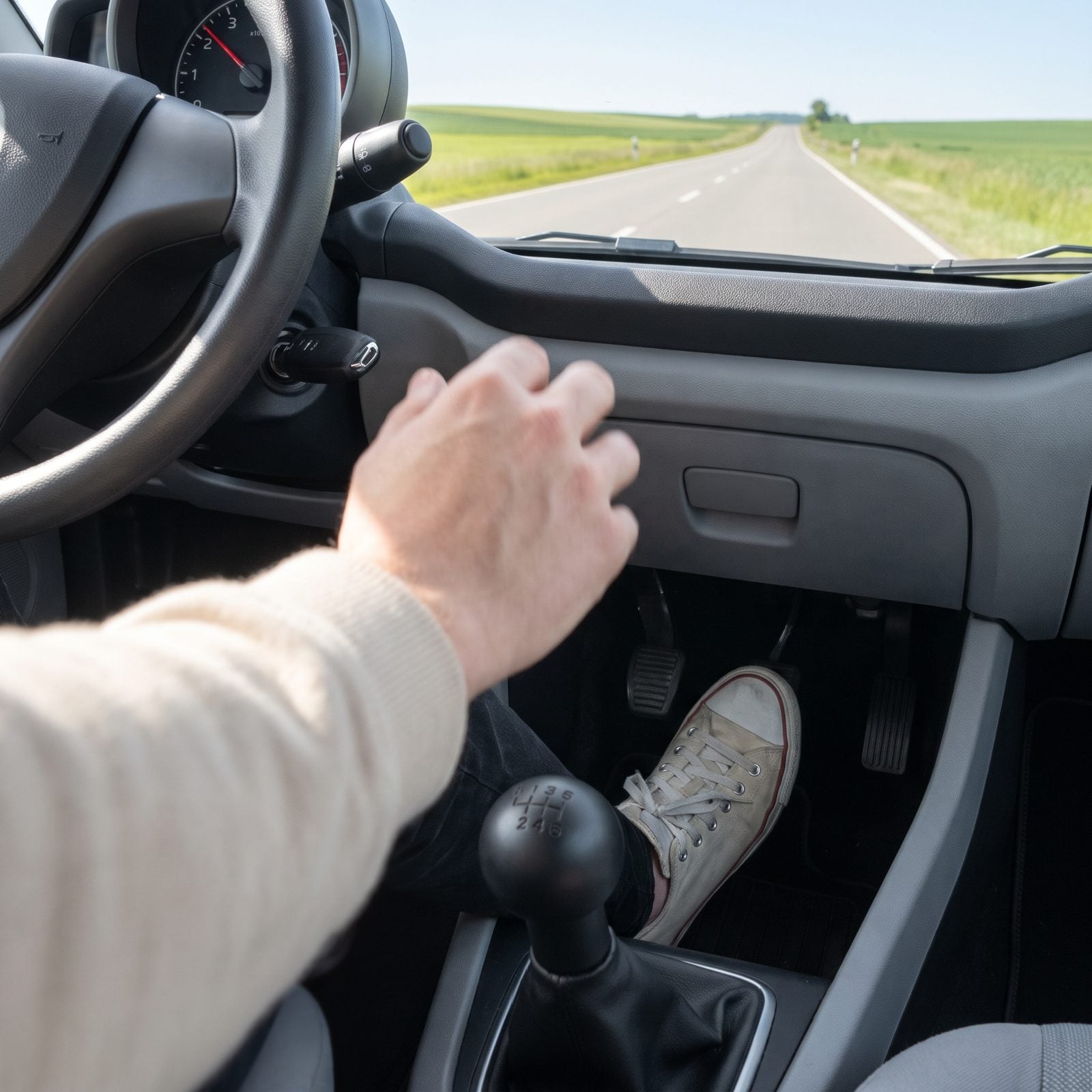
Not every gear earns its turn. Rolling downhill with momentum already building, or easing off a light with nowhere to rush, you can jump second straight to fourth and leave the middle alone. The engine doesn’t care that you snubbed third.
Drivers who’ve been at it a while do this to save a shift, save fuel, save the clutch some grief. The trick is reading whether the engine will accept the gap without bogging down. Get it wrong and you lug. Get it right and the whole motion feels like one long pull instead of three choppy ones.
11. Short-Shift Early When Traction Gets Dicey
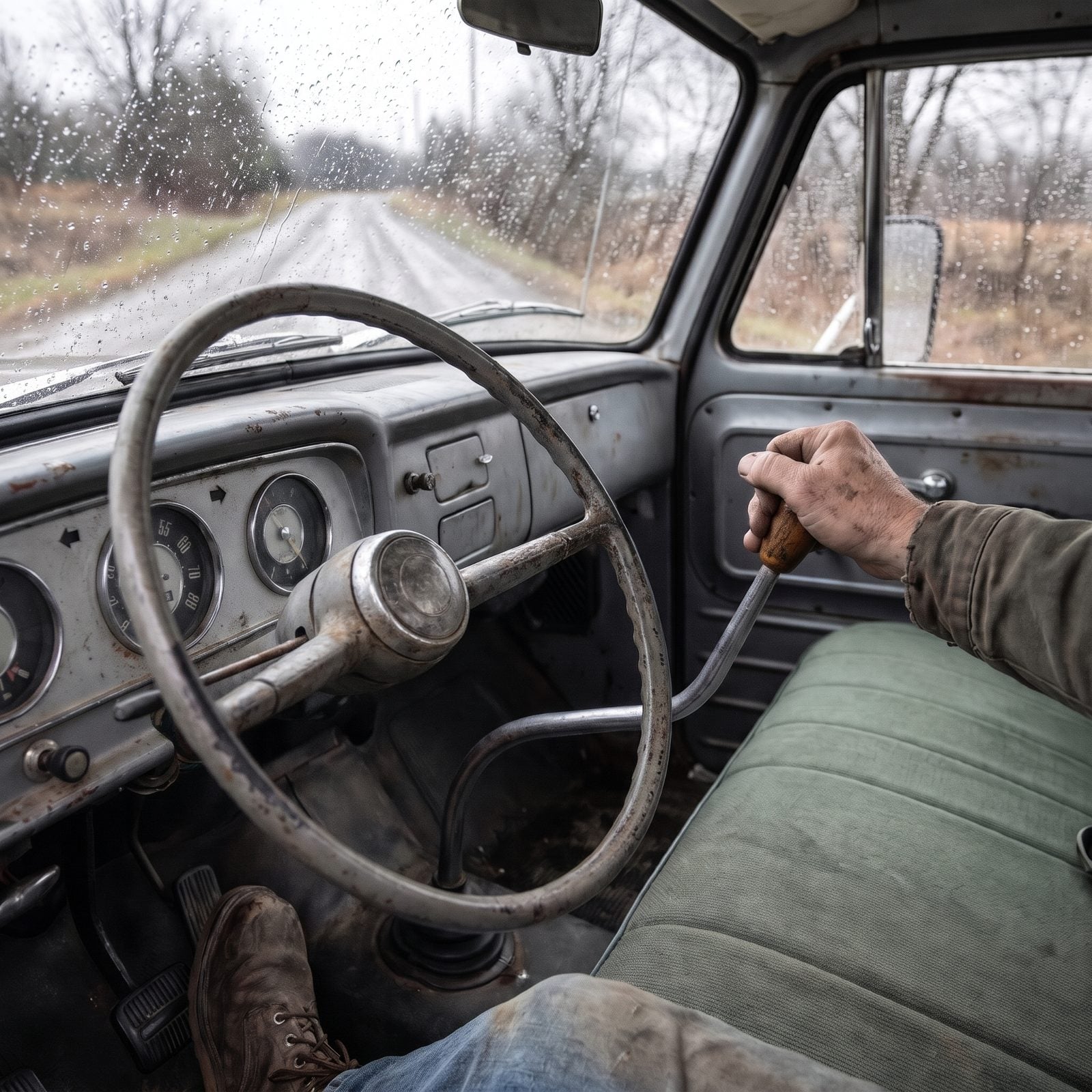
Rain, snow, loose gravel, a leaf-slicked back road in October. The grip is gone and you know it before the tires say so. So you shift up early, way below the usual RPM, keeping the power soft and the revs low.
Less torque hitting the drive wheels means less chance of breaking them loose. It’s the opposite of what feels fun, and that restraint is the whole idea.
10. Hold a Gear Longer Climbing a Stubby Entrance Ramp
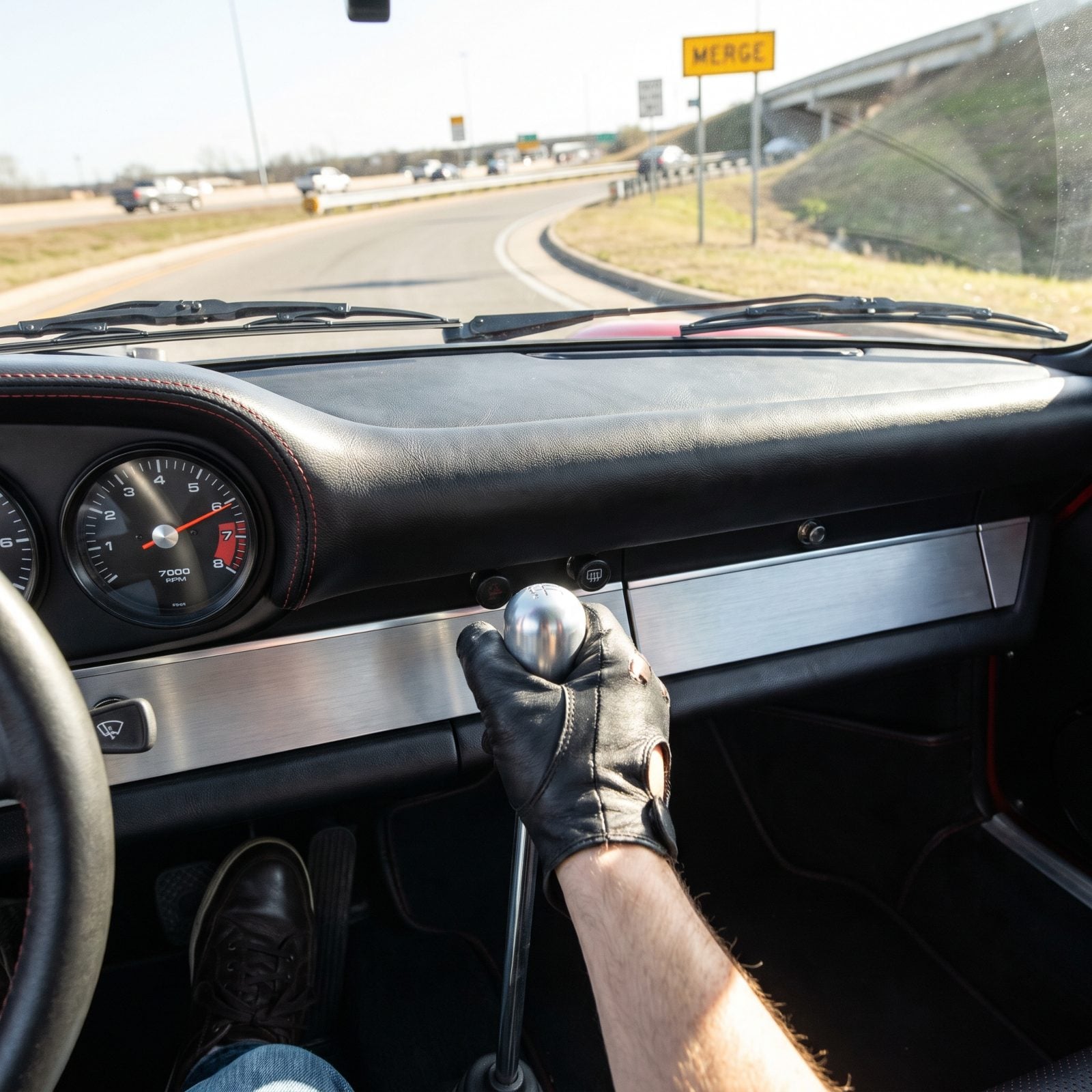
Short ramps are a merge trap. You need speed fast, and the one thing that kills your run is an upshift that drops you out of the power band right when you need every bit of it.
So you hold the gear. Let the revs climb higher than you normally would, wind it up past the middle of the tach, and keep the engine where it pulls hardest until you’re matched to traffic. One extra shift on a tight ramp can be the whole difference between slotting in clean and sitting on the shoulder with your blinker on, begging.
9. Downshift the Instant the Engine Starts to Lug
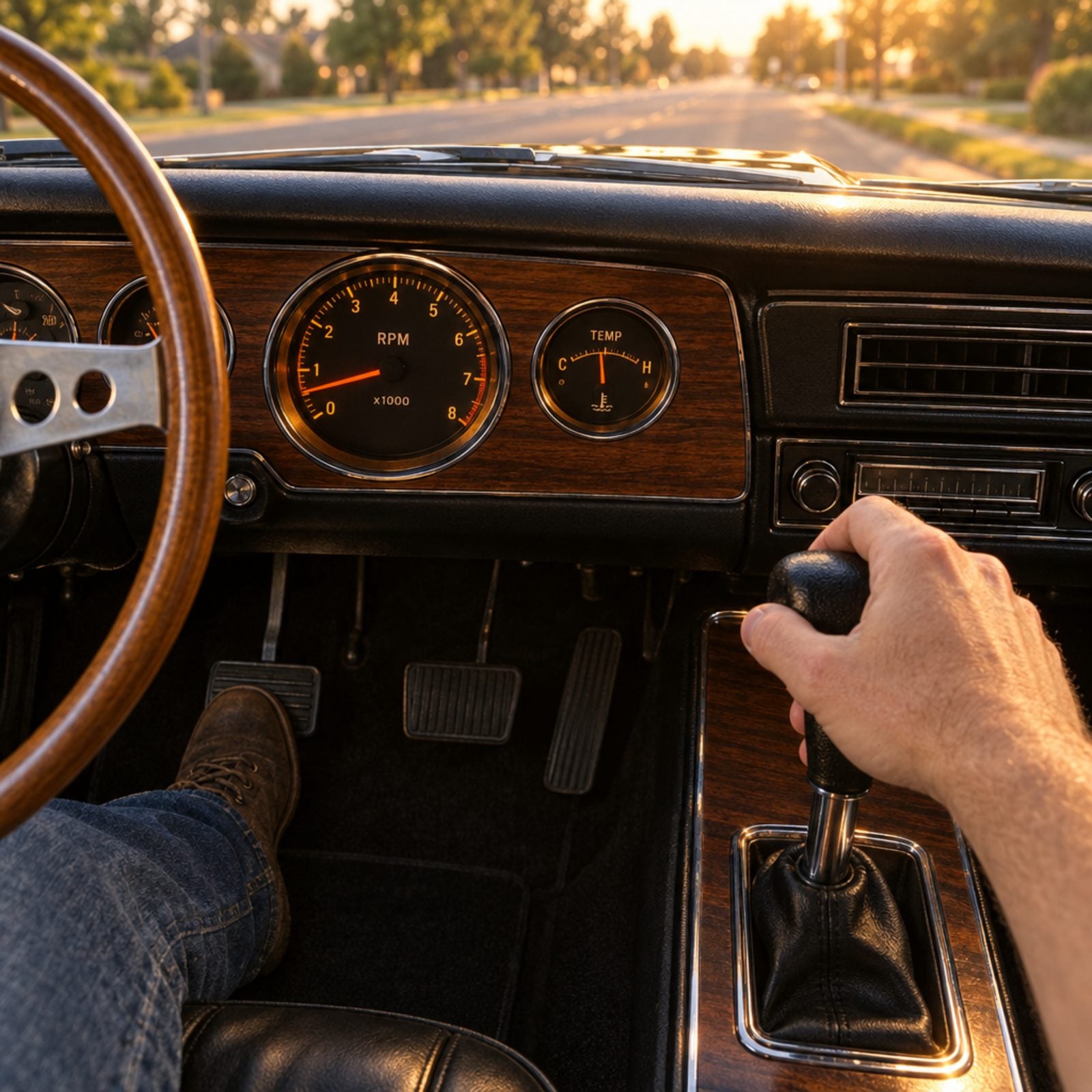
Lugging is the engine begging. You know the feel: the whole car shudders faintly, the throttle goes mushy, and the motor sounds like it’s chewing something it can’t swallow. Push through that and you’re grinding bearings and knocking pistons for no good reason.
The reflex is immediate. Down a gear, revs back into the happy zone, shudder gone. After enough years you don’t wait for the shake at all. You hear the tone change and your hand’s already there.
8. Baby the Car Until the Oil and Gears Warm Through
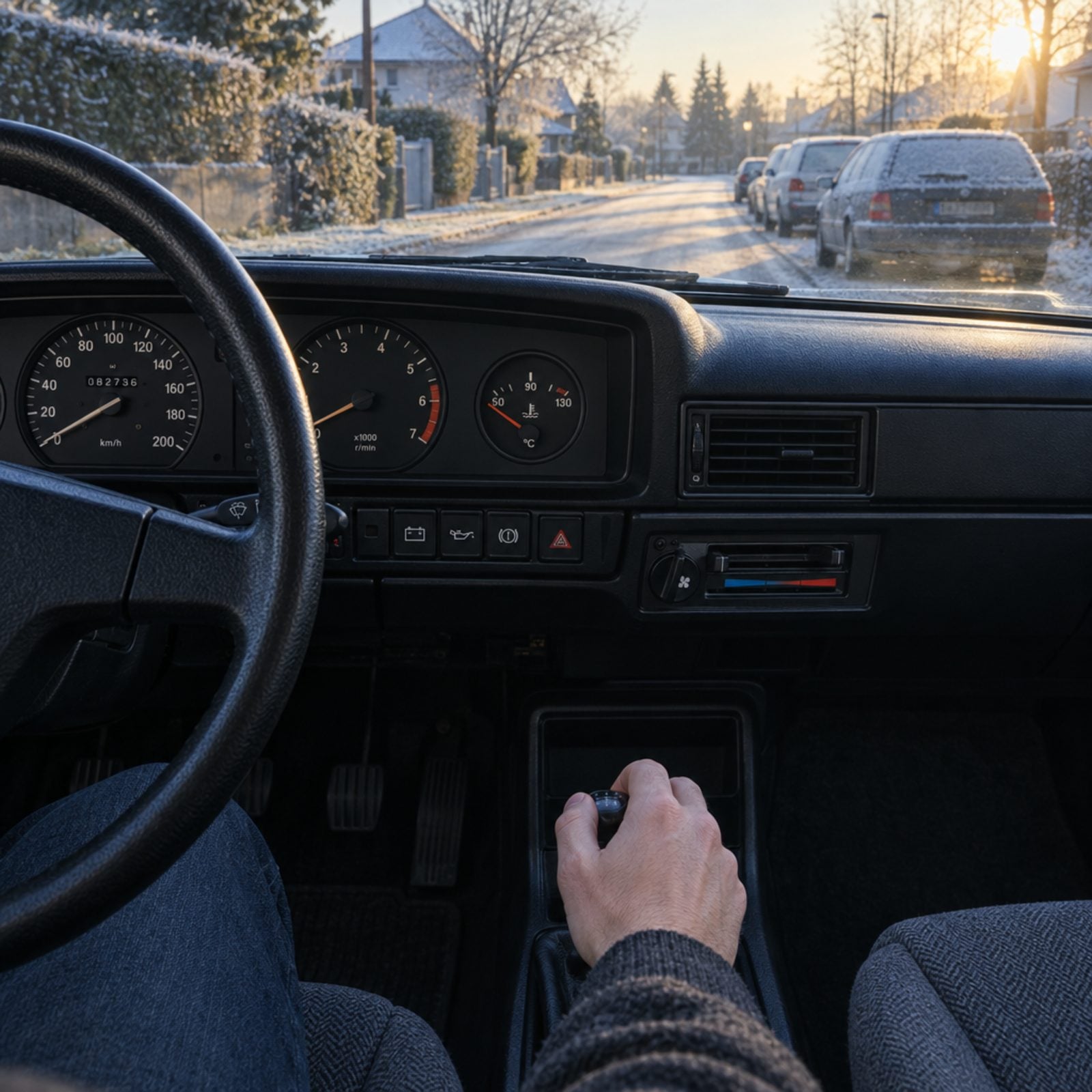
Cold oil is thick as syrup, and cold gear lube is worse. For the first few minutes, everything inside your car is stiff and gritty and resentful of being asked to move.
So you keep the revs modest, the shifts gentle, the throttle light, and you let that temperature needle lift off the peg before asking for anything serious. The gearbox will tell you when it’s ready. A shift that fought you on the first block slides home like butter once the lube finally thins out.
7. Keep the Clutch Up Until You’re Nearly Stopped
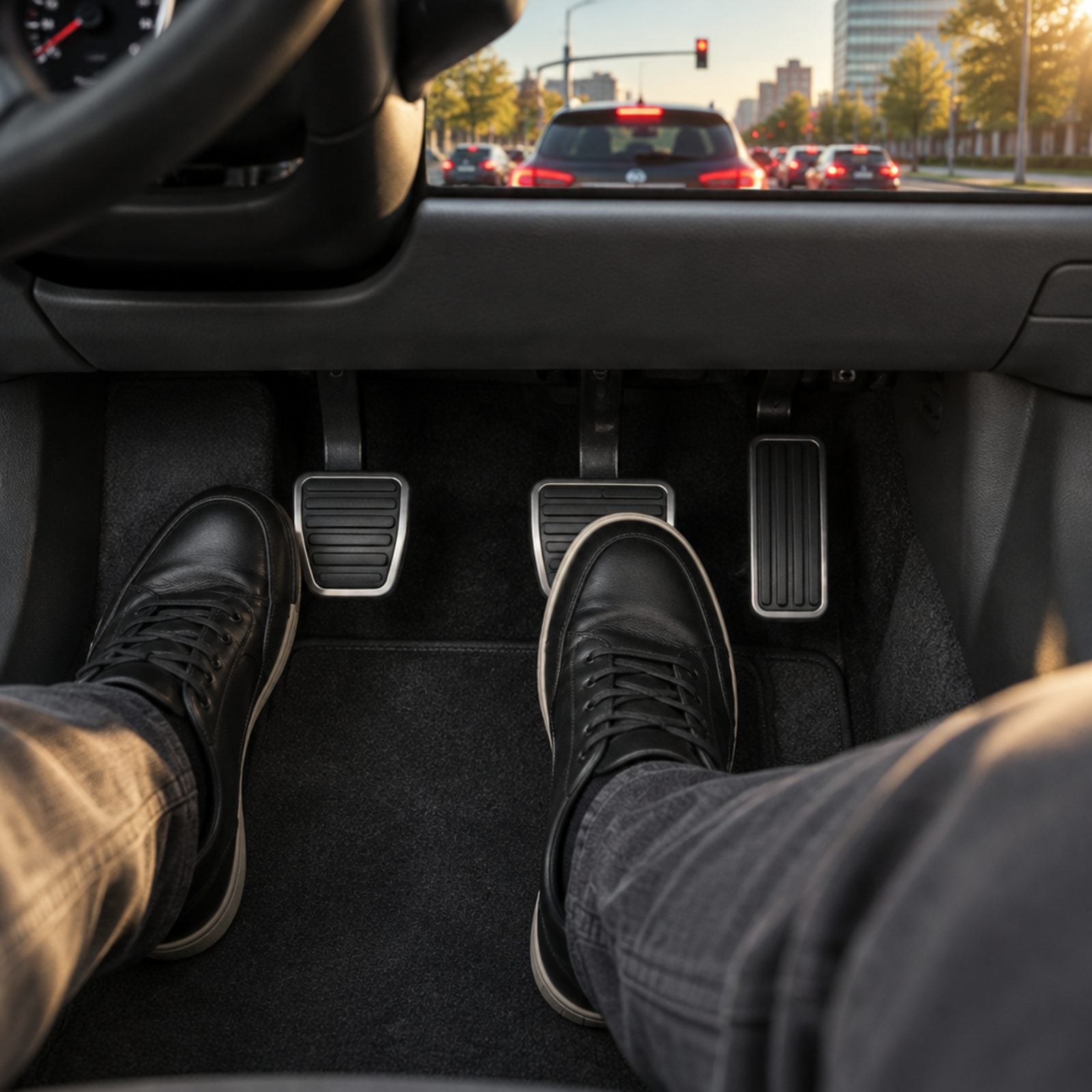
New drivers stab the clutch the second they lift off the gas, then coast half a block out of gear. Experienced ones don’t. You stay in gear, let the engine help slow the car, and only press the clutch in that last breath before stopping.
Here’s why it matters. Coasting out of gear robs you of engine braking, control, and the ability to punch out of trouble instantly. Clutch down early is just dead weight rolling. Clutch down late keeps you tied to the car right up to the line.
6. Leave It in First or Reverse, Never Neutral
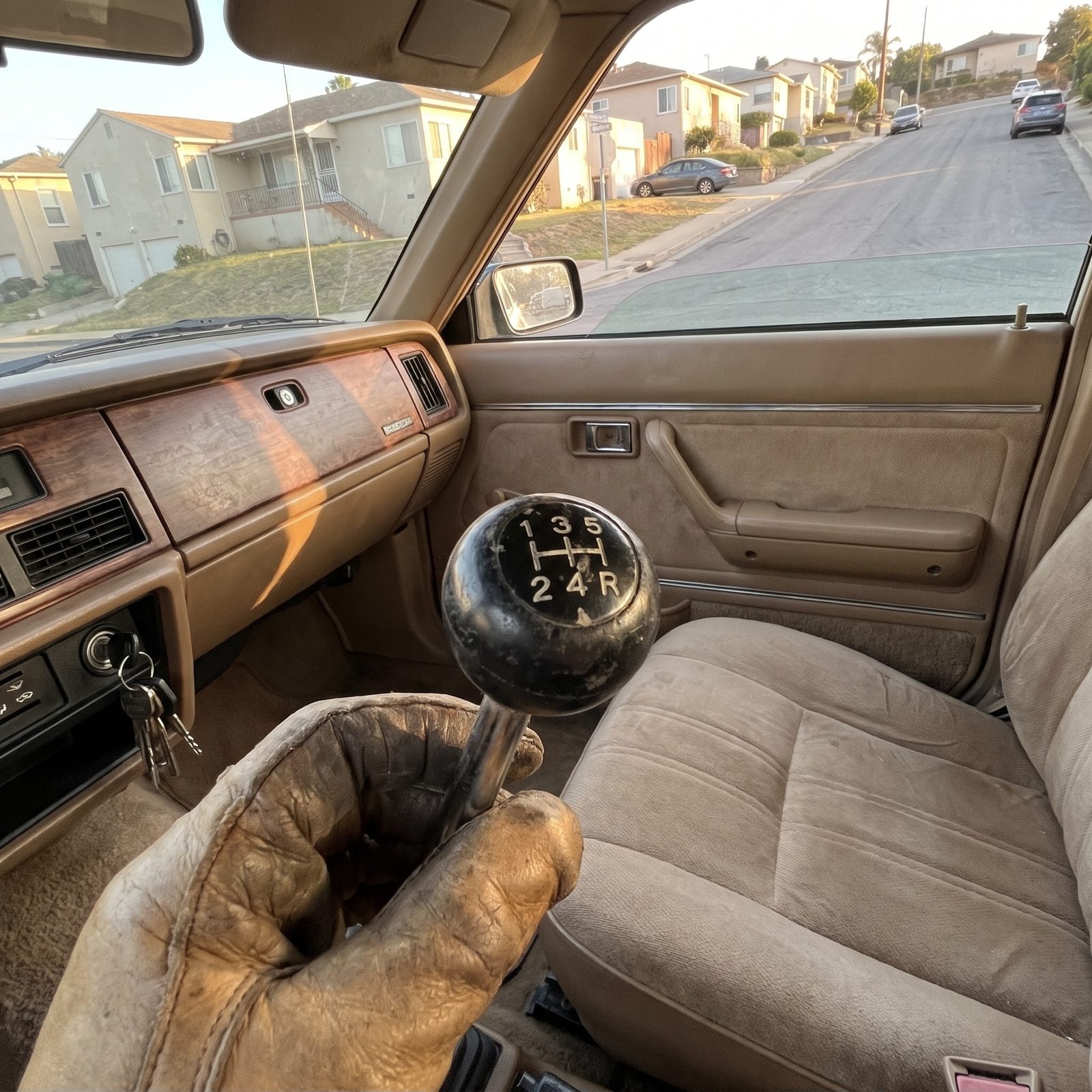
Park on any kind of slope and a car in neutral is held by exactly one thing: the parking brake. Cables stretch. Brakes fade. And then you’re chasing your own car down the street in your socks.
Leave it in gear and the engine’s compression becomes a second anchor. Nose-up, first gear. Nose-down, reverse. The motor physically fights the roll. It’s a free backup that costs nothing and has saved more cars than any alarm ever built.
5. Pull the Parking Brake Every Single Time
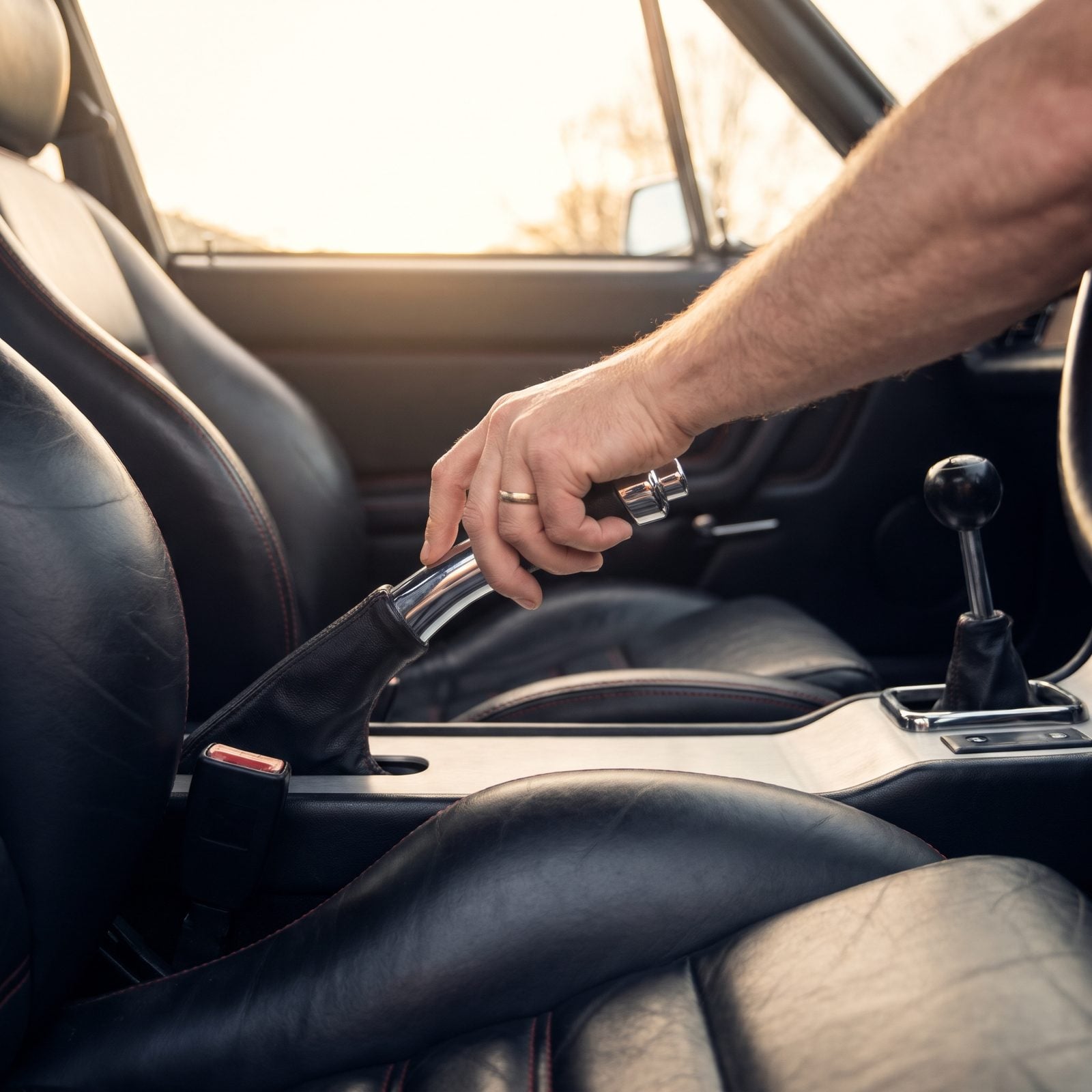
Flat ground, your own driveway, a parking spot you’ve used a thousand times. Doesn’t matter. The parking brake goes on every time, because the one day you skip it is the day the ground turns out to be less flat than you figured.
There’s a sneaky second benefit here. A brake that gets used stays free and functional. One that sits idle for months seizes up, the cable corrodes, and it quits on you the exact moment you finally need it. Pull it daily and the whole mechanism stays alive. Set it, feel the ratchet click, walk away knowing the car’s going nowhere.
4. The Half-Second Pause Before Reverse
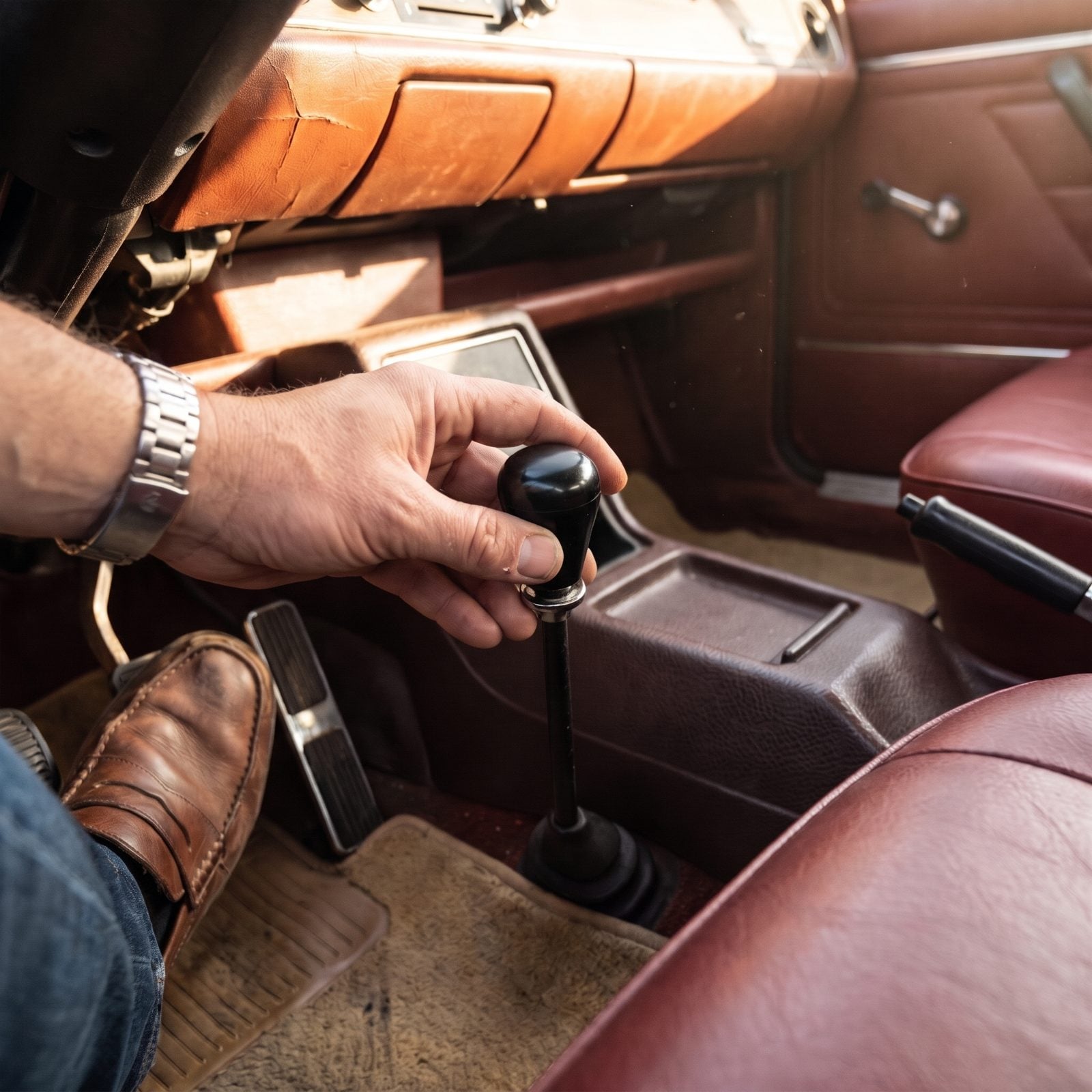
Watch anyone who’s driven a stick for thirty years back out of a parking spot. There’s a beat before the gear goes in — a tiny hesitation. The right foot settles over the pedals, the bare hand settles on the lever, and only then does reverse engage.
That pause isn’t indecision. It’s muscle memory from a thousand unsynchronized reverse gears that grind if you rush them. Reverse rarely gets a synchronizer, so you learn to wait, let the cogs stop spinning, then slide in clean. The ones who never figured that out announced themselves with a crunch you could hear across the lot.
3. You Know a Cooked Clutch by Smell Alone
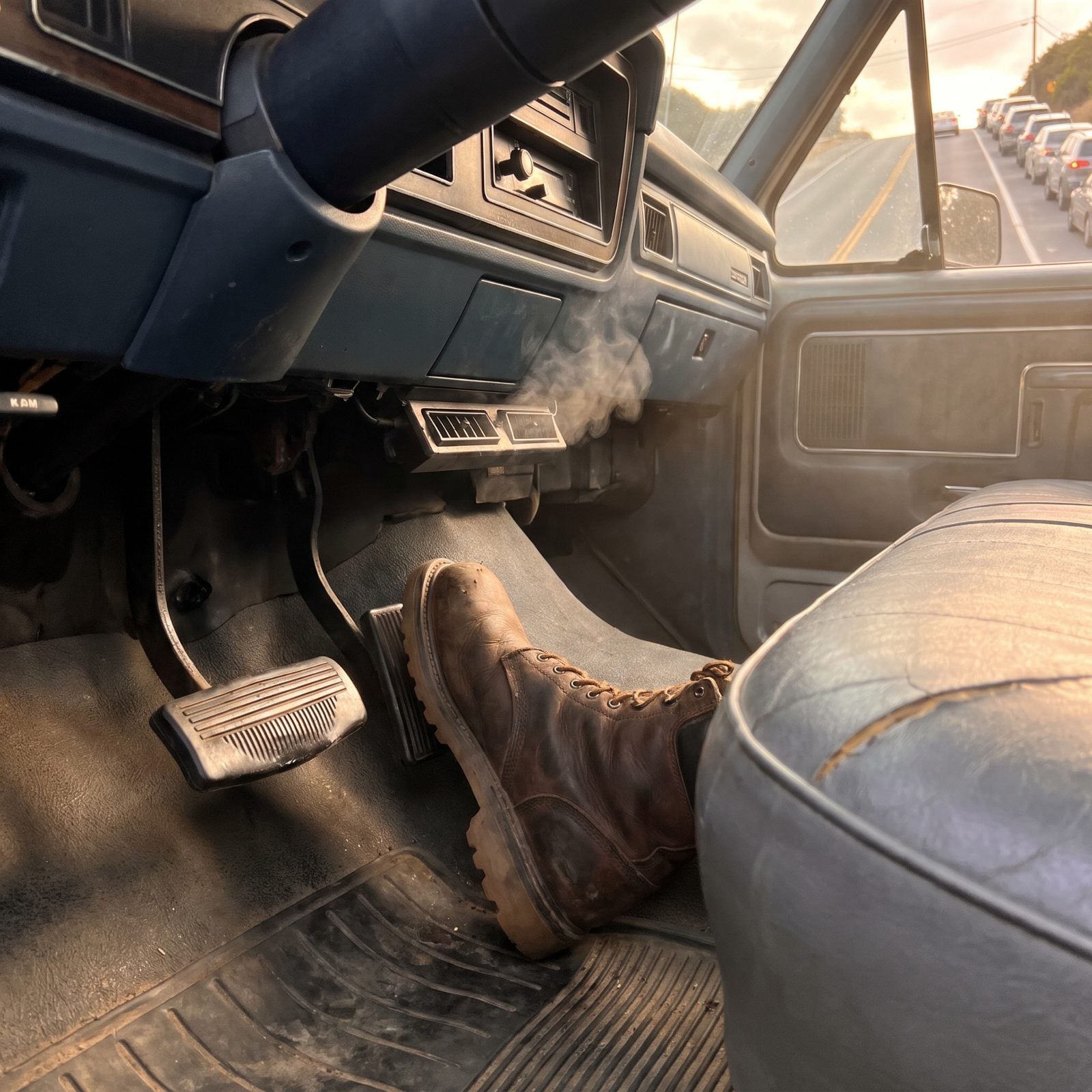
Acrid and sweet at the same time. Like scorched toast crossed with hot brake dust. Smell a slipping clutch once and you’ll never mistake it for anything else.
It usually hits on a hill in stop-and-go traffic, where a newer driver feathers the gas pedal to hold position instead of just using the brake. The clutch’s friction disc glazes, the facing scorches, and the whole cab fills up with it. Longtime drivers catch that smell and their right foot is off the gas before the thought even finishes forming.
A clutch tells you it’s dying long before it quits. You just have to have a nose for it.
2. Feeling a Tired Synchro Through Your Palm
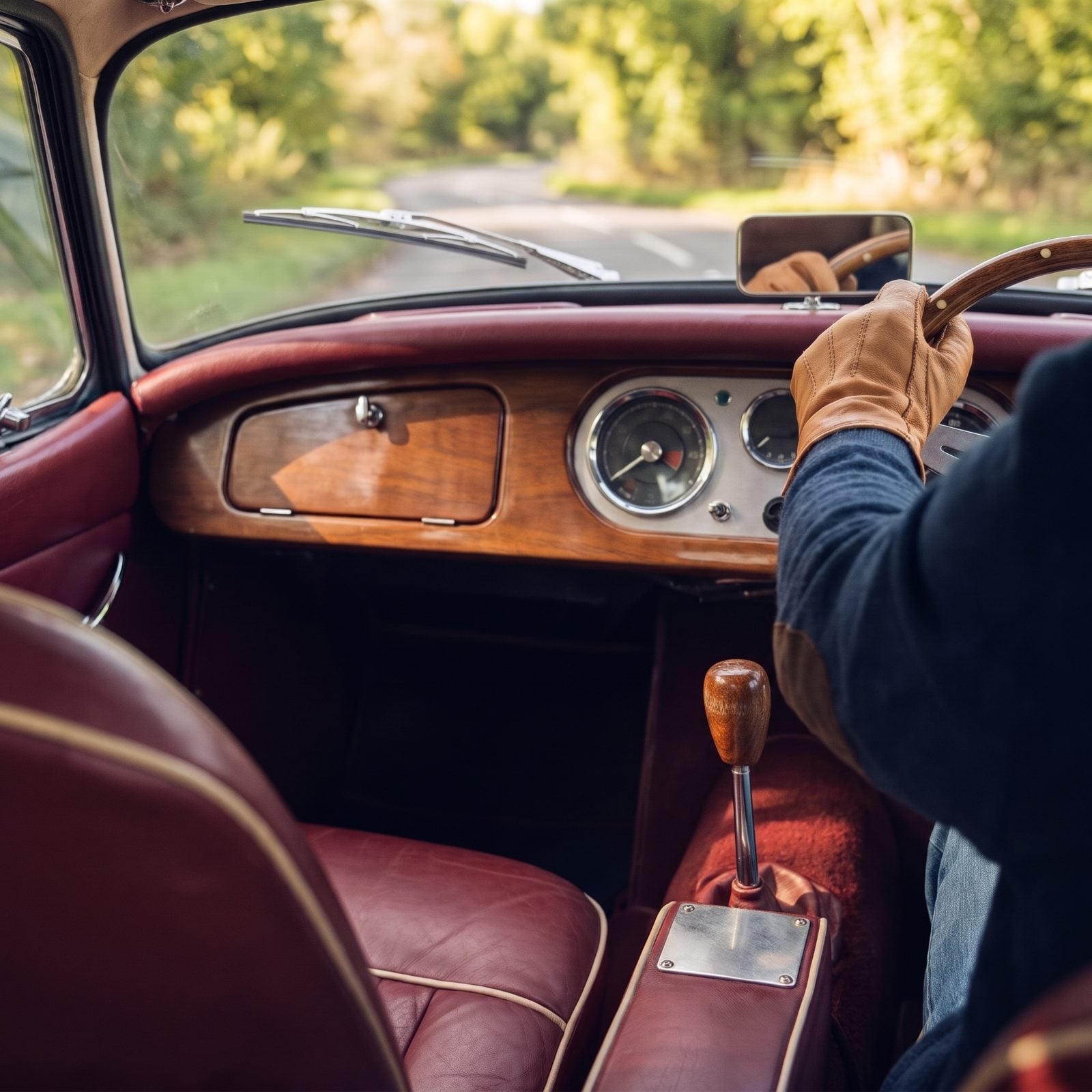
A worn synchronizer talks to you through the lever long before it shows up on a repair bill.
Second gear goes first, usually. You feel a faint resistance going into it when the oil’s cold, a little notch where the shift used to be smooth. Nothing dramatic — just a snag in the palm, like a drawer that’s started catching on its runner.
Drivers who’ve logged decades on manual boxes read that feedback like a doctor reads a pulse. They’ll double-clutch second without thinking to spare it, long before anyone else even senses trouble. Ignore one of these for two winters and it’s a mistake you’ll only make once.
1. Your Left Foot Stabs a Pedal That Isn’t There
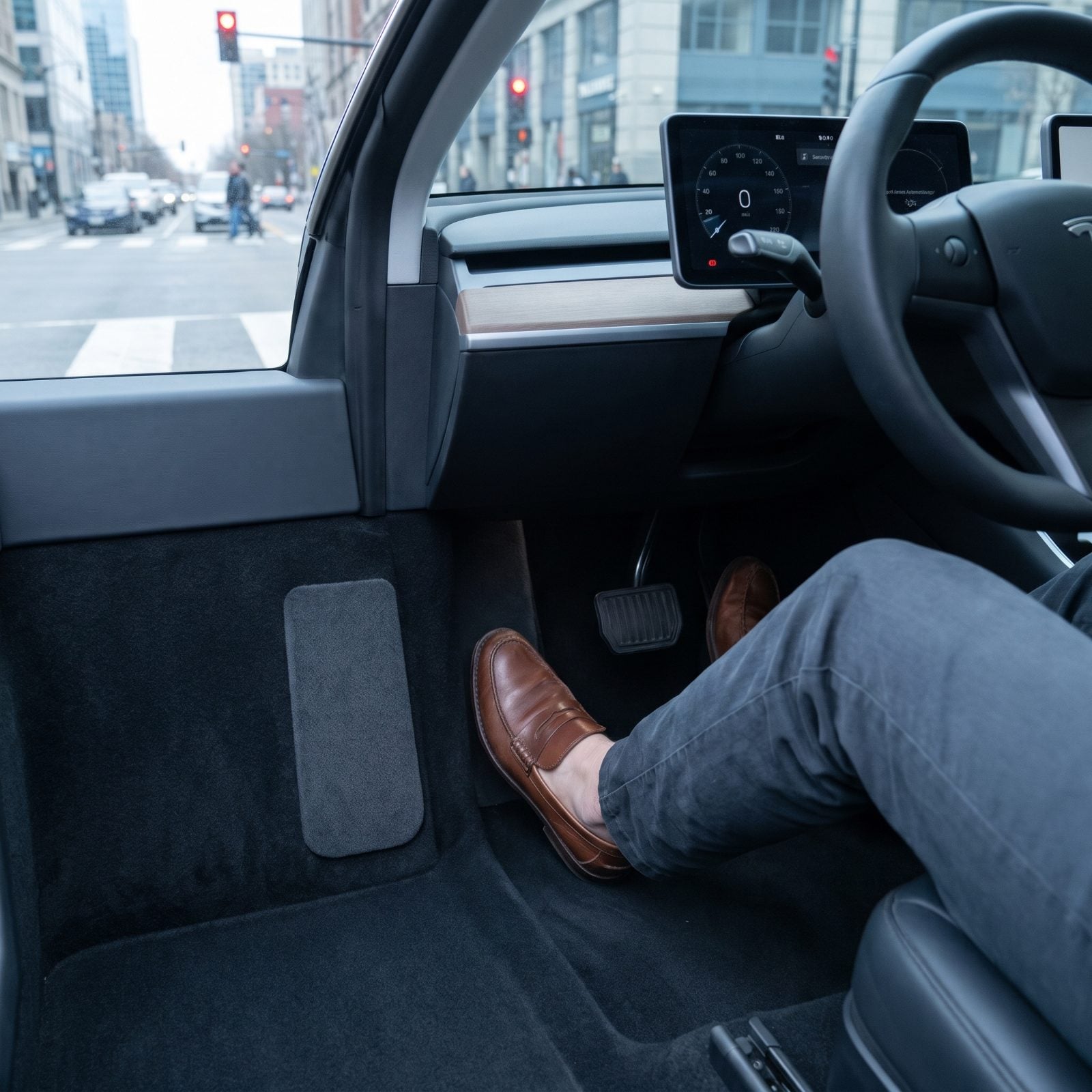
Climb into a rental automatic after a lifetime of three pedals, and your body never gets the memo.
First stop light, your left foot drives down hard hunting for a clutch and finds carpet. The car lurches as your right foot mistakes the brake for something it needs to hold. Meanwhile your hand drifts right toward a shifter that’s already in Drive and doesn’t want the company.
It fades after a day or two. Then you slide back into your own car and the whole dance returns like you never left. Thirty years of coordination doesn’t unlearn itself — it just naps.