
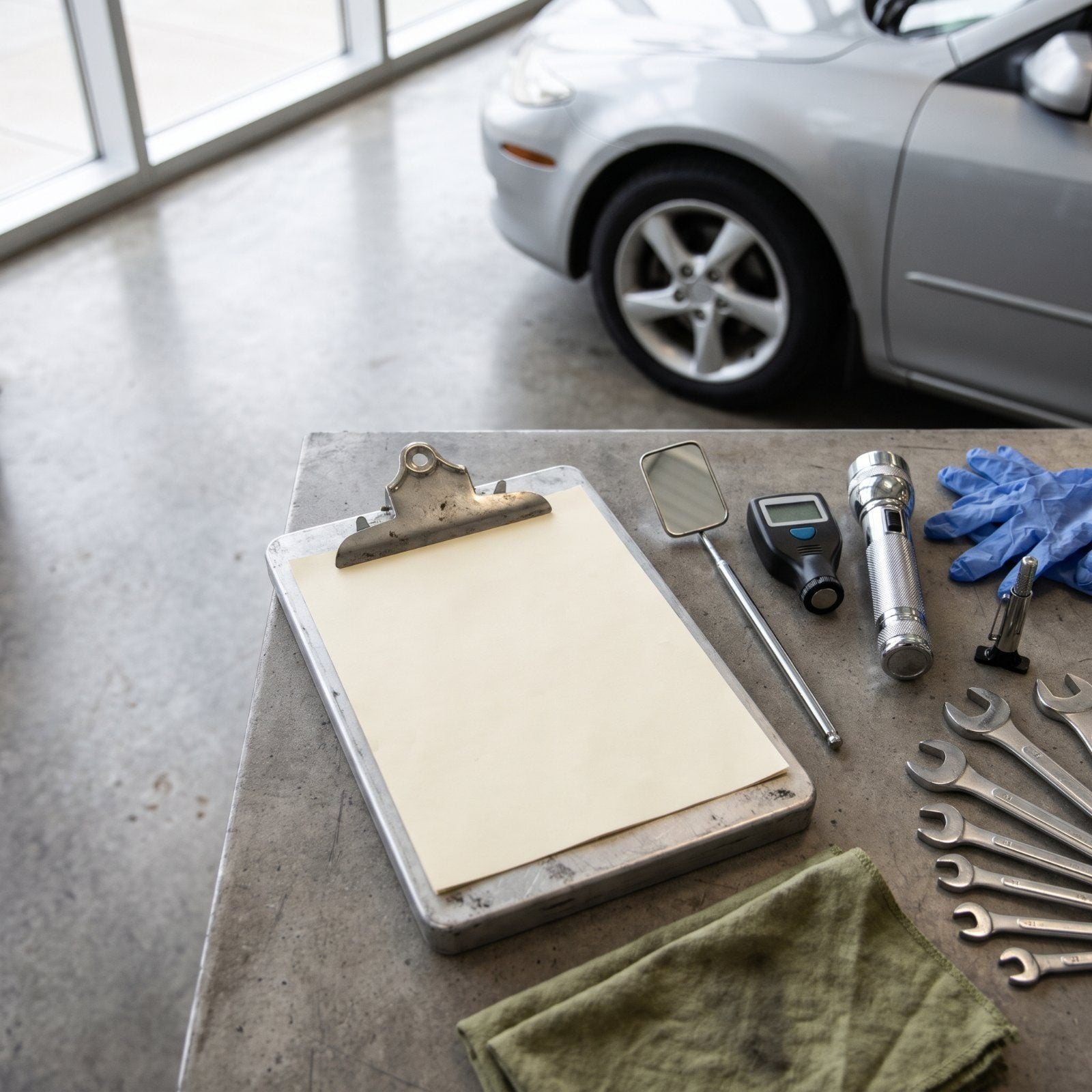
The valuation starts the second the car rolls into the lot — not when the clipboard comes out, not when the scanner plugs in, but before any of that. A good appraiser has already shaved or added a few hundred dollars just watching the thing arrive and walking a slow lap around it. The tailpipe tells on the engine, the paint tells on a crash, and the bolts rat out whoever had a wrench on them last. None of it is hidden, exactly. You just have to know where a car keeps its secrets. Here’s what we read first.
Please note that some of the images in this article were created with the assistance of AI.
46. Blue, White, or Black Smoke as the Car Arrives
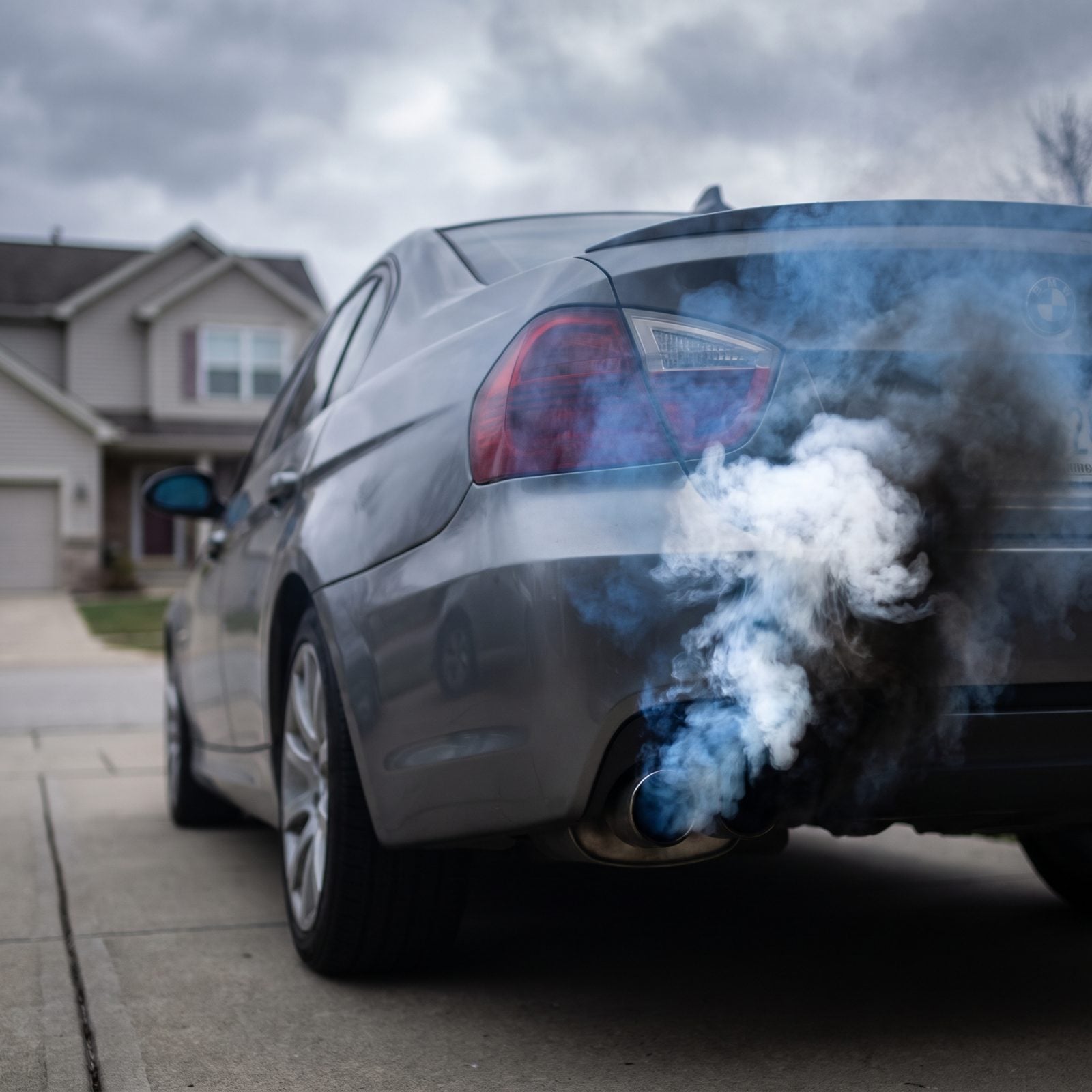
The color of the smoke is a confession, and it happens in the first fifteen seconds. Blue means oil is burning where it shouldn’t — usually worn rings or valve seals — and that’s a wallet-emptier. White that lingers instead of clearing points at coolant in the combustion chamber, which is a bad head gasket, maybe worse. Black? That just means it’s running rich, which is often cheap to sort.
A cold start blows the most, and so does a hard rev at the keys. If a seller cranks it, blips the throttle, and the pipe puffs blue, the number in the appraiser’s head drops before a door opens.
45. Fresh Fluid Spots Beneath the Parked Car

You park the car, then you look where it was parked. Amber and oily is engine oil. Bright red or pink is transmission or power steering fluid, and that pink is the one that makes an appraiser wince. Clear and slick could be brake fluid — a safety flag, not a bargaining chip.
Now here’s the trick within the trick. A car that was just cleaned underneath — degreased and spotless on an old vehicle — is sometimes hiding a seep somebody didn’t want you tracing. A fresh drip on the ground beats a suspiciously clean oil pan every time.
44. Paint That Changes Shade Between Body Panels
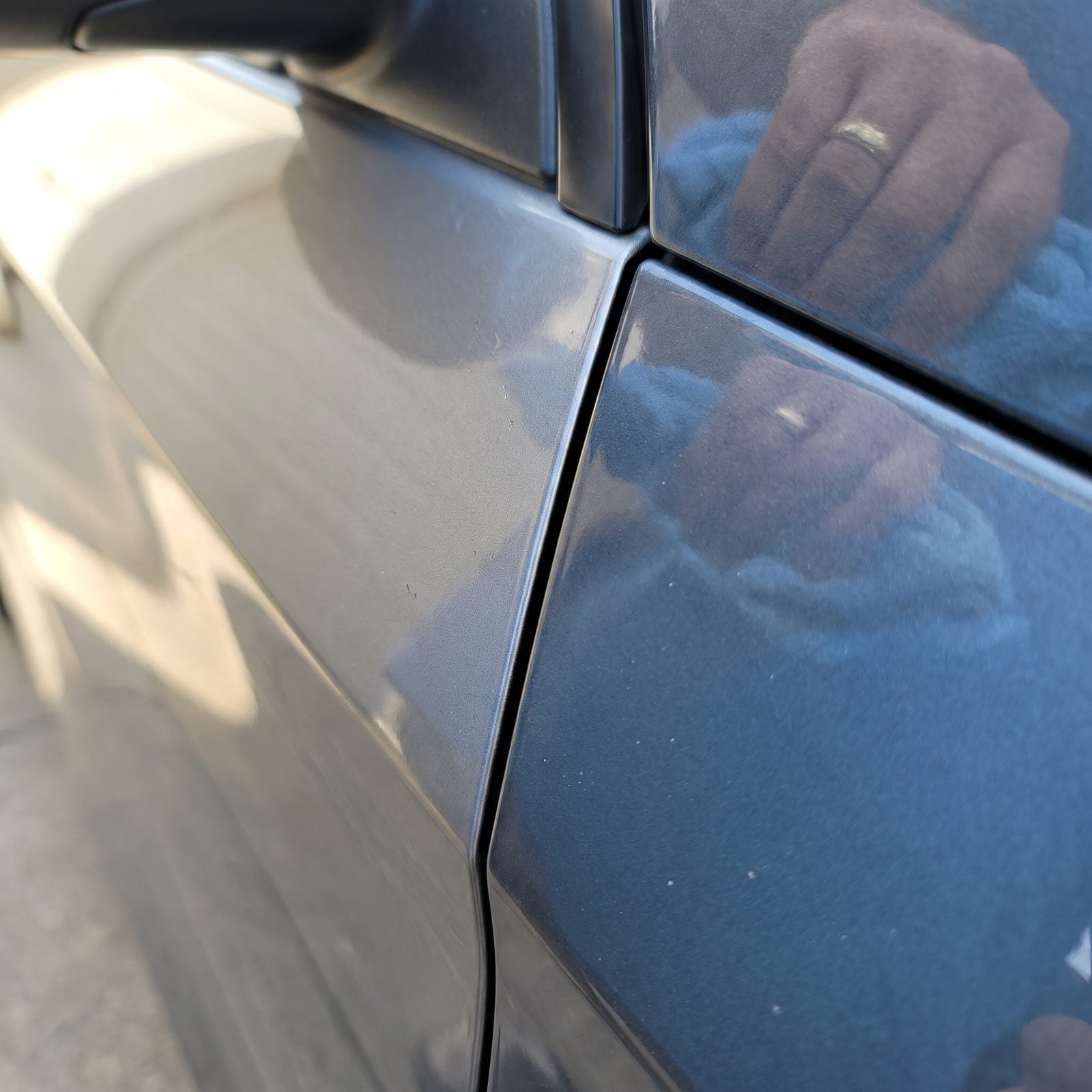
Factory paint comes off the same gun, same booth, same batch. It matches across the whole car because it was never meant to be matched later. The moment one panel reads a half-shade off, you’re looking at a repaint — and a repaint means something happened to that panel.
Metallic and pearl colors are the hardest to blend, so they give it away fastest. Walk the car at an angle in daylight, never under the lot’s sodium lights, and let your eye slide from fender to door to quarter. The panel that stands out is the one with a story.
43. Panel Gaps That Are Wider on One Side
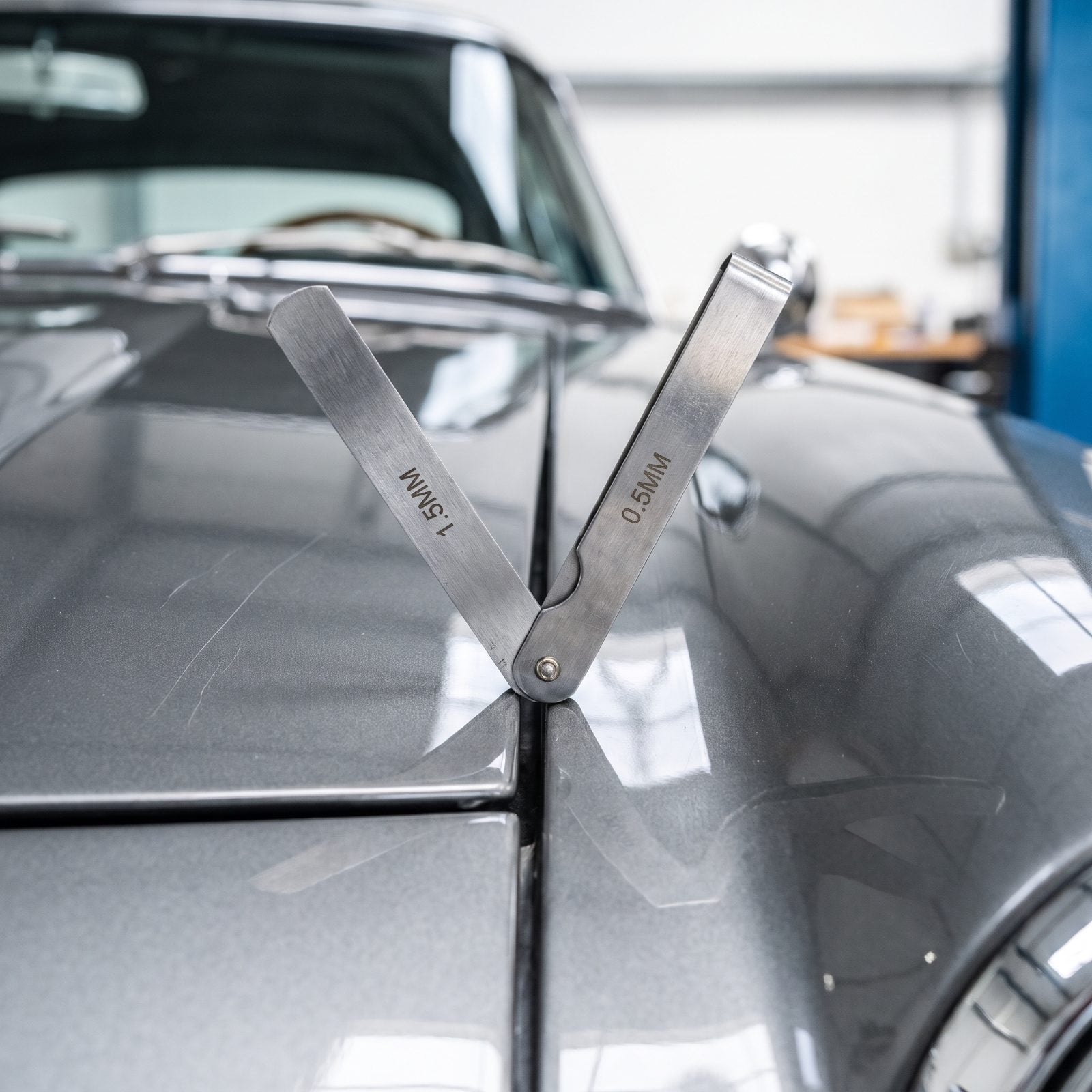
Robots build even gaps. People don’t. A factory line sets the space between hood and fender to the same width all the way down. When that gap is tight at the top and yawning at the bottom, or wider on the left than the right, something was pulled off and bolted back by hand.
Doors give the quickest read. Run your eye down the shut line where the door meets the quarter panel. A taper there suggests a hit and a re-hang — one of the oldest reads in the book, because it doesn’t lie and it doesn’t need a tool.
42. Wavy Reflections That Suggest Body Filler
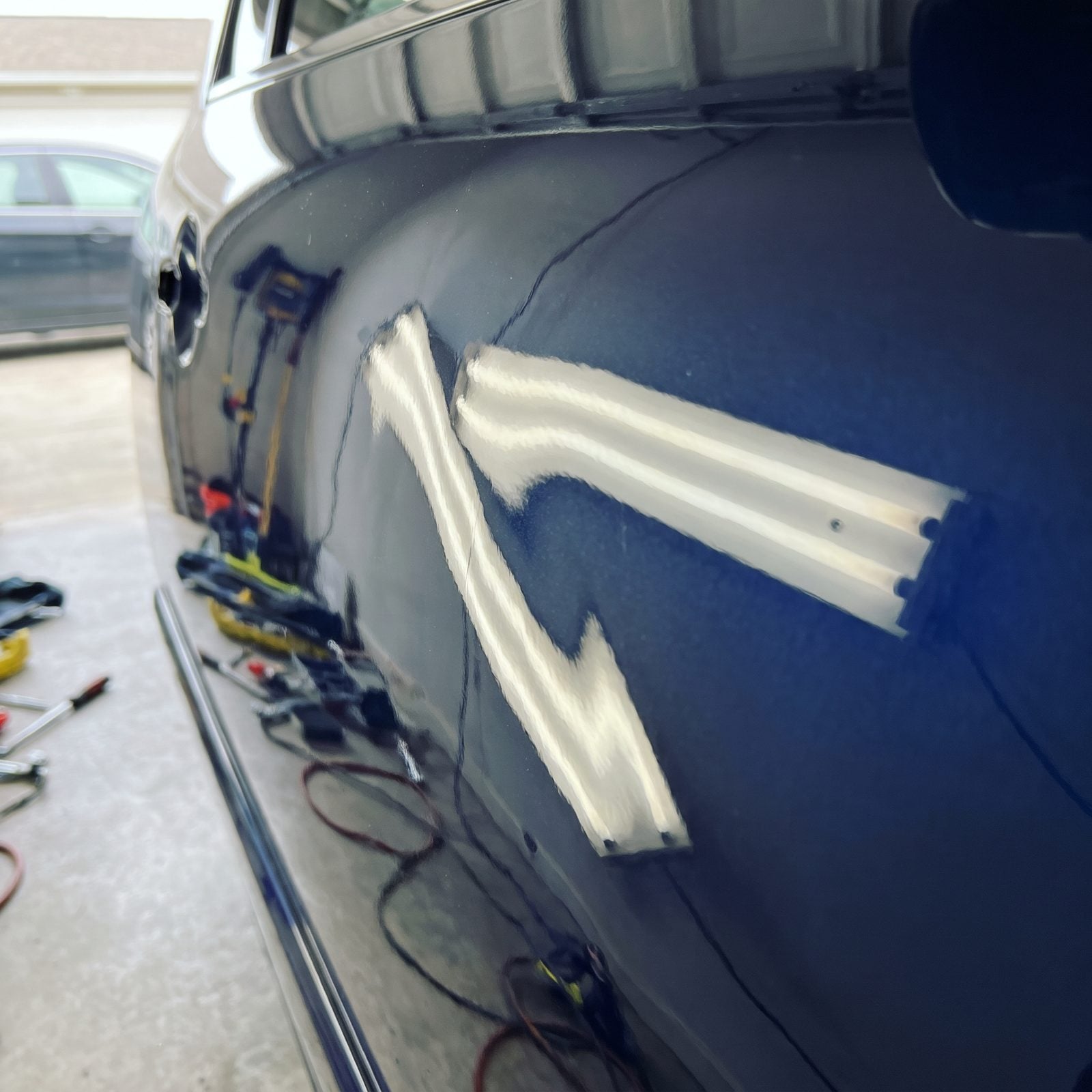
Body filler hides under paint, but it can’t hide from a straight reflection. Find a clean line in the surroundings — a building edge, a light bar, the horizon — and watch how it mirrors along the panel. Over honest steel it stays straight. Over a thick patch of filler it bends and waves.
Dark colors show it best. A black car under open sky is about the closest thing to an x-ray you’ll get in a parking lot.
41. Overspray or Masking Lines Around Trim and Panel Edges
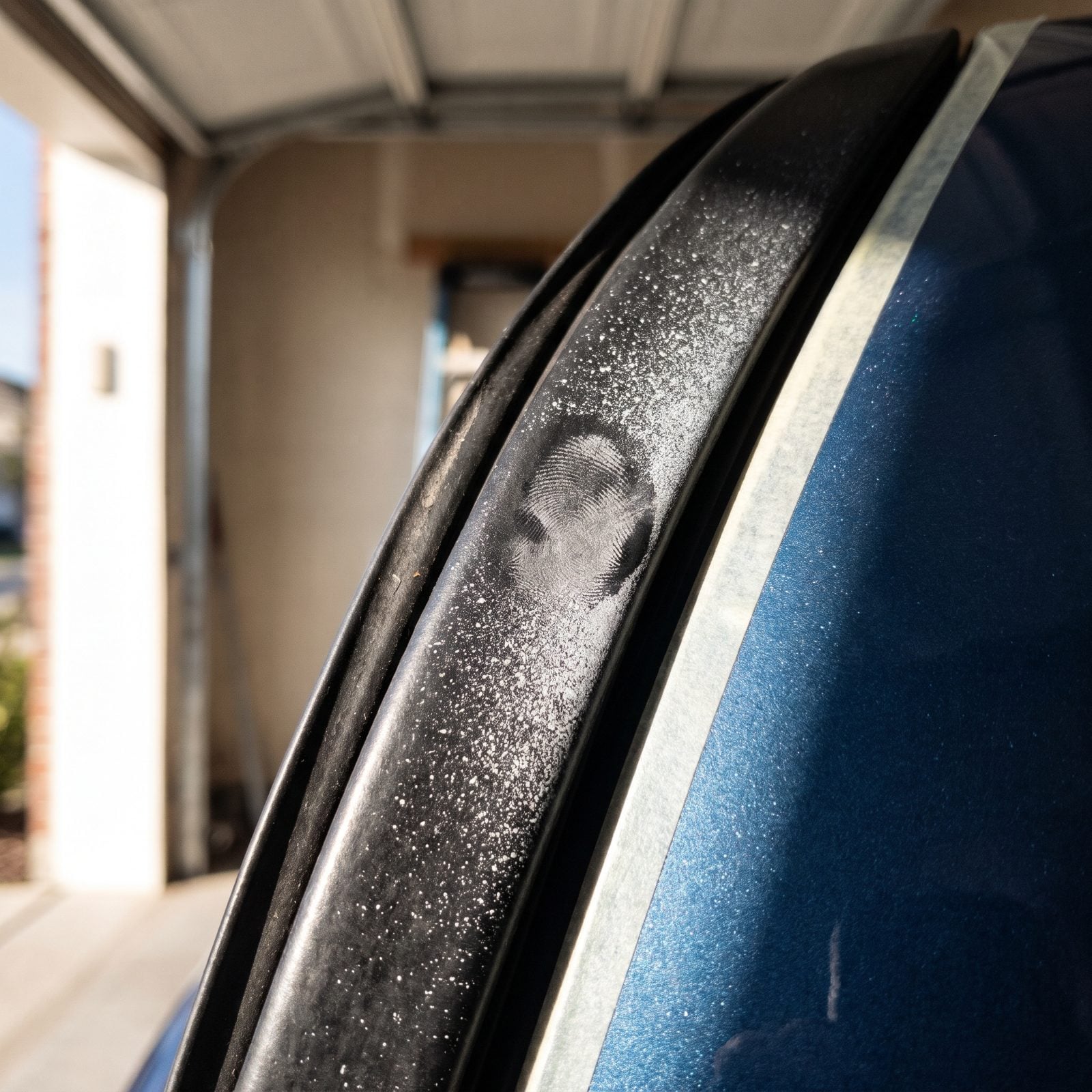
A real body shop masks everything, and still, something slips. A quick driveway respray leaves fingerprints all over the edges. Look at the rubber weatherstripping, the inside of the fuel door, the plastic trim, the chrome around the glass. Paint dust where paint shouldn’t be is overspray, and overspray means a panel got shot.
Then there’s the hard masking line — a crisp ridge where fresh paint stopped against old. Run a fingernail along a door jamb edge. Feel a step or spot a tape line, and you’ve found the border of the repair the seller forgot to mention.
What Our Readers Say
- Condition counts with our readers too: photos of restored, concours-condition cars got hearts 82% of the time, versus 76% for the other images in the same articles.
From Jalopy Talk reader polls and votes.
40. Tool Marks on Fender and Hood Bolts
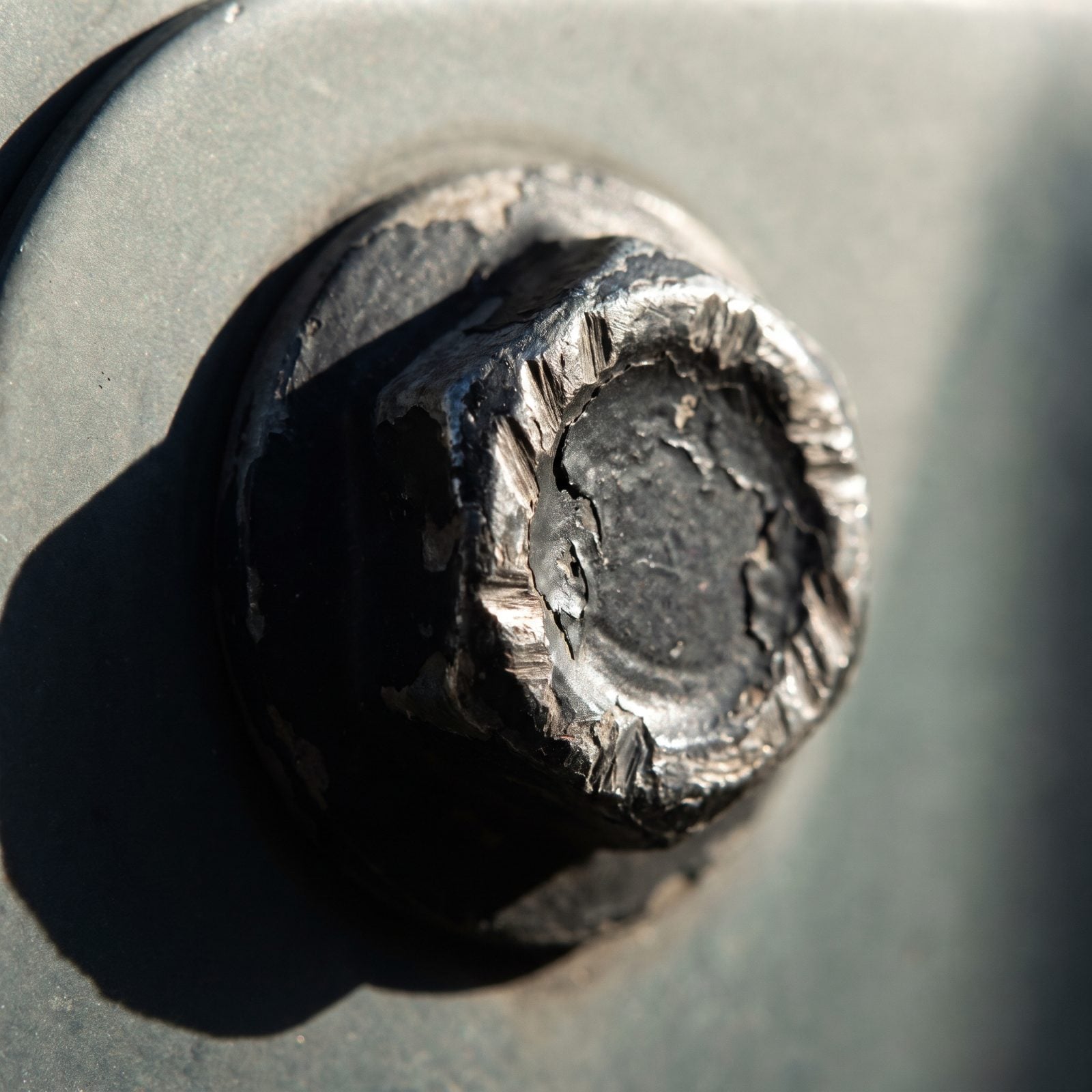
Factory bolts wear their original coating like a wax seal — the paint over them, the little dab of inspection marker, the untouched finish on the head. Once a wrench has been on a bolt, that coating scuffs, chips, and shows bare metal. So appraisers pop the hood and go straight to the fender bolts and the hood hinge bolts.
Scraped, scratched, or freshly installed bolts on a panel that should never have come off tell you it came off anyway. Which means a fender was replaced. Which means a collision. The bolts give up the body work even when the paint is flawless.
Writing about how to spot accident repairs, a UK garage veteran with decades of vehicle assessments says “In my experience, factory bolts usually have intact paint and consistent markings. If bolt heads show tool marks, chipped paint, or fresh corrosion, it suggests the panel has been removed or adjusted.”
39. Missing or Disturbed Factory VIN Stickers
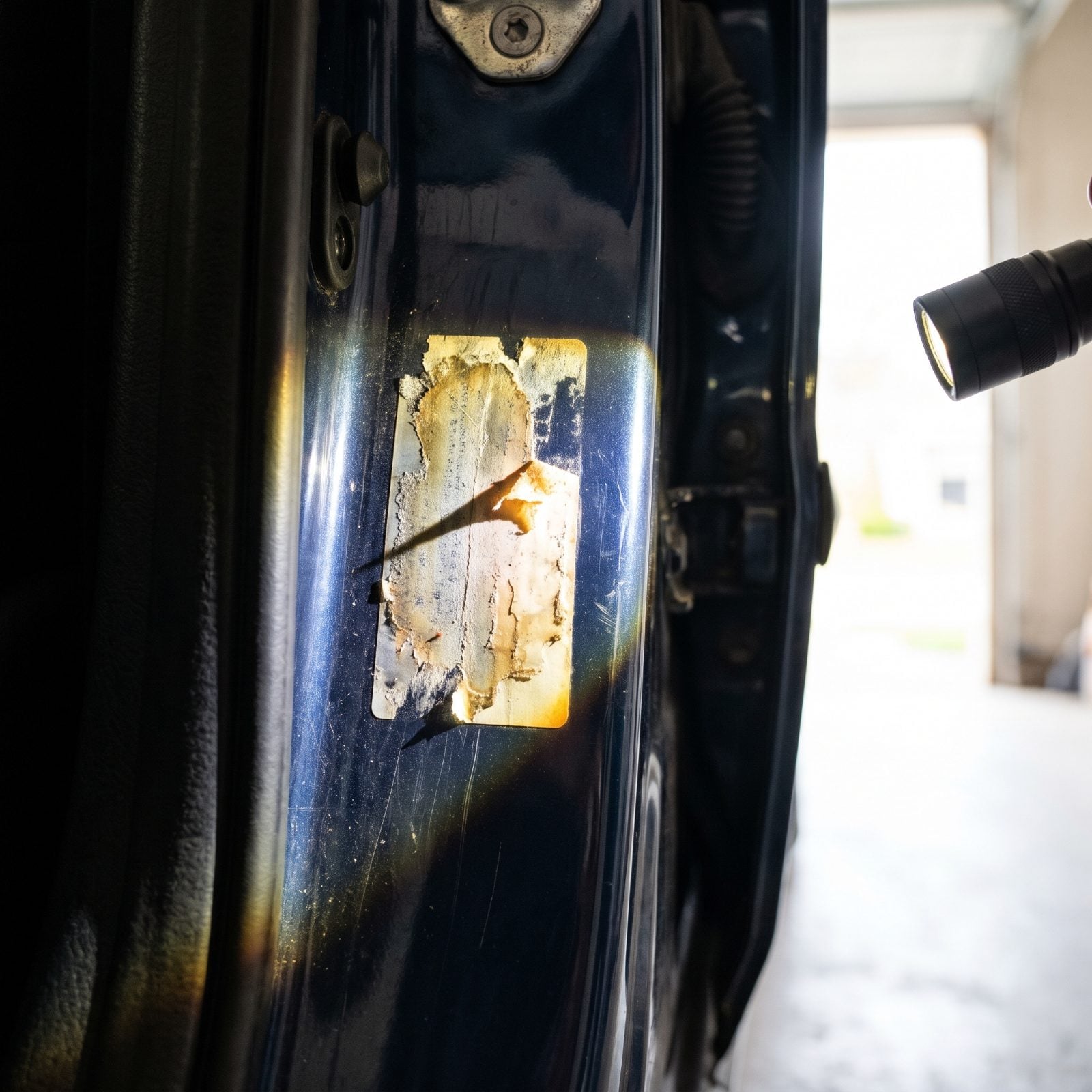
This is the one that stops an appraisal cold. Factory VIN labels live in the door jamb, under the hood, on the dash, and they’re meant to stay put, match each other, and match the title. A sticker that’s been peeled, torn, replaced, or has gone suddenly missing is a serious flag — and not the fixable kind.
It can mean a cloned car, a stolen parts swap, or at the least a door that came from a different vehicle. Numbers that don’t agree across the car and the paperwork turn a valuation into a hard no. No price is worth a VIN that won’t line up.
38. A Bumper Cover Held by Improvised Fasteners or Sitting Askew
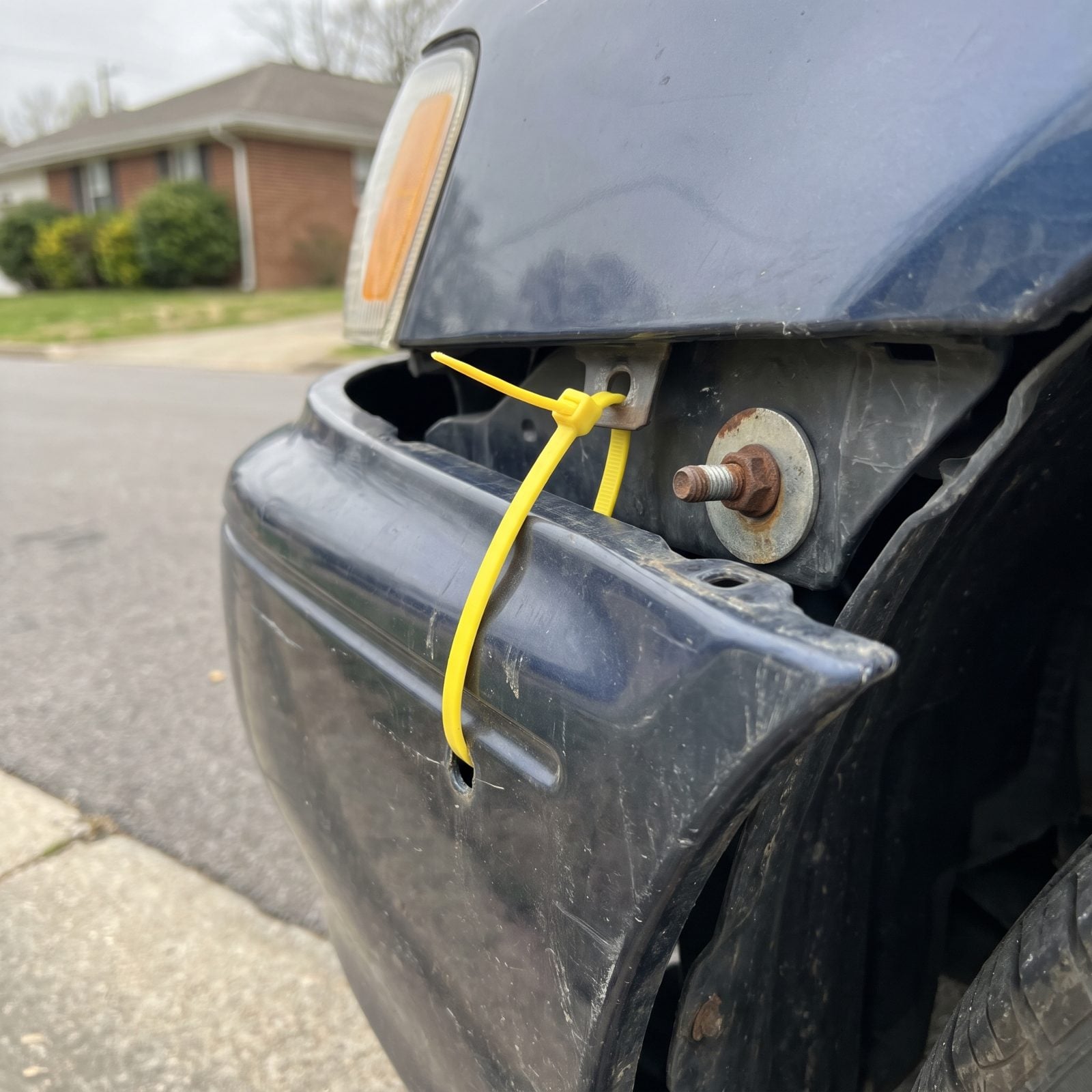
Bumper covers clip into hidden tabs that snap behind the fenders. When those tabs break in a knock, the lazy fix is a zip tie, a sheet-metal screw, or a dab of adhesive. So an appraiser crouches at the corners and checks how the cover is held on and how it lines up with the body.
A cover sitting proud, drooping at one end, or wearing fasteners that never came from a factory line says front-end impact, even a minor one. Cheap to fix, maybe. But it’s an admission that the car met something it shouldn’t have, and the valuation moves accordingly.
37. One Headlight That Looks Much Newer Than the Other
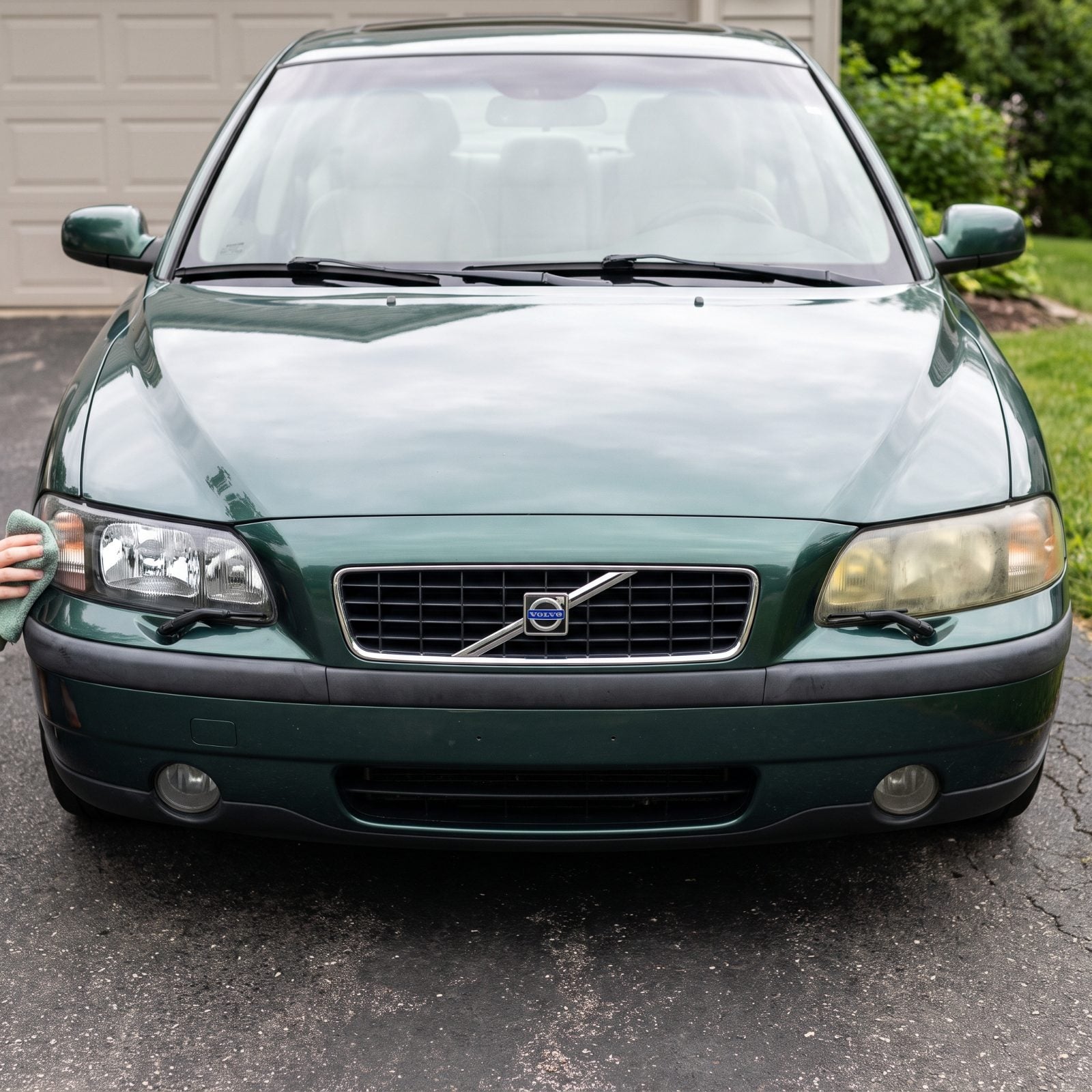
Headlights age together. Years of sun and road grit haze both lenses to the same cloudy yellow. So when one is foggy and the other is glass-clear, the clear one has been worked on — polished, restored or replaced — and that doesn’t happen for no reason.
A lens polished on one side only may just be half-finished detailing, but a brand-new housing on one corner usually means that corner got hit and rebuilt. Pair it with a slightly off bumper fit or a mismatched fender and the picture completes itself. A small thing that points at a bigger one, which is exactly what the first walkaround is for.
After checking cars on dealer lots, a seasoned used-car inspector advises “Compare both headlights (and taillights). If one headlight looks old and the other looks new, it’s possible that the new headlight has been installed recently. Was it during a collision repair?”
36. Glass Date Codes That Don’t Match the Build
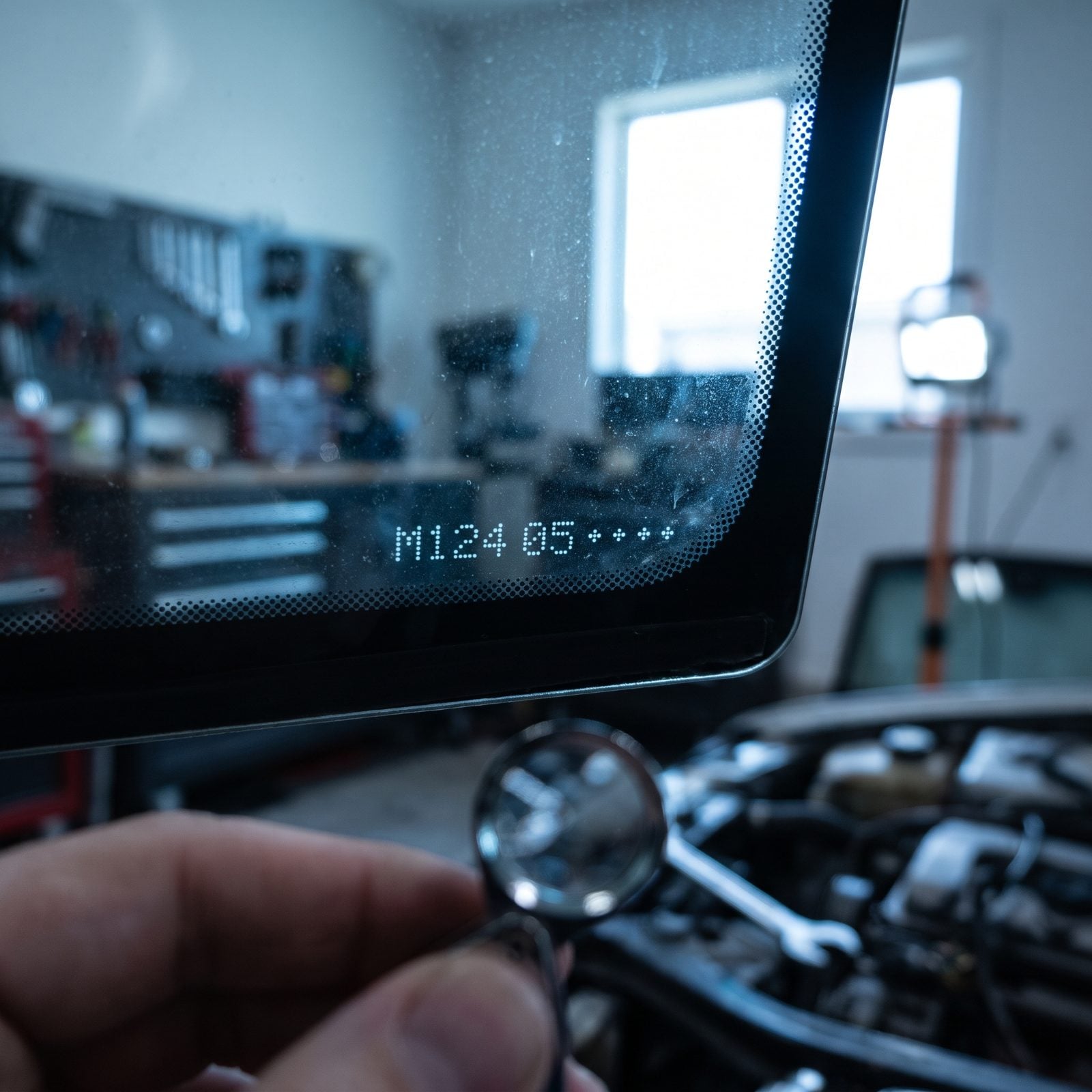
Every piece of factory glass carries a little stamp in the corner — a DOT number, a rating like AS1, and a printed code that tells you when it was made. On a stock car, every pane reads within a few months of the others. When one window is a year off, something got replaced.
That’s not automatically bad. A rock through a side window happens. But a replaced windshield can mean a hard front impact, and a replaced rear glass can mean the trunk took a hit. We read the whole set before the hood ever opens.
35. A Windshield Chip Sitting Right in the Driver’s Line of Sight

A chip the size of a pencil eraser costs almost nothing to fill. A chip sitting in the driver’s sweep is a different animal, because once it spreads, the whole glass has to come out.
And here’s the part sellers never mention. In a lot of states, a chip in the critical zone is a flat-out safety inspection fail. So the number on the car drops by the price of a full windshield — not a thirty-dollar resin job — and now we’re wondering what else got put off.
34. Shallow Hail Dimples Peppering the Roof and Hood
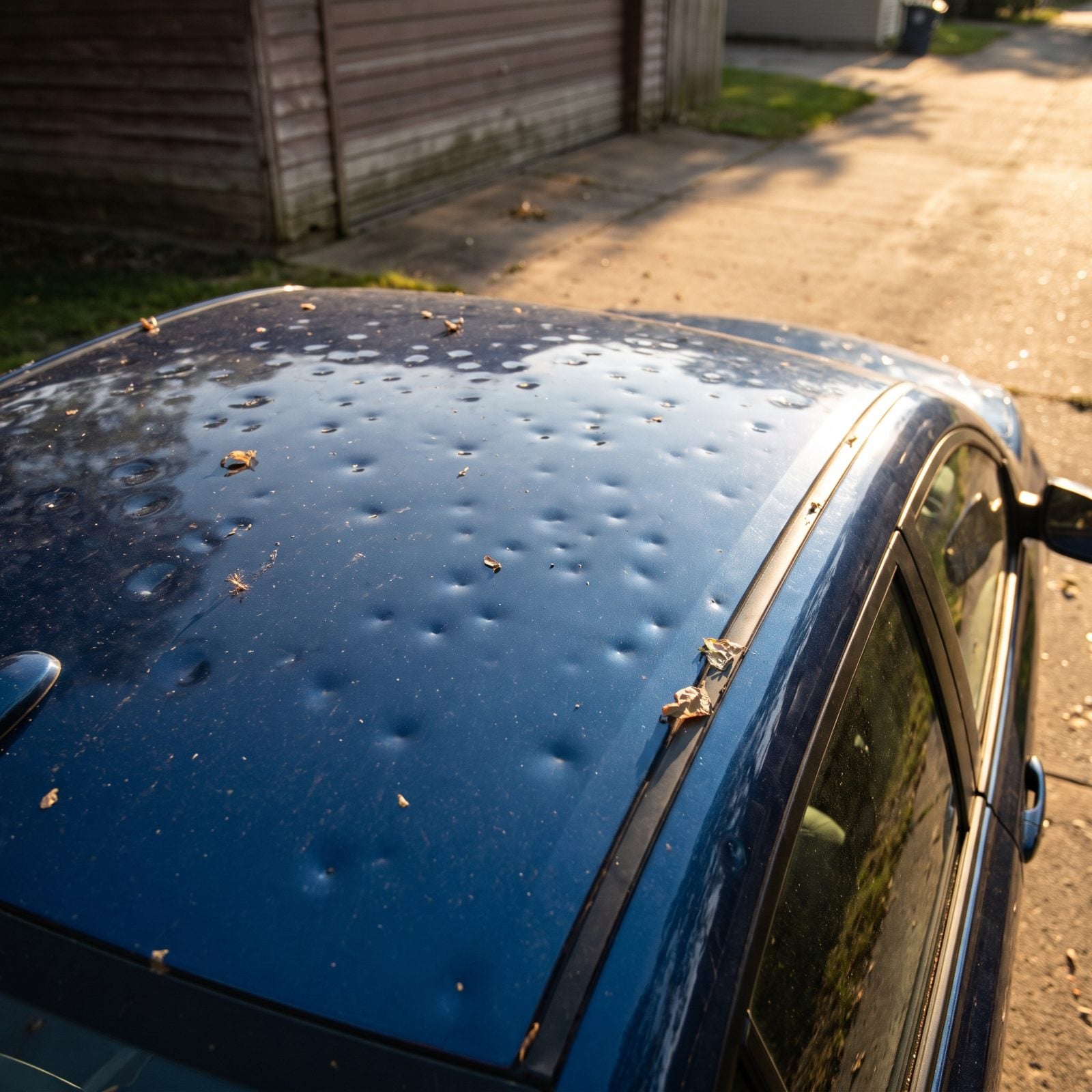
Hail damage is the honest kind of ugly. The paint is fine, nothing is bent, and the metal just looks like somebody tapped it with a hundred small hammers — which you only really see when the light hits at an angle.
The value math is strange. Mechanically the car can be perfect, yet those dimples knock real money off and scare off retail buyers. Paintless dent repair fixes most of it, except that runs more than people think once you count every panel.
33. Rust Bubbles Pushing Up Along Seams and Wheel Arches
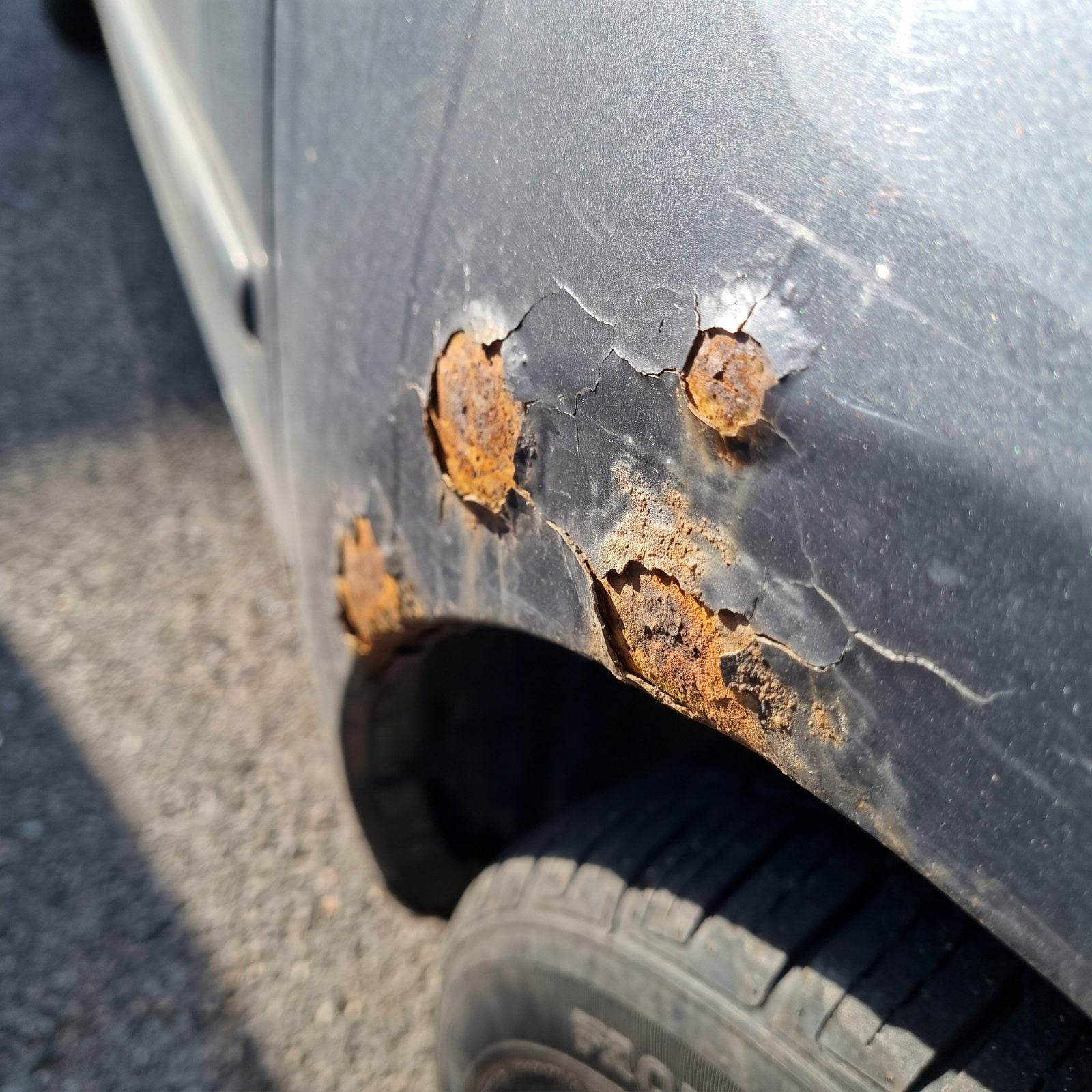
Rust bubbles under paint are never just the surface. By the time a blister shows on the outside, the metal behind it has been rotting from the inside for a while. The paint is the last thing to give up.
Wheel arches and panel seams go first, because that’s where water sits and salt collects. We press a thumbnail near a bubble. If it crunches or flakes, forget the sand-and-spray — that’s cut out the bad metal and weld in new, and that’s bodywork money.
32. Soft Metal and Corrosion Hiding Under the Rocker Panels
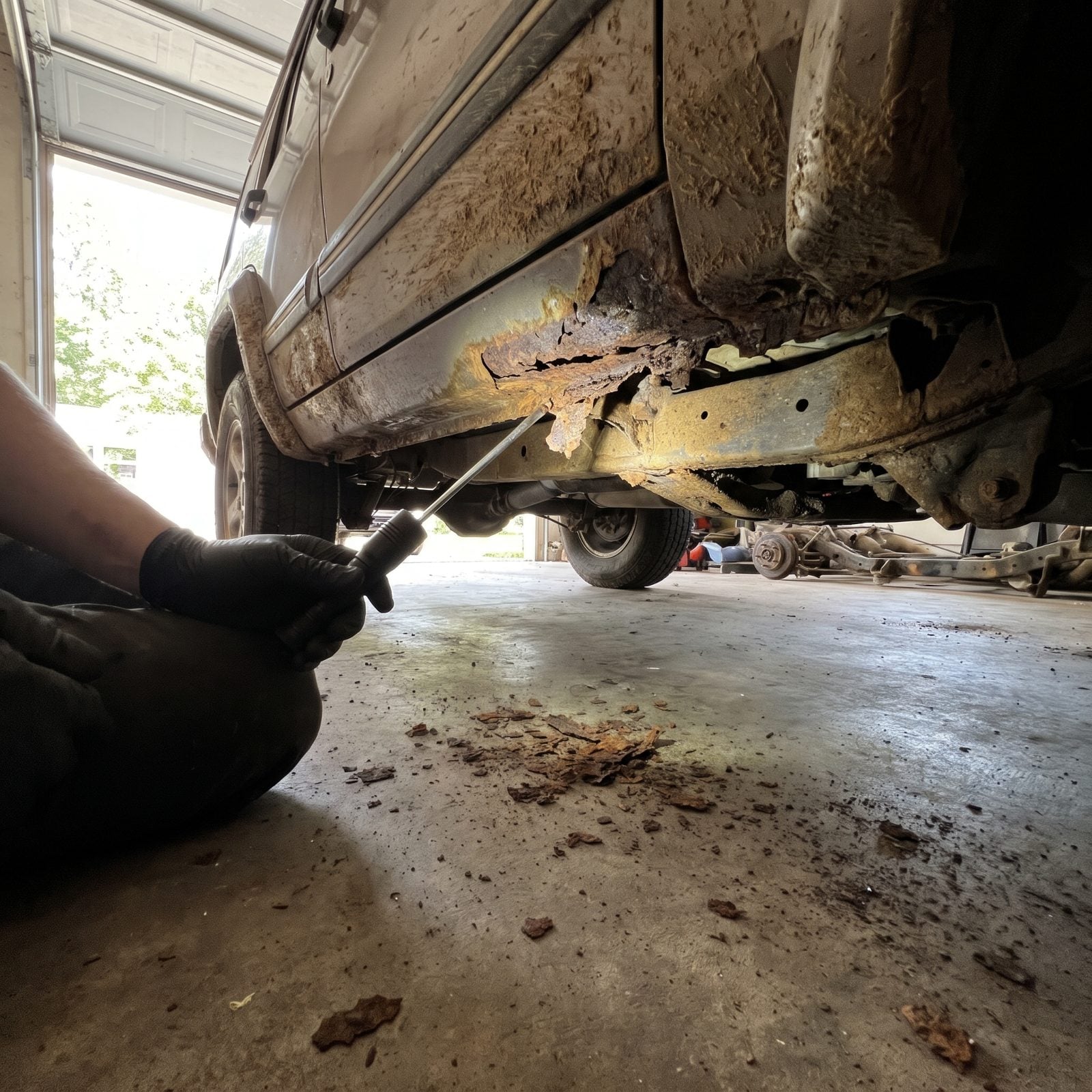
Rockers are structure, not trim. The panel running under the doors between the wheels carries the car’s stiffness, which is exactly why rot there scares an appraiser more than a rusty fender ever could.
The trouble is they rust from the inside out, through drain holes that clog with mud. A car can look clean standing up and be hollowed out underneath. So we get low, knock on the metal, and listen. A solid rocker rings. A rotten one thuds like a cardboard box.
31. Fresh Black Undercoating Sprayed Over Questionable Metal
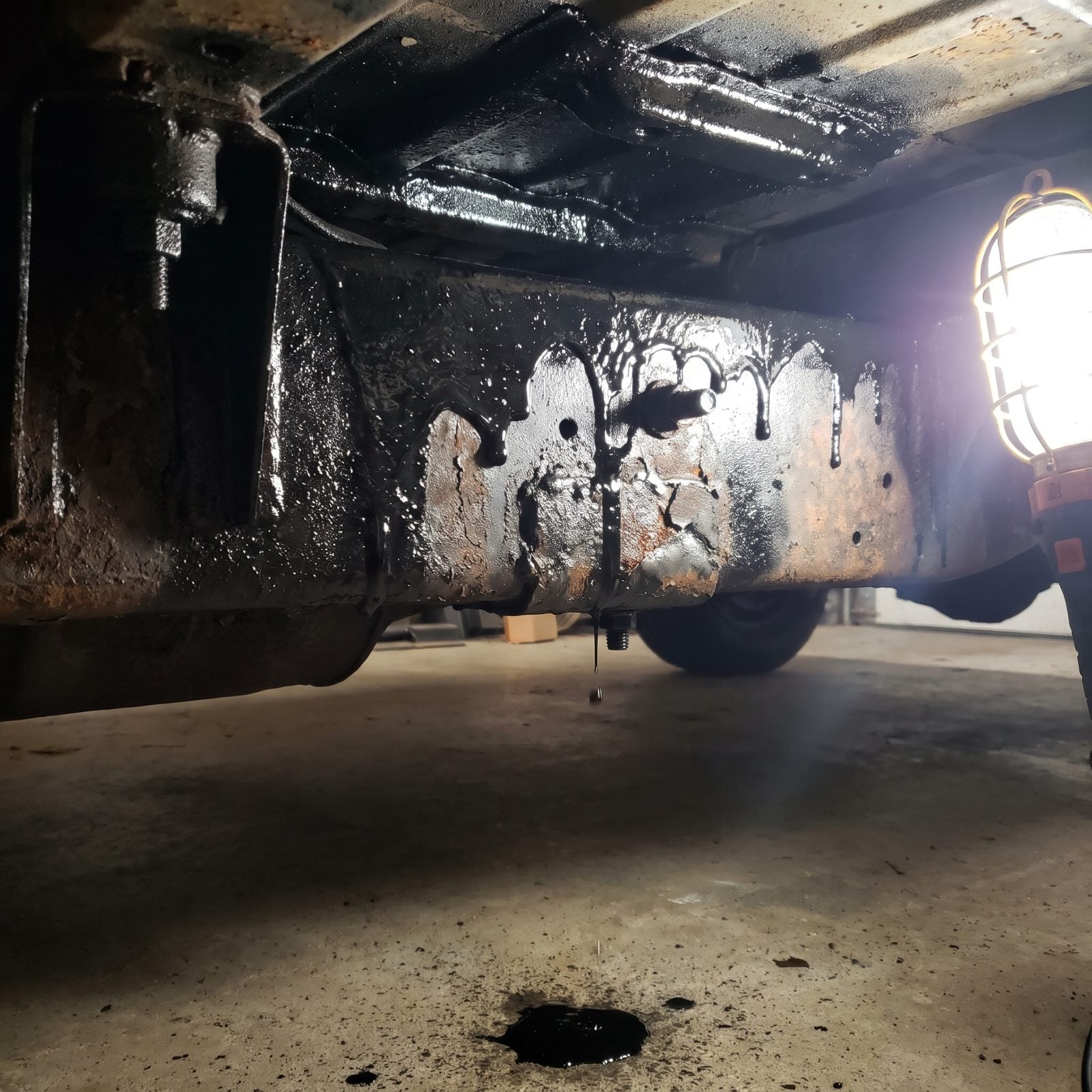
Undercoating on a brand new car is protection. Fresh undercoating on a used car, sprayed thick and recent, is a question we always ask out loud.
Sometimes it’s an honest rust-prevention job. Often, though, it’s paint over a problem — a glossy black blanket hiding exactly the rot a buyer would want to see. The tell is the edge. Factory coating fades gradually, while a fresh spray job stops in a hard line, and the metal around it is suspiciously clean or suspiciously smooth.
When the undercoating is newer than the tires, we price the car as if the worst is under there until we can prove otherwise.
30. Crushed or Folded Pinch Welds Under the Jacking Points
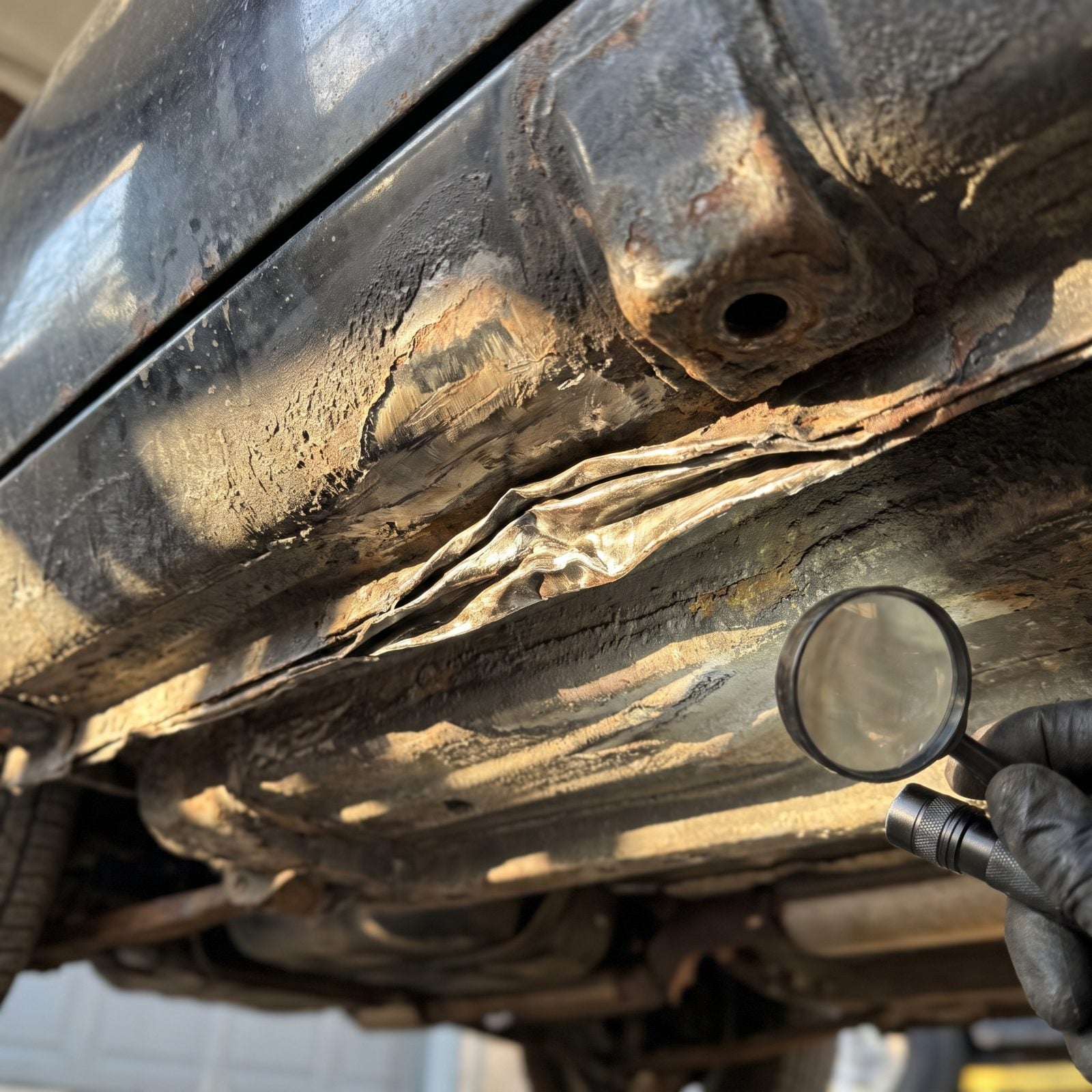
Pinch welds are those thin vertical seams under the rocker where a jack is supposed to lift. Folded flat or bent sideways, they tell you somebody jacked the car wrong, over and over.
By itself it’s minor. What it tells us isn’t. Mangled jacking points usually mean a shade-tree owner doing their own tire rotations and brake jobs, which can go either way. And the next person who puts this car on a lift has fewer safe places to grab — a bent pinch weld can also hide where a pole once crept too close underneath.
29. Scrapes That Show the Underbody Keeps Hitting the Ground
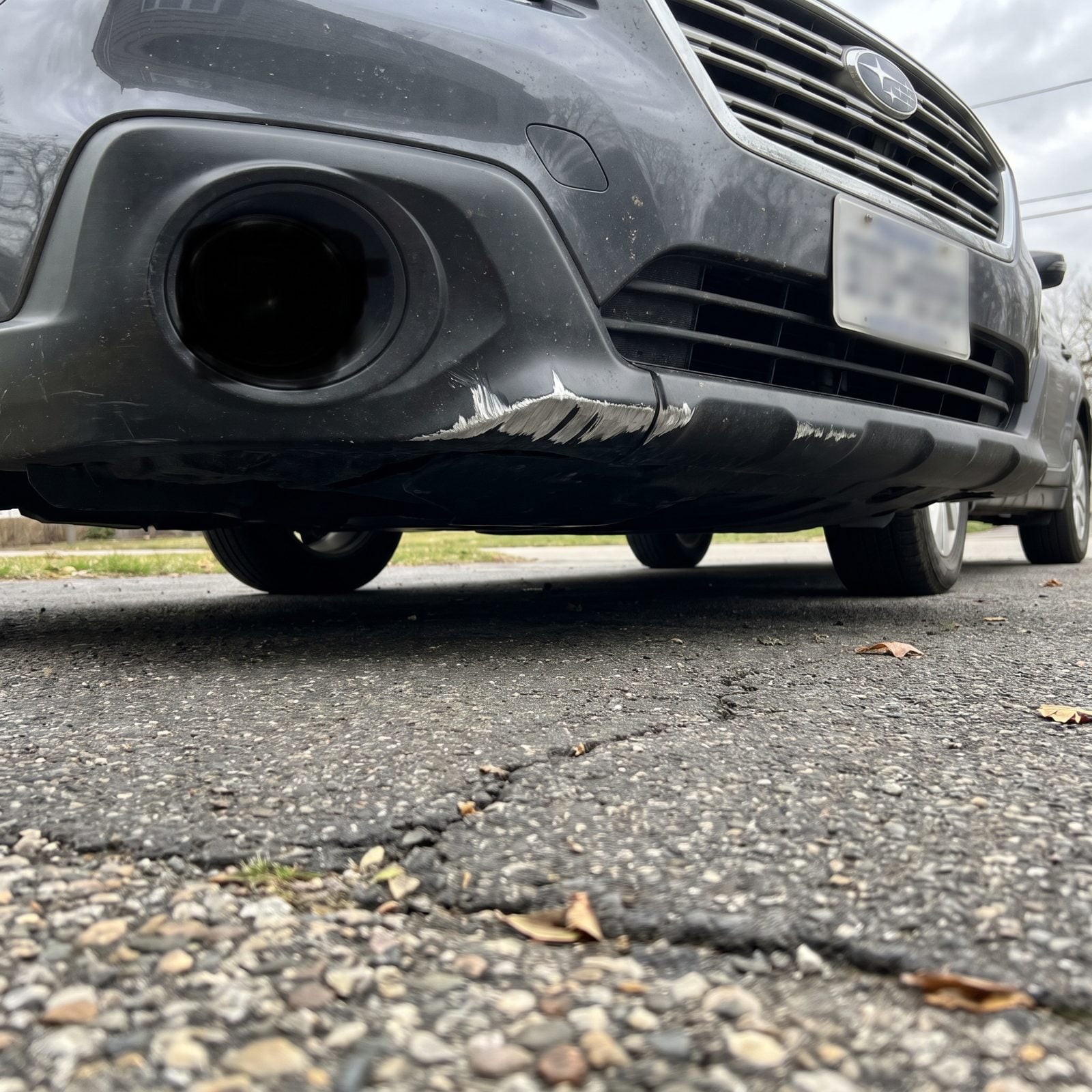
One deep scrape under the nose is a steep driveway. A row of them, all polished shiny on the lowest points, is a pattern.
Repeated underbody contact tells us the car sits too low — either by design or because a spring sagged — and that the oil pan, crossmember, and exhaust have been taking hits for a long time. We look for a cracked pan, a bent lip, fluid weeping from somewhere it shouldn’t. A car that grounds out this often has usually been driven hard, and the scrapes are just the receipt.
28. Fresh Welds Glinting Around the Catalytic Converter
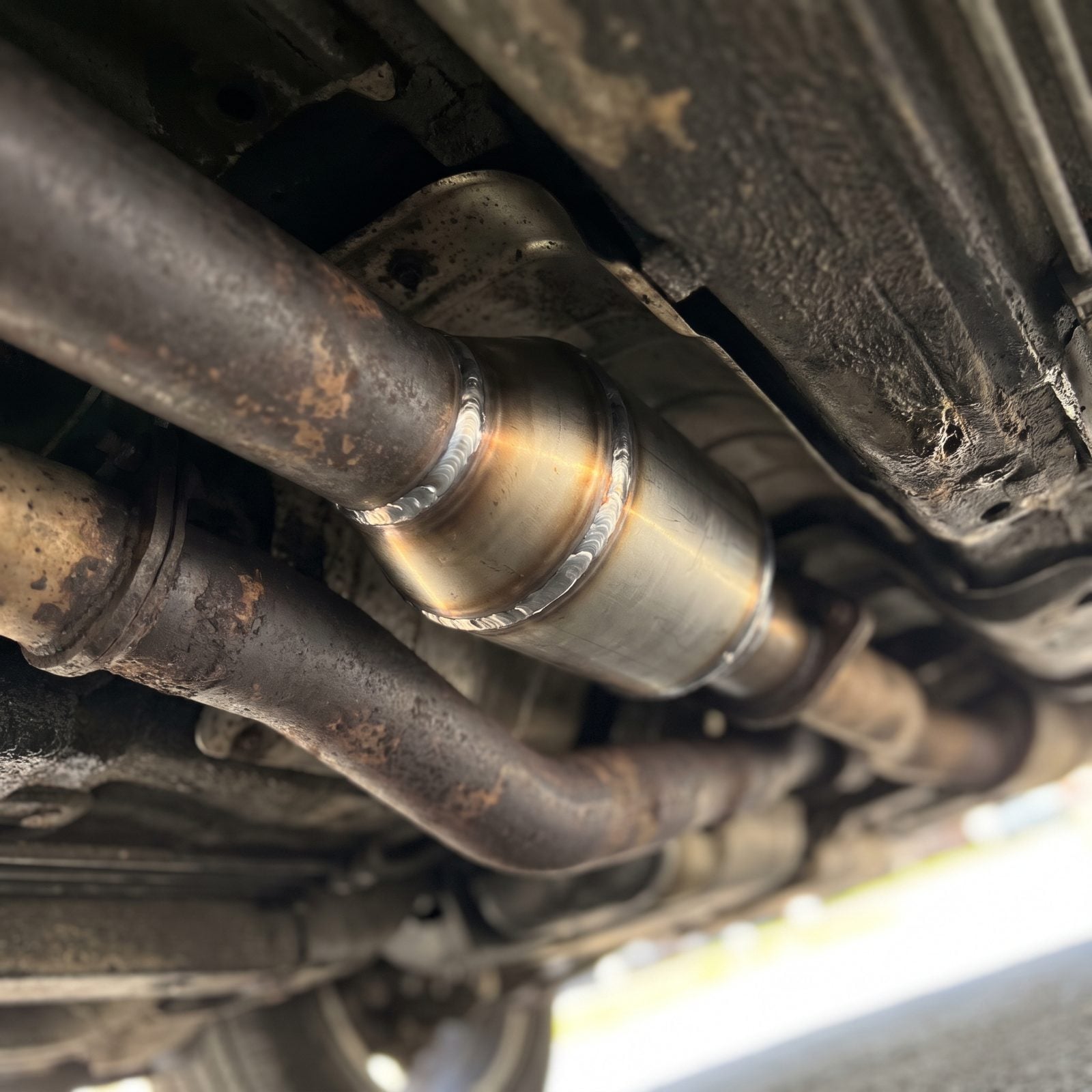
Shiny new welds where the catalytic converter meets the pipe are a loud signal. Cats don’t fail that often on their own. They get sawed off and stolen.
See a fresh sleeve and bright beads on an otherwise rusty exhaust, and the question becomes whether a real converter went back on or a cheap aftermarket shell that won’t pass emissions. In theft-heavy areas it’s almost routine now, and a wrong replacement can mean a check-engine light that never clears plus a failed smog test.
27. One Corner of the Car Sitting Noticeably Lower
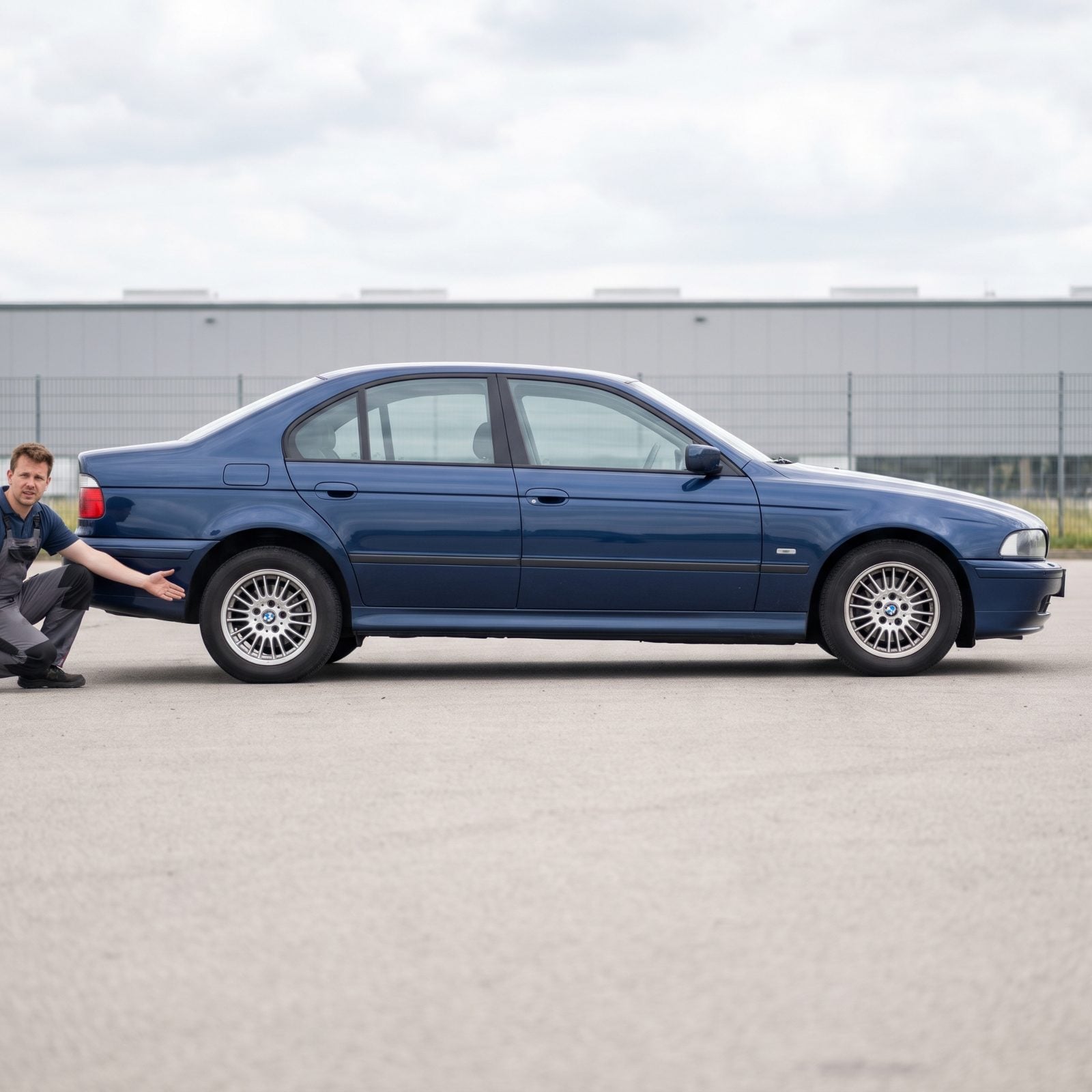
Stand back twenty feet on flat ground and just look at how the car sits. A level car sits level. When one corner droops, run a tape from the ground up to the wheel-arch lip at each corner, and the numbers won’t match.
A sagging corner means a tired spring, a dead shock, a sagged air bag, or worse — a bent subframe from a hit nobody disclosed. One of the fastest reads we do, and it costs nothing. You don’t even have to open a door.
26. Wheels That Lean or Point the Wrong Way

You can read camber from the sidewalk before you ever pop the hood. A wheel tilting in at the top, or toe that splays the front tires like a duck, tells an appraiser something hit something — a curb, a pothole, or worse.
Honest wear alone doesn’t bend geometry. Collision does, and so do loose control arms and a tired strut mount. None of those are cheap, and all of them sit under the car where the smiling seller hopes you won’t look.
I knock a few hundred off the second I spot it, because alignment is the symptom, not the disease. Something let go to make that wheel lean.
25. Mismatched Tire Brands Sharing One Axle
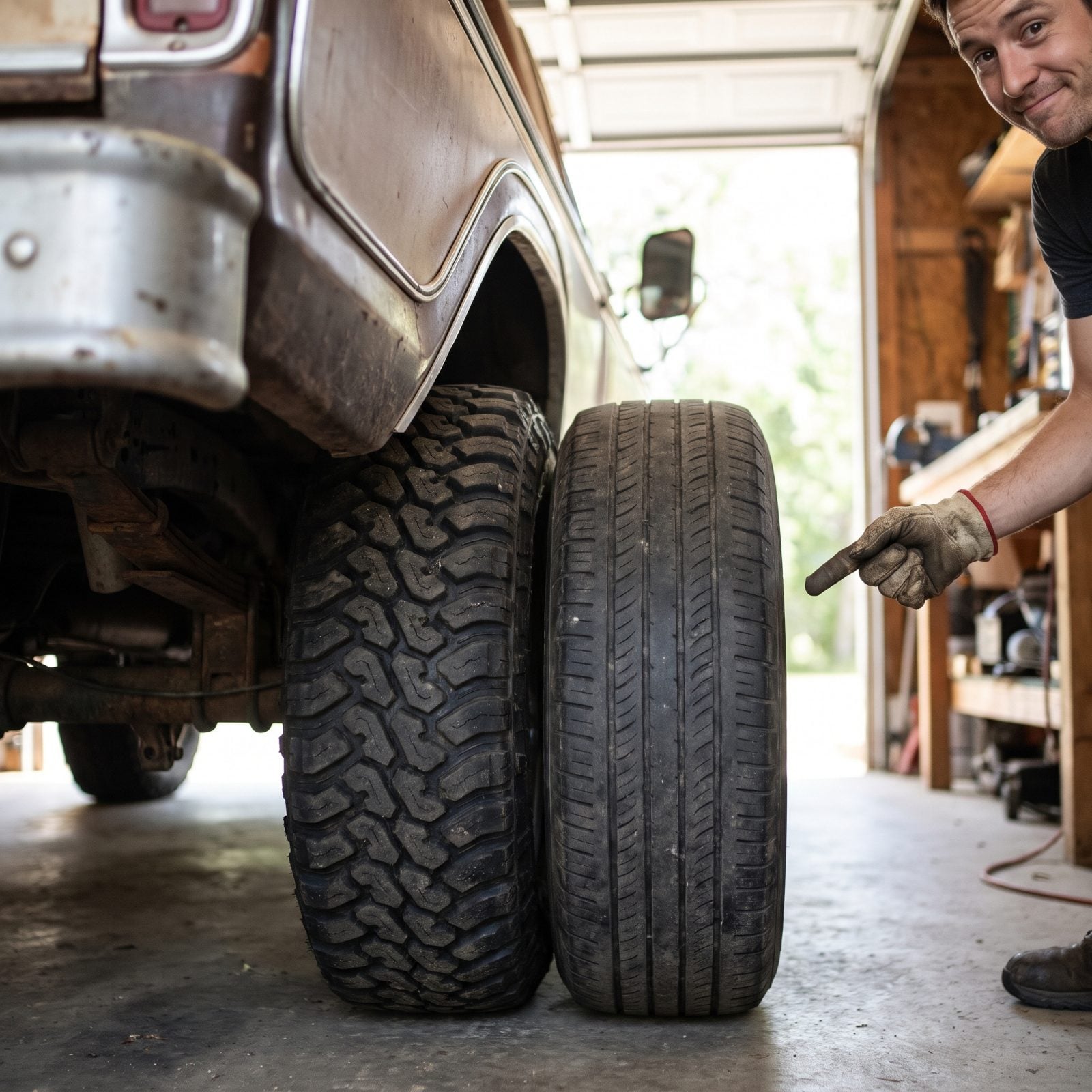
Two different tires on the same axle is a confession written in rubber. Somebody bought one tire at a time, on the cheapest day they could manage, because money was tight.
That matters less for the tires and more for everything else. A car maintained by whatever was on sale rarely got its oil changed early or its brake fluid flushed on time. The axle opens a window onto the owner’s whole relationship with the thing.
Doesn’t mean the car’s junk. It means I’m digging harder through the service records, because that budget-tire habit usually runs deeper than the driveway.
24. Tires Older Than They Look
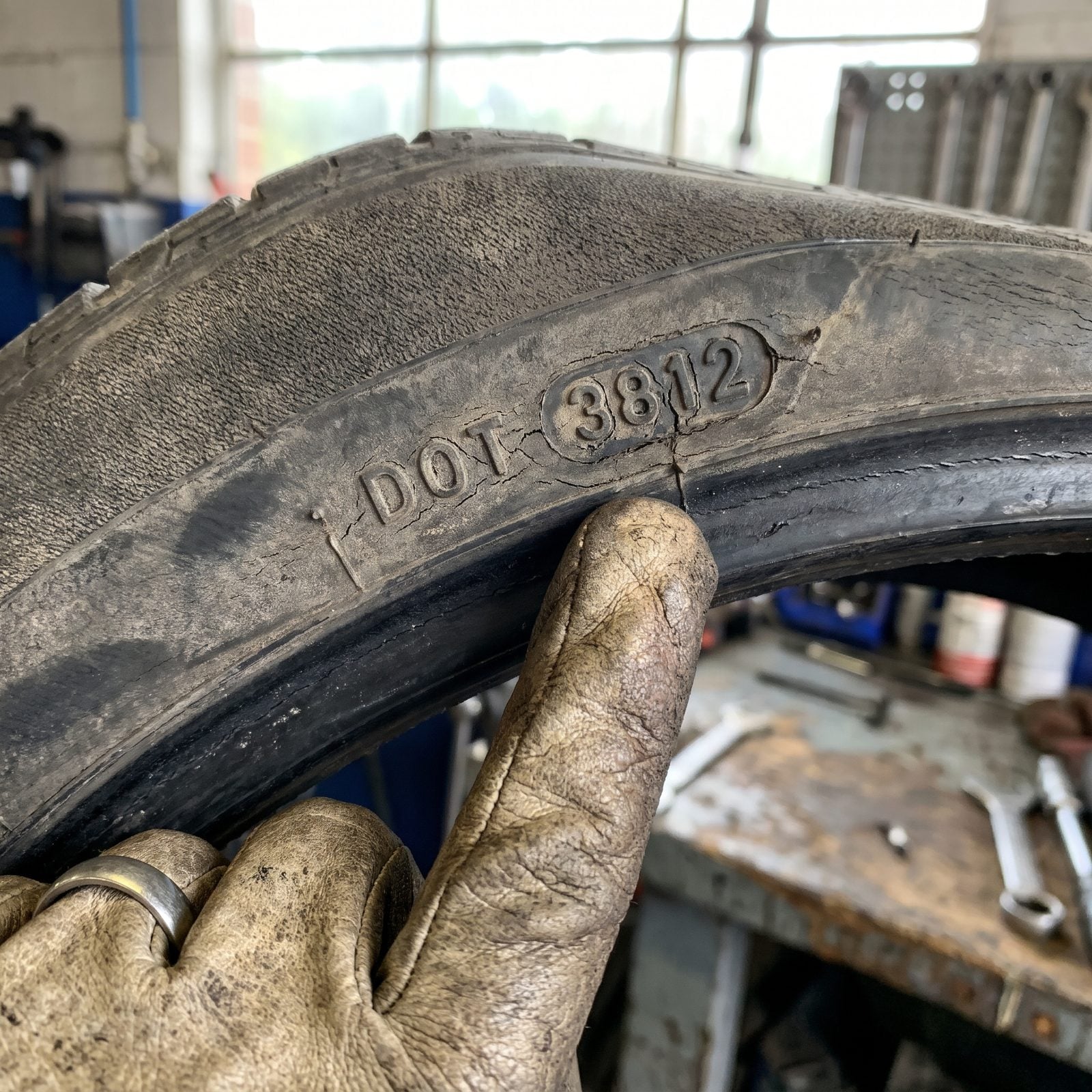
Tread depth lies. Age doesn’t. That oval stamp on the sidewall gives the week and year the tire was built, and plenty of cars roll into the lot wearing rubber pushing a decade old with half the tread still there.
Rubber hardens whether you drive it or park it. Old tires crack from the inside, lose grip, and let go on the highway on a hot July afternoon. A set with deep tread but ancient dates is a set I budget to replace, full stop.
23. Tread That Wore Out in All the Wrong Spots
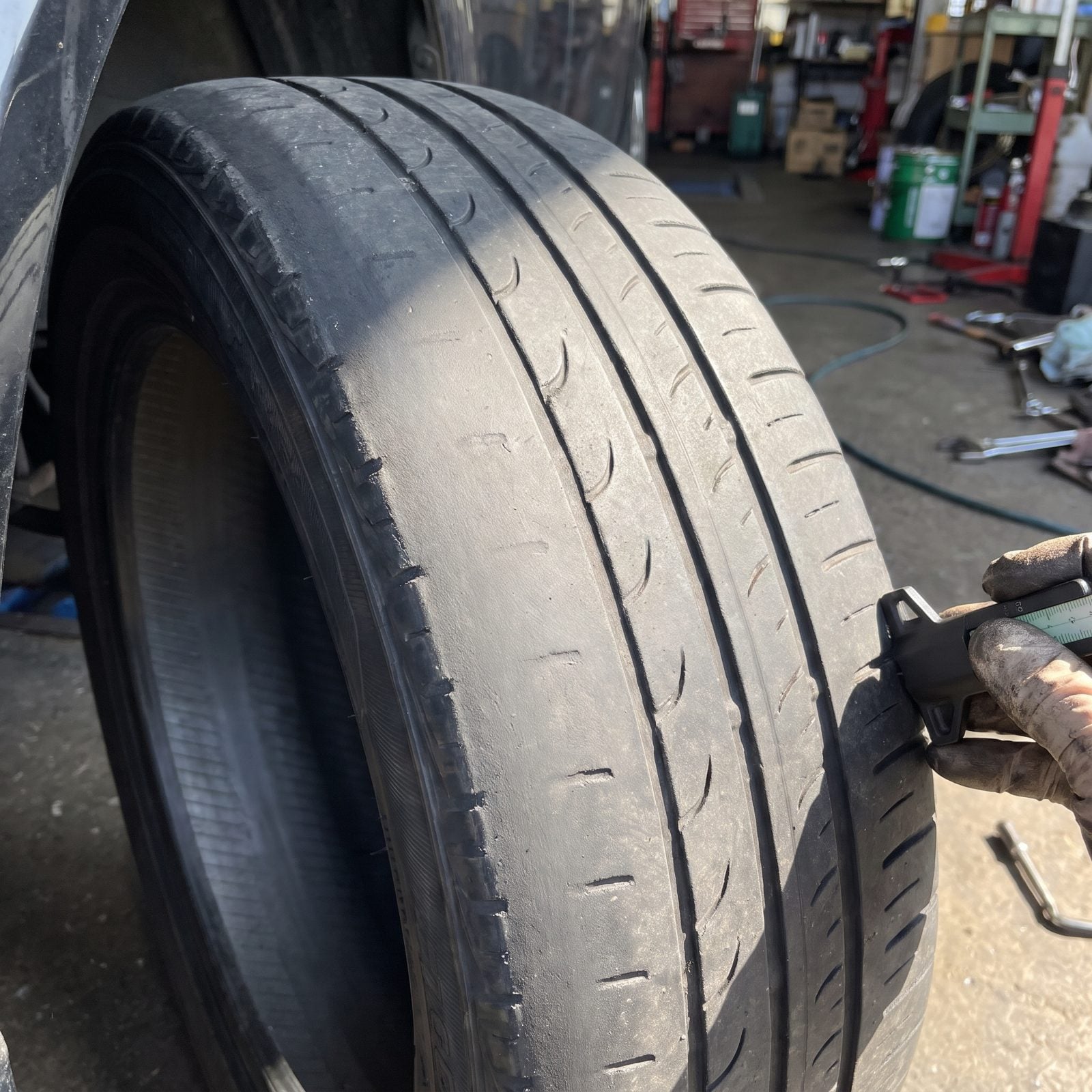
A tire tells you how the car has been living. Worn only on the inner edge? Bad alignment or sagging suspension. Worn on both outer shoulders means somebody drove on soft tires for months, and scalloped, wavy cupping means worn struts letting the wheel bounce down the road.
Each pattern points to a different repair, and none of them stay fixed by just slapping on new rubber. Fresh tires on a misaligned car wear out in a year.
I read the oldest tire on the car like a logbook. It recorded every neglected mile before anybody thought about selling.
22. Cracks, Cuts, and Bulges in the Sidewall
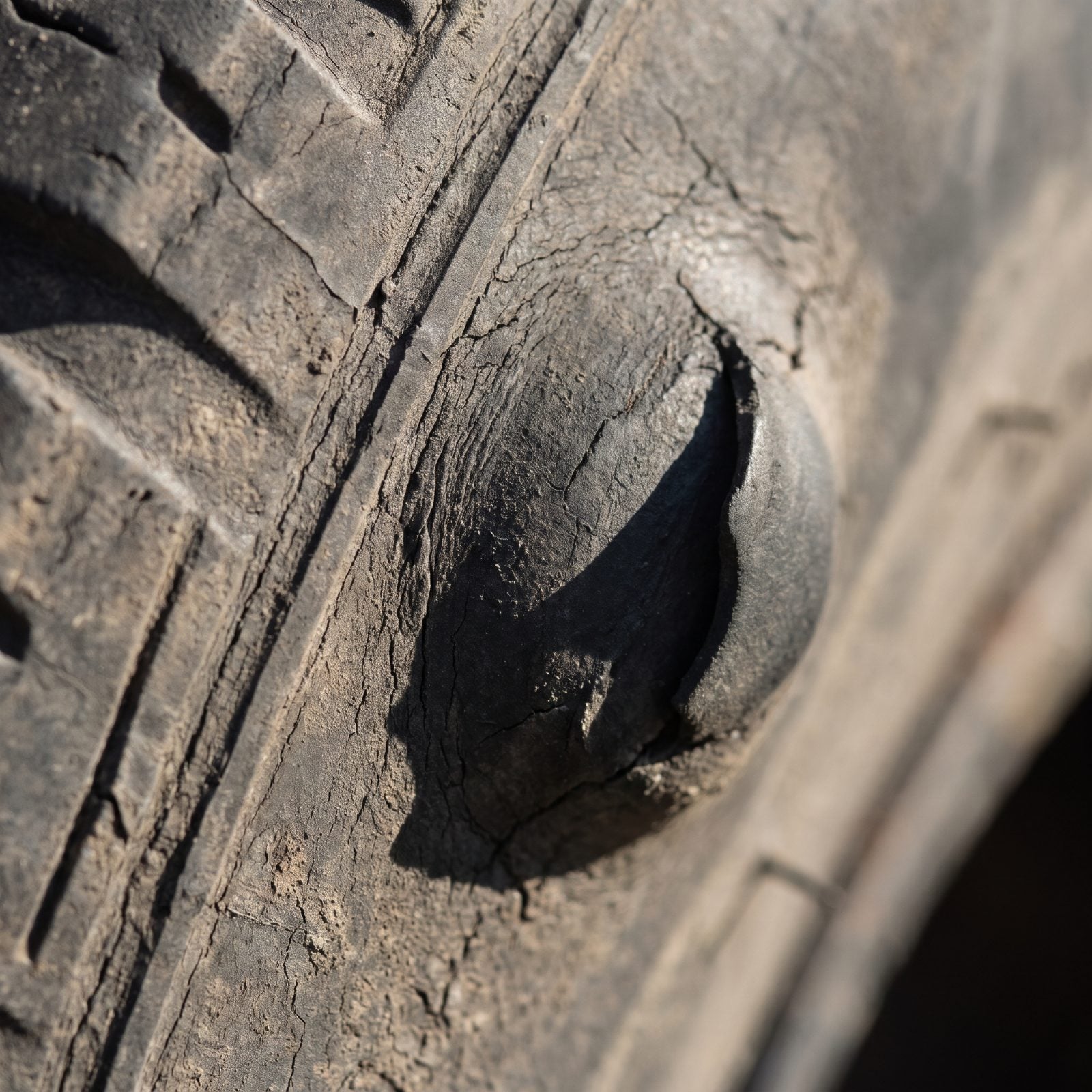
A bulge in a sidewall isn’t cosmetic. It’s a broken cord inside the tire, and that tire is one hot afternoon away from a blowout. One visible bulge is a line I won’t cross.
Cuts and deep cracking read differently but point the same direction: this car hit curbs, baked in the sun, or ran low on air for a long stretch. All of it means tires are coming off the deal price.
21. Tread Already Kissing the Wear Bars
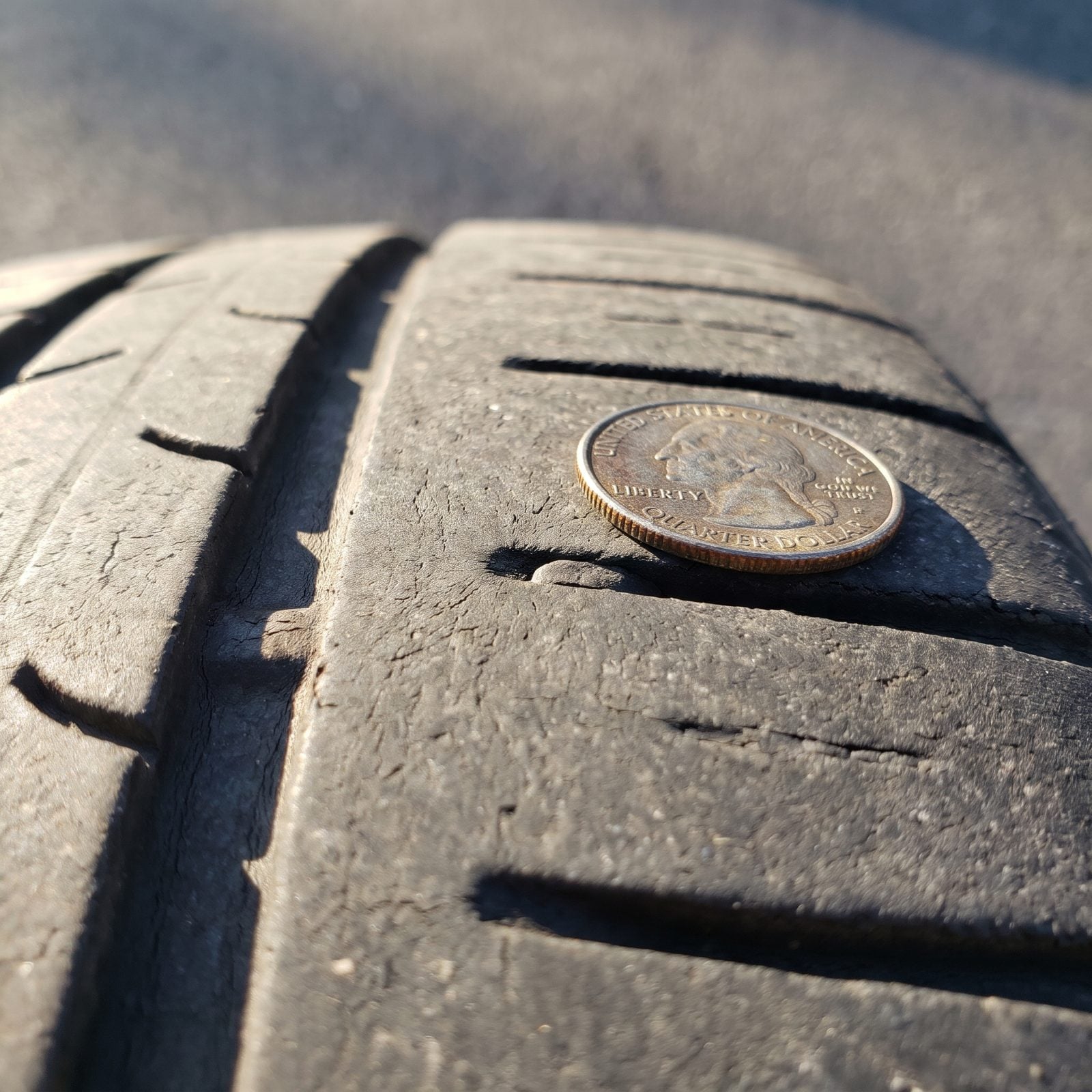
Those little raised bars sitting at the bottom of the grooves aren’t decoration. Once the tread wears down level with them, the tire is legally done. Catch a set already flush with the wear bars and you’re buying four new tires the week you drive it home.
Sellers love to say the tires are “fine.” Fine and legal are different words. I price in a fresh set at today’s going rate — mounting and balancing included — and that number surprises people every time.
20. A Wheel Rim With a Flat Spot or Wobble
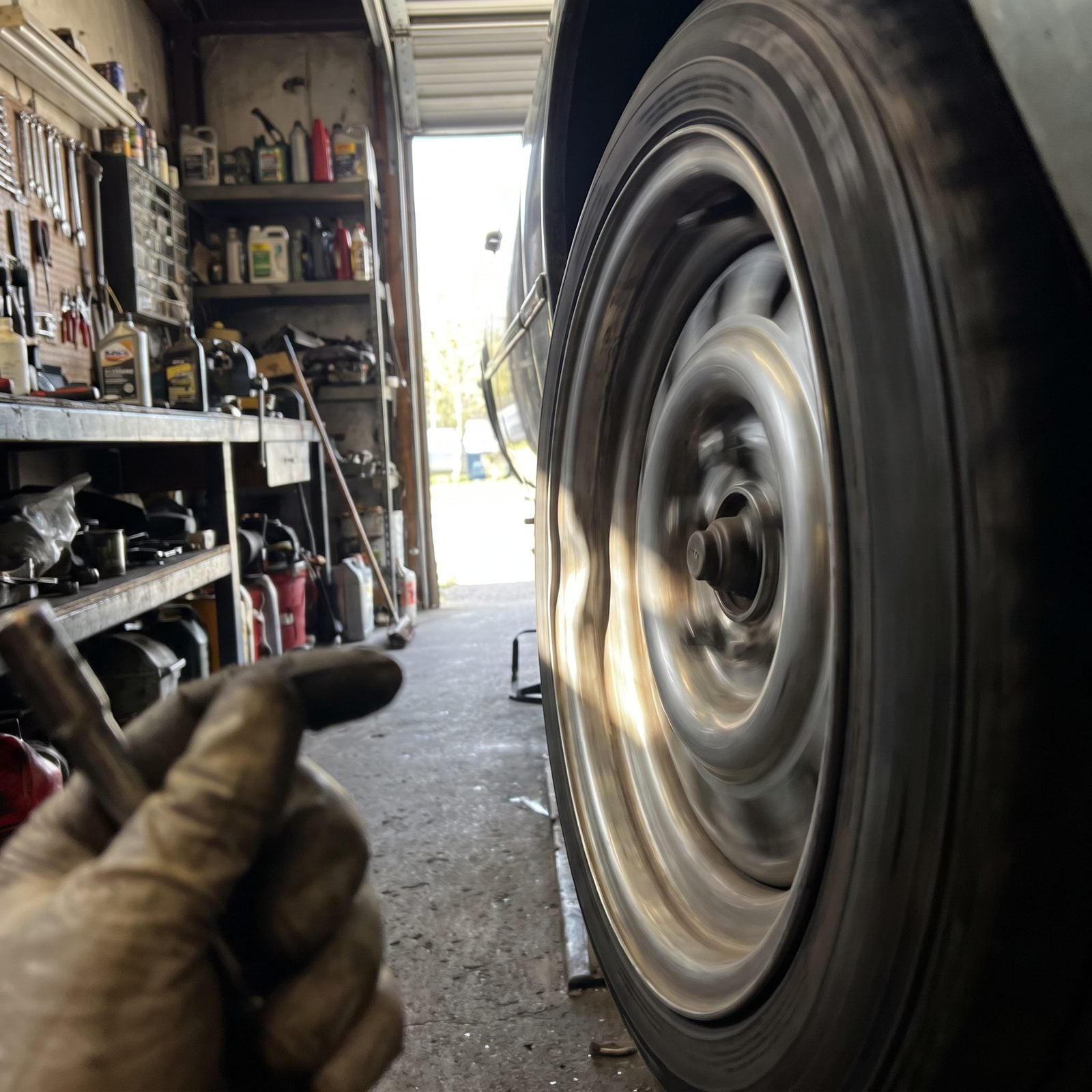
Spin a wheel and watch the rim edge. A hop, a wobble, or a visible flat spot in the lip means the wheel took a hit hard enough to deform metal.
And here’s what a bent rim really tells me. If the impact could fold aluminum, it probably rattled the suspension bushings, the ball joints, maybe even the steering rack. The rim is the bruise; the pulled muscle is underneath.
A bent wheel alone runs a few hundred to replace. The real question is what else that pothole collected on its way through.
19. Oil Film Weeping Down a Shock or Strut
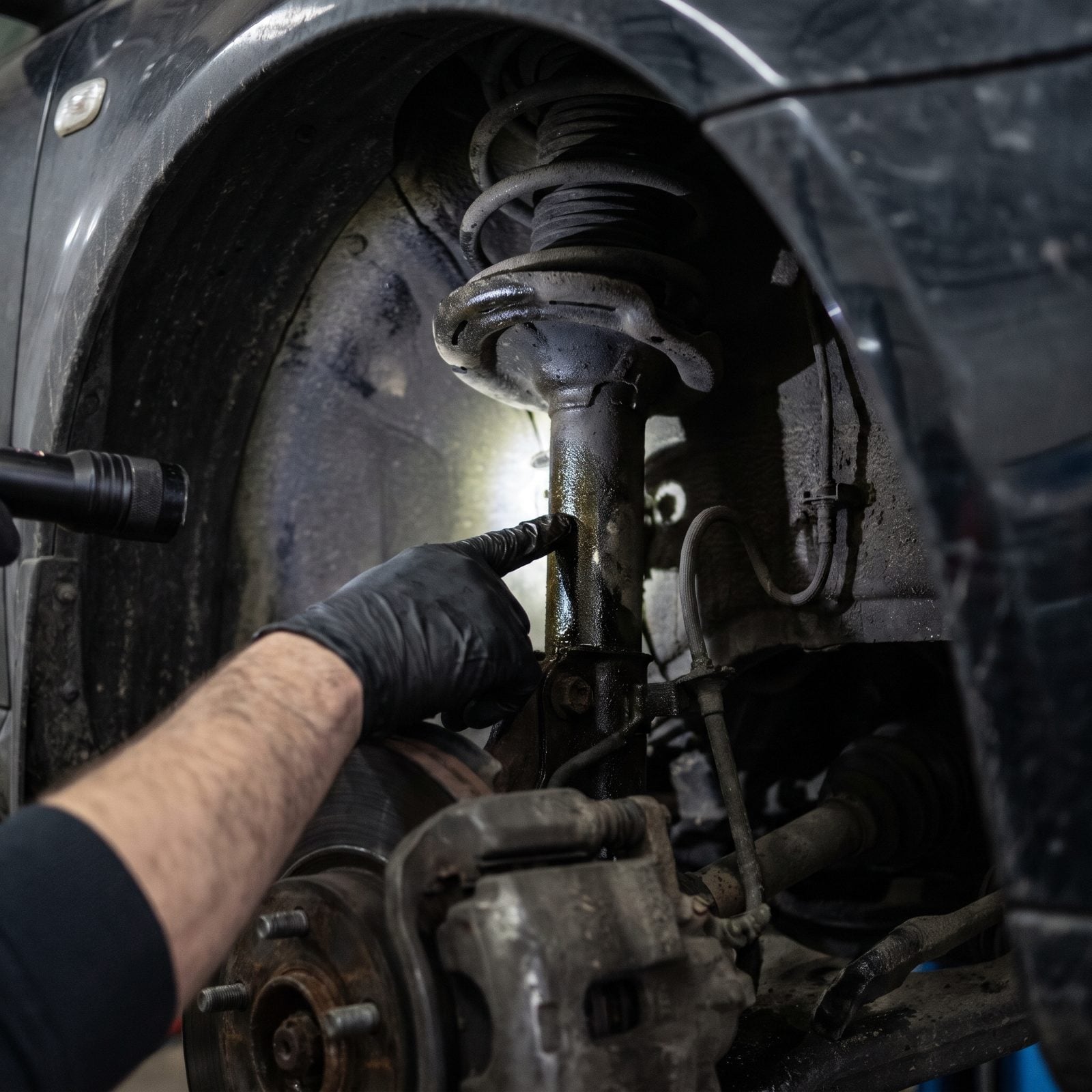
Reach into the wheel well and run a finger along the shock body. If it comes back oily, that shock is blown, period. A leaking strut isn’t catastrophic. But it’s a tell.
One wet strut means that corner’s been bouncing instead of damping, which explains any cupping on the tire above it. It also means somebody drove it that way and shrugged. Struts work in pairs, so one leaker usually means two coming out.
Small money on paper, sure. It’s rarely alone, and I quote accordingly.
18. An Exhaust Hanging Crooked Under the Car
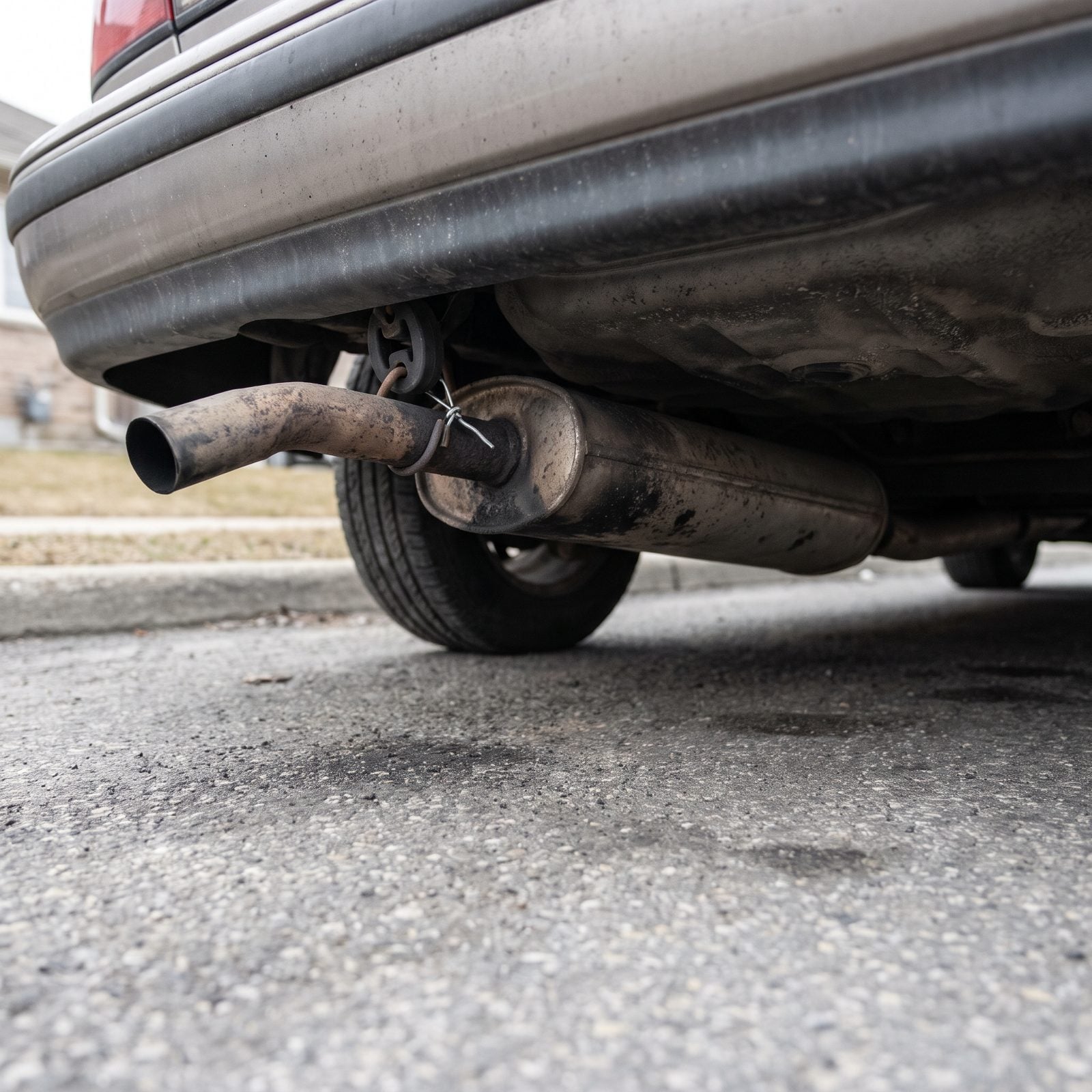
A tailpipe that sits off to one side is a lazy repair you can spot from the curb. A broken or missing rubber hanger lets the whole system droop, and whoever noticed it clearly didn’t care enough to spend ten bucks on a fix.
Look closer and you’ll often find a fresh patch weld or a slip-fit section pinched with a clamp. Somebody took the cheapest route around a rusted pipe instead of replacing it, which means the next section is probably just as thin.
Crooked exhaust rarely costs much on its own. It’s the attitude it reveals that moves my number.
17. Peeling Clearcoat on Sun-Exposed Panels
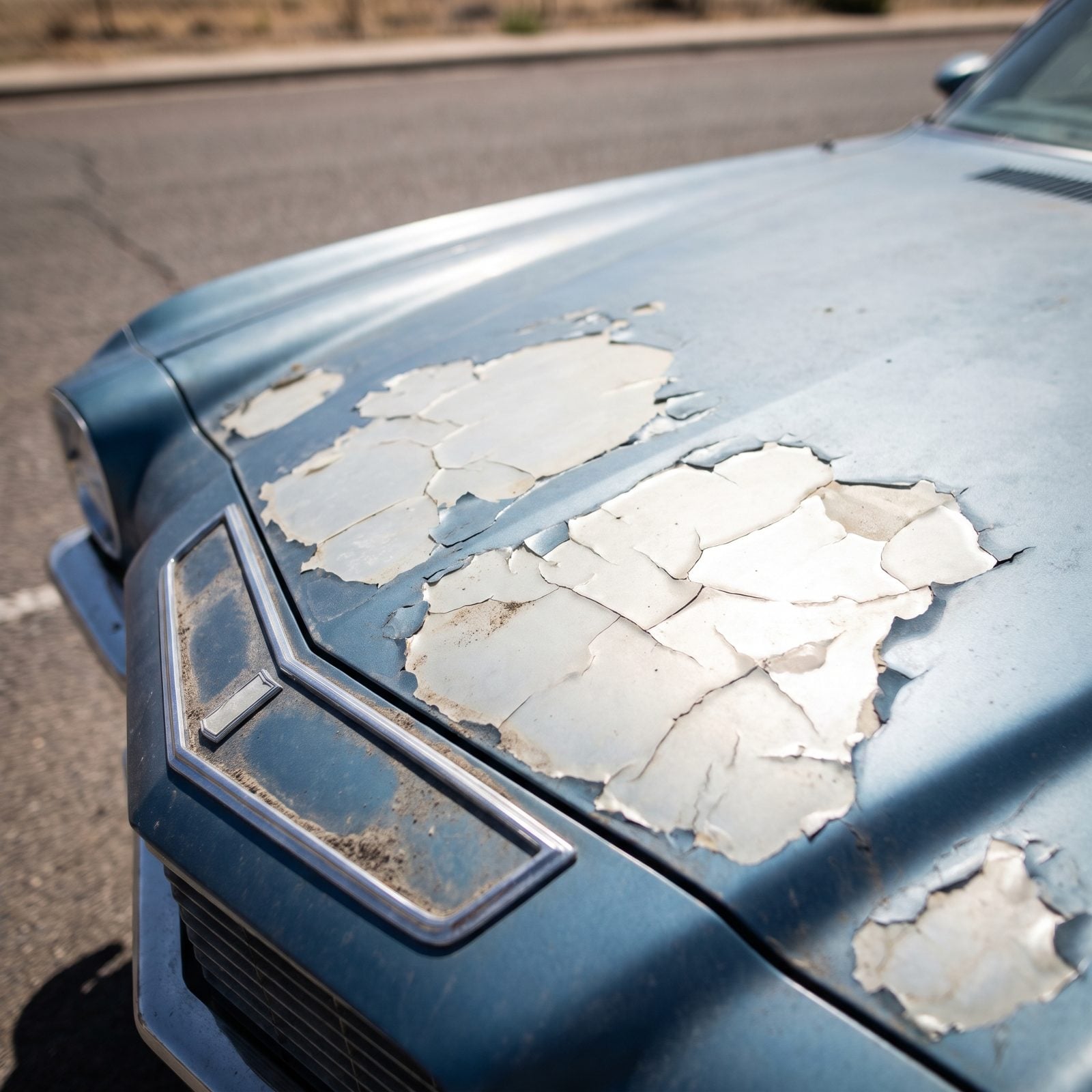
Clearcoat failure is the car confessing that it spent years under a sun with no garage and no cover. Those cloudy white patches on the roof and hood aren’t dirt — the protective topcoat has physically lifted and flaked clean away.
Here’s what sellers try: they wax over it and hope you won’t catch the dullness from the wrong angle. So walk around. Look for where the reflection breaks up. A roof mirroring a torn, patchy sky instead of a clean one is peeling, and no buffer on earth brings that back. It needs a respray.
Budget a few thousand for proper panel refinishing before you ever pop the hood.
16. Moisture Trapped Inside a Lamp Housing

Fog inside a lamp lens looks minor. It isn’t. Condensation means the seal is breached, and water is getting somewhere it shouldn’t.
Trapped moisture points two directions, both of them expensive. Either the housing cracked — common after a minor front-end bump nobody disclosed — or a replacement lamp got fitted carelessly after a collision. A mineral tide line at the bottom of the lens means water has been coming and going for a good while.
I always photograph foggy housings on the walkaround. They’re a cheap tell for a bigger question: what else got hit?
15. Badges That Do Not Match the Actual Trim Level
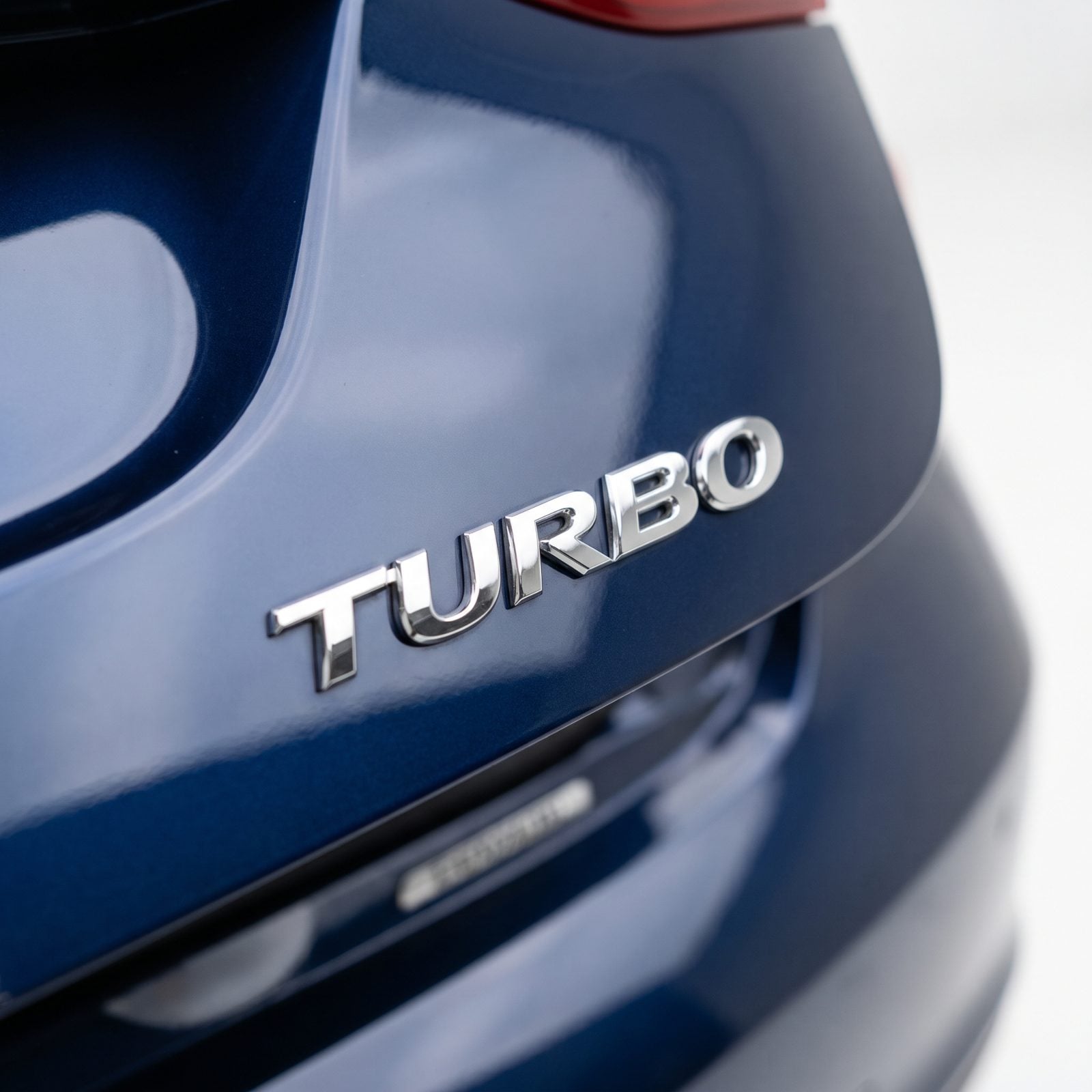
Badge swaps are vanity, and vanity is a flag.
When the trunk says one thing but the engine bay, interior, and door-jamb build plate say another, somebody wanted the car to read as more than it is. Usually harmless ego. Sometimes, though, it’s covering a drivetrain that got swapped, downgraded, or a base model wearing a borrowed name it never earned.
Hunt for the ghost outline. An added emblem almost always leaves adhesive residue or a slightly different shade where the original sat. The build sticker in the door jamb is the honest word — trust that over anything stuck to the back of the car.
14. A Lowered Stance or Oversized Wheels
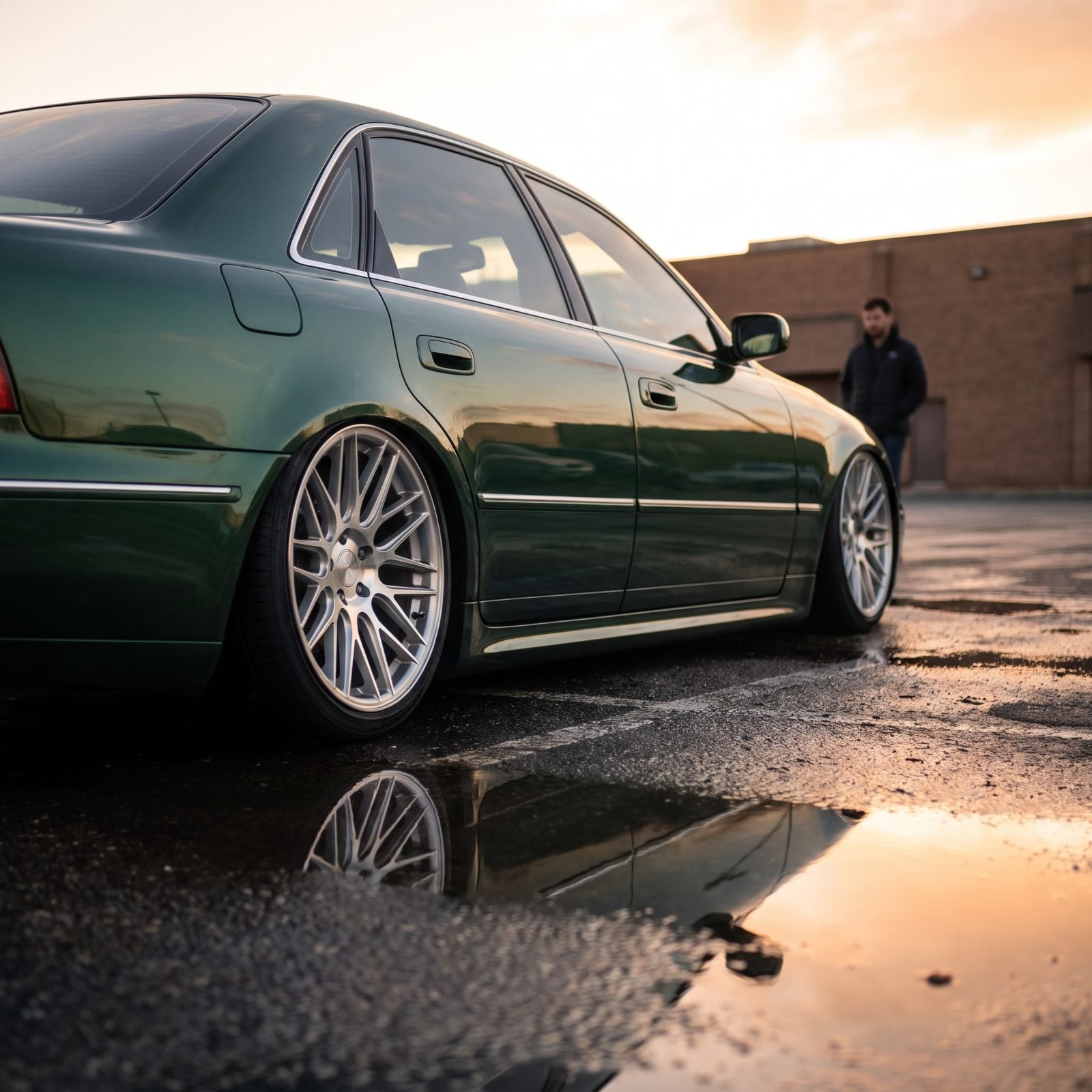
A dropped stance looks fast sitting still. To an appraiser it reads as risk.
Lowered suspension and big aftermarket wheels tell me two things. First, somebody chasing a look modified this car, which usually means it got driven the way it looks. Second, the ride-height change stresses the drivetrain, the bushings, and especially the tires.
Check the inner tire shoulders. Aggressive camber from lowering chews the inside edge bald while the outside still looks fine, and that uneven wear hides easily from the curb.
13. Ghost Decal Outlines or Holes From Removed Commercial Equipment
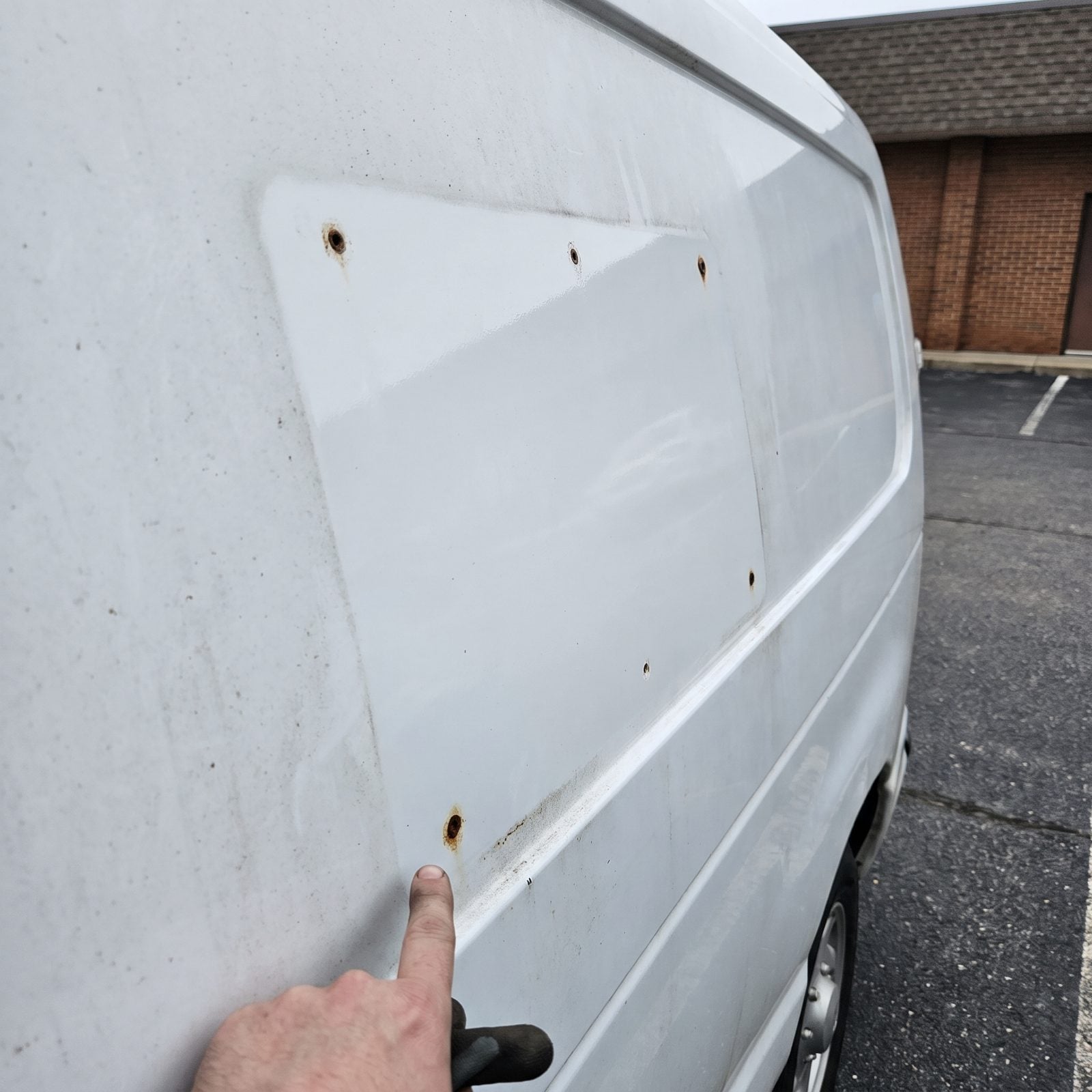
A clean white panel with a brighter rectangle inside it is a decal ghost. Sun faded the paint everywhere the logo wasn’t, leaving a perfect silhouette of whatever outfit used to own this thing.
Fleet and trade vehicles work for a living. High idle hours, constant short trips, heavy loads, and a service history that may or may not follow them to the resale lot — the odometer undersells all of it, and the engine hours tell the real story.
Look for small filled bolt holes where ladder racks, shelving, or beacon lights were mounted. Those holes rust from the inside out. And a fleet van priced like a family vehicle is almost never the bargain it pretends to be.
12. Auction Stickers or Paint-Pen Marks
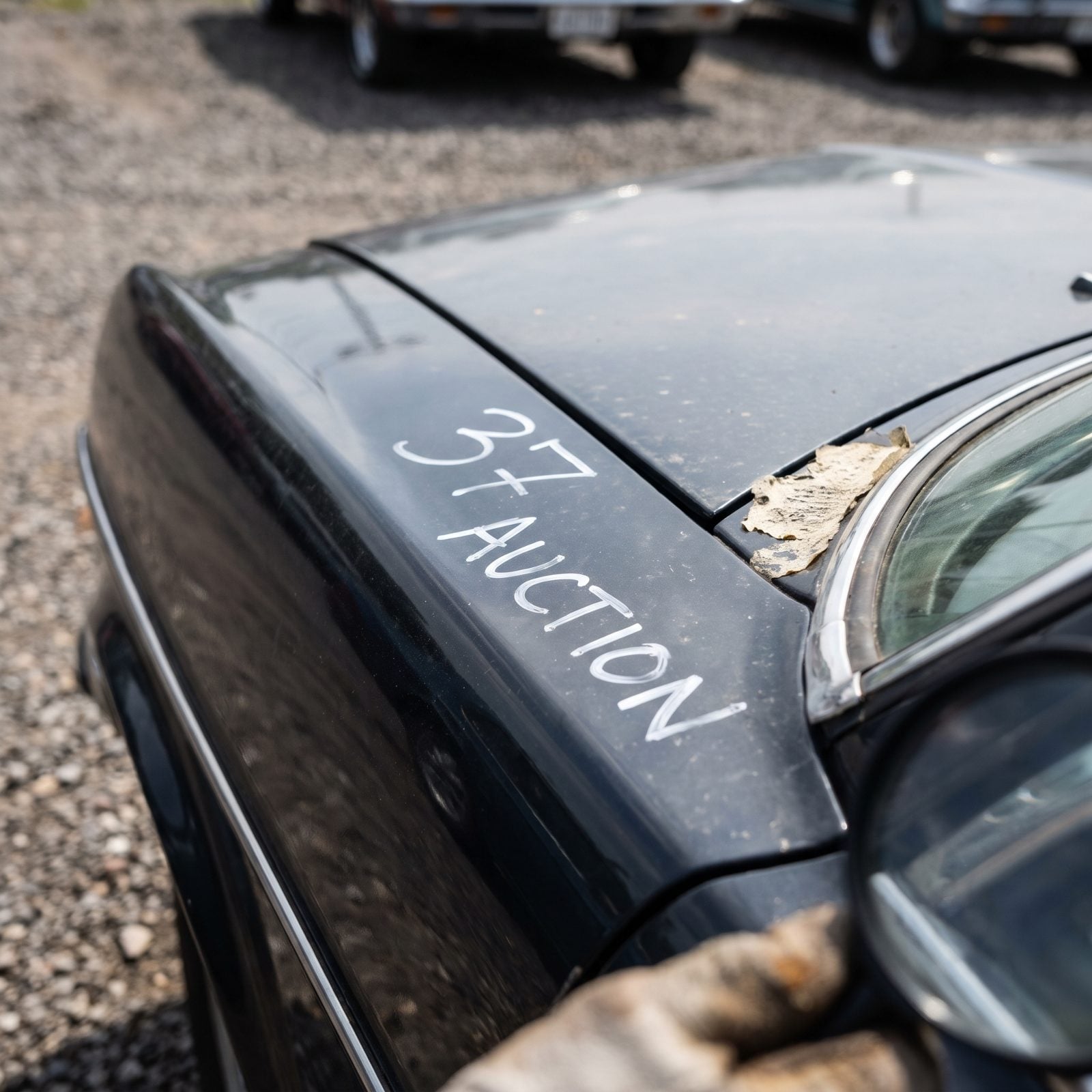
Paint-pen numbers on a fender and sticky residue in the corner of the windshield mean this car passed through the wholesale auction world before it ever reached you.
That’s not automatically bad. Plenty of good cars get traded between dealers. But auction cars arrive with a known condition grade and a reason they got wholesaled instead of retailed — and a private seller claiming “one owner, always mine” while the glass still carries auction adhesive is lying about something.
The paint-pen marks are lane and lot numbers. Residue on the back glass, the quarter windows, or the door jambs confirms it. Ask the honest question out loud and watch the answer.
11. Pedal, Steering-Wheel, and Seat Wear That Conflicts With the Mileage
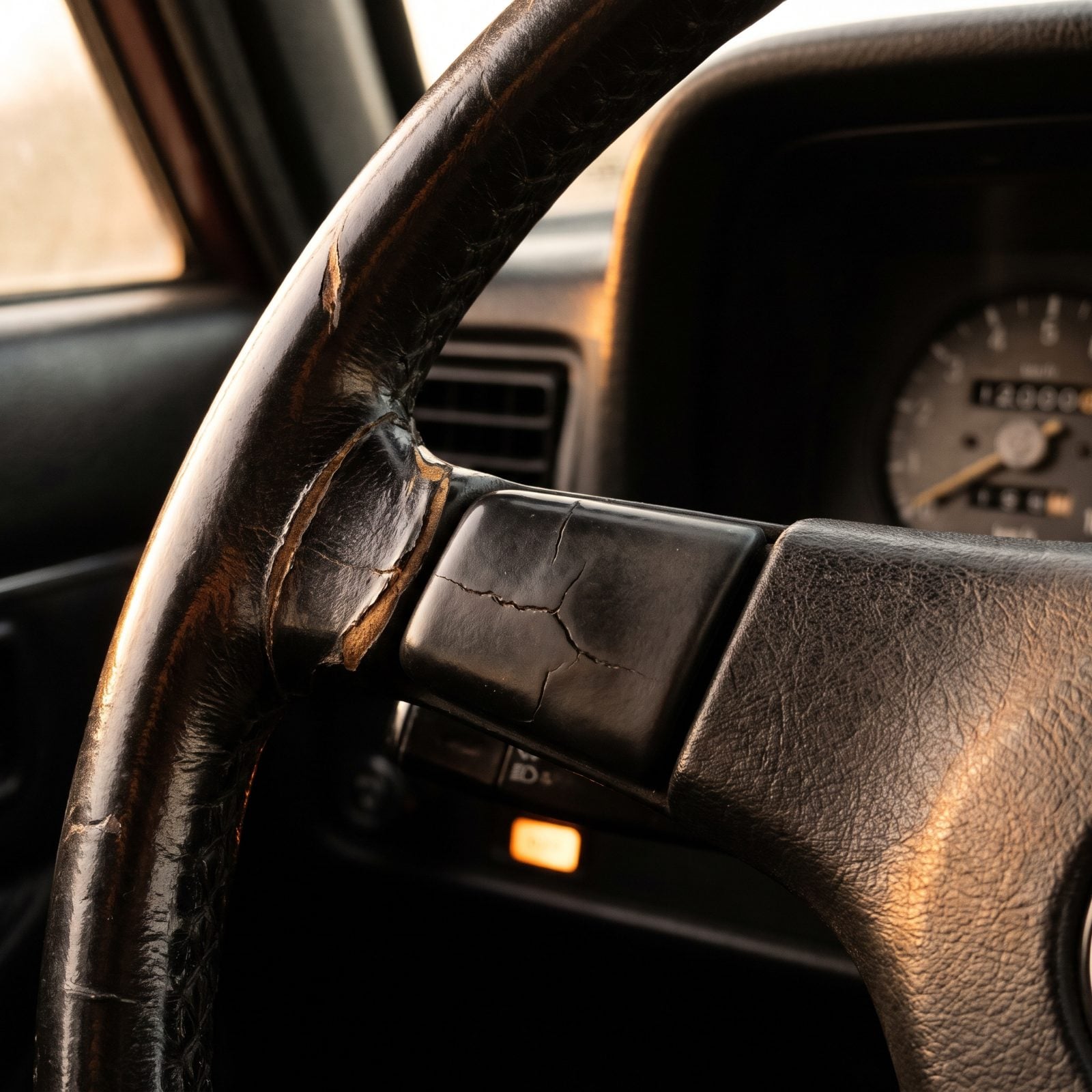
The odometer is a number. The pedals, the seat bolster, the wheel and the stalk knobs you touch every drive are evidence.
A genuinely low-mileage car should have a wheel that isn’t polished smooth and column-stalk knobs that haven’t cracked. When they disagree with the dash, somebody rolled the odometer back or swapped a cluster. The worn spots don’t lie — nobody ever thinks to fake them.
- A stalk knob cracked and split open means far more hands-on use than the numbers suggest.
- A darkened, slick wheel rim takes tens of thousands of miles of hands to produce.
- Crazed, flaking rubber on the stalks and controls is one of the first things to go in a hard-used car.
10. Multiple Air Fresheners Trying to Mask an Odor
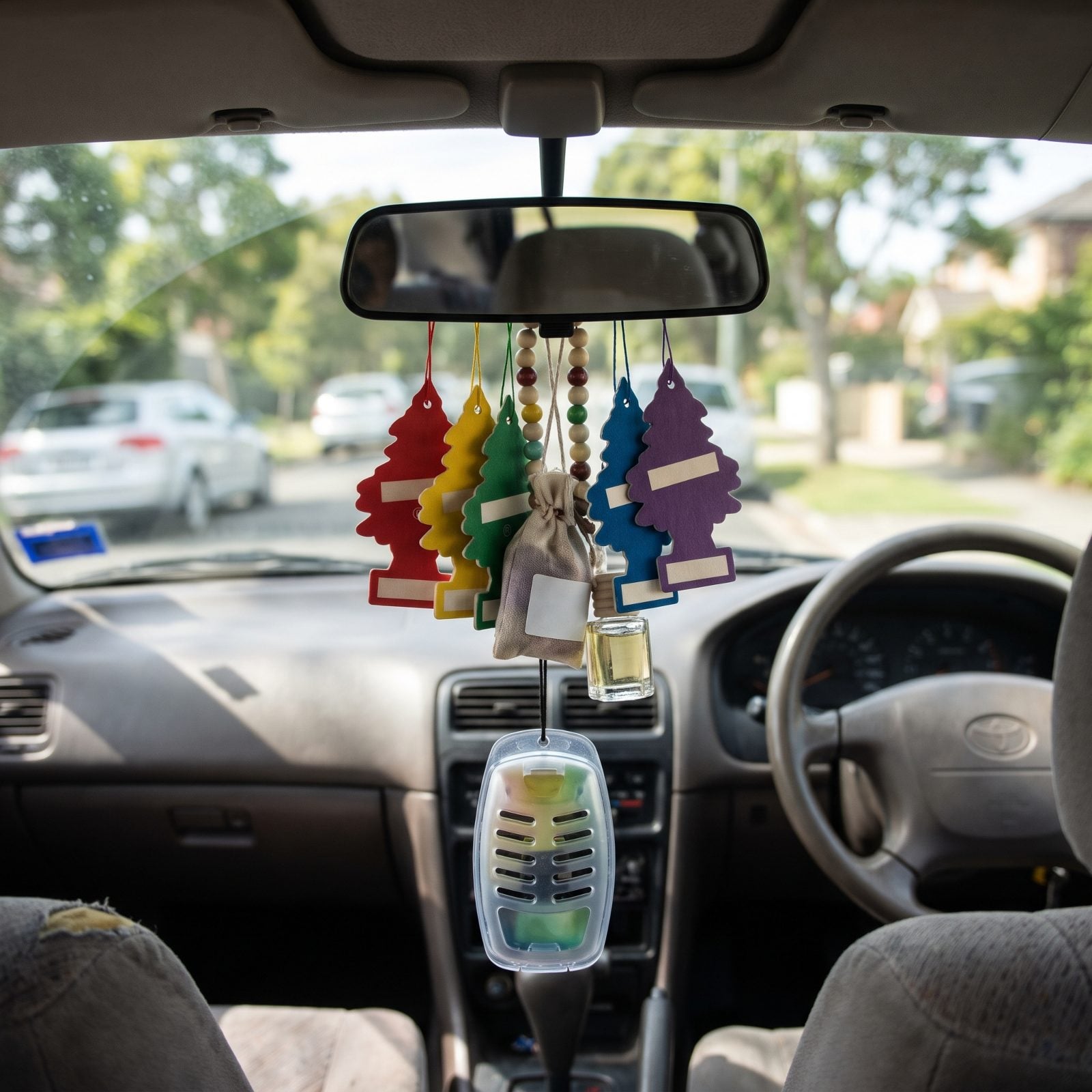
One air freshener is normal. Seven or more hanging off the mirror plus a vent clip is a confession.
Nobody buries a cabin under that many scents when it already smells fine. Heavy masking usually means water damage and mildew, a hidden pet or smoke problem, or a mechanical leak cooking in the vents. The stink always creeps back once the cardboard dries out — and by then the car is yours.
Run the climate fan on high and sniff the vents before you’ve even settled into the seat. Mildew hits hardest in the first thirty seconds of airflow.
9. Tobacco Film, Ash, or Cigarette Burns
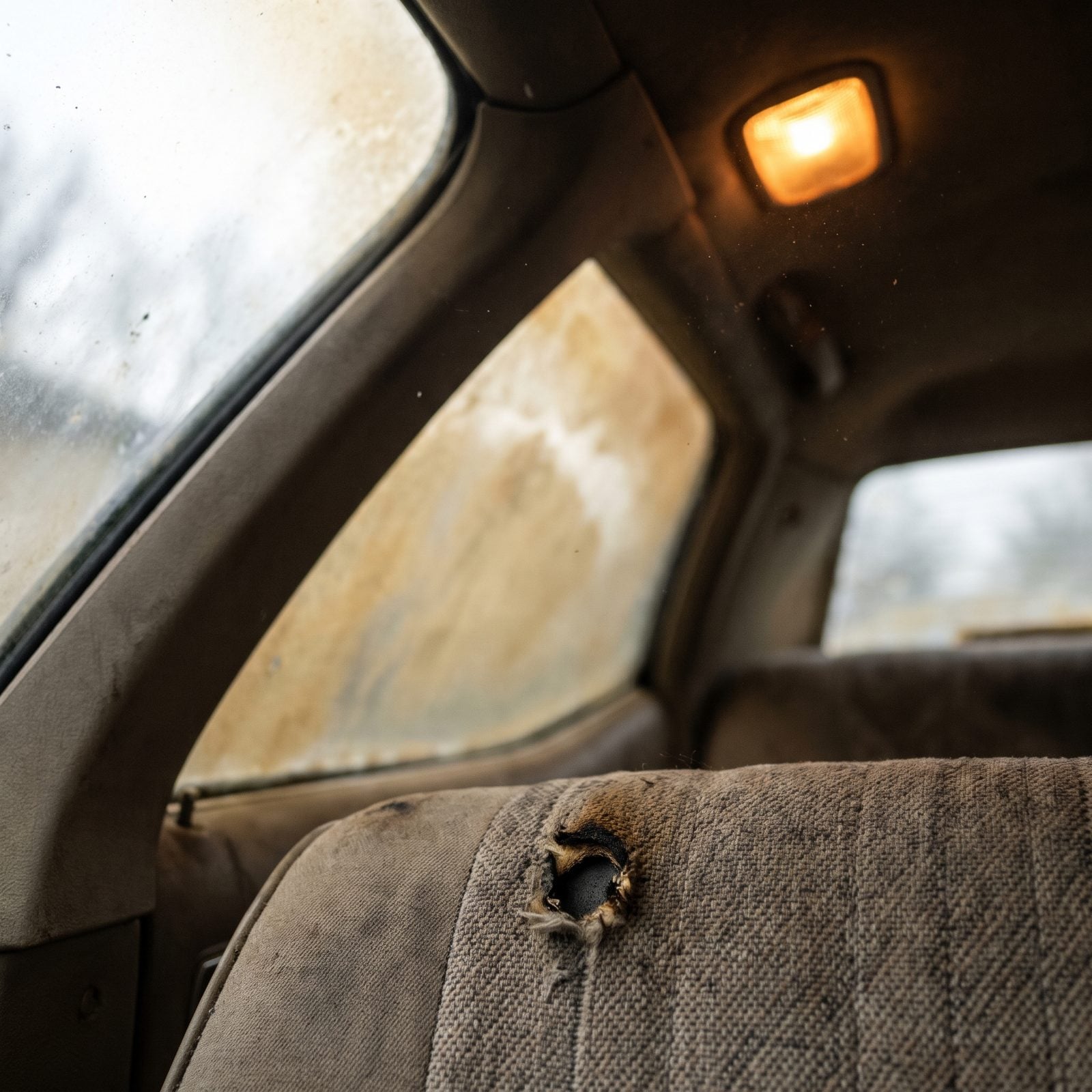
Smoke doesn’t wash out. It soaks in.
A yellow-brown film on the inside of the windshield and a stained headliner mean this car served as a rolling ashtray for years. That residue coats the glass, the vents, the ductwork, and the foam deep inside the seats. A detailer can mask it for a weekend, sure, but heat and humidity drag it right back out.
Small round burns on the seat edges and door cards seal the case, and scorched upholstery can’t be cleaned — only replaced. On the resale side, a confirmed heavy-smoker interior carves a real chunk off value, because the next buyer smells it the second the door swings open.
8. Silt, Rust, or Waterlines That Whisper Flood
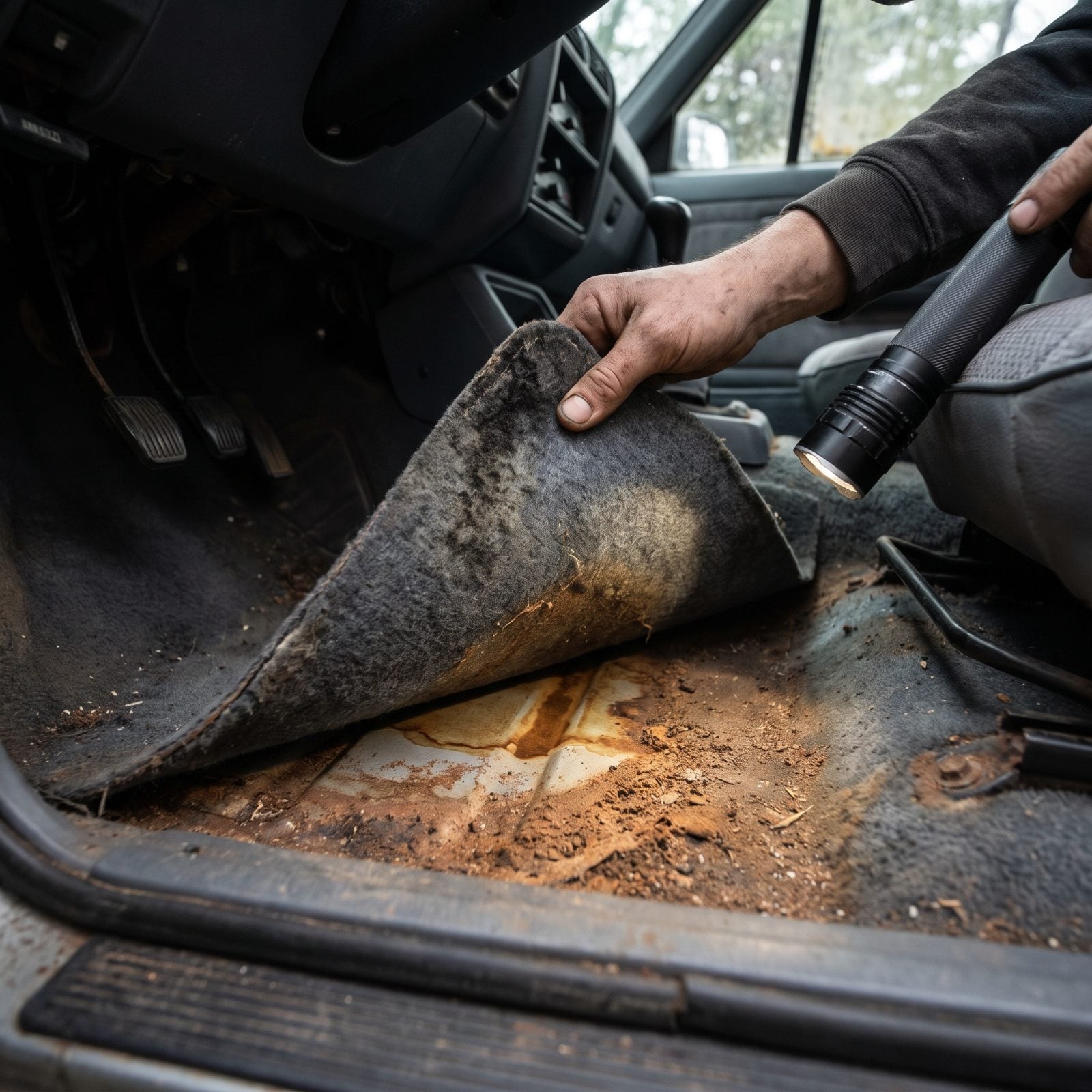
Water leaves a signature. Lift the carpet at the lowest point of the footwell and hunt for a brown tide line, fine silt down in the seat-rail channels, or rust blooming on bolts that ought to be clean steel. Flooding corrodes from the inside out, and the damage you can’t see is always the expensive kind.
The giveaway nobody mentions is smell — a faintly musty, swampy odor that the air fresheners are fighting and losing. Pull the spare out of the trunk well too. That’s where the silt likes to hide when somebody has only cleaned the spots buyers usually check.
7. A Hood That’s Warm for a Promised Cold Start

You asked to hear it start cold. The seller swears it sat all night. Then you lay a hand on the hood and it’s warm, or the exhaust still ticks as it cools.
A warm engine fires up smoother and buries the two things a true cold start drags into the light: a lifter tick that goes quiet once oil circulates, and that gray-blue puff from worn valve seals that clears after thirty seconds. Somebody who ran it around the block before you pulled up is managing your impression. Write it down and insist on the cold start another day.
6. Loose Wiring From an Aftermarket Stereo or Alarm
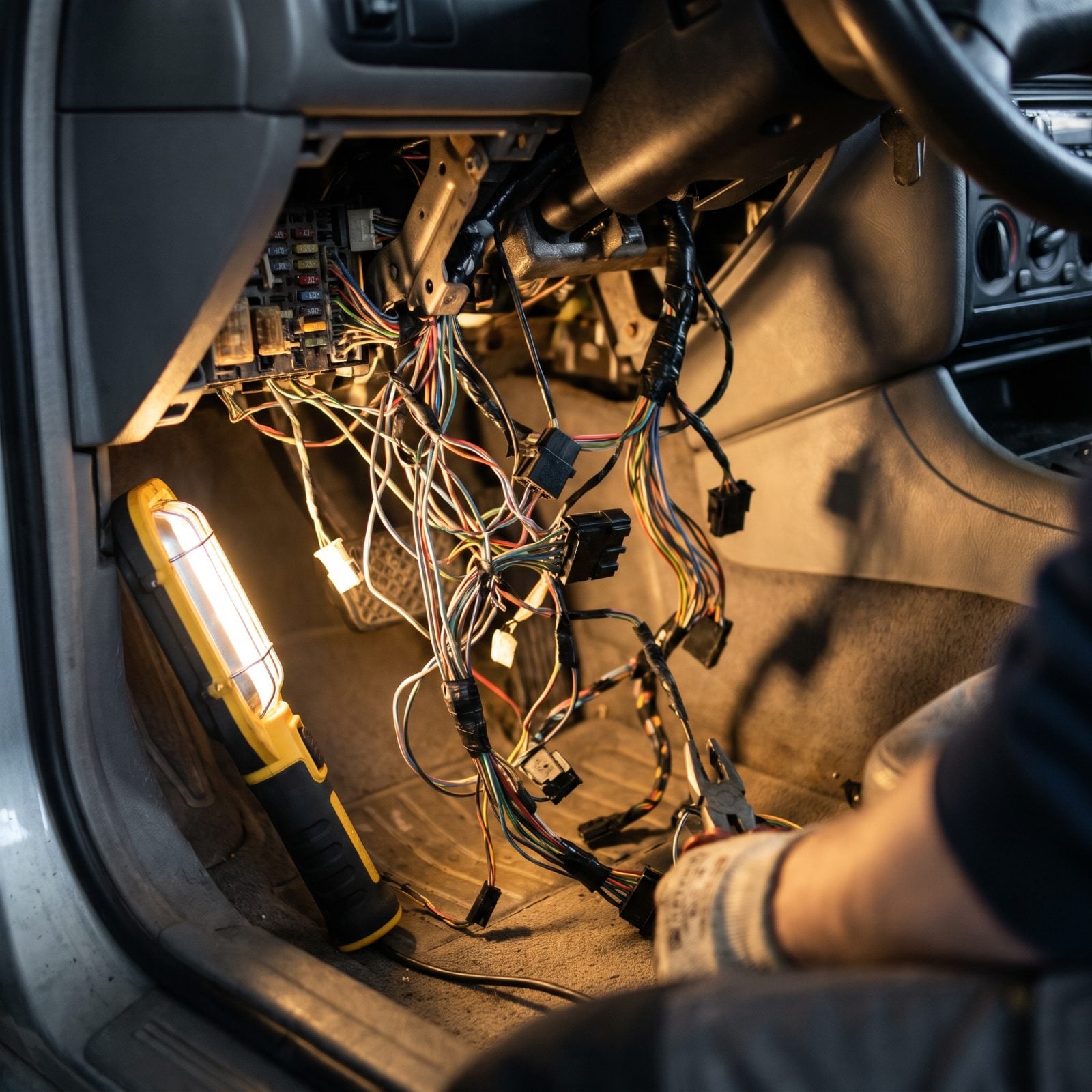
Hanging wires are a biography.
Reach under the dash and up behind the radio. Find a nest of wires wrapped in brittle tape, blue crimp connectors, a head unit sitting proud of the trim? Somebody was in there hacking into the factory harness.
And that matters way past the music. Bad splices cause phantom battery drains, flaky gauges, and no-start gremlins that take a shop hours to chase down. An alarm that got ripped out and left dangling is worse, since those tap straight into the ignition and starter circuits. I’ve watched a clean car bleed real money over a ten-dollar stereo install done with a pocketknife.
5. Airbag Covers With the Wrong Grain or Color
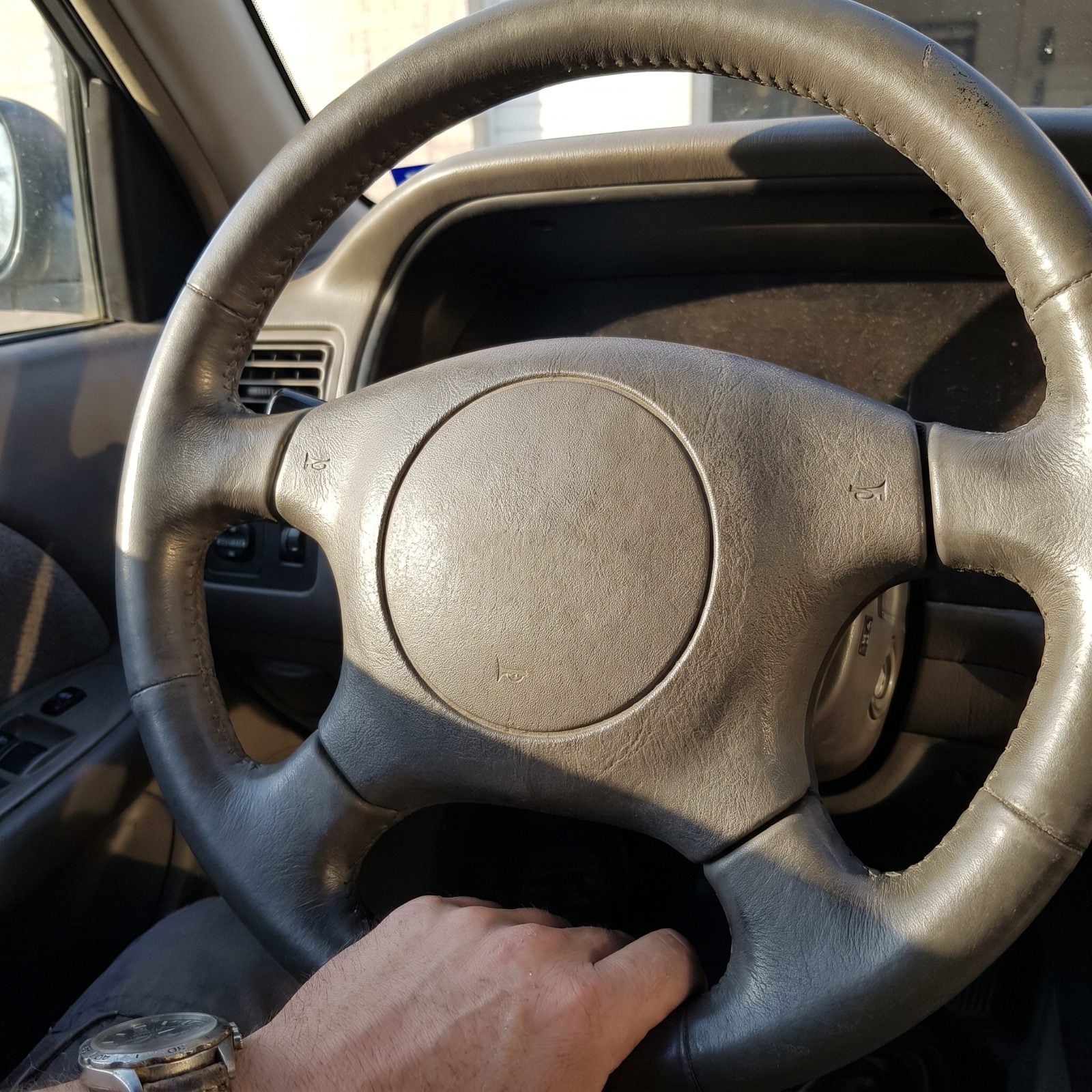
Airbags deploy once. After that, somebody has to put the car back together, and the cheap fix leaves fingerprints all over the job.
Hold the airbag cover up against the surrounding dash. A different grain pattern, an off shade of gray, screws where there should be none, a seam that won’t sit flush — any of those point to a wheel or dash panel yanked from a salvage yard. The real question is whether a working airbag ever went back behind it, or just the cover.
4. A Salvage, Rebuilt, Flood, or Lemon Title Brand

A branded title is the paperwork version of a scar. Salvage means an insurer once declared the car a total loss. Rebuilt means someone patched it and got it re-certified. Flood and lemon brands say exactly what they say.
None of this makes a car worthless. But each one knocks a real chunk off value, and the brand never comes off — it trails the car through every future sale it’ll ever have. The mistake buyers make is swallowing a seller’s casual “oh, it’s a rebuilt title, drives great.” Read the actual document. The brand language shifts state to state, and some sellers are counting on you not knowing the word for it.
3. A Seller Whose Name Isn’t on the Title

The name on the title and the name of the person selling you the car should match.
When they don’t, out come the explanations. It’s my brother’s. I’m selling it for a friend. We just haven’t done the transfer yet. Some of those are true. Some are a curbstoner flipping salvage cars under borrowed identities to dodge disclosure rules.
At minimum, a mismatch means you can’t verify who actually owns the thing you’re about to hand money over for. No matching ID, no deal. That’s not rude — that’s how you keep from buying a car the real owner can report missing next week.
2. Big Holes in the Service History

Records that run tidy for three years, then vanish for two, then pick right back up — that’s a story with a missing chapter.
A gap in the service history usually buries one of two things: a stretch where the car got neglected, or a repair the owner would rather you never saw. The timing belt and the transmission service are where neglect turns pricey. No receipts for a belt that came due two years back means you’re budgeting for one, and pricing the car like it.
1. One Lonely Key and No Spare Fob

Ask for both keys. Only one? That’s not a trivia question, that’s a line item.
Modern keys carry a chip the car has to recognize, and cutting plus programming a replacement runs well into the hundreds at a dealer, sometimes a good deal more on cars with fussy security setups. A missing second key can also whisper that the car came off an auction block or got recovered, where spares rarely make it through. Either way, factor the replacement into your offer. The seller who shrugs and says “I only ever got one” is handing you a built-in negotiation. Take it.
Writing about the hidden cost of a missing spare, an automotive locksmith in South Carolina says “As automotive locksmiths, we regularly hear from people who just purchased a used vehicle and discovered it only came with one key.”