

The ball mount was in the receiver, the chains were hooked, and the whole rig still went sideways on the first downhill. Most towing failures don’t start on the road. They start in the driveway, three minutes before anybody turns a key. The rating on the tailgate sticker lies by omission, the hitch ball loosens over a season of vibration, and half the folks pulling a loaded trailer have never once seen the real number their truck is carrying. These are the mistakes that cost axles and insurance claims, and sometimes a lot worse.
Please note that some of the images in this article were created with the assistance of AI.
39. Trusting the Advertised Tow Rating Instead of Checking Payload
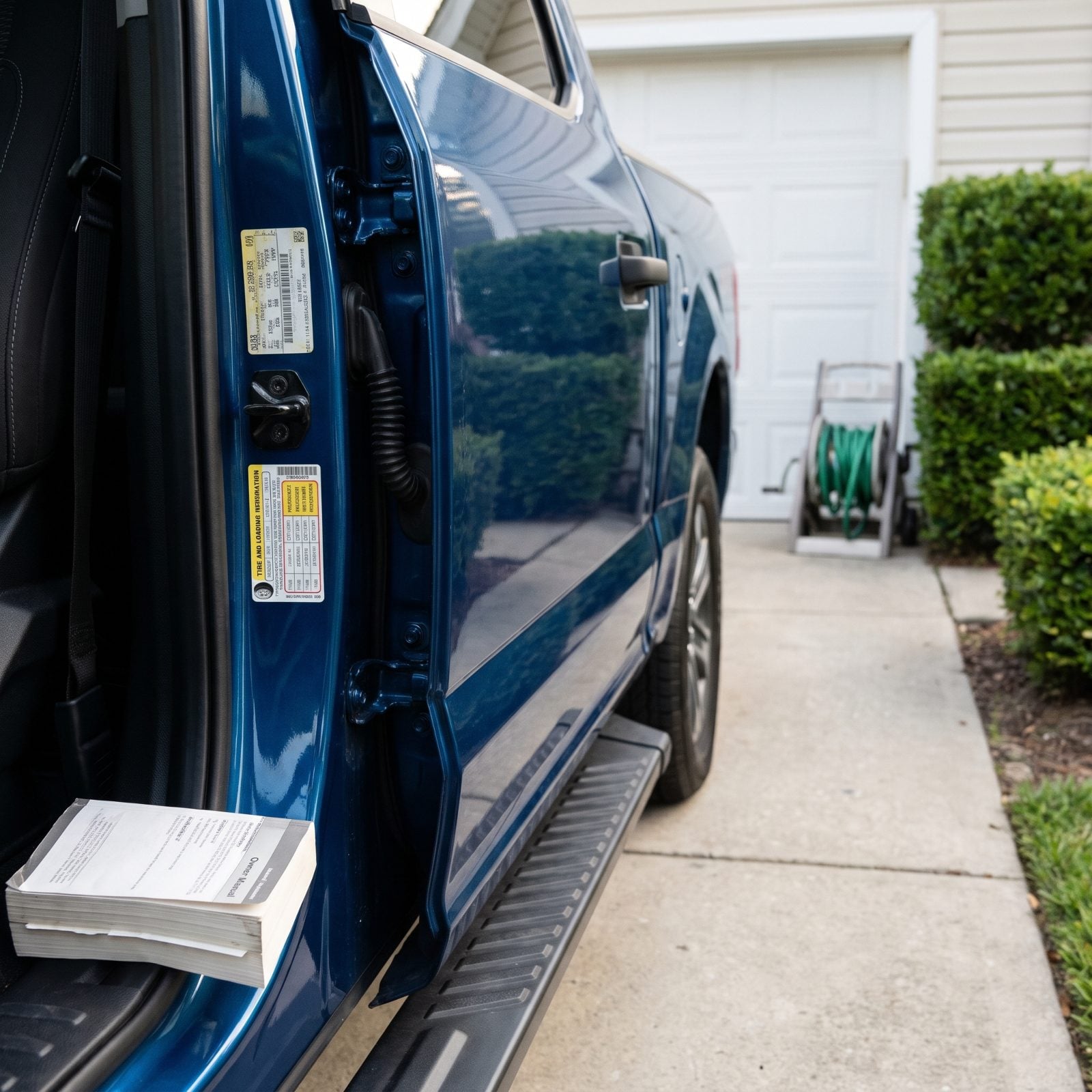
That big number in the brochure assumes an empty truck with a 150-pound driver and nothing else. Add a full tank, a family, a cooler, firewood, and the tongue weight of the trailer, and you blow past payload long before you hit the tow rating. These are two different ceilings, and payload is almost always the one that stops you first.
Overload it and you crush the rear springs, overheat the tires, and turn your braking distance into a guess. The fix lives on the door jamb. Find the yellow placard that reads “the combined weight of occupants and cargo should never exceed X lbs,” subtract people and gear, then subtract roughly 10 to 15 percent of your loaded trailer weight for tongue load. Whatever’s left is your real budget.
38. Skipping a Certified Truck-Scale Weigh-In

Guessing your weight is how folks drive around hundreds of pounds over GVWR for years and never know it. A certified CAT scale costs about the price of two coffees and tells you the truth your bathroom scale and your gut cannot.
Why it matters: without axle-by-axle numbers, you’re flying blind on tire ratings, brake capacity, and whether your rear axle is maxed. A failed axle or tire at highway speed with a loaded trailer behind you isn’t a repair bill. It’s a report. Pull onto the scale fully loaded, truck on one pad, trailer on another, and get your steer axle, drive axle, and trailer axle read separately. Do it once with your typical load, write the numbers on a card, and keep it in the glove box.
37. Using Airbags to Hide an Overloaded Rear Axle
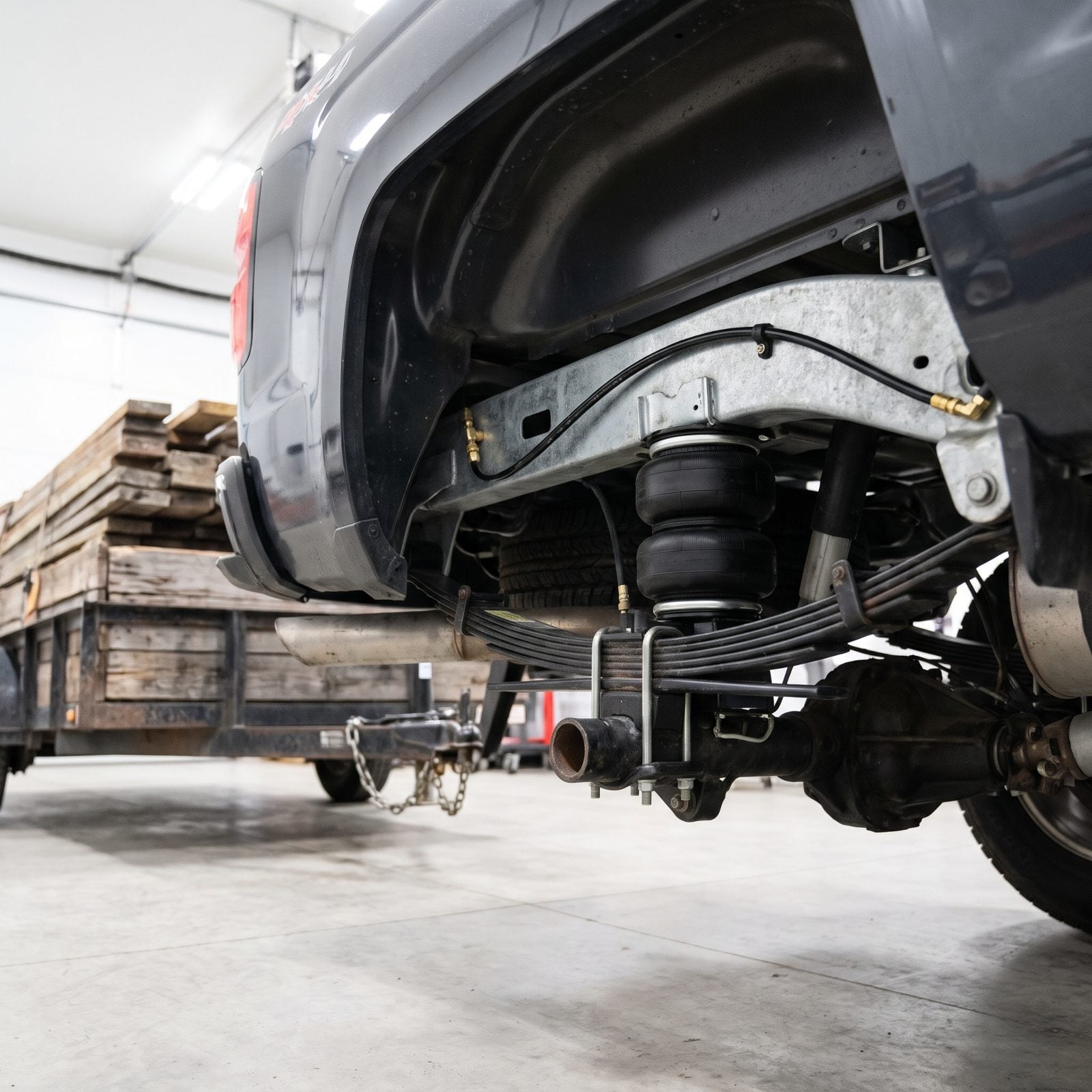
Airbags make an overloaded truck sit level, and level feels safe. It isn’t. Here’s the trap people fall into.
- Air helper springs restore ride height and kill the sag that would otherwise warn you.
- The weight is still there. Your tires, wheel bearings, axle, and brakes never got the memo.
- You drive confident on a rig that’s quietly over its limits.
Airbags tune ride quality. They don’t raise your axle rating, your tire load rating, or your GVWR by a single pound. Use them to fine-tune a legal load, not to mask an illegal one. If you need bags just to get level, you’re carrying too much. Weigh it, lighten it, or move to a truck with the axle to handle it.
36. Using an Underrated Receiver Hitch
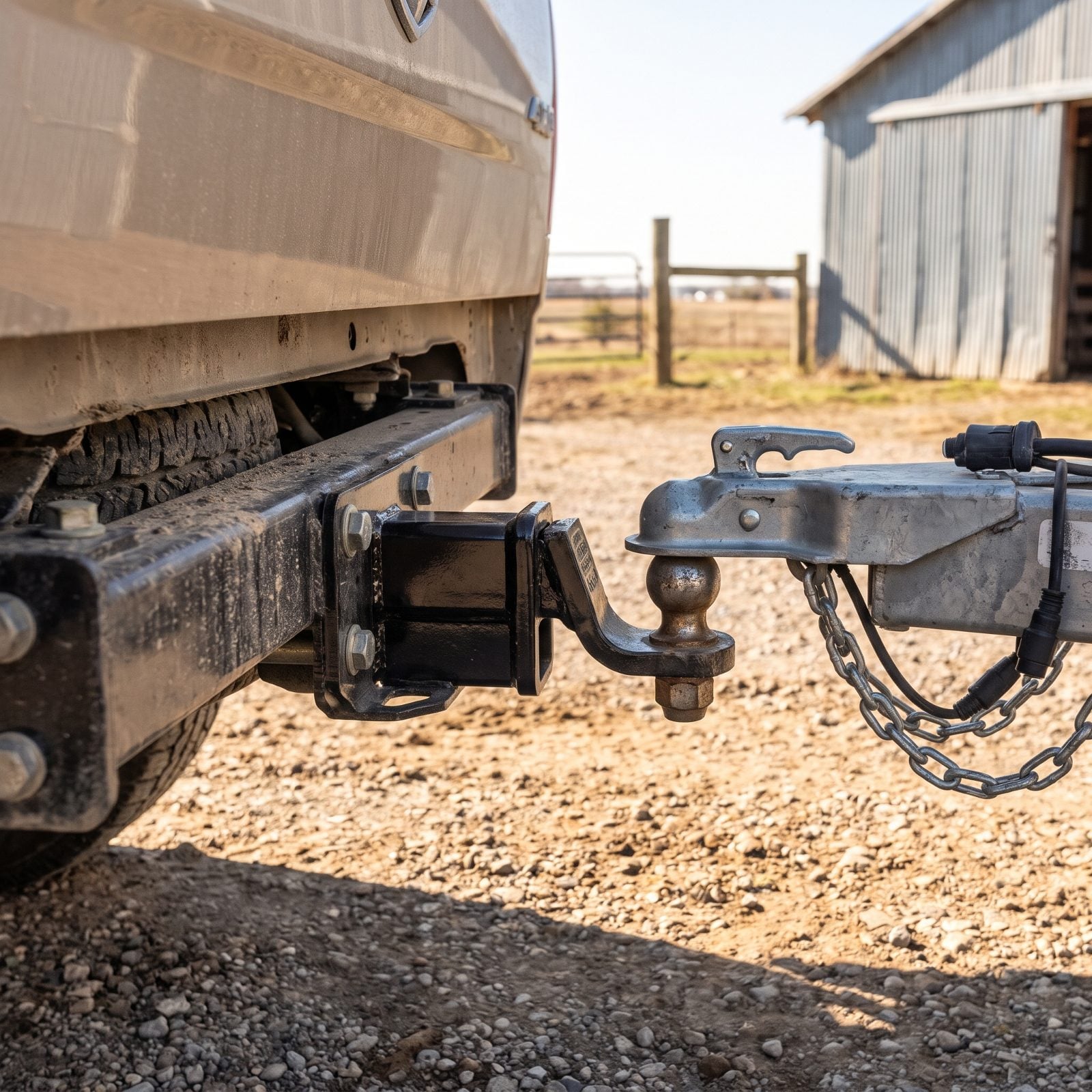
A receiver hitch carries a class rating for a reason, and a Class III bolted on a truck doesn’t magically pull like a Class V. People upgrade to a bigger trailer and never give a thought to the little square tube holding the whole thing to the frame.
Exceed the receiver’s gross trailer weight or tongue-weight rating and you’re loading welds and mounting bolts past their design. When one lets go, it goes all at once, usually on a grade. Check the stamped rating plate on the hitch itself, not the truck’s tow spec. Match the receiver class to your loaded trailer weight and tongue load with margin to spare. Can’t read the plate, or you inherited an unknown hitch? Replace it with a known-rated unit. This is no place to be thrifty.
35. Using the Wrong Hitch-Ball Diameter

A 2-inch coupler will drop over a 1-7/8 ball and latch like everything’s fine. It isn’t. The ball is undersized, the coupler rattles with a gap, and over bumps it can lift right off.
Mismatched ball-to-coupler diameter is one of the most common disconnections out there, and it almost always looks secure in the driveway. The coupler stamps its required size right into the casting: 1-7/8, 2, or 2-5/16 inch. Read it, then match the ball exactly. They aren’t interchangeable, and the difference is small enough to fool your eye. Keep a labeled ball mount for each trailer you own, or buy an adjustable mount with swappable balls. And check it every single time you hitch, not just the first time.
34. Leaving the Hitch Ball Loose
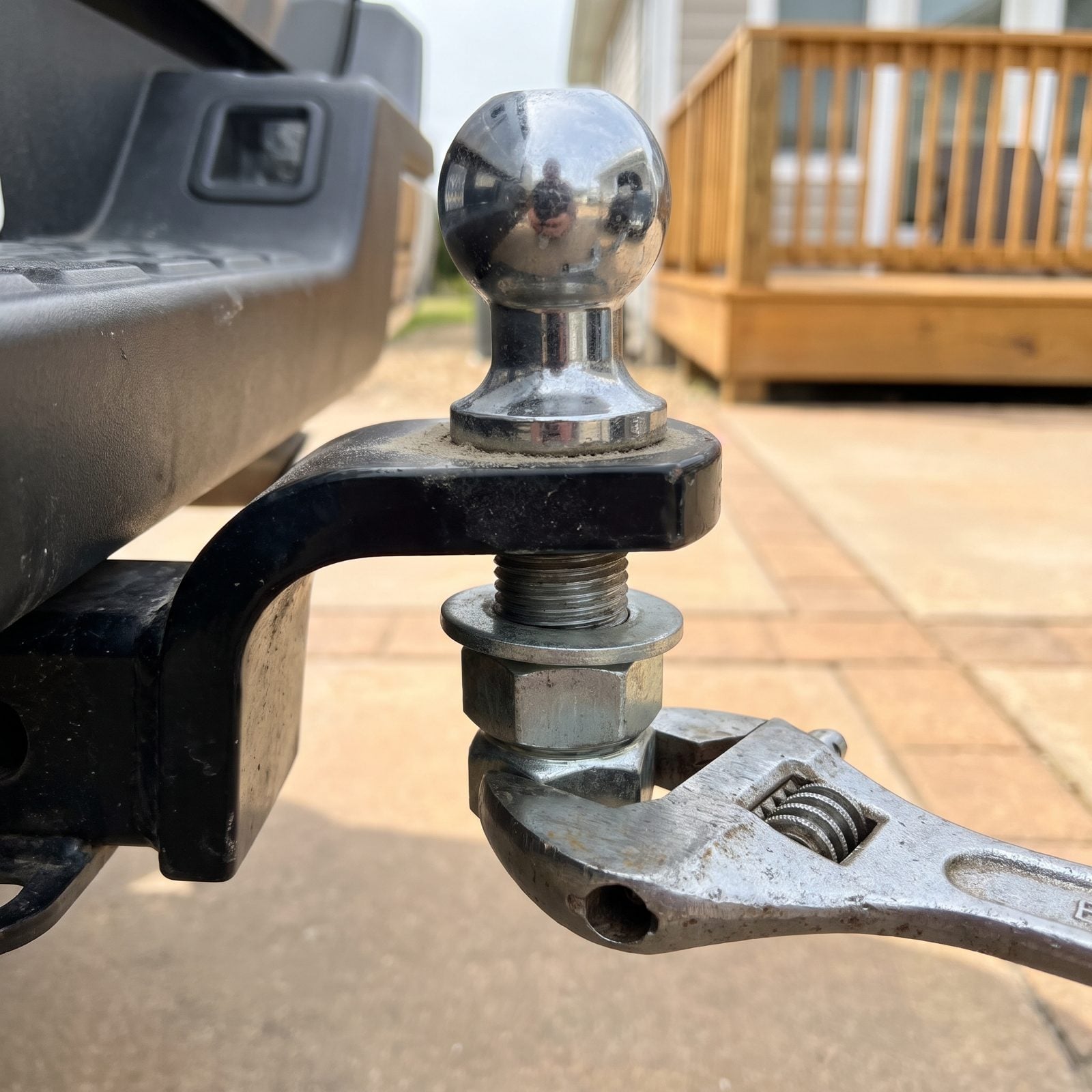
You torque the ball down once when you install it, then you forget it exists. Vibration doesn’t forget. A hitch-ball nut backs off slowly over a season of road miles until the day the ball spins loose under load.
A loose ball wallows in the platform hole, chews the threads, and eventually walks right out with the trailer attached. The fix takes thirty seconds. Torque the ball nut to the manufacturer’s spec, use the flat washer and lock washer that came with it, and put a wrench on it at the start of every towing season. Give it a hard tug before each trip. If it moves, you just saved yourself a very bad afternoon.
33. Forgetting the Hitch-Pin Retaining Clip
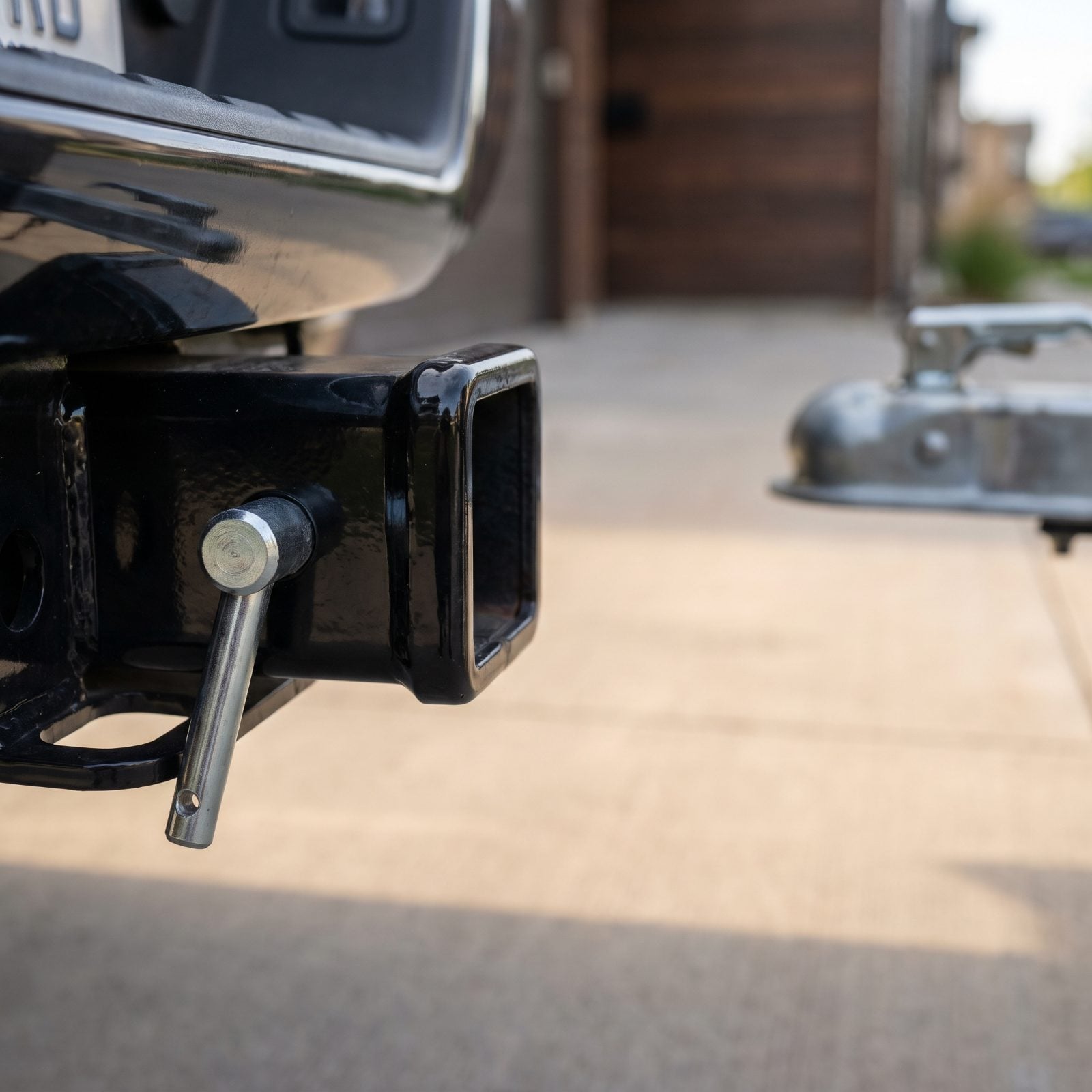
The hitch pin slides through the receiver to hold the ball mount once it’s in, and that little bent clip on the end is the only thing keeping the pin from backing out. Skip it, or lose it in the gravel, and nobody notices until the next time a ball mount walks free.
Without the retaining clip, road vibration works the pin out hole by hole. One good pothole and your entire ball mount, trailer included, separates from the truck. The pin alone won’t hold. It needs the clip, every time. Keep spares in the glove box, because you will drop one eventually. Better yet, run a locking hitch pin with a key. It can’t vibrate out, and it keeps someone from lifting your trailer off at a rest stop.
32. Failing to Seat and Lock the Coupler Fully
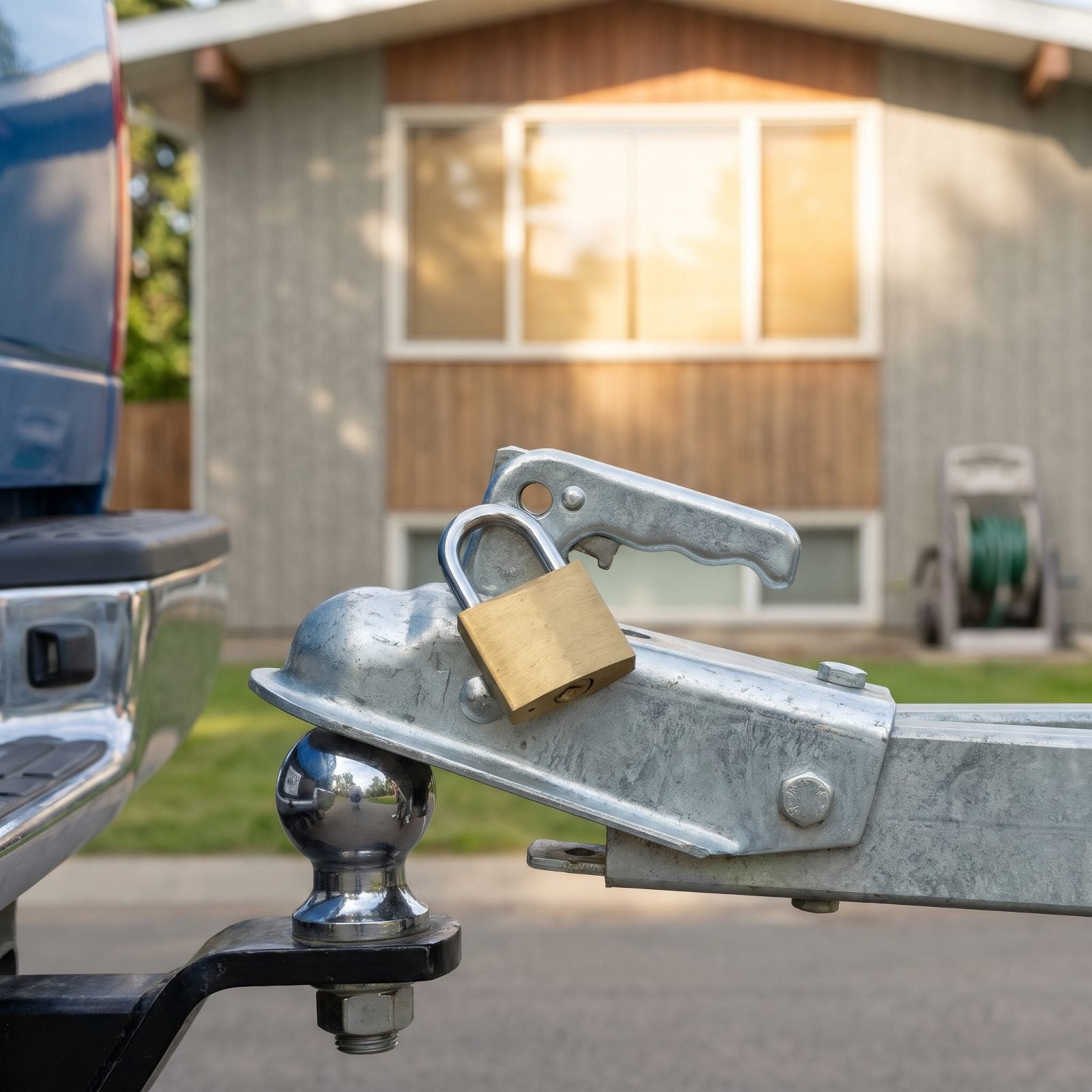
The coupler drops over the ball, it looks seated, you flip the latch, done. Except the latch flipped over the top of the ball instead of under the collar, and the trailer is sitting there held by nothing but gravity.
A coupler that isn’t fully seated and latched will hop off the ball the first time the tongue rises over a bump or a dip. Classic parking-lot-to-highway disconnect. After you latch it, run the lift test: crank the tongue jack down with the truck in park. If the back of the truck rises instead of the coupler popping loose, it’s seated. If the coupler lifts off the ball, it never latched. Then drop a padlock or coupler pin through the latch so it can’t bounce open on the road.
31. Not Crossing the Safety Chains
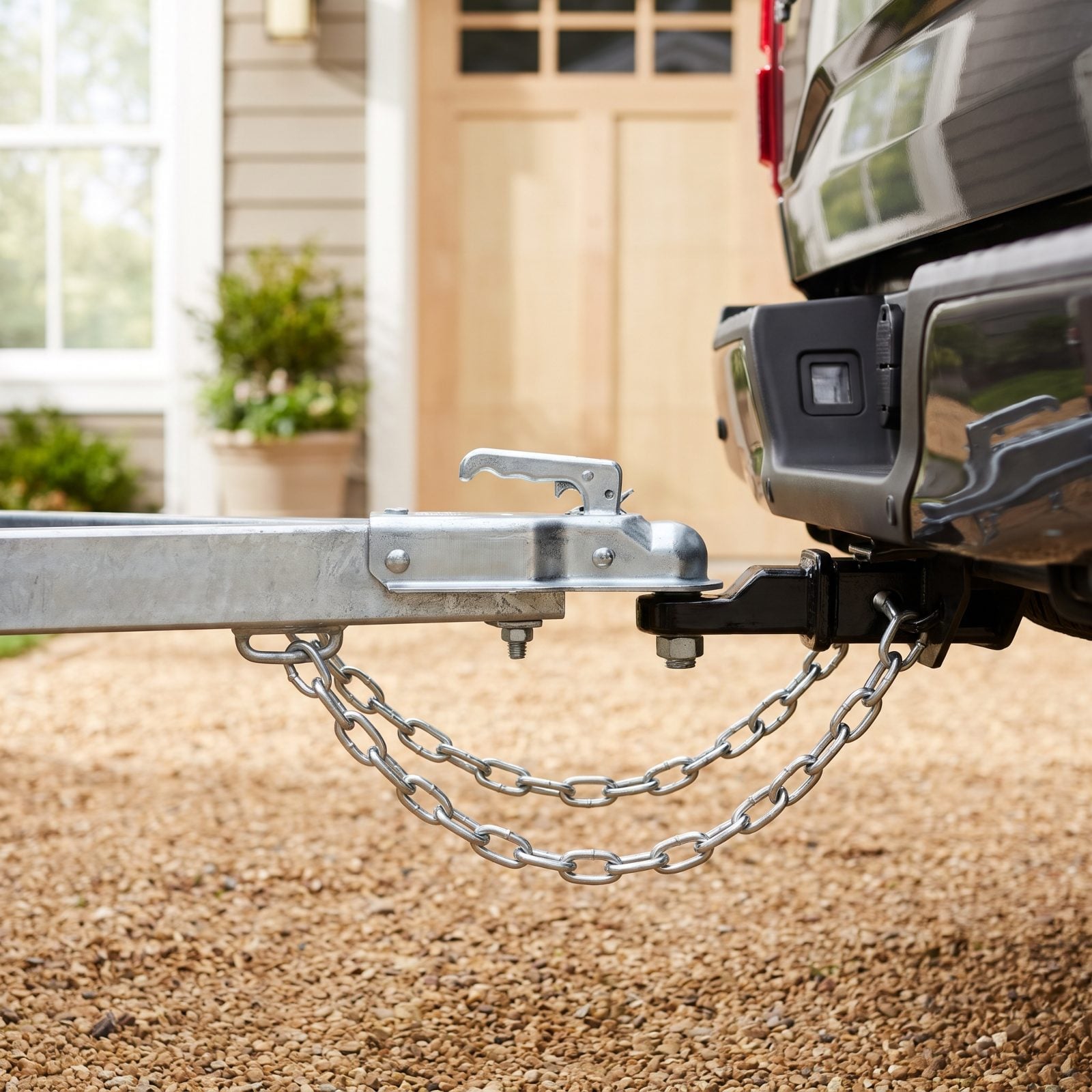
Running the safety chains straight back, left to left and right to right, feels tidy. It’s backwards. The whole point of crossing them is the X they make under the coupler.
If the trailer ever comes off the ball, crossed chains form a cradle that catches the tongue and keeps it off the pavement. Run them straight and the dropped tongue digs into the road, and you lose control of the trailer entirely. Cross the pair in a single clean X under the coupler, hook them to the frame-mounted loops on the truck (never through the ball-mount shank’s pin hole), and leave just enough slack to turn sharp without binding. Too much slack drags, too little pulls tight in a turn. Both are wrong, and one slow lap around the yard finds the right length fast.
30. Attaching the Breakaway Cable to a Safety Chain
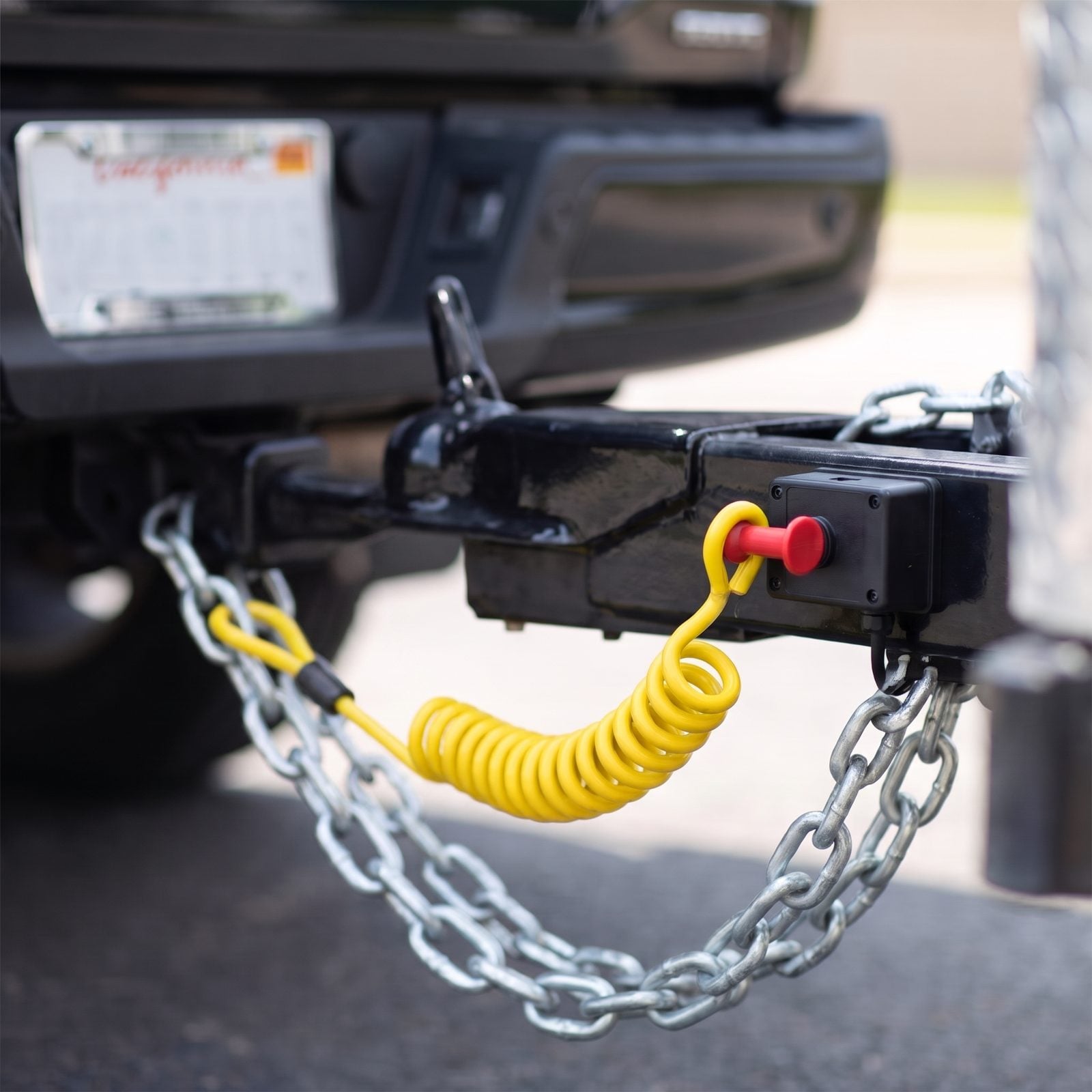
The breakaway cable is your last line of defense. If the trailer separates completely, that cable yanks a pin and slams on the trailer’s electric brakes to stop it. Where you anchor it matters more than almost any other connection.
Clip the breakaway cable to a safety chain and you’ve defeated the whole system. In a real breakaway, the chains fail or come off right along with everything else, and the cable goes with them without ever pulling the pin. Now you’ve got a loose trailer rolling free with no brakes. Attach the cable directly to a dedicated hole on the truck’s receiver or frame. Never to the ball mount, never to a chain. Leave enough slack to turn, but short enough that a full disconnect pulls the pin before the trailer gets away. Test the switch yearly by pulling the pin and confirming the brakes lock.
29. Towing With a Dead Breakaway Battery
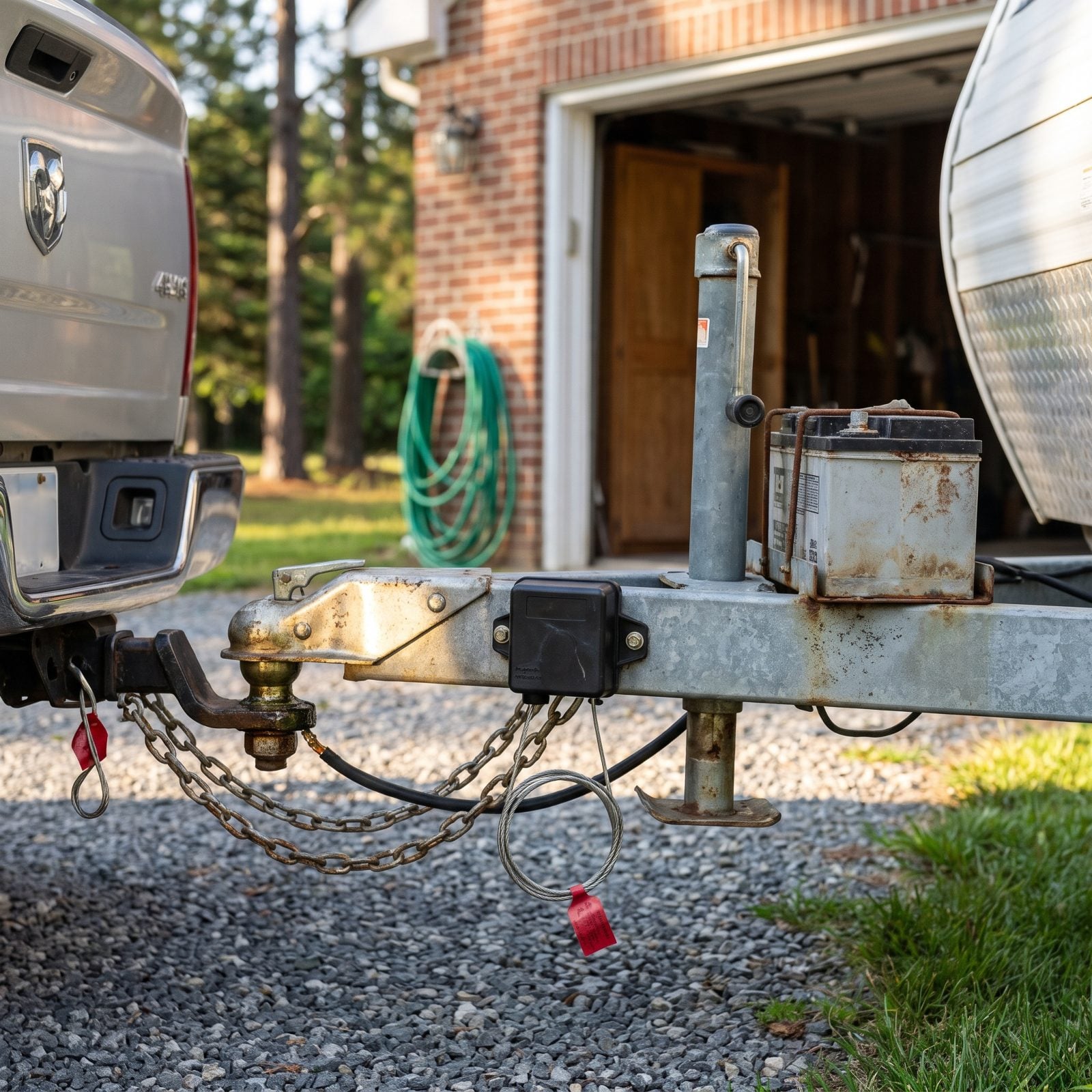
That little black box zip-tied to the trailer tongue is the one part of your rig nobody thinks about until it’s the only thing left working. The breakaway system yanks a pin, slams the trailer brakes on, and holds them if the trailer ever jumps the ball at speed. Trouble is, the battery powering it lives a hard life out in the weather, and most of them are stone dead long before you ever find out.
A breakaway battery that can’t hold a charge is a safety device pretending to be one. Picture a few thousand pounds rolling free down the road with nothing left to stop it. That’s the scenario.
So test it before every big trip. Chock the trailer, pull the pin, and try to roll the thing by hand — the wheels should lock up solid. If they drift, you’ve got a weak battery or a corroded connection hiding somewhere. Replace the cell every two to three years whether it’s failed or not, and park a maintainer on it over winter.
28. Towing Heavy Without Functional Trailer Brakes
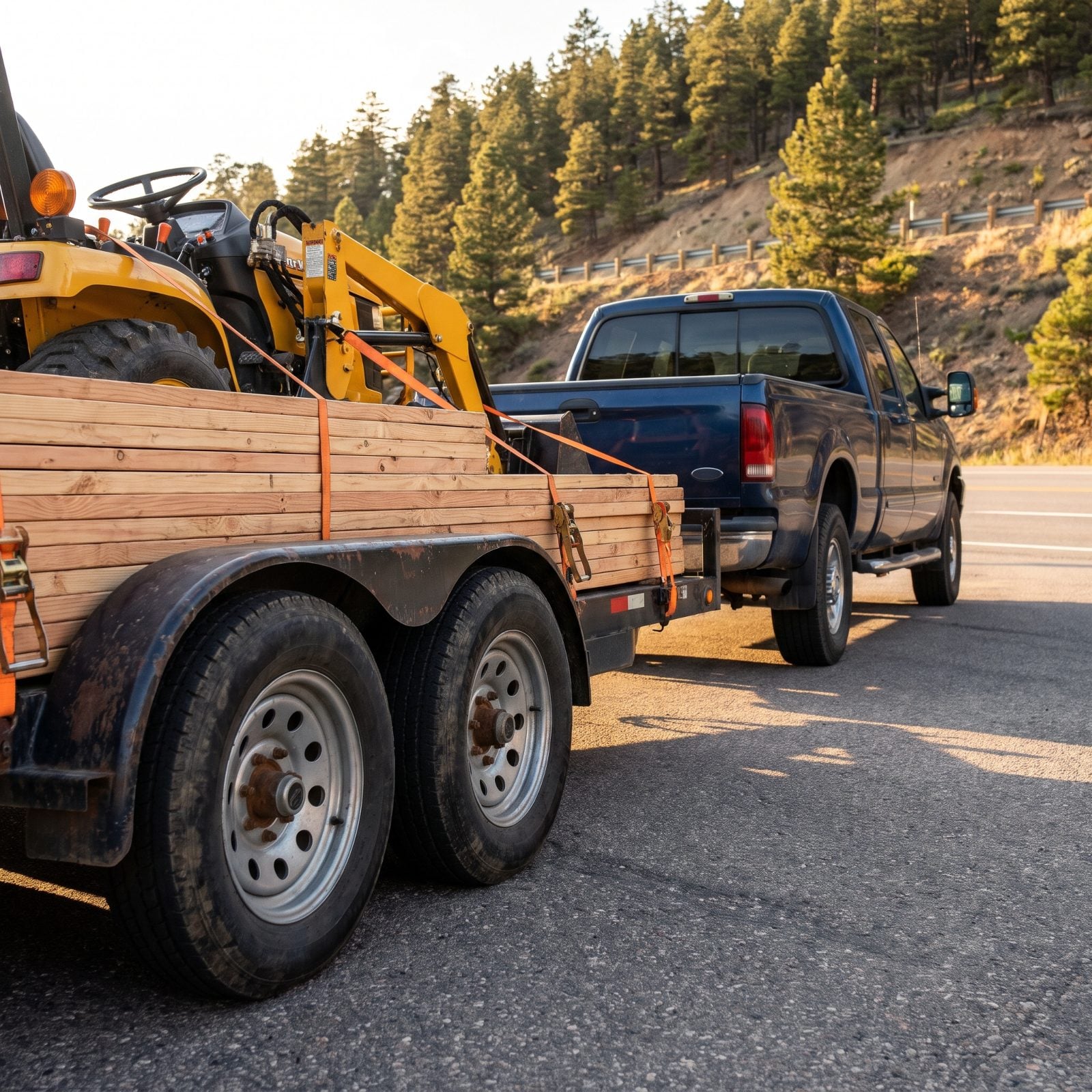
A truck that stops fine empty turns into a very different animal with four thousand pounds shoving it from behind. Your pickup’s brakes were engineered to stop your pickup — not to haul down a loaded tandem-axle trailer too, and a long downhill grade is exactly where that math catches up with you.
Electric drum brakes on the trailer axles share the load so your truck brakes don’t cook themselves. Skip them, or let them sit disconnected, and you get fade, glazed pads, warped rotors, and a stopping distance that doubles on the worst possible stretch of road.
Any trailer over about 3,000 pounds needs working brakes, and most states legally require them. Pull a drum once a year, check the shoes and magnets, and confirm every axle actually grabs when you thumb the manual slider on your controller. One dead axle doing nothing is half your trailer braking gone.
27. Setting Brake-Controller Gain Too High or Too Low
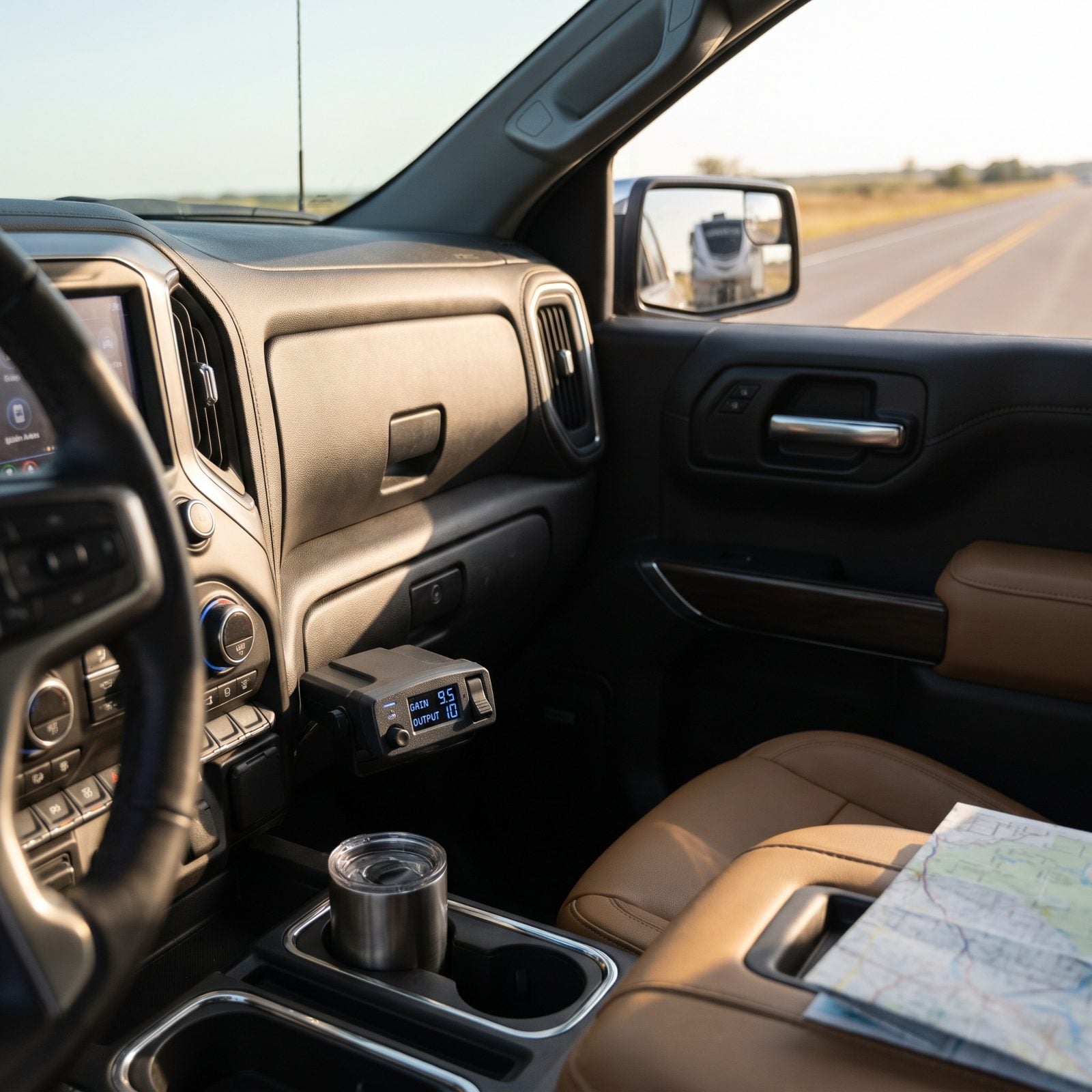
The brake controller under your dash is the dial most owners set once and never touch again. Big mistake. Gain set too low and the trailer just coasts along pushing your truck; set it too high and the trailer brakes grab hard, chirp the tires, and wear the shoes to nothing while the whole rig lurches at every stoplight.
Both extremes cost you. Low gain overworks the truck brakes. High gain flat-spots trailer tires and chews through drum shoes months early.
How to dial it in right
- Load the trailer the way you’ll actually tow it. Gain changes with weight.
- Find an empty lot, get up to about 25 mph, and pull the manual lever by hand.
- Turn gain up until the trailer wheels just barely lock and skid, then back it off a notch so they grab firm without sliding.
Recheck it whenever the load changes a lot. An empty car hauler and a loaded one are two different animals.
26. Leaving With Nonworking Trailer Brake Lights
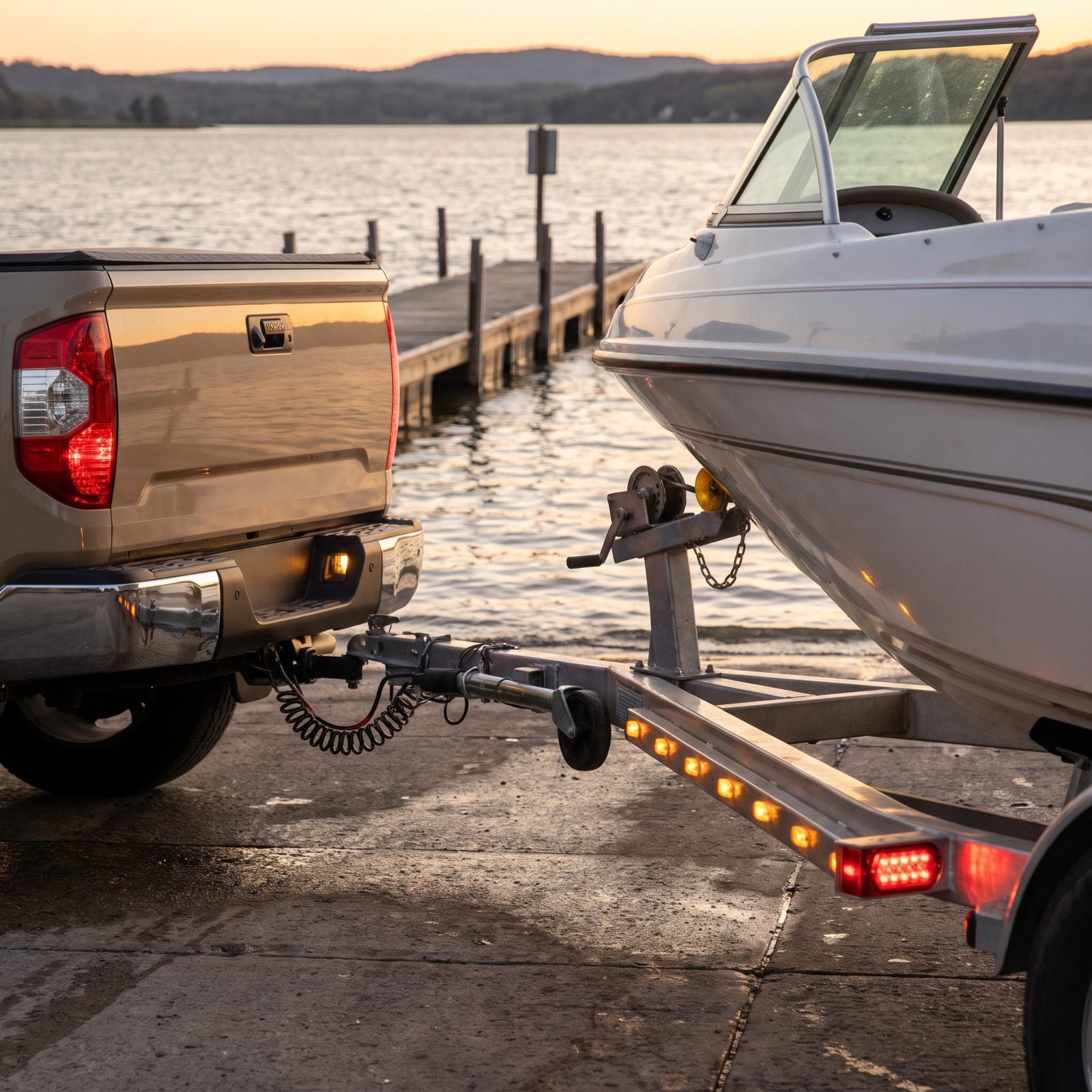
You hooked up at dusk, the red tail light and the row of amber markers were glowing, and you figured the lights were fine. Then the driver behind you has no clue you’re braking until he’s already climbing into your tailgate. Trailer lights fail quietly. The running lights can glow while the brake circuit is dead, and the one person who can’t see it is you.
Corroded ground wires, a cracked seven-pin plug, bulb sockets packed with road salt — those are the usual culprits. A dead brake light turns your trailer into a nasty surprise for everyone behind it, and it’s an instant ticket in most states.
Walk the lights every single time before you roll. Have someone stand behind the rig while you work the brake pedal, blinkers, and running lights. Pack a little dielectric grease into the connector to keep corrosion out, and stash a few spare bulbs or a cheap LED replacement in the glove box.
25. Towing Without Proper Extension Mirrors
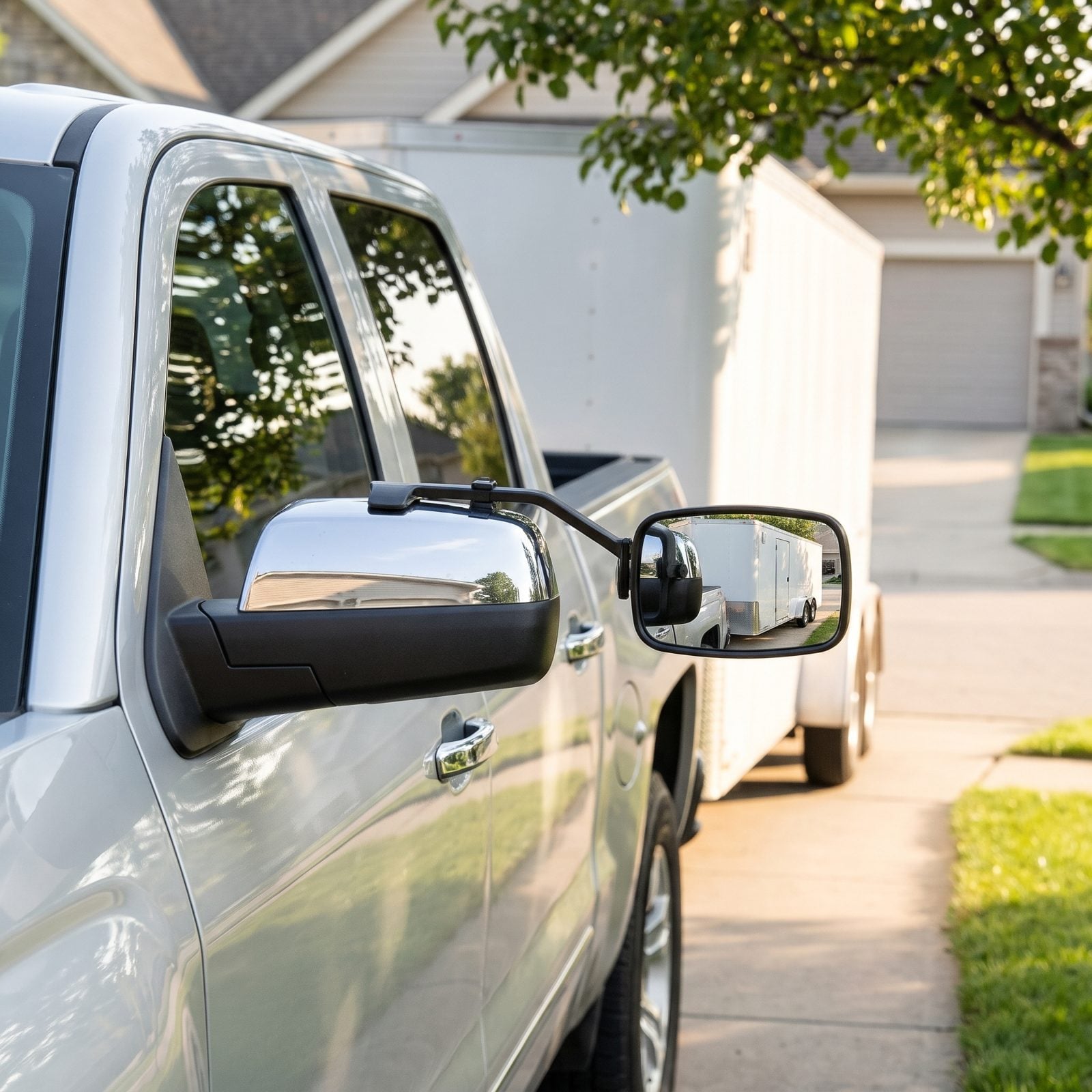
Factory mirrors are set up to see down the sides of your truck. Hang a trailer wider than the truck behind it and those mirrors are suddenly aimed at nothing but the side of the trailer, with a fat blind spot swallowing the lane right next to you.
That blind spot is where the merging sedan lives — the one you never see until the horn. It’s also why so many owners clip trailer fenders changing lanes.
Clip-on or slide-out tow mirrors push the glass out far enough to see past the widest point of the load. Set them so you can just catch the trailer’s rear edge in the glass, then adjust until the lane beside it opens up. On a fifth-wheel or a wide enclosed hauler, powered telescoping mirrors earn their keep every single mile.
24. Ignoring Old Trailer Tires With Good-Looking Tread
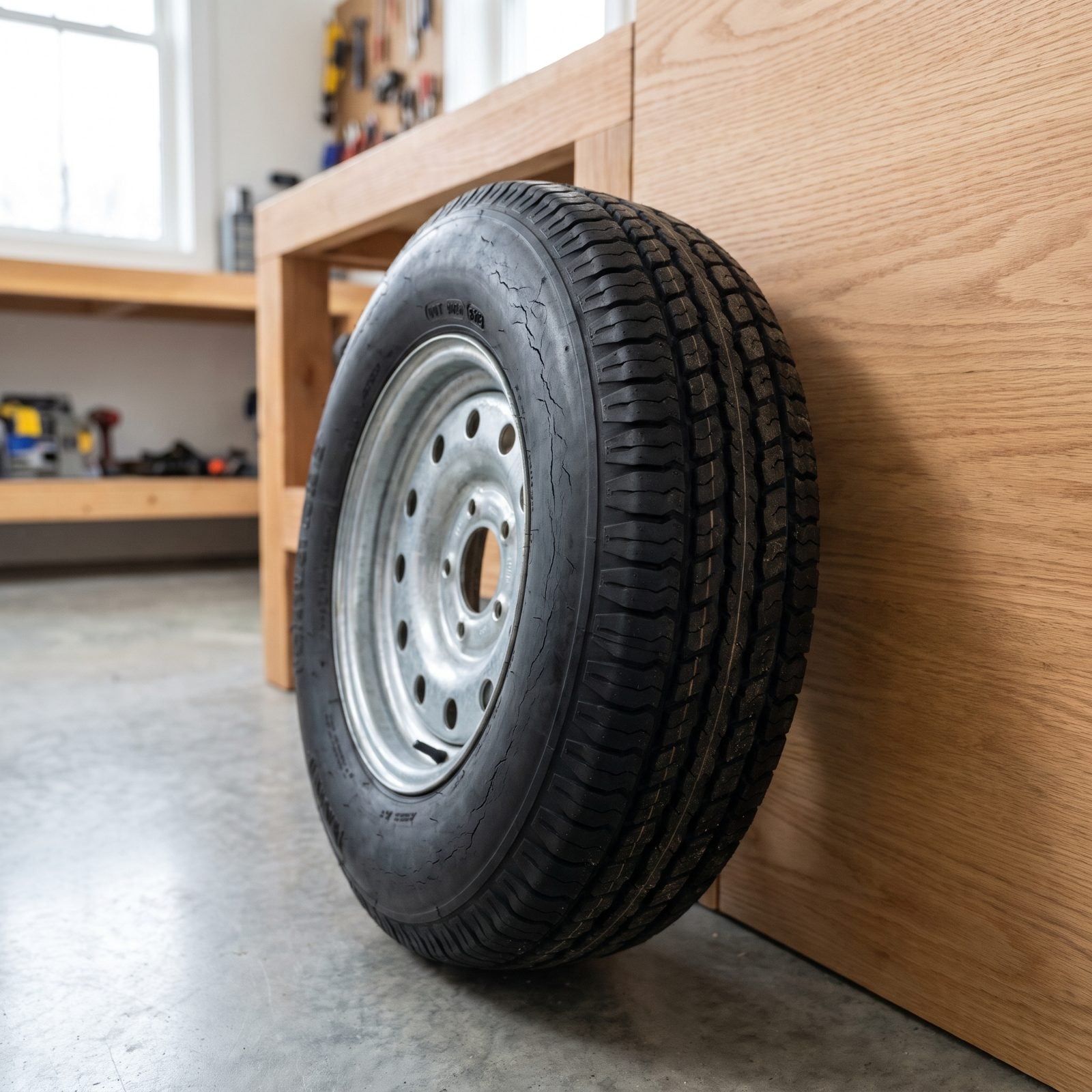
Tread depth lies on a trailer tire. These tires rarely wear out from miles. They die from age — sitting in the sun, baking and flexing until the rubber gives up from the inside while the tread still looks showroom fresh.
A trailer tire that spends its life parked is drying out the whole time it sits. The sidewall develops hairline cracks, the belts separate, and one hot afternoon on the interstate it lets go in a cloud of rubber that can tear a fender clean off and spray your trailer across two lanes.
Find the DOT date code on the sidewall. The last four digits are the week and year it was built. Replace trailer tires at five to six years regardless of tread, sooner if you spot cracking. Keep them covered when parked, and air them to the max cold pressure printed on the sidewall — not the number you’d run in a car tire.
23. Overloading the Trailer Tires
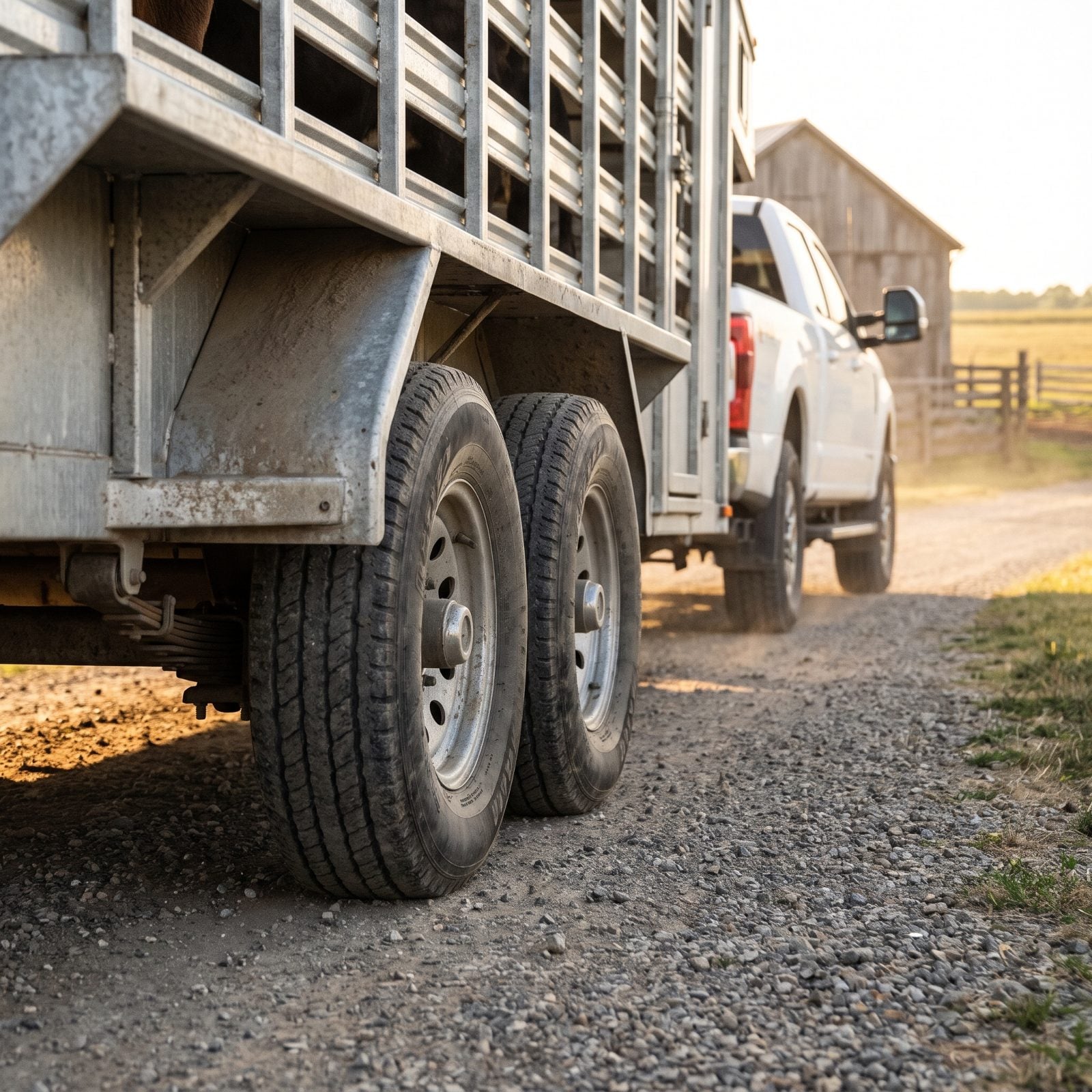
Every trailer tire has a maximum weight rating from its manufacturer, and plenty of owners blow clean past it loading a tractor or stacking the bed full of gravel. The tire never complains. It just runs hot, flexes too much, and eventually comes apart in pieces.
An overloaded tire builds heat it can’t shed. Heat separates the belts. And that’s the blowout waiting for the hottest day and the longest grade.
So add up the ratings. Each tire’s capacity times the number of tires has to clear your fully loaded trailer weight with margin to spare. Hit a CAT scale at the truck stop to learn what your rig actually weighs loaded, not what you guessed in your head. Balance the load too, so no single tire carries more than its share — uneven loading can crush one tire while the others loaf.
22. Leaving Trailer Wheel Lugs Untorqued
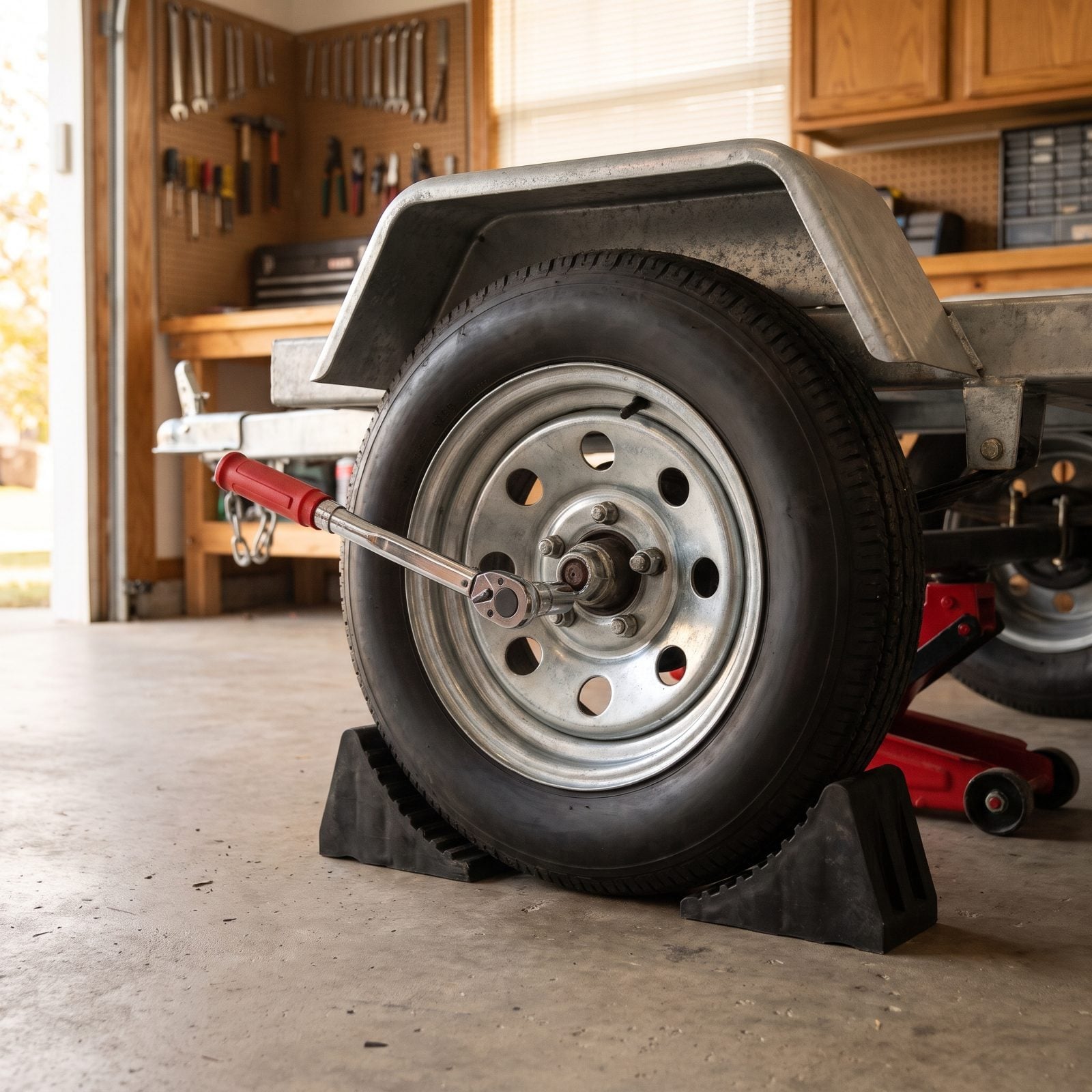
You bolted the wheel on, snugged it with the impact, and called it done. Trailer wheels don’t forgive that. New wheels, new hubs, fresh steel rims — they all settle in the first stretch of driving, and lug nuts that felt tight in the driveway loosen up without a sound.
A lug that backs off lets the wheel wobble. The wobble elongates the stud holes, then shears the studs, and then the wheel leaves the trailer entirely at highway speed. People have been killed by a loose trailer wheel bouncing off into oncoming traffic. No exaggeration.
Torque them properly with a real torque wrench, not an impact and a prayer, and put the socket on each of the lug nuts around the hub, not the center spindle nut, which has its own bearing preload spec. Check your trailer’s spec — usually somewhere between 90 and 120 foot-pounds for a common axle — and tighten in a star pattern. Then recheck after the first 25, 50, and 100 miles on any newly mounted wheel. This one is free and takes five minutes.
21. Neglecting Trailer Wheel Bearings

Trailer wheel bearings are the part nobody sees and everybody forgets. They spin thousands of miles on a thin film of grease, and on a boat trailer they get dunked in water every single launch — about the worst thing you can do to a bearing.
Let the grease break down or run low and the bearing overheats, the hub turns blue, and the wheel either seizes solid or walks right off the spindle at speed. Either way you’re parked on the shoulder with a hub you can’t fix roadside.
Repack them with fresh wheel bearing grease once a year, more often if you launch a boat. Jack the trailer up, spin each wheel, and listen for growl or feel for roughness. After any drive, touch the back of each hub. Warm is fine. Hot enough to hurt your hand means a bearing is on its way out, and you want to catch that in the driveway, not on the interstate.
20. Carrying a Flat Spare, or No Tools to Change It
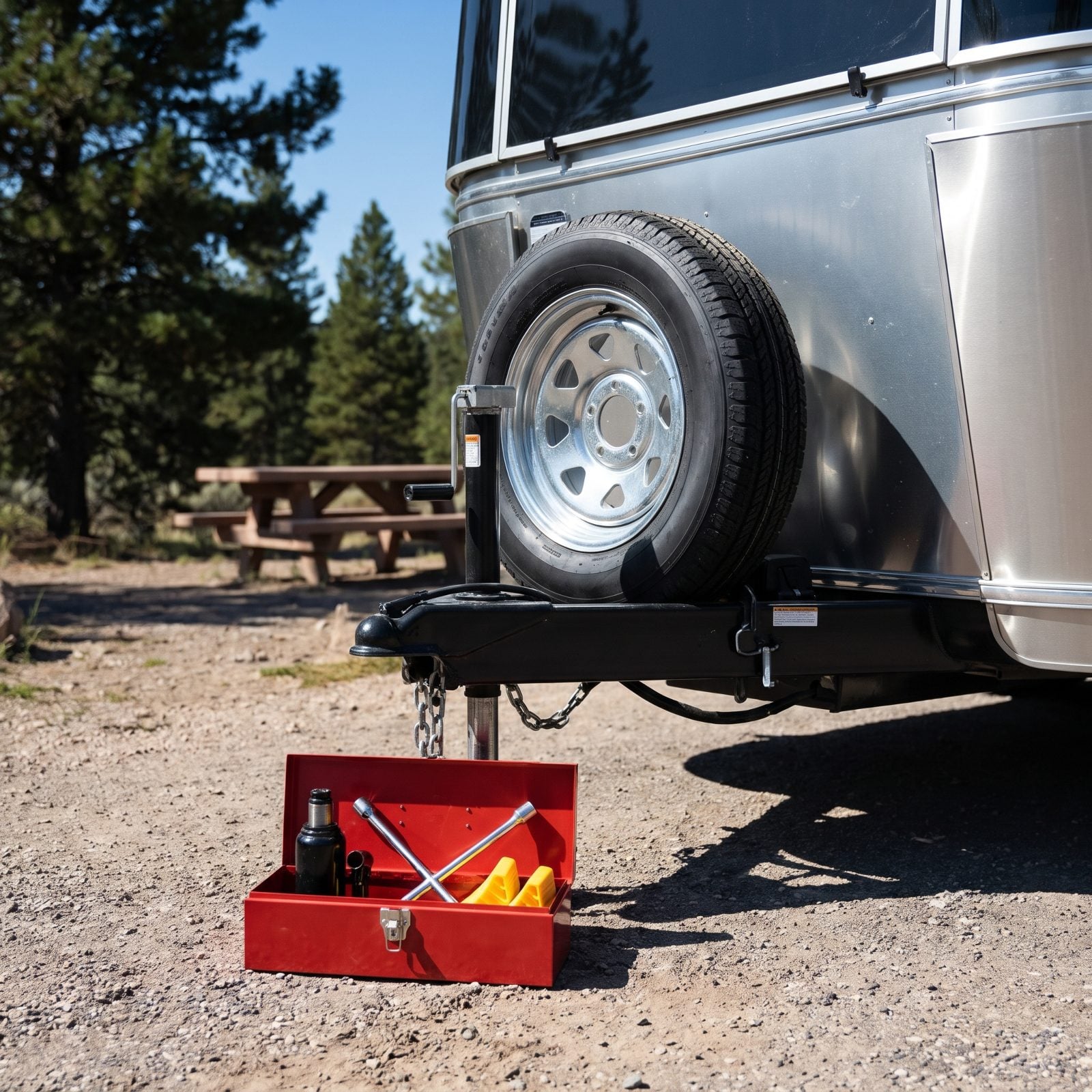
Here’s the gut-punch waiting for you at mile marker 140. You’ve got a spare bolted to the trailer, you feel ready for anything, and then you discover it’s been flat for two years and you don’t own a jack tall enough to lift a loaded trailer anyway. A spare you can’t use is just dead weight riding along.
Trailer spares get mounted and ignored. They bleed air, the mount rusts, and nobody checks until the day they’re needed in the worst place possible.
Build a real kit and test it in the driveway before you trust it. What goes in? A spare at full pressure, a bottle jack rated and tall enough for your loaded trailer, a lug wrench that actually fits your trailer’s nuts (often a different size from the truck’s), and chocks to keep the whole thing from rolling while it’s up on the jack. Practice the change once at home so you’re not learning it on the shoulder with traffic blowing past at seventy.
19. Exceeding the Trailer’s GVWR Because the Truck Still Pulls It Fine
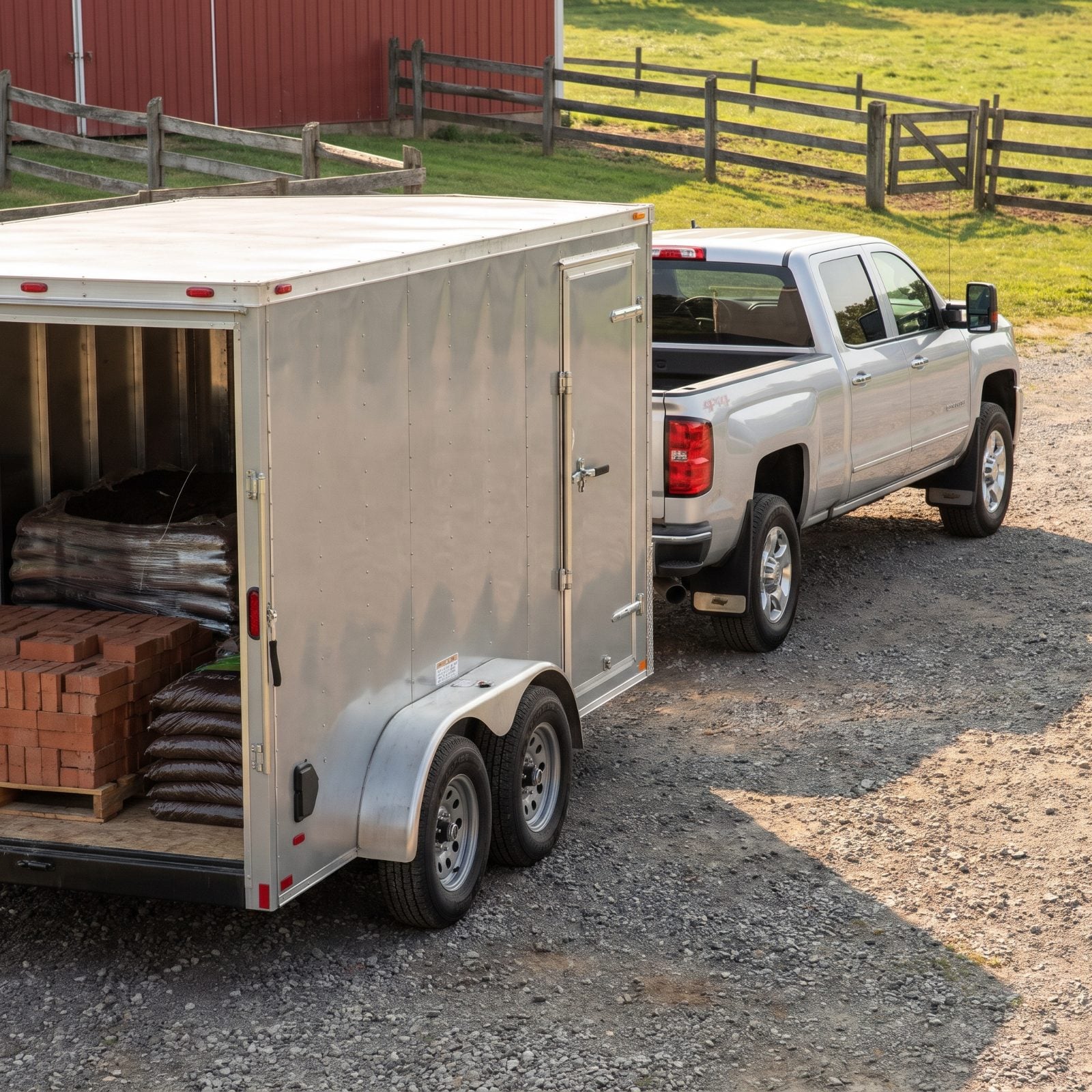
The truck doesn’t care how much you load it. That’s the trap. A modern diesel will haul a trailer way over its rated weight and feel strong doing it, right up until you need to stop. And the number that matters isn’t on the engine — it’s stamped on a little federal sticker bolted to the trailer frame, which most folks have never once bothered to read.
Go over the trailer’s GVWR and you’re overloading the axles, the bearings, and the tires all at once. Blowouts, bent spindles, cooked brakes — that’s the bill coming due, usually on a downhill grade with a line of cars stacked up behind you.
Find that sticker. Subtract the trailer’s empty weight. What’s left is your cargo ceiling, plain and simple. Then run the whole rig across a CAT scale at the truck stop for the price of a sandwich and know the real number instead of guessing at it.
18. Loading Heavy Cargo Behind the Trailer Axles
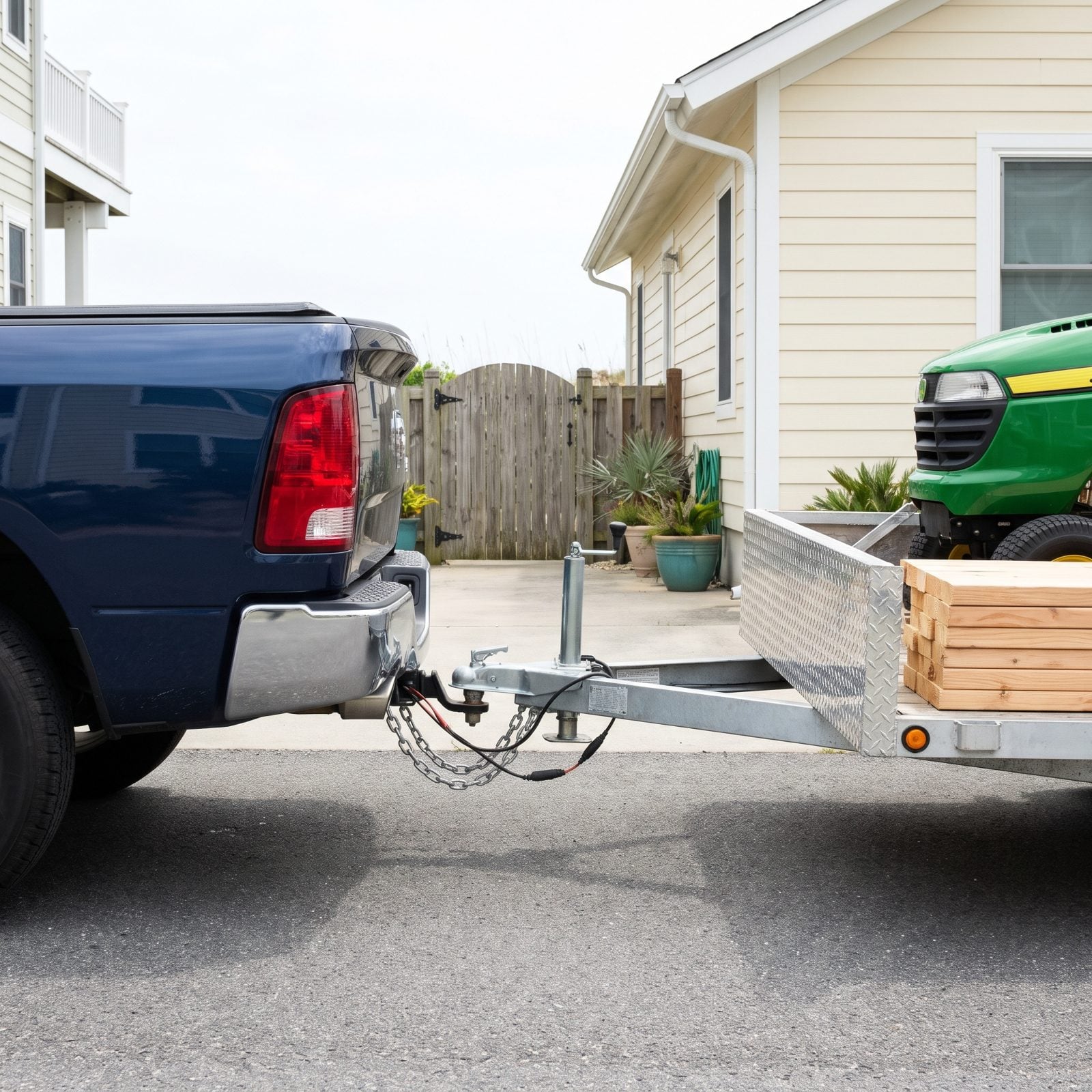
Picture the trailer as a seesaw with the axle as the pivot. Stack your mower and your lumber behind that pivot and you’ve just lifted weight right off the tongue. Feels harmless in the parking lot. It is not.
Too little tongue weight is what kicks off trailer sway — that sickening side-to-side fishtail that builds on its own once you hit highway speed. Get enough of it going and the trailer takes the truck for a ride instead of the other way around. You want roughly 10 to 15 percent of the loaded trailer weight pressing down on the hitch ball.
So load the heavy stuff over the axle or a hair ahead of it. A bathroom scale under the jack, or a cheap tongue-weight scale, tells you whether you’re in range. Nail this and sway mostly dies before it ever starts.
17. Failing to Secure a Vehicle on a Car Trailer
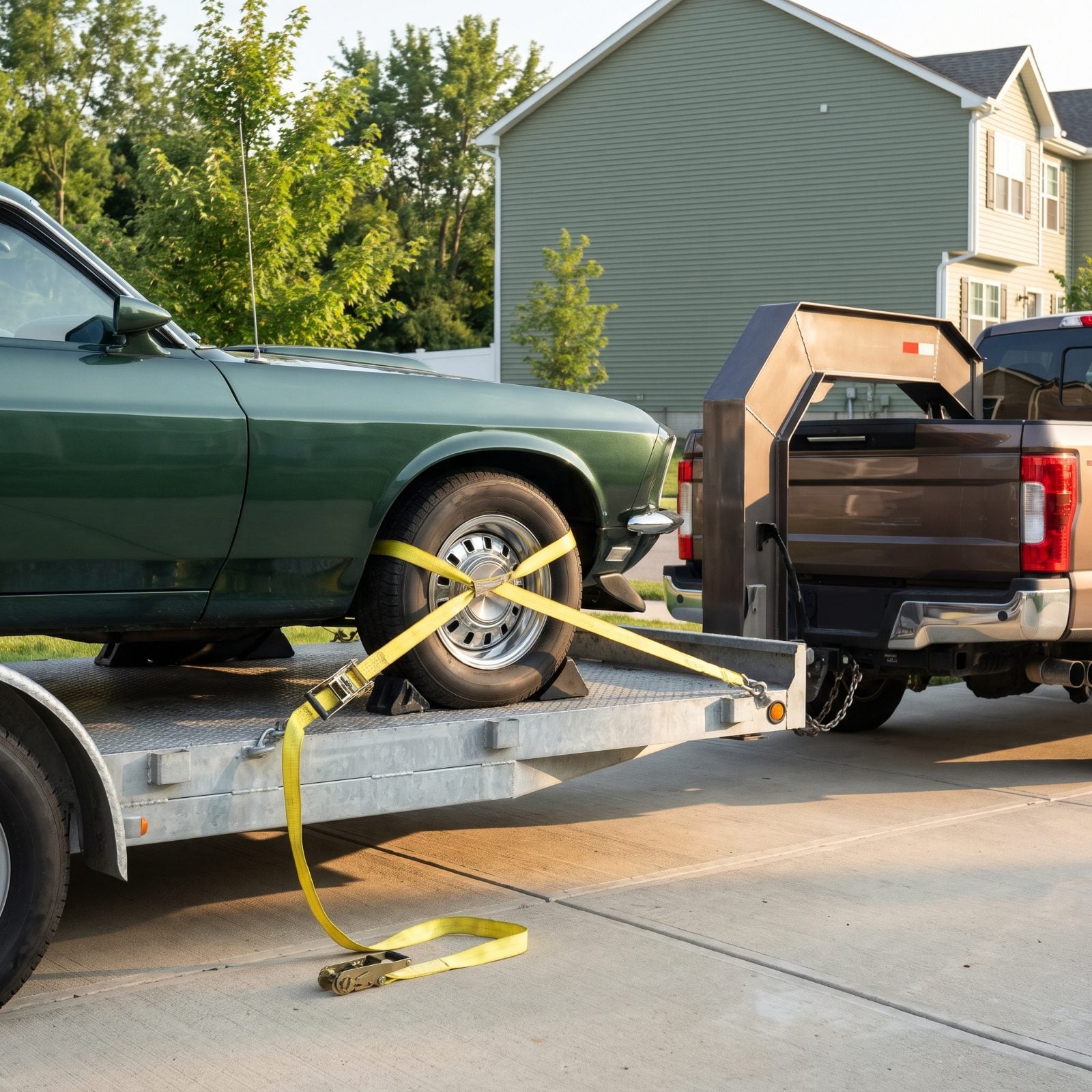
Four straps. Not two. Not a strap on each frame rail and a prayer.
A car is a thousand-plus pounds of suspension travel sitting on springs, and that matters more than people realize. Tie it down by the chassis and every bump lets the body bounce against the straps, loosening them mile by mile until something finally lets go. Folks lose cars off trailers this way more often than you’d ever believe, and the poor soul driving behind them inherits the whole mess.
Strap the wheels, not the body. Axle straps or over-the-tire basket straps at all four corners let the suspension do its thing while the tires stay pinned to the deck. Ratchet them snug, set the parking brake, put the car in gear or park, and then recheck tension after the first ten miles. The straps will seat and loosen a touch. Every time.
16. Using Frayed or Underrated Cargo Straps
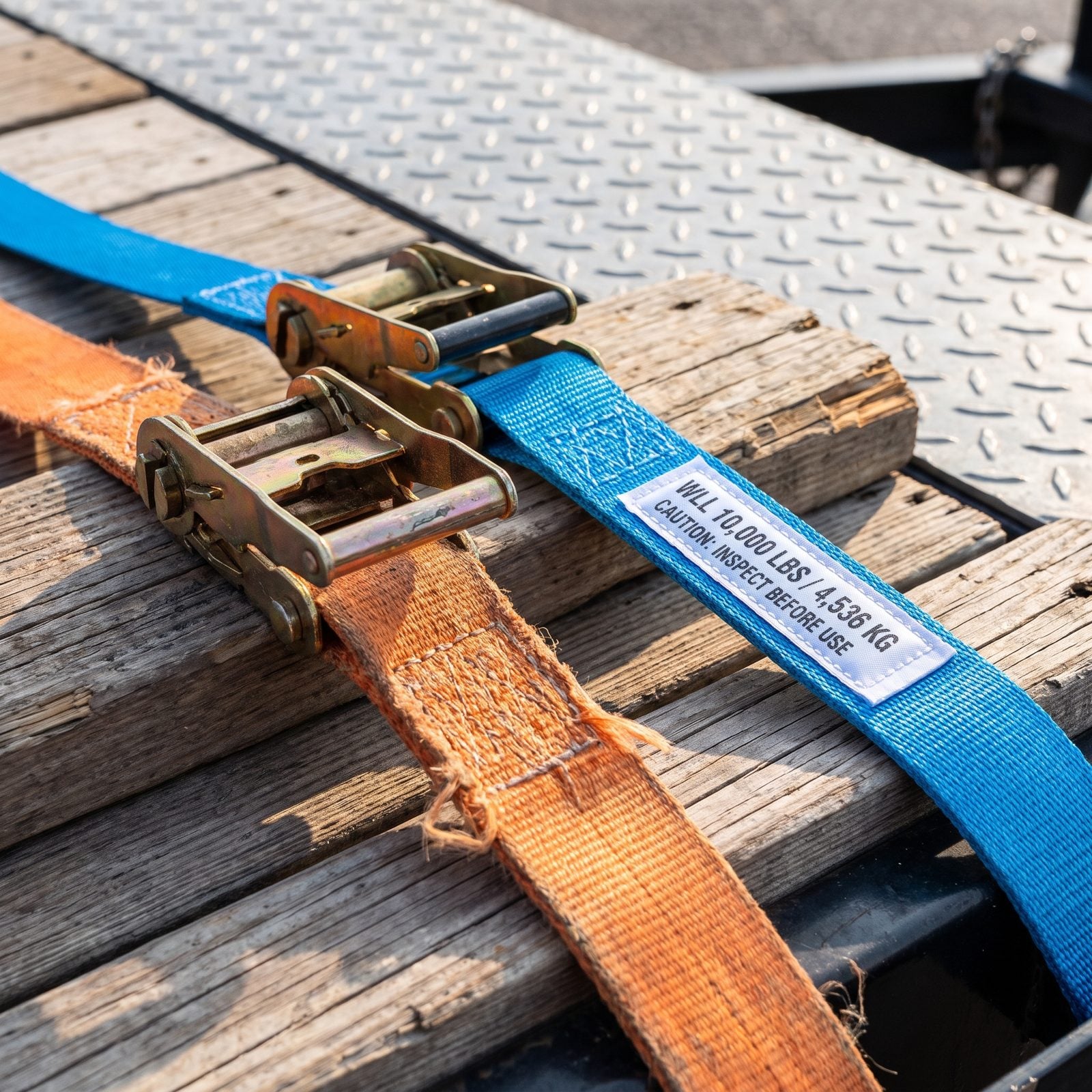
Sun kills straps. UV light eats the webbing from the outside in, so a strap that lived on your trailer all summer can look just fine and still snap at half its rated load. Those fuzzy gray edges are the tell.
And here’s the part nobody checks: the rating. That cheap strap from the bargain bin might carry only a modest working load limit, printed on a tag you tossed in the trash the day you bought it. Underrate your straps and it’s the math doing the failing, not the webbing.
Retire anything frayed, cut, or chemically stiff. Buy straps with the WLL stitched into the tag and keep them out of the weather between jobs. A milk crate in the garage beats a tangle baking in the sun on the trailer tongue.
15. Relying on the Trailer Gate to Restrain Cargo
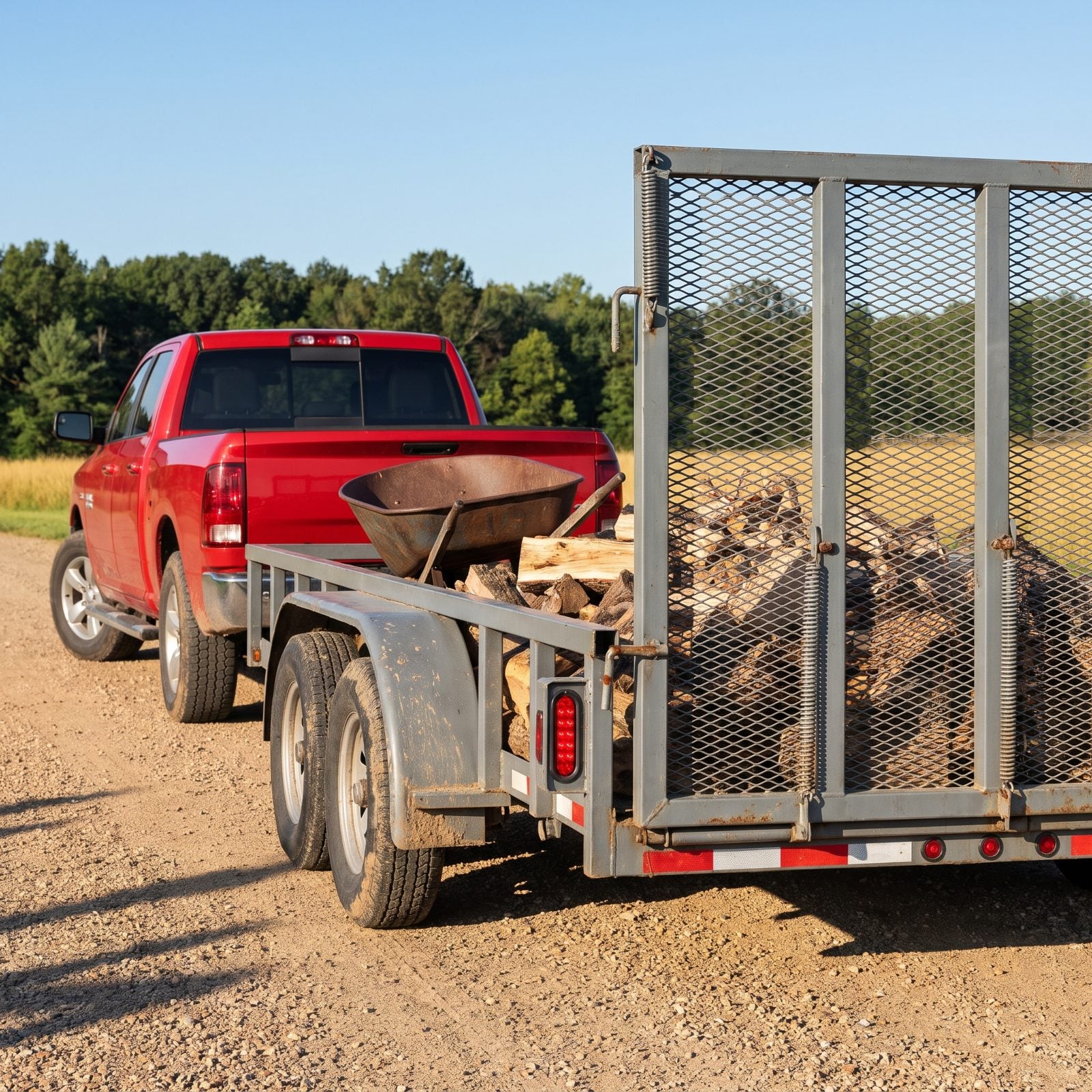
That fold-up ramp gate feels like a wall. It’s a door. Big difference.
Gates exist to let cargo on and off, not to stop a few hundred pounds of firewood from sliding into them when you stand on the brakes. The hinges, the latch pins, the spring assists — none of it was ever engineered as a restraint. People load right up against a raised gate and treat it as the last line of defense, and one panic stop later the gate’s bent sideways and the load is spilling across the road.
Strap the cargo to the deck and the frame, independent of the gate entirely. Let the gate do its one job and nothing more. Your straps hold the load. The gate just keeps the small stuff from dribbling out the back.
14. Leaving Loose Gear in the Pickup Bed
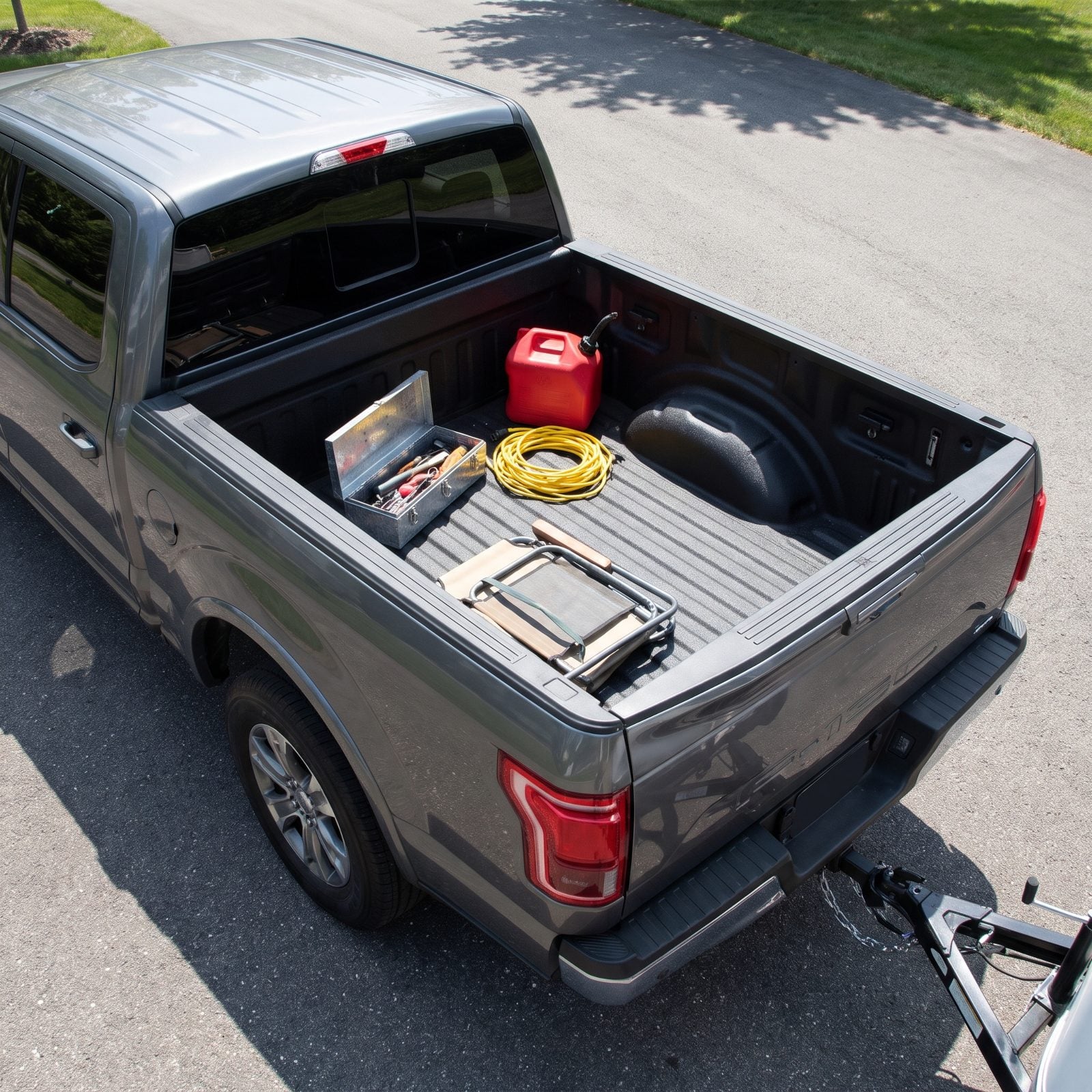
Everything in that bed is a projectile waiting for a reason.
At highway speed a loose gas can, a toolbox, a propane bottle carries real energy. Slam the brakes and it all shifts forward into the cab wall — or worse, launches clean out and goes looking for a windshield behind you. Highway departments haul unsecured truck-bed debris off the shoulder by the ton every year. It’s one of the most common wrecks nobody ever talks about.
Use the bed cleats. Most trucks give you four, and a couple of ratchet straps or a simple cargo net will lock down anything that can roll or slide around back there. Lay a bed mat down too so things aren’t skating on slick spray-liner. Ninety seconds of work, and you’ll never think about it again until the day it saves your hide.
13. Setting Up a Weight-Distribution Hitch While Unloaded
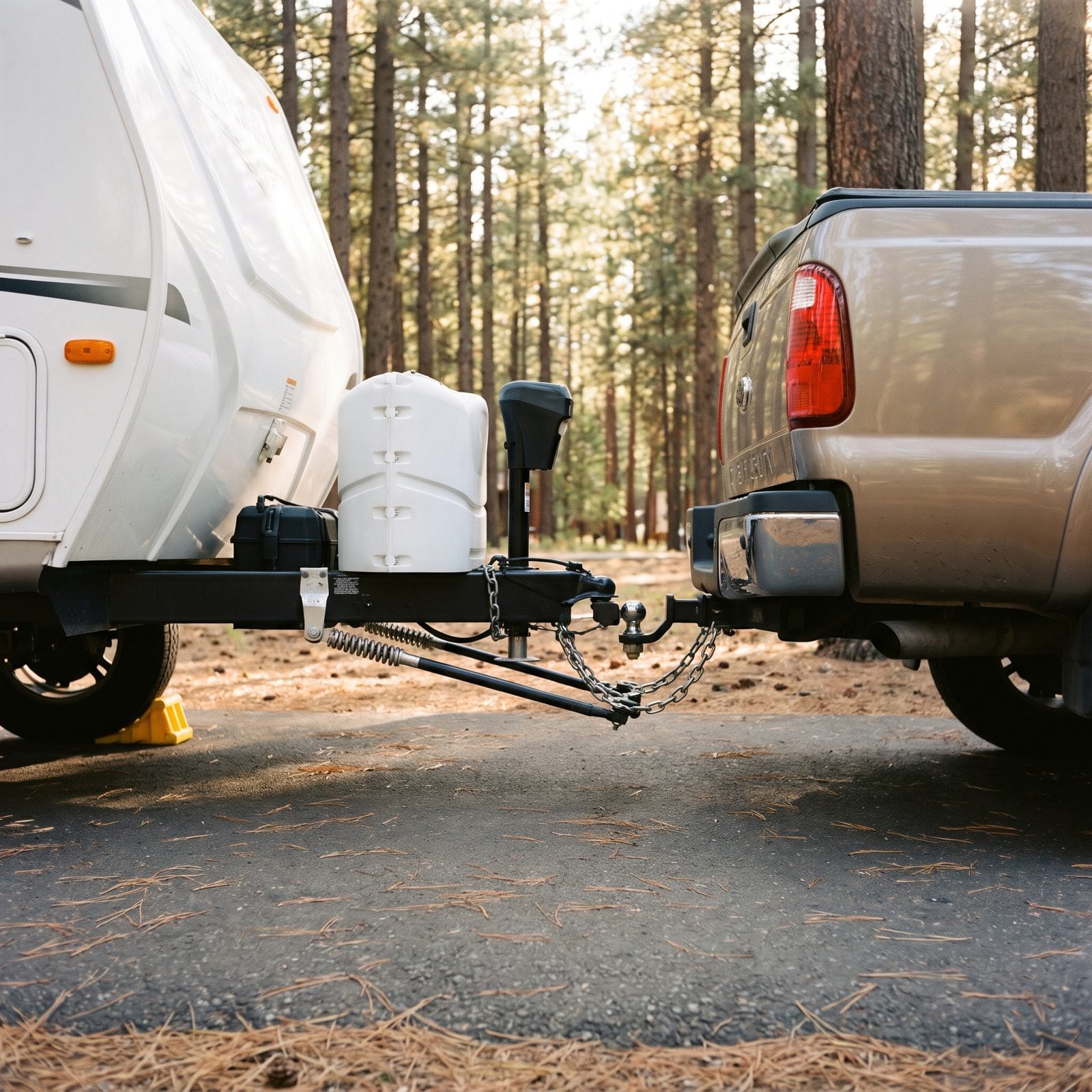
A weight-distribution hitch works by preloading spring bars to shove weight back onto the trailer axles and the truck’s front wheels. Dial it in empty, then load the camper, and your settings are now pure fiction.
Set up unloaded and the tension’s wrong the second you add a thousand-plus pounds of water, gear, and groceries. Too little bar engagement and the tail sags, the headlights point up at the treetops, and sway comes creeping back in. All that careful hitch adjustment quietly goes to waste.
Set it up with the trailer loaded the way you actually travel. Measure the truck’s front fender height unhitched, hitch up, then adjust the bars until that fender drops back to within a quarter inch of where it started. That’s your calibration. Redo it any time you change how you pack.
12. Forgetting to Raise the Tongue Jack Fully
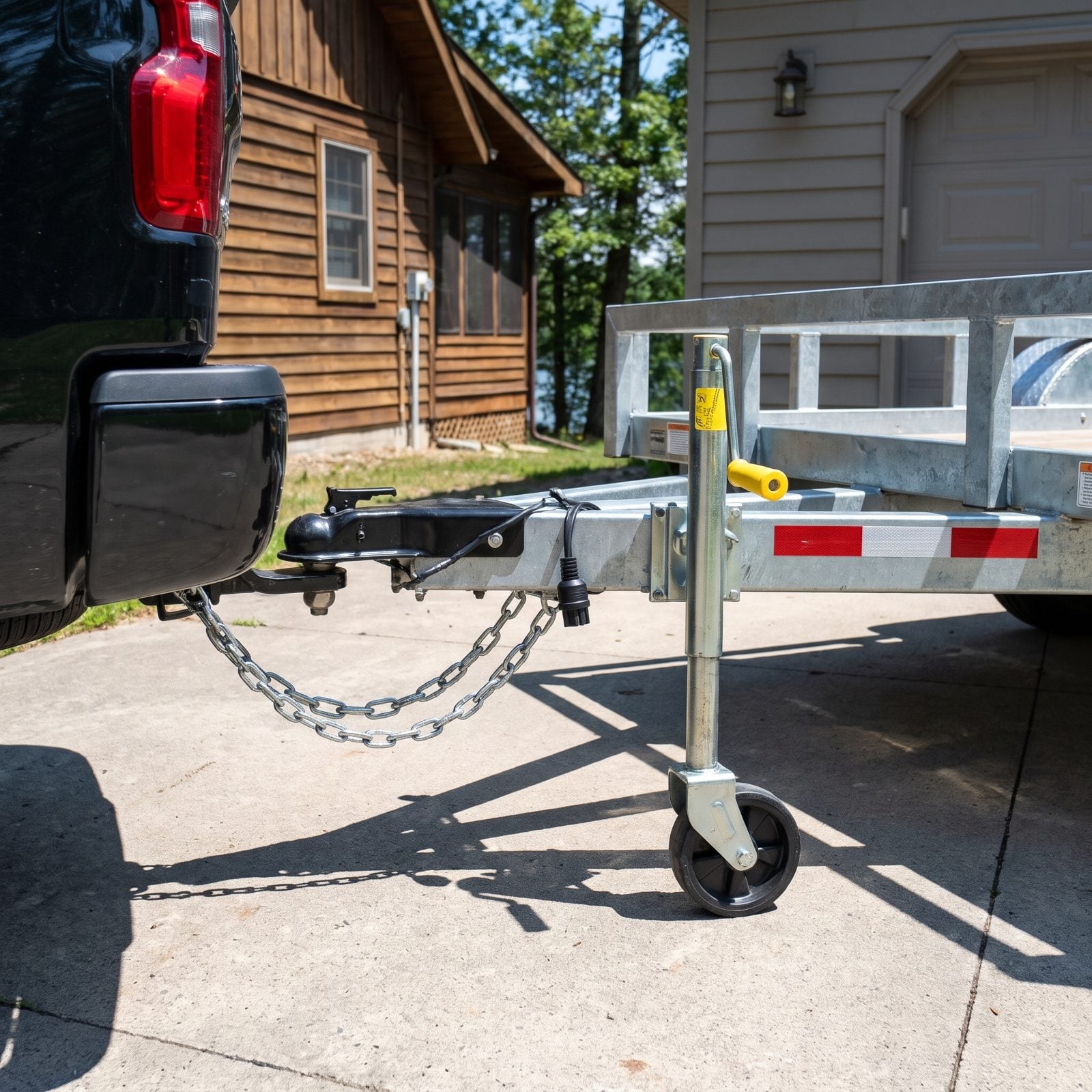
You’ve all done it, or watched somebody do it. Hitch up, get to talking, pull out with the tongue jack still cranked halfway down. The caster wheel skips along the pavement for a block until somebody flags you down with a grin.
Best case, you grind the jack foot right off. Worst case it catches a curb or a dip, jolts the coupler hard, and now you’ve bent the jack or stressed the hitch. On a steep driveway apron it can snag with enough force to feel like you clipped something solid.
Make the jack the last thing you touch before you roll. Crank it all the way up, swing it over to travel position if it’s a swing-away, and give it one last glance in the mirror. One habit, zero sheared jack feet.
11. Hitching on a Slope Without Wheel Chocks
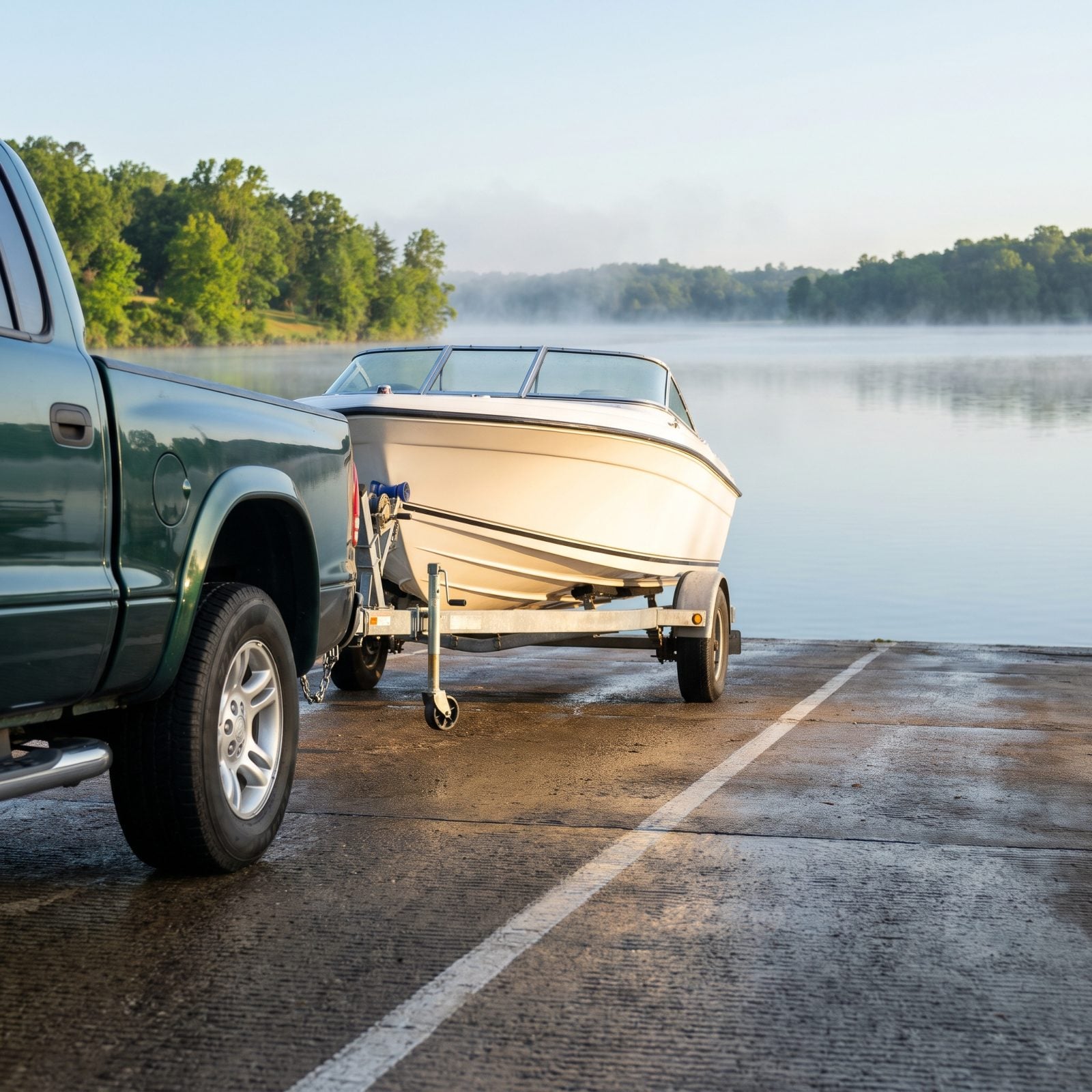
Gravity doesn’t wait for you to get the coupler latched. Unhitch a trailer on a grade without chocks and it’ll roll the second it comes free — downhill, toward the water, toward your shins, toward the truck you just pulled forward. Boat ramps are where this nightmare plays out most, and a loaded trailer picks up speed way faster than a person can scramble.
Chock the wheels before you unlatch. Every time, even on a grade that looks dead flat to the eye. A pair of rubber or hard-plastic chocks snugged against the downhill side of the tires costs less than a tank of gas and holds a shocking amount of trailer.
Chock first, unhitch second. Get that order backward just once and you’ll remember why for the rest of your life.
10. Skipping the Final Hitch Walk-Around
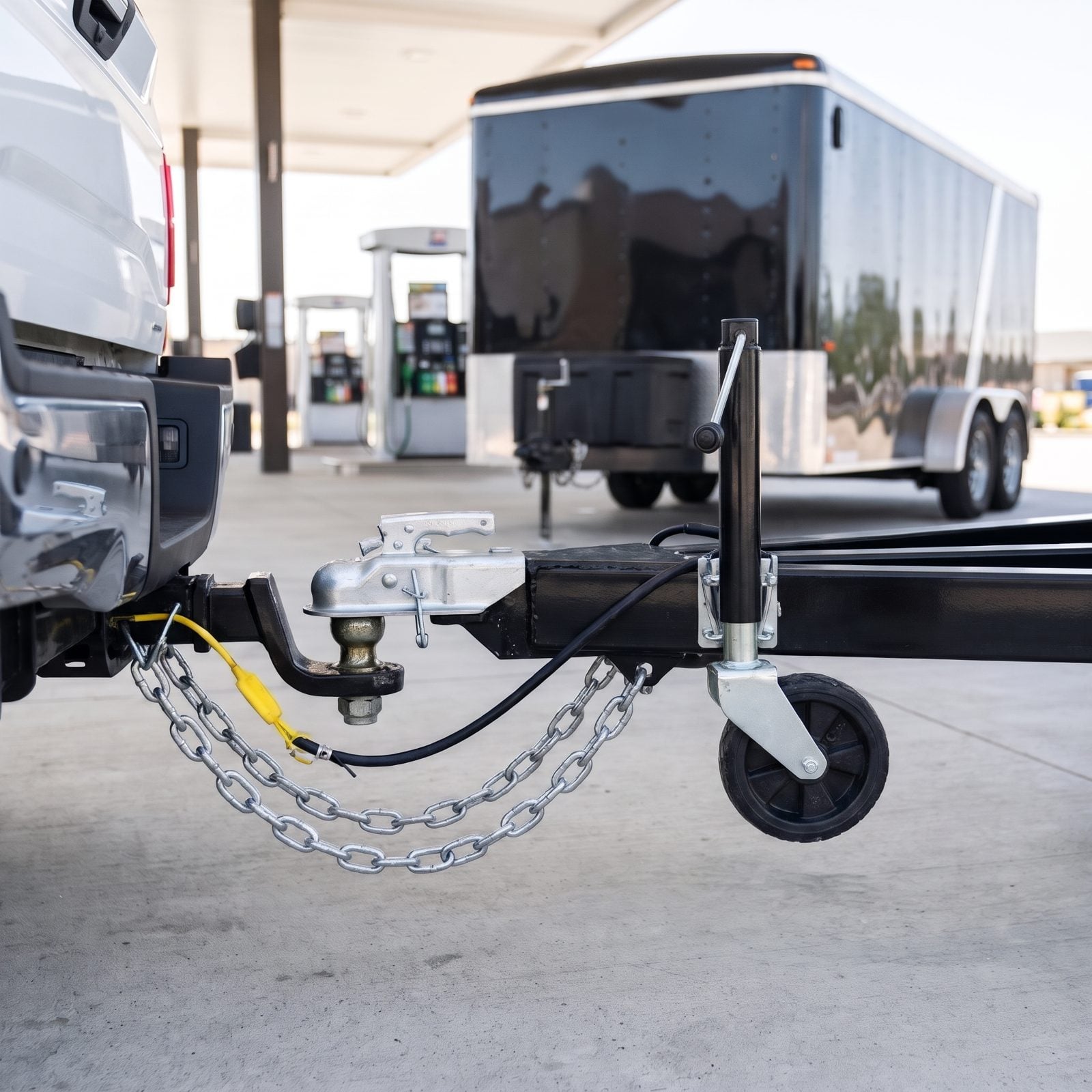
Everything up to here can be done right and still come apart if you skip the last thirty seconds. The walk-around is those thirty seconds.
Coupler latched and pinned. Safety chains crossed under the tongue, not dragging, forming a cradle in case the coupler ever lets go. Wiring plugged in, lights blinking when a buddy taps the brake pedal. Breakaway cable clipped to the truck and not to the ball mount, so the thing actually works if the trailer ever separates. Lug nuts snug, tire pressure checked, jack up and stowed.
Run that same loop every single time until your hands do it without you thinking. The one trip you skip it is the trip the pin wasn’t seated. That’s just how this stuff works.
The best tow driver you know does the exact same boring walk-around every time, and that’s exactly why nothing ever happens to him.
9. Failing to Recheck the Rig After the First Few Miles
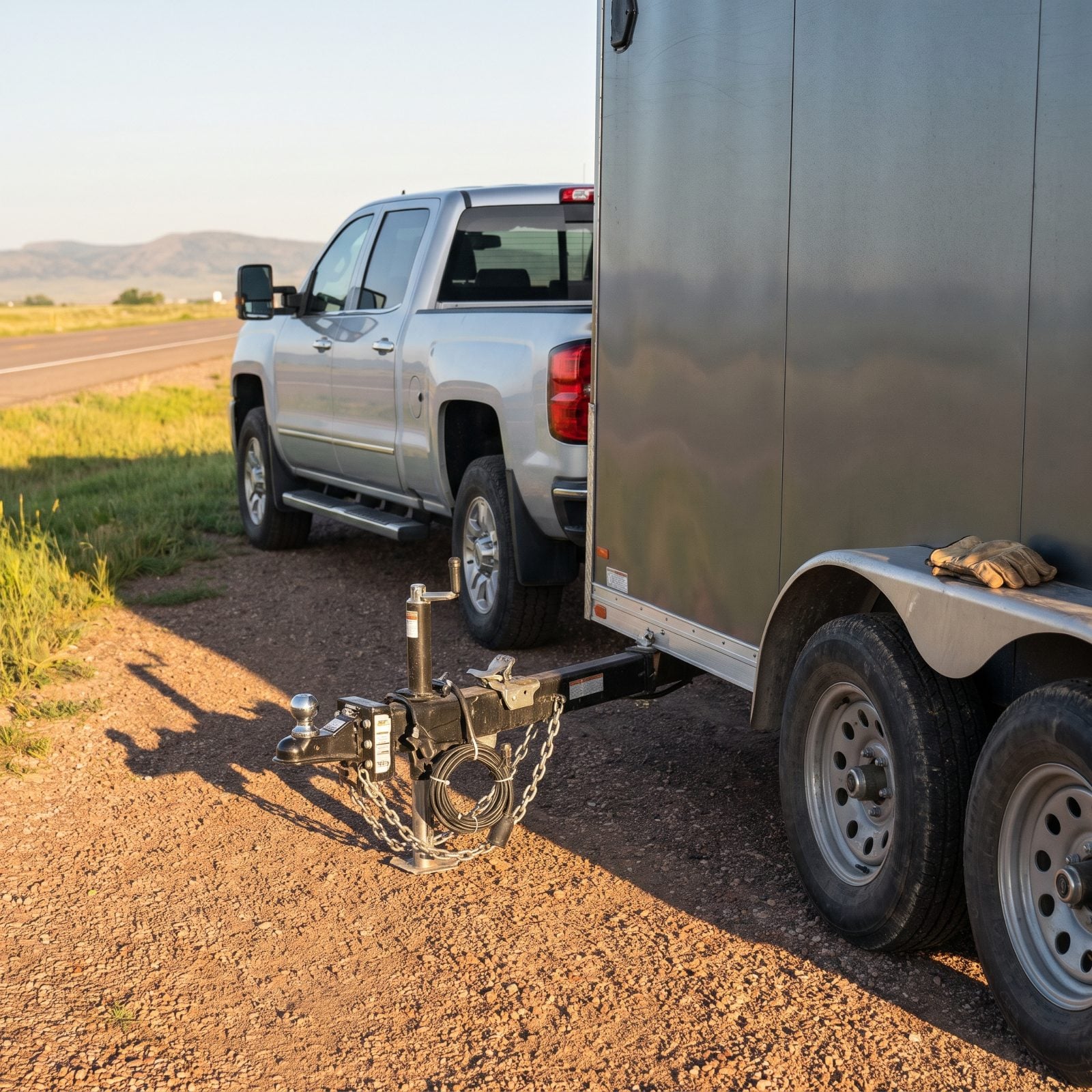
You torque everything down in the driveway, feel good about it, and roll out. Then comes the part people skip. Those first miles of road vibration are exactly when a ball mount settles, a coupler seats deeper, and lug nuts find their final home while heat builds in the hubs and straps that felt snug go slack as the cargo shifts around.
Skip the recheck and a loose coupler can walk off the ball, or an under-torqued lug backs out until a wheel wobbles free. Neither one is a cheap afternoon.
So pull over around the ten-mile mark and do the whole check. Lay a hand on each hub to feel for one running way hotter than its mate, make sure the coupler is fully seated on the ball and the latch is locked, cross the dangling safety chains under the coupler and hook them to the truck’s attachment points, and hit the lugs with a torque wrench (most trailer wheels want 90 to 120 ft-lbs). Two minutes, and it’s saved more trailers than any gadget on the market.
8. Entering a Mountain Descent Too Fast
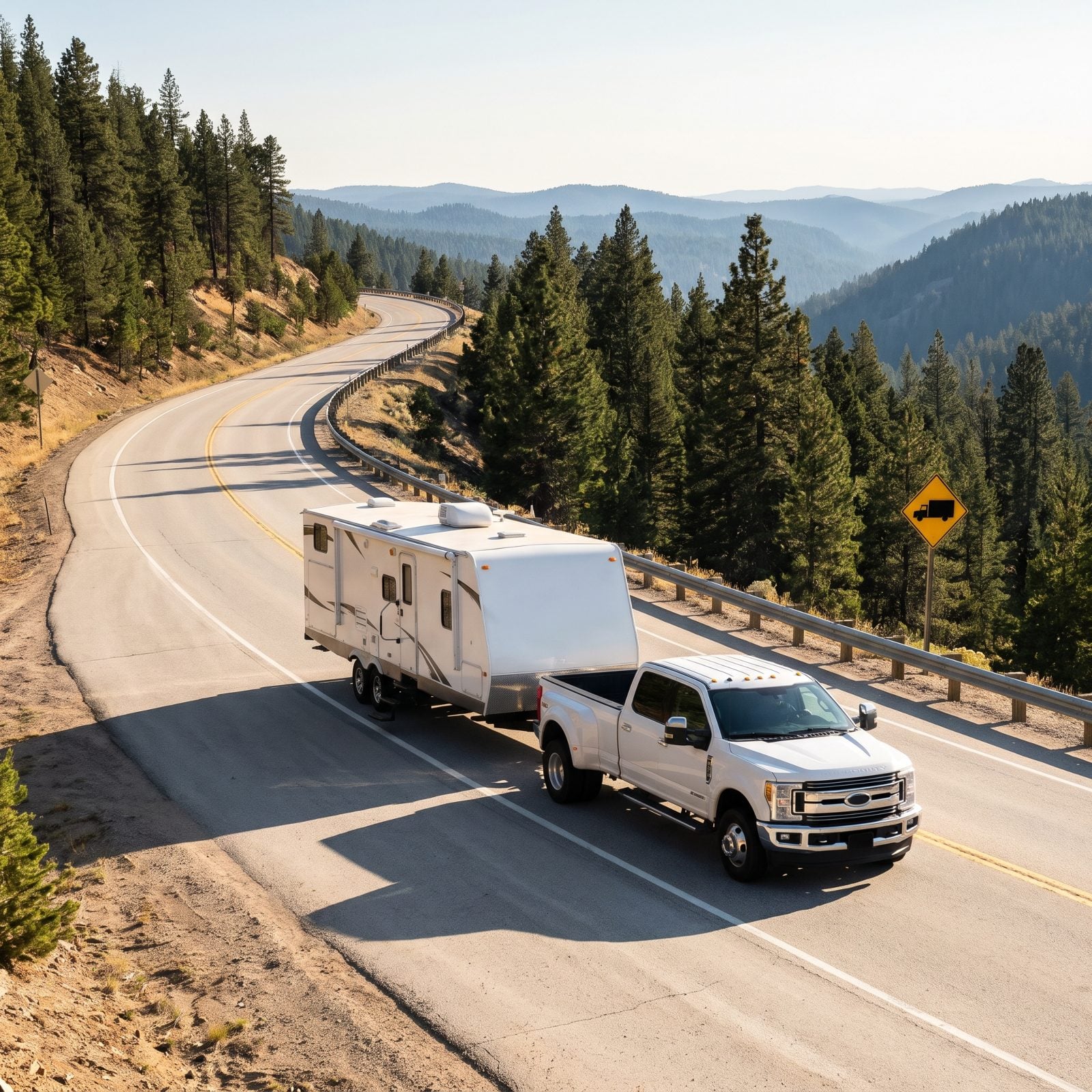
Gravity does not negotiate. A loaded trailer stacks thousands of pounds of momentum behind you, and friction brakes turn all of it into heat. Ride them the whole way down and the fluid boils, the pedal goes soft, and you reach the next switchback with nothing left to stop you.
The fix starts before the descent, not during it. Pick your gear at the top. Drop low or engage tow/haul mode so the engine does the braking and the transmission holds you back on the grade, then use firm, brief brake applications to shed speed before releasing to let the hubs cool. Short presses. Not a steady drag.
Enter slower than feels necessary. You can always add a little speed. What you cannot do is un-boil brake fluid on the side of a cliff.
7. Following Traffic at Normal Car Distance

You drive an ordinary sedan every day and your following instincts feel tuned for exactly that. Get comfortable in traffic and those instincts lie to you. The same gap that works at the grocery store becomes a guaranteed rear-ender the moment the vehicle ahead stands on its brakes.
A truck pulling a loaded trailer needs far more room to stop than a car, and that distance only grows on downgrades and wet pavement. Tailgate and your choices narrow to swerving (which invites a skid) or plowing into the car ahead.
Give yourself at least a five- to six-second gap on dry road, double it in rain or on a descent. Pick a fixed object, watch the car ahead pass it, and count. Space is the one safety feature that costs nothing and never fails.
6. Driving Faster Than the Trailer Tires Permit
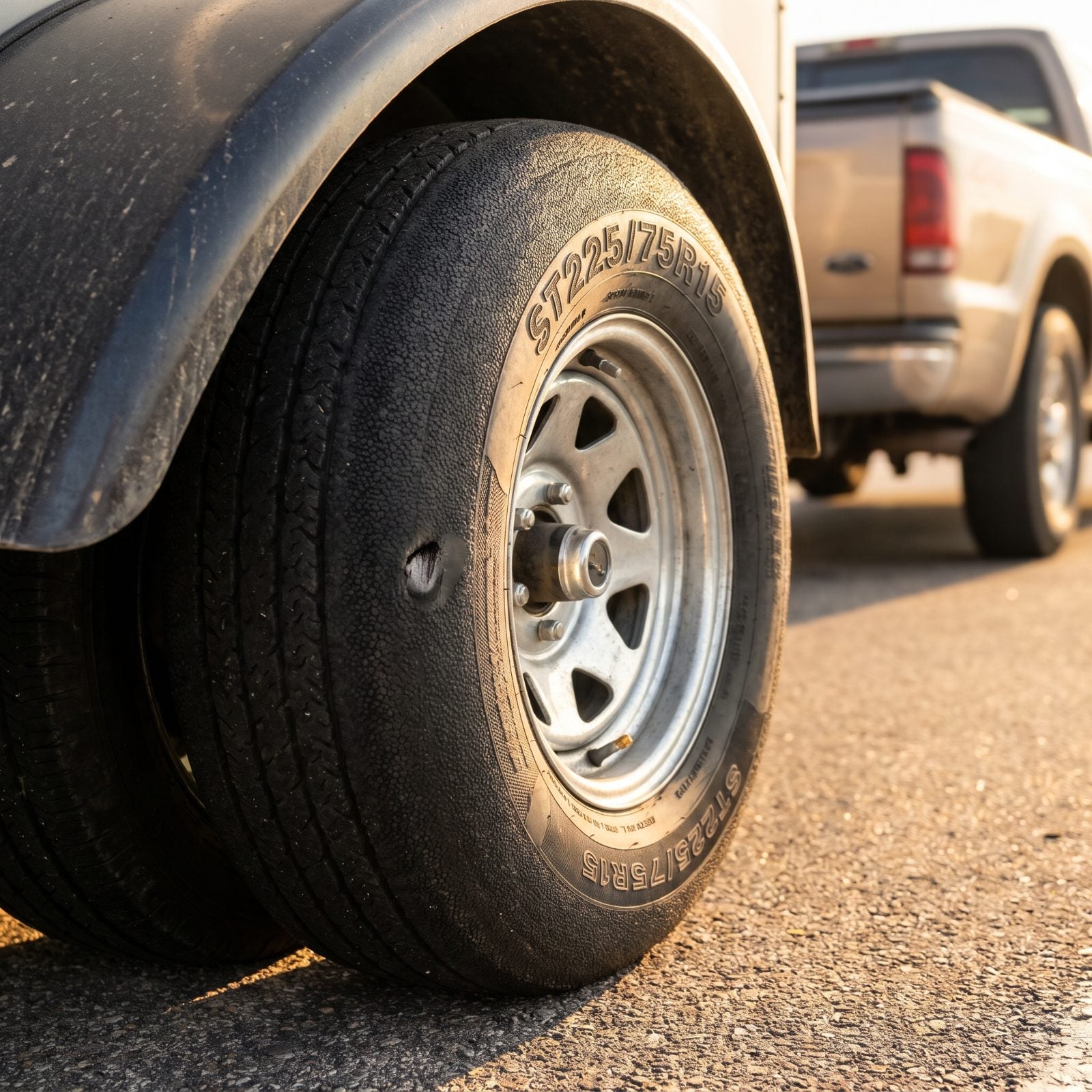
Here’s a number almost nobody checks. Trailer tires, the ones stamped ST, usually top out around 65 mph. Push past that and the heat they build has nowhere to go, the belts separate, the tread peels off in a long strip, and you learn the limit the loud way.
Plenty of owners ignore this because the tires look fine. Looking fine has nothing to do with it. A speed rating lives in the rubber compound, not the sidewall’s appearance.
Know your tire’s actual rating before a long haul, keep ST tires at the max cold pressure molded on the sidewall, and replace them on age (five to seven years) no matter how much tread remains. Rubber ages whether you drive on it or park it in the barn. Then set your cruise to respect the slowest-rated part of the whole rig, which is almost always the trailer tire and not the truck.
5. Cutting Corners With the Trailer Wheels
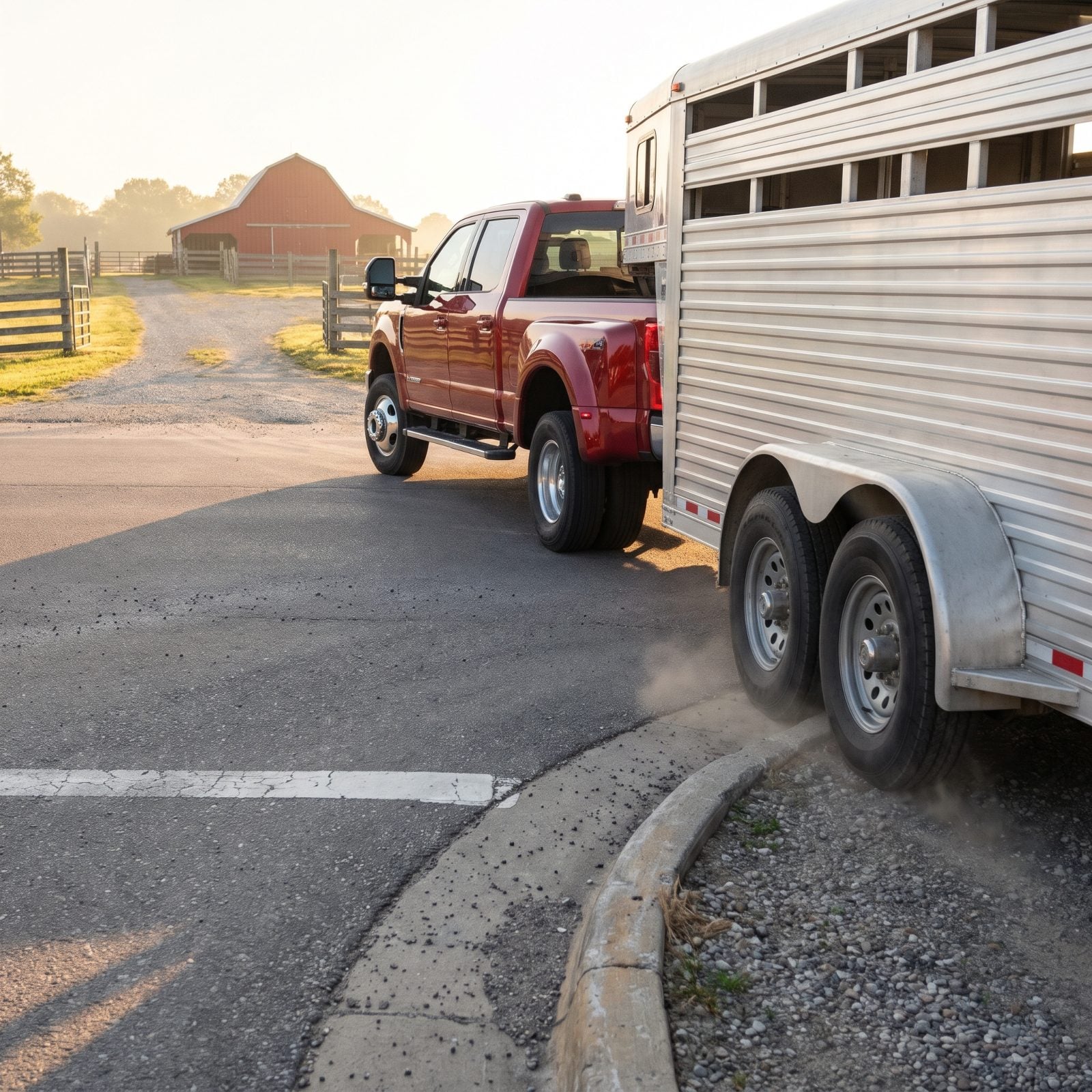
Your trailer’s wheels don’t follow your truck’s wheels. They cut the corner, swinging inside your arc on every single turn. Steer the way you do in a solo truck and those trailer tires climb the curb, clip the gas-pump island, or sideswipe a car waiting at the light.
Hop a high curb at speed and you can crack a rim, pinch a sidewall, or bend an axle you won’t notice until the trailer tracks crooked for the next three hundred miles.
Swing wide and go slow. Pull the truck farther into the intersection than feels natural before you start the turn, giving the trailer room to sweep behind you without catching anything. Watch your passenger mirror through the whole arc and let the rear wheels tell you where you are.
4. Assuming Four-Wheel Drive Improves Trailer Braking
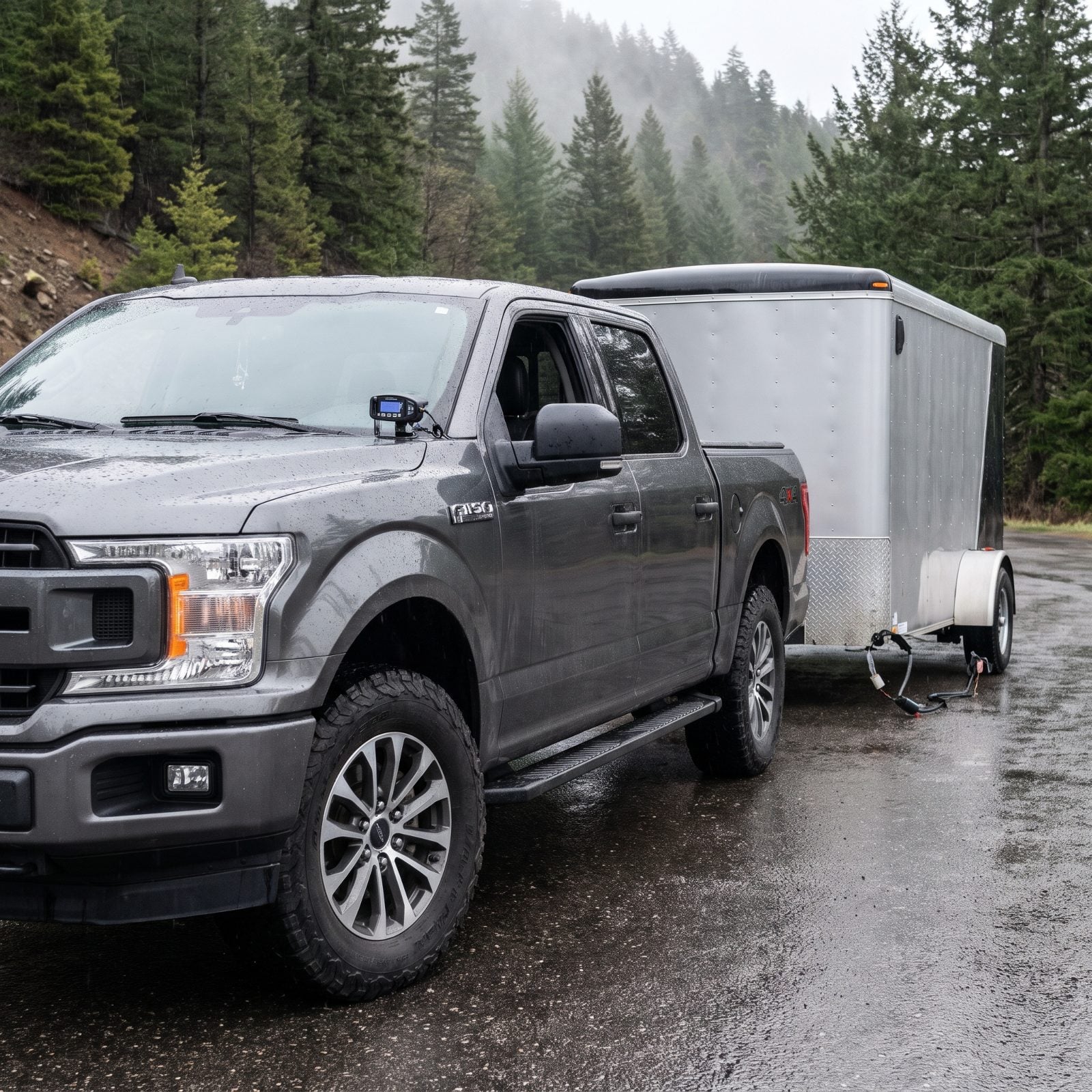
Four-wheel drive is a traction tool for getting going, and it does nothing to help you stop. All four of your truck’s wheels brake with or without it engaged, and those brakes were never meant to haul a loaded trailer to a halt all by themselves.
Lean on 4WD as a safety blanket and you overdrive wet or icy roads, confident you’ll stop the way you accelerate. You won’t. The trailer behind you is pushing, and your truck brakes alone fade fast under that load.
The real answer sits on the trailer itself. Wire in a proportional brake controller, set the gain for your load, and confirm the trailer brakes grab in step with the truck. On a quiet road, bump the controller’s manual slide by hand and feel the trailer pull back on its own. That’s braking help. 4WD is not.
3. Choosing a Route Without Knowing the Trailer’s Total Height
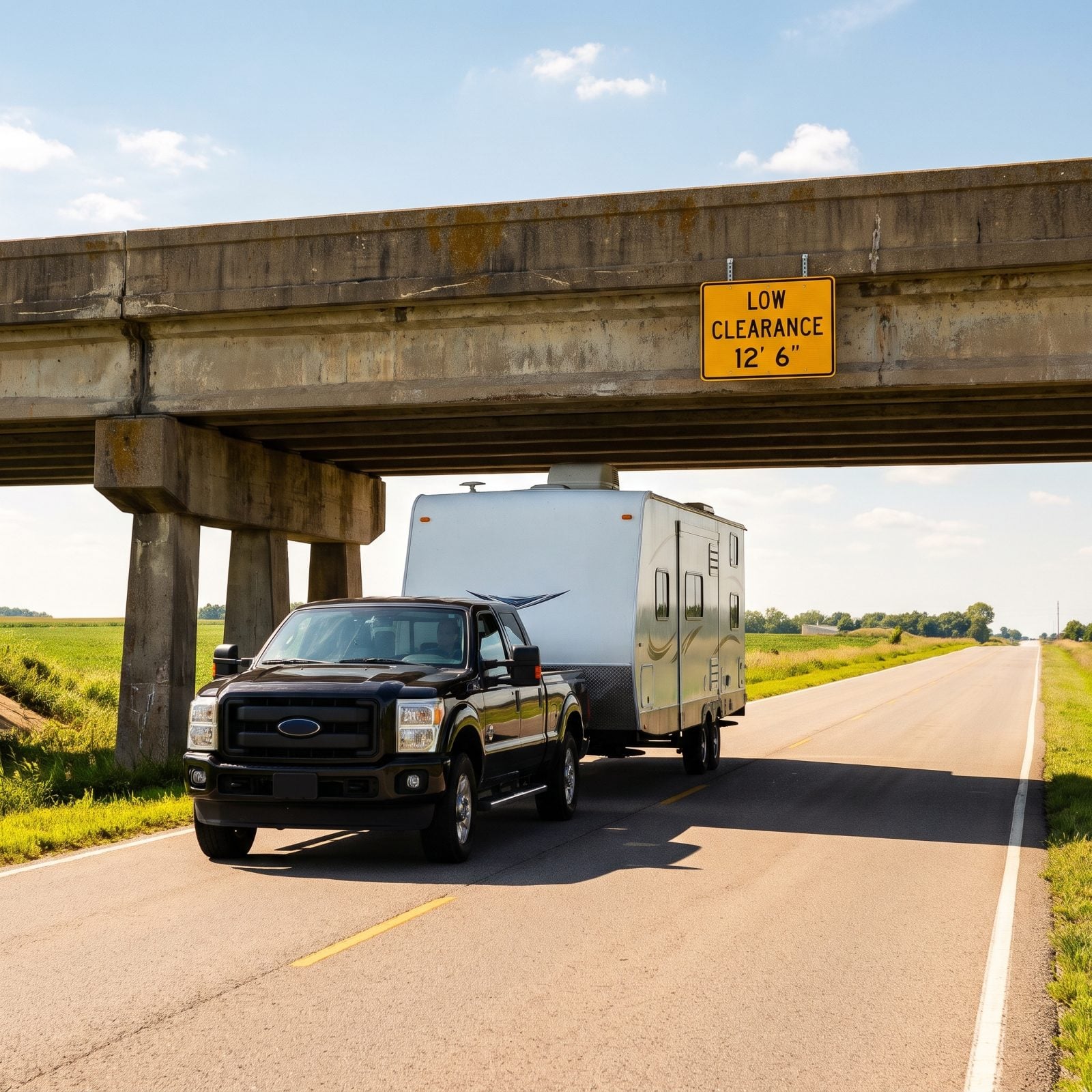
Your truck knows its own height. It has no clue about the air conditioner, vents, and antenna riding on the trailer roof behind it. Those add a foot or more, and a GPS routing you like a car will happily aim the whole rig under a thirteen-foot bridge you cannot clear.
Guess wrong at speed and you peel the roof off the trailer, shear off the AC unit, or wedge everything under an overpass with traffic stacking up behind you. It’s a famously expensive mistake, and a famously public one.
Measure the total height of the loaded rig once, pavement to highest point, and write it on a card in the glove box. Round up a few inches for safety. Then use a truck-and-RV routing app that honors clearances, and whenever a posted sign shows less margin than your number, find another way. The detour is always shorter than the repair.
2. Towing Into Strong Crosswinds Without Slowing Down
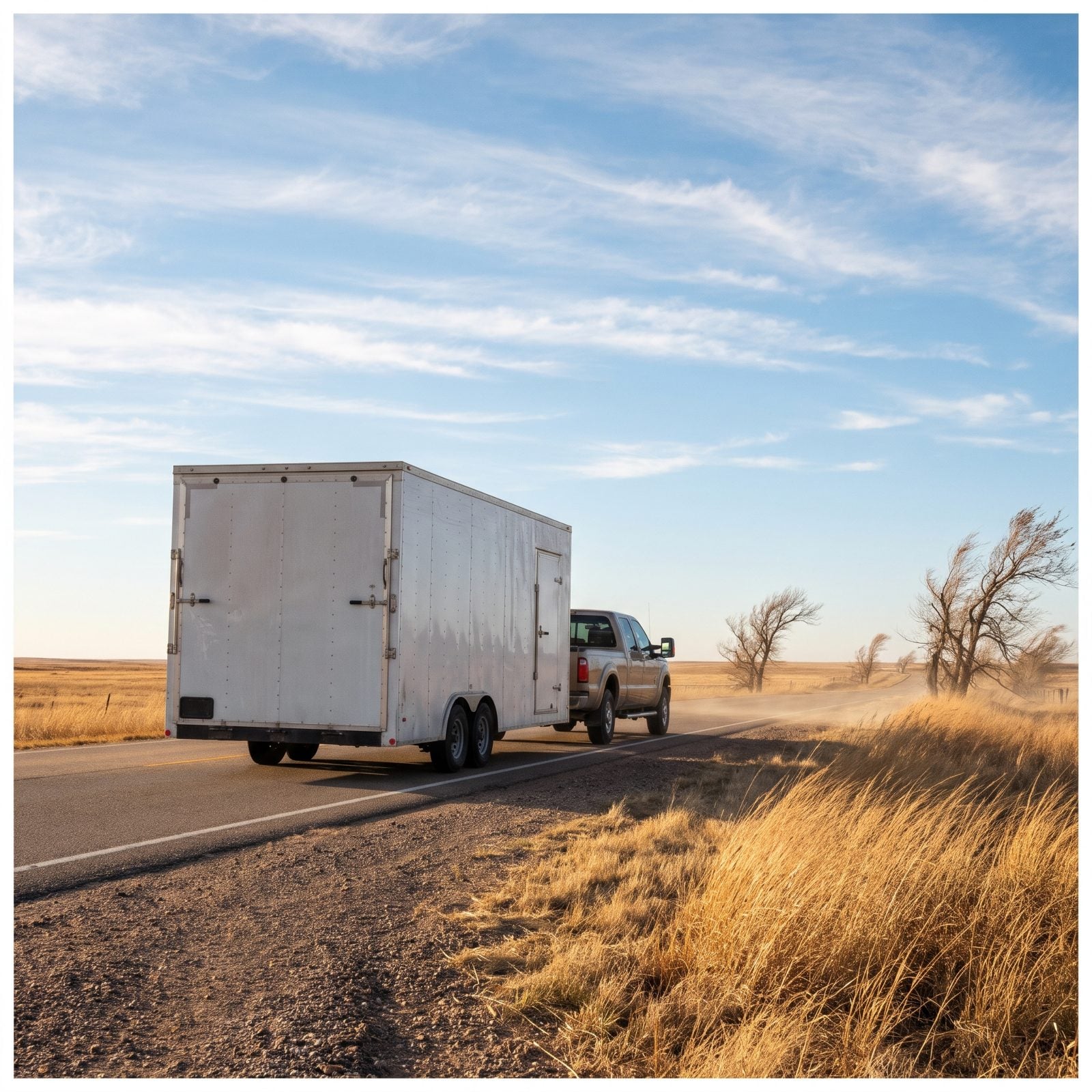
A travel trailer is basically a sail you forgot you were towing. A steady crosswind leans on that flat broadside, and a sudden gust (or the wall of air off a passing semi) can shove the whole rig toward the next lane before you’ve even reacted.
Hold highway speed into it and you’re fighting the wheel the whole way, which wears you down and sets up the exact rocking that builds into sway. Faster means the wind hits harder and leaves you less time to correct.
Back off ten to fifteen mph when the wind picks up. Both hands at nine and three, loose grip, small smooth corrections. Anticipate the shove before an oncoming truck reaches you and ease off the throttle as it passes. And if the gusts turn violent, there’s no shame in parking the rig and waiting out an hour at a diner.
1. Panic-Braking When Trailer Sway Begins
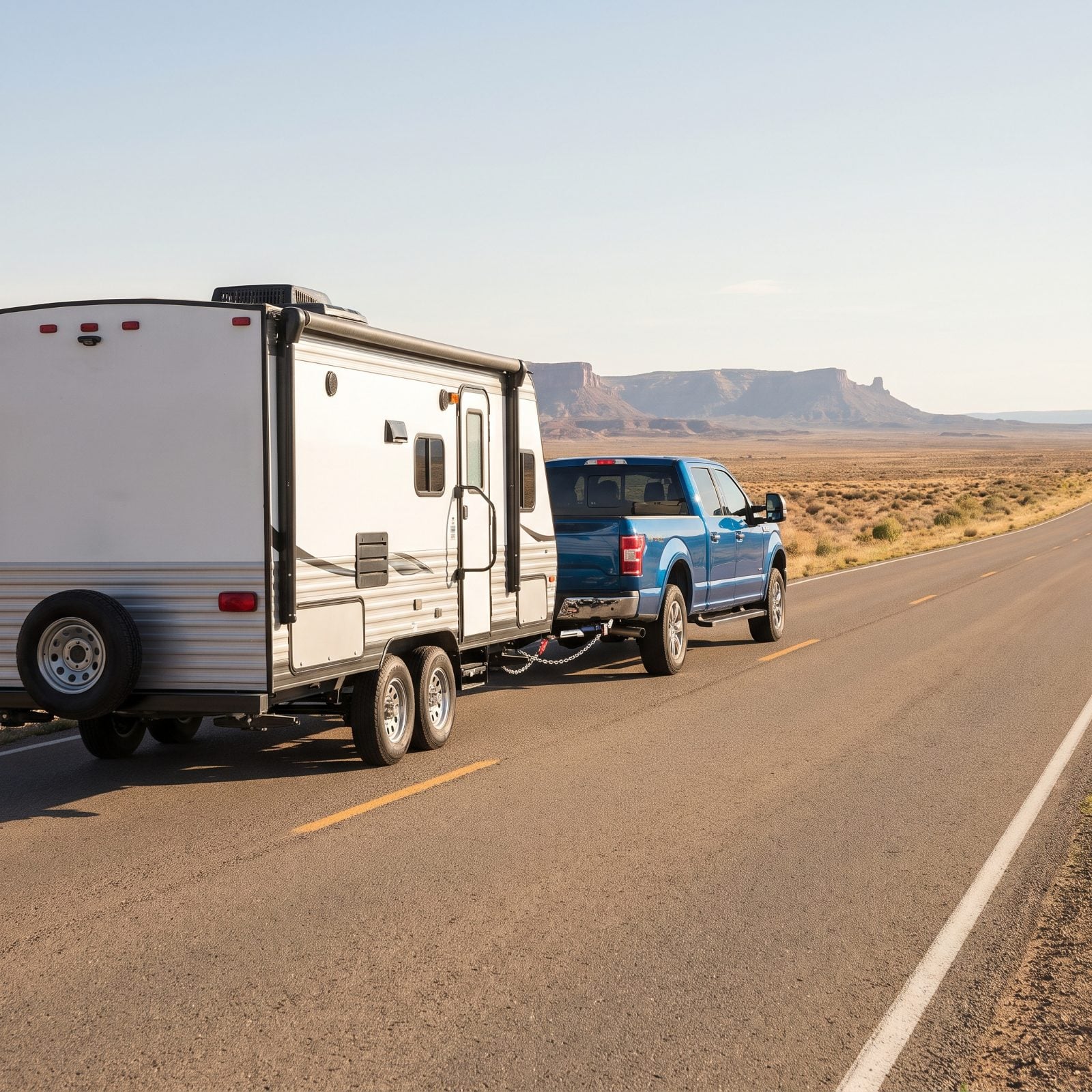
Every instinct screams to stand on the brakes. That instinct is wrong, and it’ll put you in the ditch.
When a trailer starts to fishtail, hard braking throws weight forward and off the trailer, freeing it to swing even harder. Steer into the swing to correct it and you pump energy into the oscillation, each swing bigger than the last. That’s how a wobble becomes a jackknife.
Do the counterintuitive thing. Ease off the throttle, keep the wheel straight and steady, and let the rig slow itself. If your controller has a manual override, gently apply the trailer brakes alone with that slide, because dragging the trailer from behind pulls everything back into line. Truck brakes push the problem forward. Trailer brakes pull it straight.
Say it out loud before you ever need it: hands straight, foot off the gas, trailer brakes only. Panic leaves no room to work it out on the fly.