
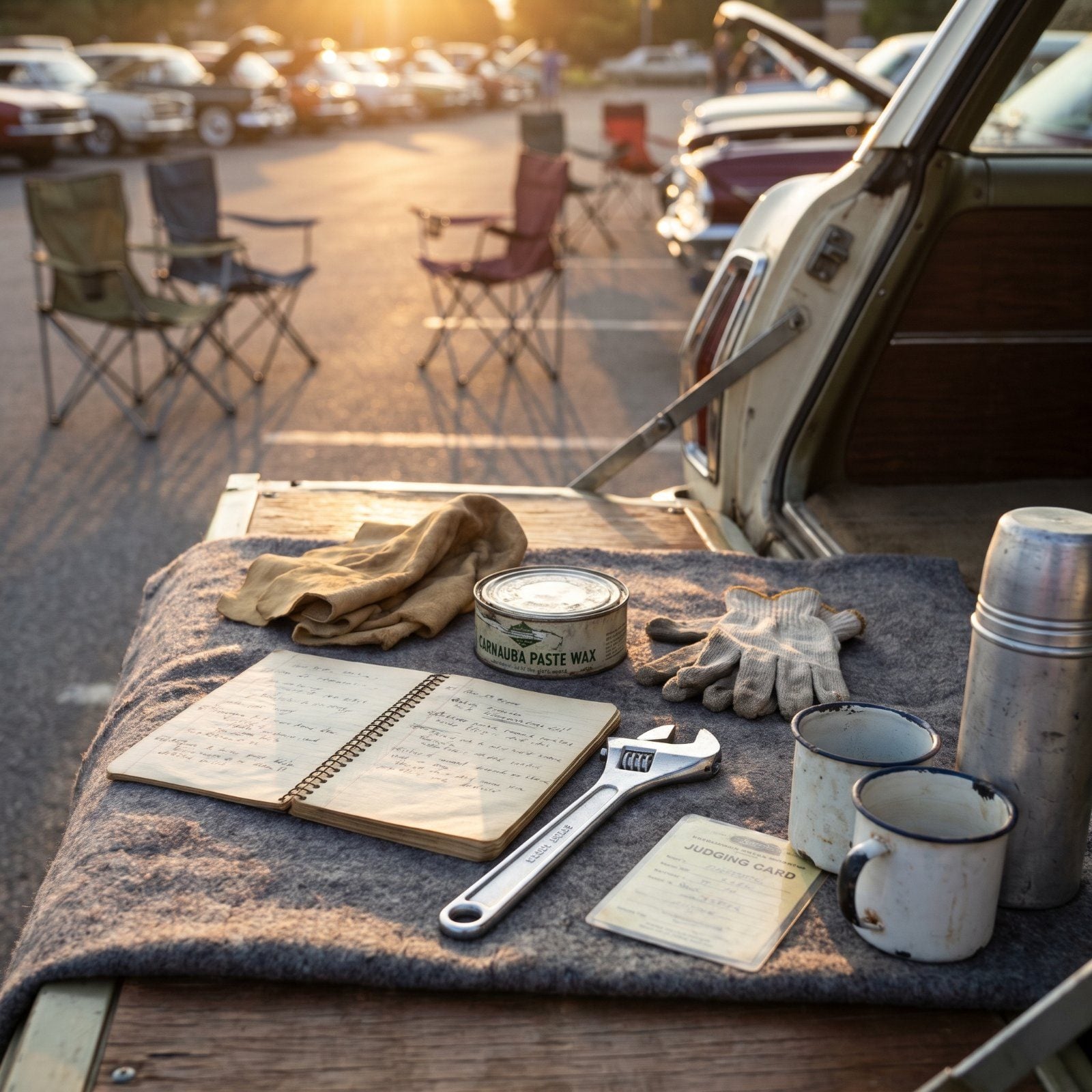
The hood goes up before the engine cools. That’s the first tell. Every parking lot full of chrome holds every species of enthusiast, and each one carries a private philosophy about what a car should be and how far you ought to go to get it there. Learn to read them. It tells you more than any VIN plate ever could.
Please note that some of the images in this article were created with the assistance of AI.
45. The Folding-Chair Regular
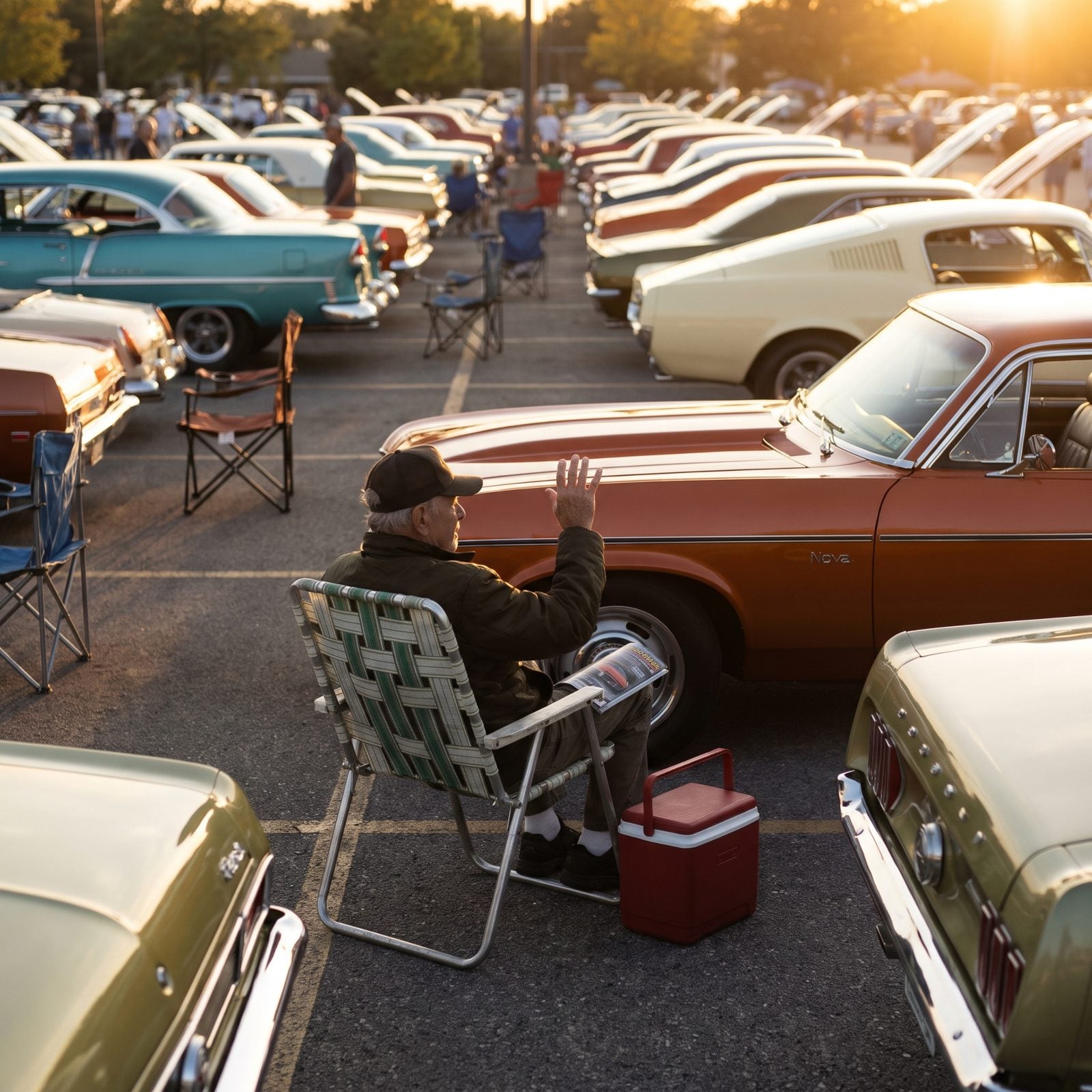
Shows up at 4:30 for a thing that starts at 6. The car is secondary. The ritual is the point.
You know this one. Same spot every week, down near the end of the row where the breeze comes through, with a Nova that’s nice enough but nothing a judge would faint over — which is exactly how it’s meant to be. He’s not here to win anything. He’s here because Friday means this parking lot, and this parking lot has meant this for twenty years.
What he actually collects is people. He’ll tell you which cars sold, who’s sick, whose kid finally finished the Camaro out in the garage. The car is just his ticket to the conversation, and honestly? That’s a healthier reason to own one than most.
44. The Factory-Correct Purist
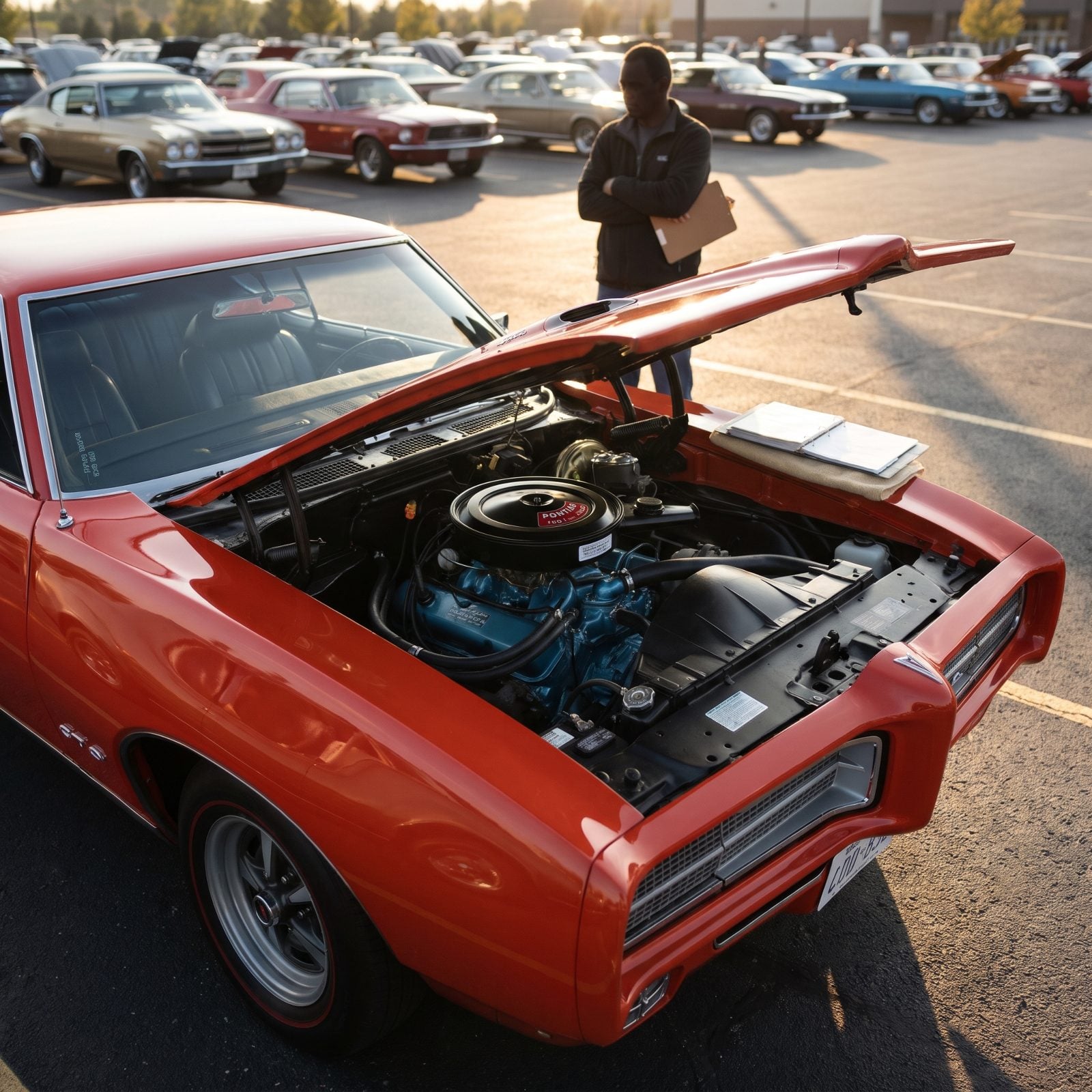
Ask about the carburetor at your own risk. You’ll come away knowing the casting number, the production month, and the three places the reproduction version gets it wrong.
To the purist, a car is a historical document. Every hose clamp, every ink stamp on the frame, every correct shade of inspector’s paint hidden under the fender has to match what rolled off the line in 1969. Reproduction parts come from the one vendor who gets the weave of the hose right. Nothing on the car sits there because it looks cool — it sits there because it was there the first time around.
Originality can only happen once. After that, you’re just preserving it or losing it.
Expensive, obsessive, and the payoff is subtle. Done right, the thing feels like a time machine instead of a tribute band. Done halfway, you’ve burned a fortune on details nobody but the other purists will ever clock. And they will clock them. Oh, they will.
What Our Readers Say
- In our reader votes, photos of car shows and parking-lot meetups got more hearts than the other images in the same articles, 78% versus 73%.
- When Jalopy Talk readers loved a car photo and tapped a reason, “nostalgic” came up most often, ahead of body style and “would drive.”
From Jalopy Talk reader polls and votes.
43. The Old-School Hot Rodder
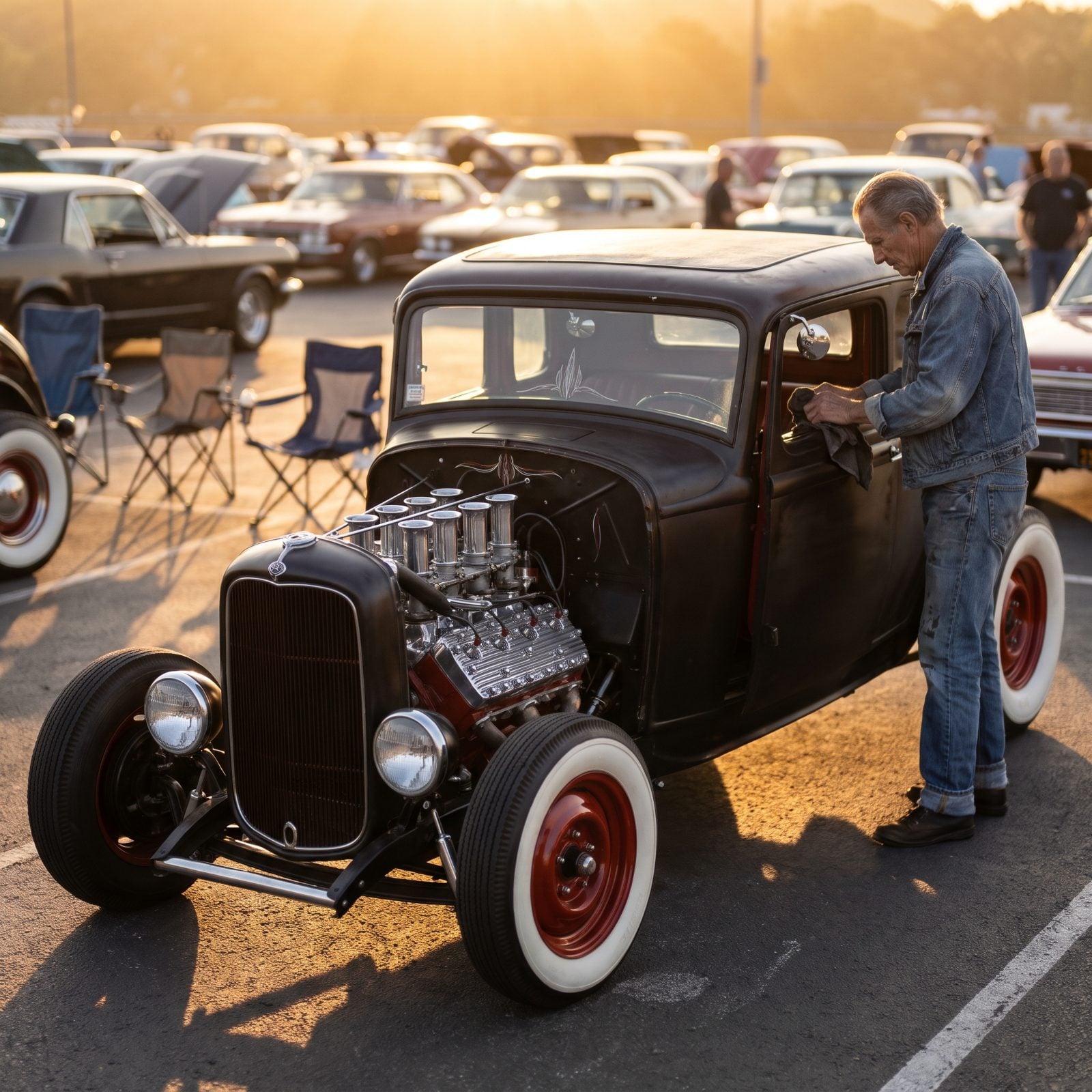
Primer isn’t a stage. Primer is a choice.
His philosophy got set in concrete around 1955 and hasn’t budged an inch since — flathead or early overhead V8, dropped axle, steel wheels, maybe a coat of satin black that looks shot in a driveway because it was. He builds the way guys built when speed parts came out of a Bell catalog and the only computer involved was the one doing math in his head.
Billet aluminum makes him nervous. Anything with the word “kit” in it makes him walk away. The car should look like it could’ve been thrown together in 1950 by somebody who’d race it on a dry lake bed the following weekend. That’s not cheapness. It’s a creed.
42. The Restomod Convert
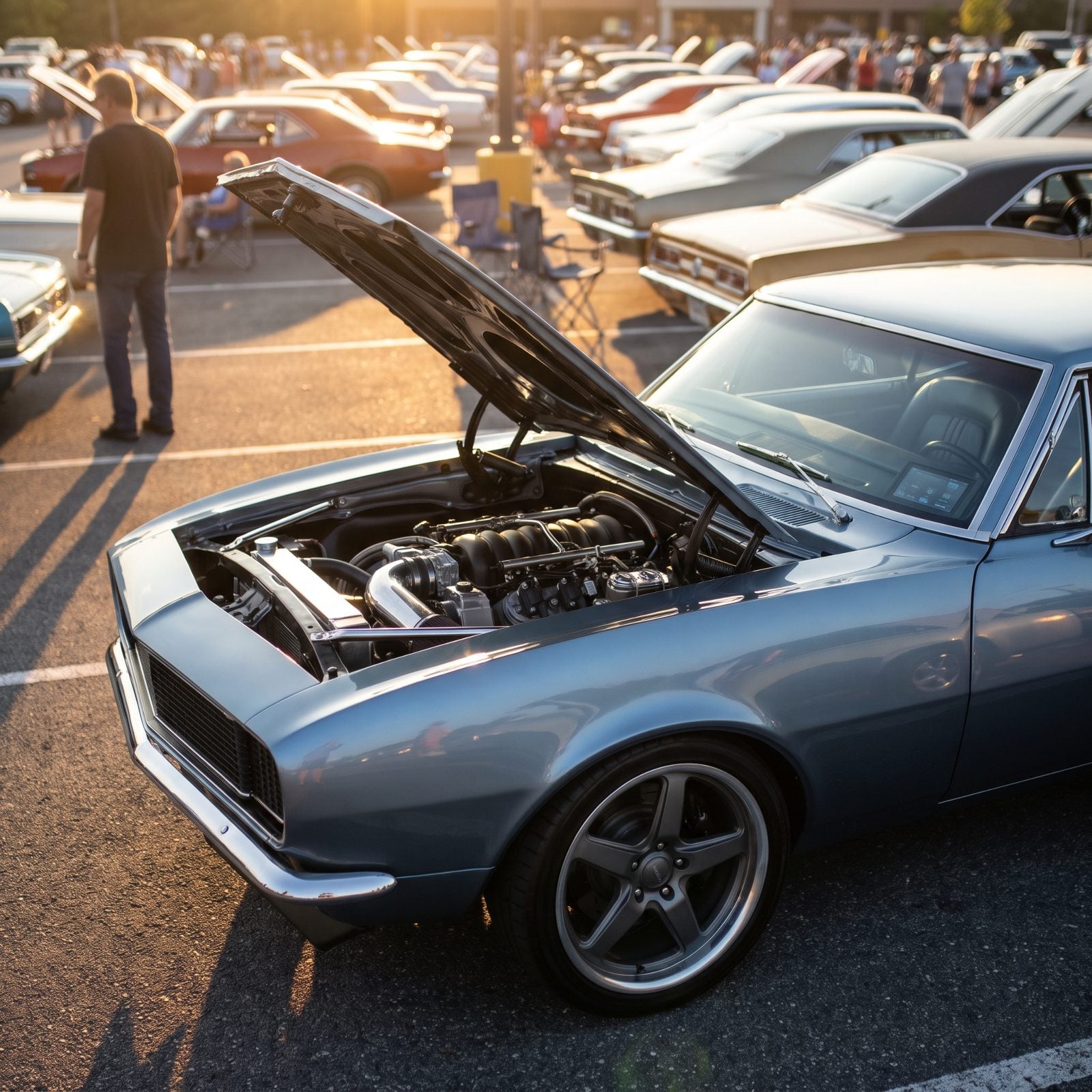
Classic shape, zero classic headaches. The convert loves how a ’67 Camaro looks and can’t stand how one from 1967 actually drives, so the body stays and nearly everything underneath gets swapped for something built this century.
Fuel-injected crate engine. Four-wheel disc brakes. Air conditioning that works in July, power steering that doesn’t fight you in a parking lot. Turn the key and it idles smooth, then cruises three hundred miles without boiling over or leaving you on the shoulder.
Purists roll their eyes, and that’s fine. But here’s the honest trade: a restomod gets driven — hard, often, and far. The original-spec car tends to live on a trailer, scared of its own tires. Want a classic you can actually use like a car? This is the sane answer, and the resale has gotten surprisingly strong.
41. The Budget Backyard Builder
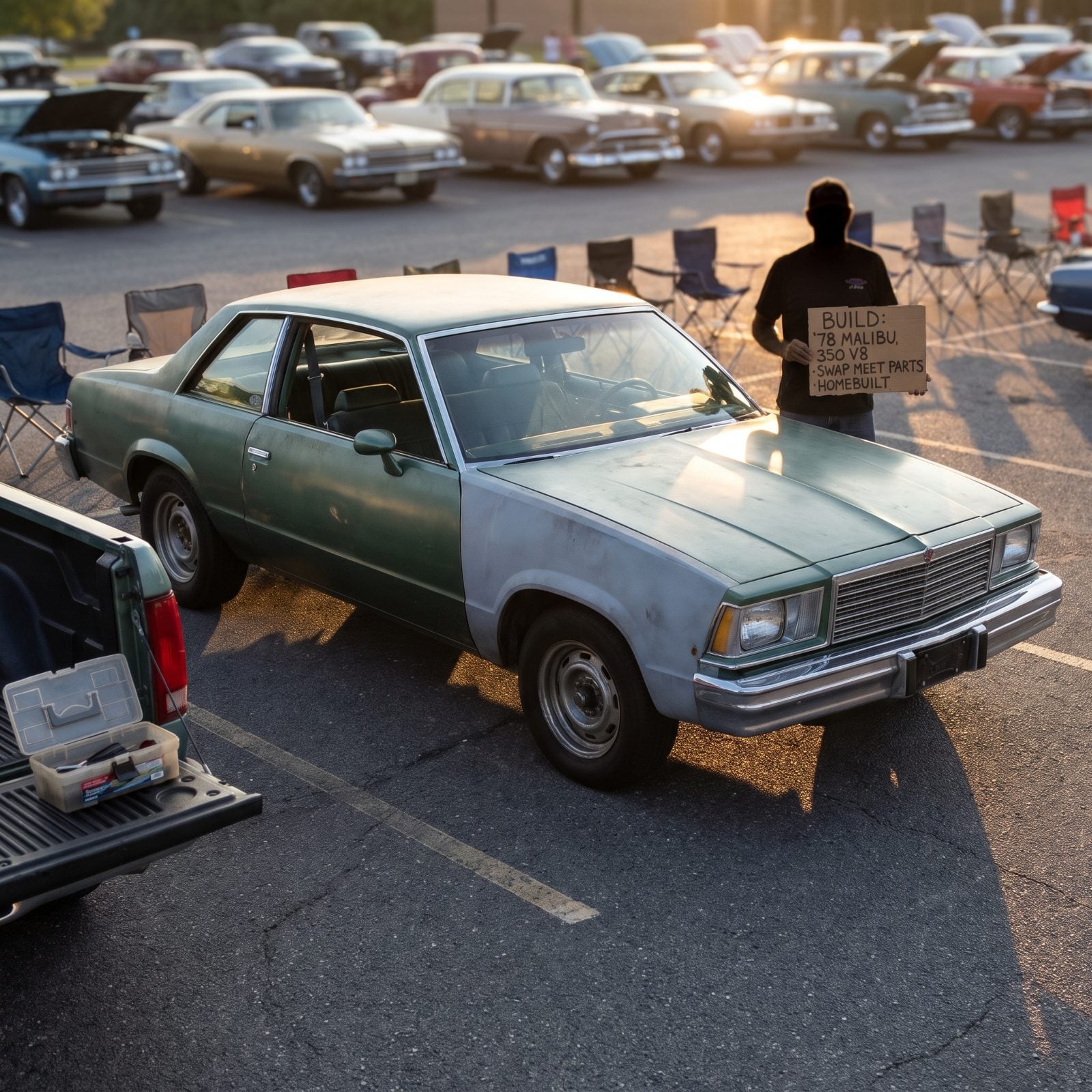
The fender doesn’t quite match. He knows. He’ll tell you before you can ask, then explain what the matching paint costs and why it can wait another season.
This is the soul of the hobby, if you ask me. The backyard builder works with junkyard pulls, swap-meet scores, and a credit card he’s trying very hard not to use — jack stands instead of a lift, a tarp instead of a garage half the time. Every panel on the car has a story, and usually that story involves the word “free.”
Is it perfect? No. Does it run, drive, and show up every Friday with its chin out? You bet. I’d argue there’s more genuine achievement parked in a dented Malibu a man built himself than in a six-figure car somebody wrote a check for.
40. The High-Dollar Checkbook Restorer
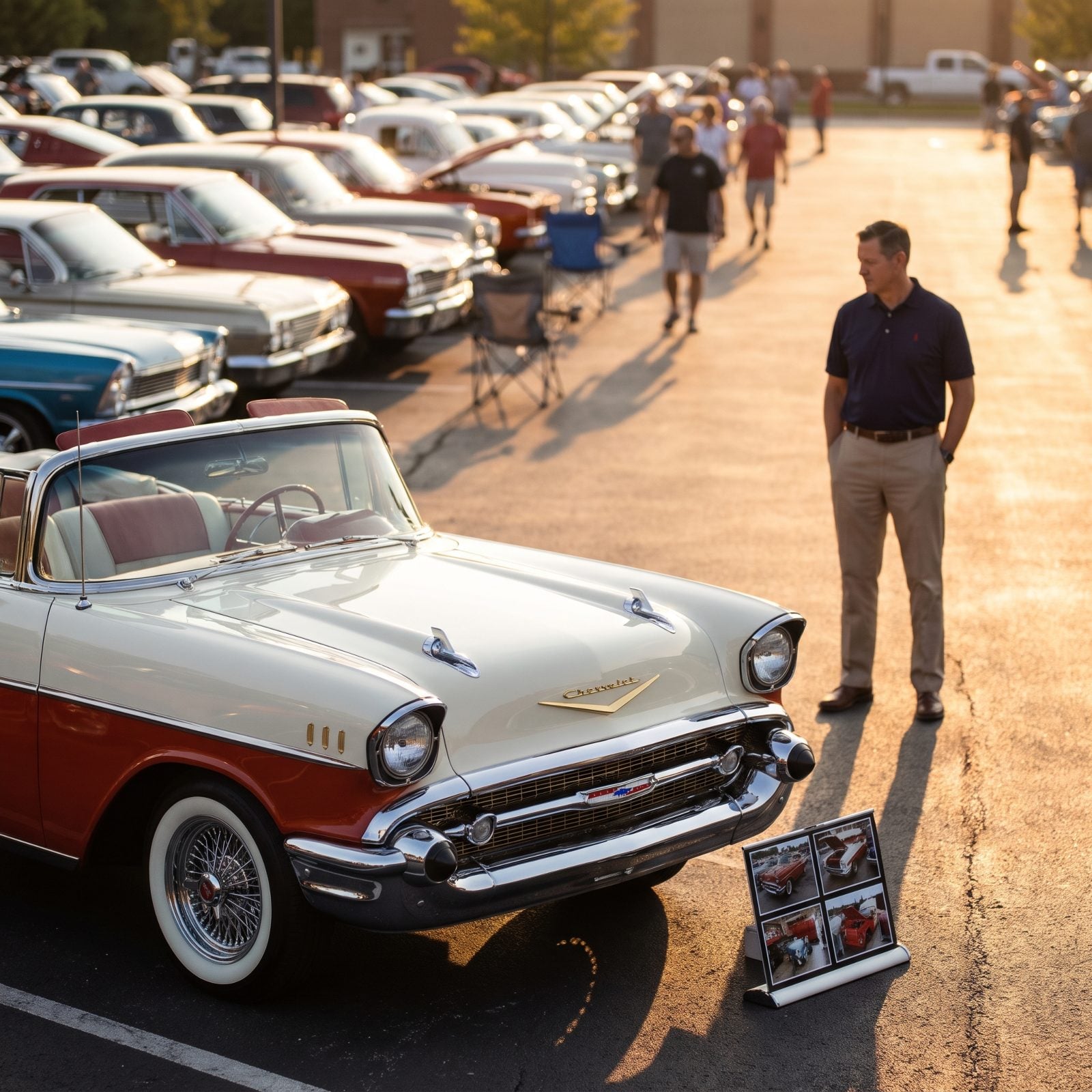
The car is immaculate. He didn’t turn a single bolt on it.
No shame in that, and he’ll be the first to say so. He loves these cars, has the means, and would rather pay a top shop than spend five years skinning his knuckles. The money bought the best — correct panels, professional paint, a bill of sale thick as a phone book.
Where it gets touchy is when he narrates the whole restoration like he did the work himself. The rotisserie, the bodywork, the engine machining, all of it described in first person by a man who stopped by the shop twice. Everyone nods. Everyone knows.
Still, these cars matter. Pull the checkbook crowd out of the picture and half the correctly restored cars at any show simply wouldn’t exist. Somebody has to fund the shops that keep the knowledge alive.
39. The Barn-Find Preservationist
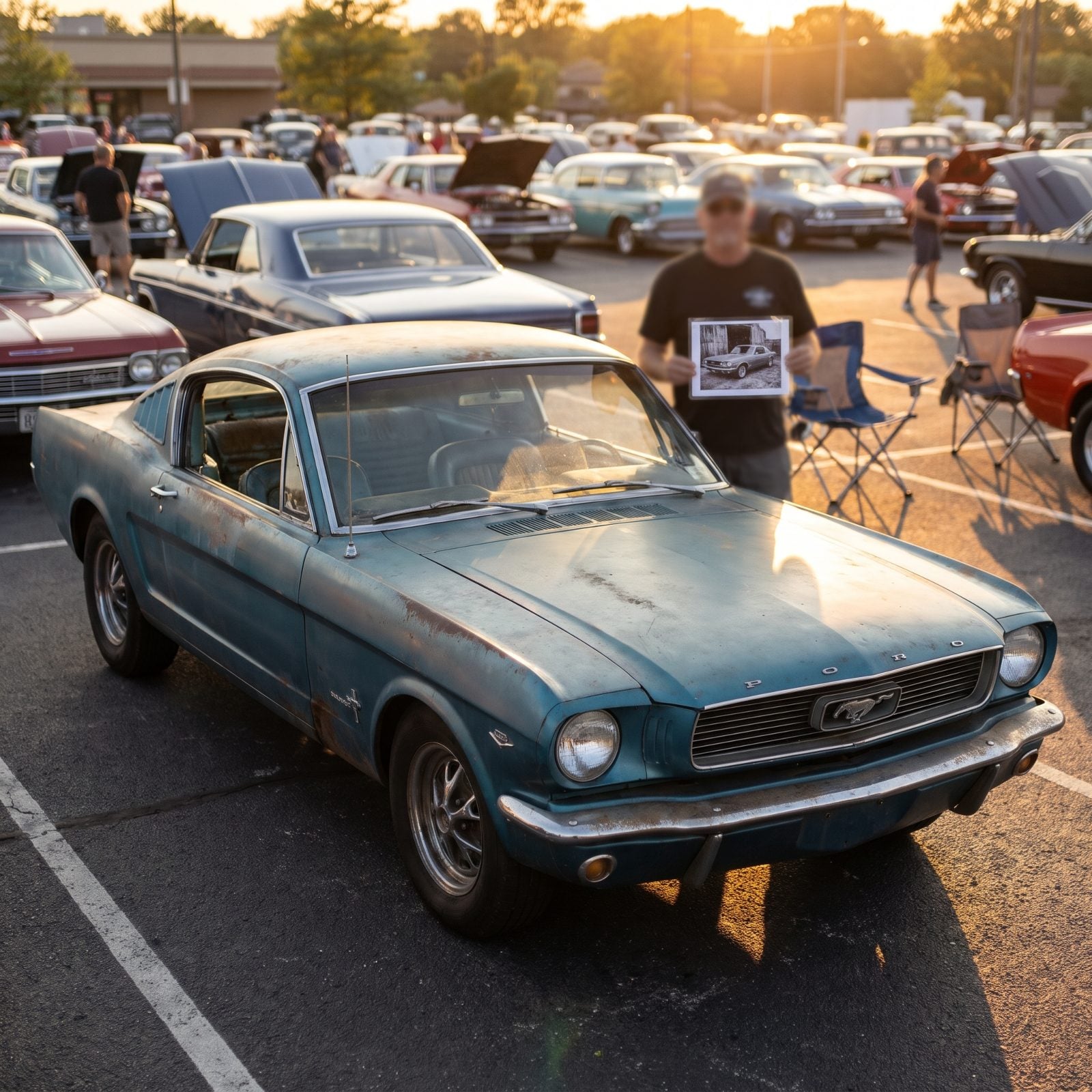
Don’t call it rust. Call it patina, and mean it.
A car is only original once — repaint it and that’s gone for good. So the faded Guardsman Blue stays. The cracked dash pad stays. The surface rust gets stabilized but never ground away. He’s keeping the car as a record of its own life: forty years of sun and dust and one careful owner before him.
Fifteen years ago this flipped the hobby on its head. For decades everyone restored, no exceptions. Now the unrestored survivor, warts and all, often earns more respect and more money than the shiny one parked next to it.
There’s an idea in here worth chewing on. We spent fifty years trying to make old cars look new — then woke up to the fact that the old was the valuable part all along.
38. The Pro-Touring Builder
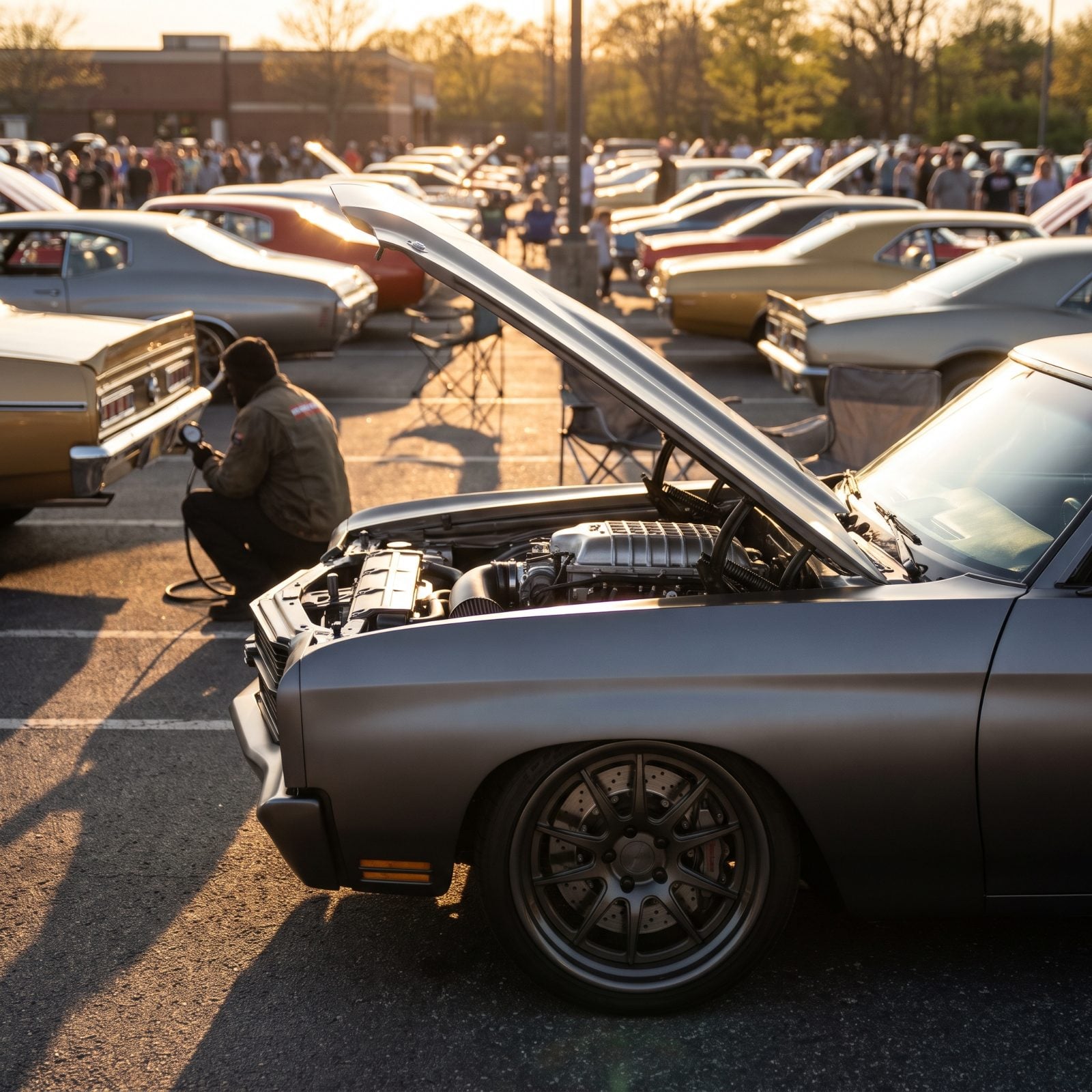
Looks like a classic. Corners like something German and expensive.
The pro-touring builder asks one blunt question — what if a muscle car could actually handle? — and answers it with a ’70 Chevelle sitting low on modern coilovers, stopping on six-piston brakes, steering through a rack-and-pinion, and putting down four-digit horsepower it can genuinely use. These cars run real road courses and autocross cones, not just a lap around the block.
It’s a serious money and engineering commitment. Fabrication, tuning, suspension geometry that has to be designed instead of ordered. The trade is ride quality and originality, both sacrificed for grip. But watch one get thrown into a corner and the appeal lands instantly. It’s the muscle car the factory was never allowed to build.
37. The Chrome-Everything Customizer
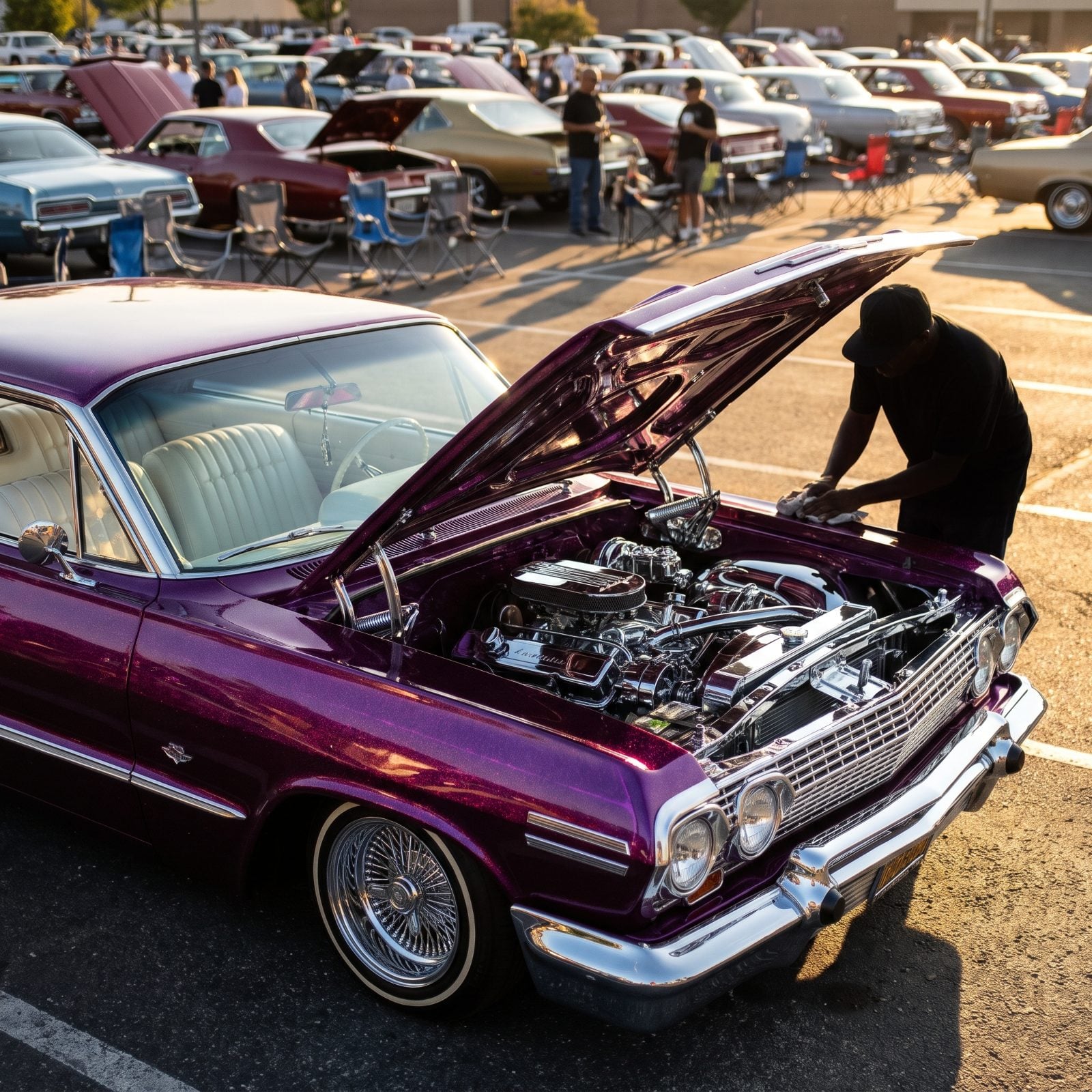
If it could be chromed, it got chromed. If it couldn’t, he found a way.
He treats the car as a canvas for pure excess, in the best sense. Candy paint laid over metalflake so deep it looks three inches thick. Every bracket, pulley, and fastener under the hood dipped until the engine bay glitters like a chandelier. Tuck-and-roll upholstery, slammed stance, frenched lights, maybe a set of wire wheels that cost more than some folks’ entire project.
Show first, drive second — no apology offered. Factory correctness means nothing here. Originality is the enemy. The goal is to stop a stranger dead in the aisle, and it works every single time.
For what it’s worth, our readers gave cars with lots of chrome more hearts than the other images in the same articles, 83% versus 76%.
36. The Concours Perfectionist
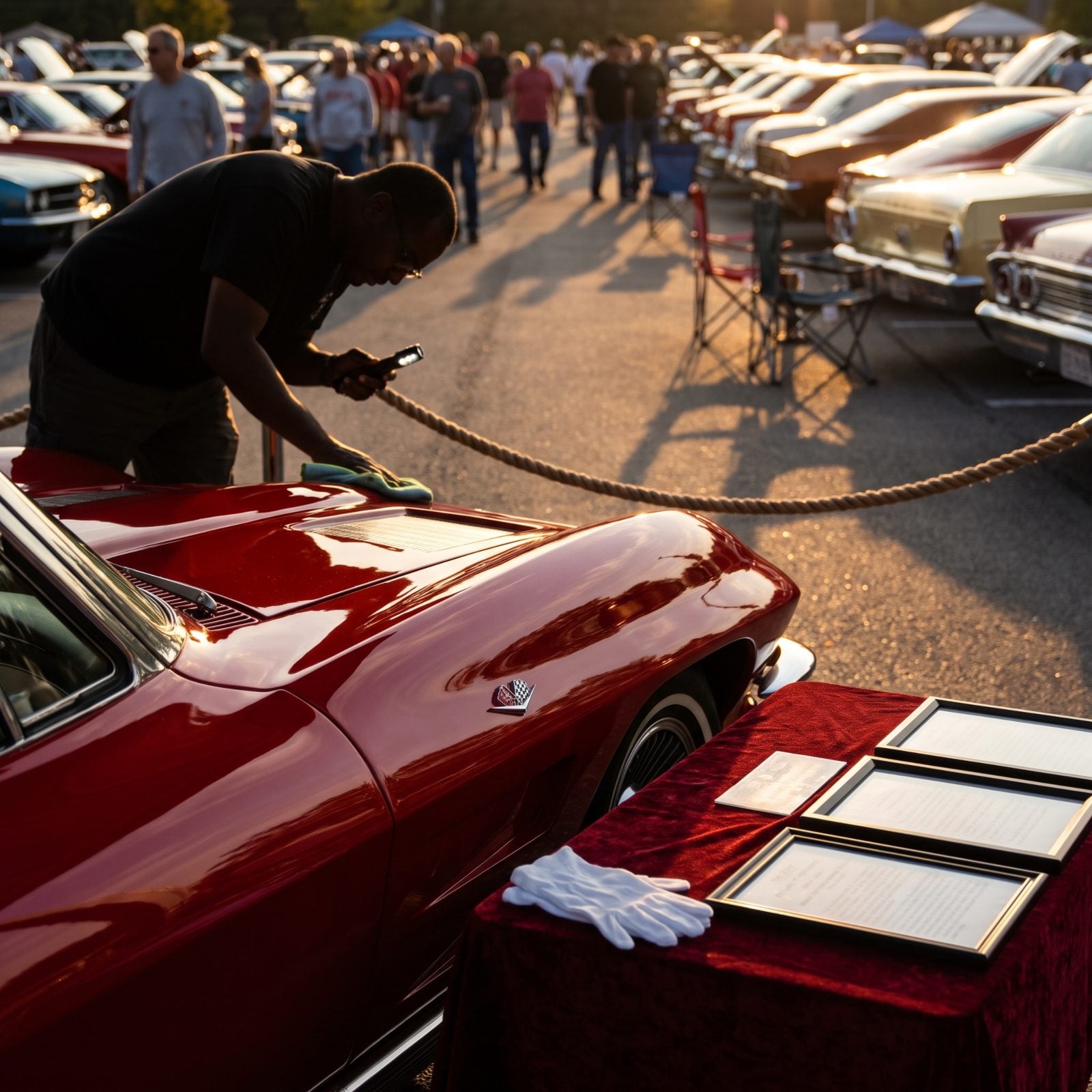
The flashlight comes out at dusk. He’s checking the inside of the fender wells for dust, and he’s dead serious.
He lives for points-judged competition, where a frozen bolt head facing the wrong direction can cost a trophy. Everything has to be correct and perfect at the same time — a tall order, since those two standards usually fight. White gloves. Display boards documenting the restoration. A microfiber cloth that never leaves his back pocket.
At a casual cruise night he can read a little intense. Nobody else is checking panel gaps with feeler gauges on a Friday evening. But this crowd represents the absolute ceiling of the craft, the people who prove just how good one of these cars can possibly get.
You don’t have to want to live that way to be glad somebody does.
35. The Unfinished-Project Optimist
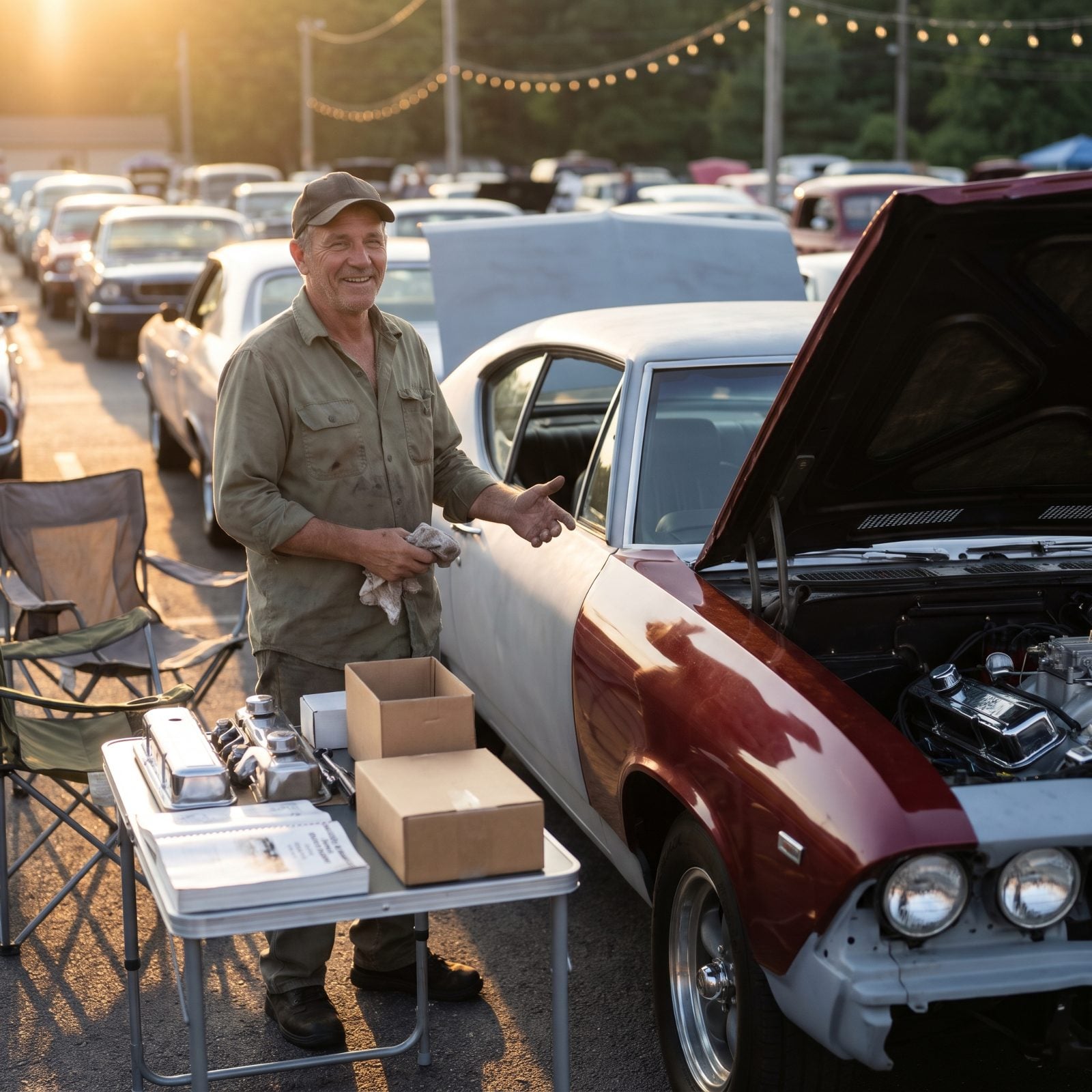
He’s been three weekends from done for about six years. You’ll spot his car by the primer, the one gleaming fender, and the folding table of cardboard boxes and chrome parts beside it. He brings it anyway, and that’s exactly why he belongs here.
Ask about the project and you’ll get the full plan, timeline included, delivered with total sincerity. He believes every word of it. And for a minute, so do you. There’s something contagious about a man who can look at a chrome-dressed engine sitting in a primer-gray shell and see a finished cruiser idling under neon.
He’s the heart of the lot, honestly. The flawless trailer queens haul in the trophies. This guy hauls in the conversations.
34. The Former High-School Car Recreator
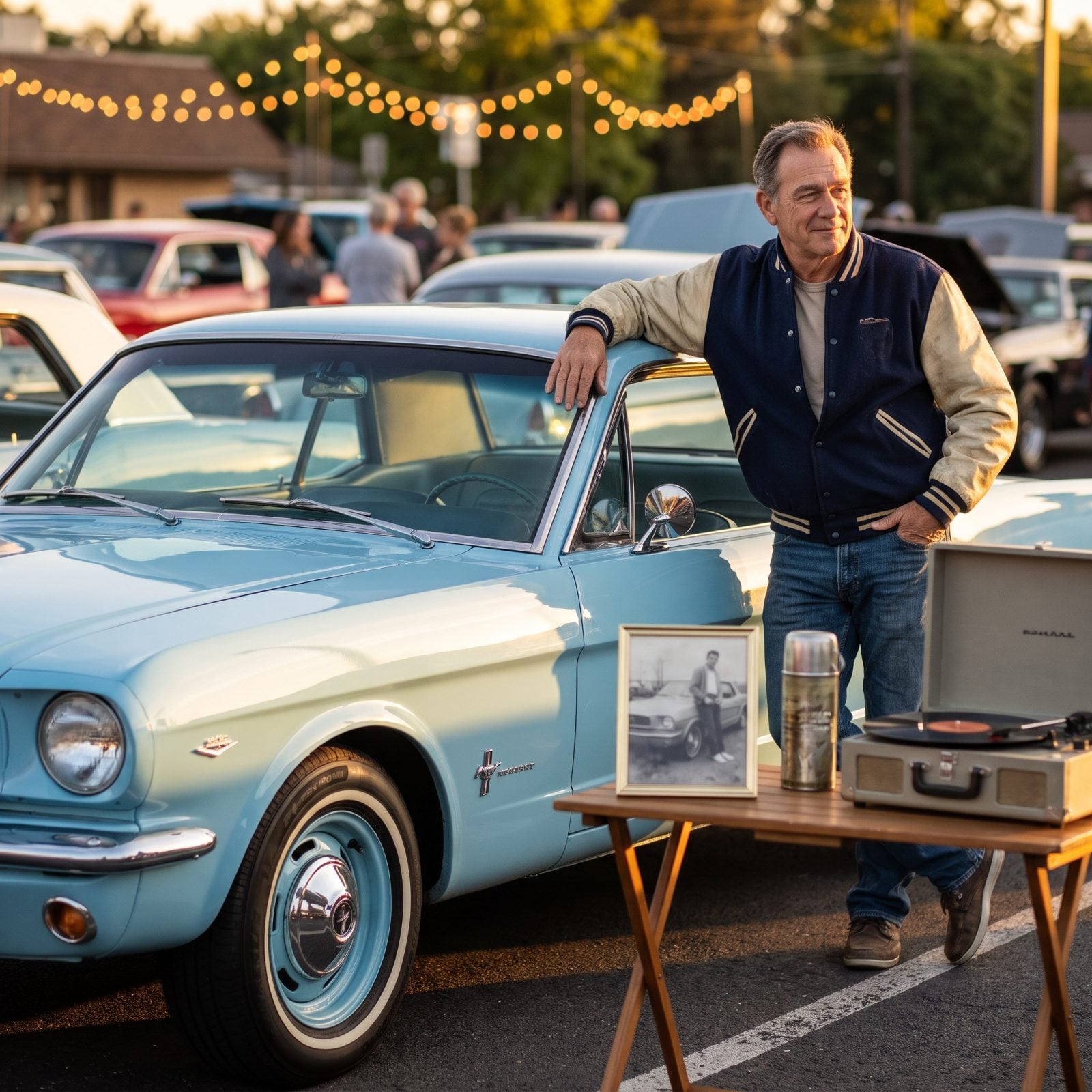
This one chased a ghost and caught it. The car he’s standing next to is the exact make, model, and color of the one he had at seventeen, right down to the hubcaps. He sold the original for gas money in 1974 and spent the next forty years regretting it.
He can tell you what it cost then and what the replacement cost now. The second number makes him wince and grin at the same time. He didn’t buy a car. He bought back a Friday night from a decade that no longer exists.
33. The Father-and-Son Project Team
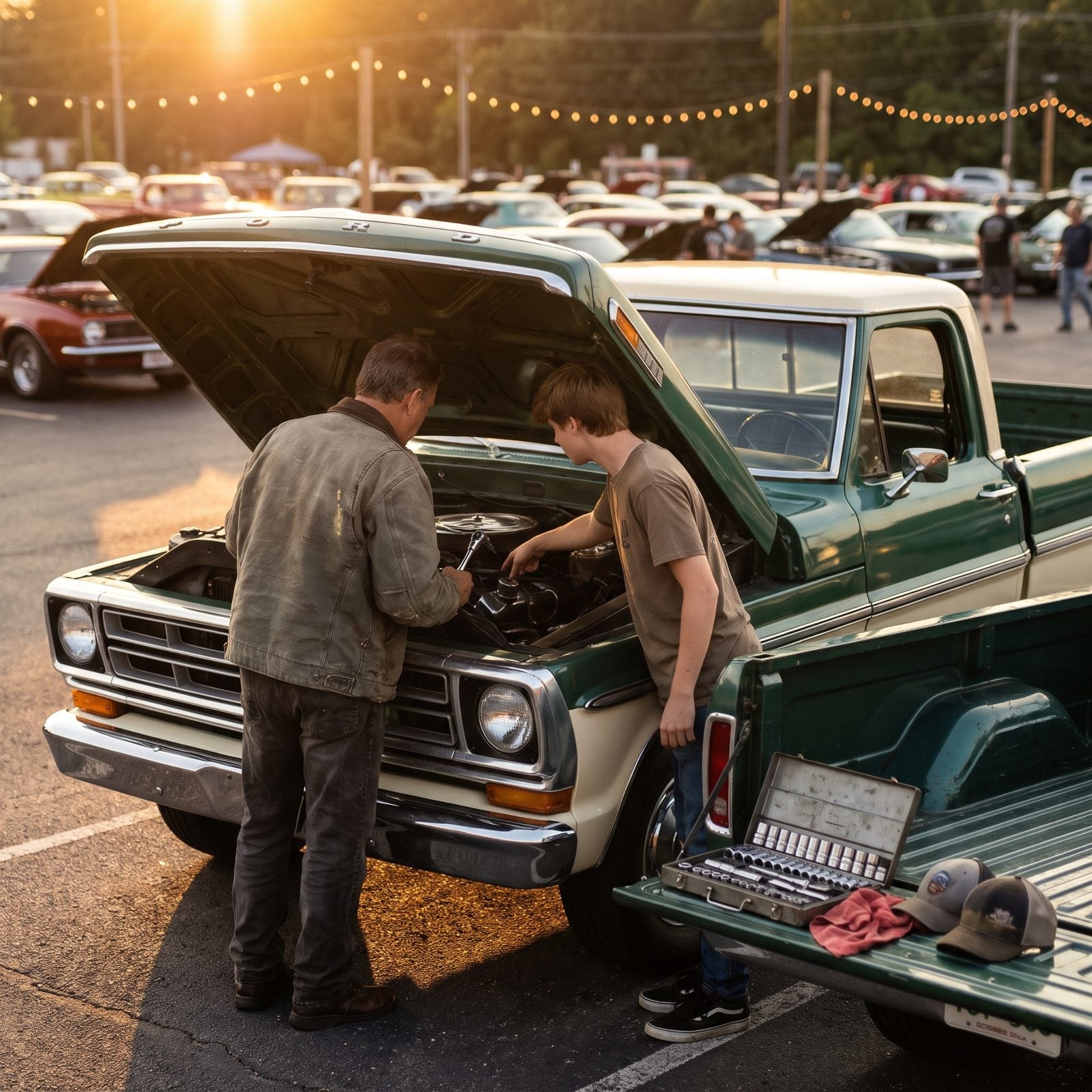
Two sets of hands, one car, decades of difference between them. You can clock this pairing from clear across the lot by the easy way they move around each other — nobody giving directions, both already knowing the next step.
The build is the excuse. What they’re really doing is logging hours together that neither one will admit they needed. Skinned knuckles and a shared thermos beat a dozen awkward phone calls.
One taught the other to run a timing light. Years later the teaching quietly flipped, and now the younger one is the one who understands the fuel injection nobody over sixty trusts. Neither of them mentions it. They just hand the tools back and forth and let the car hold them together.
32. The Mopar-or-No-Car Diehard
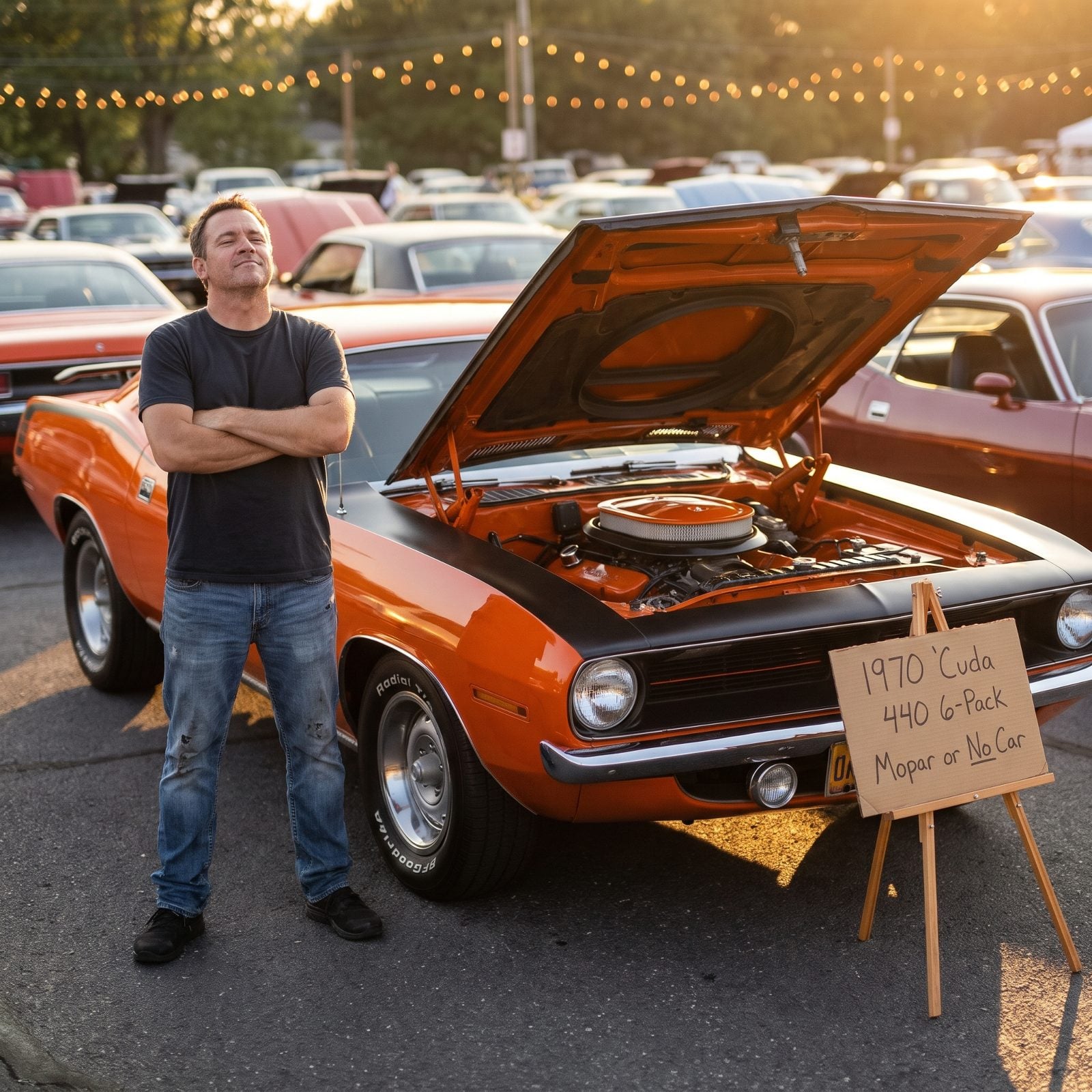
Loyalty, with a Hemi. This fellow would sooner walk than drive anything that didn’t come out of a Chrysler, Dodge, or Plymouth plant. His handwritten spec card, with “Mopar or No Car” right on it, tells you exactly where he stands.
He knows the difference between a 440 Six Pack and a 383, and he will explain it whether you asked or not. The passion is real. So is the mild chip on the shoulder that comes from spending the muscle-car wars watching the Chevy crowd soak up all the magazine covers.
There are no part-time Mopar people. You’re in or you’re out, and to him there’s no third option.
31. The Orphan-Make Champion
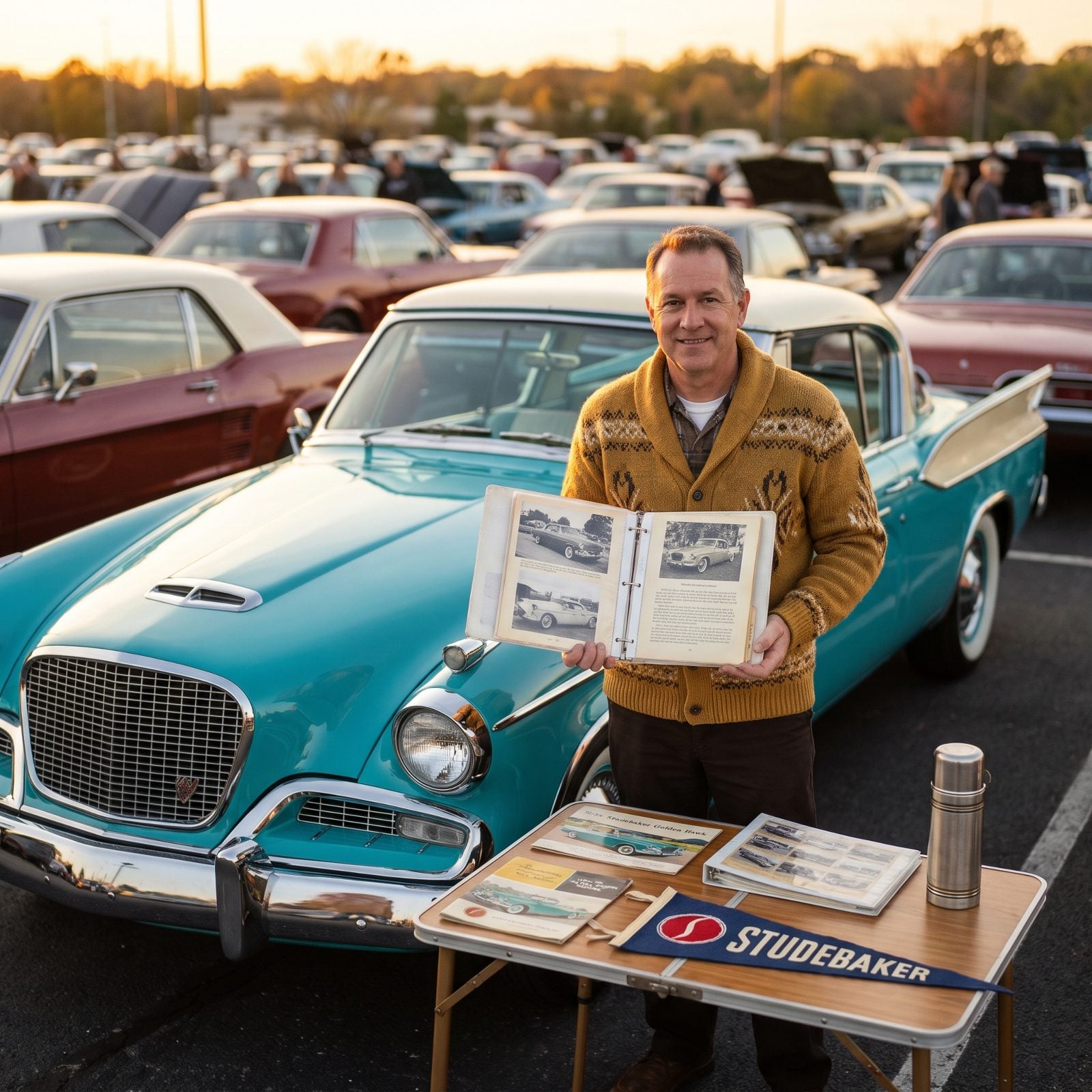
Everybody else brought a Chevy. He brought a Studebaker. Or a Hudson, a Nash, a Packard, a Rambler — some proud nameplate the market quietly retired decades ago.
He’s part owner, part historian, part grief counselor for a company that didn’t make it. He knows exactly when the plant closed, and he’ll tell you the cars were better than the business. He’s usually right about that.
Best thing on his display? The stack of brochures from a dealership that hasn’t existed since before most of the lot was born. Parts are a nightmare. He fabricates what he can’t find and swaps tales with a tiny network of other true believers scattered across three states.
30. The British-Roadster Enthusiast
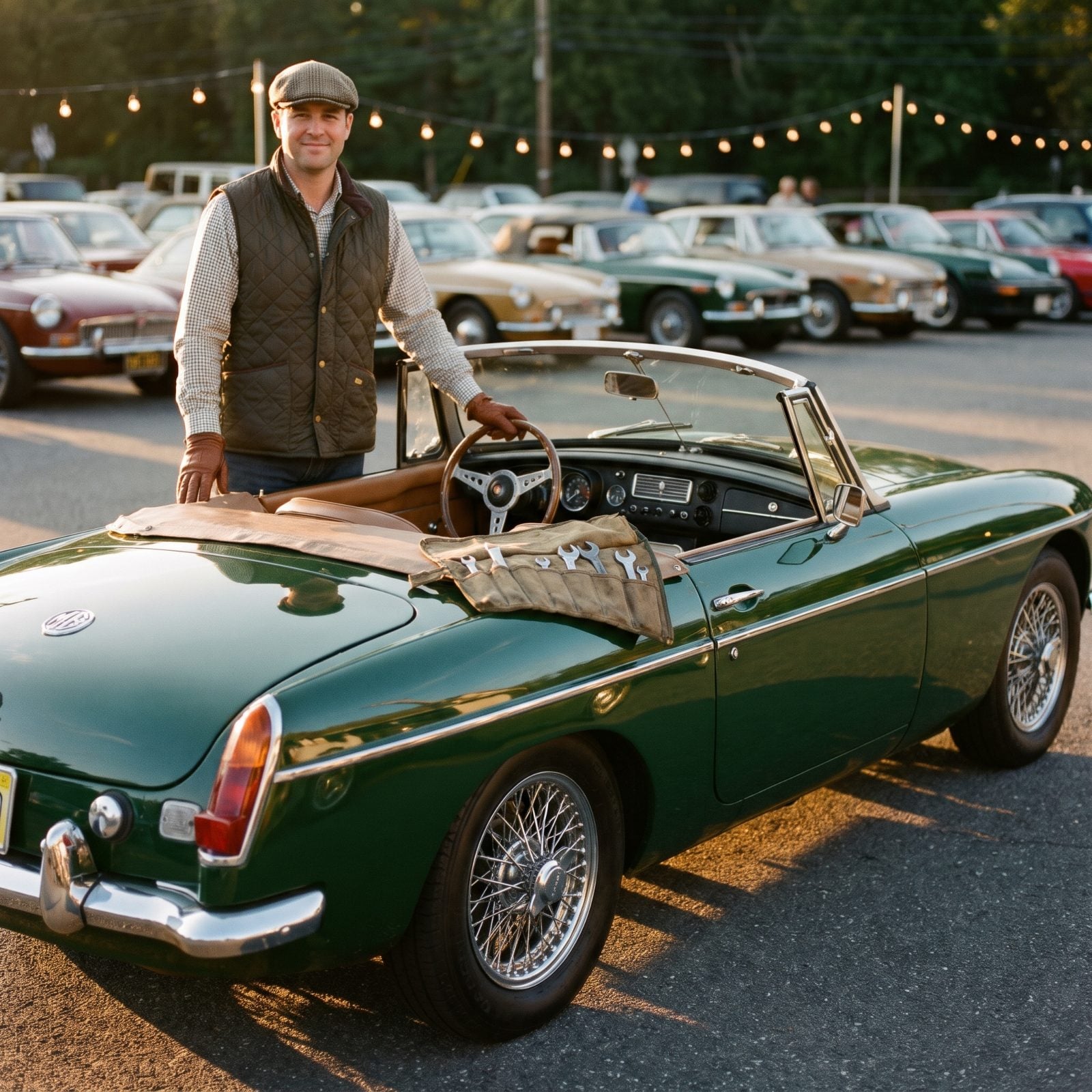
Small car, big attachment. He’s leaning on a British racing green roadster with wire wheels and a top that takes twenty minutes and a few words you can’t print to put up. He wouldn’t trade it for anything with a roof that works.
Here’s what separates him from the muscle crowd: he doesn’t talk horsepower. He talks feel — the way the thing slips through a corner at speeds that wouldn’t scare a schoolbus. These cars were never fast. They were fun, which is a different and better thing.
The tool roll stays in the passenger seat because he’s going to need it. Every British roadster owner is also a part-time electrician, cursing a wiring harness built by a company that treated grounds as optional. He loves it anyway. Maybe because of it.
29. The Air-Cooled Volkswagen Owner
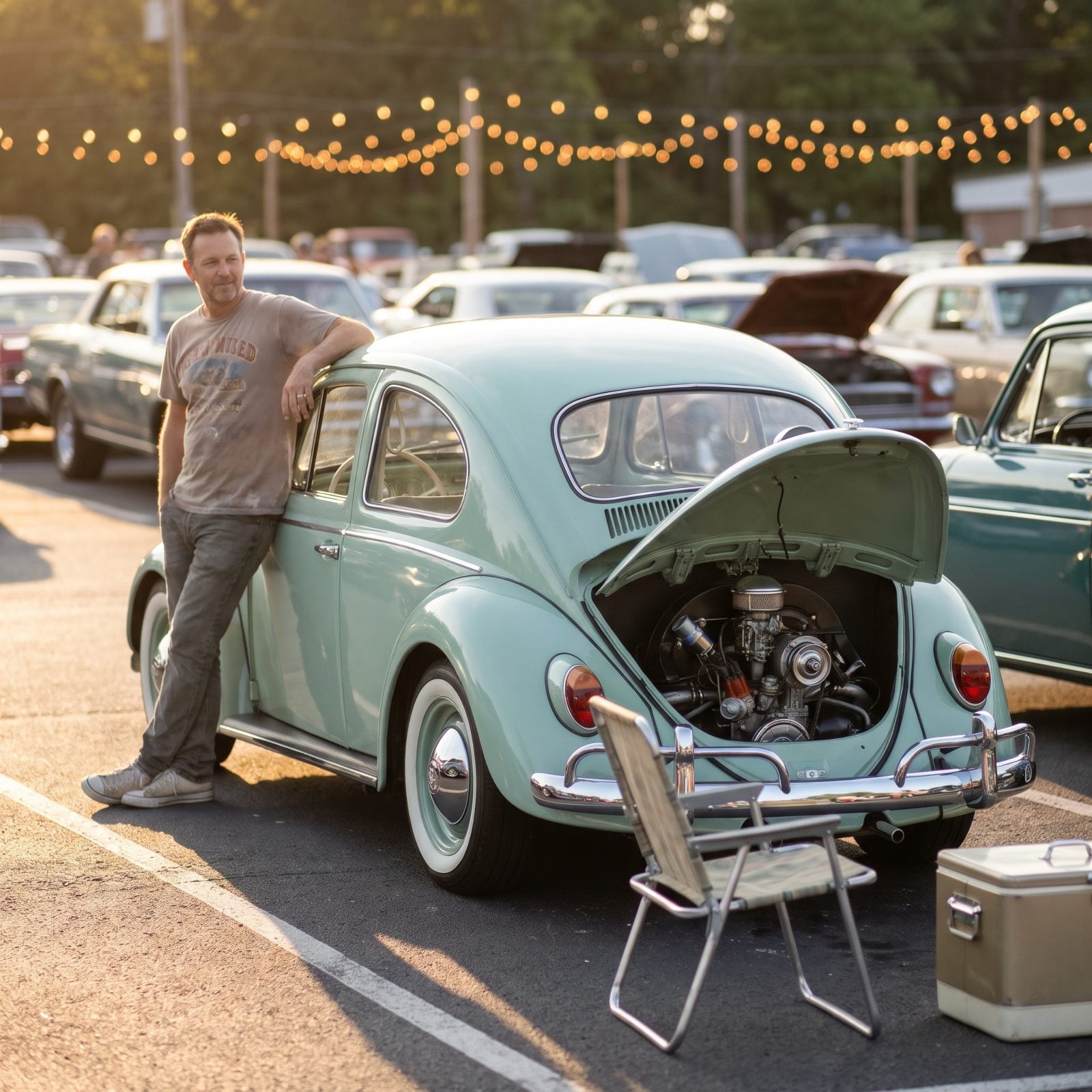
No radiator, no water pump, no drama. The whole philosophy sits right there in the engine bay: a little flat-four hanging out back, cooled by nothing but moving air and simple design.
This owner runs on a different frequency than the muscle guys — more relaxed, more amused, less interested in quarter-mile times. A Beetle, a Bus, a Karmann Ghia, it doesn’t much matter. The appeal stays the same: honest, repairable machinery you can understand on a Saturday with a $5 manual and a 13mm wrench.
28. The Vintage Pickup Traditionalist
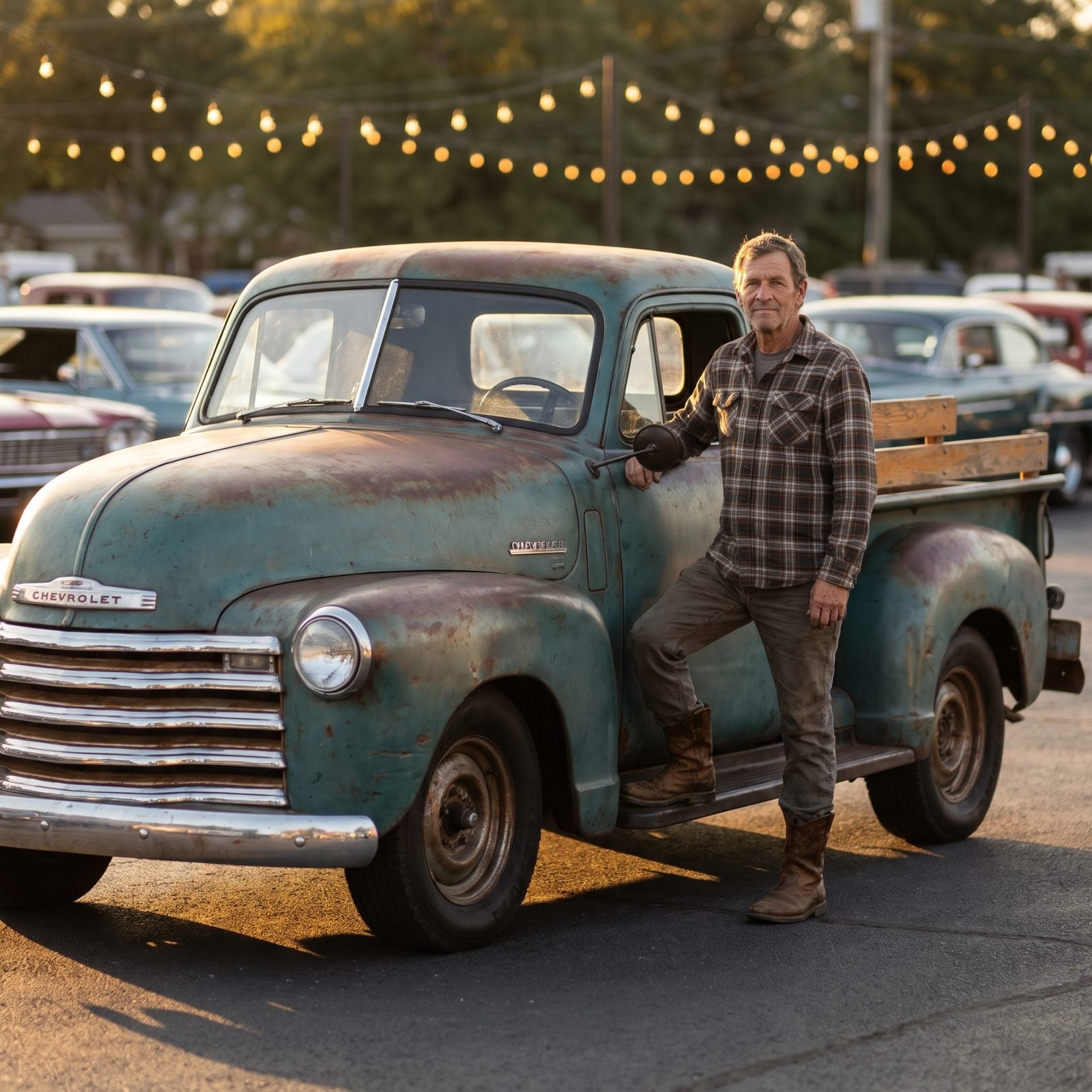
He doesn’t want it perfect. He wants it honest. His old pickup wears its patina like a service record — faded paint and a little surface rust left exactly where the years put it.
These are the people who stopped the glossy over-restoration trend cold. A work truck that spent forty years actually working shouldn’t look like it just left the showroom. It should look like it earned every dent.
Ask about the bed and he’ll tell you he still hauls mulch in it. This is no trailer queen. It’s a truck, and he uses it like one — a quiet rebuke to everybody polishing undercarriages they’ll never drive on.
27. The Land-Yacht Captain
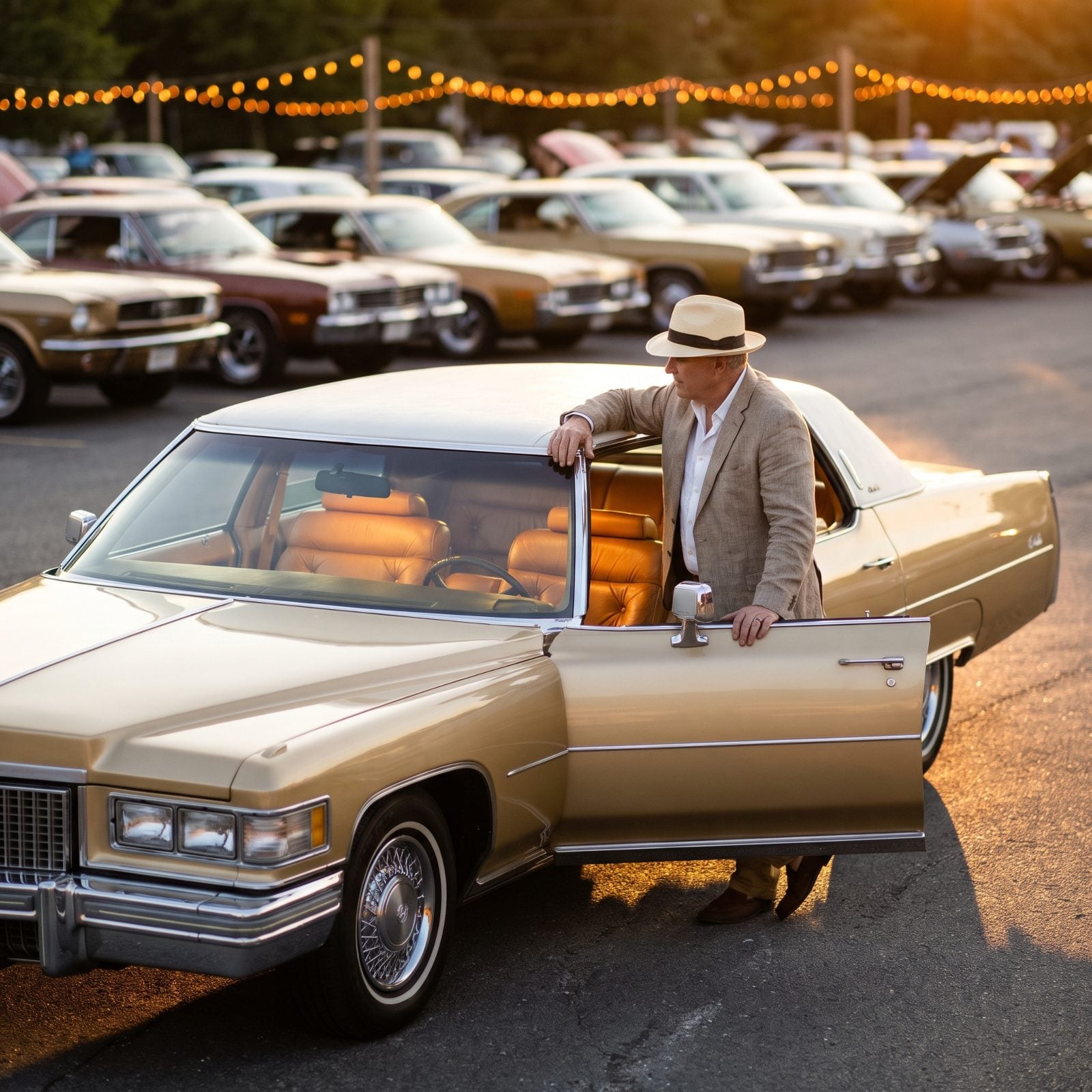
Twenty feet of American confidence, and he wants you to feel every inch of it. His car is a full-size Cadillac, Lincoln, or Imperial from the era when gas was cheap and nobody apologized for size.
The muscle crowd can keep their horsepower. This man values float — the way the suspension turns a rough road into a rumor, the couch-like seats, the sheer theater of parking something that takes up a space and a half.
He’ll invite you to sit inside, and you should. The interior is a living room from 1976: tufted velour or button leather, power everything, an ashtray in every door.
Jalopy Talk readers seem to side with him: full-size land yachts drew more hearts than the other cars pictured in the same articles, 82% versus 75%.
26. The Lowrider Artist
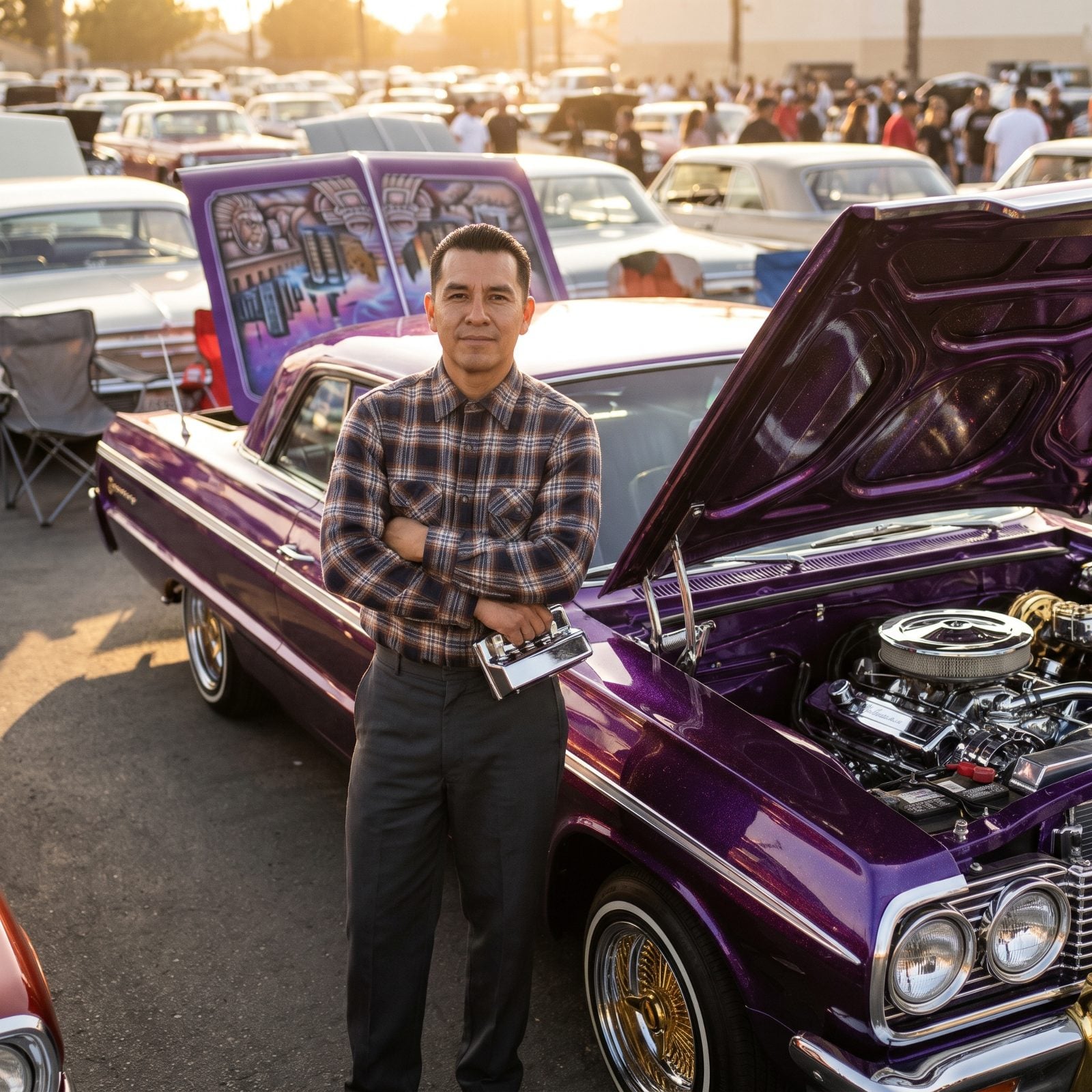
You hear this one before you see it — the clunk and hiss of hydraulics, the stereo doing something soulful and slow. The Lowrider Artist treats the car as a canvas, and that canvas never quite stops: pinstripes, airbrushed murals on the trunk, metalflake deep enough to fall into.
This isn’t a restoration philosophy so much as a lineage, a craft that runs through families and clubs with every chrome spoke and every switch wired on purpose. Ask about the paint and settle in. The answer involves the painter by name, the number of coats, and the three months of color-sanding between them.
25. The Kustom Lead-Sled Keeper
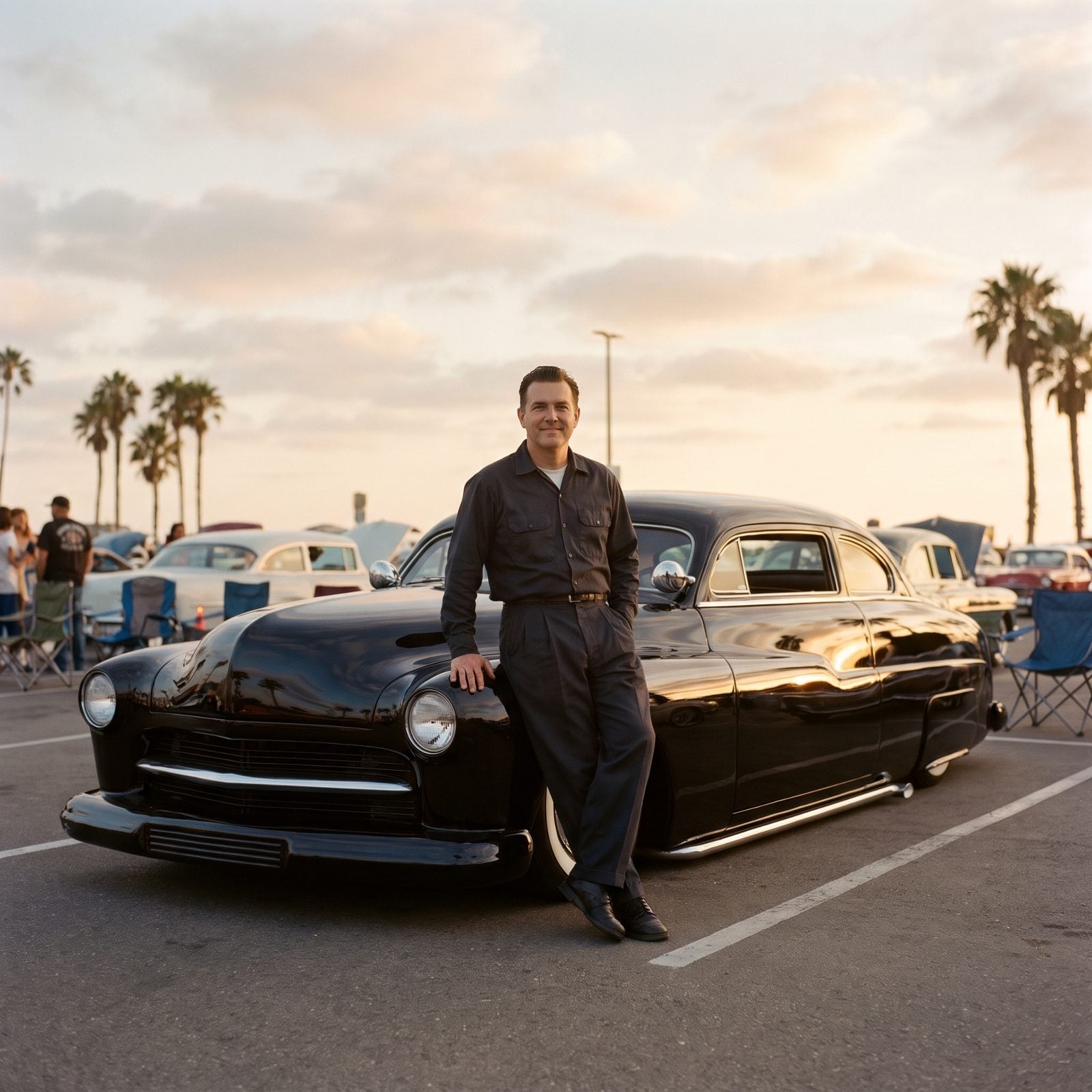
Everything on this car has been taken away. That’s the secret. The Lead-Sled Keeper measures success in what’s missing — no door handles, no badges, no trim, the roof itself chopped down until the windows look like mail slots. What’s left is smooth, heavy, and dark as a well.
These owners love the kustom era with a K, the Barris and Winfield school of the early 1950s, and they talk about lead work, lakes pipes, and frenched headlights the way other people talk about family. Patience is the whole trade. You don’t rush a chop. You don’t rush lead.
24. The Gasser-Style Rebel
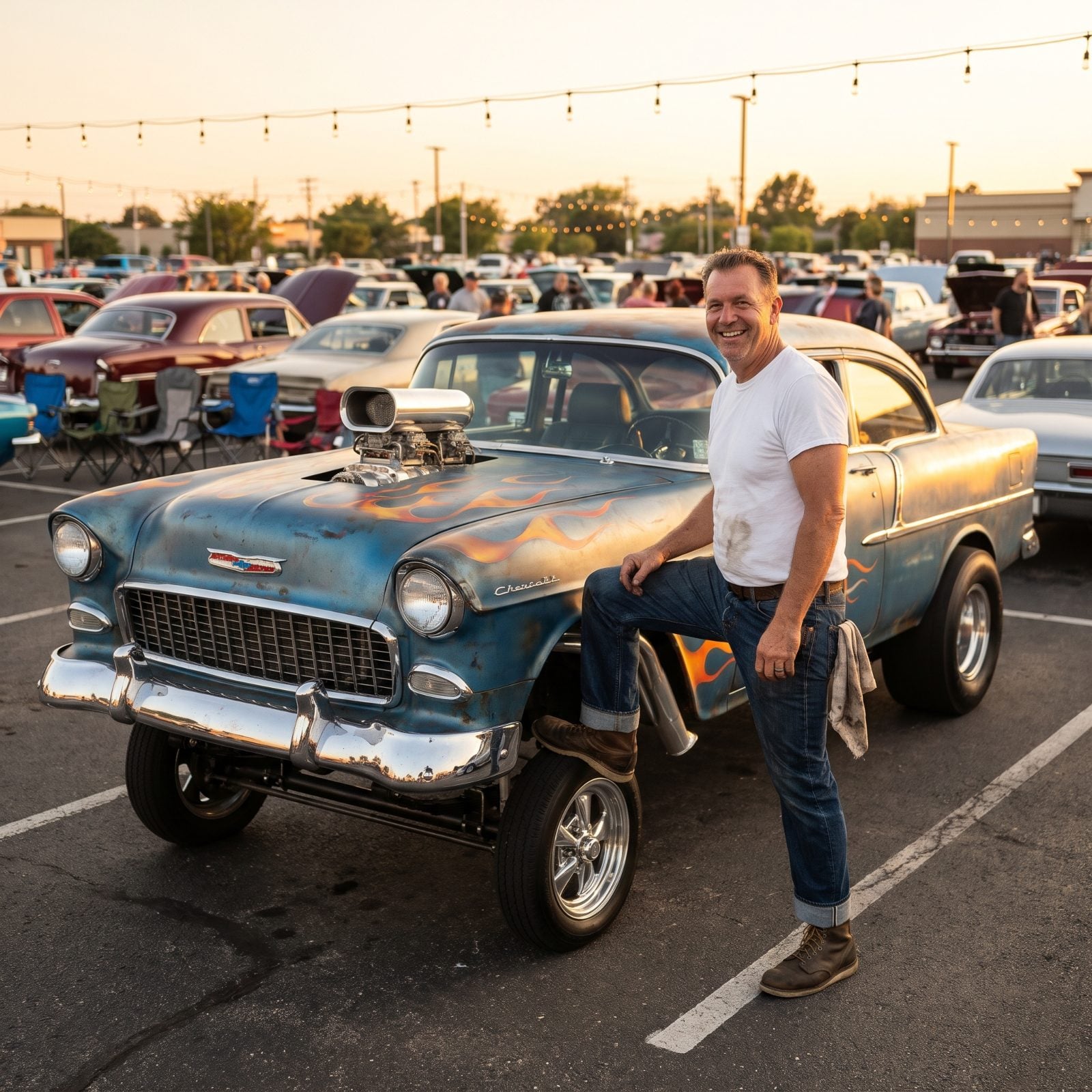
Nose up, attitude higher. The Gasser-Style Rebel builds cars that look like they’re already yanking the front wheels off the pavement — straight axle jacking the front end toward heaven, skinny tires up front and drag slicks out back.
Loudest archetype in the lot, and proudly so. The look comes straight from early-1960s strip racing, back when a gasser was a legitimate class and not a fashion statement. These owners keep the rawness on purpose: scars, patina, a blower blowing a little oil smoke, all part of the deal.
A gasser that’s too clean missed the point entirely.
23. The Garage-Built Fabricator
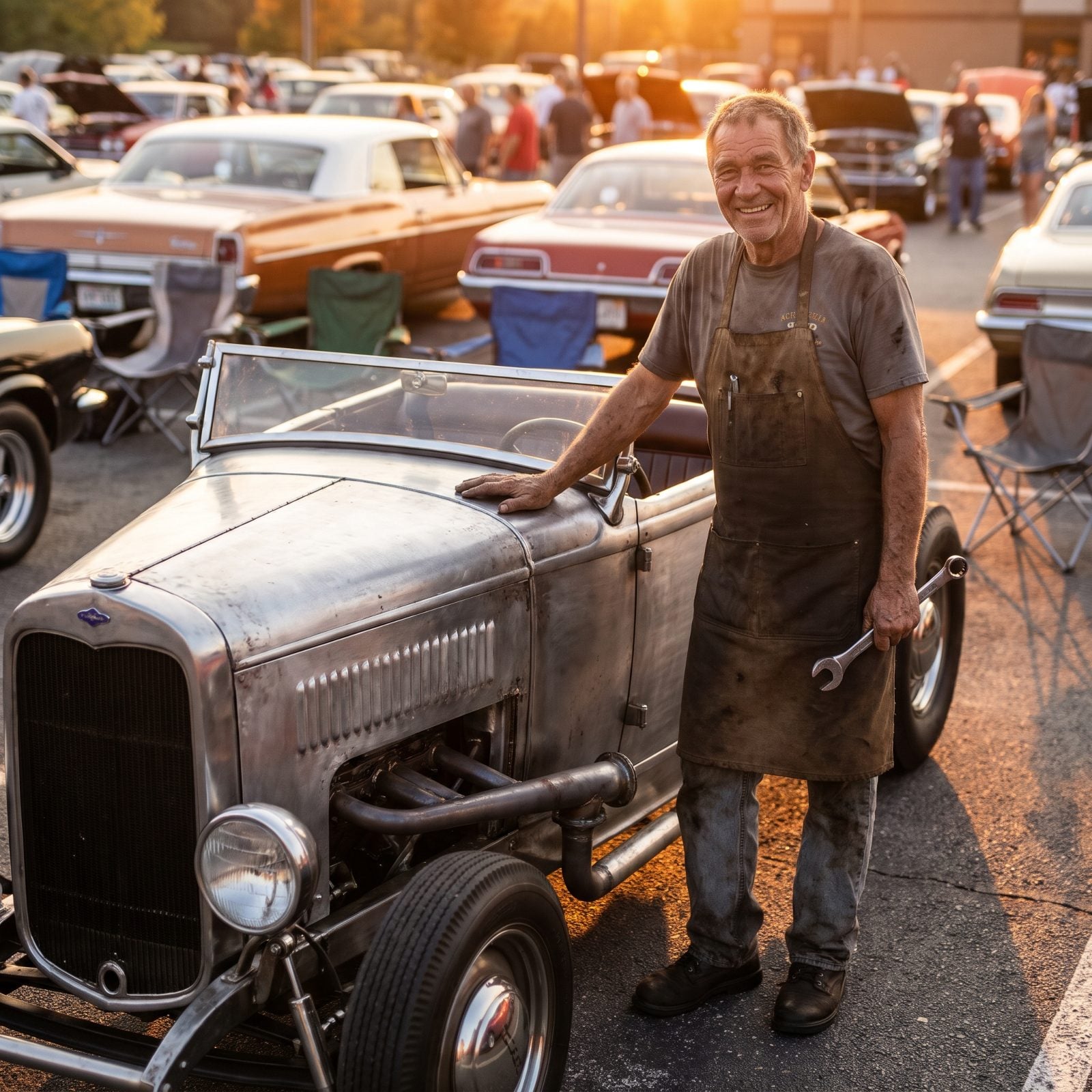
Point at any part on this car and ask who made it. The answer is him. The Garage-Built Fabricator didn’t buy the look — he welded it, bent it, hammered it over a bag of sand in a two-car garage with a radio going and no air conditioning.
Honestly, these are the best conversations in the lot. No catalog shortcuts, just problem-solving in steel. The fenders might be hand-formed aluminum, the brackets are definitely one-offs, and the pride isn’t in the shine — it’s in the fact that the thing runs, drives, and got here under its own power.
22. The Never-Wash-It-in-the-Sun Detailer
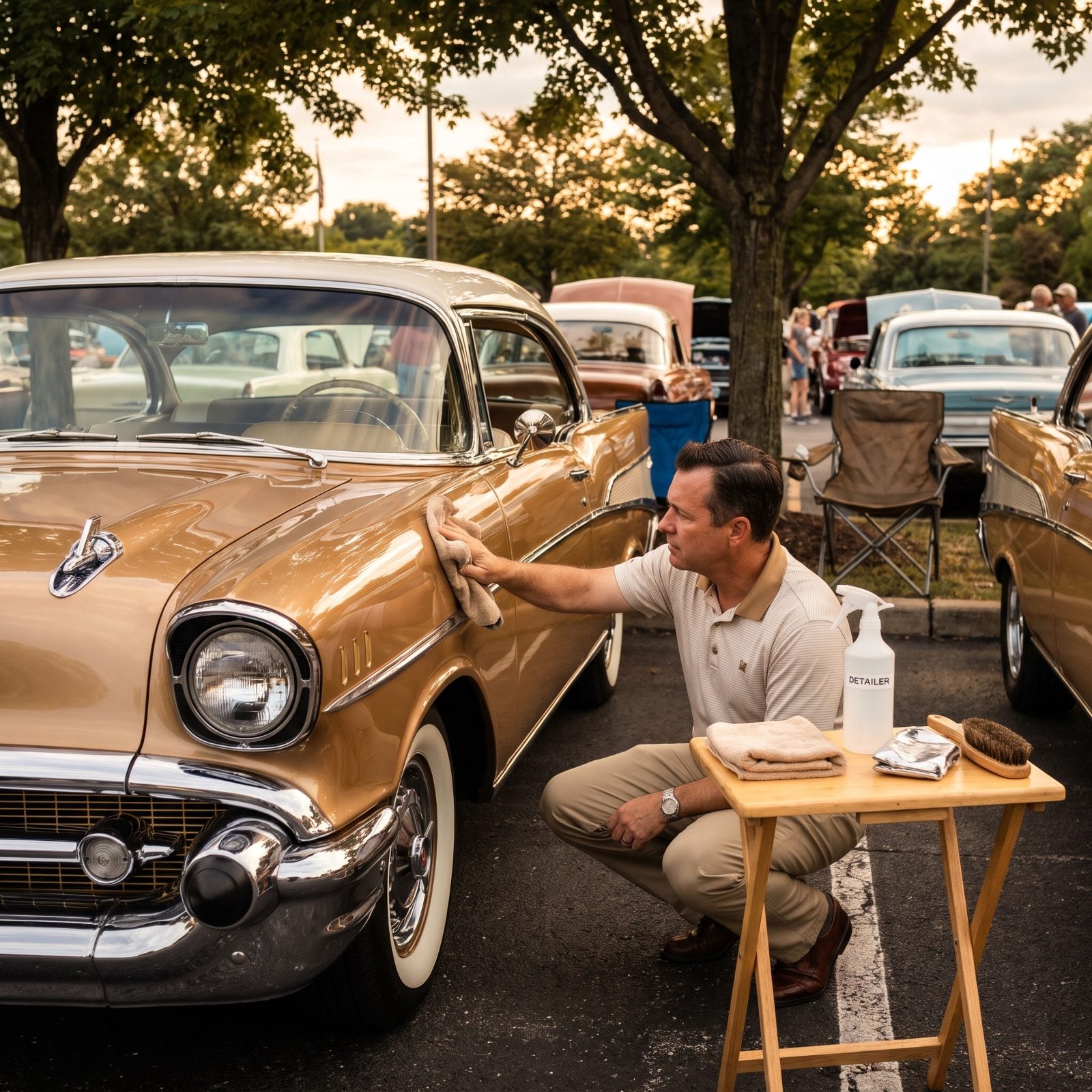
There’s a man in the lot right now, crouched at fender height, chasing a swirl mark only he can see. Meet the Detailer. He parked in the shade on purpose, he has opinions about water hardness, and he will share them whether you asked or not.
The philosophy is total. The paint is sacred, heat plus water plus sun equals spots, so he never washes it in direct sunlight — ever. His trunk is a supply closet of microfiber folded into neat little squares.
21. The Arrives-Before-Everyone Organizer
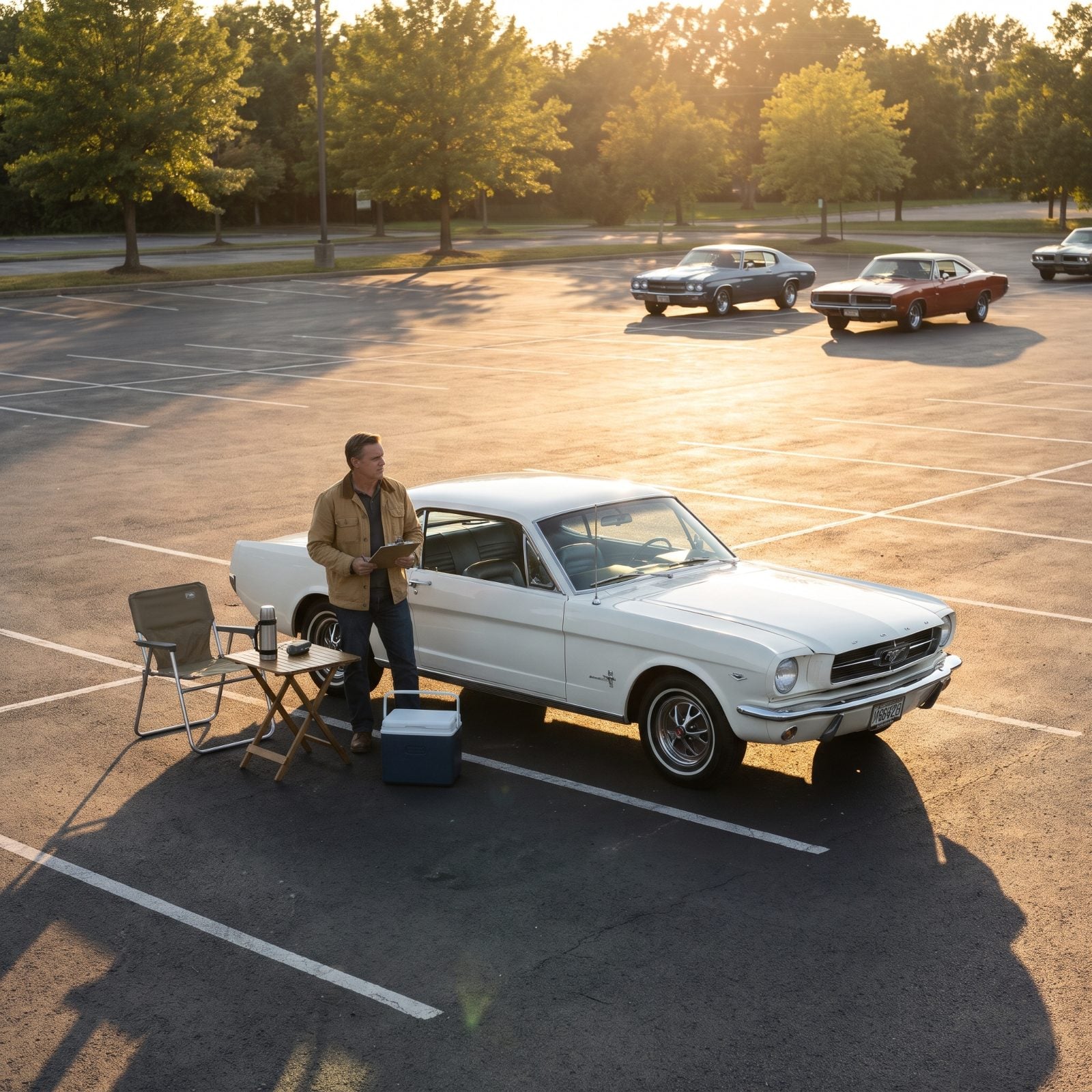
Among the first cars in the lot. Chair out before the rest of the crowd arrives. The Organizer treats cruise night like a job he volunteered for and secretly adores — he got the best spot because he showed up an hour early, and he’ll spend the evening quietly waving traffic into neat rows.
Every group needs this guy. He knows the event coordinator, knows the diner owner, knows which lot has power for the DJ. The car is nice. The logistics are nicer. And if the 50/50 raffle runs smoothly, thank him — though he’d honestly rather you didn’t make a fuss.
20. The Fashionably-Late Entrance Maker
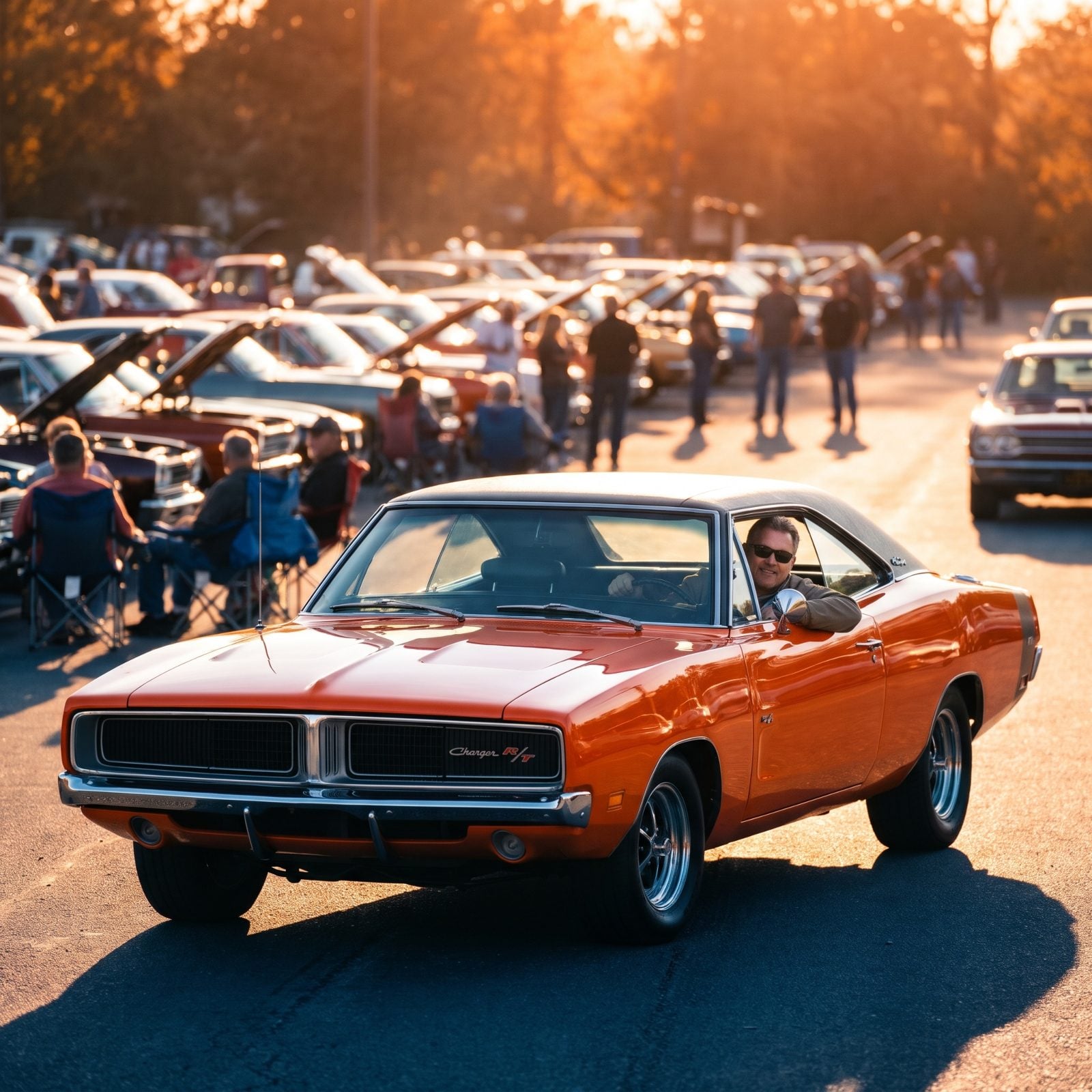
The lot is full, the chairs are out, the burgers are half eaten — and that’s exactly when a deep exhaust note comes rolling up the main aisle, slow, loud, and perfectly timed. The Entrance Maker does not arrive early. Arriving early would waste the entrance.
Say you’ve got a 440 and a healthy cam. Why idle into an empty lot when you can idle past a full one? It’s theater, he knows it, and he’s perfectly fine with you knowing he knows it. There’s a certain confidence in turning a hundred heads with nothing but a throttle blip.
19. The Hood-Always-Up Exhibitor
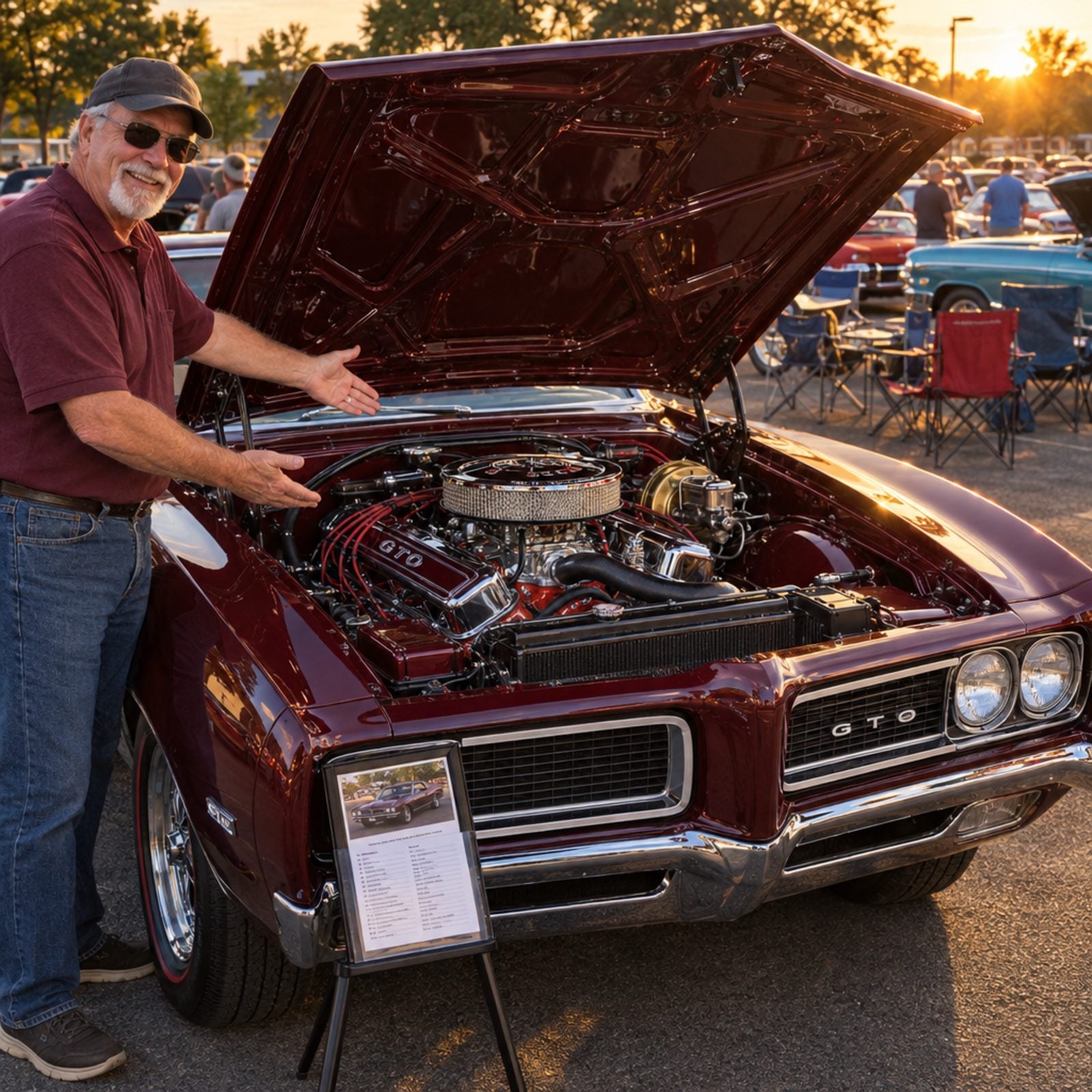
Hood up, display card out, ready to talk. The Exhibitor wants you to see the work, and most of the work lives under that hood — polished valve covers, dressed wiring, an engine bay cleaner than most kitchens.
He’s generous to a fault. He detailed that bay for you, the stranger who might wander by and ask what’s in it.
18. The Hood-Never-Up Mystery Owner
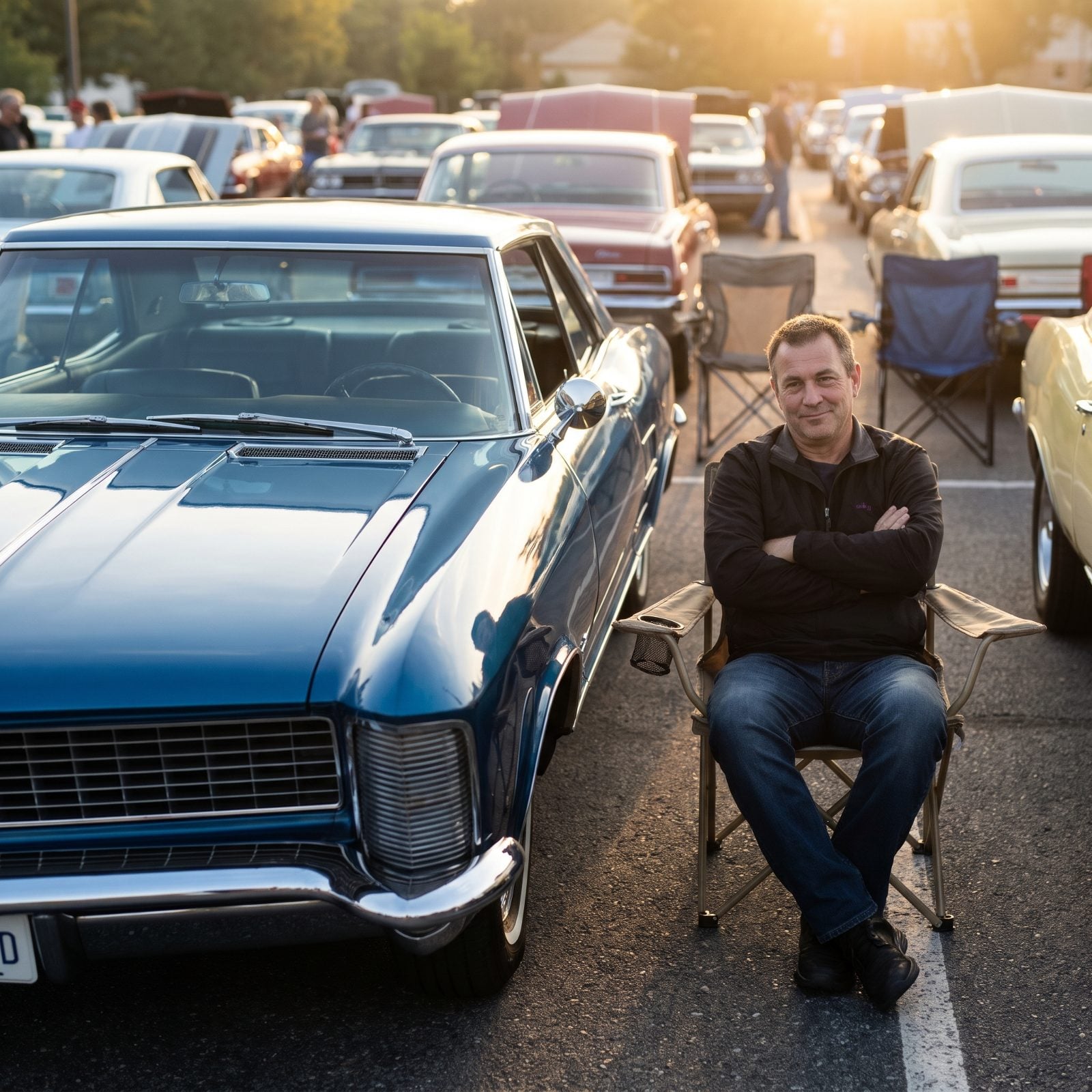
Every lot has one. The car is immaculate, the hood is down, and it stays down all night no matter how many people linger near the fender hoping. The Mystery Owner sits a few feet back in his chair, arms crossed, enjoying the small game of letting you wonder.
Maybe it’s a stock survivor with nothing to prove. Maybe there’s something wild under there he saves for the folks who ask the right way. Maybe he just likes the quiet. Whatever it is, the restraint speaks louder than any spec sheet — in a lot full of guys shouting about their engines, the one who says nothing at all makes you lean in closest.
17. The Please-Do-Not-Touch Guardian
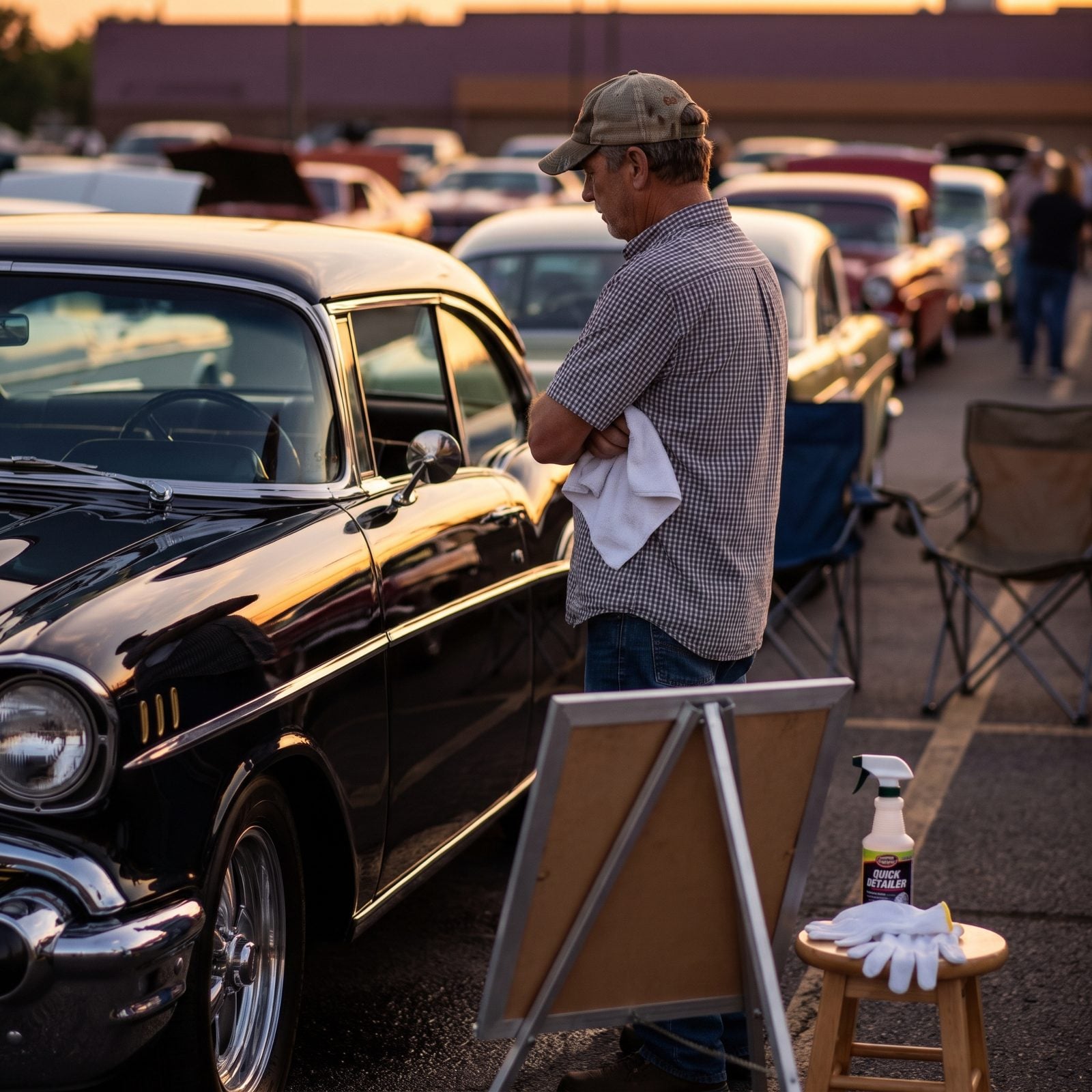
This is the guy who waxes the underside of his bumper. His car is finished to a standard most showrooms never hit, every surface built to be looked at and nothing more. You’ll know him by the microfiber cloth that never leaves his hand and the way he drifts closer whenever a stroller rolls within six feet.
His philosophy is simple. The paint is the point, fingerprints are vandalism, and while he’s not usually rude about it, the framed sign on its stand and the white gloves do the talking for him. Respect the work and he’ll talk to you for an hour. Set a soda can on the fender and you’ve made an enemy for life.
16. The Let-the-Kids-Sit-In-It Owner
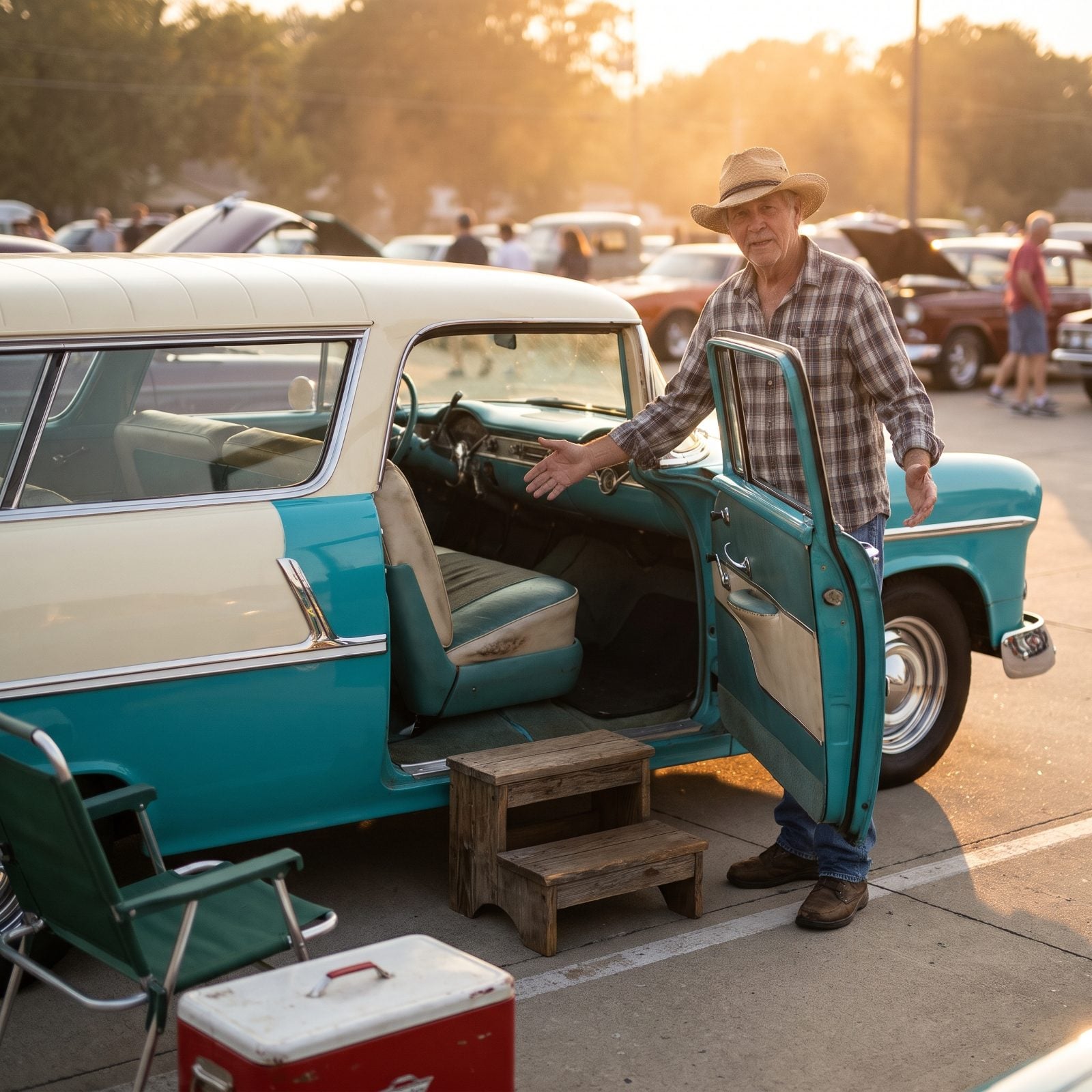
The exact opposite of the guardian, and often parked right next to him by pure comedic timing. His door is open before you ask. The bench seat has crumbs in it and he couldn’t care less.
He keeps the car for the memory it hands out. He wants a six-year-old gripping that big thin steering wheel, making engine noises, the same way he did in his grandfather’s car — and he figures a machine nobody ever climbs into is just furniture with chrome trim.
Patina, to him, is proof the thing got used. A little wear is a feature. He’ll tell you the vinyl was replaced once already and he’ll replace it again in twenty years, no big deal.
15. The Story-for-Every-Scratch Owner
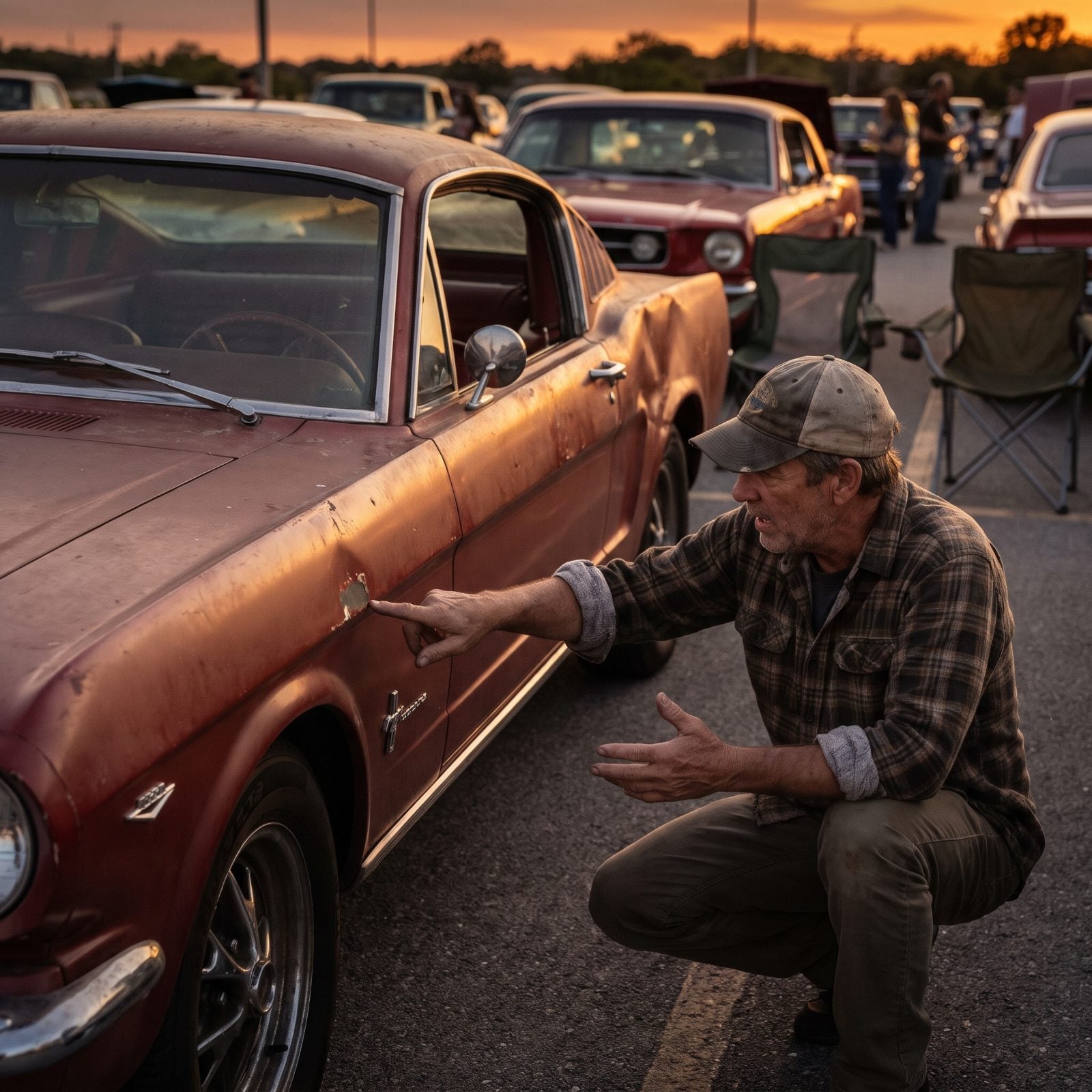
Ask him about the dent in the quarter panel and settle in. Every mark on this car is a chapter, and he narrates them like a man reading from a book he wrote himself.
The chip by the headlight came off a gravel road in 1979. That faded spot on the trunk is where his brother leaned a ladder one summer and never heard the end of it. He’ll never fix any of it, because fixing it would wipe out the story, and the scratches are the whole reason the car means anything to him.
A restored car looks like everyone else’s. A scarred one looks like your life.
You either find him charming or you glance at your watch. There’s no in between. I happen to find him the best company in the lot.
14. The Binder-of-Receipts Archivist
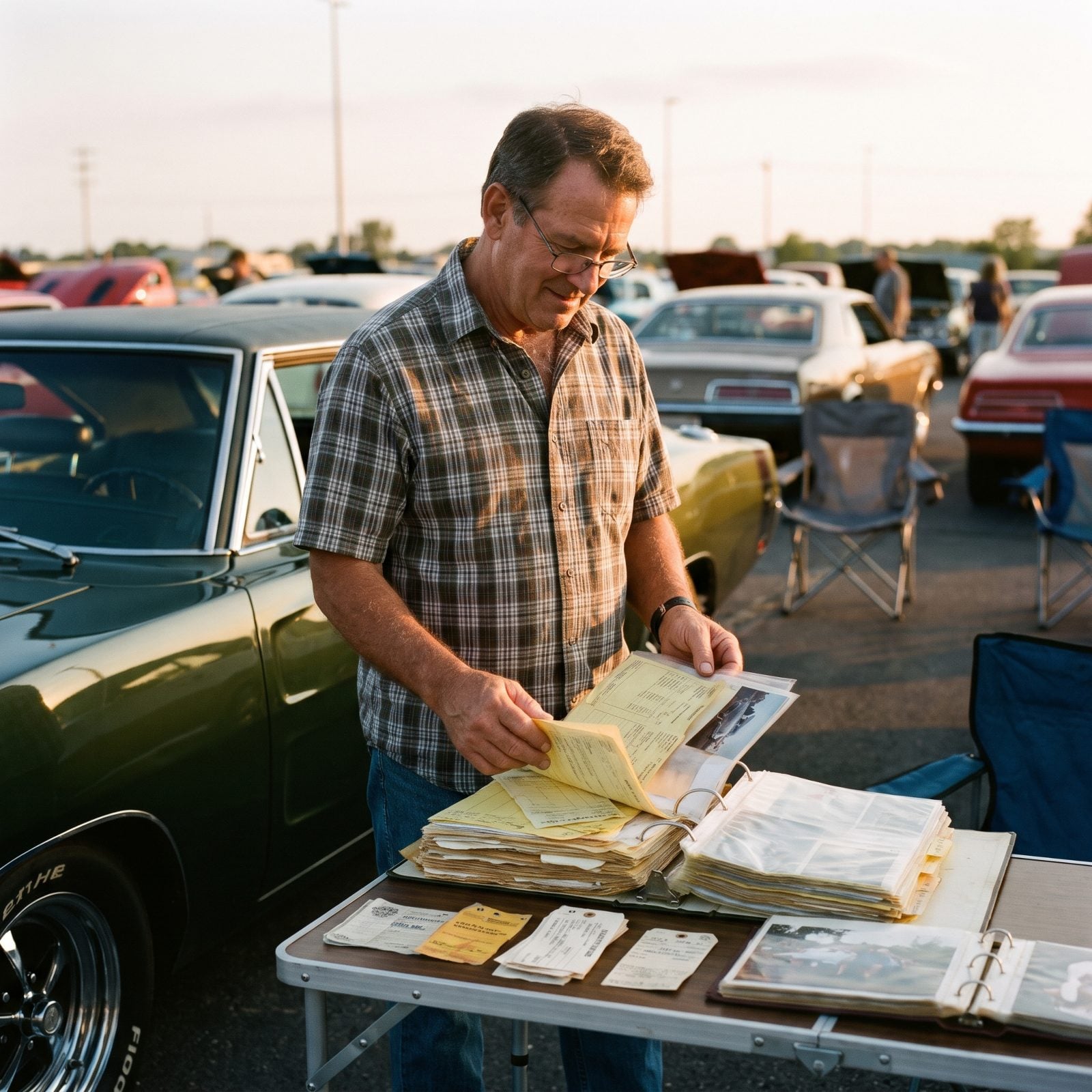
While the story owner keeps his history in his head, this one keeps it in a binder thicker than a phone book. Every bolt, every rebuild, every gas-station receipt from the restoration lives in a plastic sleeve, filed in order.
He can tell you the exact day the engine came out and what the machine shop charged to bore it. Matching numbers, original build sheet, the window sticker if he’s lucky enough to have it. Documentation is his love language.
He’s not showing off, exactly. He just believes a car’s history deserves to outlive it. And honestly, when he eventually sells, the next owner will thank him.
13. The Trunk-Full-of-Memorabilia Curator
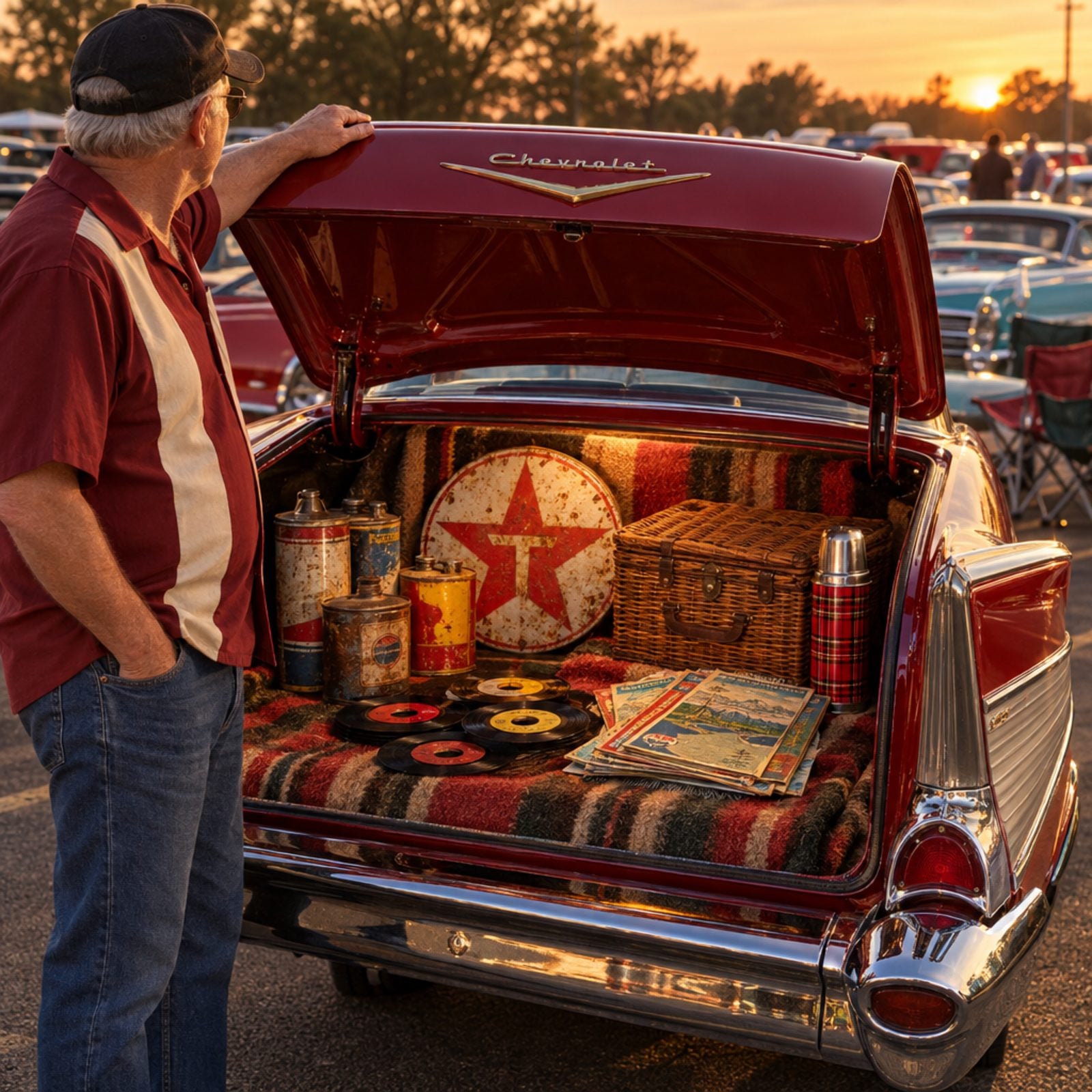
Pop quiz. What’s in his trunk? Not a spare tire. A whole diorama.
This owner treats the open trunk like a museum vitrine. Old oil cans sorted by brand, a reproduction service-station sign, 45s from the year the car was built, a wool picnic blanket spread out just so. The car is almost a backdrop for the collection.
What he’s really after is a feeling, not just a vehicle. The whole era matters to him — the diners, the drive-ins, the two-cent stamps — and the car is the time machine that carries all of it. People crowd around his trunk more than his engine, and he loves that.
12. The Custom-License-Plate Comedian
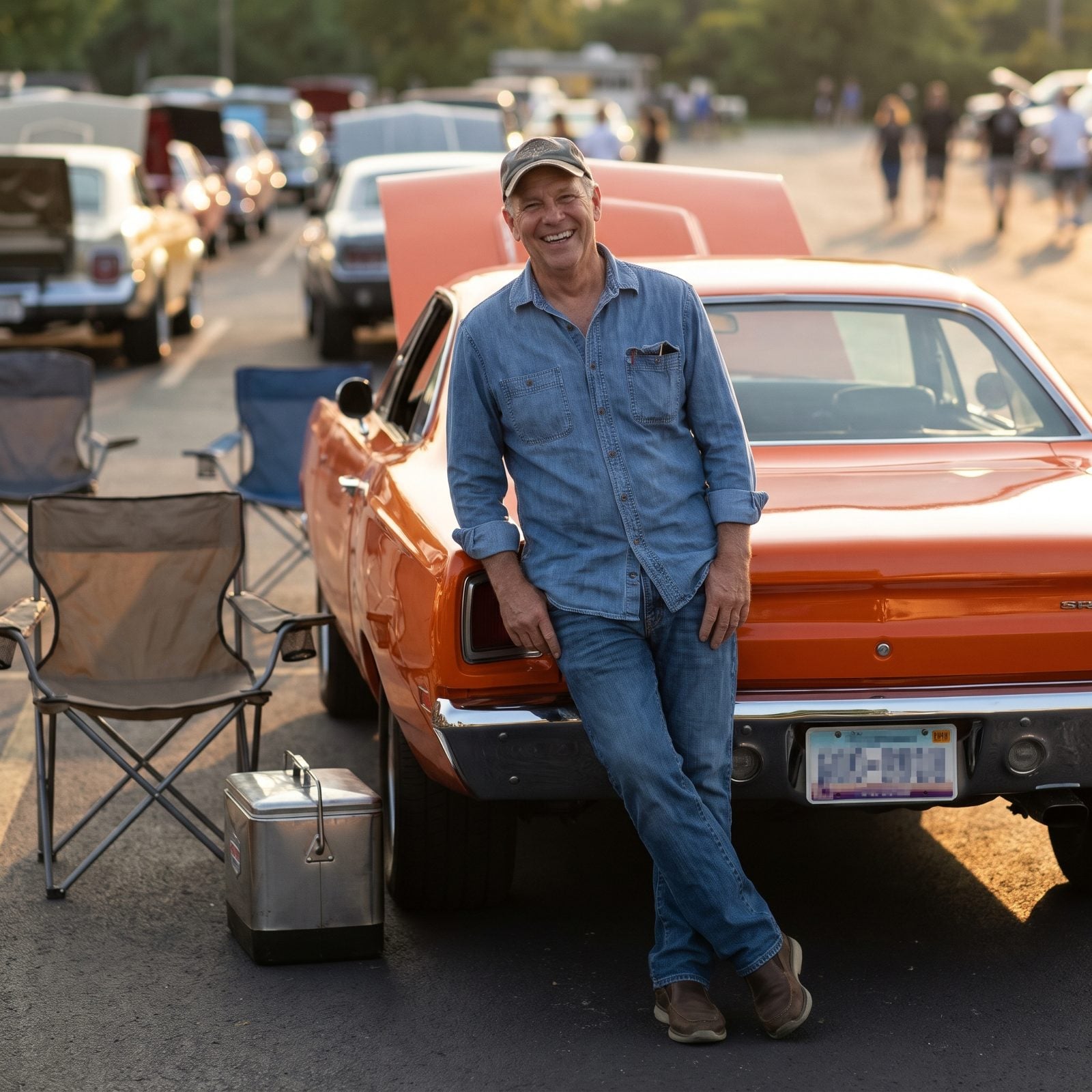
You’ll hear the chuckles before you reach the car. There’s always a knot of people crowding around his license plate, trying to decode the riddle.
His whole personality lives on a six-by-twelve metal rectangle. A pun about his horsepower, a jab at his wife’s patience, a groaner about his retirement fund disappearing into carburetors. He spent weeks picking those letters and he’ll swear it was the best money he ever handed the DMV.
The car might be ordinary. The plate never is. He understands that a cruise night is theater, and he showed up to do a bit.
11. The Engine-Start Demonstrator
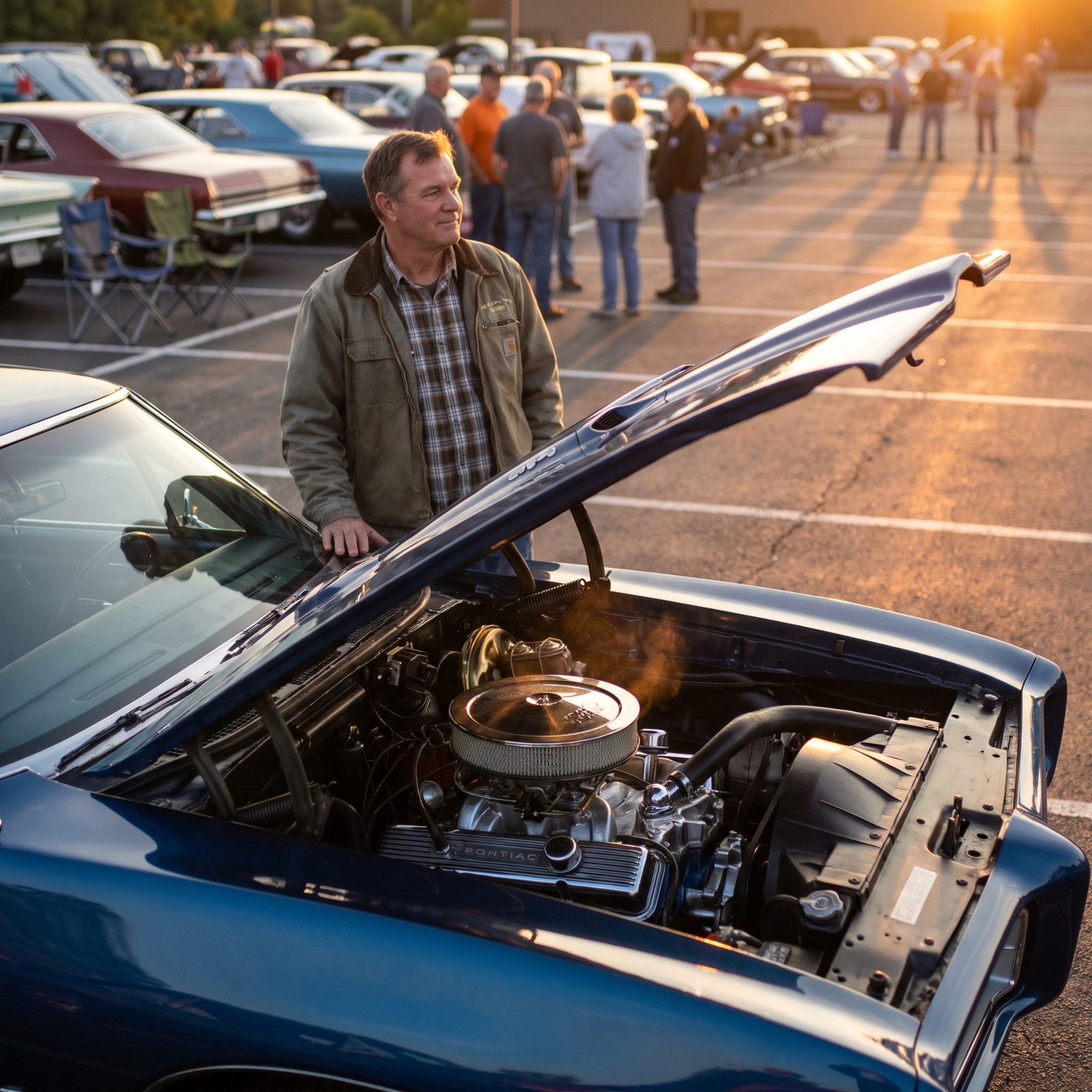
He waits for an audience, and then he reaches for the key. The hood’s been up for an hour, the engine detailed to jewelry standards, and all of it is just prologue to the moment he fires it.
That first cold start is his encore. A lumpy idle from a big cam, a little shudder through the fenders, a puff out the pipes. He watches your face instead of the engine, because your reaction is what he came for.
He could leave it running, but he won’t. The drama lives in the turn of the key, the catch, the settle into a rough idle. Some guys collect cars. This one collects that half-second of surprise on a stranger’s face.
10. The Exhaust-Note Connoisseur
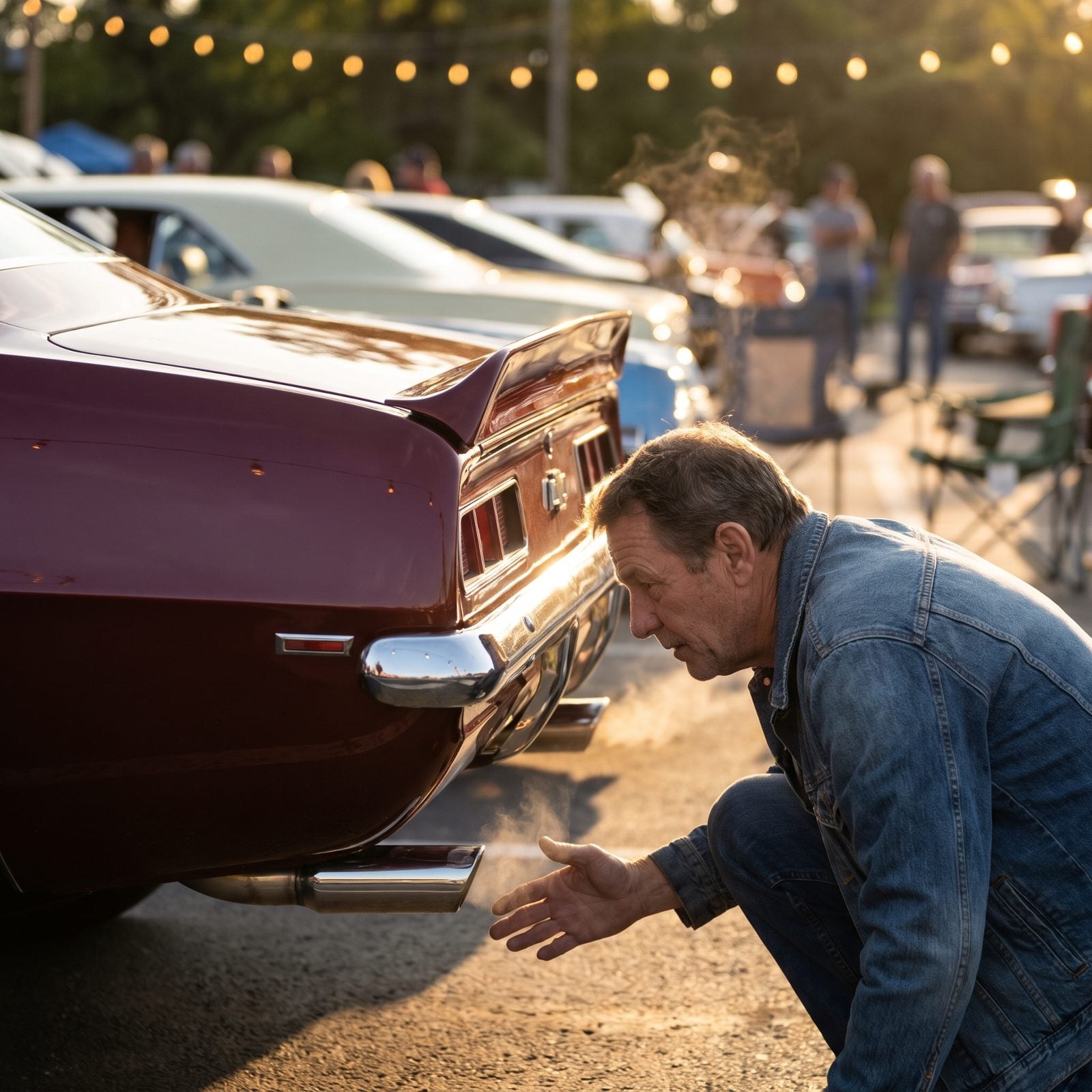
He can name your mufflers by ear. Close his eyes, let him listen to your idle, and he’ll tell you whether you’re running glasspacks or chambered pipes and whether your cam is a hair hotter than stock.
Sound is his entire hobby. He spent real money chasing one specific rumble, swapped mufflers three times to nail the tone, and he judges every passing car by its note alone. A whisper-quiet restoration bores him stiff. A throaty small-block makes his whole night.
9. The Horsepower Bench-Racer
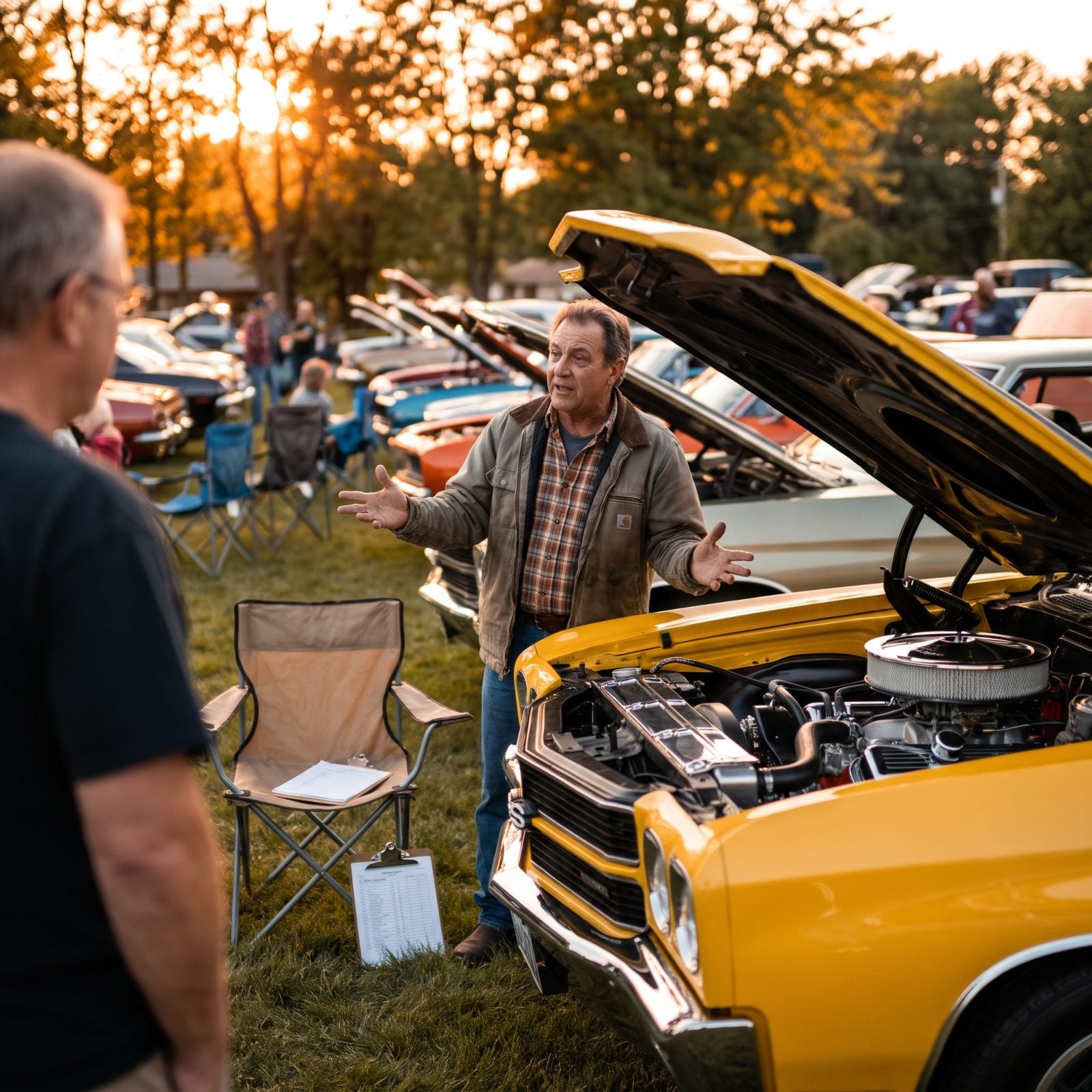
The quarter-mile times he quotes all happened a long time ago, and they get a tenth quicker every season. That’s the fun of it.
He talks in numbers — compression ratios, cubic inches, rear-end gears, dyno pulls he swears were real. Nobody in the lot has a slip to prove anything, which is exactly the point. The racing happens in the lawn chairs now, and the stories are undefeated.
Don’t fact-check him. It’s rude and it misses the whole spirit. He’s not lying, not really. He’s keeping a younger version of himself alive, the one who lined up at a stoplight and meant it. Nod, ask about the carb, and let the man cook.
8. The Trailered Show-Car Owner
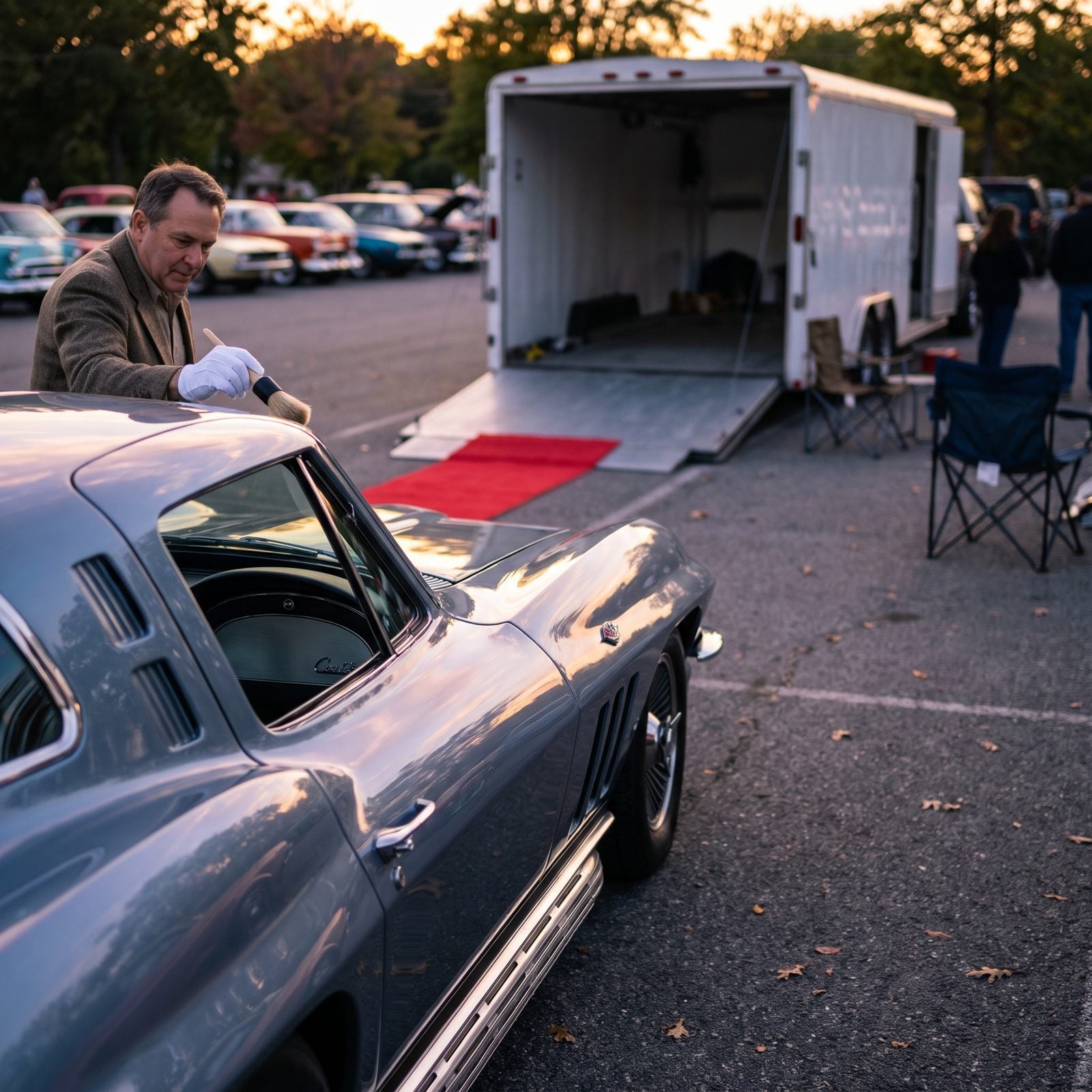
He didn’t drive here. He delivered it. The enclosed trailer parked at the far edge of the lot is the first clue, and the spotless tires that have clearly never met rain are the second.
His car is a concours-level build, finished to a level that would be foolish to risk on a real road — no stone chips, no bug splatter, nothing left to chance. For him the thing isn’t transportation at all. It’s a sculpture that happens to have an engine.
The purists needle him for it, grumbling that a car should be driven. Maybe so. But stand in front of that paint and the argument gets a lot quieter. Some people build cars to use and some build them to perfect, and the trailer is just honesty about which camp he’s in. Go look closely while he’s not hovering.
7. The Daily-Driven Classic Owner
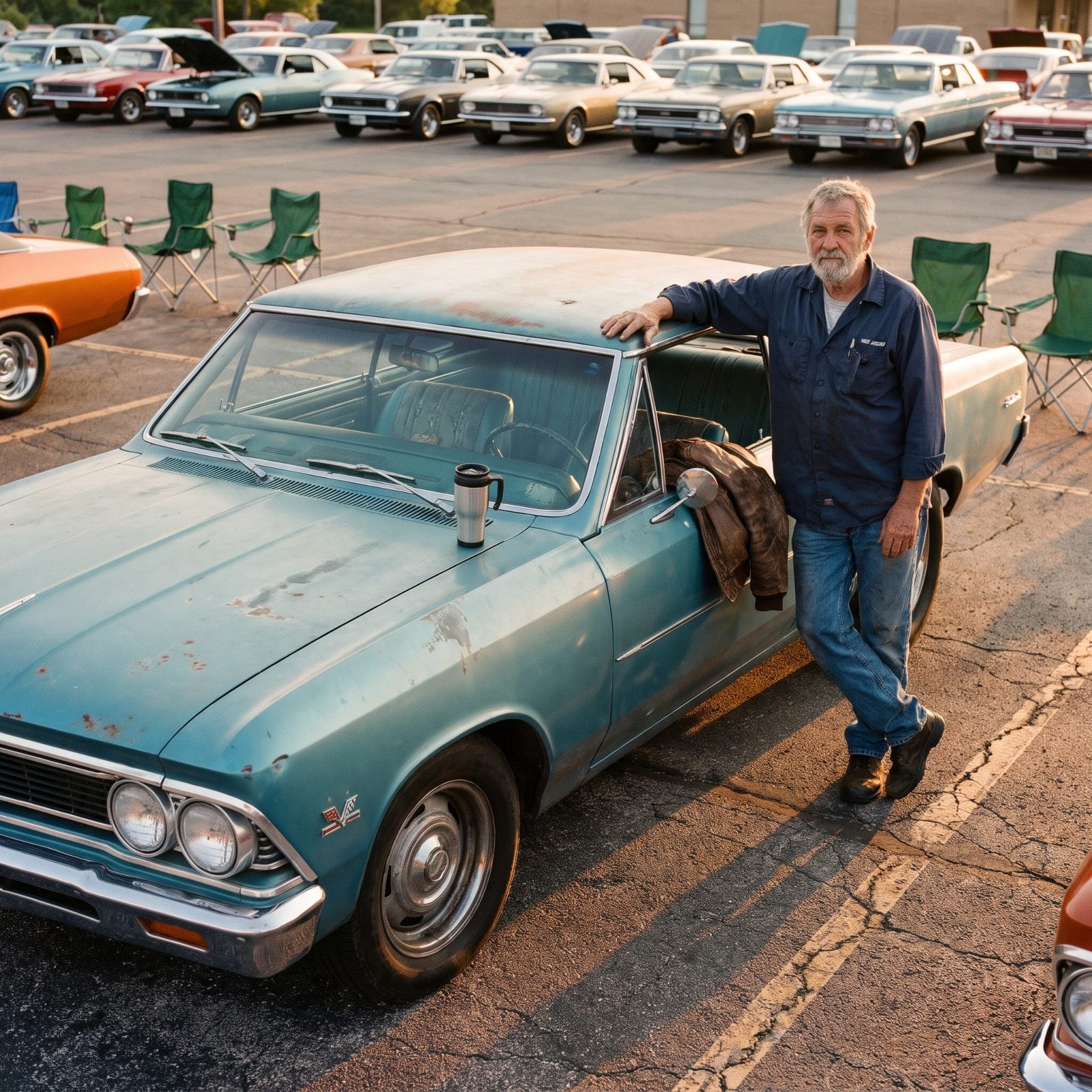
You’ll spot this one by the bugs on the windshield. The car got here under its own power, from across town, not off a trailer, and it’ll leave the same way. No microfiber towels in the trunk — just a gas receipt and a parking pass.
These folks figure a classic earns its keep by being driven. The seats are worn into their shape, the odometer rolled over decades ago and kept right on going. Ask one and they’ll tell you the pleasure isn’t in the showing. It’s in the Tuesday grocery run with 350 cubic inches under the hood.
6. The Rain-or-Shine Road Warrior
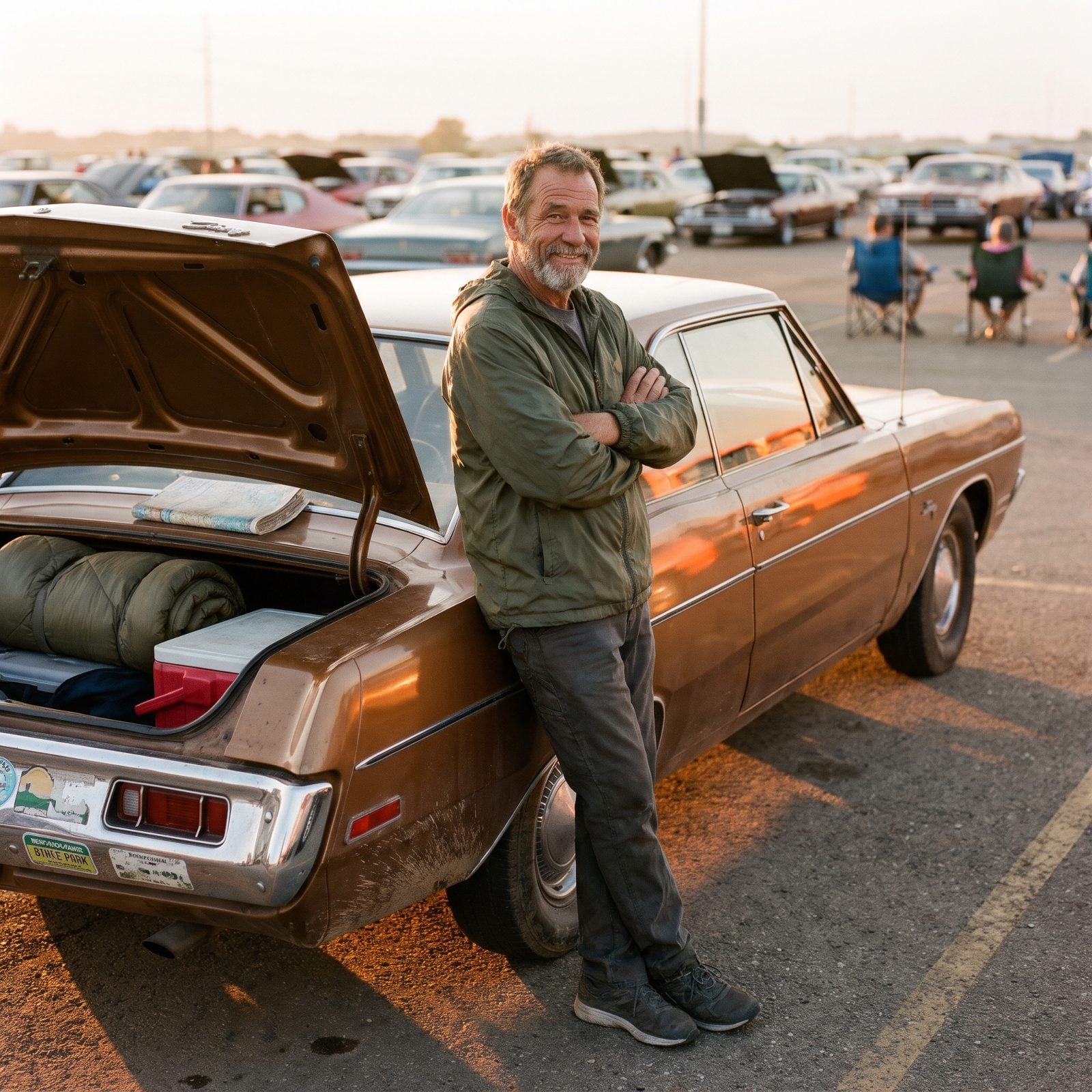
Mileage doesn’t scare this one. It’s a trophy.
While half the lot frets over a pollen dusting ruining a wax job, the road warrior just rolled in from four states away and plans to be three states further by Sunday — the trunk packed with a sleeping bag, a tool roll, and spare belts in case. Love bugs and tar on the rockers aren’t damage. They’re receipts.
The thinking here is simple and a little defiant: a car built in Detroit to cross a continent ought to cross a continent. They’ll quote you real numbers on a slant-six’s reliability and mean every word. Want to know whether a particular model can actually take abuse? Skip the forums and find the person who’s done 80,000 miles in one. They’ll tell you where it hurts.
5. The Parts-Swap Networker
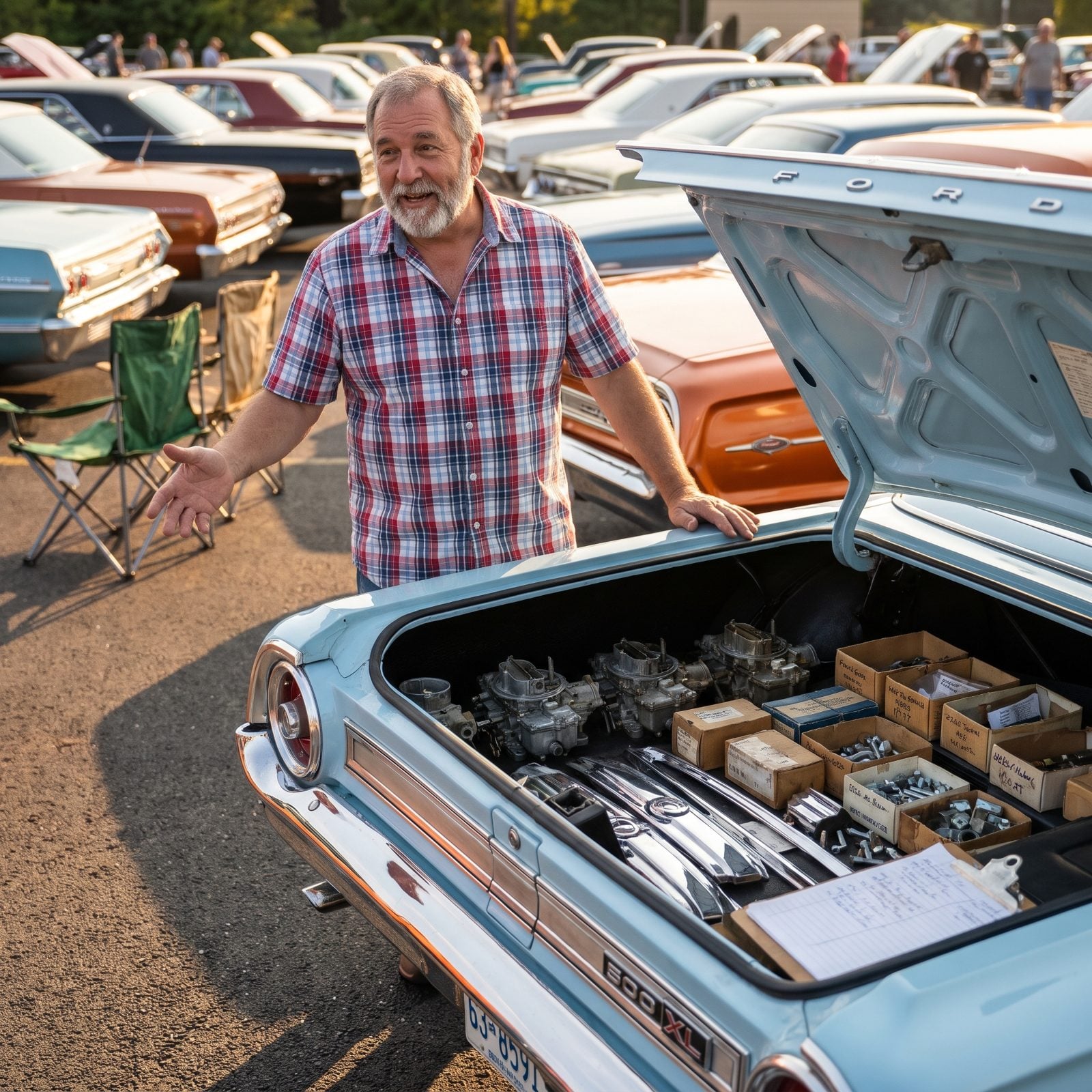
This person knows where every spare water pump within fifty miles is sitting. The trunk isn’t for groceries. Pull it open and you’ll find a correct-date carburetor, a box of trim clips, maybe a left-side taillight bezel somebody three towns over has been hunting for two years.
The real currency at cruise night isn’t cash — it’s knowing who has what, and the networker trades in it fluently. They remember your project car from last August and ask how the rebuild’s going before you’ve even said hello.
4. The Shade-Tree Troubleshooter
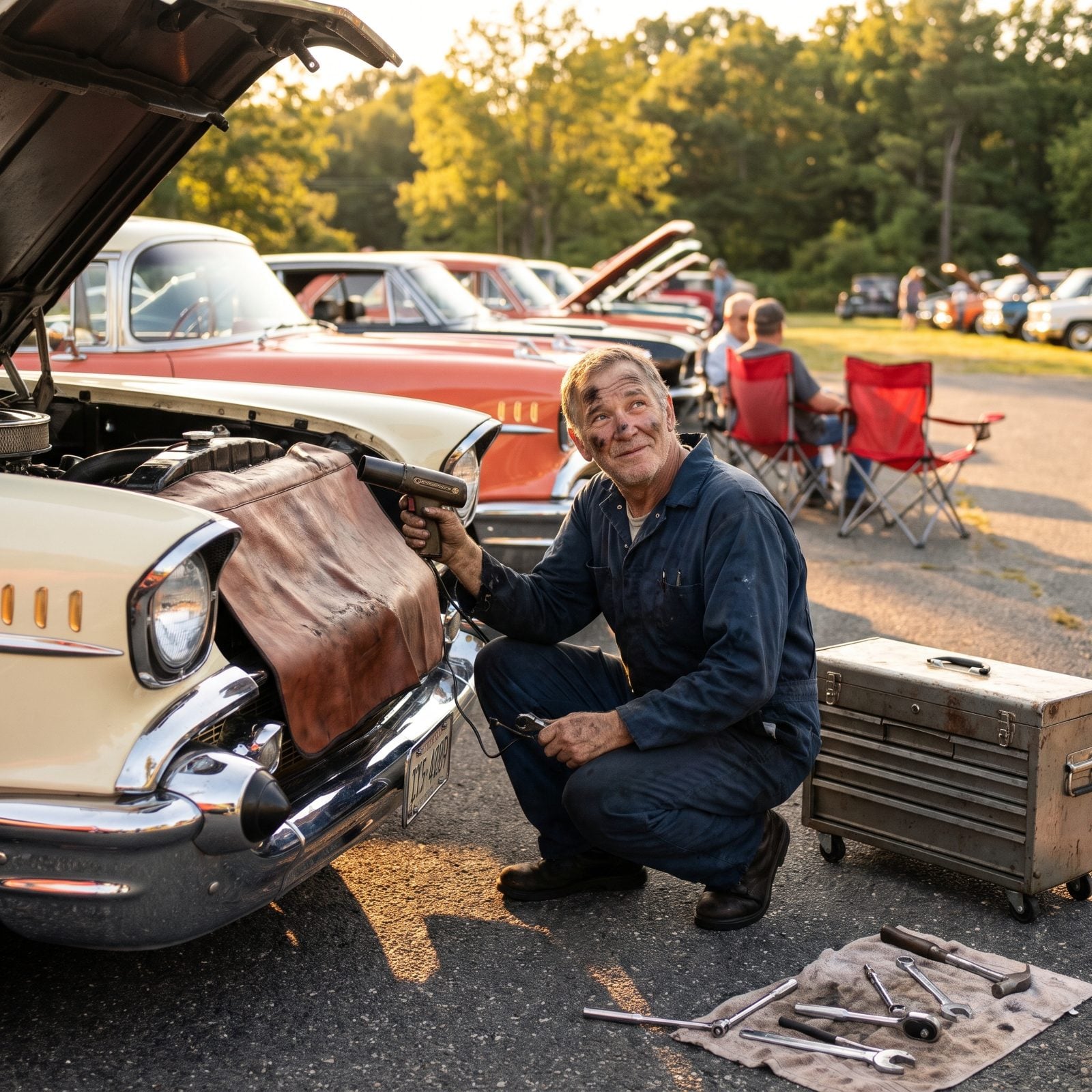
Somebody’s car won’t start three spaces down, and before anyone’s thought to call a tow, this one’s already got the hood up.
The shade-tree troubleshooter fixes by feel and sound. No scan tool, no laptop. A finger on the fuel line, an ear near the distributor, and a diagnosis delivered with the certainty of a man who’s been wrong enough times to know. They carry a timing light and a feeler gauge the way other people carry a phone.
Their whole leaning is keep it running over make it perfect. A little overspray, a repair done at 11pm the night before a drive — none of that bothers them. Function first. They’ve got no patience for a car that glitters and then strands you on the shoulder. And honestly? I’ve learned more leaning over a fender next to one of these people than I ever did reading a manual.
3. The Young Owner Keeping Old Iron Alive
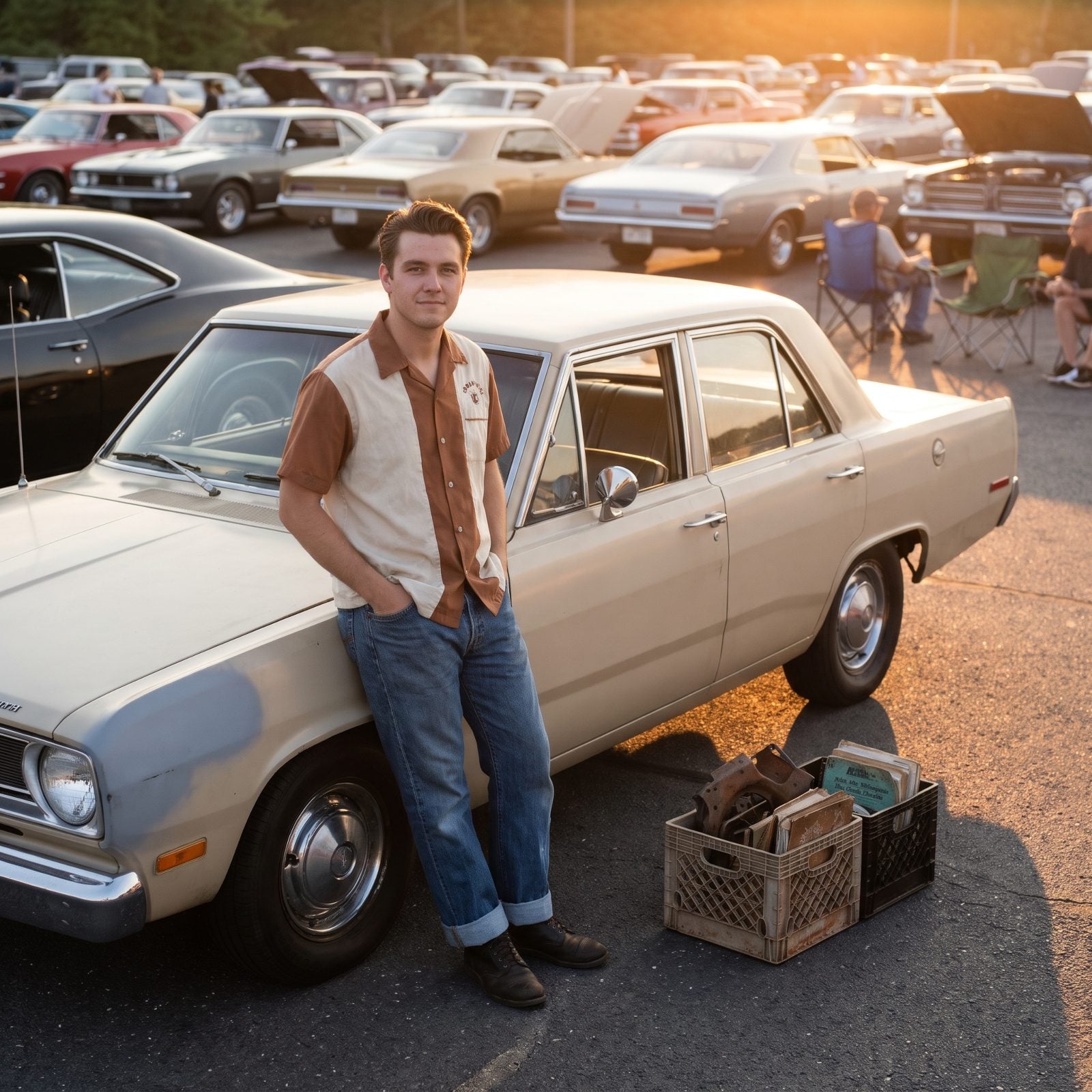
The car cost less than the engine swap everyone else did. That’s the point.
This owner found the one old sedan nobody wanted — a Valiant, a Falcon, a four-door somebody’s grandfather drove to church — and saved it on a budget measured in overtime shifts and swap-meet luck. The paint might still wear primer on one fender, the hubcaps don’t match, but it runs, it’s theirs, and it’s getting better one paycheck at a time.
They keep whole models breathing that the big-money crowd skipped right past. And they’re the future of this hobby whether the lot wants to admit it or not.
2. The Just-One-More-Car Dreamer
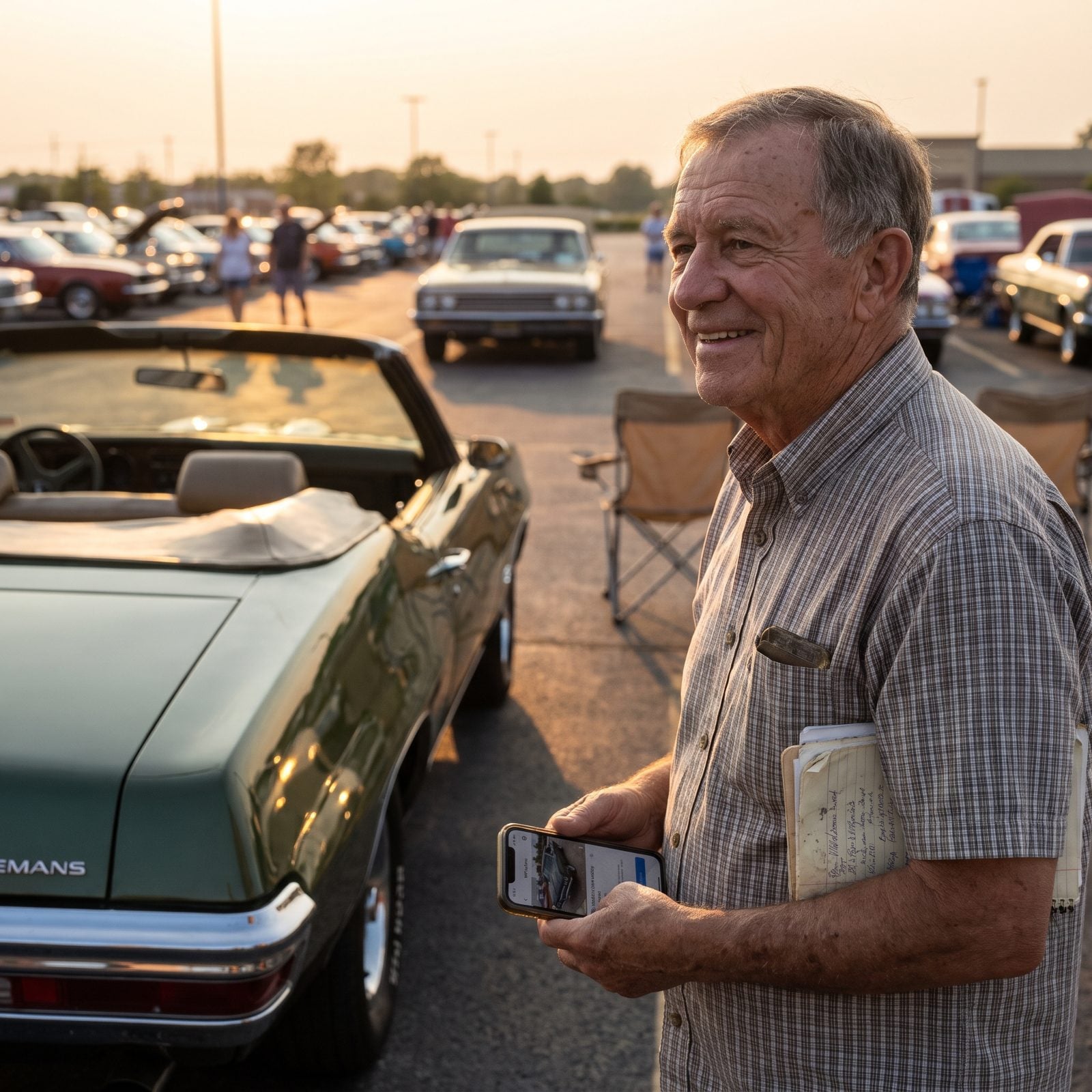
Ask this one how many cars they own and watch the pause. It’s never a round number, and it’s never the final number.
The dreamer already has a nice car. A good car. The car they drove tonight, in fact. But their eyes keep sliding across the lot toward the one project they’ve been meaning to pull the trigger on — a barn-find rumor they’re chasing, a for-sale sign two towns over they’ve driven past four times now.
The garage is full, the driveway’s full, and somehow there’s always room for one more.
Their spouse has heard “this is the last one” more times than either of them can count. It’s never the last one. The hunt is half the joy, and a finished collection would feel like a death to them.
1. The Original Owner With New-Car Stories
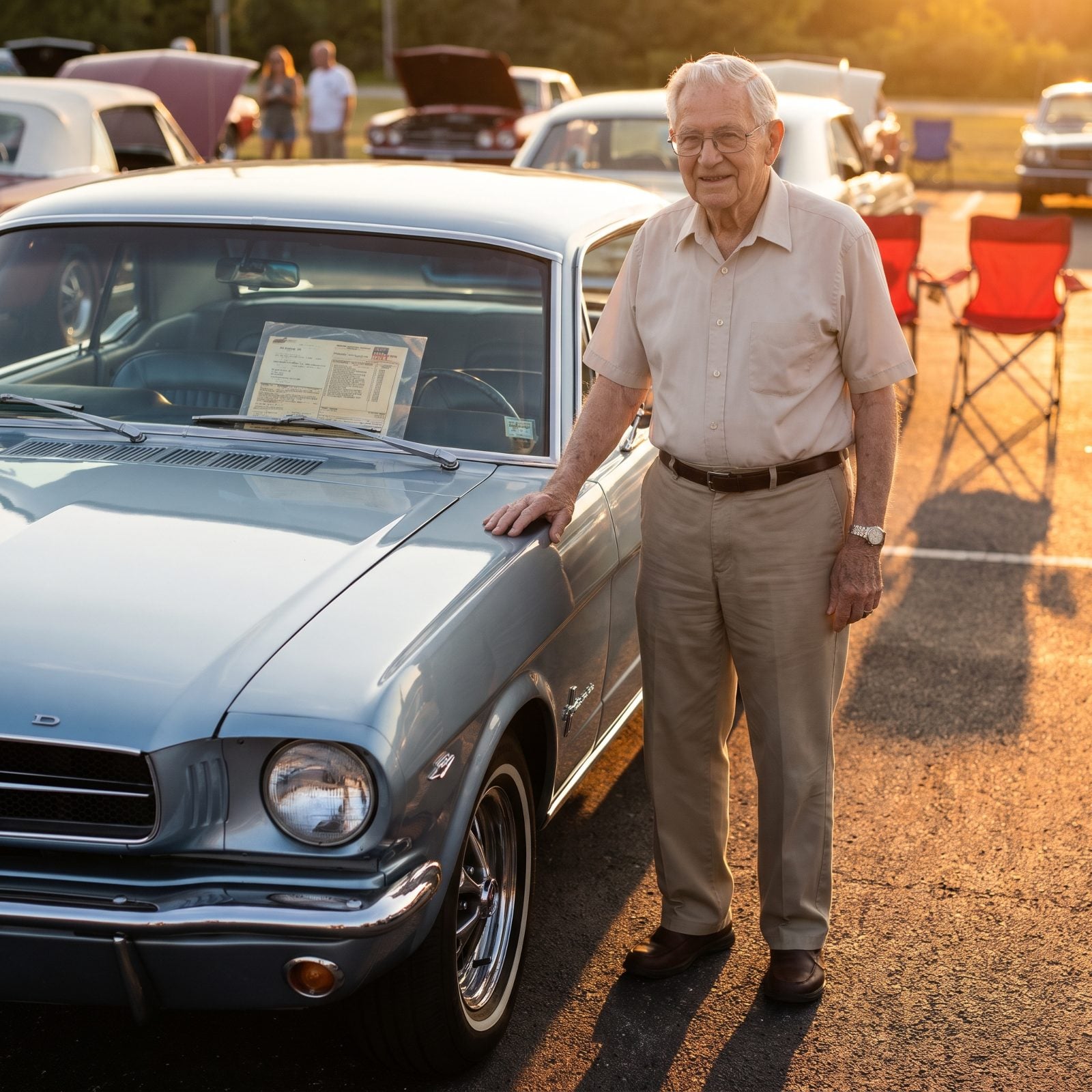
This car has had exactly one owner since the day it rolled off the dealer lot, and that owner is standing right next to it.
No restoration story here, because nothing ever needed restoring. He kept the window sticker, the first oil-change receipt, and the memory of what the salesman said. He can tell you what he paid, what the trade-in was worth, and where he drove it home from that afternoon.
These are the quiet ones. They don’t modify, they don’t chase trophies — they preserve, and that’s the whole of it. The car isn’t a project or an investment to them. It’s a time machine with their own life riding around inside it. Everything on it is correct because it never left.