
There’s a sound every show veteran dreads: the dull thump of a belt buckle grazing a fender, or the scrape of a backpack strap on a quarter panel. The owner hears it from across the lawn before you even know what you did. Judged shows, cruise-ins, concours lawns, indoor exhibitions — they all run on a code nobody prints on the entry ticket. Break one rule and you’ll learn it fast, usually from a man who spent four hundred hours wet-sanding a hood. These are the unwritten ones. Learn them before the owner has to teach you.
Please note that some of the images in this article were created with the assistance of AI.
46. Never Touch a Display Car Without Permission
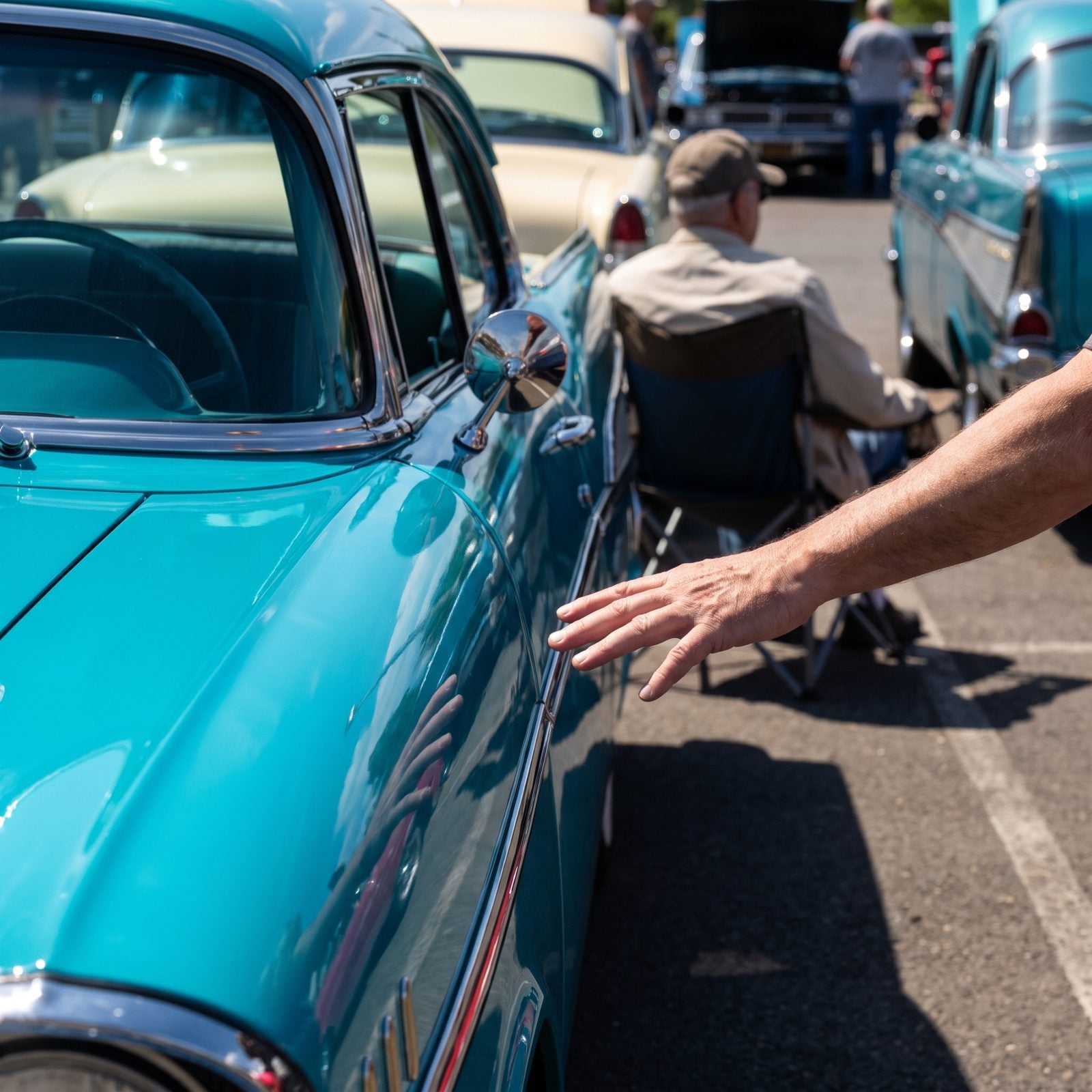
The paint you’re admiring took weeks. Base coat, color, three coats of clear, then endless wet-sanding and buffing until it throws reflections back like a mirror. And your fingertip carries skin oil that etches into that finish and shows up under the next judge’s light.
So you ask. Every time. Even if the owner is standing right there smiling, you say the words out loud: mind if I take a closer look? Most will say yes and walk you around it themselves. The ones who say no have a reason, and that reason is none of your business.
Even for something as small as moving a dash placard before a shot, a car show photographer says “Don’t do it yourself! Ask the owner before touching any part of his or her car. It’s best to have them do it, so ask politely.”
45. Do Not Lean Against a Car for a Photo
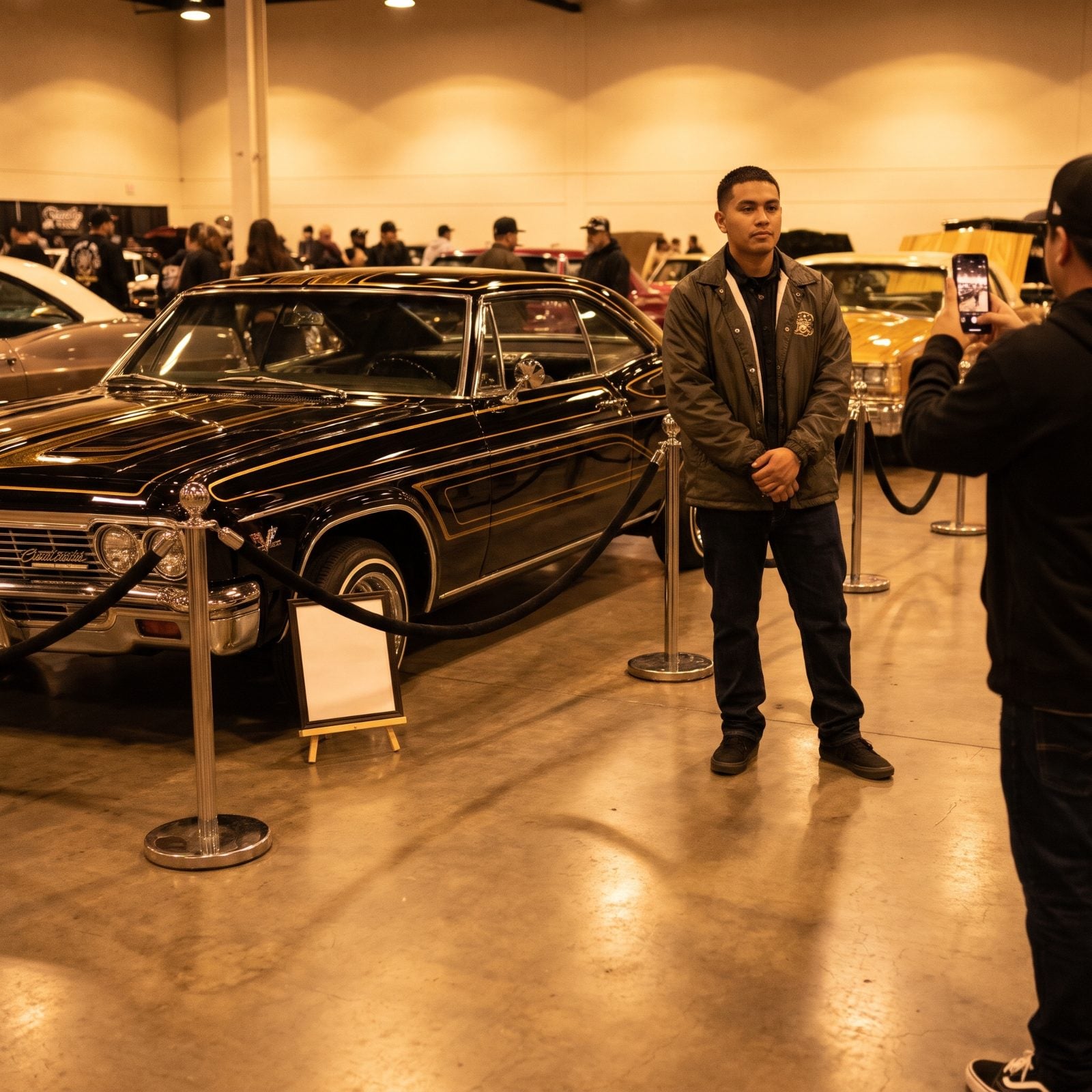
You want the photo. Everybody wants the photo. But the second your hip, your back, or your palm meets that fender, you’ve ground grit straight into the clear coat and probably left a smudge the owner will be wiping off at sundown.
Stand beside the car, not on it. A good shot of you next to a ’69 Camaro reads better anyway, because the car fills the frame instead of being squashed under your elbow.
What Our Readers Say
- Jalopy Talk readers give car show and lot photos more hearts than the other images in the same articles, 77% versus 72%.
- Restored, concours-condition cars also get more hearts from our readers than other images in the same articles, 82% versus 76%.
From Jalopy Talk reader polls and votes.
44. Never Open a Door, Hood, or Trunk Yourself
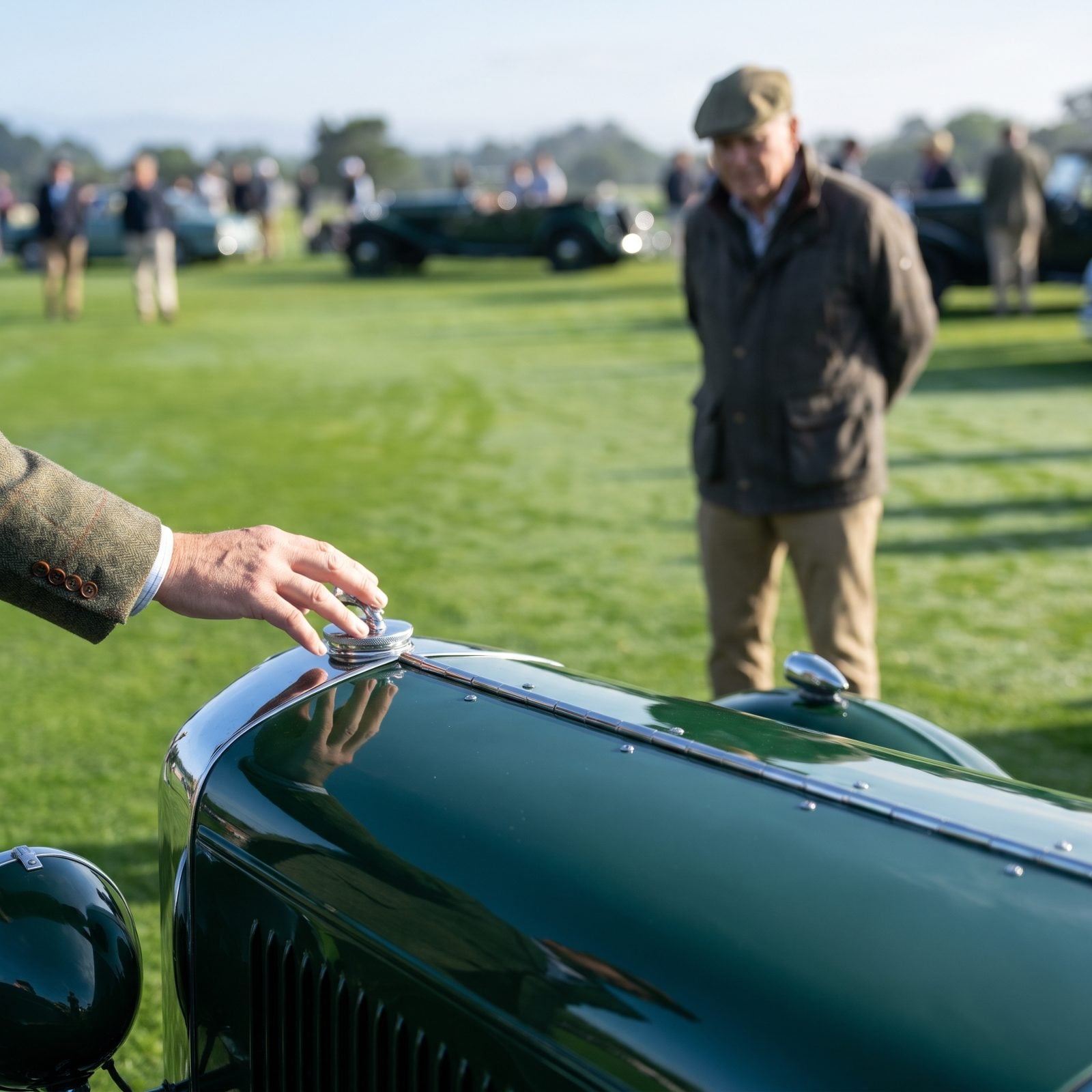
That hood looks heavy because it is, and some of them are propped on a single rod the owner positioned just so. Yank it up wrong and you can crease the metal, pop a prop, or chip the paint under the lip. Door hinges on old cars sag; swing one too far and you stress a check strap that costs real money to replace.
Ask, and the owner opens it for you. He knows where the latch sticks and which panel needs two hands. Let the man who built it be the one who works it.
43. Do Not Sit in a Display Car Unless Invited
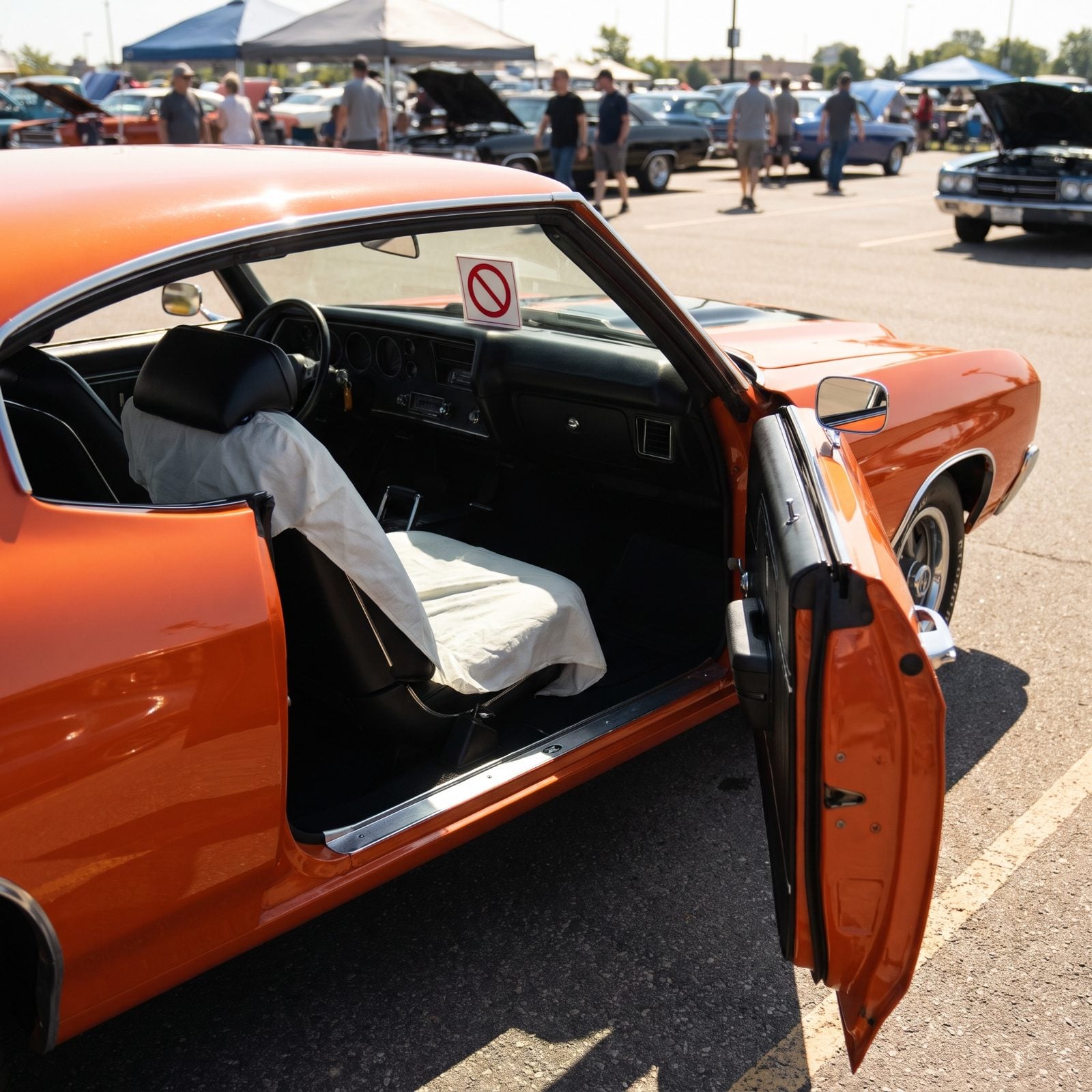
Climbing into an interior does more damage than people think. Your jeans drag across vinyl that may be original and irreplaceable, your shoes scuff the sill, and the whole seat compresses in a way the owner has to smooth out before a judge slides a white glove across it.
If a car is open and the owner waves you in, enjoy it. Grip the frame, not the steering wheel, and keep your feet off the carpet if he asks. Otherwise, admire from the door and keep your backside out of someone else’s history.
42. Never Set Drinks, Phones, Bags, or Other Items on a Car
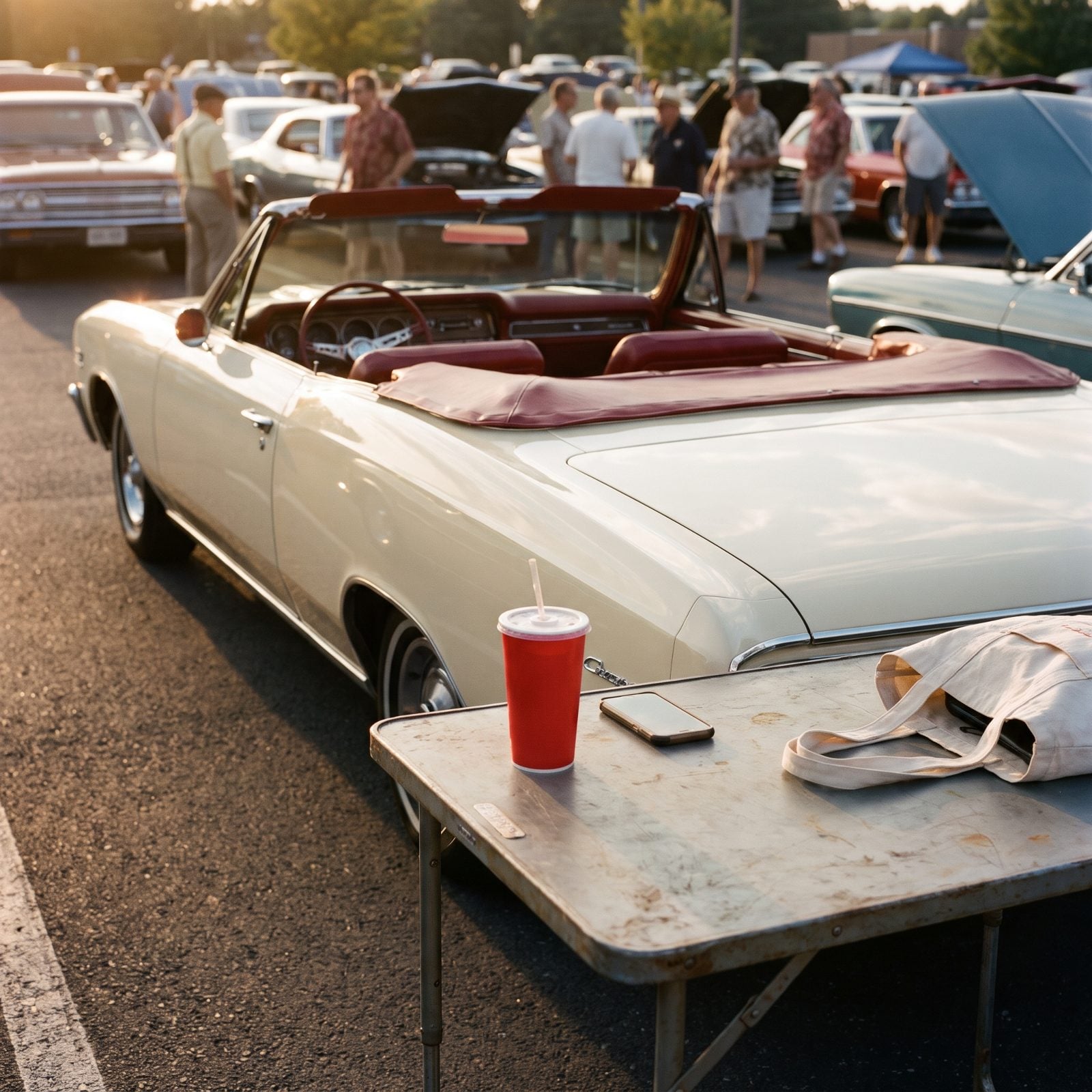
A roof or a trunk lid looks like a handy shelf. It isn’t. A sweating soda can leaves a ring, a phone’s camera bump scratches, and a bag’s zipper pull drags a line across clear coat you won’t see until the light hits it just right.
Owners bring folding tables for exactly this reason. Use them. The flat panel of someone’s restored wagon is not a countertop, no matter how level it sits.
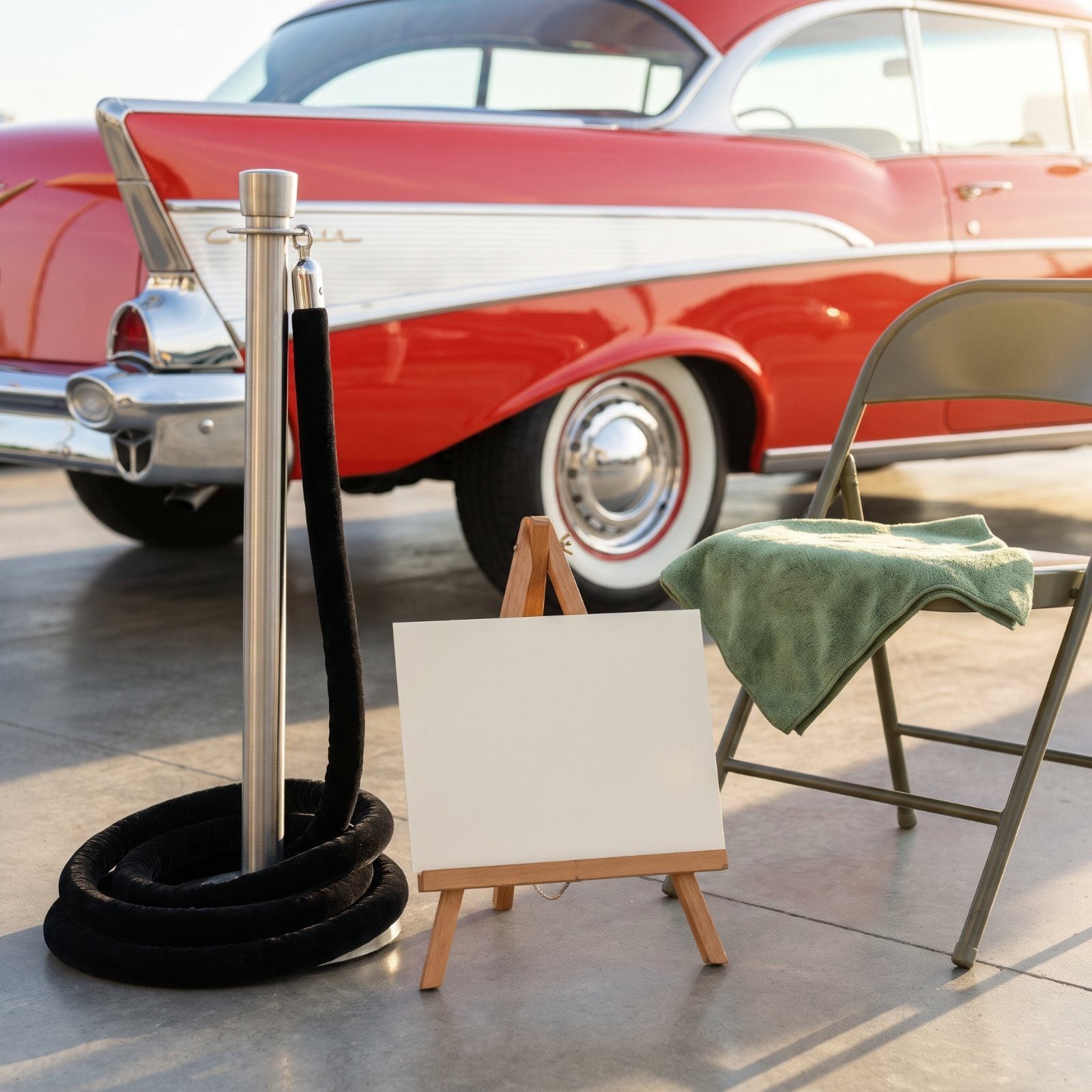
41. Respect Ropes, Stanchions, and Display Boundaries
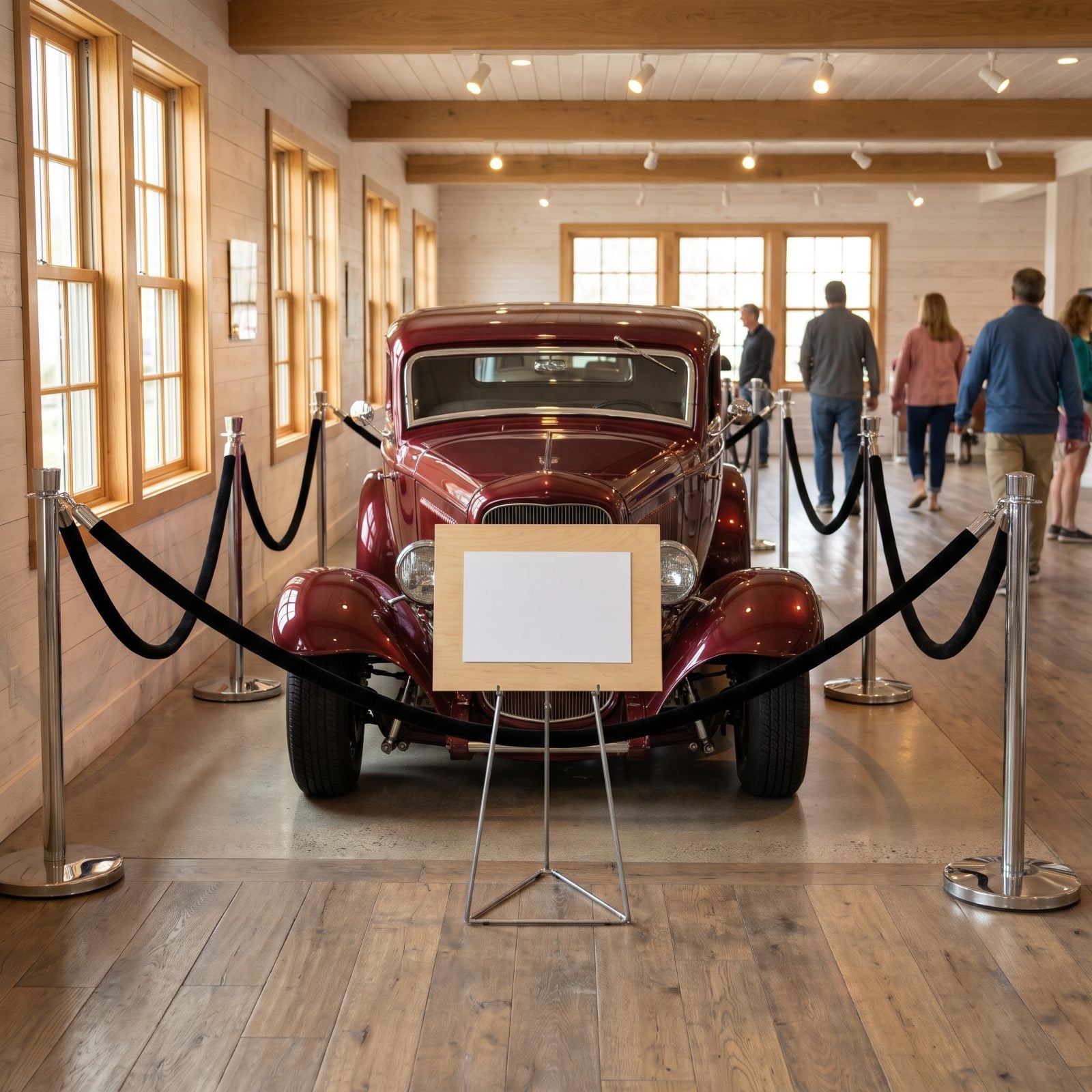
The rope isn’t decoration. Somebody measured that perimeter so a judge has room to crouch, so the paint stays out of reach, so the whole display reads as intentional. Step over it and you’ve told the owner you think the rules are for other people.
Lean your camera over the line if you must get the shot. But keep your feet planted outside it. The boundary exists because the car behind it earned a little distance.
40. Keep Children Within Arm’s Reach Around the Cars
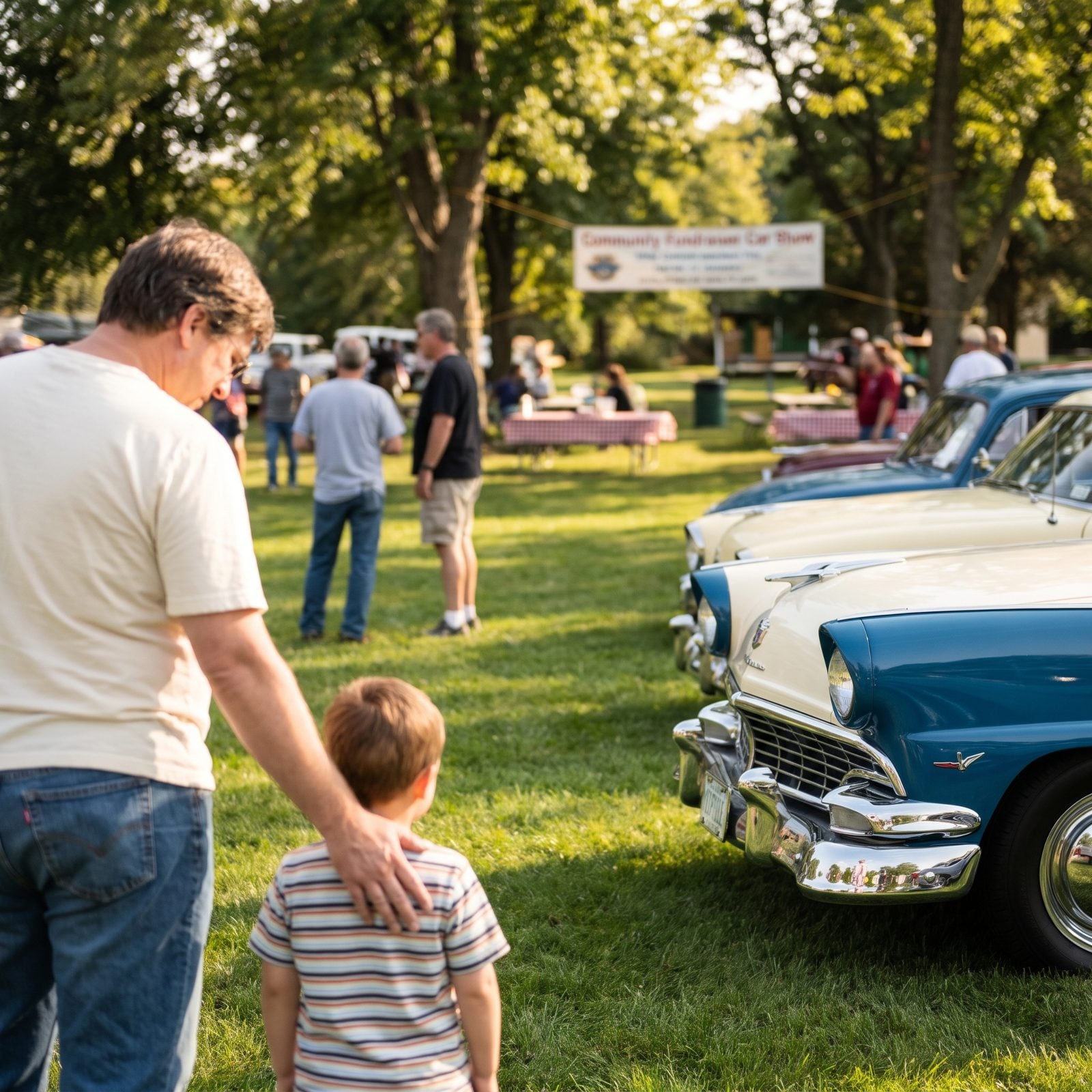
Kids love these shows, and they should. But a six-year-old’s natural instinct is to touch everything, and a running child trips into a bumper faster than any adult can react. One slipped hand on a candy-painted fender and the day turns tense.
So keep them close, hold a hand near the cars, and point out the ones whose owners invite a closer look. Most owners love showing a wide-eyed kid the engine. They just want a grown-up standing there too.
As a collector car lender puts it, “Don’t allow your children to run through the show, dashing from exhibit to exhibit, touching cars, squealing, and basically treating the car show like an amusement park.”
39. Keep Backpacks, Belt Buckles, and Metal Buttons Away From Paint
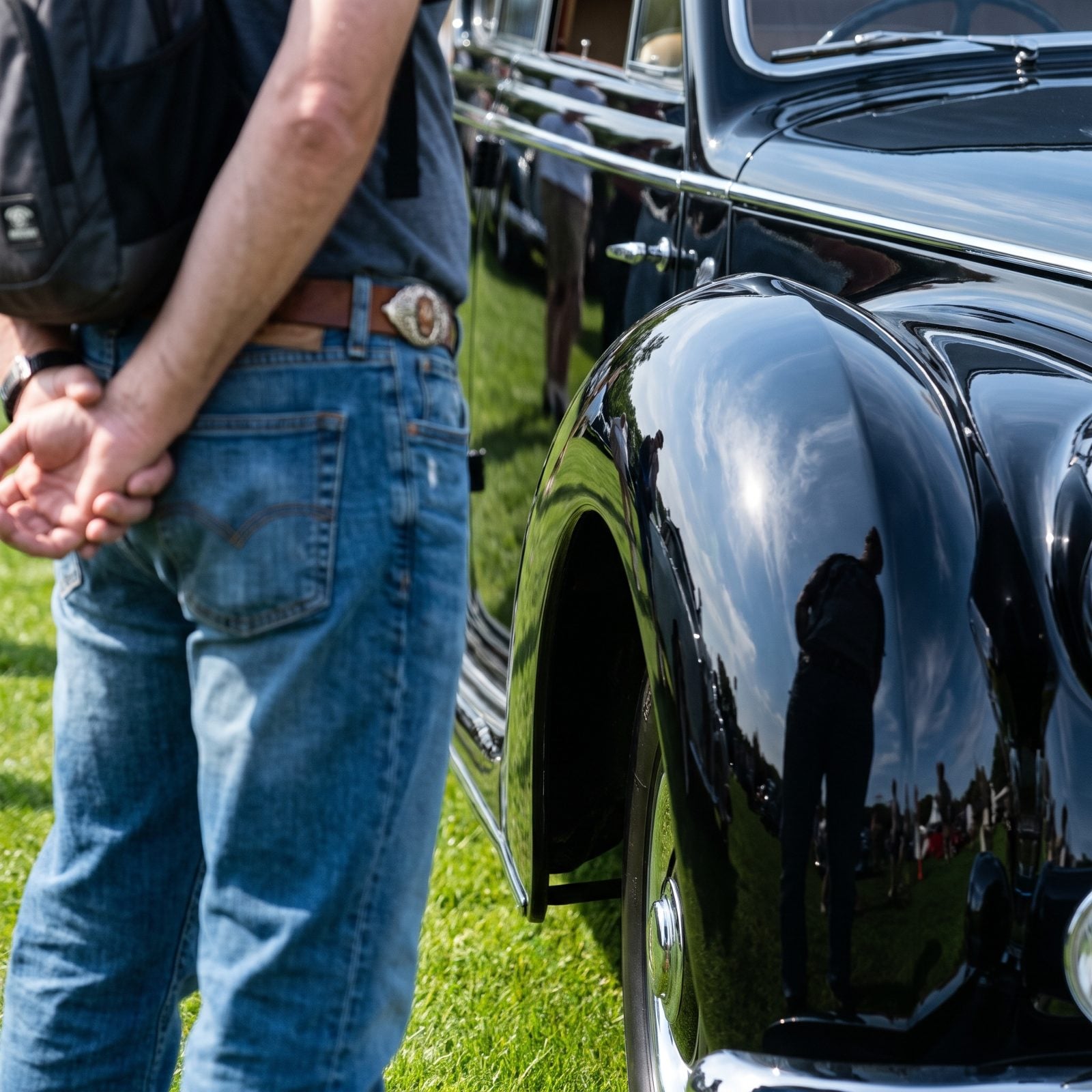
This is the silent assassin. You lean in to read a placard, your belt buckle brushes the quarter panel, and you’ve carved a scratch nobody heard. Backpacks swing when you turn. Zipper pulls and metal jacket buttons sit right at fender height.
Turn your body sideways when you get close, carry the pack on one shoulder where you can see it, and mind the hardware on your clothes. Dark cars are the worst for this. Every mark shows.
As an automotive photographer puts it, “make sure you don’t have any gear swinging around on straps or sticking out from under your arm that could ding a door panel or a grille.”
38. Close Umbrellas Before Walking Between Cars
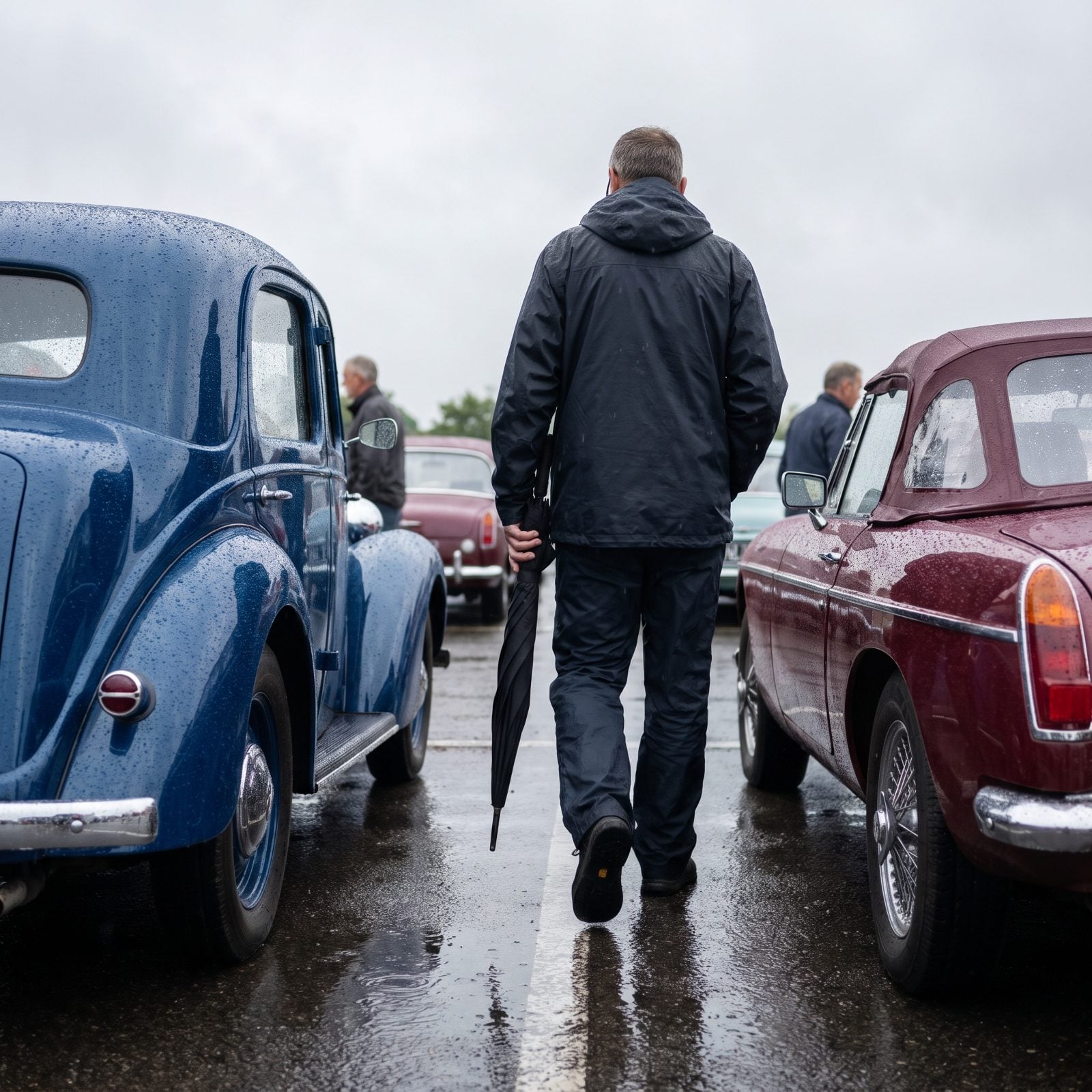
An open umbrella is wider than you think, and the spokes sit exactly at fender height. Thread one through a tight row of parked classics and you’ll clip a mirror, a door edge, or a hood lip without ever feeling it.
Collapse it the moment you step into the display area. Walk the aisle with it down and vertical. Your hair survives the drizzle just fine; a metal rib dragging across someone’s paint does not.
37. Never Smoke or Vape Beside a Show Car
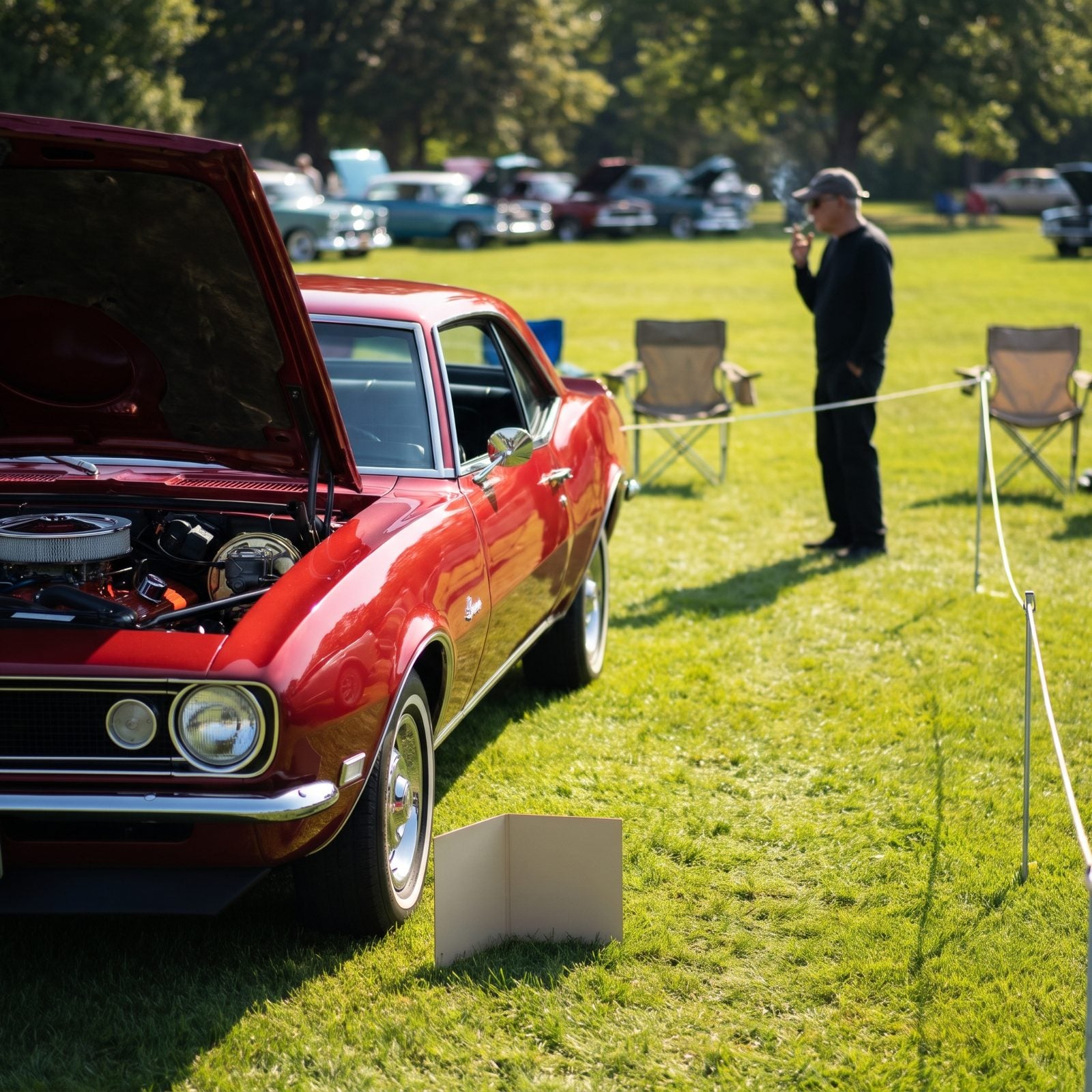
Smoke gets into fabric, lands on fresh wax, and leaves a smell nobody wants baked into their upholstery. Some fellow spent all Saturday buffing that paint by hand, and the last thing it needs is a cloud of vapor settling onto a wet-look clearcoat.
Walk a good distance away, downwind if you can manage it. This isn’t about your habit. It’s about the hours somebody poured into a finish you could dull in a second.
36. Leave Bicycles and Scooters Outside the Display Rows
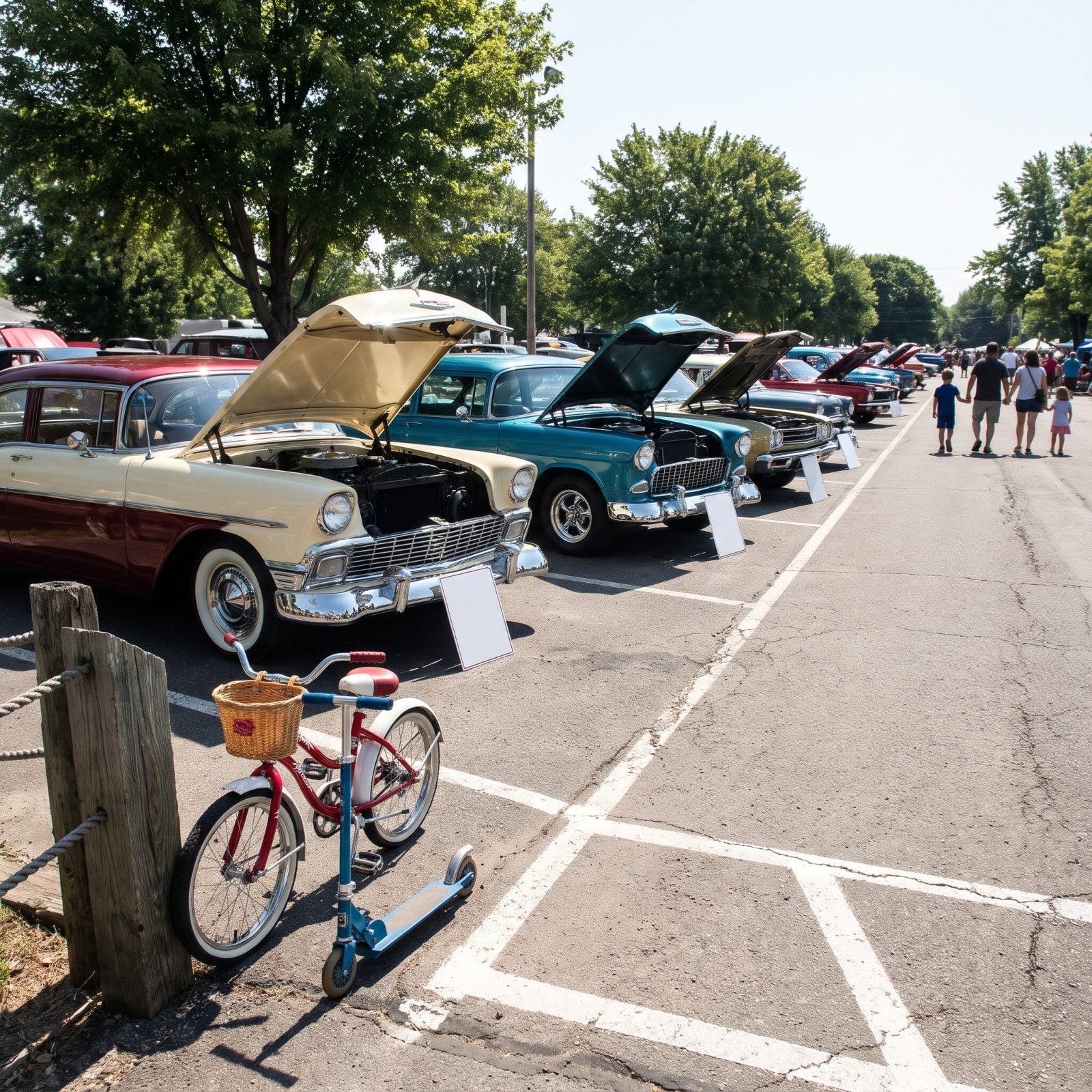
A bike leaned against the wrong fender has ended more friendships than bad gas. And kids on scooters weaving between bumpers? Every owner’s stomach drops, because one wobble puts a handlebar through a quarter panel that took forty years to find.
Park wheels of all kinds at the perimeter. The aisles between cars are for feet, not pedals. Nobody enjoys being the parent chasing a runaway scooter past a row of six-figure paint jobs.
35. Take Your Photo Without Blocking the Car for Everyone Else
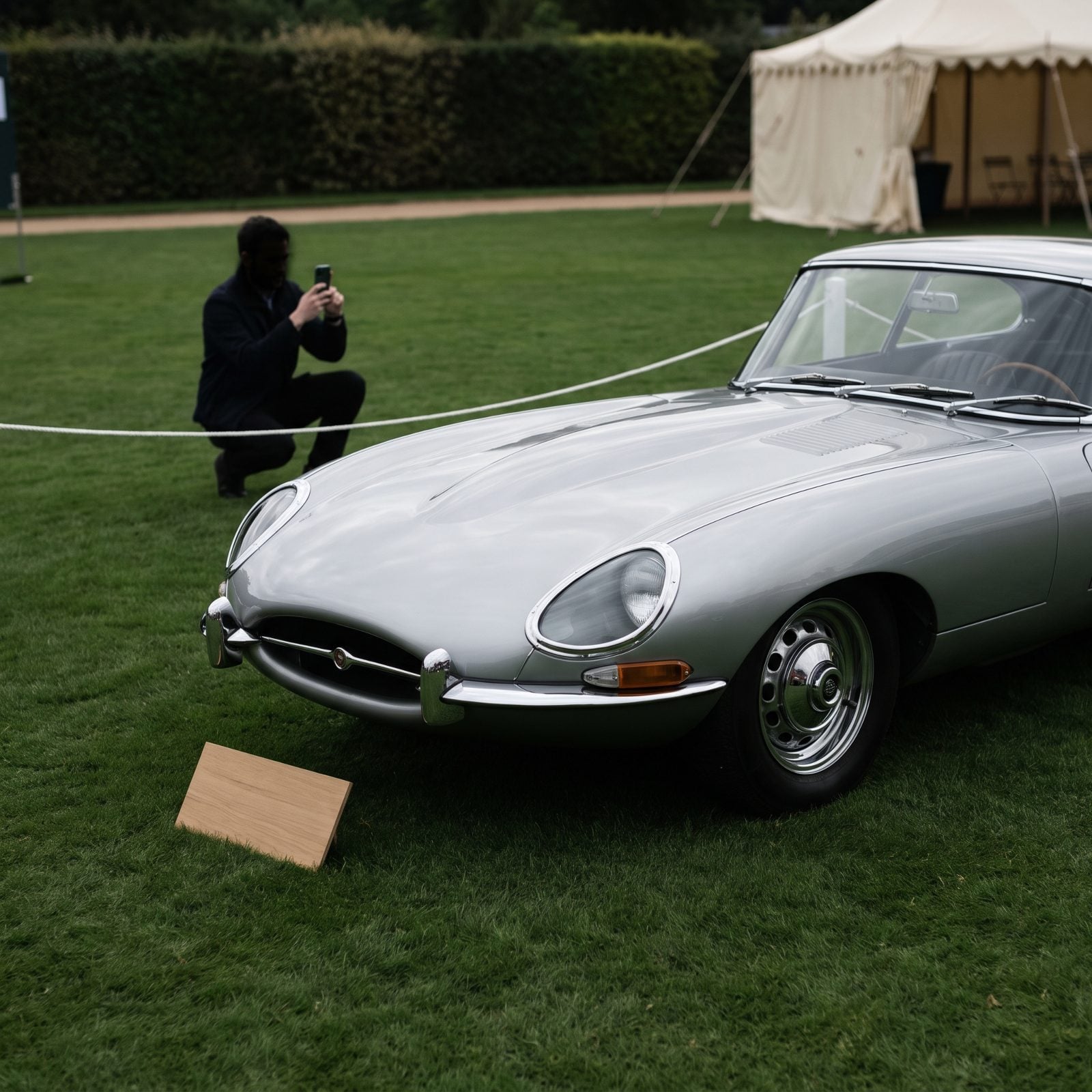
Everyone wants the hero shot. The straight-on front three-quarter, no heads in frame — that one angle a dozen people are lining up for. So take it and move.
Standing there scrolling through your gallery while folks wait behind you is the photographic version of leaving your cart parked sideways in the middle of the aisle. Get your frame, step aside, let the next person have theirs.
34. Ask Before Setting Up a Tripod or Lighting Stand
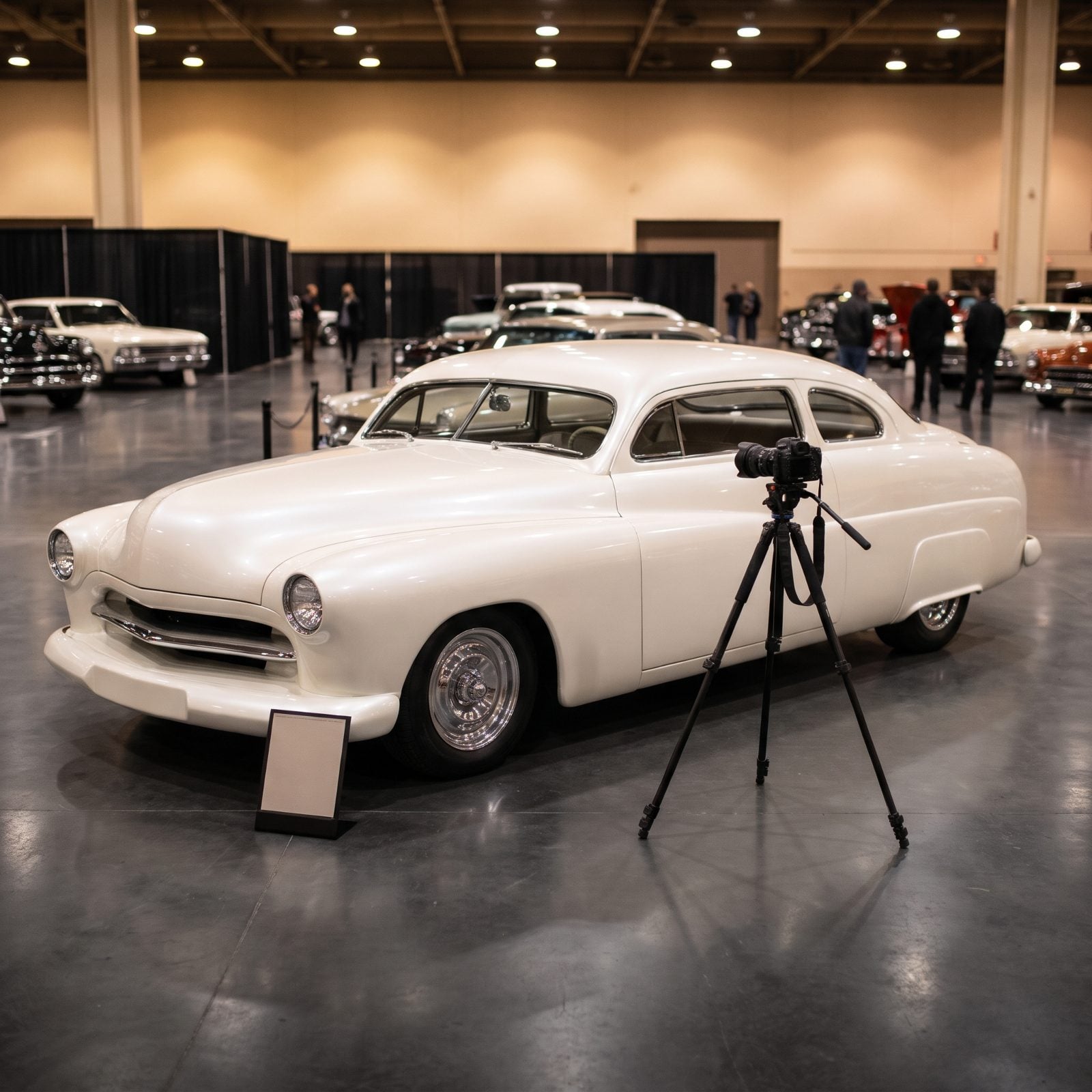
A tripod leg is a tripping hazard with a camera on top. Set one up in a tight indoor row and you’ve turned a walking path into an obstacle course, usually right where somebody’s going to kick a thousand-dollar lens into a door.
Find the organizer or the owner first. Most won’t mind — especially after hours or during the slow stretches. But asking turns you from a nuisance into a guest, and guests get the good light nobody else is standing in.
33. Never Fly a Drone Without Event Approval
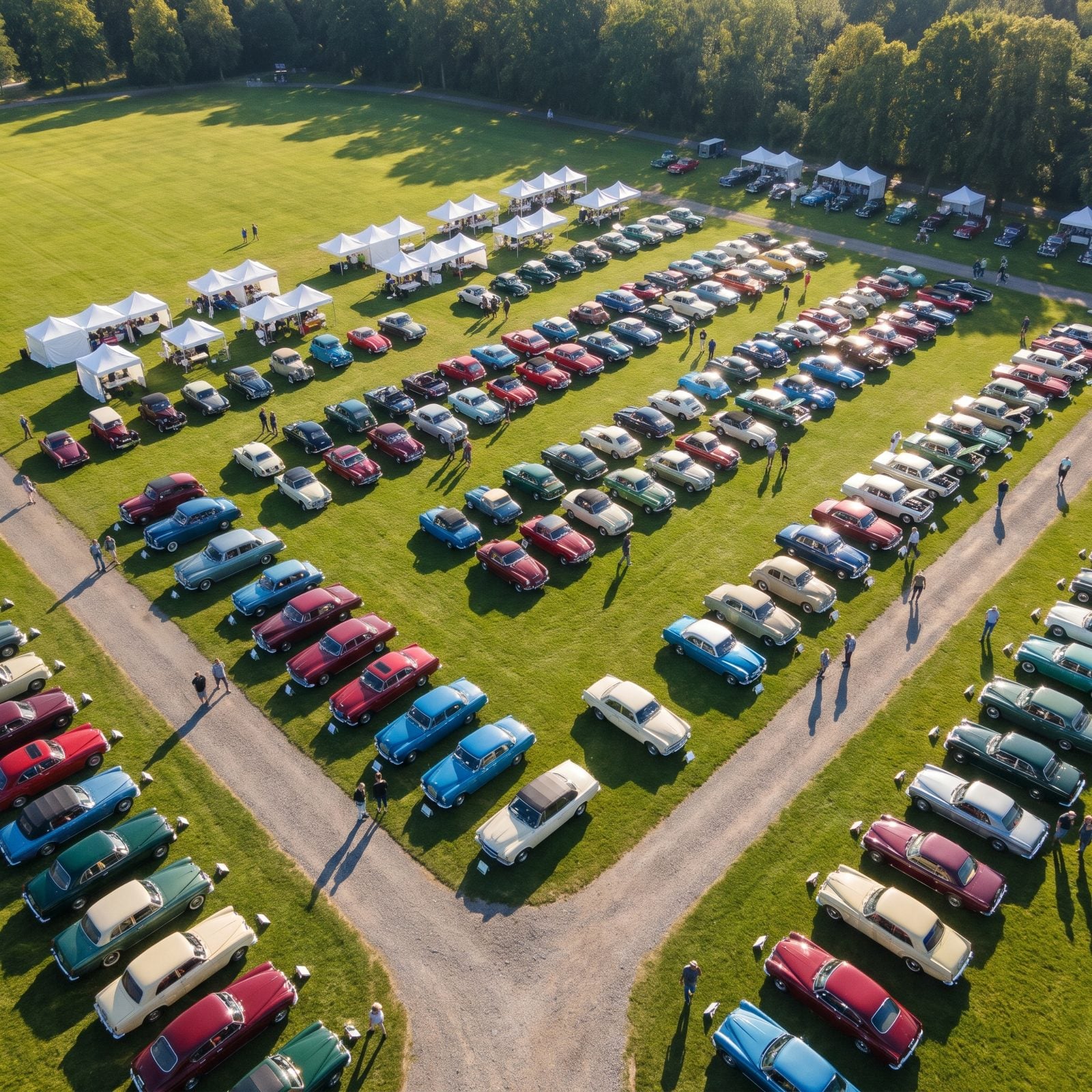
That buzzing overhead wrecks the one thing a car show has that a parking lot doesn’t — the quiet pleasure of walking the rows in peace. And beyond the racket, most organized events ban unapproved drones outright, for good reason. A fly-away over a packed crowd is a genuine danger, not a hobby.
Clear it with the event first, every single time. Permission protects the people below and the show’s insurance both. Buzz the lawn without asking and you’ll likely be escorted out before you land.
32. Get Permission Before Posing a Model Against Someone’s Car
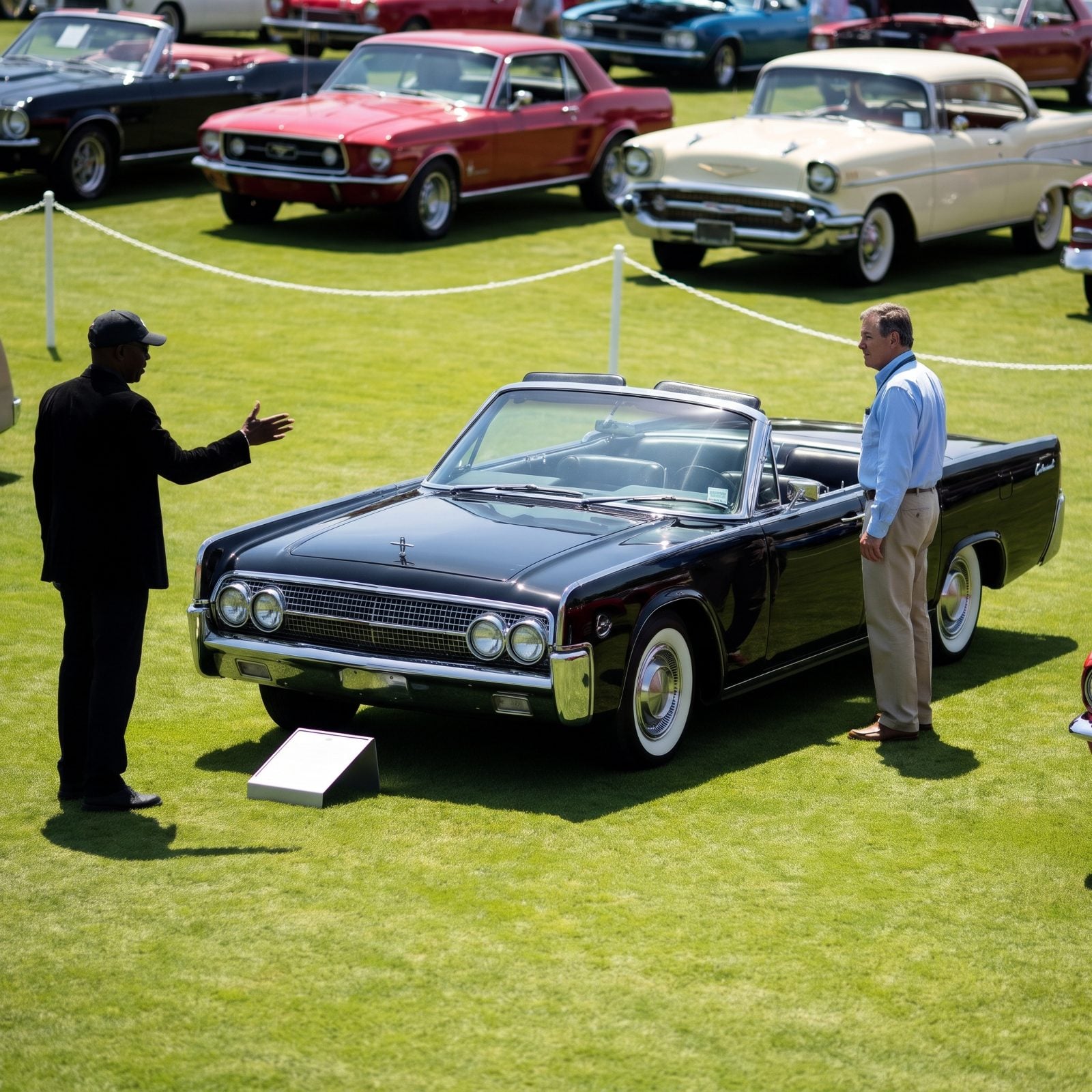
Draping someone across a fender they don’t own is a quick way to get yelled at in front of a crowd. Body oils, belt buckles, zippers, rings — all of it marks paint an owner guards like a nervous new parent.
Want the shot? Ask. A lot of owners love seeing their car photographed well and will happily stand back for it. Just never assume a car on display is a prop someone parked there for your photoshoot. It’s somebody’s pride, sitting right there.
31. Never Interrupt an Owner Who Is Speaking With a Judge
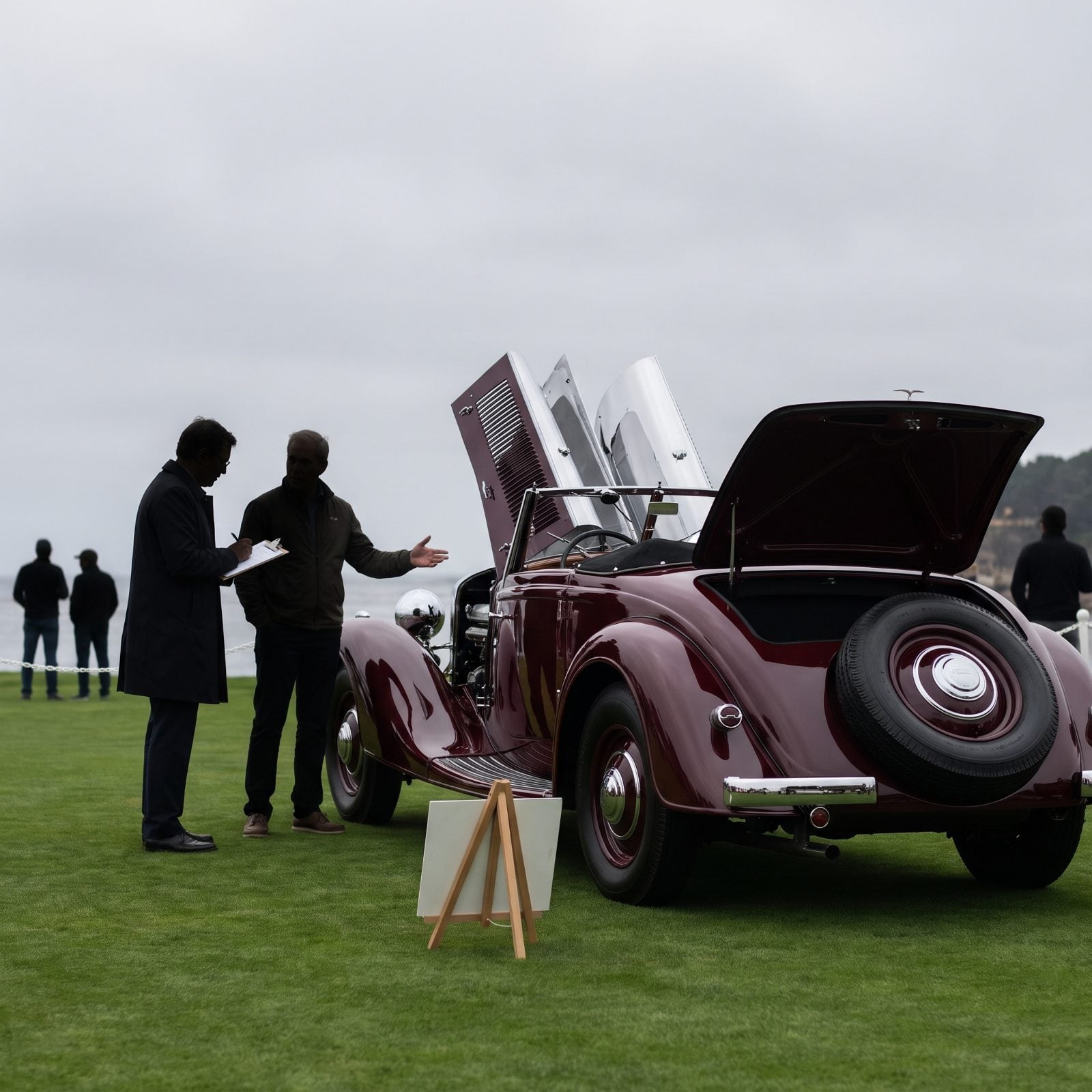
When a judge is at a car with a clipboard, that’s game time. Points get counted, questions get answered, and the owner’s whole weekend may ride on the next few minutes of focus.
So hang back. Don’t lob in your own trivia, don’t ask about something unrelated, don’t crowd the fender for a peek at the engine. You’ll know judging’s done when the clipboard drops and the talk loosens up. Wait for that, then step in.
30. Keep Harsh Criticism Out of the Owner’s Earshot
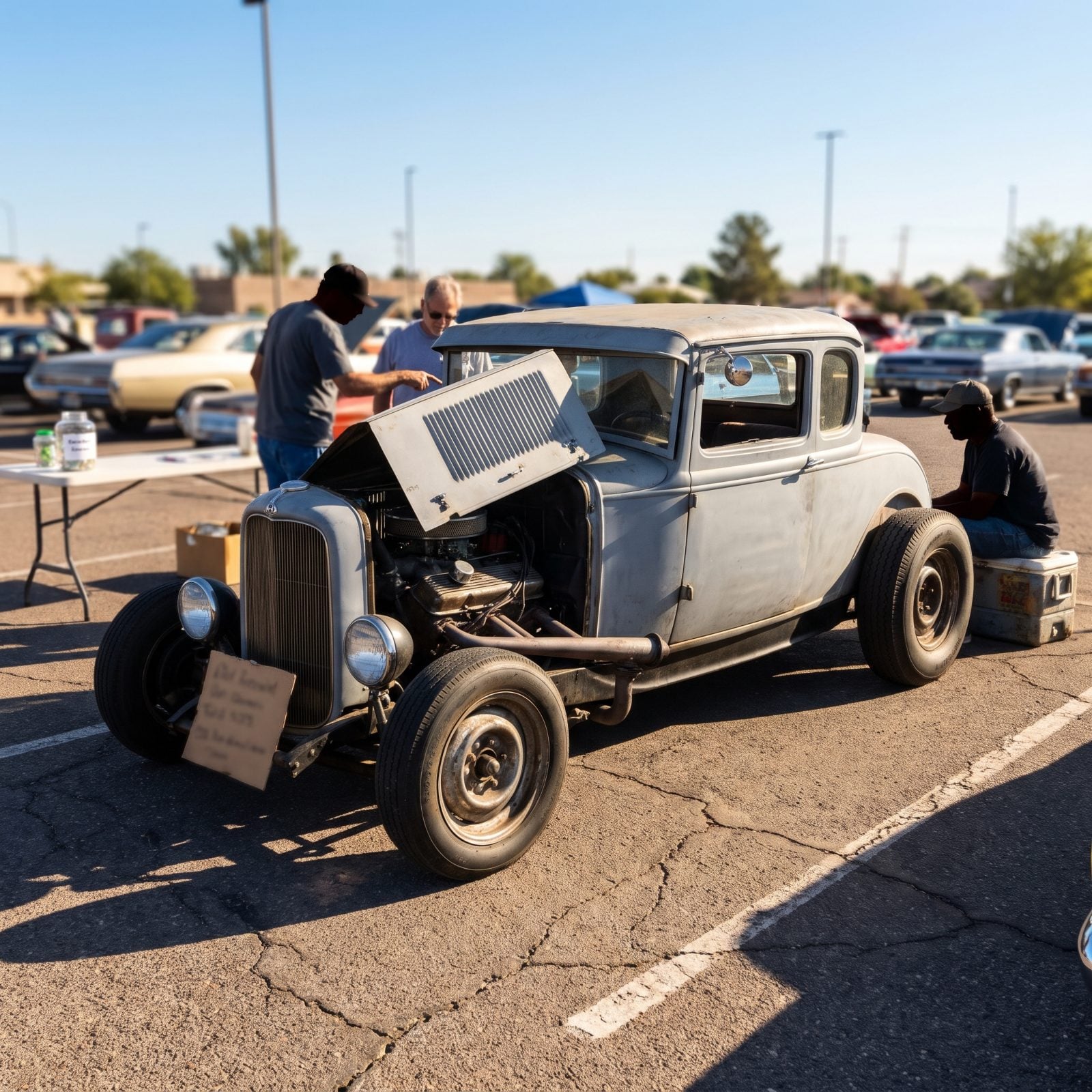
That flat-primer hot rod with the mismatched wheels might be somebody’s first build, paid for in scraped knuckles and saved overtime. The color choice you’d never make in a million years? Somebody loved it enough to live with it.
Got a pointed opinion? Keep it between you and whoever you came with, and keep your voice down. Shows run on encouragement. Loud sidewalk critiques next to a man’s project cut deeper than you’d ever guess.
The fastest way to spot an amateur at a car show isn’t the car they brought. It’s the way they talk about everyone else’s.
When Jalopy Talk readers disliked a car photo and tapped a reason, the top answer was “not my style” at 41%, which says more about taste than about the build.
29. Do Not Announce What You Think the Car Is Worth
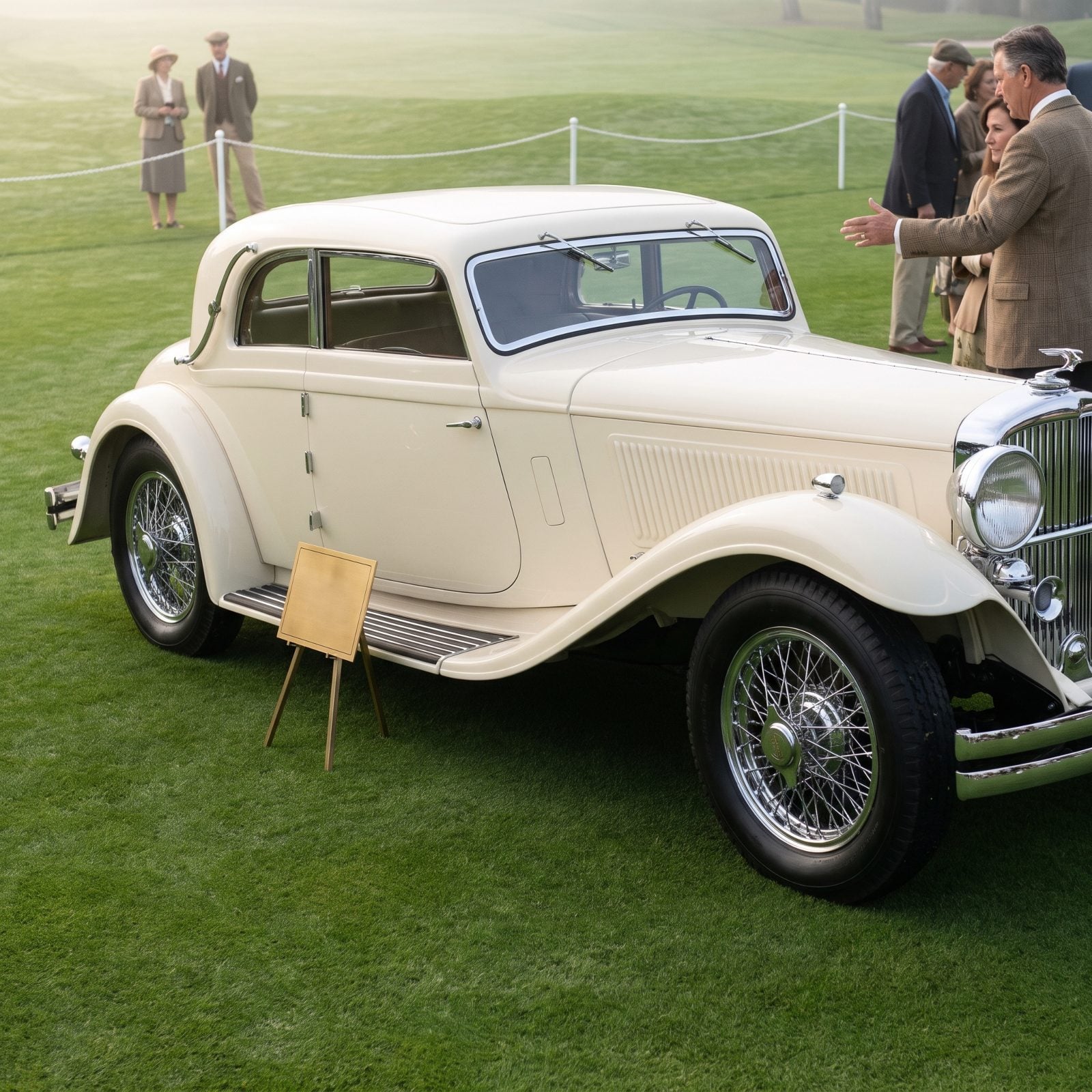
Nothing drains the goodwill out of a conversation faster than a stranger blurting a dollar figure at a car. You’re almost always wrong, and even when you land close, the owner never asked and the folks nearby didn’t want to hear it.
Money talk makes a show feel like an auction. Worse, loudly pricing a rare car in a crowd can make the owner uneasy about exactly who’s listening. Admire the craftsmanship, ask about the build, skip the appraisal — the value lives in the story, not the number.
28. Skip the Lecture About How You Would Have Modified It
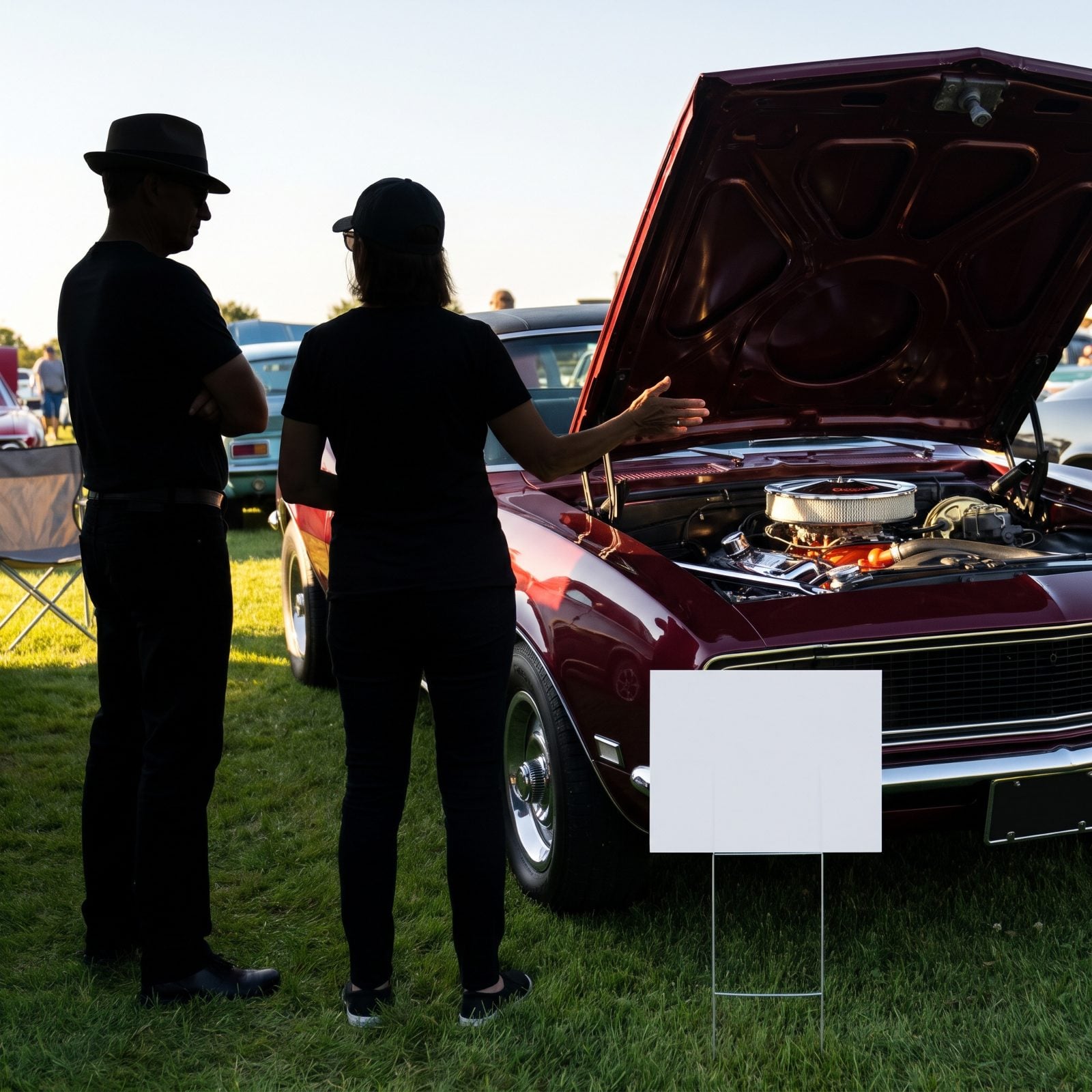
The man standing by his car spent years landing on that exact carburetor, and he does not need your version. Telling an owner you’d have gone with a different wheel, a bigger cam, or a color he passed over isn’t conversation. It’s a small insult dressed up as expertise.
Compliment what you like. Ask what he chose and why, and you’ll get a ten-minute story and maybe a friend out of it. The unsolicited redesign gets you a cold nod and a turned back.
27. Ask Questions Before Declaring a Car Fake or Incorrect
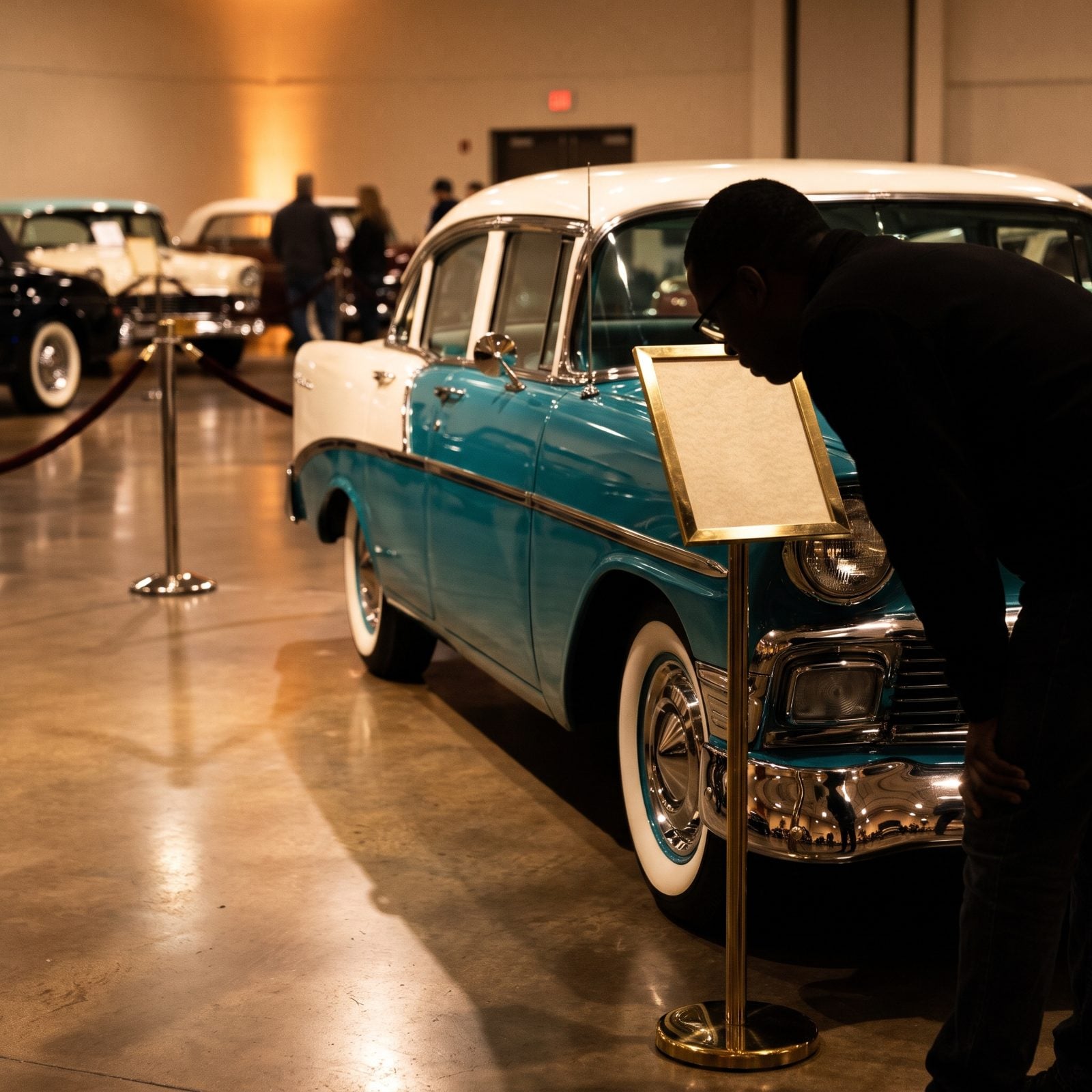
Nothing clears a crowd faster than a guy loudly announcing a numbers-matching car is a tribute. Sometimes he’s right. Usually he’s working off a magazine article he half remembers.
If something looks off, ask. “Is this the original drivetrain?” costs you nothing. Announcing fraud in front of the owner, who may be holding the build sheet in his glovebox, costs you your credibility and makes you the show’s cautionary tale. Rare options get mistaken for fakes all the time. So read the placard first. Most owners put the real story right there on the card.
26. Arrive During the Published Check-In Window
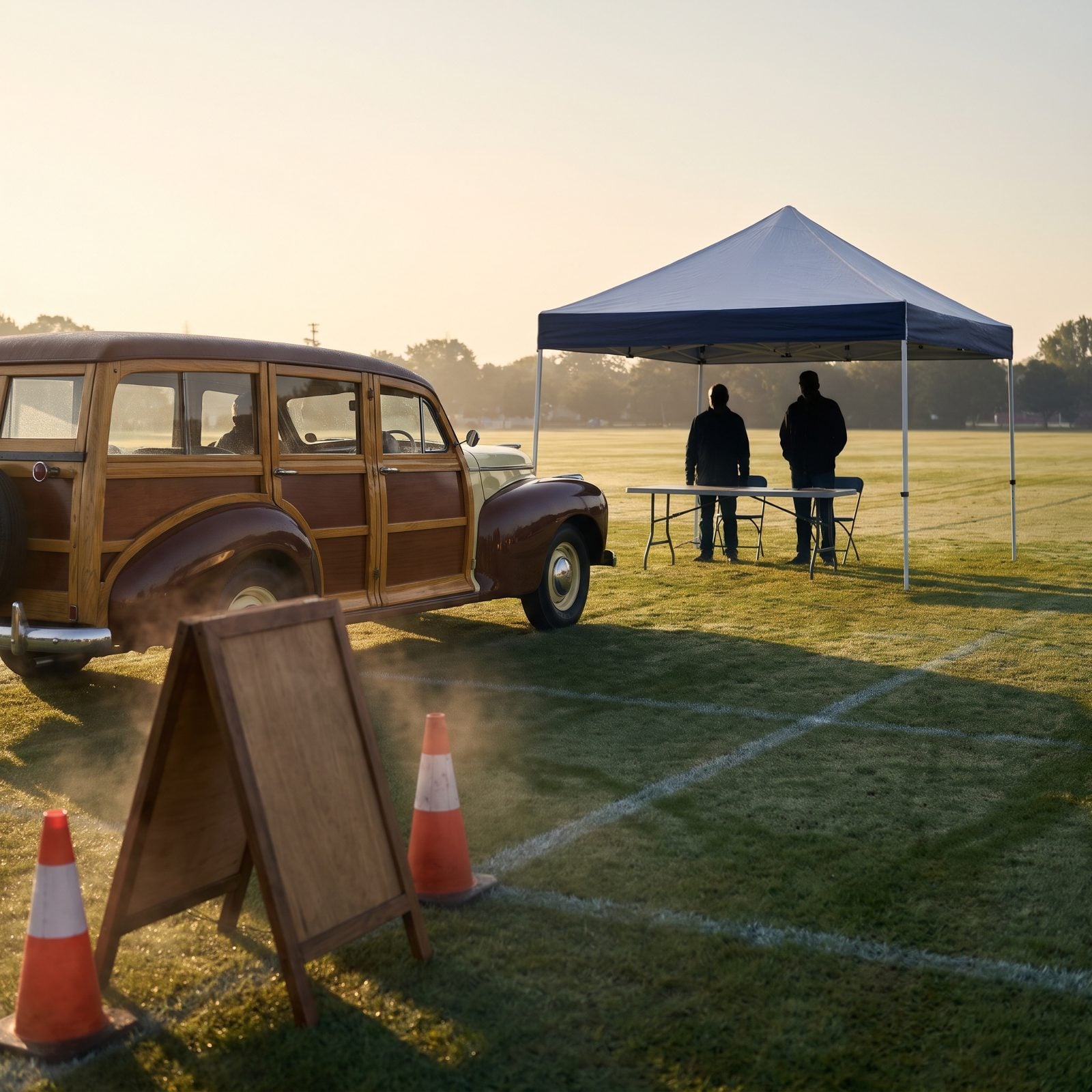
Show up before the window and you’re parked in some volunteer’s coffee. Show up after and the good spots are gone, the field’s half full, and a tired crew has to break the whole flow to squeeze you in.
That window on the flyer isn’t a suggestion — it’s the one hour the organizers built the entire morning around. Hit it and you glide in. Miss it and you’re the car causing a jam while 200 people watch from their lawn chairs.
25. Follow the Parking Crew’s Directions the First Time
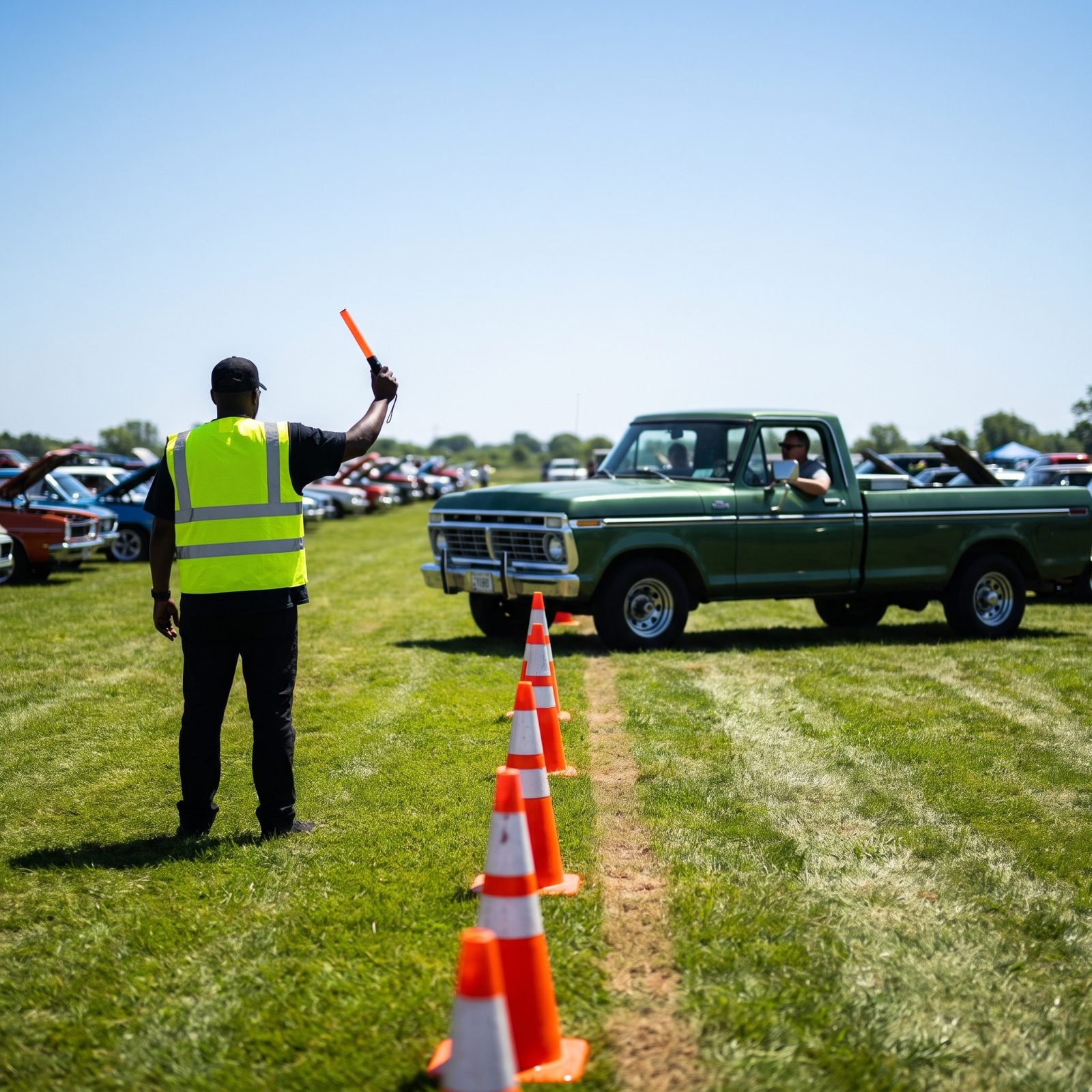
The guy in the yellow vest holding up his hand knows something you don’t. He knows where the drainage dips, where the next class is grouping, which row fills to leave the aisle clear for judging carts.
Argue with him and you hold up everybody behind you. Park where you feel like it and you’ve broken a pattern it took three people an hour to set up. The crew has done this a hundred times. You’ve done it once, today. Let them drive.
24. Keep Your Car and Display Inside the Assigned Space
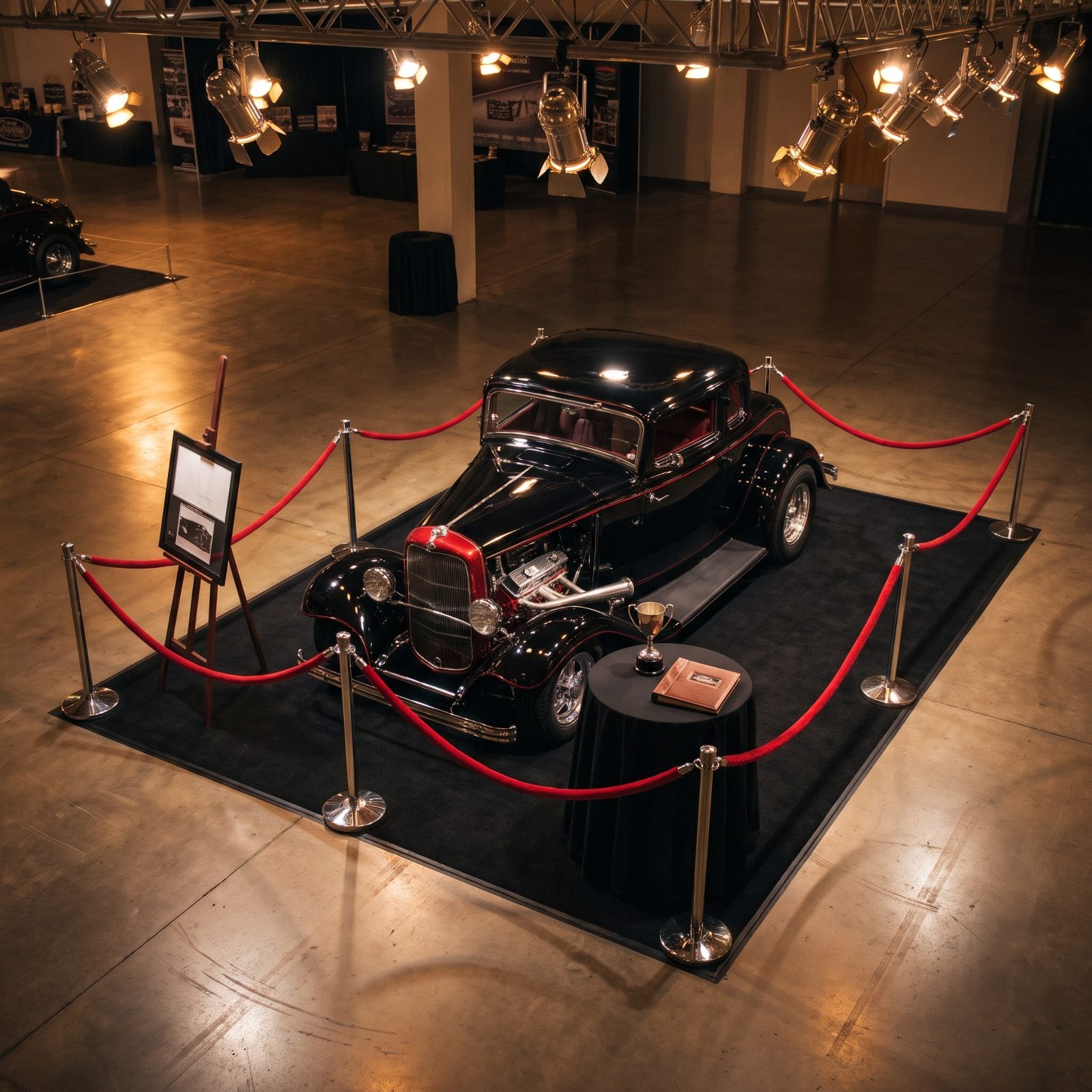
Your space has edges. The owner next to you paid the same entry fee and expects the same room to open his door, set his chair, and let folks admire his work without stepping around your spread.
Display boards, tool chests, awning poles — they all have a way of creeping. Measure your footprint before the gates open and keep it tight. The guy who sprawls two spaces wide is the guy everyone complains about over the bratwurst.
23. Never Reserve Extra Spaces With Chairs or Coolers
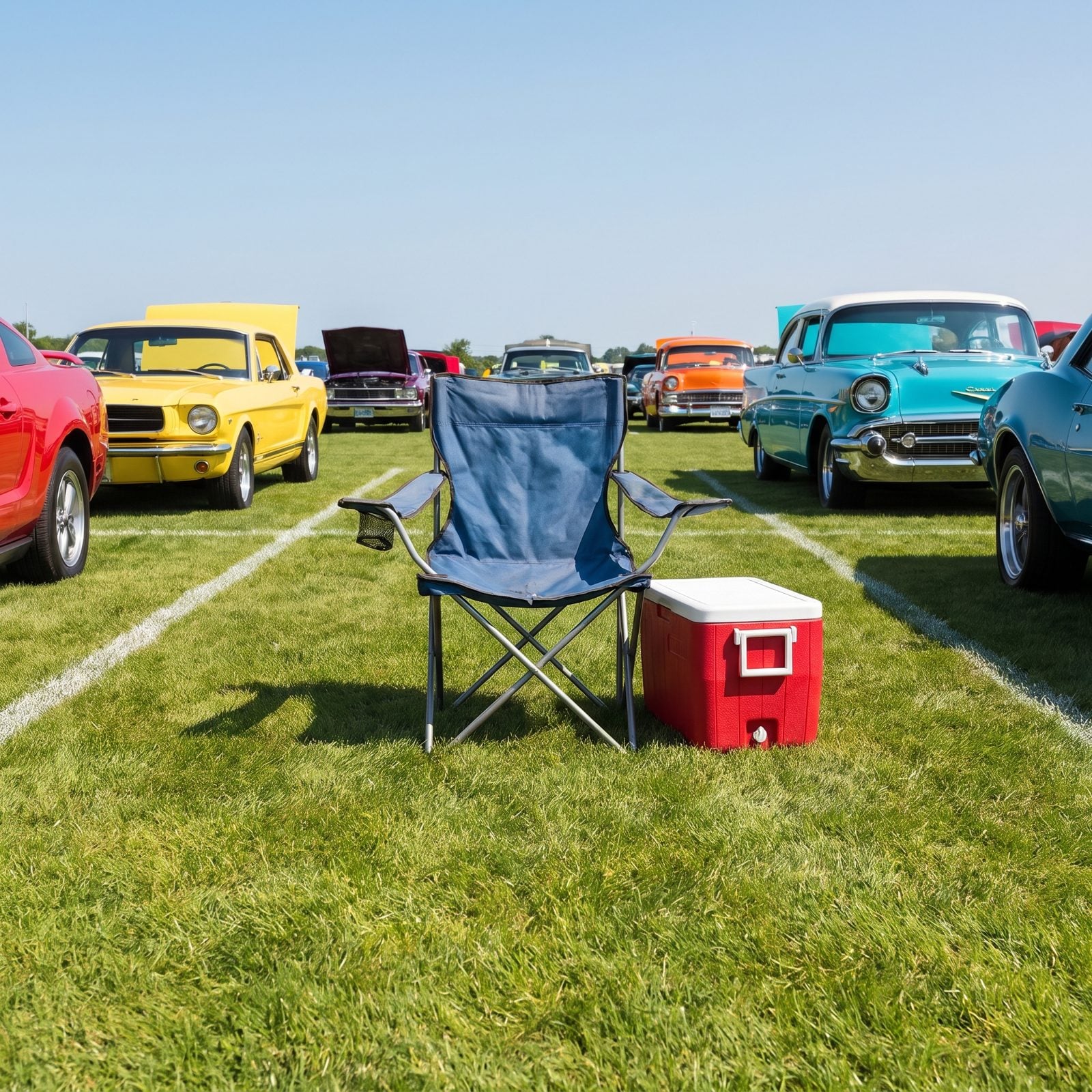
The lawn-chair land grab is the oldest move in the book, and everyone sees right through it. You plant a cooler two spaces over so your buddy has somewhere to park when he rolls in at ten.
Problem is, ten o’clock comes and goes, the field fills, and that empty slot behind your Igloo makes the organizers look like they can’t manage their own event. Your friend parks where everyone else parks. If he wanted a guaranteed spot, he should’ve made the check-in window. We will die on this hill.
22. Unload Trailers Only in the Designated Staging Area
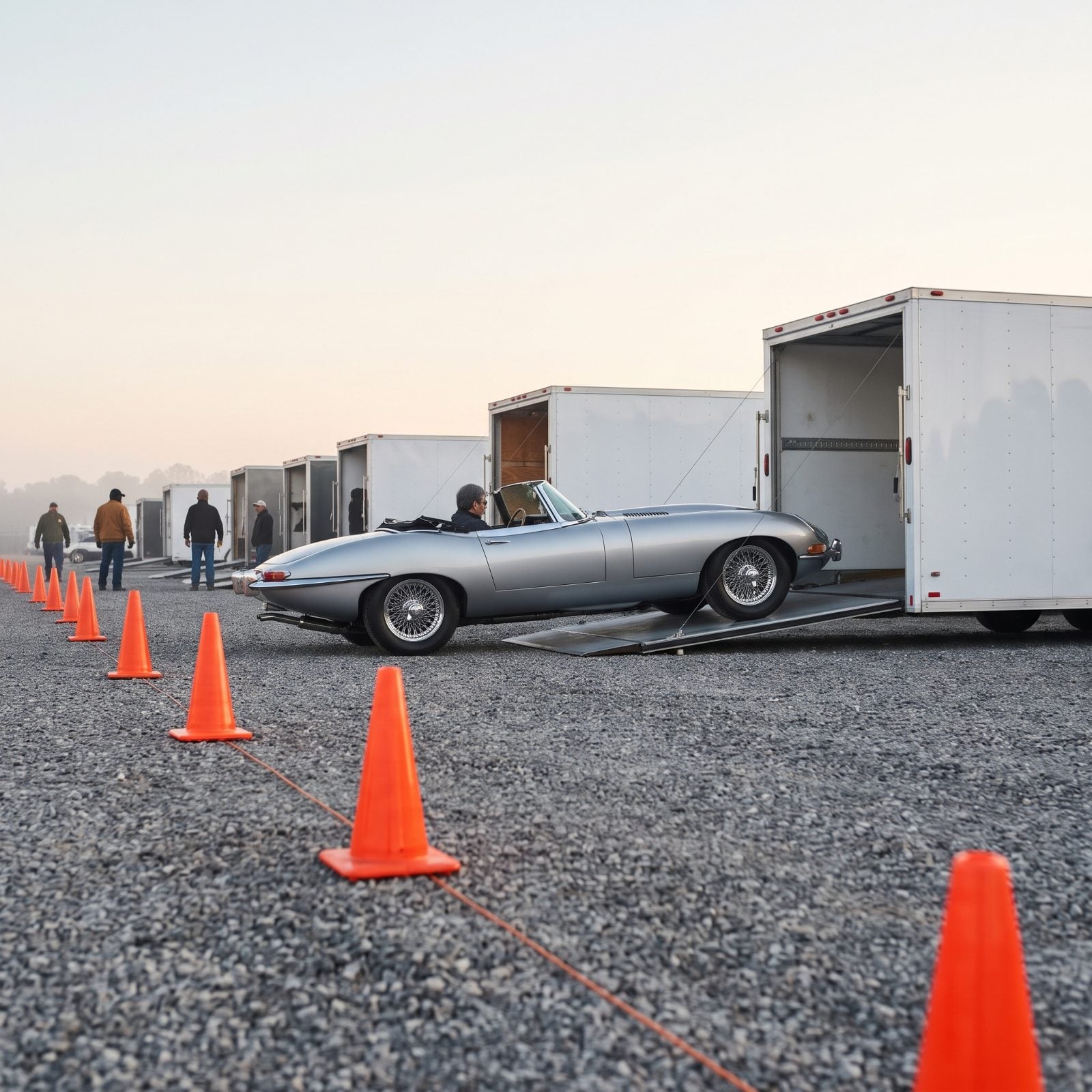
A trailer in the middle of the display field is a traffic cork. Ramps down, straps flying, a show car inching off the deck while fifty people wait behind you with their engines running.
The staging area exists for exactly this. Pull in there, unload at your own pace, drive the car over clean. Nobody wants to watch you winch a Corvette off a flatbed in the one aisle everybody needs to use.
21. Drive at Walking Speed Inside the Show Grounds
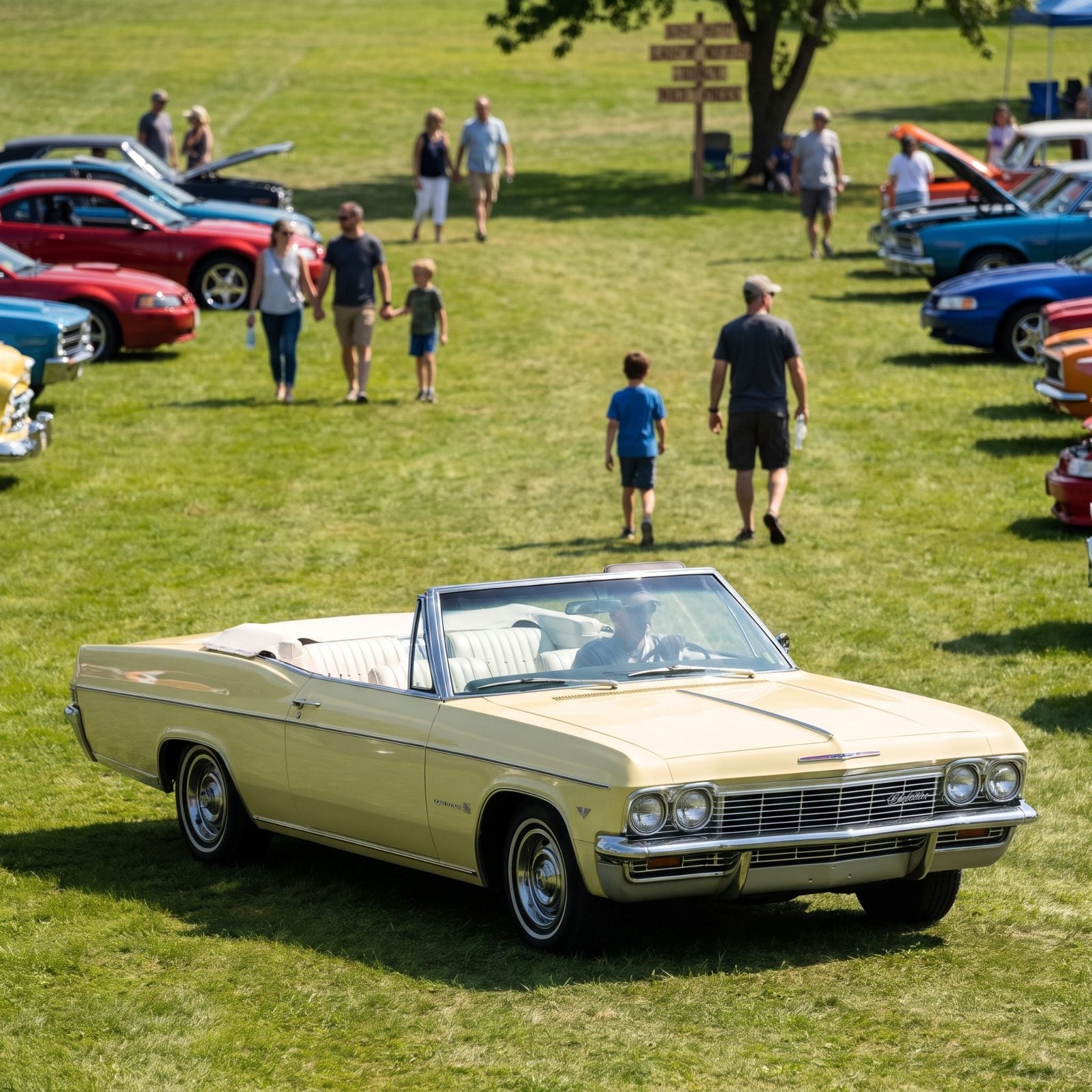
Kids dart, people back up to frame a photo, and a dropped hat sends somebody lunging into the aisle without looking. A car show field is wall-to-wall distraction, and you’re the one piece of it weighing two tons.
Idle speed. Slower if you can. The grounds are not the place to show anyone what the car does. Everyone there already assumes it’s fast. What they’re watching for is whether you’re careful.
20. Save Burnouts and Throttle Blips for Somewhere Else
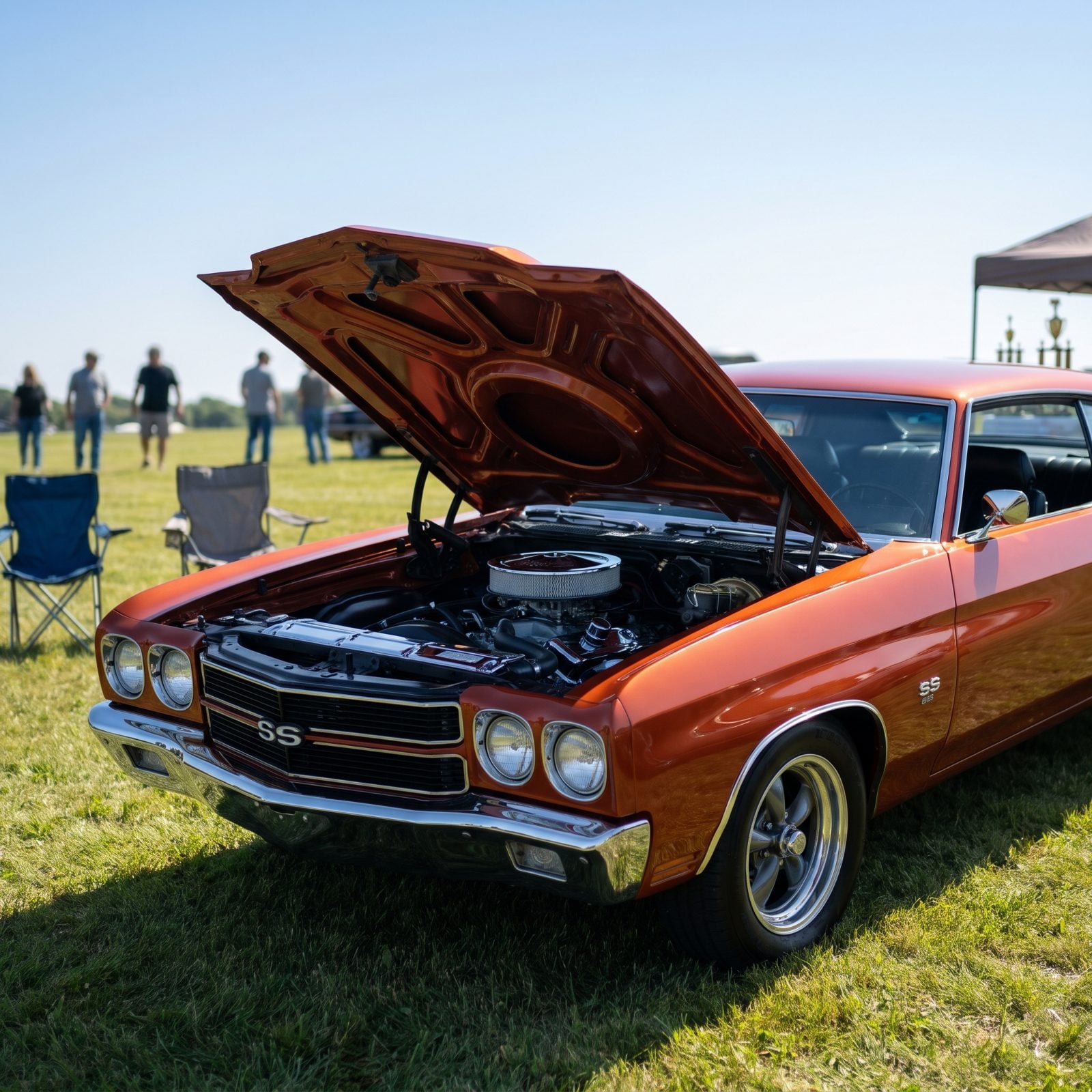
There’s always one. He waits until the lot’s quiet, then stabs the throttle so the whole place turns to look. He thinks it reads as confident. It reads as the guy who needs the room to notice him.
Half the cars around you are freshly detailed, and the old-timer two rows over has a heart condition and a startle reflex. A cloud of rubber smoke doesn’t say powerful, it says I don’t care about anyone parked downwind. Fire it up loud on the way out, on the open road, where it belongs.
19. Shut the Engine Off as Soon as the Car Is Positioned
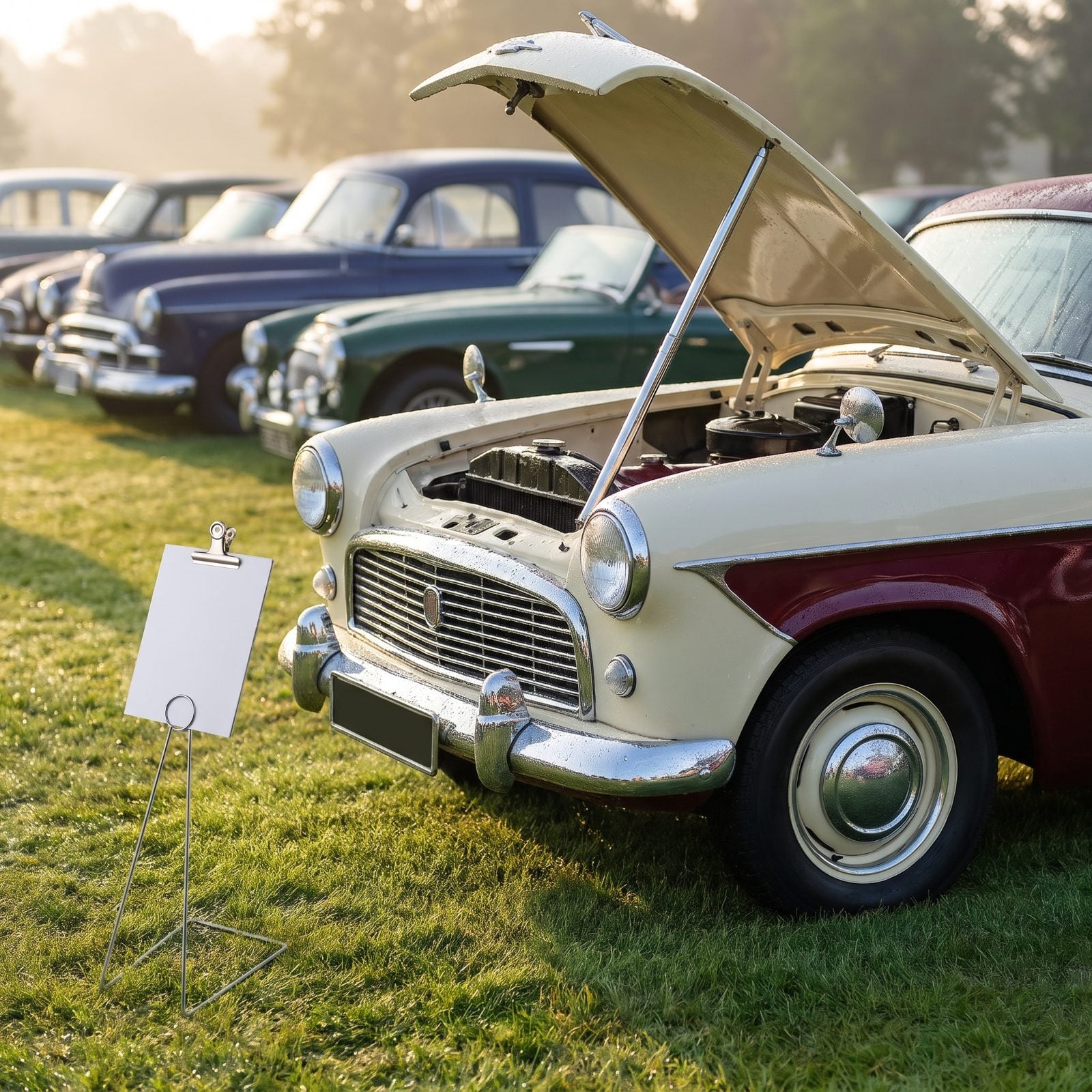
Once you’re in your spot, kill it. A field full of idling engines fills the air with exhaust nobody signed up to breathe, and it drowns out the conversations that are half the reason people come.
Classic motors run hot and a long idle does yours no favors anyway. Shut it down, pop the hood, set your placard, and let the car do its talking in the quiet. The best shows are strangely peaceful, and that peace is engines that are off.
18. Do Not Pull Out Before the Published Release Time
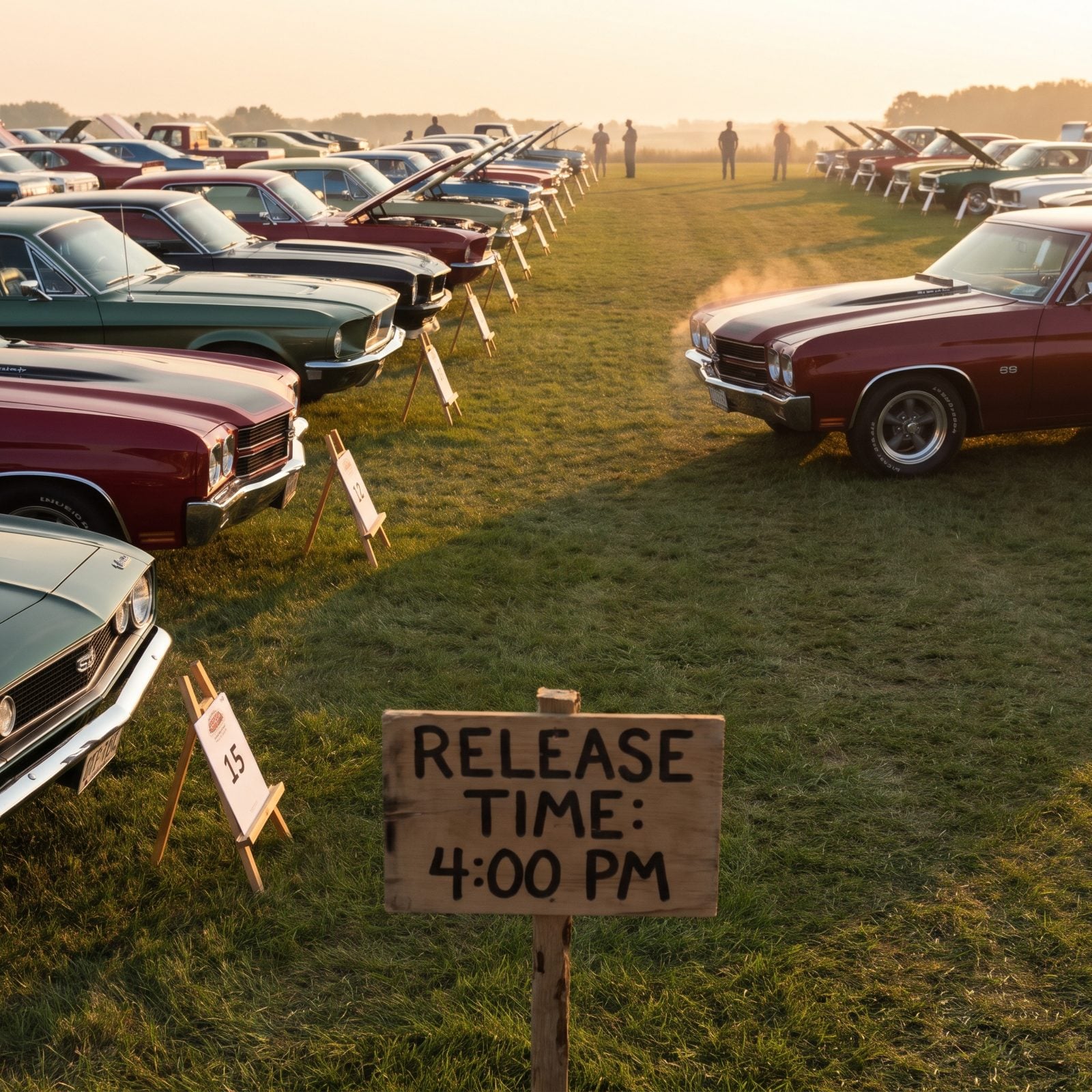
That release time on the flyer isn’t a suggestion. Spectators paid to walk the field until the posted hour, and a car firing up and creeping toward the aisle at two o’clock drags attention off every other display while it dumps exhaust right where people are leaning in to look.
I get it. The drive home is long and the clouds look mean. But the organizer built the whole day around that number, and the awards announcement often hinges on cars staying put. Pull out early and you become the name the gate crew brings up next year.
17. Use the Marked Exit Instead of Cutting Through Somebody’s Display
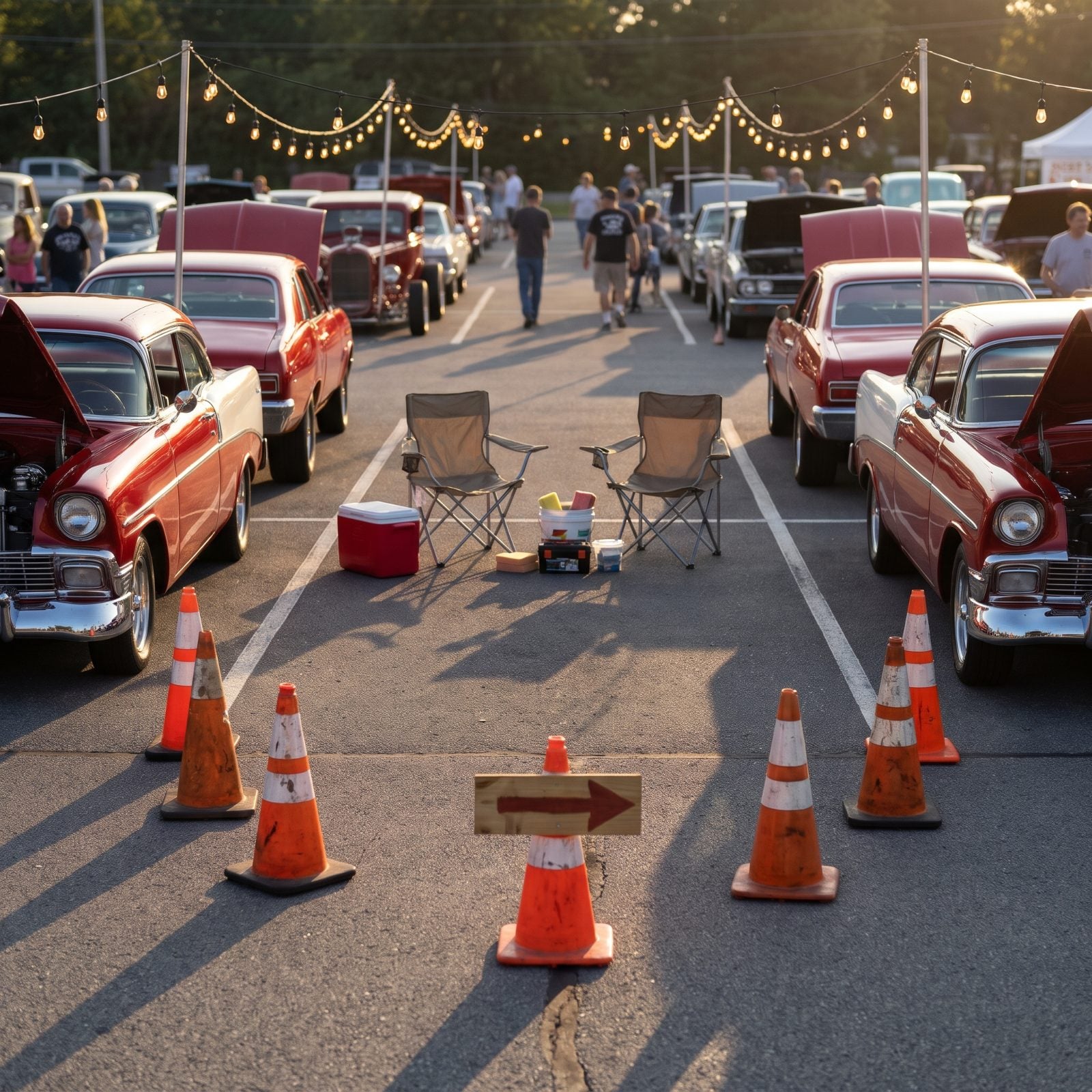
Every show marks a path out for a reason. That empty space in front of and beside a parked car isn’t open pavement — it’s the owner’s living room for the day, where the coolers, chairs, detail bottles, and a kid’s toy car all live.
Cut through it and you’re rolling a two-ton classic past open car doors and bare feet. Take the long way around to the coned exit lane even if it adds three minutes.
16. Sort Out Active Fuel and Coolant Leaks Before You Hit the Gate
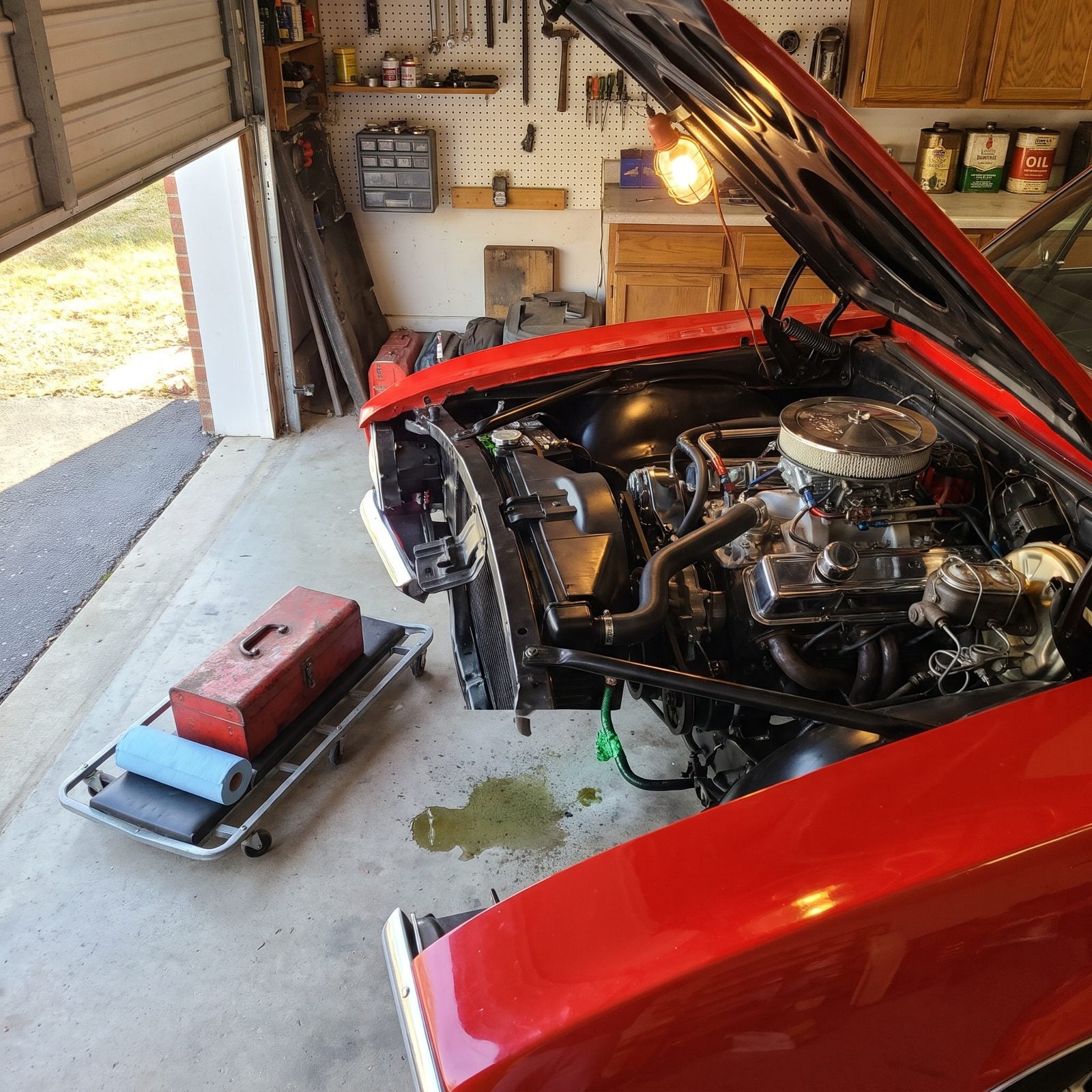
A slow seep is one thing. A fuel line dribbling onto a hot exhaust manifold is a fire waiting for an audience, and gate inspectors at the stricter shows will turn you away for it. They’re right to.
Chase down active fuel and coolant leaks at home, in your own garage, where you’ve got the time and the light. Showing up and hoping nobody notices the puddle forming under the carb puts every car in the row at risk, not just yours.
15. Respect the Indoor Rules on Fuel Levels and Battery Disconnects
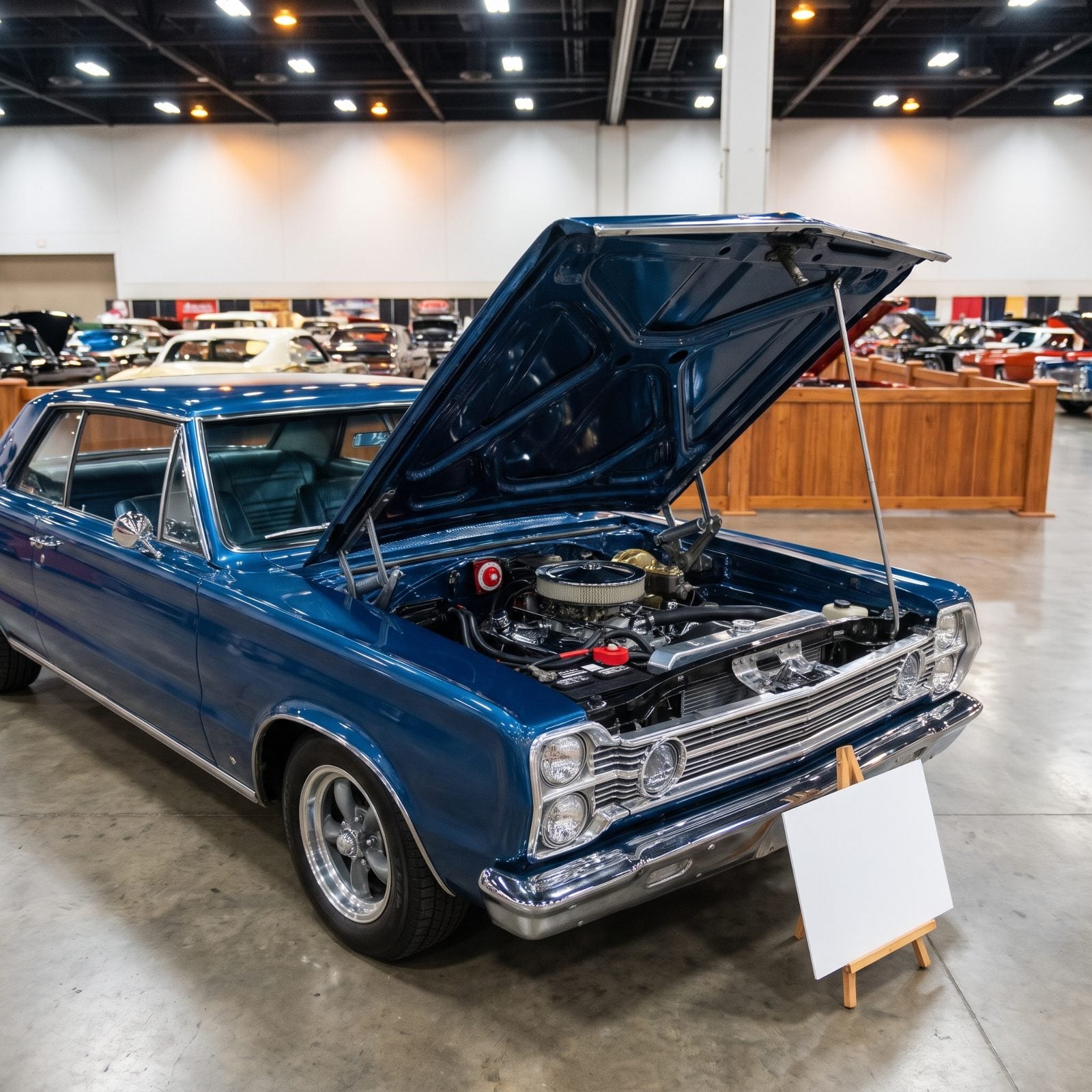
Indoor halls play by fire-marshal rules, not car-guy rules. Many want a quarter tank or less of fuel, a locked gas cap, and the battery disconnected or a kill switch flipped once the car is positioned.
Feels like overkill until you remember you’re parking a tank of gasoline inside a packed building with no quick way out. Read the entrant packet the week before — not in the loading-dock line while forty cars stack up behind you.
14. Keep a Fire Extinguisher Where You Can Actually Grab It
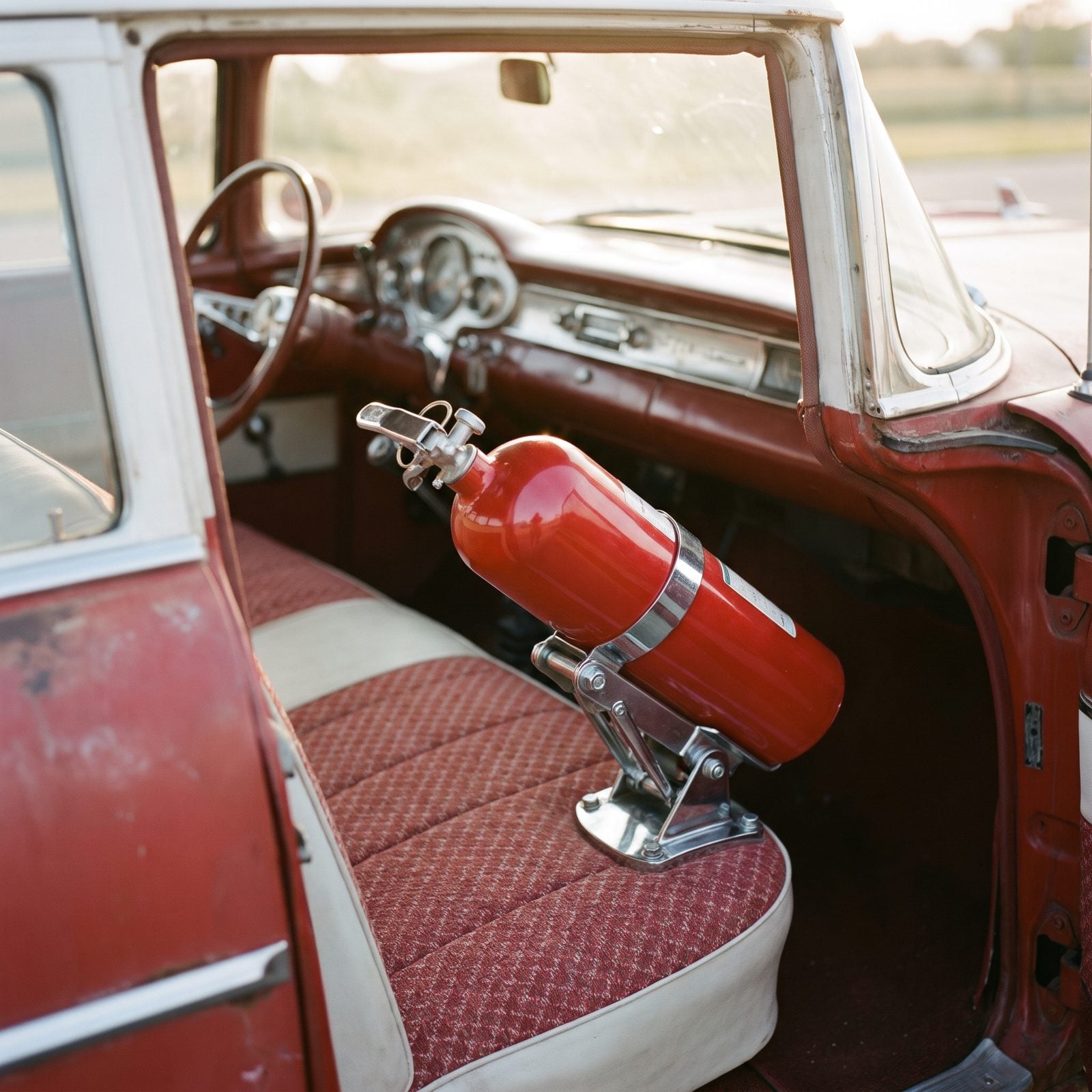
An extinguisher locked in the trunk is a paperweight. You want to grab it in the two seconds between a wisp of smoke and a real problem, and nobody’s digging under a cooler to find it.
Mount a rated unit in a quick-release bracket where you can reach it from the seat or the open door. A lot of judged events and all indoor shows require one. Bring it even where it’s optional. The guy whose carb catches fire three cars down will thank you.
13. Chock the Wheels and Use Rated Stands for Any Raised Display
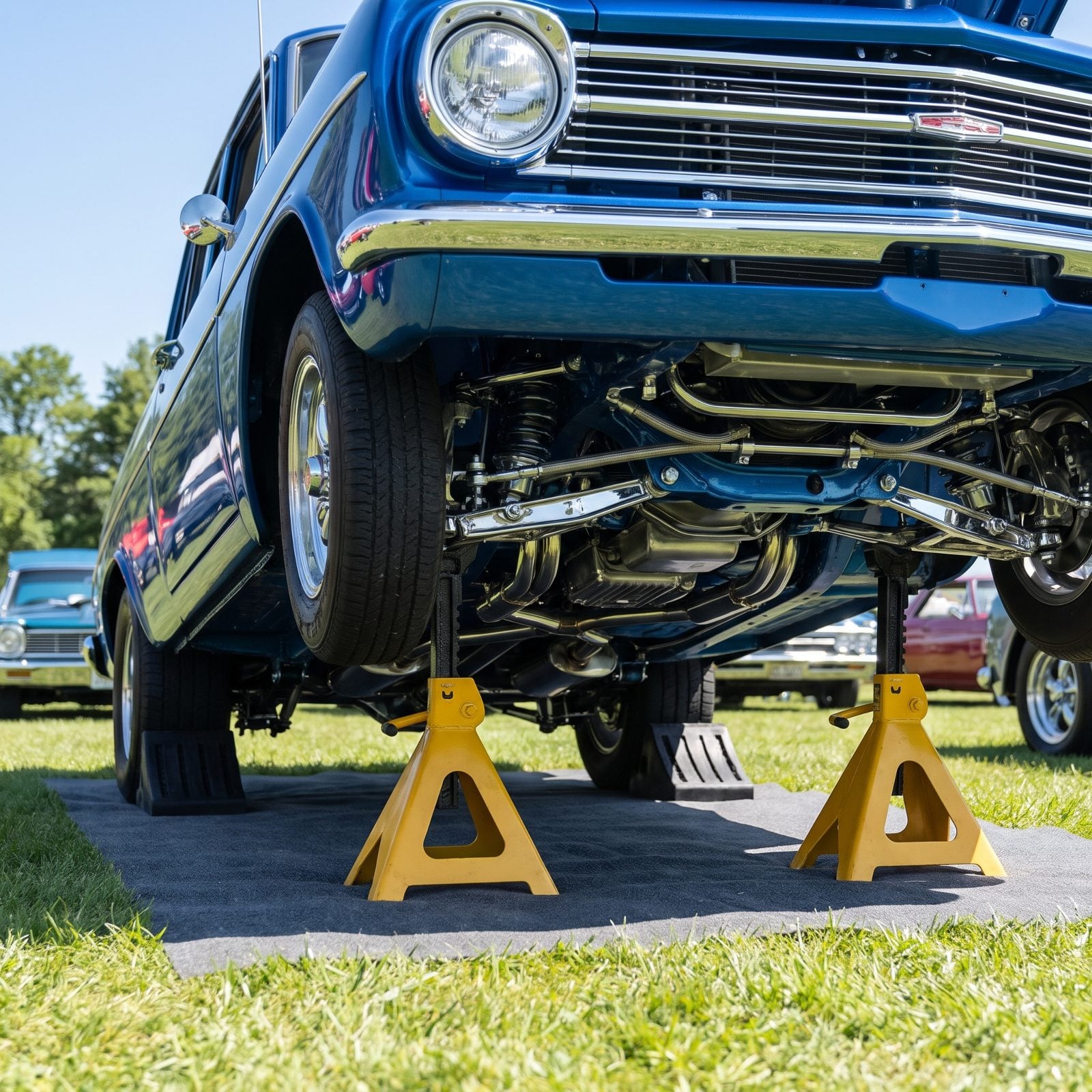
Showing off a detailed undercarriage is a great flex right up until the car rolls off a scissor jack onto somebody’s shoes. Lifting a corner to display the chassis? Use rated jack stands and chock the wheels still on the ground.
The bottle jack that lives in the trunk is for a flat tire on the shoulder, not an eight-hour static display on soft grass surrounded by foot traffic. Grass settles. Jacks tip. Spend the money on real stands.
12. Get Your Canopy Approved and Anchor It Without Tying It to a Car
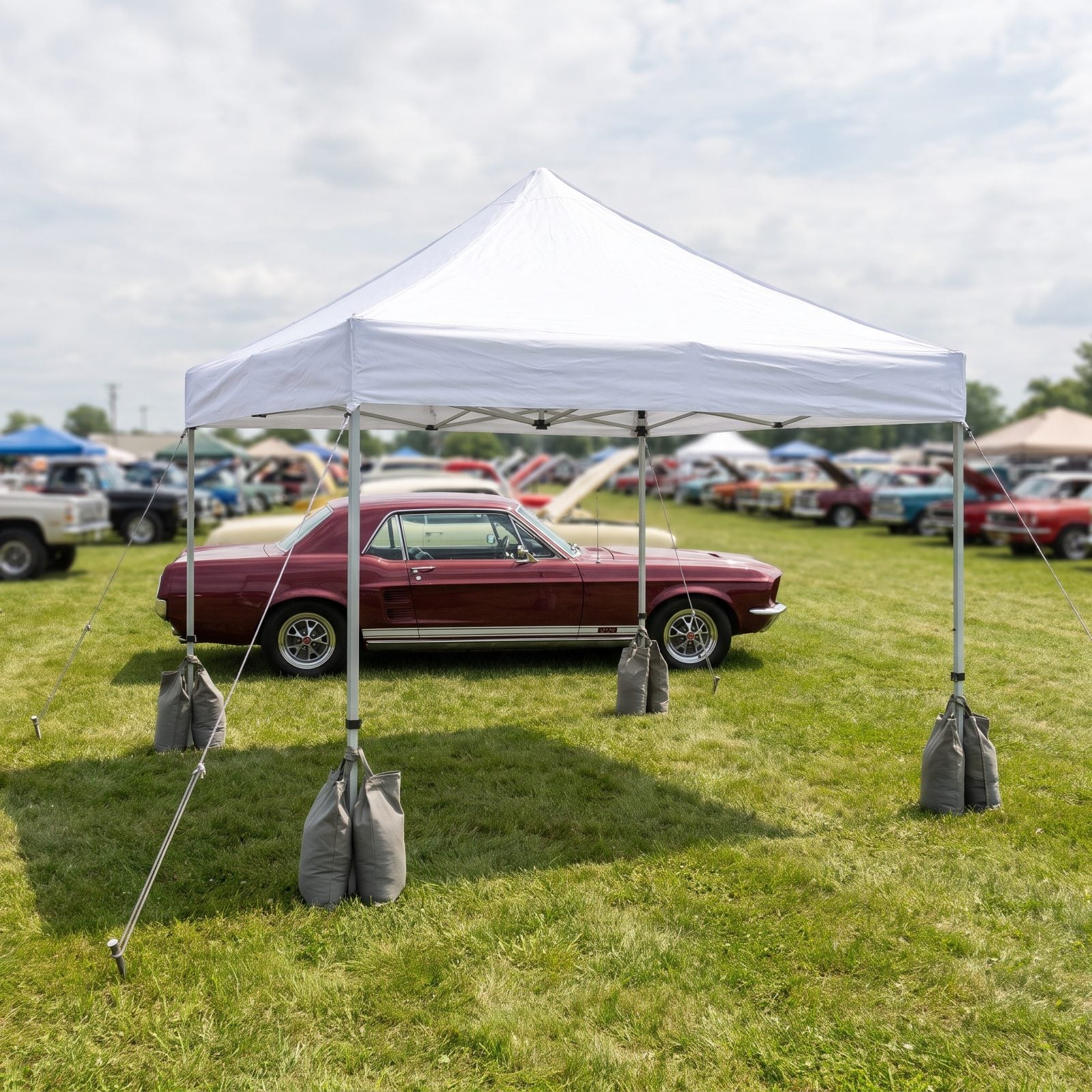
Pop-up canopies are a blessing on a hot lawn and a liability in a breeze. Most shows want them cleared first, both for spacing and because a tent in the air is just a sail waiting for a gust.
Anchor every leg with weights or stakes. And never bungee a canopy to your bumper or a neighbor’s car and call it done. When that thing lifts, it drags whatever it’s tied to across two display spaces and a lot of chrome.
11. Keep the Stereo Low Enough That the Guy Next to You Can Talk
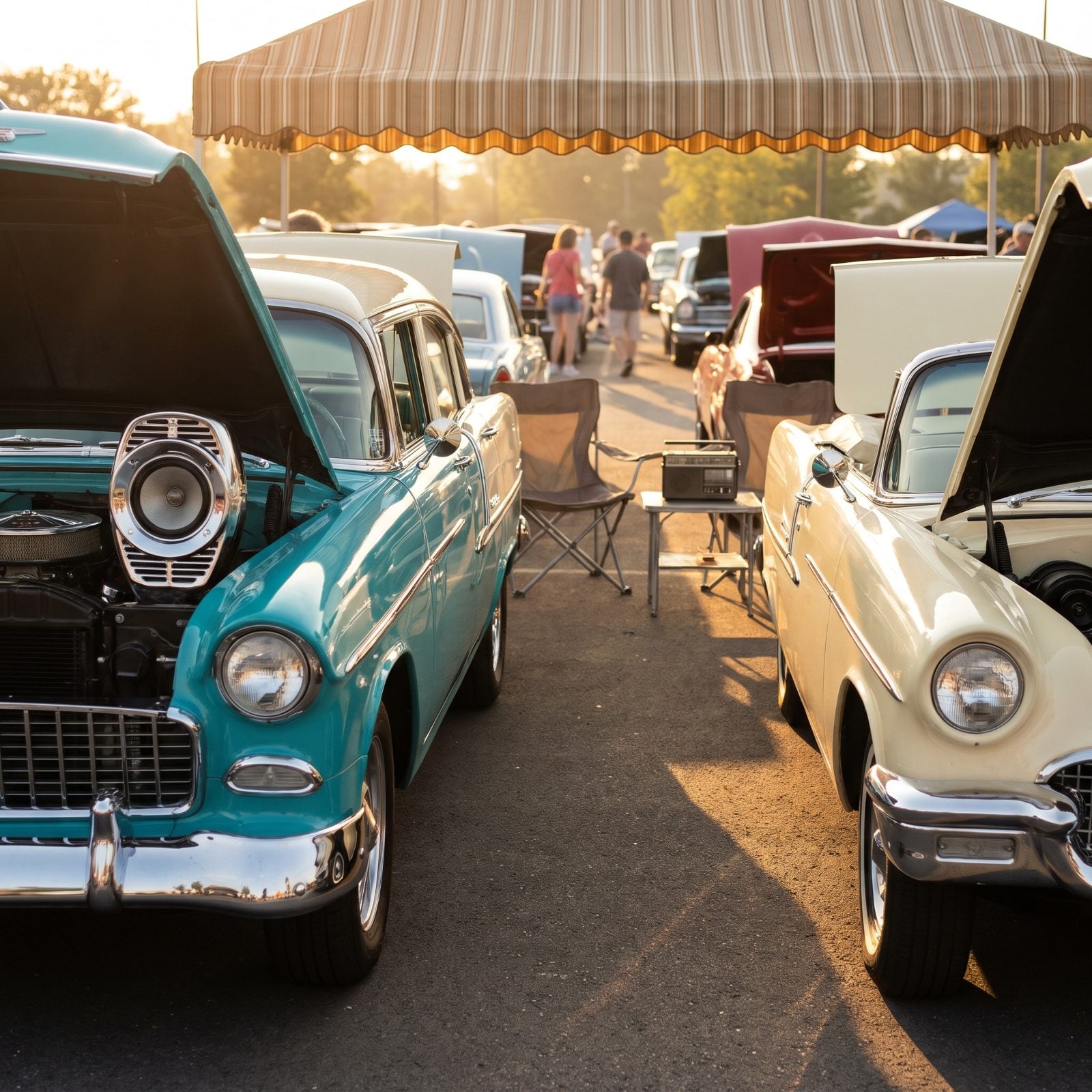
A show field is a social event, not a parking-lot concert. People come to stand around a fender and swap stories about the last one they wrestled through a rebuild, and they can’t do that over a subwoofer rattling the whole row.
Play your music. Nobody’s banning tunes. Just keep it where the owner one space over can hold a conversation without shouting. The loudest stereo on the field is never the most popular car there.
10. Keep Chairs, Coolers, and Detailing Carts Out of the Aisles
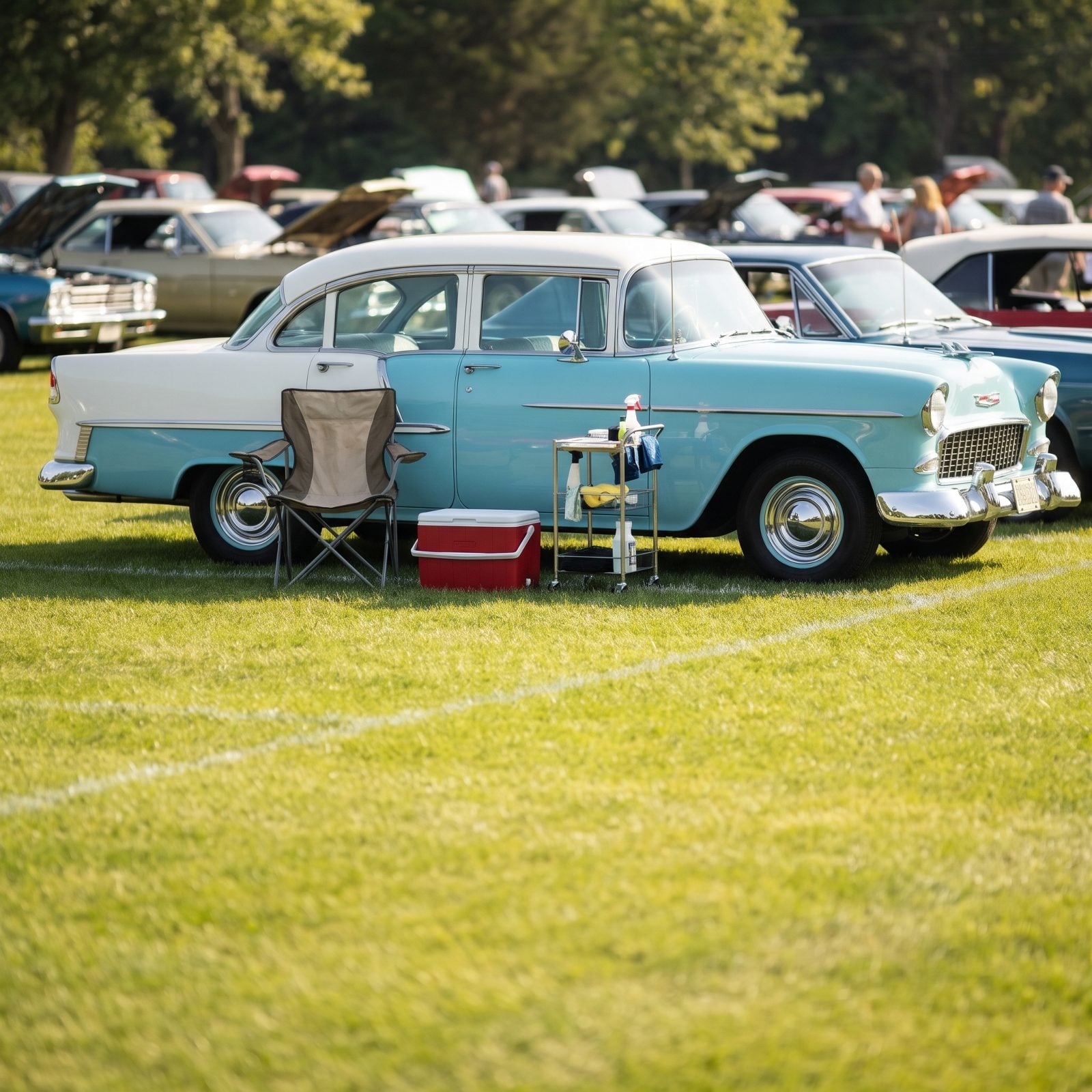
The aisle is not your garage. It’s the one piece of real estate everybody at the show shares, and the second you drop a cooler and two chairs out in it, forty people have to shuffle sideways to see the car next to yours. Keep your stuff inside your own footprint, behind the bumper, tucked against the tire.
Detailing carts are the worst offenders. You wheel one out, wander off for coffee, and now there’s a trip hazard parked in a stream of folks who are looking up at paint instead of down at their feet.
9. Control Detailing Spray So It Cannot Drift Onto Nearby Paint
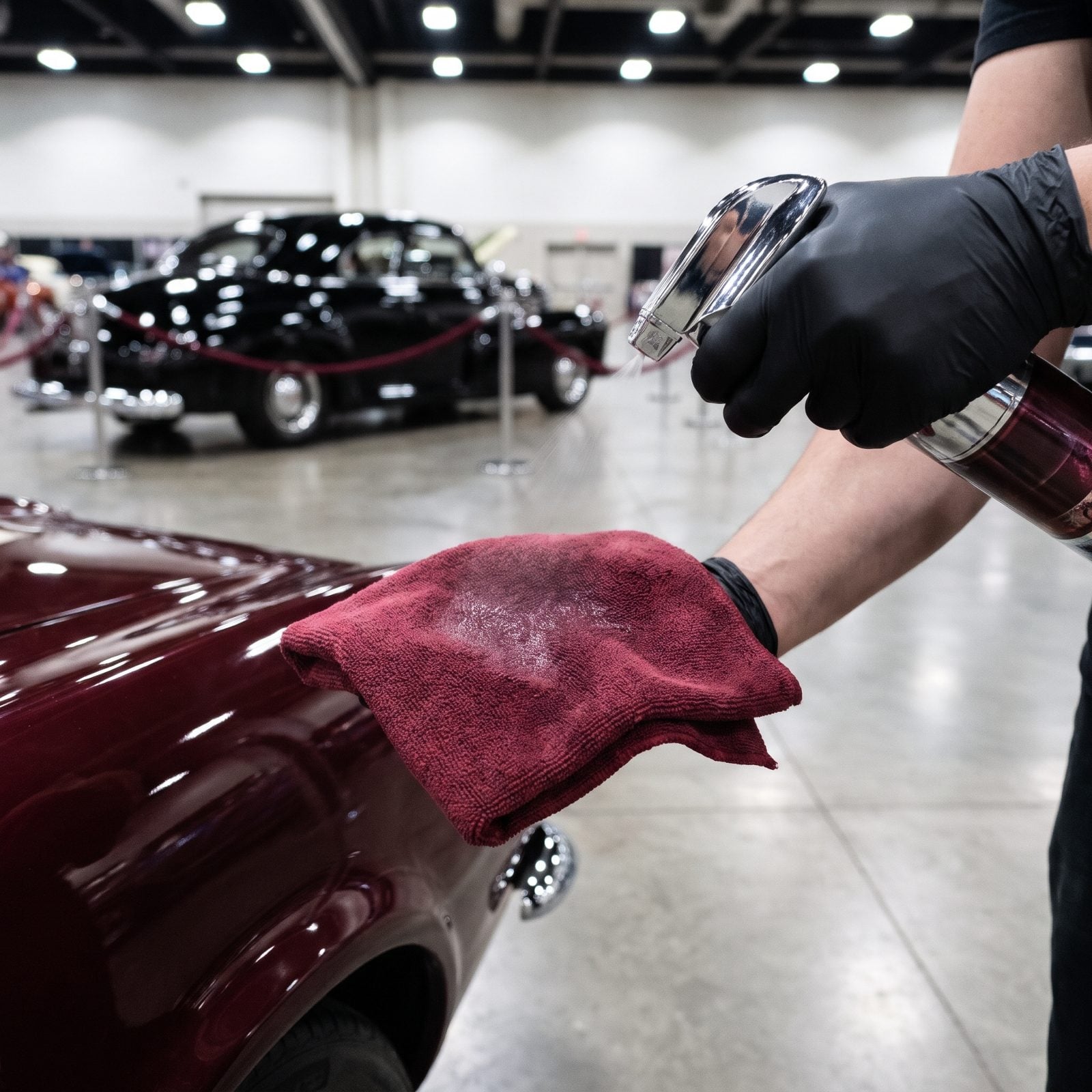
Overspray doesn’t respect property lines. A mist of tire shine or quick detailer catches a breeze, drifts across to the car parked next to yours, and settles. Now that owner has slick spots on glass or a greasy film on freshly polished chrome, and no clue where it came from.
Spray onto the cloth, not into the air. Get the bottle close to the surface. Indoors with no wind feels safe, but HVAC shoves air across a hall harder than you’d think, and a packed exhibition leaves almost no gap between fenders. Mind the neighbor before you mind the shine.
8. Do Not Alter an Entry After Judging Has Started
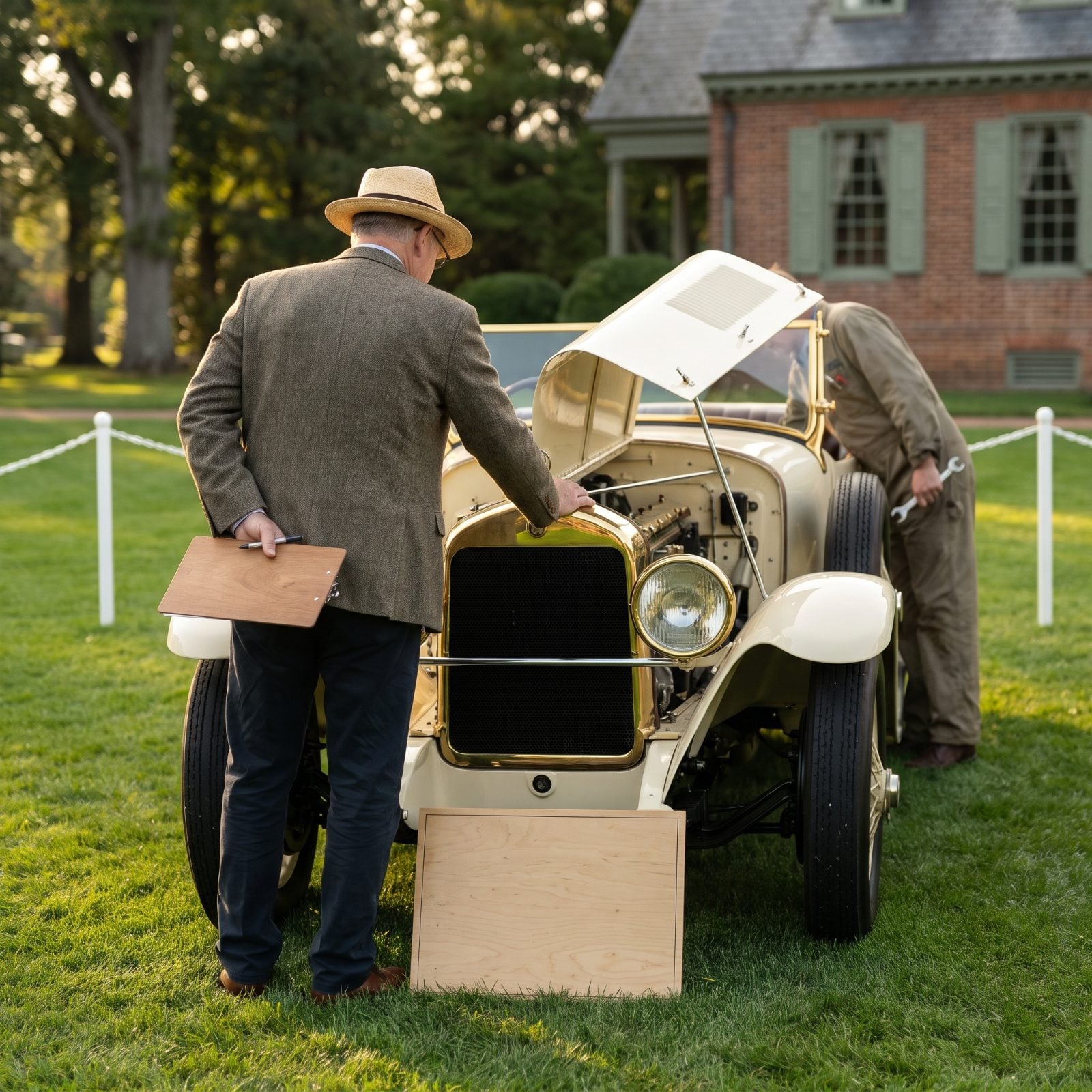
Once the clock starts and a judge is working the field, the car is frozen in whatever state it’s in. You don’t pop the hood you forgot to open, swap a wheel, wipe down a panel, or suddenly display the toolkit you left in the trunk. Judges are scoring a moment in time, and catching you edit the entry mid-inspection looks exactly like gaming the score.
Get the car dialed in before judging opens. After that, your whole job is to stand there and let it be seen.
7. Never Campaign Directly for a Judge’s Vote
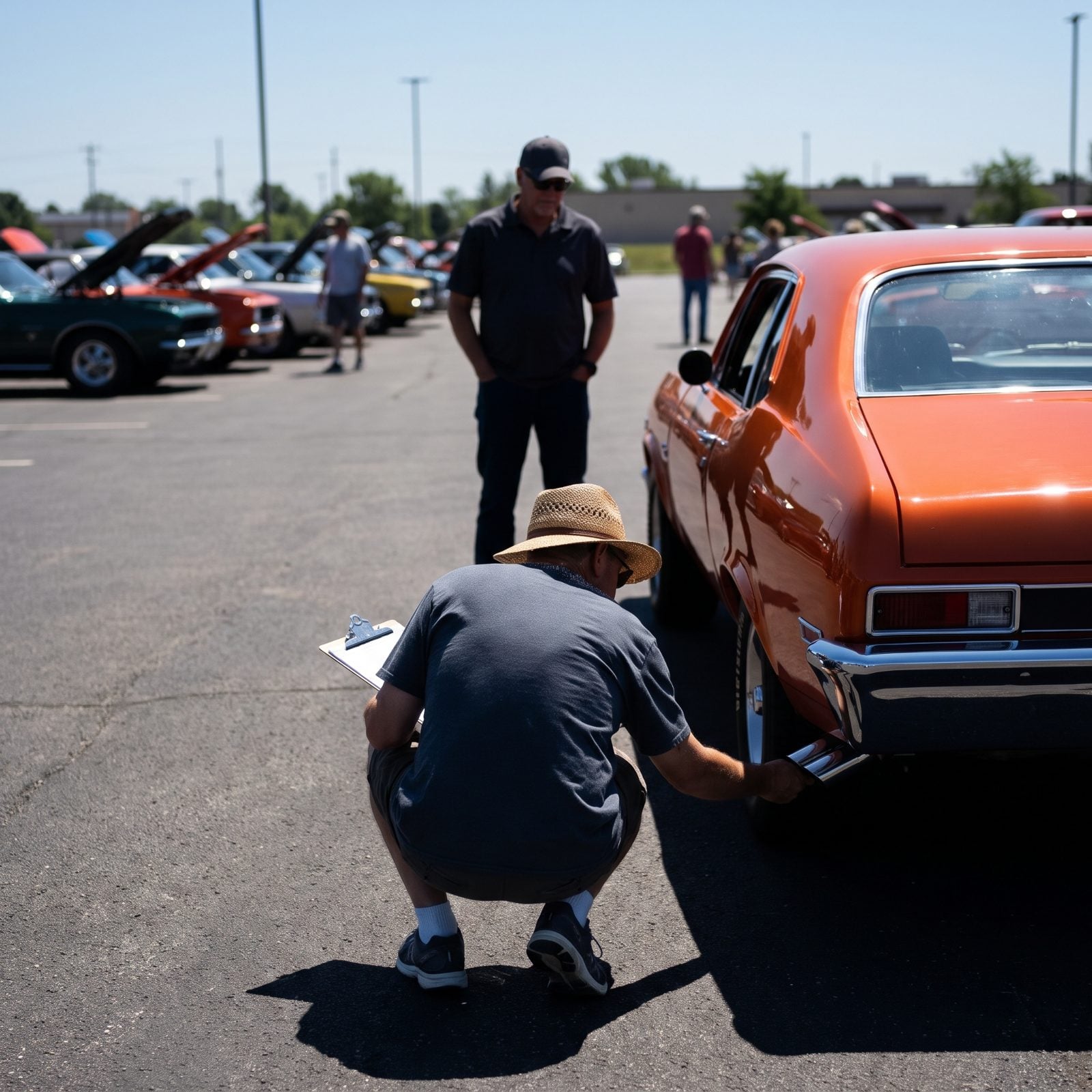
Lobbying a judge is the fastest way to lose their respect. Telling them how many hours you have into the build, dropping hints about how badly you need the win, name-dropping who you know on the committee — it all lands the same way. It tells the judge you don’t trust the car to speak for itself.
Good judges score what’s in front of them. Great ones quietly hold a grudge against anyone who tries to tilt the scale. Answer questions if asked. Volunteer nothing you weren’t asked for.
6. Stand Back and Let Judges Inspect Without Coaching Them
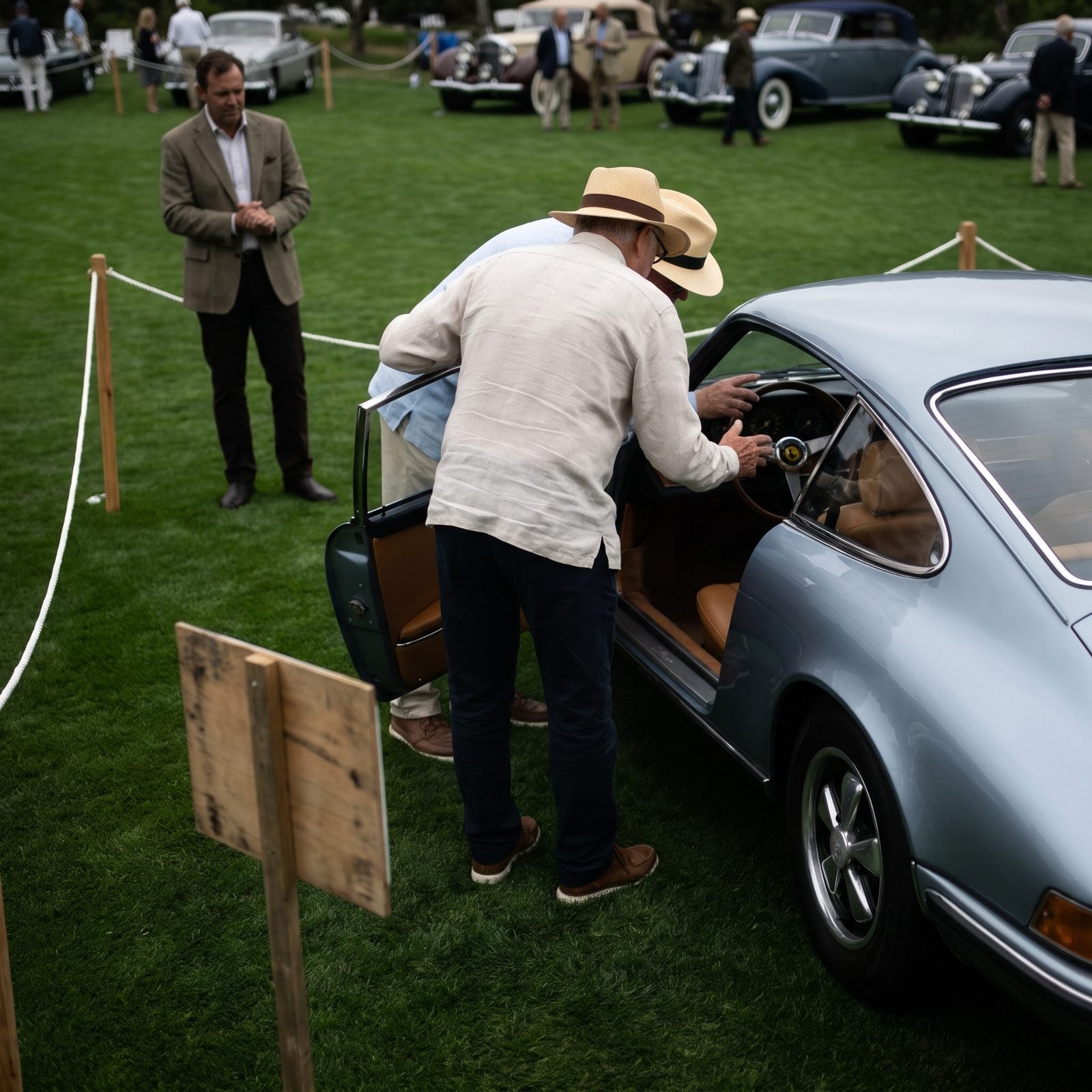
You spent months on the car. The urge to narrate every detail while a judge inspects is powerful, and you should fight it.
Hovering over a judge’s shoulder, pointing at the correct date-code hardware, explaining the paint process unprompted — it crowds the inspection and signals insecurity. Give them room. Let the correct bolt be found, not announced.
If they have a question, they’ll ask. Until then, step back a few feet and let the work do the talking. Plenty of first-timers learn this the hard way, chattering a judge’s ear off while he’s clearly trying to count something.
5. Do Not Start or Move the Car While It Is Being Judged
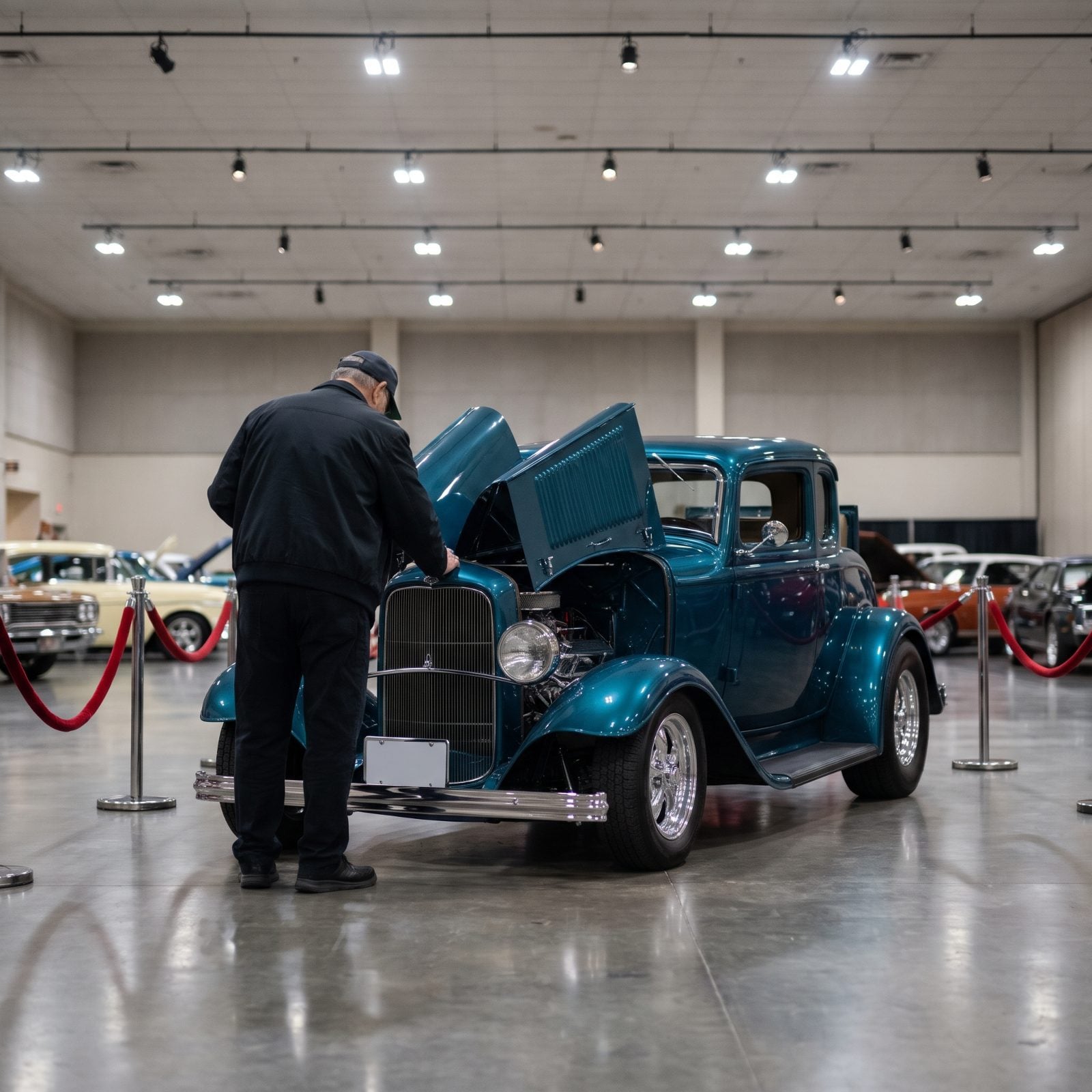
A judge might be buried in your engine bay or crouched by a rocker panel when the mood strikes to fire it up or roll forward a foot. Don’t. Starting or moving a car during active judging is dangerous, startling, and a dead giveaway that you’re not paying attention to the people around your machine.
Indoors it’s worse. Exhaust in an enclosed hall is a real hazard, and most indoor shows forbid running engines outright. If a judge wants to hear it run, they’ll ask you to do it — on their terms, when the space is clear.
4. Take Scoring Questions to the Proper Official Calmly
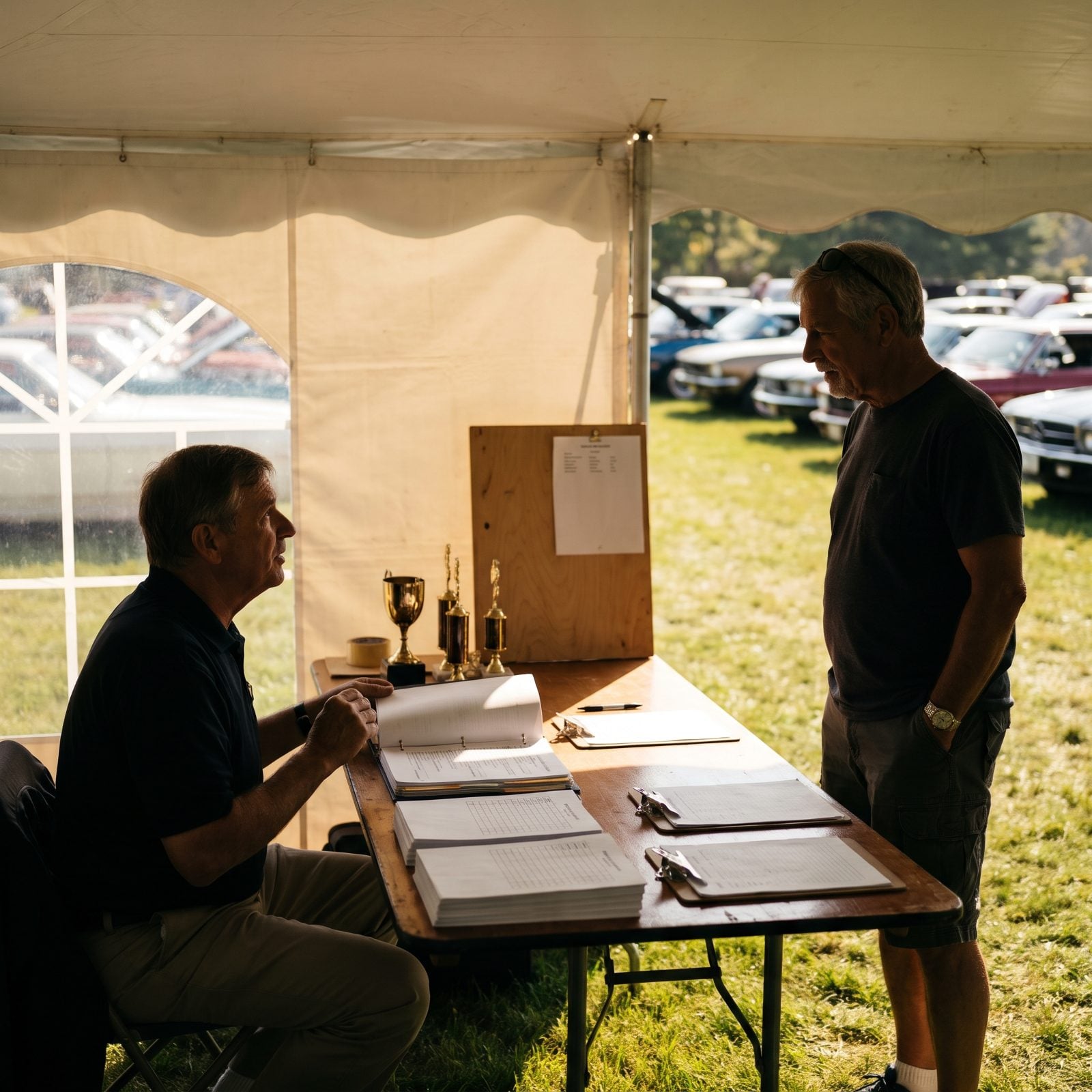
You think your score is wrong. Maybe it is. That doesn’t earn you the right to ambush a judge mid-field or vent at the award table in front of a crowd.
Find the right official — usually at registration or the results tent — and ask the question flat. “Can you walk me through where I lost points?” opens doors. “Who do I talk to about this garbage score?” slams them.
3. Never Place Advertising Flyers on Other People’s Cars
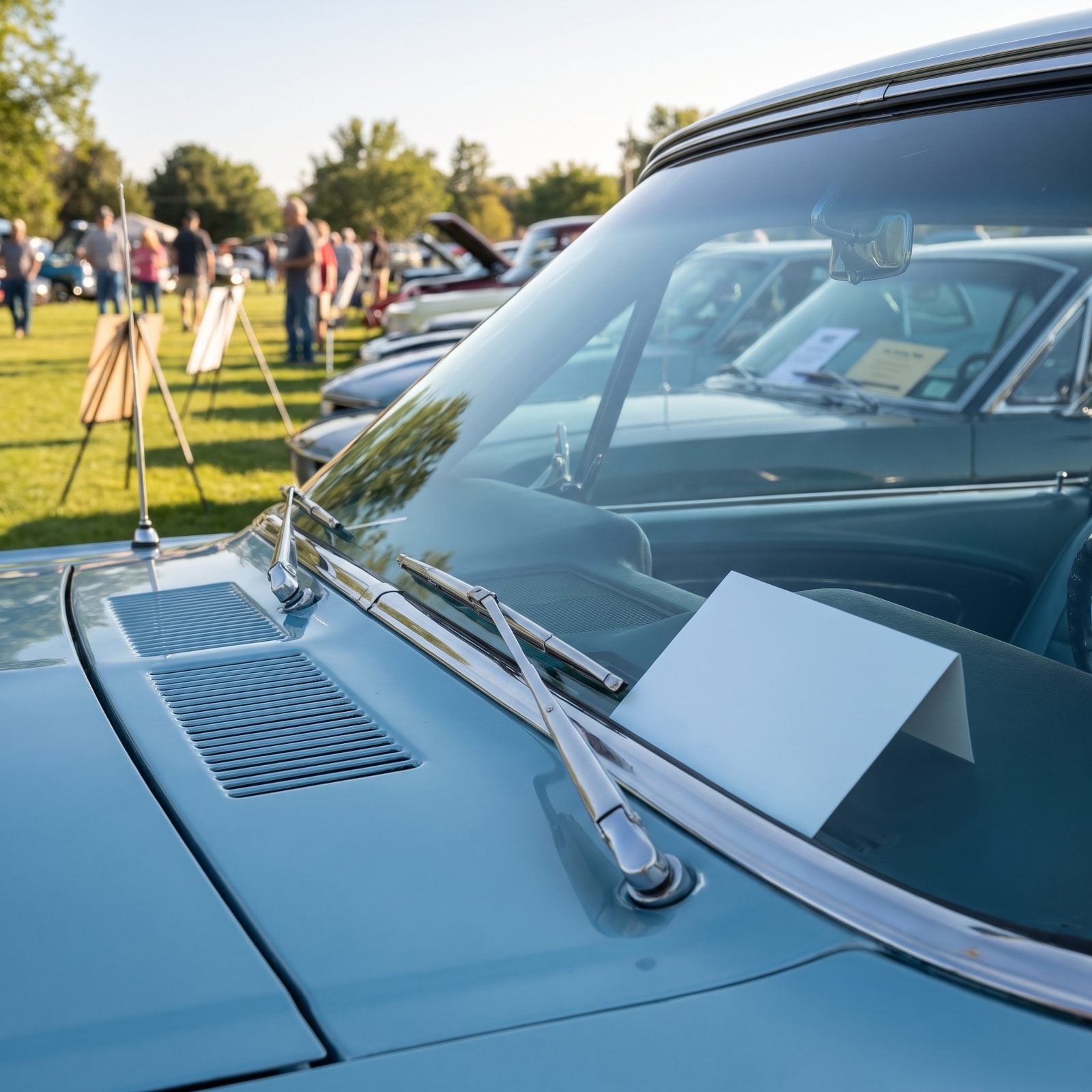
That windshield is not a bulletin board. Tucking a business card, a shop flyer, or a “for sale” sheet under someone’s wiper is tacky in a parking lot and unforgivable at a show, where paper against clean glass can scratch and where nobody asked for your pitch anyway.
People detailed those windshields that morning. A flyer flapping under the wiper arm is the one wrong note in a display they built to be flawless. Hand your card to someone who shows interest. Leave the glass alone.
2. Clean Up Any Fluid Spill Immediately and Notify Staff
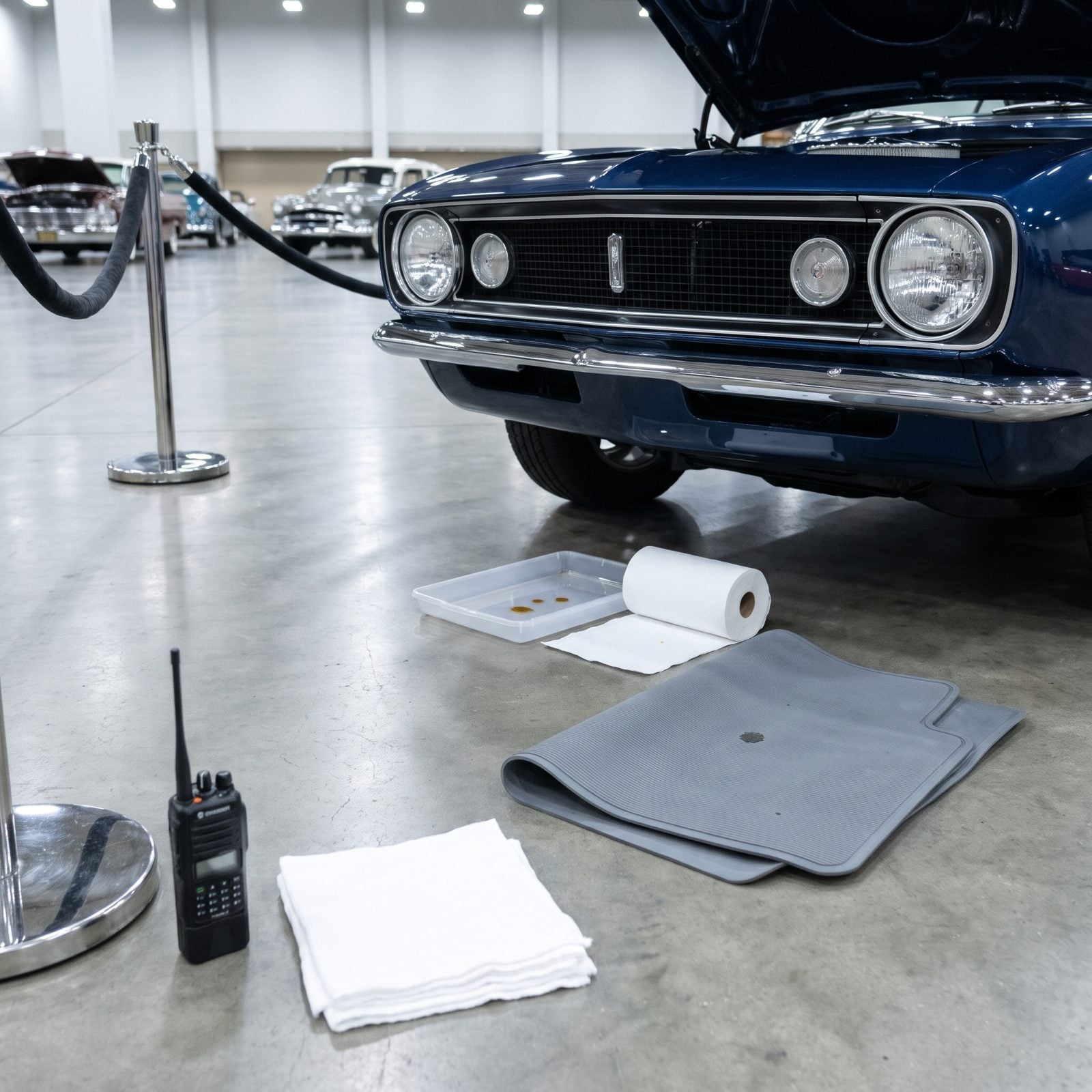
Oil, coolant, brake fluid — they don’t just stain a show floor, they turn into a slip hazard for the crowd and a nightmare for the next car parked in your spot. The moment you spot a drip, deal with it.
Bring a drip tray. Carry a few absorbent pads in the trunk. And tell staff, because a spill on polished concrete looks like nothing and sends someone down hard. Covering it quietly and hoping nobody slips isn’t getting away with anything. It’s gambling with a stranger’s hip.
1. Report Accidental Damage Instead of Quietly Walking Away
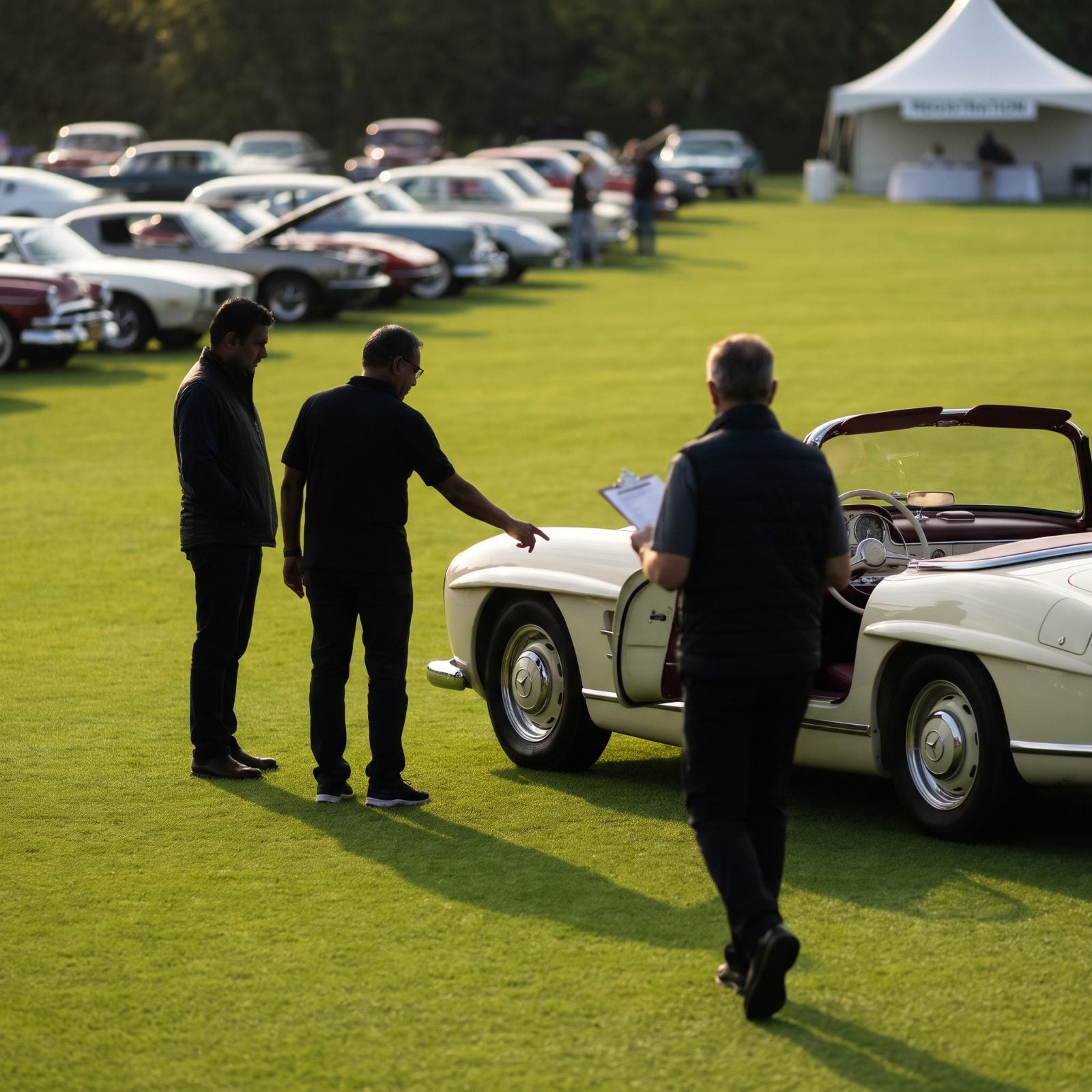
Everybody’s nightmare: a door ding, a cart that rolled, a belt buckle that caught a quarter panel. It happens, even to careful people. What separates a decent person from a coward is what they do in the next thirty seconds.
Find the owner. Find staff. Leave your name. The repair is money, and money gets sorted. The reputation you torch by slinking off — plus the fury of an owner who finds the damage after you’re long gone — costs a whole lot more than a paint correction.
We’ve all watched someone pretend they didn’t notice. Everyone around them noticed. Own it, and most owners meet you halfway. Run, and you’ve told the whole hobby exactly who you are.