
Would you like to save this?
There’s a moment in every garage when the man holding the wrench just stops. He’s staring at a patch of floor under the carpet he peeled back, and the look on his face has nothing to do with sheet metal. Anyone who’s rebuilt a 1968 Mustang, or sat through a long talk at the kitchen table, knows that face. We’ve spent years watching people pour money and hope and plain stubbornness into machines that used to run fine. Turns out the wiring in the car and the wiring in the person run the same way. Same denial. Same sunk costs. Same quiet prayer that the knock will stop on its own. Here’s where the two overlap, and why.
Please note that some of the images in this article were created with the assistance of AI.
20. You Admire the Chrome Before Checking the Frame
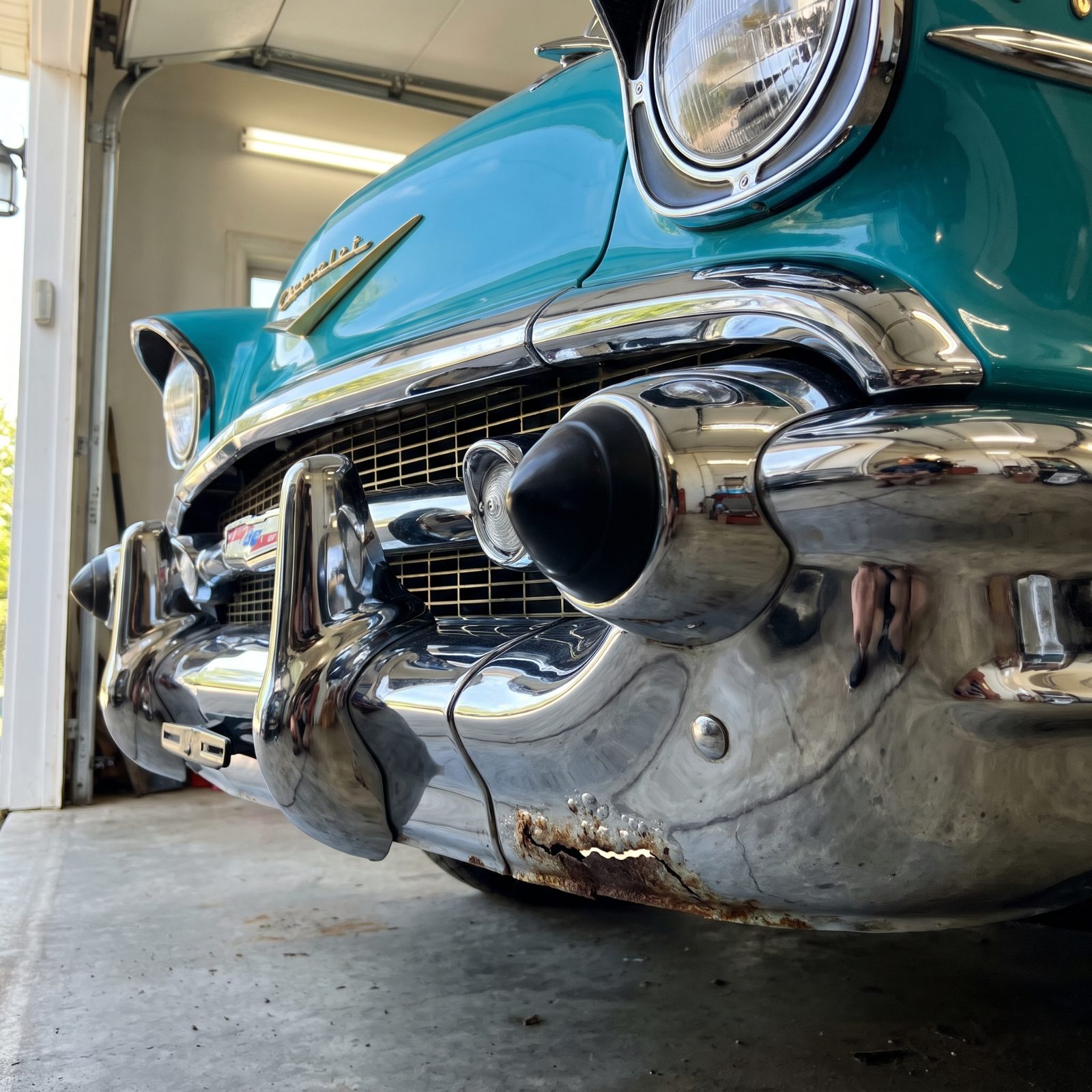
You spot the car at the swap meet and your eyes go straight to the chrome. The grille throws back the sun, the paint still has depth, and you’re already picturing Sunday drives before you’ve crouched down to see the bottom of that same gleaming bumper is rusted through, the chrome flaking away and torn open in a jagged hole.
Easy to see what’s happening here. We fall for the parts that photograph well: the easy laugh, the shared taste in music, the way someone looks across a room. Psychologists call it the halo effect, where one good trait makes us assume the rest is sound. Good chrome, good person, good car. The brain quietly assumes the shine runs all the way down, without ever bothering to look at the lower edge.
But the frame is where it lives or dies. Chrome you can replace at any show. Structure is slow, expensive, and sometimes past saving, and the thing that drew you in tells you almost nothing about whether it’ll hold together under load.
Our readers share the weakness: photos of cars with lots of chrome got hearts 87% of the time, compared with 81% for the other images in the same articles.
19. You Argue Over Stock Wheels Like They’re Core Values
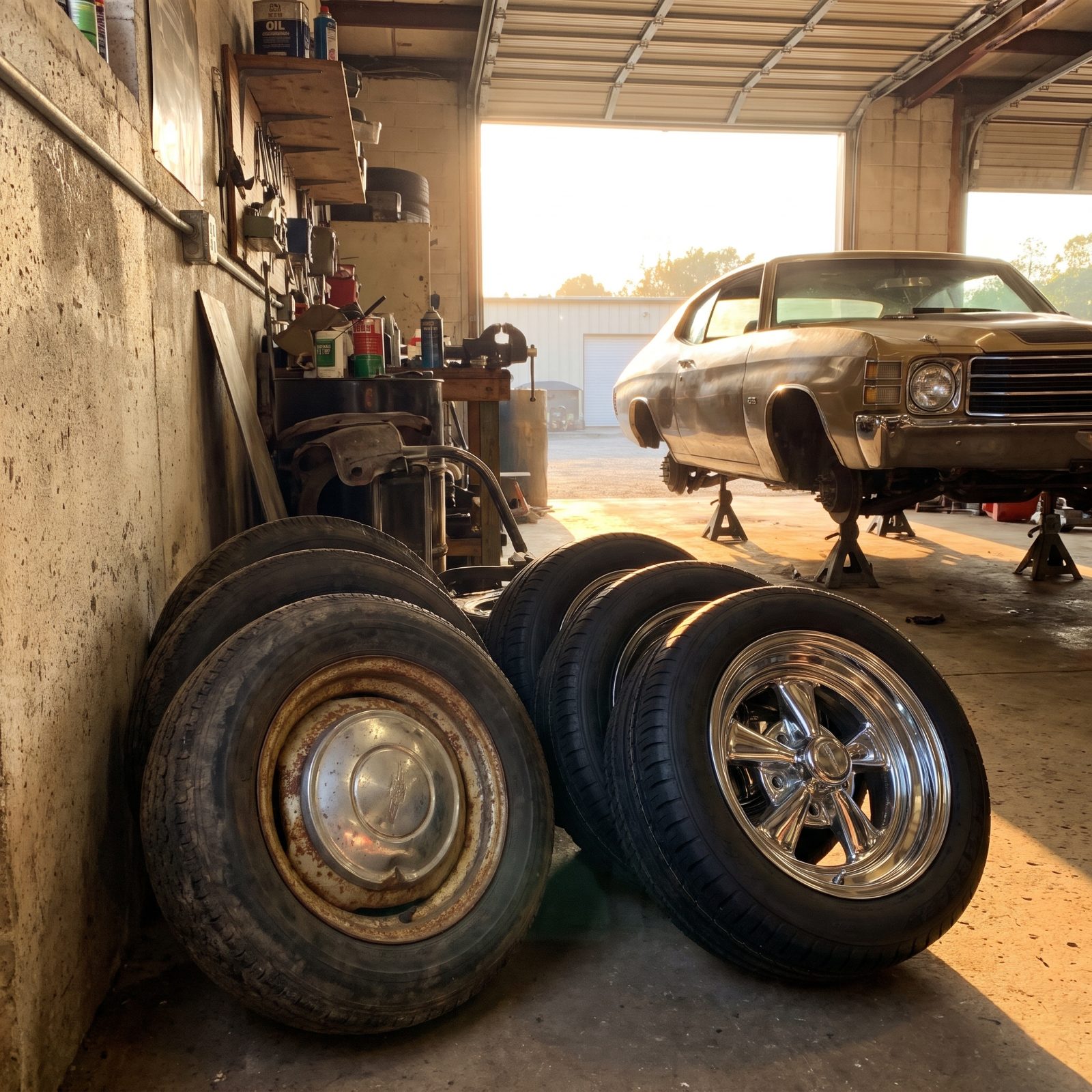
Original steel wheels or the chrome mags? You’d think the fate of the republic rode on it. Two people who agree on ninety percent of the build will stand in a driveway and go to war over rolling stock nobody but them will ever notice.
Here’s the tell: the fight was never about wheels. It’s about whose vision of the car wins, whose taste gets to be the default — the same thing that turns a question about the thermostat into a forty-minute standoff at home. The small disagreement stands in for the big one. Do I get to be myself in this, or do I disappear into your plan?
Name it and the heat usually drops. It’s not the wheels. It’s who decides.
18. You Save Original Parts Nobody Else Finds Beautiful
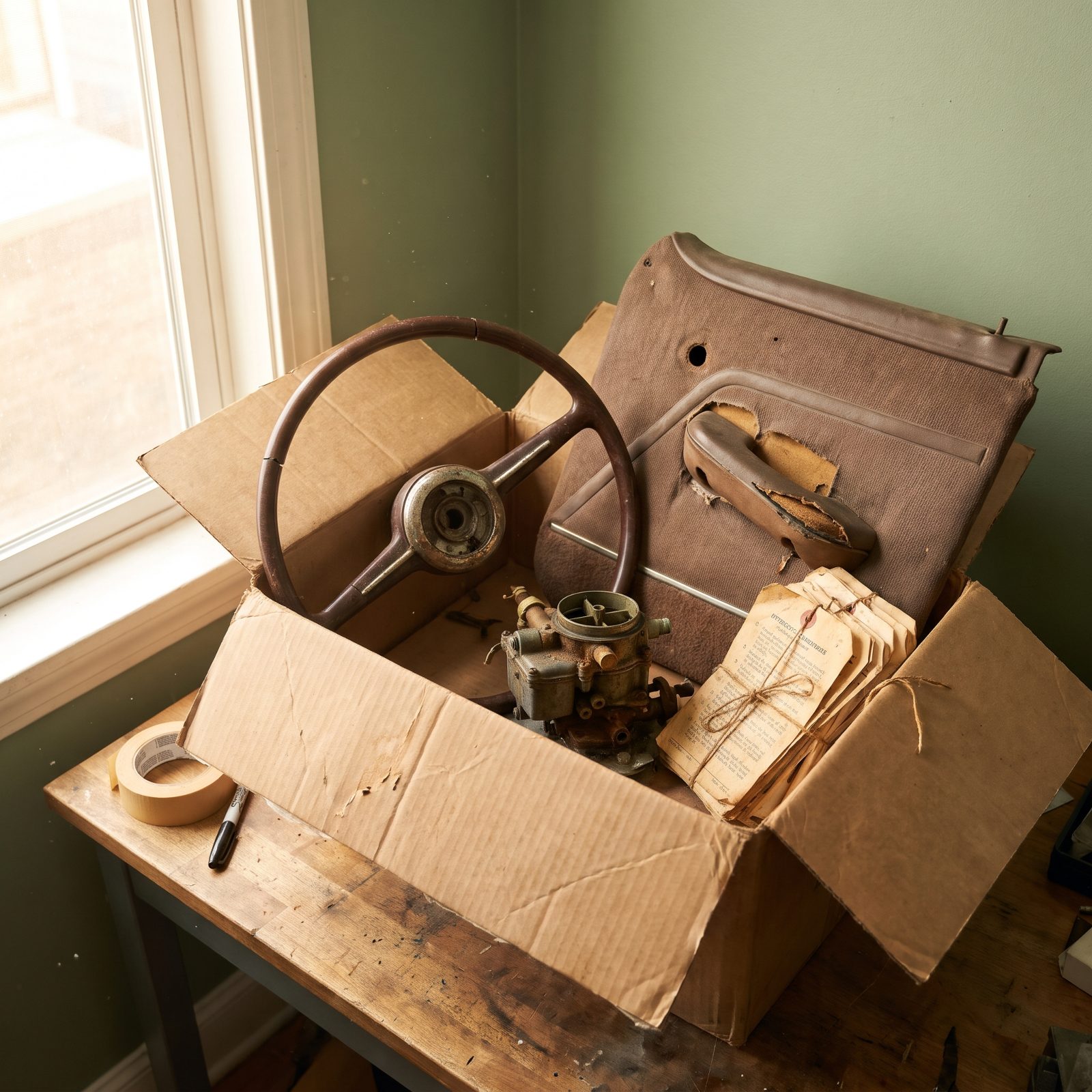
The carburetor is seized. The original seats are split and stained, and you could toss the lot and buy reproductions that actually work better. Instead you wrap them in a shop rag and set them on the shelf, because they’re the original parts, and something in you won’t let go.
We do this with marriages too. We keep the broken thing for what it used to be. Economists have a name for it — the endowment effect — where once we own something, we value it far past what anyone else would pay. That first apartment. The inside joke that stopped being funny years ago. The way it was in the beginning.
Nothing wrong with sentiment. But a shelf full of parts that no longer do their job isn’t a restoration. It’s a little museum of what you can’t admit is over.
What Our Readers Say
- In Jalopy Talk readers’ votes, car photos with a 1960s look got hearts 89% of the time, versus 77% for the other images in the same articles.
From Jalopy Talk reader polls and votes.
17. You Avoid Lifting the Carpet Because Rust Might Answer
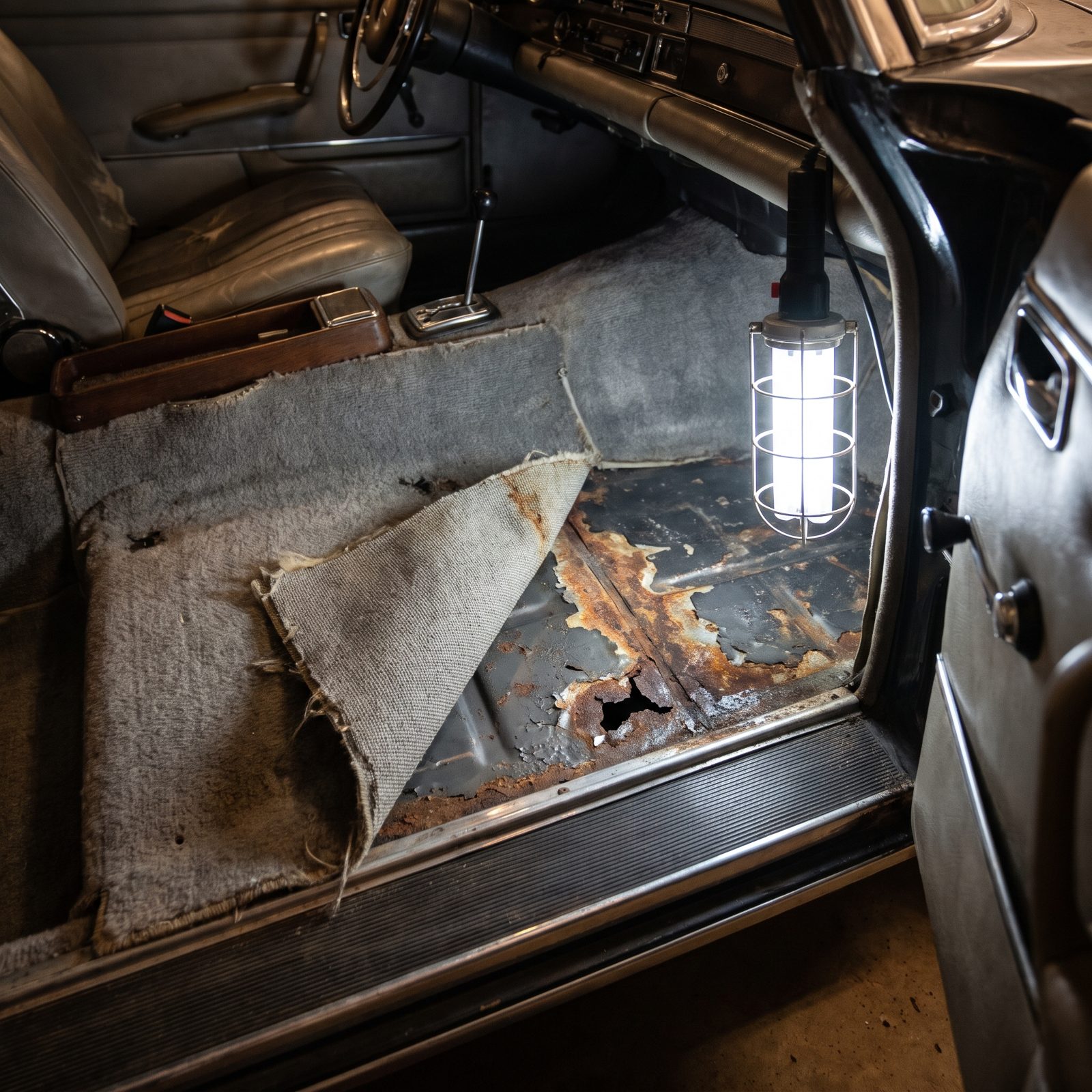
Everything above the carpet looks fine, so you leave the carpet down. You already suspect what’s under there. Lift it and you’ll have to deal with it, and dealing with it means welding, money, and a build that stalls for months.
So you don’t lift it. You keep the carpet down the exact way couples keep certain conversations closed — the resentment nobody names, the thing that happened three years ago. Everyone can smell it, but as long as it stays covered, the day can proceed.
Avoidance feels like peace. It isn’t. Rust doesn’t rest while you ignore it, and neither does the thing under the carpet at home. Both spread quietest right where you refuse to look.
16. You Replace the Easy Parts and Ignore the Knock
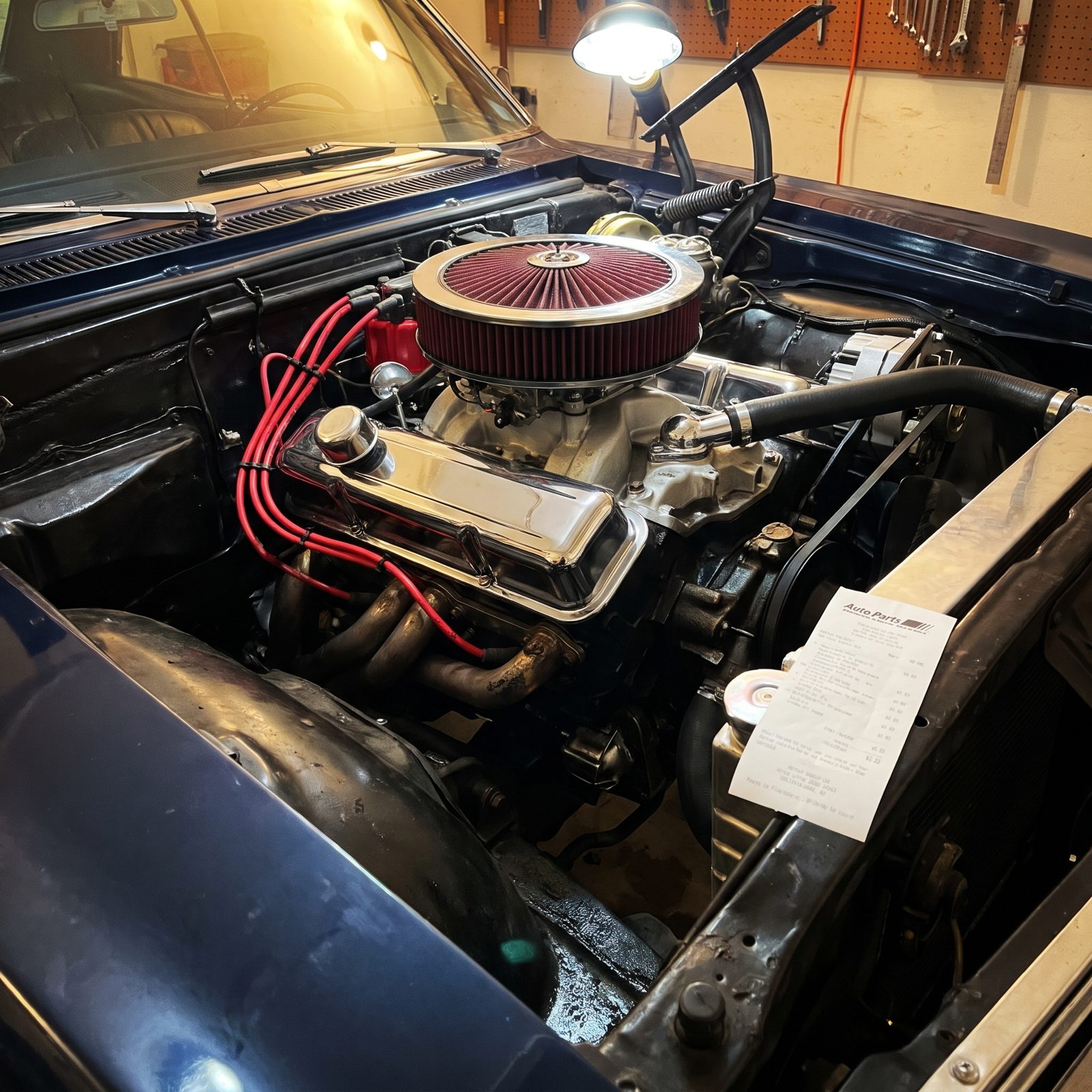
There’s a knock down low in the engine, and you can hear it at idle. So you buy new plugs, new wires, a bright air filter, a chrome valve cover, and the engine bay looks better than it has in decades. The knock is still there. You turn the radio up.
This is the most human move in the whole garage. Easy fixes hand us the feeling of progress without the cost of the hard one — buy flowers, plan a weekend away, repaint the kitchen. Real motion, real effort, all of it aimed slightly to the left of the actual problem, because the actual problem lives in the bottom end and nobody wants to pull the motor.
A fresh valve cover over a bad bearing is just a nicer-looking failure. So is a lovely anniversary trip stacked on top of a thing you two still won’t say out loud.
15. A Compression Test Ends Months of Wishful Thinking
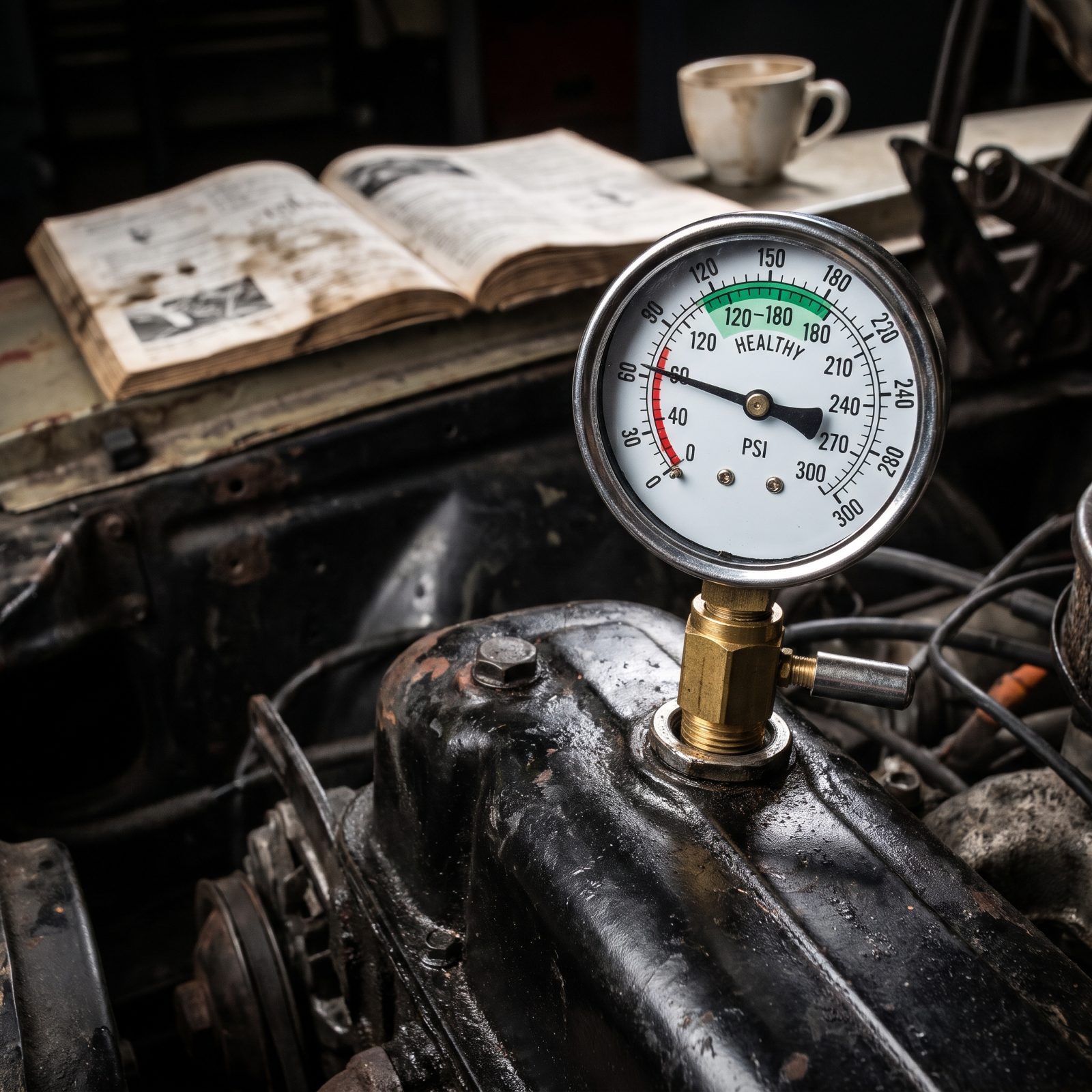
For months you told yourself it was just a tune-up away from running right. Then you did a compression test. The gauge gave you a number, and the number didn’t care about your plans — one cylinder way down. Now you know.
There’s a strange relief in hard data. Wishful thinking is exhausting to keep running. The gauge, or the honest conversation, or the counselor’s blunt question, ends the loop of maybe. It hurts and it frees you at the same time, because you finally stop negotiating with a fantasy.
Hope with no measurement attached isn’t hope. It’s just delay wearing a nicer coat.
The number might tell you to rebuild. It might tell you to walk. Either way you were stuck until it showed up, and that alone is worth something.
14. You Blame the Previous Owner for Every New Problem
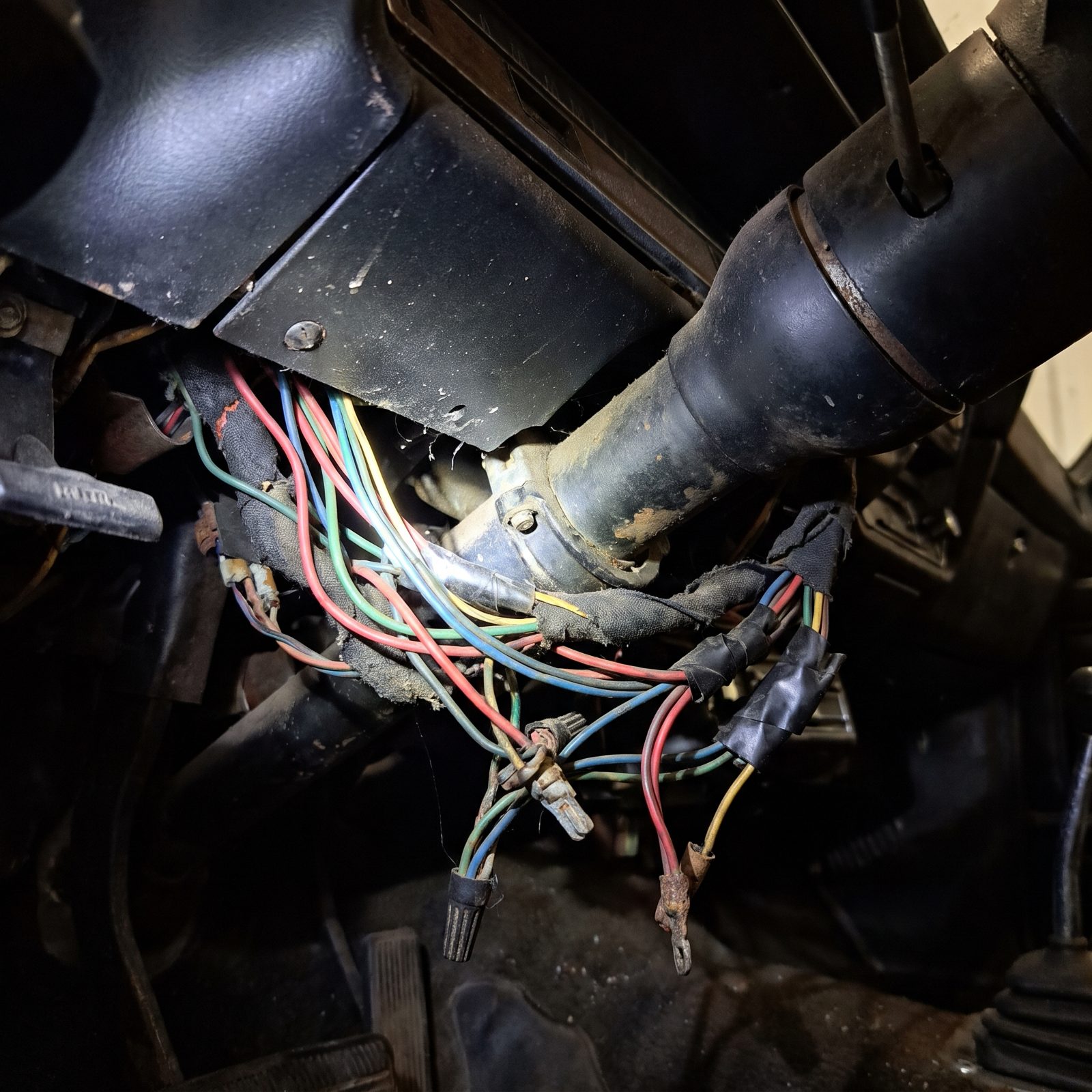
Every botched splice, every stripped bolt, every bracket drilled in the wrong spot gets the same verdict: the previous owner. He’s your villain. He had no respect for this machine, and you’d never have done it that way.
Convenient, isn’t it. As long as the fault lives with someone who isn’t in the room, you never have to look at your own wrench. Couples pull the same trick with exes and in-laws and whoever raised the other person. The pattern we hate, we trace to some absent party who’s not here to defend himself.
The textbooks call it the fundamental attribution error. We blame other people’s bad choices on their character and our own on circumstance. Some of that wiring really was the last guy. But at some point the car is yours, and so are the splices you’re twisting in right now.
13. You Hide Another Parts Receipt in the Glovebox
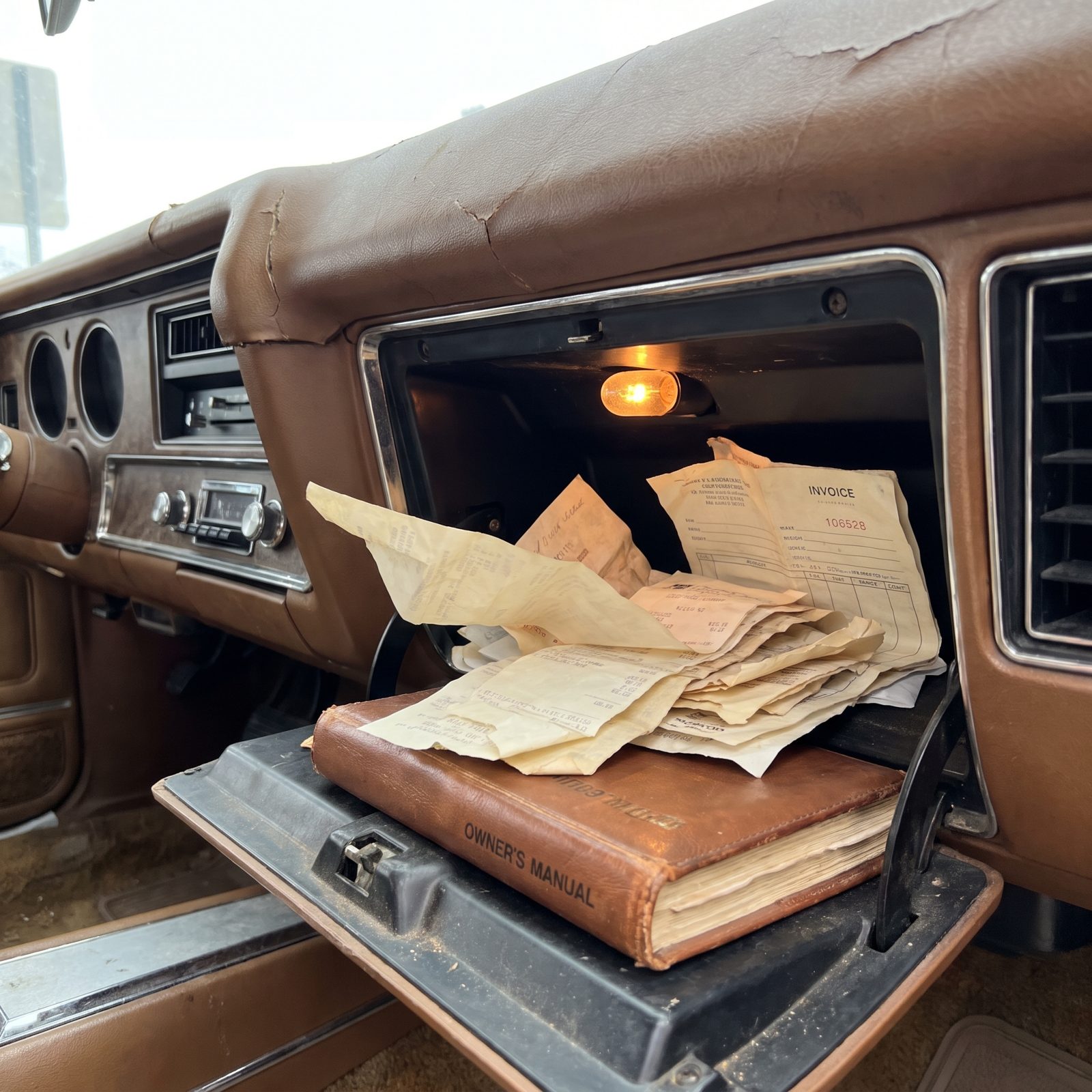
The brake kit cost more than you planned, so the receipt goes in the glovebox instead of on the kitchen counter, folded small, filed with the others. It’s not a lie exactly. Just a thing you’ll explain later, if it ever comes up.
We all know where this road ends. One hidden receipt isn’t the problem. The habit of hiding is — the little omissions that pile up until the glovebox won’t shut, and now there’s a whole stack of things your partner doesn’t know, and the stack itself has become the issue.
Secrecy compounds like interest. Each small concealment makes the next one easier and the eventual reckoning worse. The honest version costs you a slightly awkward conversation today. The glovebox version costs you trust, and trust doesn’t ride in on a parts truck.
12. You Both Want Results, but One Holds the Wrench
Would you like to save this?
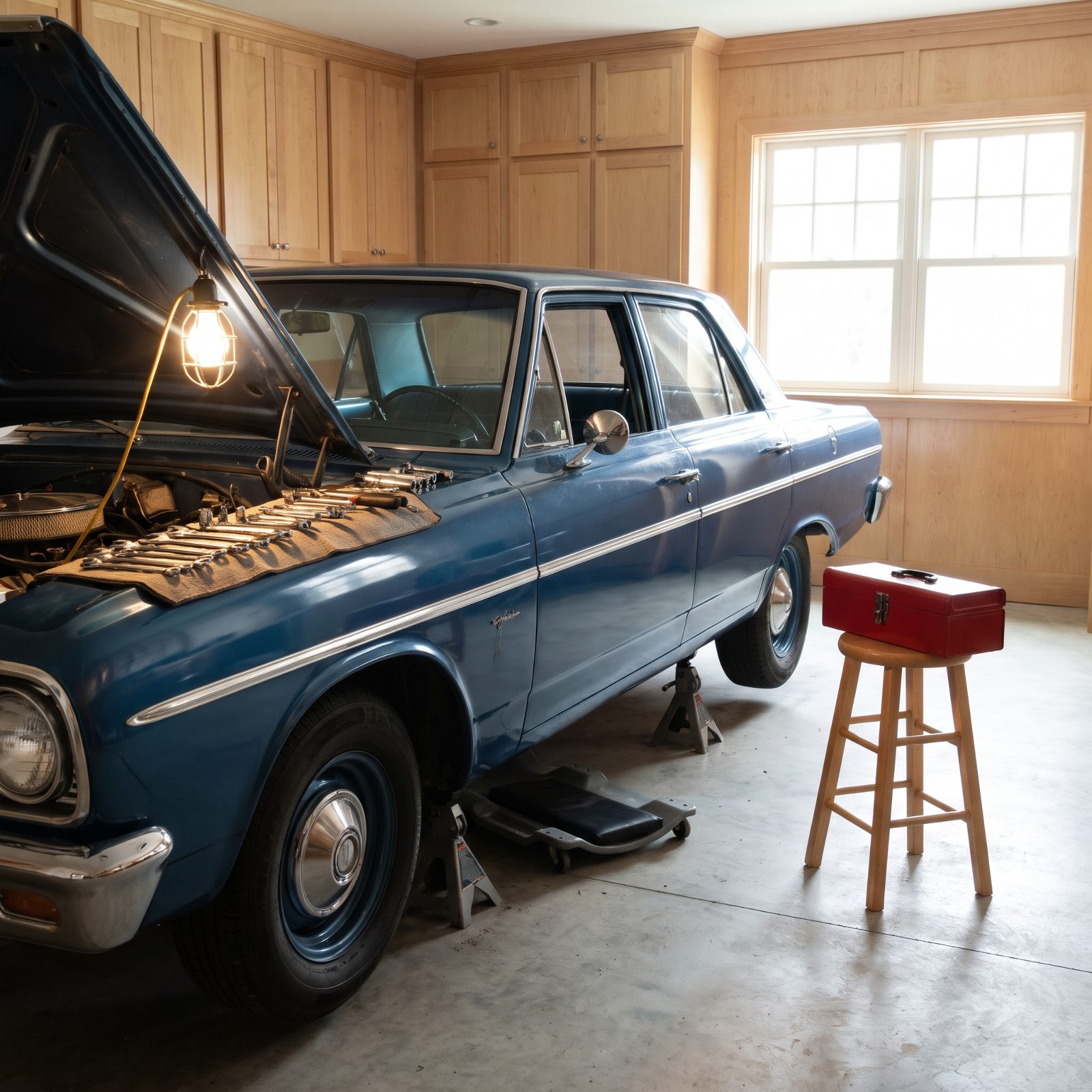
Both of you say you want the car finished. Both of you love the idea of it running. But look at the garage: one person is under it every weekend with busted knuckles, and the other shows up to approve the color.
Shared goal, lopsided effort. Oldest pattern there is in any long project. One person carries the repair while the other carries the hope, and for a while that can even pass for teamwork. It isn’t. The one holding the wrench starts counting, and the one approving the color has no idea a tally exists.
Restorations die here more often than they die of rust. Not because the work was too hard, but because the work was never actually shared — and resentment is the one fluid no bottle at the parts store will ever top off.
11. You Stop Keeping Score of Who Fixed What
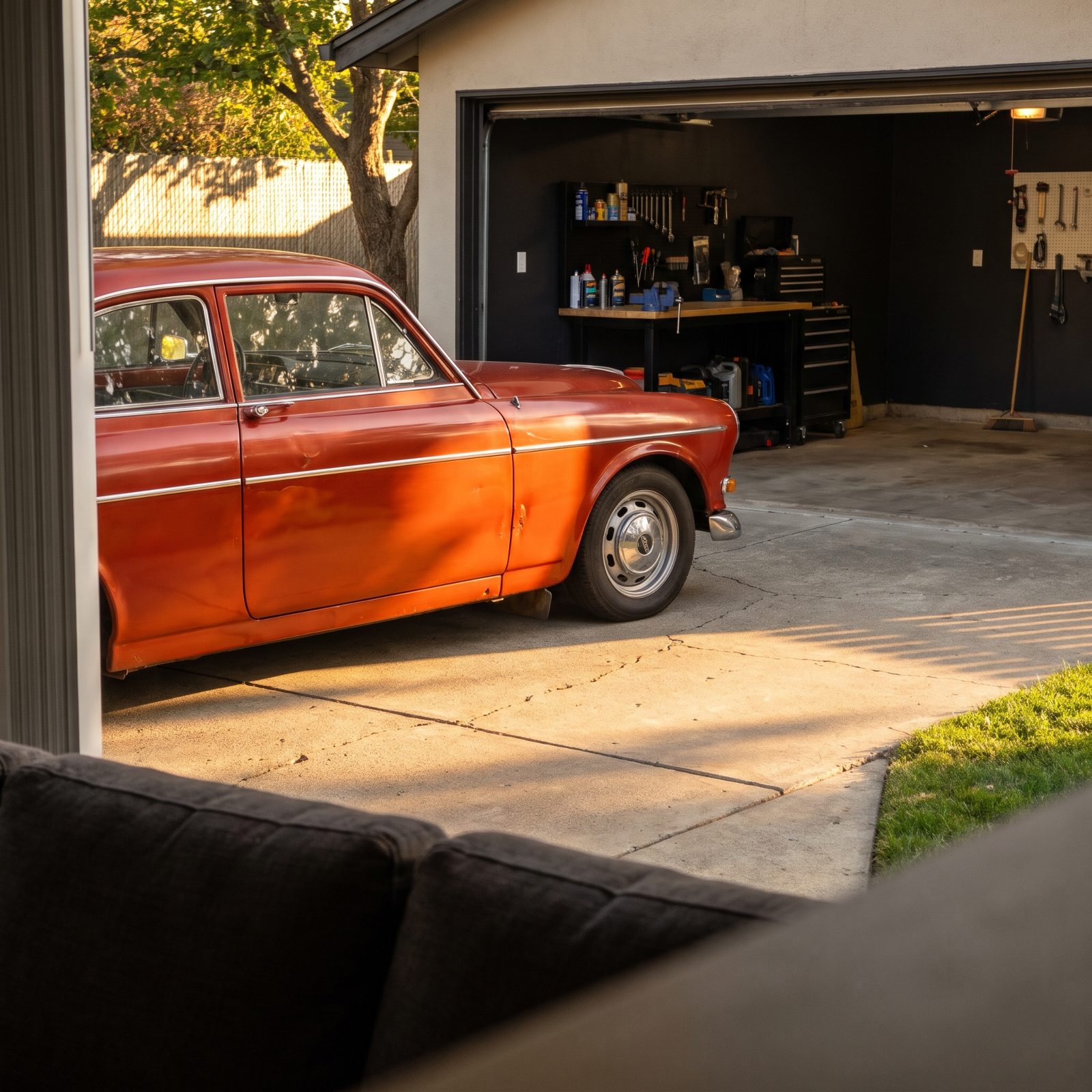
Something shifts near the end of a long build. You stop tracking who paid for the transmission, who did the bodywork, whose idea the color was. The car runs. You take it out. Nobody’s counting anymore.
That’s the quiet marker of a project — or a marriage — that actually made it. Scorekeeping is a survival tool for when you don’t trust the other party to pull their weight. When the trust comes back, the ledger just closes on its own. You can’t say exactly when it stopped mattering. It just did.
And here’s what all of this keeps circling. The car was never the point. The car was the place two people found out whether they could fix something hard together without quitting. Some finish. Some don’t. The ones that do rarely remember who torqued the last bolt.
10. You Compare Your Project to Finished Cars Online
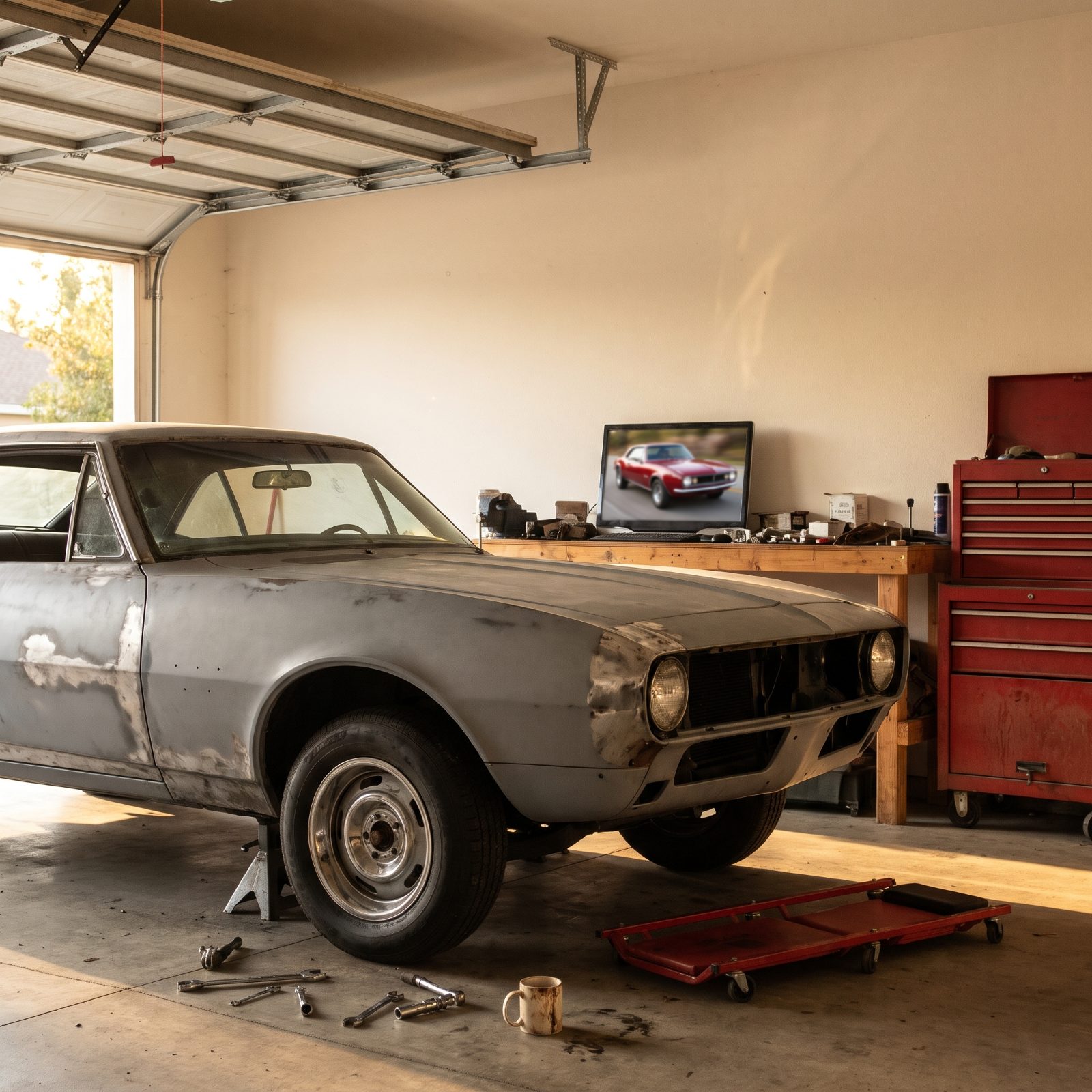
You pull up a forum thread at midnight and there’s a ’67 just like yours, except theirs is wearing fresh paint, polished chrome, and a stance that looks factory-impossible. Your car is on jack stands wearing primer and shame. Suddenly the whole project feels pointless.
Same thing happens in a marriage that’s hit a rough patch. You scroll past the anniversary post, the vacation photos, the couple grinning on a beach, and your own situation feels like a wreck by comparison. You’re forgetting that you’re looking at their highlight reel and your own blooper tape.
Psychologists call it the comparison trap, and social media pours gasoline on it. Nobody photographs the restoration at its ugliest. Nobody posts the argument about money. You’re measuring your messy middle against everyone else’s finished product, and the math will always come out wrong.
9. Your Friends Know Exactly When You Should Walk Away
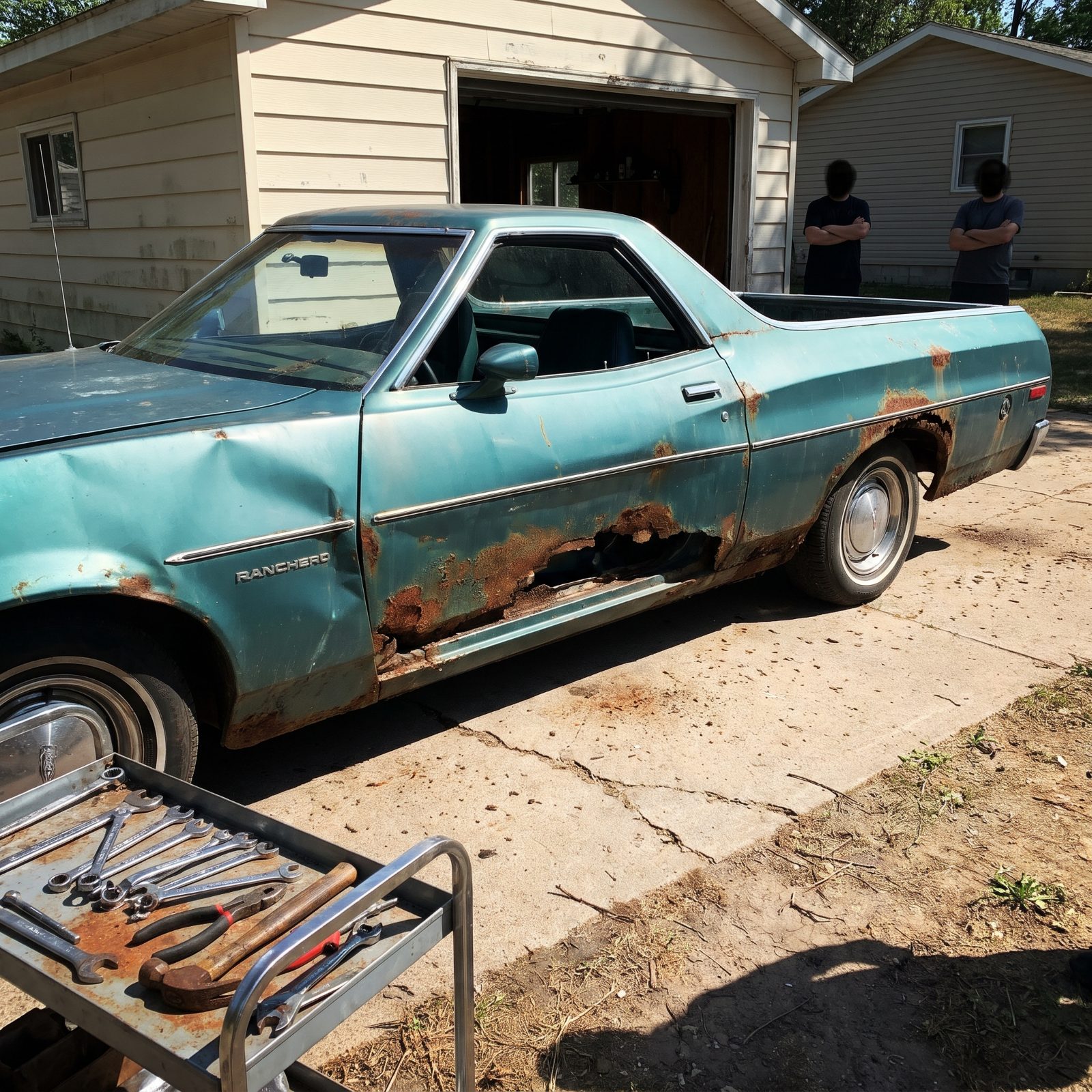
Everyone who leans into your garage says the same thing. “That frame’s shot.” “You’ll never get your money back.” “Parts car, buddy, part it out.” They say it with the easy confidence of people who aren’t in love with the thing.
Couples hear this version at dinner tables and over coffee. There’s the friend who gently suggests counseling, or worse, the exit. From the outside, the call looks obvious. From the inside, it never does.
Outside opinions tend to be right about the facts and completely blind to the feeling. Your buddy isn’t wrong that the rust is bad. He just doesn’t know what that car means to you, and he doesn’t have to live with the decision either way.
8. You Keep Spending Because the Engine Is Already Apart
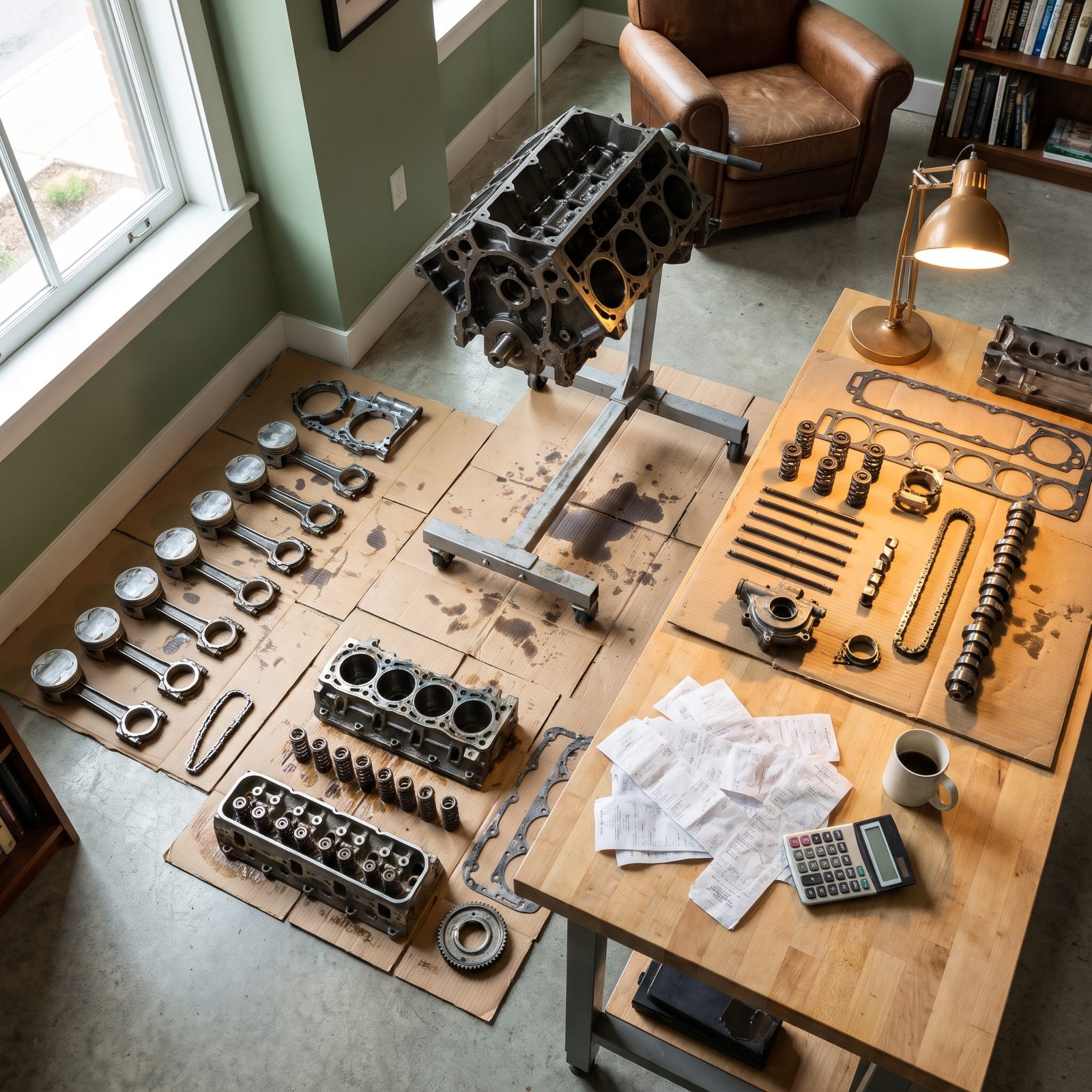
The engine’s in a hundred pieces on the bench and you’re already four thousand dollars deep. So when the machine shop calls and says the crank needs grinding too, you don’t even flinch. You’re in it now. Stopping would mean the money’s just gone.
That’s the sunk-cost fallacy, and it runs marriages the same way. Ten years, a mortgage, kids, a shared history — you stay partly because leaving would mean all of it was for nothing. The past pulls harder than the future, even though the past is already spent.
The money you already spent is gone whether you quit or continue. It should have zero vote in what you do next.
Every mechanic has fallen for it, and every honest one will tell you the hardest skill in the garage isn’t welding or wiring. It’s knowing when the smart move is to close the hood and sell it as-is. Same skill, different relationship.
7. You Set a Car-Show Deadline and Start Cutting Corners
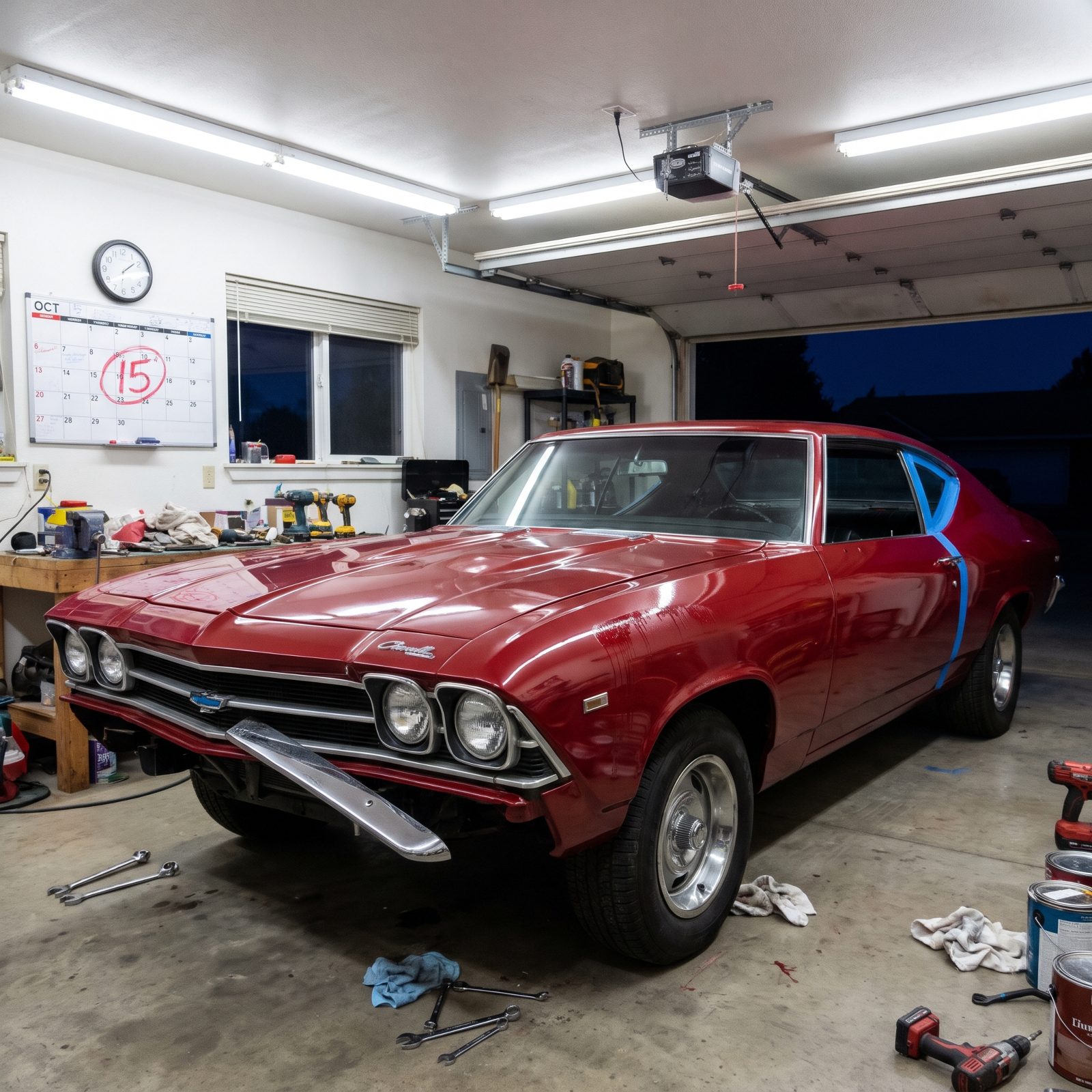
The regional show is three weeks out and you’ve got a run in the clearcoat you swore you’d fix. Suddenly “good enough” starts sounding reasonable. You clip the trim on crooked, skip the undercoat. The deadline is driving now, not the craftsmanship.
Couples do this before the big anniversary, the trip, the family wedding. Everybody papers over the real problems to make the occasion look right. Smile for the photo. Deal with it later. Except later keeps not arriving.
Arbitrary deadlines create pressure that has nothing to do with whether the underlying work is actually done. The planning fallacy makes us think we can rush the finish without the shortcuts showing. The paint always shows. So does the resentment.
6. Every Ten-Minute Fix Somehow Requires Removing the Dashboard
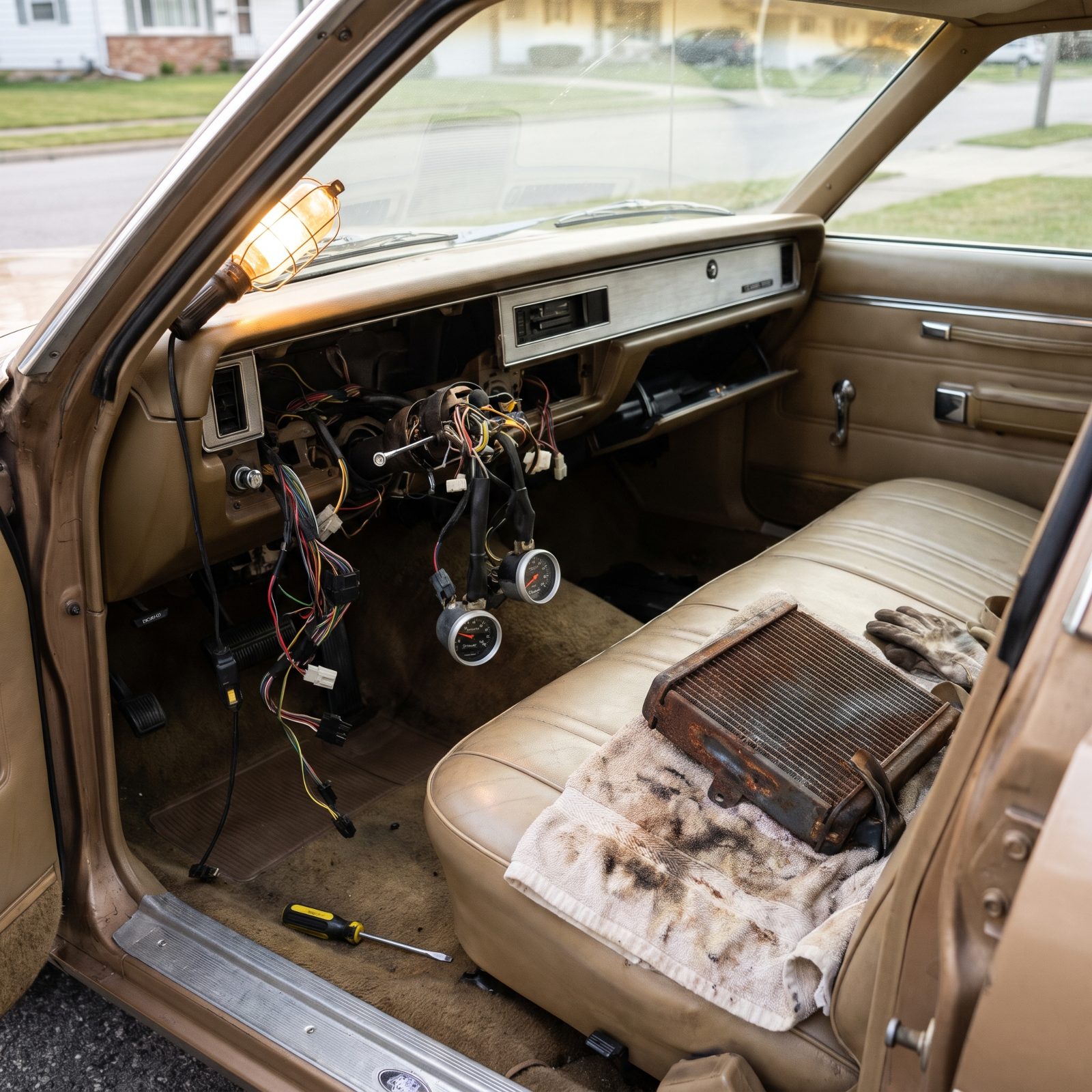
It was going to be a quick heater core swap. Ten minutes, tops. Four hours later the entire dashboard is in the back seat, there are nineteen screws you can’t account for, and you’ve found three other things that were rotting quietly behind it.
This is the oldest truth in the garage, and it’s just as true in a marriage. You bring up one small thing, the forgotten anniversary, and somehow the whole relationship ends up disassembled on the floor. The surface problem was never the real problem.
Little issues sit on top of big ones. Pull on the small thing and the big thing comes out attached to it. The repair you planned and the repair you actually needed were never the same job, and nobody warns you until you’re already in there with the dash apart.
5. The Same Leak Returns After Your Most Careful Repair
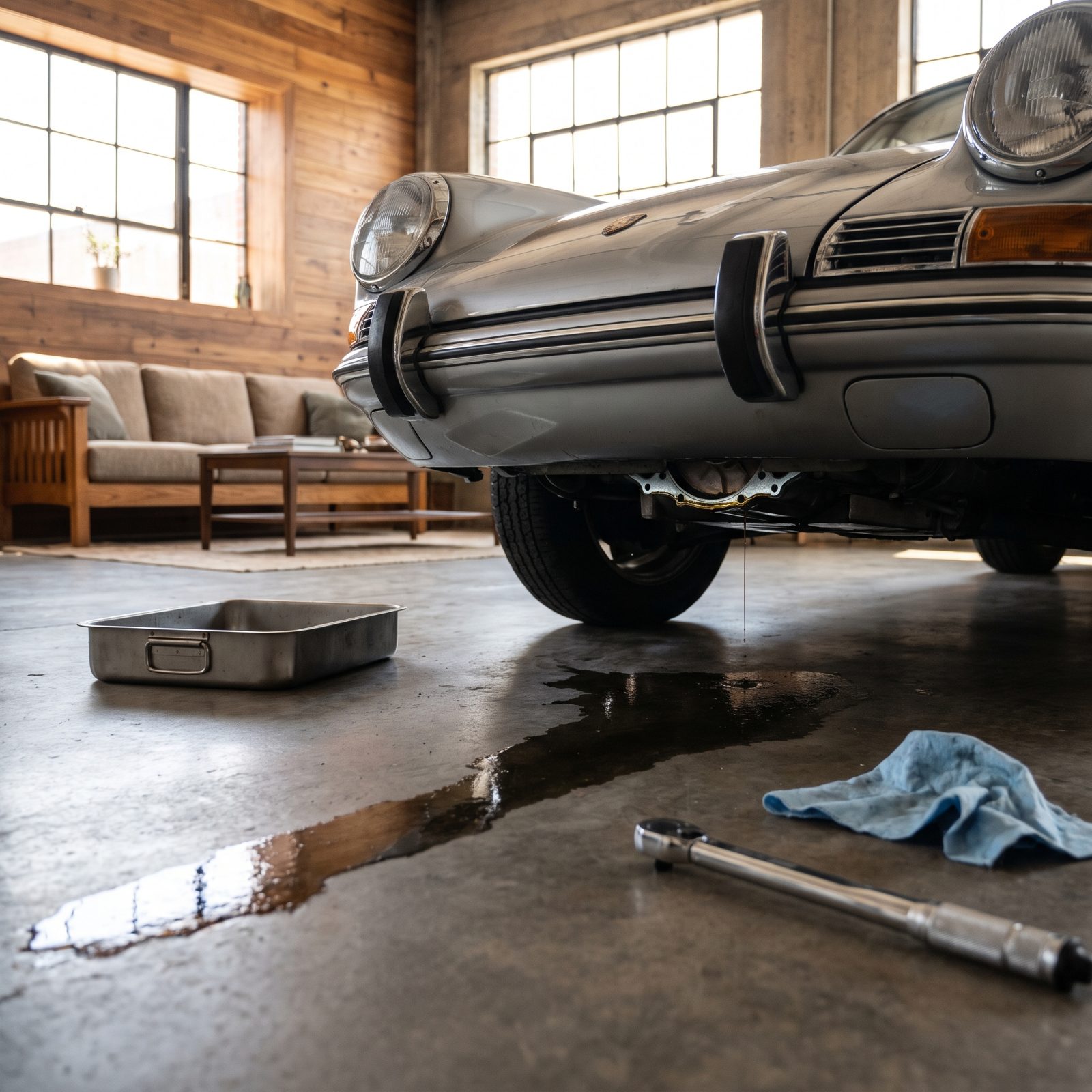
You did everything right this time. New gasket, correct torque, clean mating surfaces, the works. Drove it a week, parked it, came back, and there it is. The same dark puddle. The exact spot. The leak you were sure you killed.
Repeating fights work this way. You both say the right things, you promise it’ll be different, and three weeks later you’re standing in the same kitchen having the same argument word for word. The puddle came back because the real source was somewhere you never looked.
A leak is a symptom and so is a recurring fight. You can keep replacing the gasket where the oil appears, but if the pressure’s coming from somewhere upstream, you’ll chase that puddle forever. The hard, humbling work is tracing it back to where it actually starts.
4. One Good Ignition Cough Makes You Believe Again
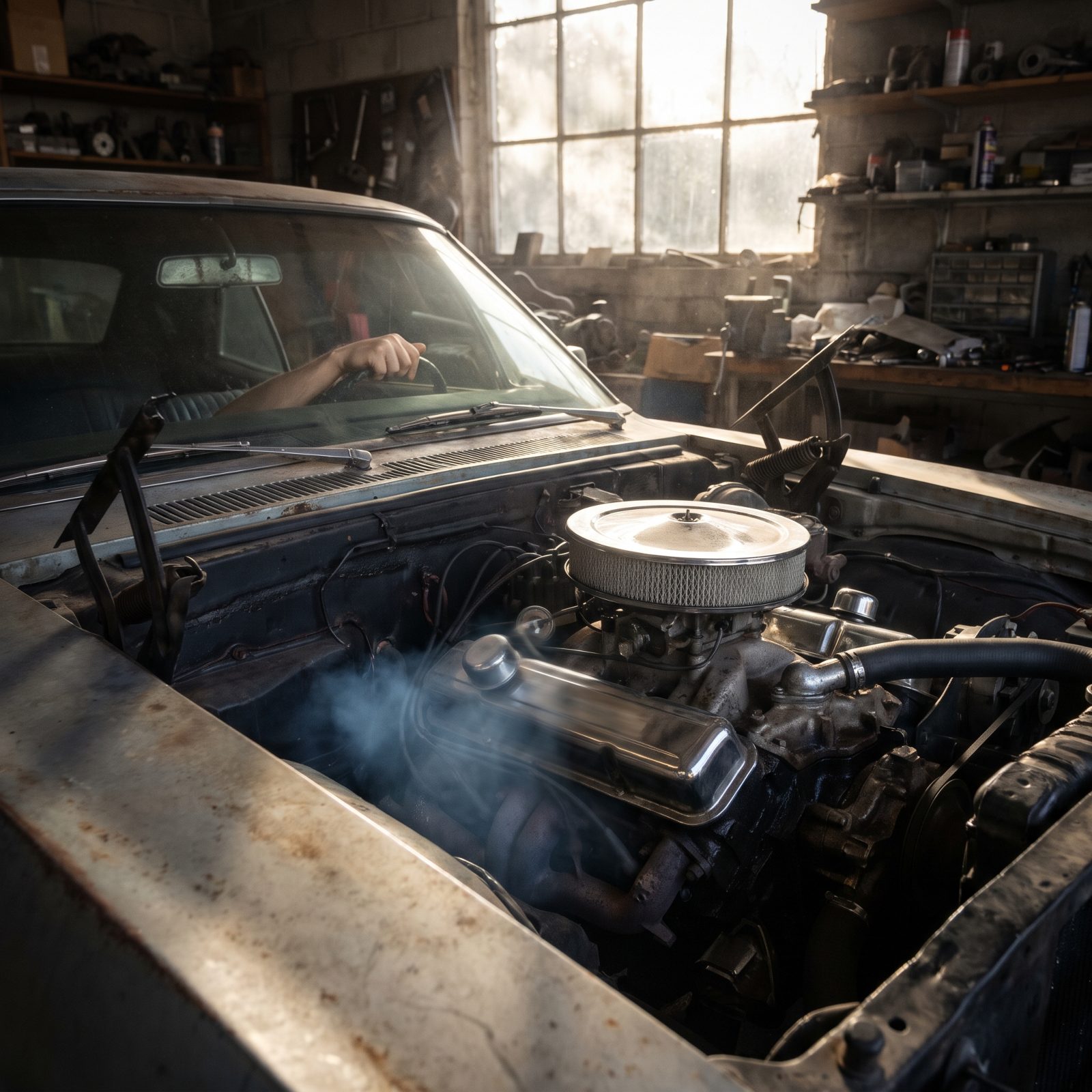
Months of silence. Then you turn the key and it coughs. Just once. Not a start, barely a stutter, but it’s the first sign of life in that engine since you dragged it home, and suddenly every doubt you had evaporates. It’s going to run. You knew it all along.
One good day does this to a struggling couple too. A single warm evening, a real laugh, a glimpse of who you used to be together, and all the hard months fade. You’re back in. The cough wasn’t the fix — it was just enough hope to keep you turning the key.
That’s variable reward psychology, the same wiring that keeps a gambler at the machine. Intermittent payoffs bind us tighter than steady ones ever could. One cough of life pays for a hundred dead cranks, and we’ll keep cranking for it.
3. The Car Sits Untouched Until Missing It Wins
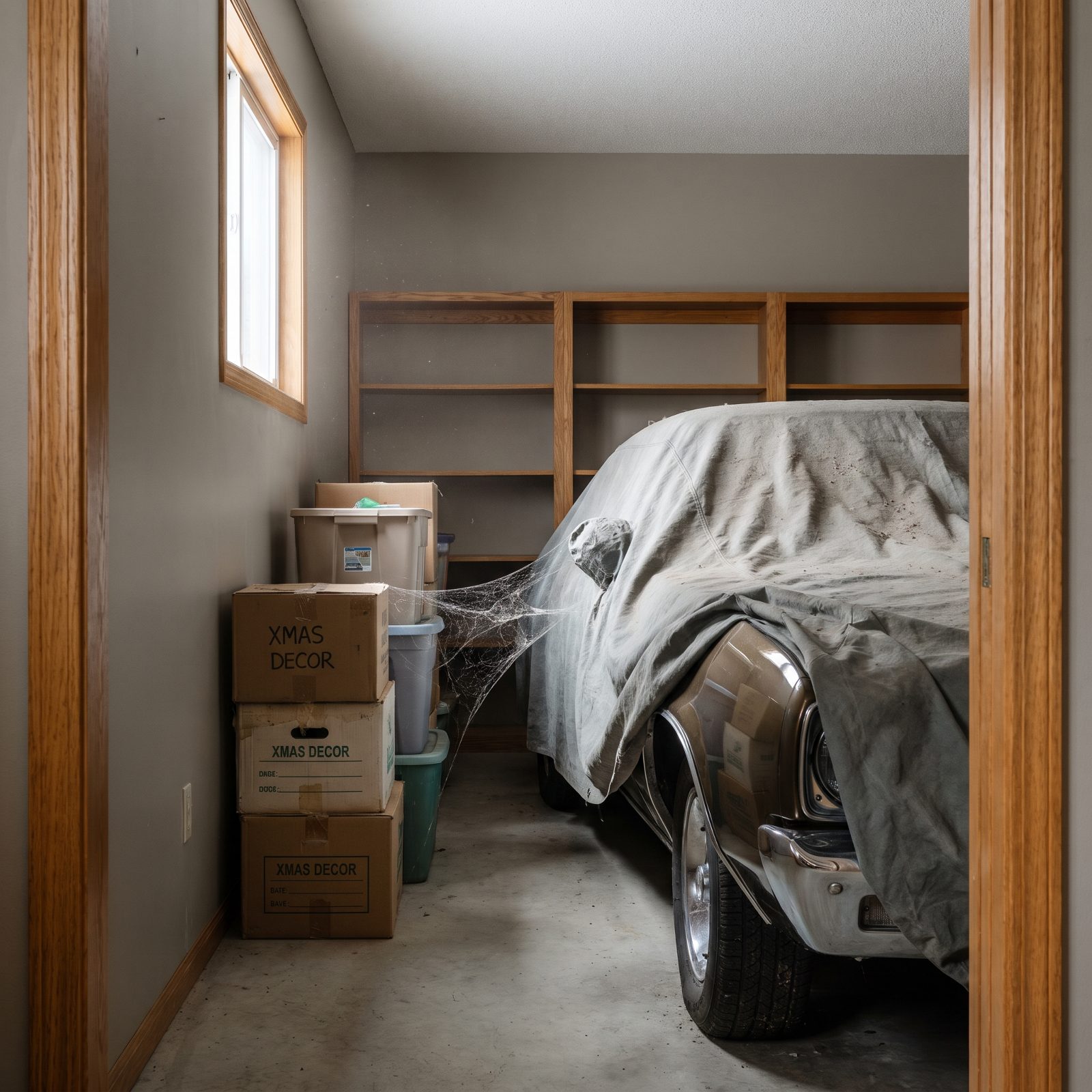
You got frustrated and threw the cover over it, swore you were done. For months it sat in the corner collecting dust and other people’s Christmas boxes, and you didn’t even look at it. Then one afternoon you walk past, pull the corner of the cover back, see that chrome, and something in your chest goes soft.
Separations run on this exact rhythm. Space you thought you wanted turns, somewhere around week six, into an ache you didn’t expect. Distance is the thing that finally tells you what the thing was worth.
Absence recalibrates us. We stop noticing what’s always in front of us, a quirk psychologists call hedonic adaptation. Take it away and the appreciation comes roaring back. Sometimes you have to cover the car to remember why you bought it.
2. The Rebuilt Engine Still Needs a Gentle Break-In
Would you like to save this?
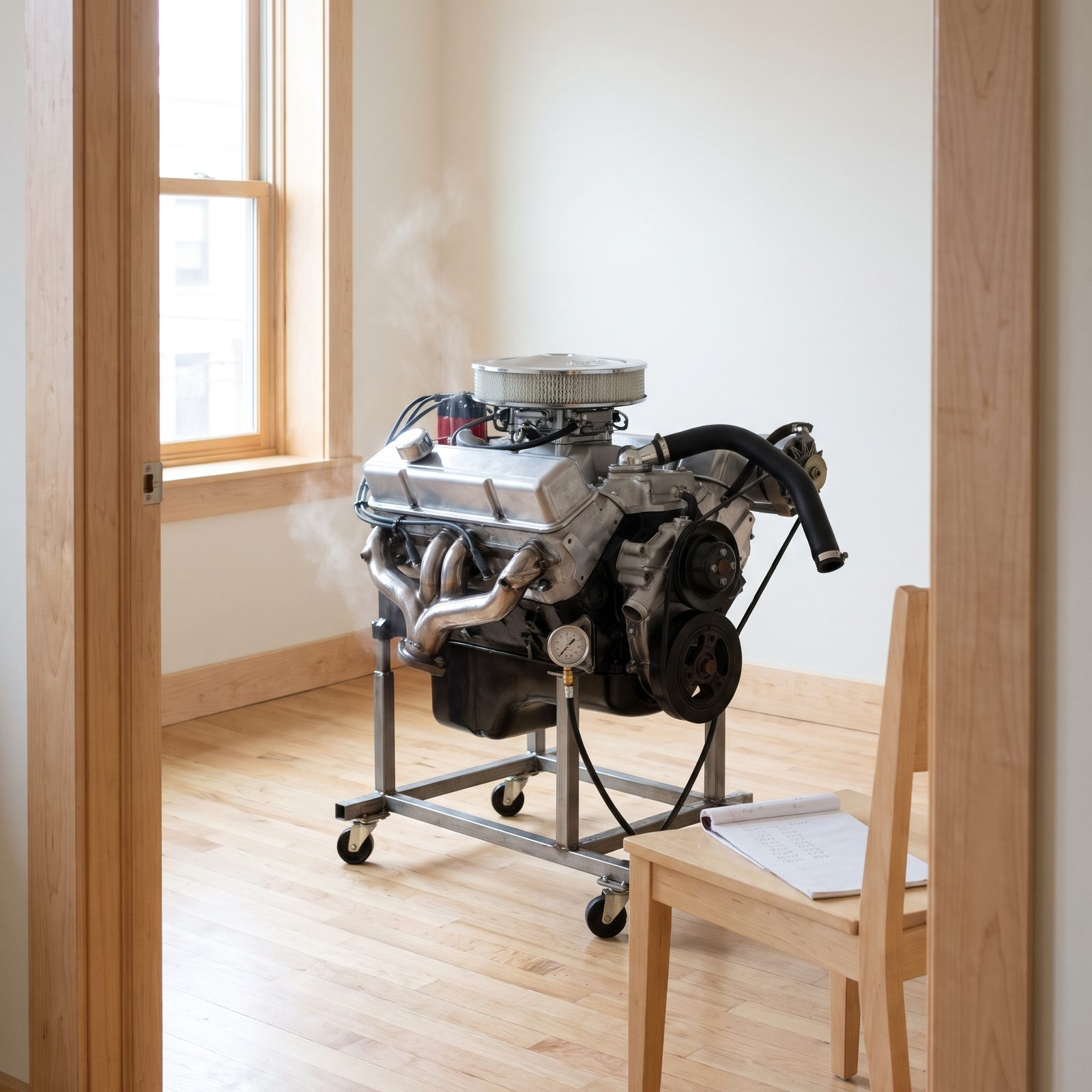
You don’t take a freshly rebuilt engine and floor it. You baby it. Gentle revs, varied load, careful heat cycles, watching the oil pressure gauge like a nervous parent. A wisp of smoke as assembly lube and paint burn off the fresh headers is normal on that first fire-up, but you keep an eye on it. The rings need time to seat. Push too hard too soon and you’ll scar everything you just paid to fix.
Reconciliation works the identical way. After the hard conversation, after the repair, you can’t just jump back to full throttle as if nothing cracked. The trust has to seat. You go gently, you watch, you let it find its rhythm before you lean on it.
People rush this part in both the garage and the living room. The work’s done, so why wait? Because freshly machined surfaces, like freshly rebuilt trust, aren’t yet what they’ll become. The break-in isn’t a delay. It’s part of the repair itself.
1. Finishing the Restoration Does Not End the Maintenance
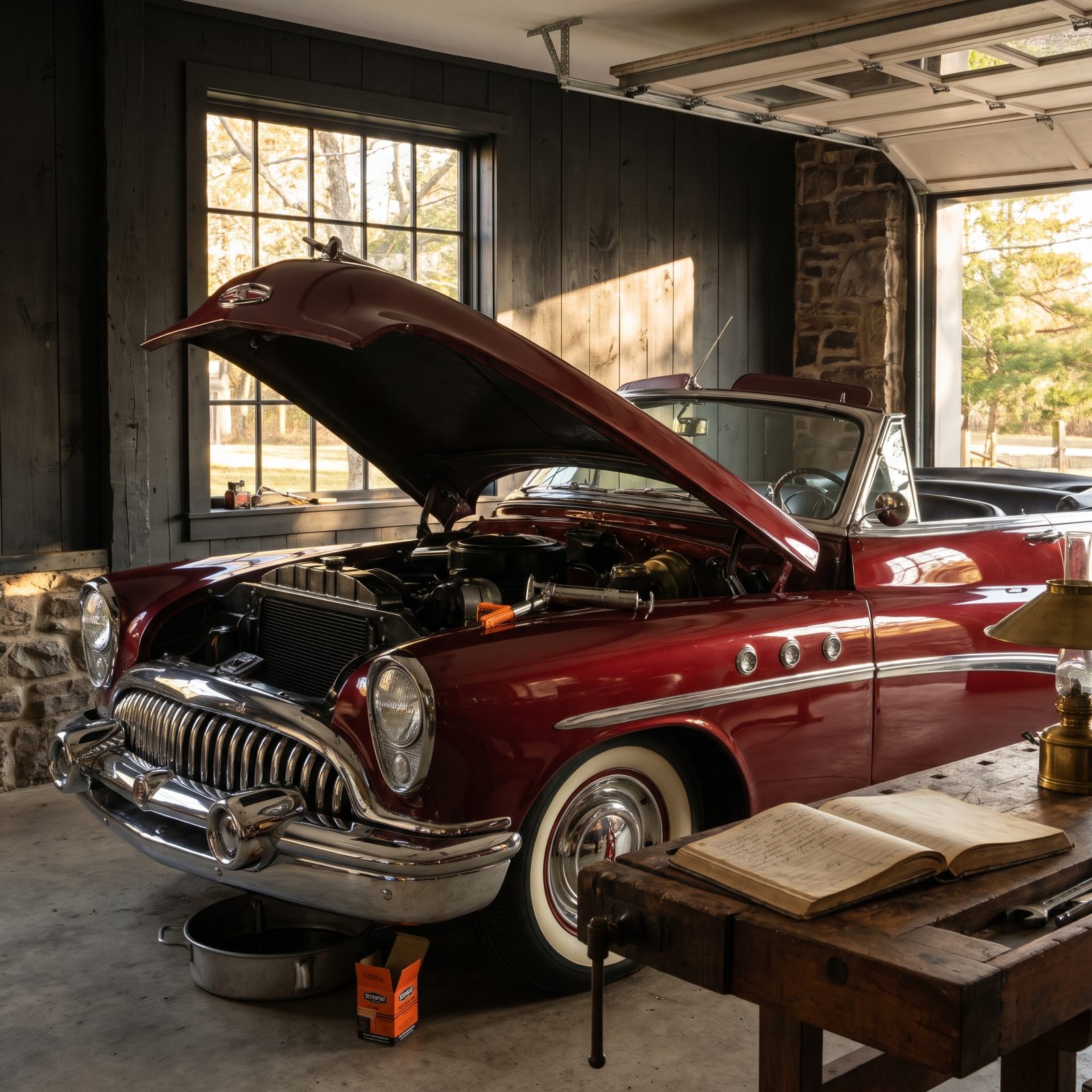
The restoration’s done. Trophy on the shelf, paint like a mirror, the thing you dreamed about for years sitting finished in your garage. And here’s what nobody tells you at the start: now the real work begins. Oil changes, grease points, chasing the odd rattle, keeping the chrome from clouding. Forever.
A marriage that comes through the hard stretch learns the same lesson. There’s no finish line where you get to stop tending it. The crisis ends. The maintenance doesn’t. You keep showing up, checking the fluids, catching the small things before they become big ones.
People treat both as projects with a completion date. They’re not. They’re living systems that stay good only as long as you keep them good. The restored car and the repaired marriage ask for the same thing — attention that never quite ends.
The restoration is finished. The caring for it never will be. That’s not the sad part. That’s the best part.
Jalopy Talk readers seem to think the finish line is worth it: restored, concours-condition cars got more hearts than the other images in the same articles, 82% versus 74%.