
Would you like to save this?
The best marriage test ever invented costs about a tank of gas and a whole lot of patience. Put two people in a car, aim it at a destination six hours off, and watch every unspoken thing come loose around hour three. The lane critiques. That silent treatment past the exit nobody wanted. The sandwich-wrapper rage, which has never once been about the sandwich. A counselor would recognize these fights instantly, because they’re the same six patterns every couple eventually names out loud: communication, control, trust, money, boundaries, conflict. The windshield just happens to be where they show up first. You’ve lived these. You’ve watched friends live them. Here’s what the open road quietly tells on you.
Please note that some of the images in this article were created with the assistance of AI.
19. You Say “Anywhere’s Fine” Then Veto Every Lunch Stop
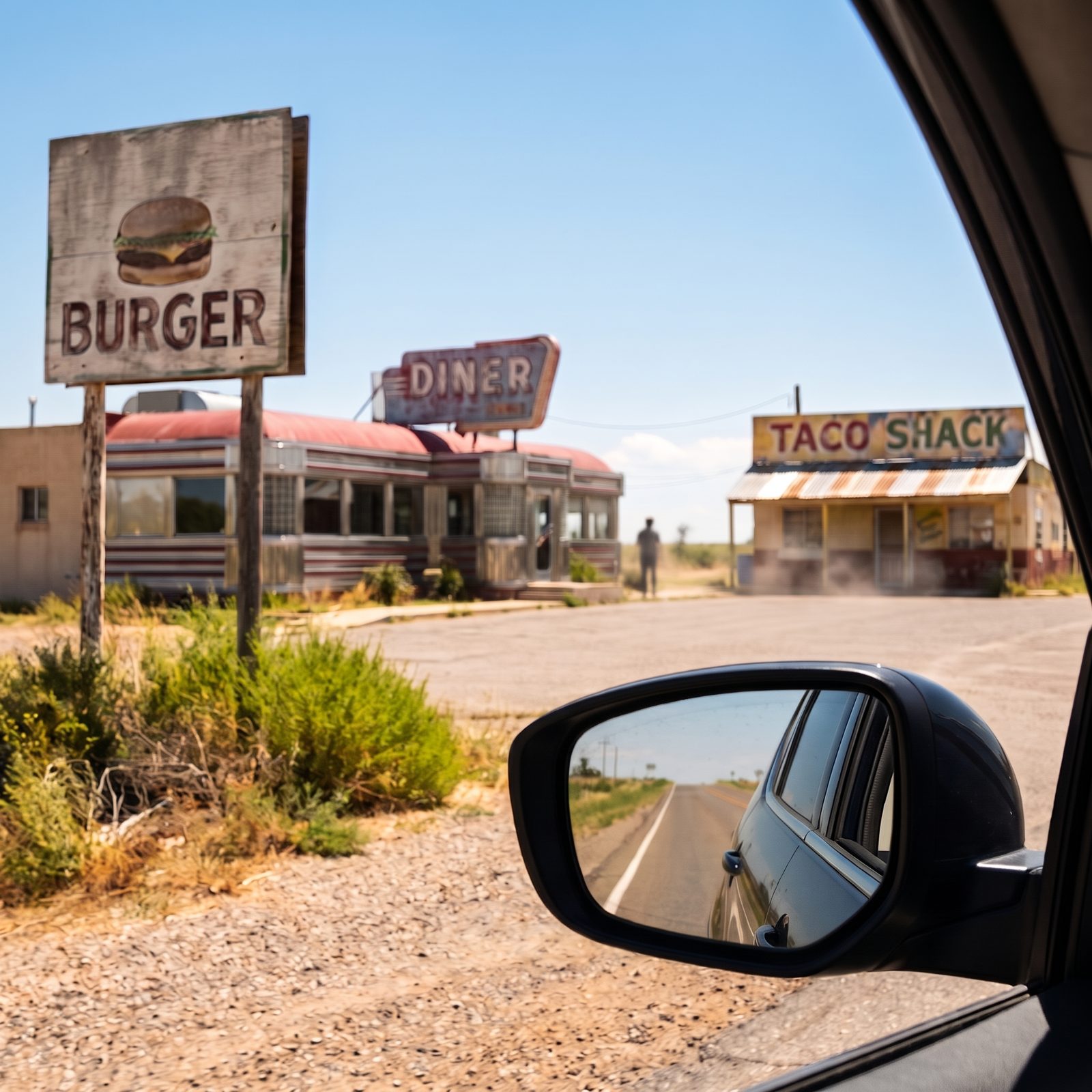
“I don’t care, you pick.” The most dangerous sentence in any car. What it actually means: pick something, and I reserve full veto power over whatever you choose. The burger place is too greasy, the diner looks closed, and that taco stand had a weird parking lot. Forty minutes later everyone’s starving and nothing has been eaten.
Counselors have a word for this, and it isn’t honesty. It’s passivity dressed up as flexibility. Saying “anywhere’s fine” offloads the decision and the blame in one move. If lunch is bad, it’s your fault for picking it. You never risked an opinion, so you can never be wrong.
The road just makes it visible because the clock is running and the exits keep coming. One real preference, stated plainly, would’ve ended this at the first off-ramp.
18. One Person Drives While the Other Critiques Every Lane Change

The brake that doesn’t exist on the passenger side still gets pressed a thousand times a trip. The sharp inhale before a merge. The “you’re a little close” at a perfectly normal following distance. A foot stomping phantom pedals.
This is control wearing a seatbelt. One person is physically holding the wheel while the other tries to steer from eighteen inches away without any of the responsibility. In counseling it shows up as the partner who manages, corrects, and supervises instead of trusting, and the driver hears one thing on repeat: I don’t believe you can handle this.
Here’s the twist. The backseat driver usually isn’t scared of the lane change. They’re scared of not being in charge. The car is just the one place where someone else is literally in the driver’s seat, and that feels unbearable.
17. The Wrong Exit Becomes a Trial About Who Never Listens
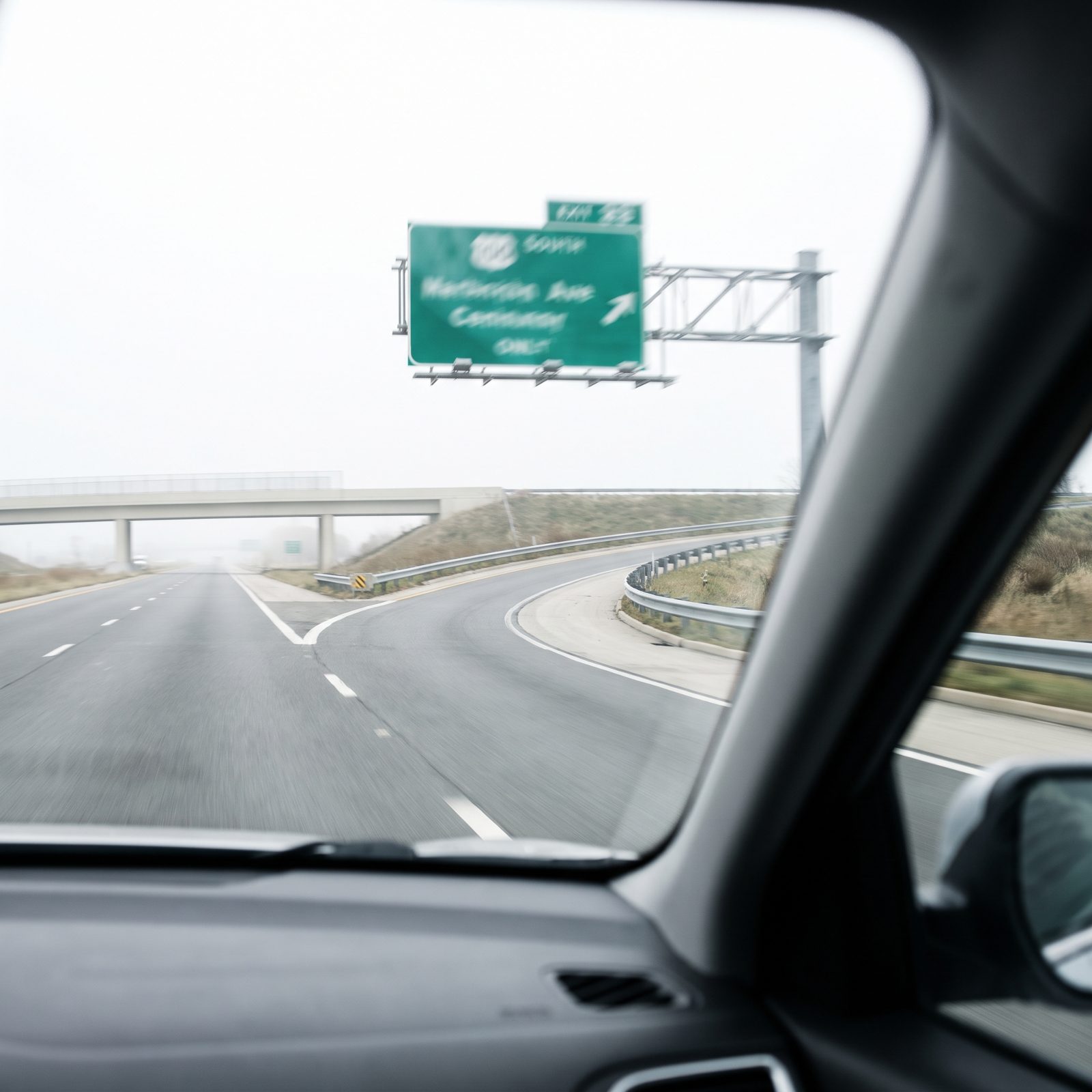
The exit slides past. Half a second of silence. Then: “I TOLD you it was this one.” And suddenly you’re not twelve minutes off course — you’re relitigating the last nine years of who does and doesn’t listen in this relationship.
One missed ramp, zero actual stakes. You’ll get there. But the fight was never about the exit. The exit is just evidence entered into a much older case. Counselors call this the “always and never” trap: you always do this, you never listen. A single mistake becomes proof of a permanent character flaw.
What makes the car such fertile ground is that there’s no escape and the mistake is immediate and shared. Nobody can hide. So one small error becomes the hook you hang every past grievance on.
16. You Keep Driving Hungry Until Everyone Hates Everyone
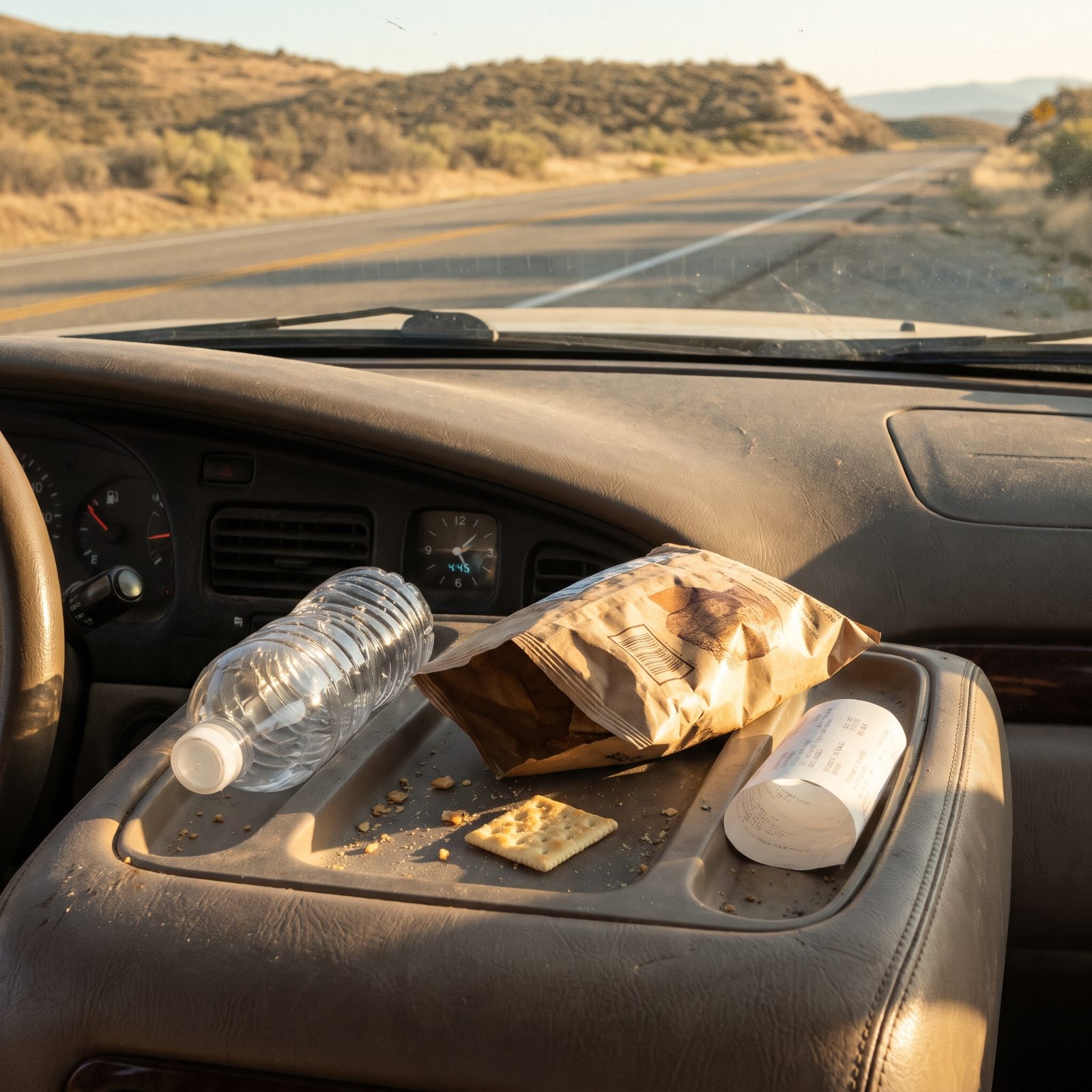
“Let’s just make it to the next town.” Said at 1:30. It is now 4:45. The next town was a mirage. Nobody has eaten, and the car has gone very, very quiet in the way that means someone is one wrong word from a meltdown.
Hunger isn’t a character flaw, but pretending you’re fine when you’re not? That one is. This is the pattern counselors see constantly: ignoring a basic need until it curdles into resentment, then blaming the resentment on your partner. “Hangry” is real. Low blood sugar genuinely shortens the fuse for everyone in the vehicle.
The road version is sneaky because stopping feels like “losing time.” So you white-knuckle it, and the time you saved gets paid back triple in silent fury.
What Our Readers Say
- In our reader votes, photos of full-size land yachts got more hearts than the other images in the same articles, 84% versus 79%.
- When Jalopy Talk readers loved a car photo and tapped a reason, “nostalgic” came out on top, ahead of body style and “would drive.”
From Jalopy Talk reader polls and votes.
15. Your “Scenic Detour” Was Never Actually Up for Discussion
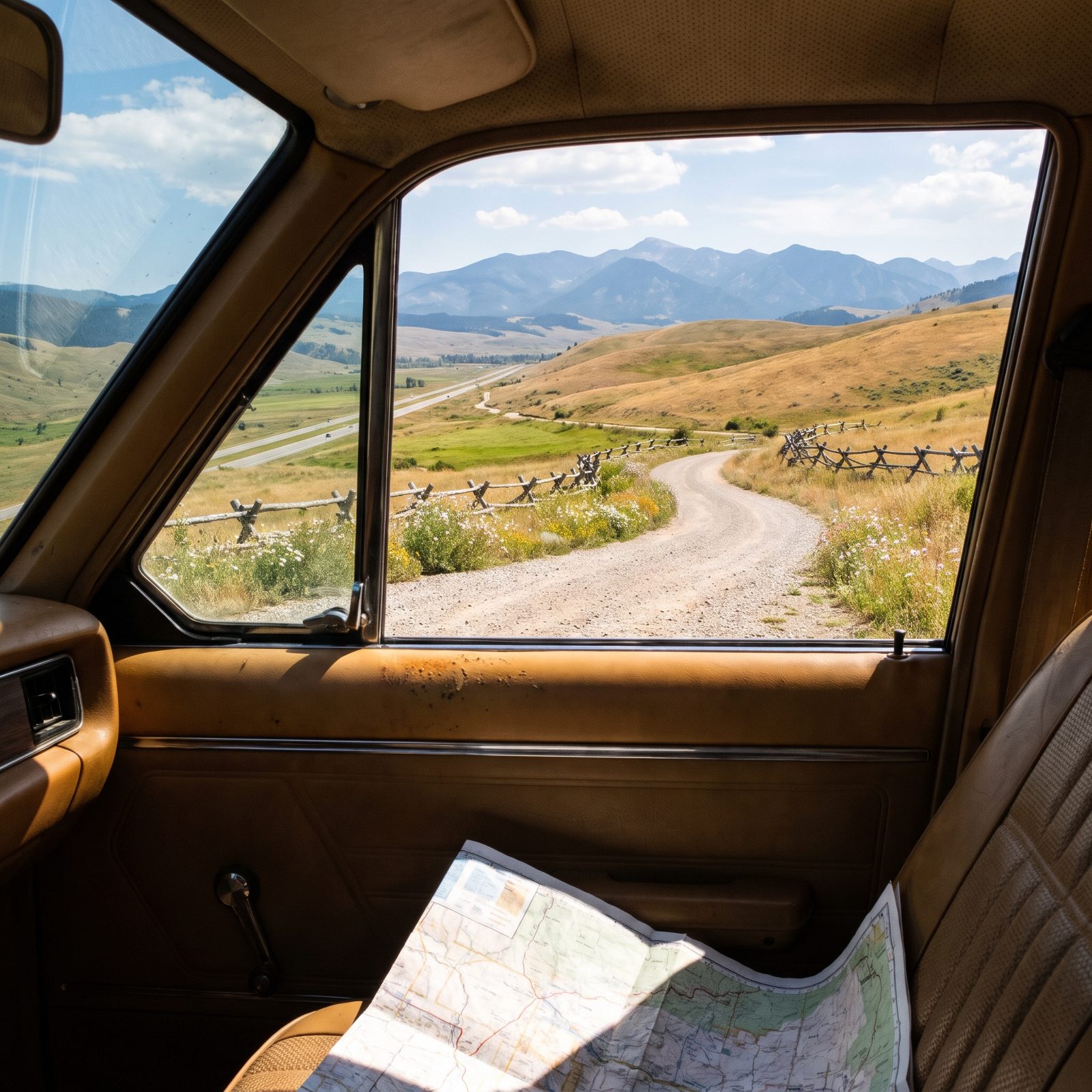
“There’s this gorgeous overlook, it’s barely out of the way.” It was ninety minutes out of the way. And you found out you’d “agreed” to it somewhere around the third unfamiliar turn.
This is the soft override. Not a demand, just a decision presented as already made, with a thin coat of enthusiasm on top. By the time you realize it wasn’t a real question, you’re committed, and objecting now makes you the person who hates beauty.
Counselors would call this a boundary problem running in both directions. One person announces instead of asks. The other goes along to avoid being difficult, then stews about it for the next two hours. Nobody said what they actually wanted, so nobody got to decide together.
The scenery, for the record, is usually lovely. Which is exactly what makes it so hard to complain about without feeling like a grinch.
14. You Pack Half the House; They Bring One Charger

One person packs for every conceivable disaster — the sweater for a cold snap that won’t come, the backup umbrella, the first-aid kit, snacks for a famine. The other strolls out with a duffel and a phone charger, baffled by all the fuss.
This isn’t about luggage. It’s about who carries the mental load of preparing for things going wrong. The over-packer is running constant background calculations about what-ifs. The under-packer trusts it’ll work out, partly because historically, someone else has already packed the Band-Aids.
Counselors see this as the invisible-labor conversation on wheels. One partner’s anxiety does all the planning and gets zero credit. The other’s ease looks like freedom but quietly depends on the first person’s worry.
13. Gas-Tank Roulette Reveals Who Carries All the Worry

The needle is hovering just above empty, and the little fuel-pump warning light has just started glowing. One of you starts scanning for stations immediately. The other says, “We’ve got plenty, it does this for ages.” And now you’re playing a small game of chicken with the open road.
Fuel levels sort people cleanly into two camps: the ones who refuel at half a tank because the uncertainty is unbearable, and the ones who ride it to the warning light and beyond. Why stop early? Neither is wrong. But in a shared car, those two wiring diagrams collide.
What a counselor hears is risk tolerance, and who absorbs the anxiety of it. The worrier isn’t being dramatic — they’re genuinely carrying a feeling the other person simply doesn’t have. And when it gets dismissed as silly, the worry doesn’t go away. It just goes quiet and resentful.
One person’s “we’re fine” is the other person’s low-grade panic. Both are telling the truth.
12. You Call It “Making Time”; They Call It Speeding

Same speed, two completely different stories. The driver is “making good time,” proud of the ground covered. The passenger grips the door handle, convinced the obituary is being written in real time.
This is a reframing war. Both people stare at the same number on the dash and narrate opposite realities, because each narration protects something. The driver protects their competence. The passenger protects their sense of safety. Admitting the other’s version means admitting they overreacted, or that they were in fact driving too fast.
Counselors would spot the real issue underneath: neither person feels heard. The driver wants their skill trusted. The passenger wants their fear taken seriously. Arguing about the speedometer never resolves either, because the speedometer was never the point.
11. The Hotel Choice Exposes Your Entire Money Philosophy
Would you like to save this?
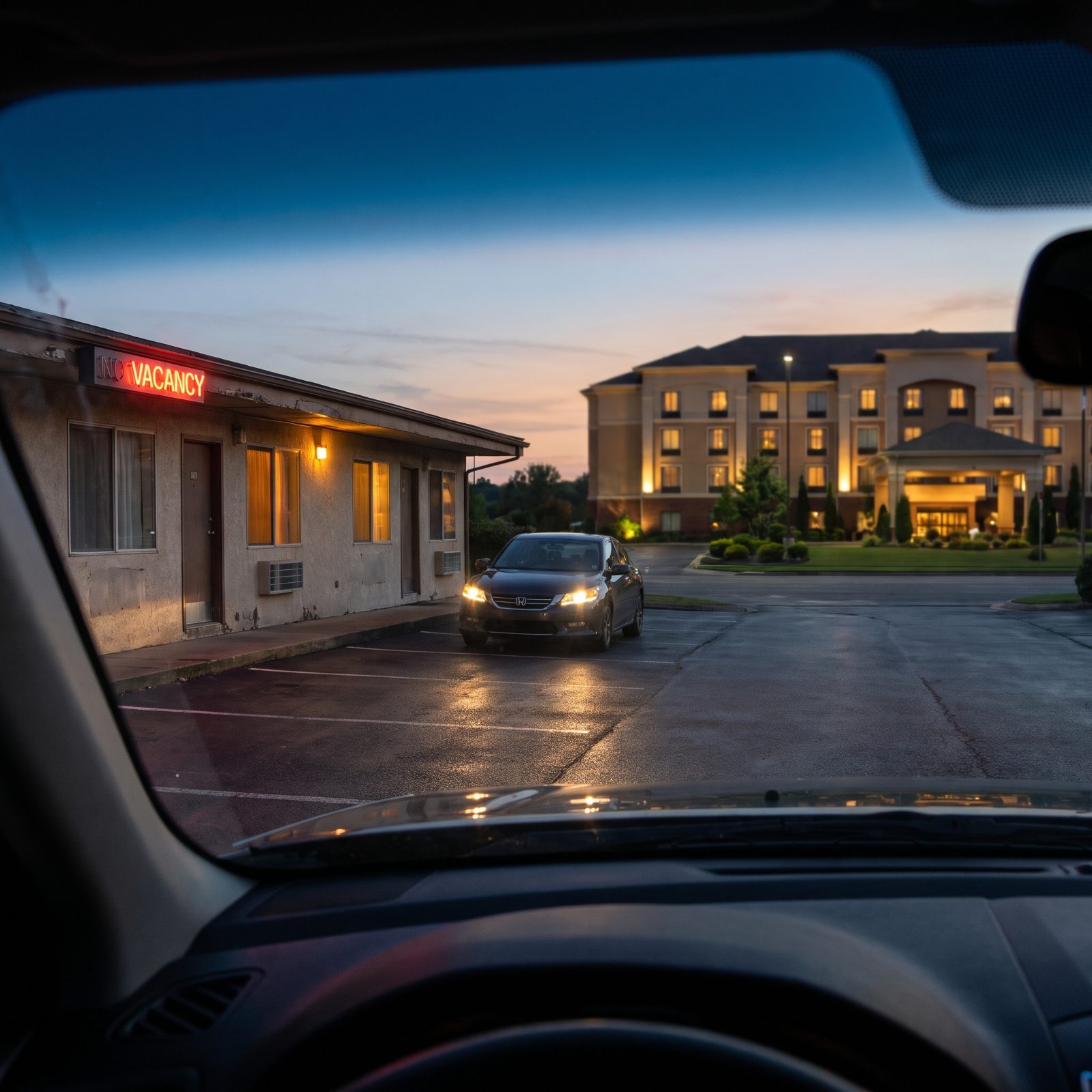
Nothing surfaces a couple’s whole relationship with money faster than deciding where to sleep. One of you eyes the clean budget motel and sees forty bucks saved. The other eyes the nicer place and sees a real bed after a long haul. Both of you figure the other has lost their mind.
This is the deepest one on the list, because the hotel is just the stand-in. Underneath it: scarcity versus comfort, the value of money versus the value of rest, what each of you learned about spending long before you ever met. Counselors know money fights are almost never about the dollar amount. They’re about safety, worth, and who gets to decide what’s “worth it.”
The cheap bed feels responsible to one of you and like punishment to the other. The nice bed feels like a reward to one and a reckless splurge to the other. You’re not arguing about the room. You’re arguing about two entire childhoods.
10. You Need Silence; They Need to Talk Right Now

Hour four. One of you has gone fully internal, soothed by the hum of the tires and the dark road. The other suddenly needs to process the entire relationship, right now, at seventy miles an hour.
Here’s the collision counselors see all the time: two different ways of recharging, each one mistaken for rejection. The quiet one isn’t shutting the other out — they genuinely refill by going inward. The talker isn’t being needy. They genuinely connect by processing out loud. But each reads the other as the problem. Silence feels like a wall. Talking feels like an ambush.
The long drive strips away all the usual distractions, so there’s nowhere to hide the mismatch. Even a glowing phone can’t cover it, and there are no chores to do. Just two people and the difference in how they come back to themselves.
9. The Car Thermostat Becomes a Tiny, Sweaty Power Struggle
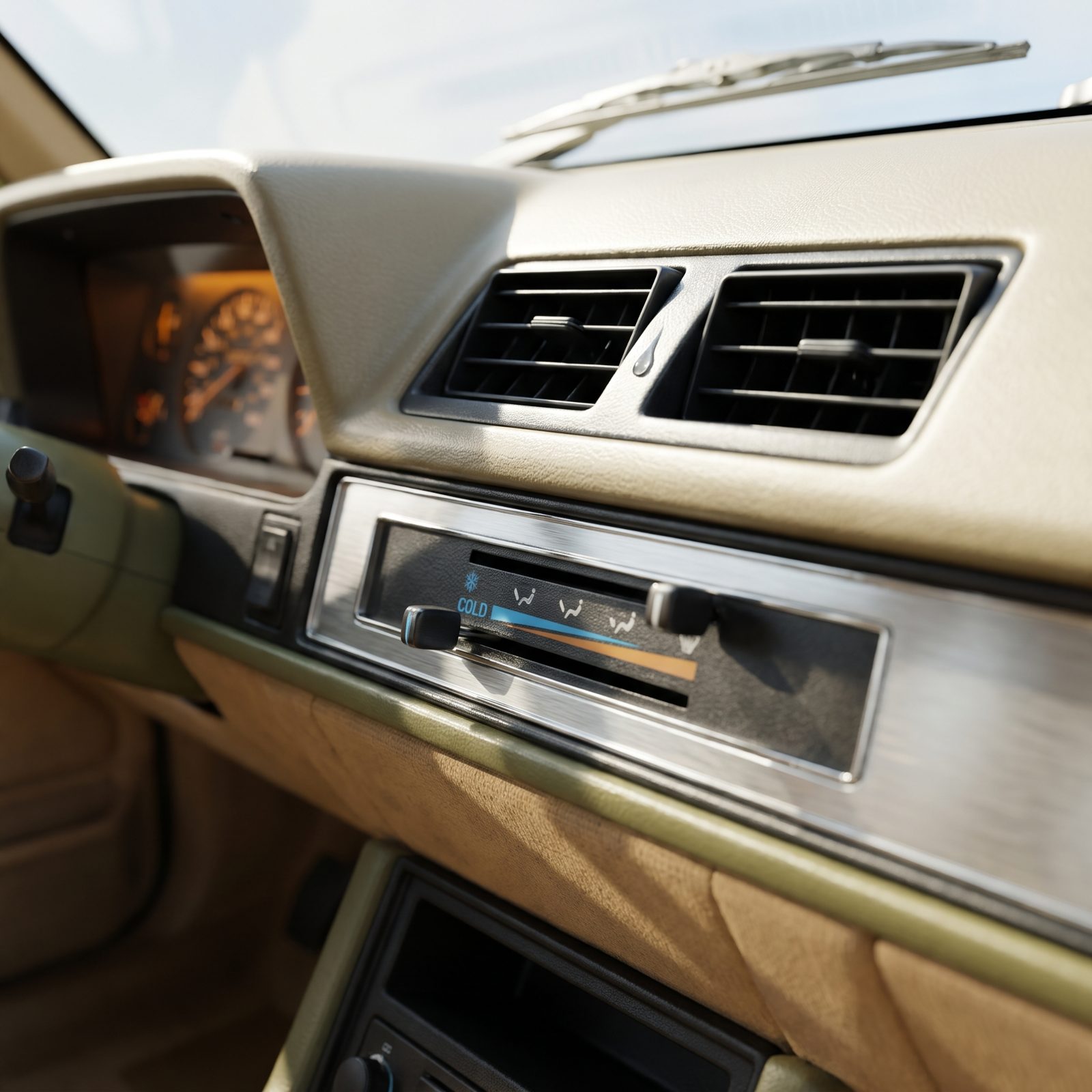
Seventy-two degrees for one of you is a sauna for the other. The lever slides toward cold, then ten minutes later it drifts back warm, and nobody says a word while both of you keep score.
This fight is almost never about temperature. Counselors watch couples wage the same silent war over who gets to set the default setting of the shared world — a control pattern wearing a very small disguise. When neither person will name the discomfort out loud, the slider becomes the only language left.
Here’s what most people miss. The one who keeps quietly readjusting usually feels unheard everywhere else, not just in the car. The vent is a proxy.
8. Nobody Agreed Whether “On Time” Meant Sunrise or Brunch
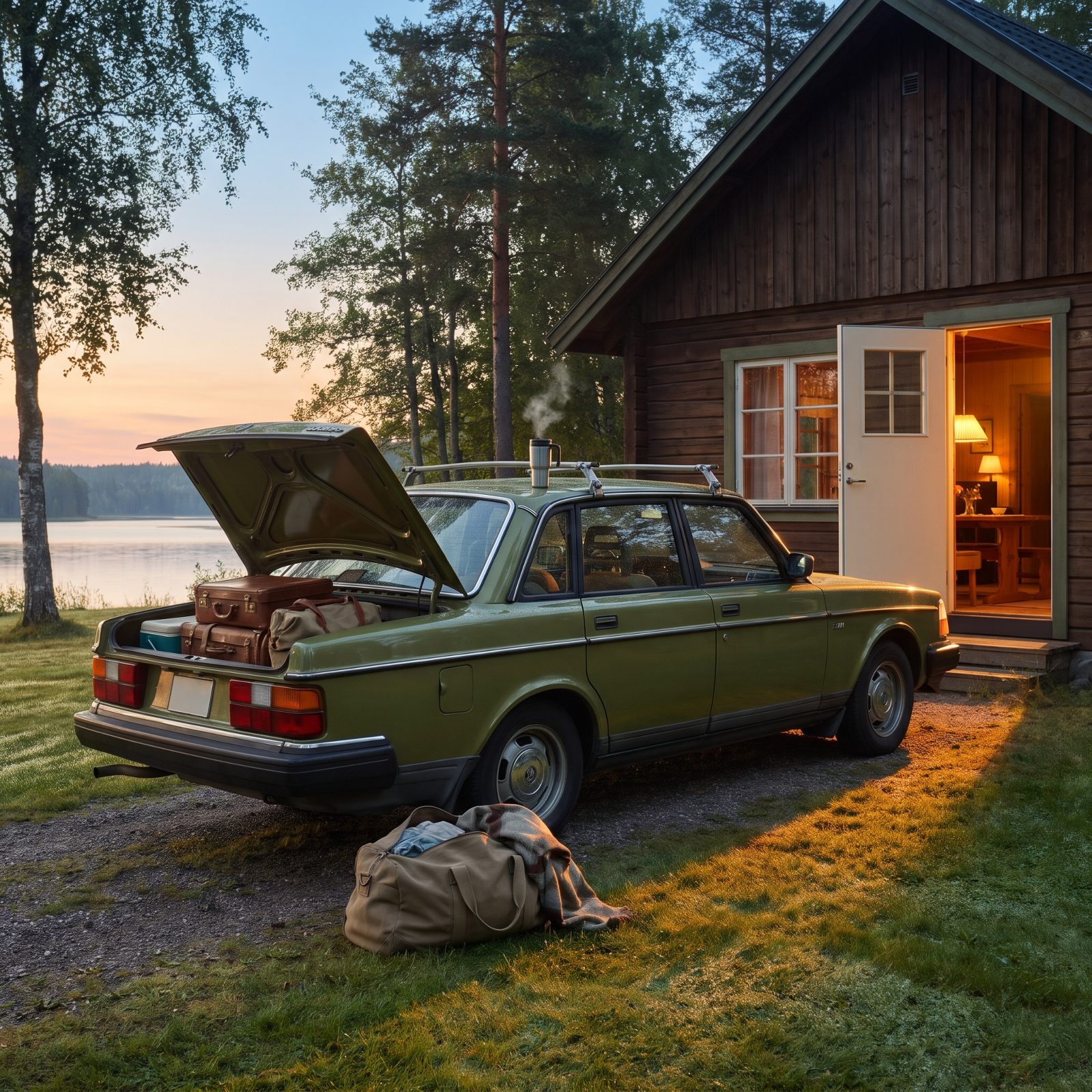
One of you had the car packed and idling at 6 a.m. The other wandered out at nine, coffee in hand, genuinely confused about the tension.
Departure time is where two internal clocks collide, and those clocks were set long before you met. Counselors hear this one constantly, just dressed differently: one partner runs on anxiety-driven punctuality, the other on a flexible sense of “it’ll happen when it happens.” Neither is wrong. But each reads the other as a personal insult. Early feels like pressure, late feels like disrespect, and the driveway standoff is really a negotiation nobody ever held out loud about whose relationship to time wins.
7. You’d Rather Circle Downtown Than Admit You’re Lost
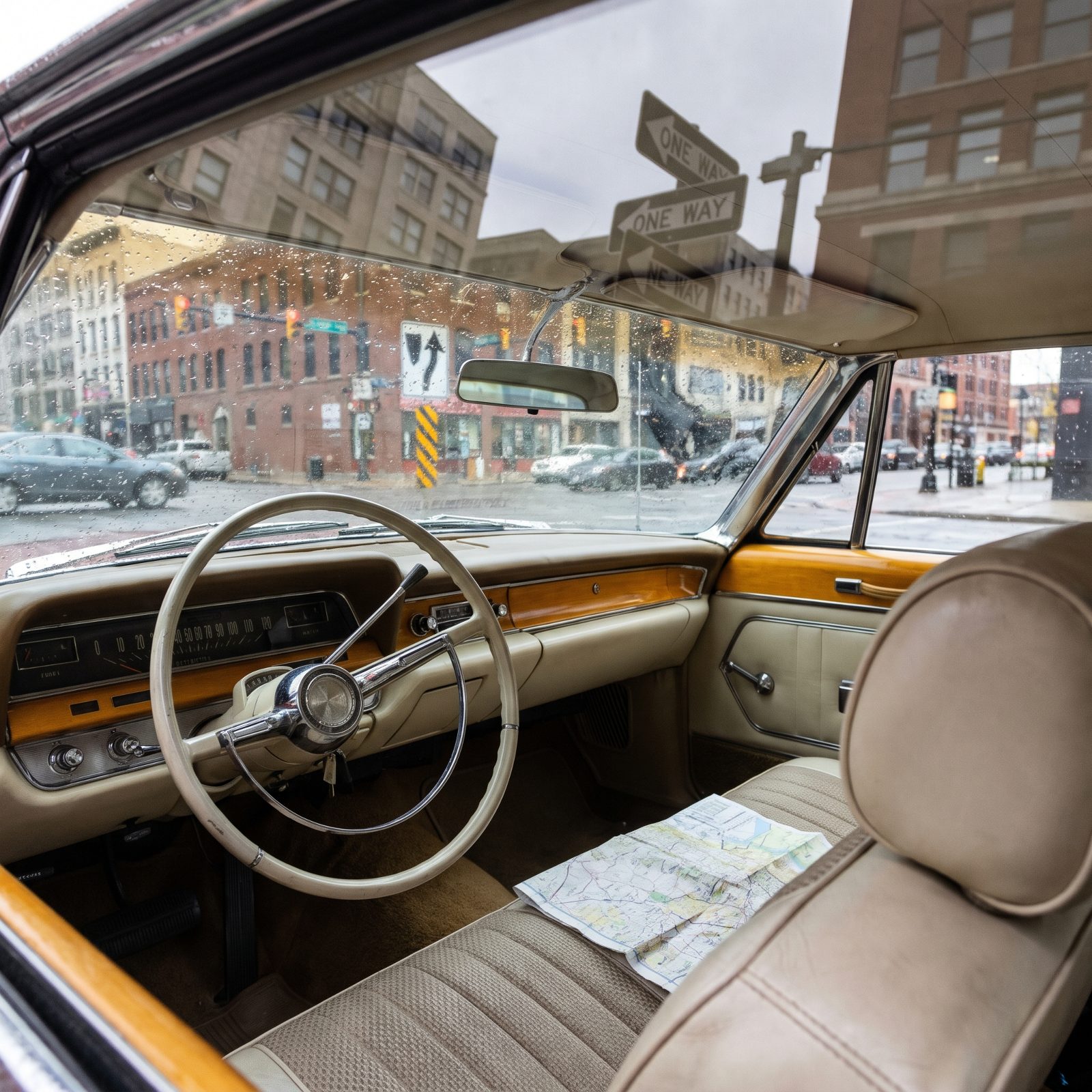
The exit came and went. You saw it. You said nothing. Now you’re on your third loop past the same bank, insisting you “know a shortcut.”
Refusing to admit you’re lost is pride protecting itself from a small blow. In the counseling room it shows up as the partner who can’t say “I was wrong” without feeling it as total defeat. Asking for directions, or handing over the map, registers as surrender rather than teamwork.
The irony writes itself. A refusal to own one tiny mistake creates a much bigger one — twenty wasted minutes and a passenger who now trusts you less, not more.
Admitting the wrong turn early is cheaper than defending it for three miles.
Vulnerability, it turns out, is the actual shortcut. We just keep choosing the long way around.
6. You Say “Fine” While Slamming the Passenger Door

“I’m fine.” The door says otherwise. It shut hard enough to rock the whole car.
This is the gap between the words and the signal, and it’s one of the first things counselors teach couples to catch. When you say one thing while your body broadcasts another, you force your partner to guess, then you punish them for guessing wrong. It feels like honesty withheld because, in a sense, it is.
“Fine” is a test. You’re hoping they’ll push past it and ask again. But most people take “fine” at face value, keep driving, and the resentment compounds at highway speed.
5. A Breakdown Shows Whether You Become Teammates or Prosecutors
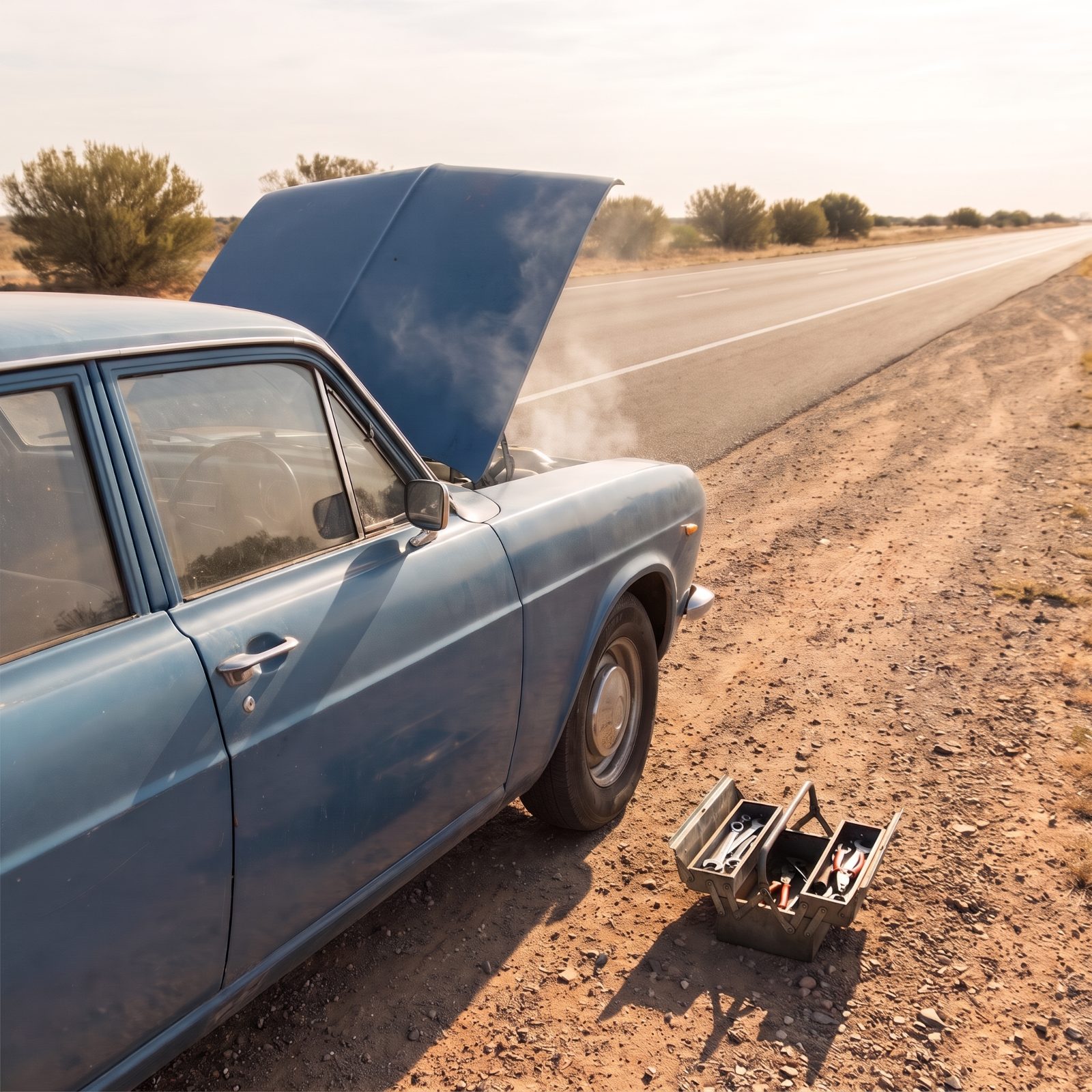
The engine light comes on. The car coasts to the shoulder. In the next sixty seconds, you learn almost everything about how your marriage handles a crisis.
One version: “Okay, I’ll flag someone, you check the phone for a tow.” The other: “If you’d gotten the oil changed like I asked.” Same breakdown, two entirely different marriages.
Counselors watch for this moment above almost any other. Under stress, couples either collapse toward each other or turn on each other. The prosecutors go looking for who caused the problem, the teammates go looking for the solution. Blame feels productive in the moment because it discharges the panic. It solves nothing, and it teaches your partner that trouble isn’t safe to share with you.
The next breakdown will come, in a car or otherwise. What matters is which role you reach for first.
4. You Post Smiling Photos Between Fights at Every Gas Station
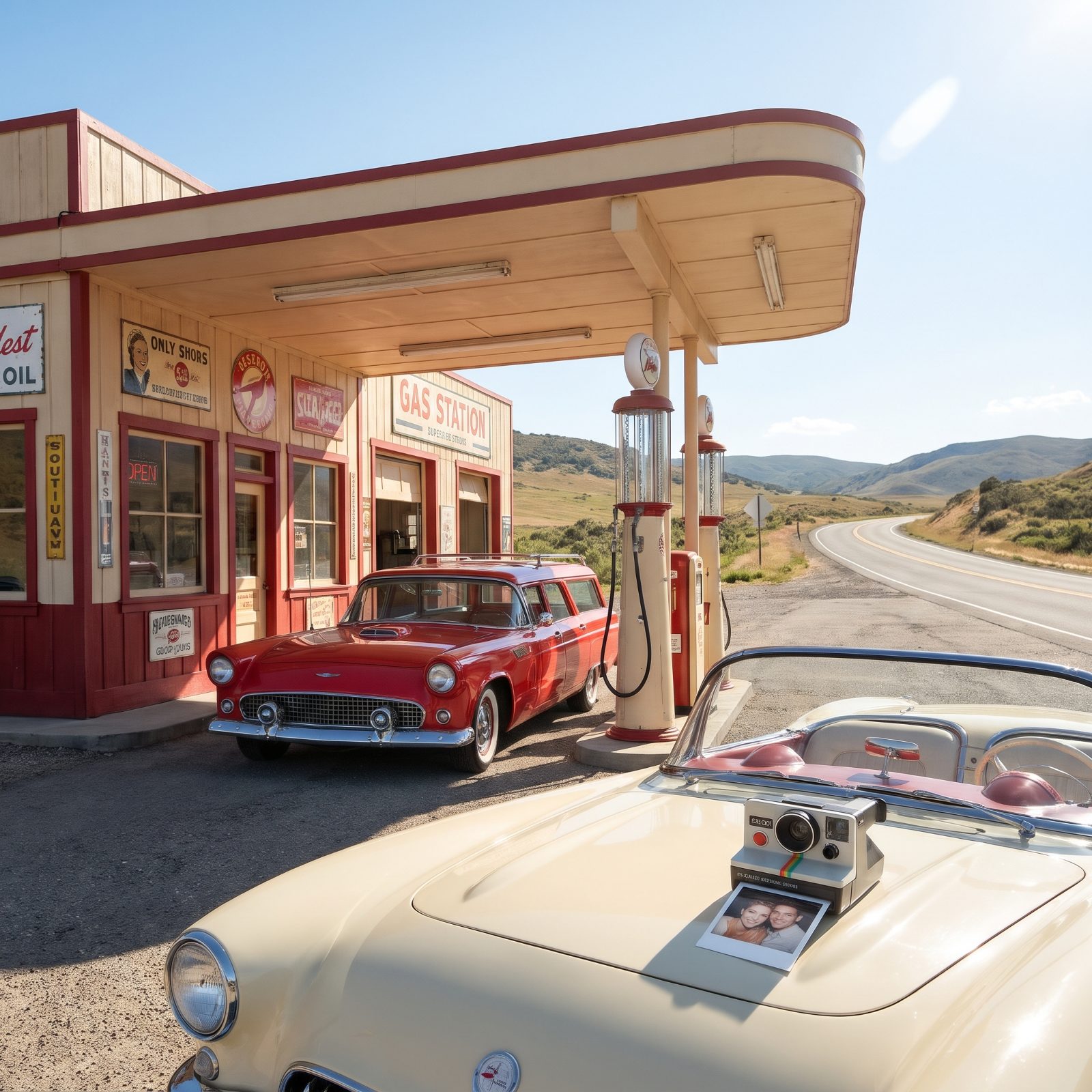
Arms around each other at the scenic overlook, big grins, snapped the photo, got back in the car, and finished the argument you’d paused for the picture.
The gap between the posted trip and the actual trip is a performance, and counselors see couples who’ve perfected it. Keeping up the smiling front feels like protecting the relationship. It usually does the opposite — the more polished the public version, the lonelier the private one gets, because now the struggle has nowhere to be seen.
Nothing wrong with a nice photo. The trouble starts when the photo becomes the only version of the trip anyone — including you — is allowed to remember.
3. Their Favorite Playlist Somehow Means Your Taste Never Matters
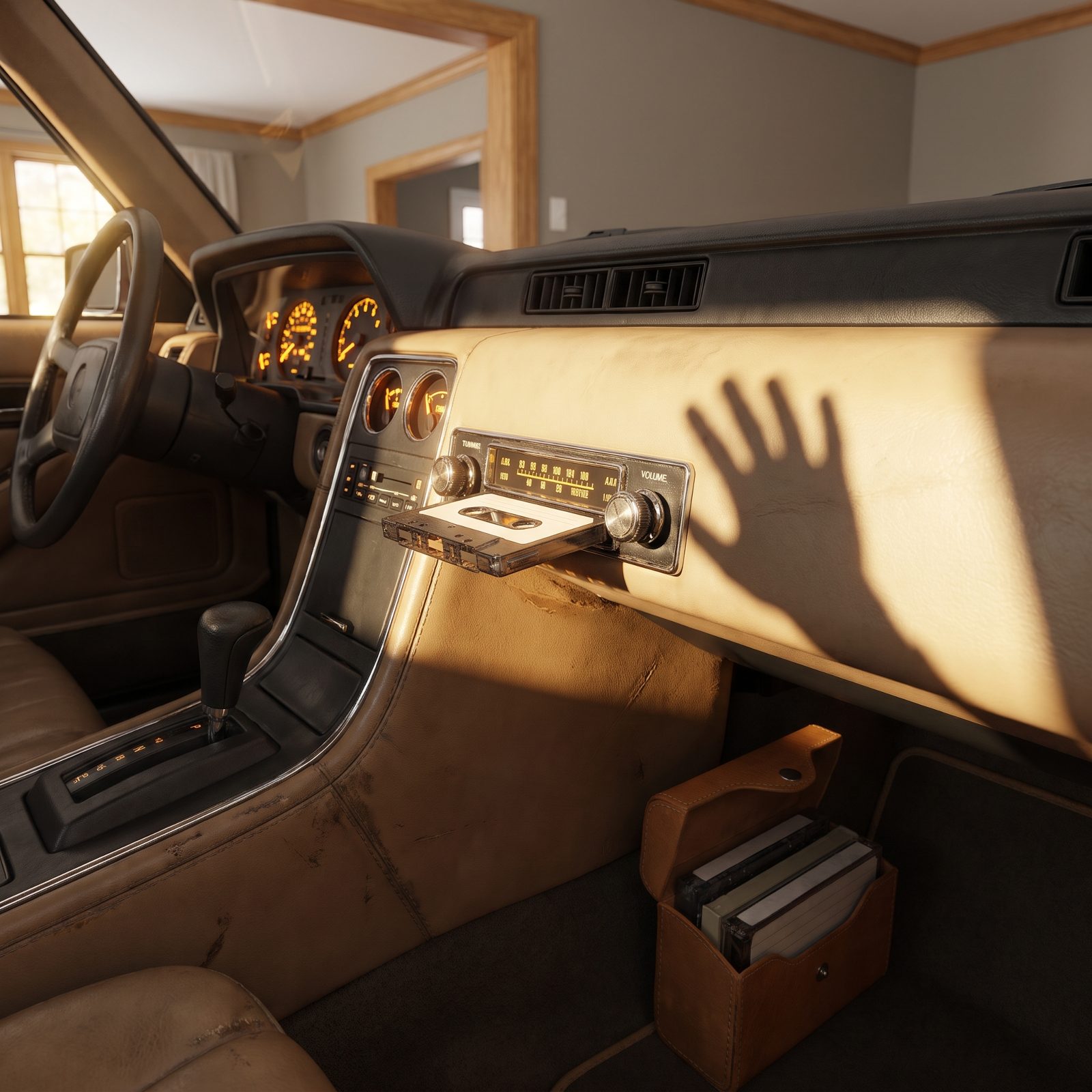
Their tapes. Their order. Their volume. Four hundred miles and you haven’t heard a single song you chose, and when you mention it, you’re told you’re “making it a thing.”
Control of the music is control of the shared atmosphere, and small as it seems, it adds up to a message: my preferences are the house default and yours are the exception I occasionally allow. Counselors see this exact dynamic in finances, in weekend plans, in whose friends you see. The radio is just where it shows up loudest.
The partner losing the music battle rarely cares that much about the songs. What stings is the evidence — that their taste, their wants, their inner life, keeps coming last.
2. Your Parents Get a Vote From Three States Away

You’re deciding which house to move into, and somehow your parents’ opinion about the listings — delivered by video call from three states away — now carries more weight than your spouse sitting right beside you.
Letting a parent cast the deciding vote in your move is a boundary problem, plain and simple, and counselors spend enormous time here. When one partner routinely defers to family, the other learns their voice ranks below an in-law’s. It breeds a specific loneliness: being outvoted in your own marriage by someone who won’t even live in the house.
The fix isn’t cutting off your parents. It’s making sure the two people making the move settle the move, then tell the family what they decided, in that order. The couple is the unit. Everyone else gets consulted, not enthroned.
1. You Schedule Every Mile; They Treat Arrival as Optional
Would you like to save this?
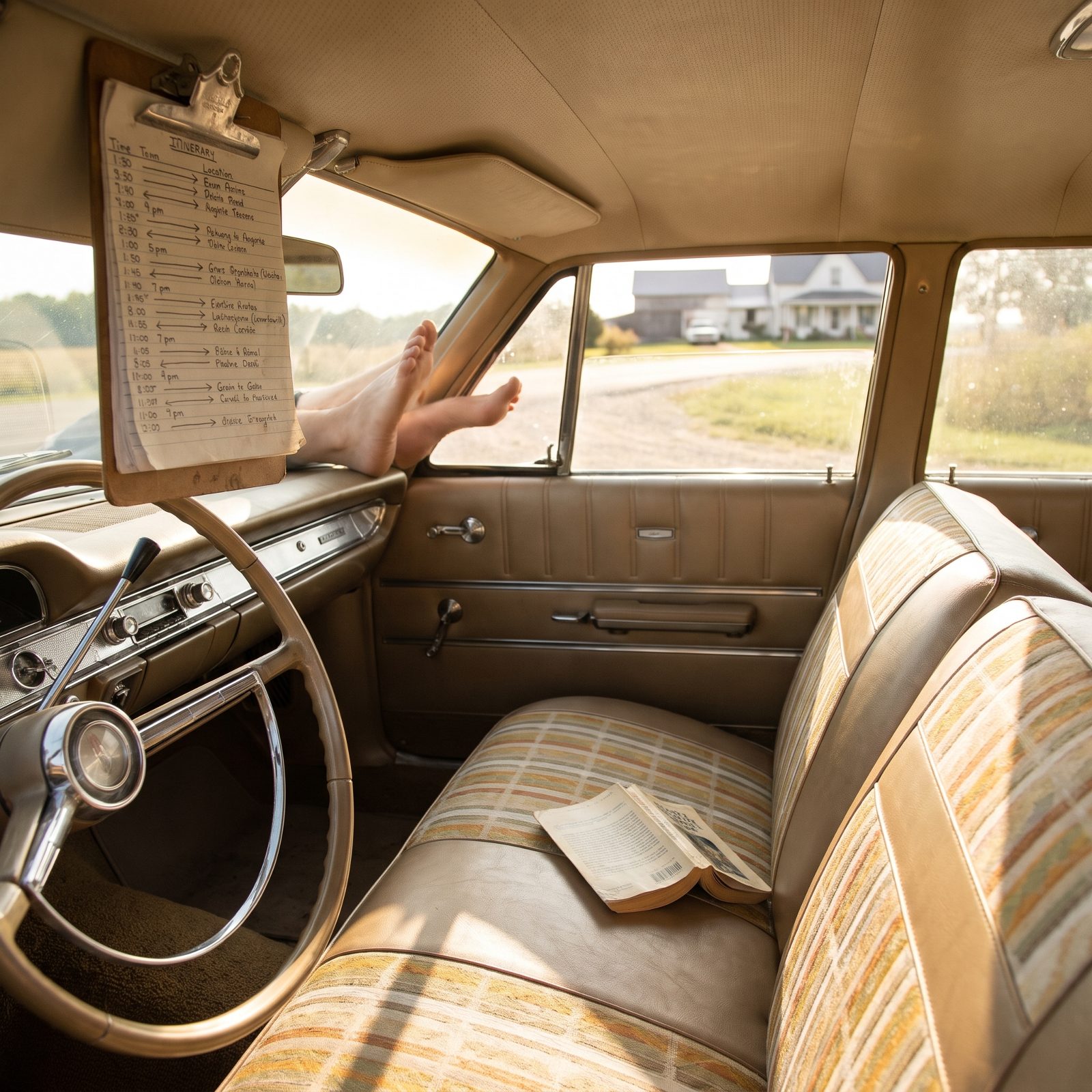
One of you built a spreadsheet. Gas at mile 90, lunch at 1:15, hotel check-in at 6 sharp. The other figures you’ll get there when you get there, and keeps suggesting “quick” detours that torch the whole timeline.
Planner versus improviser is one of the oldest marriages there is. Neither style is the healthy one. The planner feels safe inside structure and reads the detours as chaos. The improviser feels alive inside spontaneity and reads the schedule as a cage. Each thinks they’re saving the trip from the other.
Counselors see this collide over money, kids, and retirement far more than over road trips. The trip just surfaces it early, where the stakes are only an extra hour.