
Would you like to save this?
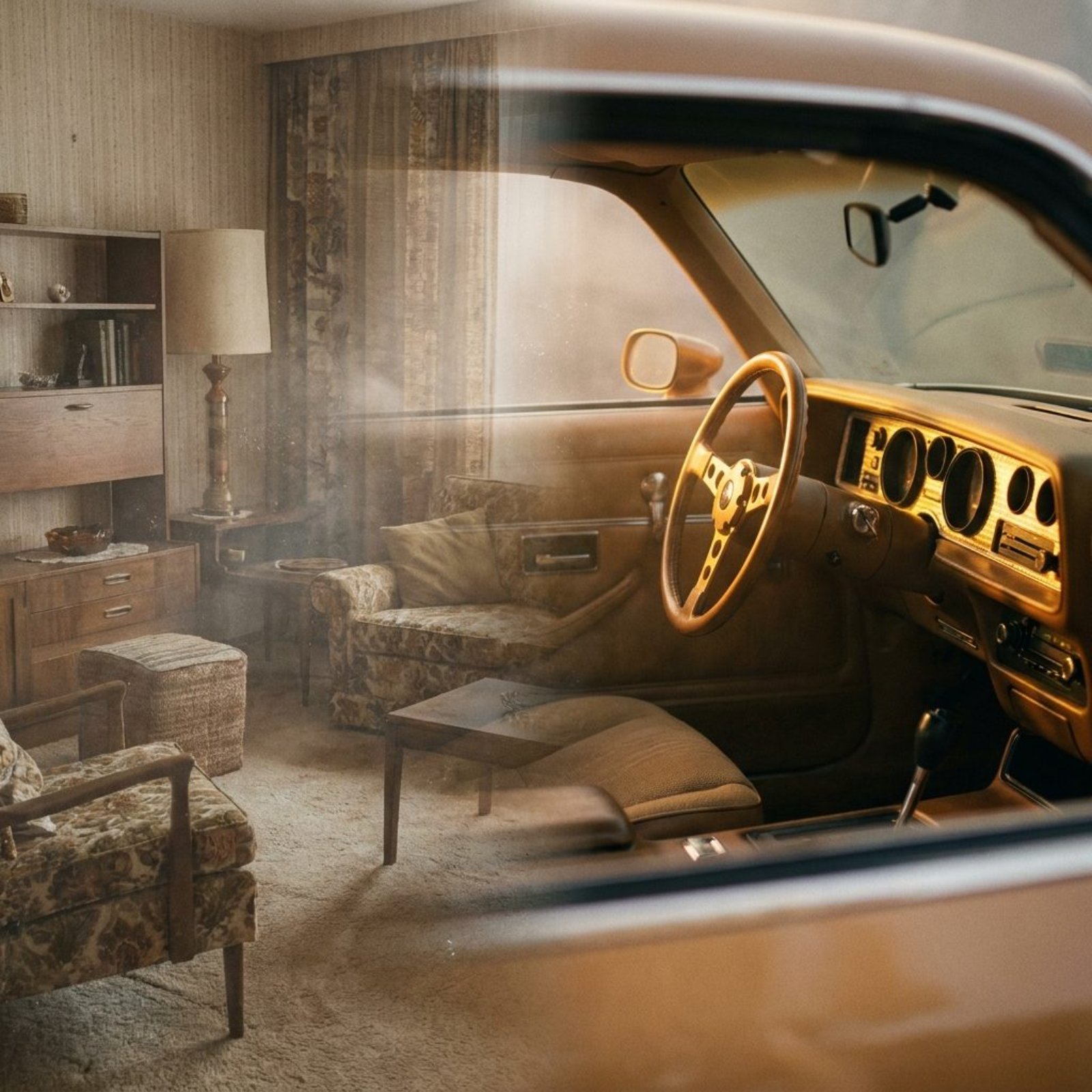
There is a photograph most men over fifty carry in their head without ever having taken it. It’s the car in the driveway the summer they turned seventeen. The exact angle of the sun on the hood. The rust spot behind the wheel arch. The way the door handle felt in the hand.
You don’t remember it because it was a good car. You remember it because of when it arrived.
Psychologists call part of this pattern the reminiscence bump: memories from adolescence and early adulthood often remain unusually accessible. Those years are crowded with novelty, identity formation, and major firsts. The car did not determine the man you became, but it arrived while that man was still taking shape. These 14 moments explain why the first one stayed.
Why the First-Generation Mustang Became More Than a First Car
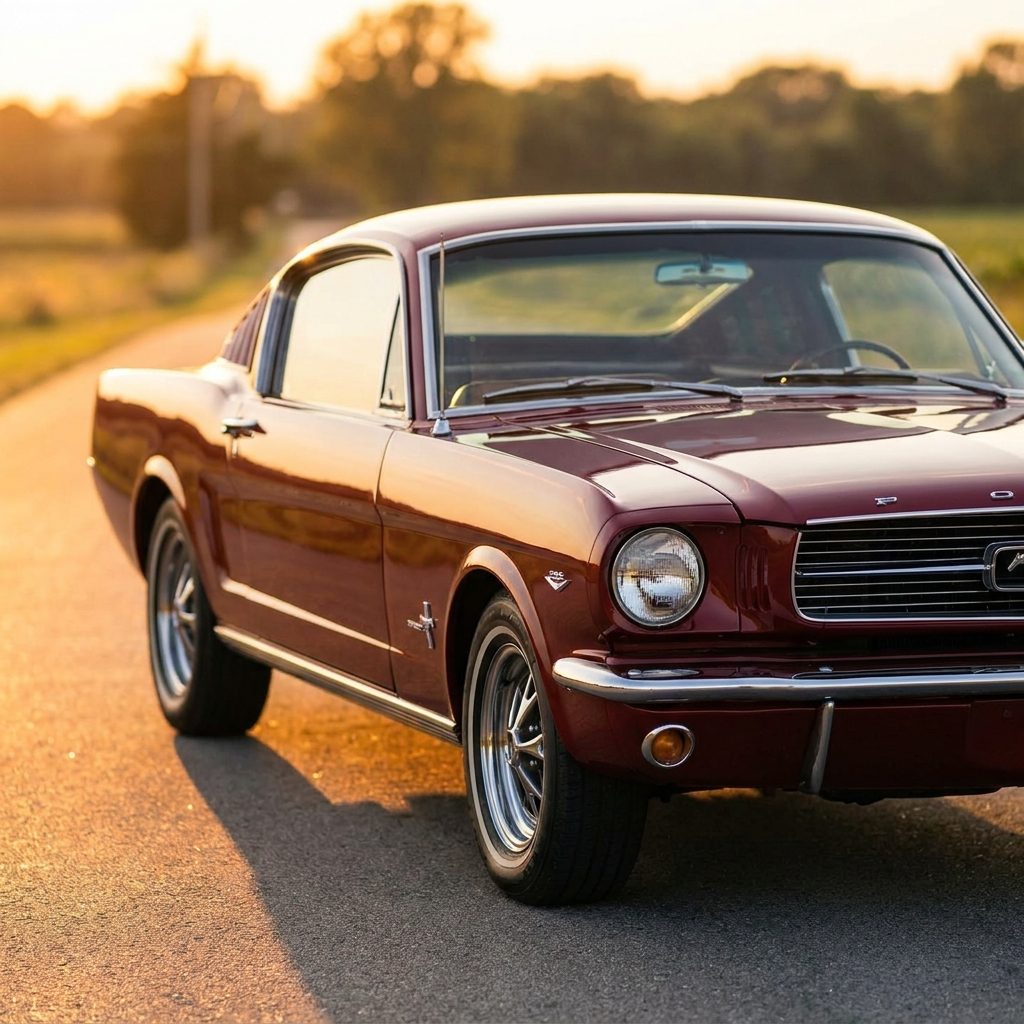
Ask a man what his first car was, and if he says “a ’66 Mustang,” the sentence often lands with a little extra weight. Some of that is the car. Much of it is the timing.
The Mustang arrived in 1964 as a youthful alternative to the larger cars many parents drove, and buyers could configure it in dozens of ways. Ford sold it as a car that could fit several identities at once: commuter, sporty coupe, convertible, or V8 performance machine. It became one of the defining automotive symbols of the baby-boom generation. Source
That cultural reach gave owners a ready-made label. A Mustang could become part of how someone described himself long after the car was sold. The effect was not unique to every owner, and plenty of Fairlane and Falcon enthusiasts remain devoted to those cars, but few model names became as durable a piece of personal shorthand.
What a $400 Beater Taught You Before You Knew the Word Competence
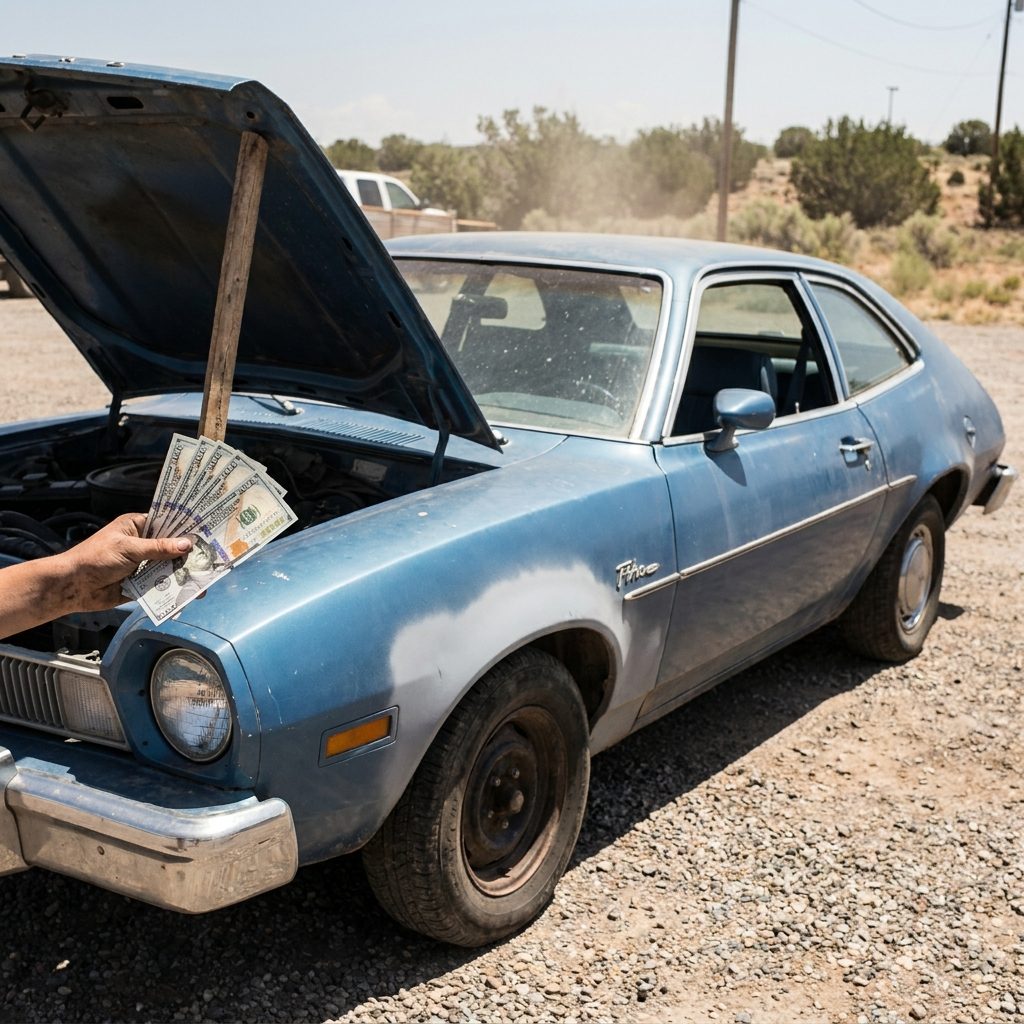
The car was almost never good. That was part of the education.
It might have been a ’73 Duster with a soft brake pedal, a rusting Datsun, or an old pickup whose heater worked only after you thumped the dash. You paid a few hundred dollars to someone your uncle knew, drove it home listening for new noises, and spent the next six months learning what a fuel filter, alternator, and vacuum leak were.
Psychologist Albert Bandura used the term self-efficacy for the belief that you can handle a problem because you have handled similar ones before. Direct mastery matters: succeeding at something builds the expectation that you can succeed again. Source A temperamental first car could provide that evidence in a very direct way. Each successful repair made the next unfamiliar failure feel less impossible.
Not every owner became a mechanic, and not every broken car built character. But for the teenager who kept diagnosing, borrowing tools, and trying again, the beater became early proof that confusion could be temporary.
The Hand-Me-Down Station Wagon and the Freedom of Driving Something Uncool
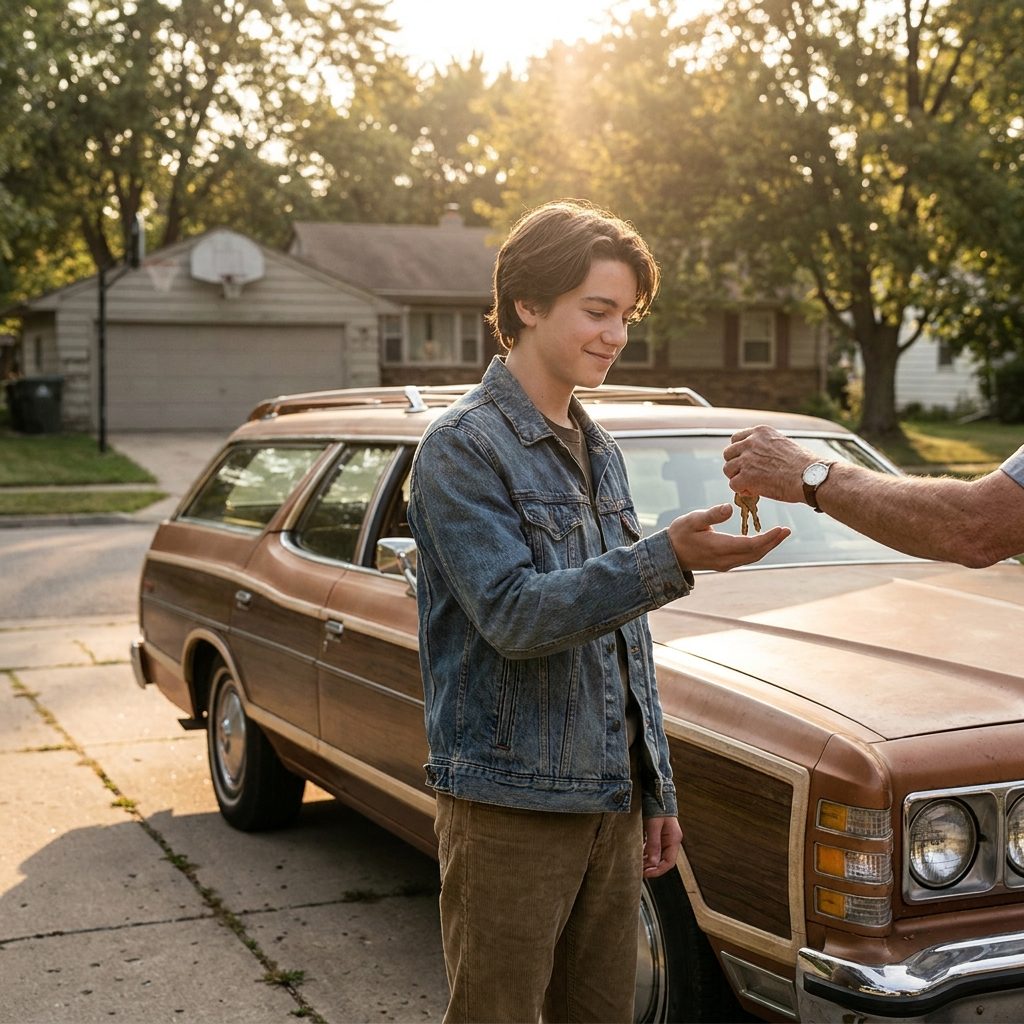
You did not buy your first car. You inherited it.
The old Country Squire or four-door Impala arrived with family history already embedded in it: peeling fake wood, a bench seat that still smelled faintly of the dog, a AAA sticker on the back window, and more than a hundred thousand miles on the odometer. Three months earlier, it might still have held your little sister’s booster seat.
The car offered freedom without glamour. It also carried an unspoken message: your family trusted you with something useful, expensive, and already woven into daily life.
An uncool hand-me-down could make automotive status feel less important, at least for some owners. It taught that the value of a car might be measured by who it carried, whether it started, and whether everyone got home. That is a quieter lesson than horsepower, but it can last just as long.
Why the Smell, Sound, and Rust Spot of a First Car Stay So Vivid
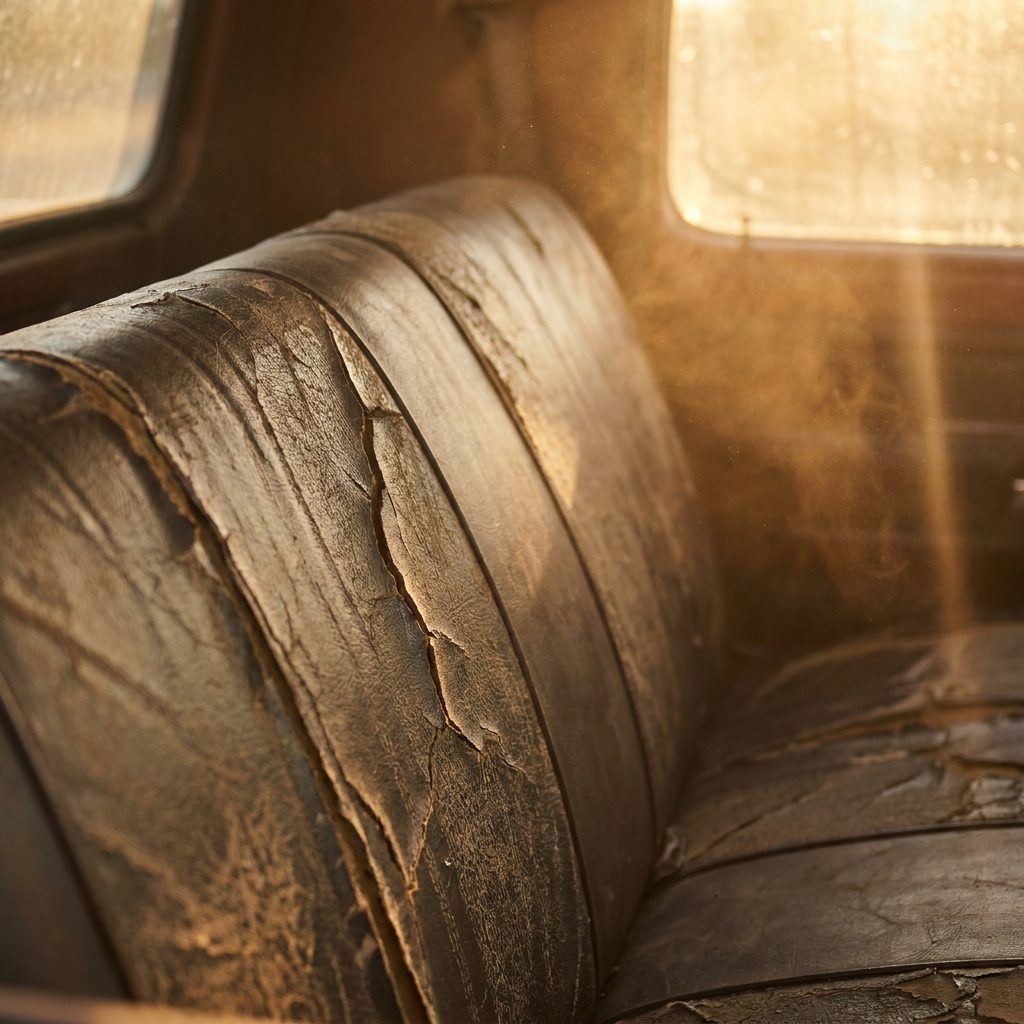
Open the door of an old car on a hot day and the memory can arrive before the thought does: warm vinyl, dust from the vents, faint gasoline, old cigarettes, and the baked-plastic smell of a dashboard that spent years in the sun.
Odor is an especially powerful autobiographical cue because olfactory processing has close connections with brain regions involved in emotion and memory, including the amygdala and hippocampus. Researchers often call the sudden return of a vivid odor-linked memory the Proust phenomenon. Source
The same car also rehearsed its other details daily: the cold-start wheeze, the cracked dashboard knob, the ticking tappet, the rust bubble above the rear wheel. Repetition, novelty, ownership, and emotional importance all helped fix those details in memory.
The smell does not bypass every analytical part of the brain, and vivid memory is not always perfectly accurate. But a sensory cue can still restore the feeling of being seventeen with startling force.
What the Volkswagen Beetle Offered Boys Who Could Not Afford a Camaro
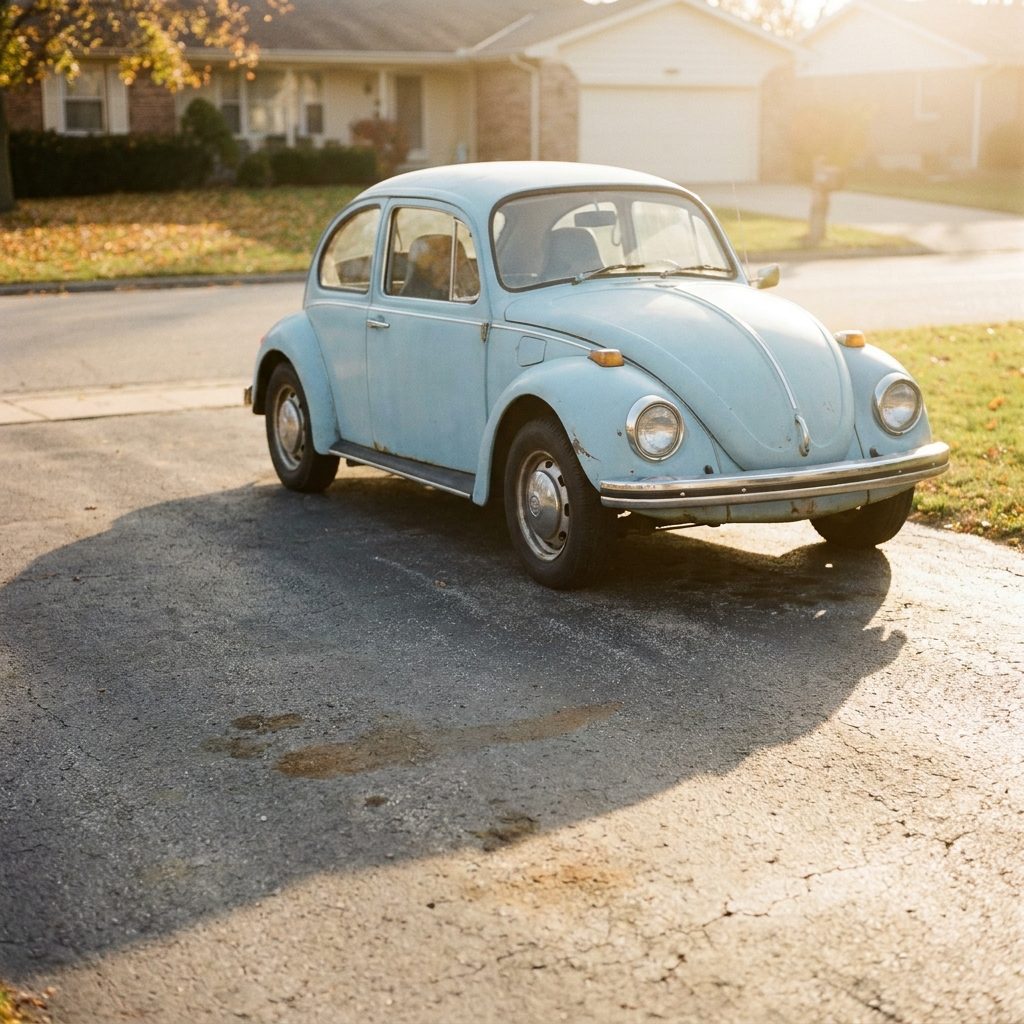
For teenagers priced out of a muscle car—or uninterested in one—a used Beetle offered another kind of first-car freedom.
A new Beetle cost roughly $1,800 in 1969, used little fuel, and was mechanically simple by the standards of the period. Early examples lacked a conventional fuel gauge and relied on a reserve tap instead. Owners learned its quirks quickly because the car gave them little choice.
A Beetle could not deliver the visual threat of a Camaro, but it could carry friends to the beach, squeeze into almost any parking space, and be pushed out of a snowbank by the people riding in it. It became an emblem of thrift, modest engineering, and countercultural taste.
That did not turn every owner into a lifelong minimalist. It did give many teenagers a first example of a car succeeding without being large, powerful, or conventional.
The Difference Between Choosing Your First Car and Being Handed the Keys
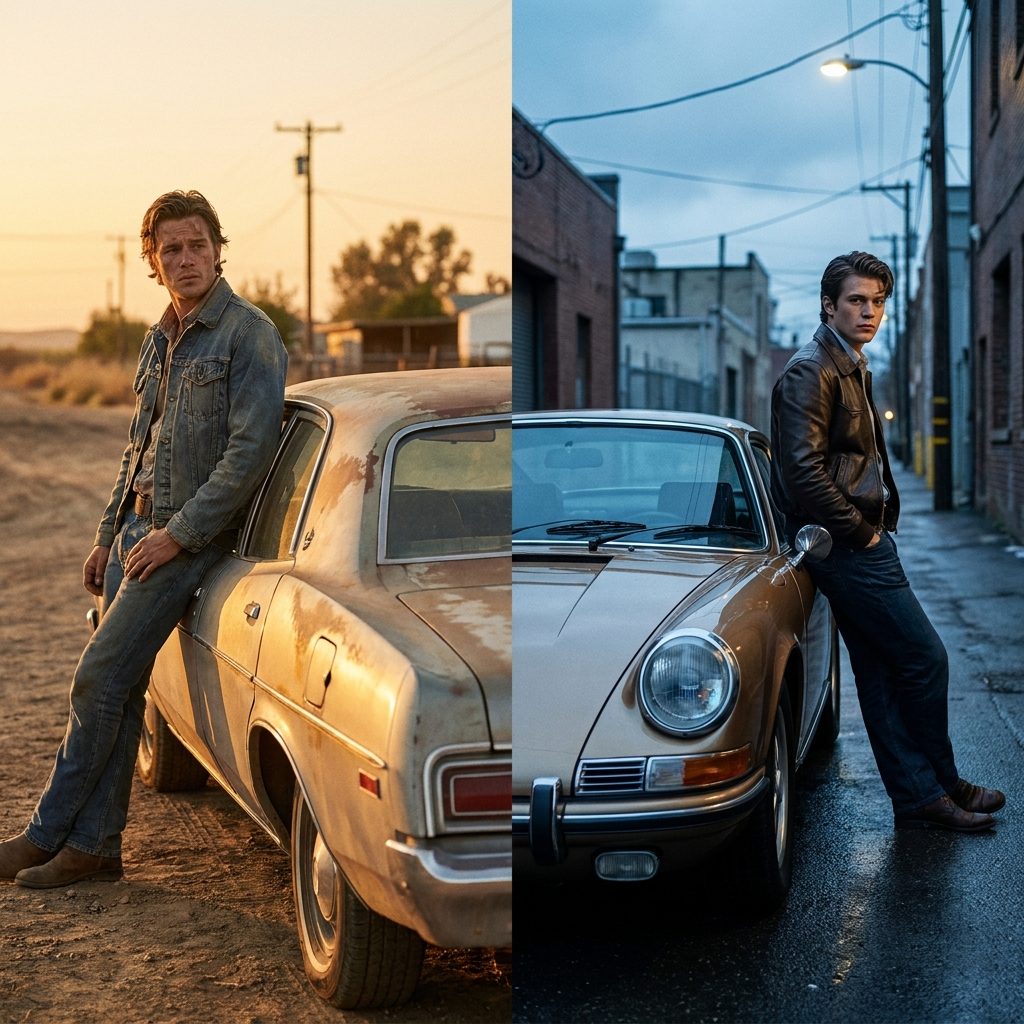
Two teenagers could end up with equally imperfect first cars and experience them very differently.
One saved through a paper route, summer job, or weekends at a gas station, then chose the model he had been watching for months. The other received a parent’s old Buick because a sibling had left for college and the car was suddenly available.
The chooser experienced the car as the result of a plan. The receiver experienced it as a gift, responsibility, or stroke of family timing. Neither path automatically produced a particular personality, but each made the car mean something different from the beginning.
One story began with pursuit. The other began with acceptance. Decades later, the way someone tells the story of getting the keys can reveal almost as much as the car itself.
The First Breakdown, and Why It Can Outlast the Memory of Buying a New Car
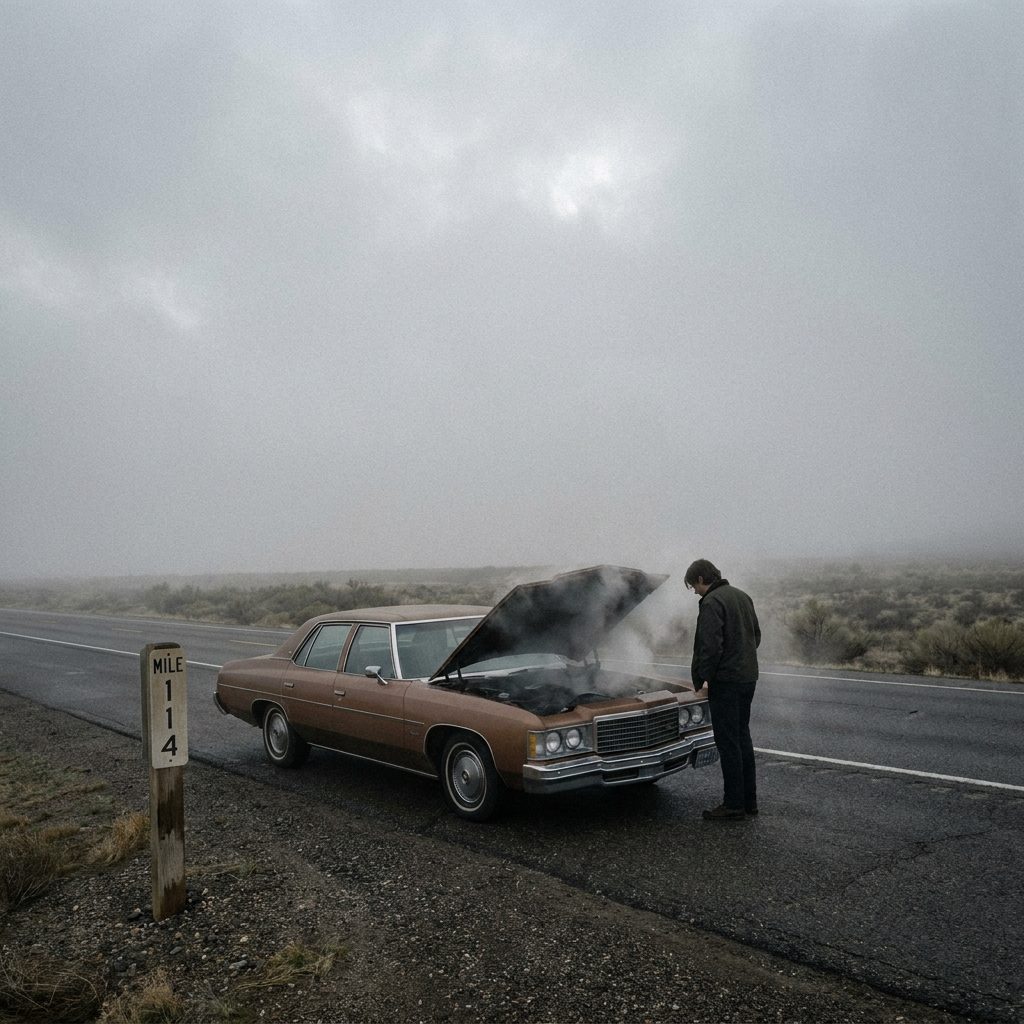
You may still picture the shoulder of the road, the temperature gauge climbing, the steering growing heavy, and the last song on the AM radio before the engine quit.
Emotionally arousing events are often recalled with unusual vividness and confidence. That confidence does not guarantee accuracy; the details can still drift or distort even as the sense of clarity remains high. Source But a first breakdown had novelty, uncertainty, and consequence working together.
The later new-car purchase may have been more pleasant. The breakdown was an event your nervous system treated as a problem to survive. That difference helps explain why the tow-truck night can remain easier to retrieve than the dealership handshake.
The Muscle-Car Window That Closed Behind the 1969 Chevelle
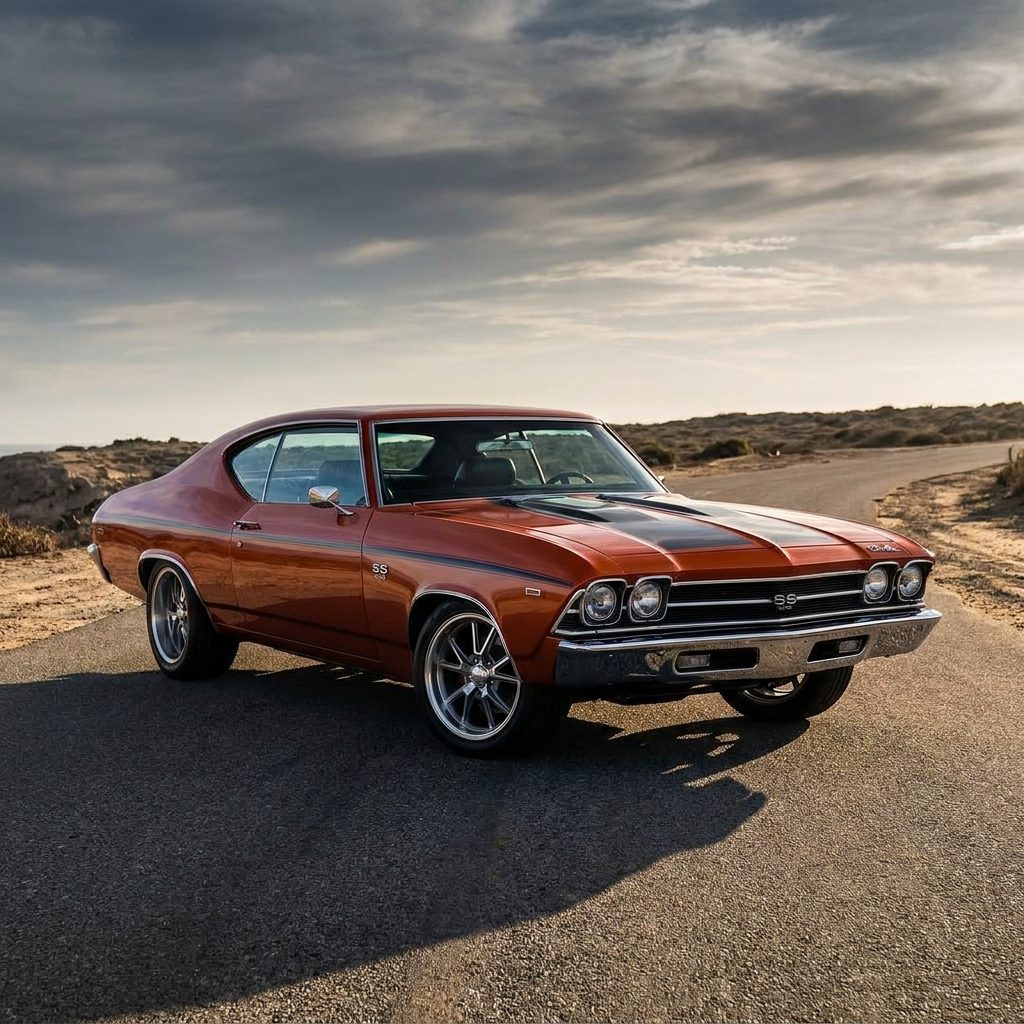
By 1969, the second-generation Chevelle had settled into its coke-bottle profile, long hood, short deck, and SS badging that carried real weight on a Friday night on Main Street. Source
For teenagers who drove one during the muscle-car peak, the car became attached to a historically narrow moment. Insurance costs, emissions regulation, changing fuel prices, the 1973 oil crisis, and the shift from gross to net horsepower ratings all helped transform the segment during the early 1970s.
That is why the nostalgia can feel larger than the model itself. The owner is not only remembering youth. He is remembering a performance culture that changed quickly and never returned in quite the same form.
Most owners moved on to sedans, mortgages, and family cars. The Chevelle remained a reference point because it belonged to both a personal beginning and the end of an era.
Why a Small Import Could Feel Like a Rejection of the Family Car
Would you like to save this?
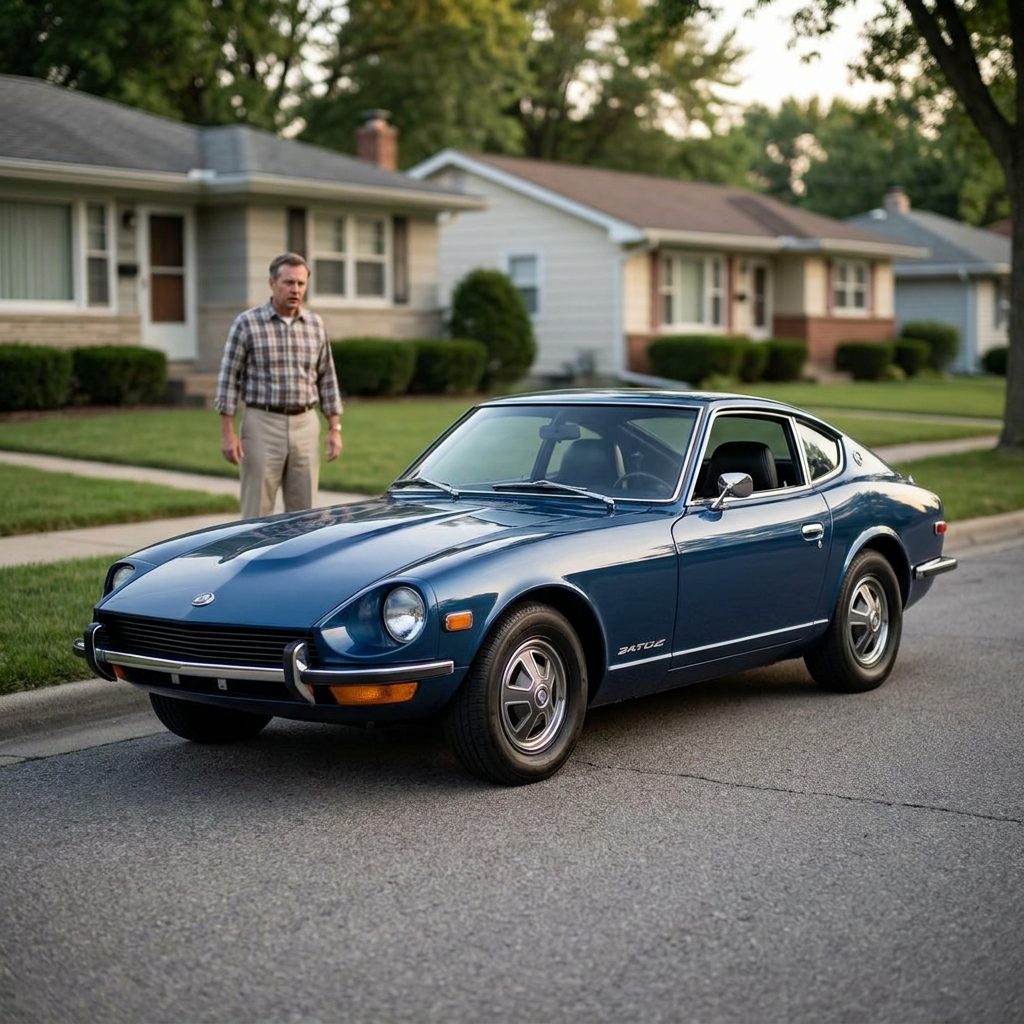
A 1973 Datsun 240Z. A 1974 260Z. A Toyota Corolla wagon. A worn BMW 2002 whose previous owner had finally surrendered to the fuel pump.
For some American families in the 1970s, buying a small import looked like a rejection of domestic automotive common sense. Dad had driven Chryslers. Grandpa had a Buick that weighed as much as a small barn. Then the son came home in something narrow, light, and eager to turn.
The difference was tangible. As the 1973 oil crisis pushed gas prices sharply higher, American consumers increasingly turned to smaller, fuel-efficient Japanese imports at a moment when domestic lineups still leaned heavily toward larger, less efficient models. Source
Choosing one did not prove that the owner would later reject every inherited assumption. It did offer a first experience of discovering that the familiar way was not the only way.
Why the Music From Your First Car Still Arrives So Quickly
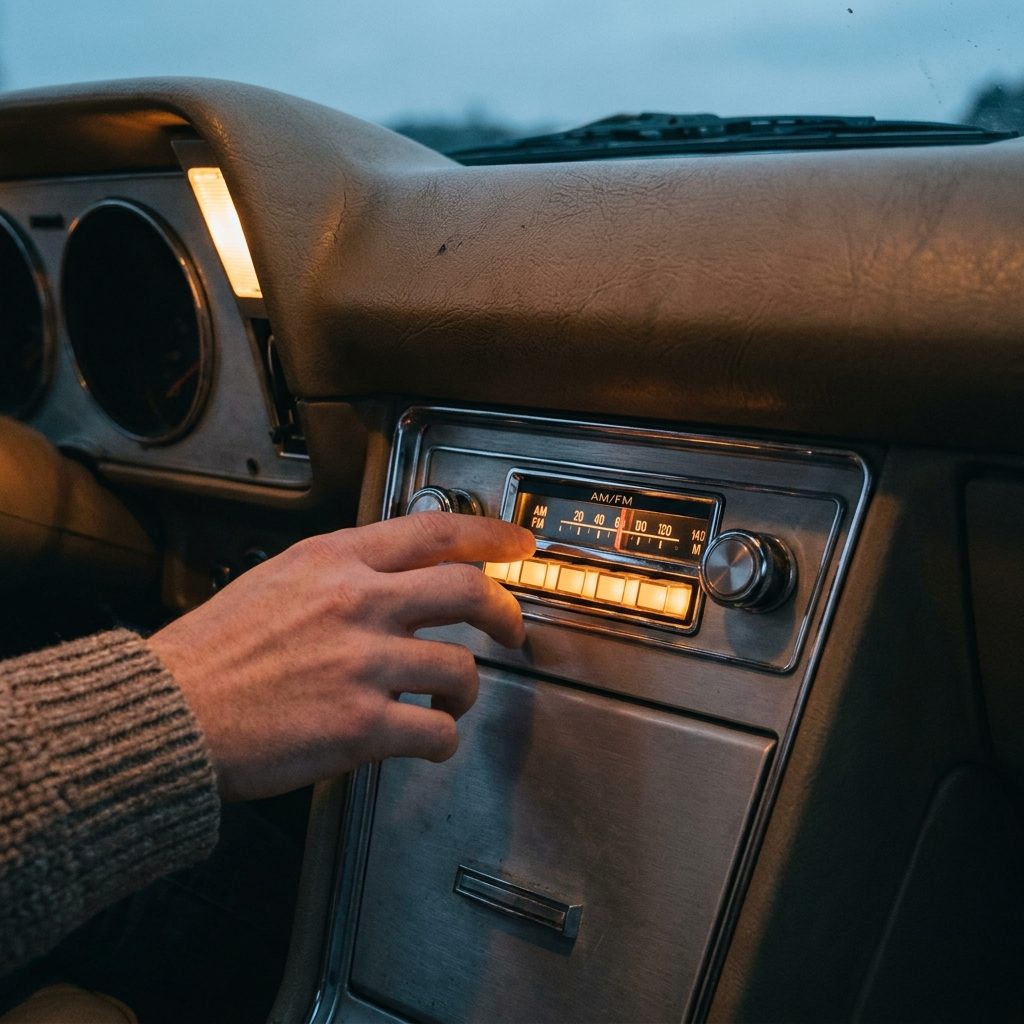
You may not remember the station’s call letters, but you can still hear the jingle and the exact way the afternoon DJ stretched the final digit.
Studies of music and autobiographical memory often find especially strong attachment to songs encountered during adolescence and early adulthood. The precise peak differs by study, sample, and method, with some research placing it in the mid-teens and other work finding a broader window. Source
The first car concentrated that music in a new setting. It was a private room, a badge of independence, and a repeated daily route. Songs heard there became attached not only to a station but to the feeling of driving without a parent in the passenger seat.
Years later, the old frequency matters less than the version of yourself who once reached for it.
The Particular Regret of Selling a First Car Because You Needed the Money

You sold it because the security deposit was due and there was nothing else worth enough. The buyer drove away in a cloud of blue smoke while you stood on the curb telling yourself it was only a car.
The regret was not necessarily for the machine alone. A first car could represent mobility, privacy, work, and the first convincing evidence that adult life had begun. Selling it under pressure exposed how fragile that independence still was.
Research on self-defining autobiographical memories suggests that events tied closely to identity and unresolved emotion can remain especially persistent. Source
Not every seller mourned the car for decades. But when the memory remained, it often carried two losses at once: the object itself and the younger self who had assumed it would remain his.
What the 1980s Glove Box Said About the Teenager Running It
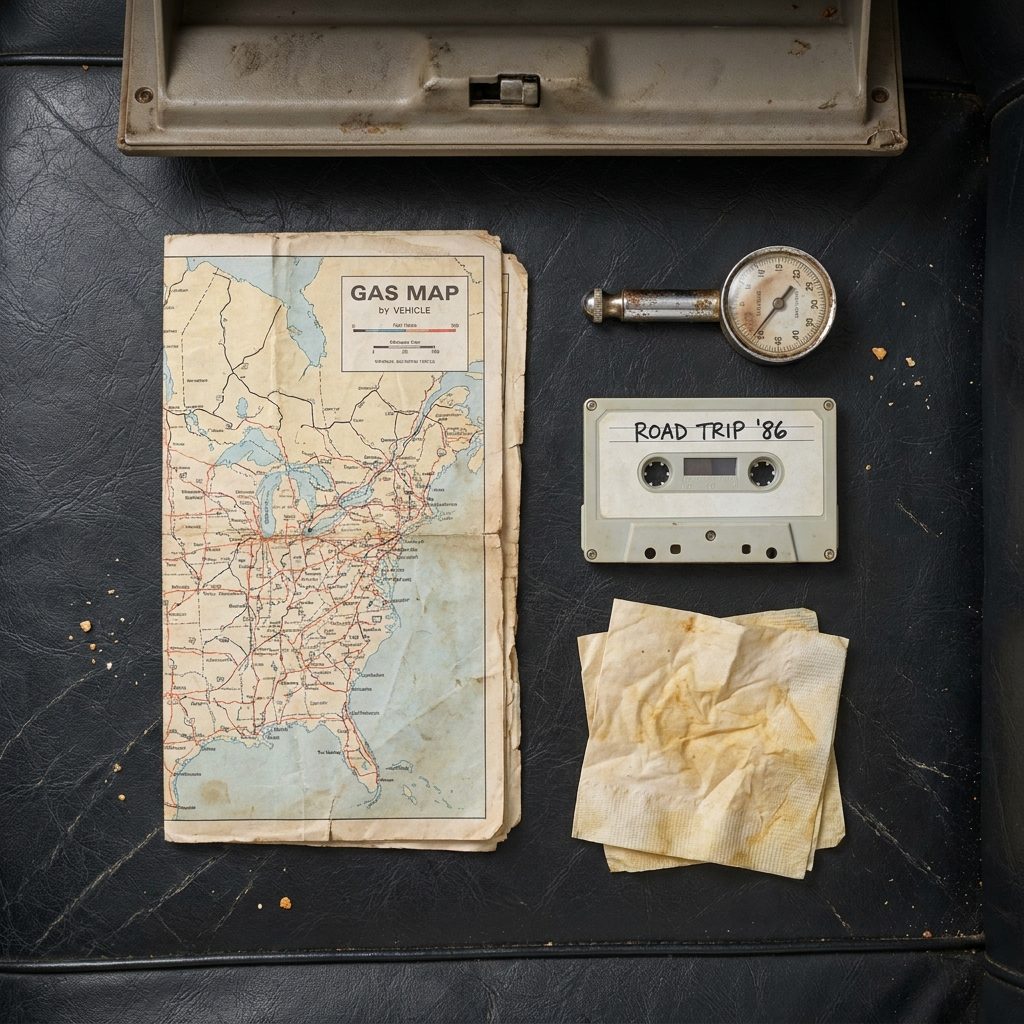
Open enough first cars from the 1980s and certain objects begin to repeat: a folded gas-station map, drive-through napkins, the owner’s manual, a tire-pressure gauge, a lighter that belonged to somebody else, and an insurance card that should have been replaced months earlier.
The exact inventory varied, but the glove box served as a rolling junk drawer for the small emergencies of driving. It held whatever the owner believed might matter later and whatever he could not be bothered to throw away.
That made it revealing in the same modest way as a kitchen drawer. The teenager with registration in a plastic sleeve was practicing one version of responsibility. The one with three cassettes and no flashlight was still learning what preparedness meant.
You do not remember the glove box because it was important. You remember it because it was part of the first machine you were responsible for keeping ready.
Why the First Car You Kissed Someone In Never Feels Like Just a Car
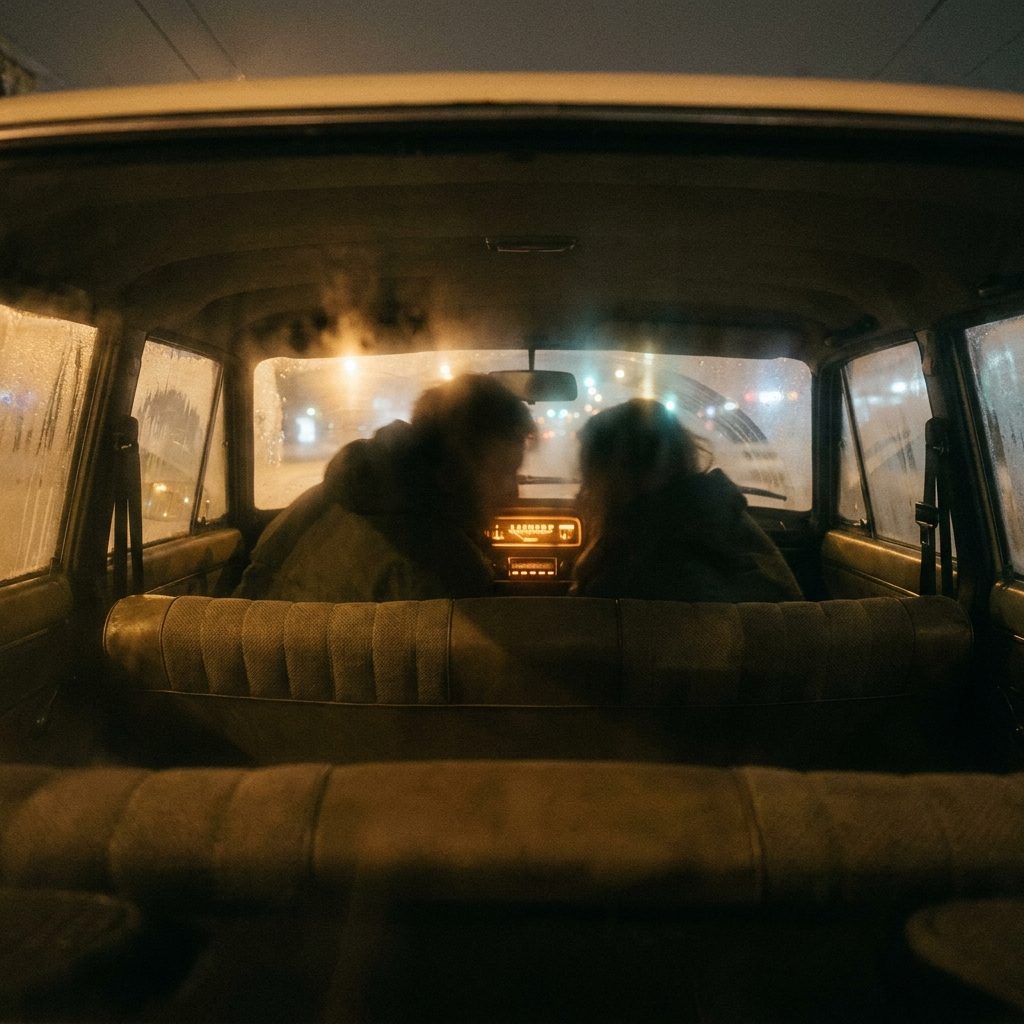
Front bench seat. Radio low. Windows beginning to fog. Whatever the car was, the texture of the upholstery can remain attached to the memory decades later.
Early romantic experiences often carry strong novelty, emotion, and identity significance. When they occur during adolescence or early adulthood, they also fall inside the broader period when autobiographical memories are often especially accessible. Source
The car happened to be the room. That is why a particular interior color, vinyl smell, or dashboard shape can later retrieve far more than the machine itself.
The memory is not proof that the car changed someone’s emotional wiring. It is evidence that places and objects become part of how important first experiences are stored.
Why the Car You Drove Away From Home In May Be the One That Stays
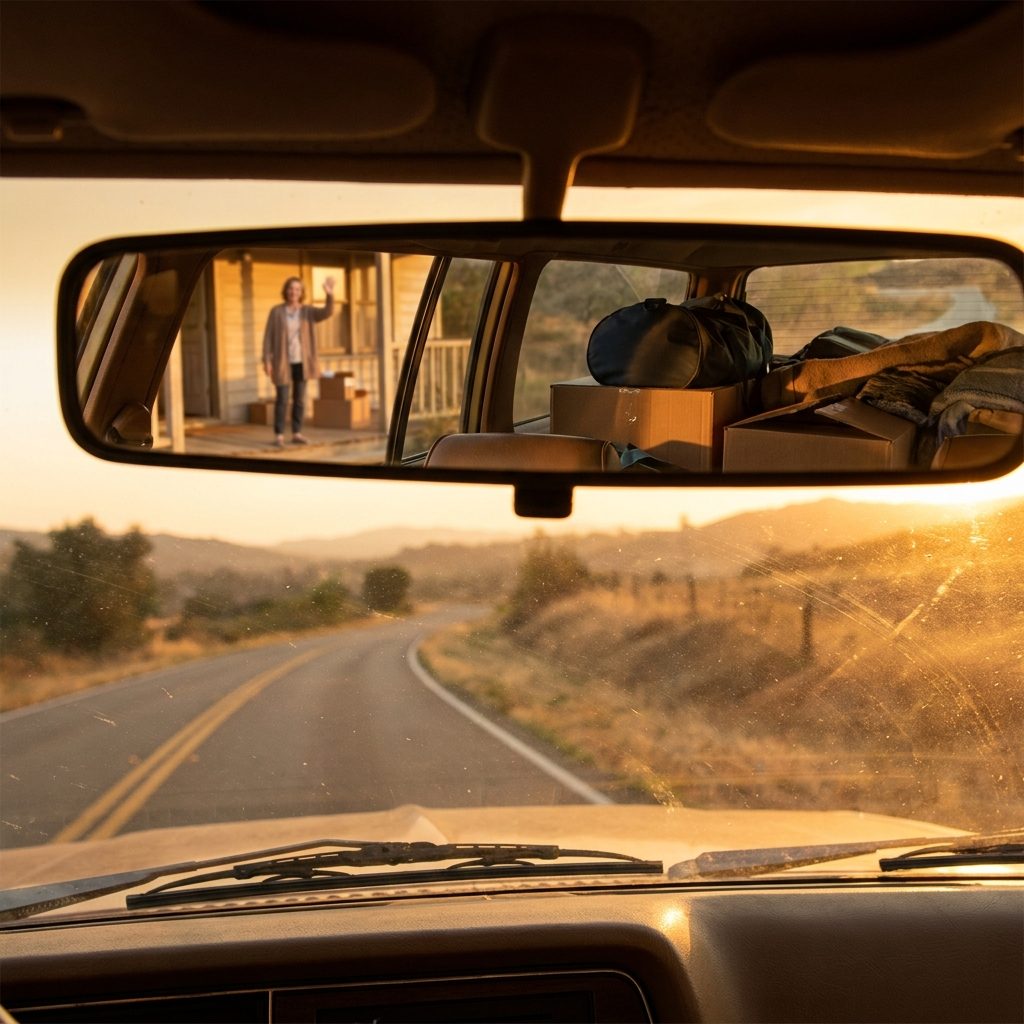
Rearview mirror. Your mother on the porch getting smaller. The trunk holding nearly everything you owned, which may have been the first time you understood how little that was.
The car became attached to a threshold: leaving the family home, starting a job, moving to another town, or beginning a life that no longer reset itself at the childhood dinner table.
Psychologist Dan McAdams has argued that people build identity by weaving key life events into an ongoing personal narrative, and that turning points like leaving home carry outsized weight in that story precisely because they mark a before and an after. Source The car did not create the transition, but it carried the body through it. That made the dashboard, steering wheel, and turn at the end of the street part of the memory.
You may forget several later cars. The one that carried you out can remain because it belonged to the moment when home changed from the place you lived to the place you came back to.
The Bottom Line
Your first car did not determine the man you became. It arrived during years filled with first jobs, first freedoms, first failures, and the earliest serious decisions about who you wanted to be.
That timing explains why the smallest details can remain so accessible: the warm vinyl, the reluctant starter, the radio preset, the rust spot, the route away from home. The car was present while identity and independence were becoming autobiographical memory.
So when a rusted version of that first car catches your eye in a parking lot, you are not only recognizing sheet metal. You are recognizing the room where part of your younger life happened.