
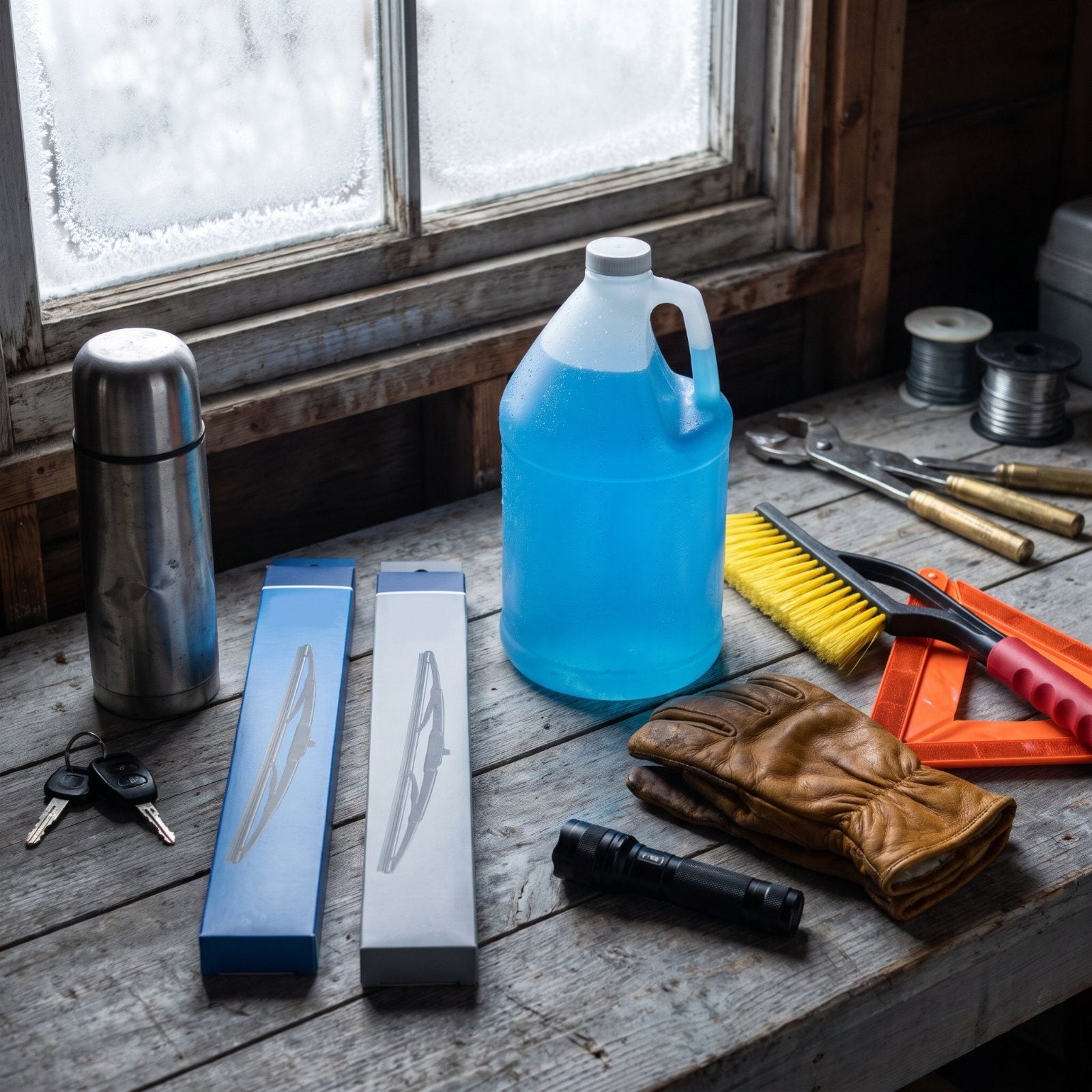
Cold doesn’t forgive guesswork. A tank you meant to fill, a wiper you meant to replace, a forecast you meant to read — winter collects on all of it. Most of the trouble happens before you ever touch the brake pedal, in those ten rushed minutes between the warm house and the cold car. The fixes are cheap. The habits take a season to set. Here are the preparation, visibility, traction, and roadside slips that catch good drivers off guard, and exactly how to quit making them.
Please note that some of the images in this article were created with the assistance of AI.
38. Driving With Snow Still Piled on the Roof
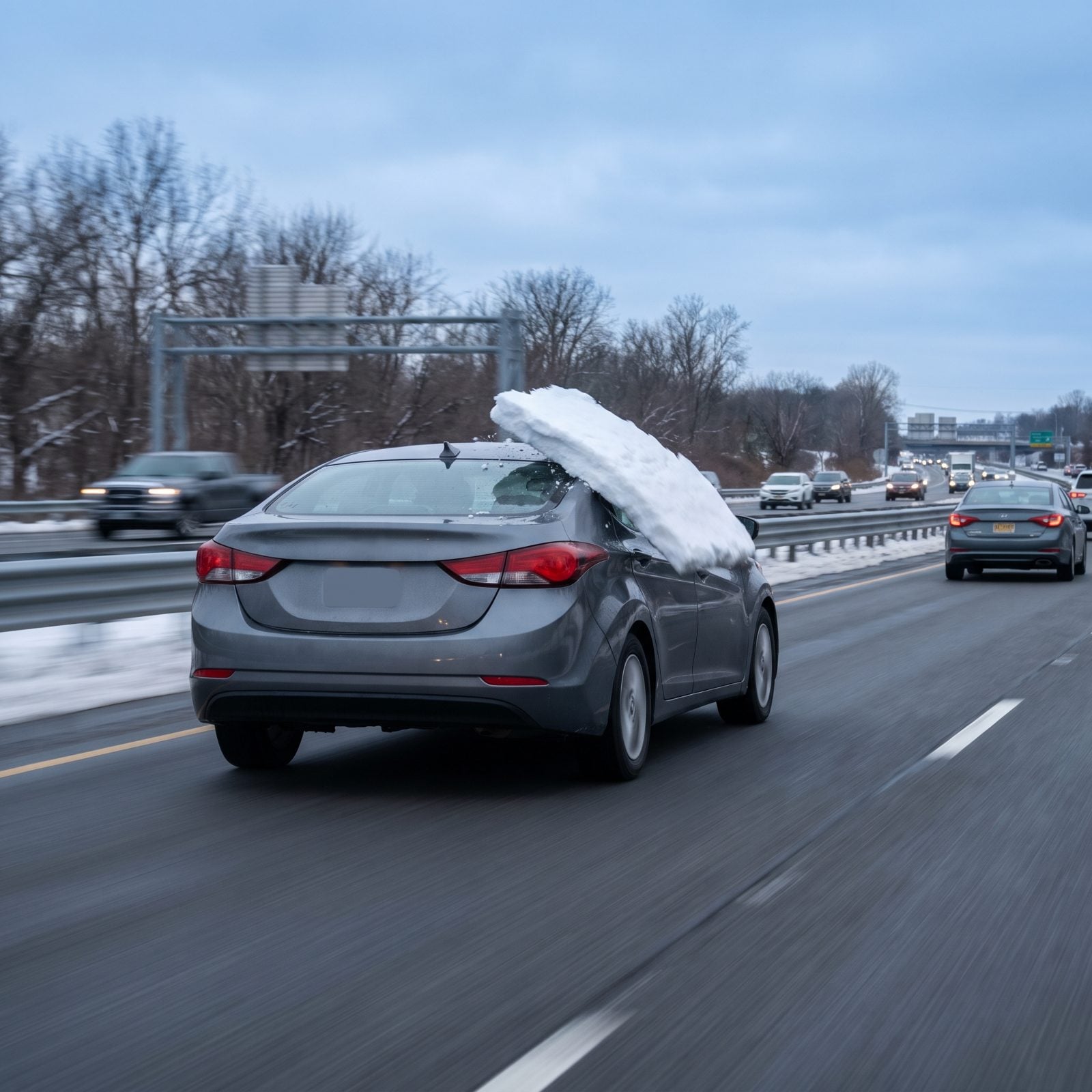
That roof load is a projectile waiting for a reason. You pull onto the highway, hit 55, tap the brakes, and the whole slab slides forward across your windshield or peels off into the car behind you. Either way somebody’s suddenly blind at speed.
A frozen sheet off a roof has caused real pileups, and in plenty of states it’s a ticket on top of it. The slab also refreezes into a solid plate overnight — by morning it isn’t fluffy powder, it’s a skating rink with your name on it.
Clear the whole roof before you leave. A long-handled foam snow broom made for cars does it without scratching paint, takes about ninety seconds, and keeps that slab off your glass and off the driver tailgating you.
37. Clearing Only a Small Windshield Peephole
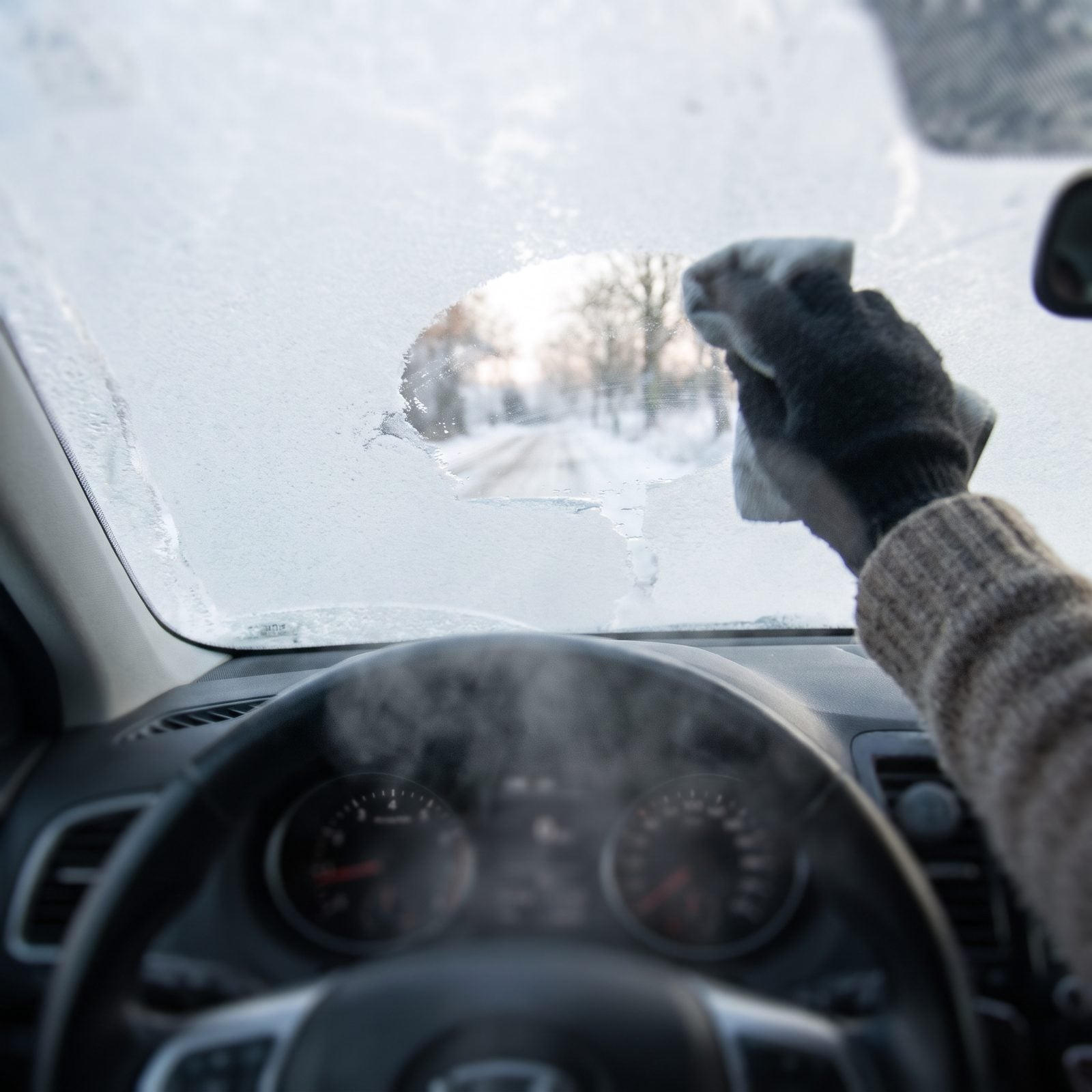
You know the peephole. A hand-sized clearing right at eye level, the rest of the glass still frosted white, engine running, you’re late, good enough. It isn’t.
That little porthole wipes out your peripheral vision exactly where crossing kids, merging cars, and cyclists live, so you end up driving with blinders on at the worst time of year for surprises. And the frost you left keeps fogging and spreading as the cabin warms unevenly.
Give it the real treatment. Start the engine, set the defroster to high with A/C on to dry the air, and scrape every pane — mirrors and back glass included — while it heats. Three minutes buys you the entire windshield instead of a mail slot.
36. Leaving Snow Over the Lights, Cameras, and Sensors
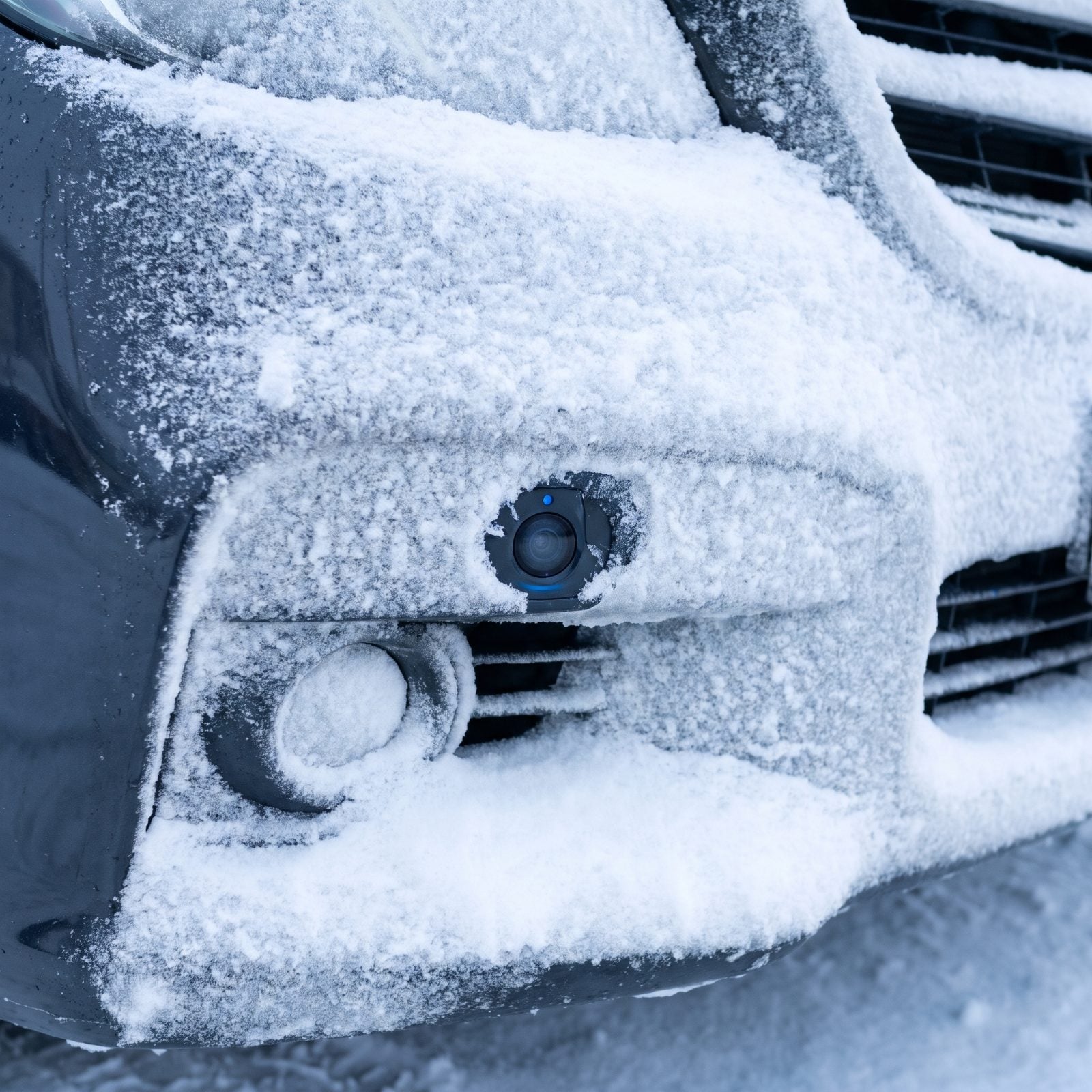
Older cars just needed clear glass and working bulbs. Newer ones hide radar, cameras, and parking sensors behind the grille, bumper, and mirror caps — and a crust of snow blinds all of them at once.
Covered sensors throw false warnings or, worse, quietly stop working, so your lane-keep and emergency braking go dark without much of a heads-up. Snow over the headlights and taillights means nobody sees you at a snowy four-way either.
Wipe the whole system clean. Brush off the headlights and taillights, then hunt down the little sensor windows on the bumper and behind the windshield near the mirror, and clear those with a gloved hand. If a camera stays iced, a quick spray of winter washer fluid melts it faster than scraping ever will.
35. Using Frozen or Torn Windshield Wipers
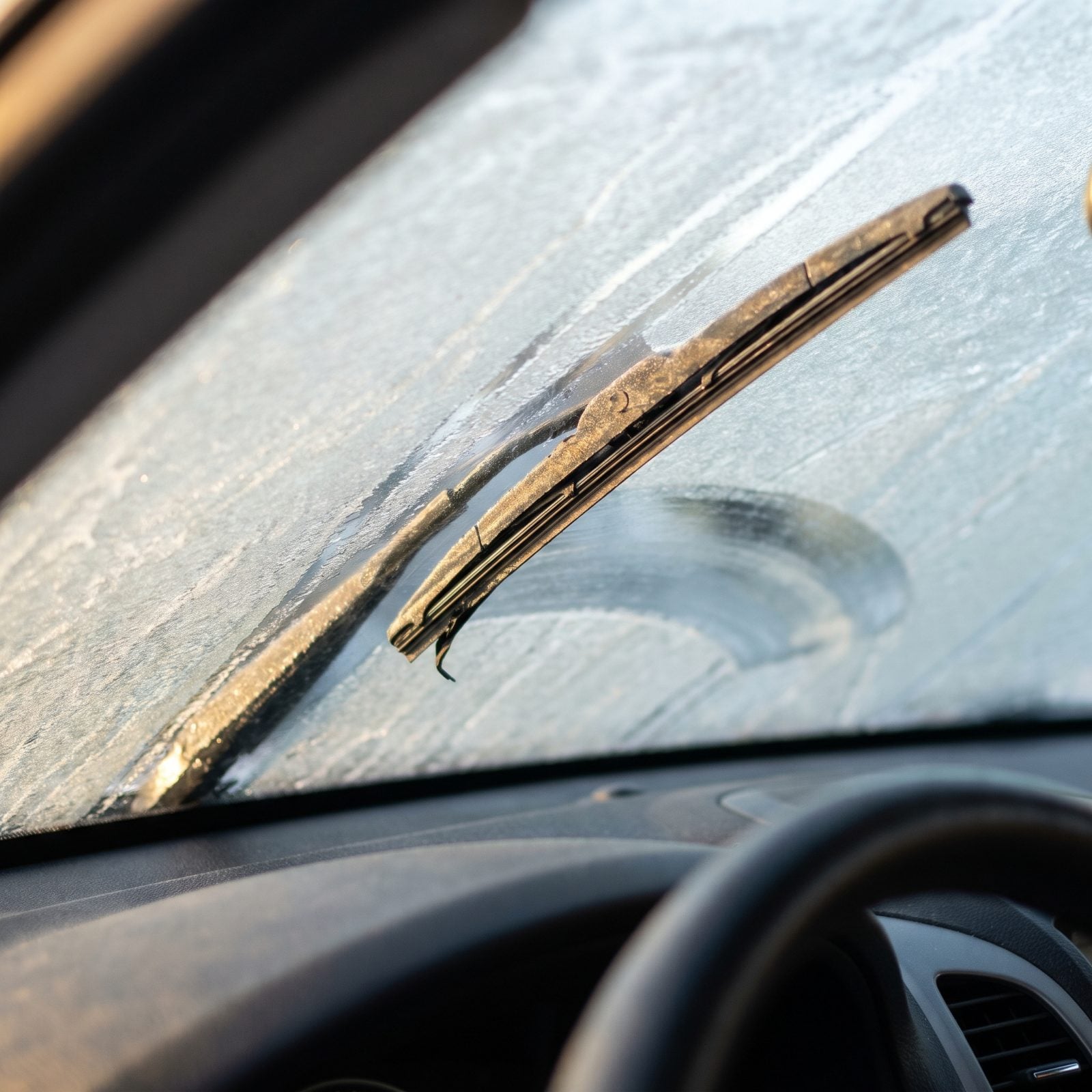
Flip the wipers on against a frozen windshield and you’ll hear it — that chattering drag of a blade skating over ice, rubber torn or frozen stiff, leaving greasy arcs that smear more than they clear.
A split blade stops making full contact, so in sleet or road spray you’re staring through a blurred film at the one moment you need the road sharp. Run a stuck blade long enough and it’ll strip the wiper motor gears or bend the arm, which is a repair bill you did not plan on.
Never peel a frozen blade off by force. Let the defroster loosen it first. Then swap worn rubber for a winter beam blade with a rubber boot over the frame — it shrugs off ice buildup far better than an open-frame summer blade. And lift the arms off the glass overnight so they don’t freeze down.
34. Keeping Summer Washer Fluid in the Reservoir
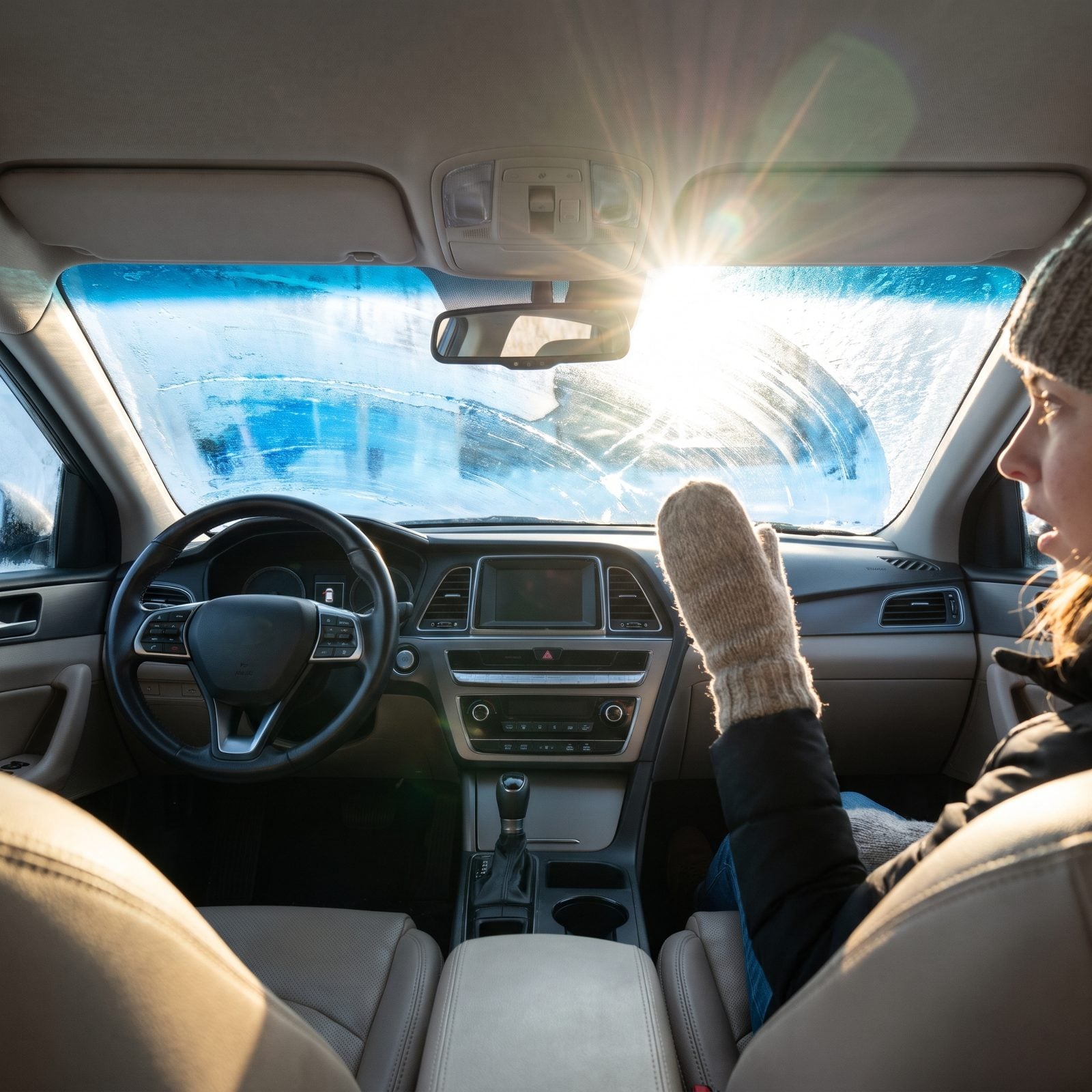
Summer washer fluid freezes. Not in the jug in your garage — on your windshield at 20 mph in January, turning a clear spray into an instant sheet of slush right across your sight line. Worse, it can freeze solid in the reservoir and lines and crack the plastic or burn out the pump.
The fix is simple. Run the summer stuff low, then top off with winter washer fluid rated to at least minus-20, or minus-30 if you see hard cold. It won’t freeze on the glass, it cuts salt film instead of smearing it, and it keeps the pump happy.
We’ve found the cheapest blue jug at the parts store does the job fine. Skip the fancy stuff. You just need it rated cold enough.
33. Starting the Engine Without Checking a Snow-Buried Tailpipe
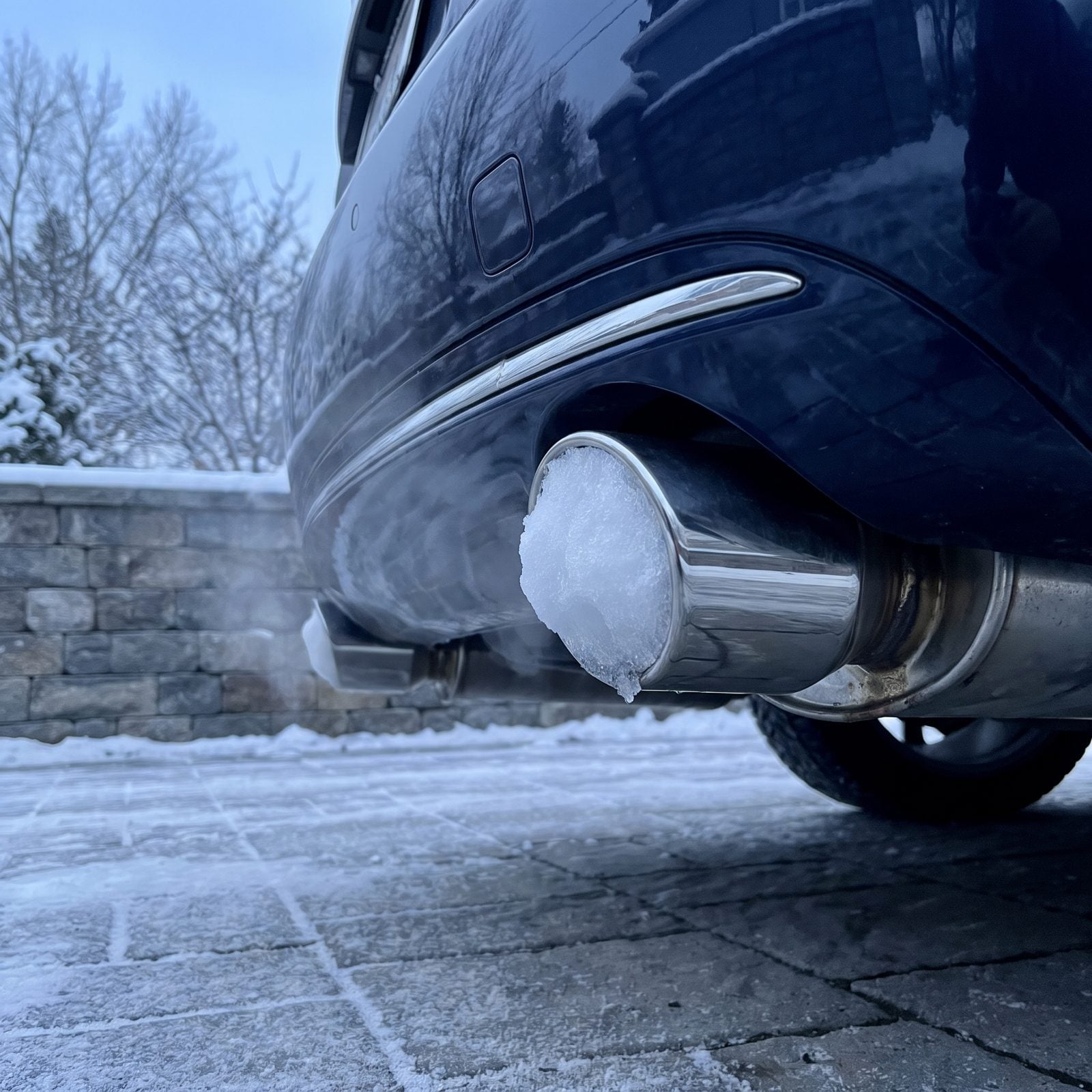
This is the quiet one. You warm the car up in the driveway after a storm, or you’re stuck and spinning in a drift, and the tailpipe is packed with snow. Exhaust has nowhere to go but back into the cabin, and carbon monoxide gives you no smell and no warning until you’re already in trouble.
People die this way every winter, often while “just letting it warm up.” A plow berm against the bumper is enough to do it.
Before you start a car buried in snow, walk around and clear the tailpipe by hand, then give it a foot of open space. If you’re ever stranded and running the engine for heat, keep that pipe clear and crack a downwind window a half inch. Ten minutes an hour, not continuously.
As roadside crews answered hundreds of storm calls, an auto club representative warned “If you go out and clear your windshield and get inside your car to get warm and your tailpipe is clogged with snow you can easily be asphyxiated in minutes by carbon monoxide”
32. Skipping the Overnight Weather Forecast
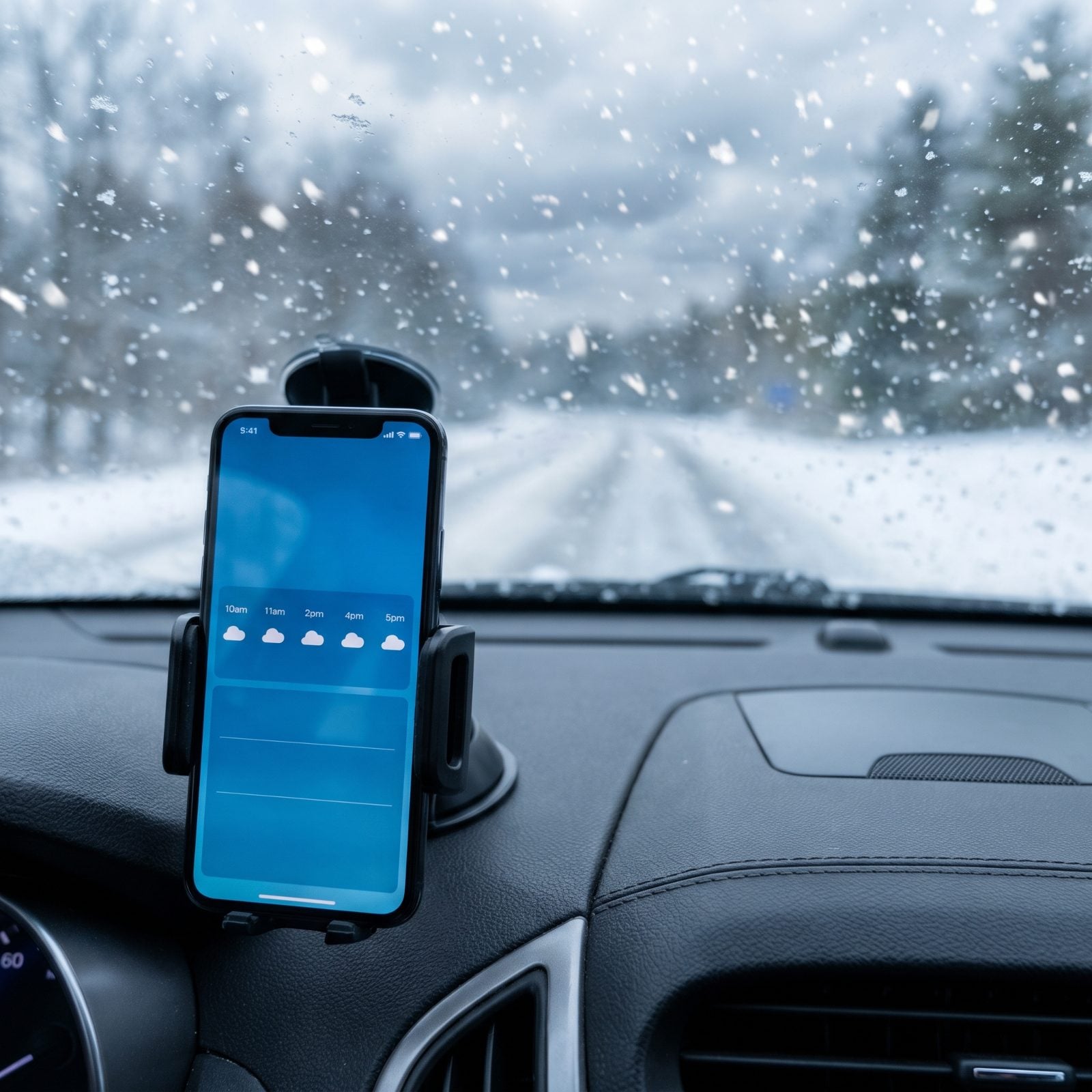
The storm that gets you is rarely the one on the news all week. It’s the overnight band that drops two inches while you sleep, then flash-freezes at sunrise so your “normal” commute runs over black ice you never saw coming.
Skip the night-before forecast and you plan for yesterday’s roads. Wrong clothes, wrong departure, wrong route — all because you figured the morning would look like the evening. It won’t.
Check the overnight and dawn forecast before bed, not after you’re already sitting in the driveway. Watch the freeze line, the morning low, and any “wintry mix,” which is really just code for the sneaky ice that slush turns into at 6 a.m. Two minutes the night before changes every decision you make the next morning.
31. Leaving Without Checking Road Closures
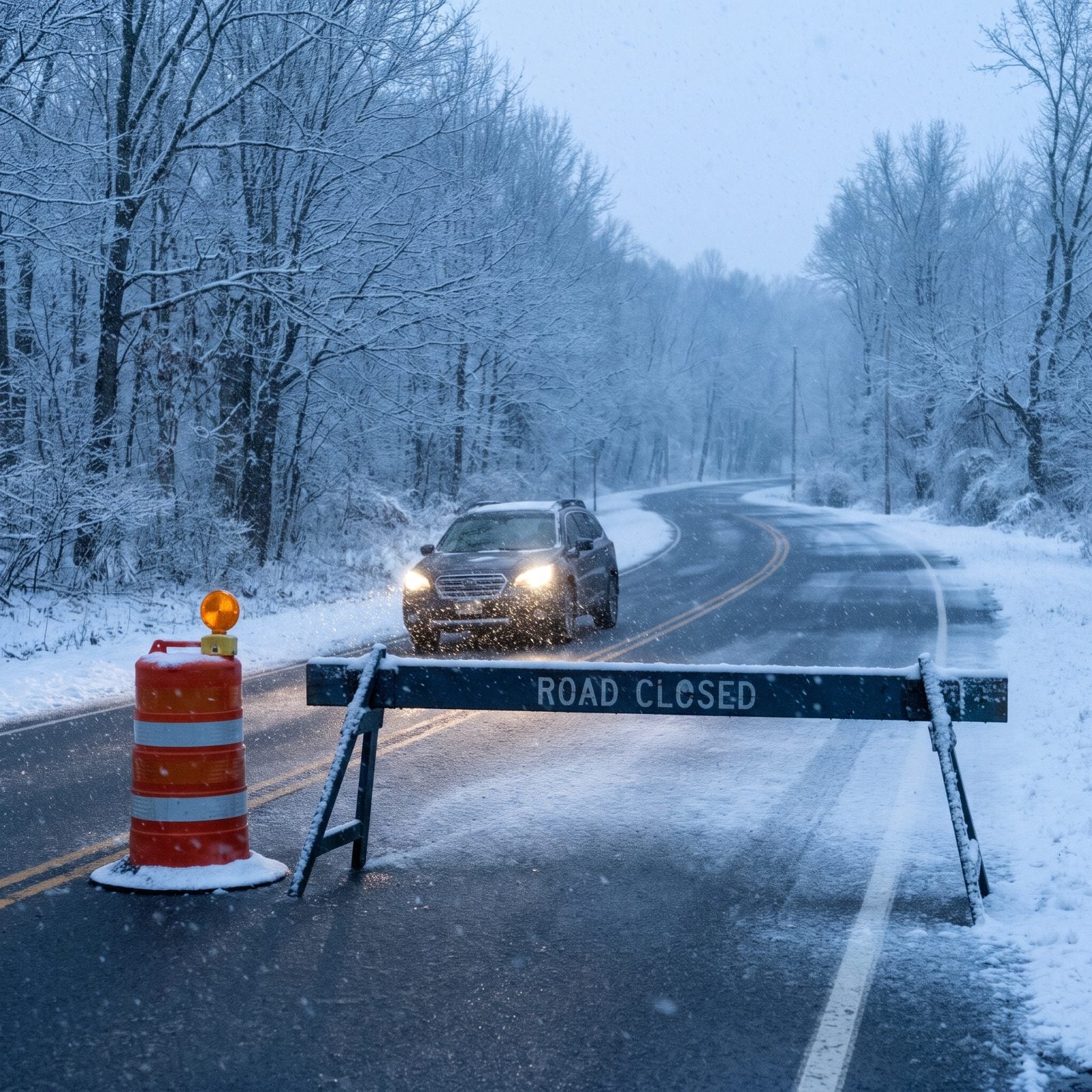
Nothing wastes a tank of gas and an hour of daylight like driving confidently toward a road that’s been closed since 4 a.m. Mountain passes, rural highways, and bridges shut down fast in winter, and the detour sign only shows up after you’ve committed to the long way around.
Guess your usual route is open and you end up backtracking through worse conditions than you started in — often onto smaller roads that got plowed last, if they got plowed at all.
Pull up your state DOT’s road conditions page or app before you pull out of the driveway. Most states post closures, chain requirements, and pass cameras in near real time. If the route you need shows red, you want to learn that in a warm kitchen, not at a barricade forty miles from home.
30. Starting a Winter Trip With a Nearly Empty Tank
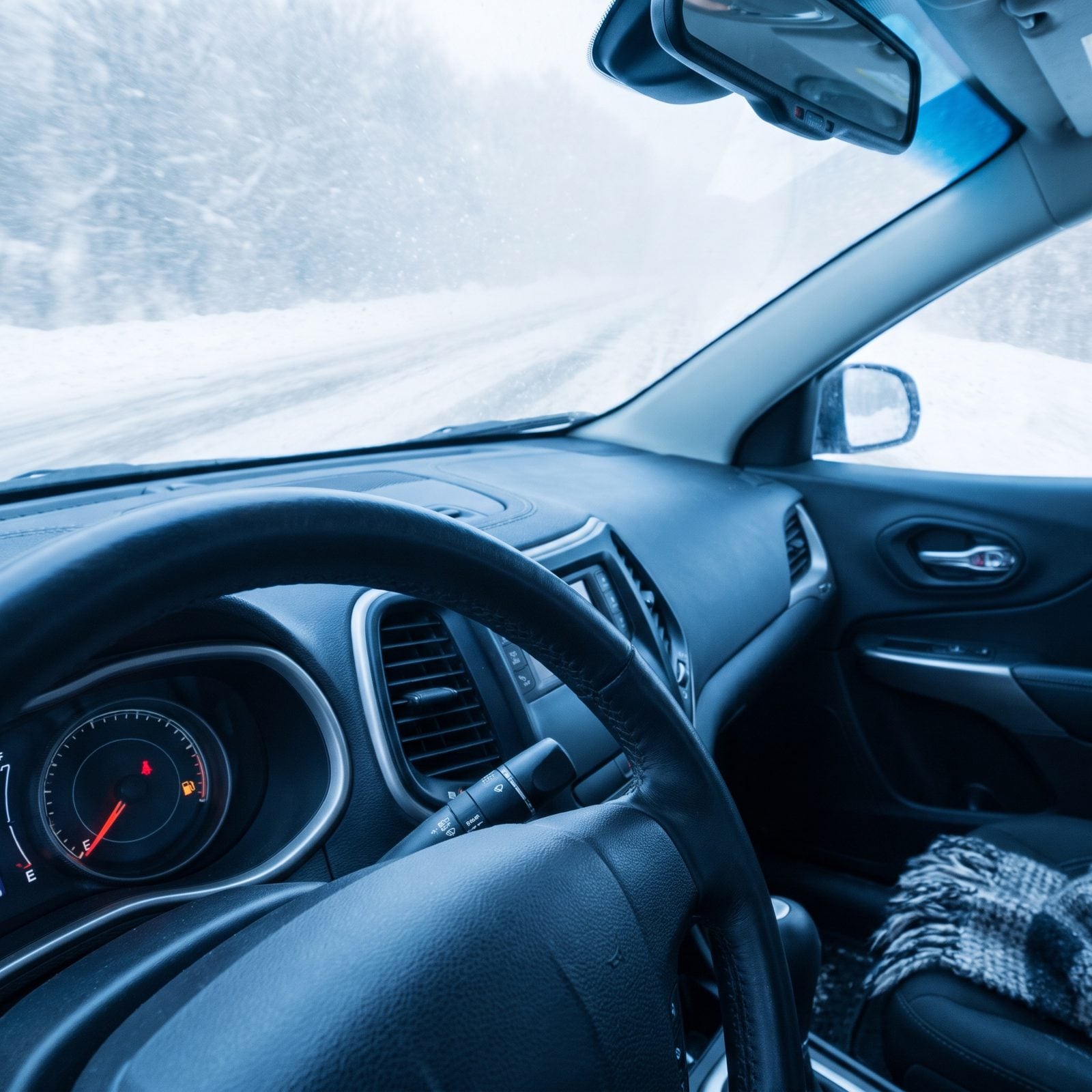
A quarter tank feels fine in July. In a January whiteout it’s a countdown. Get caught in a stalled highway closure, a long detour, or a ditch while you wait for a tow, and the only thing keeping you warm is the engine — and the only thing running the engine is fuel.
Run too low and you risk more than getting stranded cold. Condensation collects in a near-empty tank, and in a hard freeze that water turns to fuel-line ice that won’t let the car start at all.
Treat half a tank as your winter empty. Fill up when the needle hits the middle, not when the light comes on. Heading anywhere rural or over a pass? Top off before you leave town, because the next open station might be a long cold way off.
29. Ignoring Marginal Tire Tread Until the First Storm
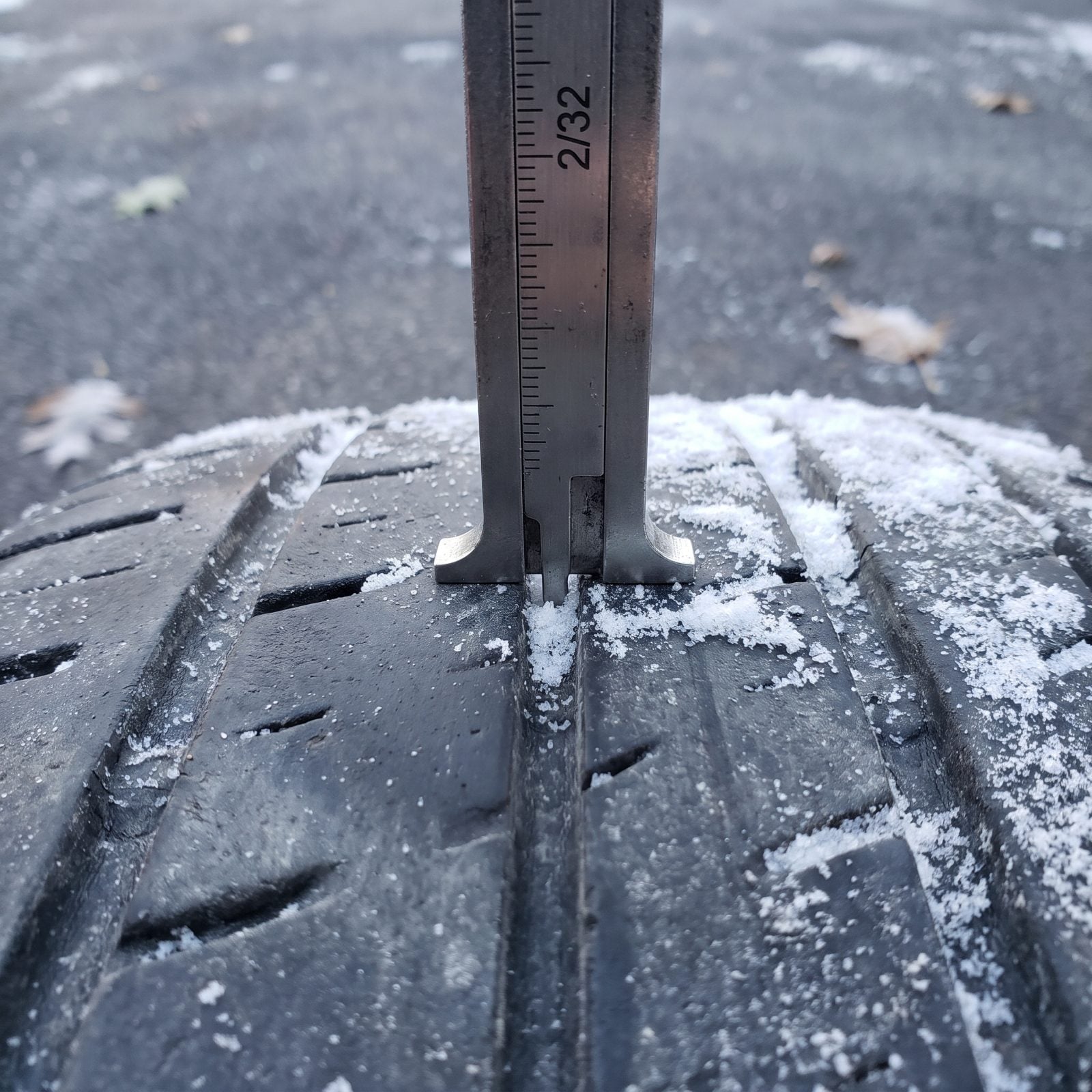
Tread that looked fine all summer tells a different story on ice. The rubber wears so slowly you never notice the day it crosses from safe to marginal, and the first hard braking stop on a snowy on-ramp is a rough place to find out.
Worn tread can’t bite through slush to reach pavement. Your stopping distance stretches, the car floats, and the ABS you trusted has nothing to grab — bald-ish tires in winter are a car wearing dress shoes on an ice rink.
Check tread before the cold sets in, not during the first flurry. The old penny trick still works: insert Lincoln head-down, and if you can see the top of his head, you’re under 2/32 and done. For real winter grip you want closer to 6/32. Buy new rubber in October, not January, when everyone’s panic-shopping and the good sizes vanish.
28. Forgetting That Tire Pressure Drops With Temperature
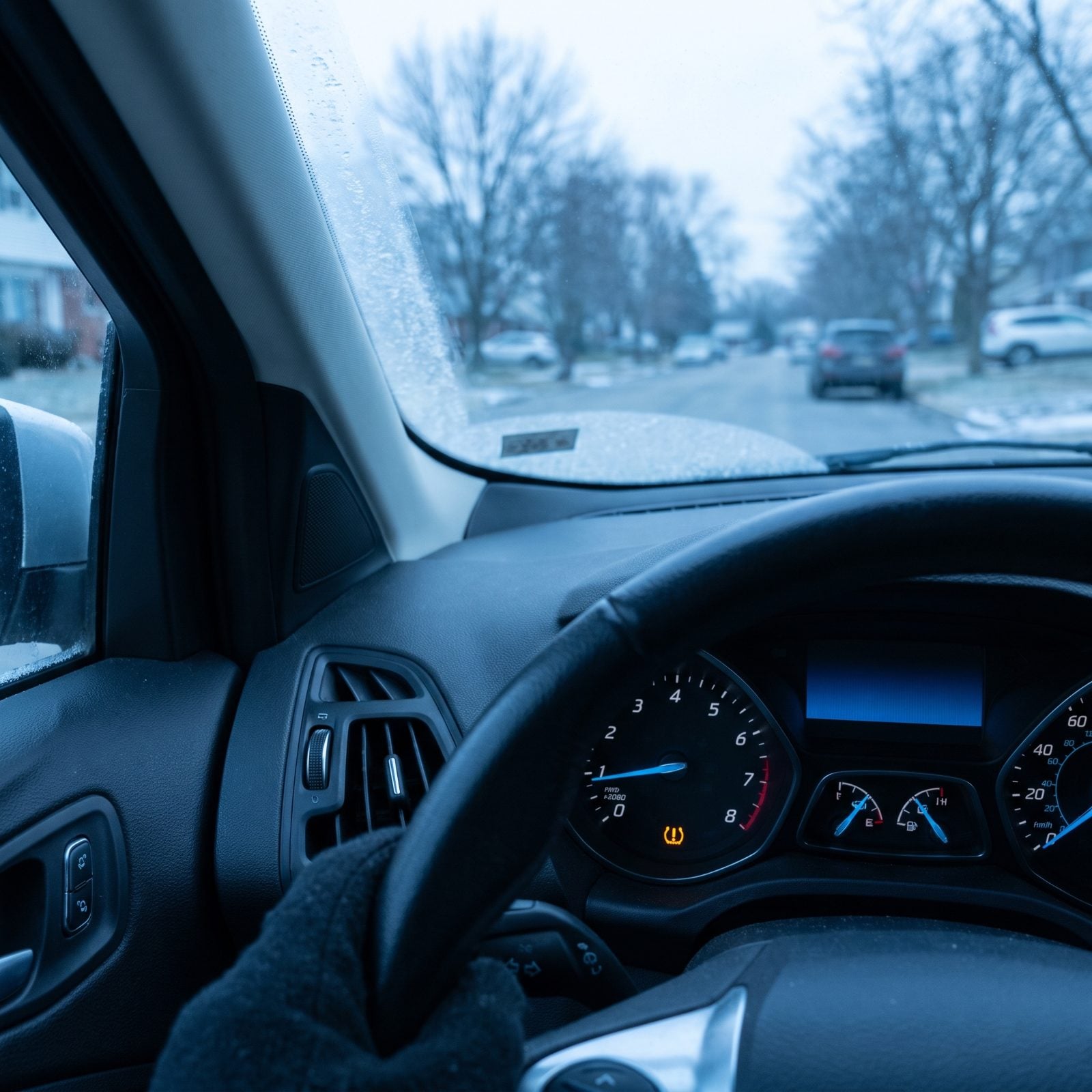
The dash warning light blinks on during the first real cold snap and you figure something’s leaking. Usually nothing is. Air contracts when it gets cold, and every tire loses roughly a pound of pressure for every ten-degree drop.
Underinflated tires wear their shoulders, run hot on the highway, and hydroplane sooner in slush. They also hurt fuel economy right when you’re idling the longest.
Check pressure cold, first thing in the morning before you’ve driven anywhere, with a decent dial or pencil gauge. Set them to the number on the door-jamb placard — not the max figure stamped on the sidewall, which trips up more people than you’d think. And recheck every few weeks through winter, because the temperature keeps moving and so does your pressure.
27. Assuming All-Season Tires Equal Winter Tires
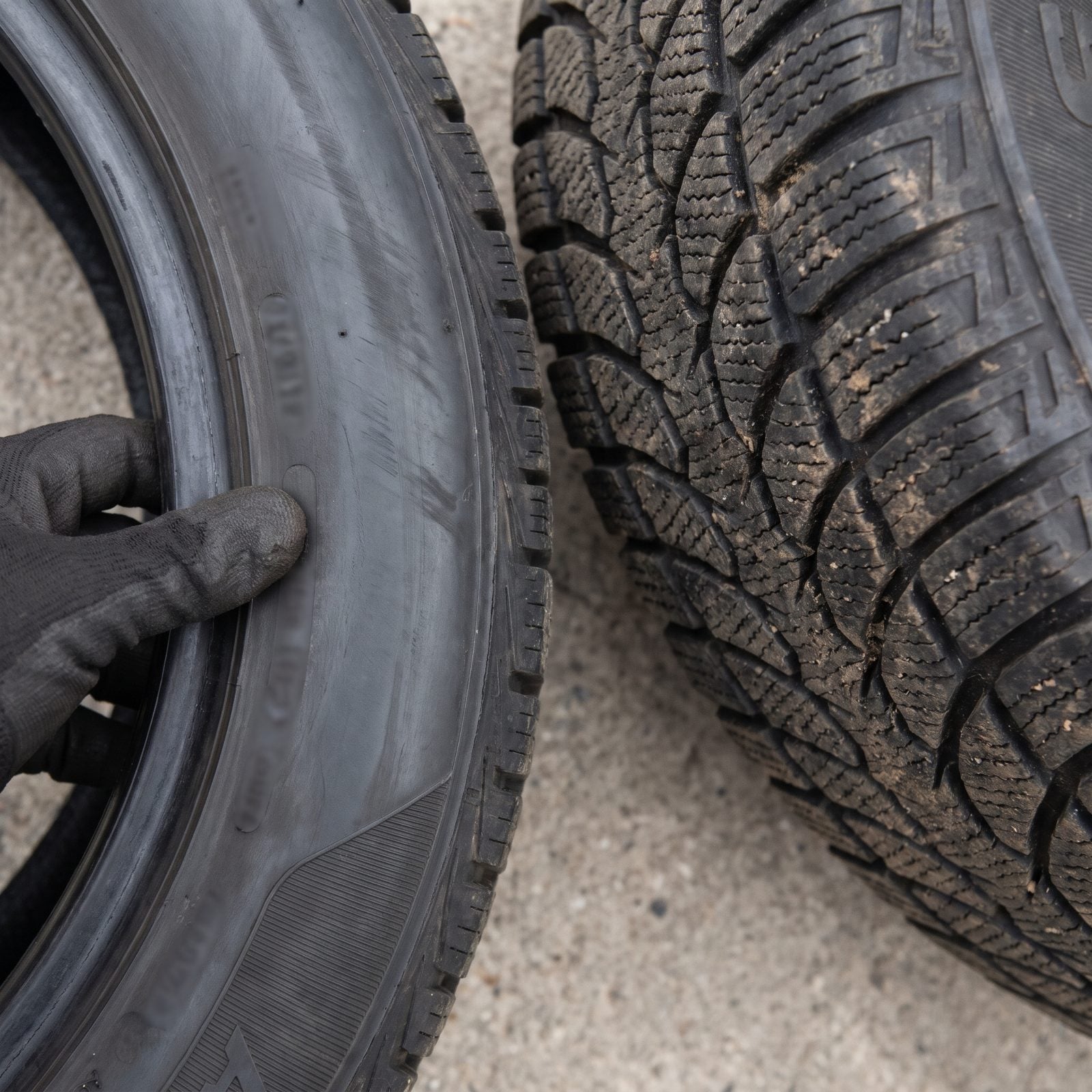
That M+S stamp on the sidewall fools a lot of good drivers. Mud and Snow rating is nowhere near a true winter tire, and the marketing on all-seasons leans hard on the word season to make you feel covered.
All-season rubber stiffens as the temperature drops below about 45 degrees, so it loses grip exactly when you need it most. A dedicated winter tire stays pliable in the cold and carries hundreds of tiny sipes that claw into snow and ice. On a frosty hill, the difference is night and day.
Look for the three-peak mountain snowflake symbol on the sidewall. That’s the only mark that means the tire actually passed a winter traction test. Live where real snow stacks up? Run a set of winters from November through March and store the all-seasons in the garage.
26. Installing Winter Tires on Only One Axle
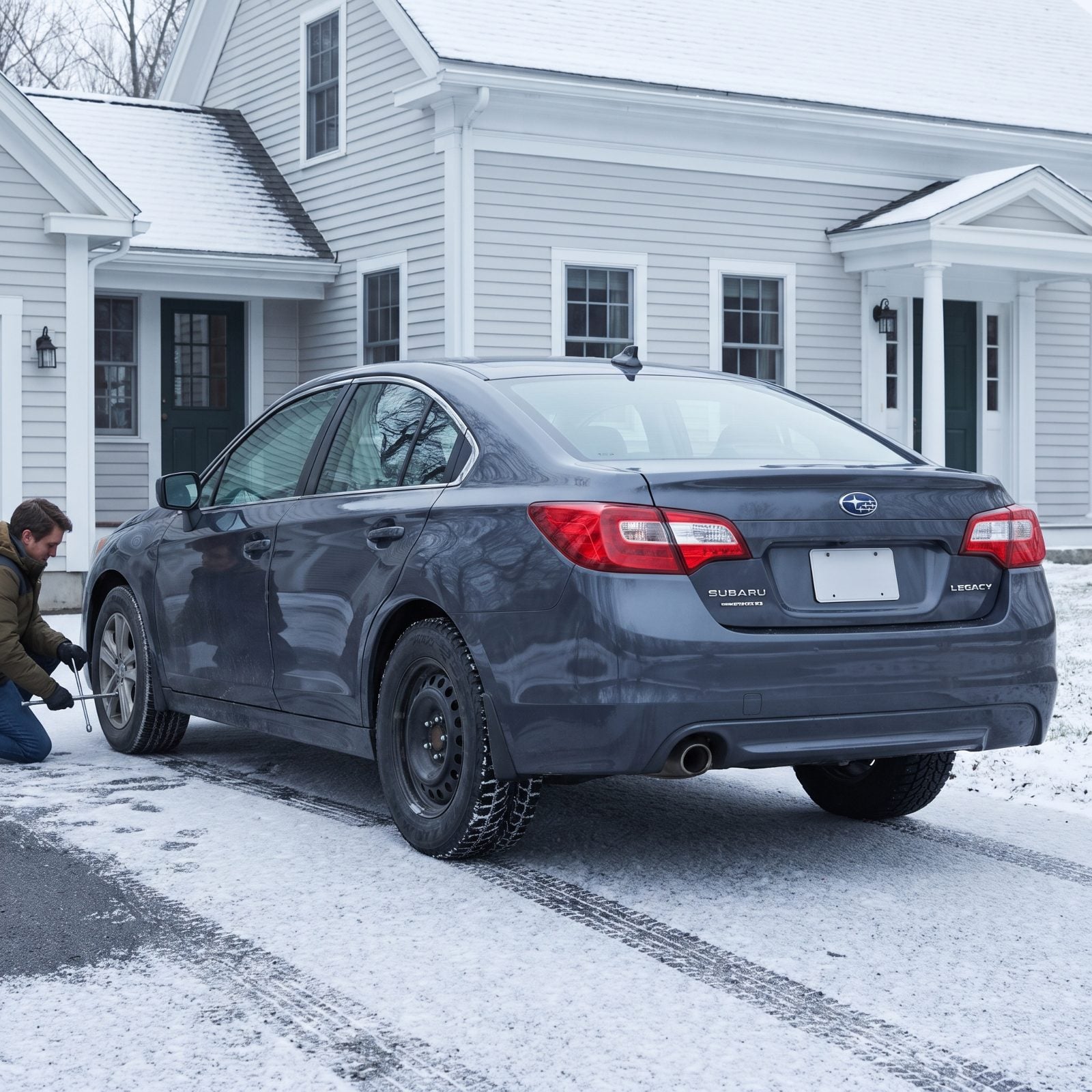
Buying two winter tires instead of four feels like a thrifty compromise. It’s actually one of the sneakier ways to make a car behave worse than if you’d done nothing at all.
Mismatched grip front to rear is a recipe for a spin. Put winters only on the drive wheels and the opposite axle loses traction first in a corner, so a front-driver swaps ends on an off-ramp or a rear-driver understeers into a hedge. Even grip gives you even behavior. Uneven grip gives you a surprise you don’t want.
Fit winter tires in sets of four, period. Budget tight this year? Wait and buy all four together rather than splitting the difference. The handling balance you keep is worth more than the two tires you saved.
25. Waiting for a Storm to Test-Fit Tire Chains
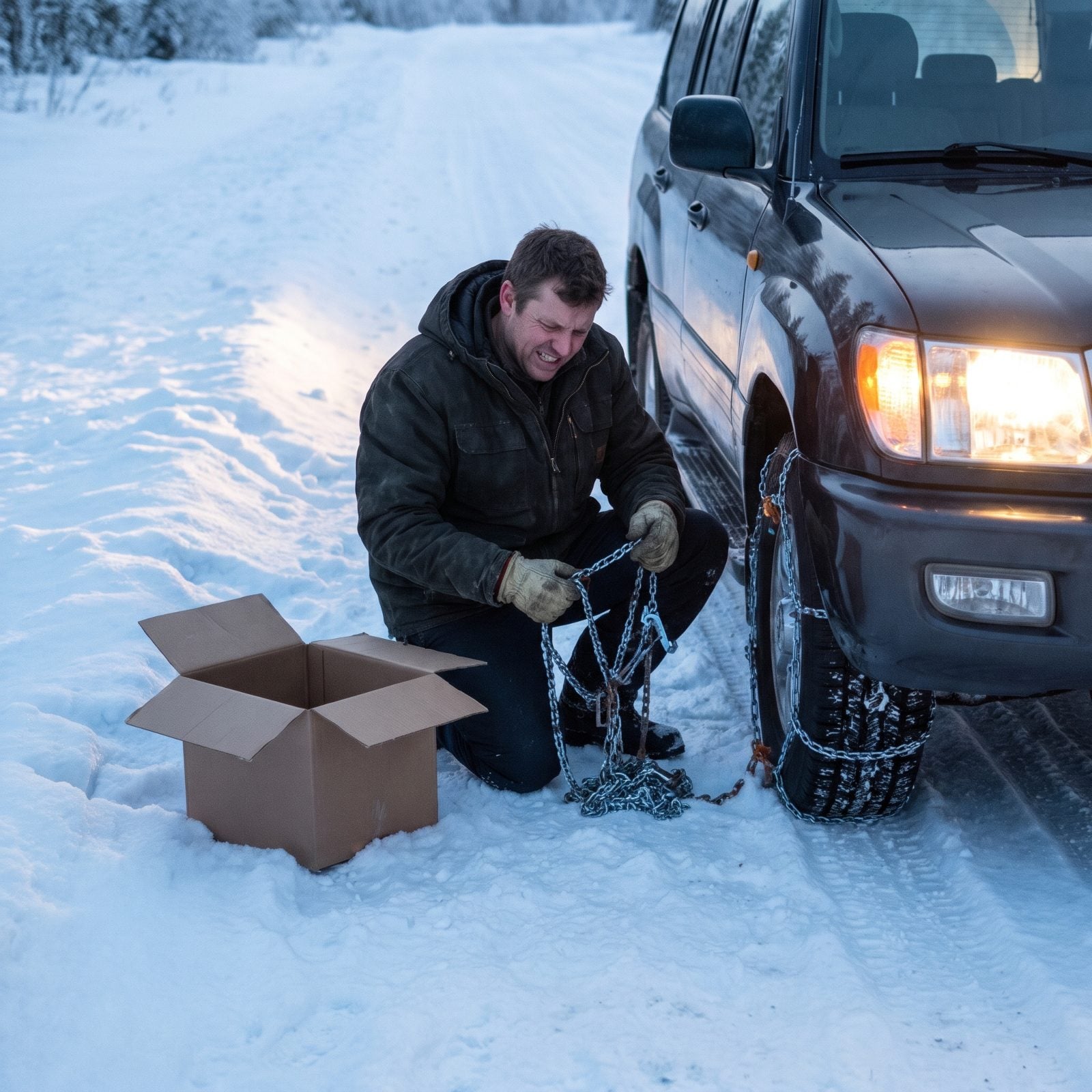
Chains live in the trunk in their box, still zip-tied from the store, until the one night the pass requires them. That’s when you discover they don’t fit, or you can’t remember which way the cams face, kneeling in the dark in a foot of snow.
Fumbling with unfamiliar chains in a storm wastes time, soaks your gloves, and sometimes leaves them loose enough to flail and gouge a fender or a brake line.
So practice in the driveway on a dry afternoon. Lay them out, drape them over the drive tires, work the fasteners, learn the sequence with warm hands and good light. Mark the inside and outside so there’s no guessing later. Do one full dry run and the real thing at 9,000 feet becomes a five-minute job.
24. Wearing a Bulky Coat Under the Seat Belt
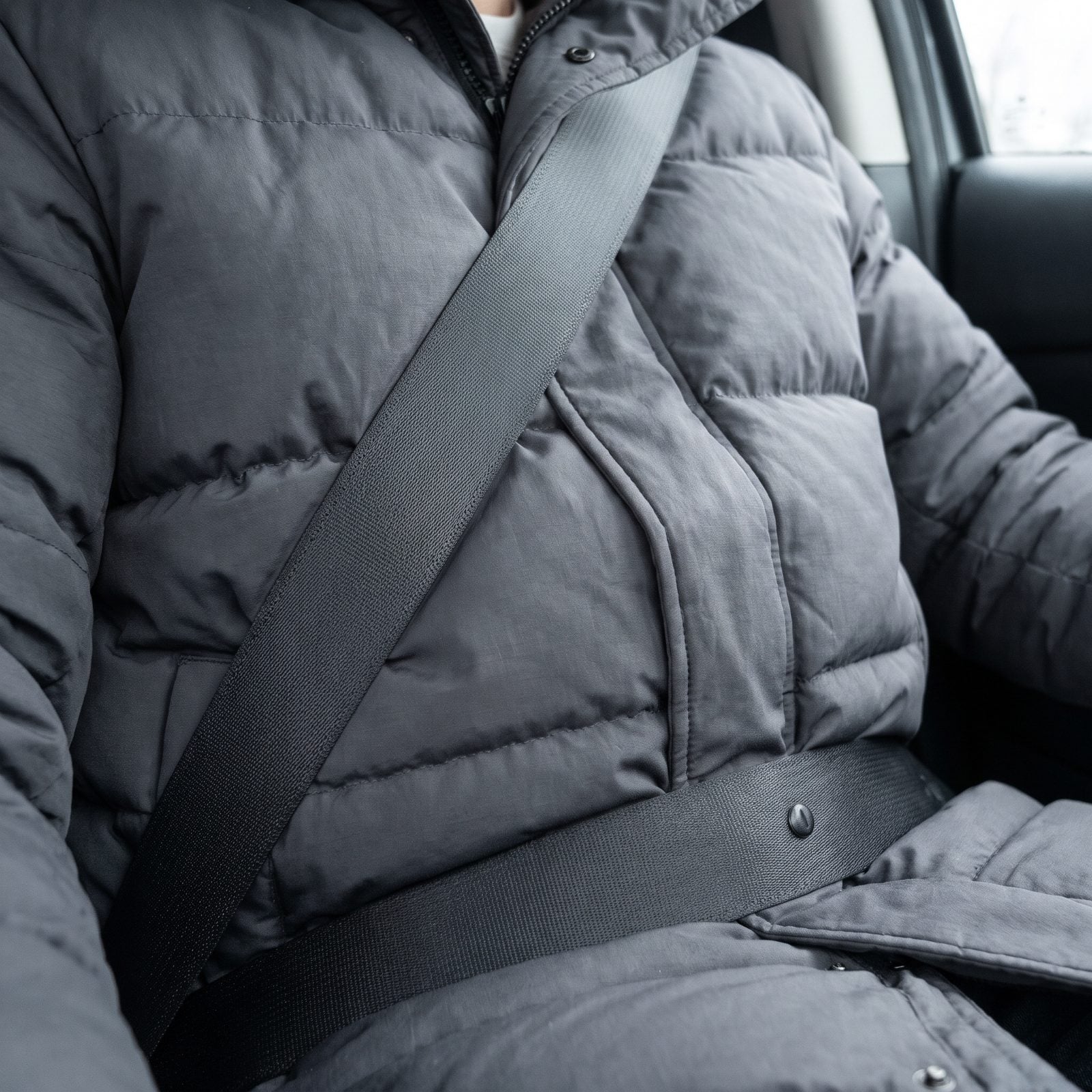
You jump in freezing, cinch the belt over the big puffy coat, and head out. Feels harmless. In a hard stop, that coat betrays you.
A thick jacket leaves inches of loose air between the belt and your body. In a sudden stop the belt has to compress all that fluff before it ever grabs you, so you slide forward under the lap belt and the shoulder strap rides up toward your neck. A belt can’t do its job through a down pillow.
Start the car, run the heat for a minute, then peel the coat off and buckle up over just your sweater. Drape the coat over your lap or toss it in the back. Cold for sixty seconds beats the alternative every time.
A child passenger safety technician warns that letting a child wear a puffy jacket or vest in a car seat can make the harness ineffective. (via a child passenger safety technician)
23. Making Sudden Steering Inputs on Slick Roads
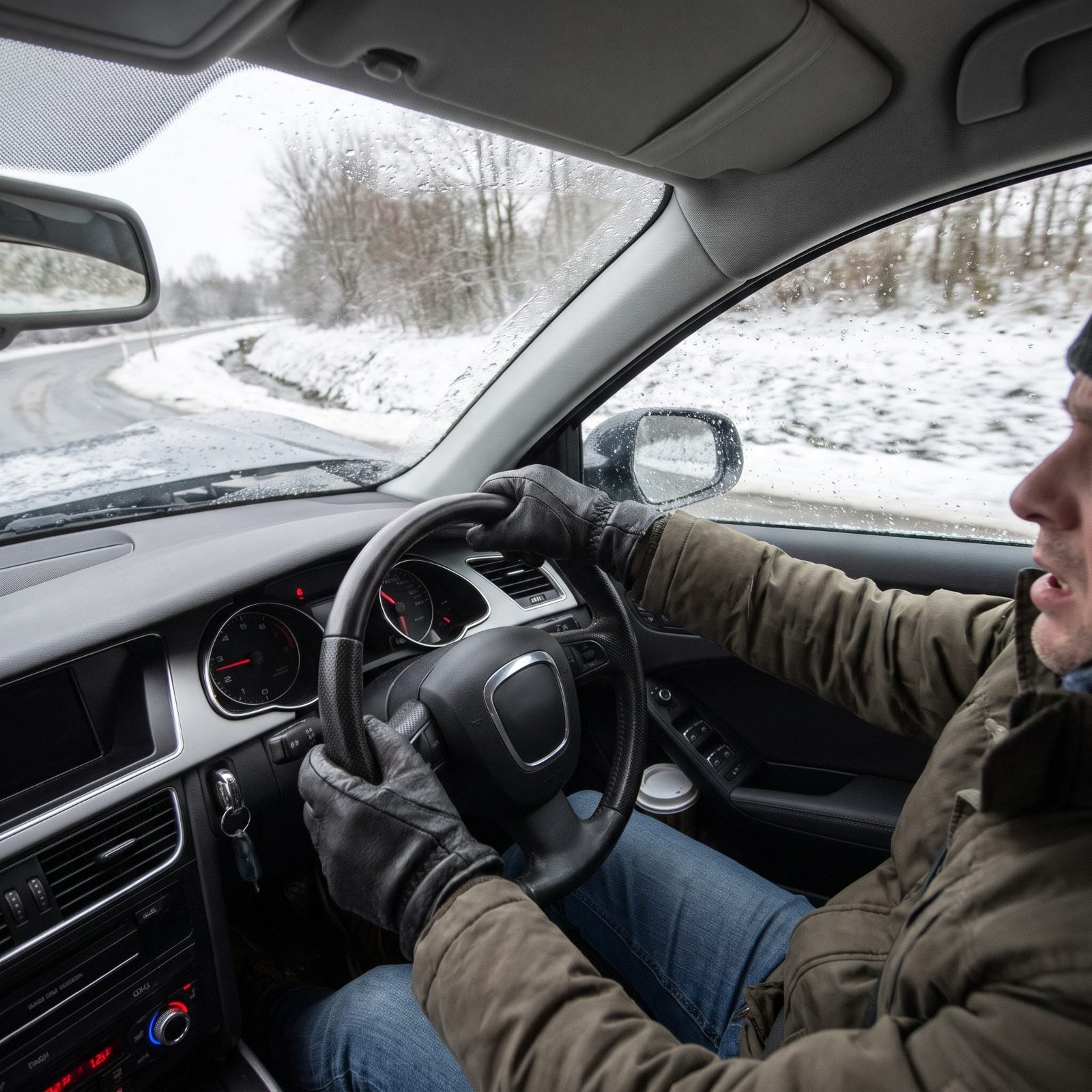
Panic makes the hands jerk, and the hands are what put you in the ditch. A sudden yank of the wheel on ice breaks traction the instant the front tires turn, and now you’re a passenger watching the hood do its own thing.
Abrupt inputs overwhelm what little grip the tires have. Jerk the wheel, stab the brake, or floor it, and the car slides where physics sends it, not where you pointed it. Smoothness is the whole game on a slick road.
Treat every control like it’s glass. Ease into the steering, feed the throttle in gently, squeeze the brakes instead of stomping. If the back end starts to come around, look where you want to go and steer there without drama. Find an empty snowy lot early in the season and practice until slow, smooth hands become the habit instead of the panic.
22. Waiting Too Long and Then Braking Hard
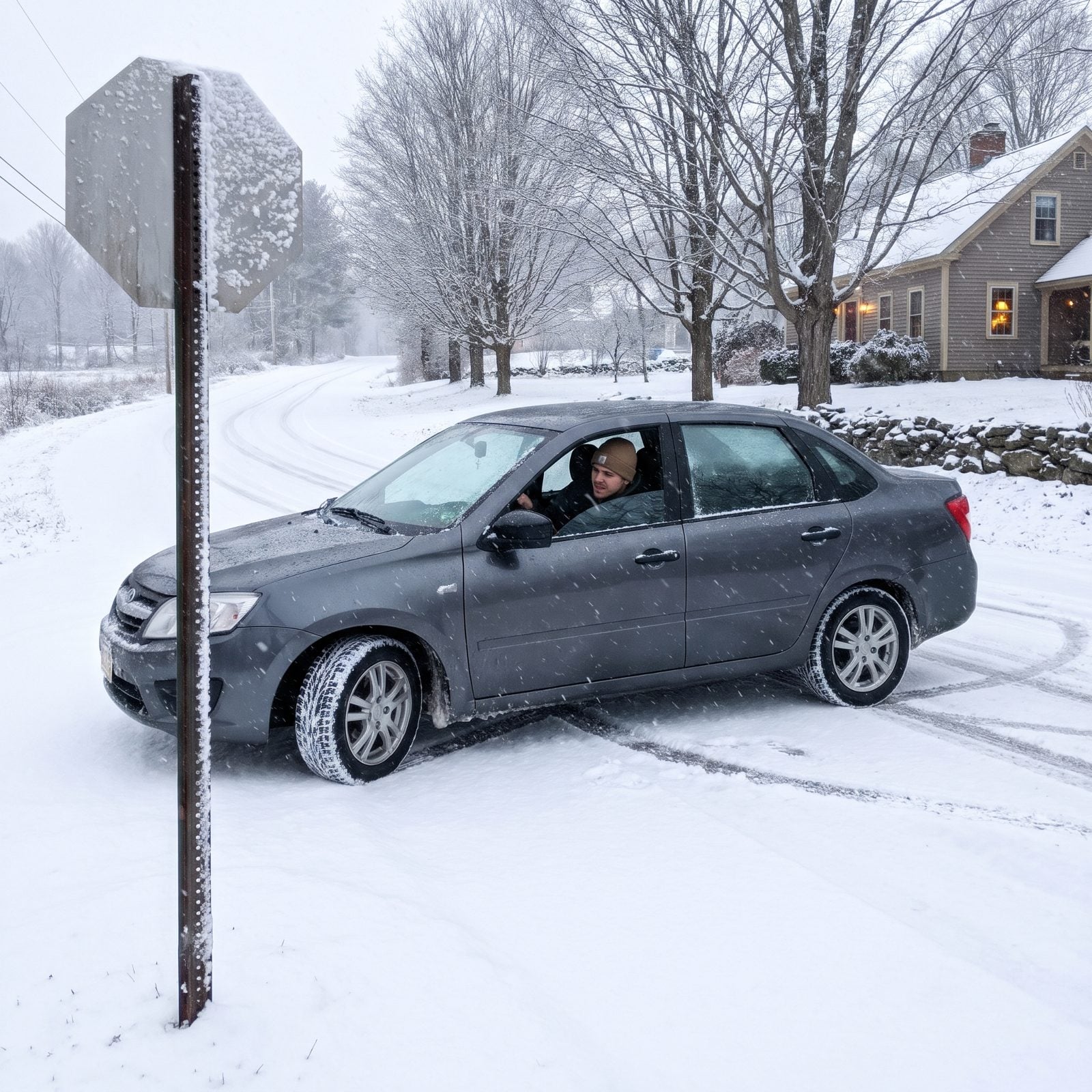
You know the feeling. You’re rolling toward a stop sign, the road looks fine, and you leave the braking until the last second like you always do in July. Then the tires find glaze ice and the car just keeps going, right past the line you meant to stop at.
On ice, stopping distances stretch to three or four times what you’re used to. Brake late and hard and you lock up. A sliding tire has almost no grip, and now you’re just a passenger watching it happen.
Start braking far earlier than instinct says. Squeeze the pedal gently, feel for traction, build pressure slow, and leave yourself eight to ten car lengths of gap. The whole winter game is buying time before you need it.
21. Pumping the Brake Pedal in an ABS-Equipped Car
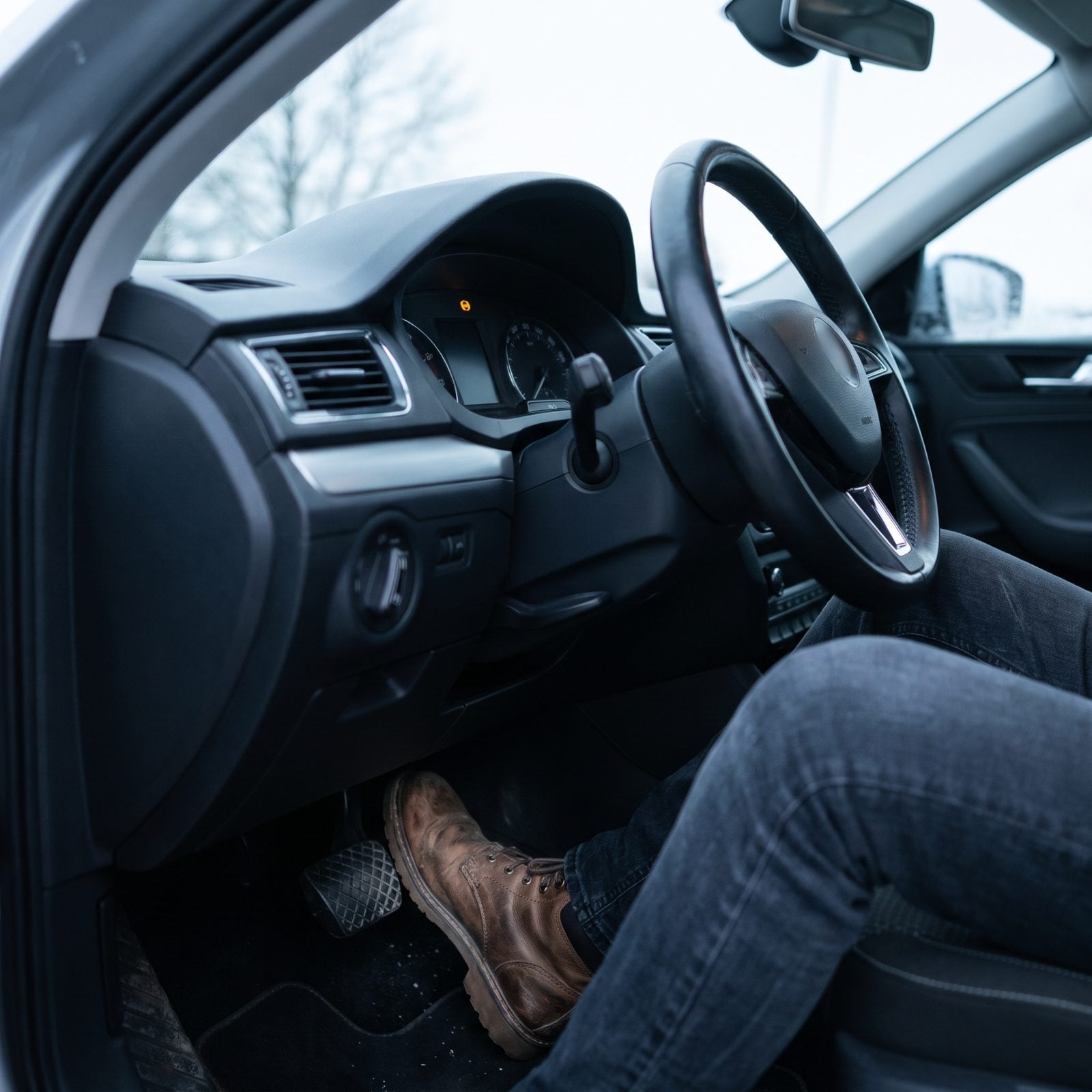
Old habits die hard. Anyone who learned to drive before anti-lock brakes were standard had it drilled in: pump the pedal on slick roads. On a modern car that advice is exactly backwards.
ABS pumps the brakes for you, cycling pressure dozens of times a second at each wheel. Pump the pedal yourself and you interrupt the system, cutting its stopping power and stretching out your slide. That shuddering vibration under your foot isn’t a problem — it’s the whole system doing its job.
Plant your foot firm and hold it. Let the pedal buzz and pulse against your boot, keep steady pressure, and steer where you want to go. ABS keeps the wheels turning so you can still point the car. Trust it, with one exception. The amber ABS warning lights glow on the dash for a few seconds at start-up as a self-check; if one stays lit after that, the system has a fault and is switched off. You’re back to ordinary brakes, so get it checked soon.
As an auto club writer puts it, “If you do have ABS, follow this important trick of the ice trade: Do not pump the brakes.”
20. Braking Heavily in the Middle of a Turn
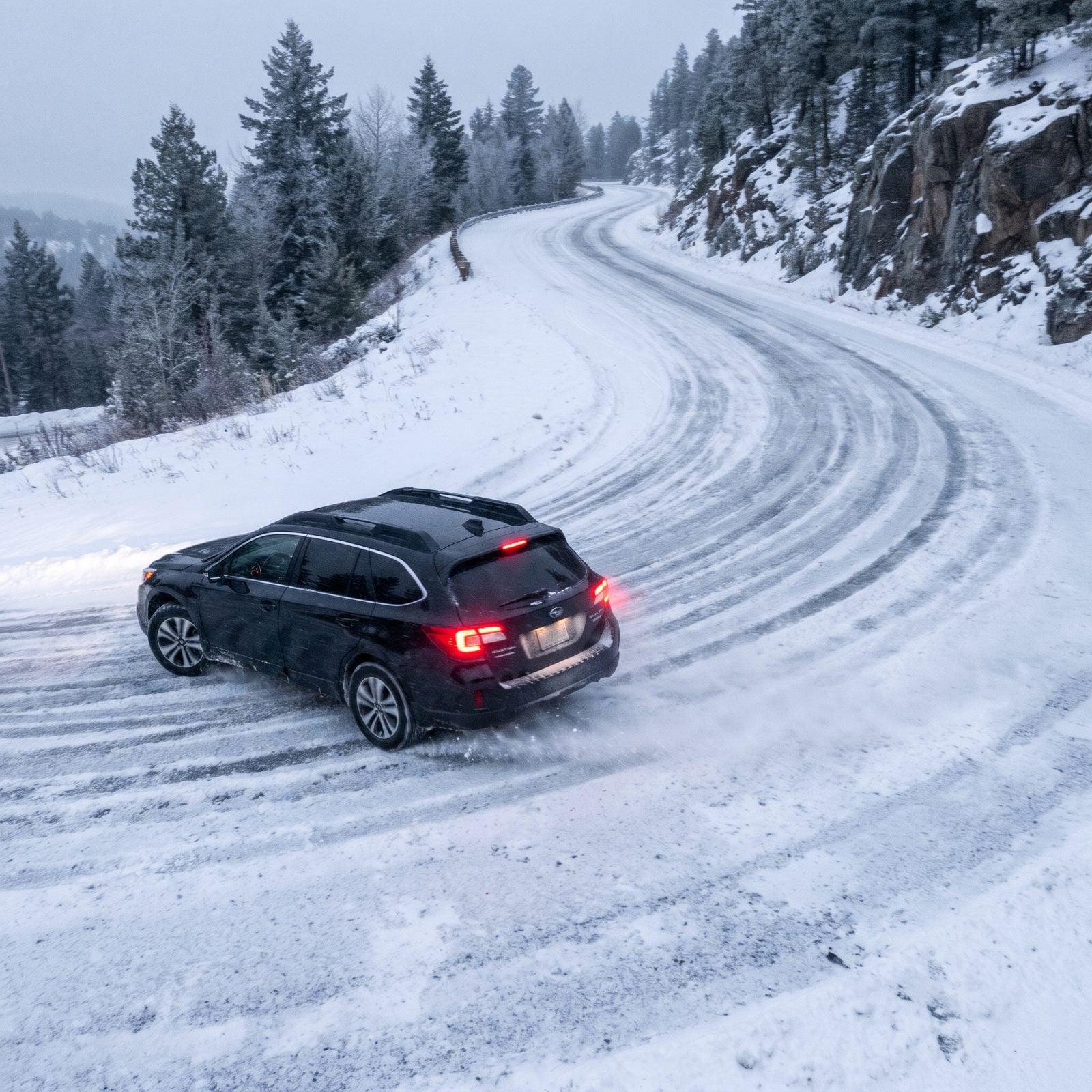
Picture the curve coming up faster than you judged. Your instinct is to stand on the brakes mid-corner to scrub speed. Dry pavement might forgive that. On snow, you’ve just asked the front tires to do two jobs at once, and they can’t.
A tire has a finite budget of grip. Spend it all on braking and there’s nothing left for steering, so the front end plows straight ahead toward the ditch while the wheel does nothing.
Do your slowing in a straight line before the turn. Brake, release, then steer through the curve with light, smooth throttle. Separate the jobs. One thing at a time and the tires can actually deliver.
As one driving school puts it, “Always apply your brakes well before entering a curve or turn so the vehicle slows while the wheels are pointing straight ahead. Braking while steering can cause a skid.”
19. Accelerating Aggressively While Climbing a Slippery Hill
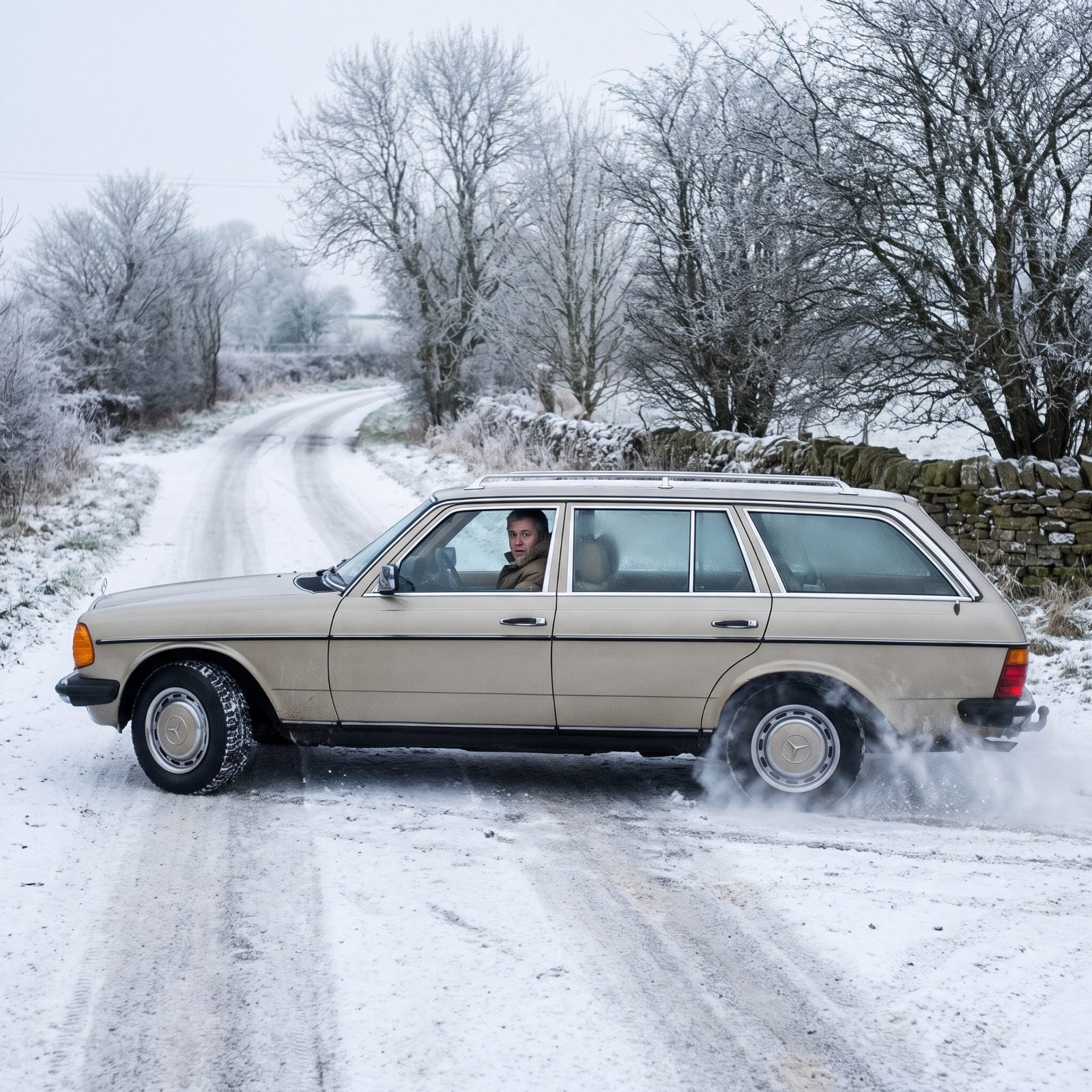
The hill looms, your confidence says floor it, and the moment you do the drive wheels break loose and spin uselessly while the truck crawls or stops dead.
Wheelspin melts snow into a slick polished glaze right where you need bite, so every extra bit of throttle makes traction worse, not better. You dig yourself a shiny little trench.
Build momentum before the climb starts and carry it up with steady, light throttle. Feather the pedal, listen for the tires beginning to slip, and back off the instant they do. Slow and smooth gets you to the top. Angry and fast parks you halfway.
18. Stopping Unnecessarily Halfway Up a Snowy Hill
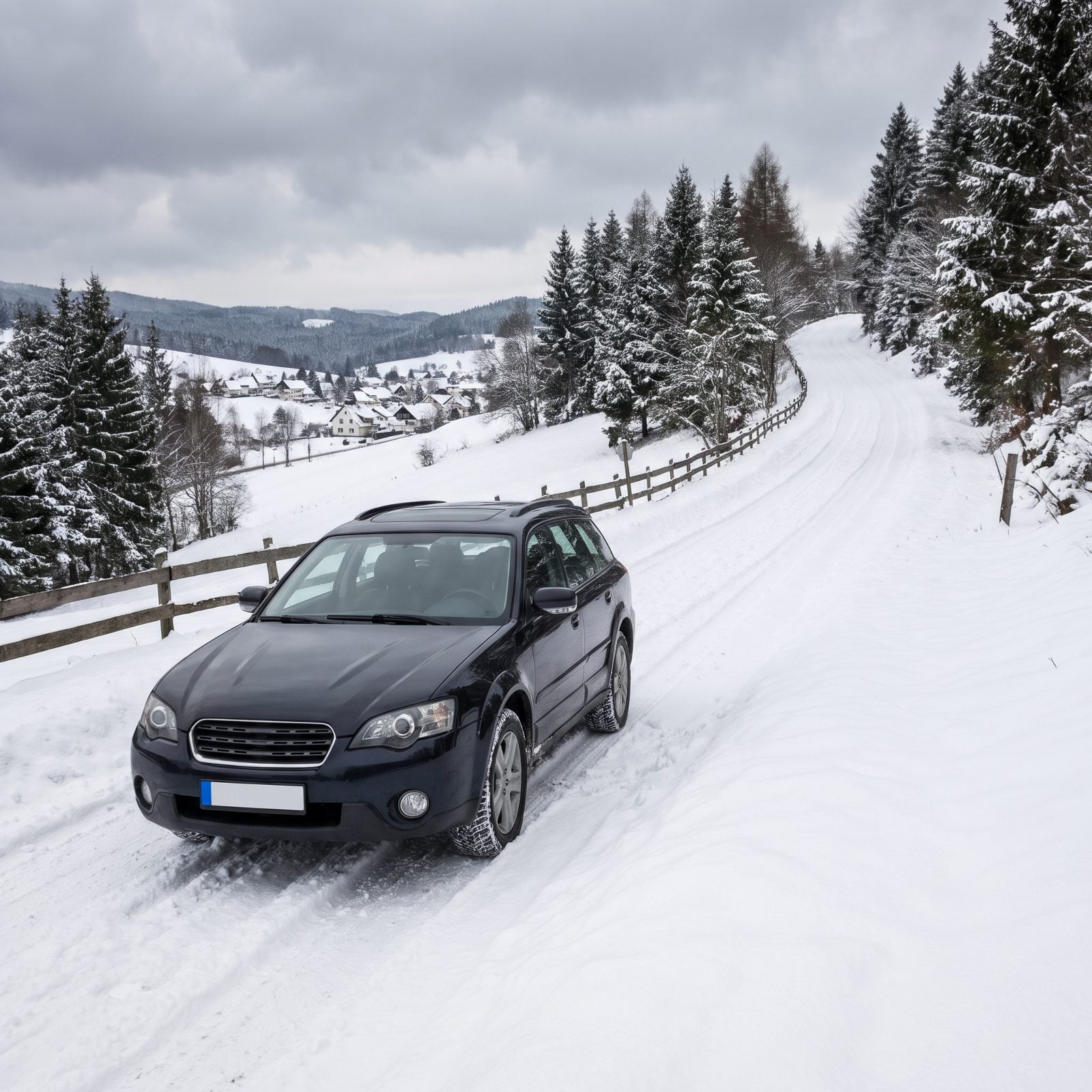
Someone pauses ahead, you ease to a stop on the incline, and now you have to launch from zero on a sheet of packed snow on the slope. Worst possible spot to be.
Getting a stationary car moving up a grade takes far more grip than keeping a rolling one going. From a dead stop the tires spin, you slide backward, and there you sit, maybe even slewed around with your nose pointing back down the hill.
Time your approach so you never have to stop. Hang back, let traffic ahead clear, keep a slow steady roll, and climb in one continuous motion. If you do get stuck stopping, give yourself room to roll back a few feet and gather momentum before trying again.
17. Riding the Brakes Down a Long Icy Grade
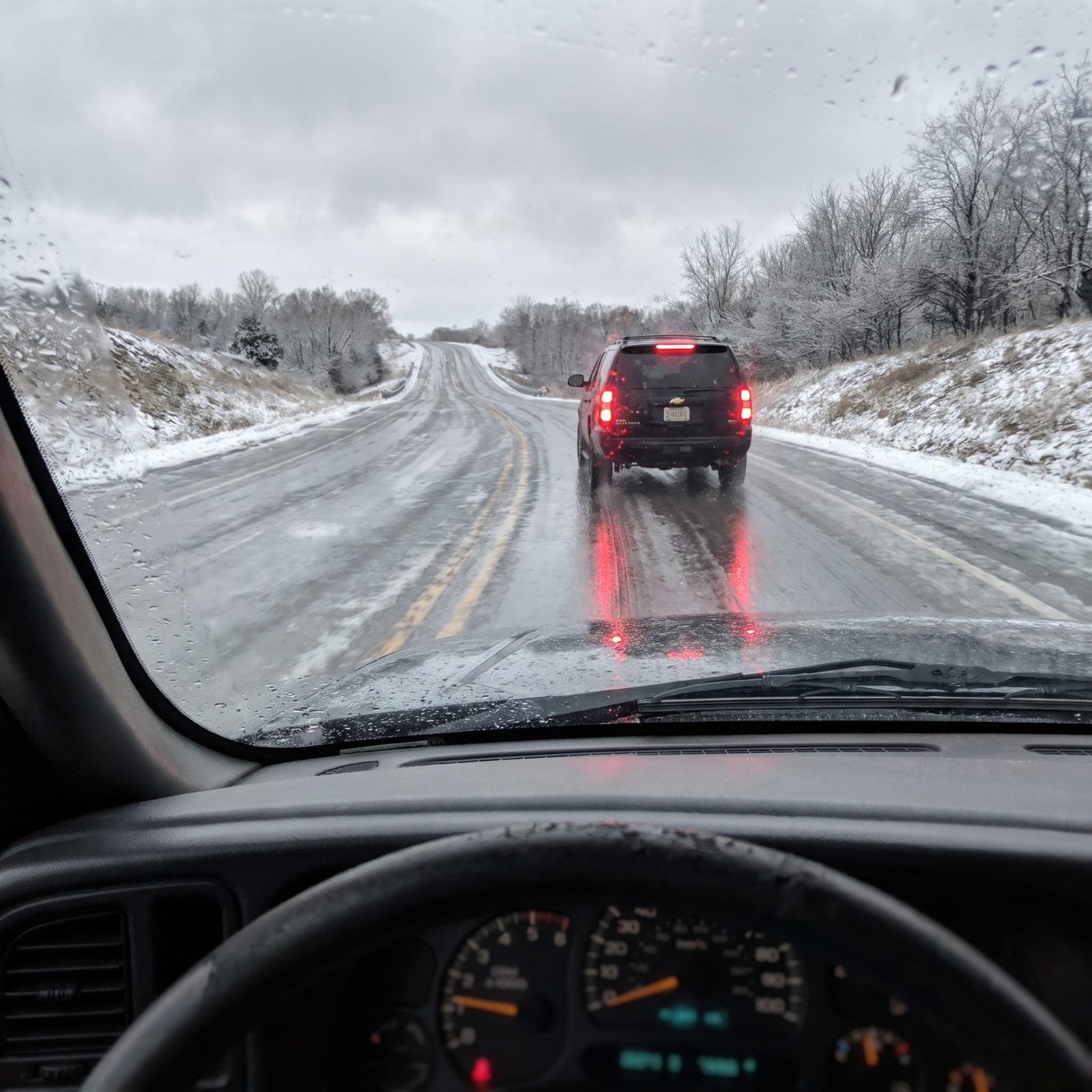
The grade drops away ahead, and the natural move is to keep your foot lightly on the brake the whole way down to hold your speed. Fine on a dry road in summer. On ice, you’re asking for a slow slide you can’t stop.
Constant braking keeps the wheels on the edge of locking, and the second they lock on a long descent you lose steering and slide wherever gravity wants. Brakes heat up and fade over a long grade, too, so the help you’re leaning on quietly runs out.
Let the engine do the work. Shift to a lower gear before the descent and let compression hold your speed, saving the brakes for short, gentle taps when you truly need them. Pick your speed at the top. Carrying too much down an icy hill never ends well.
16. Using Cruise Control on Snow or Ice
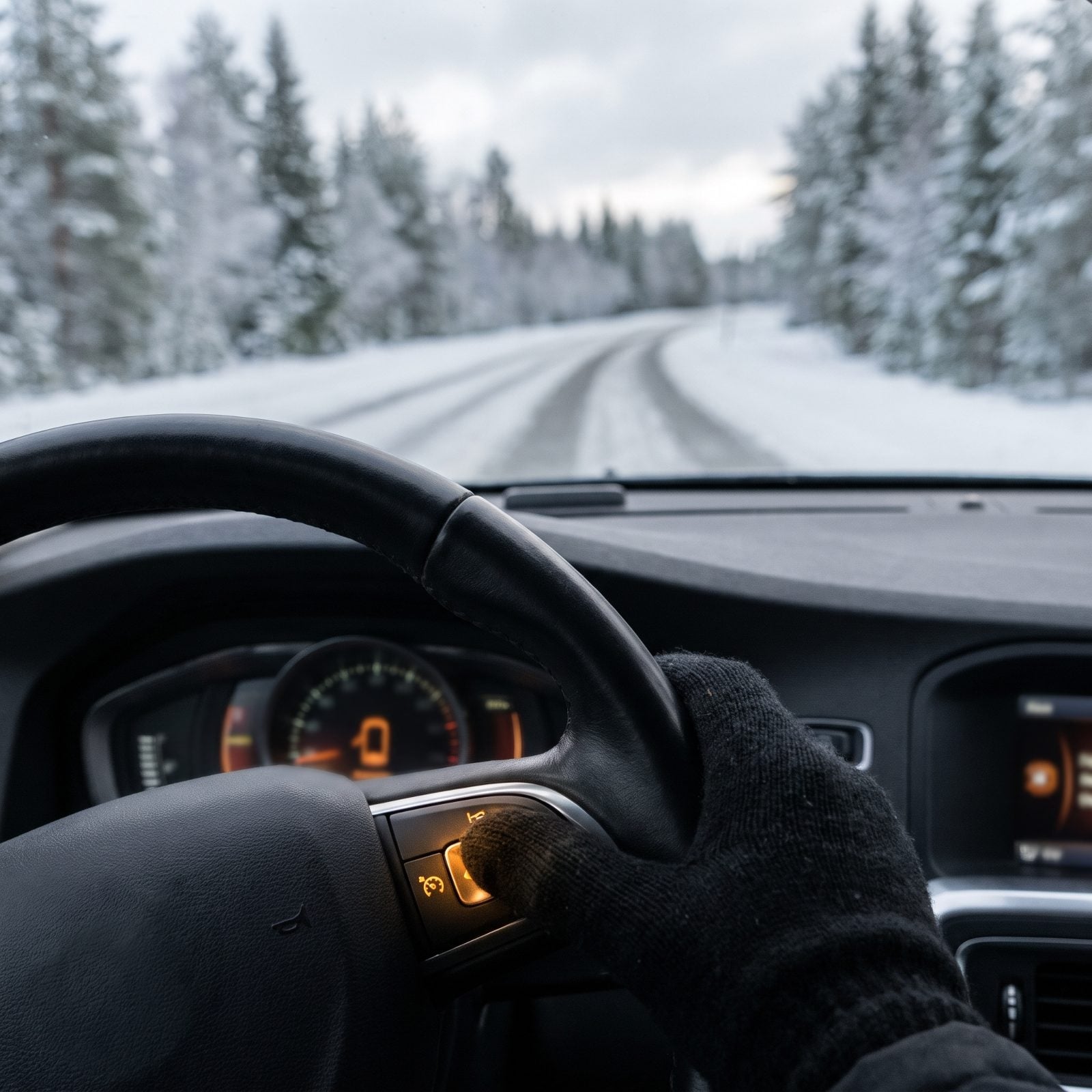
This one surprises people. Cruise control feels like a safety feature. On snow it’s the opposite.
Here’s the mechanism: cruise holds speed by feeding in throttle whenever the car slows down. Let a drive wheel hit a slick patch and start to spin, and the system reads that as lost speed and pours on more power. Right when you need grip, it hands you wheelspin, and stabbing the brake to cancel it only unsettles the car further.
Keep your own foot on the pedal whenever the road is anything but clear and dry. You feel the surface change through the throttle and respond before the car gets away from you. Cruise can’t feel ice. You can.
15. Changing Lanes Abruptly Through Deep Slush
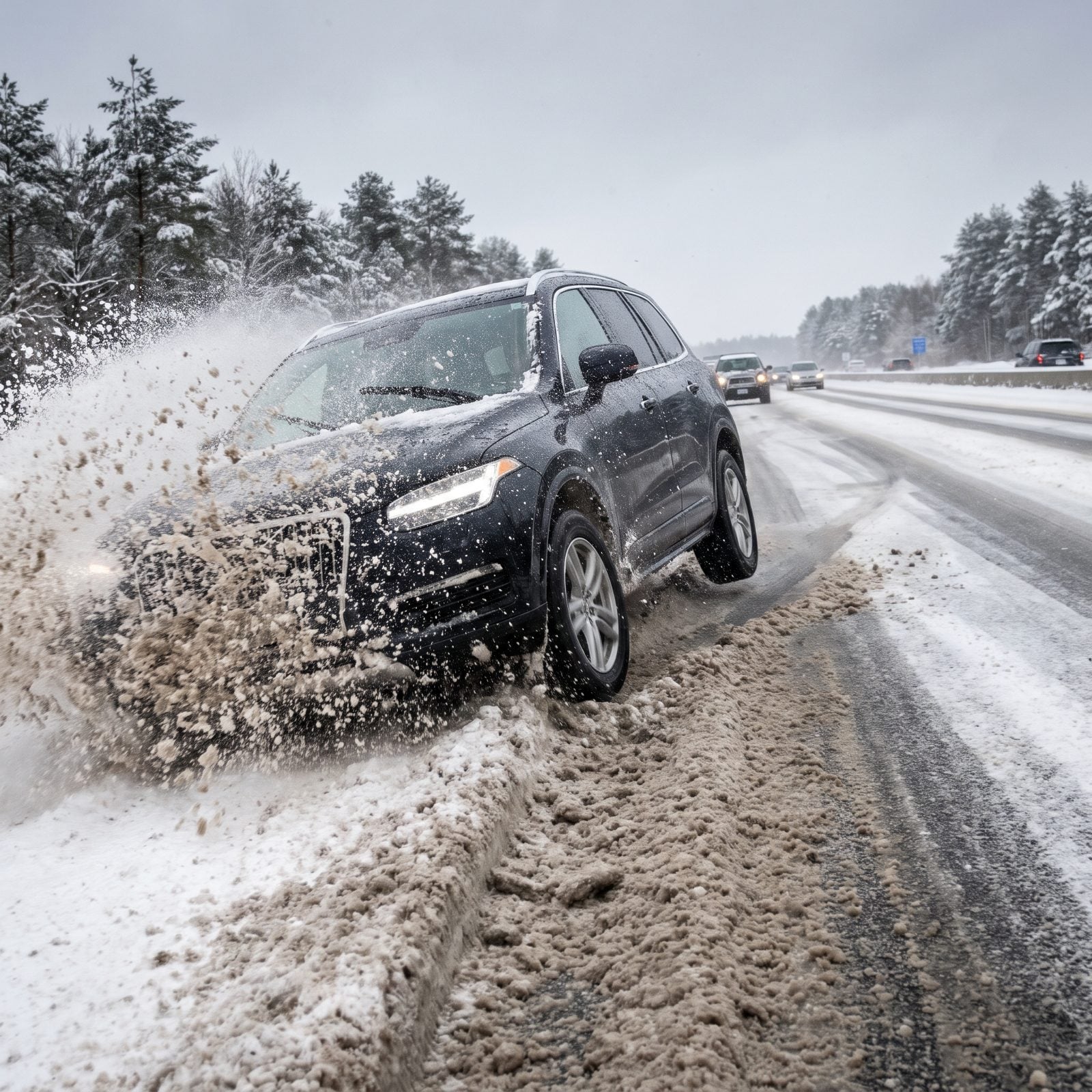
Traffic clears in the next lane, you flick the wheel to move over, and your tires hit the deep slush ridge piled between the lanes. The car yaws and tugs sideways before you’ve even finished the thought.
Deep slush grabs your tires unevenly. Cross that ridge at speed with a quick steering input and it can snatch the car off its line or kick off a skid — the automotive version of catching an edge on skis.
Treat lane changes in slush like docking a boat. Signal early, pick your gap wide, ease across the ridge with slow, deliberate steering, and hold your speed steady. No throttle stab, no sudden wheel. Cross the slush line gently and the car stays composed.
14. Slamming the Brakes as Soon as the Car Skids
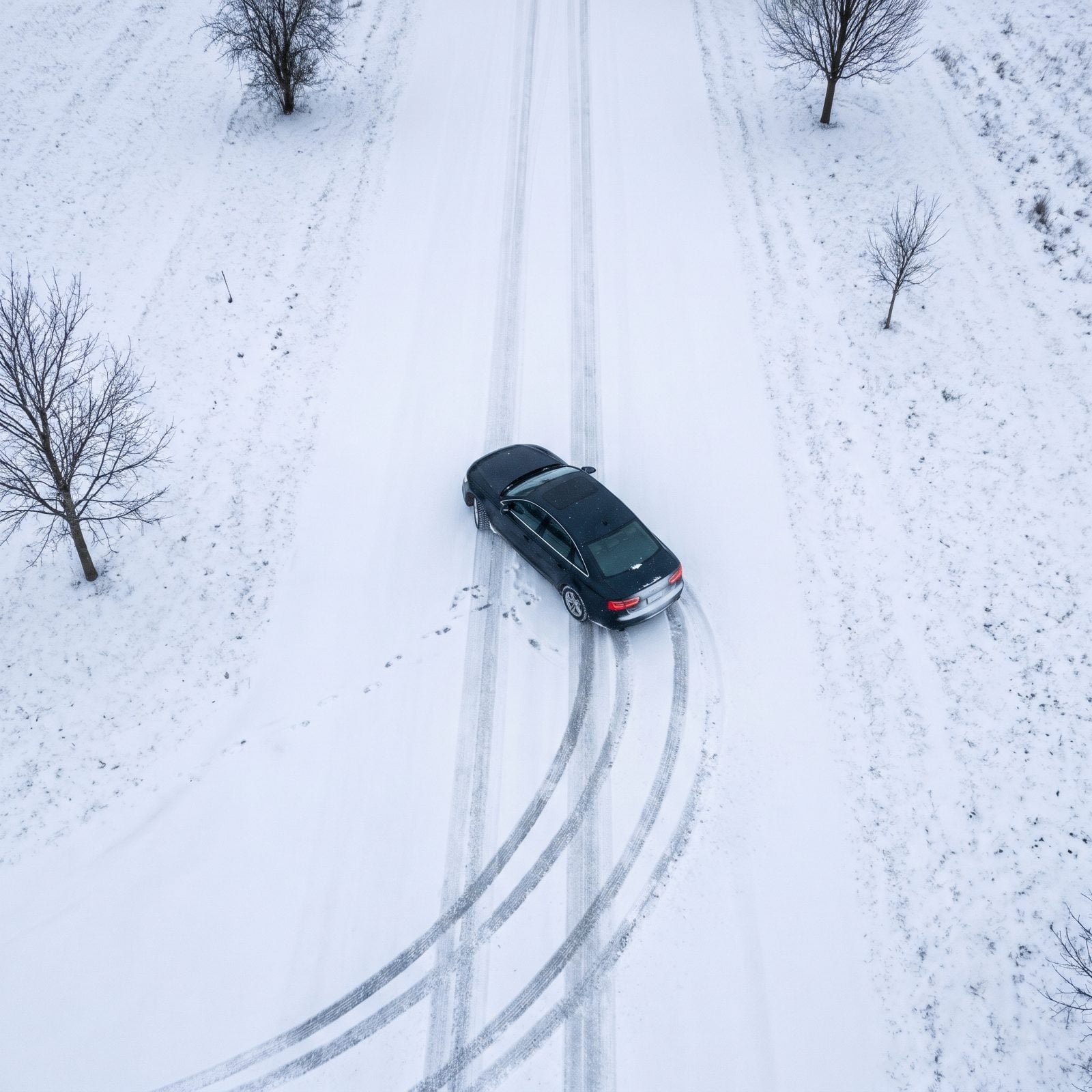
The back end steps out, panic fires, and your foot jumps toward the pedals, ready to stomp. Most natural reaction in the world. It’s also the one that turns a recoverable slide into a full spin.
Hard braking during a skid locks the wheels and kills whatever steering you had left, so instead of catching the slide you commit to it. The car goes exactly where it was already heading, just faster.
Ease off both pedals and steer where you want the nose to go. In a rear slide, that means gently steering into the direction the tail is sliding, then straightening as it comes back. Smooth hands, no stomping. And look where you want to end up, not at whatever you’re trying to avoid — your hands follow your eyes whether you mean them to or not.
13. Staring at the Snowbank Instead of the Escape Path
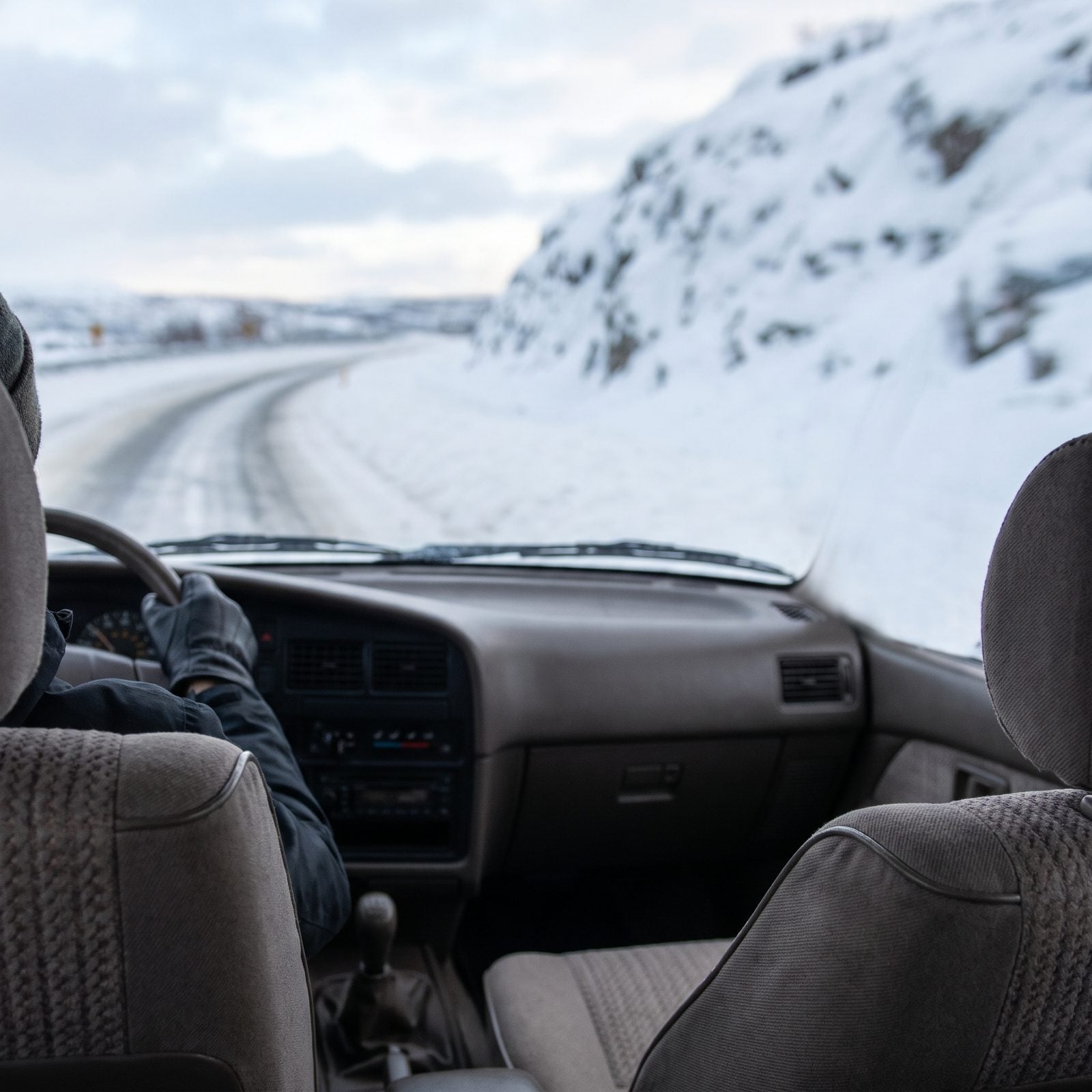
Your hands go where your eyes go. That’s not some folksy saying, it’s physiology. When the car starts to drift and you lock your stare on the snowbank you’re terrified of hitting, your steering quietly follows the gaze right into it. Target fixation has buried more cars in ditches than bald tires ever managed.
The fix is unglamorous and it works. Second the car gets loose, pull your eyes off the obstacle and nail them to the gap you want instead — the open lane, the clear shoulder, that sliver of space between the hazards. Your hands sort out the rest without convening a committee.
12. Overcorrecting When the Rear of the Car Slides
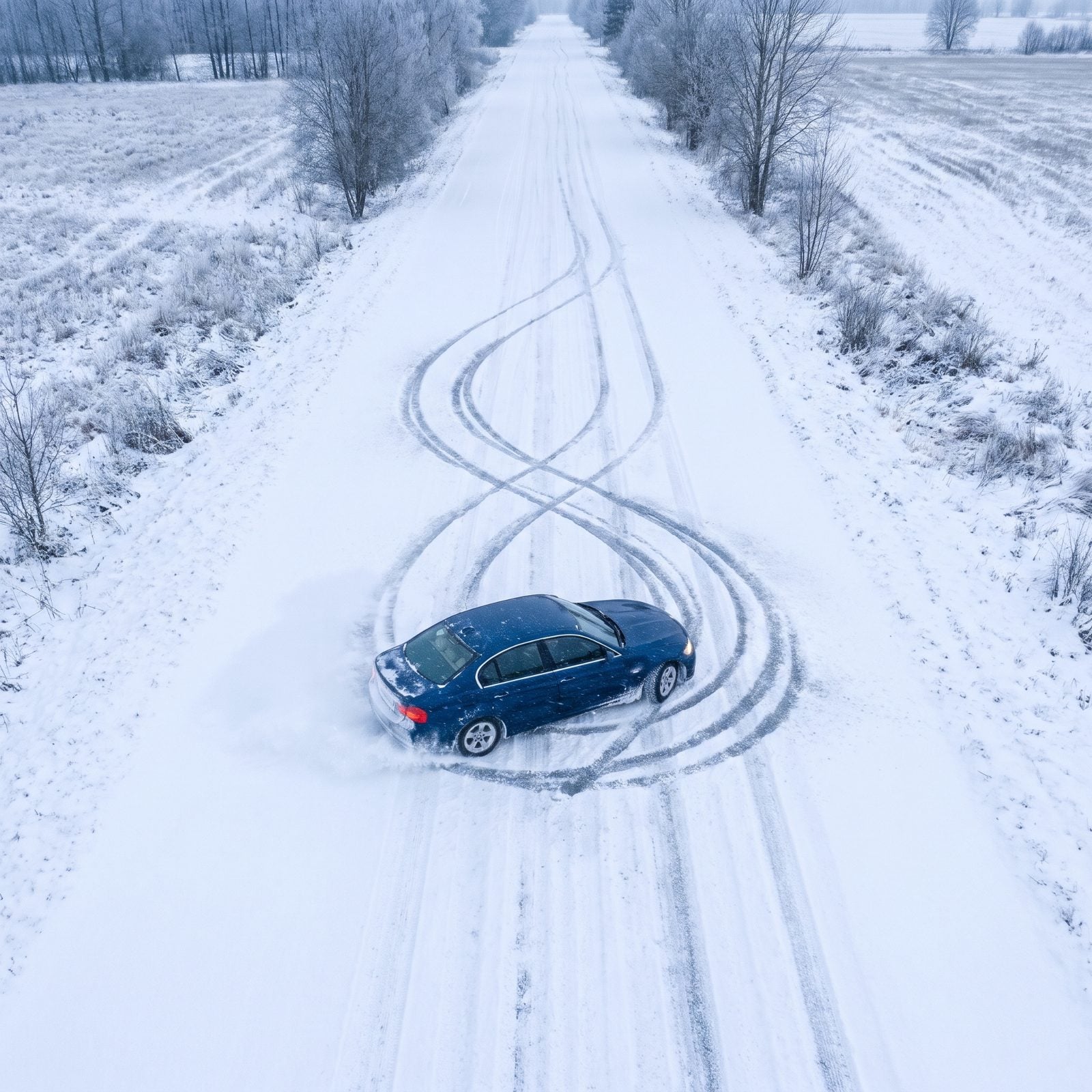
The back end steps out, panic grabs the wheel, you crank it hard the other way. The slide catches, flings the car past center, and now you’re fishtailing worse than when you started. We’ve all watched some poor soul do exactly this in a parking lot and winced.
Rear-wheel cars and plenty of old muscle love this move on snow. Steer gently into the slide — turn the wheel toward wherever the rear is heading — and ease off the throttle without stabbing the brakes. Small inputs. As the car straightens, unwind the wheel just as smoothly. Yank it and you’ll swap one skid for a nastier one going the opposite direction.
11. Assuming Visible Pavement Cannot Be Icy
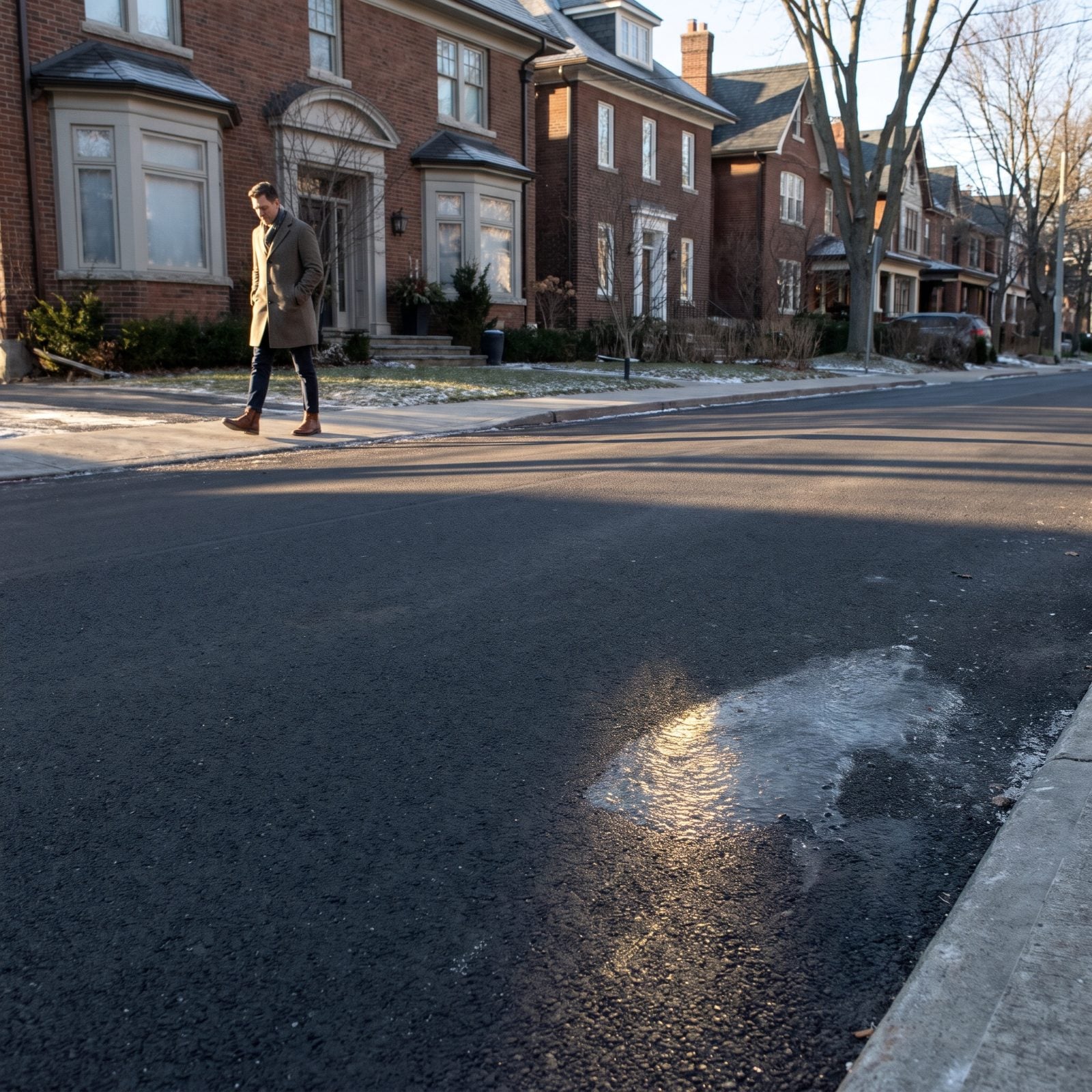
Clear black pavement looks like the safest surface going. Often it’s the one out to kill you. Black ice lays down a glassy film that reads as plain wet asphalt, worst of all in the thin light of early morning or just after sundown.
Watch for a patch that looks suspiciously glossy, almost polished, while everything around it wears a matte frost. Spray stops kicking off the tires ahead. The road goes quiet under your wheels. See those signs and you lift off the gas early, leave more room, avoid any sudden input. The shiniest stretch of pavement is the one with your name on it.
10. Forgetting That Bridges Freeze Before the Road
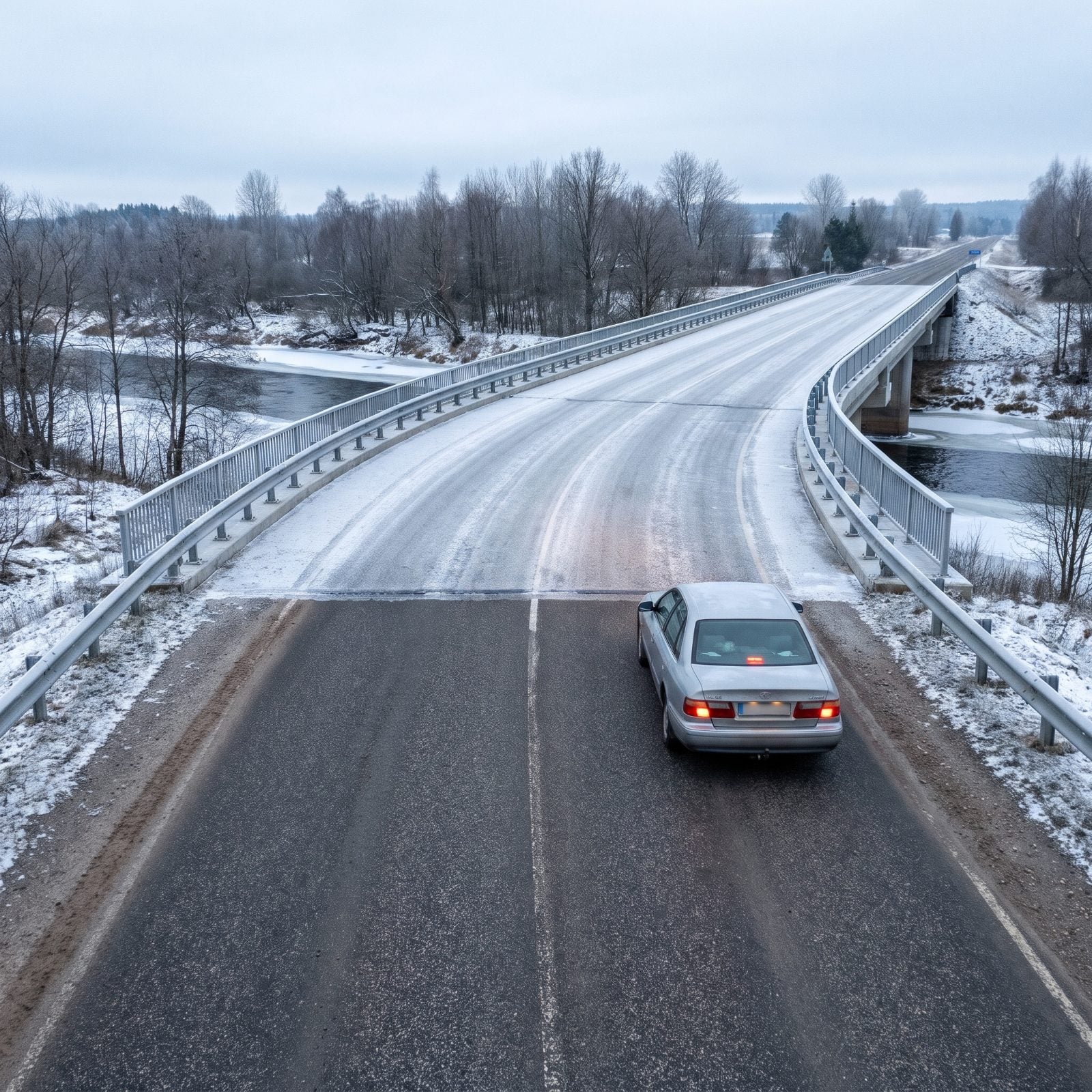
A bridge takes cold air from above and below. The road leading up to it sits on insulating earth, warm by comparison. So when the thermometer hovers near freezing, ice can sheet across the bridge deck—sometimes a whole lane glazed while the lane beside it looks dry—even as the surrounding pavement stays bare. You’ll be rolling along fine, then cross onto a span where your lane is slick as a skating rink.
Those yellow signs warning that the bridge ices first? Not decoration. Shed your speed before you reach the approach, never on it. Finish all your braking and steering corrections while you’re still on solid ground, then coast across steady and gentle. No throttle changes. No lane shuffles. Nothing surprising mid-span.
9. Trying to Pass an Operating Snowplow
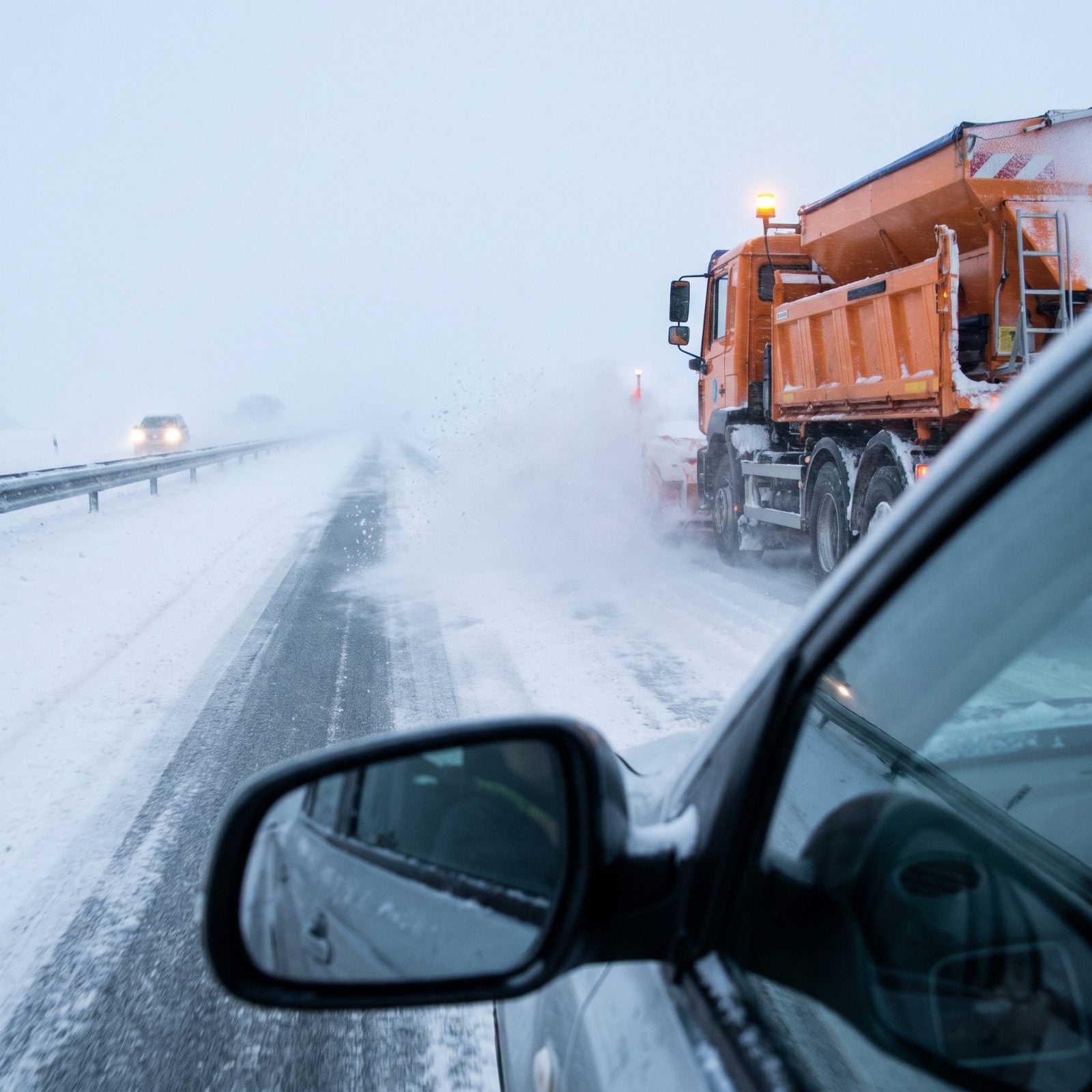
The plow is slow, you’re impatient, and that clear lane to the left looks wide open. Here’s the problem. The road ahead of the plow hasn’t been cleared yet — that’s the entire reason the plow is out there. Pass it and you drive straight onto the worst surface on the highway, often blind, buried in a cloud of snow blowing off the blade.
Plows also carry wing blades that stick out well past their body, and they stop and reverse without much warning. So hang back a few car lengths, out of the spray, and let the thing do its work. The cleanest, safest pavement for miles sits right where you already are — trailing along behind the orange truck.
8. Continuing Into a Whiteout With No Safe Sight Distance
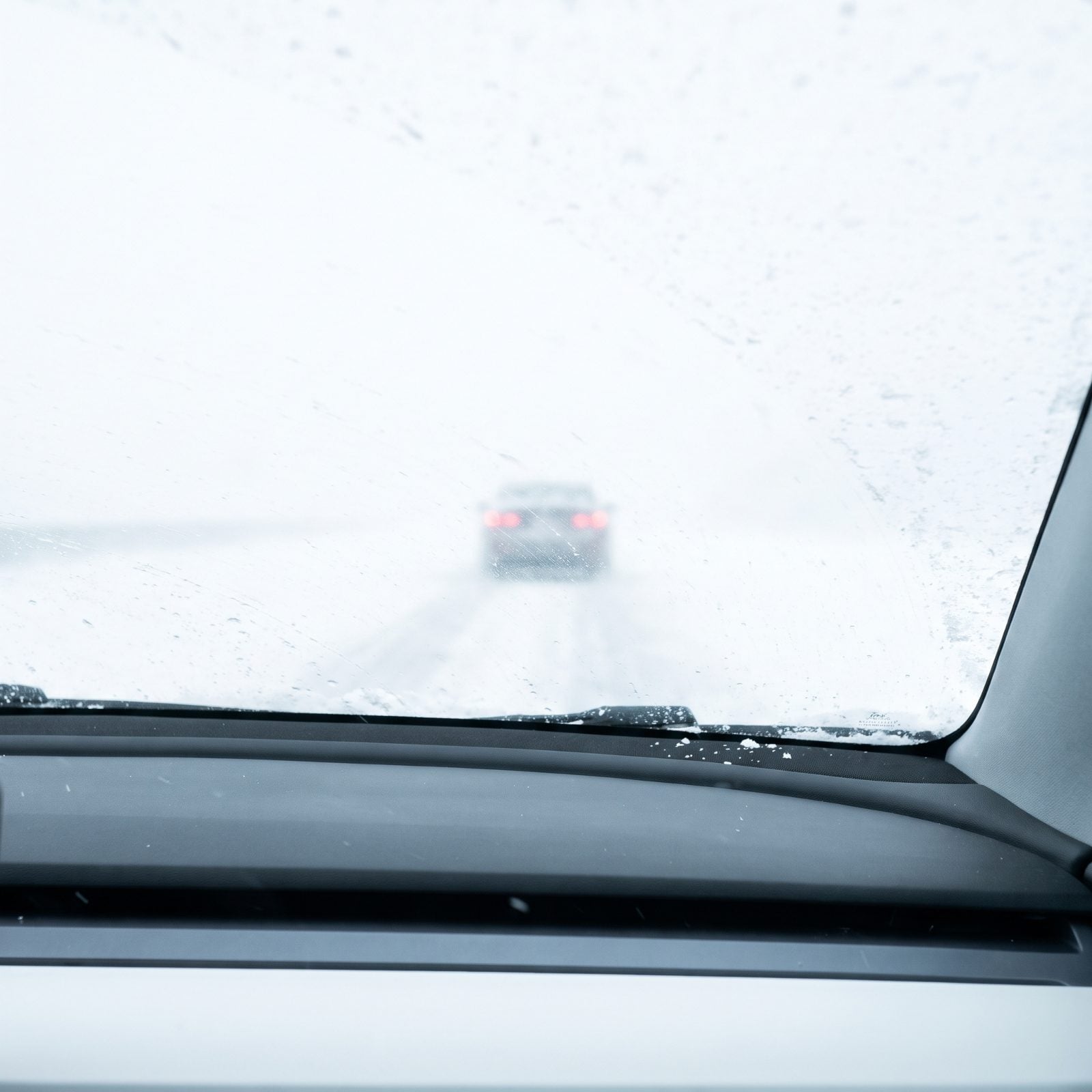
When the snow comes down hard enough that you lose sight of the car ahead, instinct says keep creeping forward and hope it clears. That hope is pulling an awful lot of weight. In a real whiteout you can’t see the road, the stopped traffic sitting on it, or the shoulder you’d need to escape onto.
Here’s the plain truth of it: if your safe sight distance drops below your stopping distance, you’re driving on faith alone. Get off properly. Pull well onto the shoulder or into a lot, past the travel lanes, kill your headlights so nobody follows your taillights into the ditch, flip on the hazards. Then wait. The storm doesn’t care about your schedule, and neither should you.
7. Using High Beams in Heavy Falling Snow
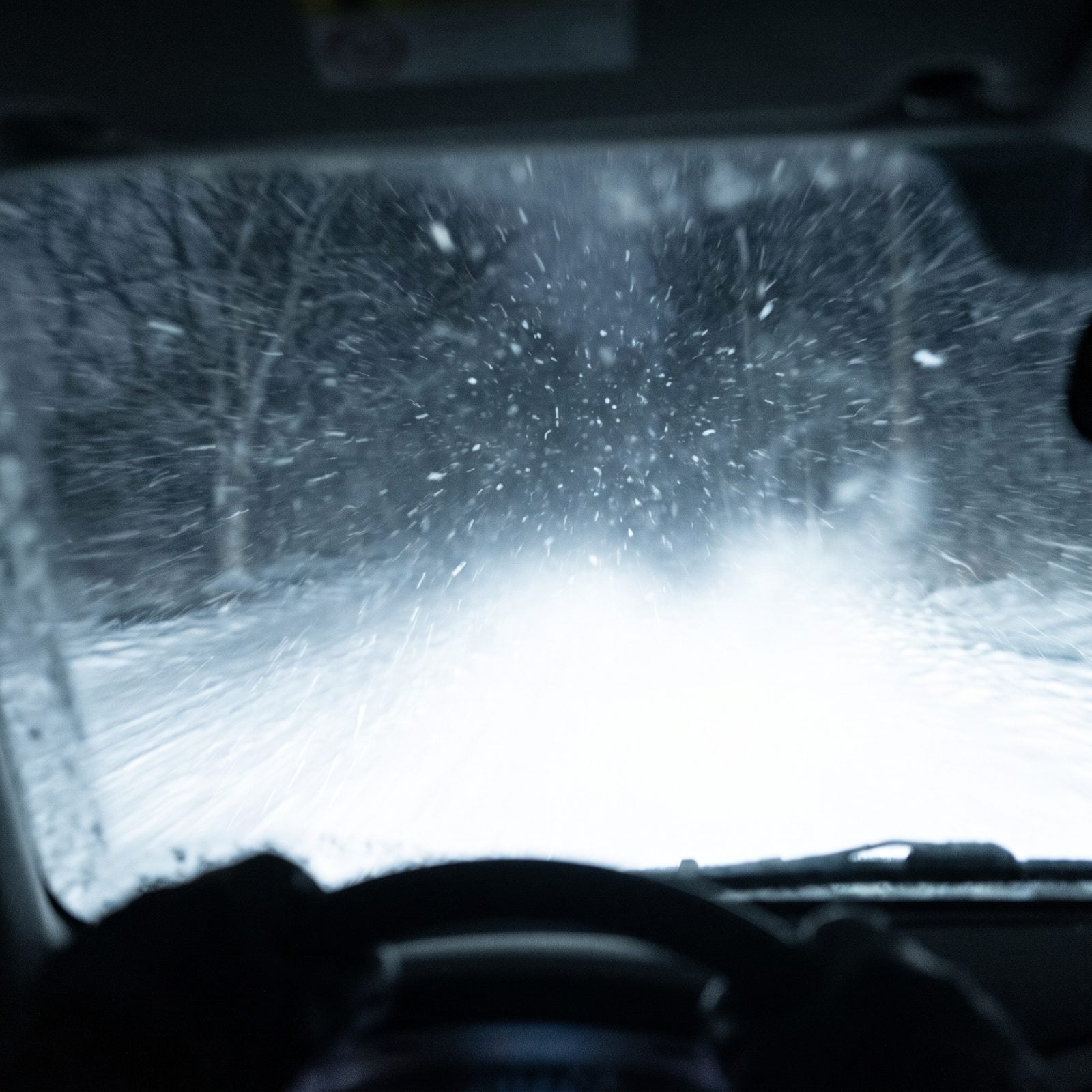
High beams feel like more light, and surely more must be better. In falling snow it’s dead backwards. All that extra output ricochets off the flakes and throws up a glowing white wall right in front of you, same as aiming a flashlight into fog. You see less, not more.
Drop to your low beams. They cast the light lower and closer, under the worst of that reflection, so the road and its edges actually come back to you. And if your old car wears fog lights down near the bumper, now’s their hour — that’s precisely what they were built for. Save the brights for a clear dark highway with nothing falling out of the sky.
6. Relying on Daytime Running Lights in a Snowstorm
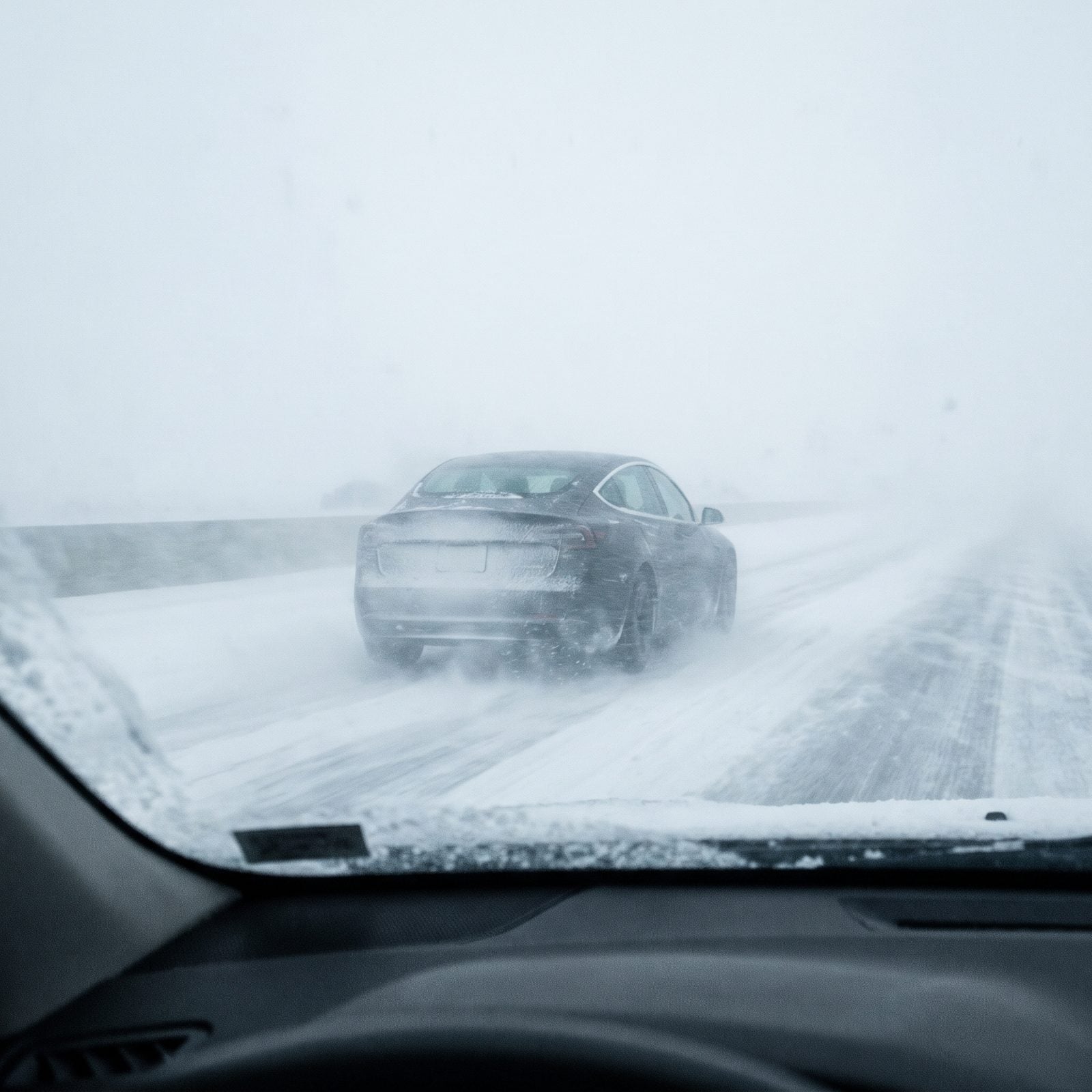
Daytime running lights light the front. They do nothing for the back. Most systems leave your taillights stone dark. On a gray snowy day a gray car running only its DRLs can turn into a phantom to the traffic behind, dissolving into the whiteout until somebody’s right on your bumper.
The fix costs you one second. Reach over, click the headlight switch all the way on, by hand, every single time the weather thickens up. That wakes the tail lights and side markers along with the front, and suddenly you’re a solid object from every angle. Being seen in a storm counts as much as seeing. Don’t let an automatic feature decide you’re invisible.
5. Pulling Out Past Snowbanks Without Checking Cross-Traffic
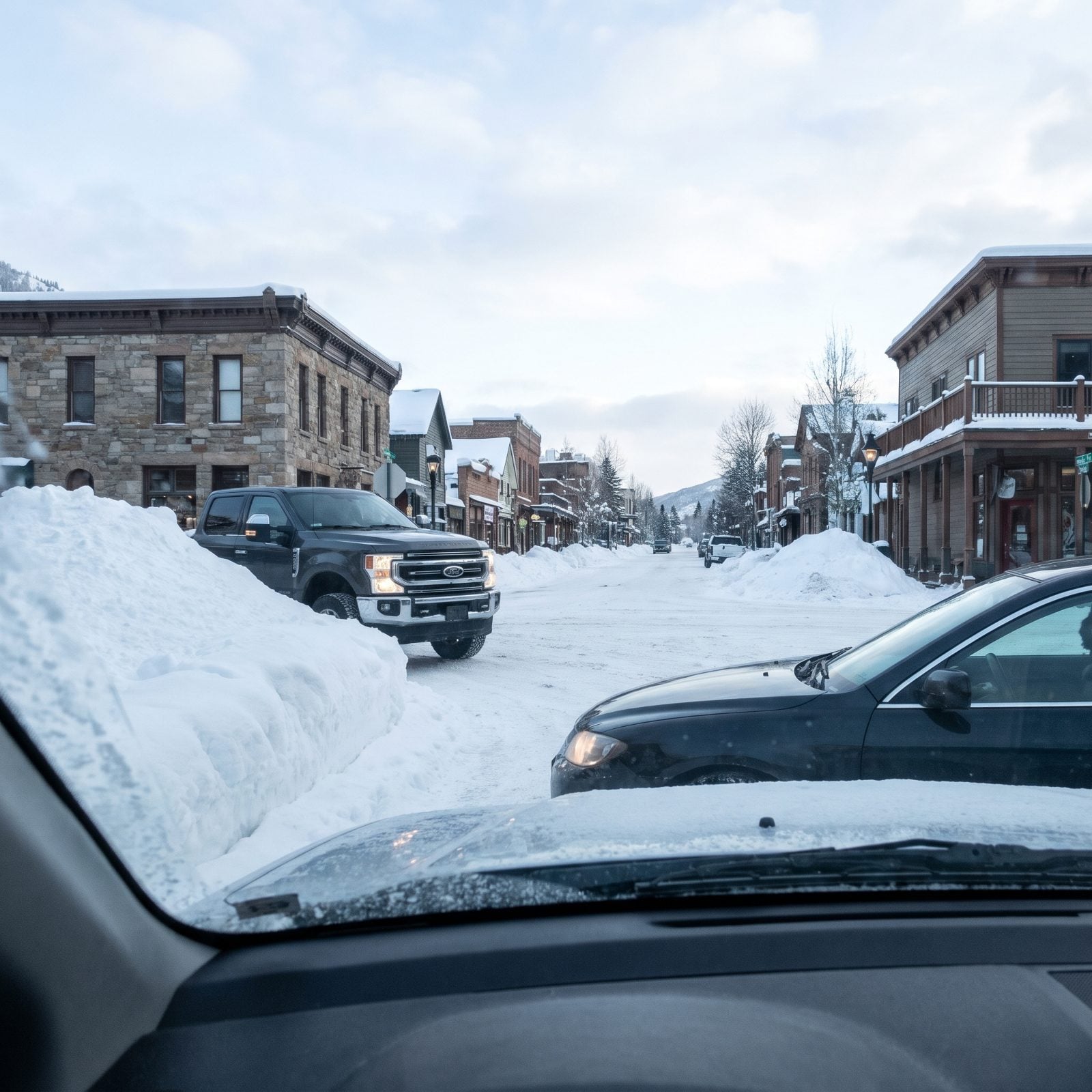
By midwinter the plow has piled snowbanks at every corner tall enough to hide a moving truck. You roll up to the stop, glance at a wall of white, and pull out trusting nothing’s coming. Something usually is.
Those banks turn ordinary corners into blind ones. Creep forward slowly, nose past the snow until your front bumper clears the bank and you can finally see down the cross street, then look again before you commit. Sure, your front end will poke a little into the lane. Beats launching out blind into traffic you never had a prayer of spotting. Ten patient seconds at the corner saves you the whole afternoon.
4. Using Dry-Road Timing When Crossing a Slick Intersection
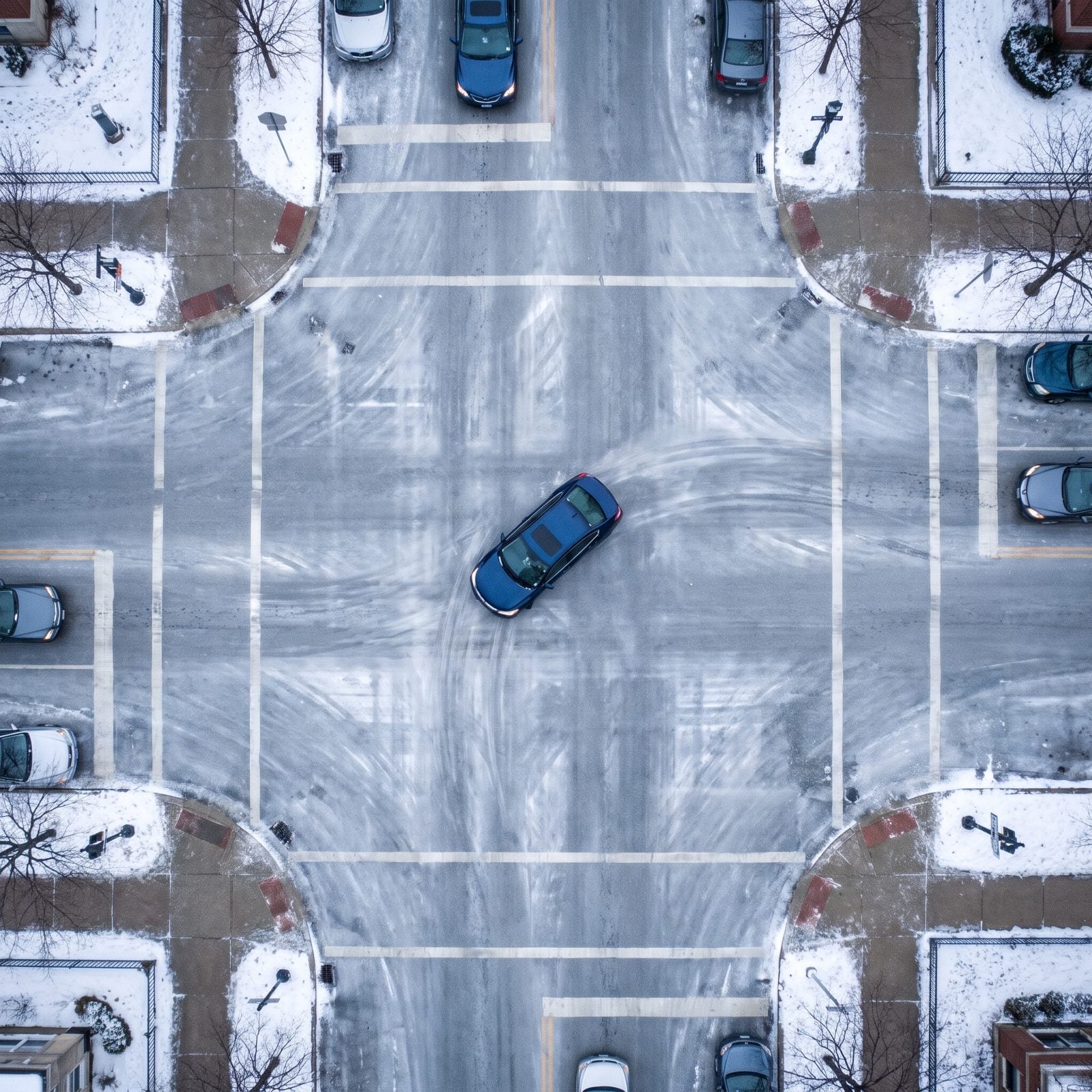
Intersections ice up worse than open road, no contest. All that stopping and starting buffs the packed snow to a glaze, and spun tires carve slick ruts into it. The light goes yellow and your dry-road brain insists you’ve got time to make it. On ice, that arithmetic is a lie.
Your stopping distance can balloon to several times what it runs on dry pavement, so a gap that felt comfortable in July leaves you sliding smack into the middle of the box. Start slowing far earlier than feels necessary. If the light’s already yellow, assume you can’t stop short and don’t gun it to beat the thing. Crawl through slick intersections, brake early and gently, and leave the driver on your left room to misjudge the exact same gamble.
3. Riding the Bumper of a Loaded Snow Truck With Ice on the Roof
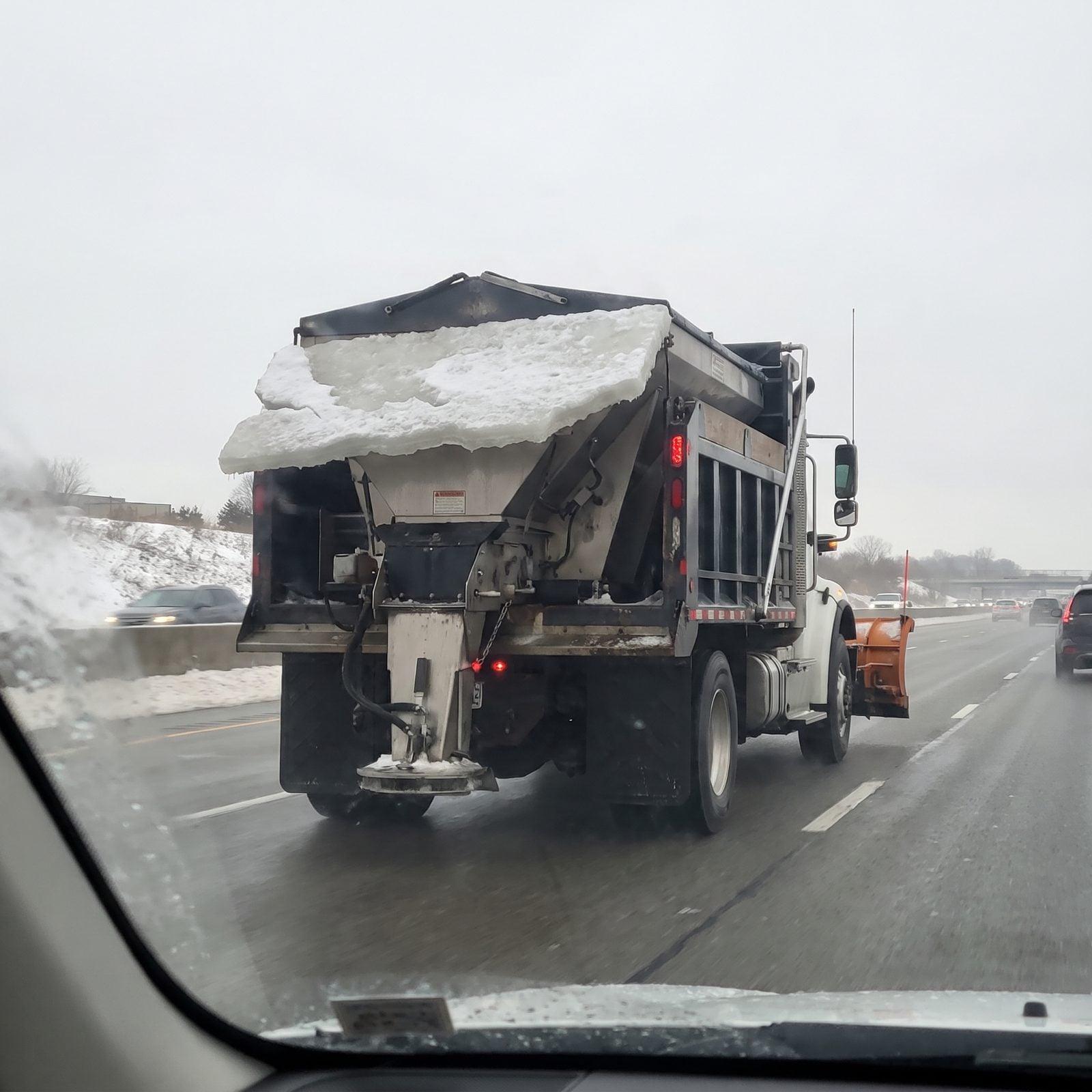
That slab of ice on the truck roof isn’t just a nuisance — it’s a projectile waiting for a tailwind. You’ve watched a sheet of frozen snow peel off a cab at 55 and shatter across the lane behind it. Follow too close and your windshield becomes the backstop.
A dinner-plate chunk of roof ice hits glass hard enough to crack a laminated windshield or force a panic swerve on a surface that’s already given up its grip. Neither one ends well.
So hang back. Double your usual winter following distance behind any truck hauling snow, and give loaded plows and dump beds even more room than that. If you can see ice lifting off a roof up ahead, ease off the gas and let the truck pull well away before you so much as think about passing. No chunk of frozen slush is worth your cracked glass.
2. Spinning the Drive Wheels Until the Tires Go Slick and Hot
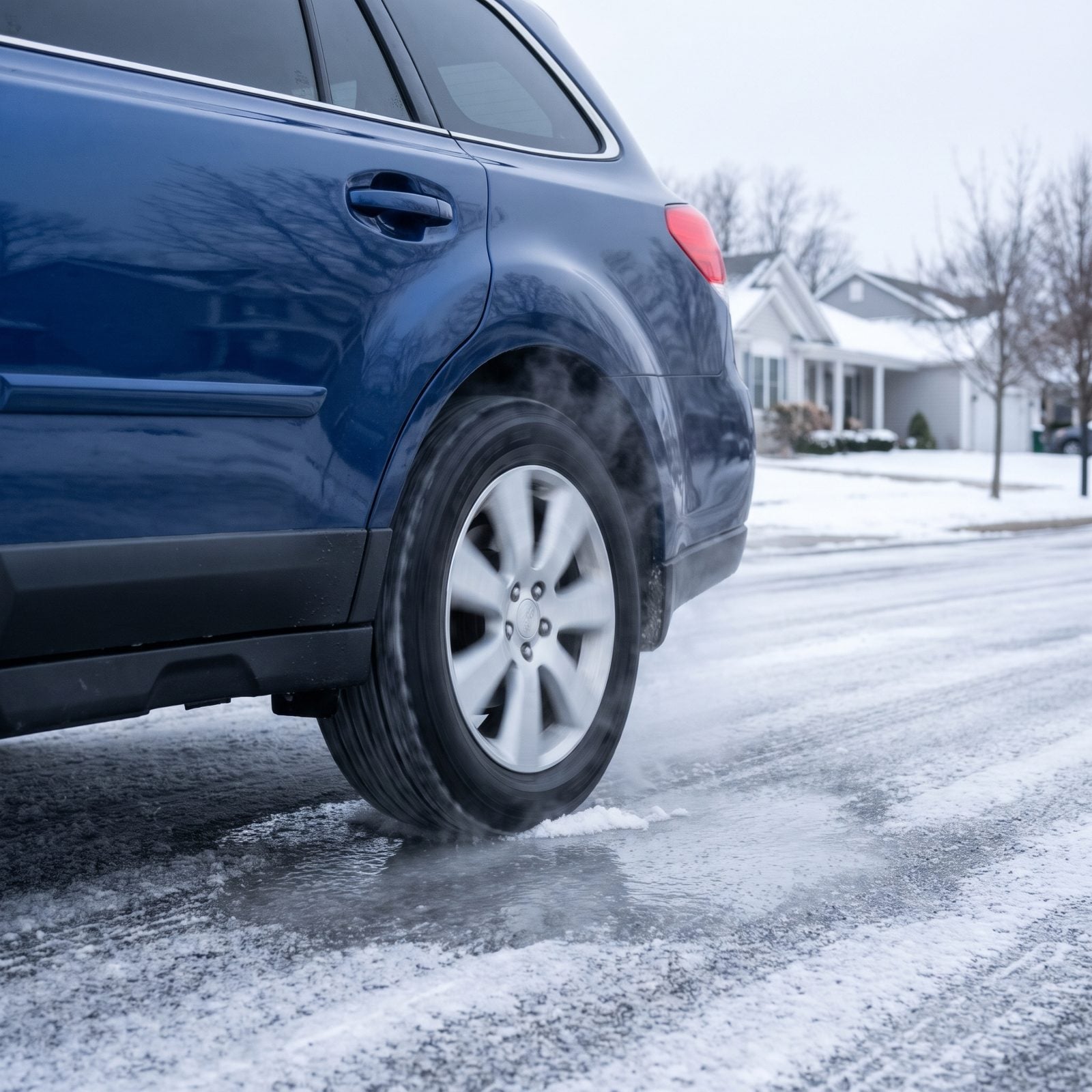
You know the sound. The engine climbs, the speedometer swears you’re doing 30, and the car hasn’t budged an inch while the wheels scream their heads off.
Here’s what’s happening down there. A spinning tire makes heat, heat melts the snow under the contact patch into a slick film of water, and you’ve just carved yourself a private ice rink. Keep at it and you’ll glaze the tread smooth, cook the rubber, and in a limited-slip or open diff, cook the differential fluid along with it.
Stop spinning. Ease off completely, then feed in the gentlest throttle you can manage — just enough to creep. Rock the car between drive and reverse to build a little momentum. Got a bag of sand, cat litter, or a set of traction mats? Lay it under the drive wheels and roll out slow.
1. Trusting Four-Wheel Drive to Stop You When It Only Helps You Go
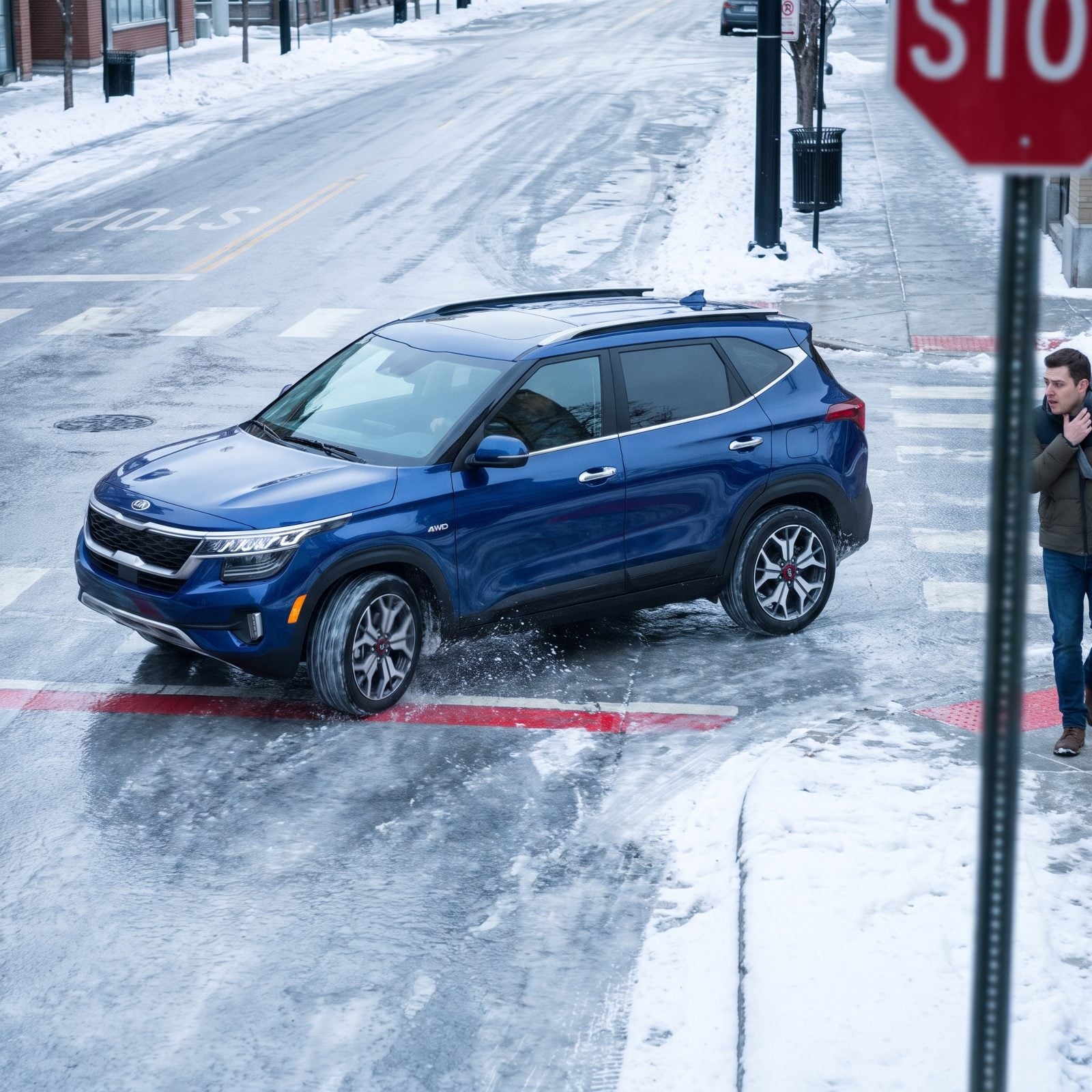
Four-wheel drive turns four tires. Your brakes are still arguing with the same physics as everyone else. This is the most expensive misunderstanding in any winter parking lot, and the SUV crowd foots the bill more than anybody.
Powering every wheel helps you claw out of a snowy spot. It does nothing for stopping or steering, because both come down to grip between rubber and road — and that grip doesn’t care whether one wheel drives or four. A heavy SUV on all-season tires needs more room to haul down, not less. The swagger 4WD hands you on the way up becomes a trap on the way down.
Drive to your tires, not your drivetrain. Slow earlier. Leave room. And if winter means business where you live, bolt on four dedicated winter tires before you fret over which wheels are powered, because soft winter rubber shaves far more off your stopping distance than any transfer case ever dreamed of.
One auto mechanic stresses that four-wheel drive does not help you stop faster or turn sharper, it only helps you go, and that can get overconfident drivers into trouble. (via one auto mechanic)