
Would you like to save this?
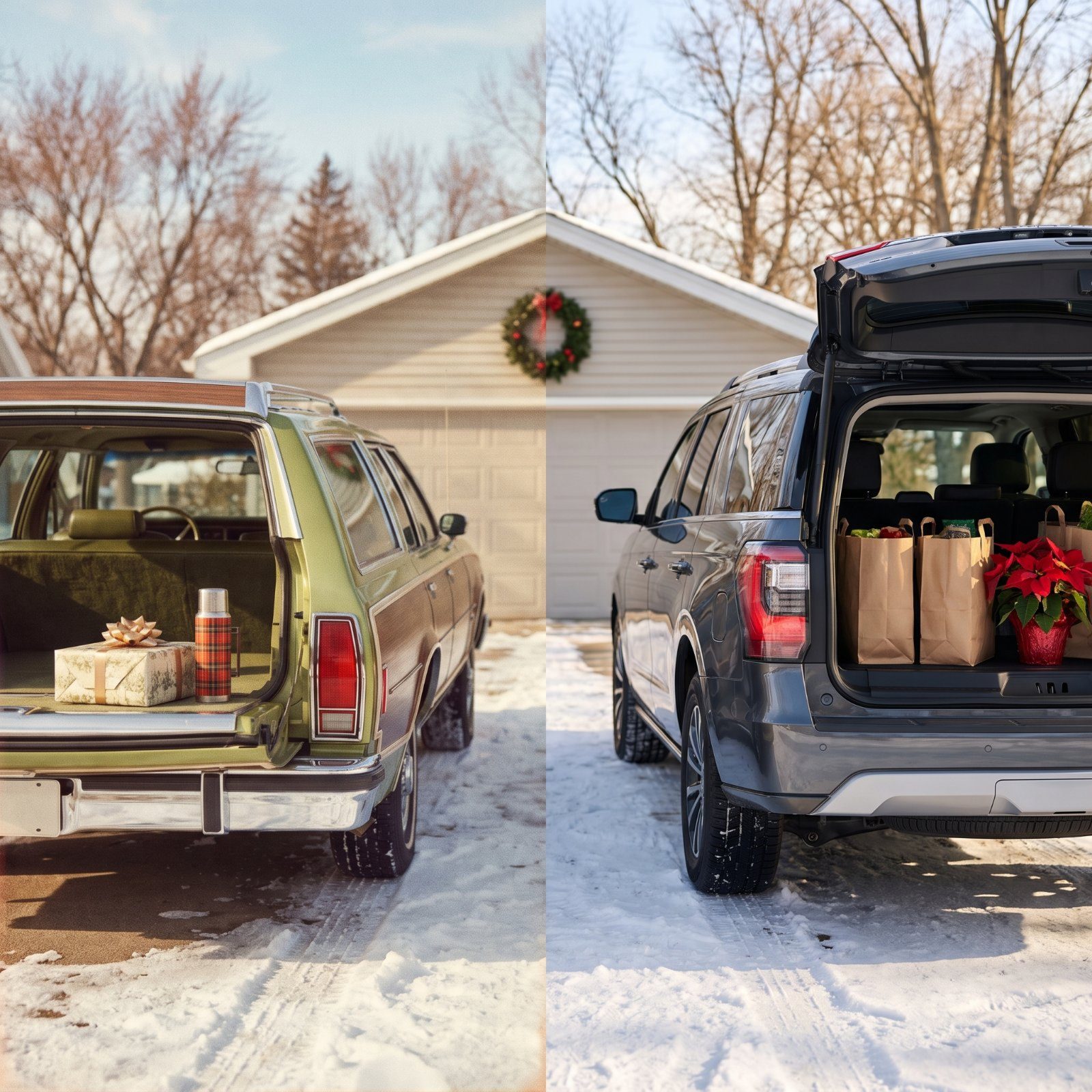
The driveway on Christmas Day, 1975. Frost on the windshield, exhaust hanging in the cold air, and a station wagon the length of a small barge easing to the curb with the whole family packed inside. Wood-grain vinyl on the flanks. A rear-facing third seat where the kids waved at the car behind. We lined up those Christmas-dinner haulers next to the vehicles that took their place, and the gap between them is wider than any tailgate ever opened.
Please note that some of the images in this article were created with the assistance of AI.
Ford Country Squire vs. Ford Explorer
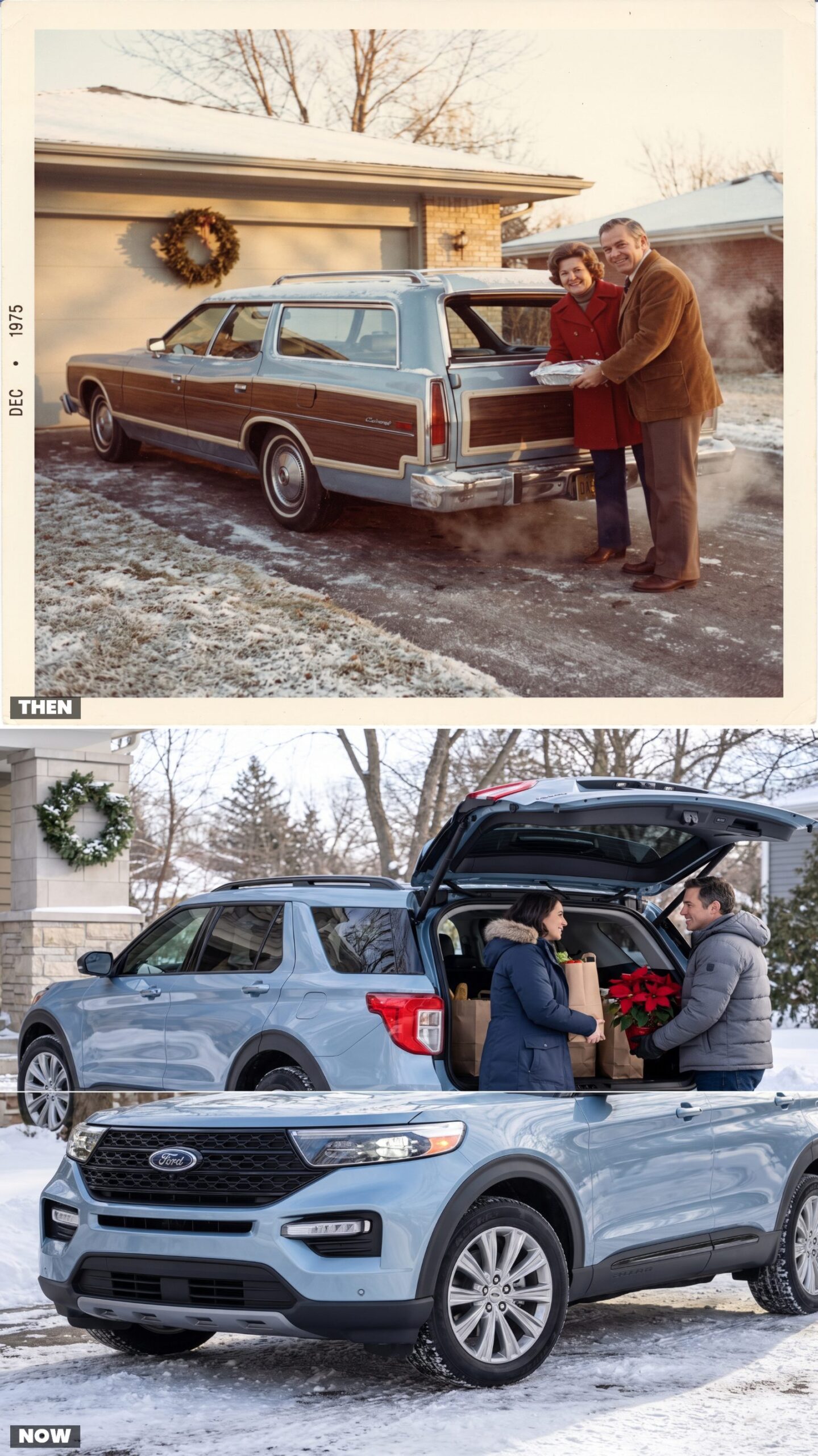
The Country Squire was eighteen and a half feet of low, land-yacht confidence, and that fake wood on the side fooled absolutely nobody, which was somehow part of the charm. You could fit the whole family, the dog, and a card table for the leftovers. The rear-facing third seat was the one the kids fought over, mostly because you could pull faces at strangers through the back glass.
The Explorer does the same family job standing about a foot taller. Where the Squire sprawled, the Explorer climbs. Same badge on the hood, completely different physics underneath.
Our readers seem to share the affection, giving full-size land yachts more hearts than the other cars in the same articles, 87% against 79%.
Chevrolet Caprice Estate vs. Chevrolet Traverse
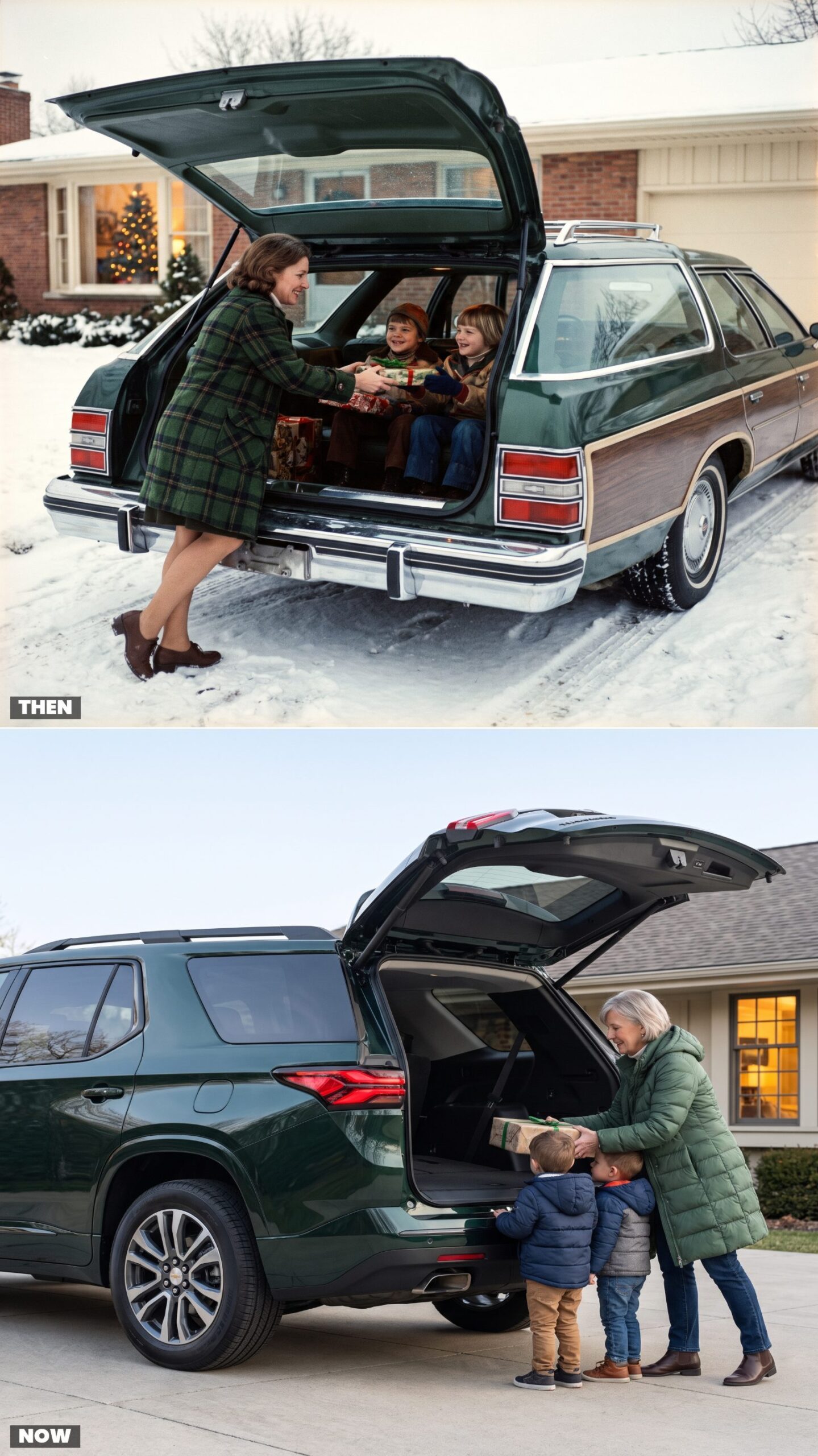
Chevy’s Caprice Estate had a party trick called the clamshell tailgate. The glass slid up into the roof while the panel dropped into the floor, opening with a mechanical whir that felt like tomorrow arriving early. It was heavy, it needed a motor, and grown men loved to show it off.
The Traverse? It just lifts one big hatch when you wave a foot under the bumper. Cleaner, quieter, and it never floods the mechanism with rainwater the way the old clamshell did if you got careless. But I miss the drama. A power liftgate has no sense of theater.
Jeep Wagoneer vs. Today’s Grand Wagoneer
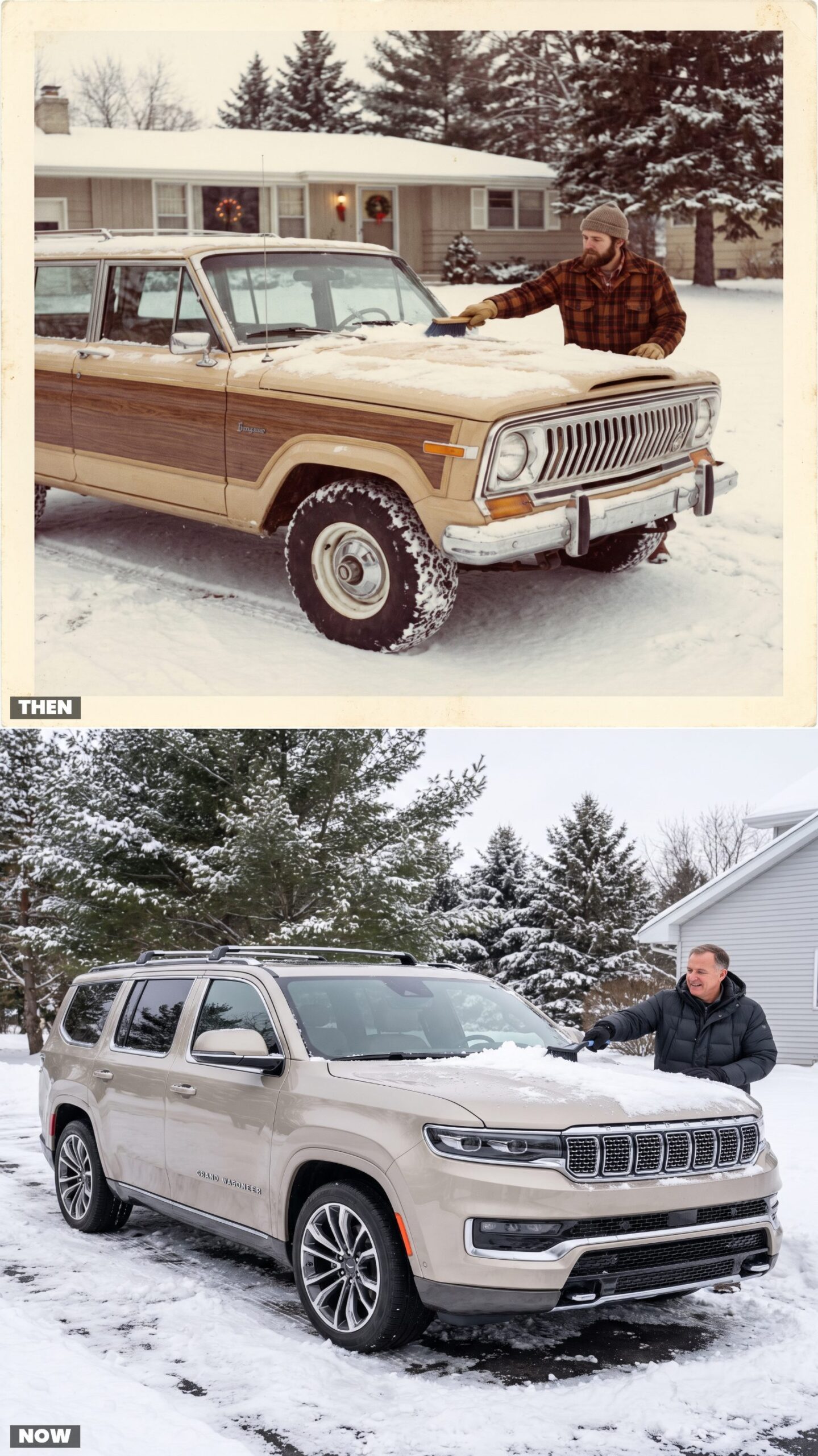
The original Wagoneer stayed in production, more or less unchanged, for a jaw-dropping twenty-nine years. By 1975 it already looked old, and that was exactly the appeal. Real four-wheel drive, a leaf-sprung ride that rattled your fillings, and wood paneling that hinted you had a cabin somewhere up north.
The new Grand Wagoneer weighs over three tons and costs more than the house that 1975 model was parked in front of. Call it a Range Rover rival wearing a heritage name. Same silhouette in spirit. But the new one gives you heated, ventilated, massaging seats, while the old one had a heater that worked when it felt like it.
What Our Readers Say
- Station wagons get more hearts from our readers than the other cars in the same articles, 88% versus 83%.
- Restored, concours-condition classics earn more hearts from Jalopy Talk readers than the other images in the same articles, 85% compared with 74%.
From Jalopy Talk reader polls and votes.
Plymouth Gran Fury Wagon vs. Chrysler Pacifica
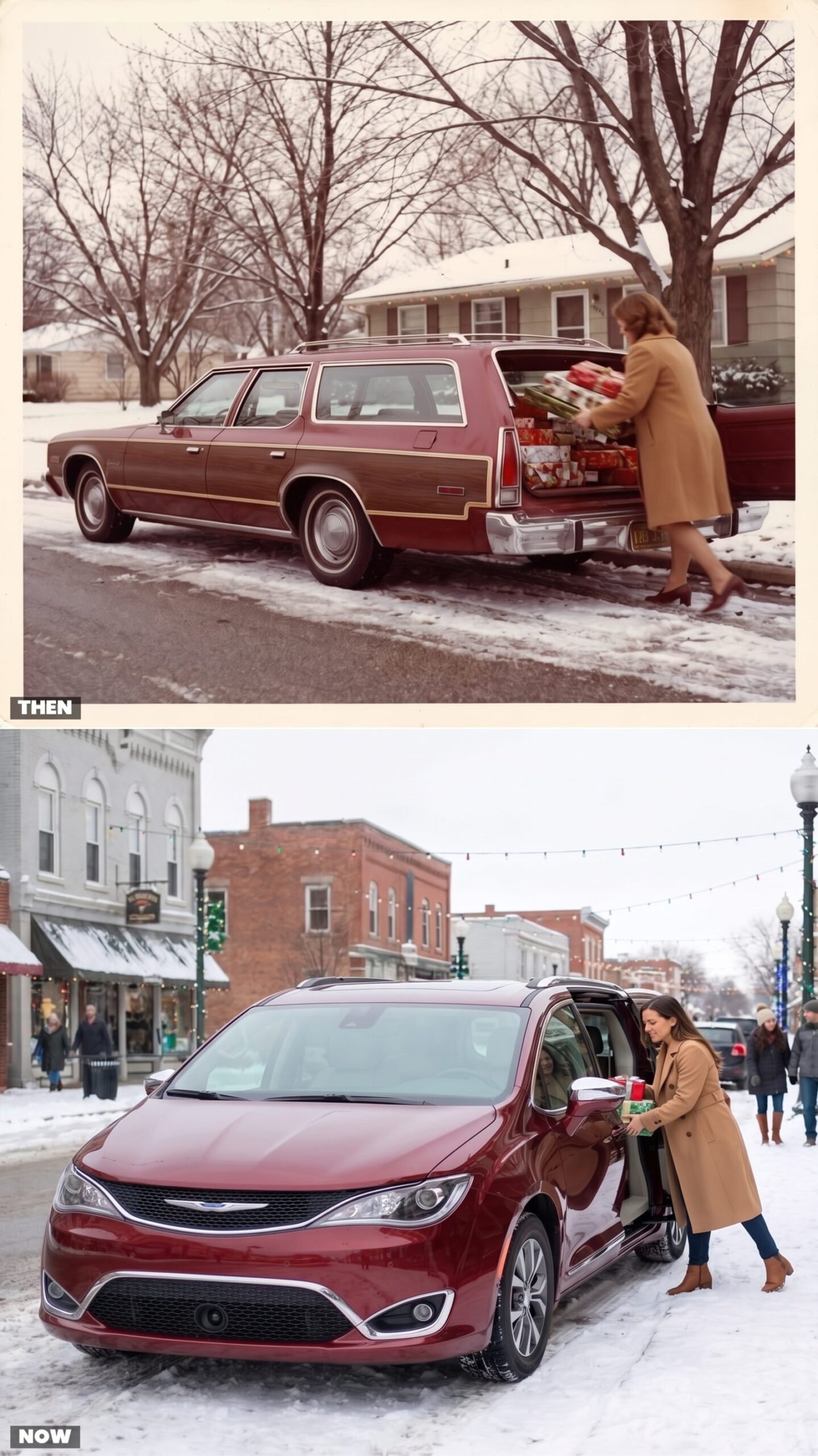
The Gran Fury wagon was Plymouth’s answer to hauling a big family right in the teeth of the fuel crisis, which is to say it drank gas like it hadn’t heard the news. You loaded it through a swing-out tailgate and prayed the third row’s leg room held out.
The Pacifica took every hard lesson from that era and answered back: sliding doors that open at the press of a button, Stow ‘n Go seats that vanish into the floor, a plug-in hybrid option. Notice the name went from Gran Fury to a soft California beach town. Tells you everything about how the family car changed its mood.
1975 Chevrolet Suburban vs. Today’s Chevrolet Suburban
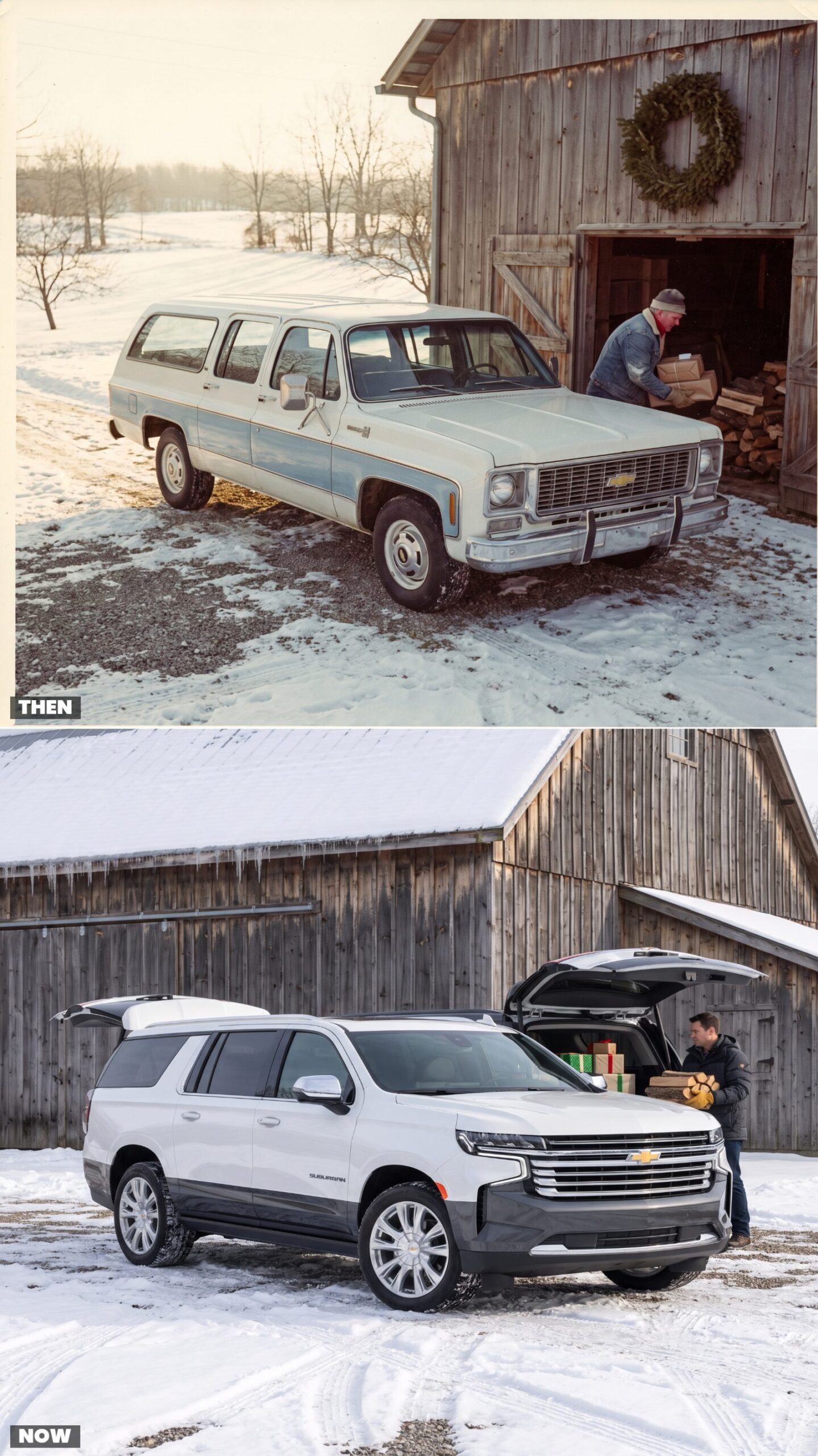
Same name, fifty years apart, which makes this the most honest comparison of the bunch. The 1975 Suburban was a working truck first and a family hauler second, with vinyl seats you could hose out and a ride that told you exactly what the road was made of.
Today’s Suburban is longer, wider, taller, and packs a screen for nearly everything. It still swallows a Christmas tree whole, still tows a boat, still rolls up to the same barn. Only now it has captain’s chairs and a cabin quieter than the farmhouse.
The Suburban is the longest-running nameplate in American automotive history. It has outlasted brands, fuel crises, and three generations of the families that bought it.
Volvo 245 Wagon vs. Volvo XC90
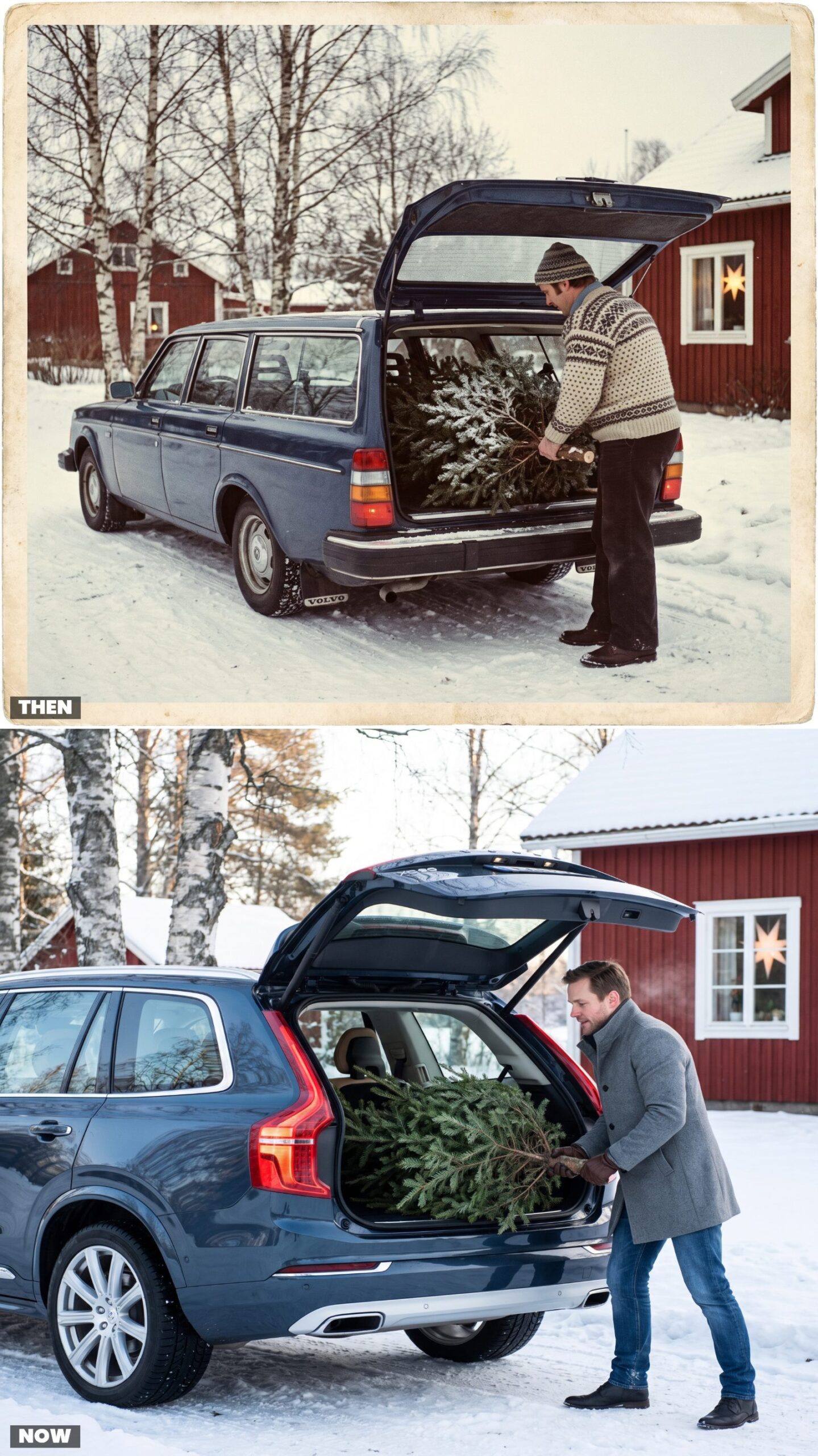
The 245 was the professor’s car, the vet’s car, the car that clocked 300,000 miles because nobody ever told it to stop. Boxy on purpose. Safe before safety had a marketing department. That flat tailgate swallowed a Christmas tree without argument.
The XC90 kept Volvo’s obsession with keeping you alive and wrapped it in Scandinavian calm. Those vertical taillights are the one visual thread running from the old brick to the new one. Everything else got taller, quieter, and a good deal more expensive to fix.
Mercury Colony Park vs. Lincoln Aviator
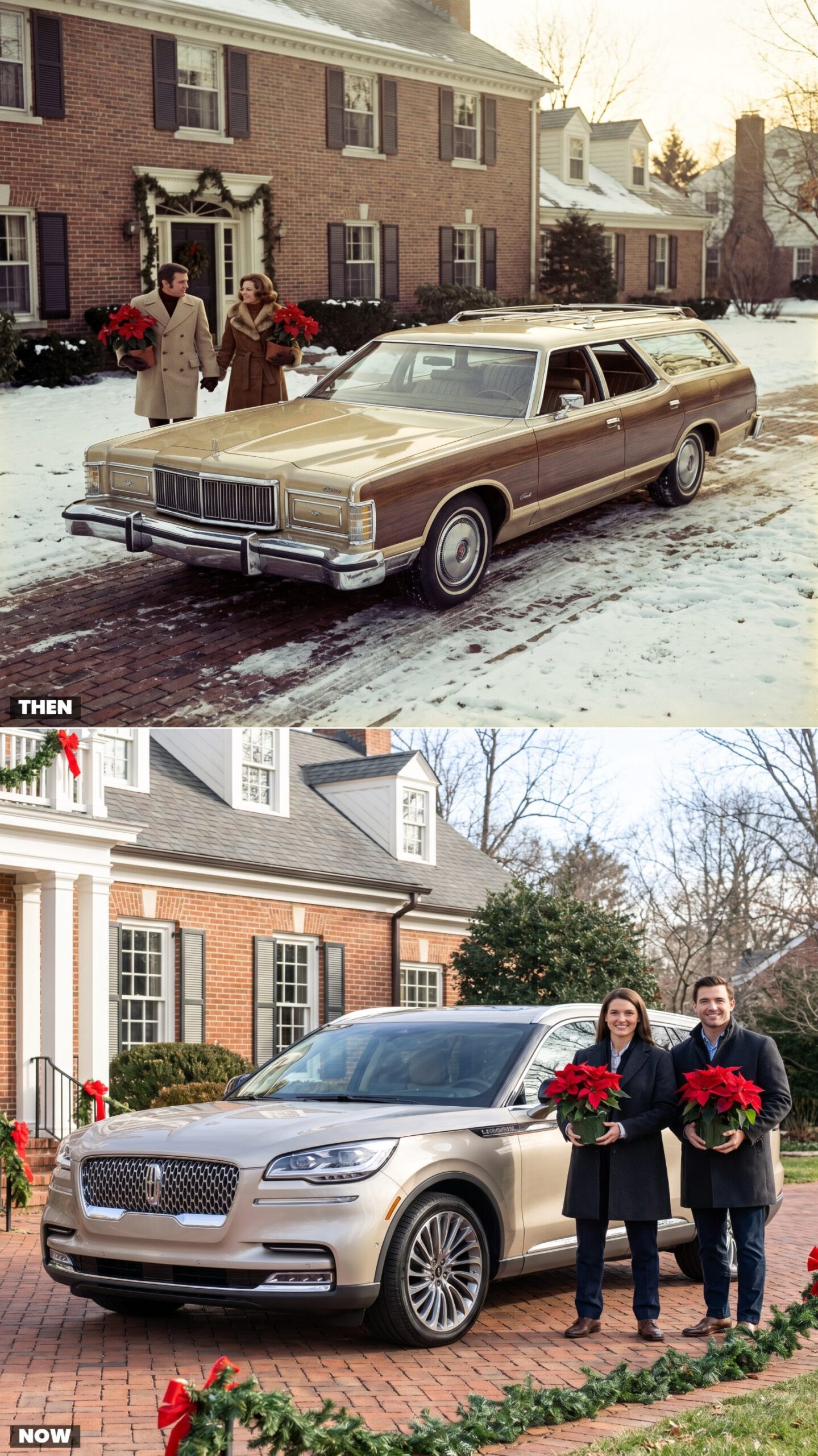
Mercury’s Colony Park was the wagon for people who wanted the space but not the plainness. Hidden headlights, a formal grille, and wood-grain that put on airs. A station wagon in a dinner jacket, basically.
Mercury is gone now, so the mantle moved up to Lincoln. The Aviator carries the same idea forward: family hauling with a country-club address. Full-width light bar, quilted leather, and a startup chime composed by an actual orchestra. The Colony Park had a chime too. It meant your door was open.
Pontiac Grand Safari vs. Kia Telluride
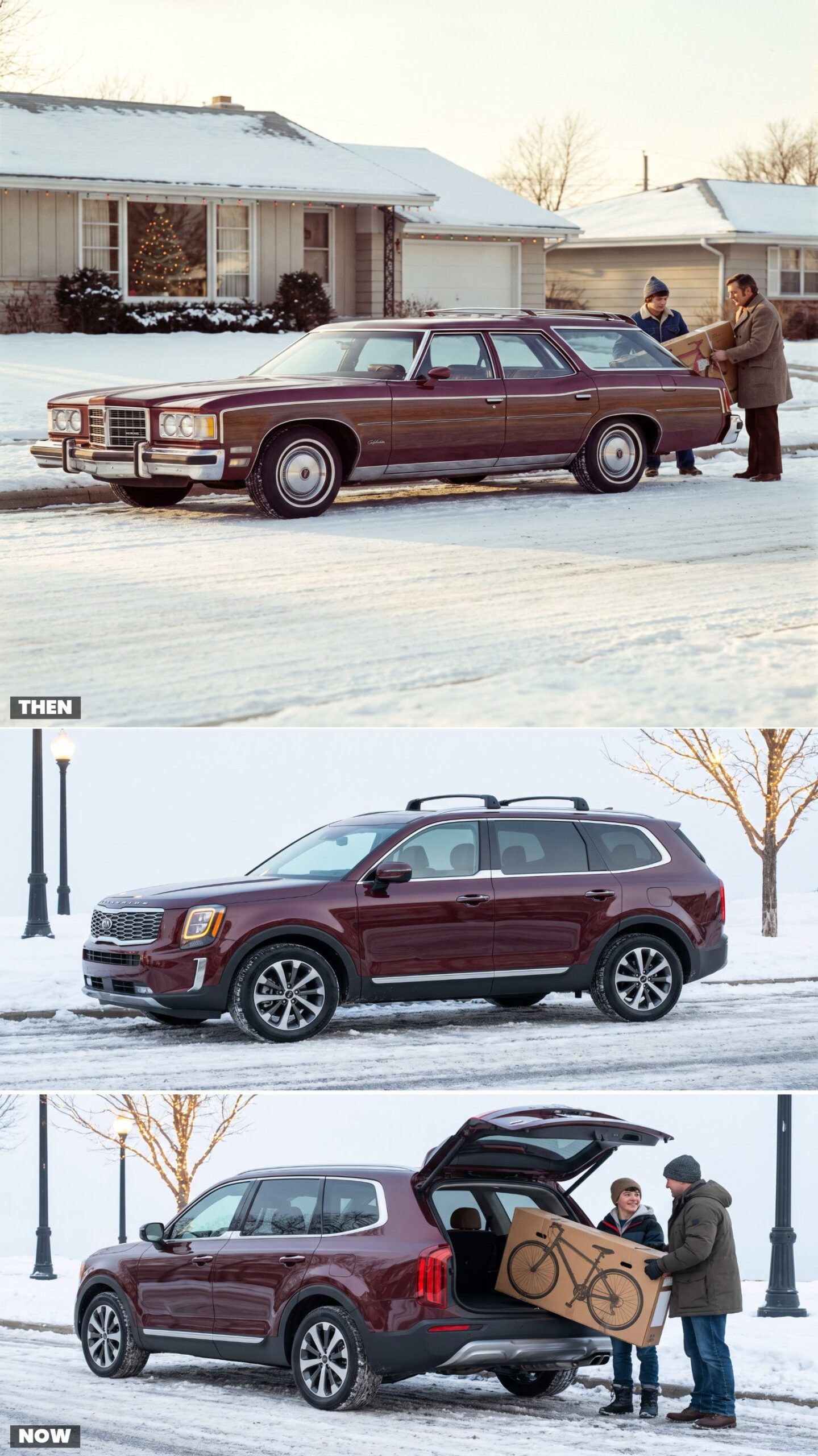
Grand Safari was Pontiac’s full-size wagon, and it wore that split grille like a badge of confidence. Deep chrome, a low stance, and enough length that parallel parking turned into a family event with a designated spotter.
Now here’s the part that would floor a 1975 driveway. The modern equivalent is a Kia, and it’s one of the most awarded three-row SUVs on the road. The Telluride does everything the Grand Safari did, does it more safely, and wears a badge that in 1975 barely existed in America.
Jalopy Talk readers tend to agree, giving cars with lots of chrome more hearts than the other images in the same articles, 89% versus 84%.
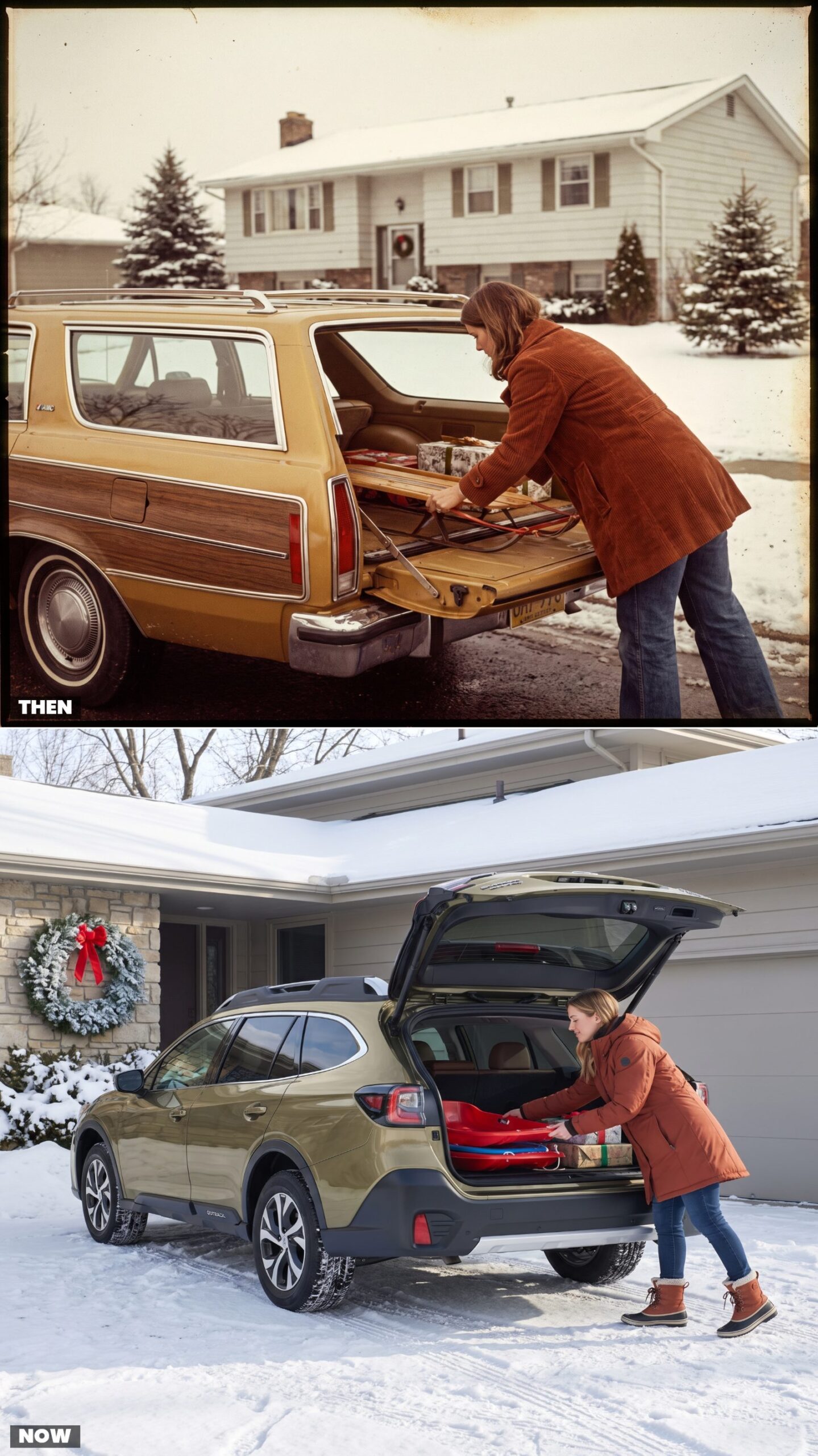
AMC Matador Wagon vs. Subaru Outback
Would you like to save this?
The Matador wagon was AMC’s scrappy mid-size hauler, built by an underdog outfit that never had the budget to compete but somehow kept showing up anyway. It got families where they needed to go and asked for almost no praise in return.
AMC is long gone, absorbed and forgotten by most. The spiritual heir is the Outback, a wagon that flat-out refused to become a full SUV. It lifted itself a few inches, added all-wheel drive, and quietly became the car every ski town runs on. Same underdog energy. Better winters.
Buick Estate Wagon vs. Buick Enclave
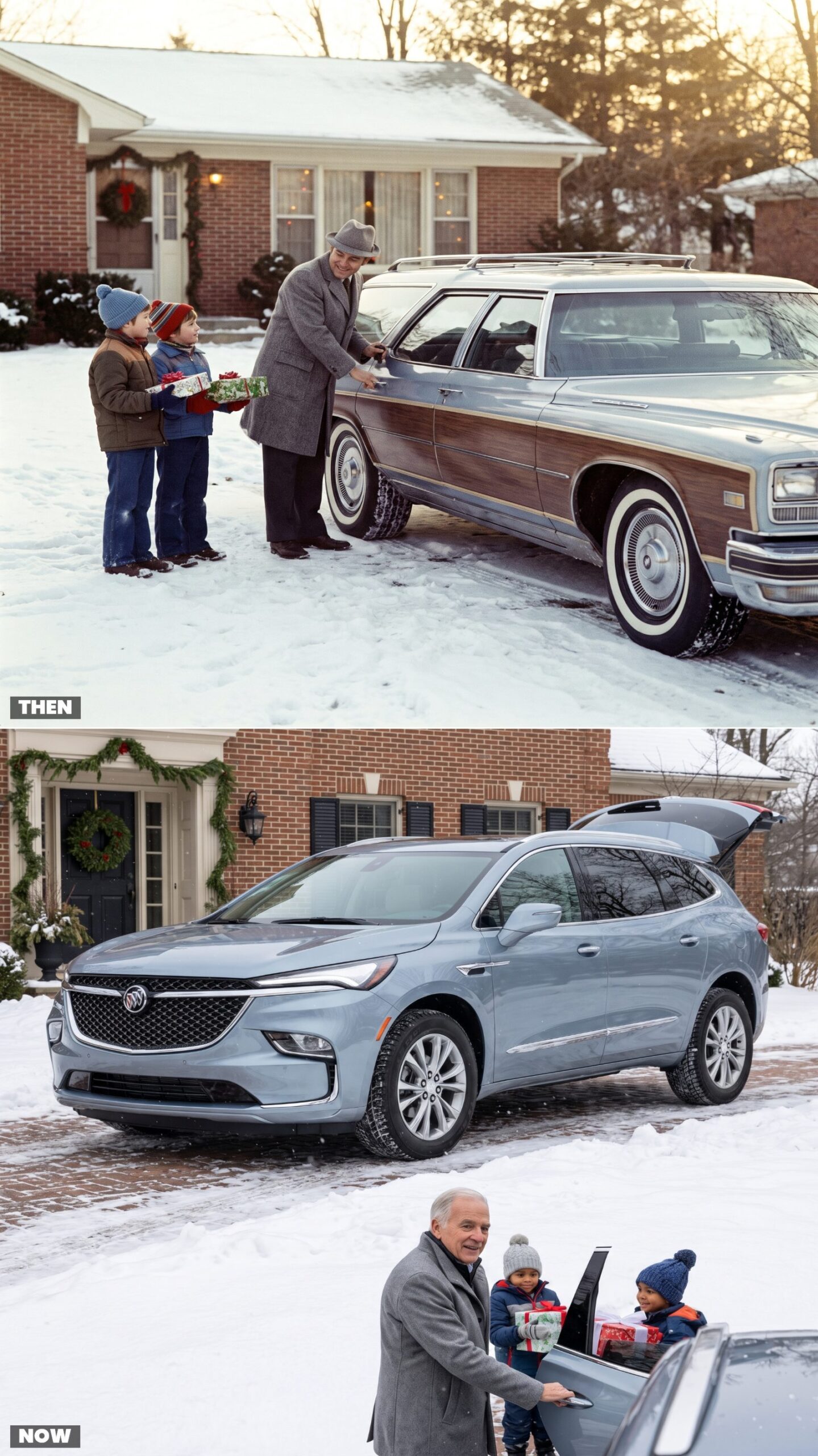
Buick’s Estate Wagon was the quiet flex of the block. Not flashy like a Cadillac, but longer and plusher than the neighbor’s Chevy, with that sweepspear chrome catching the winter light and a big V8 that never seemed to hurry anywhere.
The Enclave carries the same middle-of-the-lineup luxury without the length or the thirst. It’s the car for grandparents who want quiet comfort and a warm cabin on the drive over for dinner. The wood-grain is gone. The graciousness stayed.
Oldsmobile Custom Cruiser vs. GMC Acadia
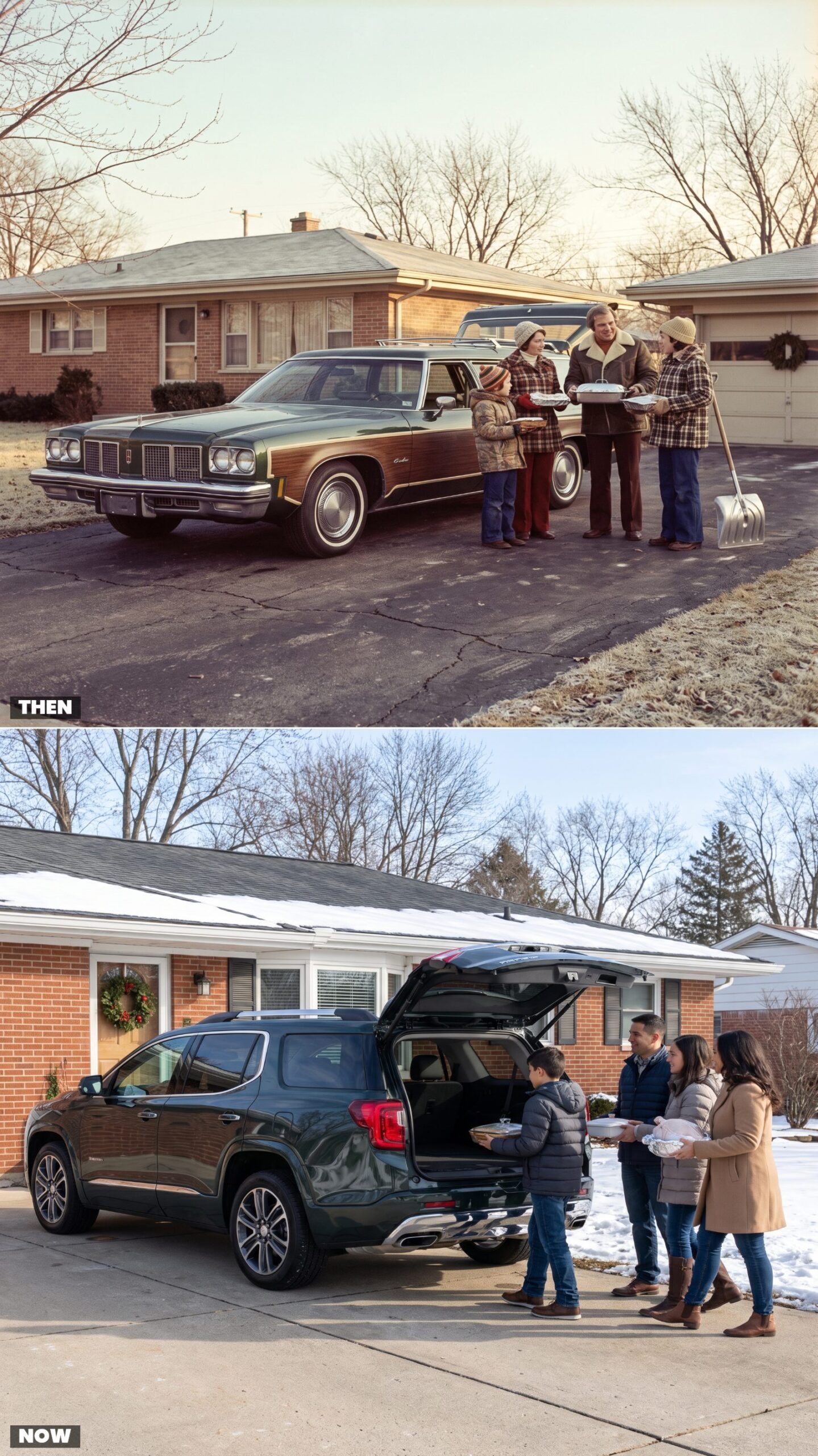
The Custom Cruiser was a couch on wheels. Nineteen feet of Oldsmobile with a 455 up front and a rear-facing third seat where the kids waved at strangers through the tailgate glass. Fake woodgrain on the flanks, chrome you could see your face in, and a ride so soft it felt like the road apologized for existing.
The Acadia pulls off the same job in two feet less driveway. It sits taller, sees farther, and swallows the same turkey and casserole load through a power liftgate that opens when you wave a foot at it. The wagon floated. The Acadia grips.
Dodge Coronet Crestwood vs. Dodge Durango
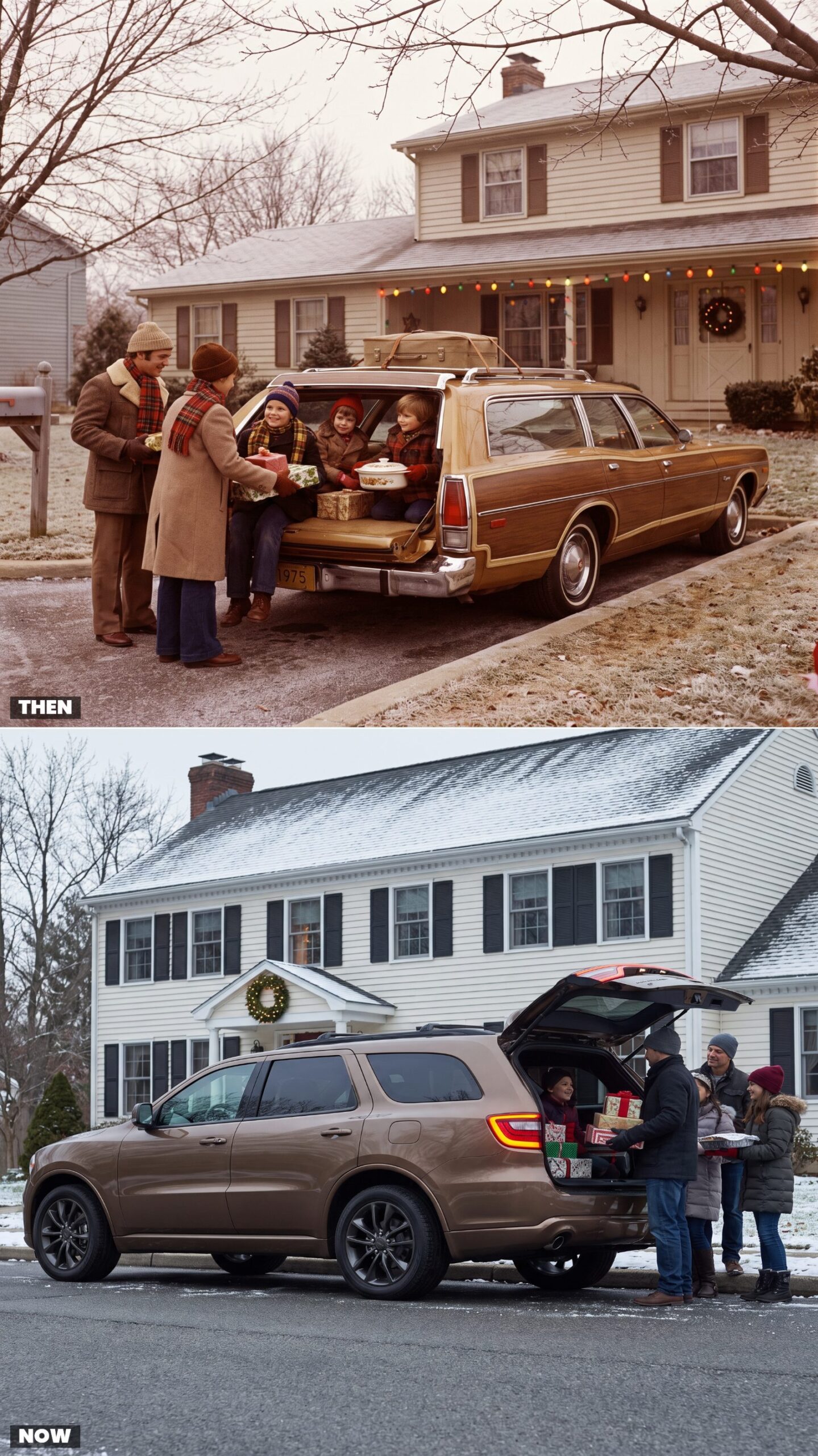
The Coronet Crestwood hauled a family and its baggage without complaint, all of it stretched across a body long enough to need its own zip code. Cheap thrills dressed up as practicality — a B-body wagon you could load like a moving truck.
The Durango kept the Mopar attitude and stood it upright. A Hemi still lives under some of them, the taillight bar glows across the whole rear, and it’ll drag a trailer the old Coronet never dreamed of. Same last name, angrier eyebrows.
International Travelall vs. Rivian R1S
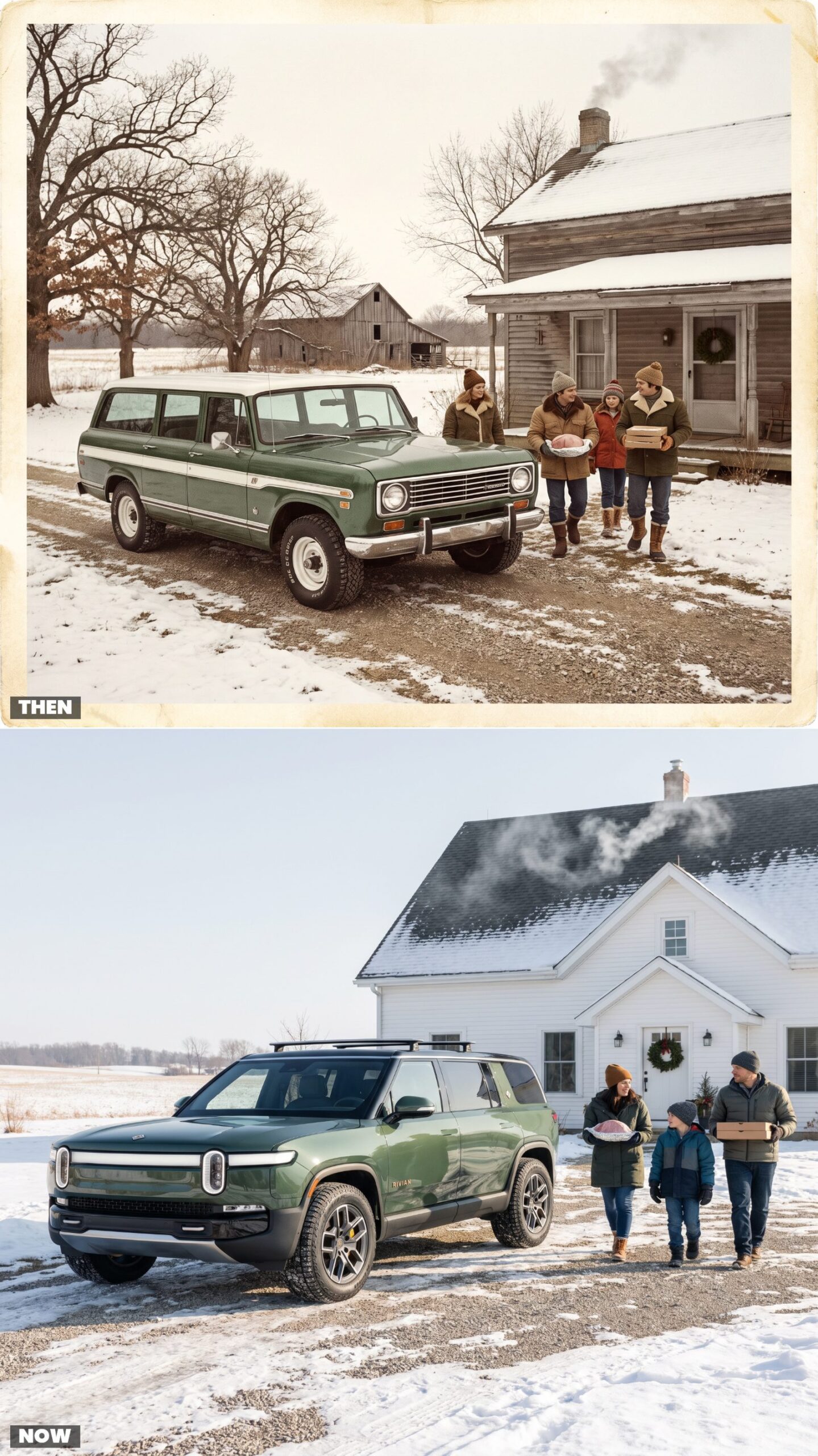
The Travelall was a truck that dressed up for family duty. Steel everywhere, a straight-six or a V8, and interior comforts that amounted to vinyl and an ashtray. It went where the sedan wouldn’t and hauled what the wagon couldn’t.
The Rivian R1S plays the same part with a battery and a quiet you can hear. It fords deeper water, climbs steeper grades, and does all of it without a drop of gasoline. Both are honest go-anywhere family haulers. One idles rough at the pump. The other never visits one.
Ford Econoline Club Wagon vs. Ford Transit Passenger Van
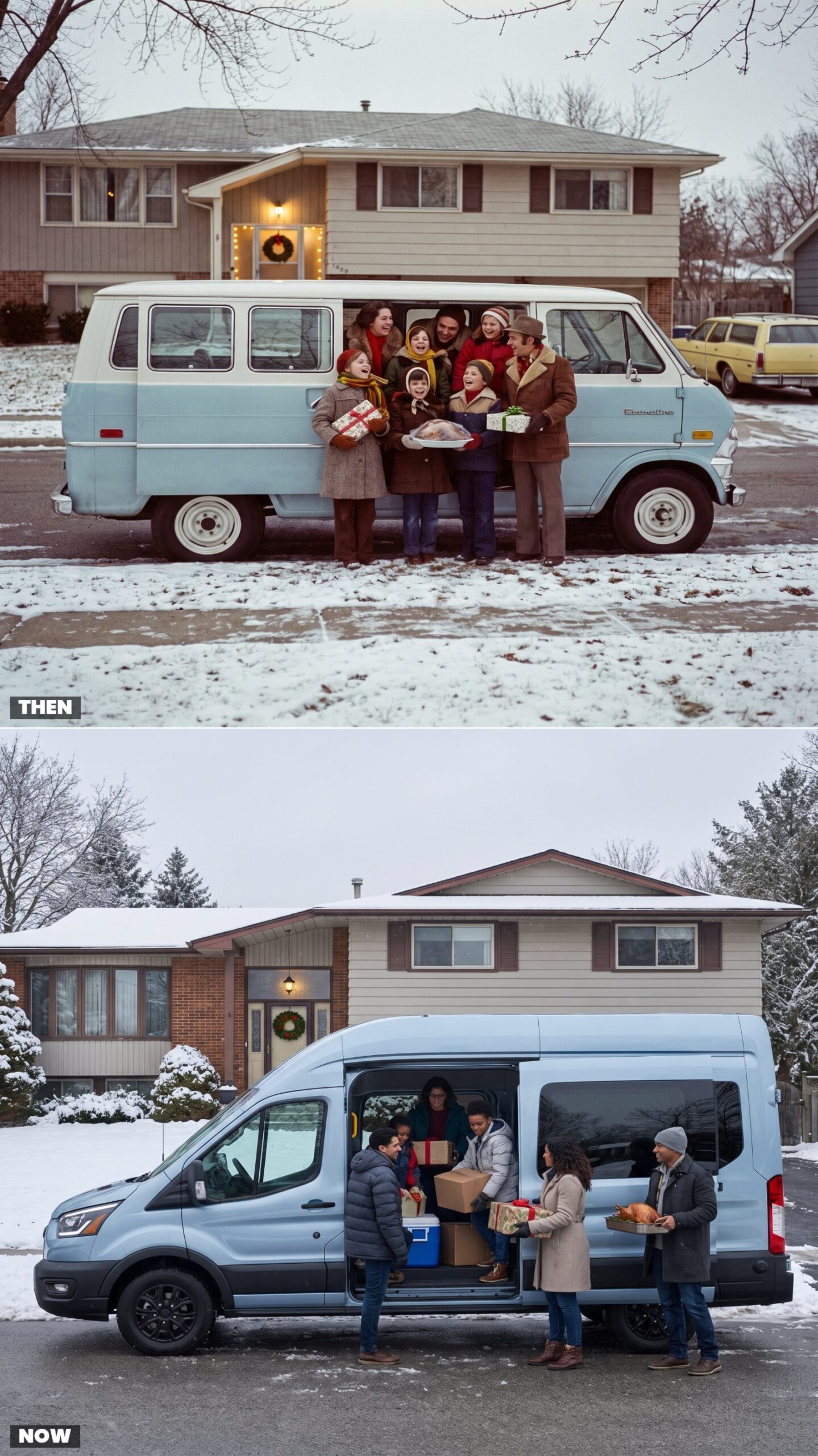
Big families needed big boxes, and the Econoline Club Wagon was the box. Flat nose, engine tucked between the front seats where your right knee cooked all July, and enough bench seating to move a Little League team and their casseroles.
The Transit does the same for the modern clan, only taller and a good deal smarter. You can stand up inside the high-roof version. The engine sits out front where engines belong now, and the sliding door glides instead of slamming. Both answer the same question — how do you get nine people to Grandma’s? You buy the van and stop apologizing for it.
Ford LTD Sedan vs. Toyota Camry
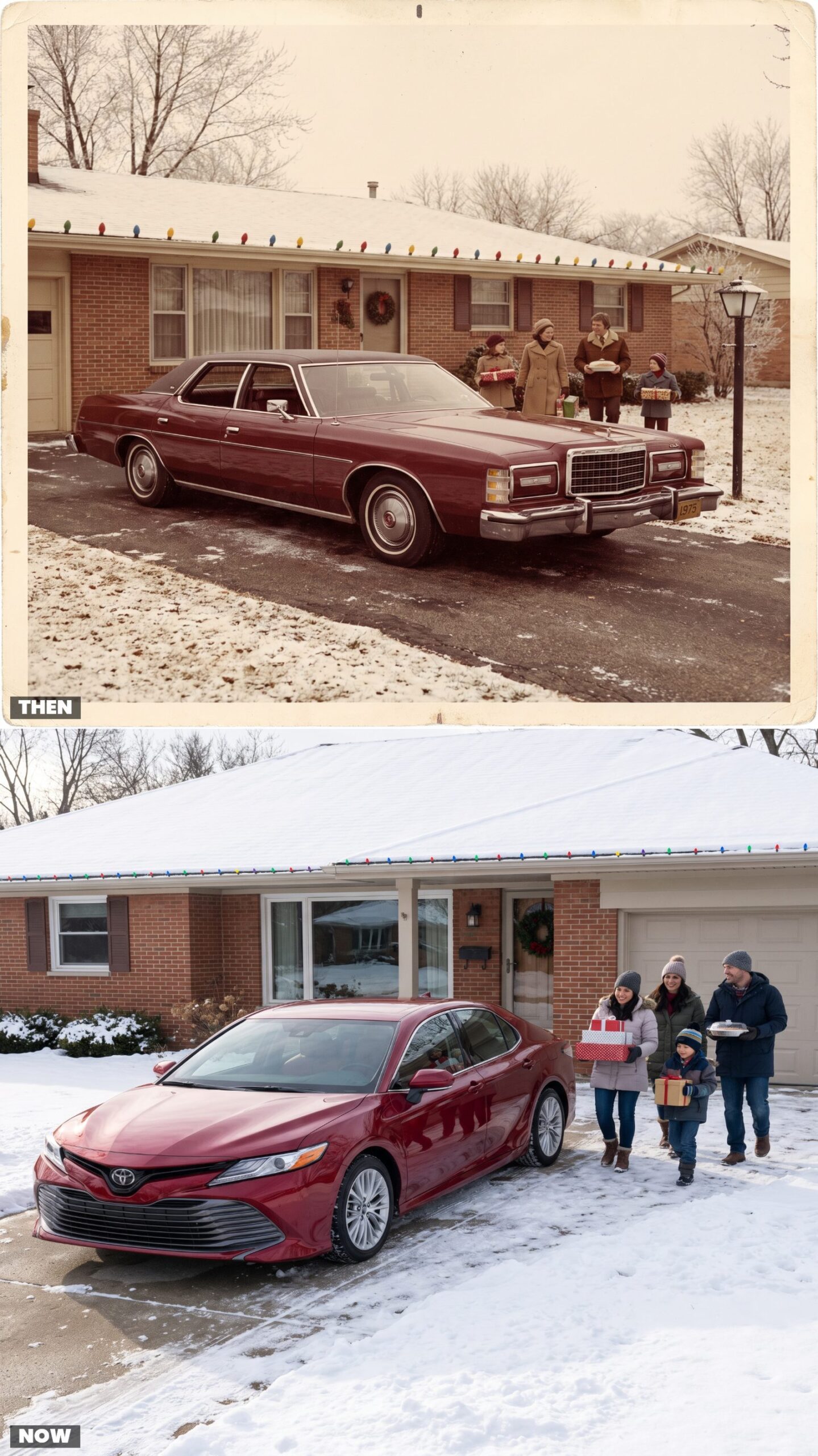
The LTD was America’s idea of a sensible luxury car — a full-size sedan with a vinyl roof, a whisper-quiet ride, and a trunk you could hide a bicycle in. It floated to Christmas dinner and made everyone inside feel like they’d arrived somewhere.
Then the Camry took over that middle-class throne and shrank the footprint by a third. Quicker off the line, it sips fuel the LTD would have laughed at, and it’ll still be running at 250,000 miles. Not as grand. A whole lot more reliable. That trade got made a million times over.
The LTD promised comfort. The Camry promised it would still start in twenty years. Buyers eventually decided which one they cared about more.
Chevrolet Impala vs. Honda Accord
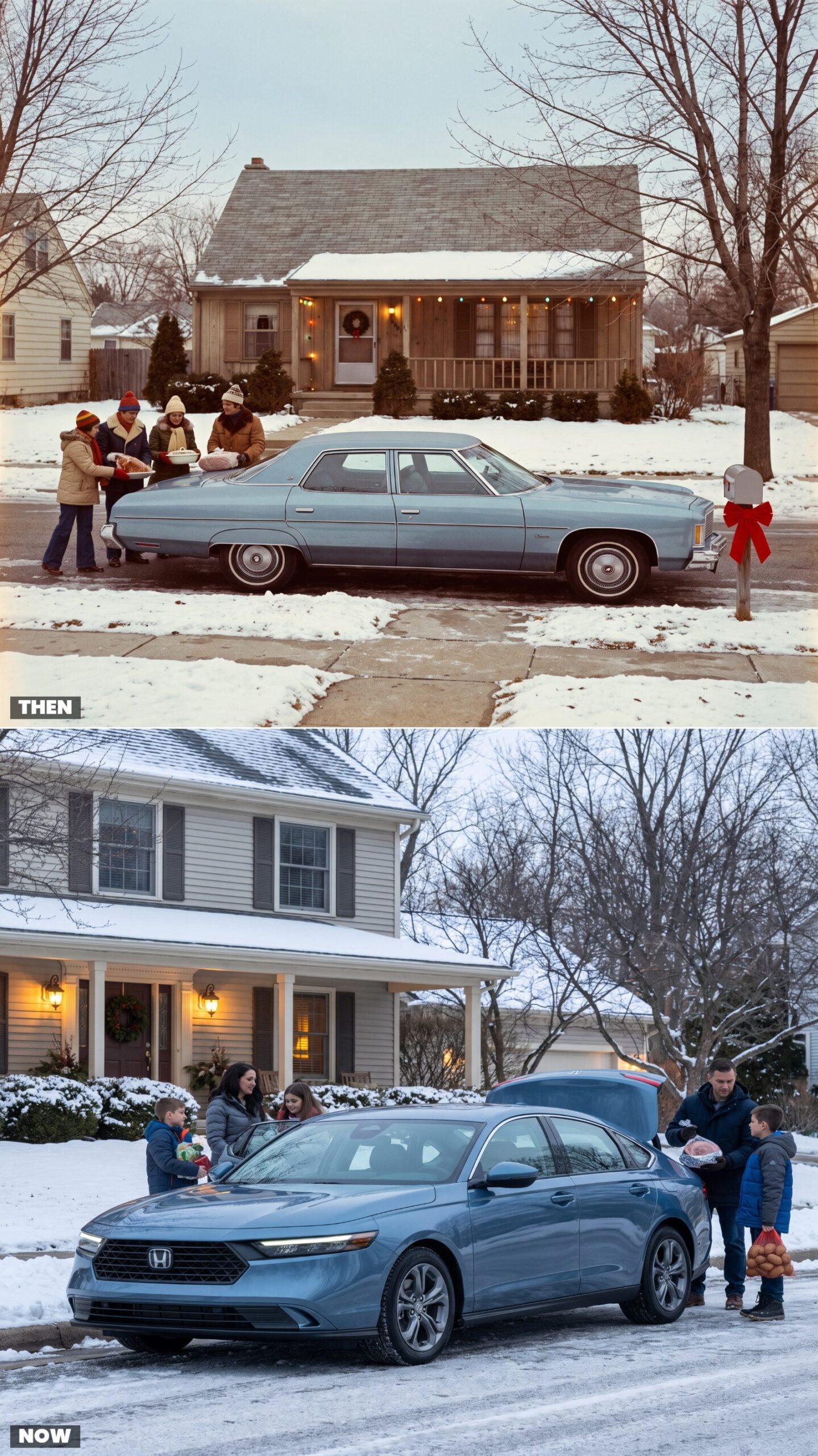
The Impala was the default. Half the driveways in America had one — blue or beige or brown, a bench seat up front wide enough for three and a hood you could land a plane on. Nobody bragged about it. Everybody trusted it.
The Accord inherited that exact role, the car your neighbor buys without thinking hard, and it never lets them down. Tighter, thriftier, and faster than the old Impala ever managed. The badge changed, but the job of “the reasonable family car” stayed open, and Honda walked right into it.
Dodge Monaco vs. Dodge Charger
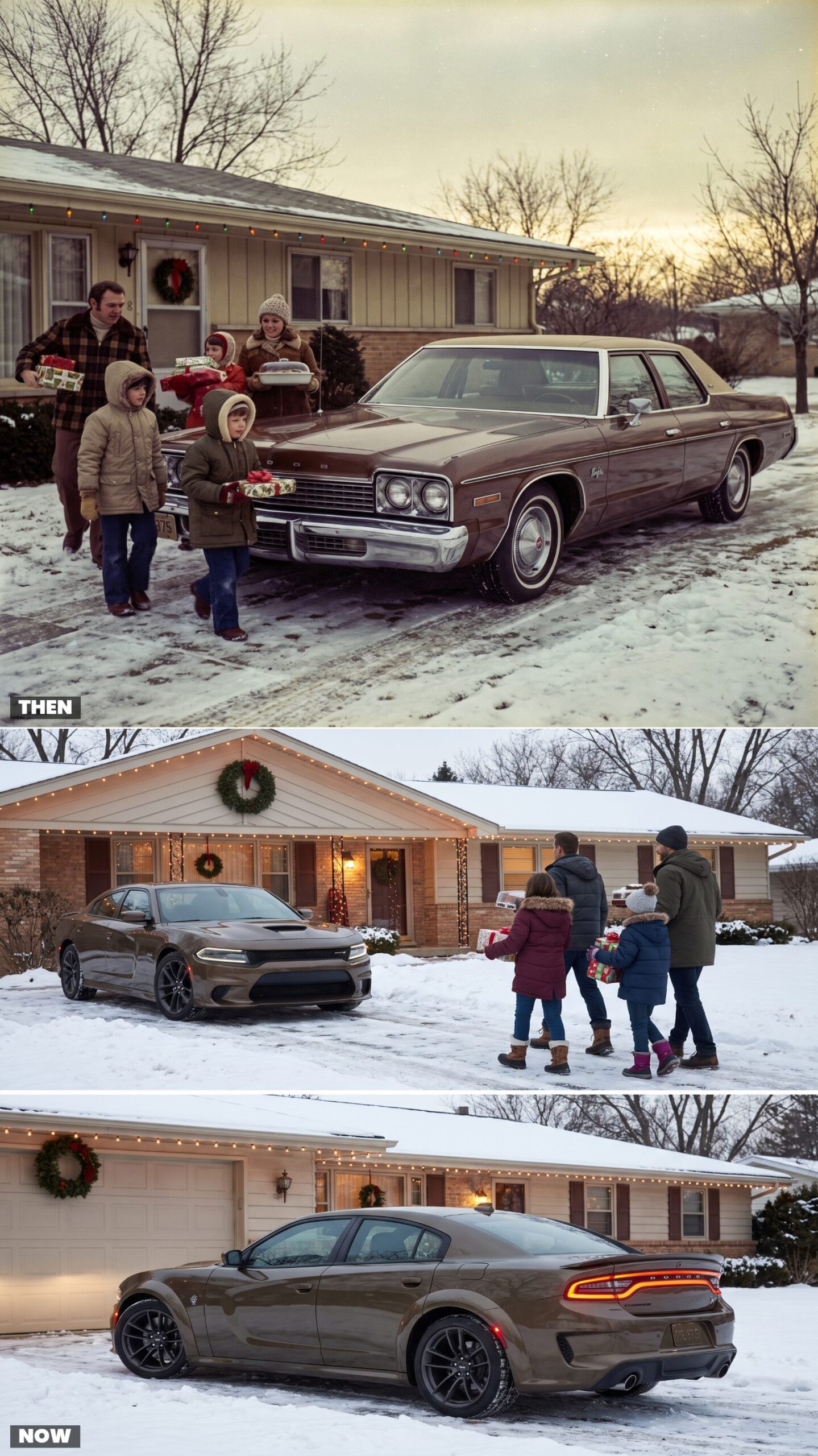
Most people remember the Monaco as the Bluesmobile before they remember it was a family car. But that’s exactly what it was — a big soft four-door that cops loved and dads bought, quiet and broad and built to eat highway miles.
The Charger name went muscle and never looked back, yet a four-door still wears it. Wide, loud, mean-looking in the driveway, it delivers all the swagger the old Monaco only hinted at. Same family-hauler bones underneath, dressed for a fight it doesn’t need to pick.
Pontiac Catalina vs. Toyota Crown
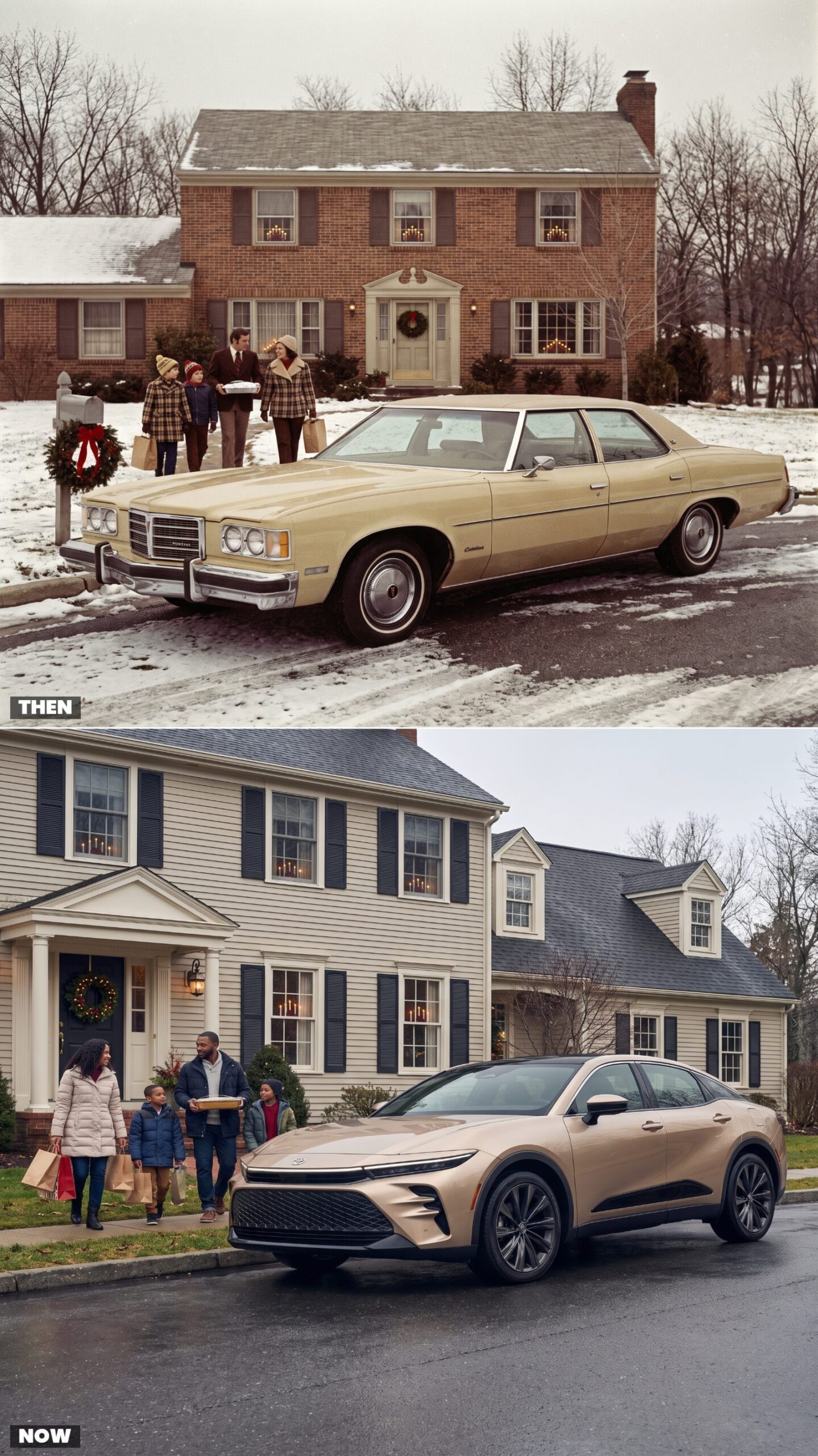
The Catalina was Pontiac’s quiet workhorse, the full-size sedan for people who wanted the size without the Bonneville price. Split grille, stacked lights, and a ride that ironed out potholes it never bothered to notice.
Now the Toyota Crown revives that upright, dignified family sedan — then jacks it up on a taller stance so it half-thinks it’s a crossover. Refined, hybrid-quiet, unbothered. Both cars aimed for calm authority in the driveway. Fifty years apart, they both park like they own the block.
Cadillac Sedan DeVille vs. Cadillac CT5
Would you like to save this?
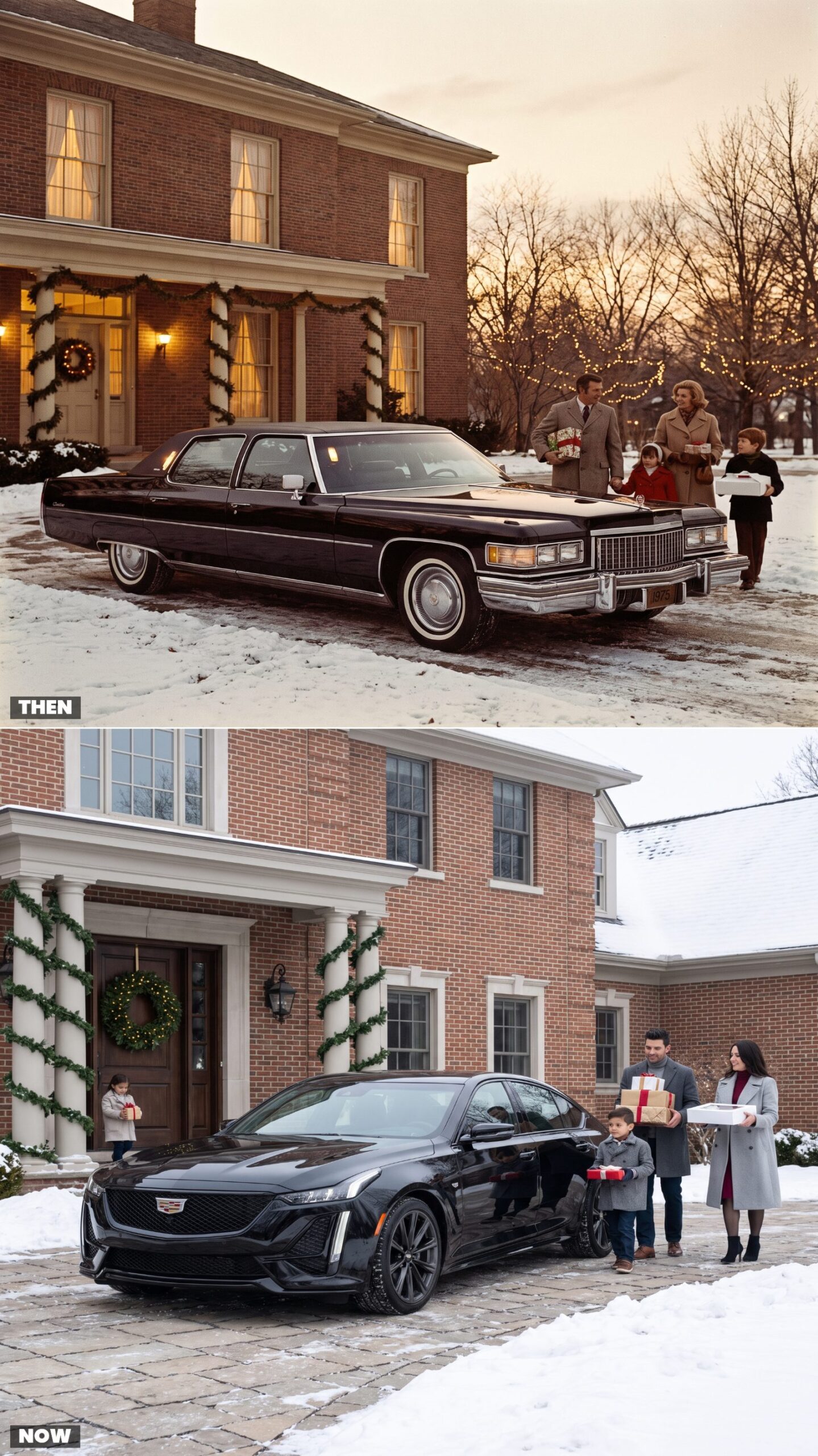
Pulling a Sedan DeVille into the driveway on Christmas Eve told the whole block something before anyone got out. Eighteen-plus feet of black Cadillac, opera lights glowing, doors heavy enough to need two hands. It wasn’t fast. It was important.
The CT5 says the same thing in a lower voice and a smaller footprint. It corners like the DeVille never dared, keeps the crest on the nose, and swaps sheer acreage for actual athleticism. Luxury stopped meaning “big” and started meaning “quick.” Some of us are still adjusting.
Mercedes-Benz 280E vs. Today’s Mercedes-Benz E-Class
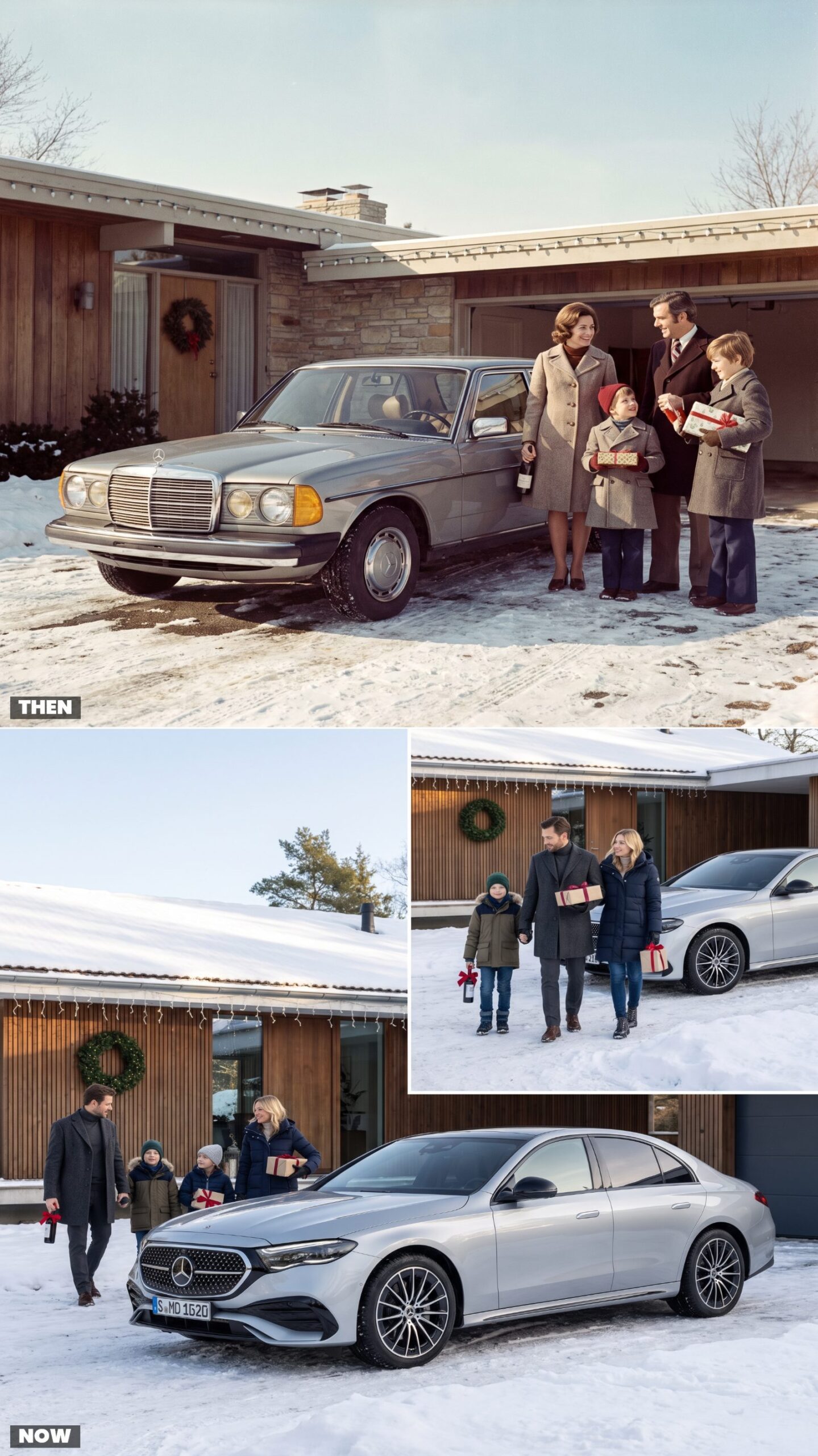
The 280E was over-engineered on purpose. Doors that shut like a bank vault, a fuel-injected six that didn’t care about weather, interior materials chosen to outlast the owner. It looked upright and serious because it was upright and serious.
The current E-Class carries that reputation but hides the effort behind touchscreens, adaptive suspension, and a body slippery enough to matter at the pump. The old one felt engineered. The new one feels programmed. Both roll up to Christmas dinner making everyone else’s car look like it’s trying too hard.
Ford Gran Torino vs. Ford Mustang Mach-E
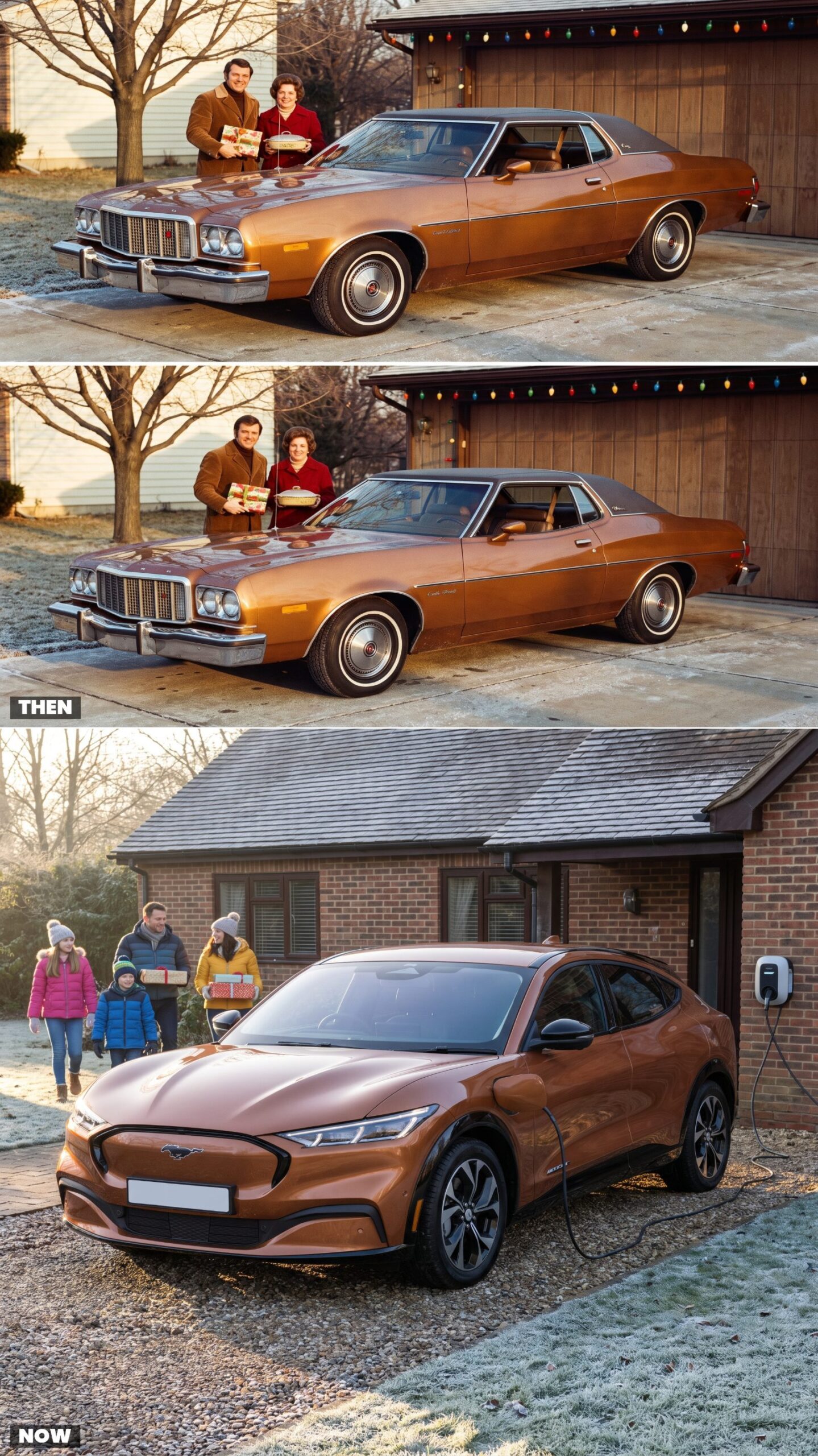
The Gran Torino idled with a big-block burble and drank premium like it owed the pump money. Two doors, a trunk the size of a broom closet, and a hood you could serve dinner on — thousands of pounds of chrome and attitude that showed up at Christmas with the whole family crammed across one bench seat.
The Mach-E carries Ford’s pony badge and shares almost nothing with that car. Tall, quiet, plugs into the garage wall like a phone. No burble. No gas station. Same name, completely different animal.
Chevrolet Chevelle Malibu vs. Chevrolet Blazer
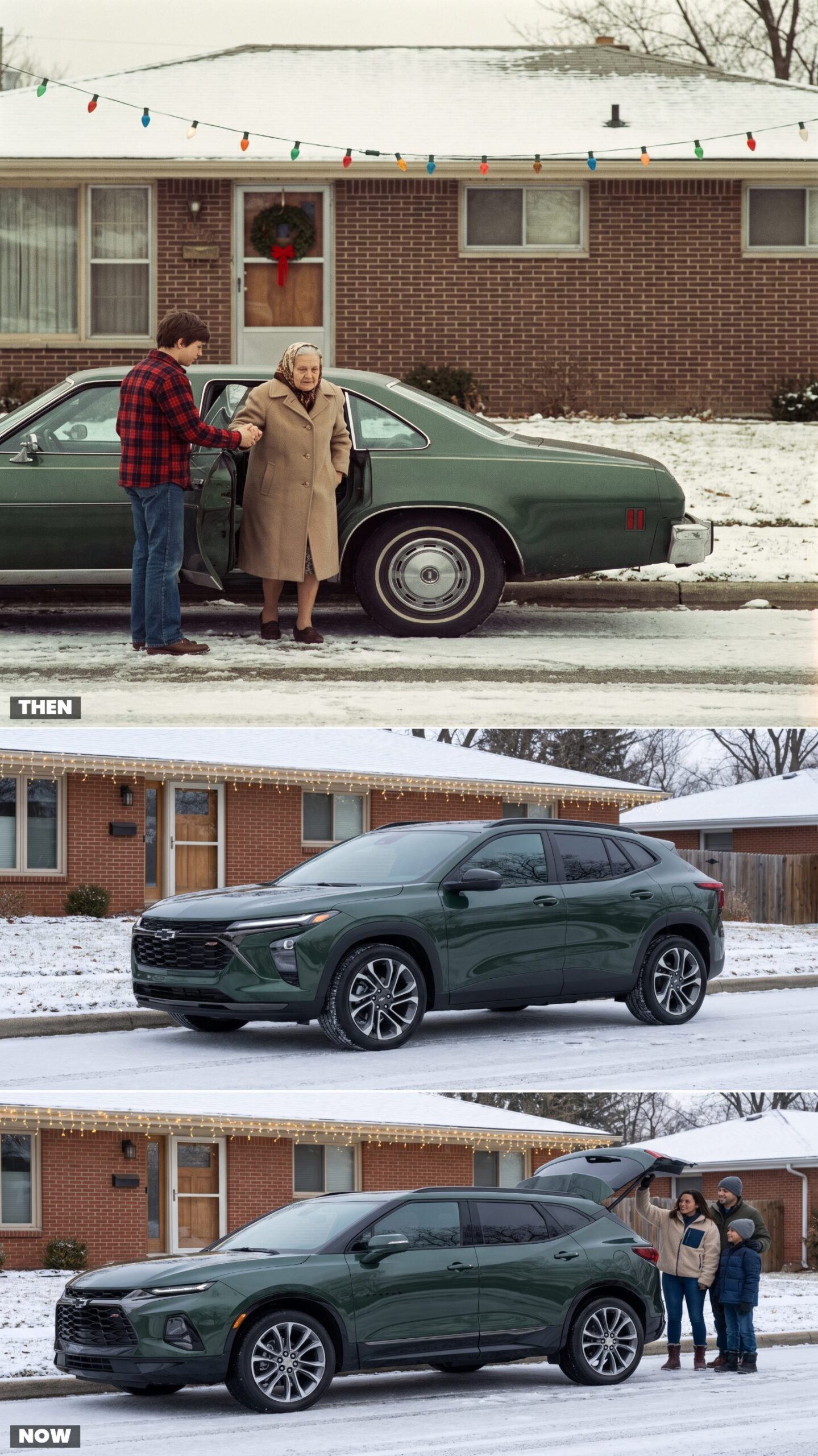
The Malibu was the sensible one at the table. Not the muscle Chevelle the neighbor kid was building out in his garage — just a solid four-door your uncle bought because it was reliable and roomy. Low, wide, and everybody fit.
Blazer used to mean a boxy truck with removable roof panels and mud caked on the tires. Now it’s a swoopy crossover with a touchscreen and heated seats. Chevy took two honest old nameplates and handed them both to something that looks like it rolled out of a wind tunnel.
Ford Maverick Sedan vs. Today’s Ford Maverick Pickup
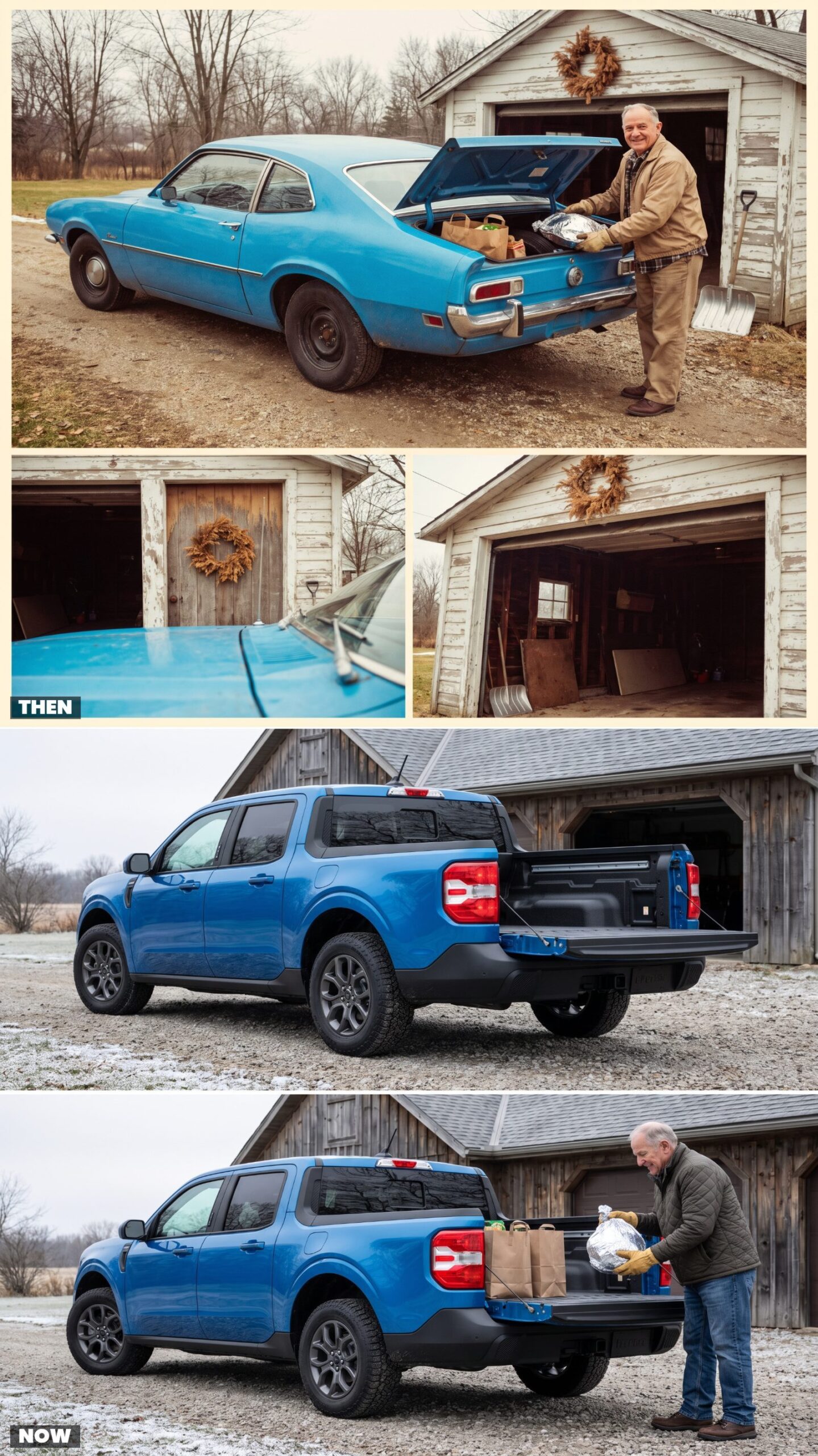
Same name. Completely opposite job. The 1975 Maverick was a cheap little sedan that looked awfully smart once the fuel crisis scared everybody straight, and that trunk swallowed the Christmas ham and not much else.
The Maverick that shows up now is a pickup — a hybrid one, with a bed instead of a trunk and better mileage than the old sedan ever dreamed of. Ford dusted off a badge that had been gathering cobwebs for half a century and bolted it onto the most sensible truck in years. Honestly? I like the rerun better than the original.
Plymouth Valiant vs. Toyota Corolla
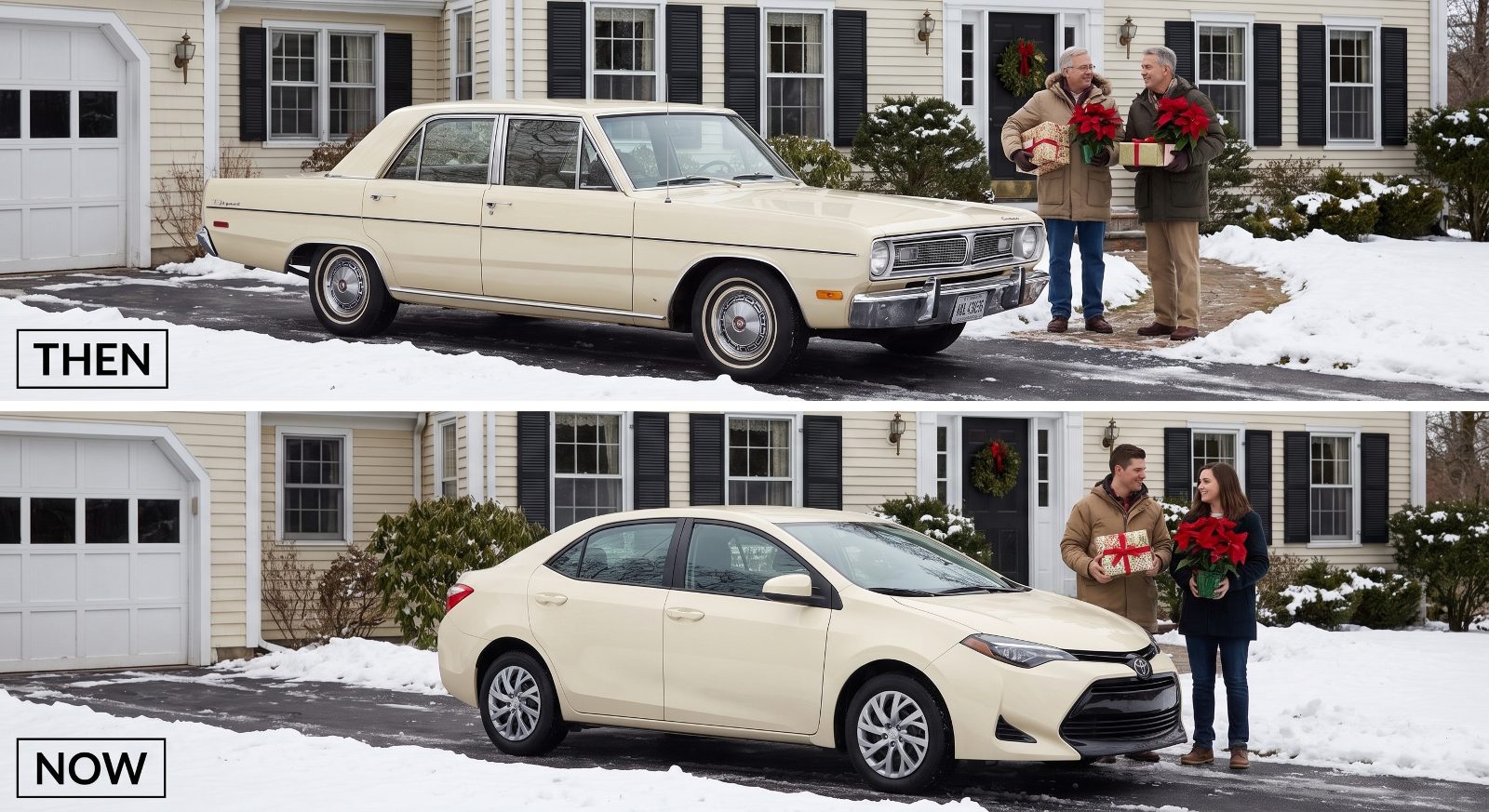
The Valiant earned its name honestly. Slant-six engine, dead simple, and it ran forever — the kind of car people handed down to a nephew that still turned over on the first crank. Boxy and upright, with all the charm of a filing cabinet and none of the trouble.
The modern Corolla plays that exact role now: the car you buy when you just want it to work for fifteen years without drama. Different badge, different country, same promise. The reliable four-door never disappeared. It just moved overseas and picked up a new accent.
Volkswagen Super Beetle vs. Volkswagen Taos
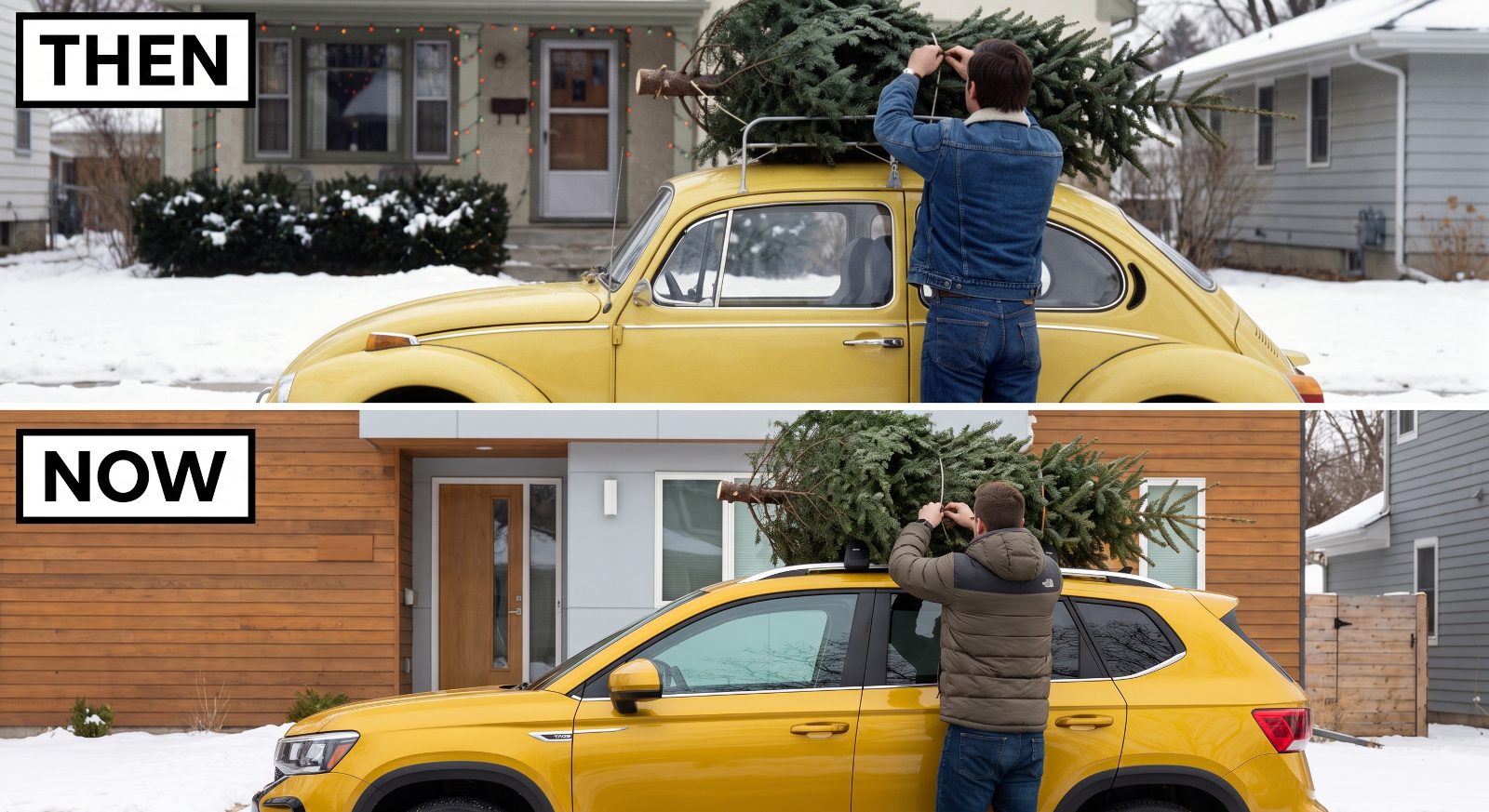
You knew the sound before you saw it. That air-cooled clatter, the heater that took a full mile to warm up, the trunk sitting up front where the engine wasn’t. The Super Beetle was cramped and loud and beloved way beyond all reason.
The Taos is what VW sells that same buyer now — small and friendly, but a proper SUV with a real backseat and a heater that actually works. The bug-eyed charm survives in the badge and almost nowhere else.
Toyota Corona Wagon vs. Toyota Highlander
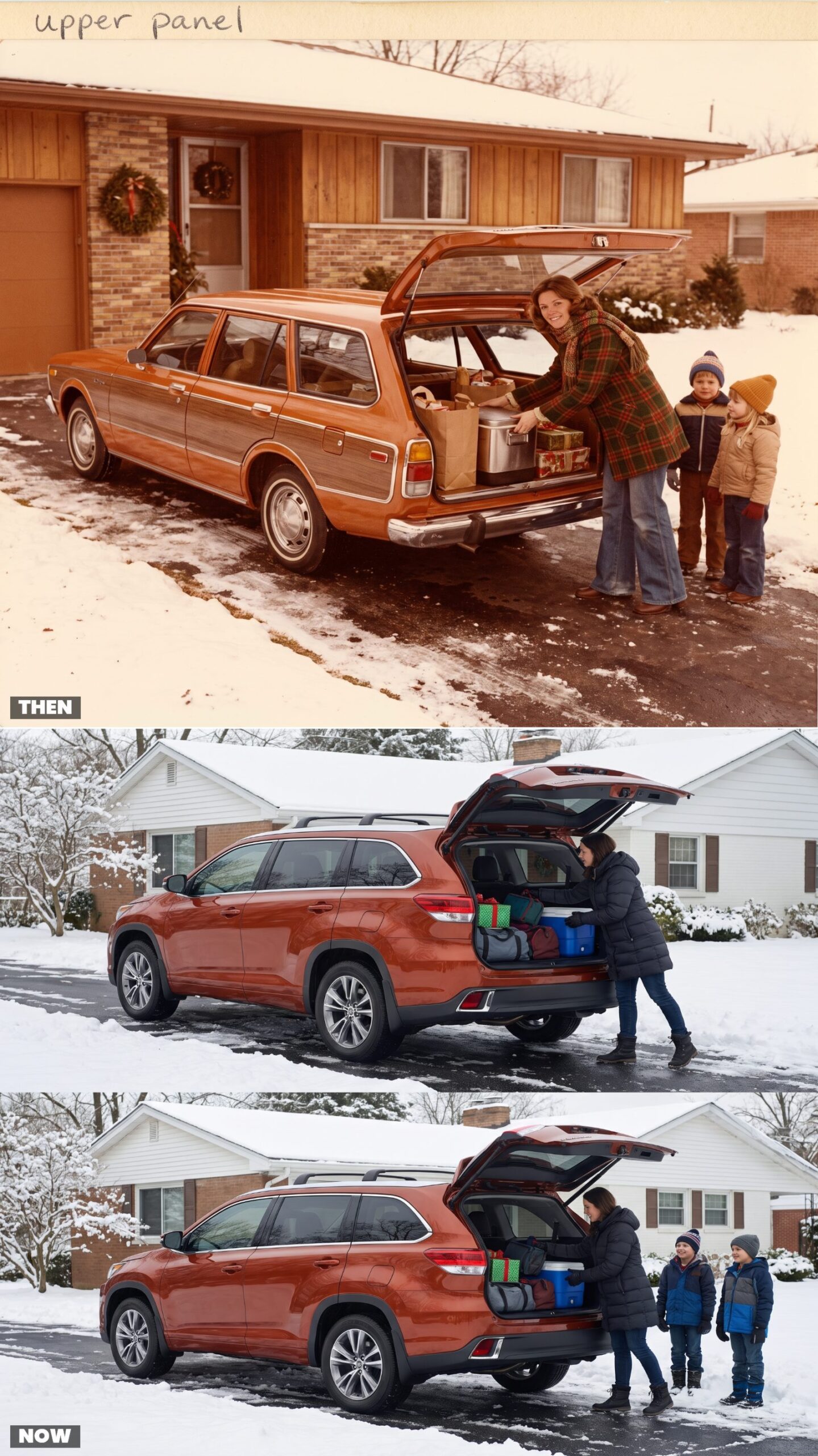
The Corona wagon was the low-key hauler of the family — woodgrain vinyl on the doors, a tailgate that folded flat for the dog and the coolers and the folding chairs. It carried five people and a Christmas dinner’s worth of Tupperware without so much as a groan.
The Highlander runs the same math with three rows and a power liftgate. The wagon shape stood up tall, the woodgrain vanished, and the cupholders multiplied like rabbits. But the mission never changed: get the whole crowd and every last dish of leftovers home in one trip.
The family wagon didn’t die. It just stood up straight and started calling itself an SUV.
Datsun 710 Wagon vs. Nissan Rogue
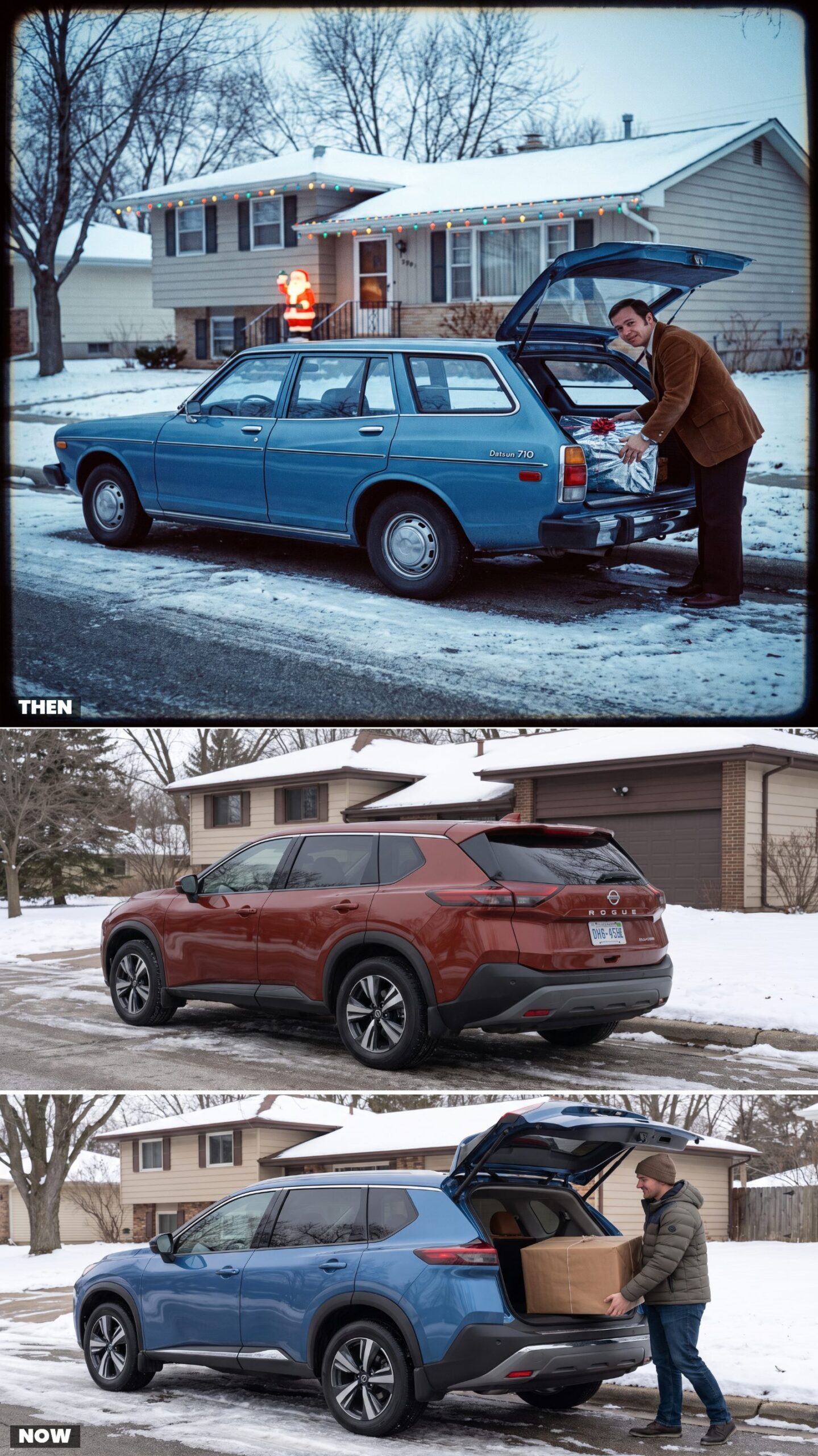
Before Nissan was Nissan over here, it was Datsun, and the 710 wagon was a scrappy little import that got great mileage and asked for almost nothing in return. It rattled a bit. Nobody minded.
The Rogue is that same company’s bread and butter now, one of the best-selling vehicles in the country. Bigger, plusher, quieter, wearing a name that dropped the Datsun badge back in the mid-’80s. Same practical heart — three sizes larger and a whole lot more comfortable.
Honda Civic CVCC vs. Honda CR-V Hybrid
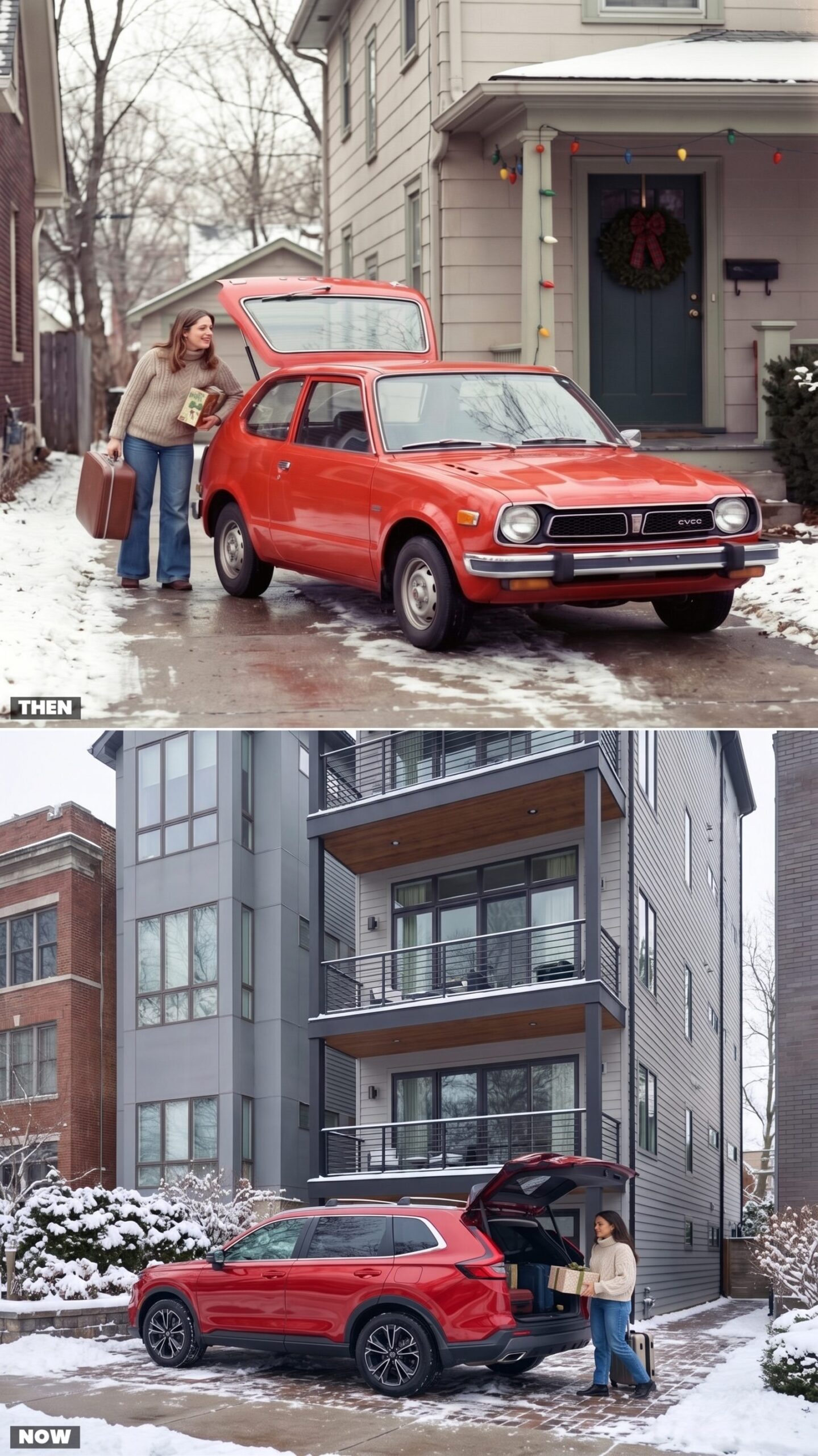
The CVCC was the little engine that beat the emissions rules without a catalytic converter, and America suddenly took Honda seriously. The car itself was tiny and cheap and got mileage that made the Detroit iron look thirsty and foolish.
Fast-forward, and Honda’s biggest seller is the CR-V — a whole crossover with a hybrid drivetrain pulling off the same clever fuel trick a different way. The company that showed up in 1975 as an underdog now parks in half the driveways on the block. Long game, played well.
BMW Bavaria vs. Today’s BMW 5 Series
Would you like to save this?
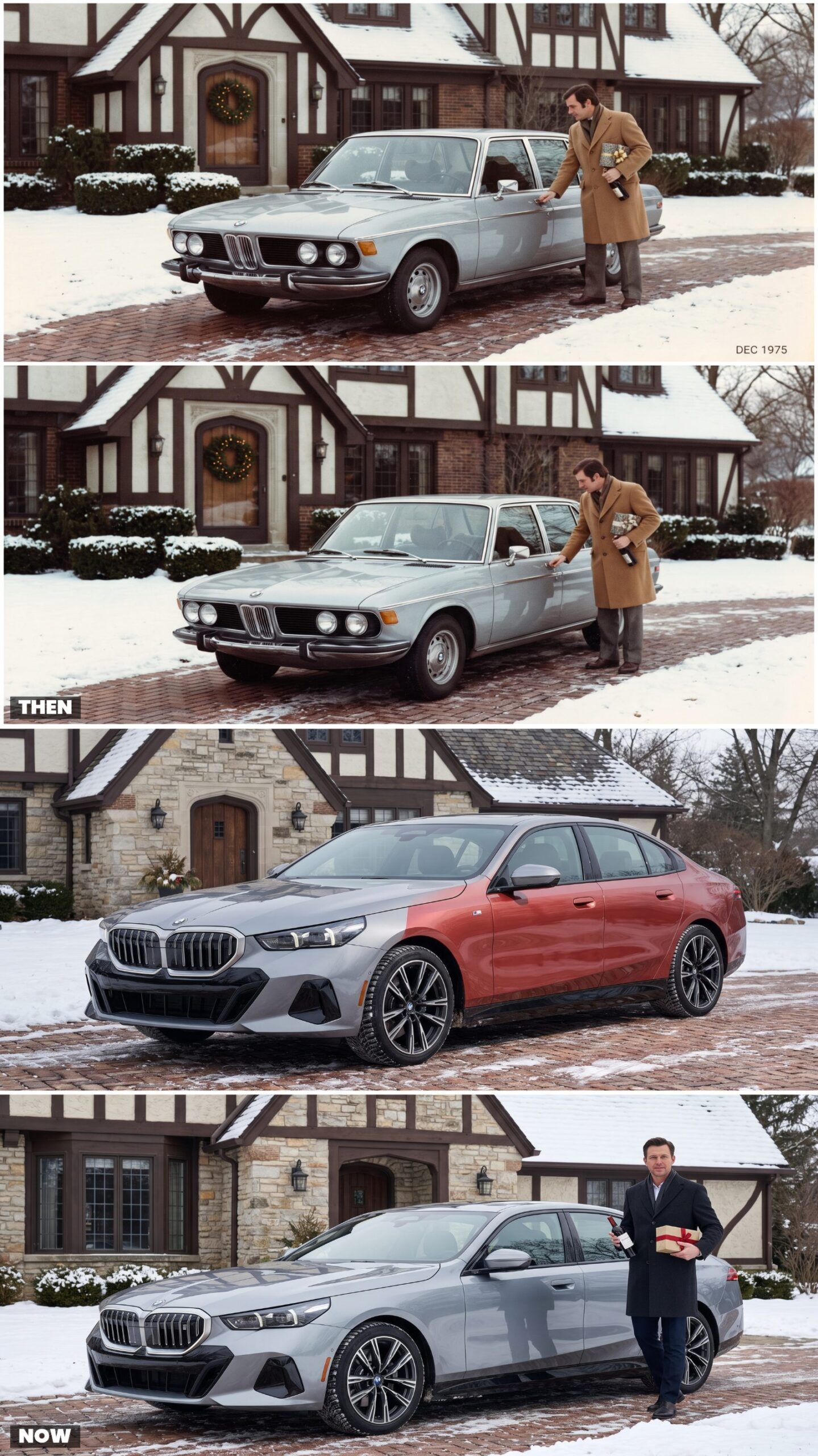
The Bavaria was BMW’s play for the American driveway before the 5 Series even had a name over here. Big for a BMW, quick, and built for people who wanted German handling with room for the whole family. It looked serious without shouting about it.
The 5 Series that replaced it kept the recipe and piled on fifty years of technology. The kidney grille grew, the screens crept across the dash, the price climbed. And yet the core idea — a sedan that drives like a smaller car and still swallows a family — hasn’t budged an inch since 1975.
Volkswagen Type 2 Bus vs. Volkswagen ID. Buzz
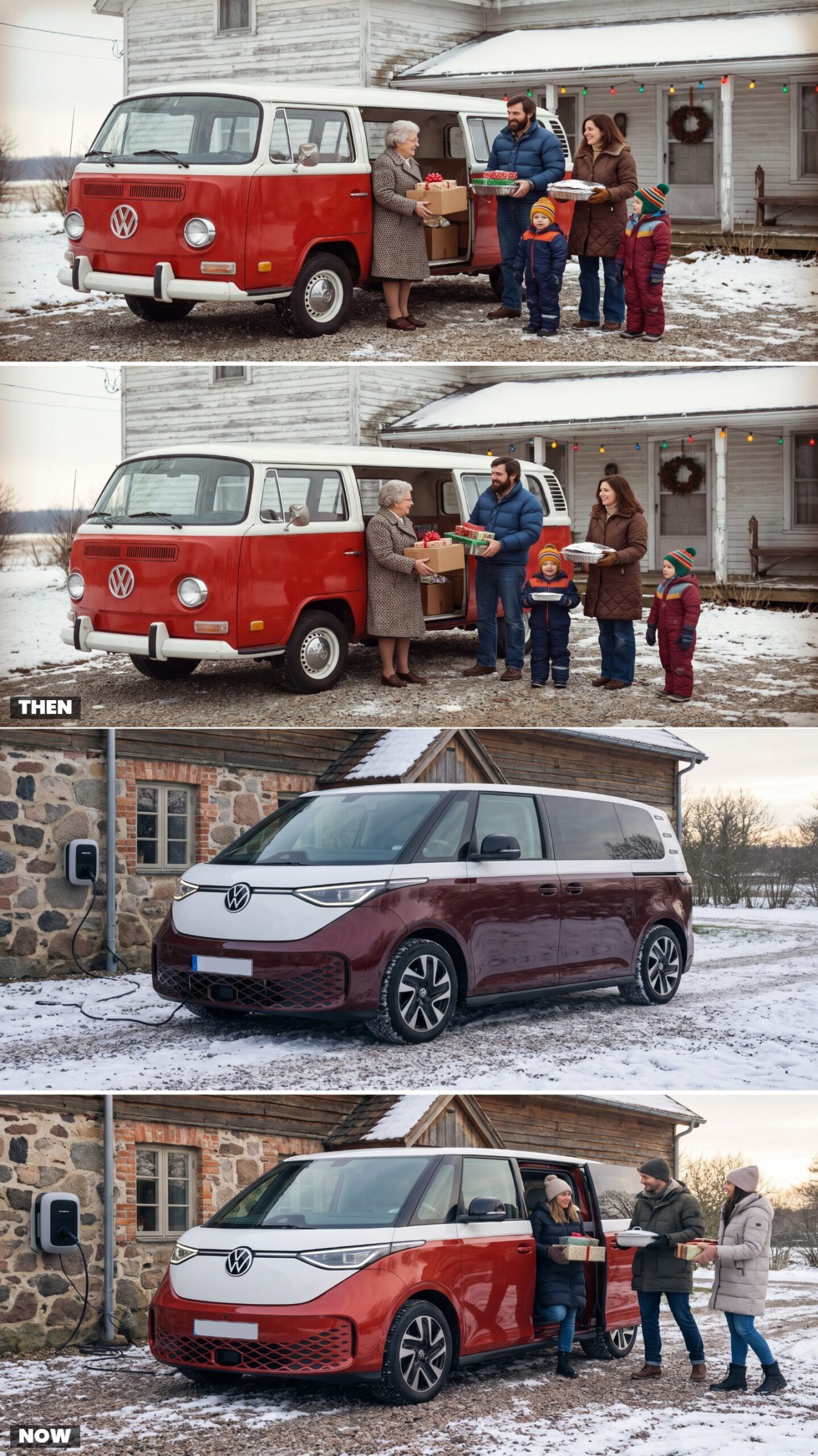
Nothing on wheels said “the whole family is here” quite like the Type 2 rolling up the driveway. Slow, loud, no heat to speak of, and enough room inside to move a household. It arrived at Christmas full of cousins and left full of leftovers.
The ID. Buzz is VW playing the nostalgia card right out in the open — and getting away with it. Same friendly face, same two-tone paint, now electric and silent, with a sliding door that opens itself. It’s the old bus’s grandkid, and it knows it.