
Would you like to save this?
Enzo Ferrari called the Jaguar E-Type the most beautiful car ever made, and he built Ferraris for a living. That tells you something. Somewhere between then and now, car design traded grace for aggression and curves for creases. The old shapes were drawn by hand, in clay, by people who cared more about the line than the spec sheet. What follows puts the originals next to their descendants and lets you decide which one you’d rather see in your driveway on a Sunday morning.
Please note that some of the images in this article were created with the assistance of AI.
1961 Jaguar E-Type vs. the Jaguar F-Type
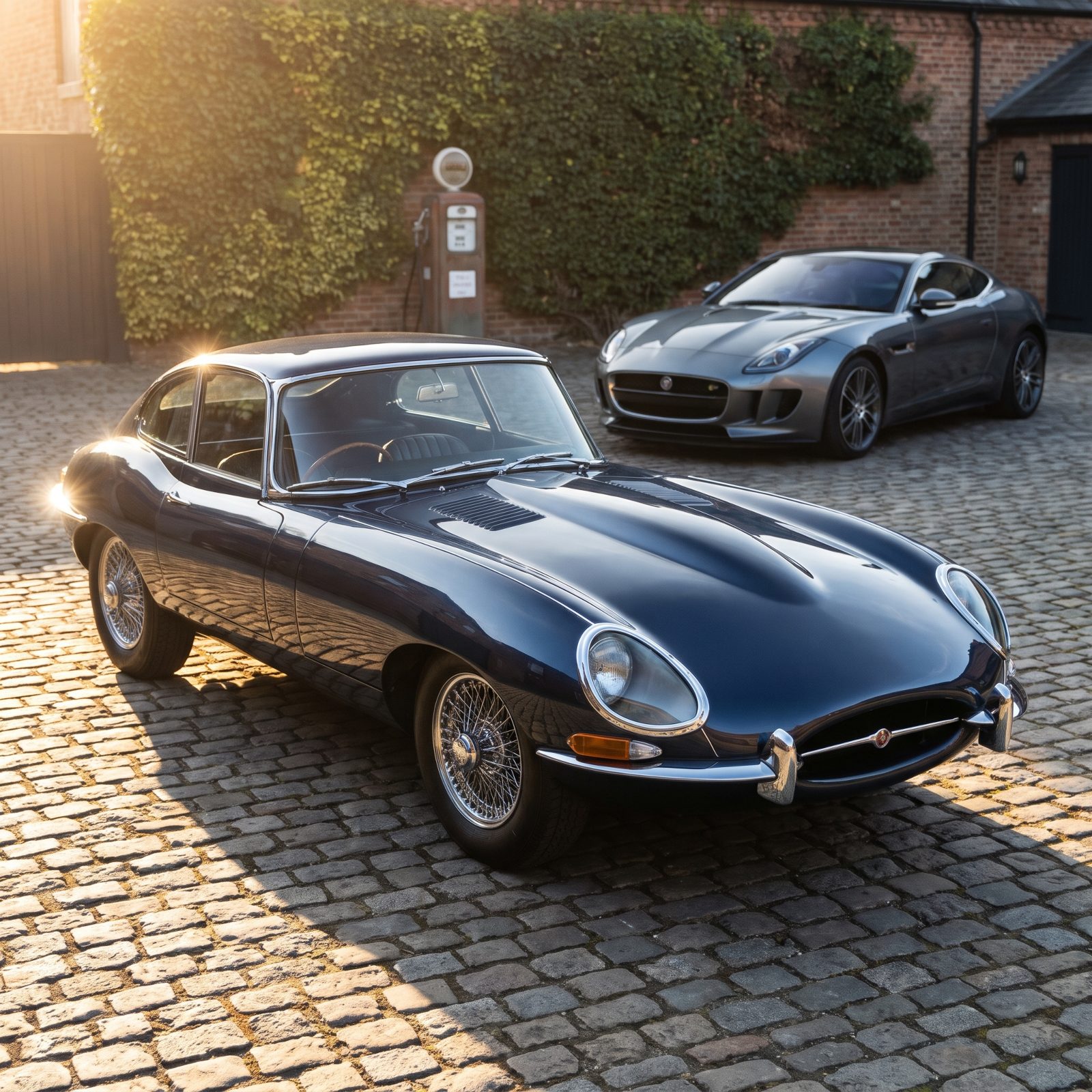
Enzo Ferrari called it the most beautiful car ever made, and he had every reason to be jealous. The 1961 E-Type’s hood goes on for what feels like a city block, and that oval grille looks like it’s inhaling the road ahead of it. The whole shape was drawn as one continuous line, so your eye follows it without a single interruption.
The F-Type is a good sports car. Fast, planted, properly built. But it shouts where the E-Type whispered. Stand them side by side and one asks for your attention while the other already had it.
1963 Chevrolet Corvette Sting Ray vs. the C8 Corvette
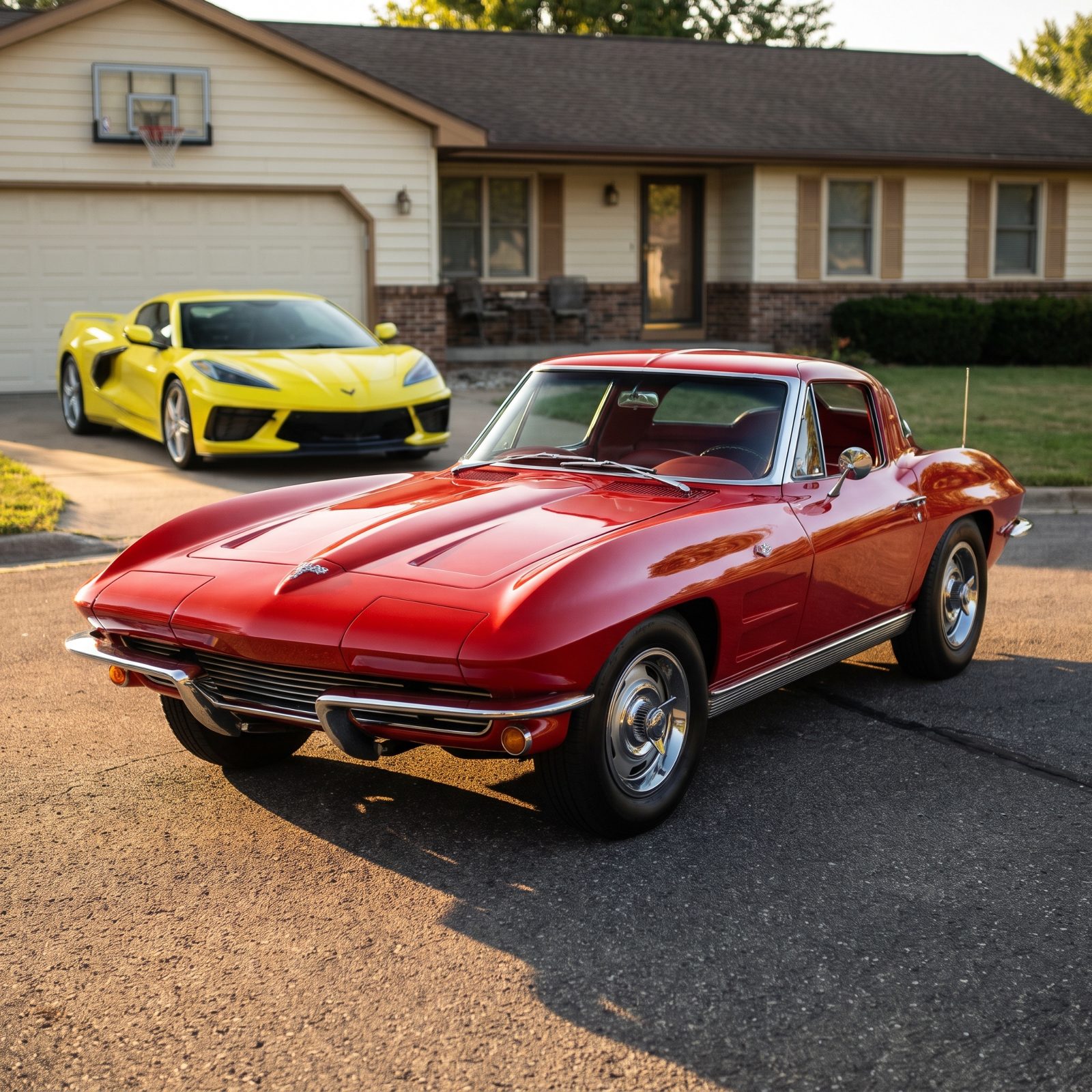
The split-window only existed for one model year. Chevrolet’s own chief engineer hated the bar down the middle because it killed rear visibility, and they dropped it for 1964. So the single most collectible Corvette profile exists because of a design decision somebody lost.
Good. That bar is the whole appeal. It gives the 1963 car a spine, a crease running nose to tail that makes it look carved rather than molded. The C8 is a genuine mid-engine supercar for the price of a loaded pickup, and I respect it enormously. But it looks like every other wedge on the road now. The Sting Ray looks like nothing else ever built.
1965 Ford Mustang vs. the Modern Mustang
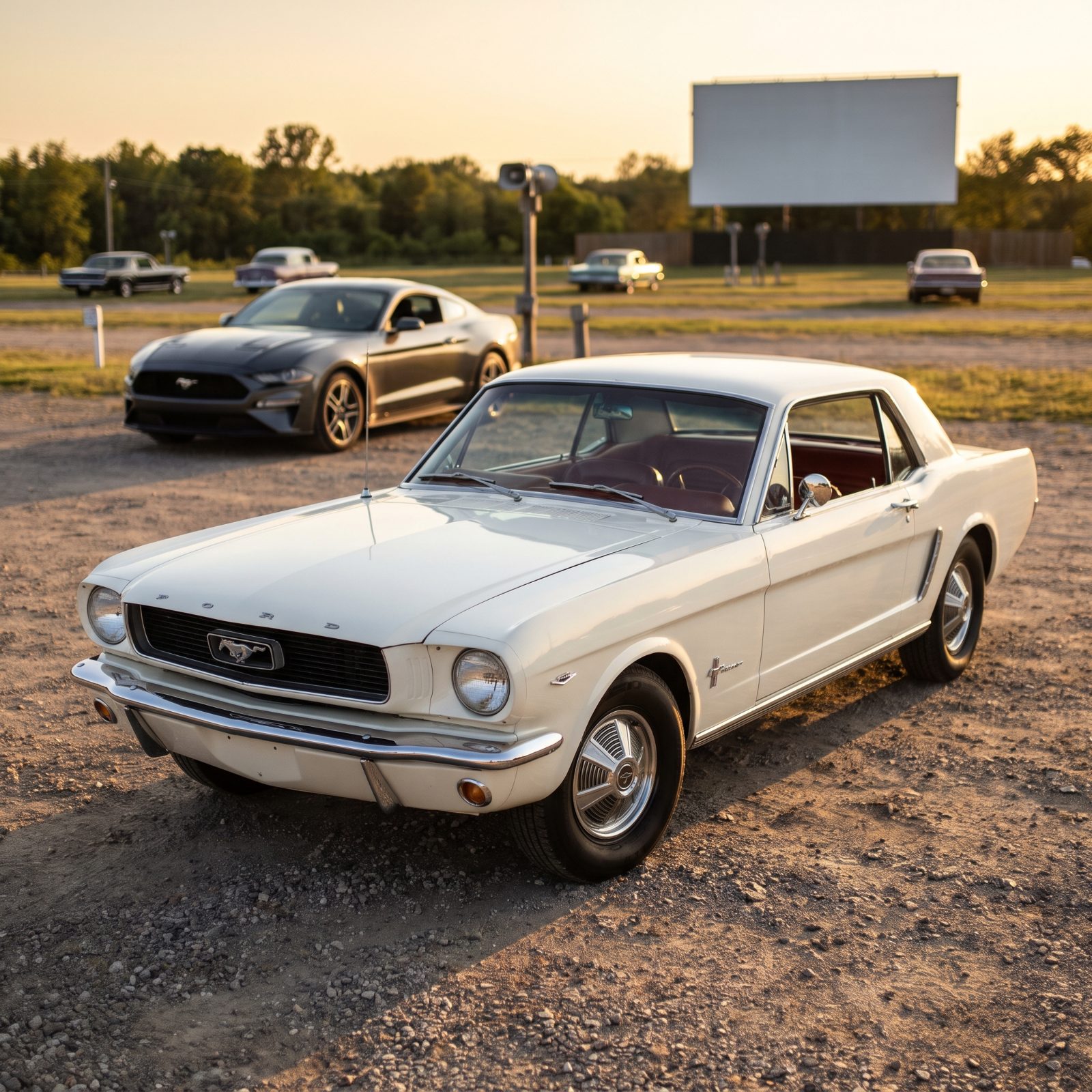
The original Mustang still looms large. People forget that. It was light and trim and sat on a Falcon platform, which meant a secretary could afford one and a kid could park it anywhere. Long hood, short deck, almost no fat on it anywhere.
The modern Mustang is low, dark, and glowers at you. It’s quick, it sounds glorious, and I’d happily drive one. But parked beside the original, it looks bloated. The 1965 original had the whole look figured out on day one, and it still outshines its descendant. Sometimes the first draft was the best one.
What Our Readers Say
- Photos of cars that look like they came out of the 1960s got hearts 89% of the time from Jalopy Talk readers, versus 77% for the other images in the same articles.
- Our readers also hand more hearts to concours-restored cars, which earned a heart 82% of the time compared with 74% for the other photos alongside them.
From Jalopy Talk reader polls and votes.
1955 Mercedes-Benz 300SL vs. the Modern SL
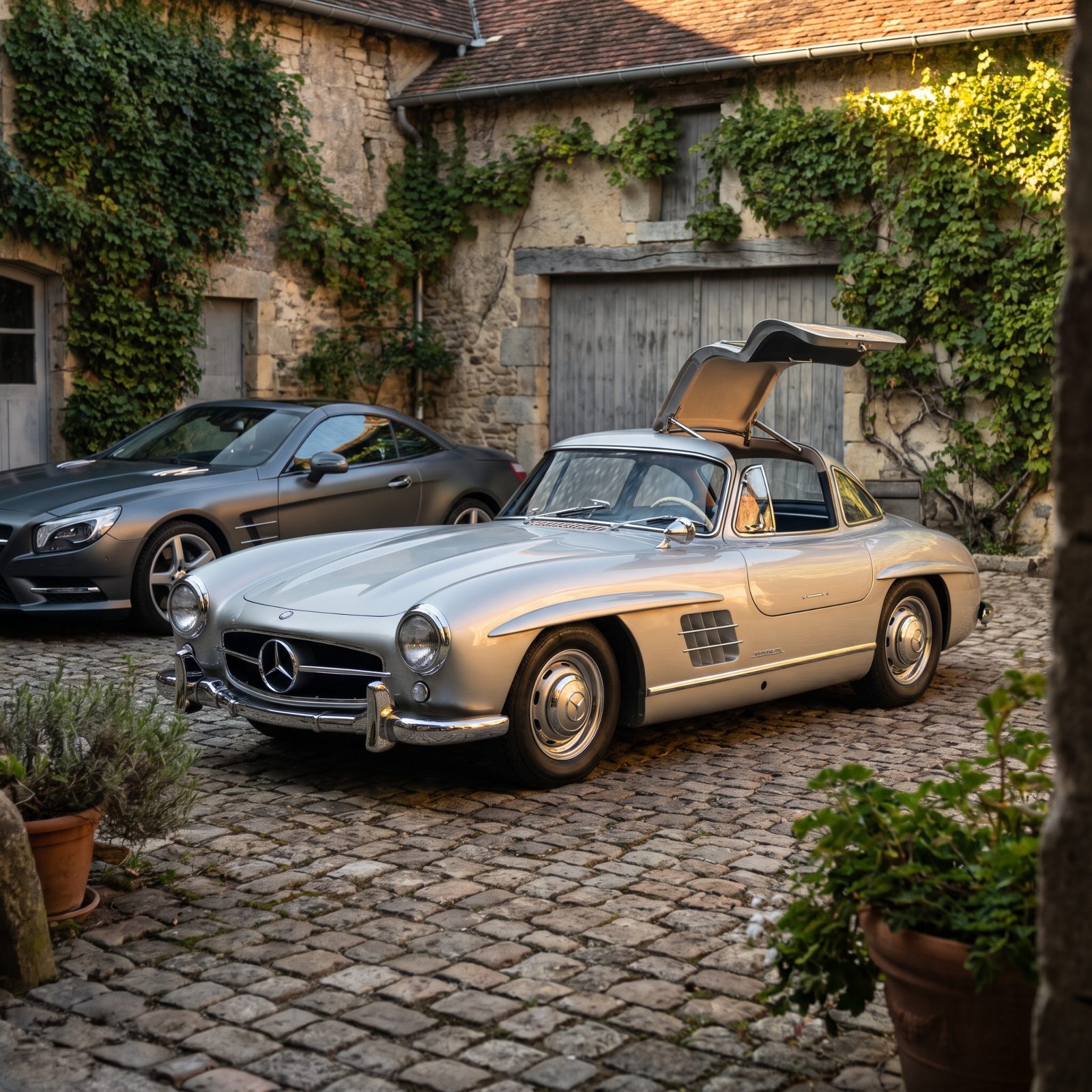
Open the door on a 1955 300SL and it swings up toward the sky like a wing, which is exactly why they called it the Gullwing. That wasn’t a styling flourish, either. The tubular space frame ran so high along the sides that a normal door couldn’t fit, so the engineers pivoted the whole thing to the roof. Function came first, and the result happened to be jaw-dropping.
The modern SL is a fine fast roadster. Comfortable, quick, built like a vault. But it opens its doors the boring way, and nobody stops dead in a parking lot to watch it happen. The Gullwing turned a packaging problem into one of the great shapes of the century.
1969 Dodge Charger vs. the Modern Charger
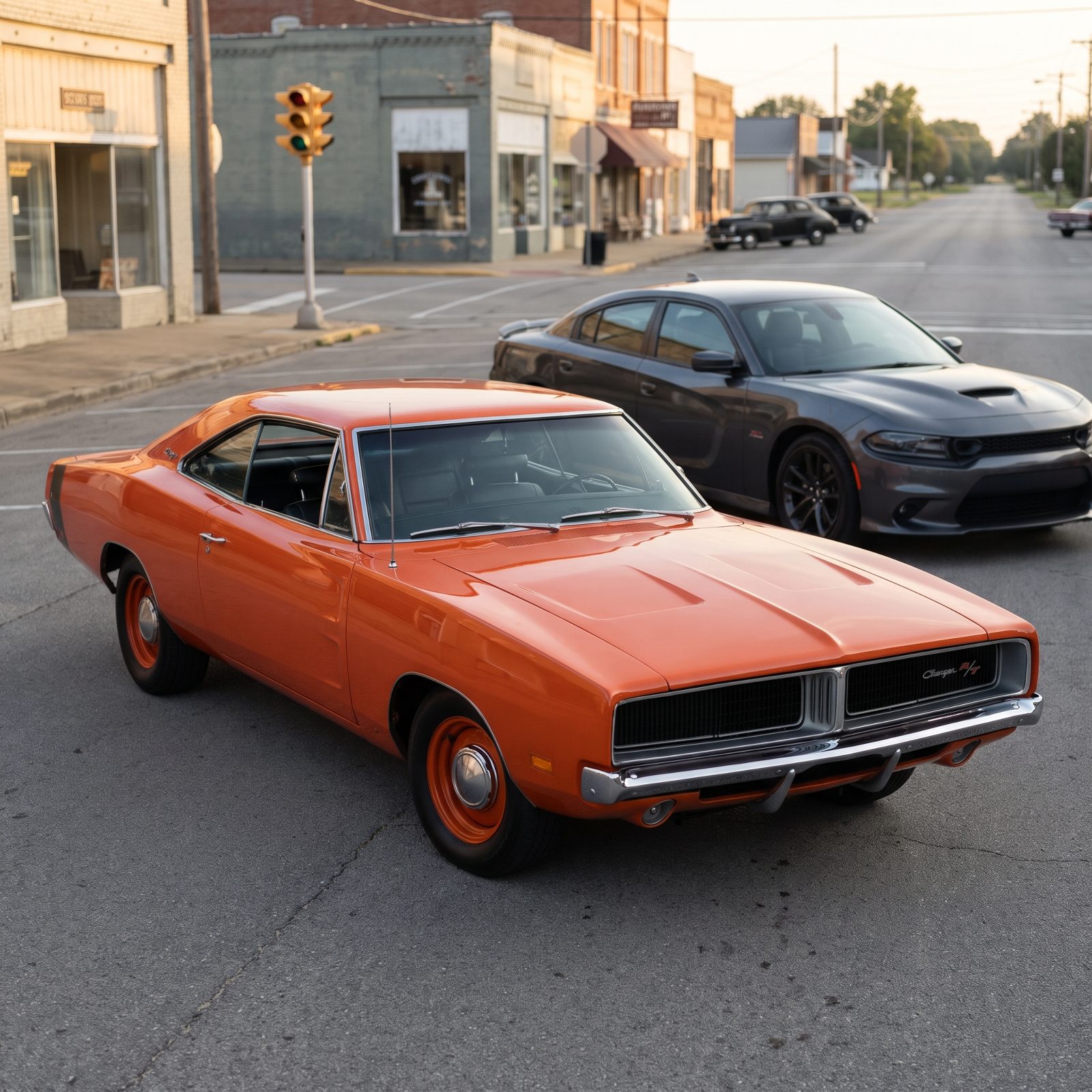
You could hear a 1969 Charger before it rounded the corner, and then you saw that full-width grille like a dark slot cut across the nose. The flying buttresses at the back, those angled sail panels framing the recessed rear glass, gave it a profile that looked fast standing still. Menace drawn in sheet metal.
The modern Charger has four doors. That’s not a knock on practicality, it’s a knock on the idea that a Charger was ever supposed to be sensible. The 1969 coupe committed to being a two-door brute and looked better for it. The new one hauls the kids. The old one hauled your heart up into your throat.
1972 Lamborghini Miura vs. the Aventador
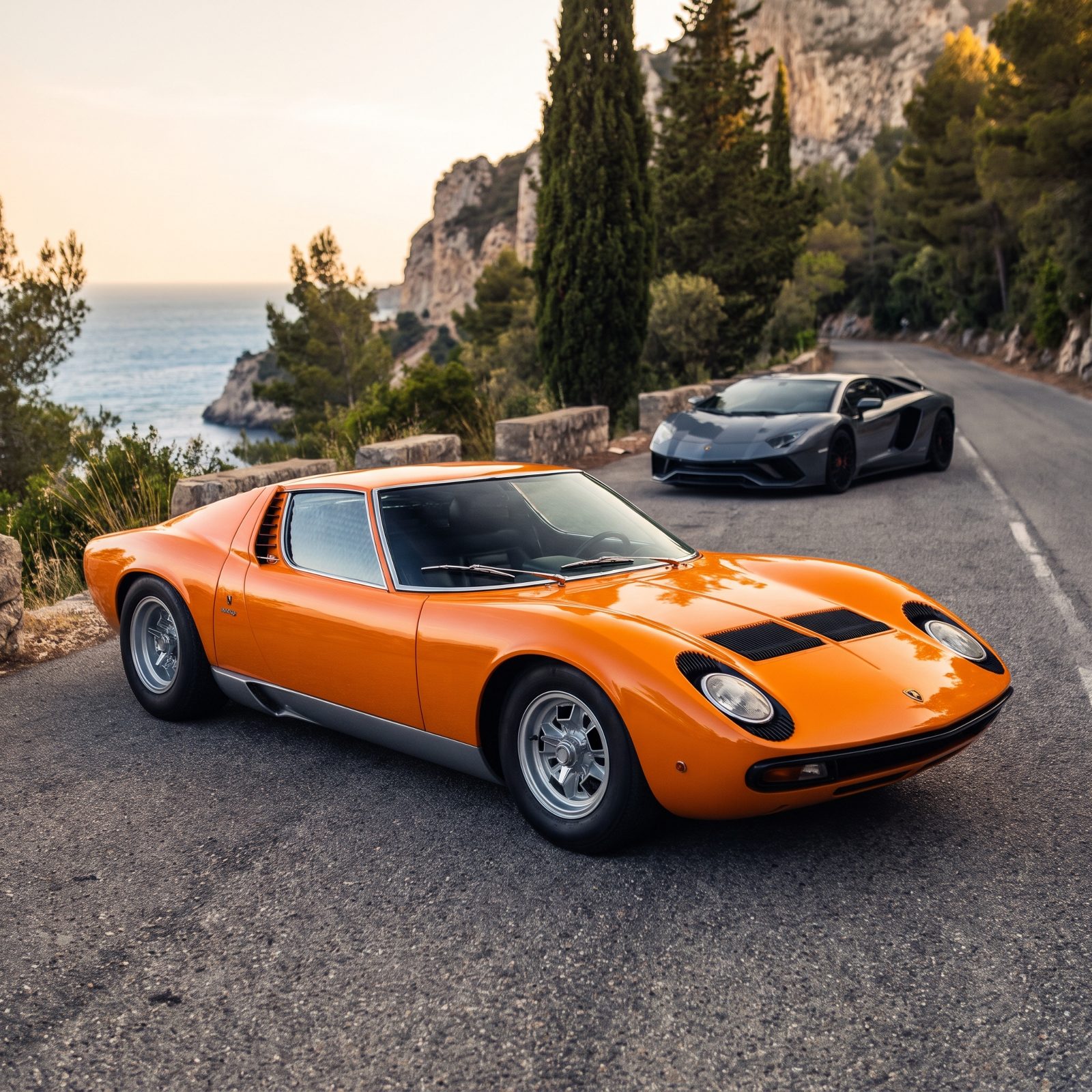
The Miura has eyelashes. The little black louvers framing the pop-up headlamps look exactly like lashes, and once you see it you can’t unsee it. The whole car is soft and curved and almost feminine, hips swelling over the rear wheels, a body you want to run your hand along.
The Aventador is a scalpel. All angles, vents, and intent, a machine that looks like it was folded out of carbon fiber by someone angry. It’s astonishing to drive and it will outrun the Miura in every measurable way. But Lamborghini used to draw curves, and the Miura proves they were better at it than anyone. The old one seduces. The new one threatens.
1970 Datsun 240Z vs. the Nissan Z
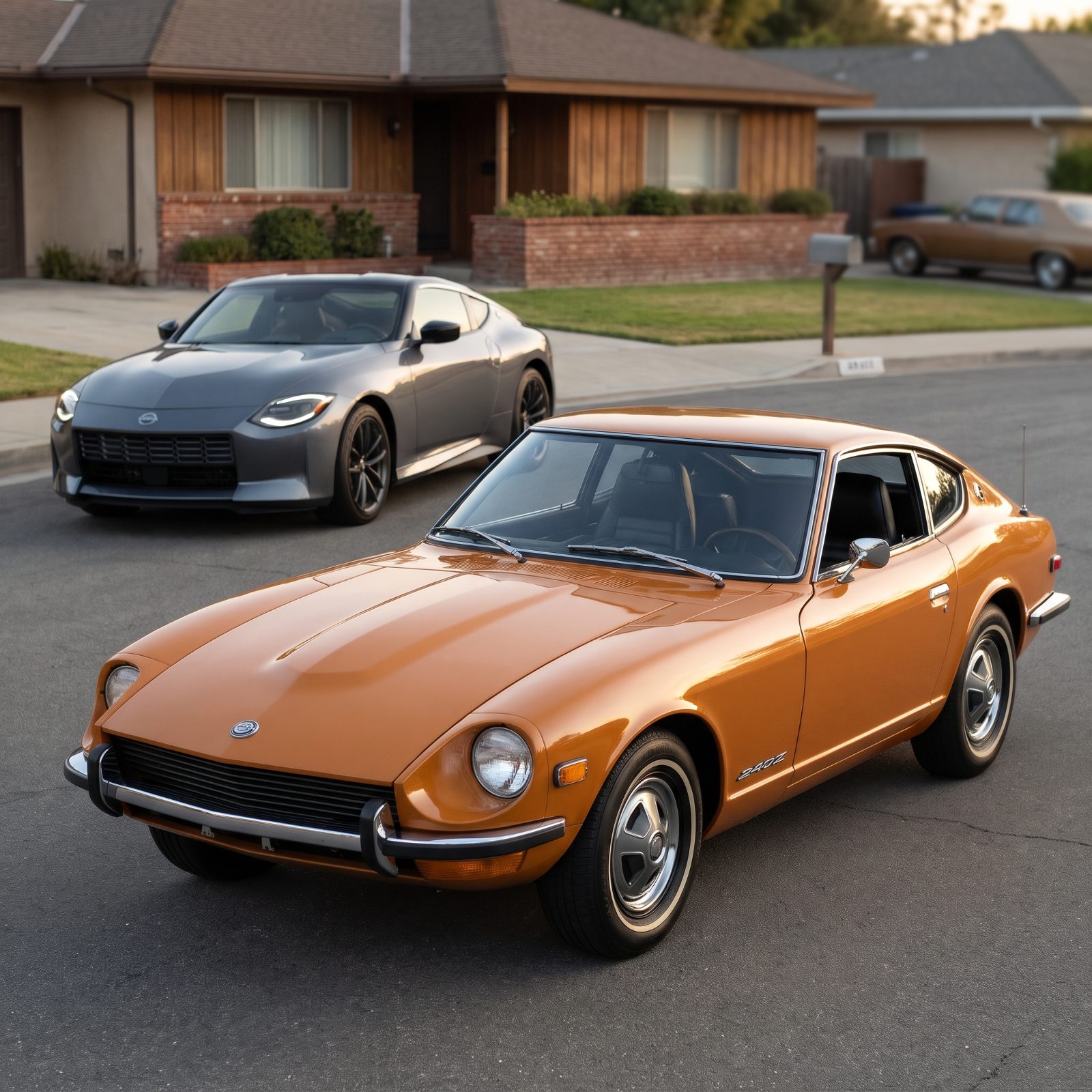
The 240Z landed in America and quietly embarrassed sports cars that cost twice as much. Long hood, fastback tail, round headlamps tucked into a clean nose. It looked like a European grand tourer and stickered like a sensible family sedan, and a whole generation fell for it right there in the driveway.
The modern Z is a genuine love letter to this car, and Nissan clearly knows what made the original special. Credit where it’s due. But it’s wider, heavier, and busier, and the pure simplicity of that 1970 shape is hard to beat. The first Z didn’t need to try. It just sat there being right.
1964 Aston Martin DB5 vs. the Modern DB11
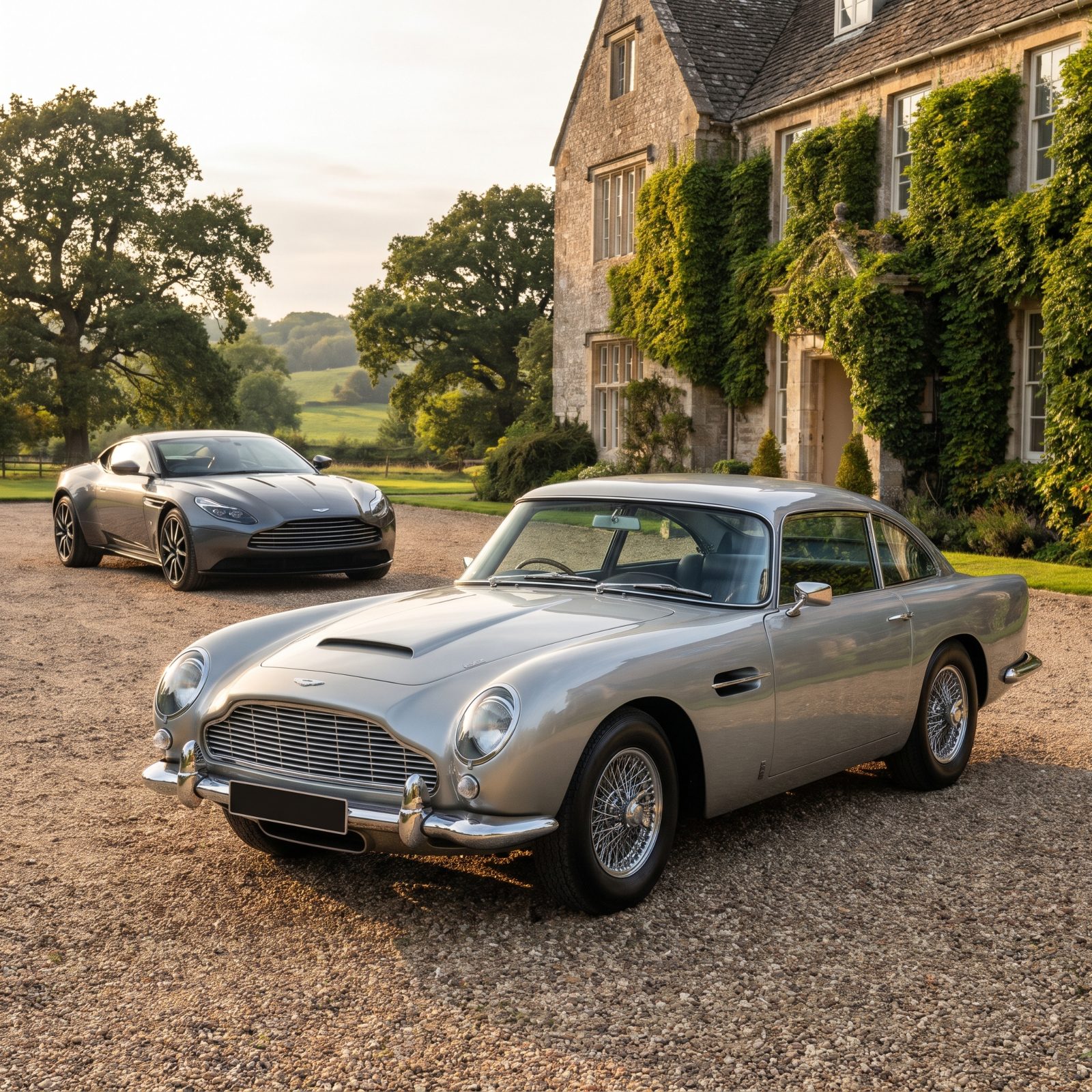
Yes, James Bond drove one, and that bought the DB5 a kind of fame no advertising budget could touch. But strip away the ejector seat and the revolving plates and you’re left with one of the most quietly elegant shapes ever to leave England. Covered headlamps, egg-crate grille, a gentle rise over the rear wheels. Nothing shouts. Everything flows.
The DB11 is a serious grand tourer and a handsome car in its own right, built with real conviction, like all the modern Astons. The DB5, though, had a restraint the new cars have traded for presence. It didn’t need to look menacing to turn every head on the road. It just needed to look like that.
1962 Ferrari 250 GTO vs. Modern Ferraris
Would you like to save this?
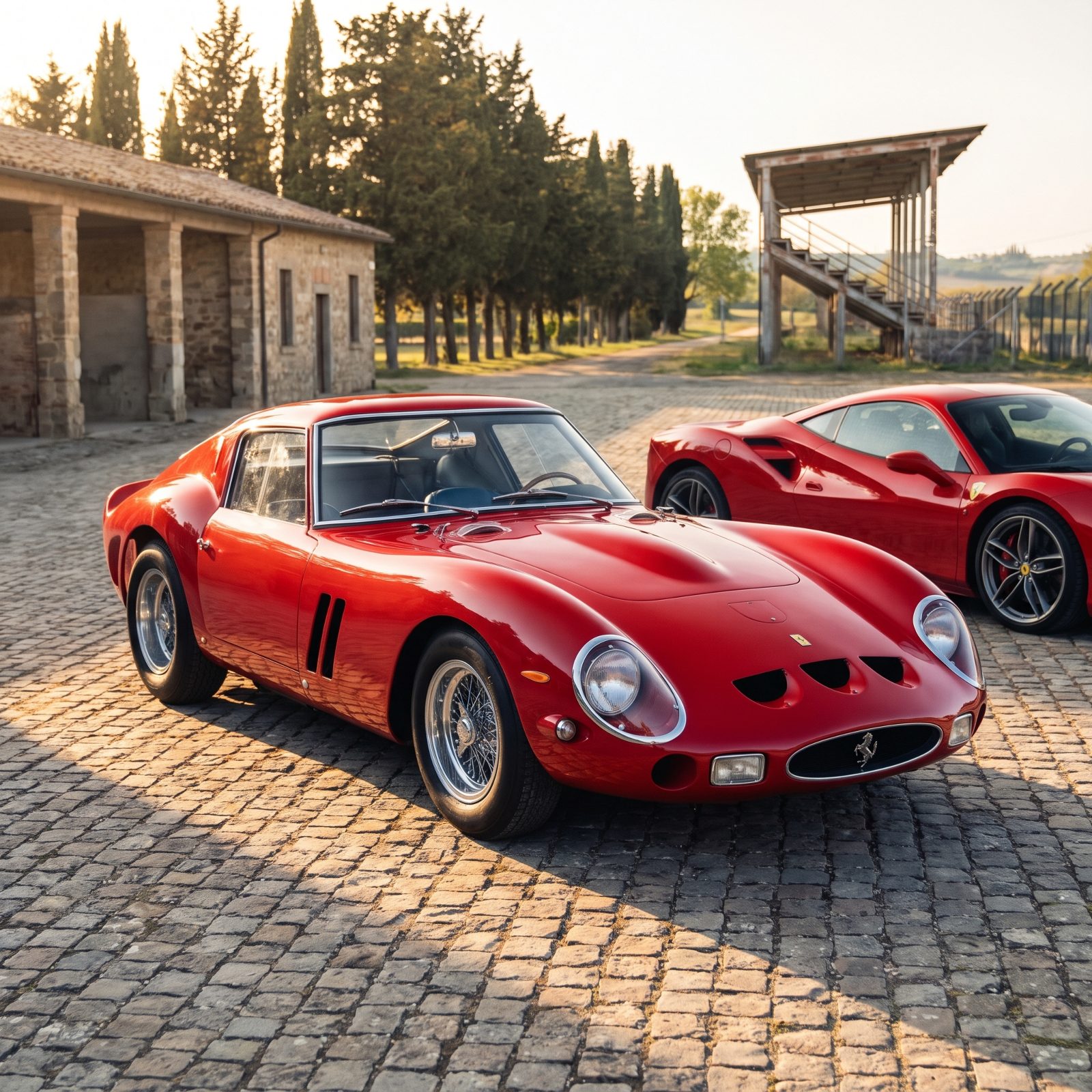
Only a few dozen were built, and they now change hands for sums that could buy a small town. Forget the auction records for a second, though, and just look at the 1962 250 GTO. Every curve on it was shaped by wind and instinct, back when aerodynamics meant a man running his hand over a clay model and trusting his eye.
Modern Ferraris are faster, safer, and cleverer by every measure, sculpted by computers chasing downforce. They’re spectacular. But a little cold, too, all sharp intakes and active aero. The GTO looks alive in a way no modern Ferrari quite manages. It’s the difference between a wild animal and a very good machine.
1963 Buick Riviera vs. the Modern Buick Lineup
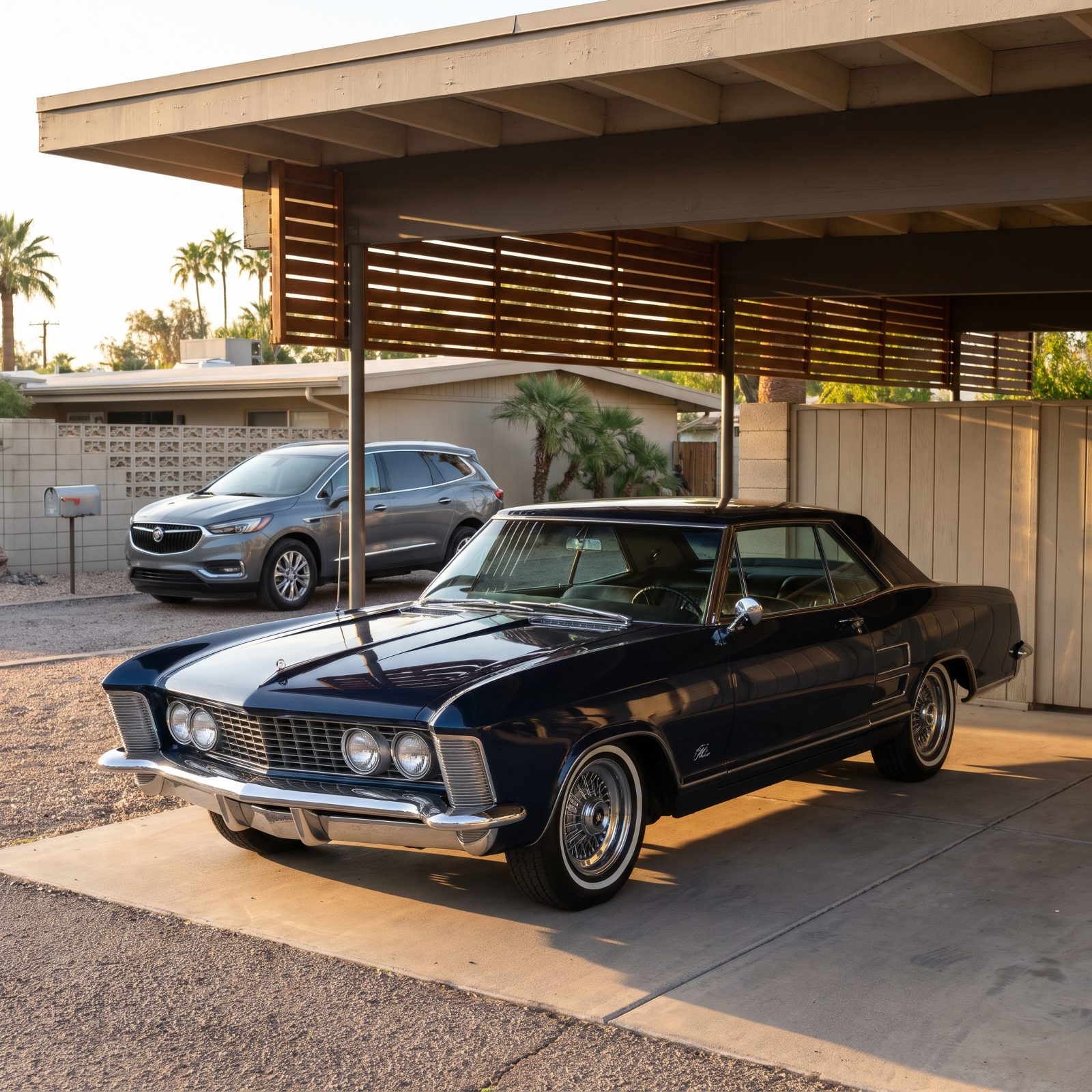
The 1963 Riviera answered a question nobody expected Buick to ask: what if a personal luxury coupe could be genuinely beautiful? Knife-edge creases, a razor roofline, frameless glass, and a stance that managed to look both formal and fast. One of the cleanest American designs of its decade, full stop.
Walk into a Buick showroom now and you’ll find crossovers. Sensible, well-made, and shaped exactly like every other crossover on the lot. Nothing on offer would stop you in your tracks the way that 1963 coupe did. The Riviera proved Buick could draw a shape worth remembering. Shame they stopped trying.
1957 Chevrolet Bel Air vs. the Chevrolet Malibu
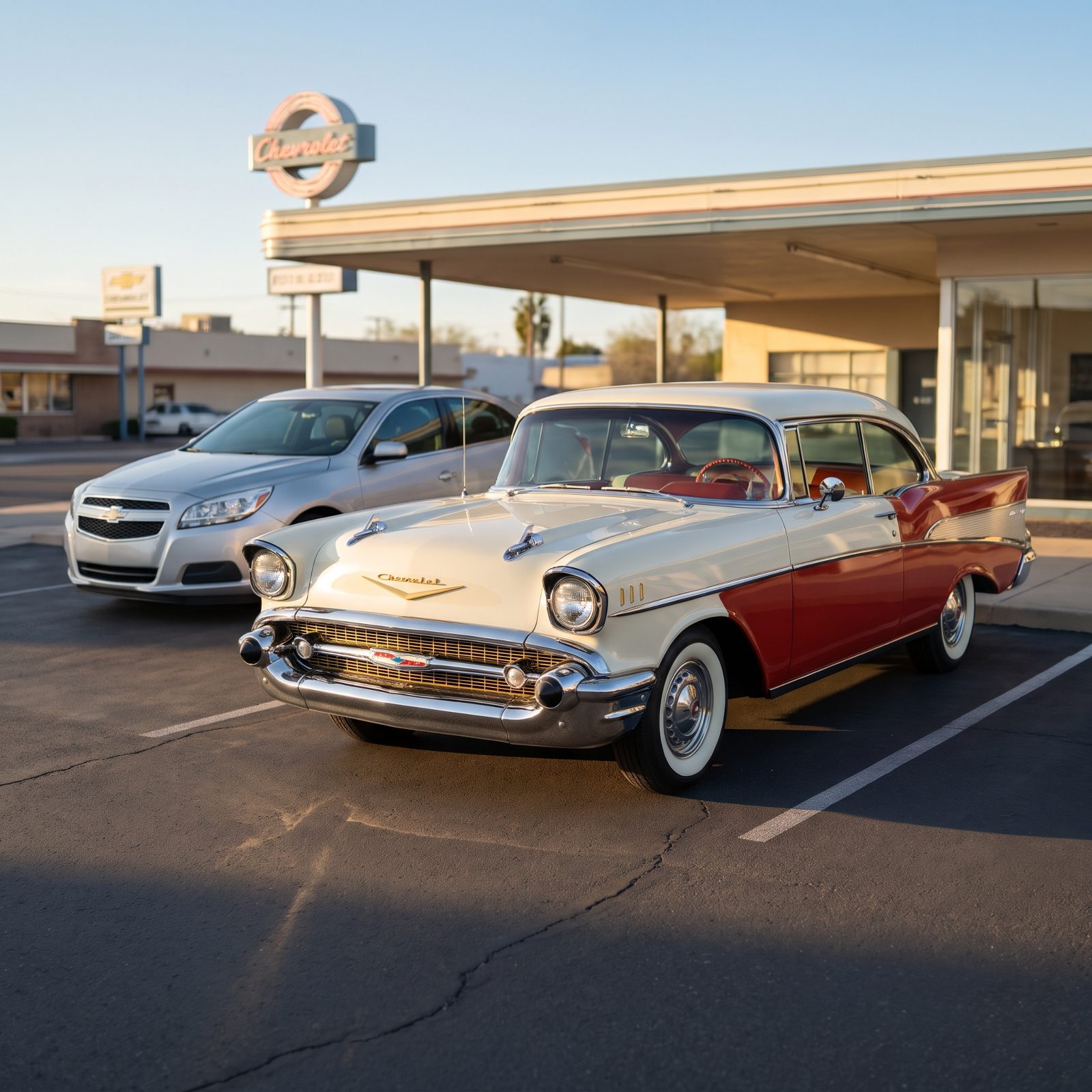
The tailfins did the talking. On a 1957 Bel Air they rise like a jet clawing for altitude, and that gold grille up front? Somebody bolted jewelry to a car on purpose. Every line means something, and nothing is apologizing for itself.
Park the modern Malibu next to it and the air goes out of the room. Look, the Malibu is a fine appliance — it gets you to work, hauls the groceries, does what it says on the tin. But it was styled by a wind tunnel and a focus group, and you can tell, because nobody has ever turned around in a parking lot to watch one leave.
Jalopy Talk readers seem to agree about the jewelry: cars dripping with chrome got more hearts than the other images in the same articles, 87% versus 81%.
1959 Cadillac Eldorado vs. the Cadillac CT6
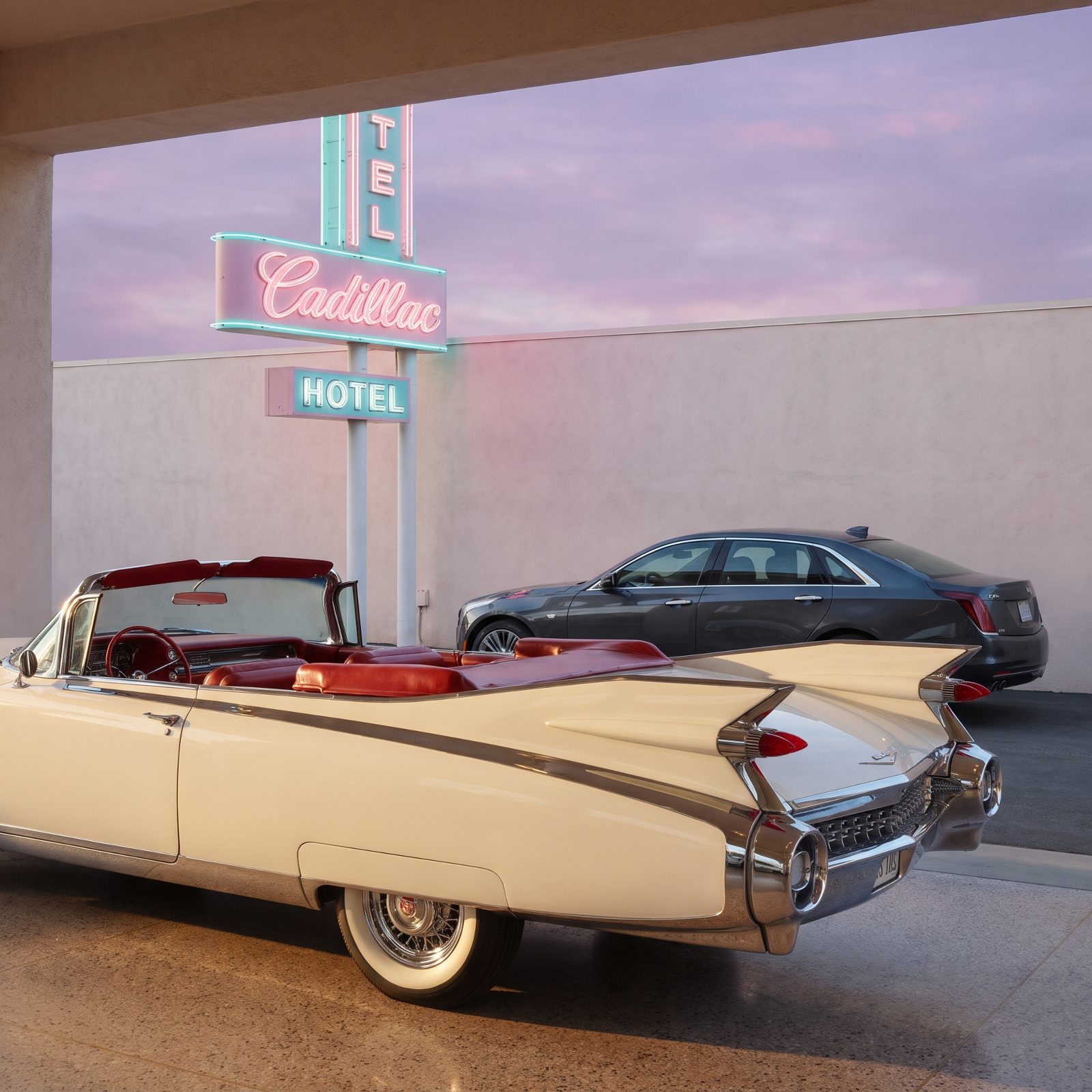
Nineteen fifty-nine was the year Cadillac decided a tailfin should be the size of a surfboard, and the Eldorado wore the biggest pair ever bolted to a production car. Twin bullet taillights sat up in the sky like ordnance waiting for a countdown. Absurd. Glorious. And completely at peace with being both.
The CT6 is a genuinely good luxury car — smooth, quiet, quick off the line. It also looks like every other dark sedan idling in the airport pickup lane. You could stare at one for a full minute and forget it the second it drove off.
One of these cars made people stop dead on the sidewalk. The other has to park itself to get noticed.
1969 Ford GT40 vs. the Modern Ford GT
Forty inches tall. That’s where the name came from, and that’s the whole personality.
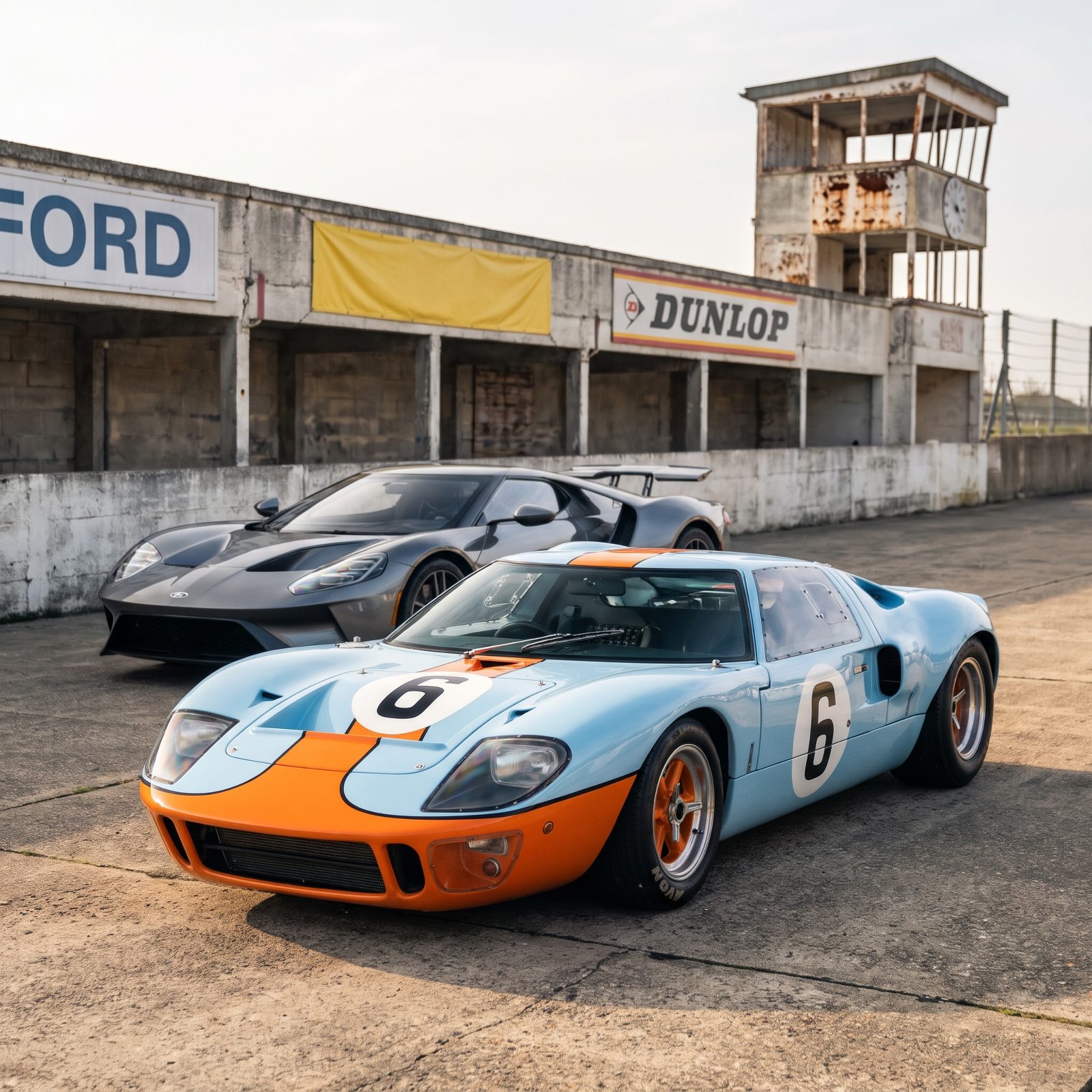
The GT40 in Gulf blue and orange might be the best-looking race car ever built, and it won Le Mans four years running out of pure spite after Enzo Ferrari turned Henry Ford down at the altar. Low, round, riveted, mean. Every vent is there because the car couldn’t breathe without it — not because some stylist liked the shape.
The modern GT is a technical marvel and a real supercar, no argument. But it’s all sharp edges and carbon-fiber theater, trying hard to look fast standing still. The old one never had to try. It just sat there, forty inches tall, and dared you.
1973 Porsche 911 Carrera RS vs. the Modern 911
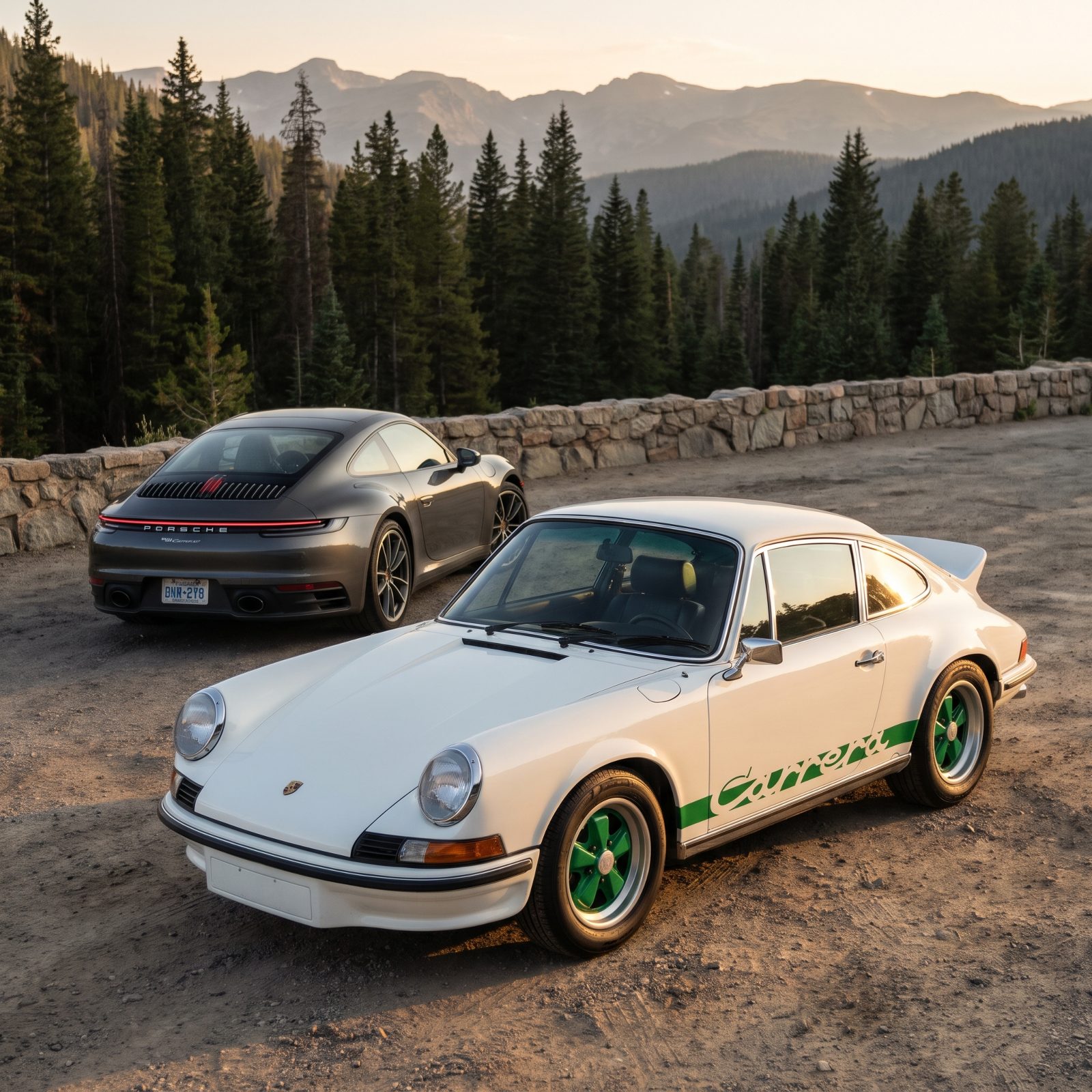
The shape barely changed in fifty years, which tells you they nailed it on the first try. And the 1973 Carrera RS is the purest cut of the whole idea — thin pillars, slim body, a cheeky little ducktail on the back, Fuchs wheels with green centers matched to the Carrera script on the doors.
Porsche people will fight me on this one. Go ahead. The modern 911 is faster, safer, better in every number you can measure. It’s also gotten wide and heavy and a little anonymous, saddled with that full-width light bar every German car wears now.
The old RS weighed under a ton and looked like it might lift off the pavement. Nothing they’ve built since carries that same lightness in its bones.
1966 Toyota 2000GT vs. the Supra
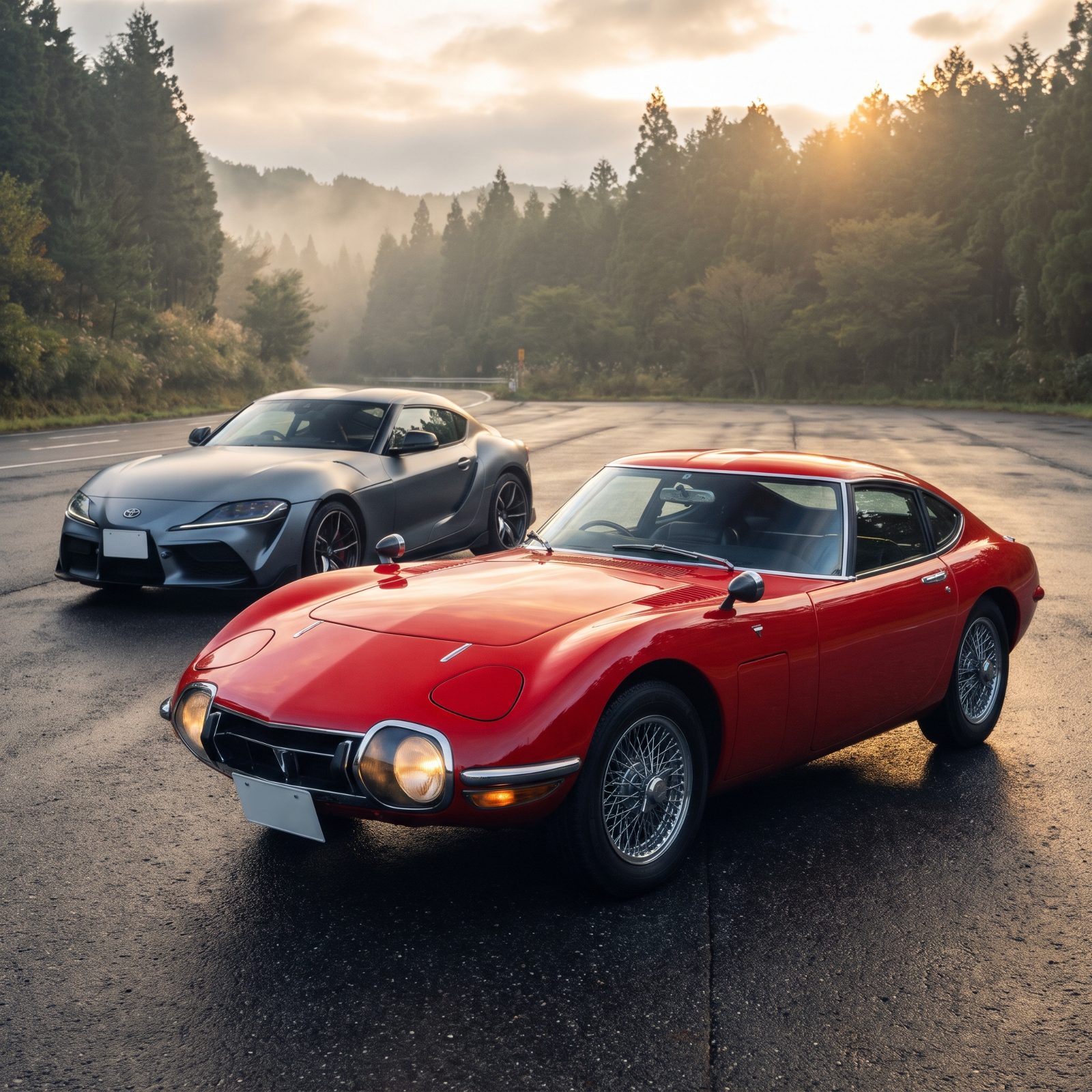
Most people have never laid eyes on one, and that’s part of the heartbreak. Toyota built only about 350 of the 2000GT, each one shaped by hand, and it’s the car that told the world Japan could build something beautiful — not just something that started every morning.
Low, long-nosed, with those plexiglass headlight covers and a fastback roof that looks drawn in a single unbroken stroke. It beat a Jaguar E-Type at its own game and nobody saw it coming.
The current Supra is a good car with real pace and a BMW engine humming underneath. It also looks busy. Vents everywhere, fenders bulging, the whole thing shouting for attention. The 2000GT whispered and the whole room leaned in.
1968 BMW 2002 vs. the Modern 2 Series
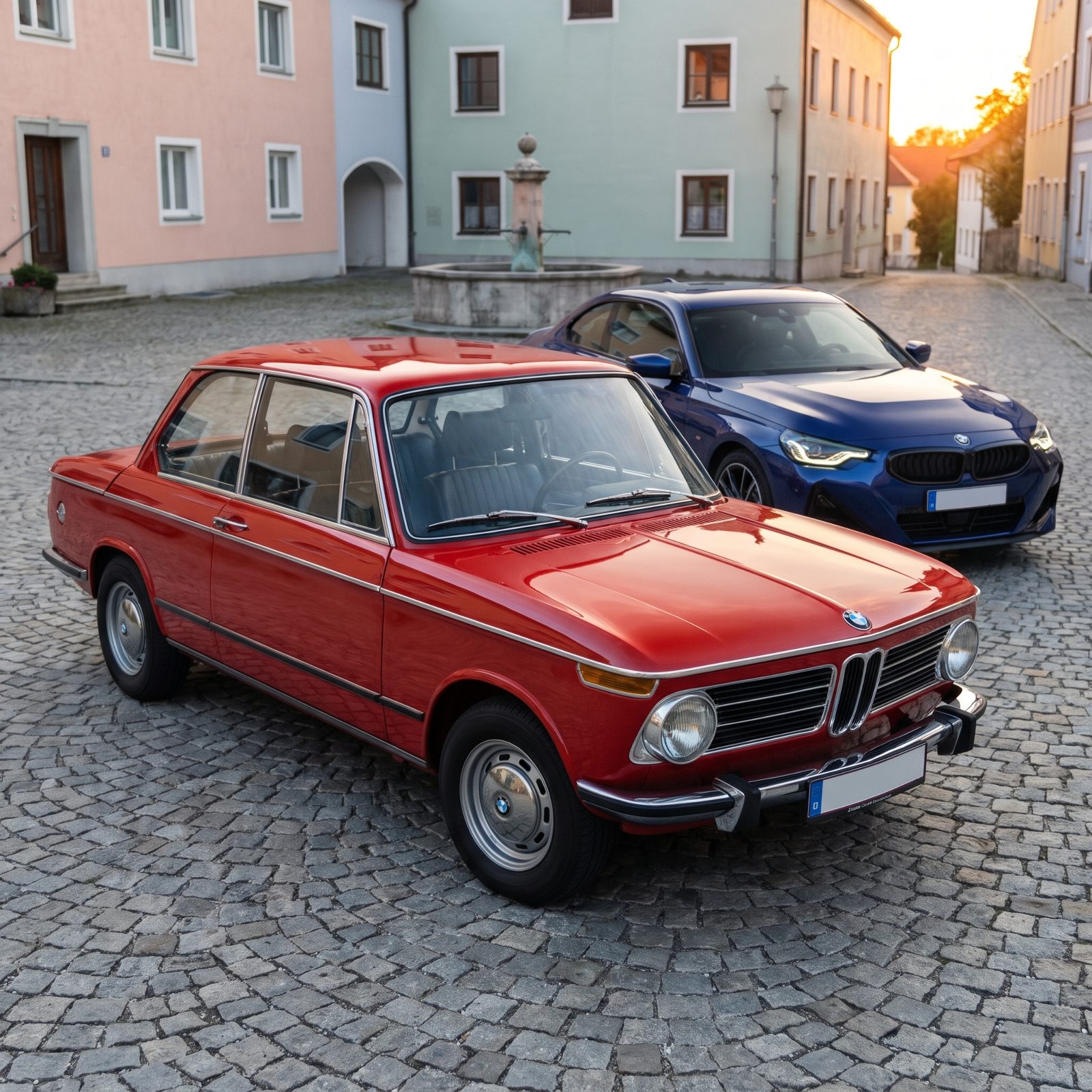
A box on four wheels — and one of the prettiest boxes anyone ever drew. The 1968 BMW 2002 is all glass and thin pillars and honest right angles. You can see out of it in every direction, a small miracle these days. And the grille is a modest little slot, not a gaping mouth that swallows pedestrians.
The modern 2 Series drives wonderfully. I won’t pretend otherwise. But the styling has swollen up the way everything modern has, and that grille keeps growing like it’s slowly eating the rest of the car for breakfast.
The 2002 proved a small sedan could be a riot to drive, and it managed the trick looking tidy, upright, and completely at peace with itself. Harder than it sounds.
1961 Lincoln Continental vs. the Modern Continental
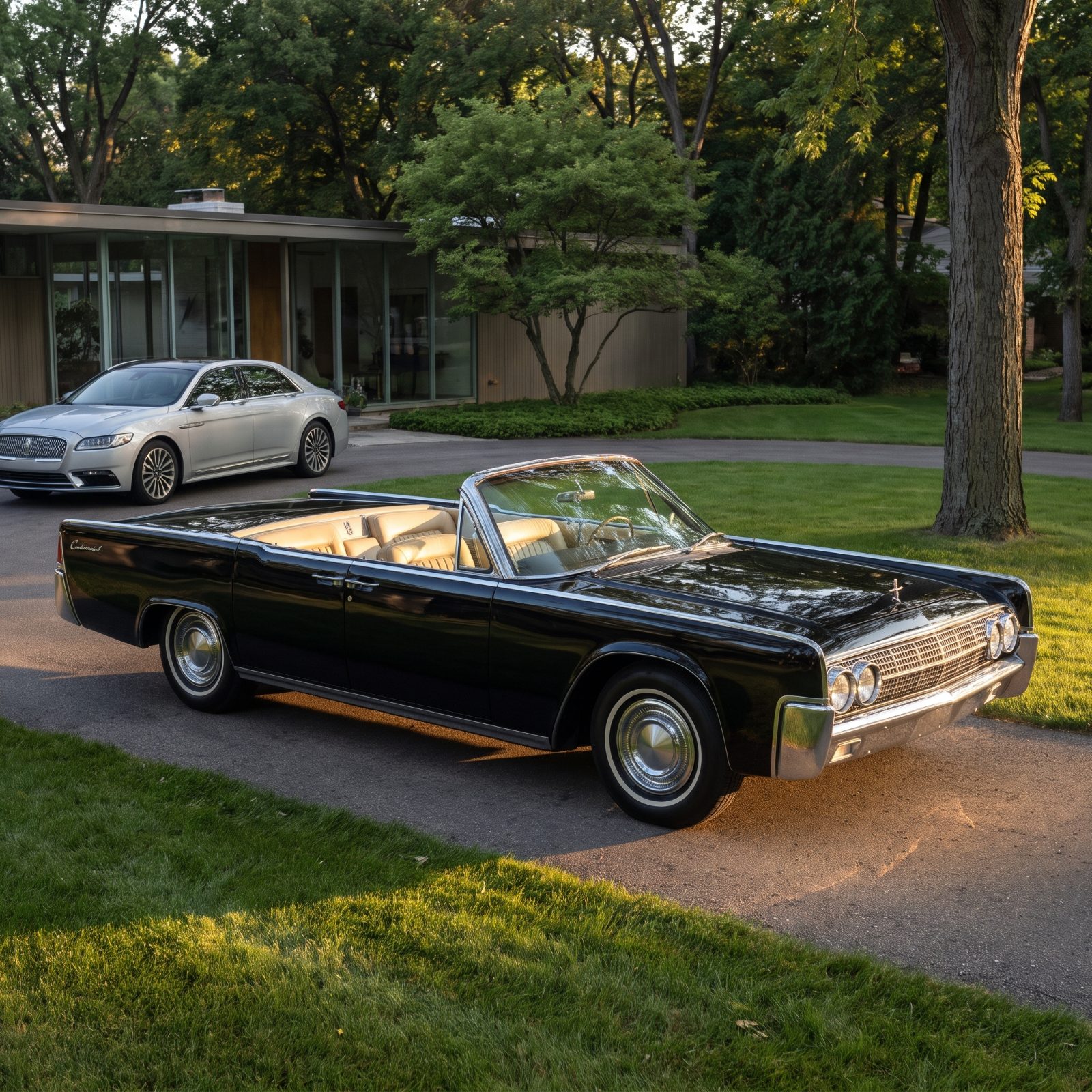
After a decade of fins and chrome gone completely feral, the 1961 Continental walked in wearing a tailored suit. Straight lines, barely any brightwork, and those rear-hinged suicide doors that opened to the middle like a jewelry box. It was the calmest, most self-assured car on any street in America.
Kennedy rode in one. It collected design awards no production car had any business winning. Restraint, when everyone around you is screaming, reads as power.
The last Continental was a nice enough car that nobody will remember in twenty years. The 1961 is in museums.
The recent Continental tried to drag the name back into the present and mostly produced a pleasant, forgettable sedan. Lincoln knew it, too, and quietly killed the thing off again. Some names you only get to earn once.
Big cars still win people over, too: in our readers’ votes, full-size land yachts got hearts 85% of the time, compared with 78% for the other photos in the same articles.
1967 Pontiac GTO vs. the Pontiac G8
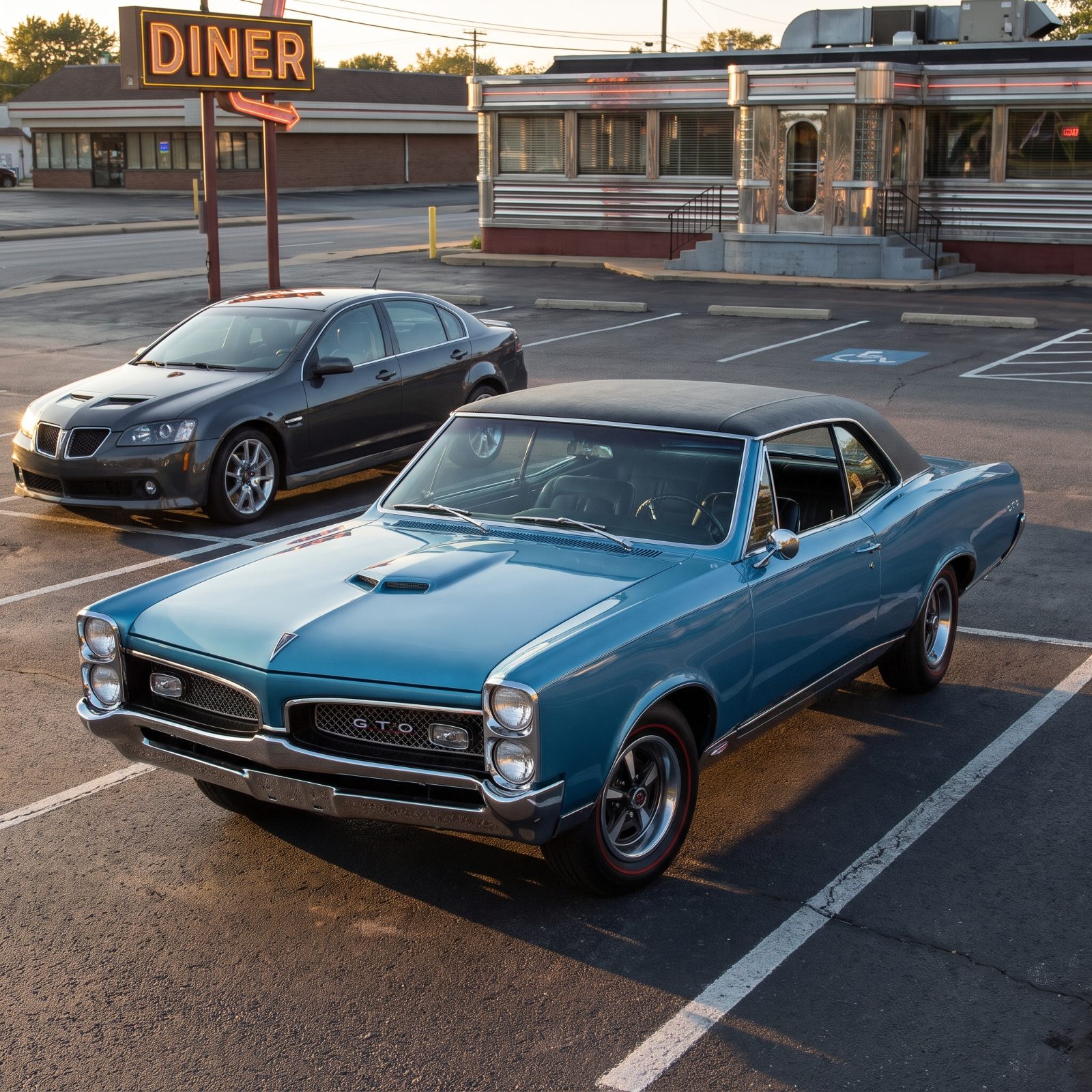
The GTO kicked off the whole muscle car brawl by cramming a big engine into a mid-size body because the rulebook said you couldn’t. The 1967 car wore it beautifully — stacked headlights, that aggressive split grille, dark five-spoke Rally wheels with polished rims and red center emblems on redline tires, hood scoops sitting up like a pair of flared nostrils. It looked angry just sitting in the lot.
The G8 was actually a terrific machine, a rebadged Australian Holden with a real V8 and proper rear-drive manners. Fast, balanced, a genuine pleasure to hustle. It also looked like a rental sedan with ambition.
Pontiac was gone within a couple of years of the G8 showing up. The GTO name survived because of how the 1967 car looked and sounded, not because of anything that came later wearing the badge.
1970 Plymouth Barracuda vs. the Dodge Challenger
Would you like to save this?
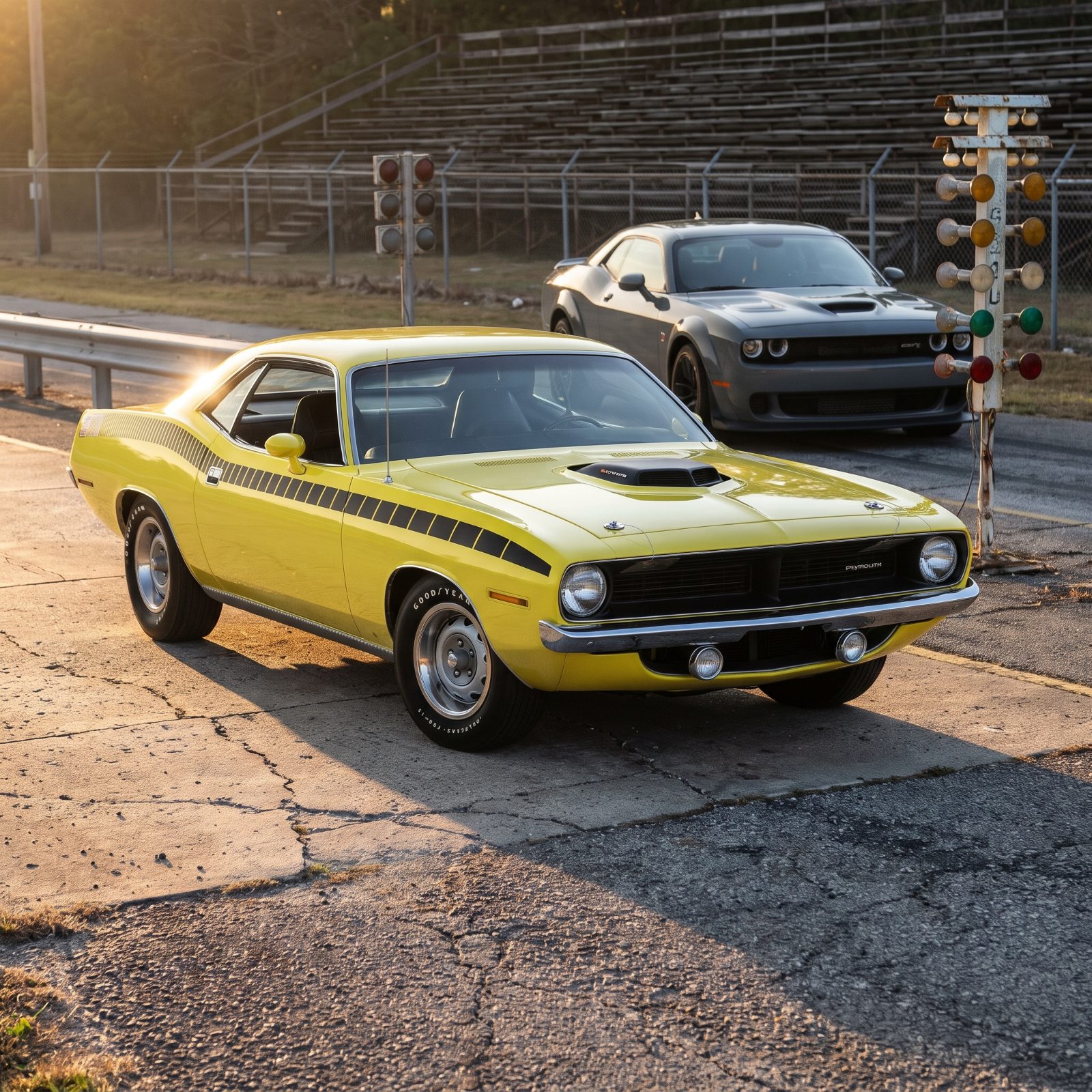
The 1970 Cuda is the car everybody scribbles when they picture a muscle car.
Short, wide, low, with a shaker scoop punching through the hood and those hockey-stick stripes slashed down the flanks. In Lemon Twist yellow it looks like it’s about to do something that gets you a court date. And the proportions are perfect precisely because the car is compact — nothing wasted, nothing extra.
The modern Challenger carries the torch, and honestly, it carries it well. It sounds glorious and it’s genuinely menacing when it rolls up behind you. But it’s a big, tall, heavy brute dressed in retro clothes, and all that bulk shows in the way it fills a whole lane and then some.
The old one was a lean welterweight. The new one is a heavyweight who inherited the name. Both can throw a punch. Only one of them dances.
1965 Shelby Cobra vs. Modern Roadster Replacements
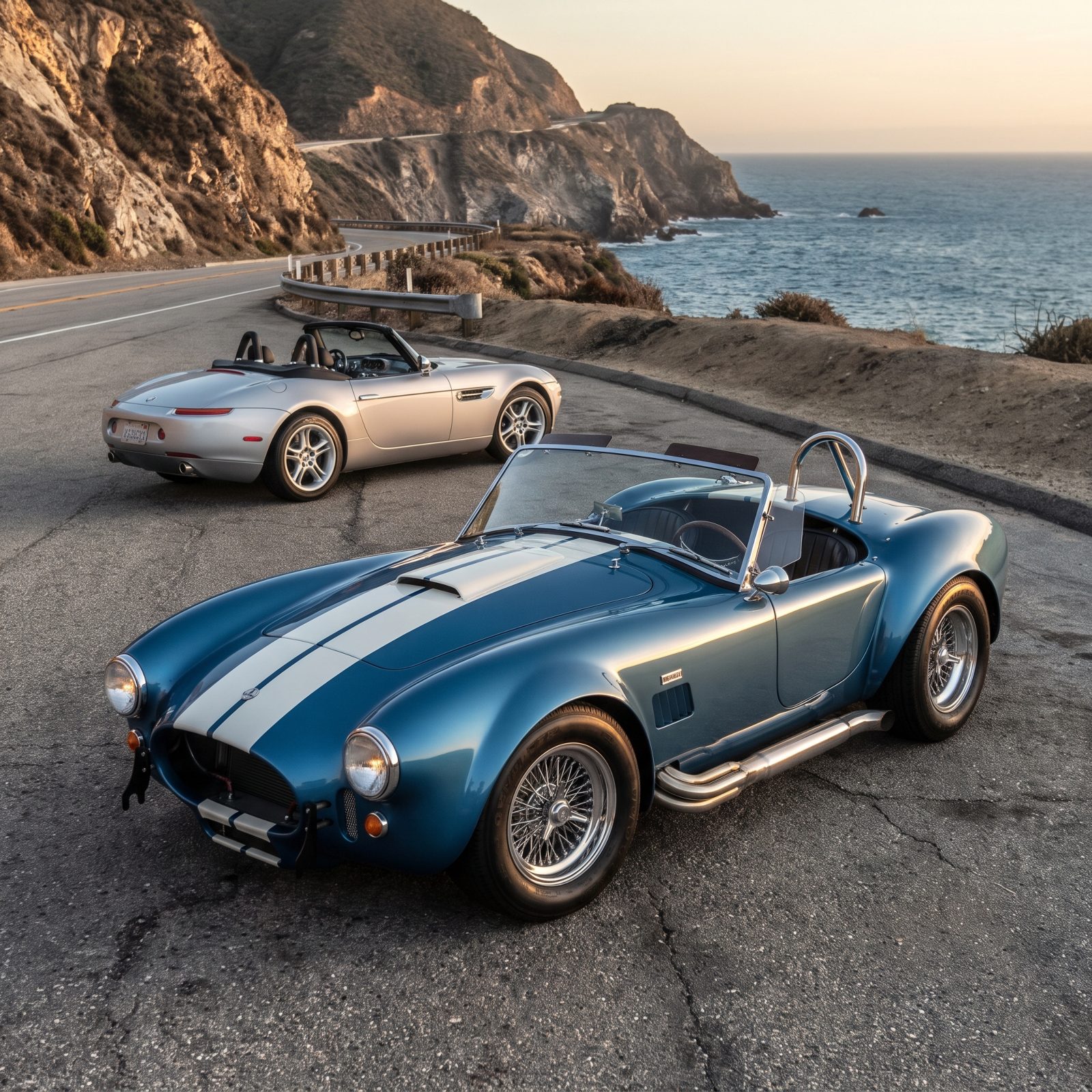
Barely a car at all. A huge Ford V8, a lightweight British body, and almost nothing in between to slow things down. The 1965 Cobra 427 is all muscle and fender and side pipe, with a windshield the size of a mail slot and no roof worth the name. Carroll Shelby built a legend out of parts that had no business agreeing to work together.
Every modern roadster chasing this feeling is more comfortable, safer, quieter. It also has airbags and cupholders and a business case on a spreadsheet somewhere.
The Cobra has none of that, thank God. It’s violent and beautiful and just a touch terrifying, and nothing built since has matched the way it looks like it wants to kill you — and you want to let it. No replacement has come within a country mile.
1967 Alfa Romeo Giulia vs. the Modern Giulia
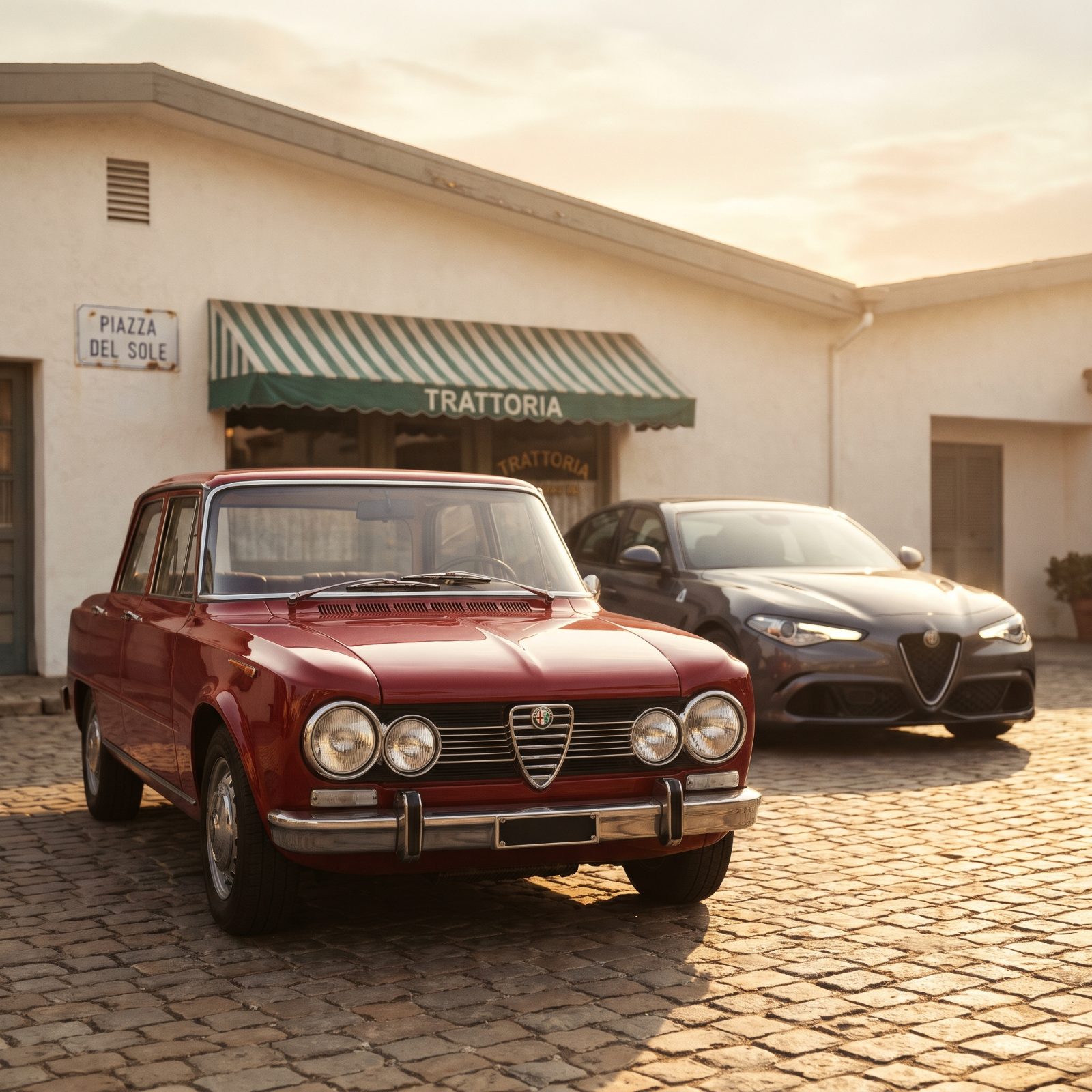
Park a 1967 Giulia Super next to the car that wears its name today and the older one looks lighter on its feet, even standing still. That upright, almost prim little sedan hid one of the sweetest twin-cam engines of its day under a shape no wind tunnel ever bullied into submission.
The modern Giulia is a fine car — quick, handsome in the right light. But it squints. The 1967 original looks you dead in the eye with those round lamps and that shield grille, and it never once pretends to be meaner than it is.
1966 Ford Thunderbird vs. the Last Thunderbird
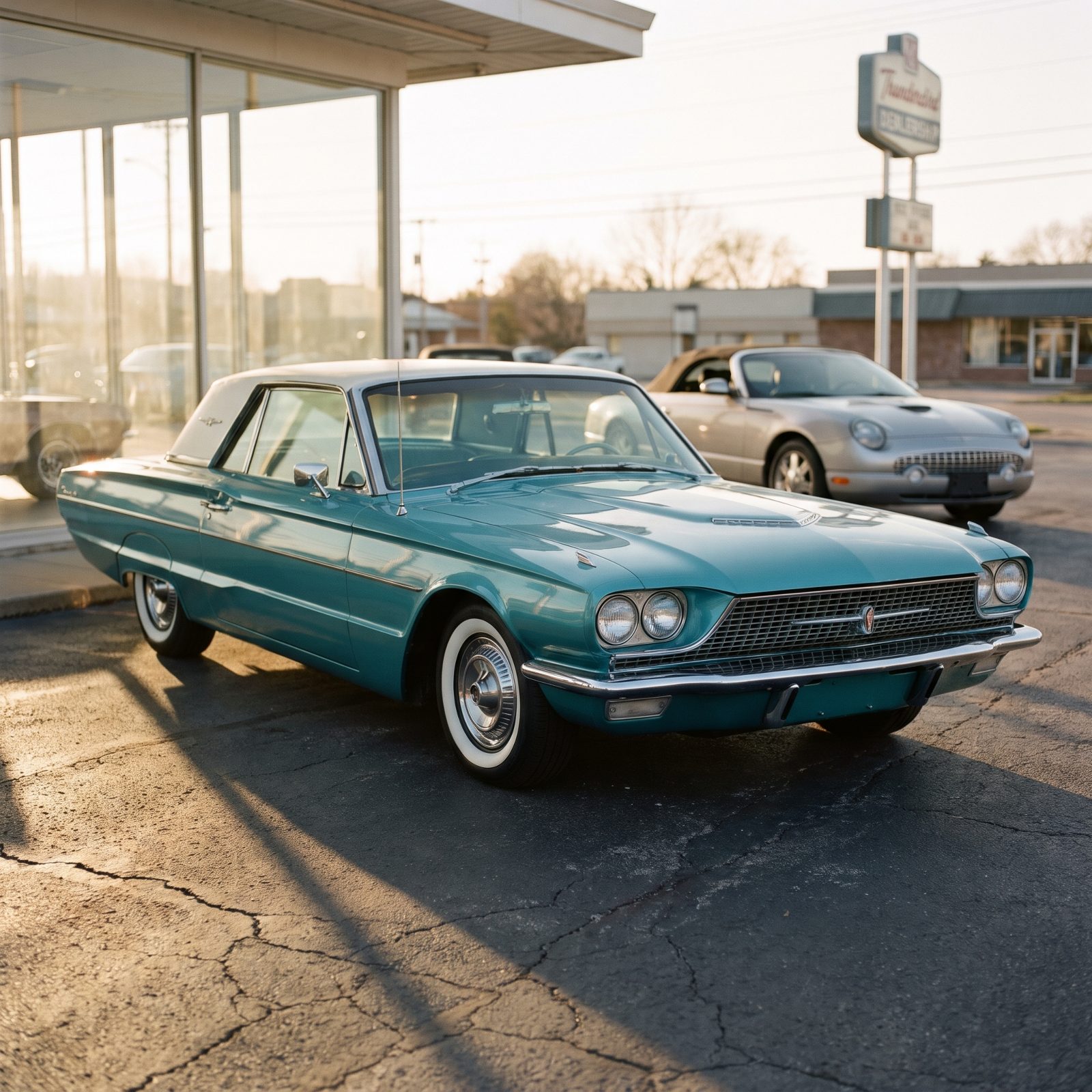
The 1966 Thunderbird was a personal luxury coupe that actually believed its own press. Long hood, low roof, that clean knife-edge body and a dashboard wrapped around the driver like a cockpit. It looked expensive because somebody meant for it to.
Ford brought the name back for 2002 as a rounded retro convertible, and it was pleasant enough — which is exactly the trouble. The 1966 car has presence. It walks into a room. The last Thunderbird politely asks if the table’s taken.
A name is only worth bringing back if the new car can carry it. This one couldn’t.
1970 Chevrolet Chevelle SS vs. the Modern Camaro
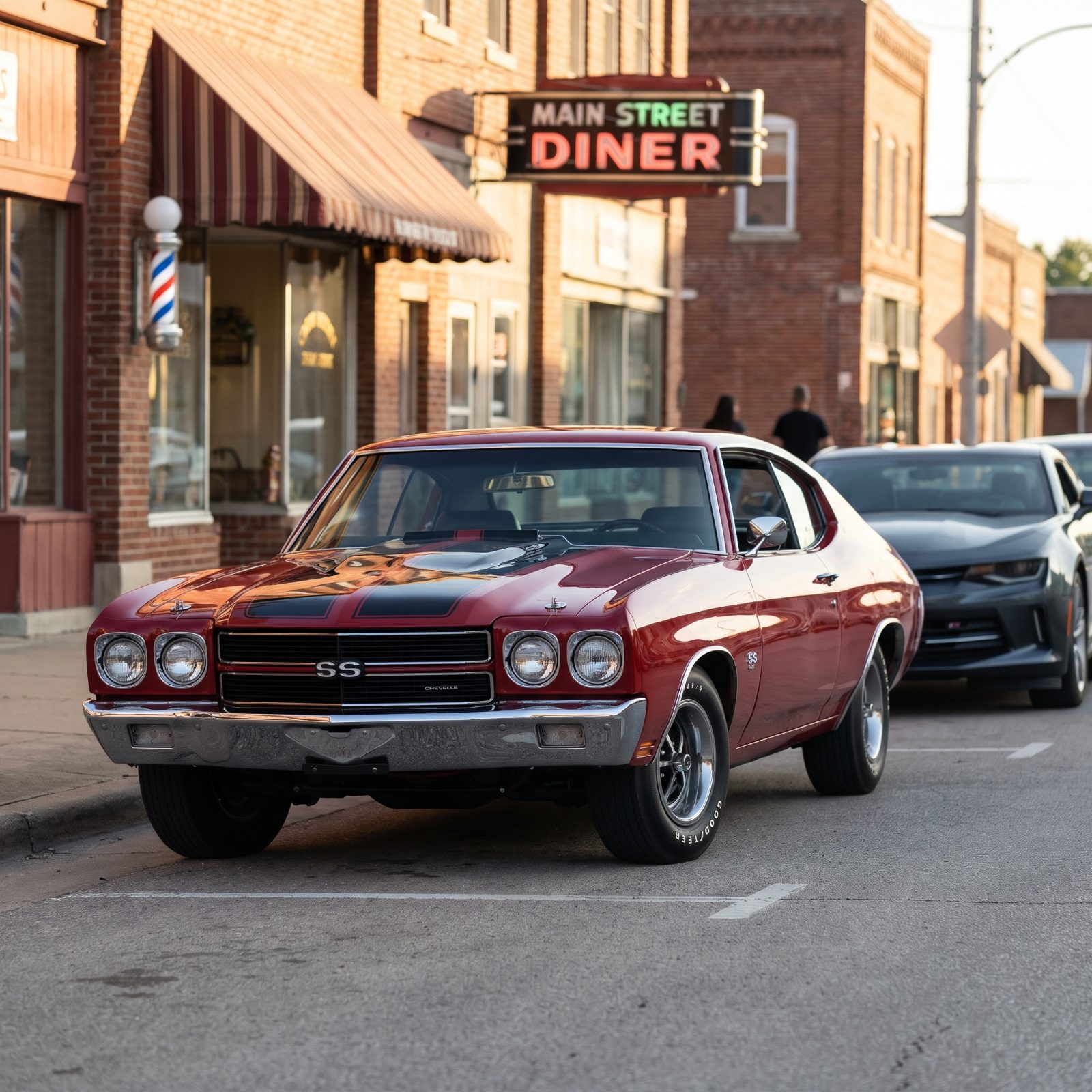
You could read a 1970 Chevelle SS from clear across a parking lot. Clean flanks, those twin stripes running straight over the cowl hood, a grille that stared right back at you. No fuss — the proportions did all the talking, and they talked plenty.
The modern Camaro carries Chevy’s muscle torch now, and it goes like fury. But the window slot is a mail slot, the nose is all scowl, and you sit in it like you’re wearing a helmet. The Chevelle let the light in. It let you see out. And it looked better doing it.
1974 VW Karmann Ghia vs. the Modern Beetle
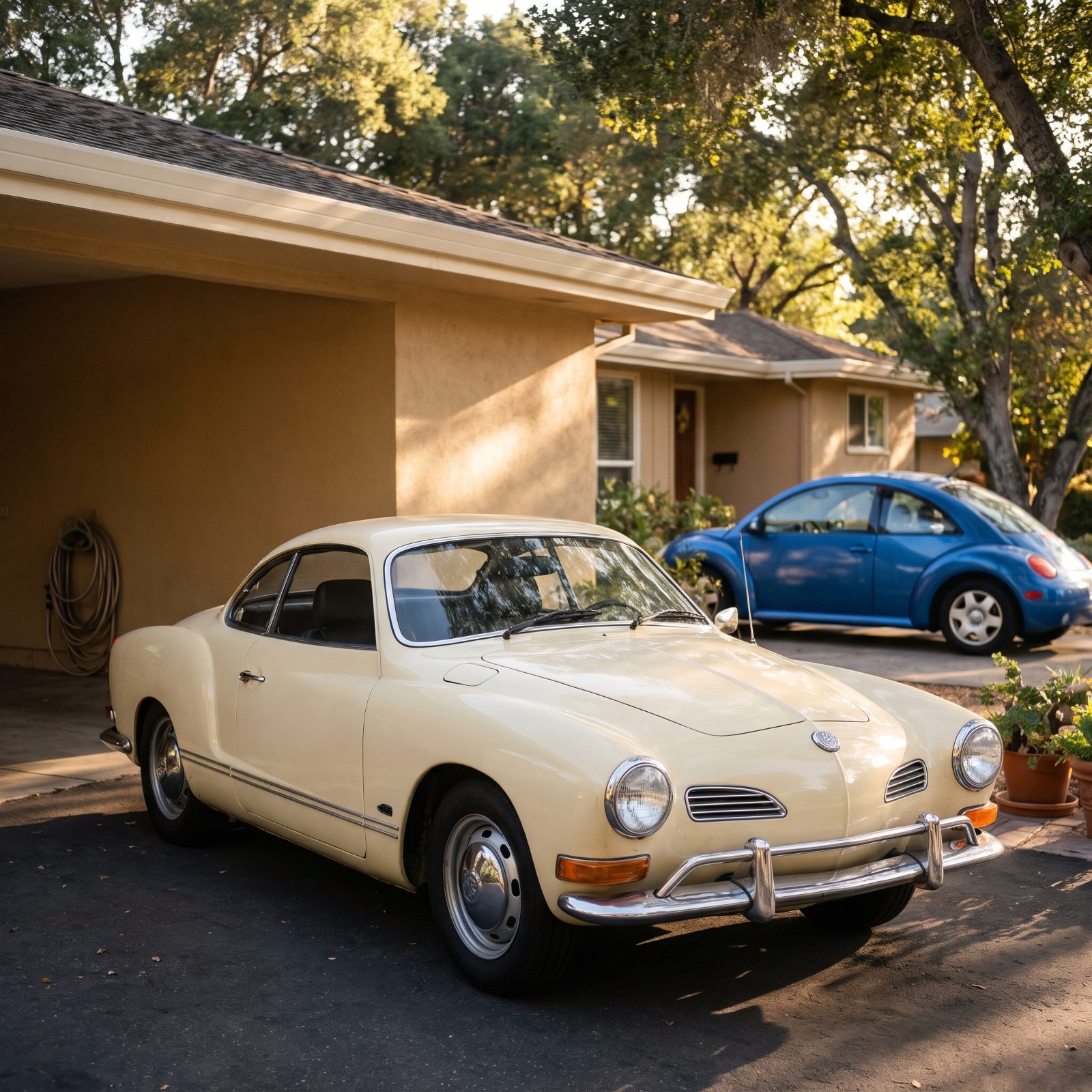
The Karmann Ghia had the body of a sports car and the heart of a Beetle, and somehow that made it more charming, not less. Italian stylists drew those flowing fenders. It cost pennies to run and looked like it cost a fortune.
Volkswagen’s modern Beetle leaned on nostalgia and came out cute. Cute fades. The Ghia was never cute — it was pretty, which is a different and far more durable thing. Those low curves still stop traffic fifty years on.
1970 Oldsmobile 442 vs. the Later Cutlass
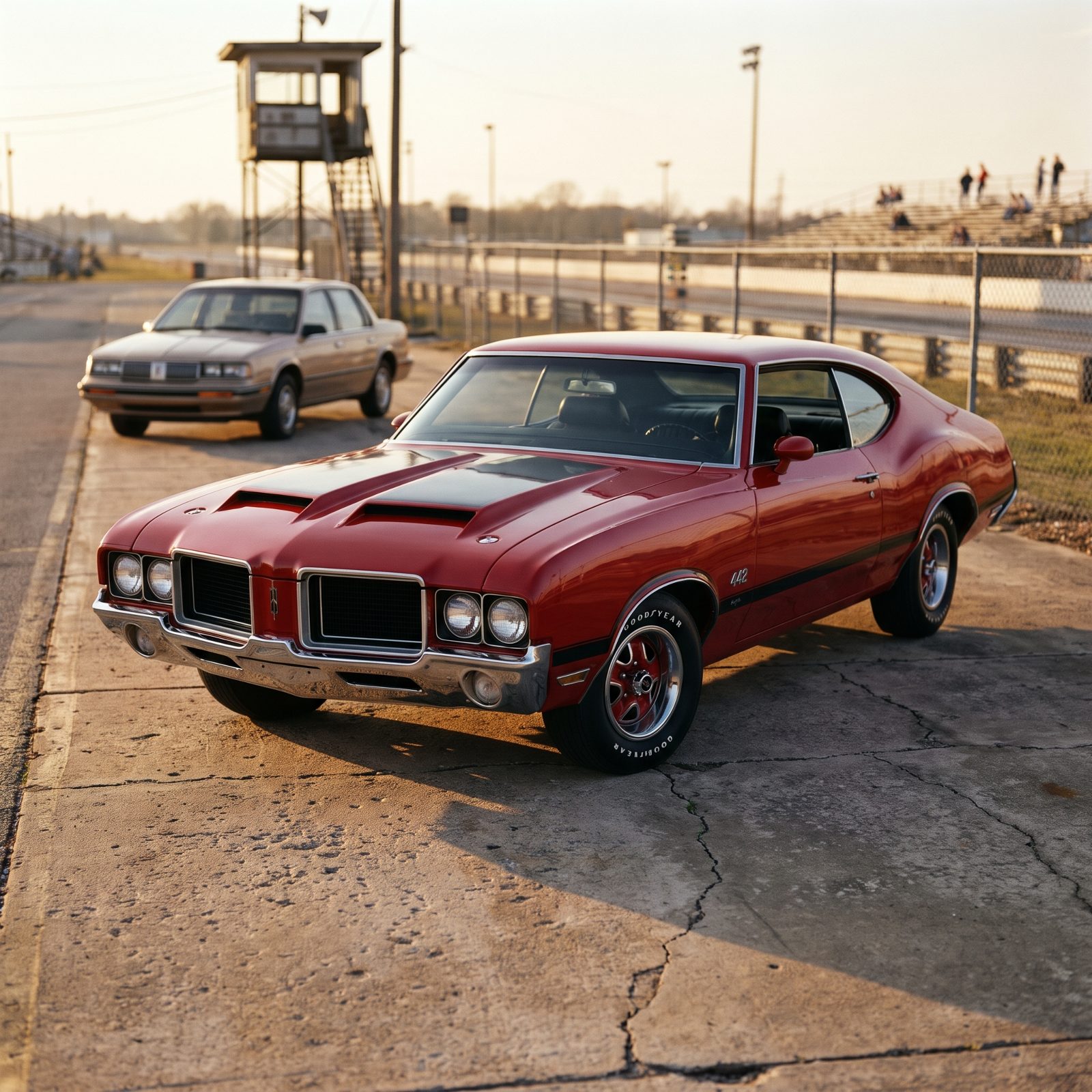
The 442 badge once meant something physical: four-barrel carb, four-speed, dual exhaust. The 1970 car wore that promise right on its sleeve, with ram-air scoops punched into the hood and a stance that meant business before you ever turned the key.
By the mid-80s the Cutlass name had drifted onto soft, beige front-drive sedans that couldn’t have found a drag strip with a map and a tour guide. Fine commuter cars, sure. But put the 1970 442 beside one and you see exactly what got traded away, and it wasn’t just horsepower.
1968 Mercury Cougar vs. the Later Mercury Lineup
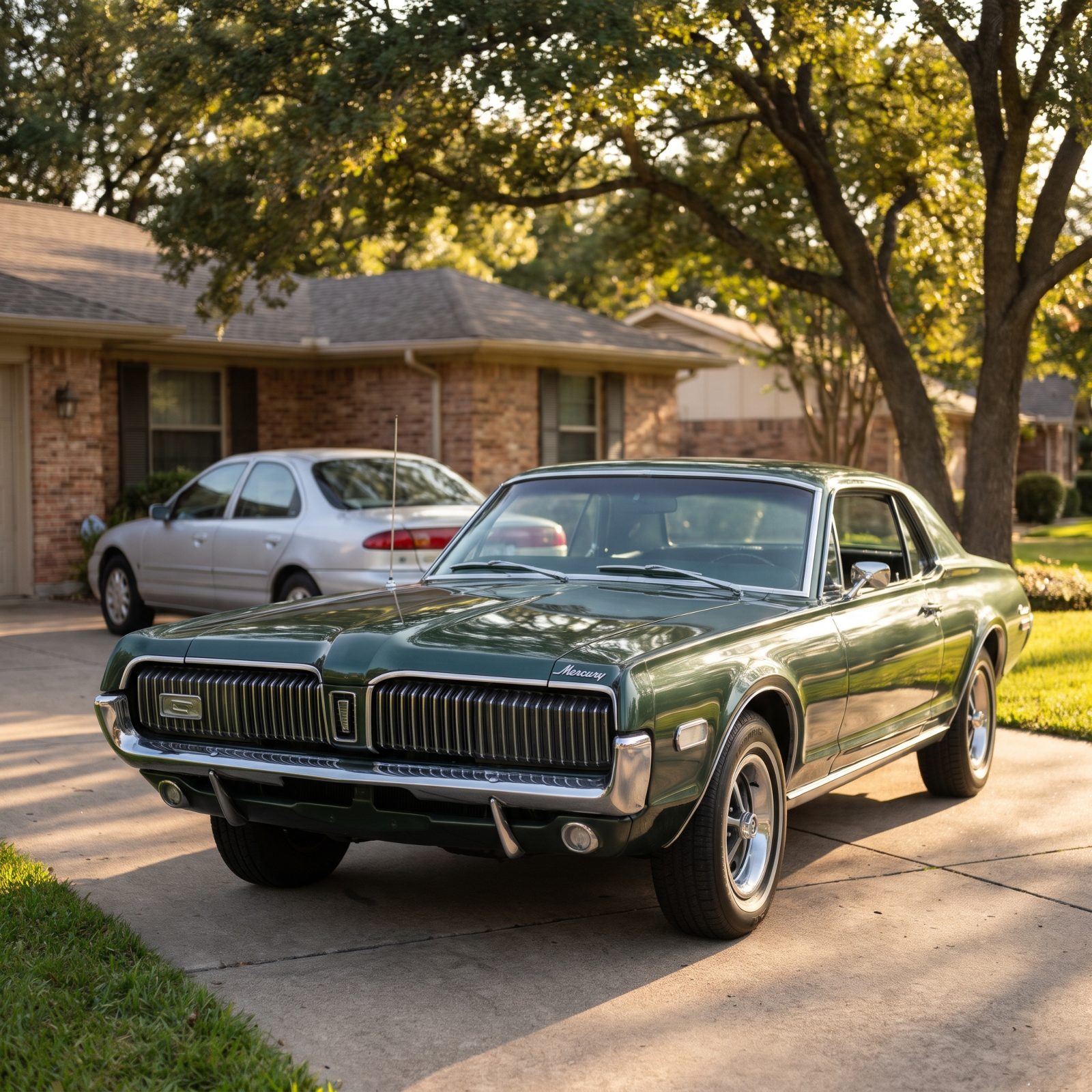
Mercury built the Cougar to be the grown-up’s pony car, and for a moment it worked beautifully. The 1968 car hid its headlamps behind a fine vertical grille, stretched the Mustang’s lines into something more composed, and wore its chrome like a good suit.
What came after wore the Mercury badge too, and it broke the heart a little. Rounded, rebadged sedans you’d struggle to pick out of a parking lot. The division that gave us this poised, hidden-lamp coupe spent its last years making cars nobody remembers. The Cougar you remember.
1970 AMC Javelin vs. Modern Muscle Coupes
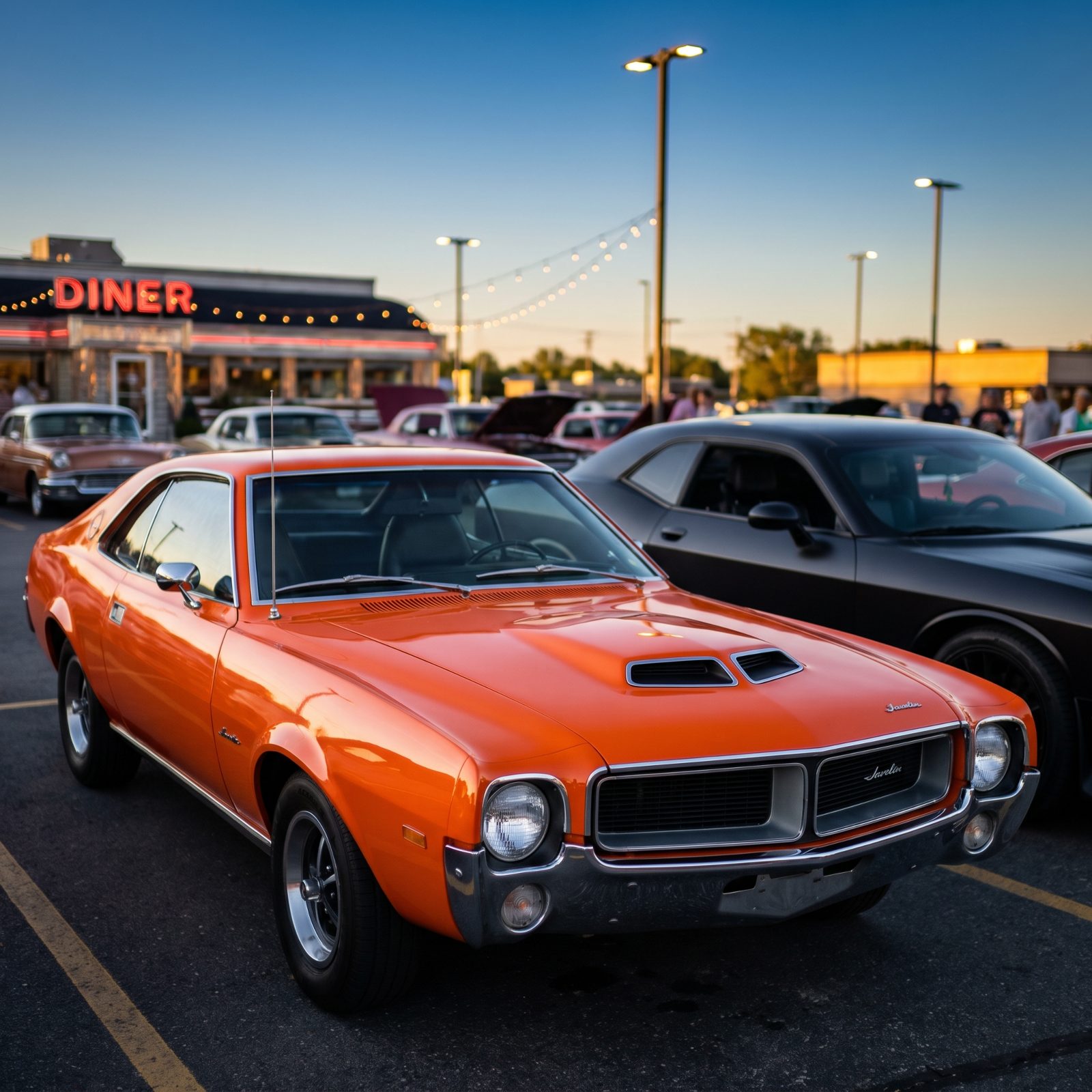
The Javelin didn’t look like anything else, and that was precisely the appeal. Those humped fenders, that venturi hood, the slightly odd confidence of a company that couldn’t outspend Detroit so it out-weirded them instead. AMC built a muscle car with real character.
Modern muscle coupes mostly agree on how to look angry — black, low, scowling, interchangeable from any distance. Park the orange Javelin among them and it’s the only car at the cruise-in people actually wander over to. Different beat angry back then, and it still does.
1958 Edsel Citation vs. Its Successors
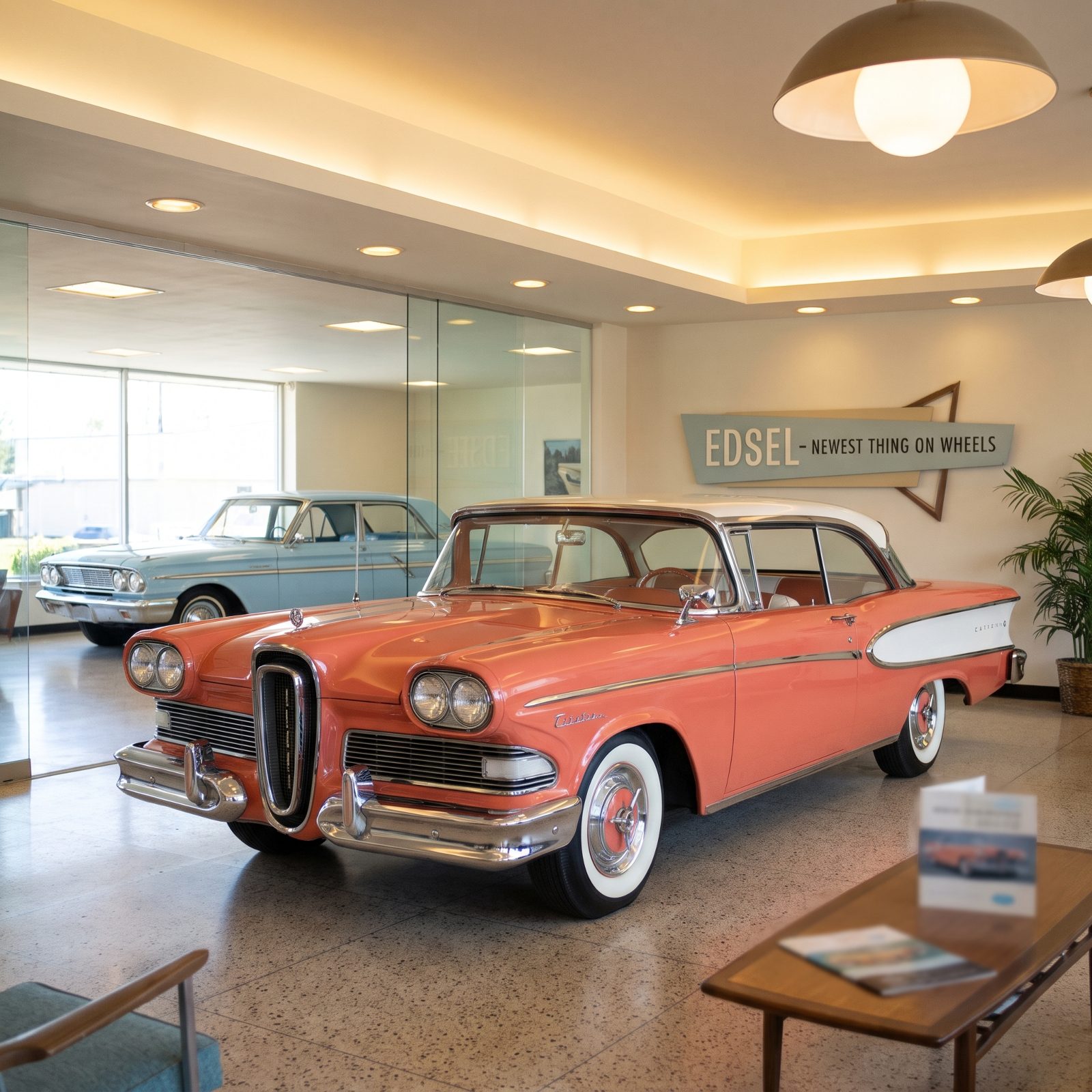
Everyone loves to laugh at the Edsel — the vertical grille, the sales disaster, the name that became a punchline. But stand in front of a 1958 Citation in coral and white and tell me it’s boring. It’s a lot of things. Boring isn’t one of them.
The cars Ford sold after the Edsel folded were sensible, handsome, forgettable. Safe. The Edsel swung for the fences and whiffed, and a glorious whiff outlives a hundred careful base hits. Fifty years on, people crowd around the failure. Nobody crowds the safe bet.
The Edsel flopped in showrooms and won the long game. You remember it. That counts for something.