
Would you like to save this?
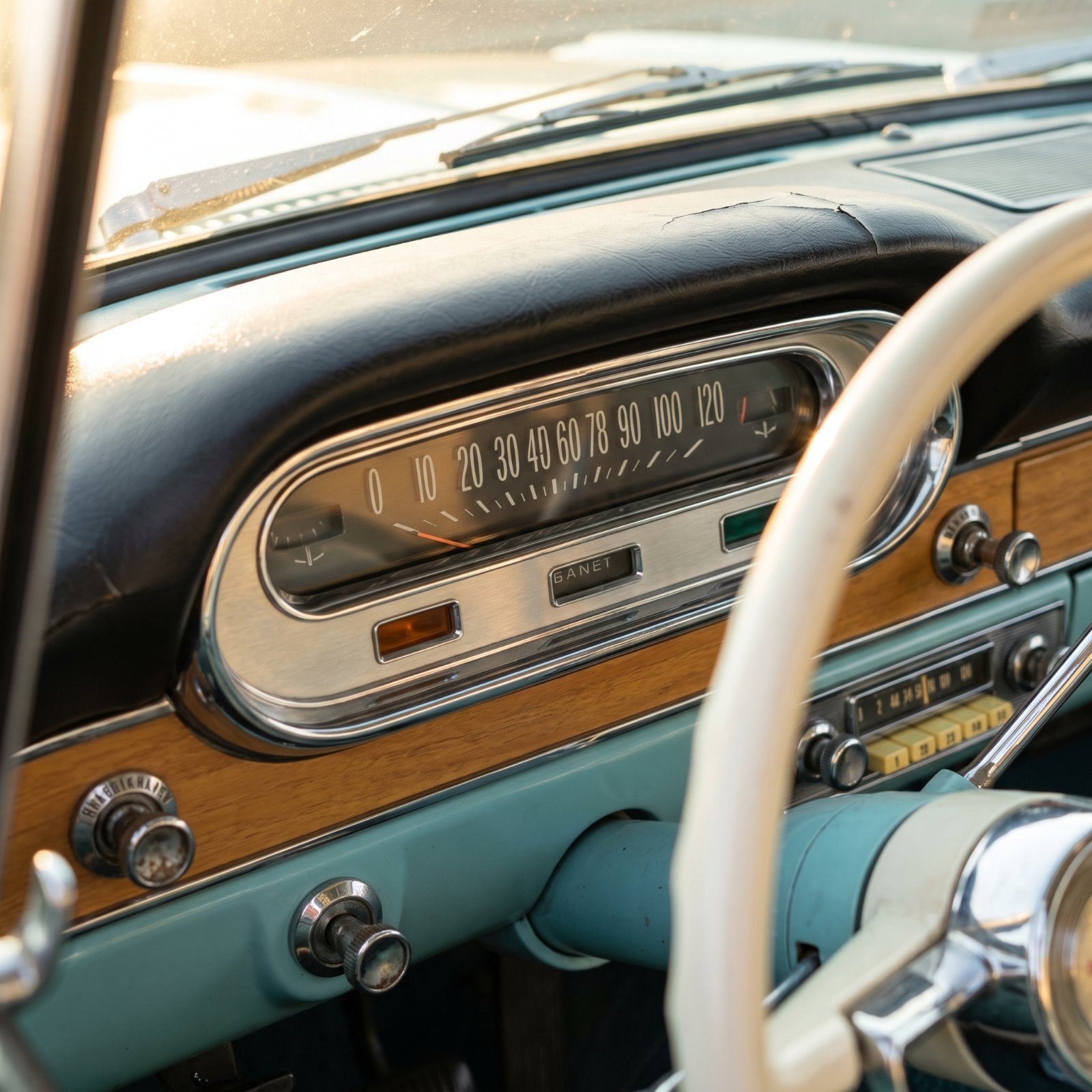
Reach across the bench seat of a 1963 Dodge and your fingers land on buttons where the gearshift should be. That’s the moment you realize the sixties dashboard was its own country, with its own rules. Speedometers unrolled like ribbons. High beams lived under your left foot, and the choke was a knob you pulled by memory on a cold January morning. Sit down behind one of these dashes and half the controls make no sense until someone shows you. What follows is the tour.
Please note that some of the images in this article were created with the assistance of AI.
50. Push-Button Transmission Controls Where the Shifter Should Be
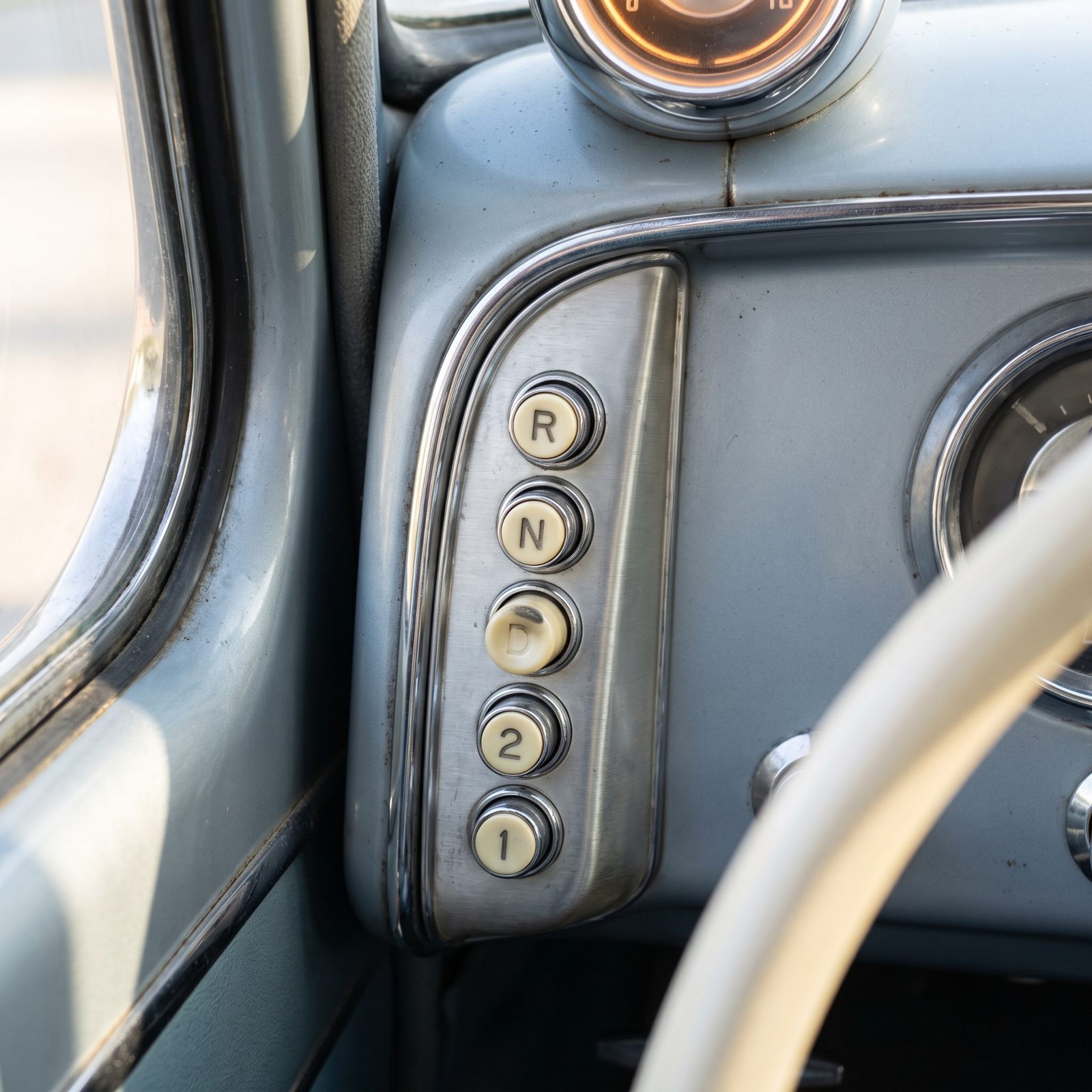
You didn’t slide a lever. You pressed a button. Chrysler, Dodge, DeSoto and Plymouth all ran push-button automatics from the late fifties into the mid-sixties, a little chrome keypad bolted to the left of the wheel where your fingers found R-N-D-2-1 without looking.
People loved them or they fought them, no middle ground. The early setups had no Park button, so you set the parking brake and trusted it. New passengers used to stare at the empty spot on the floor like something had been stolen out of the car overnight.
49. The Horizontal Ribbon Speedometer That Slid Across the Dash
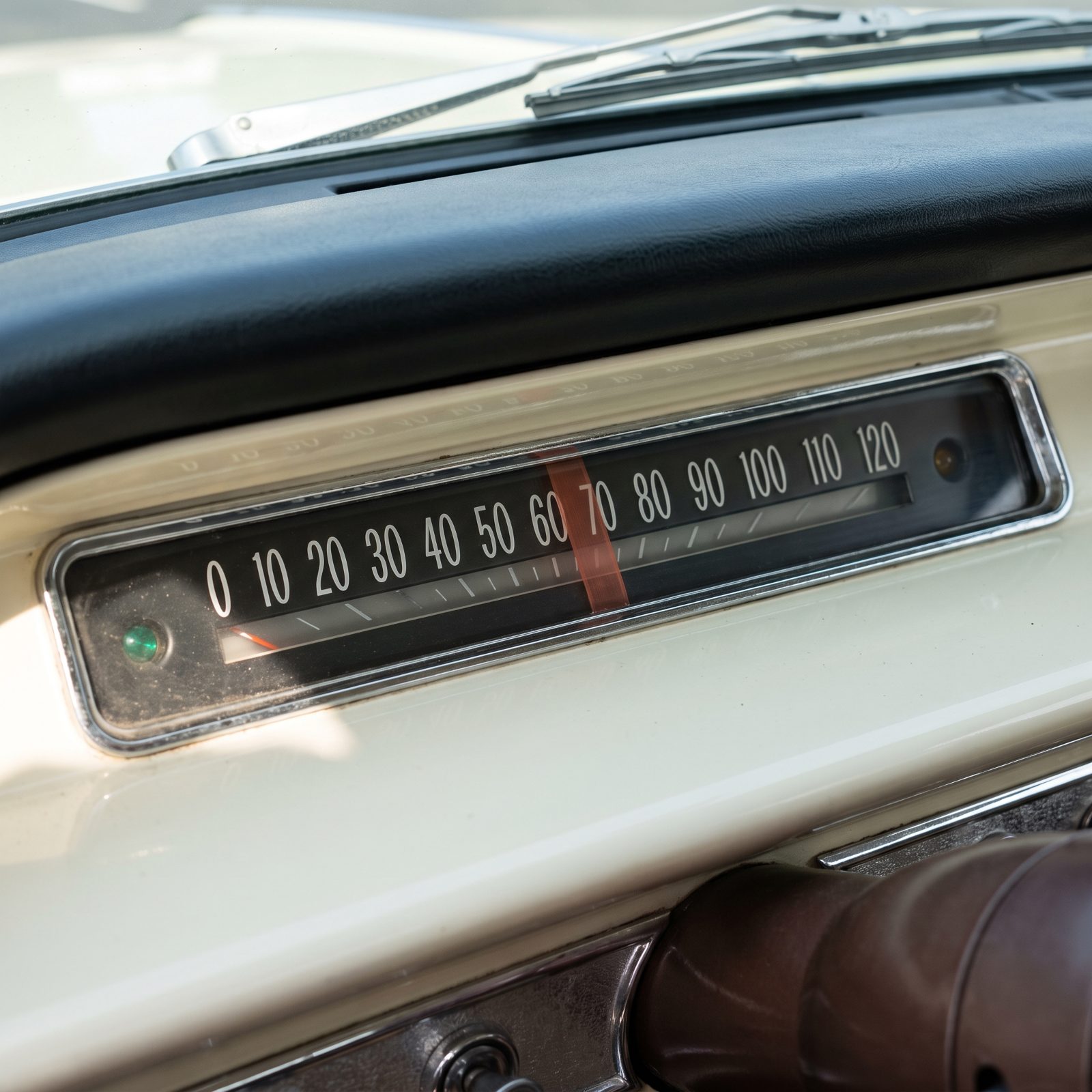
Forget the round dial with a swinging needle. A colored band crept sideways across a long horizontal window instead, and you read your speed where the ribbon stopped. GM ran these across plenty of sixties models, and the wider the band grew, the faster you were going.
Easy to read at a glance, which was the whole point. Some folks found them a little arcade-like. I’ve always thought they had a calm, honest way of showing speed that a jittery needle never quite matched.
48. The High-Beam Dimmer Switch You Hit With Your Left Foot
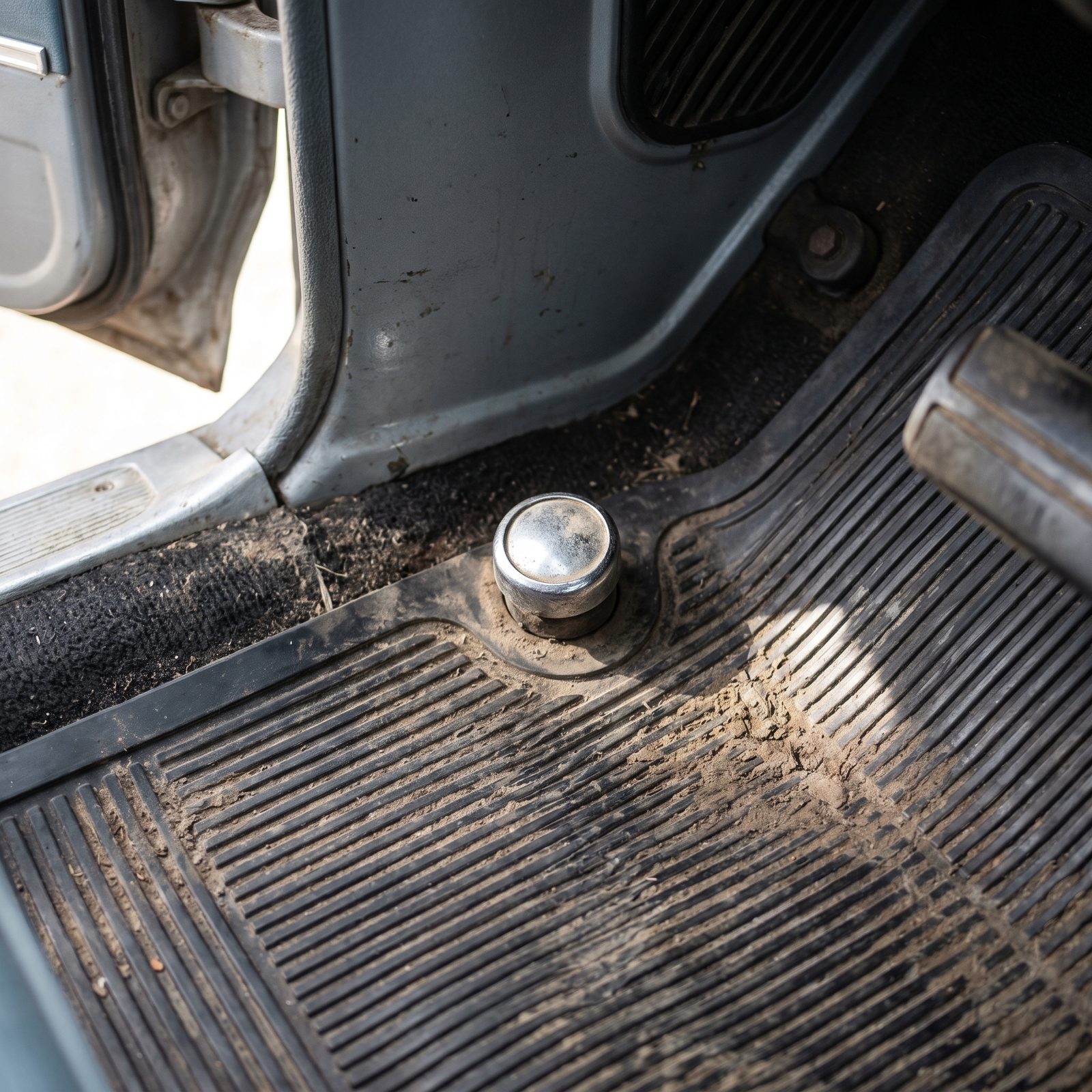
Left foot, quick stomp, and the road ahead flooded with light. The high-beam switch lived on the floor, a little chrome button up near the firewall, and you flicked it with the side of your shoe when an oncoming car crested the hill.
Your foot learned exactly where it sat, so on a dark two-lane at night you never once looked down, you just tapped. The switch migrated up to the steering column stalk by the seventies, and honestly your left foot got bored.
47. The Five-Digit Odometer That Rolled Clean Back to Zero
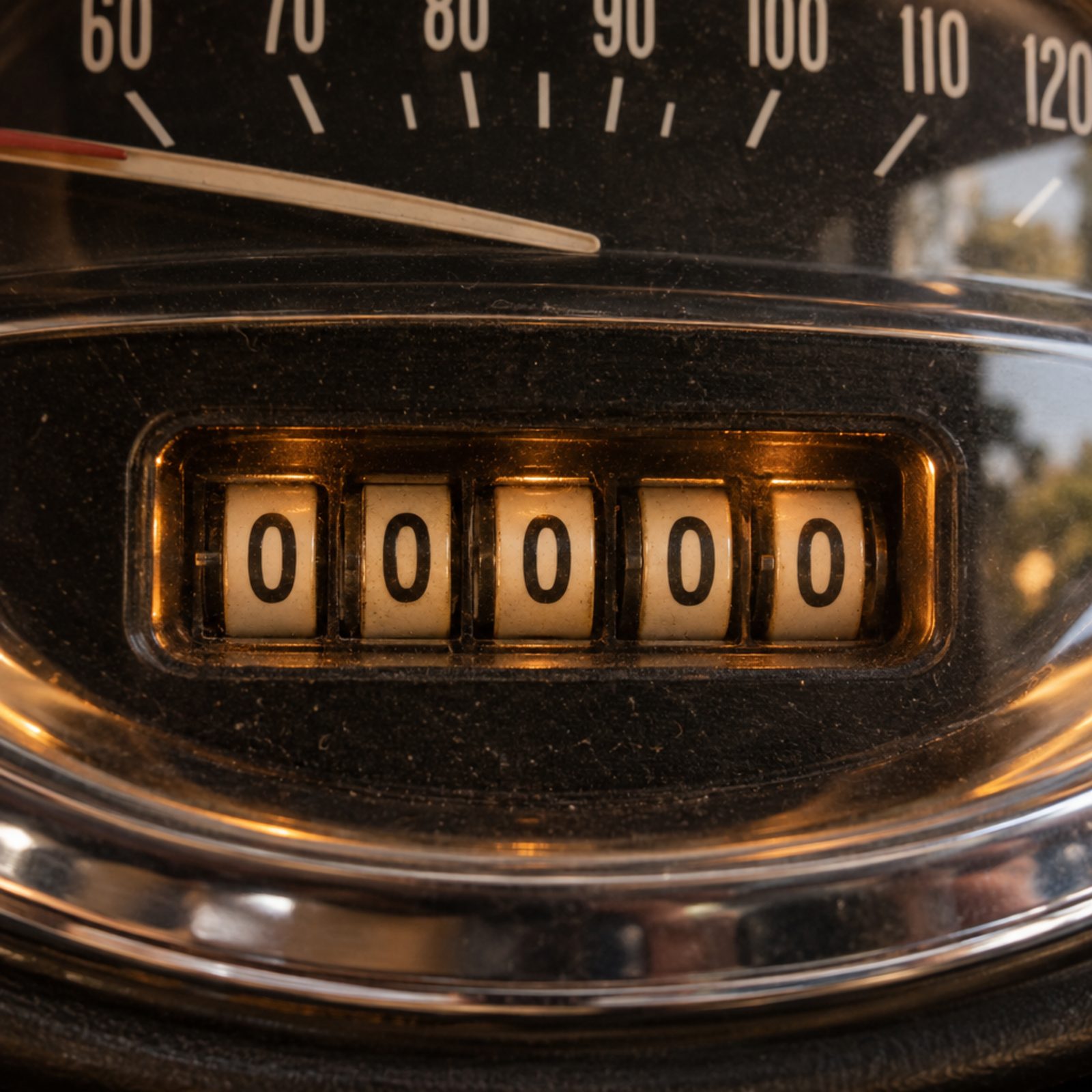
Ninety-nine thousand, nine hundred and ninety-nine miles. Then the little drums clicked over and every digit dropped back to zero, like the car had been born again. Five digits was all you got, so a well-traveled sedan quietly told the same lie twice.
Used-car lots knew this. Buyers knew it too. That row of black numbers on white drums was the whole biography of a car, right up until it wasn’t.
46. The Windshield-Washer Pump You Worked With Your Foot
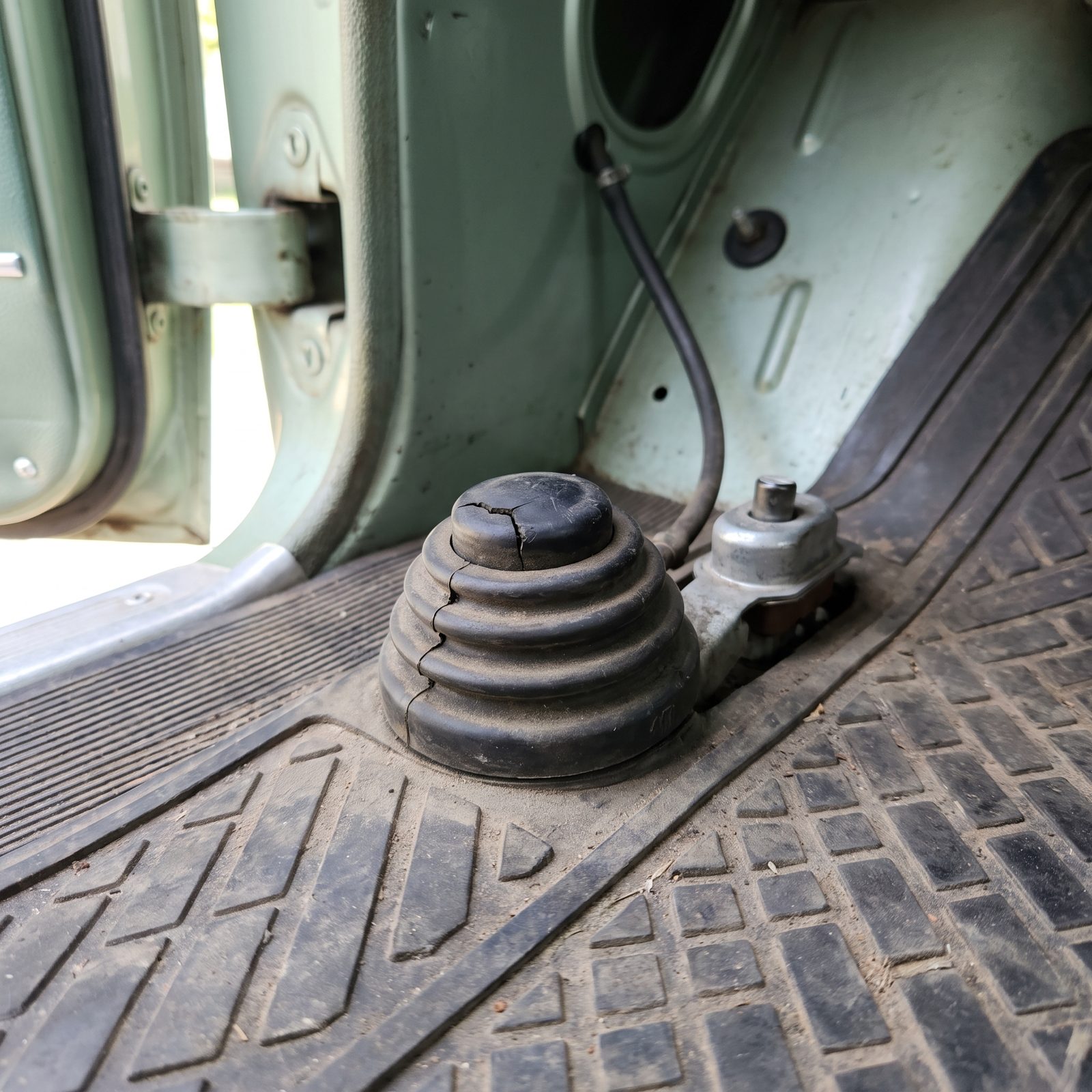
Before an electric motor took over, you did the job yourself. A rubber pump button sat on the floor, and you pressed it with your foot to squirt fluid up onto the glass while the wipers dragged it across.
Pump too soft and you got a weak dribble. Pump too eager and you soaked the wiper arms. It was one more thing your feet learned to do while your hands stayed put on the wheel, a little choreography nobody thinks about anymore.
45. The Three-on-the-Tree Column Shifter
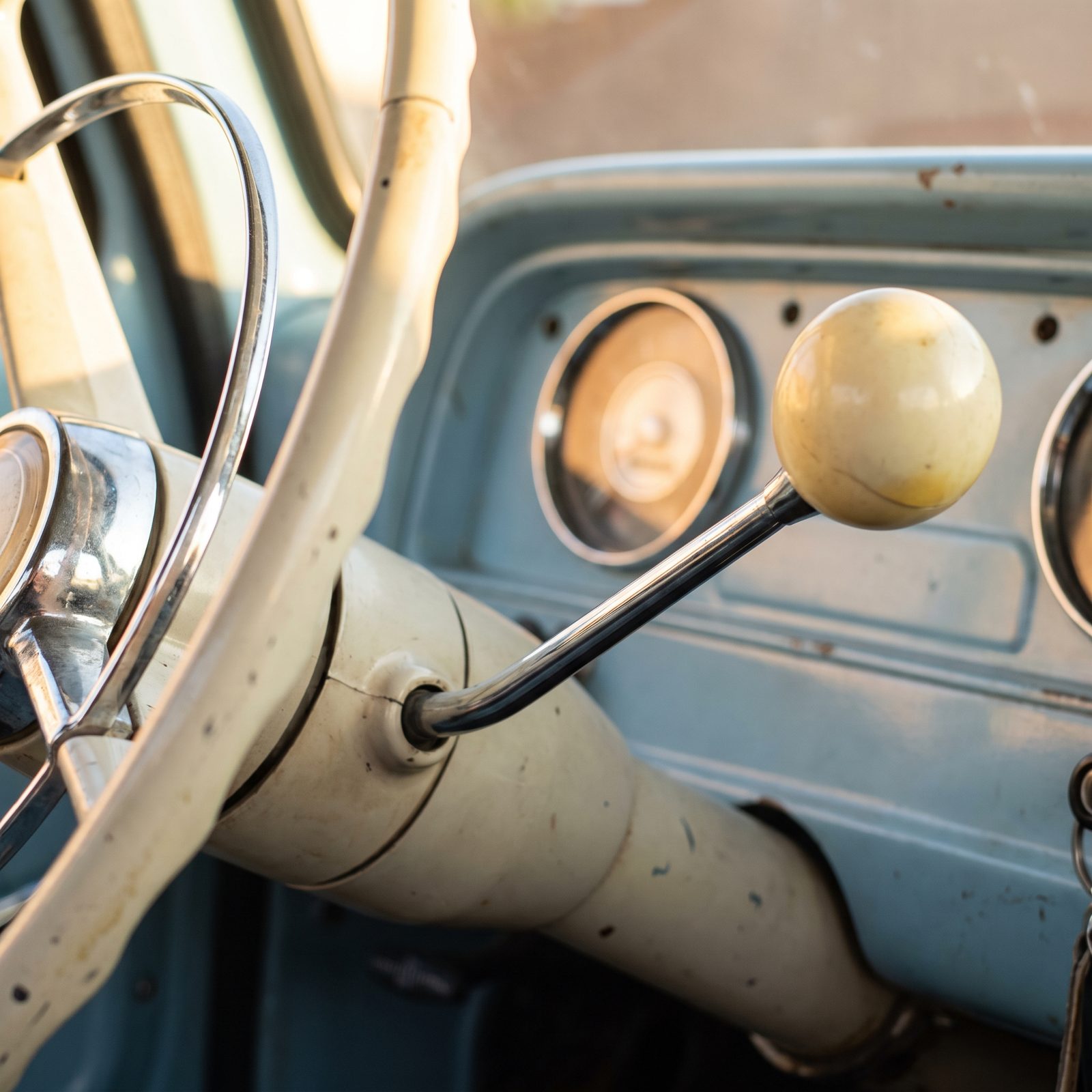
Three forward gears, all worked from a lever on the steering column. Down-and-toward-you for first, up-and-away for second, down-and-away for third, with reverse up-and-toward you. Do it wrong and the linkage jammed, leaving you stuck at a green light rowing an angry lever while the guy behind you leaned on his horn.
The bench seat stayed clear, so you could squeeze three across the front. Learning it was a rite of passage, usually taught by a patient parent in an empty church parking lot on a Sunday afternoon.
44. The Radio Dial Marked With Civil Defense Triangles
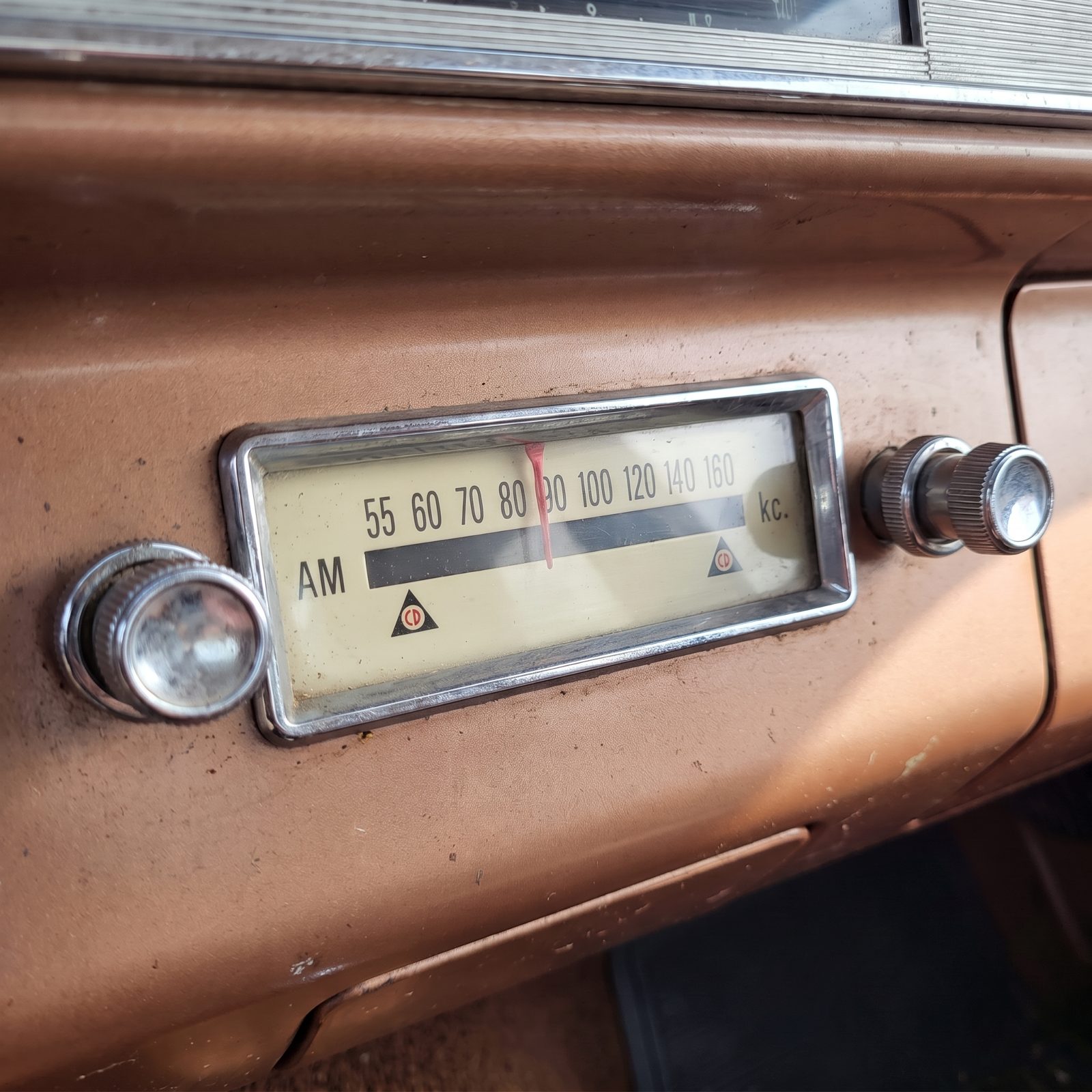
Look close at the tuning dial of a sixties AM radio and you’ll find two small triangles printed at 640 and 1240 on the band. Those were the CONELRAD marks, the frequencies you were supposed to tune to if the country came under attack.
Kids asked about them constantly, and nobody quite wanted to explain. By 1963 the system had already been replaced, but the little triangles stayed printed on dials for years afterward, a quiet piece of Cold War worry riding along on the family Buick.
43. The Manual Choke Knob You Pulled on a Cold Morning
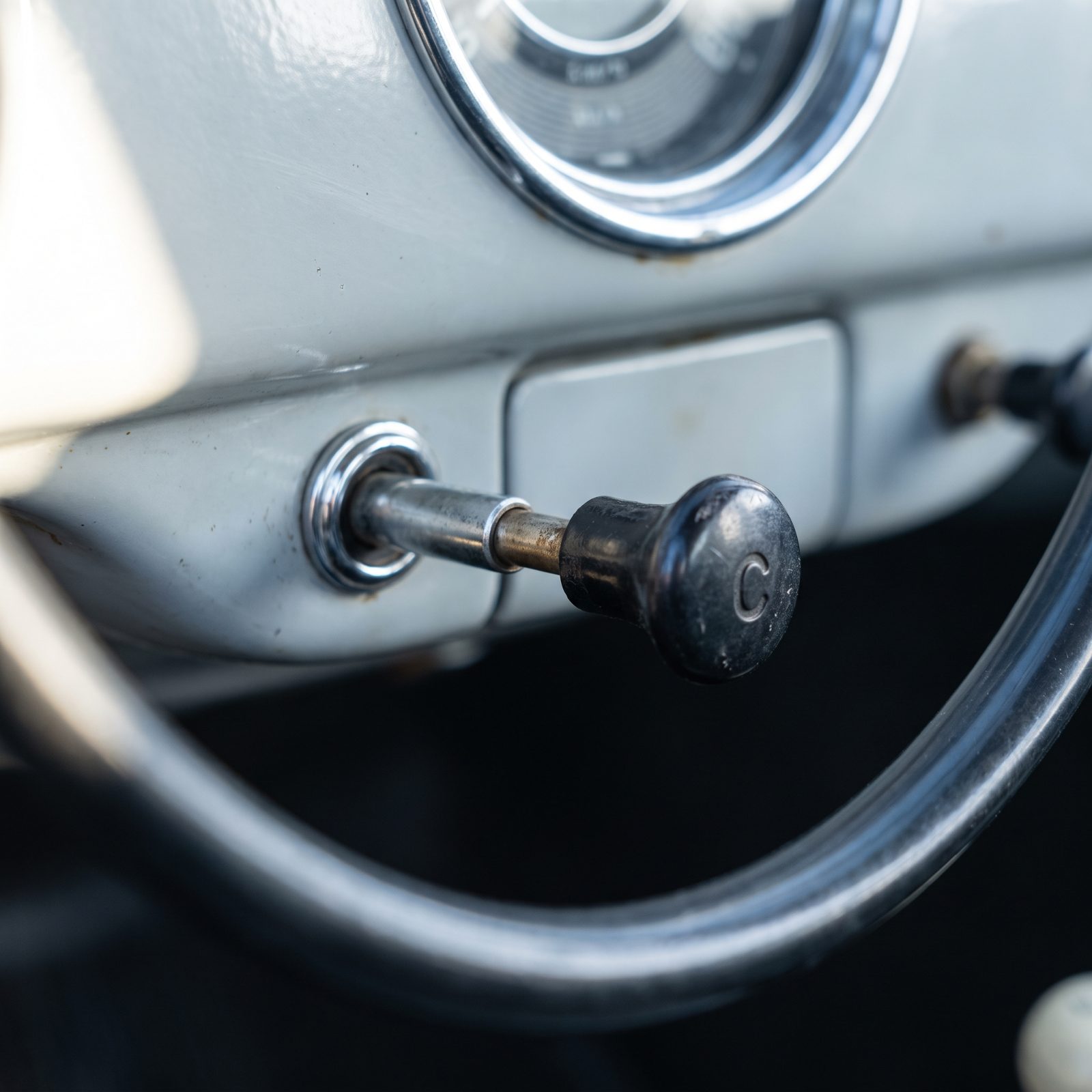
January mornings had a ritual. Pull the choke knob out, crank the engine, feed it a little gas, and wait for it to catch and settle into a rough fast idle. As the engine warmed you pushed the knob back in an inch at a time, going by feel and by ear.
Pull it too far and the engine ran rich and rough. Forget to push it back and you’d foul the plugs by lunchtime. Fuel injection eventually made the whole dance unnecessary. But for a couple of generations, starting a cold car was a genuine skill.
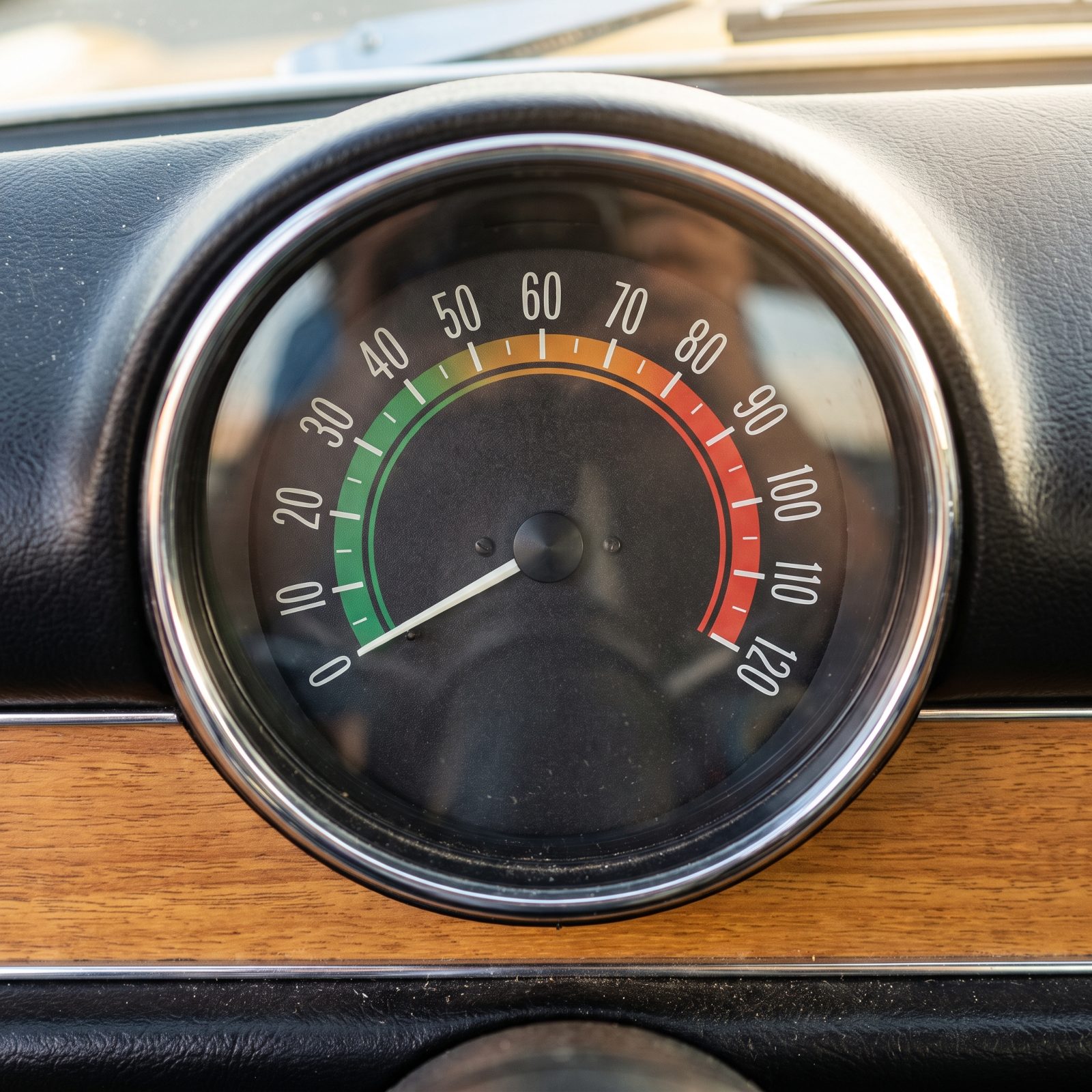
42. The Speedometer That Changed Color as You Sped Up
Would you like to save this?
Green meant you were fine. Amber meant ease off. Red meant the officer parked behind the billboard was about to have a good afternoon. Some sixties gauges used a colored band, green through amber into red, so your speed had a temperature you could feel at a glance.
Call it psychology on the dashboard, a gentle nudge before radar guns did the nudging for real. Watching that pointer creep from green into amber on an empty stretch of highway was its own quiet thrill.
41. The Pull-Out Headlight Knob That Rotated to Dim the Dash
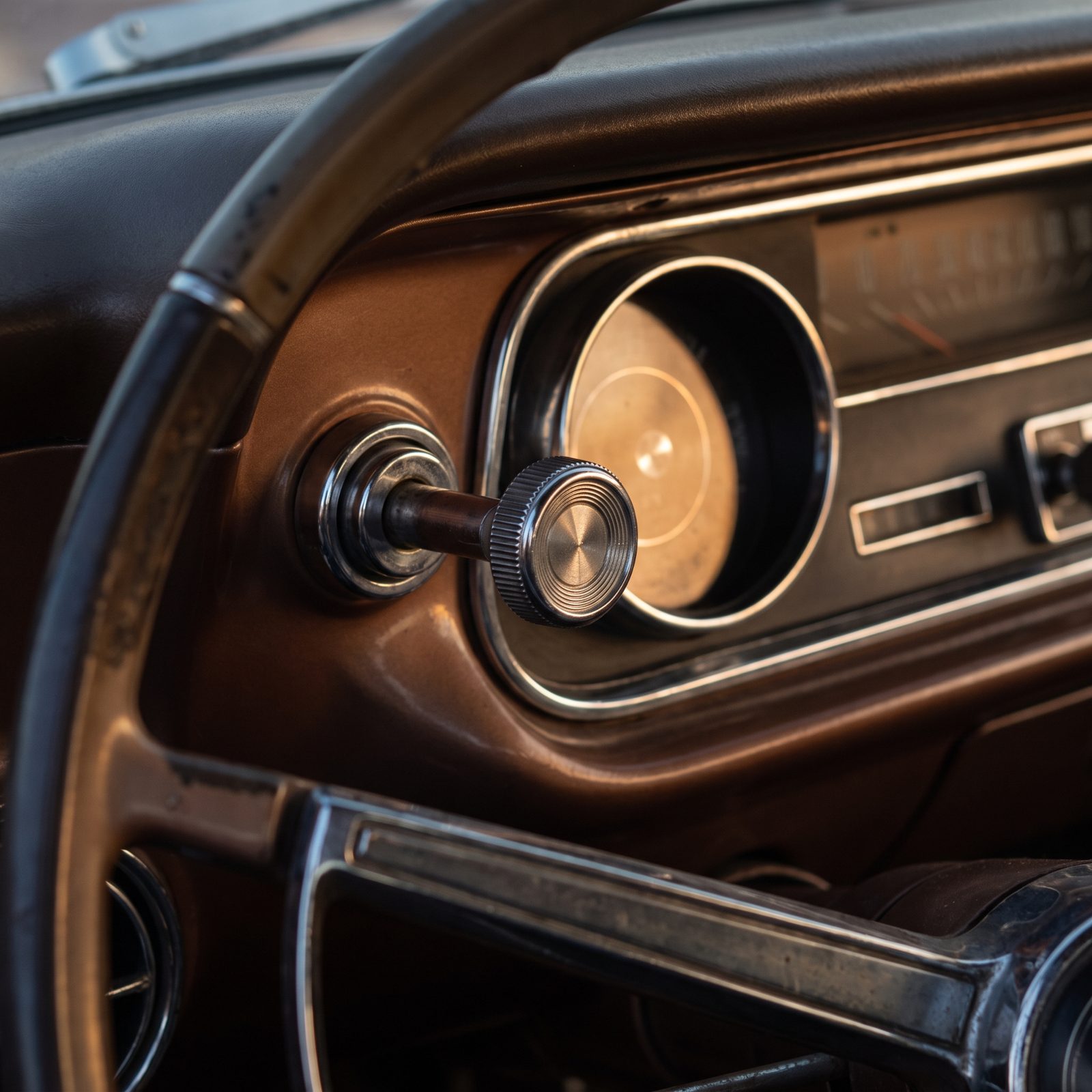
One knob did three jobs. Pull it halfway for parking lights, all the way for headlights, then twist it left or right to brighten or dim every gauge on the dash. It sat to the left of the wheel, ribbed edge worn smooth from a thousand pulls.
On a long night drive you’d reach over and roll the dash down to a soft amber murmur, just enough to read your speed without blinding yourself to the road ahead. There’s a particular comfort in that dim glow that no backlit screen has ever managed to touch.
40. A Glowing Cigar Lighter That Popped Out When It Was Ready
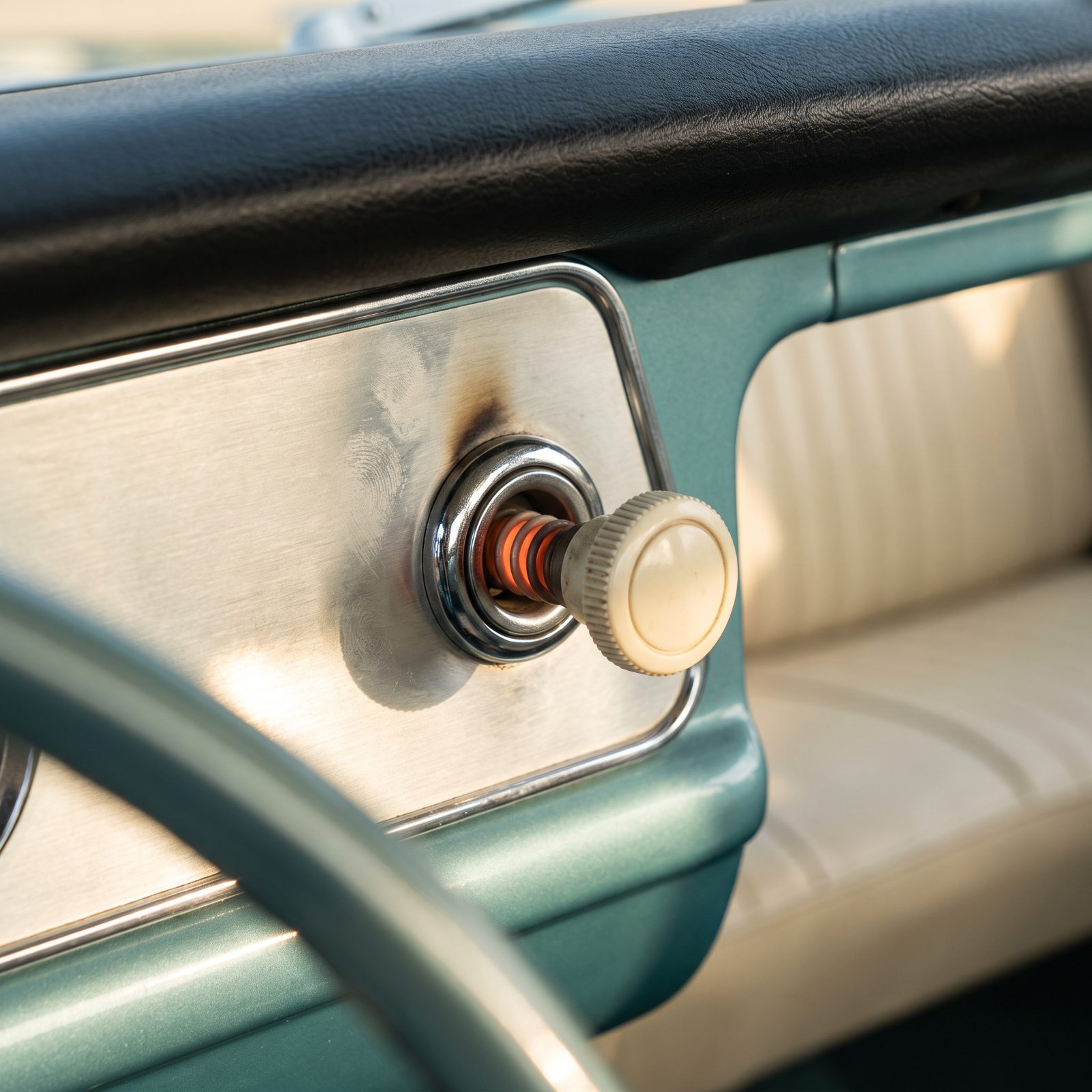
You pushed it in, waited, and did something else — watched the road, or talked to whoever was riding shotgun. Then a little metallic click, the knob sprang halfway out on its own, and you knew the coil was orange and ready.
No timer. No light. No beep. The lighter told you it was done by physically ejecting itself, and that glowing coil ran hot enough to light just about anything, which is why every kid in the 60s got warned exactly once not to touch it. You learned fast.
39. A Metal Ashtray Built Right Into the Middle of the Dash
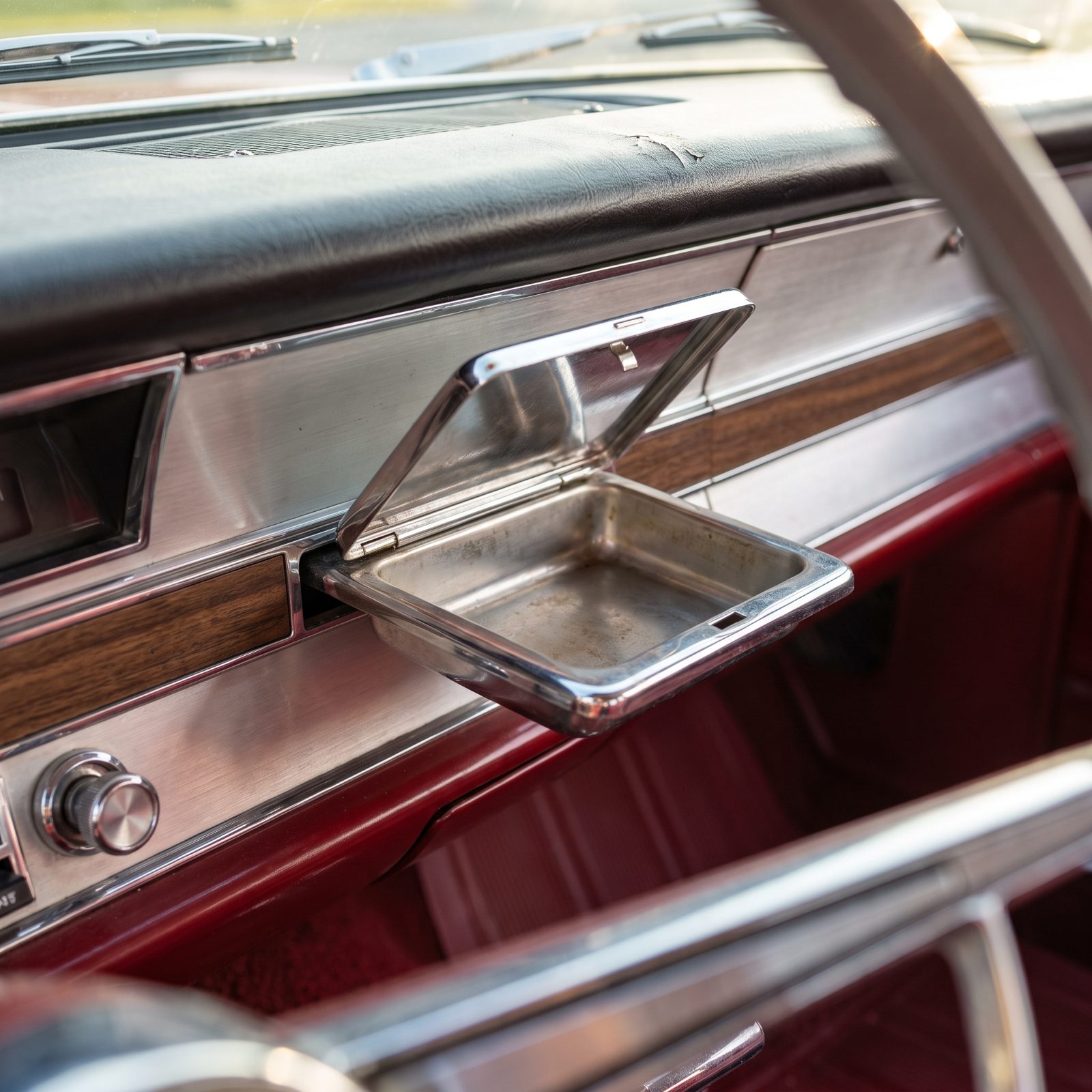
Dead center, right below the radio, sat a chrome tray you pulled straight out toward you. It slid on little metal rails and clicked at the end of its travel. Every family car had one, whether anyone in the family smoked or not.
Kids used them for coins, gum wrappers, and the occasional treasure hidden from a sibling. This was one of the few dashboard features designed to be emptied — and emptying it counted as a real event, usually in a gas-station trash can while Dad squinted at the map.
38. A Knee-Knocker Air Conditioner Hanging Under the Dash
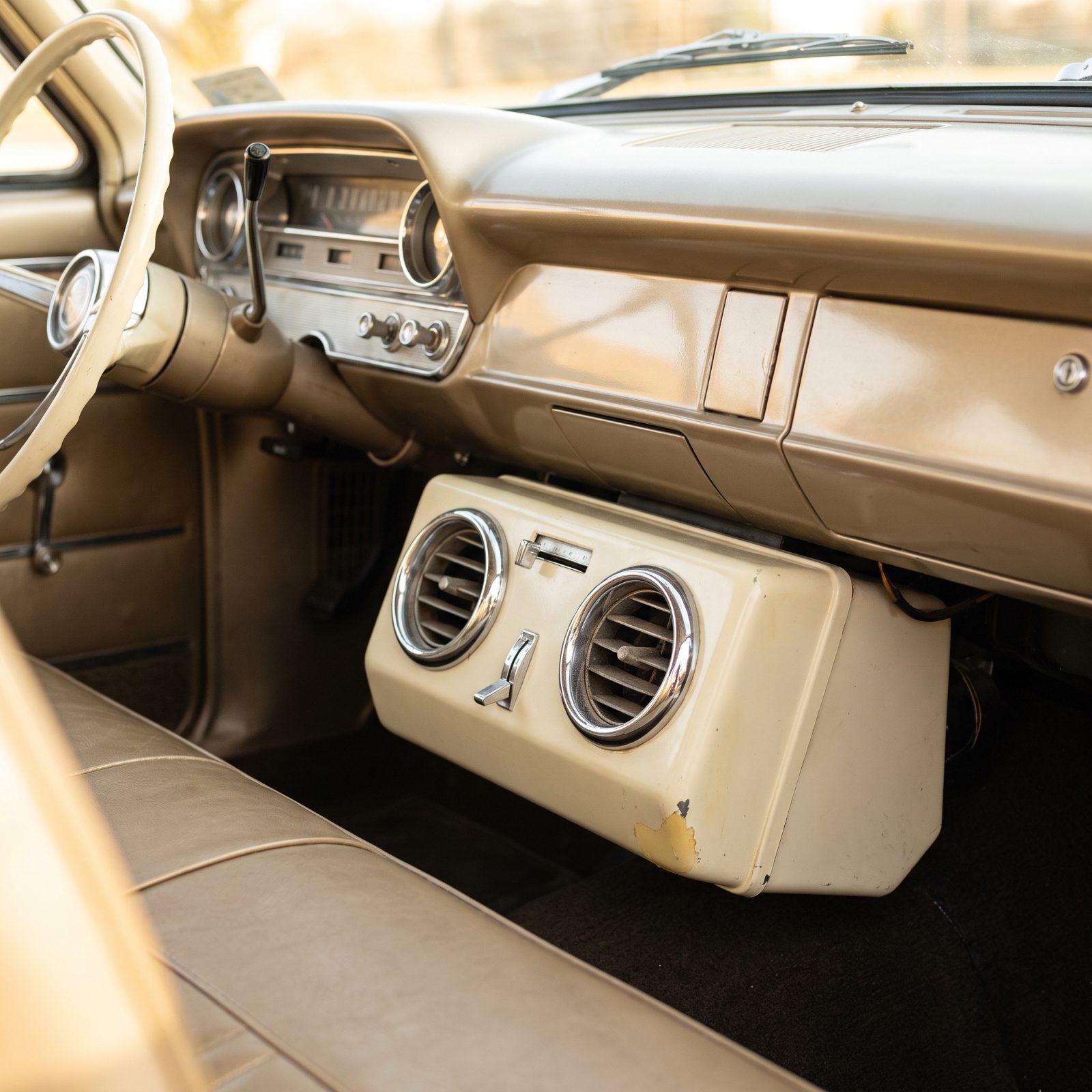
Factory air was a luxury, so plenty of drivers bolted on their own. The unit hung under the dash like an afterthought — which it was — and it sat exactly where your right knee wanted to go. Every tall driver in America whacked it at least once a week.
Two chrome-ringed vents swiveled to blast cold air at your face, and a little lever ran the fan through three noisy speeds. It worked. Loudly. And it earned its nickname honestly, one bruised kneecap at a time.
37. An Underdash Eight-Track Player Screwed to the Steel
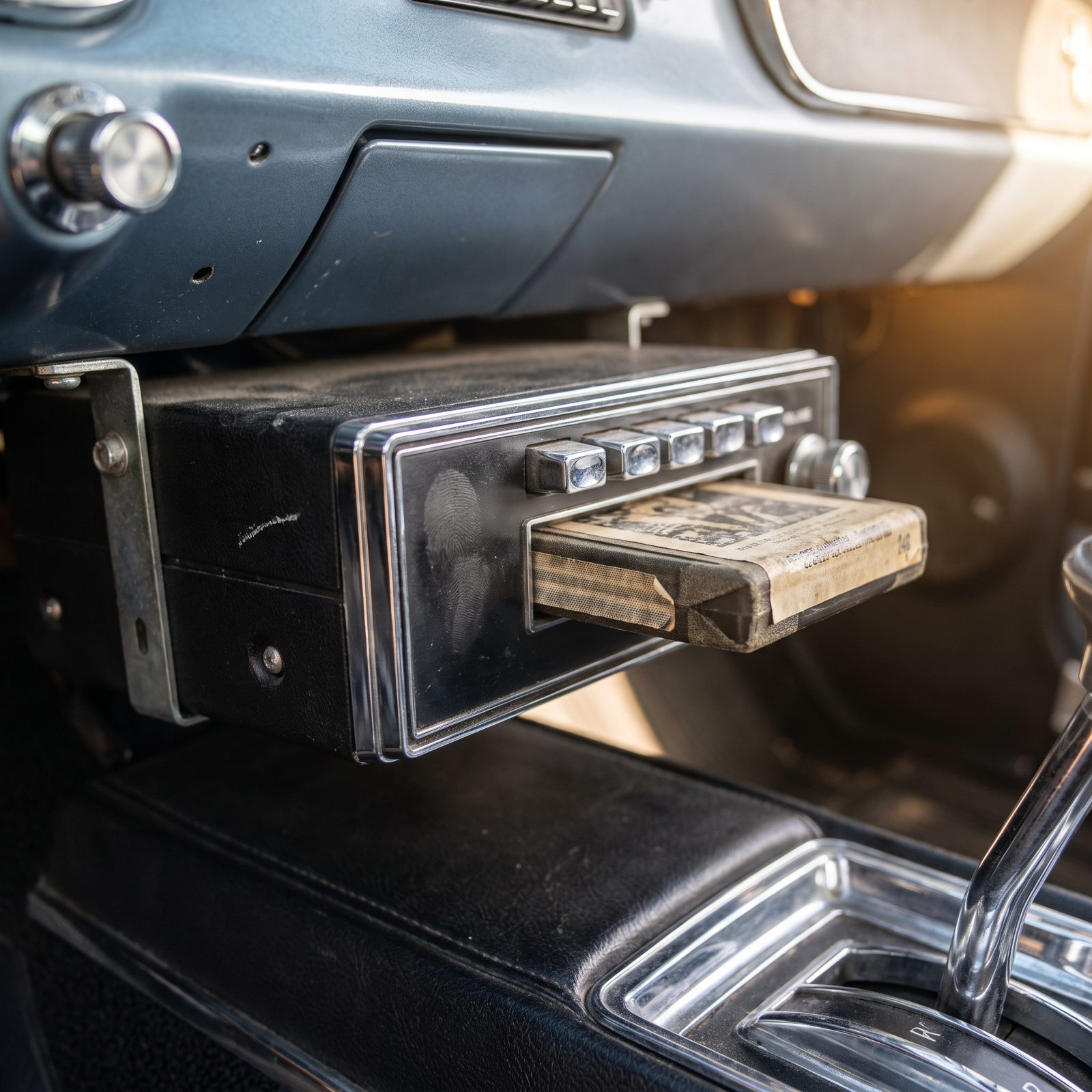
You didn’t insert a tape so much as feed it a brick. The eight-track cartridge was chunky, fabric-labeled, and slid into a slot with a satisfying ka-chunk. Then music — usually landing you right in the middle of a song.
The player itself bolted under the dash on a metal bracket, sometimes a little crooked, always within reach of your right hand. Track changes came with a loud click and a half-second of silence, whether you wanted them or not. Nobody minded. It was music you could carry, and in 1968 that was the whole world.
36. A Vacuum Gauge Dressed Up as an Economy Meter
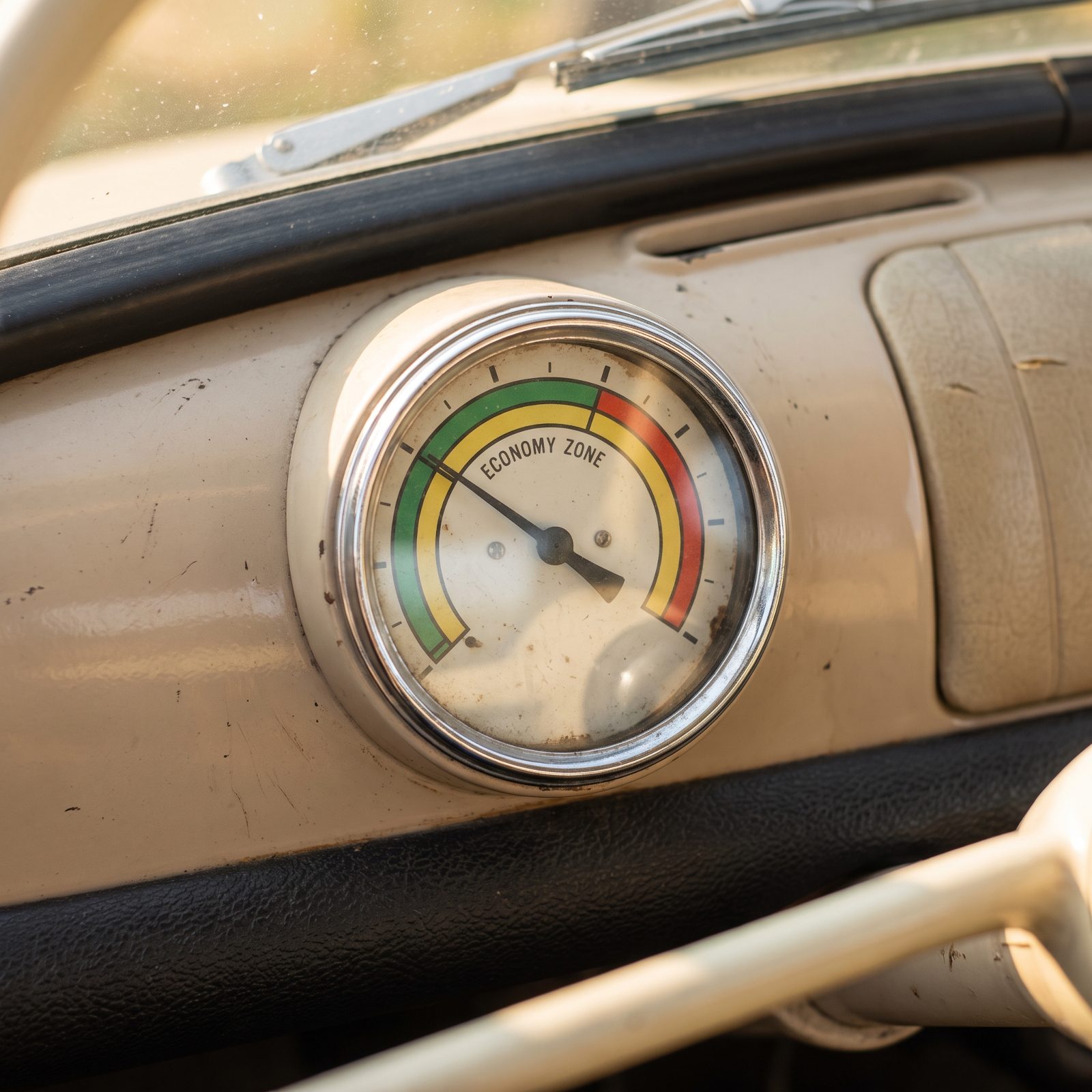
Green meant good. Red meant you were being wasteful with the loud pedal. That was the whole lesson of the vacuum gauge, marketed to careful drivers as an economy meter years before anyone read miles per gallon off a screen.
What it actually measured was intake manifold vacuum, which drops the moment you mash the throttle. But nobody needed the physics — you just kept the needle in the green on the highway and told yourself you were saving money at the pump. Sometimes you even were.
35. A Center-Zero Ammeter, Not a Battery Symbol in Sight
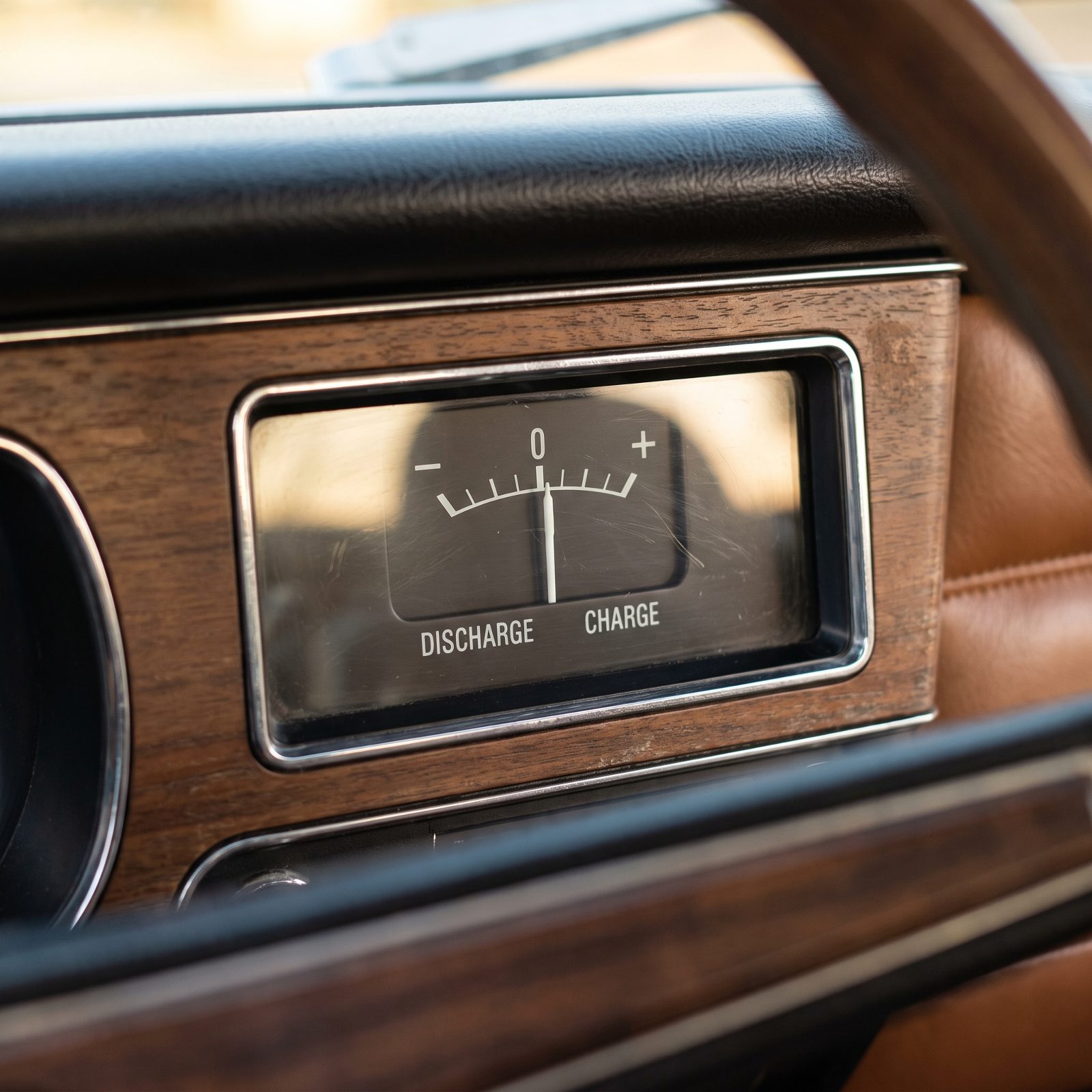
The needle sat dead center and swung either way. Left toward the minus meant your battery was giving up more than it got; right toward the plus meant the generator was topping it off. No icons, no words — just a needle telling you the truth about your charging system in real time.
Learning to read it was a rite of passage. A needle pinned to discharge on a cold morning told you exactly why the car wouldn’t crank tomorrow, and it gave you a whole night to do something about it.
34. A Single Red GEN Light That Meant Trouble
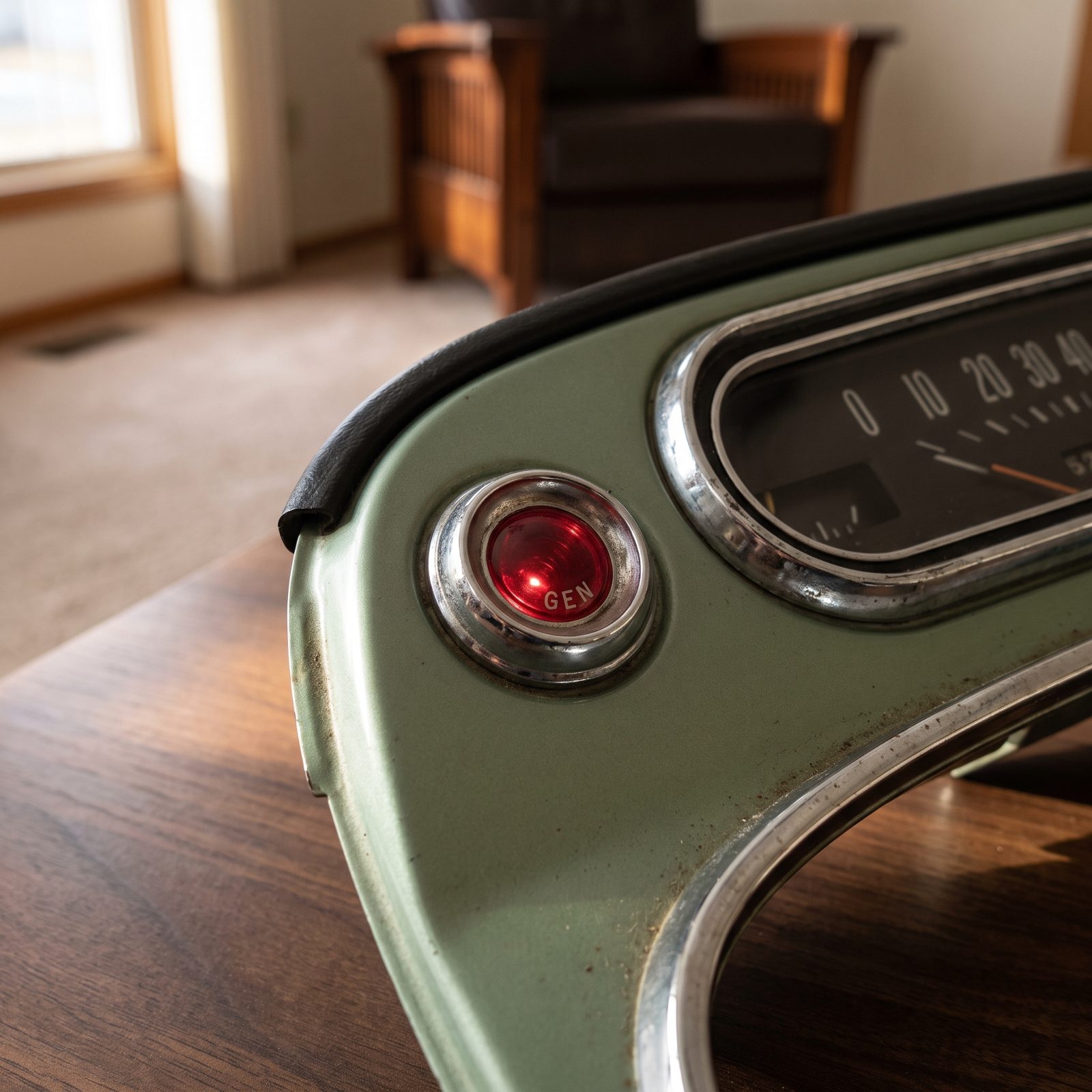
One red jewel, small as a shirt button, glowing where an ammeter used to live. There was the whole charging system boiled down to a single yes-or-no answer. Dark meant fine. Lit meant find a phone.
Carmakers loved it — cheap, simple — and drivers who never quite got the ammeter loved it too. But the trade-off was warning. The light only came on once the generator had already quit, so you got the news, never the forecast.
33. A Temperature Gauge That Only Said C and H
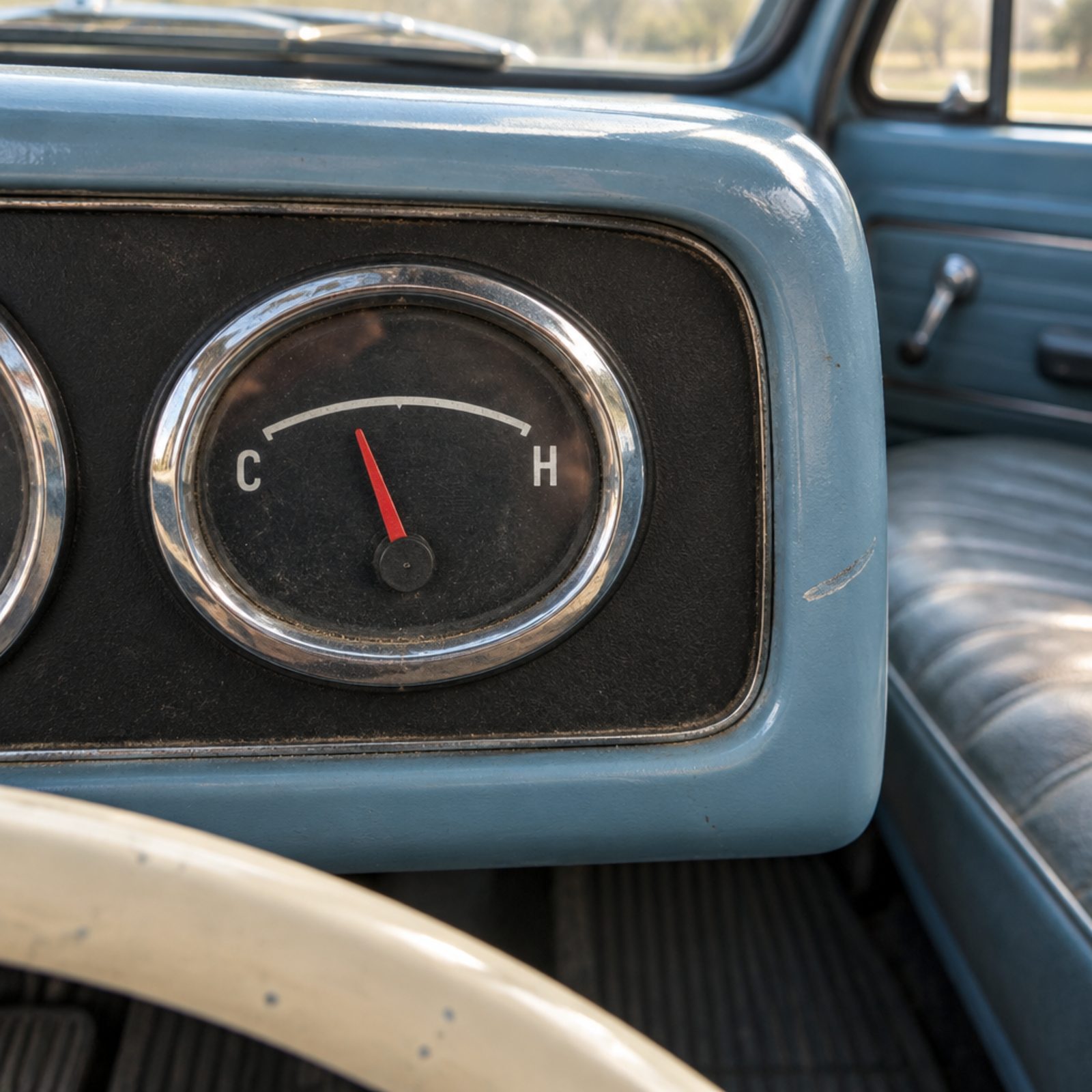
No degrees, no numbers. Just a C at one end for cold, an H at the other for hot, and a needle you were supposed to keep somewhere in the reasonable middle. That was all the information anyone figured you needed.
So you learned your own car’s normal spot. A little past the halfway mark on the highway in July? Fine. But any creep toward that H on a summer grade got your full attention and, often enough, your foot easing off. The gauge trusted you to notice.
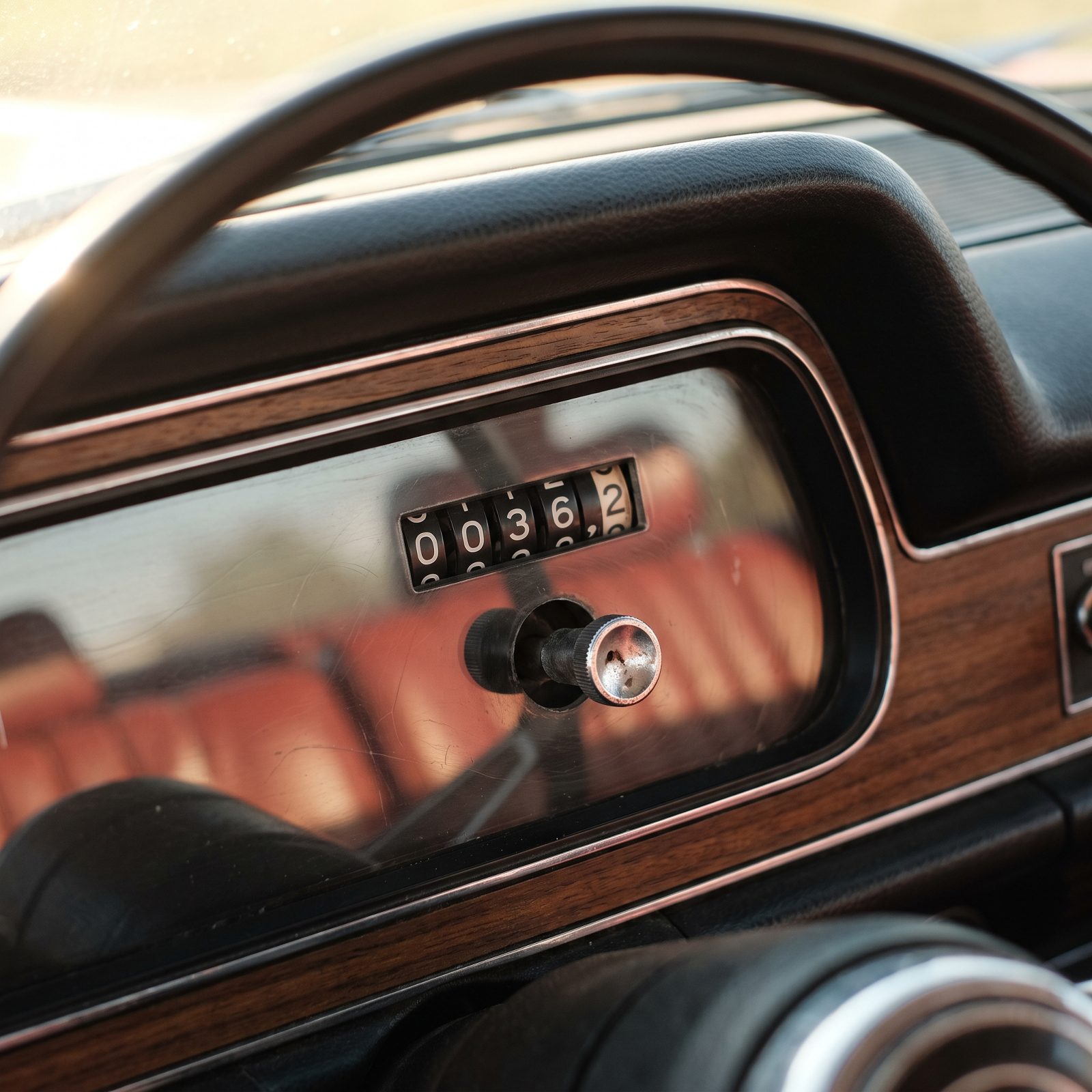
32. A Trip-Odometer Reset Knob Poking Through the Lens
Would you like to save this?
The trip odometer had its own set of little rolling numbers, and to zero them you pressed a chrome knob that stuck out through a hole drilled right in the speedometer glass. You thumbed it in and the wheels spun back to all zeros with a soft mechanical whir.
Road trips ran on that knob. Reset at the gas station, do the math against the pump total, and there was your mileage — worked out on the back of a receipt while somebody squeegeed the windshield.
31. A Dashboard Clock You Set About as Often as You Wound a Watch
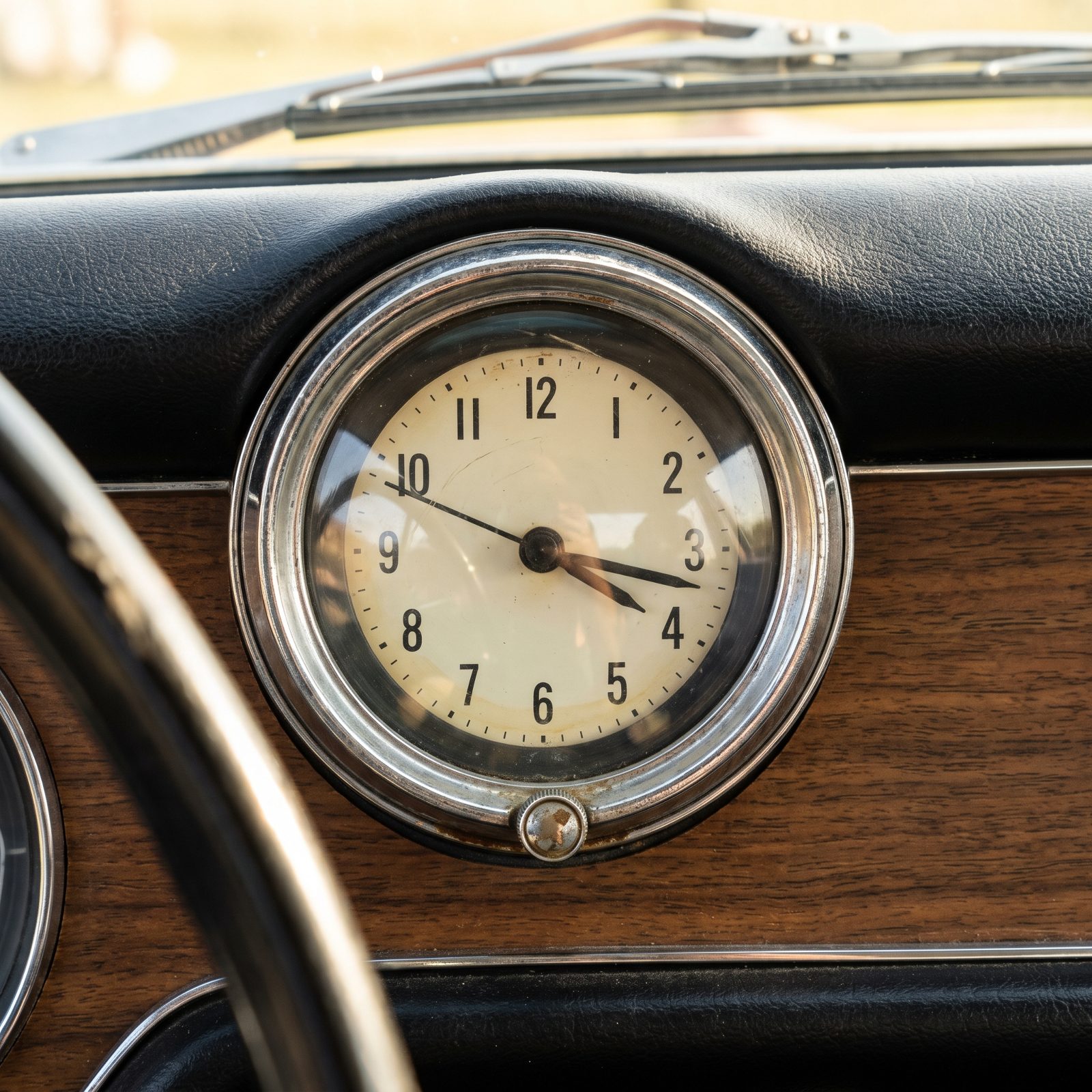
Somewhere near the passenger side, usually where the woodgrain trim looked nicest, ticked a round electric clock that was almost always wrong. A few minutes fast, a few minutes slow, drifting a little further every month.
So you reset it. Reached over, pinched the tiny chrome knob at the bottom of the bezel, nudged the hands back into line. A small ritual you did without thinking, like winding a watch. The clock kept its own loose idea of time, and everybody made peace with it.
30. A Separate Push-Button Starter
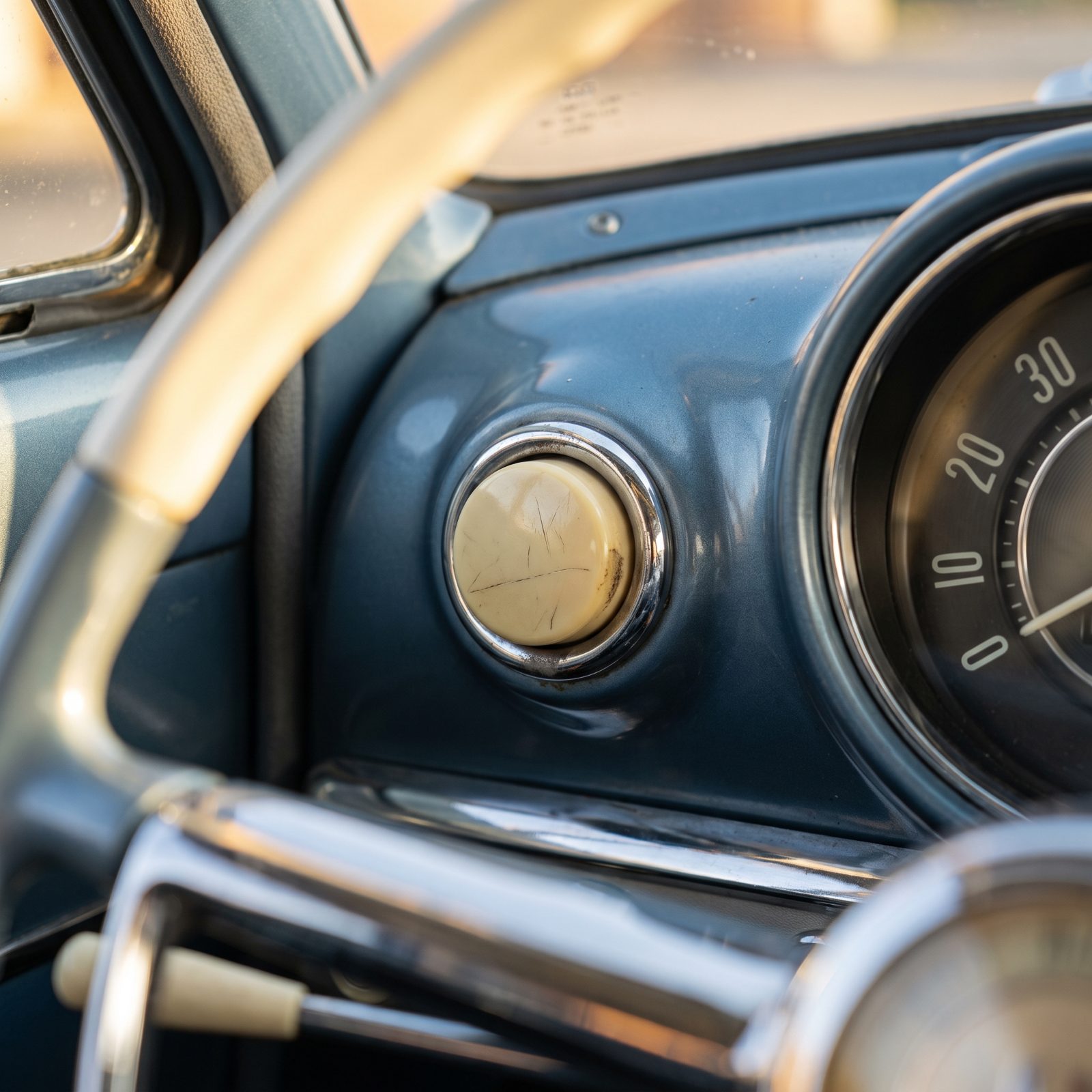
You turned the key to ON, then pressed a separate button to actually spin the engine. Two motions, two controls. Younger drivers stare at it like a doorbell that fell into the dashboard.
The push-button starter hung on well into the early 60s on some models, a holdover from decades of separate starter foot pedals and dash buttons. Detroit eventually folded the whole ritual into a single spring-loaded turn of the key, and the button quietly vanished. But there was something honest about it — you commanded the starter directly, and it answered.
29. An Ignition Switch Mounted Left of the Steering Wheel
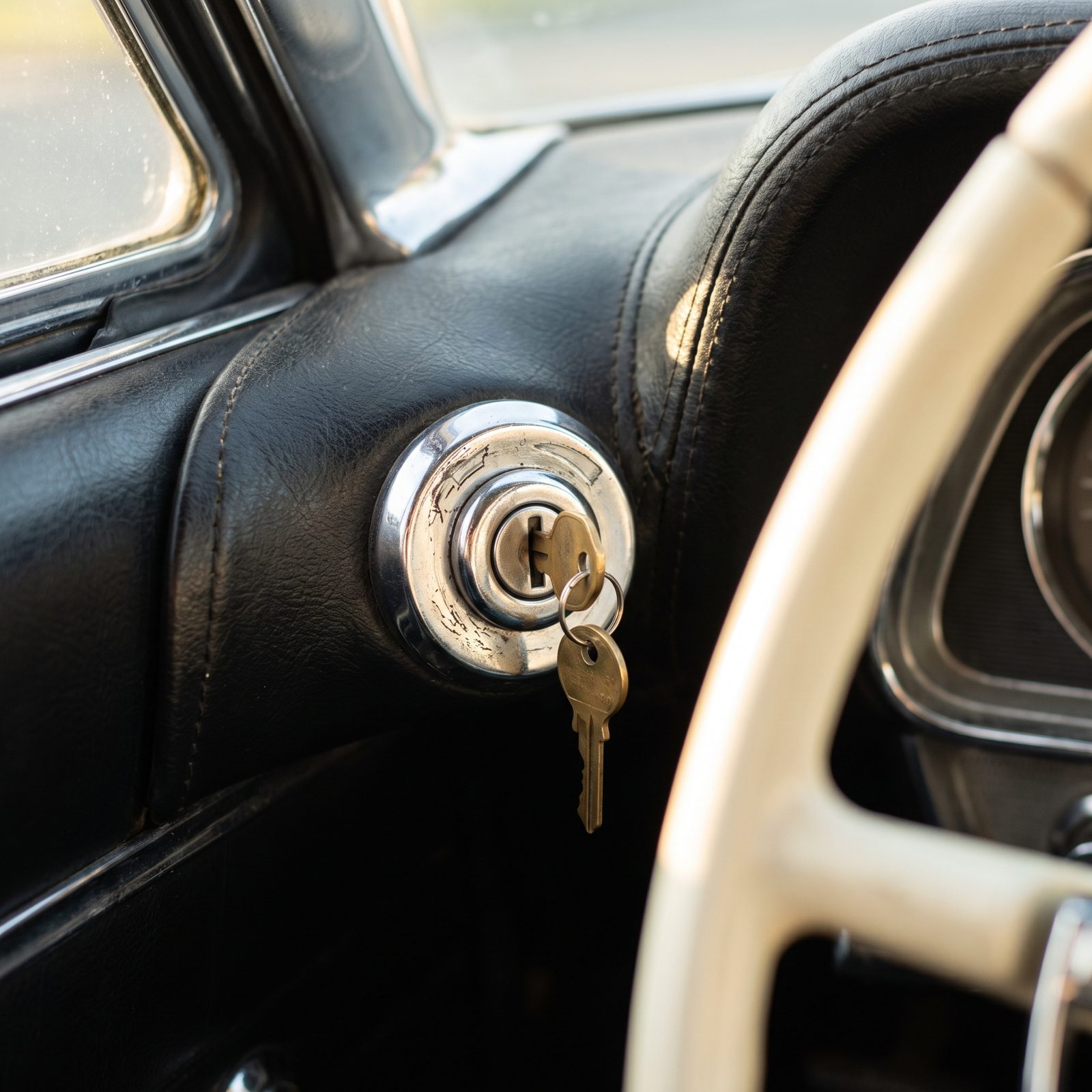
Reach right for the key and you’ll come up empty. On plenty of 60s cars, especially Chryslers, the ignition sat on the LEFT side of the wheel. Muscle memory fails everybody the first time.
The placement wasn’t random. Left-hand ignitions supposedly let racing drivers start and shift in one fluid motion, though most of us were just running to the store. Either way, the driver’s left hand did the work while the right stayed on the column shifter. It feels backward now, which is exactly why it fools people.
28. A Column-Mounted Automatic Gear Indicator
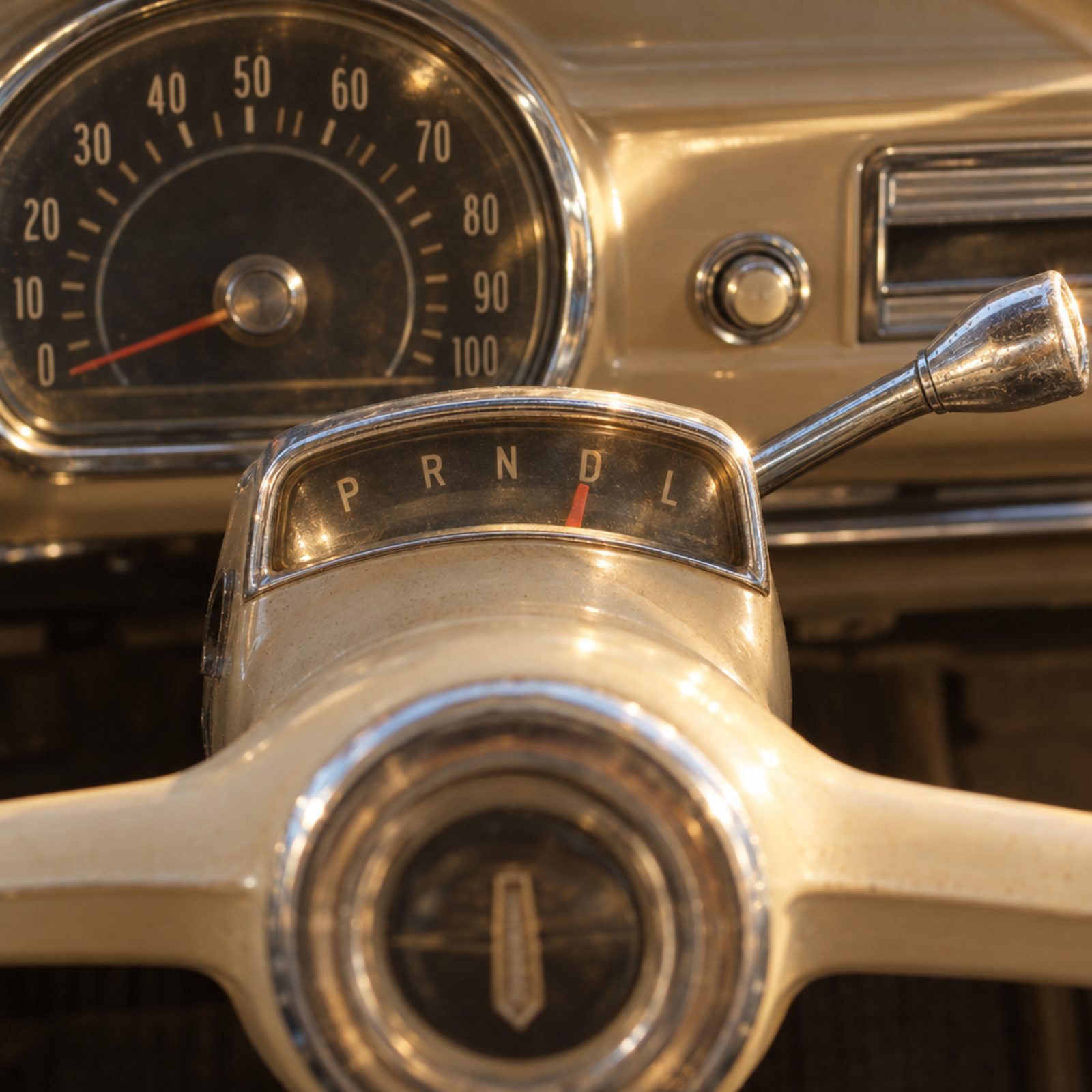
P-R-N-D-L glowing faintly in a little curved window at the top of the column, a red needle sliding across as you moved the lever. The order alone confuses modern drivers, and the abbreviations vary maker to maker.
Some read PRNDL. Some ran the gears backward. A few used numbers where you’d expect letters. Before the shift quadrant standardized in the late 60s for safety reasons, every automaker did their own thing, and you learned your own car’s pattern by feel, glancing up only to confirm what your hand already knew.
27. A Cable-Controlled Overdrive Knob
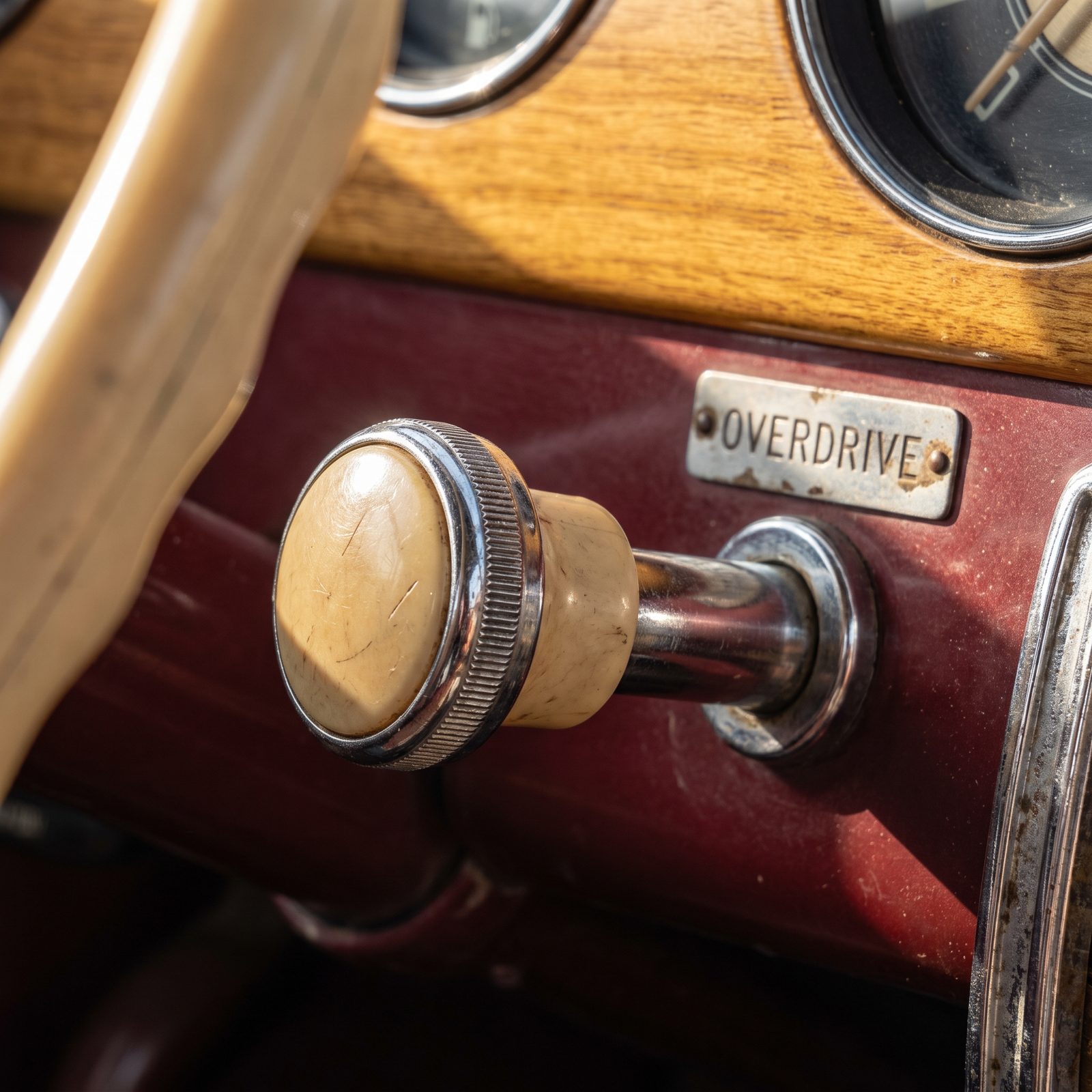
A little knob marked O that you pulled or pushed to engage overdrive. Point it out to anyone under forty and they’ll assume it broke off something.
Overdrive was the fuel-saver of its day, an extra ratio that dropped the engine revs on the highway. You’d pull the knob out to lock it off for hard acceleration or hills, push it in to let it kick in above a certain speed. The whole thing ran on a physical cable snaking down into the transmission — no electronics, no relays, just your hand and a length of wire doing the talking.
26. A Hand-Throttle Control
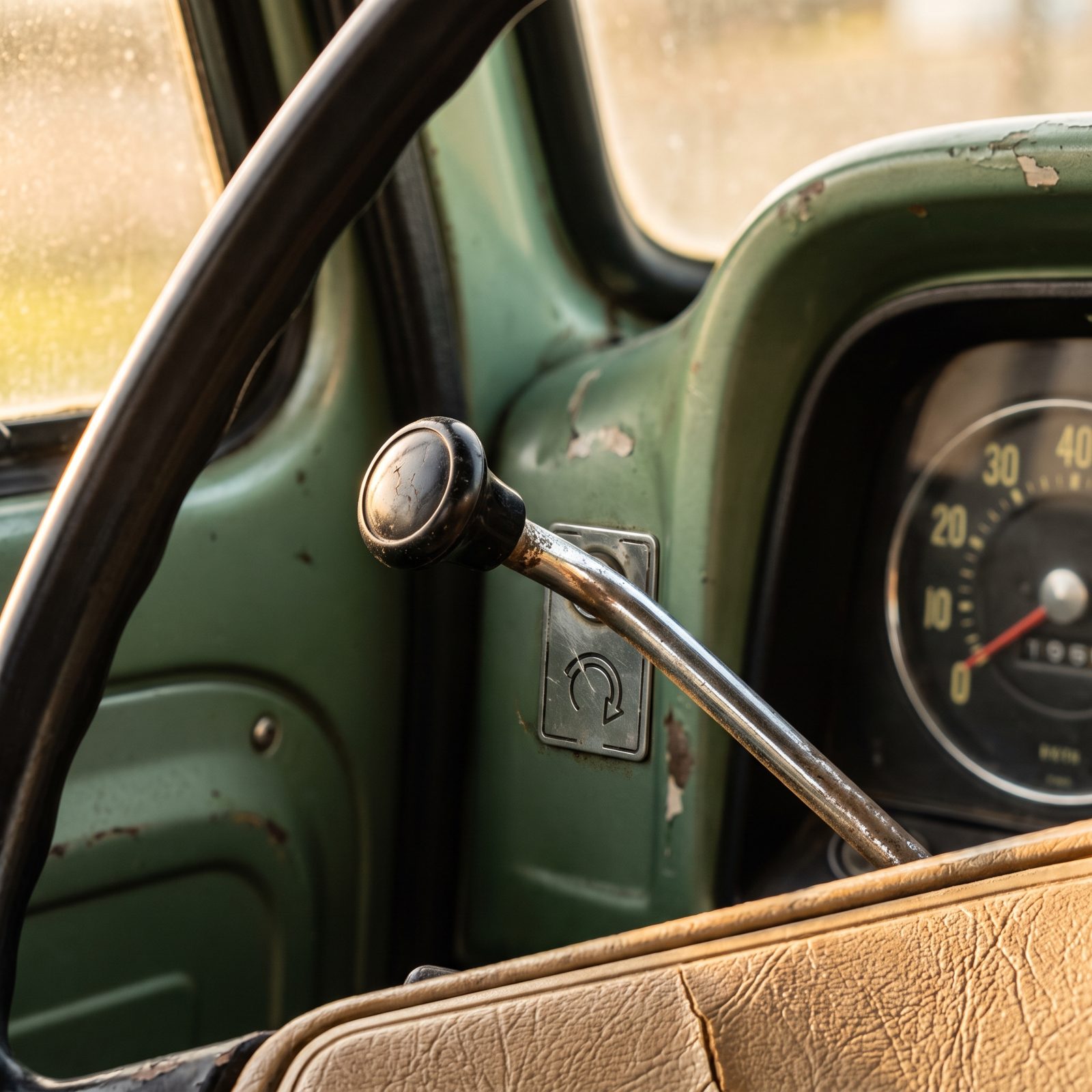
Pull it out and the engine held a steady fast idle with no foot on the pedal. A hand throttle. Common on trucks, farm rigs, and plenty of sedans too.
It earned its keep on cold mornings, letting the engine warm without you sitting there feathering the gas. Mechanics loved them for setting a car’s idle while working under the hood. On a truck it doubled as a crude cruise control down a long straight road — you set it, rested your foot, and let the engine hum along at whatever speed you’d dialed in.
25. Separate Pull Knobs for Fresh-Air Vents
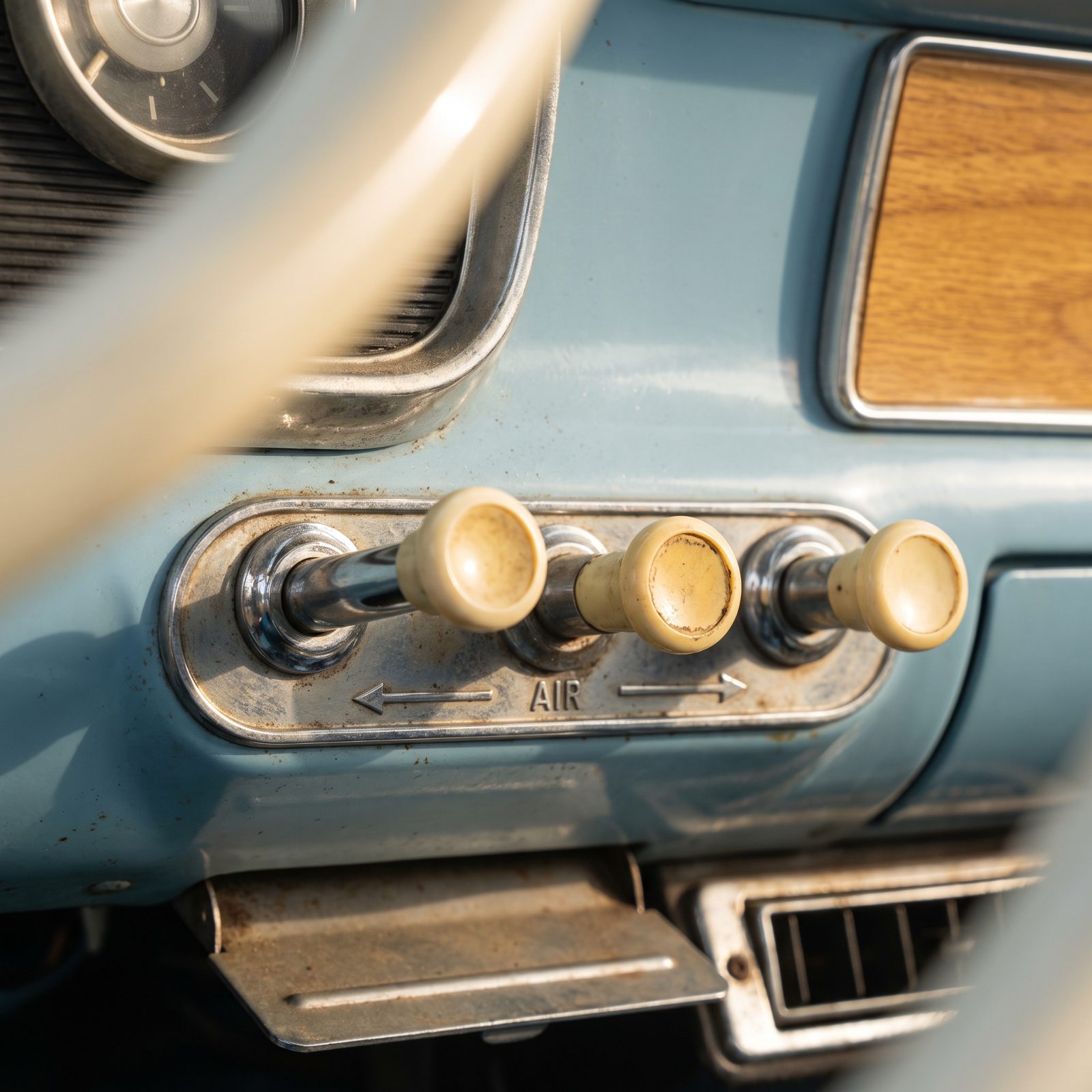
Air conditioning was a luxury option, so most 60s cars cooled you the old way: pull knobs that popped open vents to the outside air. Yank the knob, a flap opened somewhere down by your shins, and the wind did the rest.
There’d be one on each side, sometimes a kick-panel vent you worked with your foot. Modern drivers pull one and wonder why nothing lights up. Nothing was supposed to light up. Cooling that ran on physics and a length of cable, and on a June evening with the windows cracked it worked fine.
24. Mechanical Heater-Control Levers
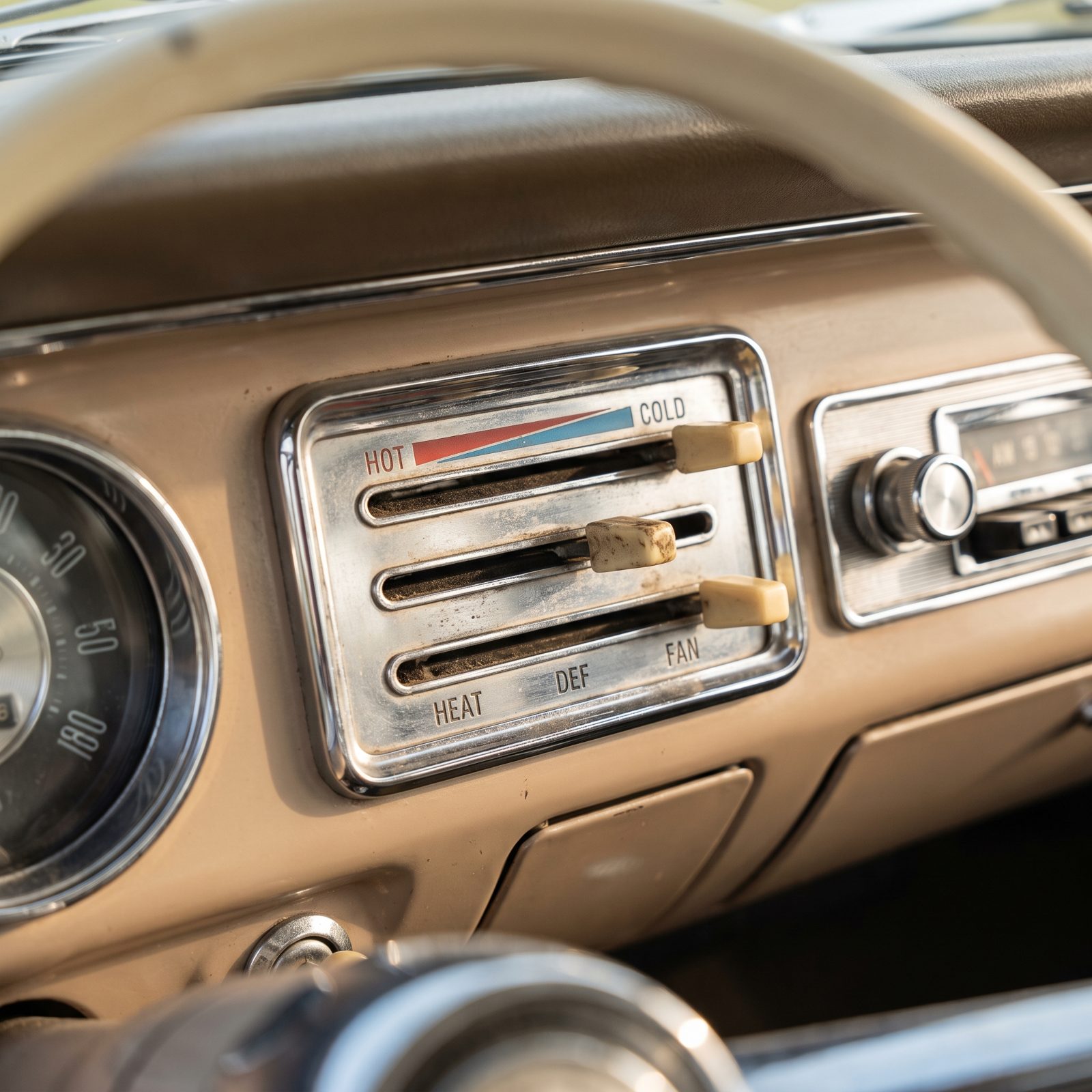
Two or three flat levers sliding along chrome tracks, a red band on one end and a blue band on the other. That was your heater. You didn’t set a temperature. You blended.
Push the lever toward red for warm, toward blue for cool, and find the sweet spot by feel. Another lever aimed the air at your feet or the windshield, a third ran the fan. There was a plainness to it — cables tugging flaps deep inside the heater box. Nudge that lever, feel the warmth come up a beat later, and you knew exactly what you’d asked the car to do.
23. An AM Radio With Mechanical Presets and a Sliding Tuning Needle
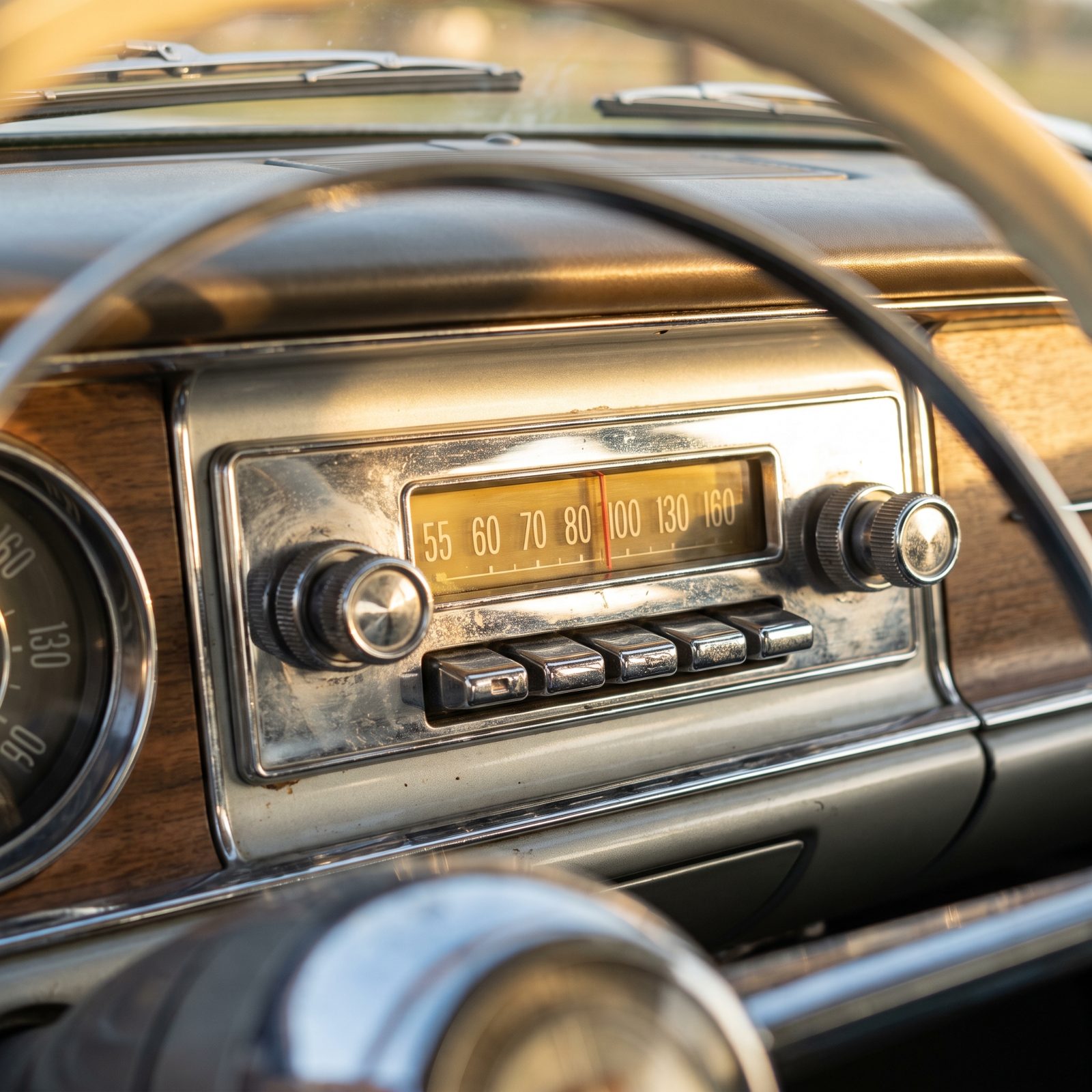
A red needle sliding across a lit dial as you turned the knob, hunting for a station between the static. Five chrome push-buttons underneath, each set the mechanical way: you tuned it in, pulled the button out, pushed it back, and the mechanism physically remembered.
No presets in a menu. The buttons moved real levers. Punch one and the needle would snap across the dial with a satisfying mechanical thunk. AM only, one speaker, the ballgame fading in and out as you drove past a hill — that was the whole soundtrack of a 60s drive.
22. A Separate Rear-Speaker Fader Knob
Would you like to save this?
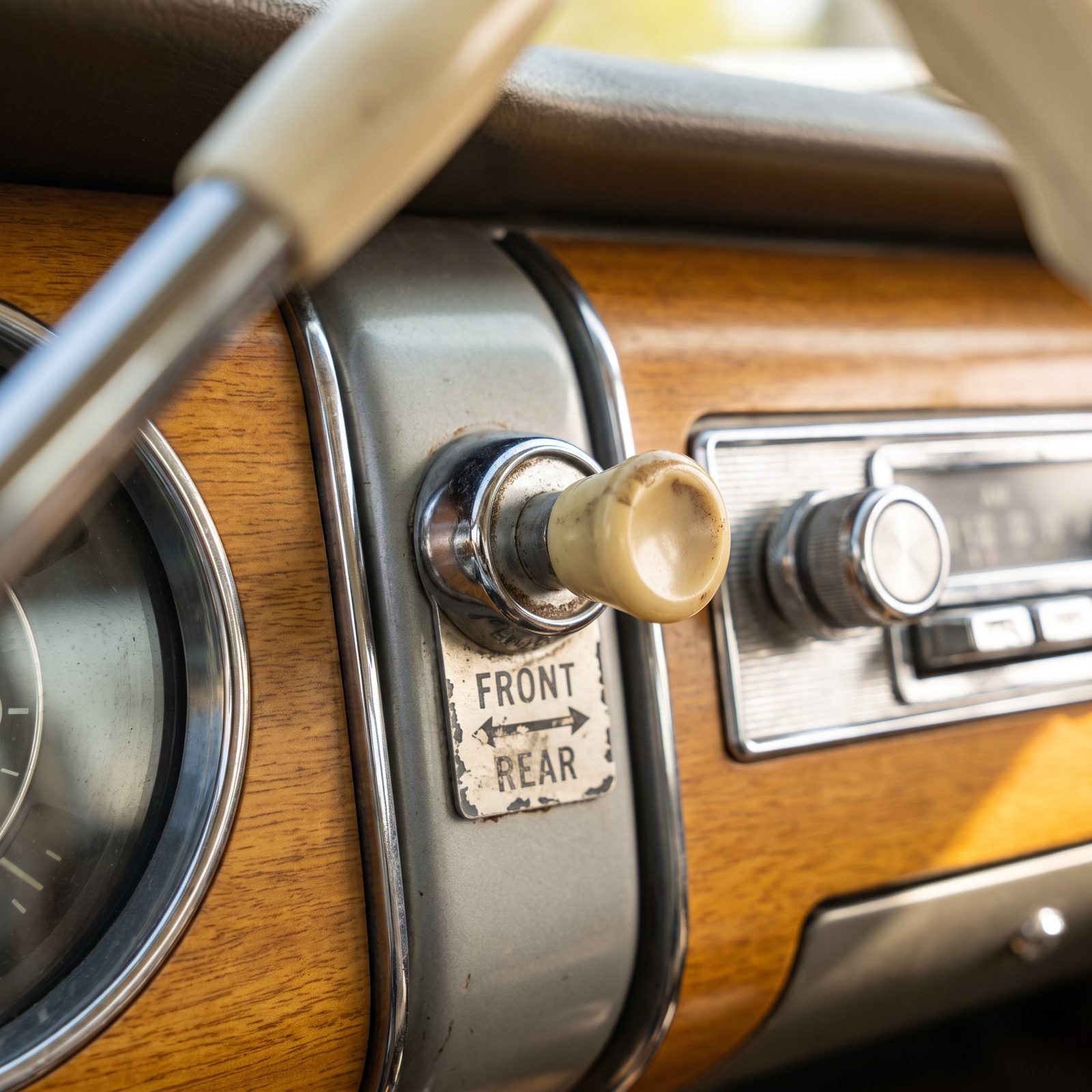
Rear speakers were an upgrade, and controlling them meant a separate little knob on the dash you turned to shift sound front to back. A luxury touch on nicer cars, and a mystery to anyone raised on balance sliders in a menu.
Twist it toward the back and the kids in the rear seat got the ballgame. Twist it forward and it was your show up front. Simple, mechanical, oddly satisfying. On a Sunday drive with the family loaded in, that knob decided whose ears the music belonged to.
21. A Power-Antenna Raise-and-Lower Switch
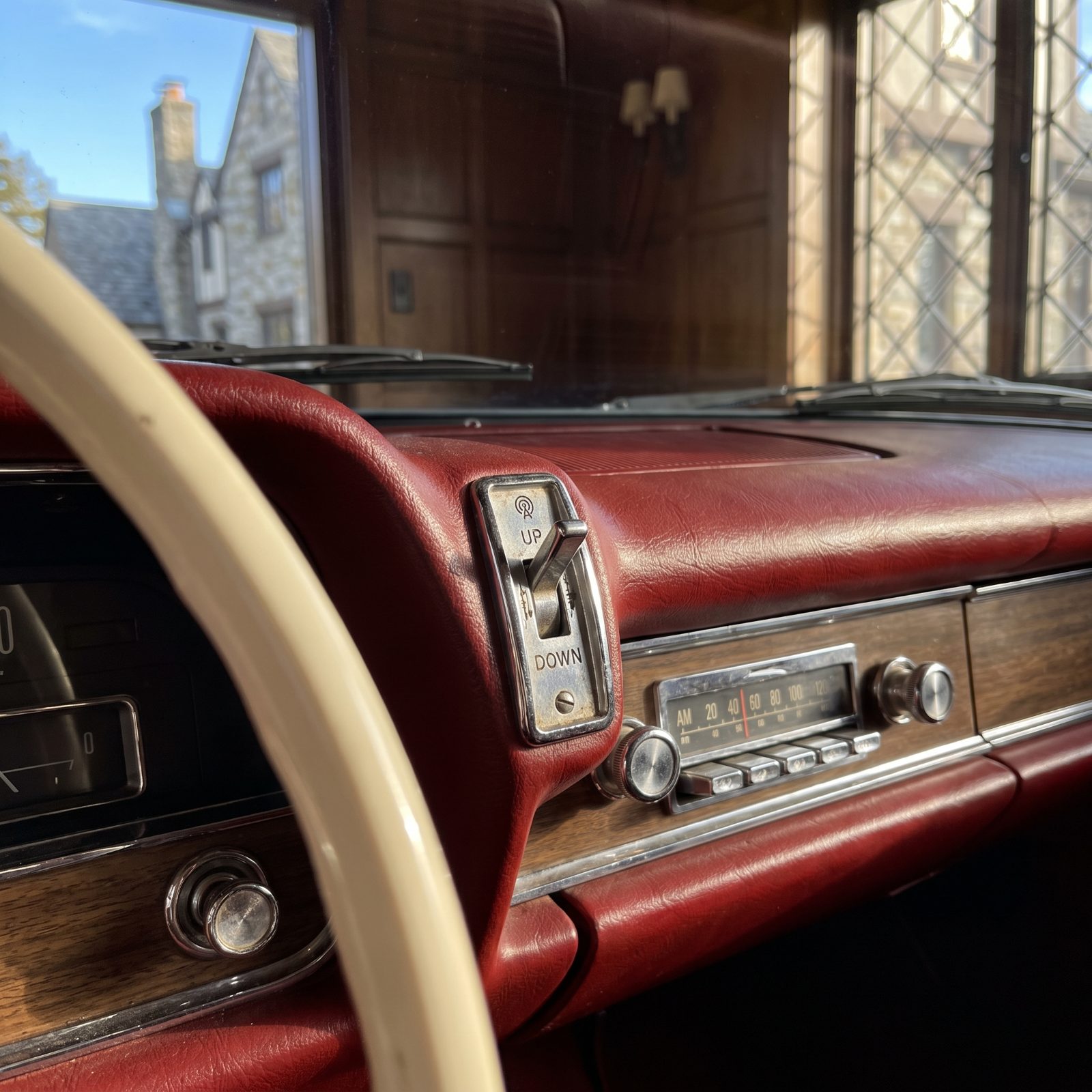
Flick a switch and the antenna rose from the fender with a soft electric whir. A power antenna. In 1966 it felt like the height of technology.
Most cars made you get out and telescope the antenna by hand. But on a well-equipped model, this little chrome switch did the work, whining the mast up when you turned on the radio and dropping it when you switched off. There was real pleasure in watching it rise — an unnecessary bit of automation that made the whole car feel a class above.
20. The Rear-Speaker Reverb Knob That Made AM Radio Sound Enormous
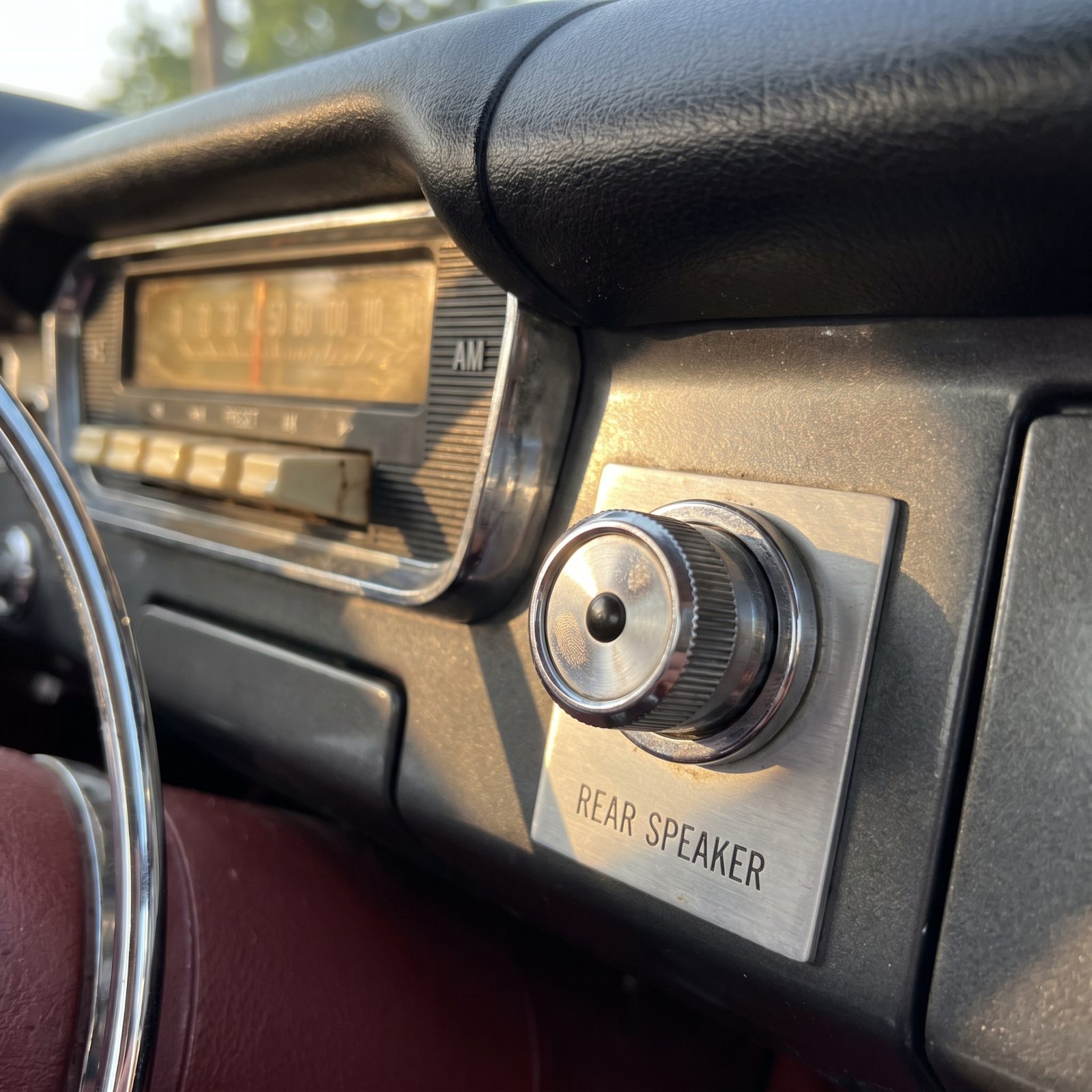
Turn it, and the music seemed to drift back over your shoulder. The rear-speaker reverb control was Detroit’s answer to hi-fi fever — a little rotary knob that faded sound toward the back seat and added a wet, echoey shimmer to whatever was playing on the AM band.
A tinny single speaker suddenly sounded like a room. Kids in the back thought the radio lived under the rear window, and nobody bothered to explain it. You just leaned down, gave it a quarter turn, and the whole car changed shape.
19. The Under-Dash Tissue Dispenser Nobody Asked For But Everyone Used
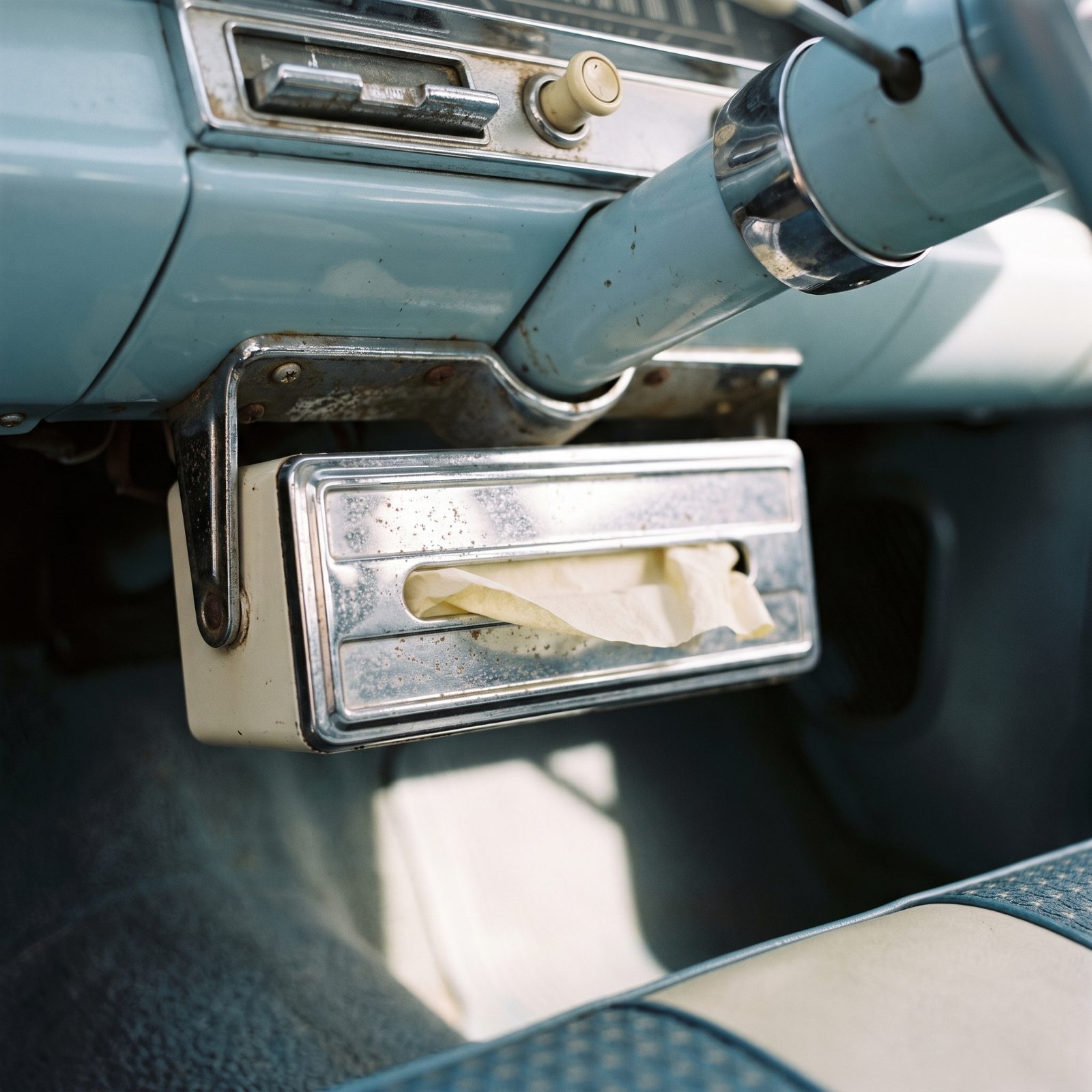
Bolted to the underside of the dash like an afterthought, the tissue dispenser sounded silly right up until the day you actually needed a Kleenex doing sixty.
You pulled one out through the chrome slot and it left the rest fanned and ready. Runny noses in winter, spilled root beer at the drive-in, a smudge on the windshield — it handled all of it. Refilling meant a special flat pack sold at the parts counter, which is exactly why so many of them sat empty for years.
18. The Column-Clamp Tachometer Every Young Guy Bolted On First
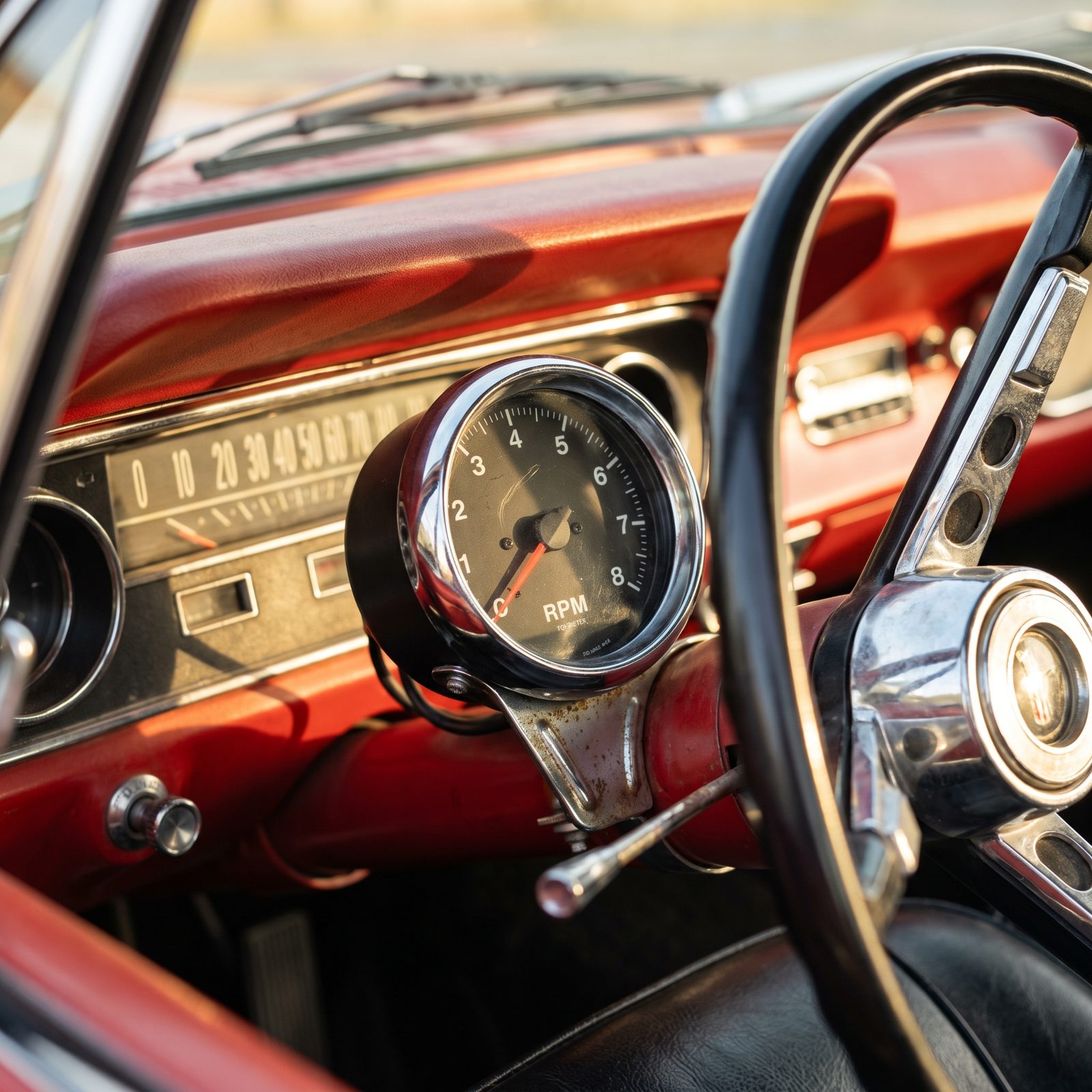
Detroit gave you a speedometer. It rarely gave you a tach. So the first weekend after payday, half the young guys in America drove to the parts store, bought a Sun or a Stewart-Warner tachometer, and clamped it to the steering column with a chrome bracket.
It sat right in your line of sight, needle jumping as you rowed through the gears. You told yourself it was for shifting at the right RPM. Mostly it was for looking like you knew where the right RPM was.
17. The Painted Steel Dashboard That Matched Your Fender
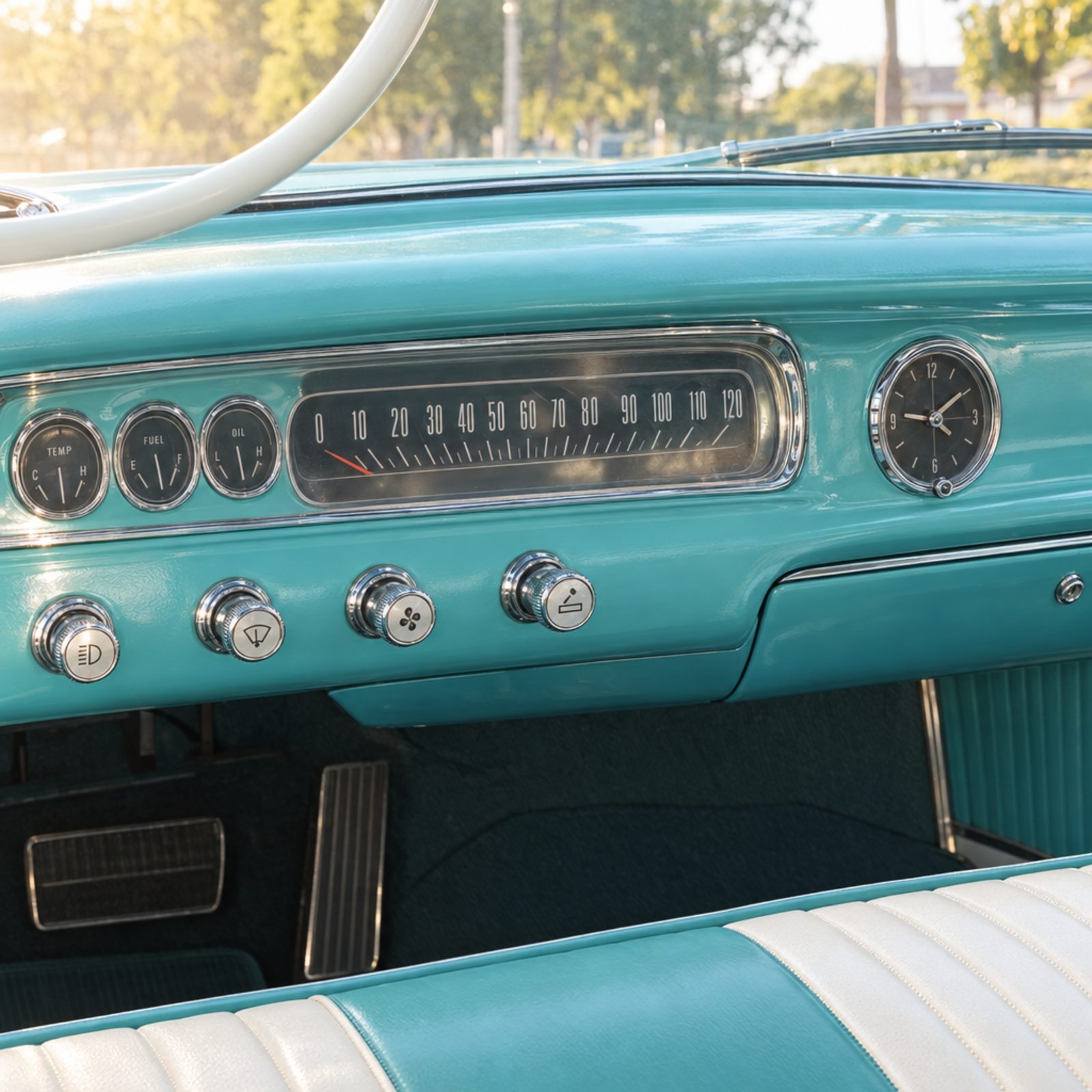
Before soft-touch plastics swallowed everything, dashboards were made of the same stuff as the doors: steel, painted body color, cold to the touch on a January morning.
Your turquoise Bel Air had a turquoise dash. Your red Galaxie glowed red inside. The paint caught the sun in a broad hard reflection, and if you slid a set of keys across it you heard the ring of metal on metal. No crash padding. No give. Just a sheet of painted steel and a chrome strip to break it up.
16. The Fake Woodgrain Vinyl That Fooled Nobody and Delighted Everyone
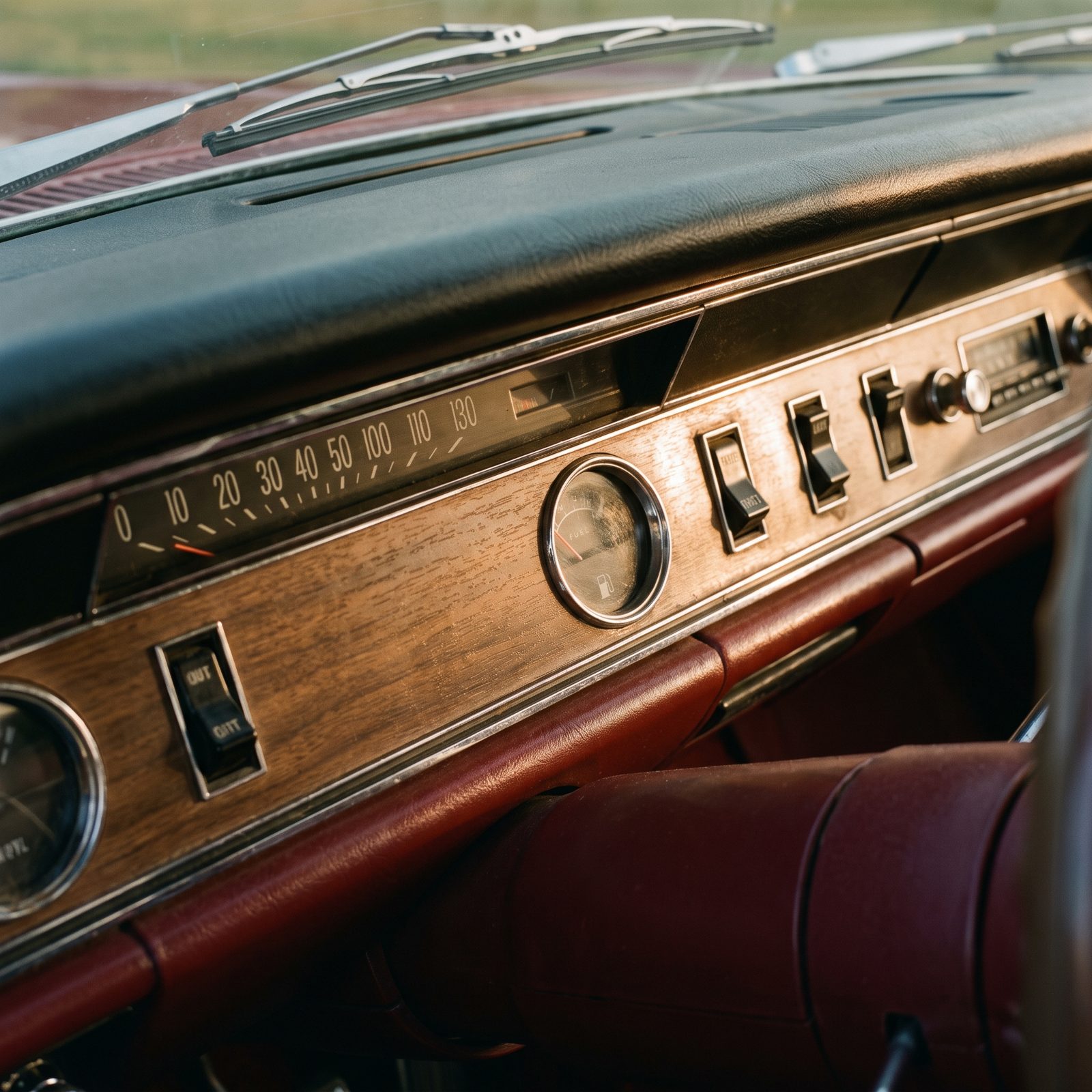
Nobody believed it was real wood, and that was never the point. The printed woodgrain vinyl glued across the instrument panel was aspiration you could afford — walnut for the price of plastic.
Run your finger across it and you felt smooth vinyl, not grain. Look close and the pattern repeated on itself. But at a glance, cruising down Main Street with the windows down, it said your car had a little dignity. Detroit slapped it on everything from full-size Fords to station wagon tailgates, and honestly? It looked good doing 40 with the sun on it.
15. The Engine-Turned Metal Trim That Caught the Light Like Water
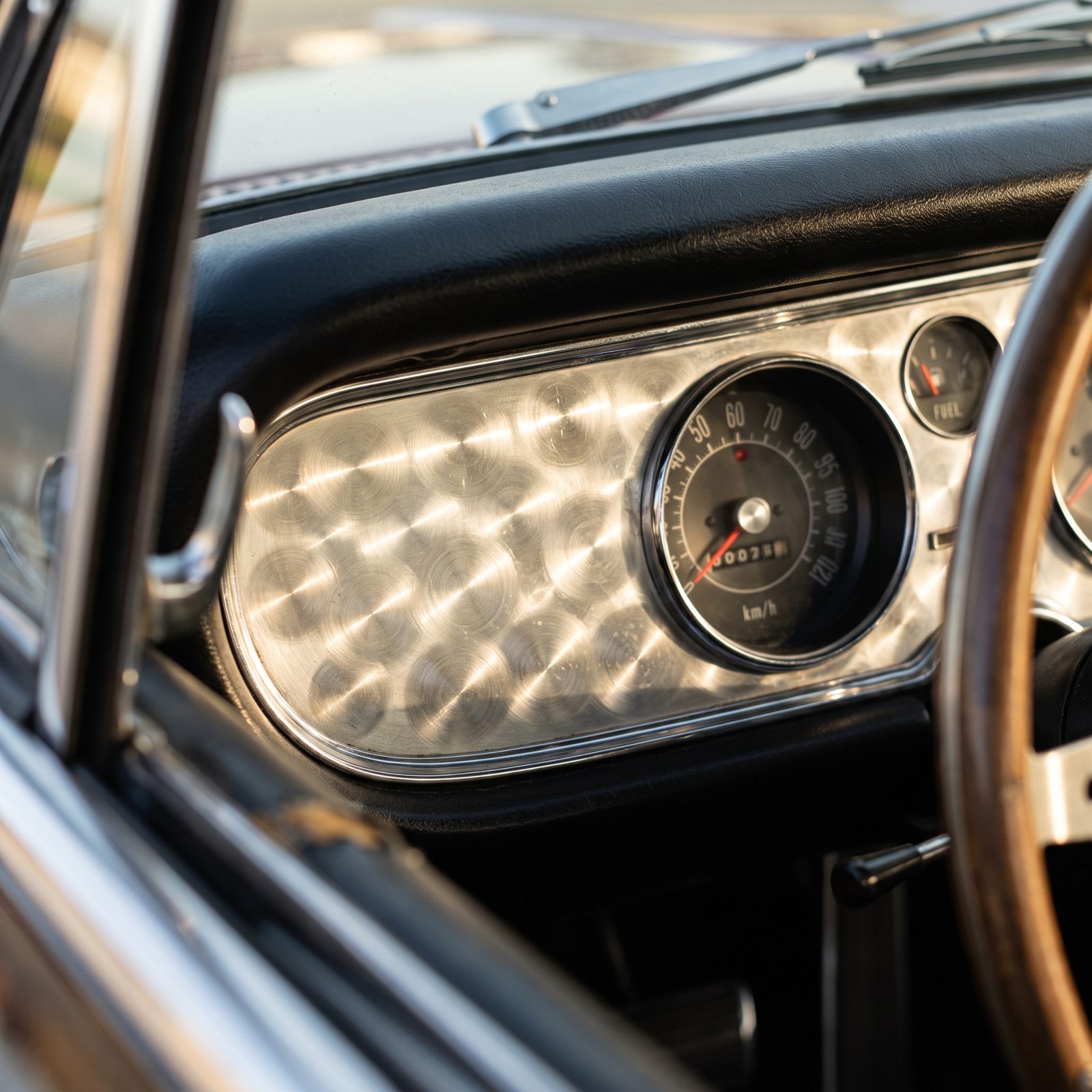
Tilt your head and the swirls came alive. Engine-turned trim — also called jeweling or damascening — was a panel of aluminum finished with hundreds of overlapping polished circles that scattered light in every direction.
It came off the world of aircraft instrument panels and hot rods, and dropped onto a GTO or a Corvette dash it made the whole cockpit feel serious. No two glints were the same. Every time the sun moved, the pattern rippled like the surface of a pond.
14. The Wraparound Cockpit Angled Straight at the Driver
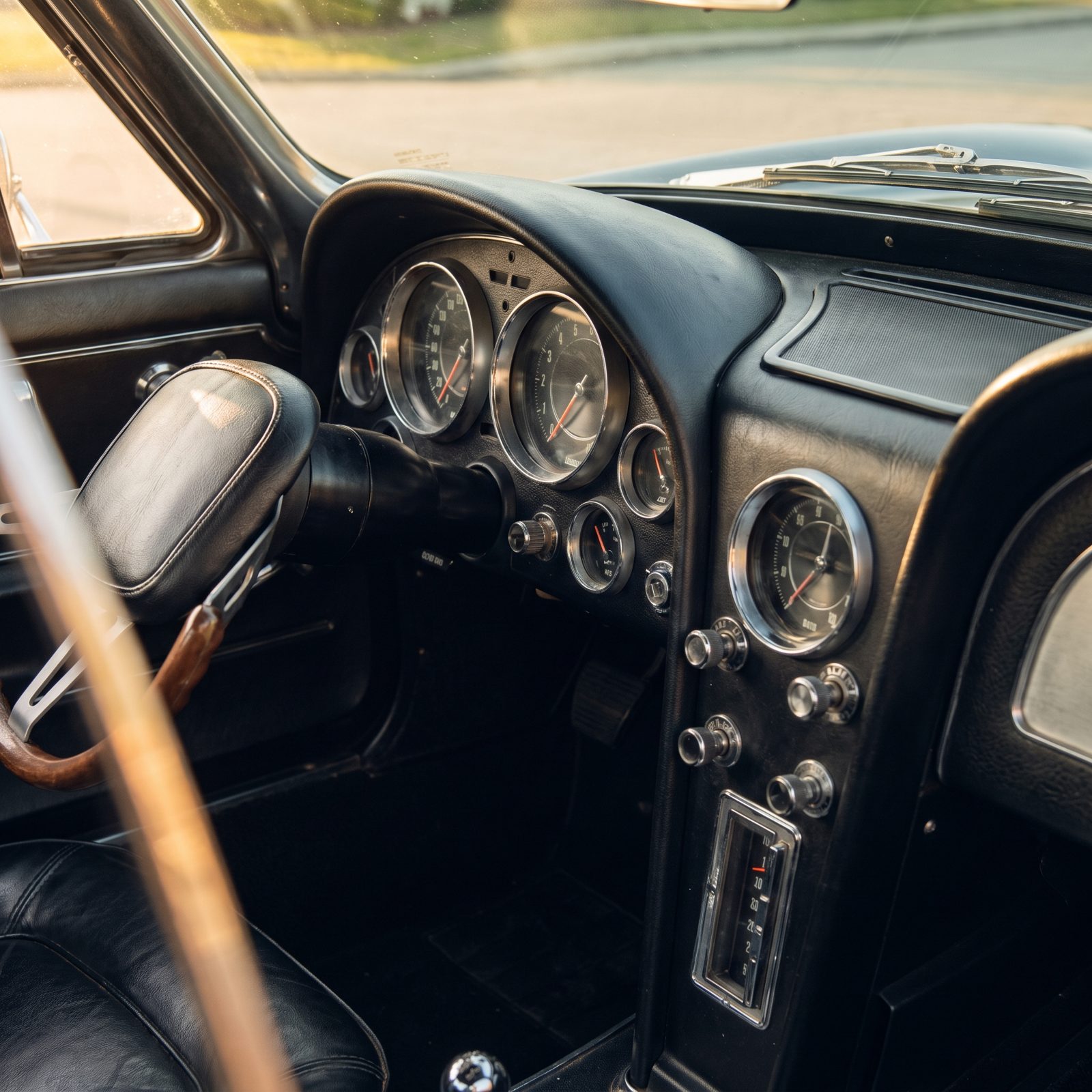
Sit down and the whole panel seemed to lean in toward you. The wraparound cockpit angled every gauge and switch at the driver, so the passenger got a flat back side while you got the good seat.
Sports cars and pony cars loved it. The car felt built around the person driving it, not the family riding along. You didn’t reach across a flat plane for the heater knob — it curved to meet your hand.
13. The Twin-Pod Gauge Binnacles That Looked Like Aircraft Dials
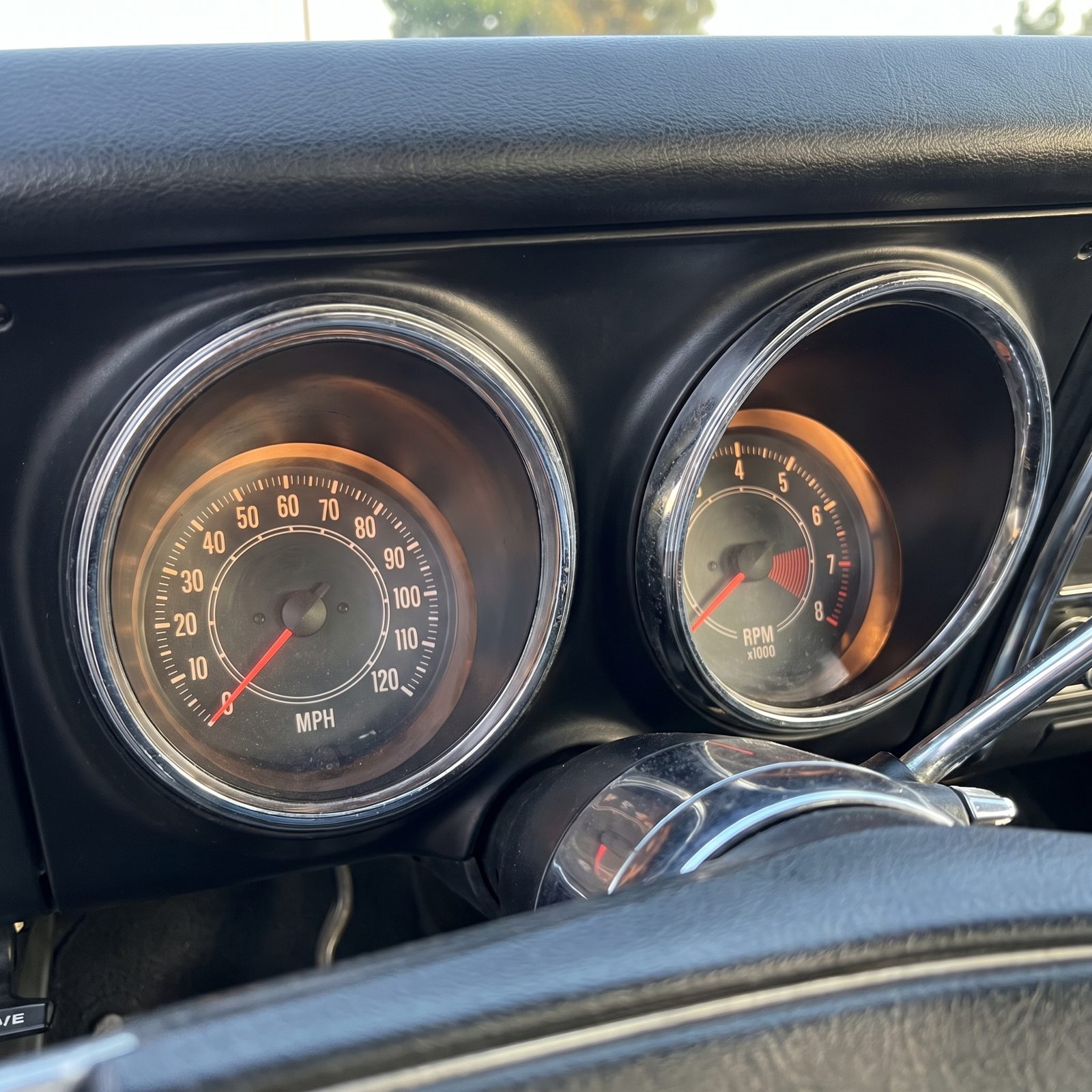
Two deep round hoods, side by side, each swallowing a big dial. The twin-pod binnacle borrowed straight from the aircraft cockpit, recessing the gauges so daylight couldn’t wash them out.
Speedometer on one side, tach on the other, both hooded and shaded. At night they glowed from inside those tunnels like a pair of eyes. Muscle cars leaned hard into the look because it told you, before you even turned the key, that this thing was built to be driven fast and read at a glance.
12. The Center-Mounted Cluster That Put the Speedo in the Middle
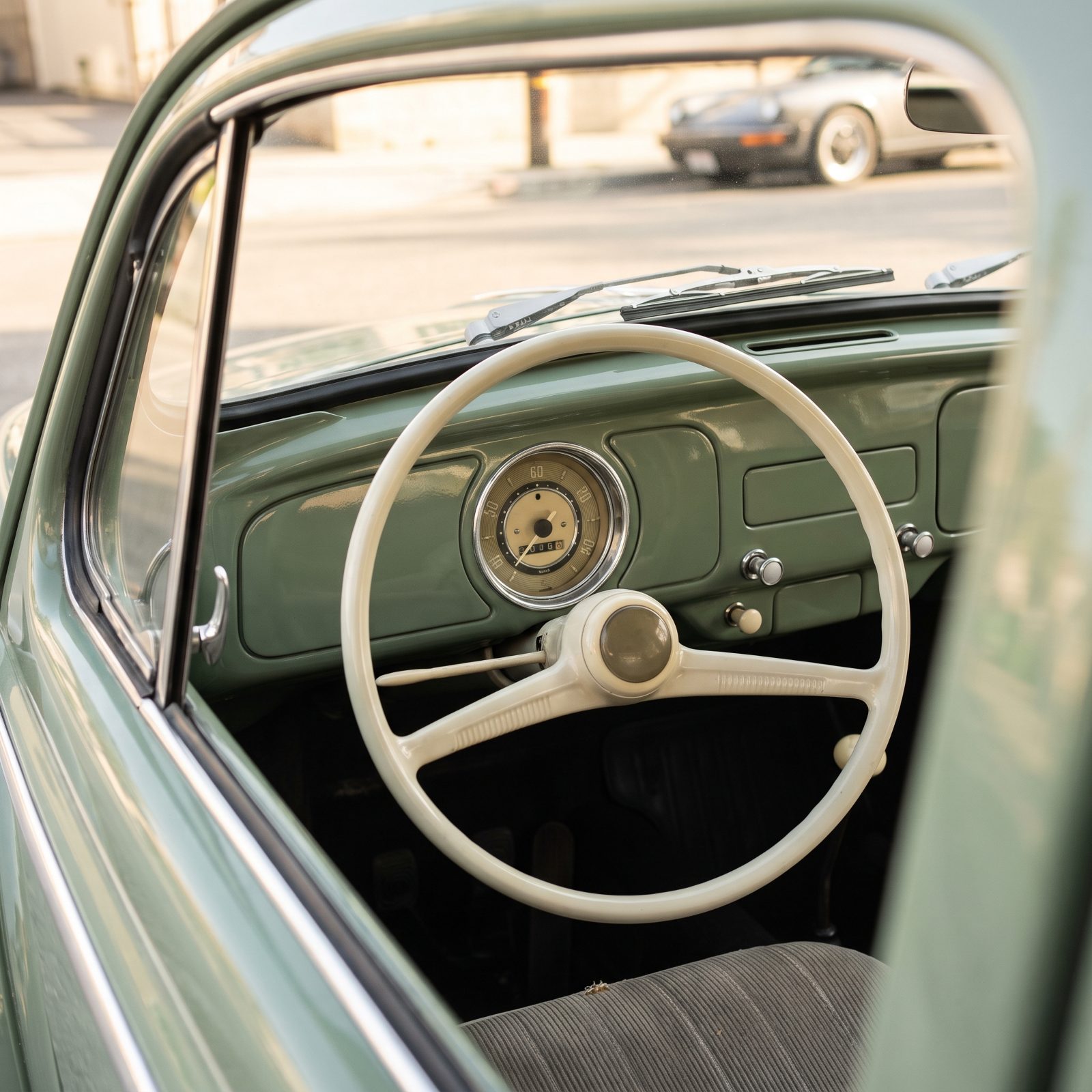
Look dead center and there it was — the only gauge in the car, parked in the middle of the dash where driver and passenger could both read it.
Imports and economy cars loved the center cluster. One speedometer, maybe a fuel needle tucked inside it, and nothing else cluttering the view. The cabin felt airy and honest. You didn’t need eight dials to know how fast you were going and whether you’d make it home on the gas you had. Cheaper to build, too, since a single panel worked for both left- and right-hand-drive markets.
11. The Jewel-Blue High-Beam Light That Glowed Like a Sapphire
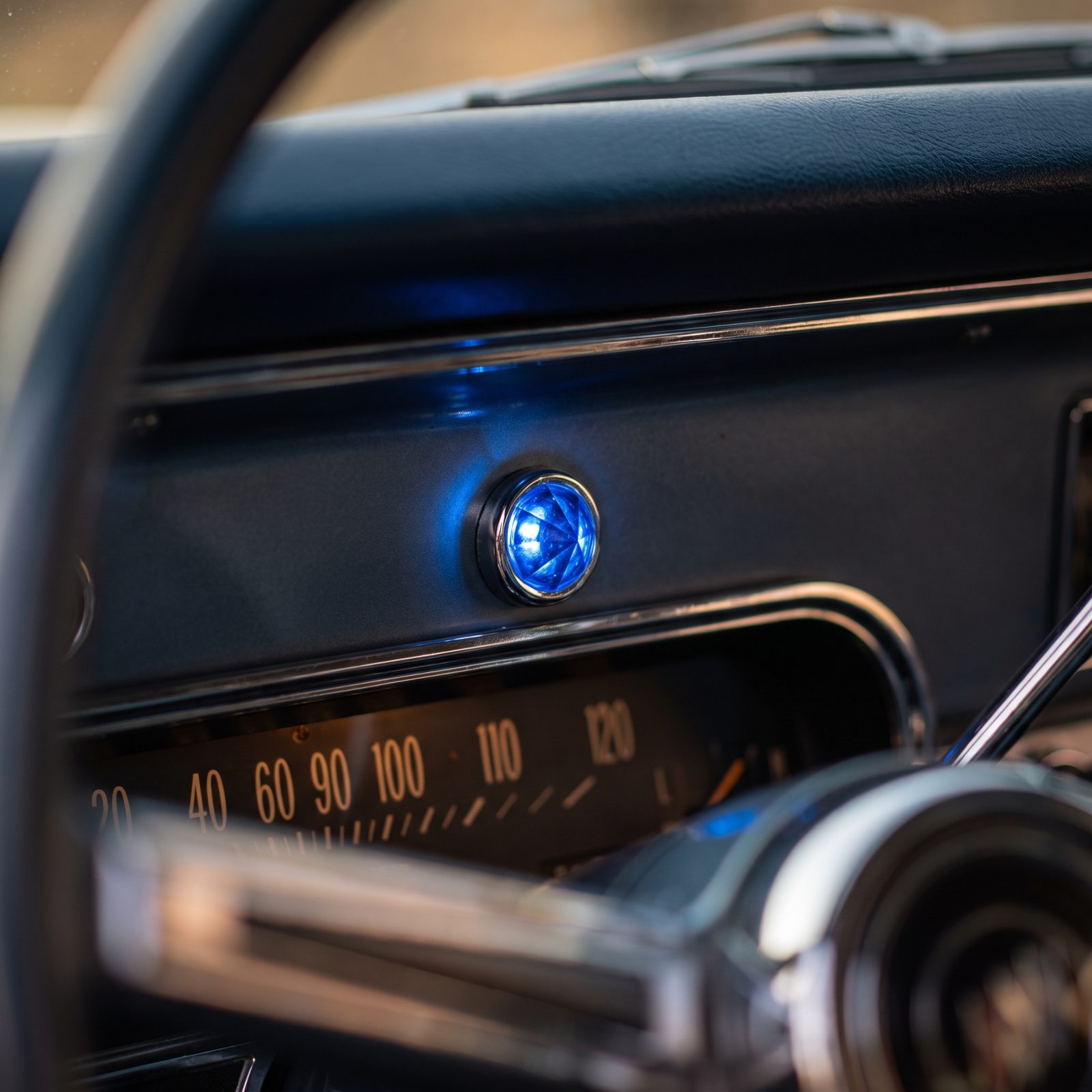
Flip the headlights to bright on a dark two-lane, and a tiny blue jewel woke up on the dash. Just a faceted plastic lens over a bulb, no bigger than a shirt button, glowing that unmistakable sapphire blue.
Manufacturers made the high-beam telltale blue and nothing else, so you learned it by feel in the dark. That little glow meant you were the only car on the road, headlights reaching way out into the black, radio down low. Smallest thing on this whole list. It might also be one of the most missed.
10. The Pull-Handle Parking Brake That Lived Under the Dash
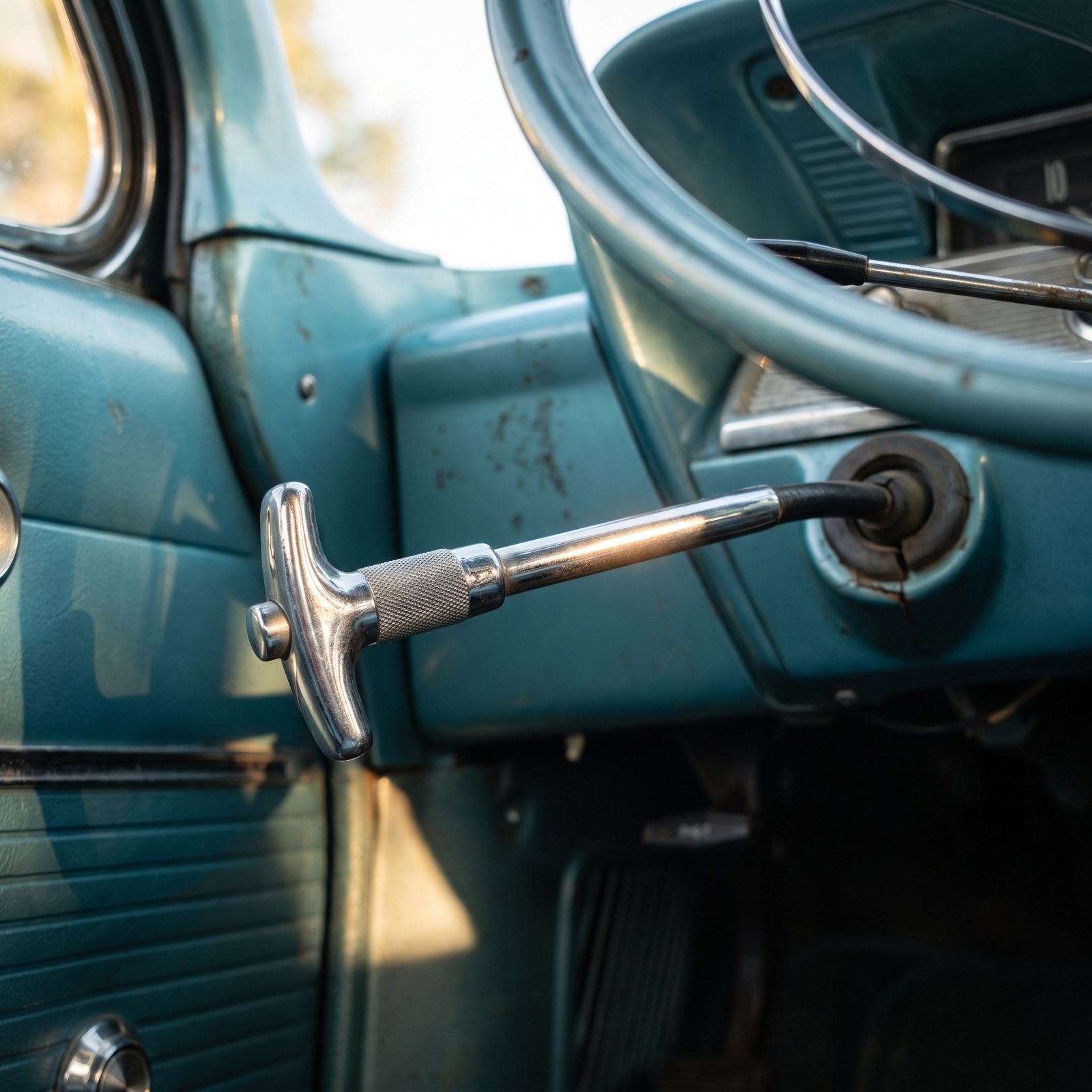
You yanked it. That flat chrome T-handle hung under the dash like a drawer pull, and you set it by hauling it toward your knee until the ratchet clicked twice. Release was a little chrome button on the end, thumbed while the whole thing dropped back with a satisfying clunk.
Every teenager learned this handle the hard way, forgetting it on a hill and driving three blocks with the stink of scorched brake shoes filling the cabin. Later the foot pedal took over and the handle vanished, but the muscle memory stuck around for decades.
9. The Red BRAKE Lamp That Meant Half a Dozen Different Things
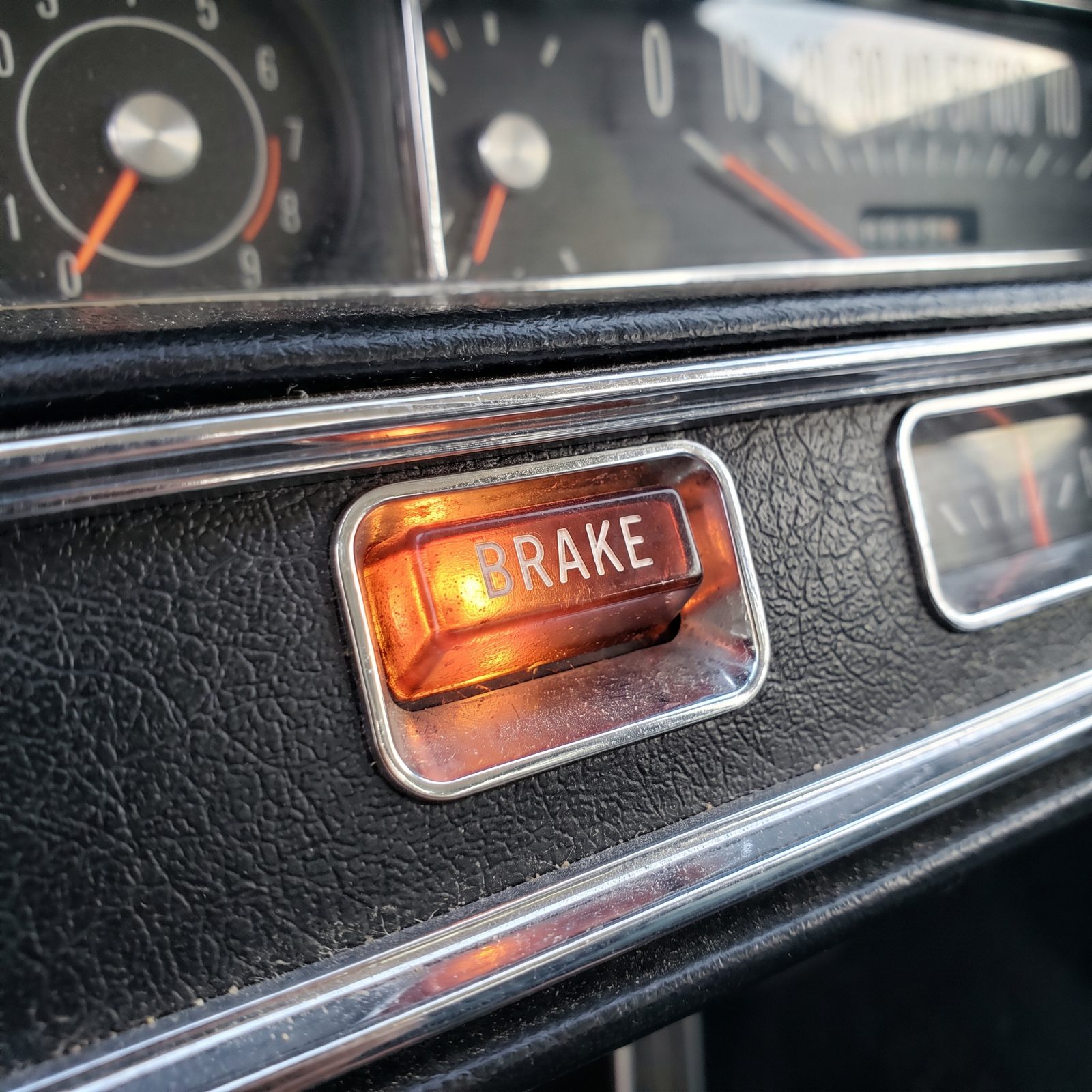
One red lamp, half a dozen reasons it might light. That single BRAKE lens could mean the parking brake was still set, or hydraulic pressure had dropped in one half of the split system, or a bulb was just running its startup self-test. It never told you which. It glowed red and let you sweat.
So you learned to read the context. Rolling and glowing? Pull over now. Lit only at the light? Probably the handle. The lamp trusted you to figure out the rest — which is a very 1960s way to handle a safety warning.
8. The Hazard-Flasher Knob That Showed Up Late to the Party
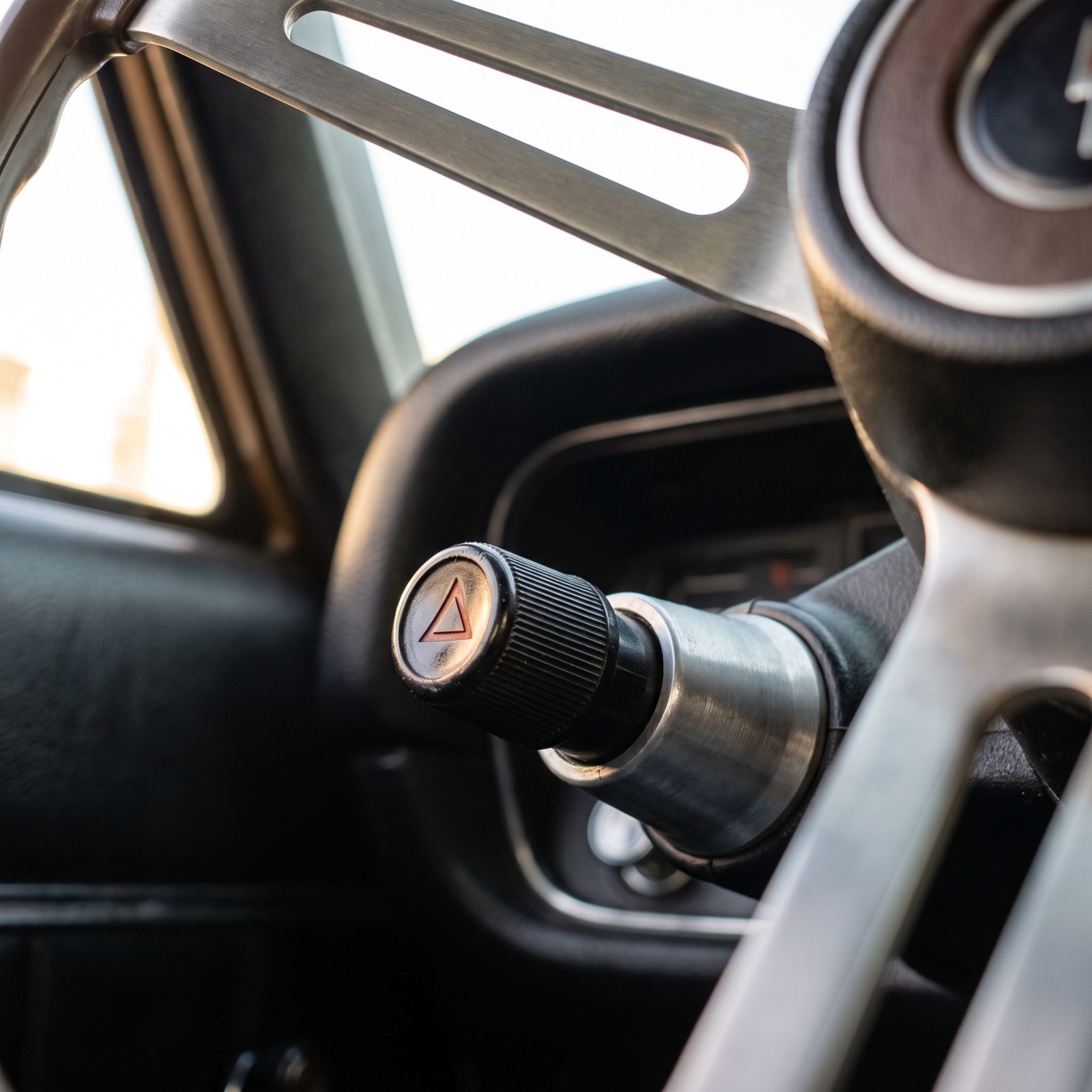
Here’s a control your father’s early-decade car simply didn’t have. Four-way hazard flashers became a federal requirement around 1967, so on late-60s cars you’ll find a stubby knob crammed onto the steering column or dash edge, usually looking like the afterthought it was.
You pulled it and every turn signal blinked at once, filling the cabin with that steady, urgent tick from the flasher relay. It felt modern — a switch nobody had missed across sixty years of automobiles.
7. The Wiper Knob That Ran on Engine Vacuum, Not Electricity
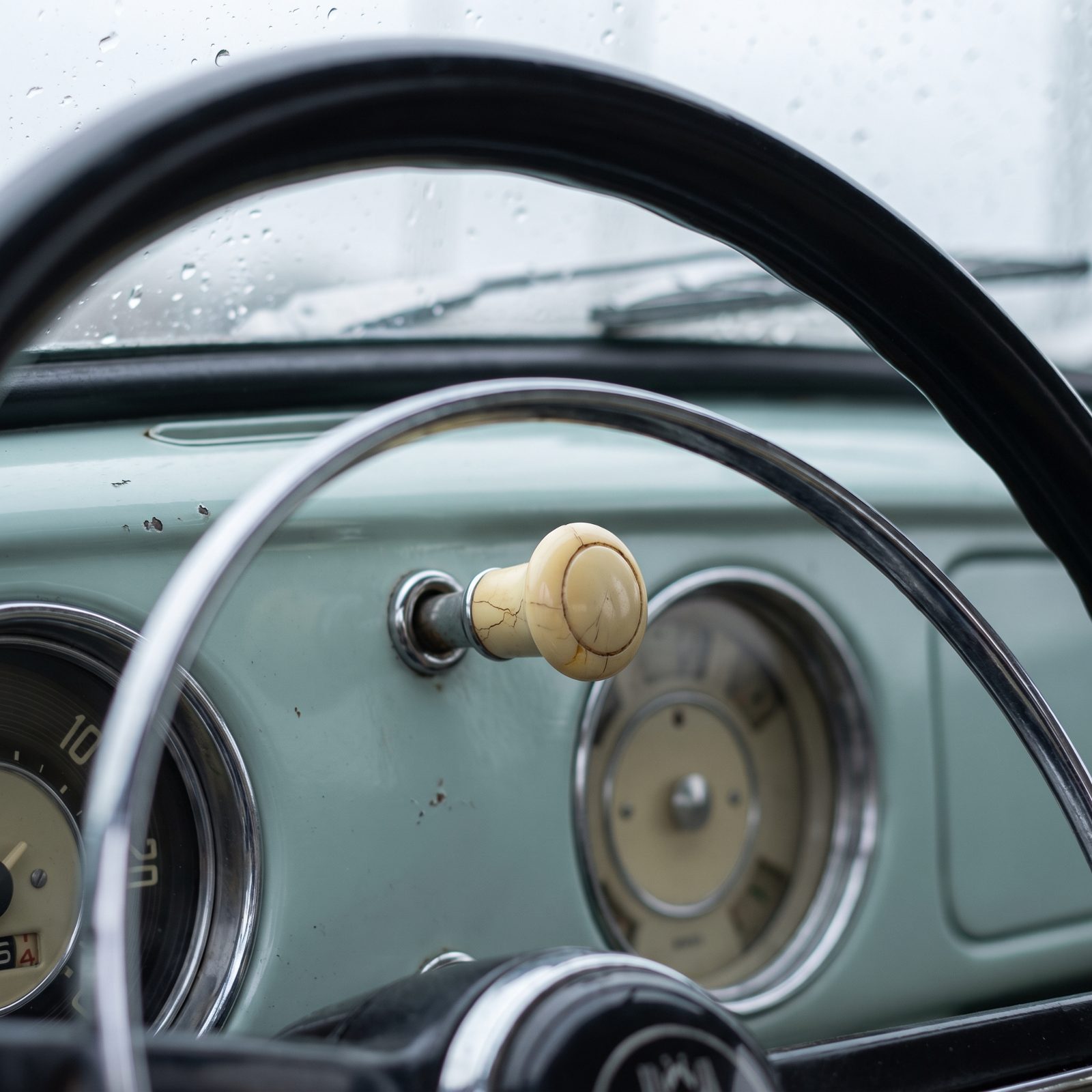
Pull the knob and the wipers came alive off engine vacuum, which sounds clever right up until you tried to climb a hill in the rain. Stomp the gas and manifold vacuum dropped, so the blades slowed to a crawl or died mid-swipe exactly when you needed them.
You learned to feather the throttle just to keep them moving. Electric wipers eventually killed off this little quirk — good riddance, honestly. But for years, a cheap car in a downpour meant bargaining with your own right foot.
6. The Horn Ring You Could Honk Without Finding a Button
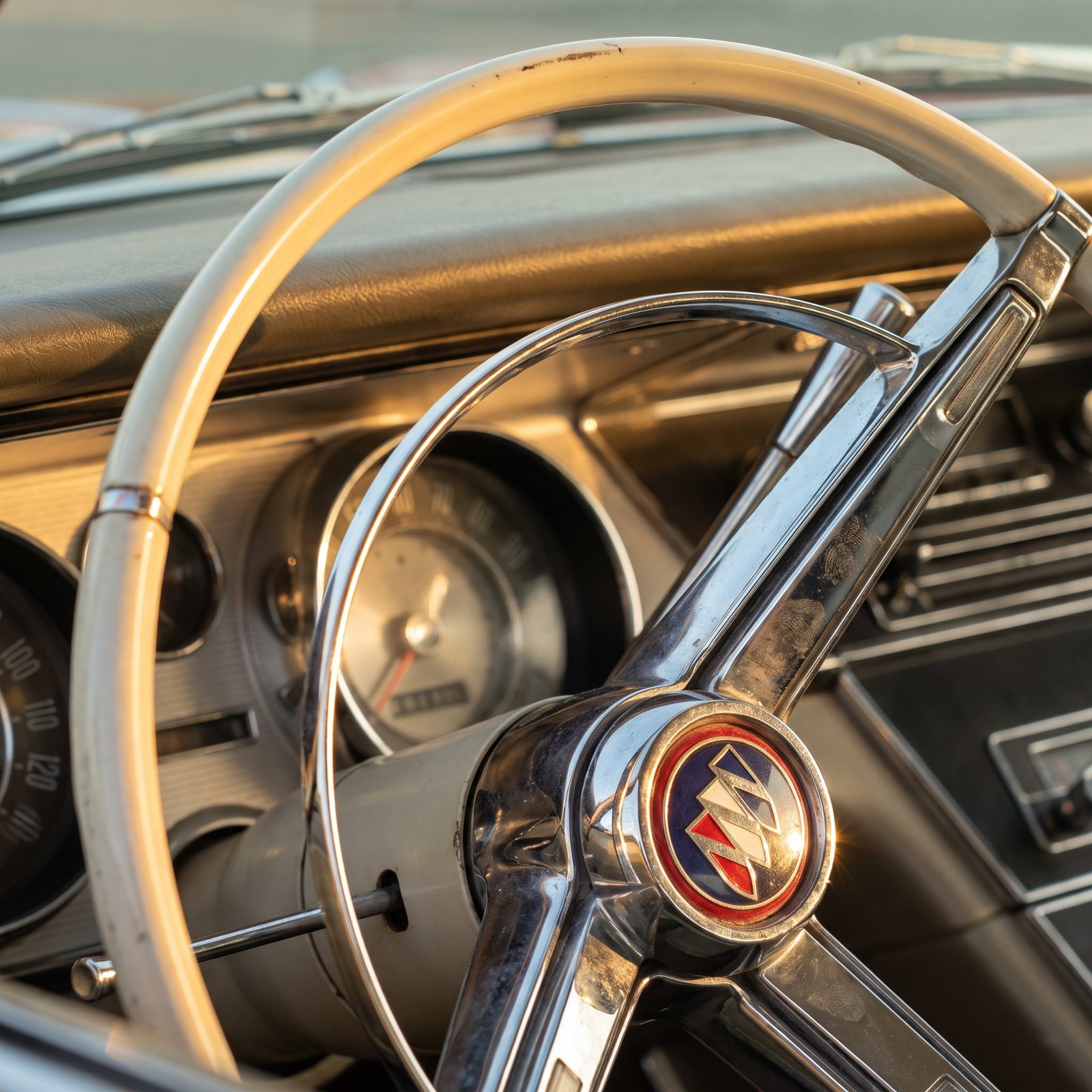
You didn’t hunt for a button. You just pressed the chrome ring with the heel of your hand and the horn sounded. Some rings went full circle, some were a half-loop, and the fancy ones wore an enamel emblem in the center that told you exactly what you were driving.
Trouble was, the ring was easy to bump, so cars of the era honked at nothing all the time. Airbags eventually claimed the whole center of the wheel and took the horn ring with them. Still, there was something satisfying about that light chrome touch.
A press of the palm, not a poke of the thumb. That’s how the whole decade honked.
5. The Buzzer That Scolded You for Leaving the Key In
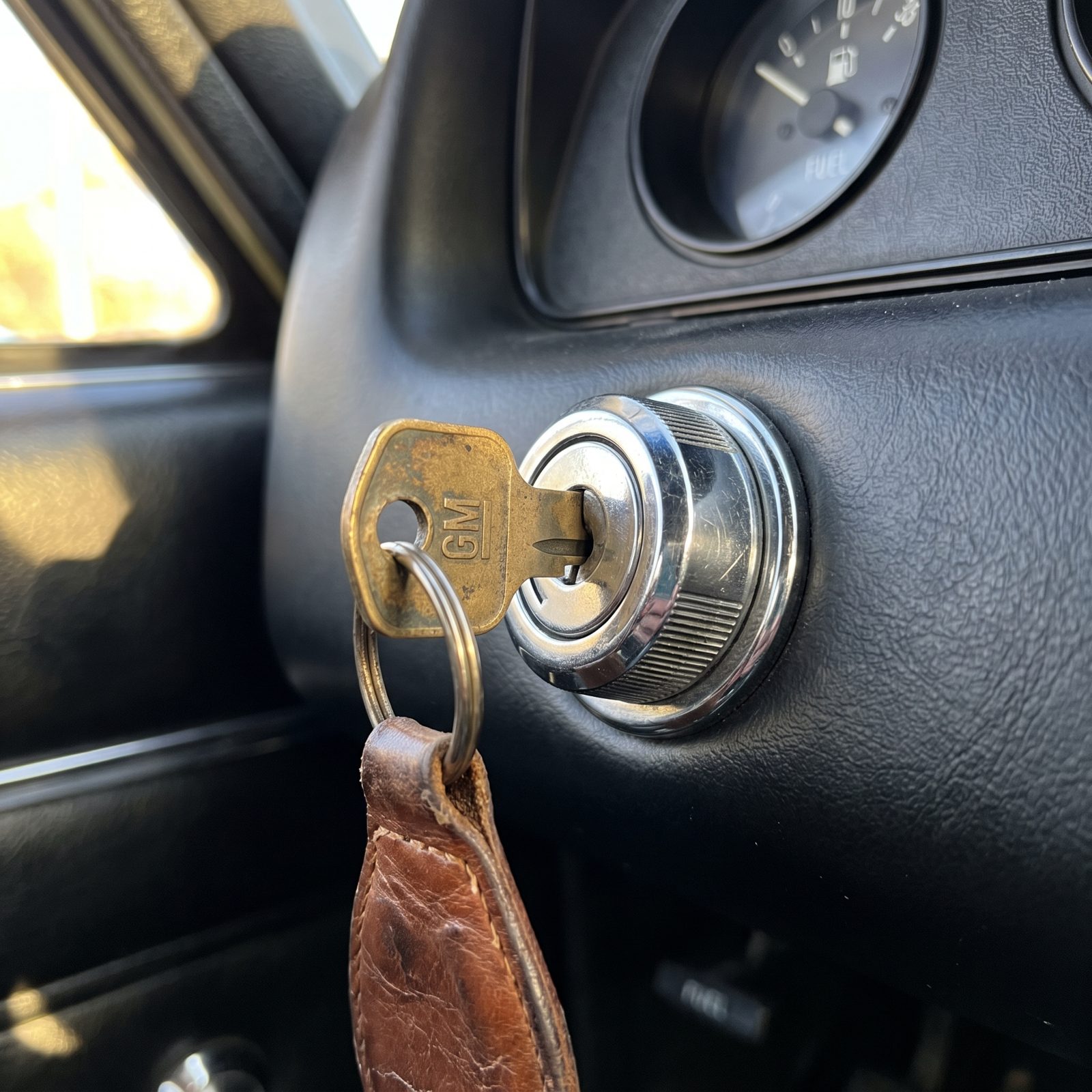
Open the door with the key still in the switch and a buzzer went off. Not a chime, not a gentle reminder — a flat, annoyed electric buzz that rattled somewhere behind the dash and quit the second you either pulled the key or shut the door.
It was the car nagging at you, and it worked. Late-60s models got these key-in buzzers as another early safety-and-convenience touch, wired straight to the door jamb switch. The tone was ugly on purpose. You didn’t want to hear it twice.
4. The Dealer-Installed Compass That Swung on Every Turn
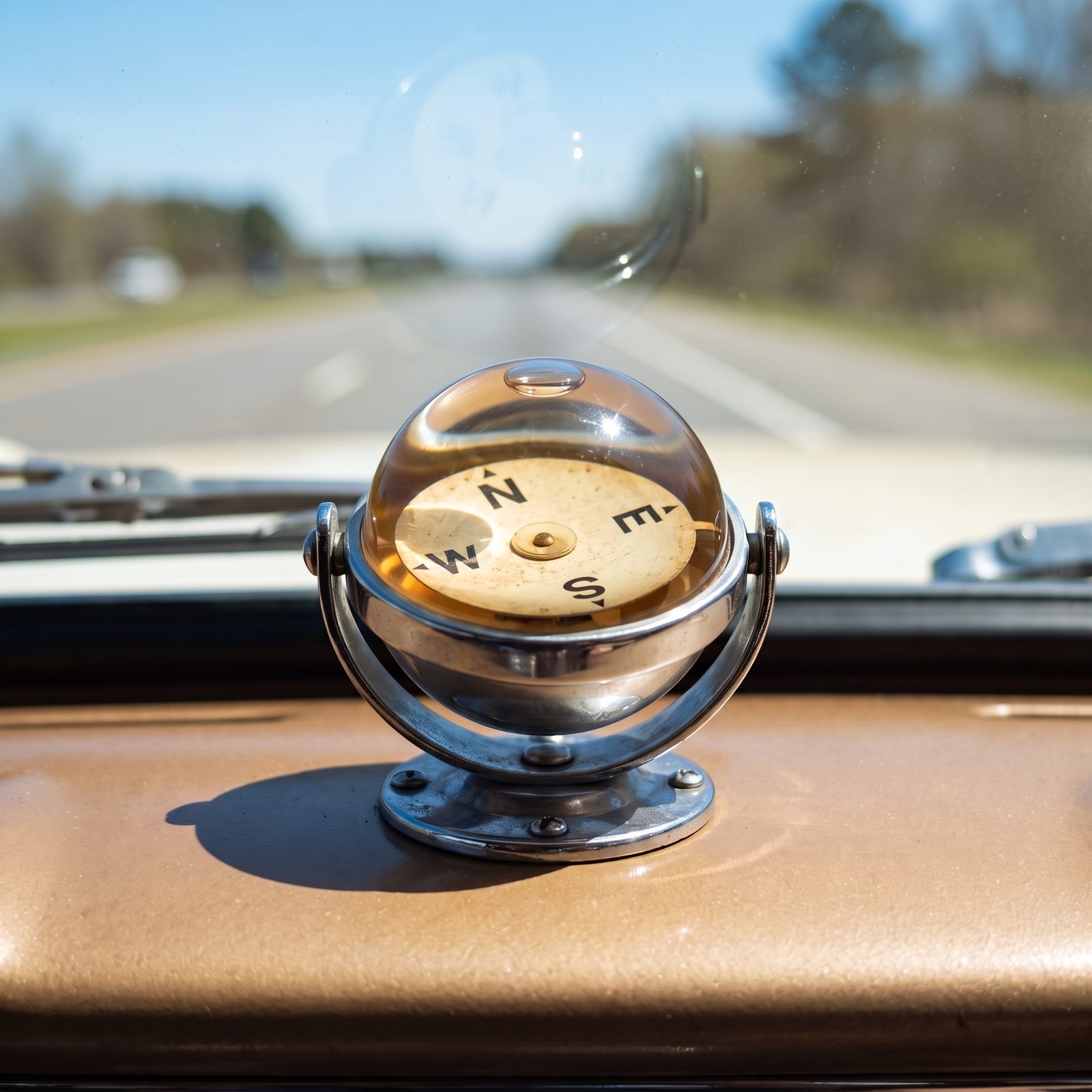
Bolted to the top of the dash by the parts counter for a few extra dollars, the little bubble compass promised you’d never get lost on the great American road trip. In practice it swung wildly on every turn, drifted whenever it drew near the ignition coil, and took a full block to settle down.
Still, on a straight desert highway it pointed roughly where it should, and that felt like magic. Families trusted it more than the map. That lettered card floating in amber fluid, a tiny bubble wobbling at the top, was part of the ritual of going somewhere.
3. The Suction-Cup Thermometer Aimed Right at the Driver
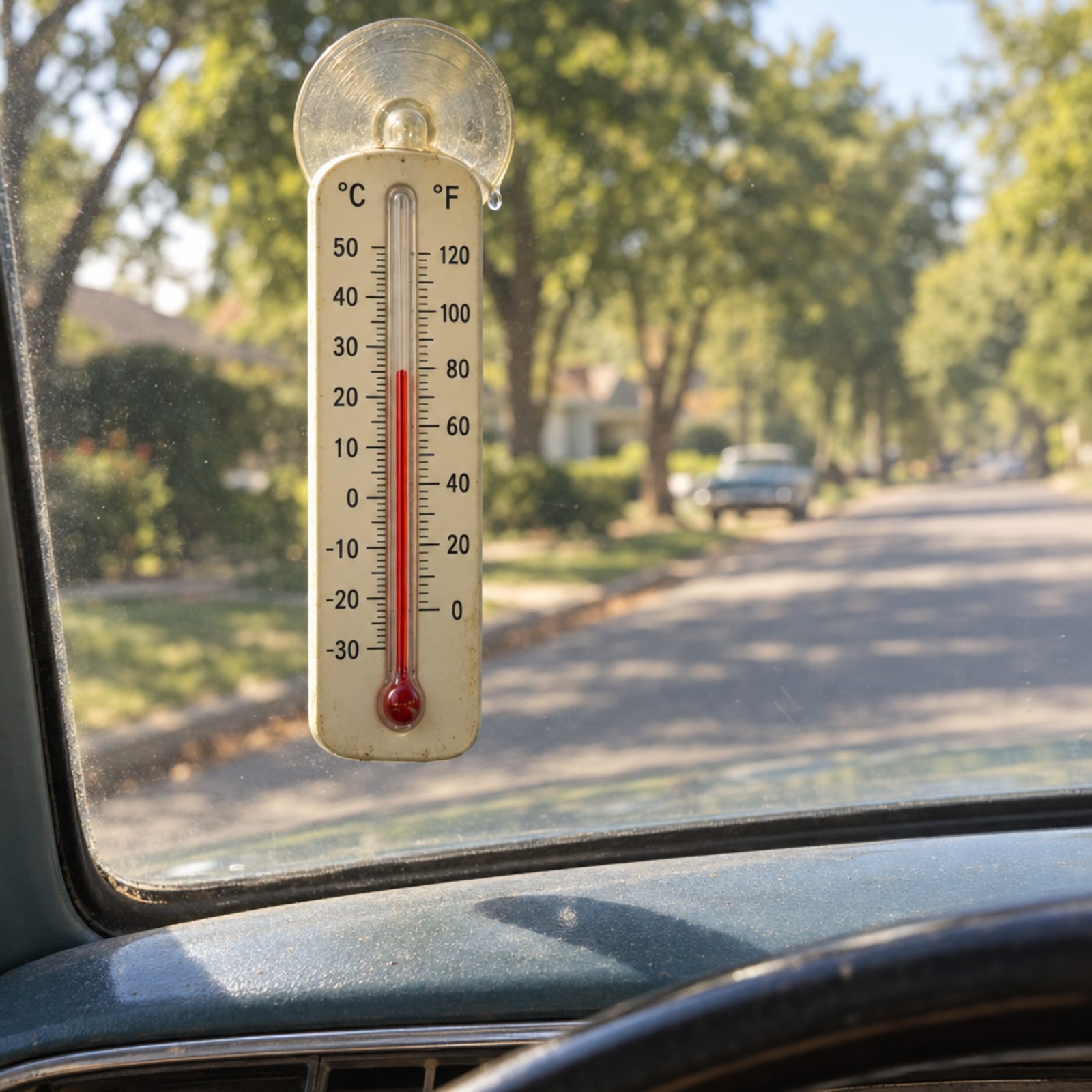
A dime-store thermometer stuck to the glass with a rubber suction cup, angled so you could read it at a glance. Never mind that it read whatever the cabin air felt like rather than the actual weather outside. Parked in the July sun, it happily claimed 120 degrees.
People bought them anyway, off the same rack that sold air fresheners and fuzzy dice. A small comfort. A little instrument that made the car feel a touch more equipped, right up until the suction cup let go on the hottest day of the year — which it always did.
2. The Saint Christopher Medal Fixed to the Dash for the Road Ahead
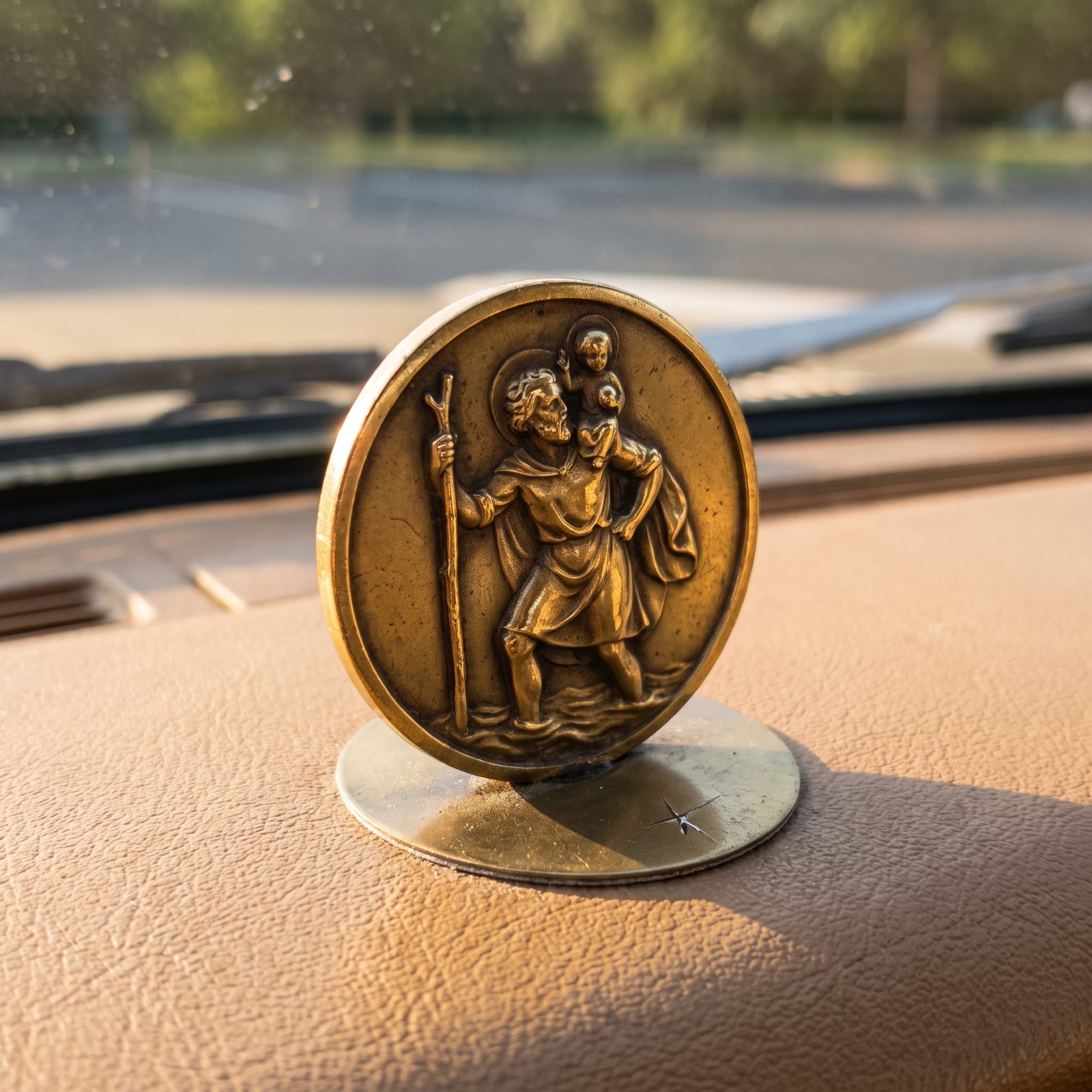
Not every dashboard fixture had a switch or a needle. Some just watched over you. The Saint Christopher medal — patron saint of travelers — sat glued to the top of the dash in millions of American cars, its brass worn smooth where a driver’s thumb touched it before a long trip.
Mechanically it did nothing. Otherwise it did everything. A grandmother pressed one to the dash of a new car and the family carried it from vehicle to vehicle for thirty years. Of all the things that vanished from dashboards, this is the one worth missing most.
1. The Prism Viewer That Let You See the Light You Sat Under
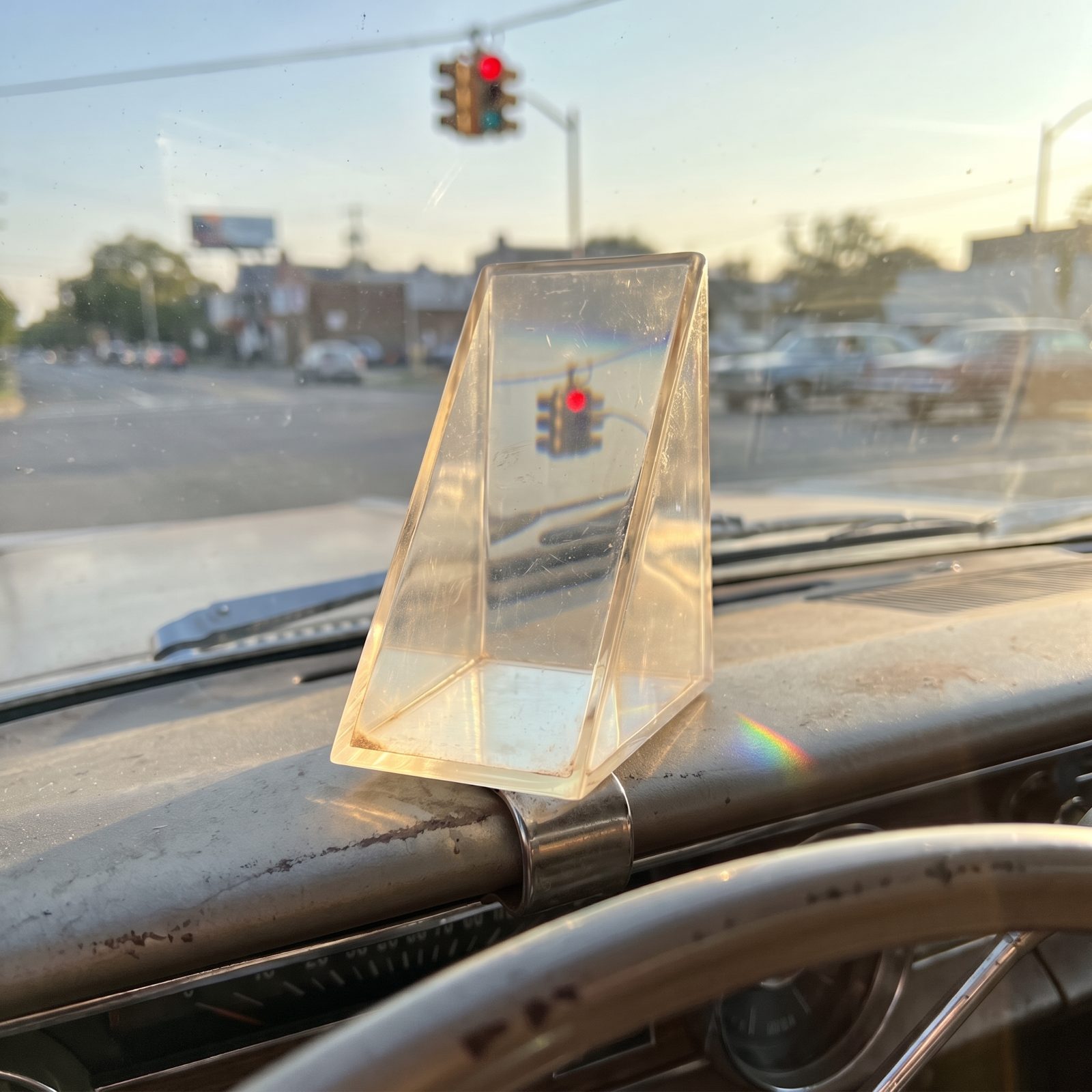
Roll up to a light with a tall windshield and a low roofline and you couldn’t see the signal without ducking your head toward the wheel. Somebody solved that with a wedge of clear plastic that sat on the dash and bent the overhead light down into your line of sight.
Sit up straight, catch the green. A genuinely smart gadget from an era that loved bolting clever little fixes onto the dashboard. Then traffic signals moved to the far side of intersections, and the prism quietly retired.
Of everything here, it’s the one most people forgot ever existed. Which makes it the best kind of memory — the one that comes rushing back the second you see it again.