
Would you like to save this?
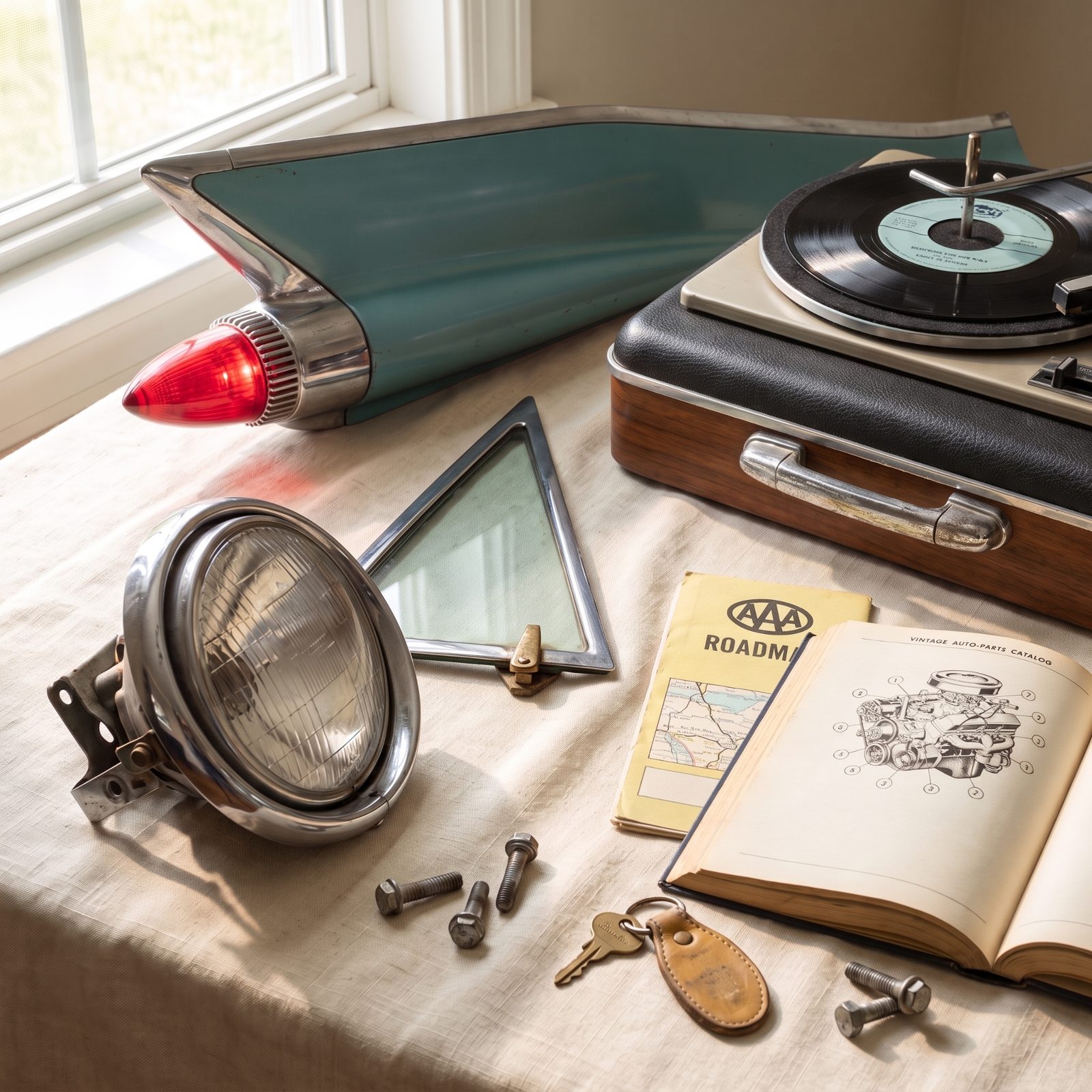
Somewhere a kid is explaining to a confused ten-year-old that cars used to wink, that the headlights would flip up out of the hood like a pair of eyes opening. The ten-year-old does not believe it. Half the best ideas in motoring quietly disappeared, killed off by crash regs, cost cutting, and climate control that made everyone forget what a vent window was for. The ones below weren’t gimmicks. They were useful, clever, or just plain fun, and we gave them up too easily.
Please note that some of the images in this article were created with the assistance of AI.
49. Pop-Up Headlights: The Sports Cars That Winked Awake
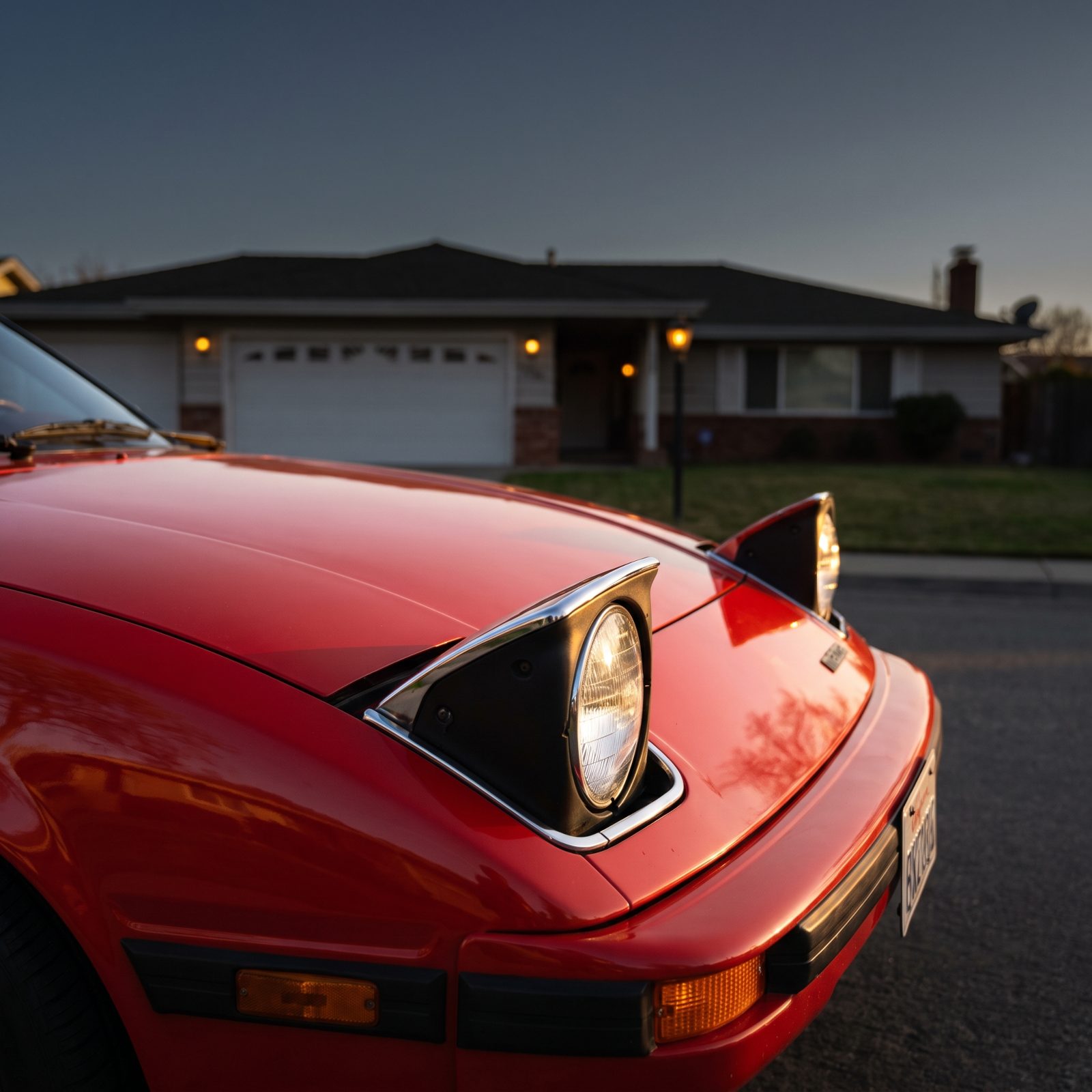
You pulled the knob and the car woke up. Two lids rotated out of the hood with a soft electric whir, and suddenly the thing had a face. Daytime driving kept them tucked flat, which let designers draw a nose low and clean enough to cheat the wind. At night, the eyes came up.
The RX-7, the early Corvettes, the Miata, the Countach — half the dream cars taped to bedroom walls had them. They died because pedestrian-impact rules didn’t like hard objects rising out of the hood, and because a fixed lamp never needs a motor that can quit on you one cold morning.
Nothing a flush LED strip does today has a shred of that drama.
48. Vent Windows: Fingertip Air Conditioning Before Climate Control
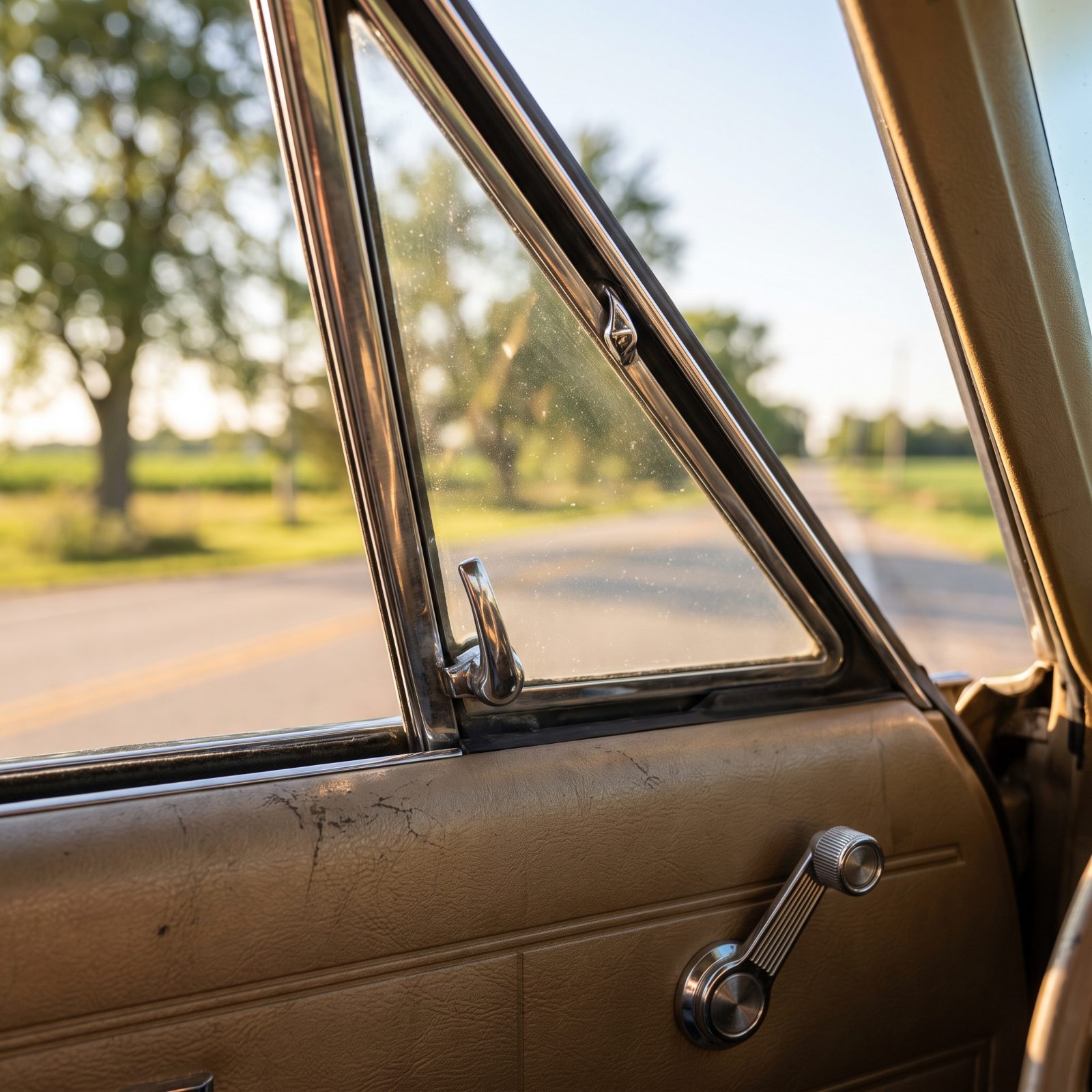
A little triangle of glass, hinged at the front, that swung inward and scooped the breeze straight onto your face. You set it with two fingers — no fan, no vents, no fiddling with three dials. Crack it a quarter inch on the highway and the whole cabin got a steady river of air without the roar of a fully open window.
Smokers loved them because the ash went out the gap and stayed out. Everyone else loved them because they worked instantly, on a dead battery, in a traffic jam, forever. Then air conditioning got cheap and the vent window got deleted to save a few bucks per door. I still miss mine on days too mild for the AC and too warm to sit there baking.
47. Pillarless Hardtops: Four Open Windows and Nothing in Between
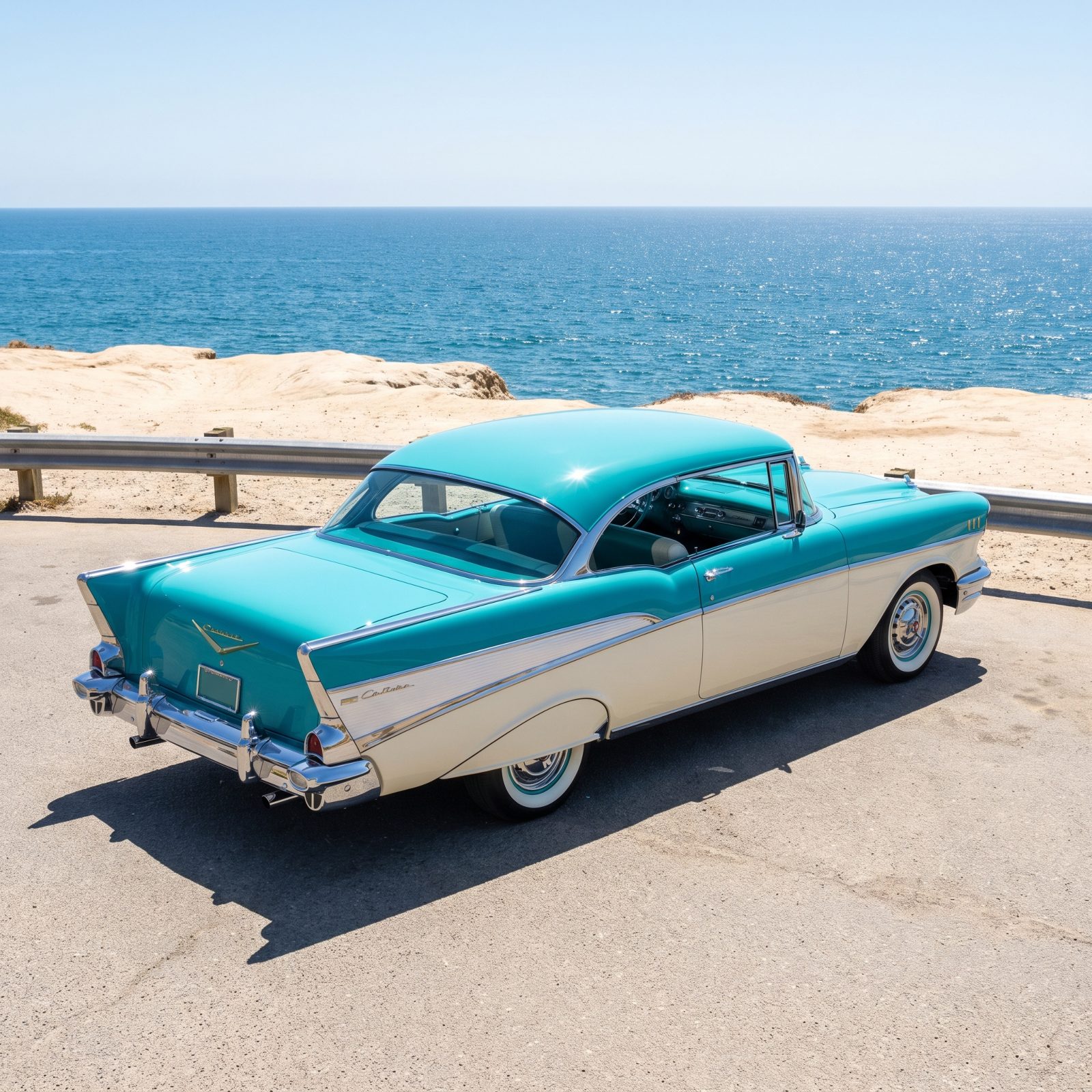
Roll all four windows down and the car disappeared from the shoulders up. No fixed post between the front and rear glass meant nothing blocked the view, nothing cut the breeze, nothing broke that long line of chrome and glass running from nose to tail.
It was the most open a closed car ever felt. Detroit built them by the millions through the fifties and sixties, and anyone who rode in one on a summer evening remembers the way the wind moved through the whole cabin at once.
Rollover standards ended them. A roof needs that pillar to hold itself up in a crash, and physics doesn’t negotiate. Fair trade for safety. Doesn’t mean the view wasn’t better.
46. Rear-Facing Wagon Seats: The Best View Was Out the Back
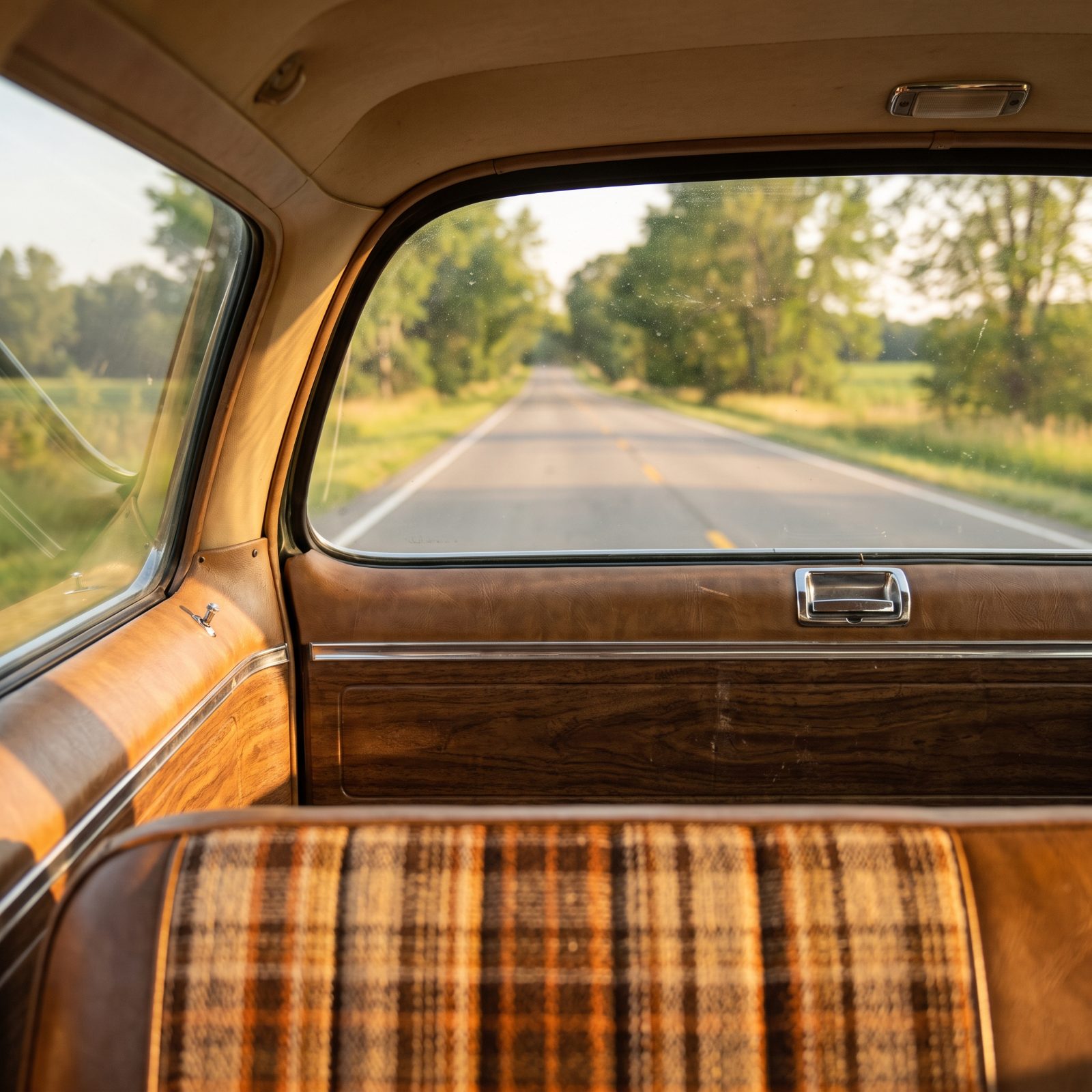
You sat backward and watched the world you’d already driven through. The road peeled away under the tailgate, cars following behind close enough to wave at, and for a kid that fold-up third row was the best seat in the house.
Country Squires, Vista Cruisers, Kingswood Estates — they all had them. Two little bench seats facing each other over the rear axle, or one bench aimed straight out the back glass. No seatbelts worth the name, which is exactly why they’re gone.
45. Dashboard Record Players: Vinyl on the Move
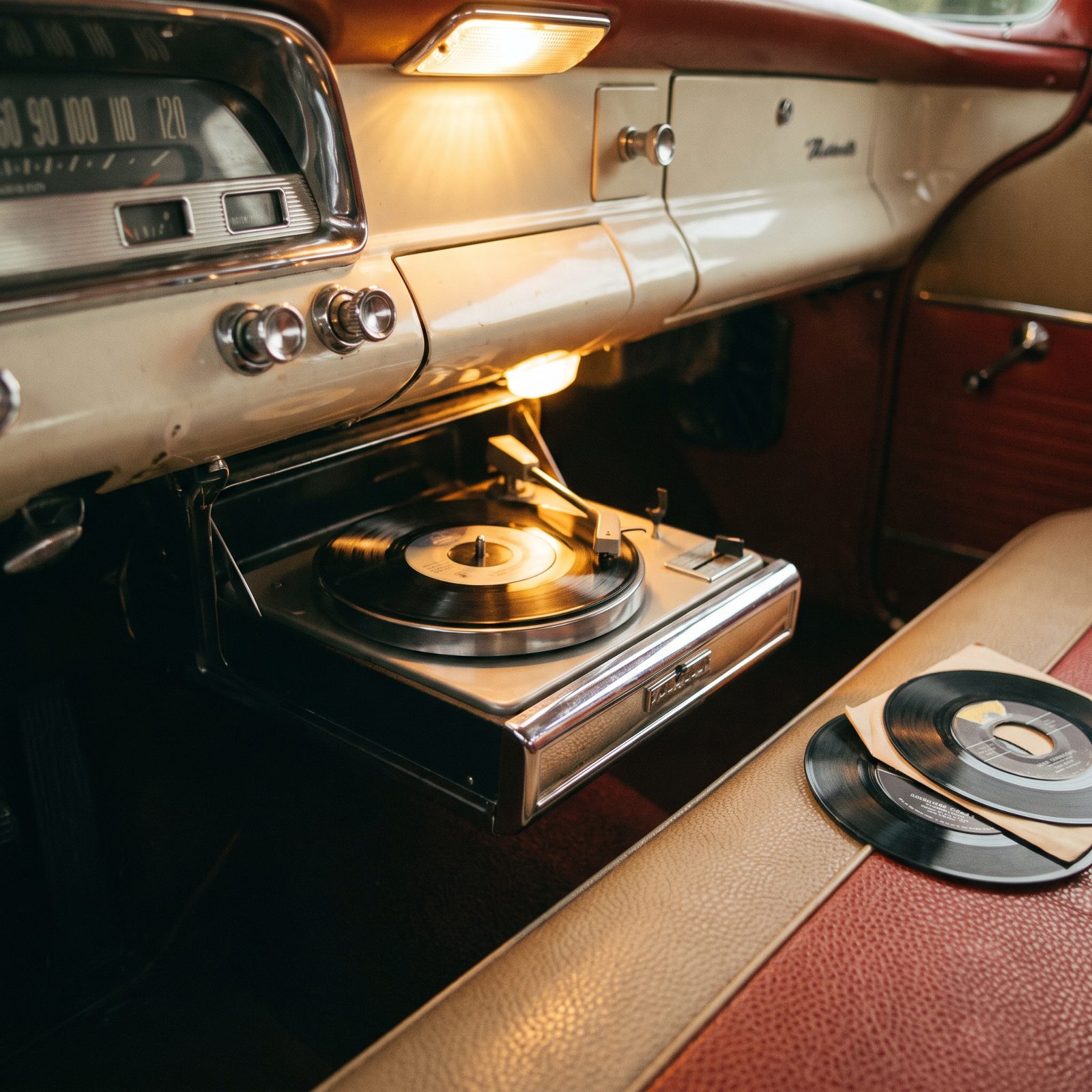
Chrysler actually did this. In 1956 you could order your Imperial or DeSoto with the Highway Hi-Fi, a little turntable bolted under the dash that played special slow-speed records while you drove. The tonearm was weighted and sprung so a pothole wouldn’t send the needle skating across the grooves.
It was gorgeous and completely doomed. Records skipped, the special discs were a pain to find, and the whole thing cost real money. The eight-track and then the cassette made it pointless.
Still. Someone in a boardroom back in 1955 looked at a moving car and said, let’s put a record player in it — and then the engineers made it work. That kind of swing-for-the-fences nerve is rarer now than the feature itself.
44. Hidden Headlights: Grilles That Changed Their Face After Dark
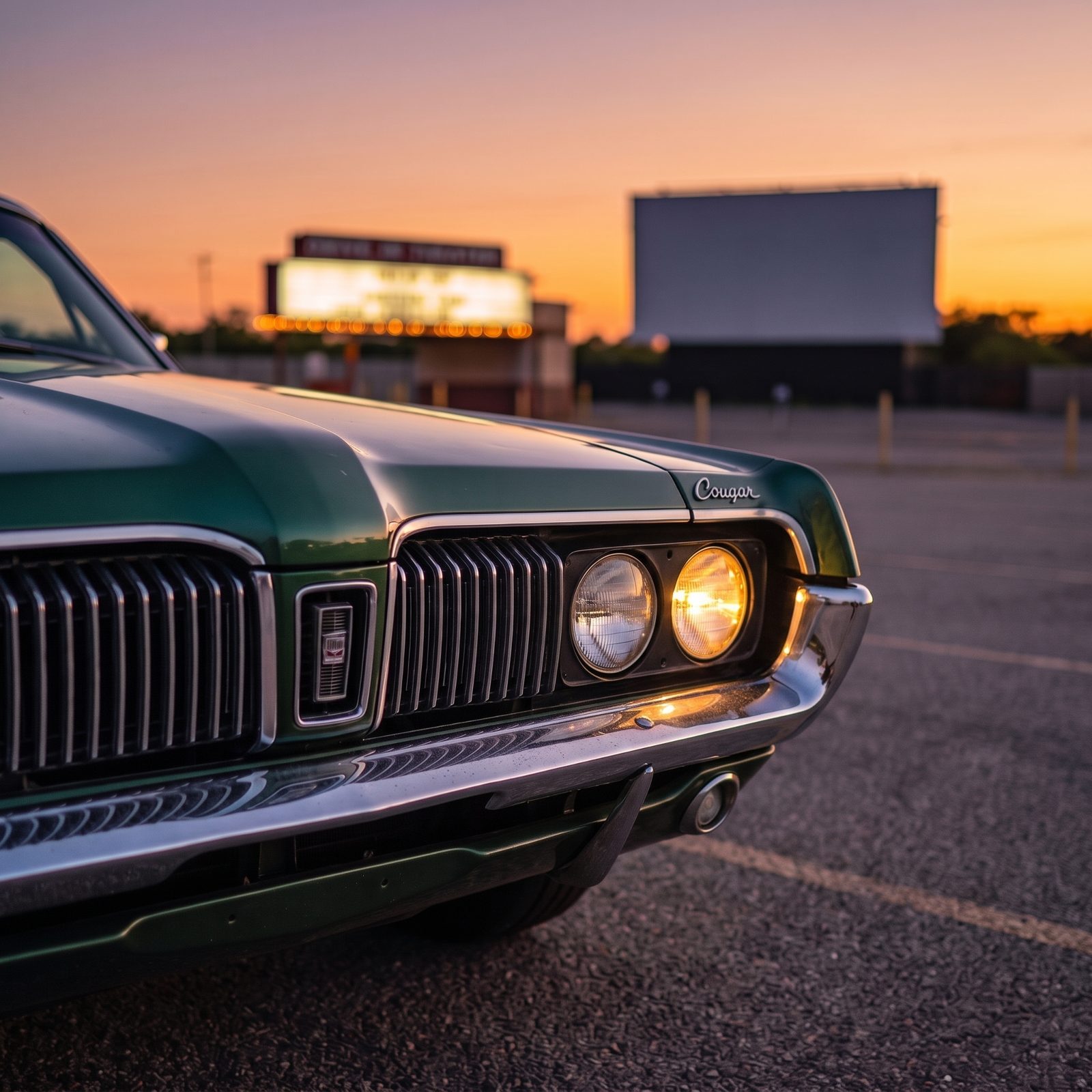
By day it was all grille, a clean unbroken face with no sign of a lamp anywhere. Flip the switch and panels rotated or dropped away and the eyes appeared. The ’67 Camaro RS, the ’68 Charger, the Cougar — they all played this trick.
It’s a cousin of the pop-up, but cleverer in one way. The lights stayed low and tucked, and the car got two completely different personalities: one for cruising Main Street at noon, one for the drive-in at night. Vacuum actuators ran most of them, which is why so many old Chargers now sit around with one eye stuck shut.
Fiddly to maintain, impossible not to love.
43. Rear-Hinged Coach Doors: The Grand Entrance Built Into the Car
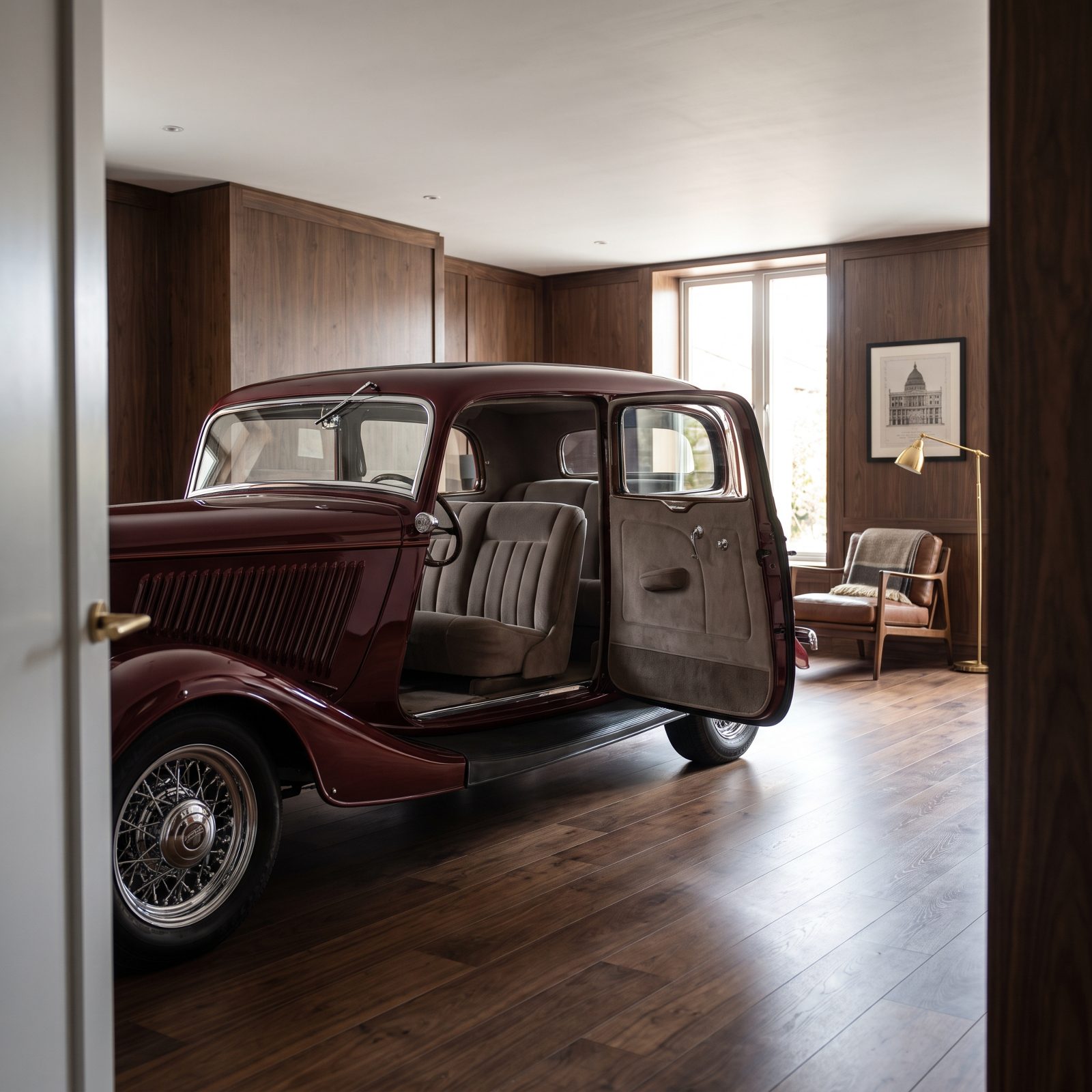
Open a back door hinged at the rear and the car seems to gesture you inside. The opening faces forward, so you step in without twisting, sit down, and swing it shut behind you in one motion. For a long skirt or a top hat, nothing was more graceful.
Everyone called them suicide doors, which tells you why they faded. Wind could catch one at speed and tear it open, and early latches weren’t always up to the job. Modern versions are rock solid, and Rolls-Royce, the old Lincoln Continental, and a few trucks kept the idea breathing.
Done right, it turns climbing into the back seat into an occasion. We could use more occasions.
42. T-Tops: Open Air Without Giving Up the Roof
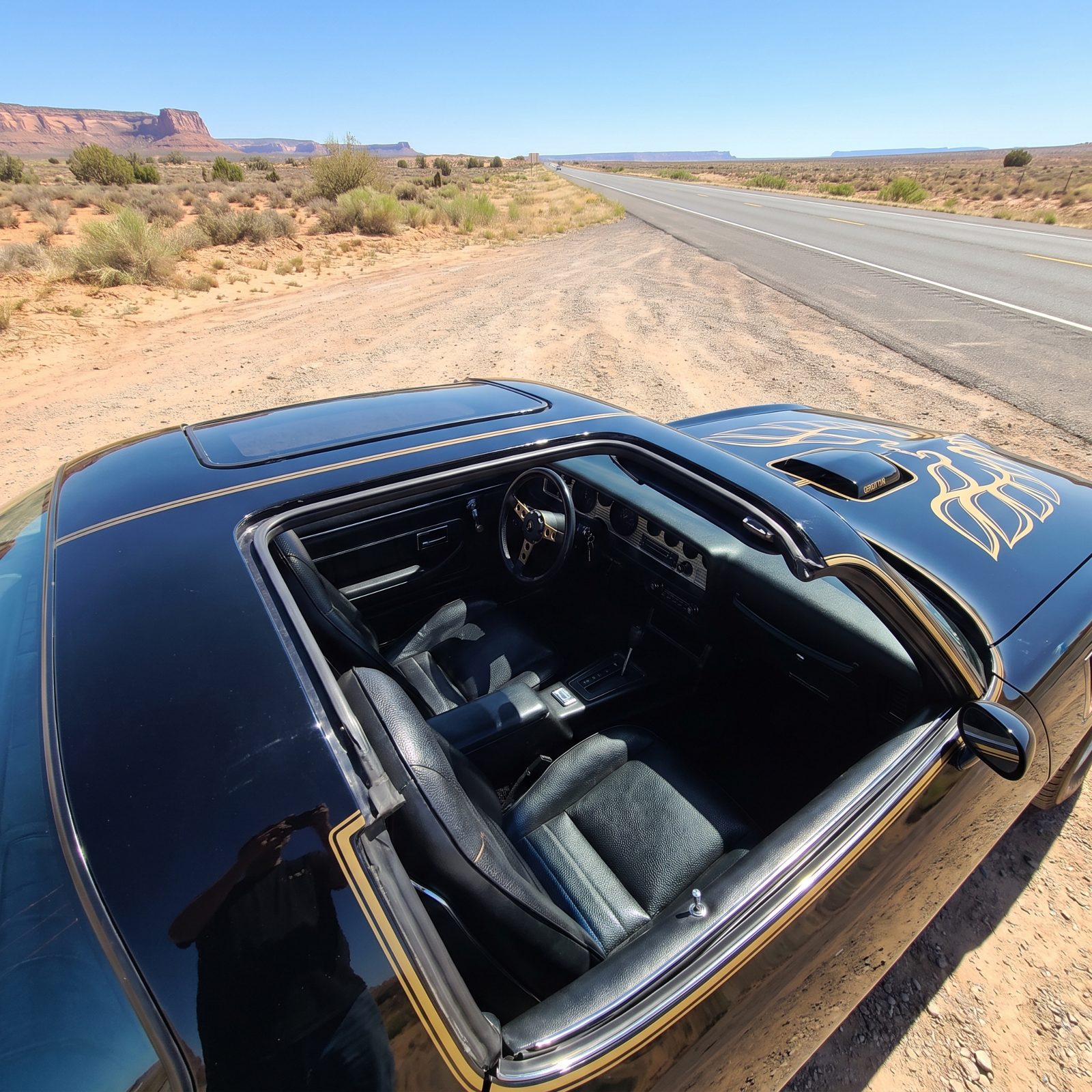
Lift out two glass panels, stow them in the trunk, and you had most of a convertible with the T-bar still holding the roof together. Sun on your shoulders, structure overhead, and if clouds rolled in you just snapped the panels back in at a gas station.
The Trans Am made it an icon. Corvettes and Camaros and even the odd Datsun wore them. They leaked — every one of them eventually leaked — and that soft drip onto your knee after a hard rain was part of the deal.
Full convertibles and better-built sunroofs squeezed them out. But there was a specific pleasure in that open-but-braced feeling that neither one quite matches.
41. Tailfins: Jet-Age Sculpture at the Rear
Would you like to save this?
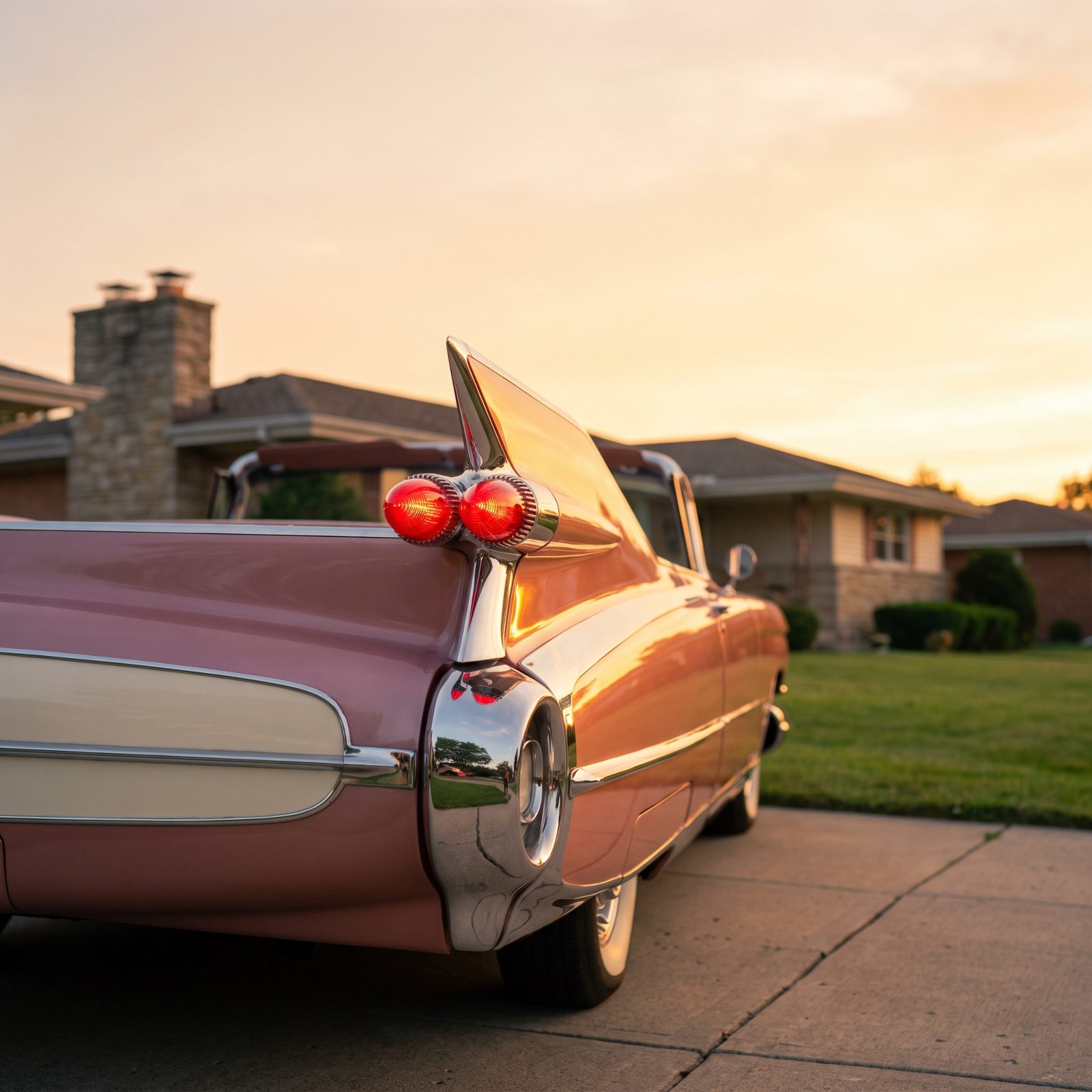
Nobody needed them. That was the whole point. The ’59 Cadillac wore fins tall enough to clear a basketball, tipped with red bullet taillights, and it looked like it might take off down the street. Harley Earl’s designers were chasing fighter jets and rockets, and for a few glorious years American cars pretended they could fly.
Aerodynamicists hate me for this, but fins did almost nothing useful and I don’t care. They were pure optimism stamped in steel — a country that had just won a war and put a rocket on the drawing board deciding its sedans should look the part.
Modern cars are smooth and silent and scared to death of being seen. A fin was a car you could spot from three blocks away.
40. Swiveling Front Seats: Turning the Cabin Into a Lounge
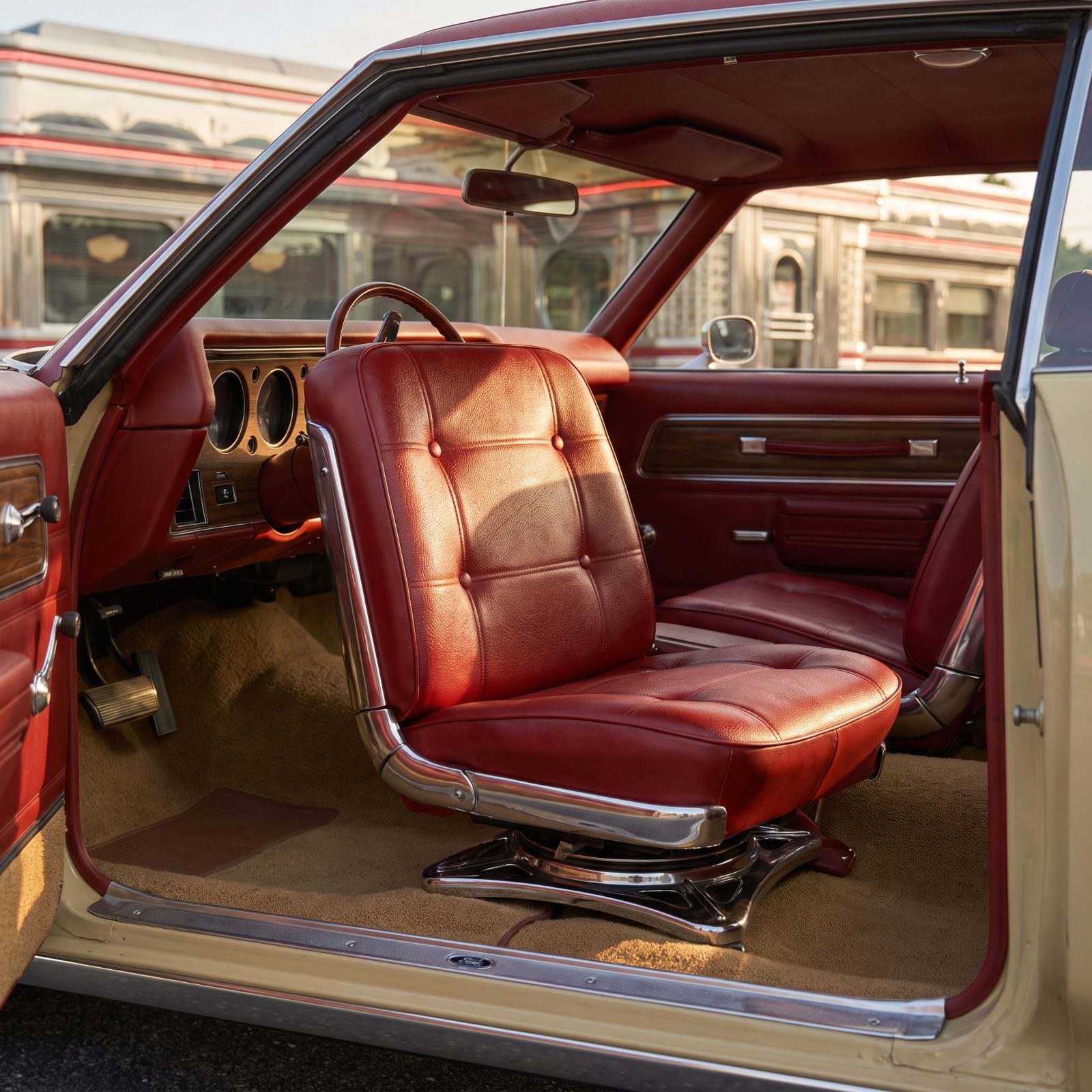
Chrysler and a few others offered a front seat that unlatched and swung outward toward the open door. You rotated the whole thing ninety degrees, planted both feet on the pavement, and stood up straight instead of hauling yourself out sideways.
For anyone in a skirt, anyone with a bad knee, anyone who just wanted a dignified exit, it was a small kindness built into the car. Park facing a friend’s driveway and you could swivel toward each other and talk.
Cost and crash-safety worries killed it, and power everything made seats heavier and more complicated. But as the folks who grew up with these cars get older, a seat that turns to meet you sounds less like a gimmick every year — and more like the smartest idea on this whole list.
39. Clamshell Wagon Tailgates: Glass Up, Gate Under the Floor
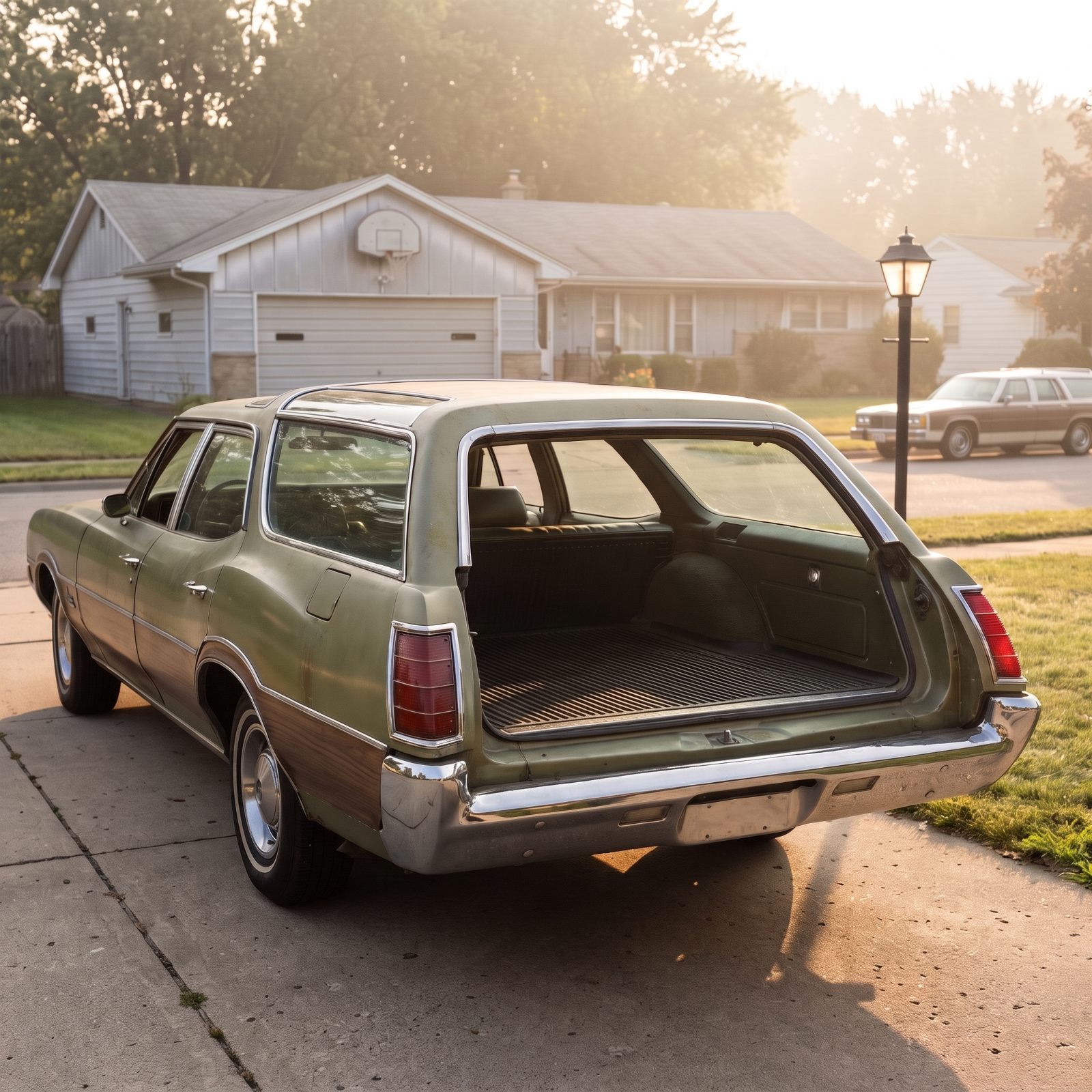
Picture it. You pull a chrome handle and the back glass glides up into the roof while the tailgate drops clean away into the floor, and suddenly there’s a cargo hole wide enough to swallow a plywood sheet, a cooler, and three squabbling kids. GM put this on the big Clamshell wagons starting in 1971, and it was pure theater. No swinging gate to clear in a tight garage, no fumbling with a liftgate over your head.
Of course it was also a maze of motors, cables, and relays stuffed into the tail of the car. When one of them gave up, you were out a small fortune and a weekend. Still, nothing before or since opened up quite like that. The whole back end just vanished.
38. Bench Seats: Room to Slide Across the Front
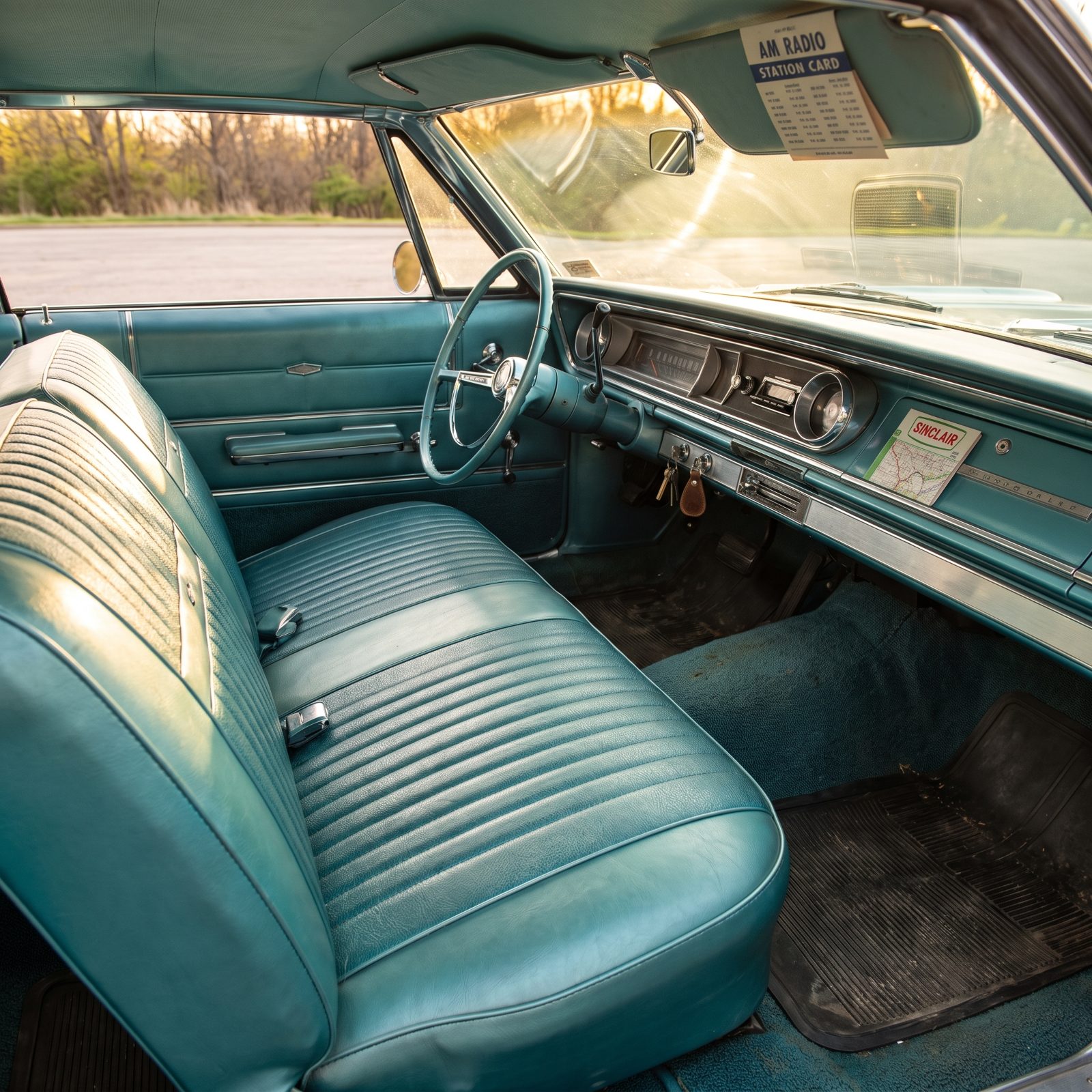
A front bench seat was a couch on wheels. Three across up front, no console in the way, and your sweetheart could slide right over next to you at a red light. Try that in anything built after the console took over.
The bench ruled American cars for decades because it was cheap, roomy, and honest. Families crammed in, friends piled on after the game, and nobody argued about who got the cupholder, because there weren’t any. Bucket seats and that fat center hump eventually won out on comfort and handling, I’ll grant them that. But something got lost. The car got lonelier.
37. Swiveling Headlights: Lamps That Looked Into the Corner
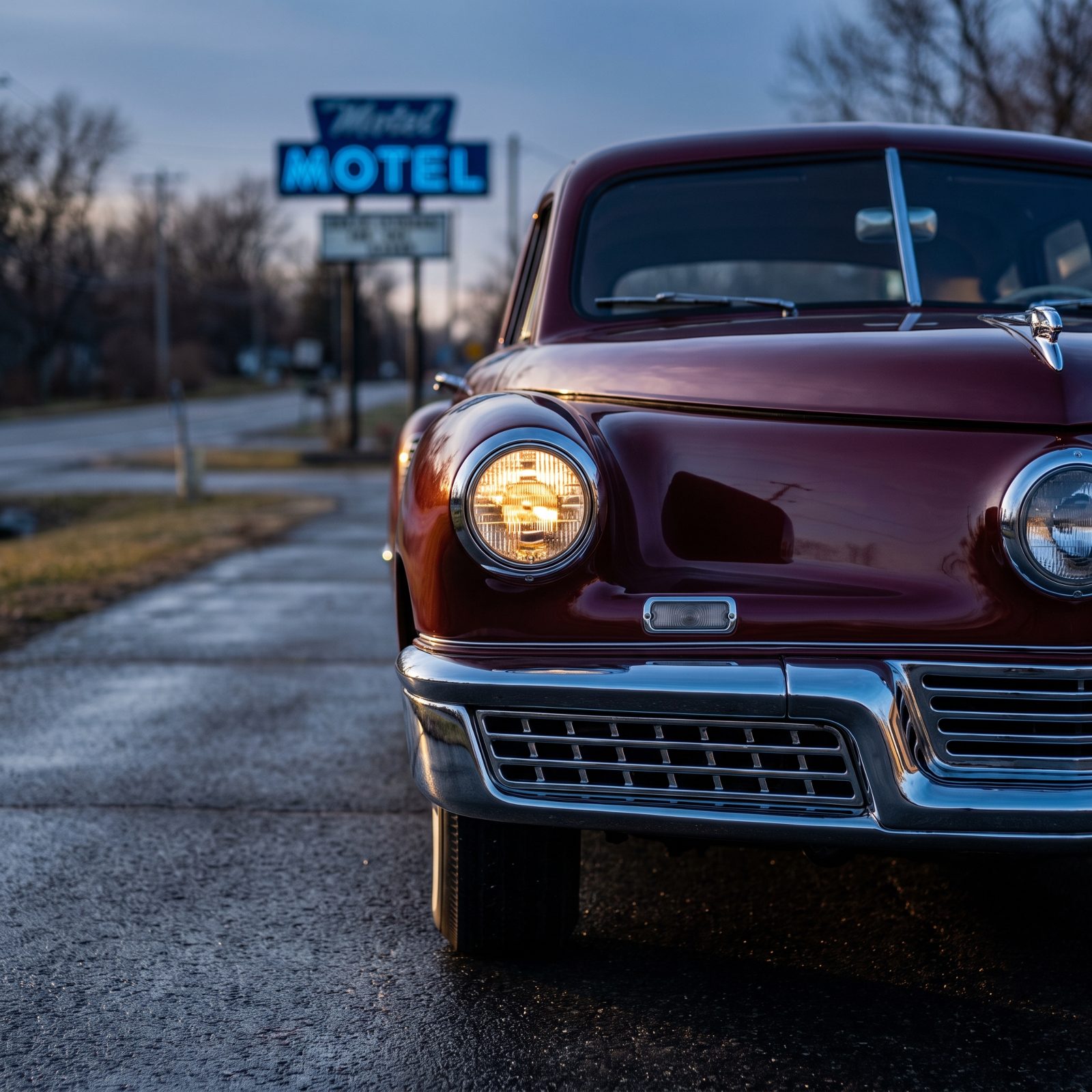
Preston Tucker’s ’48 had a third headlight dead center in the nose, and it swiveled with the steering so it lit up the corner before you got there. The ‘Cyclops’ eye, folks called it. On a dark two-lane with a bend coming, that was genuinely clever engineering, pointing light where the road was about to go instead of straight into the ditch.
Tucker barely built fifty cars before the whole operation collapsed under lawsuits and bad press. The swiveling lamp mostly died with him. Decades later the idea crept back in through adaptive headlights, but the Tucker made it famous, on war-surplus tooling and a dream. Hard not to admire the nerve.
36. Three-on-the-Tree: A Gear Pattern on the Column
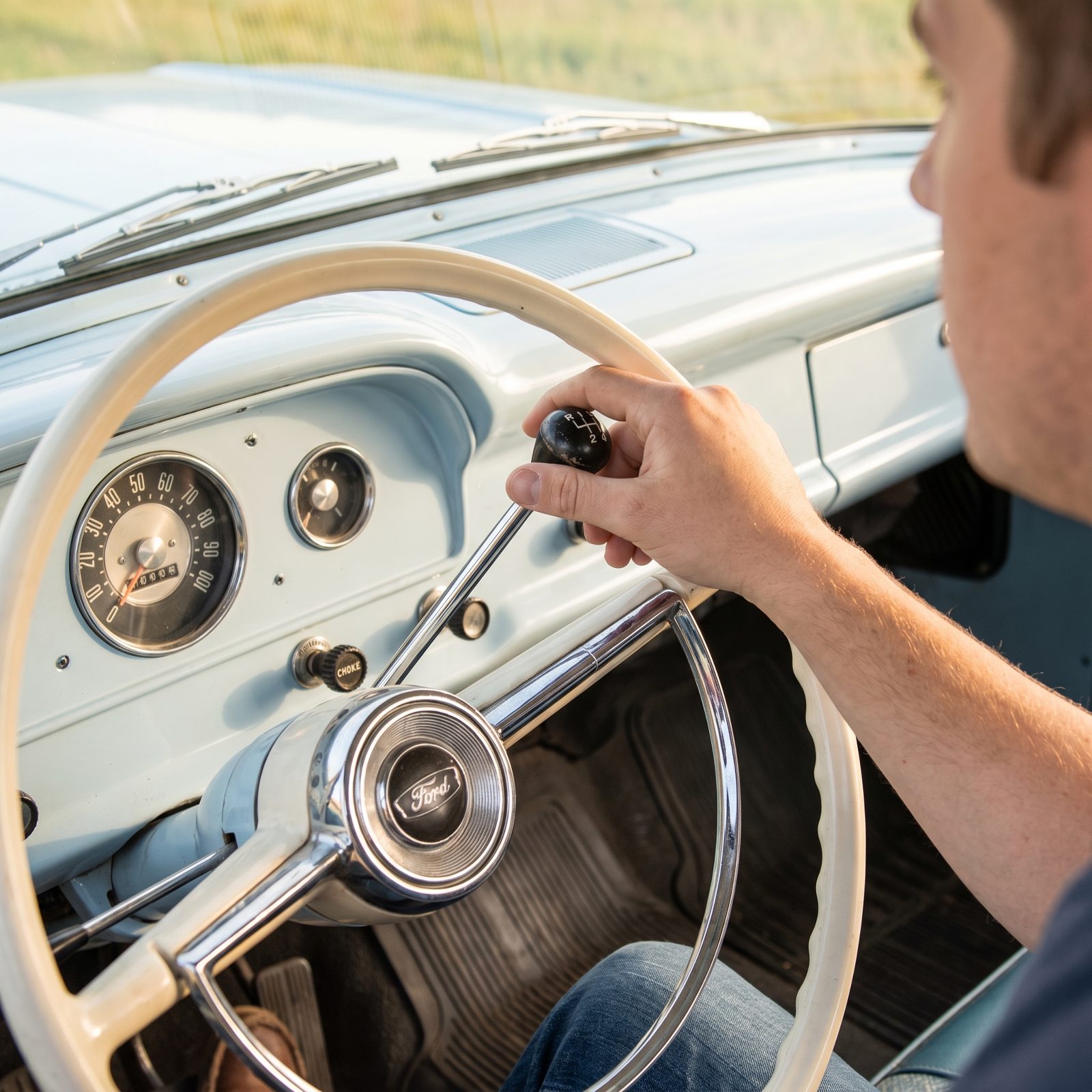
Three-on-the-tree meant your three-speed shifter lived up on the steering column, not down on the floor. The lever poked out near the wheel, and you rowed through the H-pattern with a flick of the wrist. The reason it caught on? A floor shifter ate the space where a third passenger’s knees wanted to be, and the column setup freed up that bench.
It took a feel to drive one well. Find reverse by accident, grind a gear at the wrong moment, and the whole cab let you know. Linkage wore loose over the years and shifts got sloppy, which is why plenty of old-timers can still mime the motion from memory. Floor shifters eventually took back over. Smoother, tighter, no argument. But there was a rhythm to the tree that a lot of us never quite shook.
35. Vacuum Fluorescent Digital Dashboards: Neon Futures on the Instrument Panel
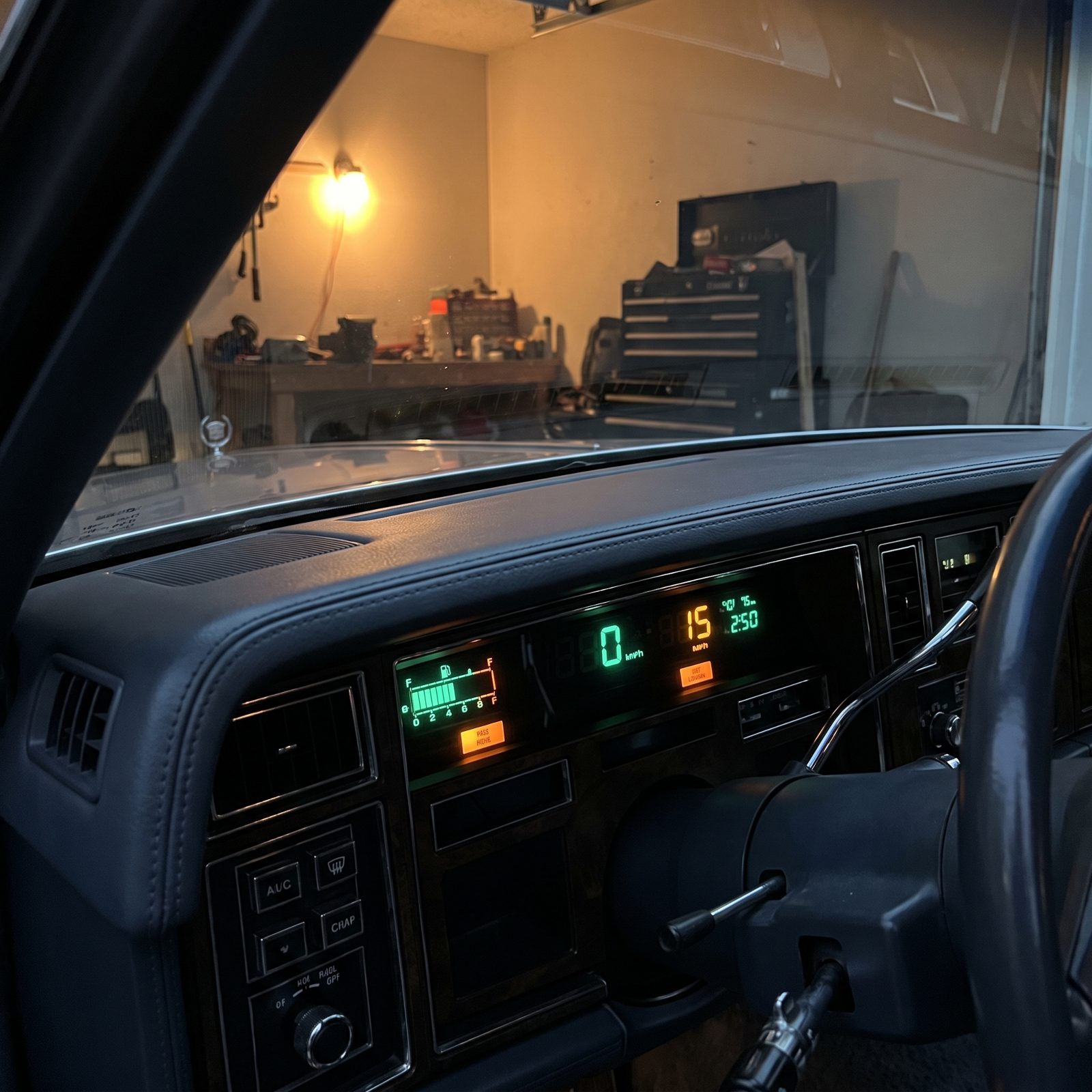
For a stretch of the ’80s, carmakers decided needles were for grandpas. Out went the round gauges, in came glowing digital numbers in that electric green and amber, blinking up your speed like something off the bridge of a spaceship. Bar-graph fuel gauges. Little orange warning icons that tripped on and made your heart jump. It looked like the future, and for a few model years it absolutely was.
Then the honeymoon ended. Those vacuum fluorescent displays were murder to read in direct sun, they dimmed with age, and when a segment burned out you got a speedometer missing half its digits at seventy. Repairs ran deep into the dash. By the ’90s most of us quietly missed the needle. Funny how a sweep of an analog gauge just reads faster than a number you have to actually read.
34. Power Antennas: A Chrome Mast Rising With the Radio
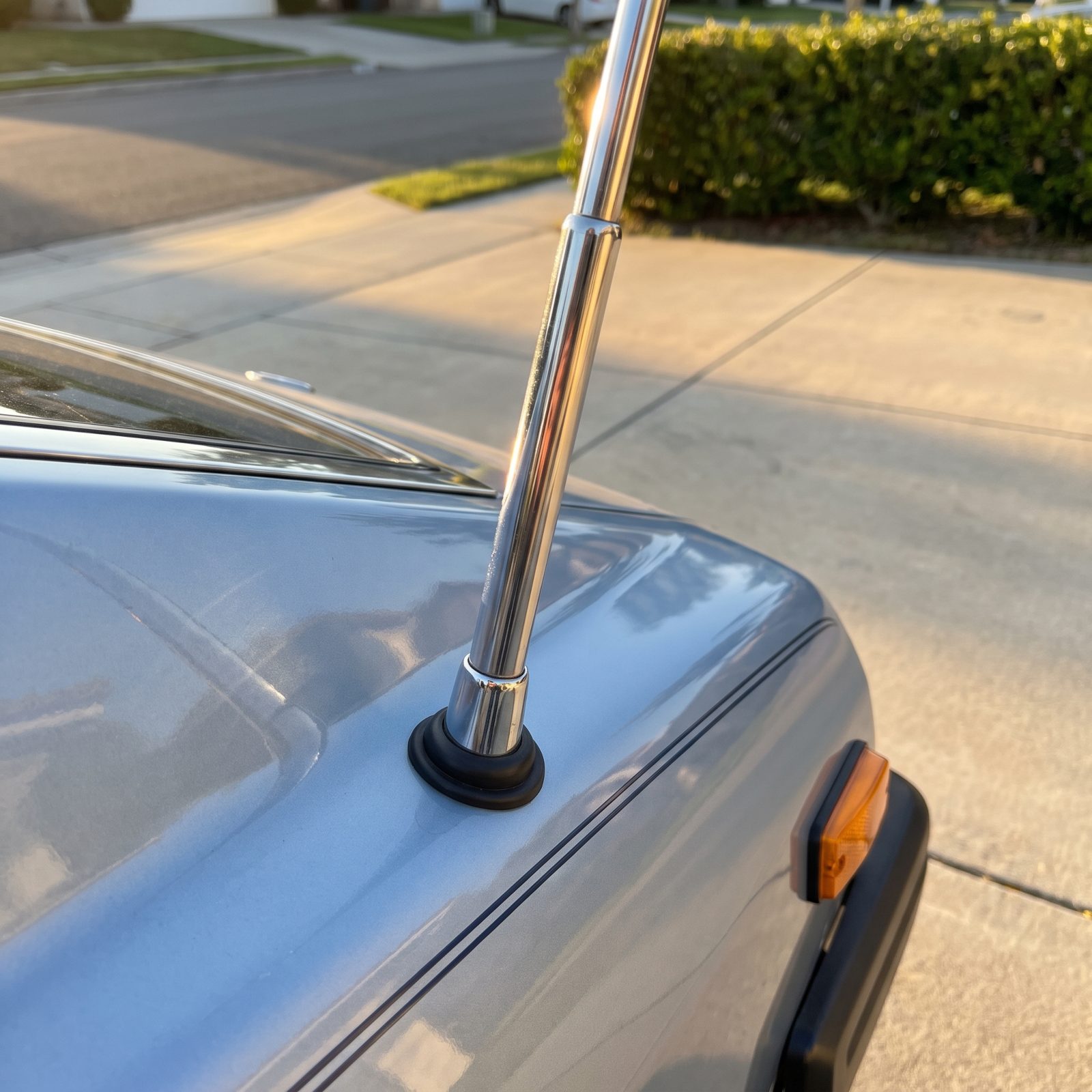
Switch on the radio and watch a chrome mast climb out of the fender, segment by telescoping segment, with a soft electric whir. Shut it off and it sank right back down. A tiny bit of drama every single time, and I never got tired of it.
The practical pitch was that the mast tucked away when parked, safe from car-wash brushes and sticky-fingered kids. The honest truth is it just felt rich. The motor and nylon drive cord were also a known weak spot, prone to jamming halfway up in a January cold snap, so you’d roll around town with a sad bent mast stuck at half height. Worth it, though.
33. Hood Ornaments: Tiny Sculptures Guiding the Driver
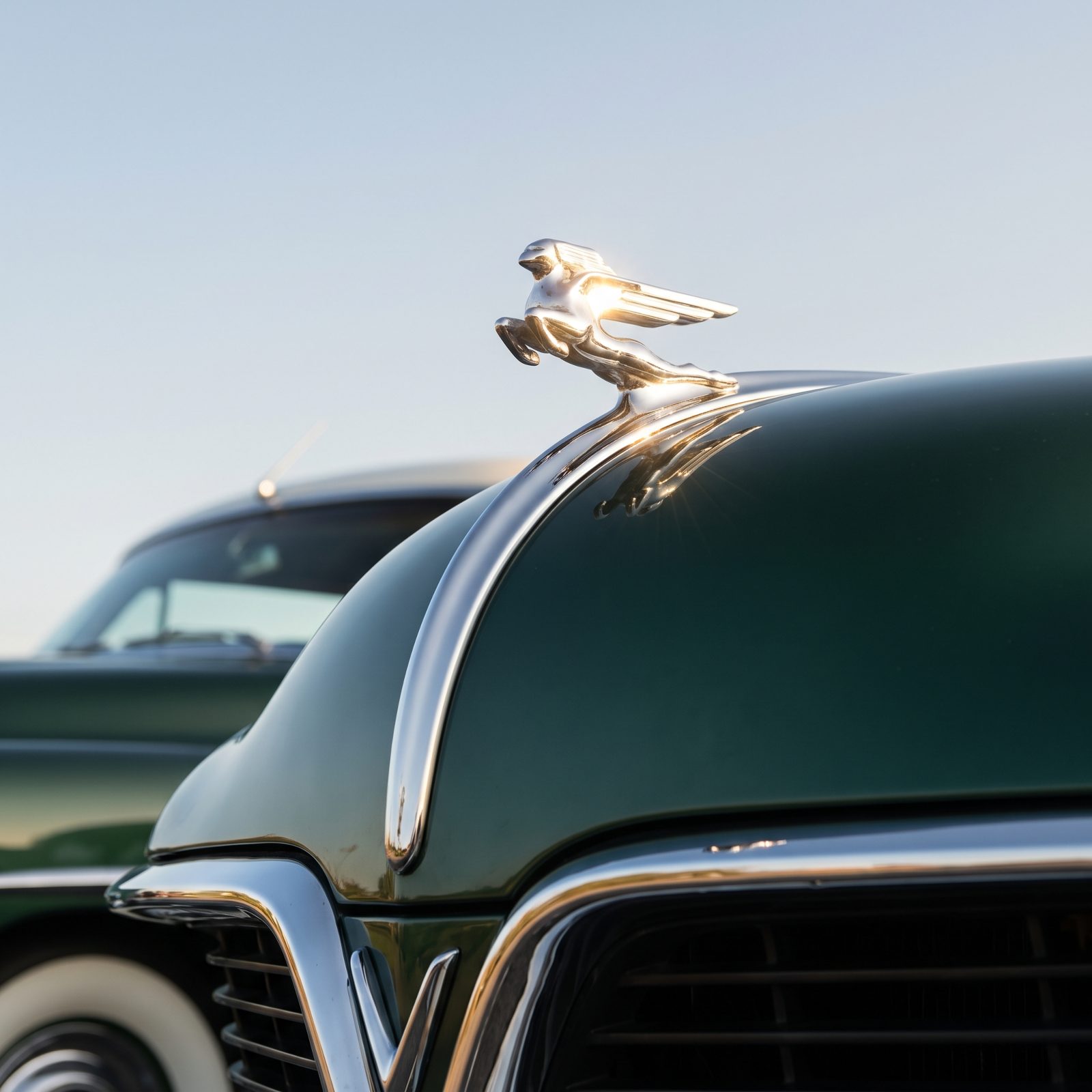
Out on the leading edge of the hood sat a little chrome sculpture, a jet, a goddess, a leaping cat, a comet frozen mid-flight. Half ornament, half gunsight. Drivers used it to aim the nose down a lane before power steering made the car feel weightless.
These started as functional radiator caps and bloomed into pure brand swagger. Then two things killed them off. Pedestrian-safety rules frowned on a chrome spike at knee height, and thieves discovered a famous ornament fetched good money off a parked luxury car. So they shrank, retracted, or disappeared into the sheet metal. A shame, honestly. A good one turned an ordinary commute into something you drove with a little pride.
32. Swing-Away Steering Wheels: Easier Entry Through Moving Hardware
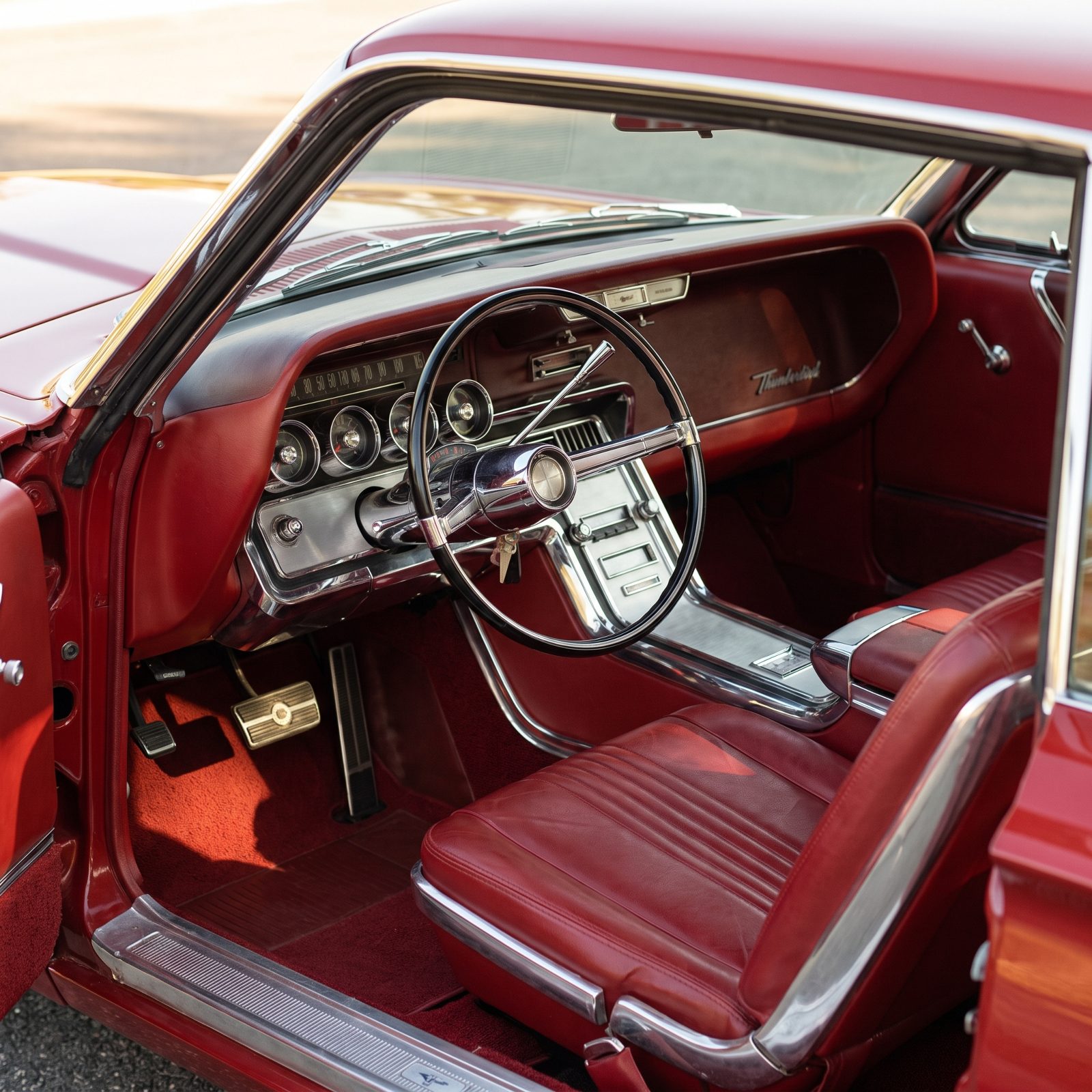
Ford’s Thunderbird had a trick nobody asked for and everybody loved: shift into park, and the whole steering wheel swung a good ten inches to the right, clear across toward the center of the dash. Now you could slide in and out without doing the knee-around-the-column dance that every driver knows.
It was a little piece of showmanship aimed straight at the country-club set. The mechanism was heavy, the kind of thing that eventually developed a wobble or refused to click back into place, and the engineers probably sweated every bolt of it. But swing that wheel out of the way once and you understood the appeal completely. Pure luxury, the useless kind, the best kind.
31. Whitewall Tires: Bright Rings That Completed the Design
Would you like to save this?
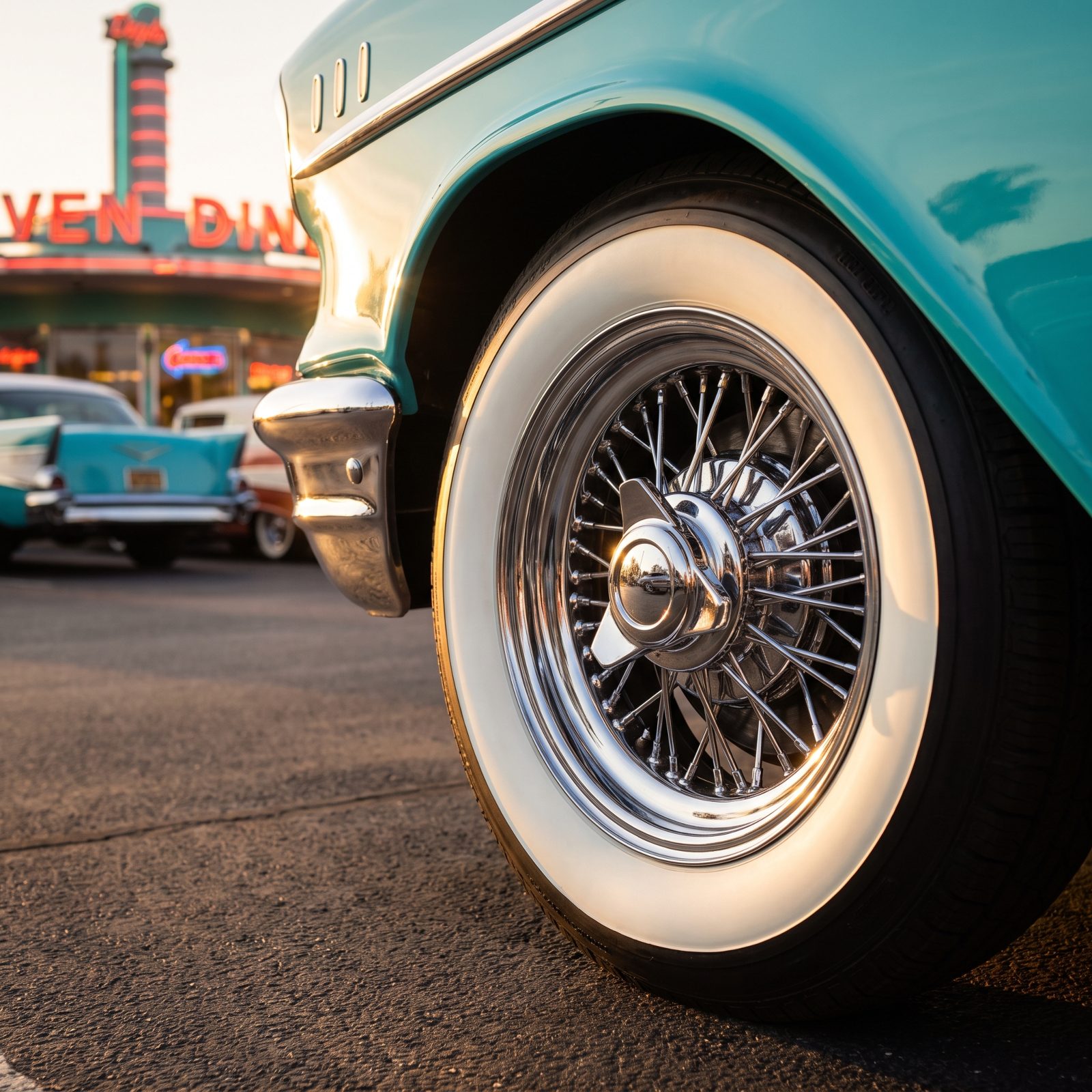
A fat white ring around the sidewall. That was all it took to make a ’57 Bel Air look like it owned the drive-in. Early whitewalls came from the rubber itself, before carbon black took over the tread and left the sides pale, and before long they’d become a deliberate style choice you paid extra for.
The wide white band narrowed through the ’60s, then shrank to a thin pinstripe, then mostly vanished under raised black lettering by the ’80s. Keeping them clean was its own chore, too. Scuff a curb and you’d gray the white, so Saturdays meant a stiff brush and a can of cleaner. People did it gladly. A gleaming whitewall against turquoise paint under a diner’s neon was about as all-American as a car could get.
30. Built-In Car Phones: Communication as a Luxury Feature
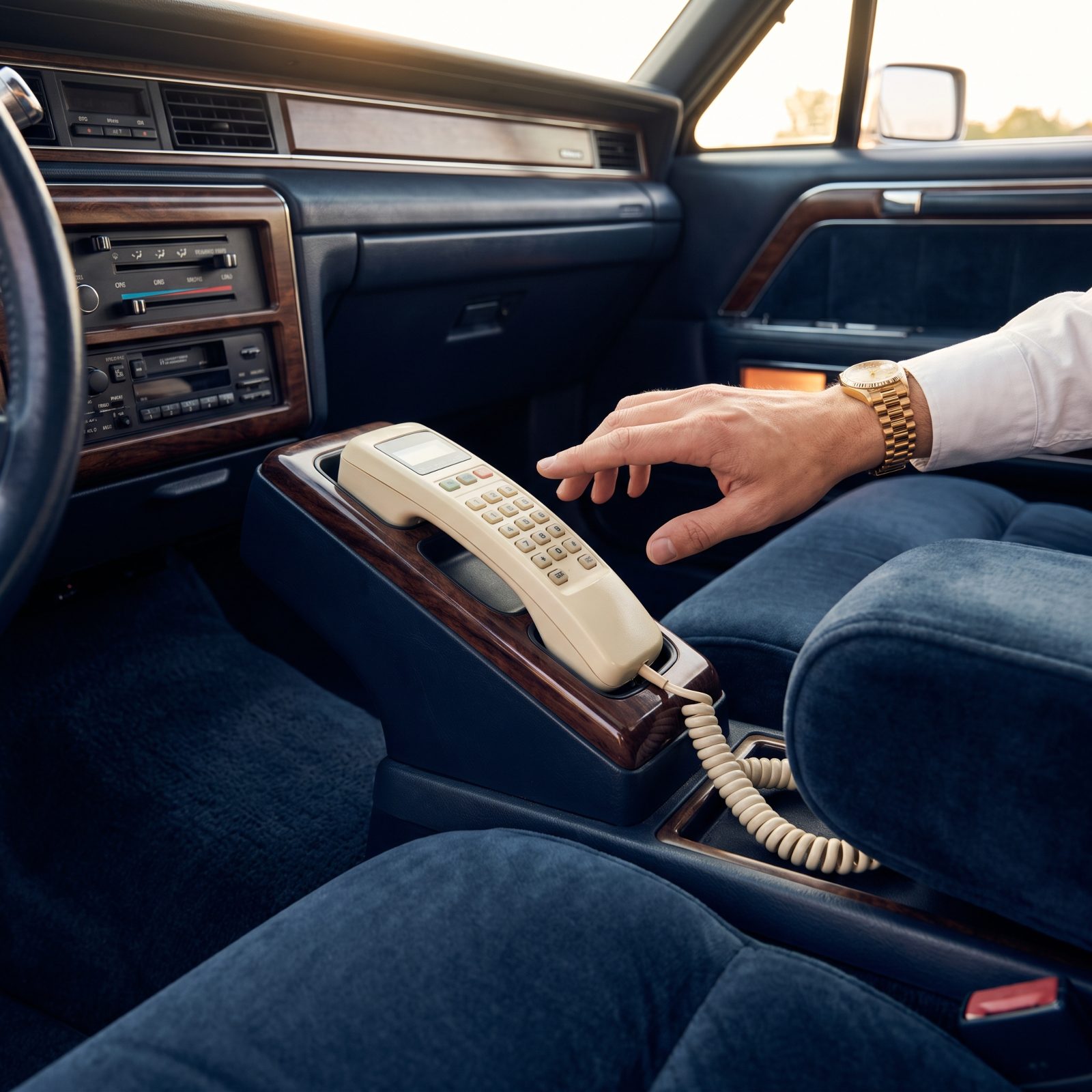
Before everybody carried a phone in their pocket, having one bolted into the center console of your Lincoln told the whole parking lot you’d made it. A cream handset in a cradle, a curly cord, a keypad glowing in the walnut trim. You lifted it to your ear at a stoplight and felt important whether or not anyone was on the line.
These things cost a fortune to install and nearly as much to use, with per-minute charges that could ruin a monthly budget in one chatty highway drive. Coverage was patchy, the sound hissed, and you dialed with your eyes on the road and a prayer. Didn’t matter. The mobile phone outgrew the dashboard fast, but for a handful of years that console handset was the loudest quiet brag on four wheels.
29. Talking Warning Systems, Cars That Announced Open Doors and Low Fuel
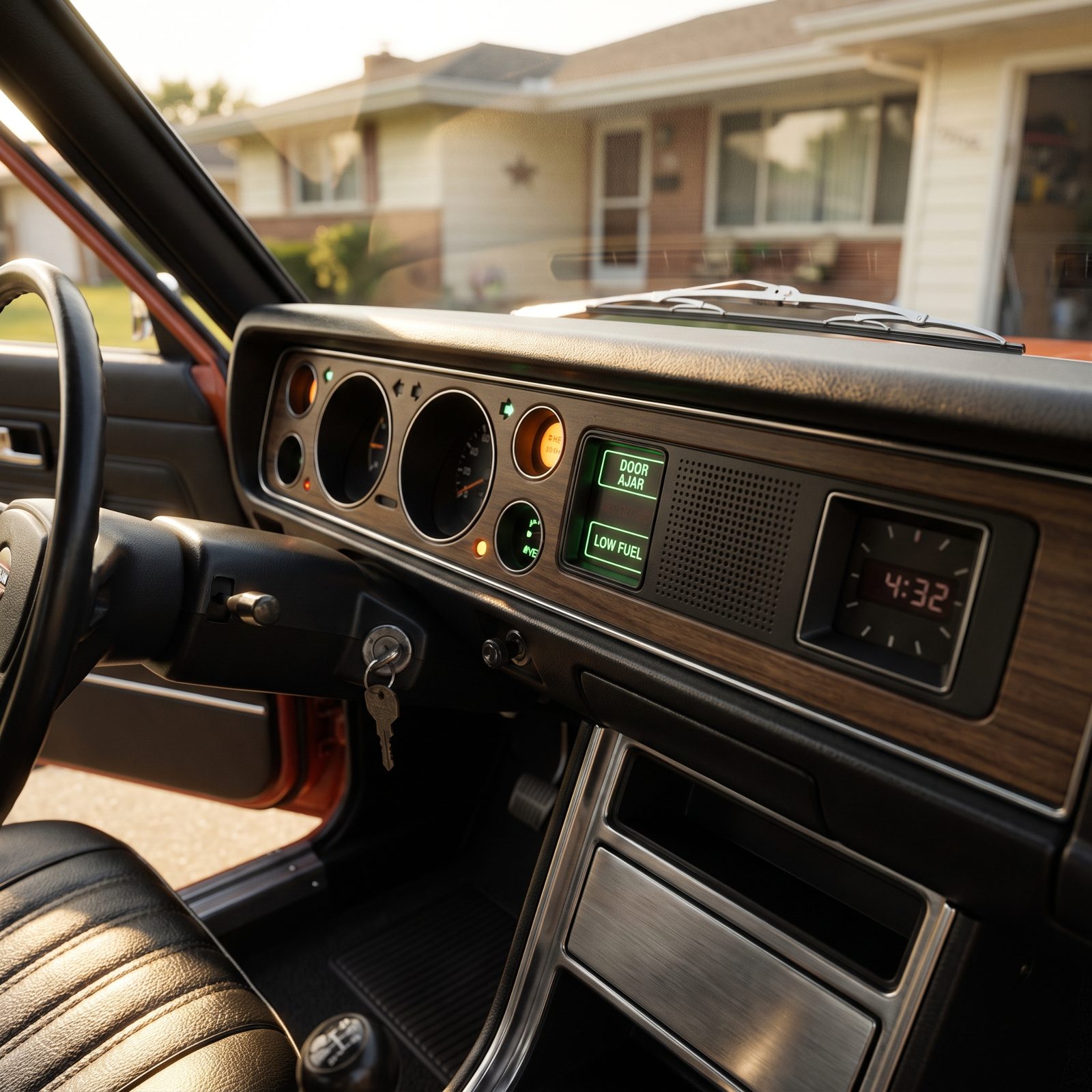
You left the door cracked and the car told you so. Out loud. A calm, slightly robotic voice from somewhere near the dash: “A door is ajar.” Which every eight-year-old in the back seat immediately turned into a joke about jars.
Chrysler, Datsun, Nissan, and a few others leaned into this in the early 80s. Low fuel, open door, key in the ignition, lights left on — the car had opinions and it shared them. A tiny phonograph-style voice chip did the talking, and the novelty wore thin fast for owners who yanked the fuse within a week.
Still, there was something kind about it, a machine looking out for you before anything beeped or buzzed. Modern cars chime at you in tones you have to decode. This one just said the words.
28. Factory CB Radios, Highway Conversation Built In
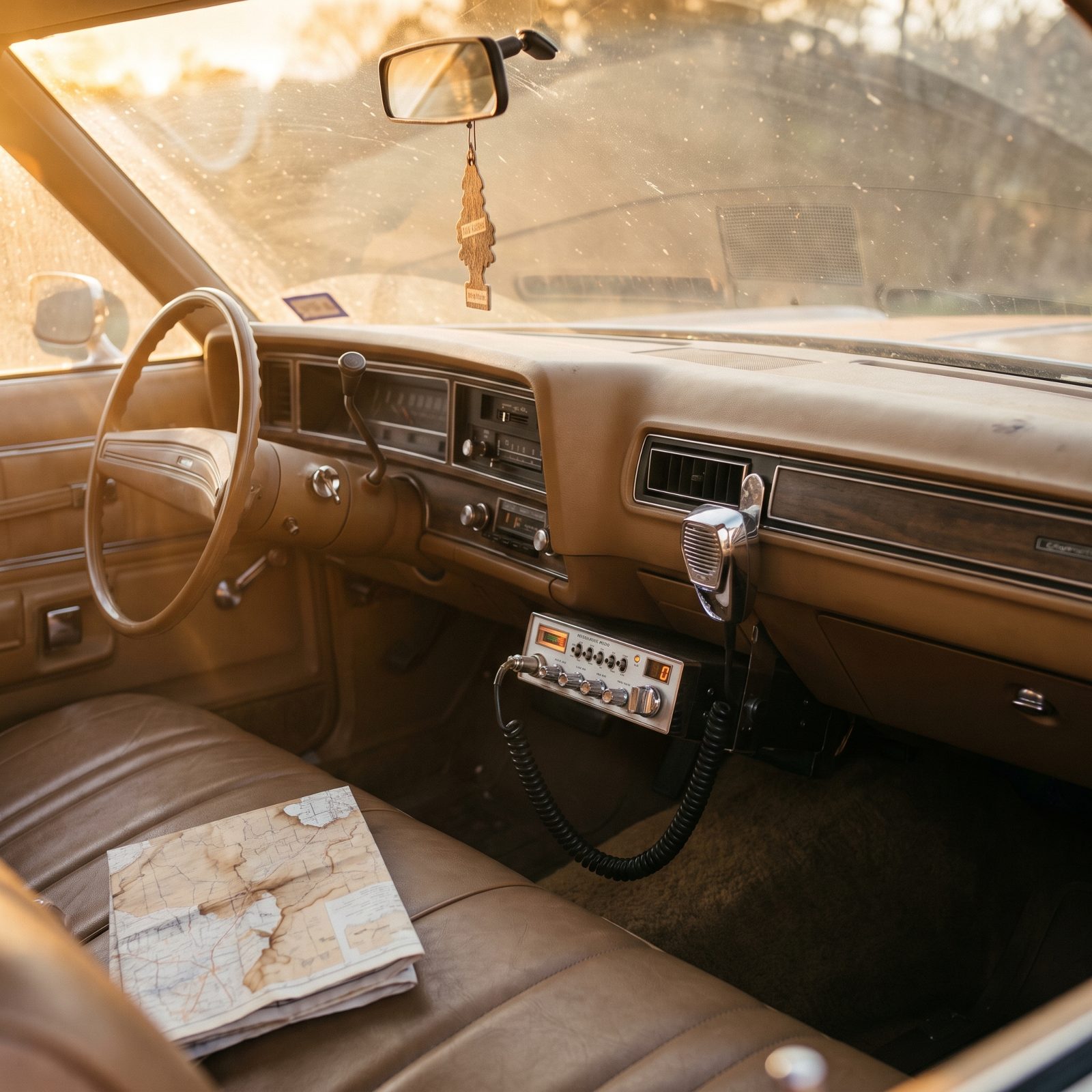
Breaker one-nine. For a stretch of the mid-70s, half of America talked like a long-haul trucker, and plenty of cars came ready for it straight off the dealer lot.
The factory CB lived under the AM dial, chrome mic clipped within reach, coiled cord dangling down toward the floor. You’d dial up channel 19 on a long drive and listen to strangers warn each other about a smokey parked behind the overpass up ahead.
Call it a social network with a range of about four miles and a handle you made up for yourself. The gas crisis gave it purpose, the movies gave it glamour, and the whole thing burned bright before fading by decade’s end. But a crackly voice saying “you got your ears on, good buddy” still lives rent-free in anyone who rode shotgun back then.
27. Floor-Mounted Headlight Dimmer Switches, High Beams Under the Left Foot
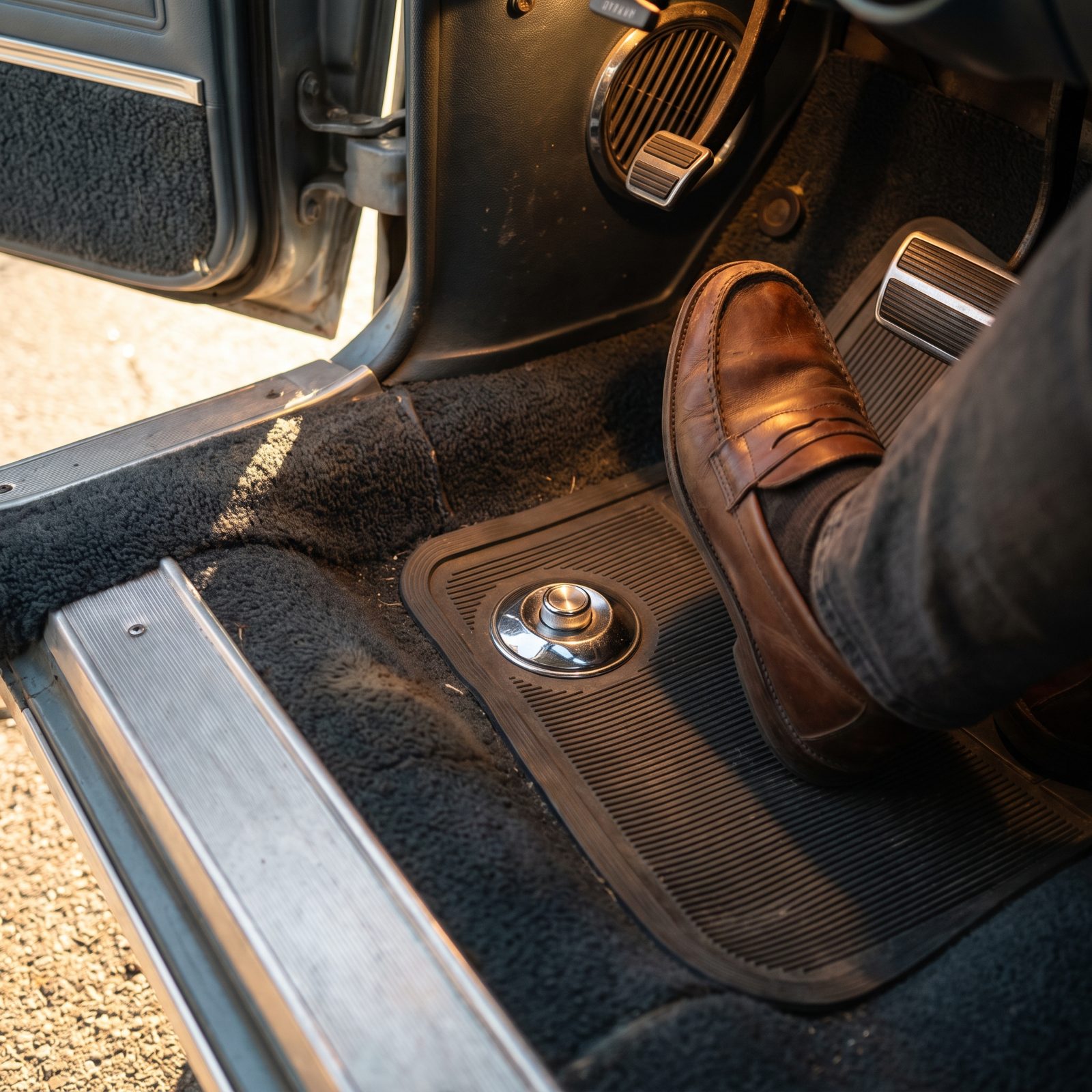
Your left foot knew exactly where it was. A little chrome button on the floorboard, just inboard of where your heel rested, and a firm press flicked you from low beam to high with a satisfying mechanical click.
No stalk, no flick of a finger, no fumbling in the dark. Oncoming car crests the hill, your toe taps down, beams drop, car passes, toe taps again, beams back up. It became reflex. People who learned to drive this way still twitch their left foot on a dark country road out of pure habit.
Safety-stalk consolidation killed it off through the 70s and 80s, and everything migrated to the steering column. Tidier, sure. But there was a rightness to controlling your lights with your foot while both hands stayed put.
26. Mechanical Station-Preset Buttons, Radio Memory With a Solid Clunk
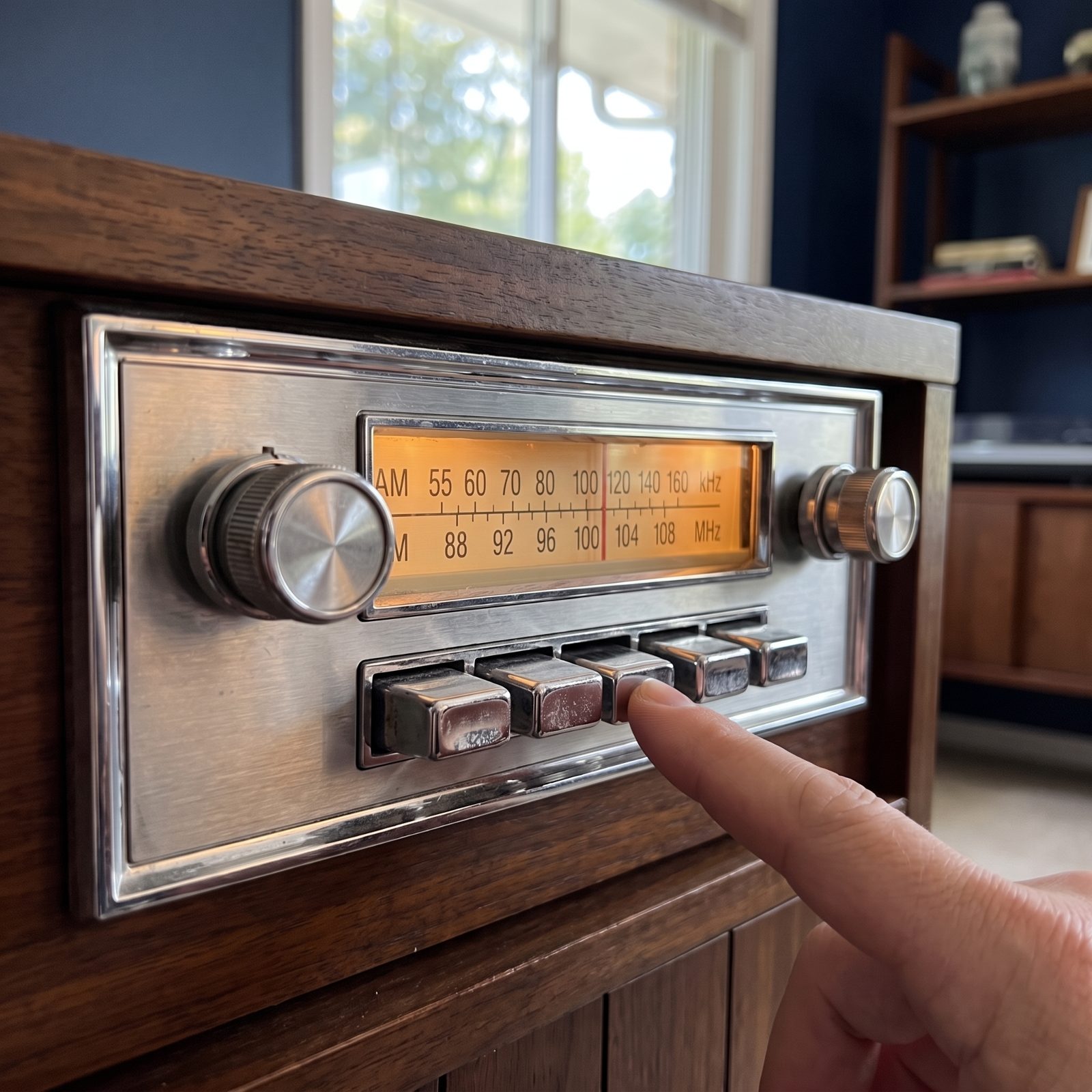
Five chrome buttons in a row, and you set each one by hand. Tune the station, pull the button out, press it hard until it clicked, and that frequency was locked under your thumb forever.
No menu, no scrolling, no touchscreen — pure mechanical linkage, a little cam and spring arrangement that physically dragged the tuner to the spot you’d memorized. The clunk when you jabbed a preset was the whole experience. You could change stations by feel and position alone, eyes on the road.
Dad’s presets were his. The ballgame, the news, the oldies. Touch button three and you got his world — which was the first thing teenagers reset the second they got the keys.
25. Graphic Equalizers, Rows of Sliders Glowing at Night
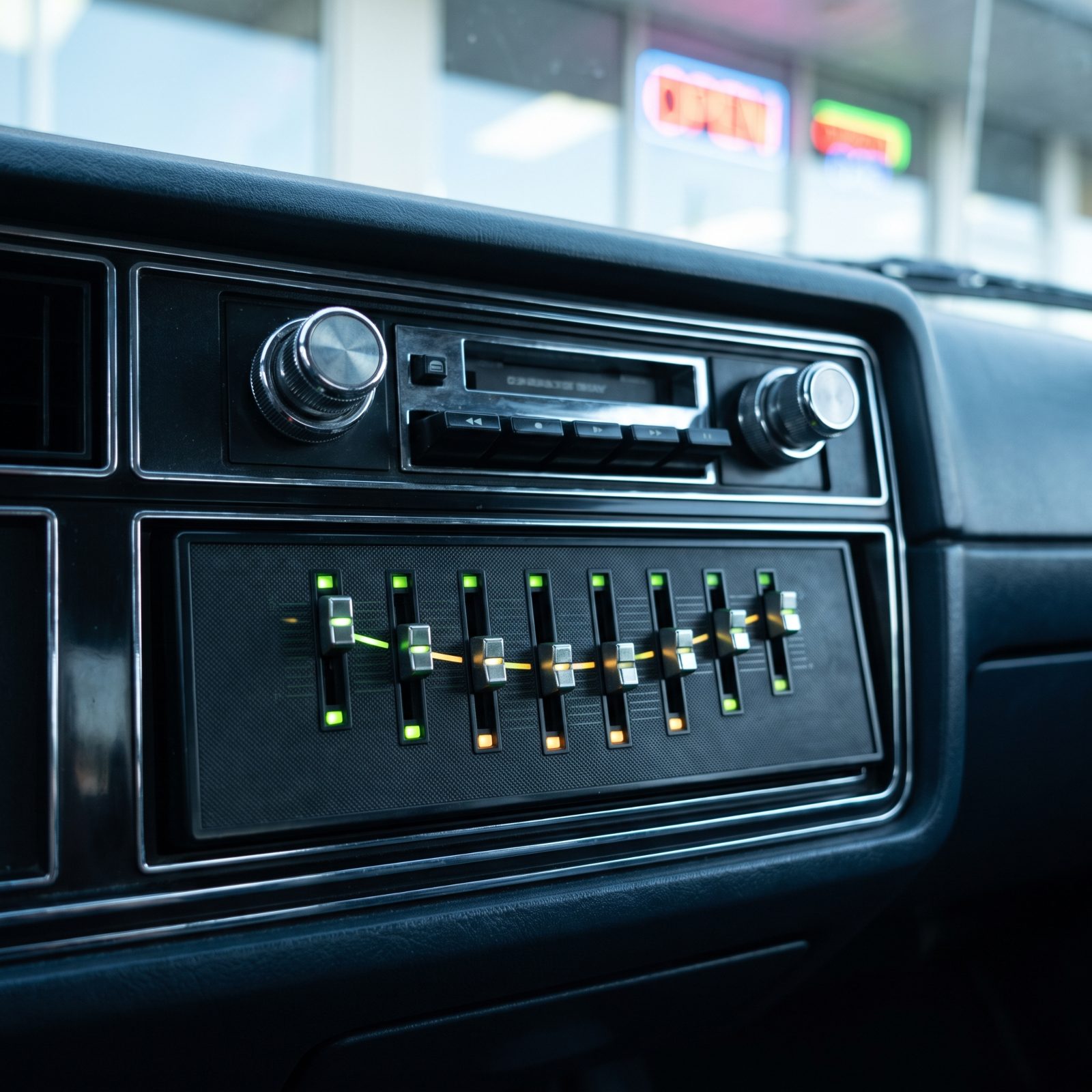
You arranged them in a smile. Bass up on the left, mids dipped in the middle, treble climbing back up on the right — that gentle curve every teenager drew with the sliders whether it did anything or not.
The graphic equalizer was the crown jewel of the 80s aftermarket stereo. Seven sliders, ten, sometimes twelve, each one glowing green at night, mounted below the cassette deck like a tiny mixing console you drove around with.
Did anyone actually tune by ear? A few did. Most of us just liked the way it looked, and the way it felt to run a fingertip across the row. It announced that the owner took sound seriously, even when the speakers were rattling in cheap door panels.
24. Horn Rings, A Full Circle for Instant Access
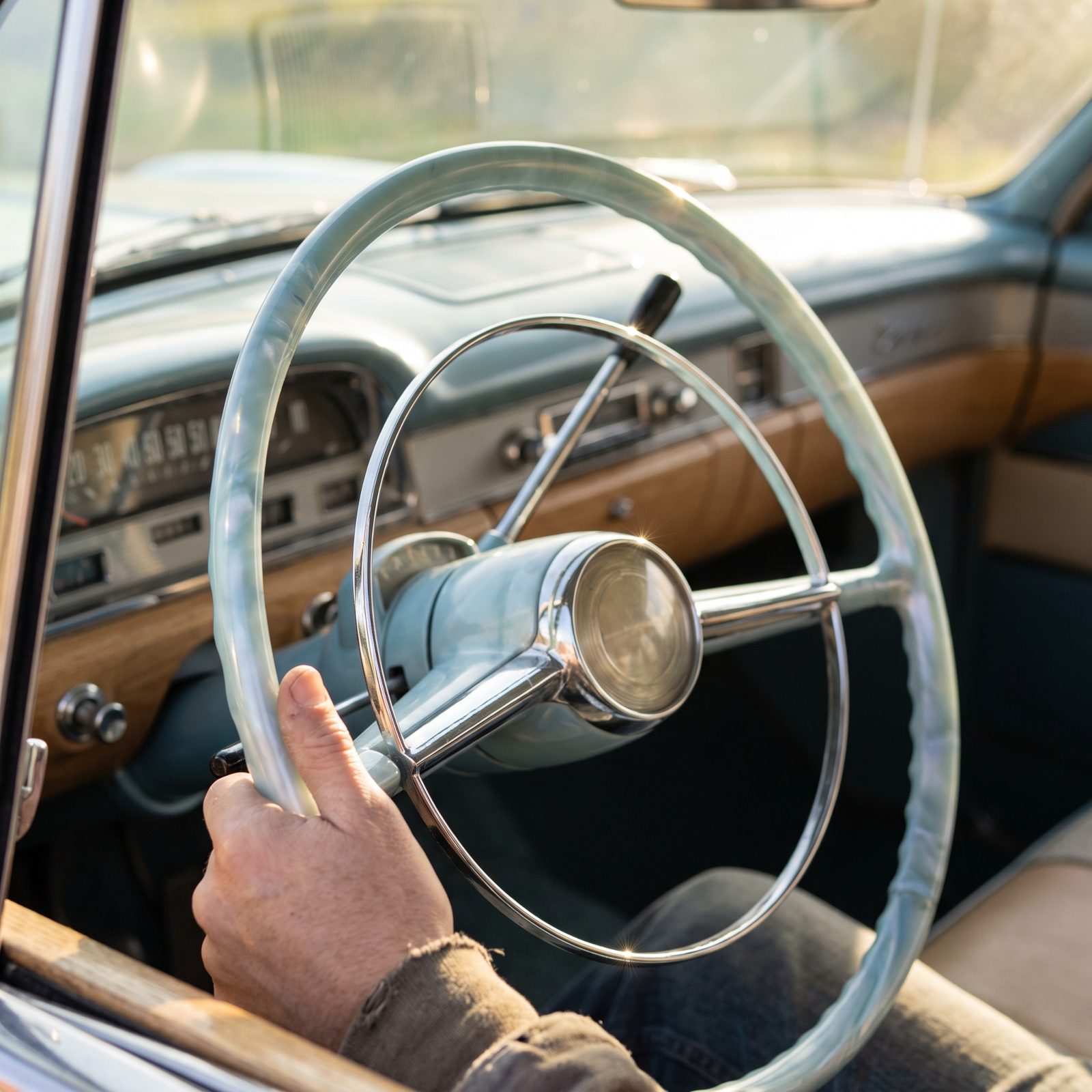
You could honk with any finger, any thumb, any part of your palm. The horn ring circled the whole inside of the wheel, a thin band of chrome you could press anywhere along its arc.
No hunting for a button, no stabbing at a logo in the center. In a panic, your hand was already touching it. That was the genius of the thing — instant noise from wherever your grip happened to land.
Horn rings faded as steering wheels filled up with padded hubs, turn-signal stalks, and eventually airbags that needed the real estate. The full ring became a half-ring, then two little tabs, then just the center pad. Something got lost. A full circle you could sound from anywhere beat a button you had to aim for.
23. Foot-Operated Windshield Washers, Fluid on Demand Without a Stalk
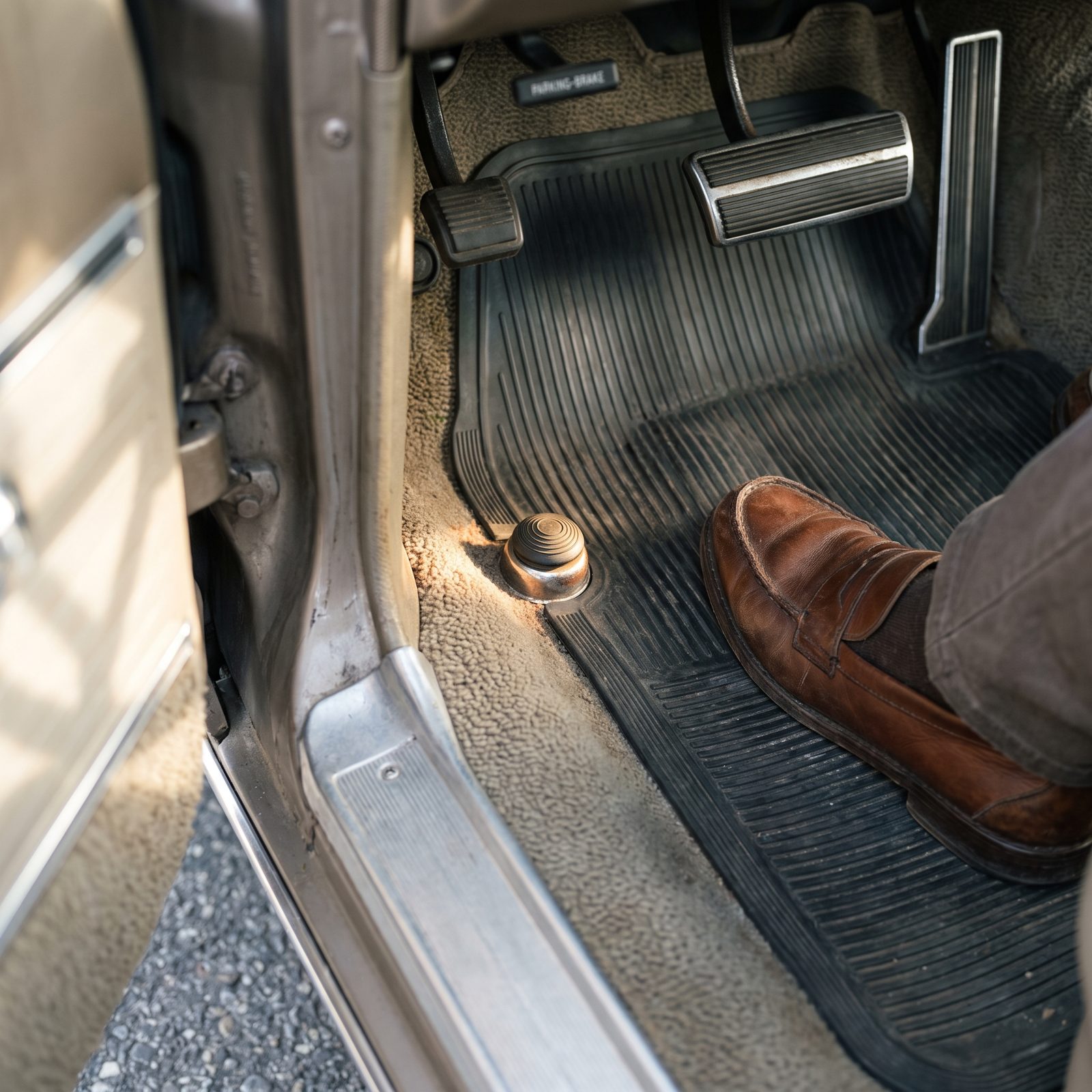
Before the washer squirt lived on a stalk, it lived under your foot. A little rubber pump button on the floorboard, and a few firm stomps built up enough pressure to shoot fluid across the glass.
No electric pump. No motor to burn out. Just you, a diaphragm, and a hose — manual labor in the most literal sense, pumping your own washer fluid like working a bicycle tire against a flat.
Simple to the point of being nearly unbreakable, which is more than you can say for the electric washer motors that replaced it and promptly started dying every January. There’s a quiet appeal to a system with nothing to short out.
22. Ribbon Speedometers, A Colored Band Sweeping Across the Dash
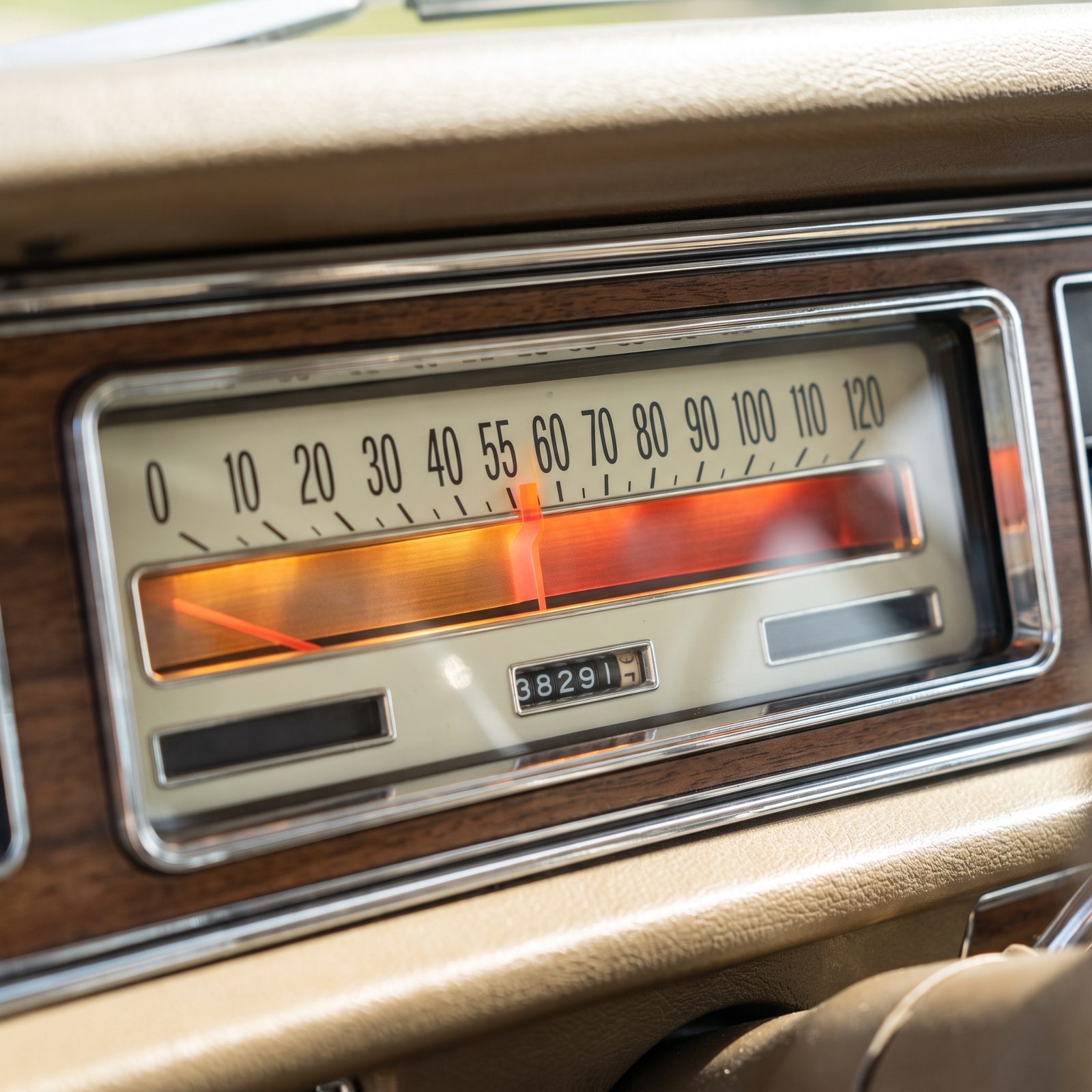
No needle at all. Just a colored band, usually orange fading to red, that stretched out across a horizontal strip as you accelerated and shrank back when you slowed. Watching it grow felt like filling a thermometer with speed.
GM and others loved these in the 50s and 60s — Oldsmobile, Buick, Pontiac, all running ribbon speedos across wide Space Age dashboards. At 30 the band was a short orange stub. Lean on it and it crept toward the red, which gave the whole thing a mildly alarming quality that made sixteen-year-olds grin.
Round dials won out eventually, cheaper to build and easier to read at a glance. But a horizontal ribbon of color sweeping across the dash had a drama no needle ever matched.
21. Rotating Drum Speedometers, Speed Displayed Like an Odometer
Would you like to save this?
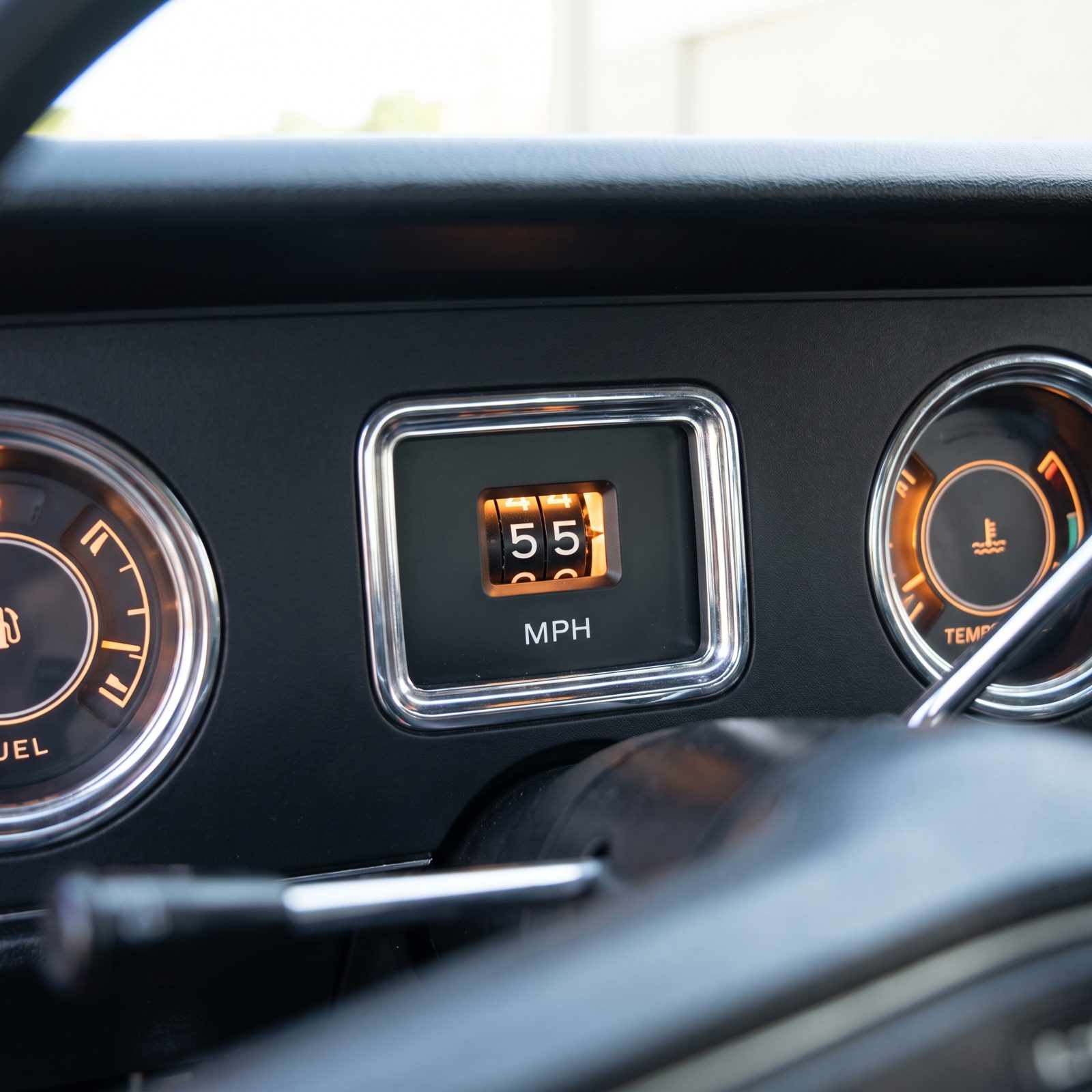
Speed as a number, spinning into view. No sweep, no arc, just a rotating drum behind a little window showing your exact velocity the way the odometer showed your miles. 58, then 59, then 60, rolling up like a slot machine that always paid out.
A handful of European and Japanese cars ran these through the 60s and 70s. What sold people on them was precision. No parallax error from reading a needle at an angle, no squinting between tick marks — the number was the number.
Digital dashboards arrived in the 80s and made the whole mechanical drum obsolete overnight. A shame, really. There was something satisfying about a machine physically rolling a numbered cylinder to tell you how fast you were going. You could feel the engineering in it.
20. Hood-Mounted Boost Gauges, Performance Data Outside the Cabin
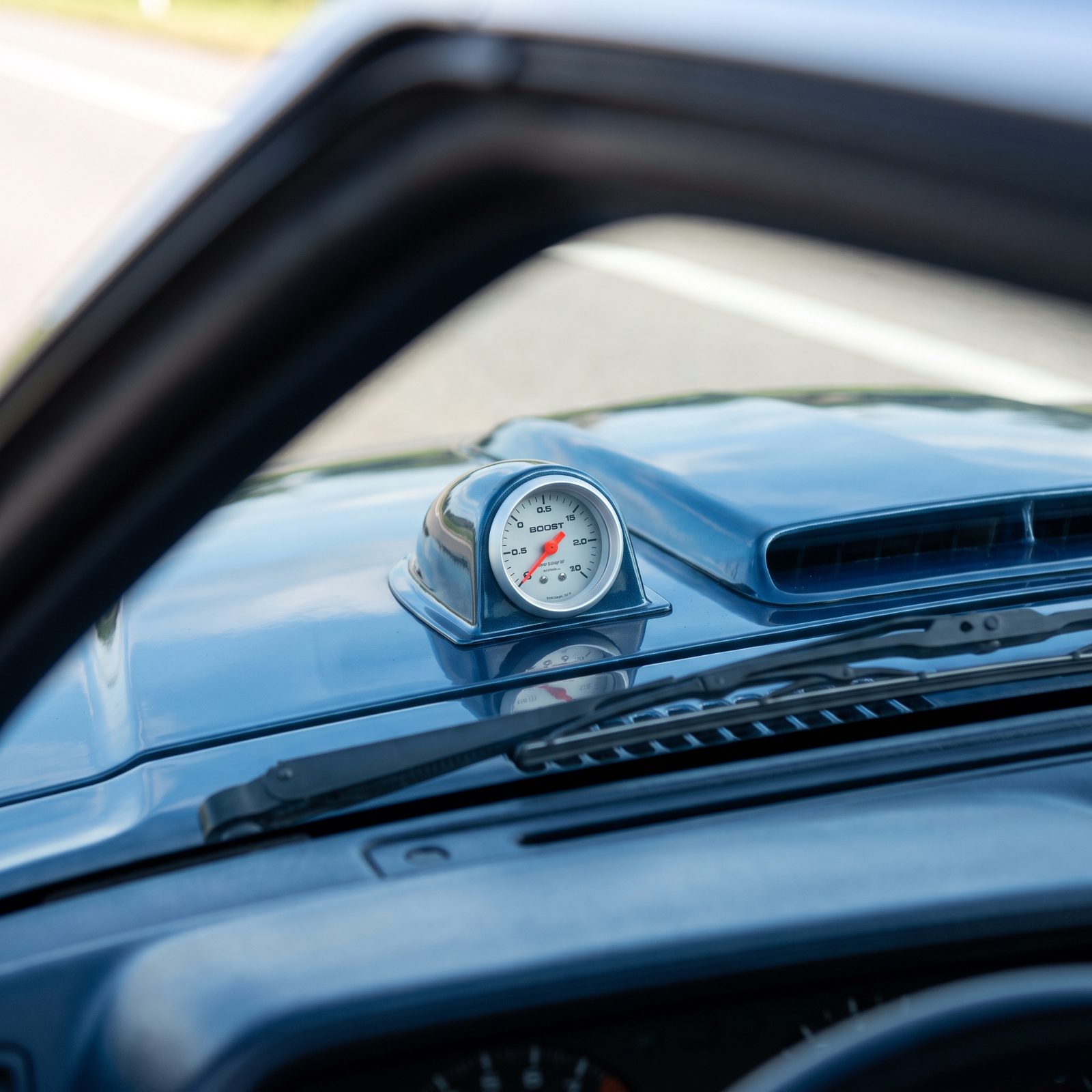
You read your boost through the windshield. A small analog gauge bolted right to the center of the hood, needle sweeping as the turbo spooled — performance data mounted outside the car entirely, where the whole street could see it.
Turbocharged sport coupes of the 80s put the boost gauge where you could watch it over the hood, part instrument and part brag. Floor it, watch the needle climb into positive pressure, feel the shove in your back at the same instant. The gauge and the acceleration arrived together.
Everything moved inside eventually. Into the cluster, then into a menu, then into a configurable display you have to go digging for. A dedicated needle on the hood that did one job knew exactly what it was for.
19. Continental Spare-Tire Kits, The Trunk Extended Into Jewelry
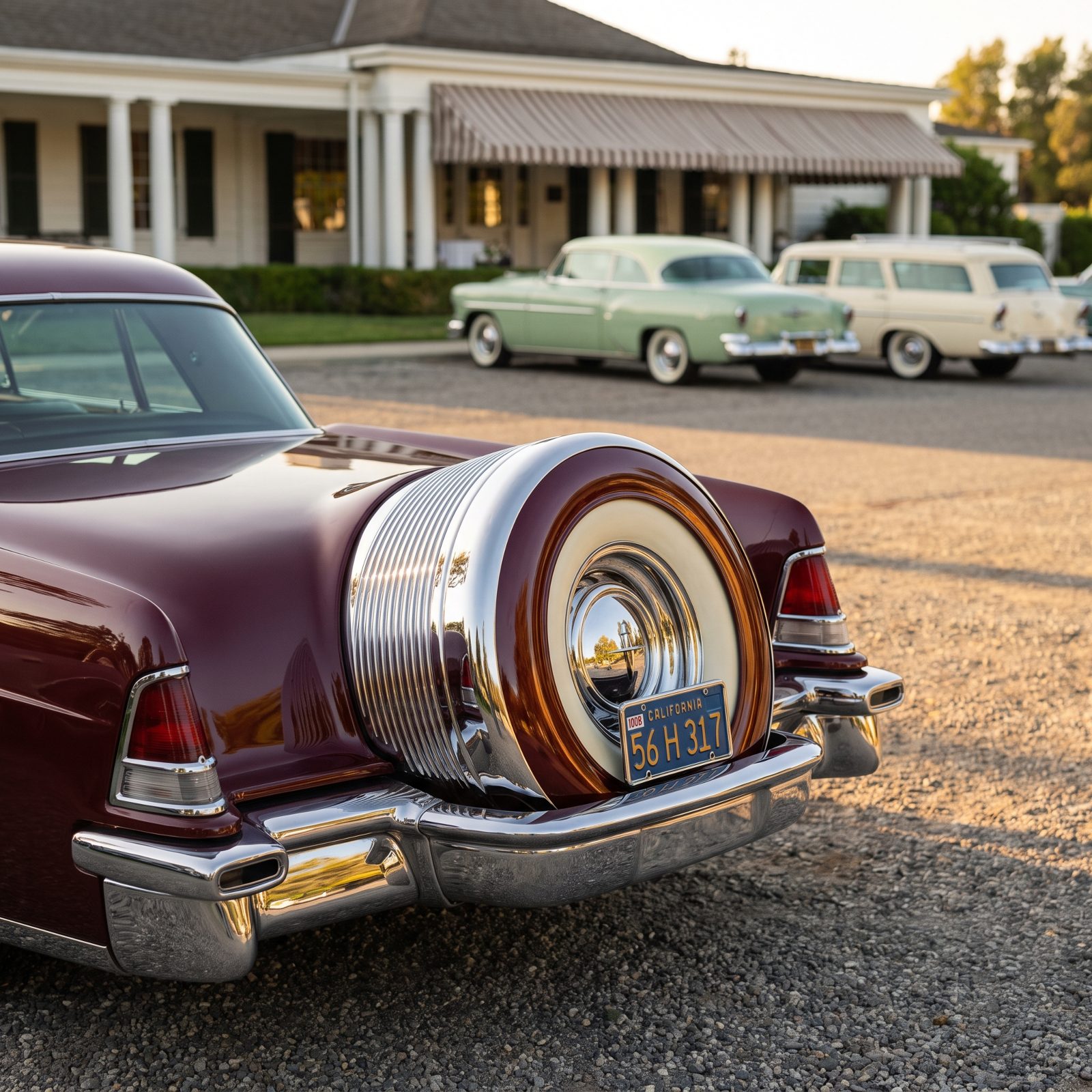
You could spot money coming from half a block away — not by the hood ornament, but by that fat chrome hump hanging off the trunk, the spare tire wearing its own tailored cover like a little hat.
The continental kit started as function. Lincoln’s 1940 Continental carried its spare outside because the trunk was meant for luggage, not rubber. Then it turned into pure ornament, and by the mid-50s people were bolting the things onto Chevys and Fords that had perfectly good trunk wells underneath, just for the look.
It added a foot to the car and about a week to the parallel-parking learning curve. Nobody cared. The kit announced that this car was long, this car was serious, and this car wasn’t going to apologize for either.
18. Fender Skirts, Rear Wheels Disappearing Into the Body
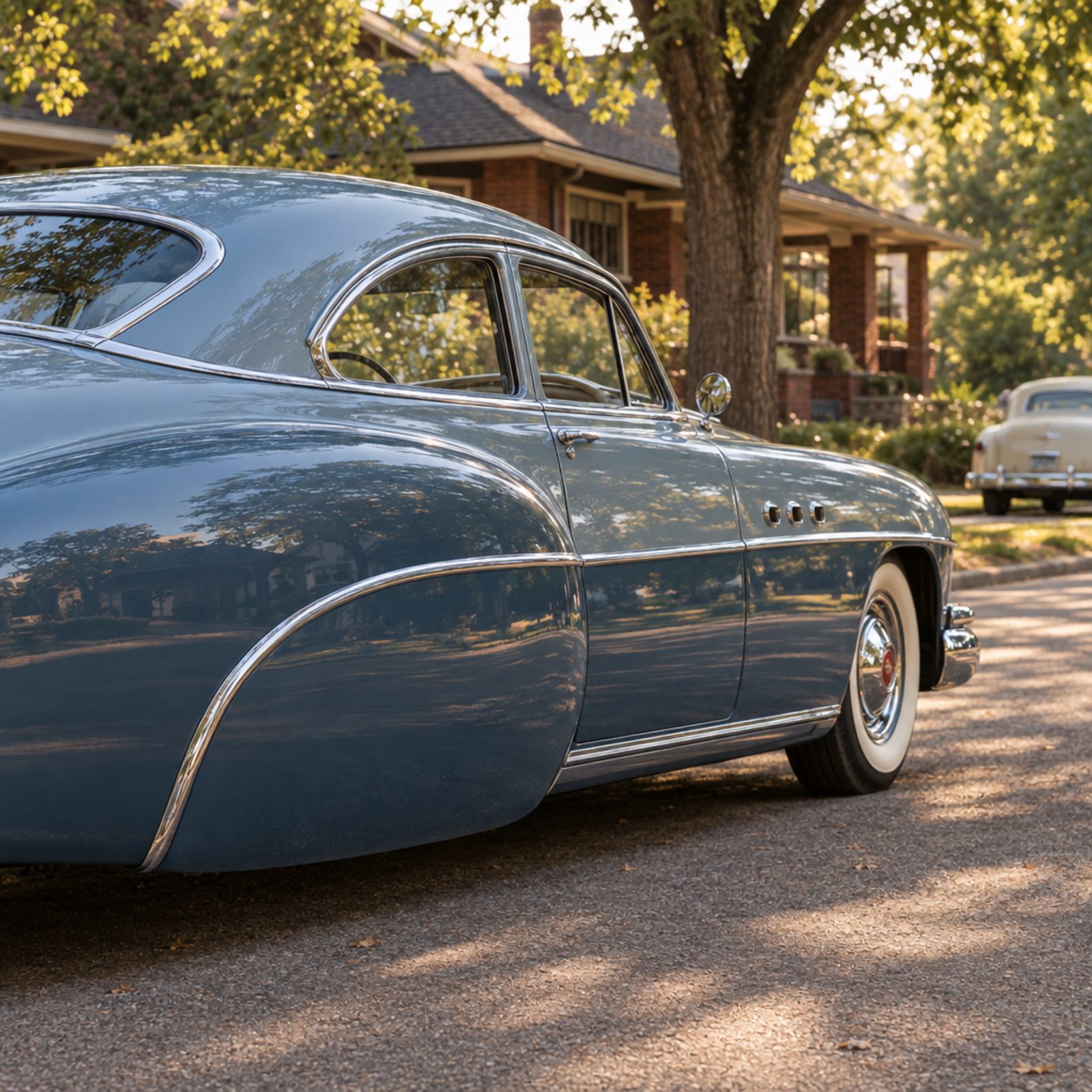
Nothing cleaned up a car’s profile like hiding half its wheels.
Fender skirts covered the rear wheel openings with a body-color panel, and suddenly the whole side of the car read as one long unbroken line. Designers loved them for a simple reason: an open wheel well is a hole, and a hole breaks up a shape. Fill it in and the car looks lower, longer, faster sitting dead still.
Changing a rear tire meant unclipping the skirt first — nobody enjoyed that on a muddy shoulder in the rain. But parked in the driveway on a Sunday, catching the light, a skirted Buick or Hudson looked poured rather than assembled. We lost them to changing styles and the need to cool brakes. The look never got old.
17. Two-Tone Factory Paint, Body Shapes Defined by Color
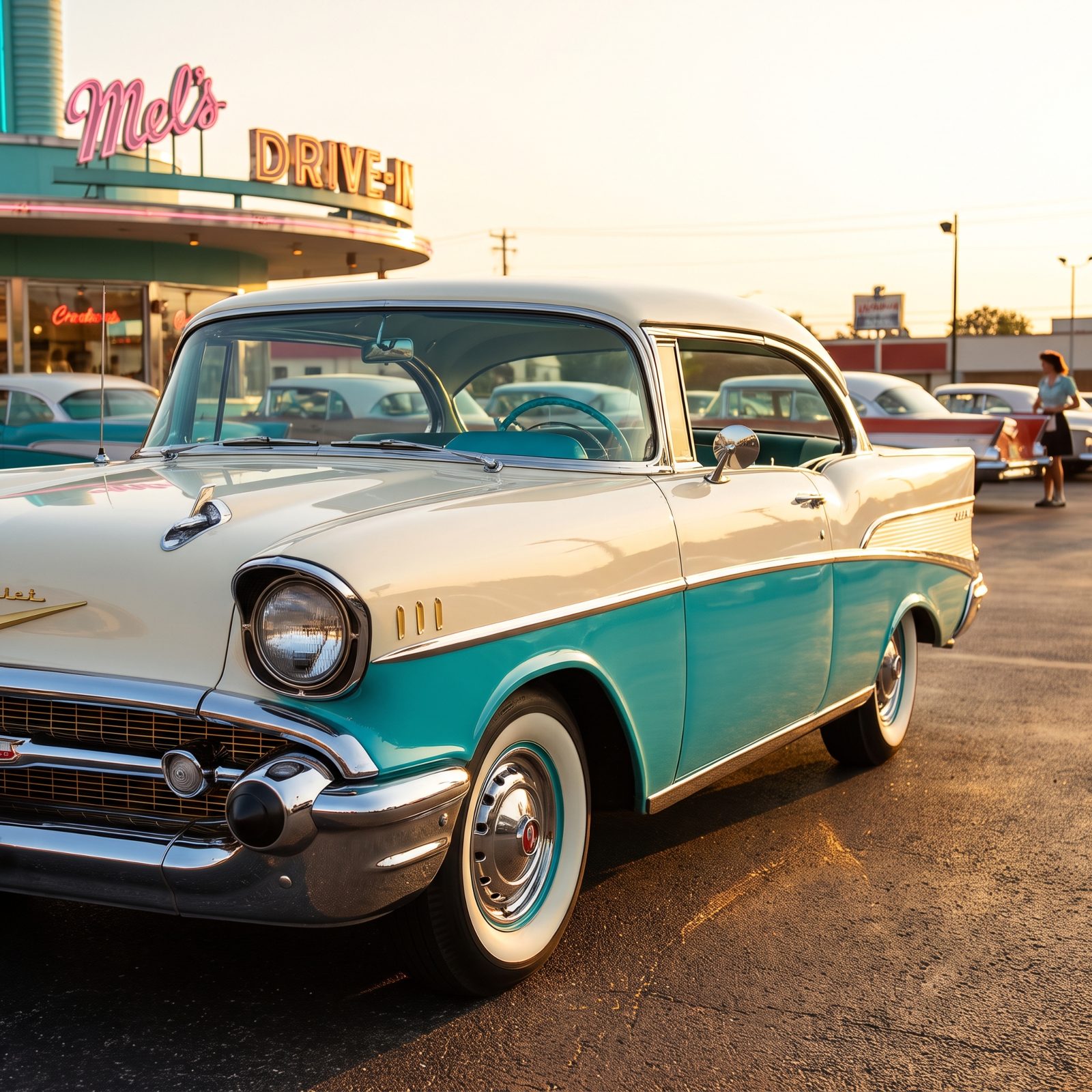
That chrome spear down the flank of a ’57 Bel Air wasn’t just trim. It was a border. One color above, another below, and the whole car got carved into shapes by nothing but paint.
Factory two-tones were everywhere in the 50s. Ivory over turquoise, black over coral, the roof one shade and the body another, sometimes a third color scooped into a side cove. A designer used color the way a tailor uses a seam — to flatter the shape and walk your eye along it.
Then paint went monochrome and stayed that way for decades. Wander a modern lot and it’s a sea of silver, white, and black. Gorgeous cars, every one, all wearing the same three colors to the same party.
16. Landau Vinyl Roofs, Formal Texture Above the Beltline
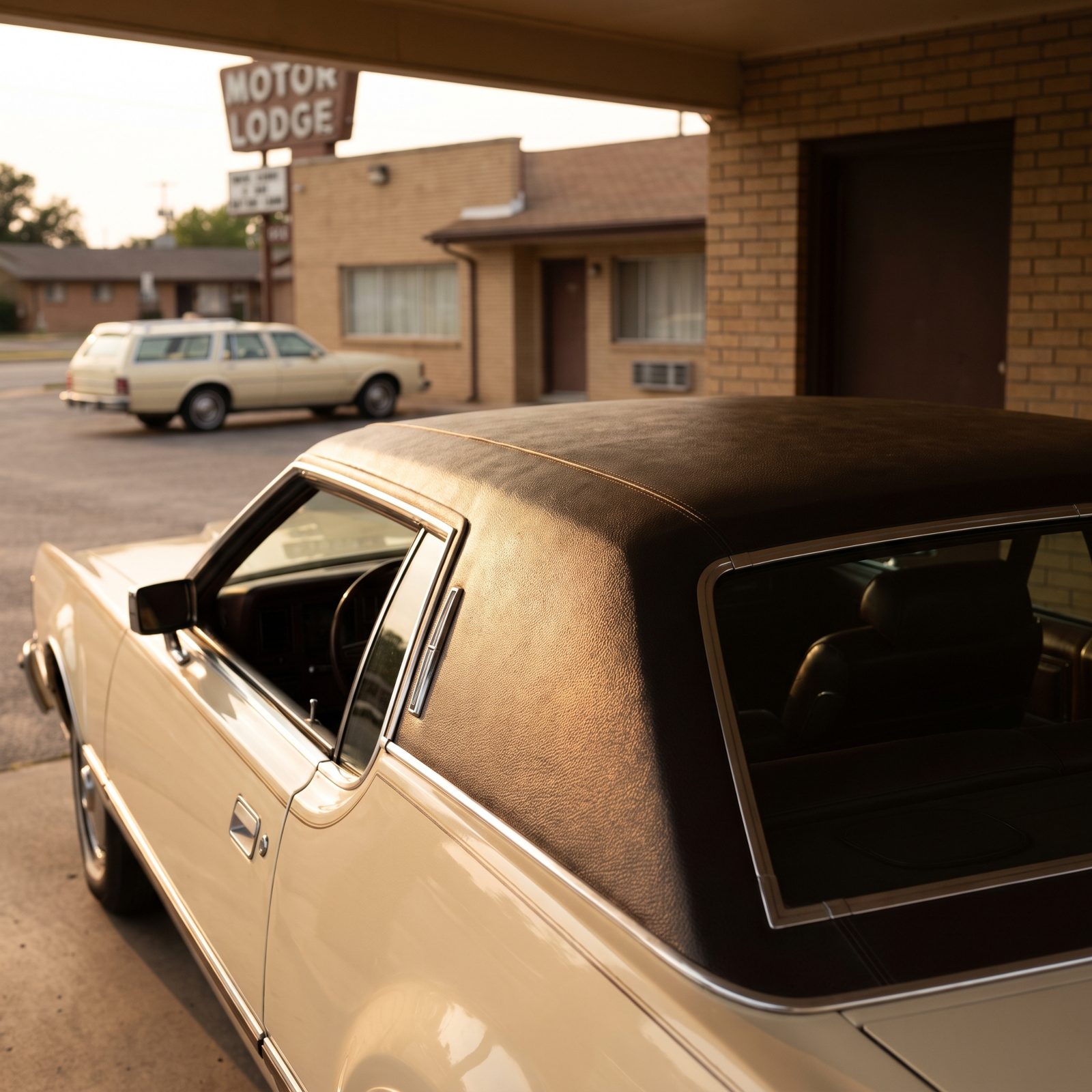
Run your hand across one and you felt the pebbled grain, warm from the sun, slightly soft. The vinyl roof turned a plain steel top into something that looked almost upholstered, like the car had thrown a leather coat over its shoulders.
The landau version covered only the rear portion, finished with chrome S-shaped bars arcing down the C-pillar, a wink at the folding tops of old horse-drawn carriages. Pure theater. The bars did nothing, and the vinyl did nothing but trap moisture and eventually bubble. For a solid twenty years, every personal-luxury coupe in America wore one proudly.
It gave a car a formal upper half — a visual hat. Strip it off and the same roof looks naked. We called it tacky by the 90s. I think we were wrong.
15. Opera Windows, Tiny Portholes for Personal Luxury
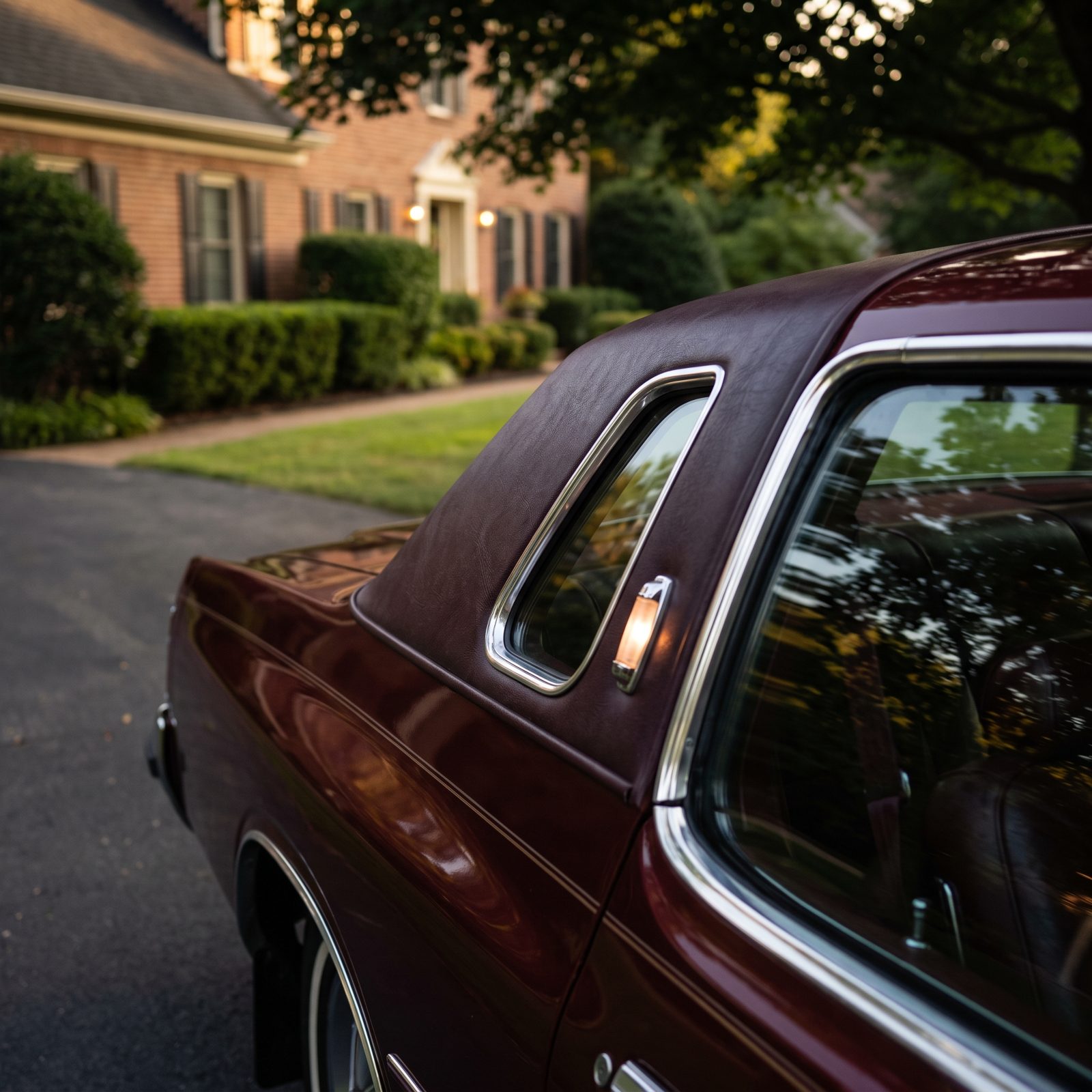
A window the size of a dinner plate, and it made the whole car feel richer.
The opera window was a small, often oval pane set into the broad C-pillar of 70s coupes. It gave the backseat passenger a peek of daylight without turning the rear cabin into a fishbowl, and that thick pillar made the seat feel tucked away and private, like a booth in a dim restaurant.
Chrysler’s Cordoba made the thing famous, usually paired with a little coach lamp. The whole package whispered that this was not transportation — this was an occasion. A tiny window shouldn’t change how a car feels. This one did.
14. Fender-Mounted Mirrors, A Clear View Down the Whole Car
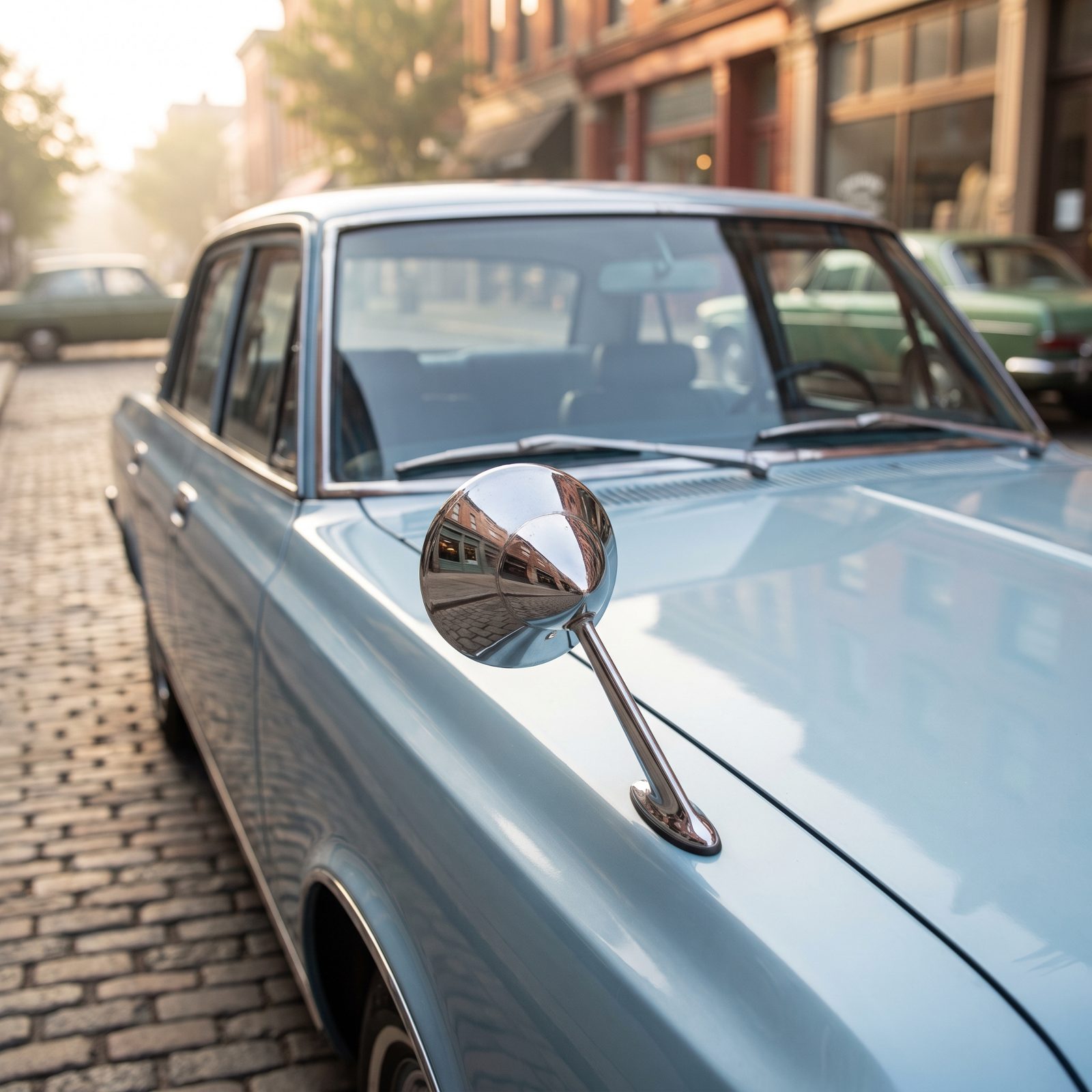
You never had to turn your head. The mirror sat way out on the fender, near the headlight, right in your natural line of sight over the hood, so a flick of the eyes showed you everything behind and alongside.
Fender mirrors were standard on Japanese cars for decades and showed up on plenty of others besides. They gave a longer, straighter view down the full length of the car, and they tucked in close enough to thread tight city streets without clipping a thing.
We moved everything to the doors because it was cheaper and easier to adjust from inside. Fair enough. But there was a rightness to a mirror you didn’t have to glance sideways for — sitting out there catching the morning light like a chrome ornament that happened to have a job.
13. Side-Facing Pickup-Bed Seats, Open-Air Riding From Another Era
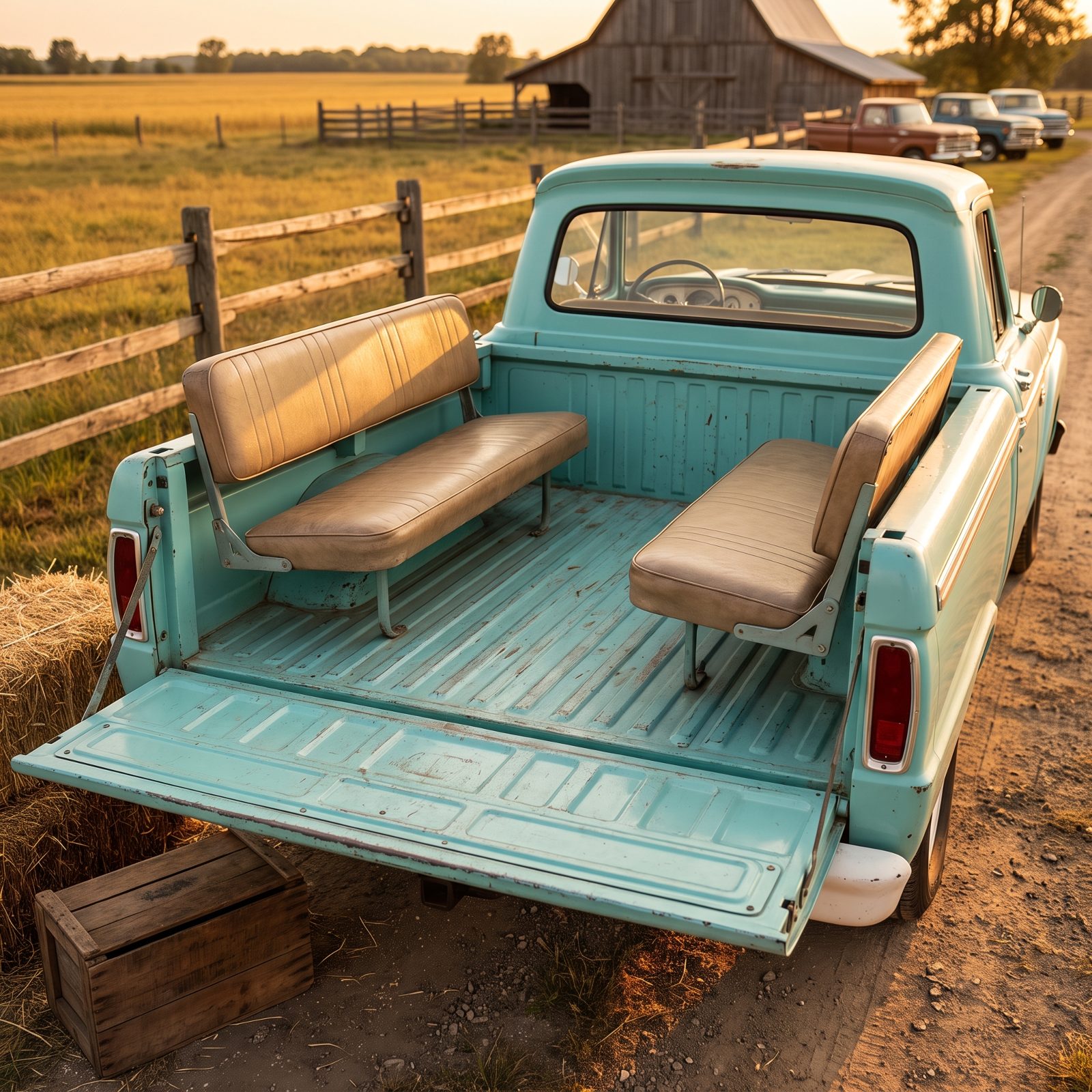
Wind in your hair, hay in the bed, your cousins sitting across from you on fold-down benches that ran along the inside of the truck walls. You rode facing each other, knees nearly touching, watching the road unspool backward.
Plenty of old pickups and panel trucks offered side-facing bed seats, and farm families, fair crews, and anyone hauling kids to the swimming hole leaned on them constantly. Most sociable way to travel ever devised, hands down. You talked the whole trip because you were staring right at each other the whole time.
Safety law ended it, and for good reason — nobody’s arguing that part. Still, ask anyone who did it and watch their face change. The open air, the engine note, the whole sky going by overhead. Some things we gave up for the right reasons and miss anyway.
12. Dutch Doors on Vans, Separate Glass and Lower Tailgate
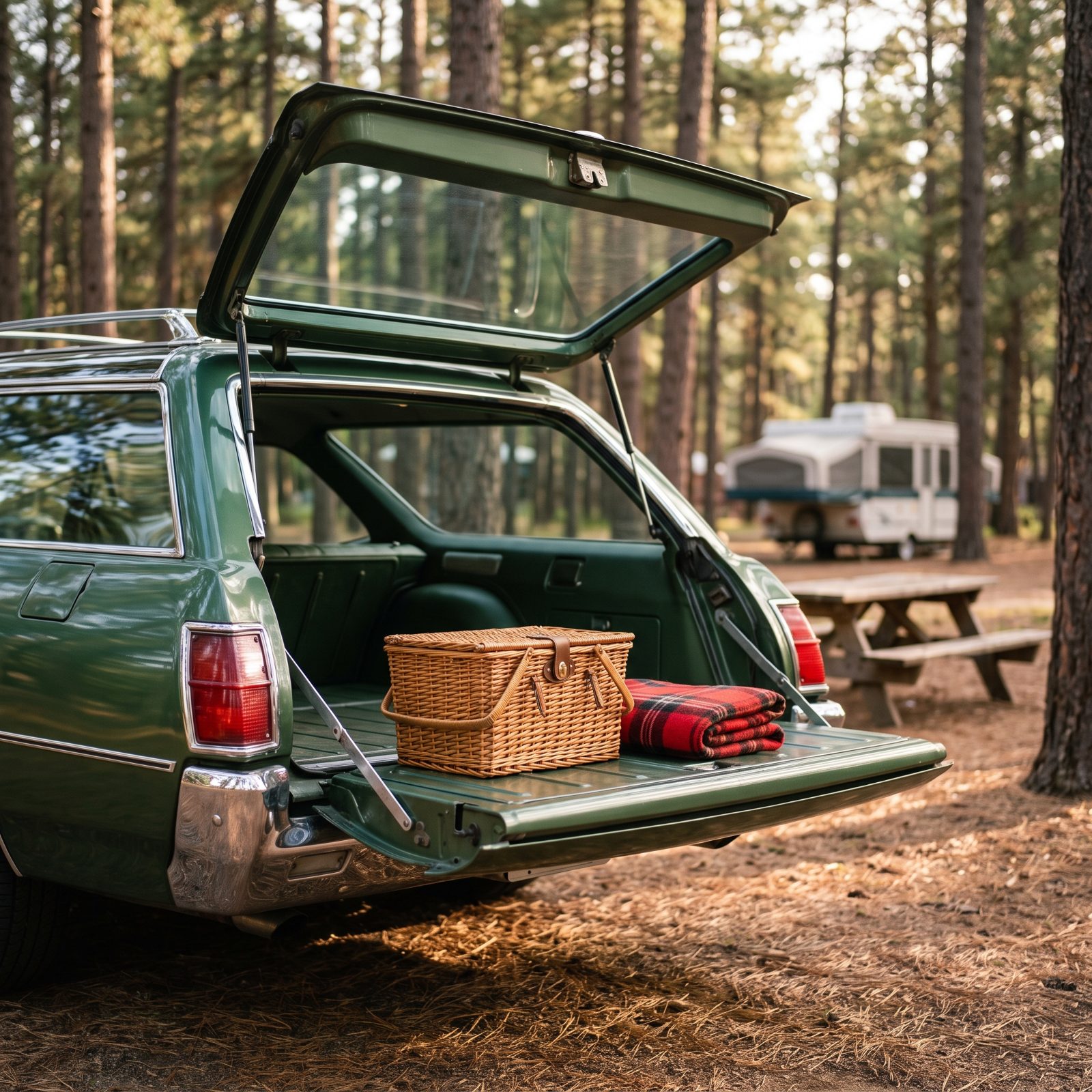
Two doors doing two different jobs, and both of them genuinely useful.
The dutch-door tailgate split the back of a wagon or van into an upper glass hatch that swung up and a lower steel gate that dropped flat. Lift just the glass to toss in groceries. Drop just the gate for a bench or a loading shelf. Open both and the whole back end yawned wide.
Families on vacation practically lived off that dropped lower gate — a plaid blanket, a cooler, lunch with your feet dangling over the bumper. A tailgate party before anyone bothered coining the phrase.
The single-piece liftgate replaced it because it’s cheaper and simpler. So we traded a clever two-way door for a convenient one-way one, and most people never noticed the loss.
11. Swing-Away Spare-Tire Carriers, Full Cargo Access With the Spare Outside
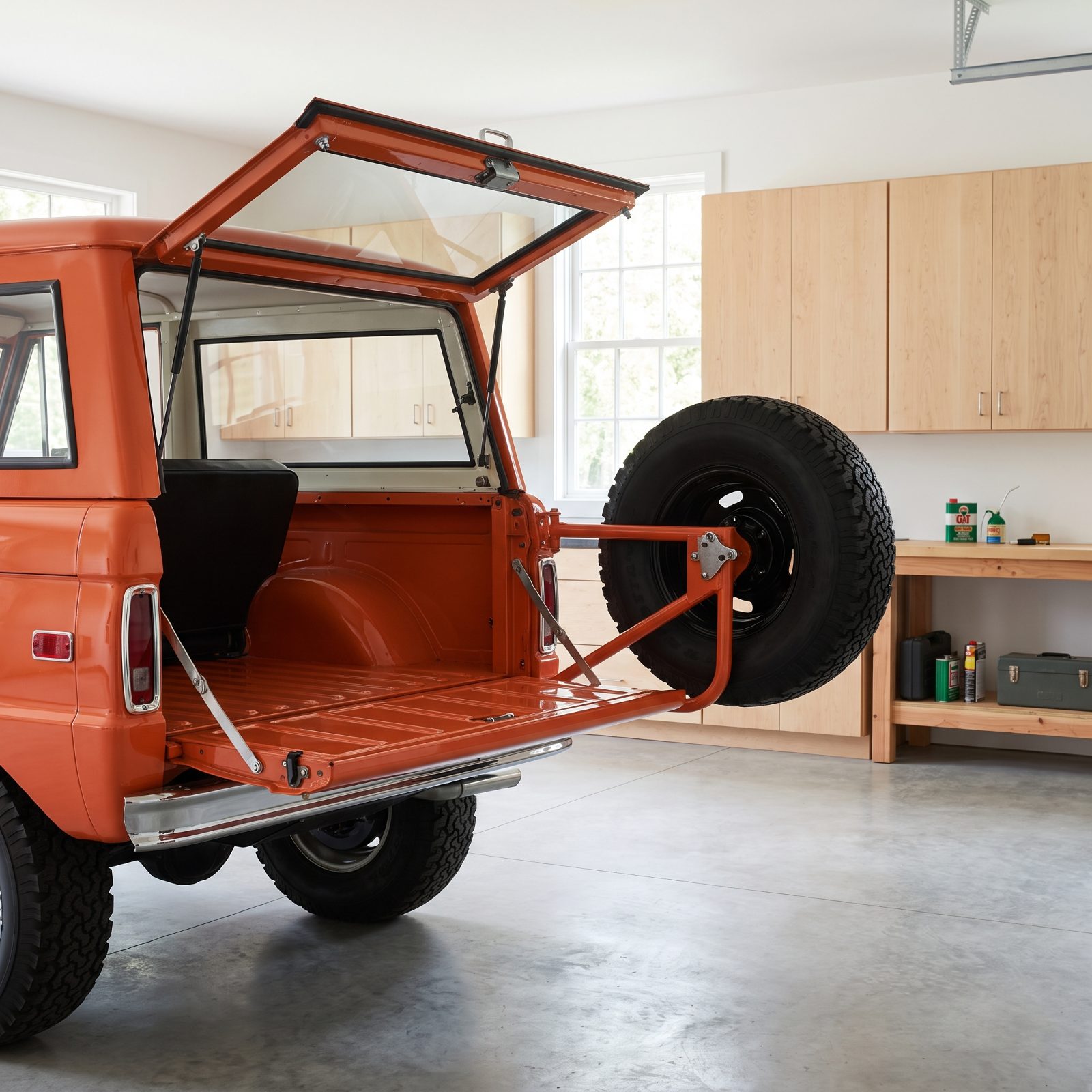
You grabbed the handle, released the latch, and the whole spare swung clear on a stout steel arm. Behind it, the rear door opened wide and the cargo hold was yours — no tire to climb over, no wrestling it out of a cramped well.
Swing-away carriers lived on old 4x4s and wagons, mounting the spare outside where it belonged and pivoting aside on a heavy hinge. On a Bronco or a Scout they were half the attitude, that big tire hanging proud off the back.
And the mechanism was honest. You could see exactly how it worked and fix it with a wrench. Interior-mounted spares won on packaging, sure, but there was real satisfaction in that solid chunk of the latch letting go and the arm swinging wide.
10. Single-Spoke Steering Wheels, An Uncluttered View of the Gauges
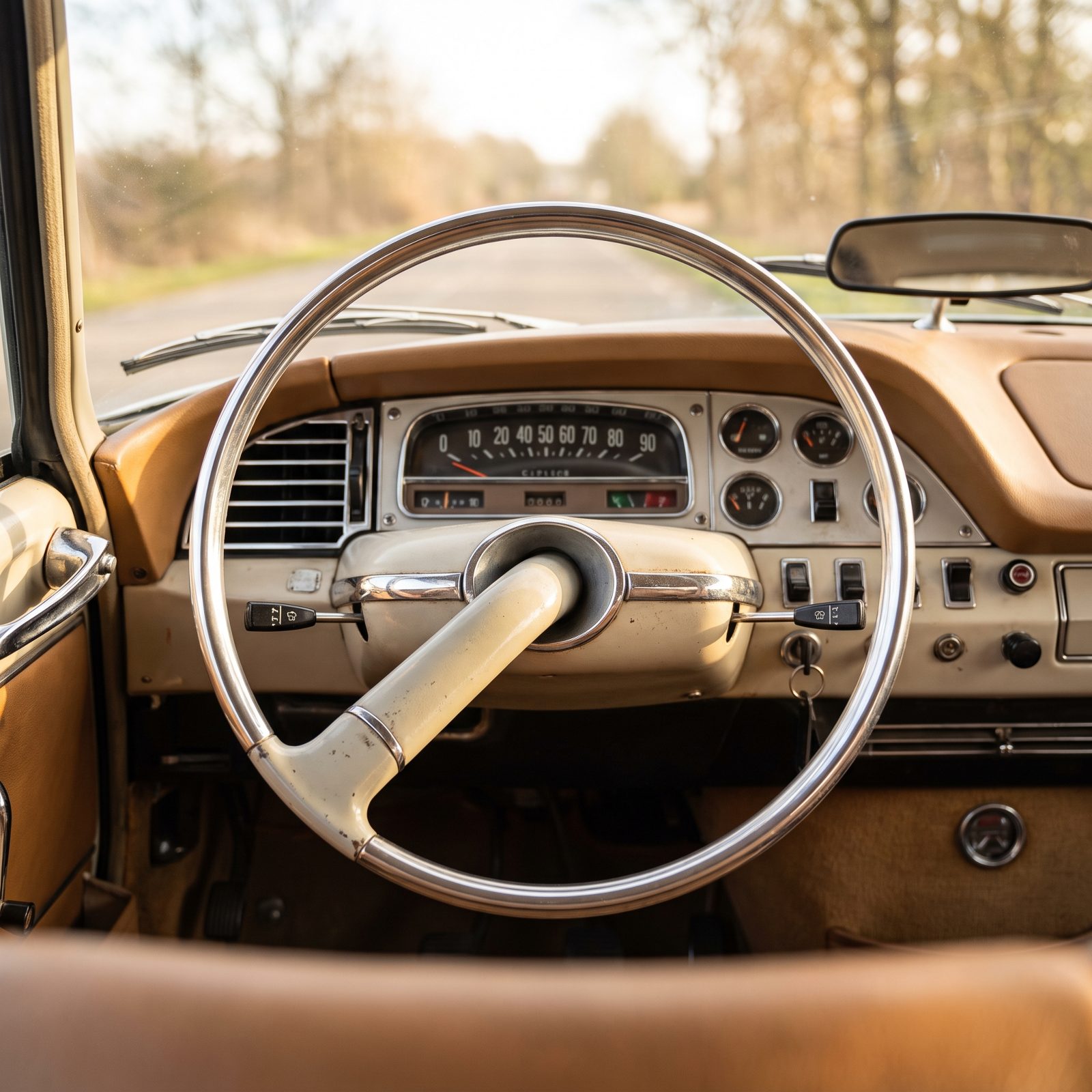
Look down at most steering wheels and three or four spokes chop up your view of the gauges. The single-spoke wheel fixed that in one move — a slim spoke sweeping down from rim to hub, and the entire instrument panel wide open above it.
Citroën baked the idea into cars that already looked like they’d landed from somewhere smarter. The logic was plain. Why block the dials you need to read? One spoke carries the wheel; the rest is clear glass to your instruments.
There was a safety angle too — a single spoke folds more forgivingly in a crash. Then airbags ended the whole debate by stuffing a module into every hub. We got safer wheels and busier ones. That open view, nothing between your eyes and the speedometer? Something special we quietly let slip away.
9. Map Lights on Flexible Stalks, Aiming Light Exactly Where Needed
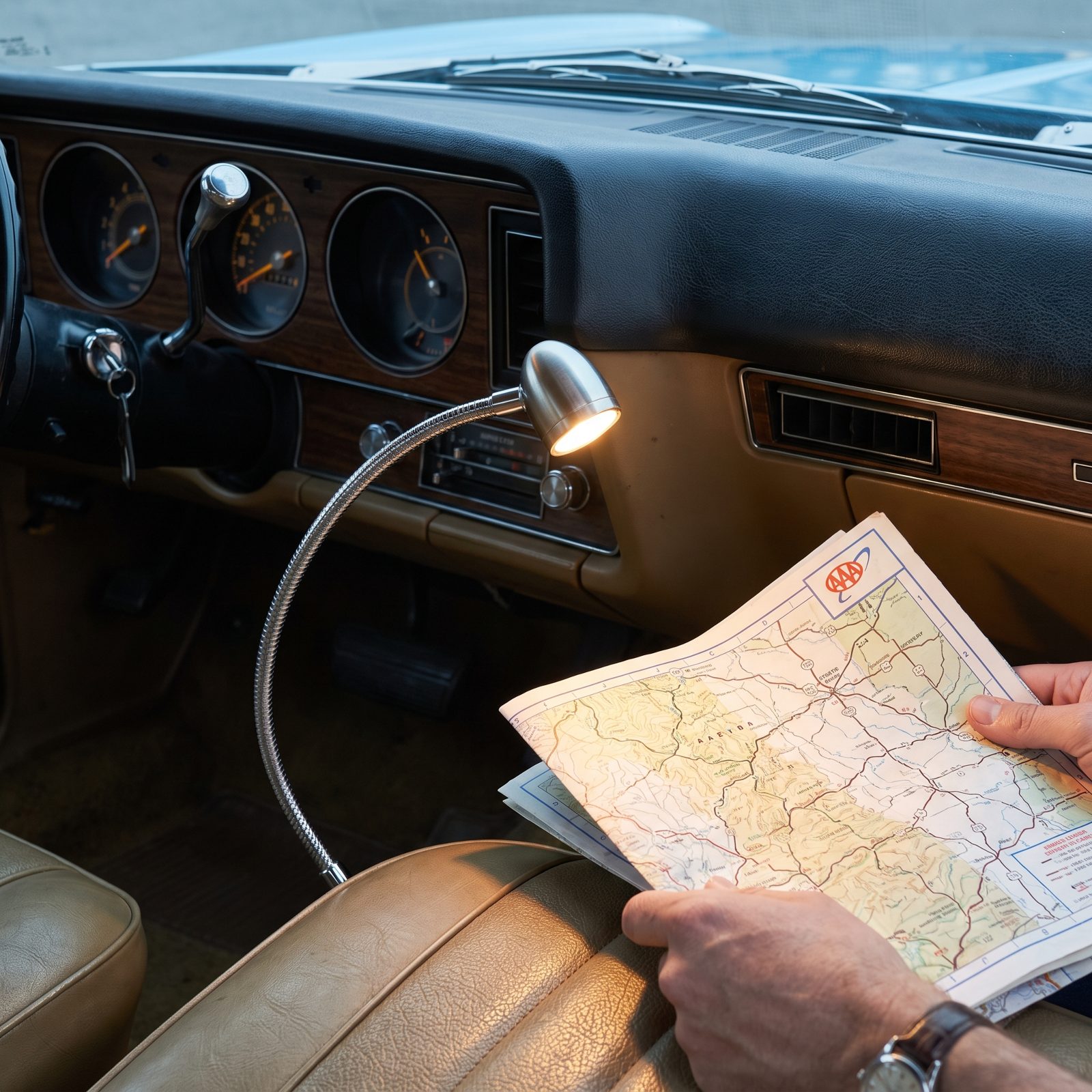
Before the dome light became a dim afterthought, somebody figured out that a passenger reading directions at 70 mph needs a pencil-thin beam, not a cabin flood that blinds the driver. So they mounted a little chrome lamp on a bendable stalk and let you aim it like a desk lamp.
You could point it at the map, at the dropped french fry, at the paperwork in your lap. It bent and stayed, and the driver never lost their night vision.
Modern cars gave us ambient LED strips that look like a nightclub and illuminate nothing you actually need. I miss the stalk. One job, done exactly where you aimed it.
8. Under-Hood Trouble Lights, Factory Illumination for Roadside Repairs
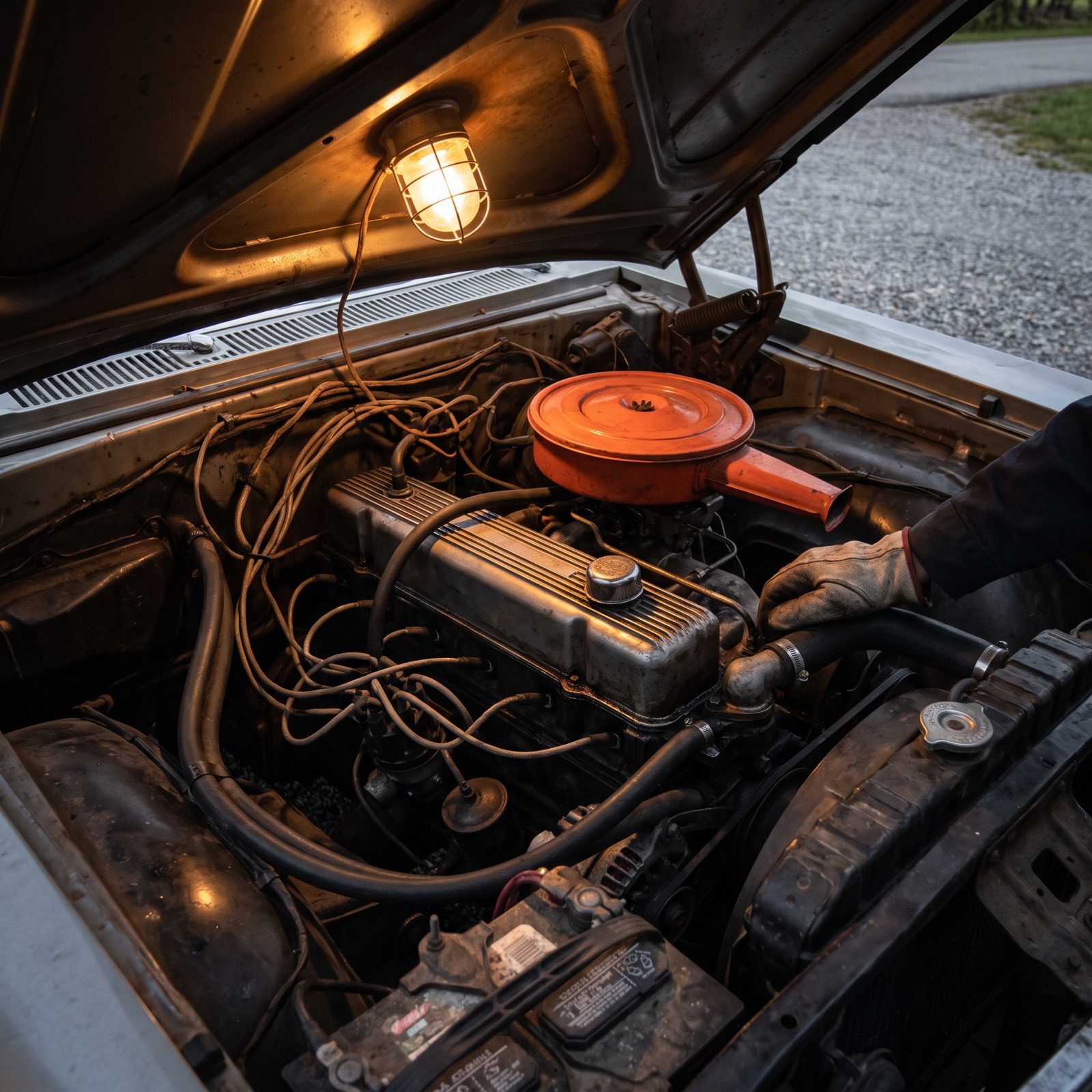
Pop the hood on a dark highway today and you’re holding your phone in your teeth.
There was a stretch when carmakers assumed you’d eventually be standing on a shoulder at night with a problem to solve, so they bolted a light to the underside of the hood. Lift it and the lamp came on, the whole engine bay glowing warm and yellow. Both hands free, no fumbling for a flashlight in the glovebox.
It told you something about the era. The factory expected you to work on the car, not just drive it to a dealer. That little bulb was a vote of confidence in the owner.
7. Glovebox Mini-Bars, Hospitality Built Into the Dashboard
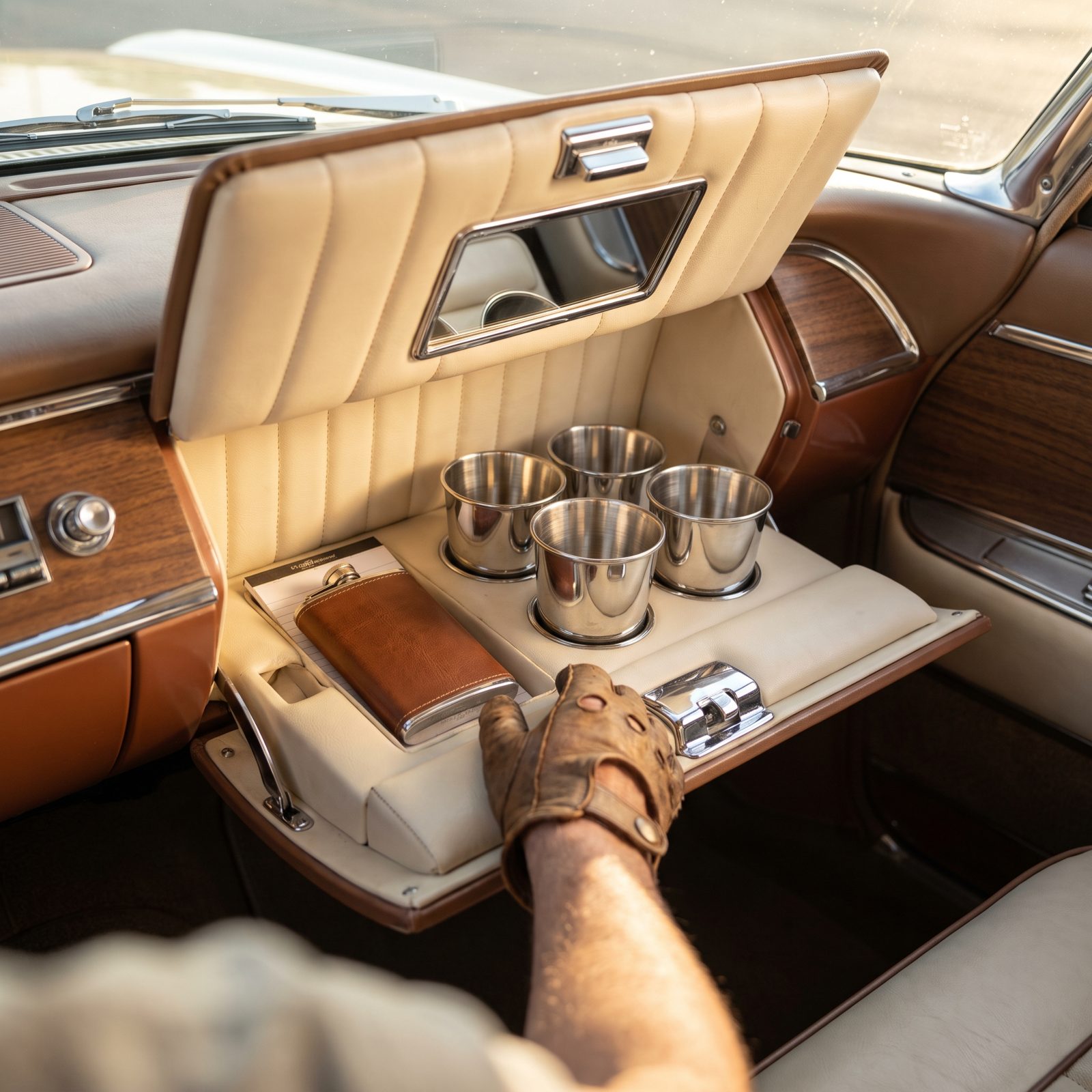
Certain mid-century luxury cars treated the glovebox like a hotel minibar. Open it and you’d find fitted chrome cups, a little flask, sometimes a mirror set into the lid. The idea was that your car was a parlor on wheels and a guest might want a drink.
Was it practical? Barely. Was it delightful? Completely.
I’m not arguing for a flask in the dash of a 2026 commuter car. But there’s something to the notion that the interior was a room meant to be enjoyed, not a cockpit to be endured. The glovebox held more than registration papers and an ice scraper — it held the idea that the drive was an occasion.
6. Built-In Dashboard Tissue Dispensers, Everyday Convenience With Chrome Trim
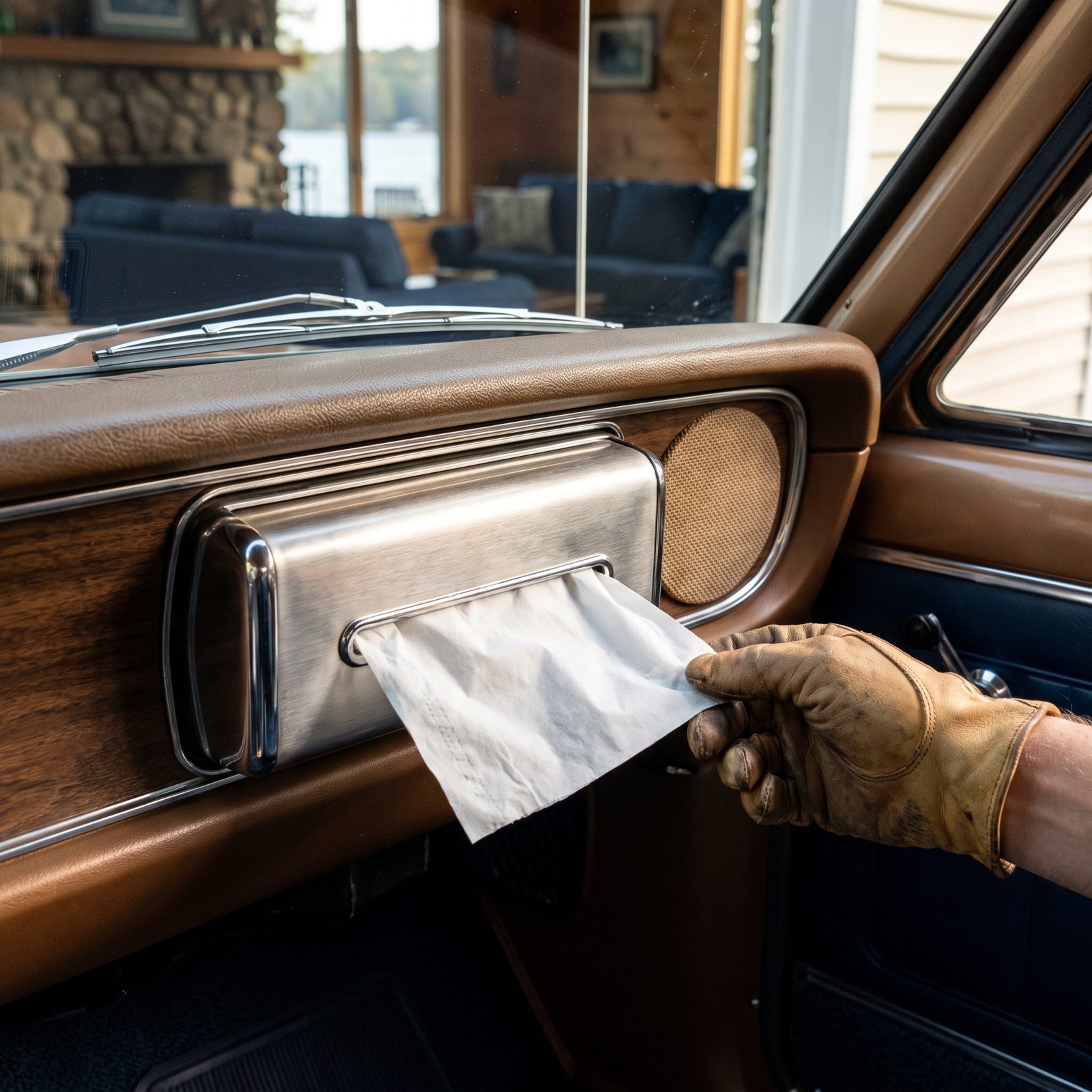
A chrome slot in the dash, a single tissue poking out, ready for the sneeze or the spilled soda. Some carmakers built a tissue dispenser right into the dashboard, refilled with a flat pack that slid in from the back.
Smallest idea on this list, and maybe the one I’d bring back first. Everybody keeps a crumpled travel pack jammed in a door pocket or rolling around the floor. A clean, flush, chrome-trimmed dispenser solved all that fifty years ago.
Gone because it cost a few dollars per car and nobody was going to buy a sedan over the tissue slot. Fair enough. Still miss it.
5. Factory Picnic Tables, A Meal Hidden in the Trunk Lid
Somewhere along the line, the road trip stopped being a thing cars were designed around.
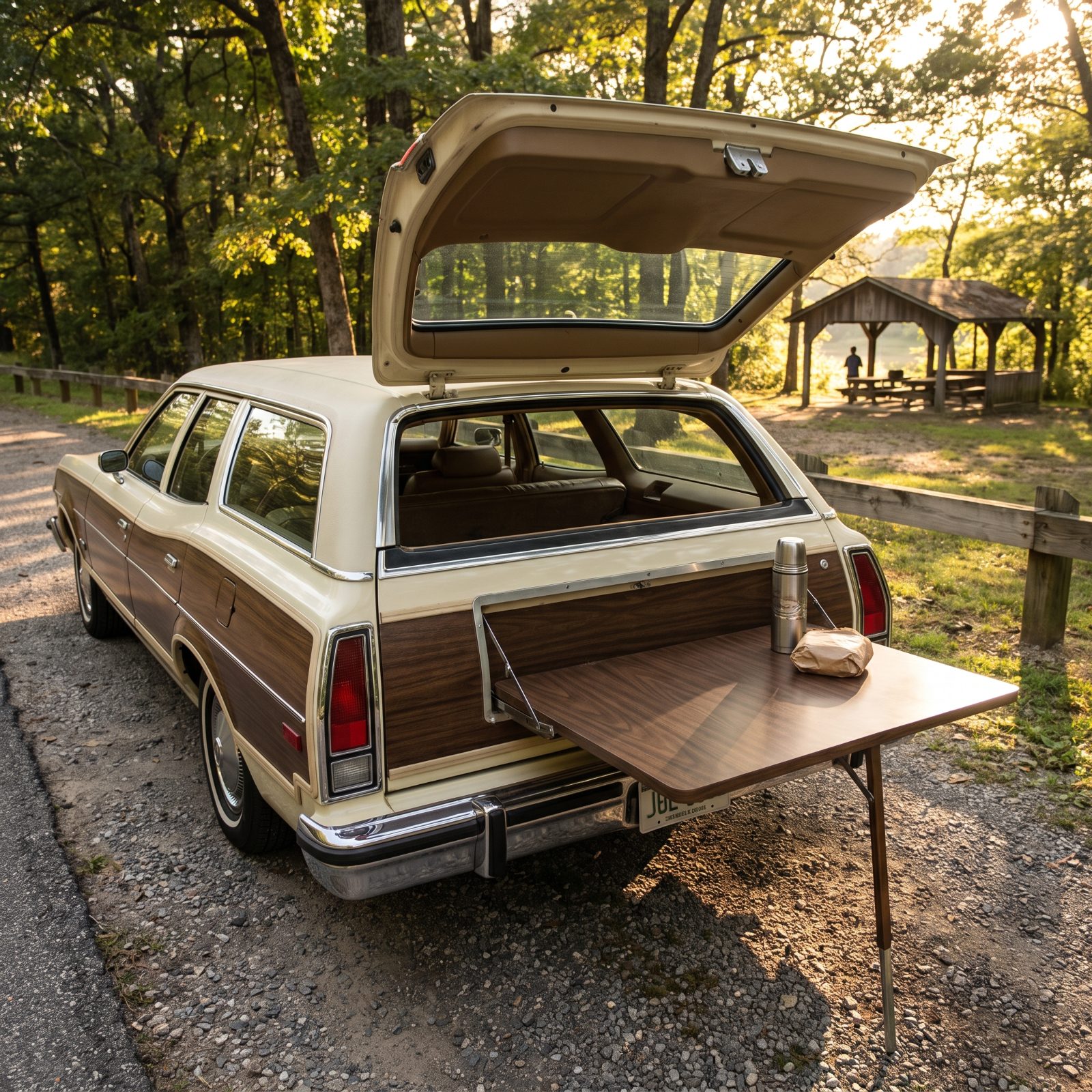
A handful of wagons and touring cars came with a fold-out picnic table stowed in the trunk or liftgate. You’d pull into a rest stop, flip it down, set out the thermos and the wax-paper sandwiches, and eat with the car as your table.
Reads as quaint now. But think about what it assumed: that you’d travel far enough and slow enough to need lunch by the side of the road, that the journey had a middle worth stopping in and not just a destination to hit by dark.
The interstate killed the leisurely drive and the picnic table went with it. We traded the long way for the fast way and never looked back. Mostly.
4. Trunk-Mounted Toolkits, Every Tool Fitted Into Its Own Slot
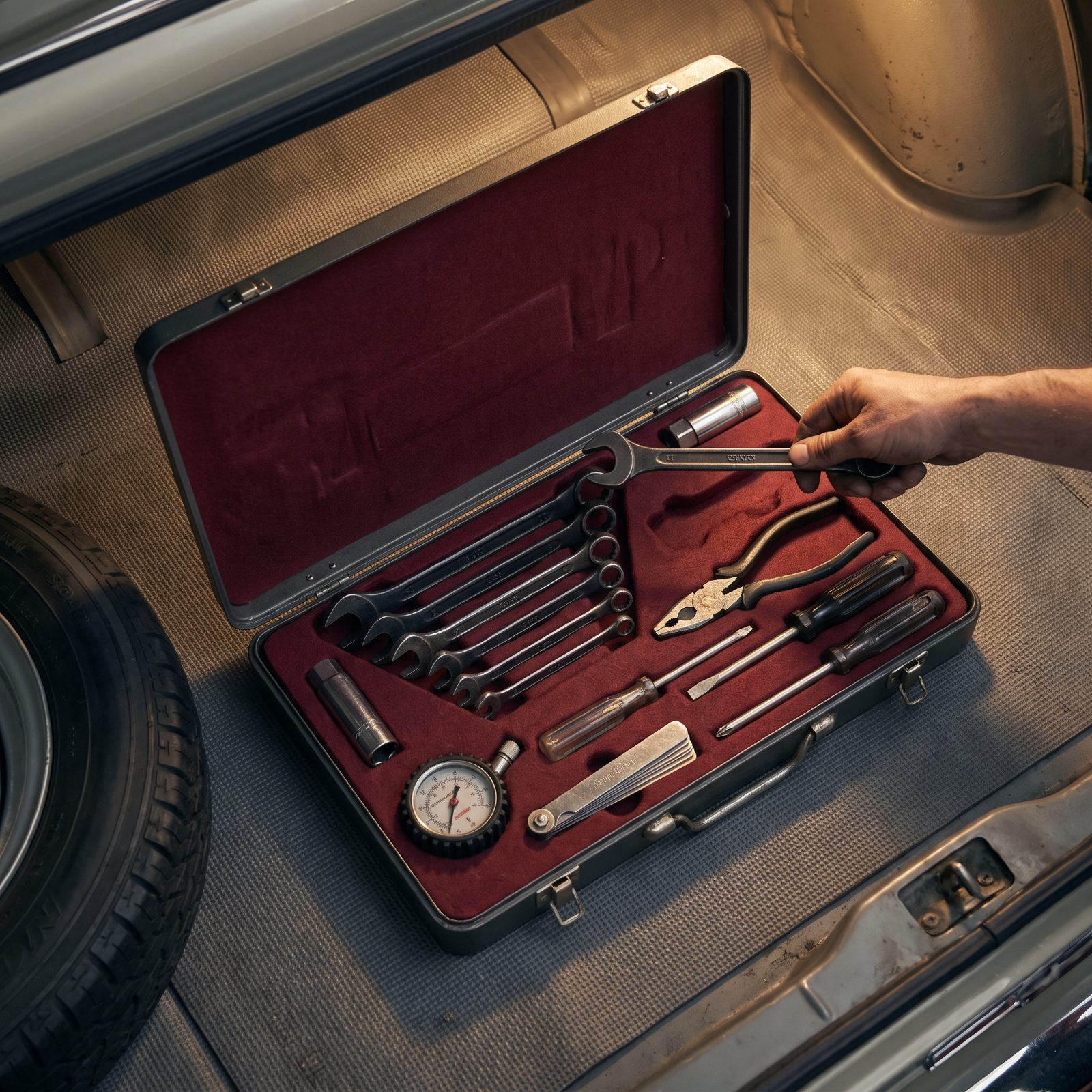
Open the trunk of a well-bred older European sedan and you might find a fitted toolkit — every wrench seated in its own slot, graduated by size, chrome catching the light. Not a loose jumble in a bag. A set, designed to live with the car.
The satisfaction of it was real. You knew which tool was missing because its slot sat empty, and you put each one back where it belonged. The car came prepared to be maintained by the person who owned it.
Somewhere we decided owners shouldn’t touch anything under the hood, and the fitted kit shrank to a plastic lug wrench and a can of sealant. The message changed from here’s what you’ll need to call the dealer.
3. Motorized Automatic Seatbelts, Restraints That Traveled Along the Doorframe
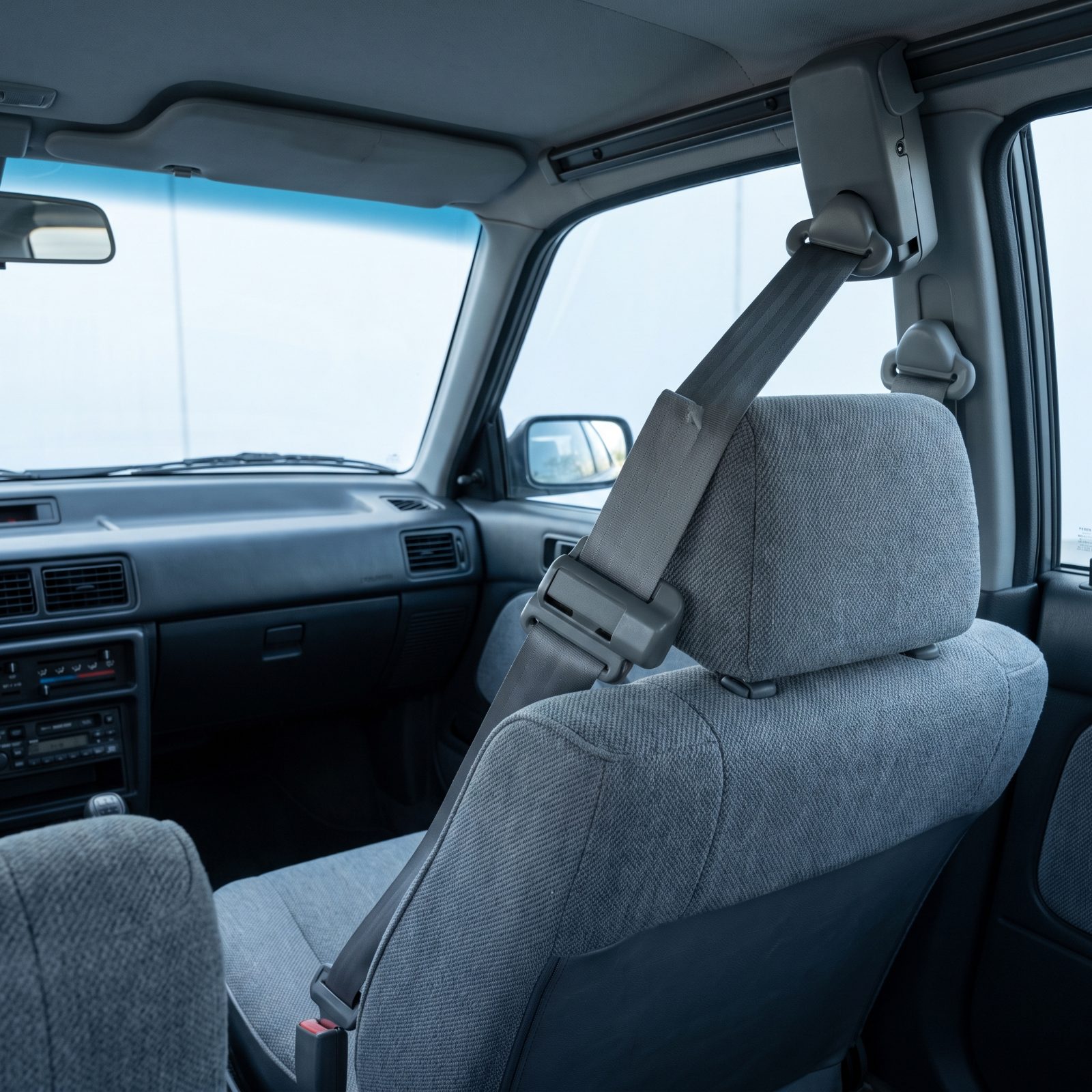
You sat down, closed the door, and a little motor whirred the shoulder belt forward along a track in the doorframe until it crossed your chest on its own. No reaching, no buckling the top strap. The car did it for you.
They were a stopgap, born of a federal passive-restraint rule before airbags went standard, and plenty of people found them maddening — the whir, the strap that caught your sleeve, the lap belt you still had to fasten yourself.
I’ll defend the ambition, though. It was an honest attempt to make safety automatic, to take the one step people kept skipping and do it for them. Airbags made the whole contraption obsolete almost overnight. But the instinct behind it — remove the human failure point — was dead right.
2. Overdrive Buttons on Manual Shifters, An Extra Cruising Gear at a Touch
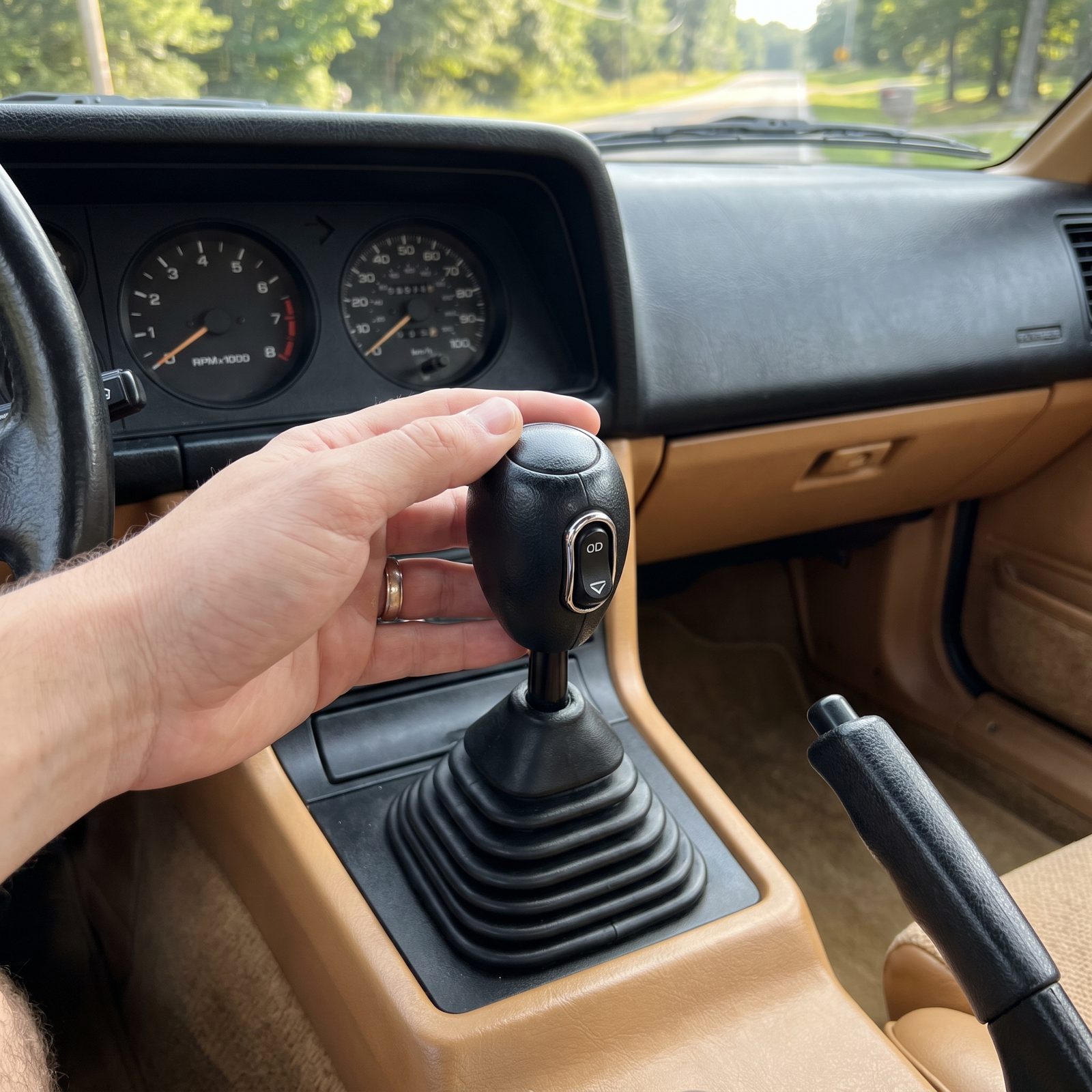
A button on the shifter that gave you one more gear without a lever.
Certain manuals had an electric overdrive you flicked on with a thumb toggle. Cruising on the highway, you’d click it and the engine dropped a few hundred rpm, the drone eased, the fuel gauge thanked you. Downshift for a pass, click it off, and the extra gear vanished.
A clever middle path between a four-speed and the hassle of a true five-speed box. You got relaxed highway revs without a whole extra gate to hunt for.
Modern automatics have eight, nine, ten gears and sort it all out invisibly. Smarter, sure. But there was a small joy in that thumb click, in choosing the extra gear yourself and feeling the car settle into it.
1. Self-Leveling Hydropneumatic Suspension, Cars That Rose Before Driving
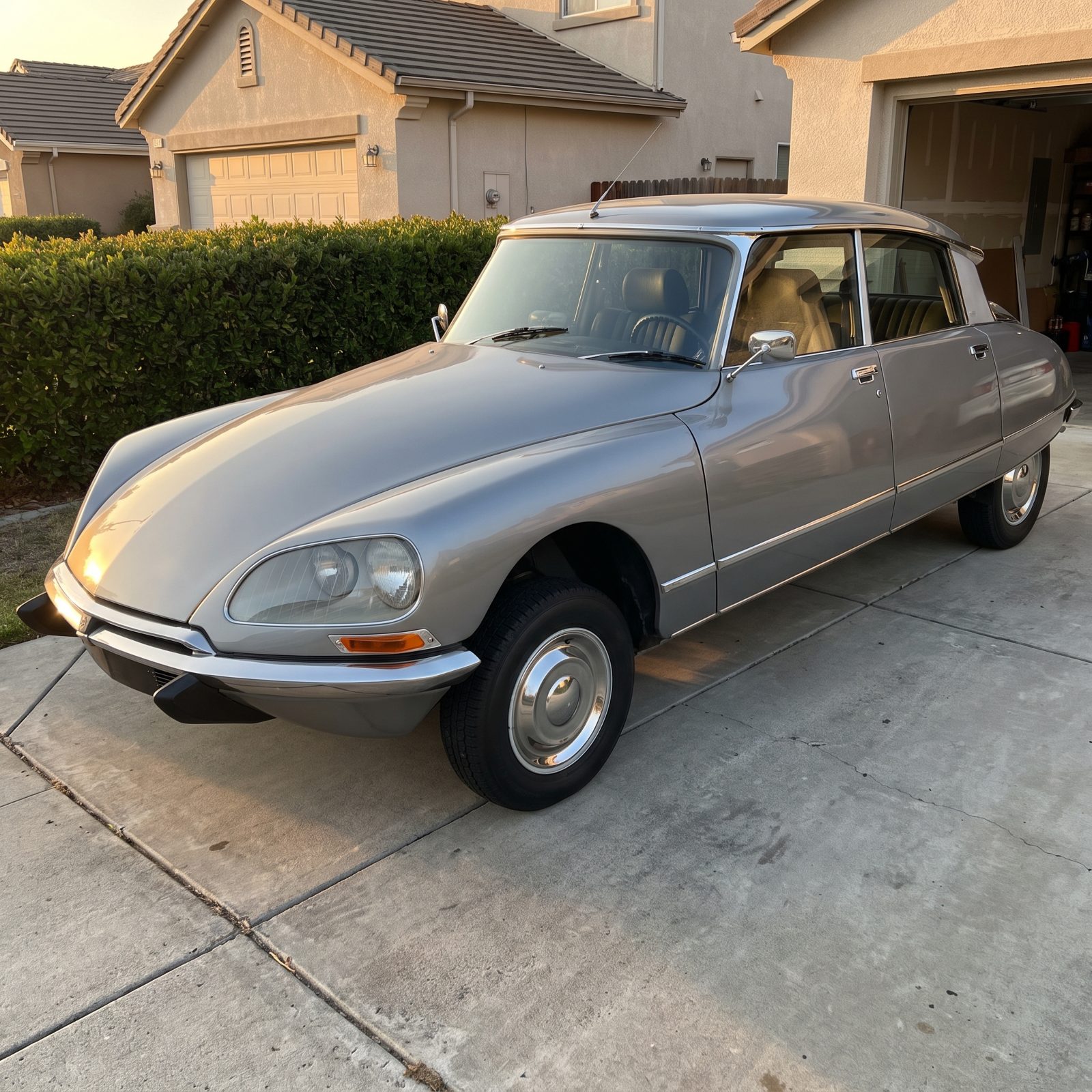
You’d turn the key and the whole car would rise. Not an inch of lift to clear a speed bump — the entire body heaving off its haunches to driving height on a cushion of pressurized fluid and gas. Shut it off and it sank back down overnight like it was going to sleep.
Hydropneumatic suspension gave a ride that genuinely floated, leveled itself regardless of load, and let you jack the car by raising it and sliding a stand under one corner. One of the most mechanically fascinating setups ever put under a road car.
It was also complex and expensive to keep healthy, which is why it faded. Air suspension inherited the idea in a simpler form. But nothing since has had quite the theater of a car that stretches to its feet before you drive it.