
Would you like to save this?
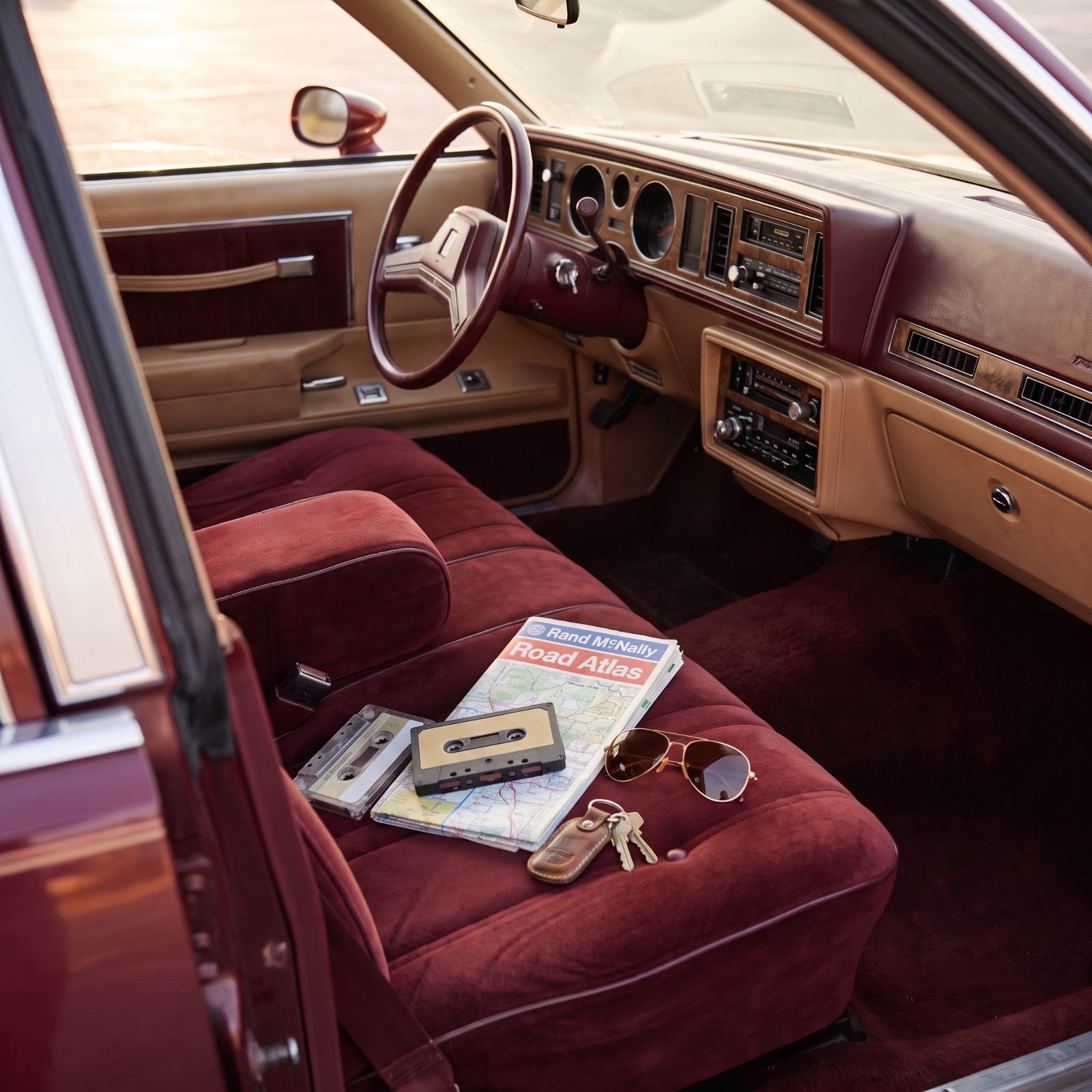
The smell hits first. Warm velour, a little dust, the faint sweetness of a cassette left baking on the dash. You slid across a seat, not into one. The door shut with a soft thunk and you were inside a room that happened to have wheels. Dashboards glowed, knobs pulled out, and the whole cabin was burgundy, or navy, or that peculiar shade of tan nobody has made since. Here’s everything the inside of an 80s car got right before minimalism took over.
Please note that some of the images in this article were created with the assistance of AI.
24. Velour Bench Seats That Looked Like Living-Room Sofas
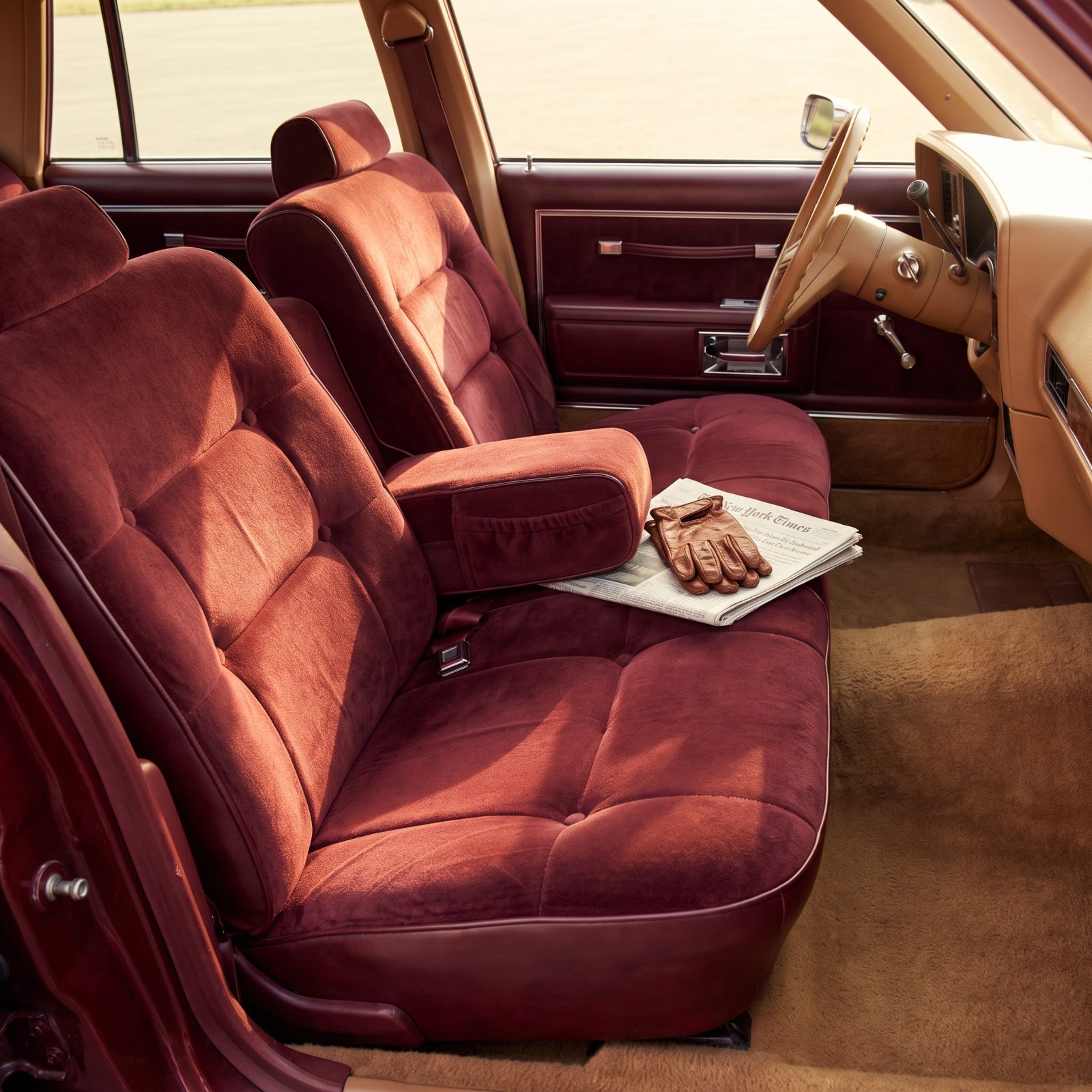
You could seat three across up front and nobody felt crowded. These were sofas with seatbelts, upholstered in velour so plush your corduroys slid right off the surface on a hard left turn. The nap showed every handprint like fresh snow, and you’d run your palm across it to “erase” the marks at red lights.
Nobody buys a bench seat on purpose anymore. Shame. There was a generosity to that much soft real estate, the way a kid could stretch out flat on the drive home and wake up in the driveway.
23. Burgundy Interiors From Carpet to Headliner
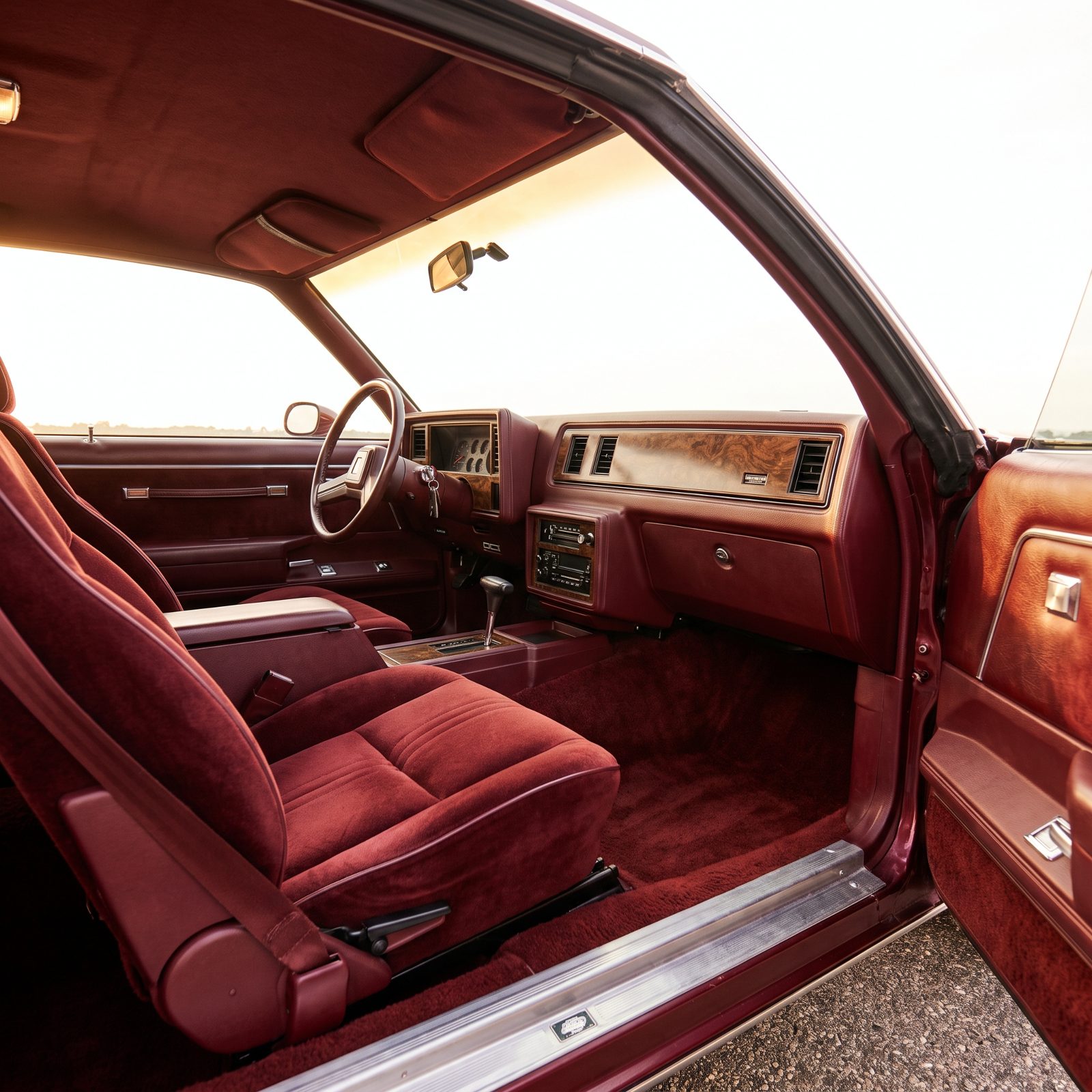
Burgundy didn’t stop at the seats. It climbed the door panels, pooled across the carpet, and ran straight up into the headliner. The whole cabin committed to one color with a confidence that feels almost reckless now.
Step inside and you were underwater in maroon, and sunlight through the windshield turned it warm and jewel-toned. The matching worked because everything shared the same saturation, so the dash, the seats, and the floor read as one continuous surface instead of a collection of parts.
One color, floor to ceiling, and somehow it never looked like too much. It looked like a decision.
22. Digital Vacuum-Fluorescent Speedometers
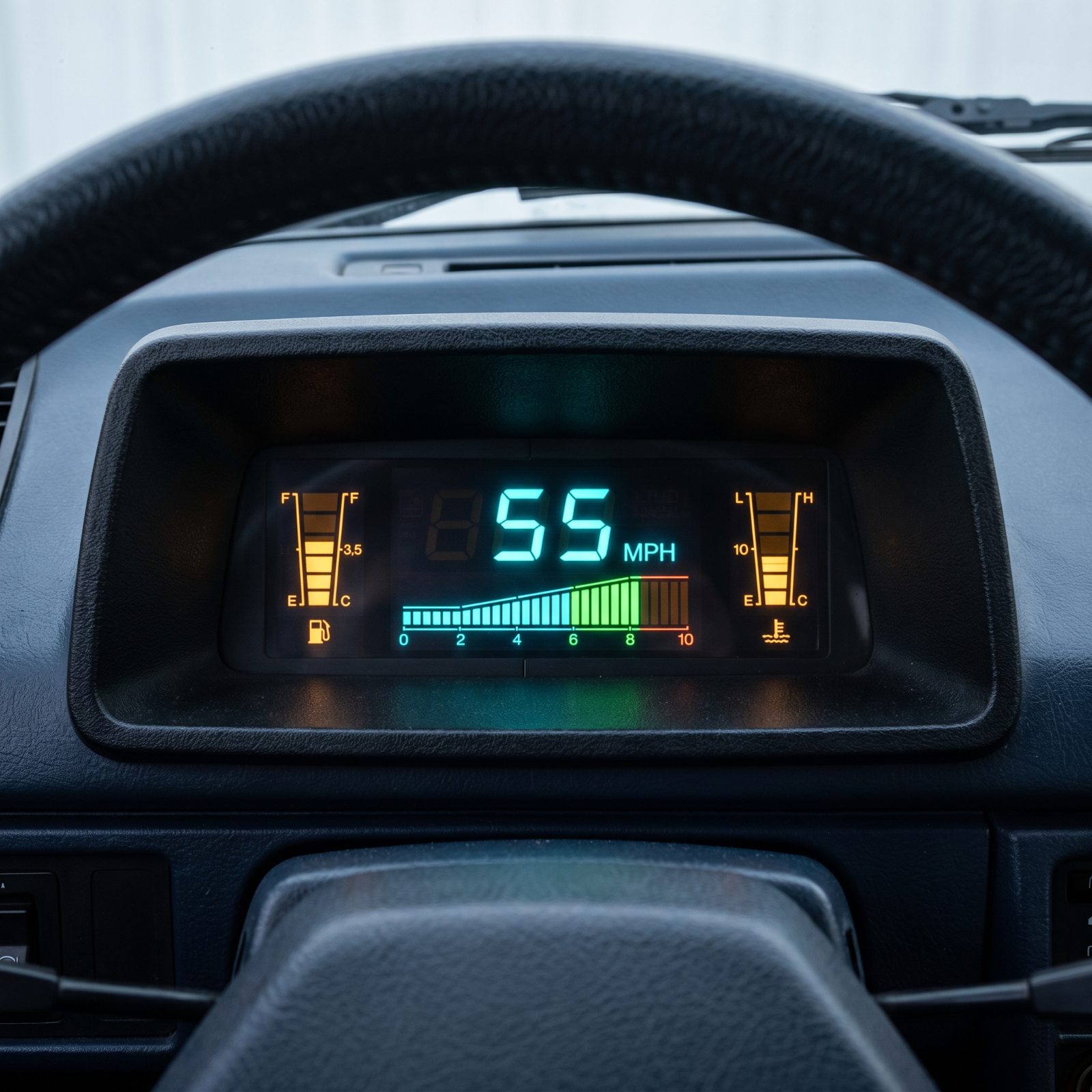
Watching your speed climb in glowing cyan digits felt like piloting something. The vacuum-fluorescent display threw off an electric blue-green glow that lit up the whole cluster at night, numbers ticking up instead of a needle sweeping.
Half of these came with a bar-graph tachometer that filled in like a thermometer, which told you almost nothing useful and looked fantastic. That was the trade. You gave up precision for the future, and in 1985 the future was absolutely worth it.
21. Graphic Equalizers Built Into the Stereo
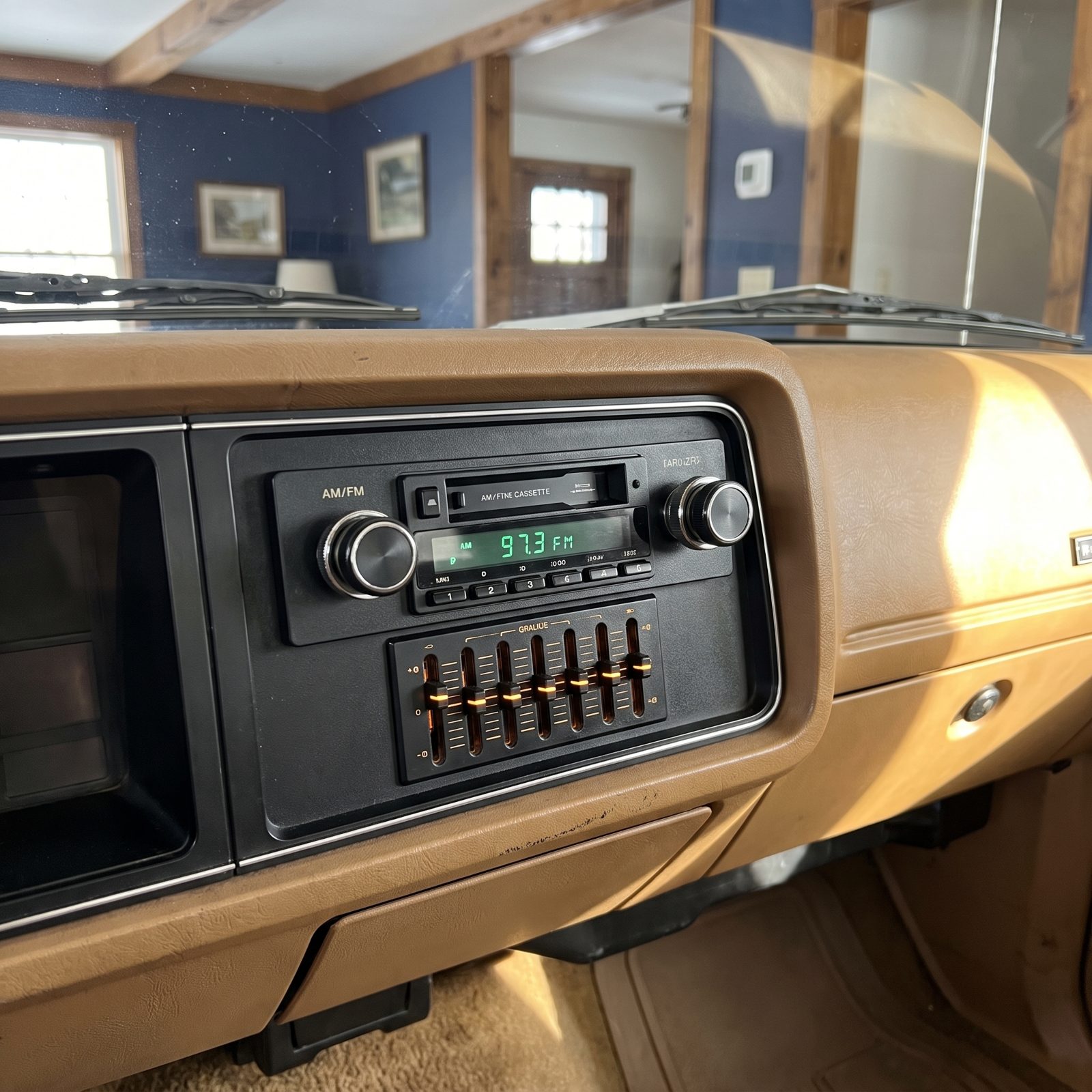
Five little sliders, set to a smile curve, and you were an audio engineer. Nobody actually understood which frequency each one controlled. You pushed the ends up, dropped the middle, and the whole thing looked like a tiny mountain range on the dash.
The equalizer was proof your system was serious. Bass on the left, treble on the right, and a satisfying little click as each slider found its slot. You’d fiddle with them at every stoplight and then leave them exactly where they were.
20. Cassette Storage Drawers Under the Dashboard
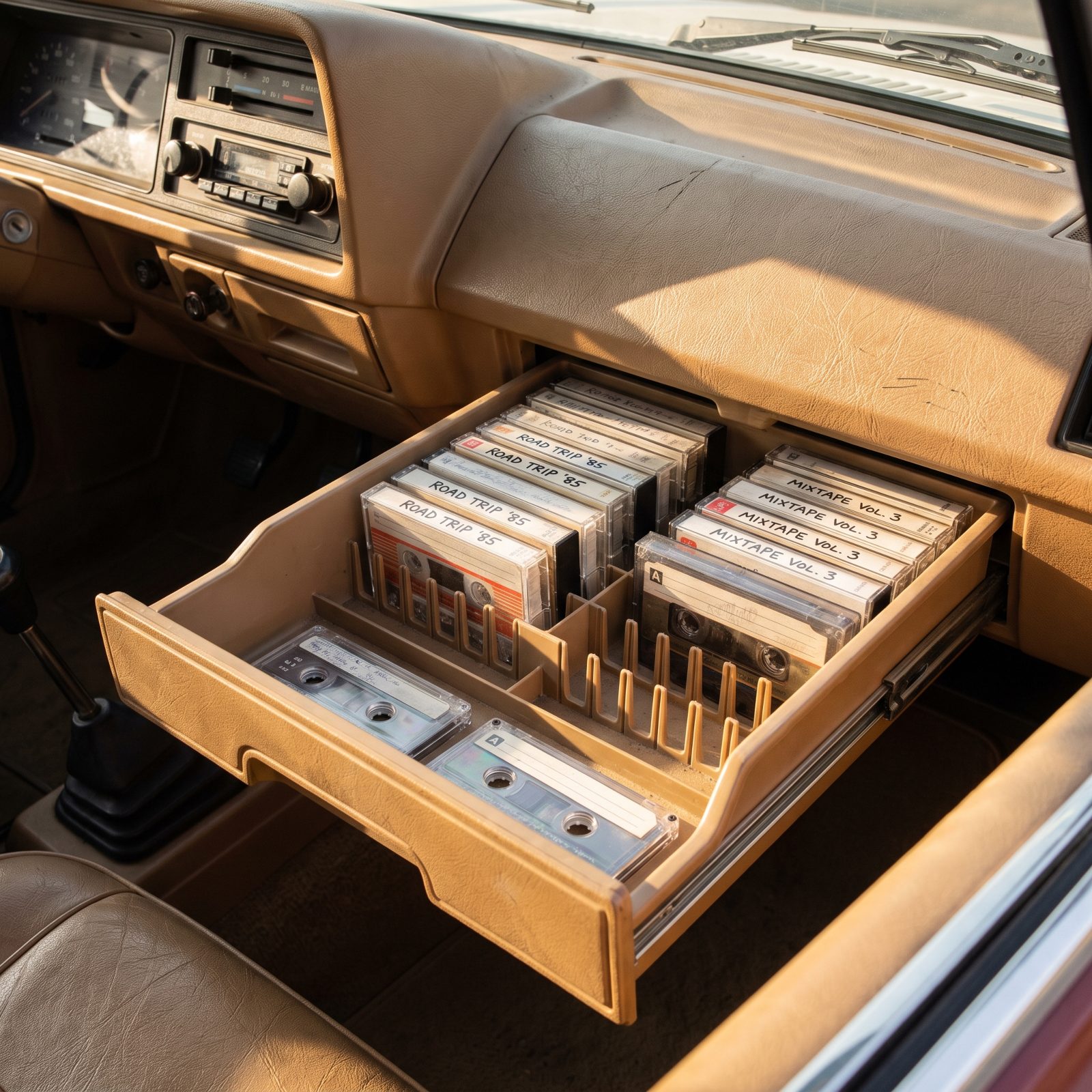
Pull the little drawer and there they were, your cassettes lined up on edge like library books, spines out so you could read the handwritten labels. The slots held maybe a dozen tapes, each one wedged in at a slight angle.
Built-in furniture for your music collection, basically. The drawer slid on plastic rails with a soft rattle, and the one at the very back was always a mystery tape nobody remembered recording.
19. Cassette Decks With Auto-Reverse Buttons
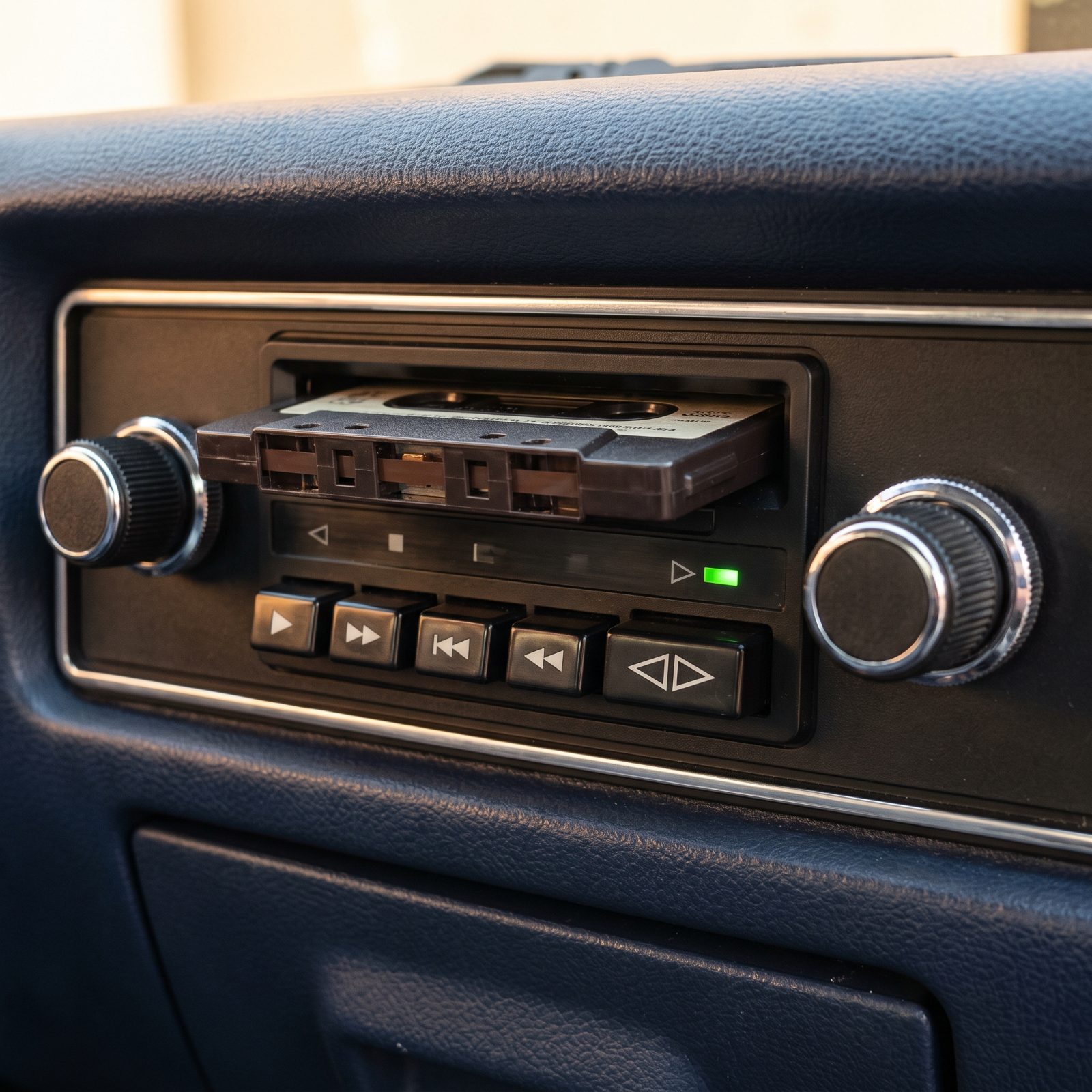
No more pulling over to flip the tape. The deck did it for you, a soft mechanical whir, a click, and side two started playing with that half-second of hiss before the first song.
Auto-reverse felt like genuine luxury. The little arrow on the display would flip direction and you’d keep driving, both hands on the wheel, never breaking the flow of your mixtape. For anyone who’d spent years fishing hot cassettes out of a slot at highway speed, this was a quiet mercy.
18. Pull-Out Radio Volume and Tuning Knobs
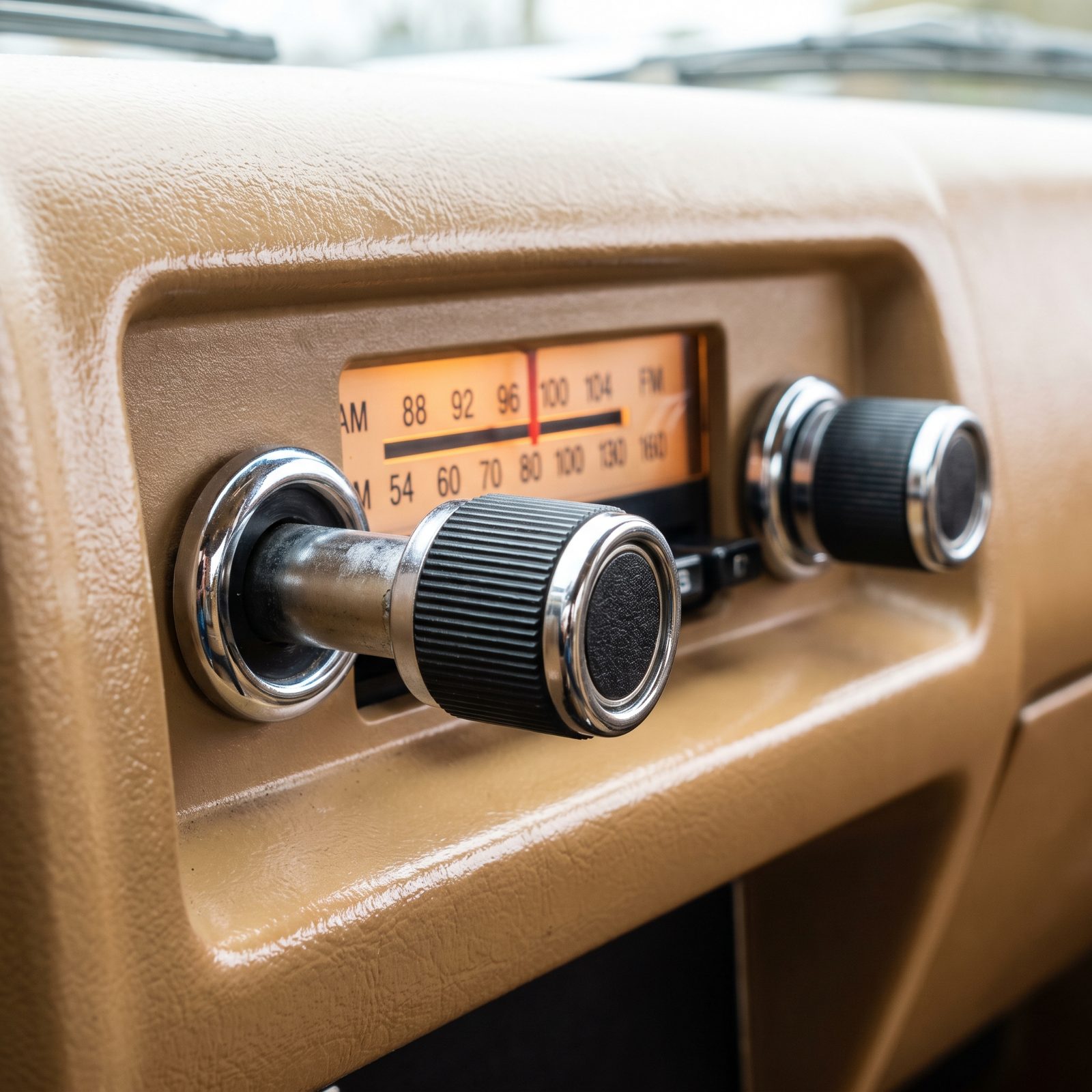
You turned the radio on by pulling the left knob toward you. A satisfying little tug, a click, and the dial lit up orange. Push it back in and the music died.
The right knob tuned the stations, and finding a signal on a dark highway meant nudging it a hair at a time while the needle crept across the dial. No seek button, no presets worth the name. Just your thumb and forefinger and the patience to wait out the static.
17. Separate Ashtrays for Rear Passengers
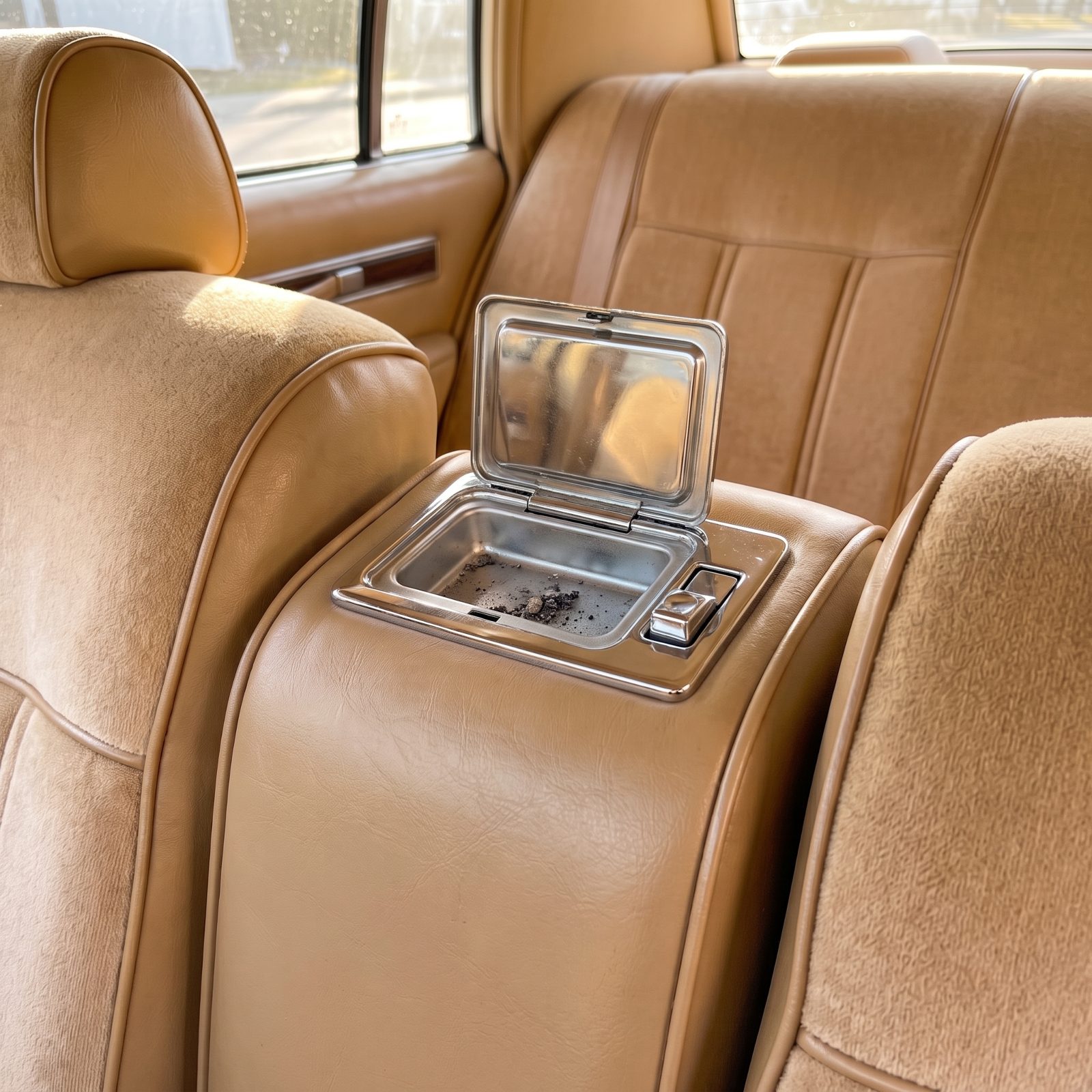
Every seat got its own ashtray back then, even the kids in the back who weren’t supposed to use them. Chrome-lidded little trays set flush into the center console and door panels, flipping open with a satisfying snap.
Nobody blinked at this. The car assumed everyone aboard might light up, so it gave each passenger a place to flick the ash. The rear ones usually filled with gum wrappers and spare change instead, which is its own kind of time capsule.
16. Single-Spoke Steering Wheels
Would you like to save this?
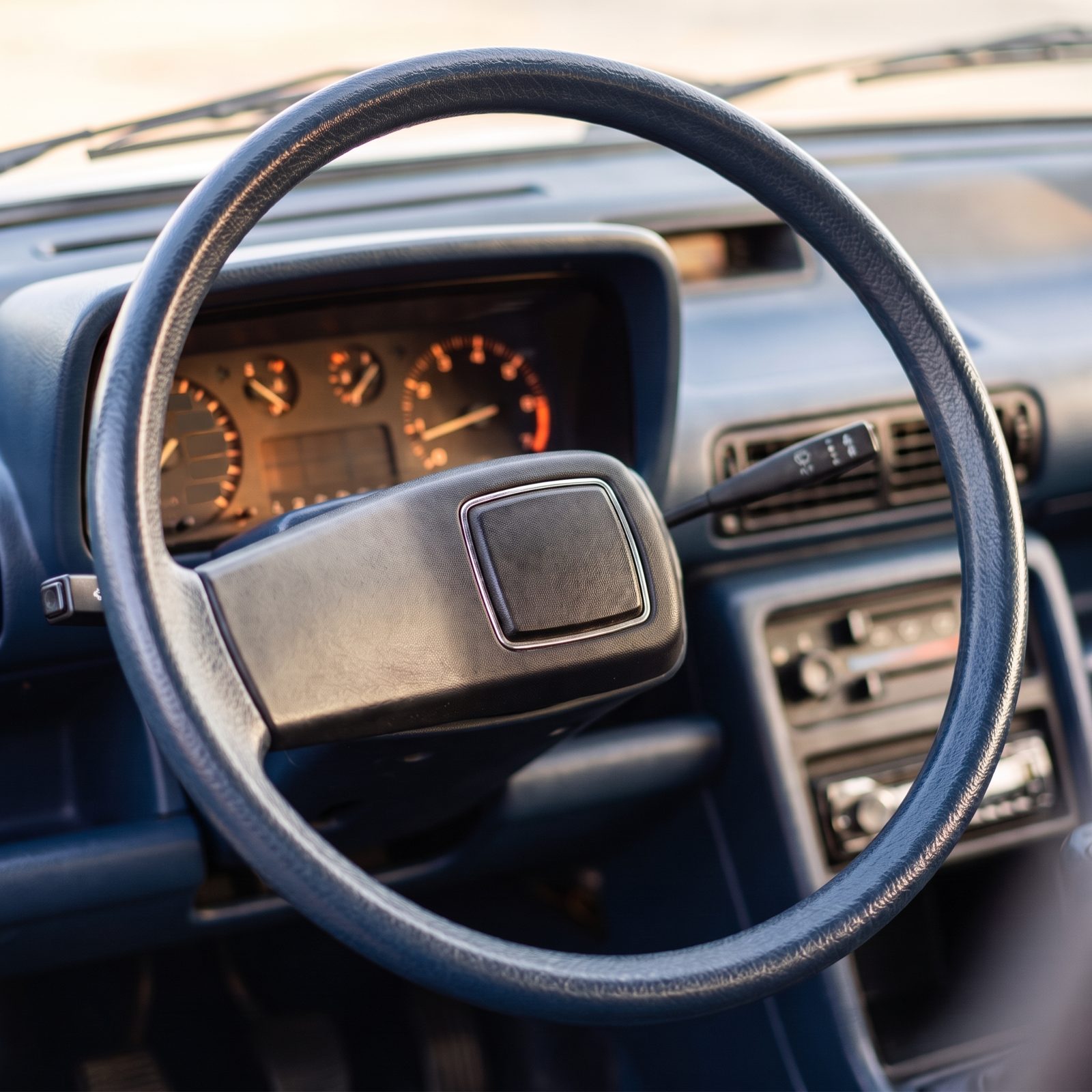
One spoke. That was the whole design statement. The wheel seemed to float, with the upper half left open so you could see the gauges clear and unobstructed through the gap.
Citroen and a handful of others leaned hard into it. The look was pure clean geometry at a time when most wheels were cluttered three-spoke affairs, and it felt deliberate, a little French, a little space-age. You gripped the thin rim and the empty space below your hands made the whole cabin feel less busy.
15. Column Shifters Paired With Front Bench Seats
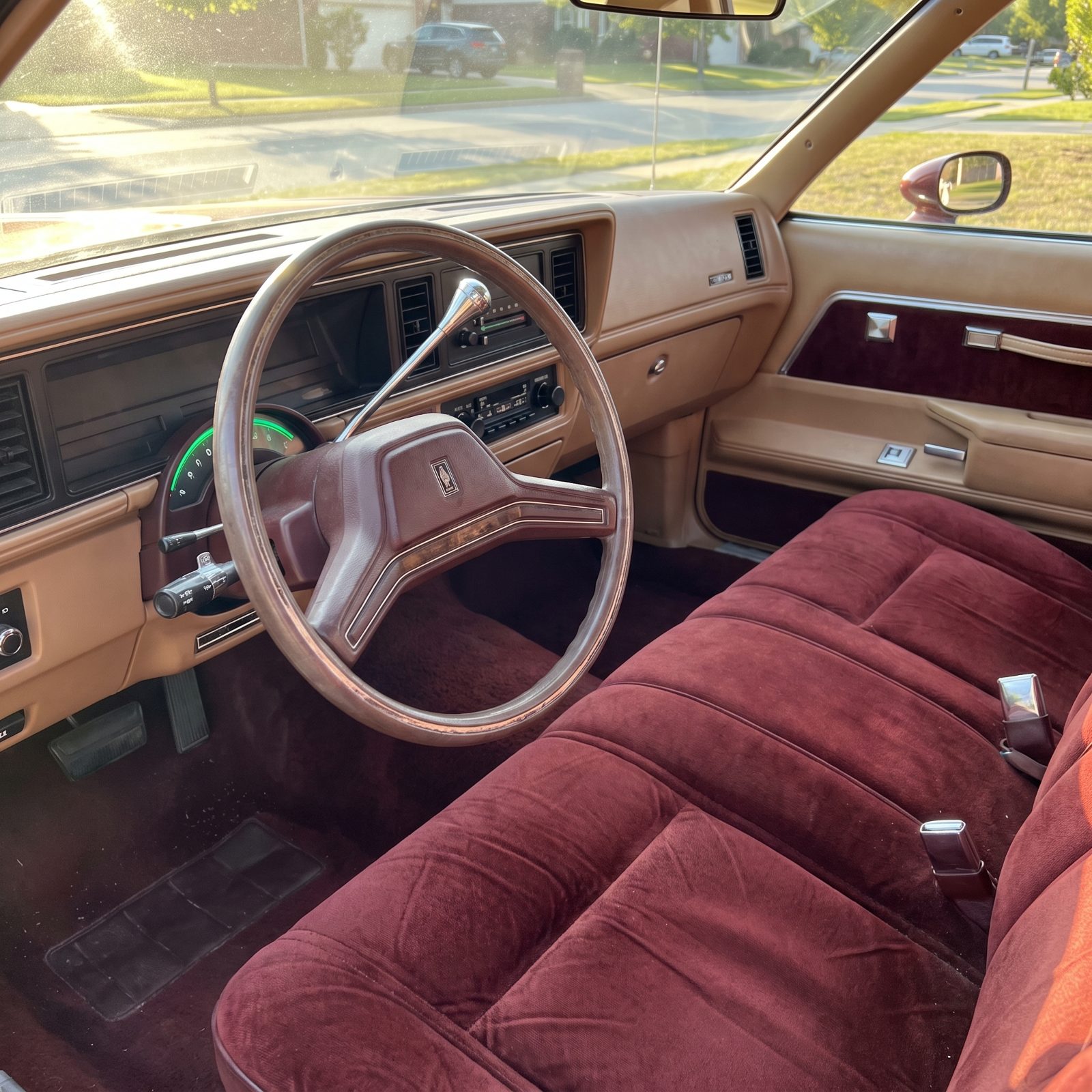
The shifter lived on the column, which meant the floor between the front seats stayed completely open. No console. No cupholders. Just a flat run of velour from one door to the other.
You moved the lever with your right hand and the gear indicator glowed through a little crescent window behind the wheel. P, R, N, D, and off you went. The bench stayed wide open because the transmission had no business taking up floor space, and that openness is exactly what we lost when the console arrived and never left.
14. T-Handle Automatic Gear Selectors
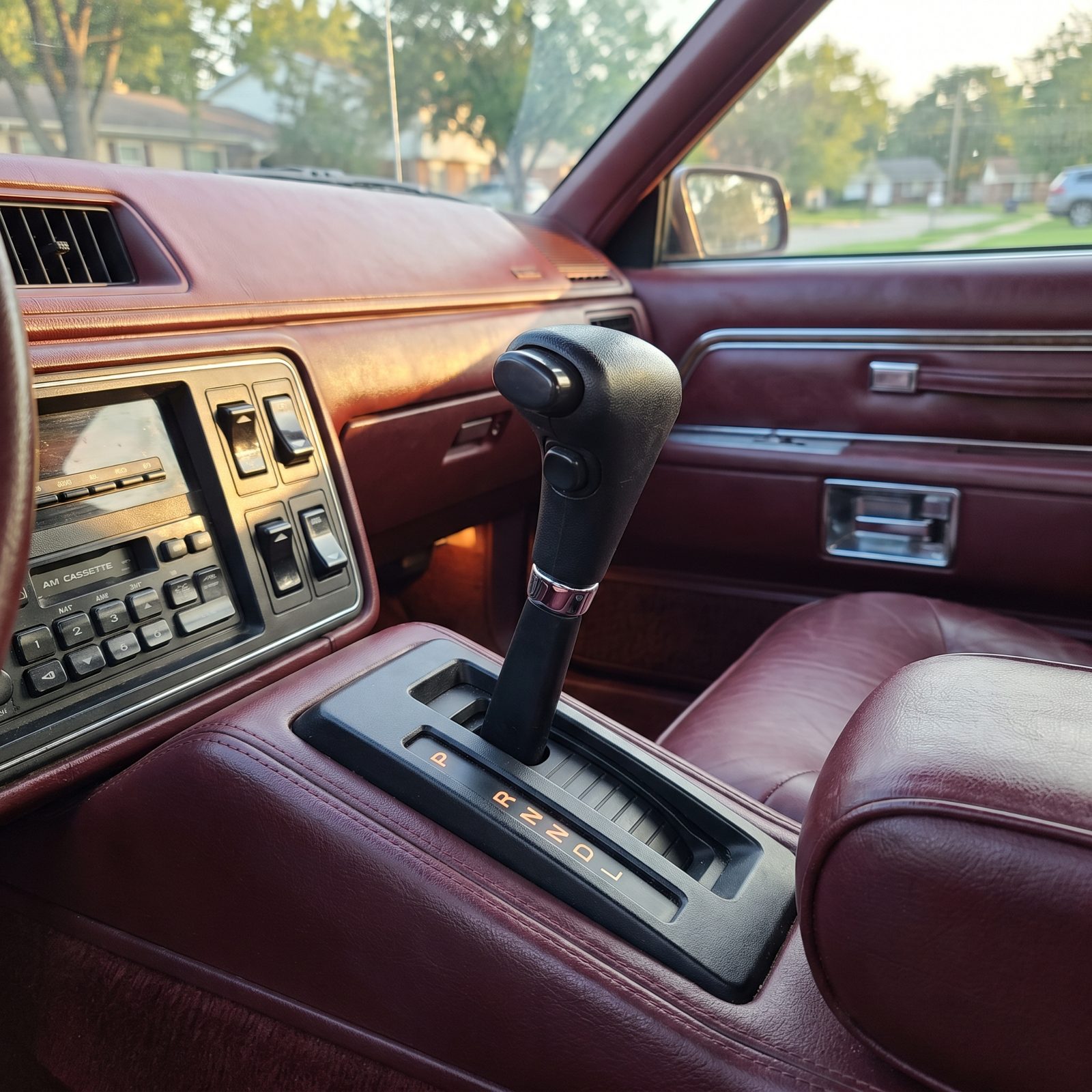
You didn’t just nudge this thing into gear. You wrapped your whole hand around the grip, pressed the button under your thumb, and pulled it back through the gate with a solid, mechanical clunk. The letters marching down the console glowed orange at night, P, R, N, D, L, so you could check your gear without looking at the dash.
It sat in a console trimmed to match everything else, often burgundy leather or vinyl, and it felt substantial in a way today’s rotary dials and push buttons never manage. The release button meant you couldn’t slap it into reverse by accident. Pulling it into Drive felt like committing to the trip.
13. Trip Computers Operated by a Dashboard Keypad
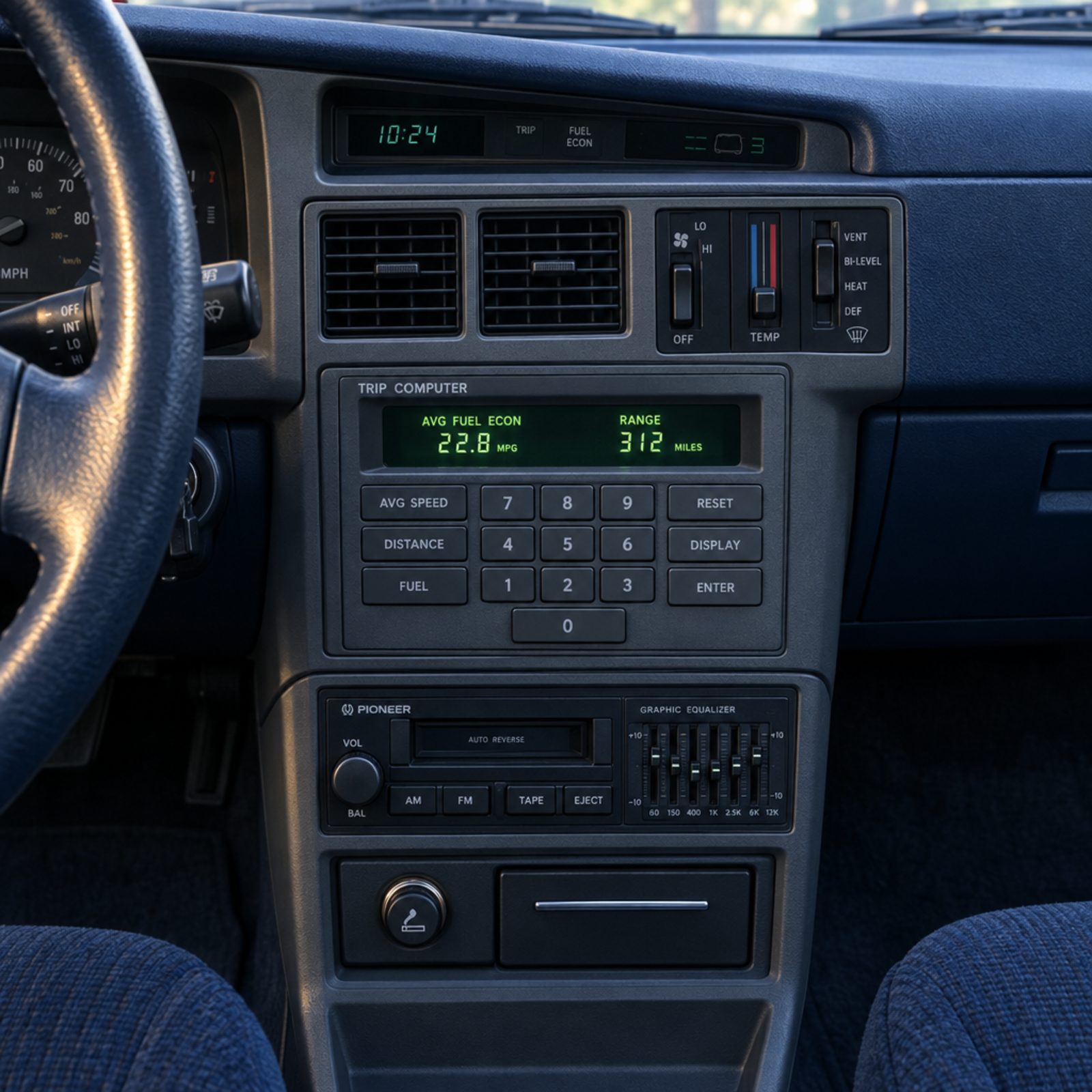
A numeric keypad on the dashboard, right there between the vents and the stereo, as if the car doubled as a desk calculator. You punched AVG SPEED or FUEL and the green readout answered back with average economy and how many miles were left in the tank, digits glowing like a pocket calculator at dusk.
The more ambitious setups let you key in the distance to your destination and watch the computer work out the rest. Most owners poked at it for a week, then left it on one screen forever. Didn’t matter. A car that could do math felt like a glimpse of the space age parked in your driveway.
12. Diagram-Shaped Warning-Light Panels
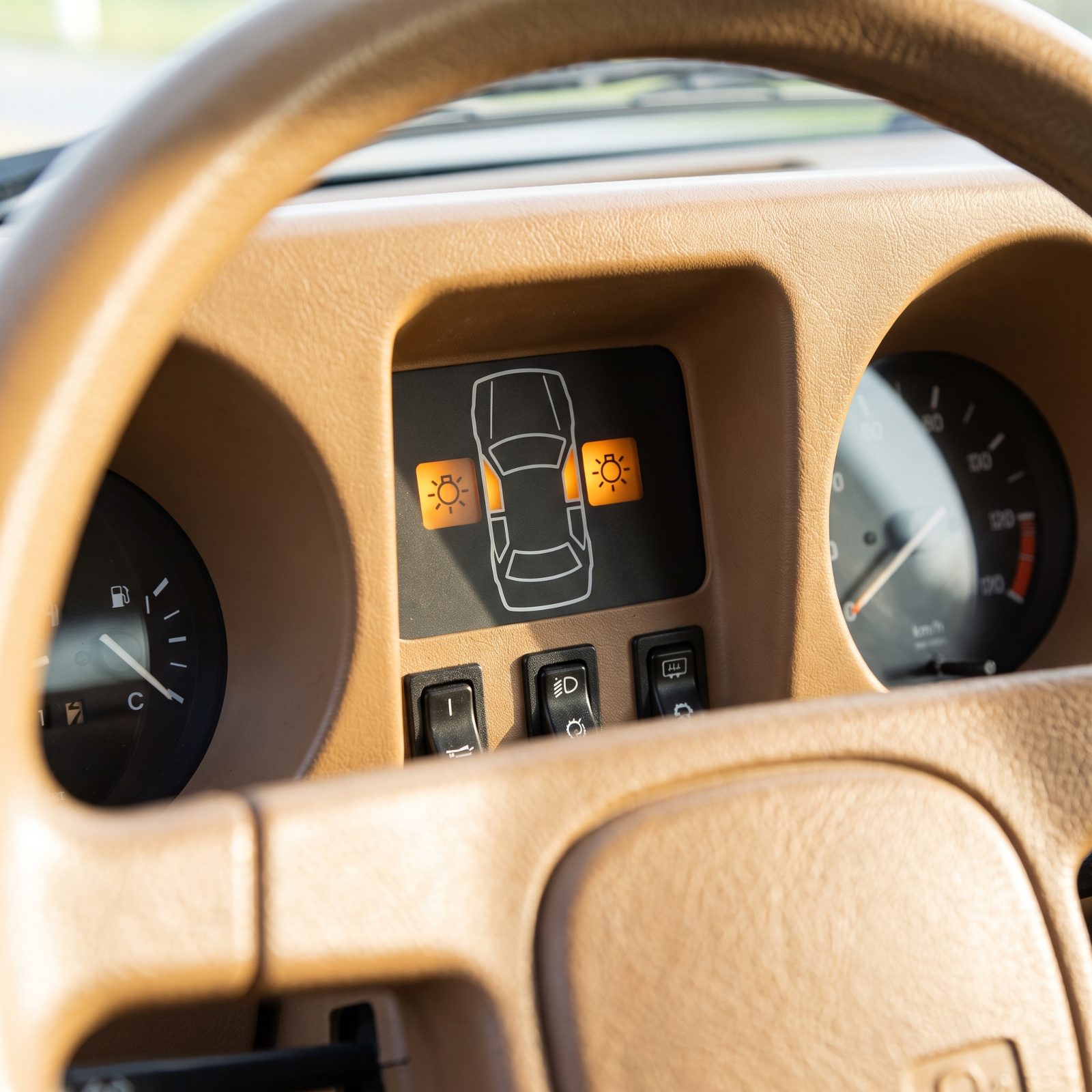
Instead of a row of cryptic symbols, some dashboards drew you a little picture of the car itself, viewed from above. When a bulb burned out or a door wasn’t latched, the matching spot on the outline lit up amber, so you knew exactly where to look.
It was charming in the most literal way. A tiny glowing sedan floated between the gauges, keeping tabs on its own taillights and doors like a hall monitor. Modern cars bury the same information in a menu on a screen, but there was something satisfying about glancing down and seeing your whole car at once, mapped out in clean lines on a black panel.
11. Horizontal Ribbon Speedometers
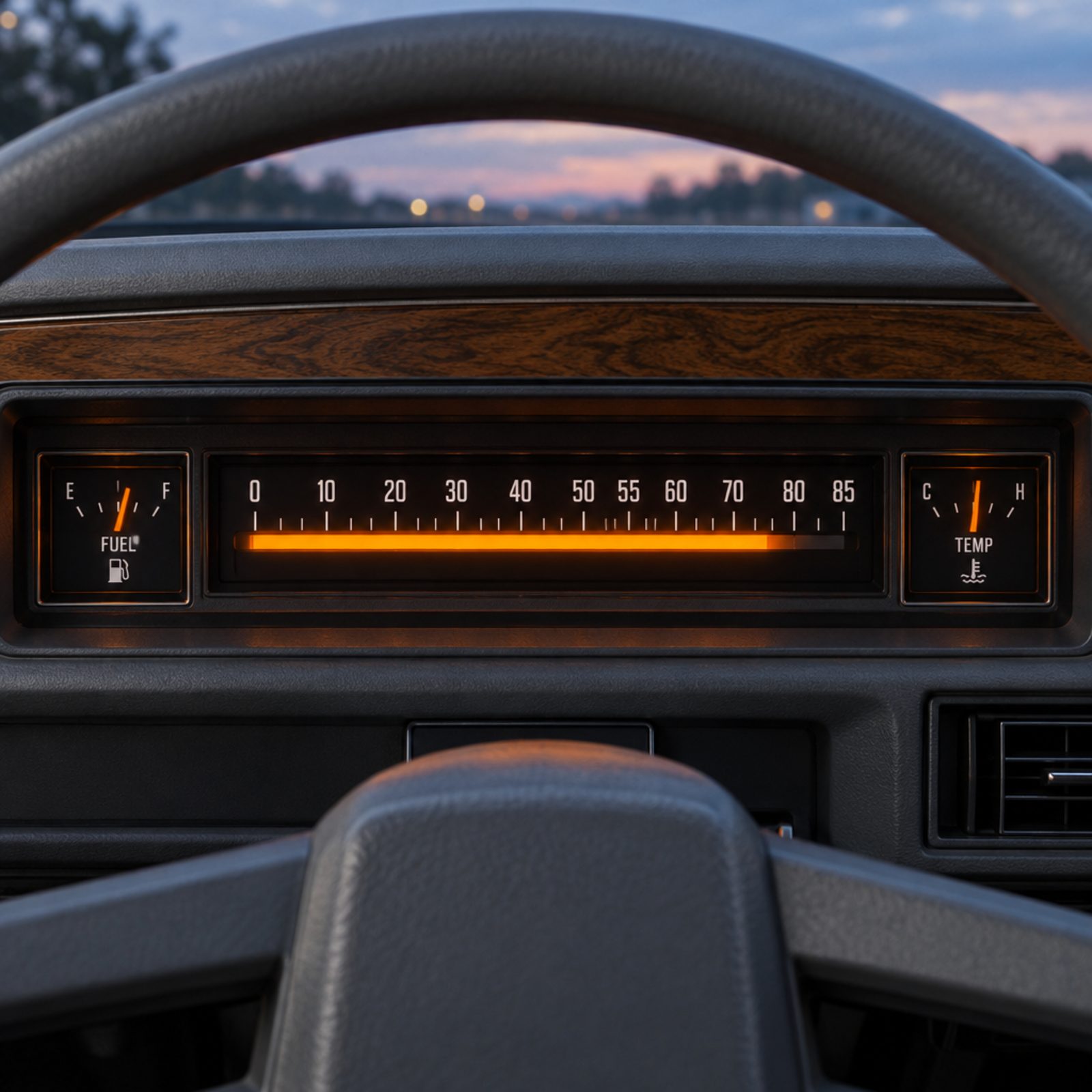
No needle, no dial. Just a glowing band that stretched left to right across the cluster, growing longer as you sped up, like mercury creeping along a thermometer laid on its side. Fuel and temperature gauges sat on either side, and the whole strip lit up warm orange at night.
It made a long, low dashboard look even longer and lower, which was the whole point. Reading it took a little practice, since your eye had to find where the bar stopped rather than where a needle pointed. Once you got used to it, though, a round speedometer started to look a little old-fashioned.
10. Pop-Up Headlight Controls on the Dashboard
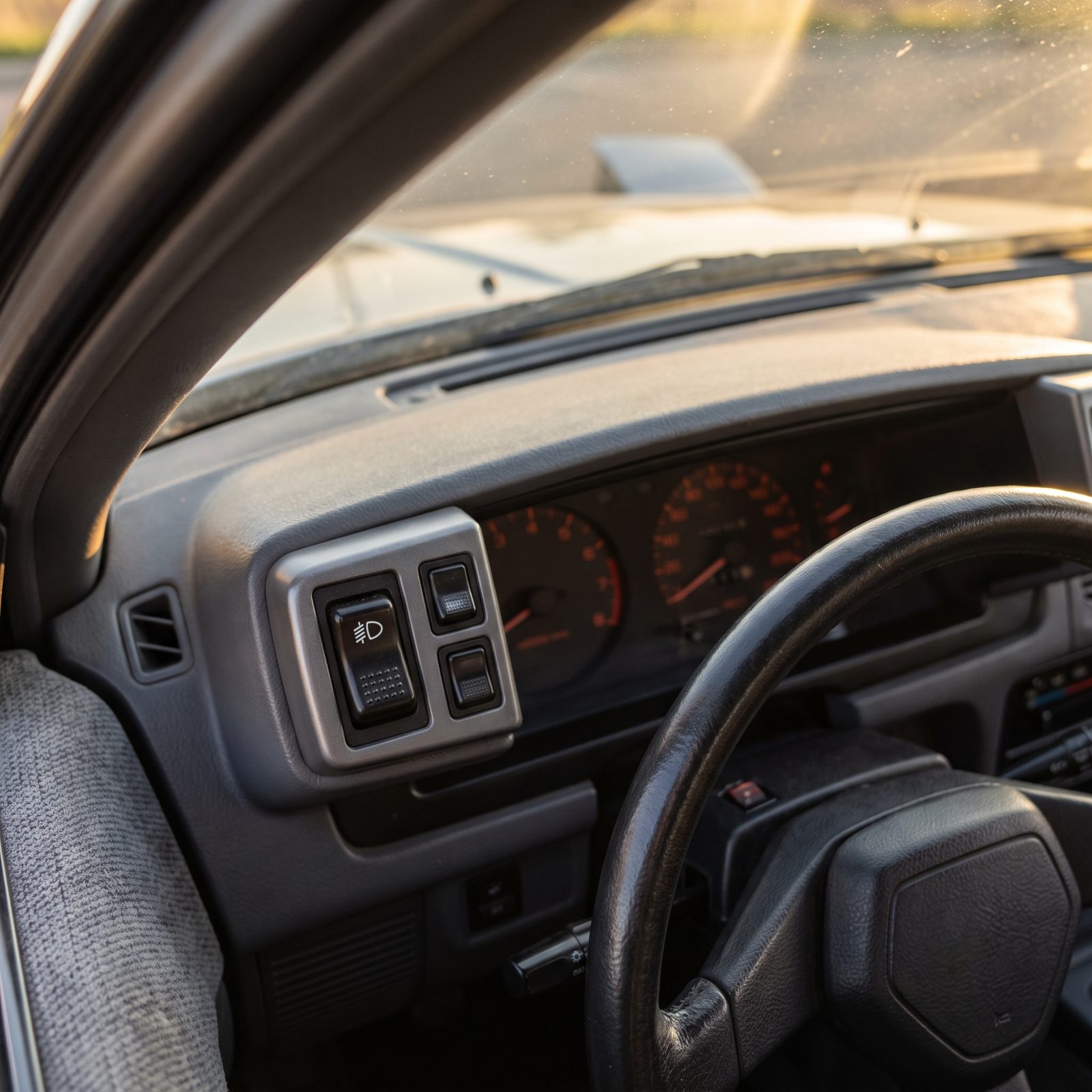
You pressed a rocker switch on the dash and somewhere up front a pair of electric motors whirred to life. The headlights rose out of the hood like eyelids opening, and anyone standing nearby turned to watch. Flicking a switch never felt so theatrical.
On some cars you could even raise the lights without turning them on, handy for clearing snow or just showing off in a parking lot. Pedestrian safety rules, weight, and aerodynamics eventually did them in, and by the mid-2000s the last of them were gone. That little headlight switch went with them, and so did the wink a friend could give you across the lot by tapping it twice.
9. Pull Knobs for Headlights and Wipers
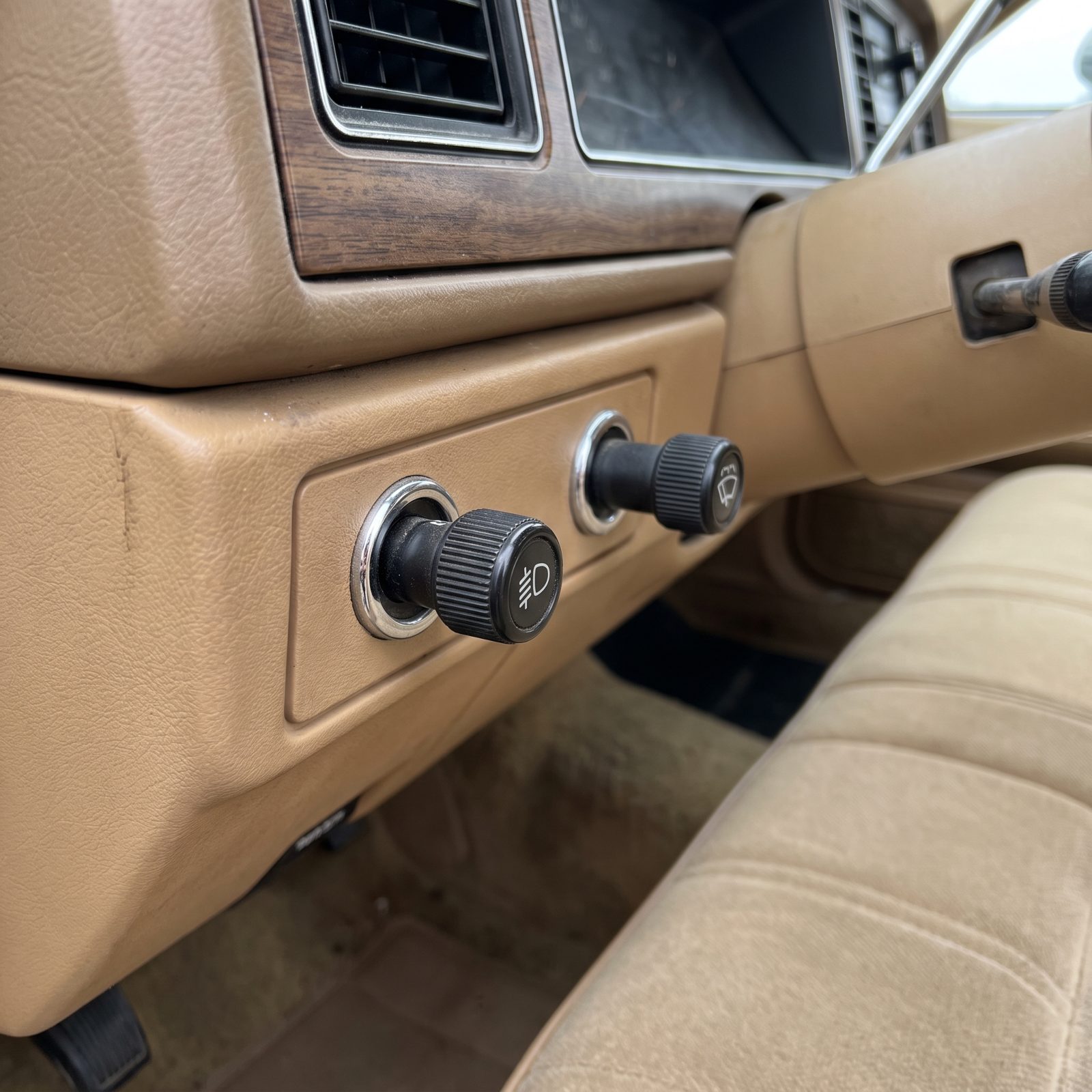
Turning on your headlights meant reaching under the dash, grabbing a knurled knob, and pulling. One click out for parking lights, all the way for headlights. On a lot of cars you could twist that same knob to dim or brighten the gauge lights, and the wiper knob sat right beside it, pull for on, turn for speed.
The chrome bezels and ribbed grips made them feel like controls on a piece of hi-fi equipment. You learned them by feel and could find them in the dark without looking. Today everything lives on a stalk or a screen, but there was a real pleasure in that firm tug and the soft click as the beams came on.
8. Sliding-Lever Heating and Ventilation Controls
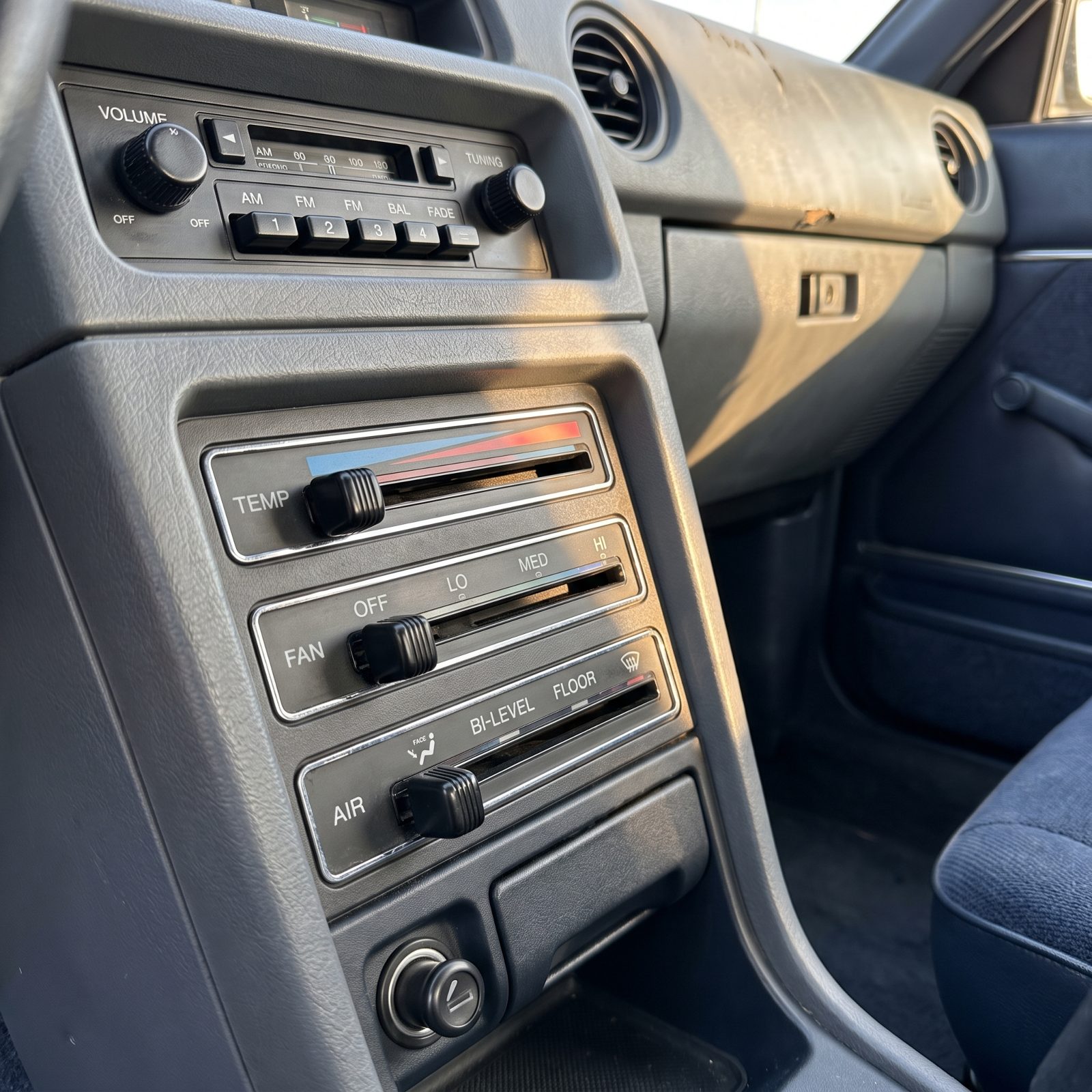
Three levers, three slots, and every one of them told you exactly what it did. TEMP slid from blue to red. FAN clicked through Off, Lo, Med and Hi. AIR moved between face, bi-level, floor, and defrost. You could set the whole system with one hand while keeping your eyes on the road.
Behind the panel, cables ran to doors and valves deep in the dash, so moving a lever actually moved something. They got a little stiff in winter and a little loose with age, but you never had to dig through a menu to warm your feet. Slide, feel the notch, done.
7. Manual Choke Knobs in Economy Cars
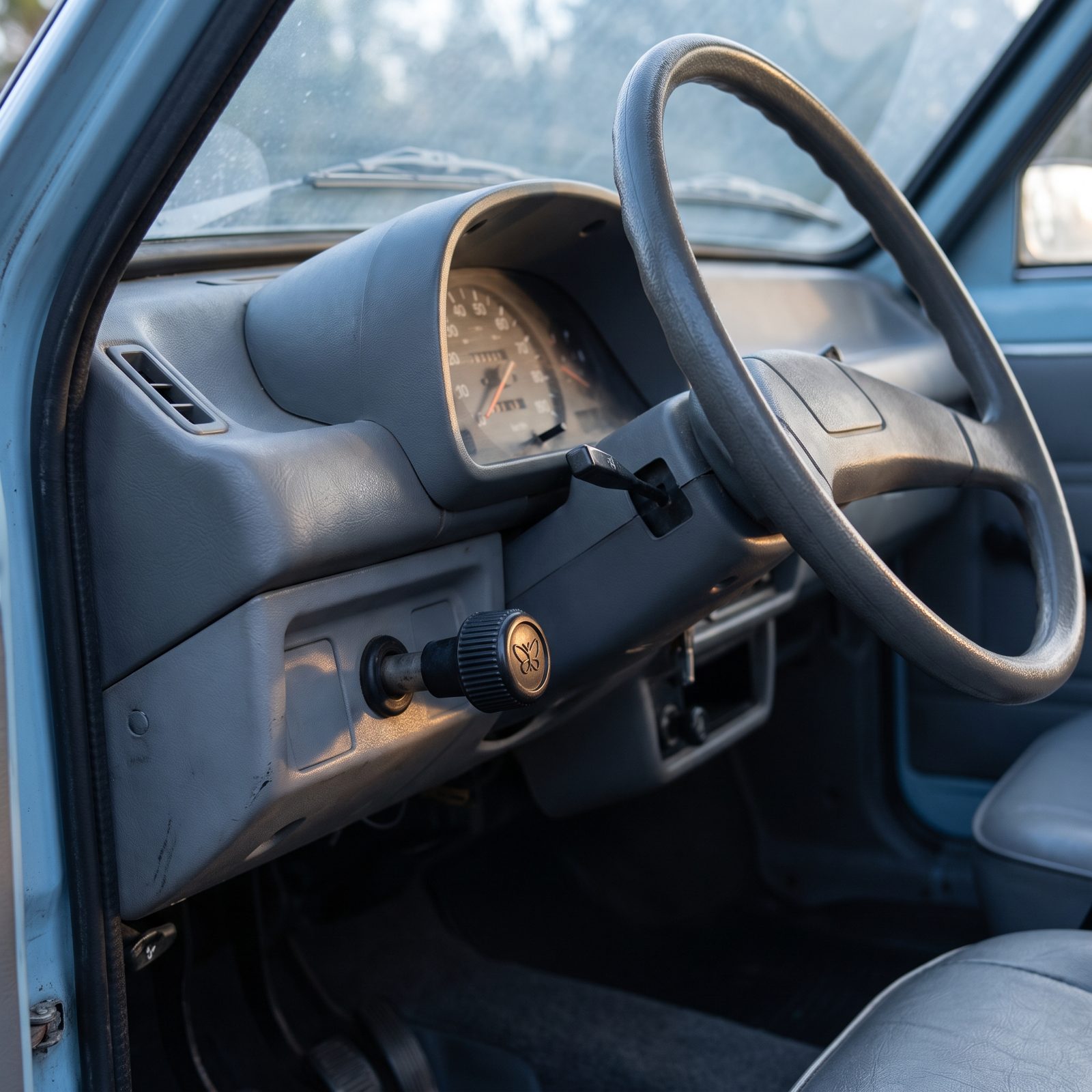
Cold morning, small car, carbureted engine. Before you turned the key, you pulled the choke knob out and the engine coughed to life on a richer fuel mixture. Then came the art of easing it back in as the motor warmed up, a little at a time, listening for the idle to settle.
Forget to push it in and the engine ran rough, guzzled gas, and fouled its plugs. Push it in too early and the car stalled at the end of the driveway. Economy cars hung on to manual chokes well into the 80s because they were cheap and simple, and fuel injection finally made the whole ritual unnecessary.
6. Hand-Crank Windows With Oversized Handles
Would you like to save this?
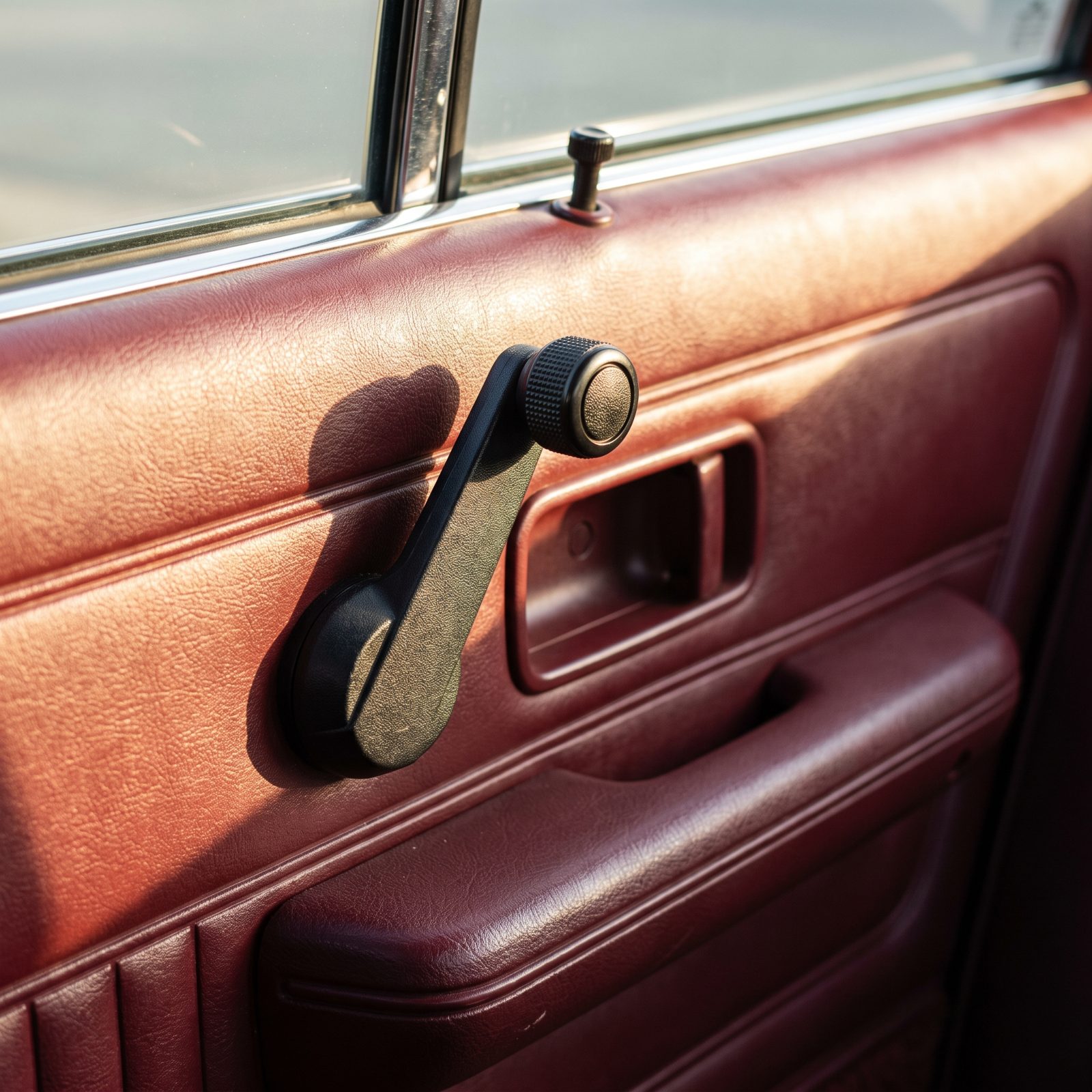
Rolling down the window was an actual workout. You grabbed the knob at the end of the crank and spun it around and around, the glass sliding down in steady stages. The handle stuck out from the door panel far enough to snag a knee, and every kid learned that the hard way.
Drivers got good at leaning across the bench to crank the passenger side, one hand on the wheel, stretching for the handle. It’s why people still make a little circular motion with their hand when they ask someone to roll down a window, even if that person has only ever pressed a button.
5. Motorized Shoulder Belts That Traveled Along the Roof
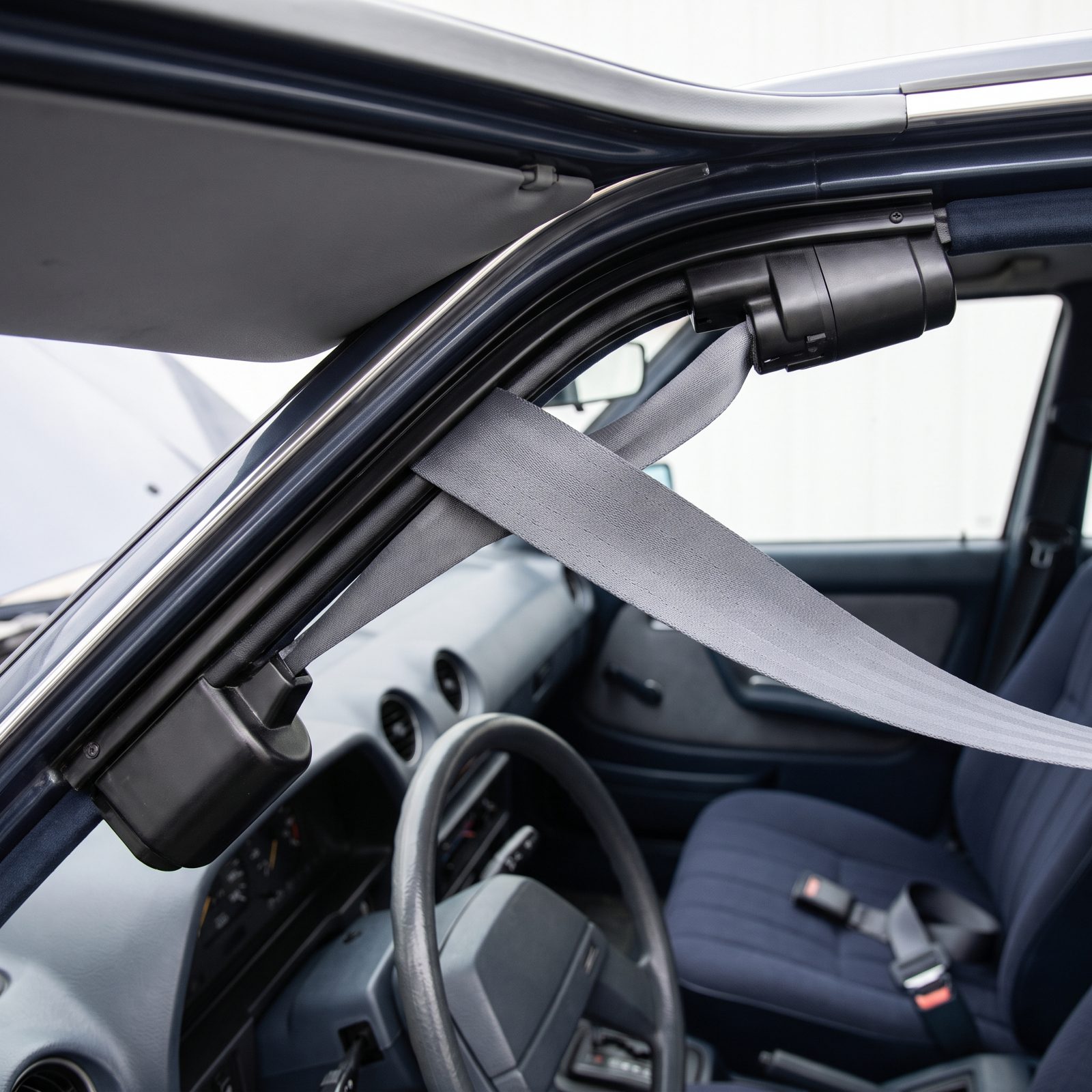
Shut the door and the belt came to you. The upper anchor hummed along a track in the roof rail, dragging the shoulder strap over your chest while you sat there like a passenger on some very slow amusement ride. And then — nothing. You still had to buckle the lap belt by hand, because the automatic part only ever did half the job.
These passive restraints turned up while carmakers scrambled to meet new federal rules before airbags swallowed the whole cabin. For a few model years they were everywhere. Chryslers, Fords, a whole pile of imports. You learned the routine fast: wait for the hum to stop, then reach down for the lap belt you kept forgetting.
The sound is what sticks. A little electric whir every single time you climbed in, dependable as the dome light.
4. T-Shaped Parking-Brake Handles Under the Dashboard
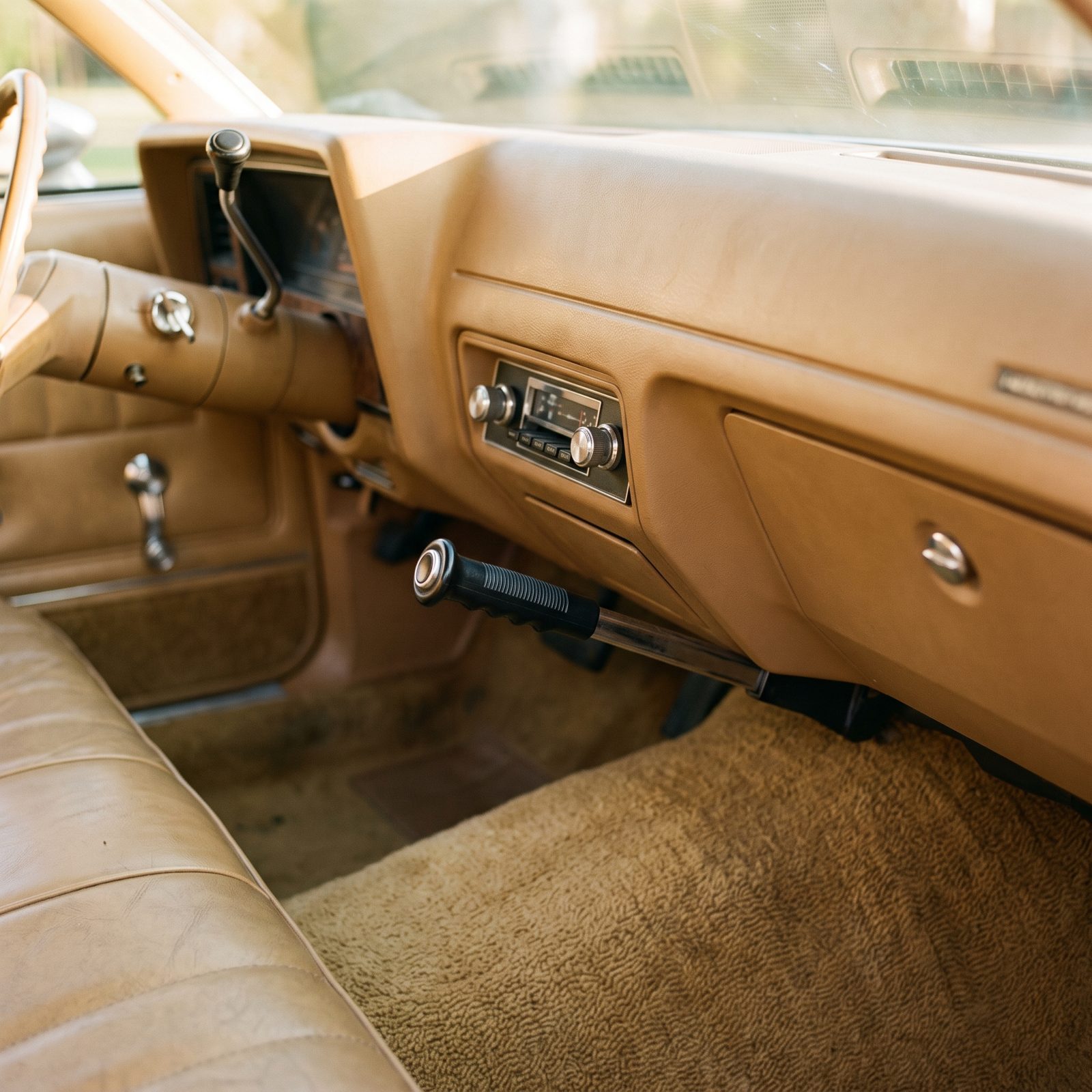
No lever between the seats, because there was nothing between the seats. The parking brake lived under the dashboard, a ribbed grip on a long shaft that you pulled straight out toward you until it ratcheted tight.
Releasing it was the tricky part. You gave the handle a twist and it slid back into the dash, sometimes gently, sometimes with a clunk that made passengers jump. Paired with a bench seat and a column shifter, it kept the floor completely clear, so the whole front of the car stayed one wide, open room with the gas, the brake, and nothing else down by your feet.
3. Illuminated Vanity Mirrors With Rows of Tiny Bulbs
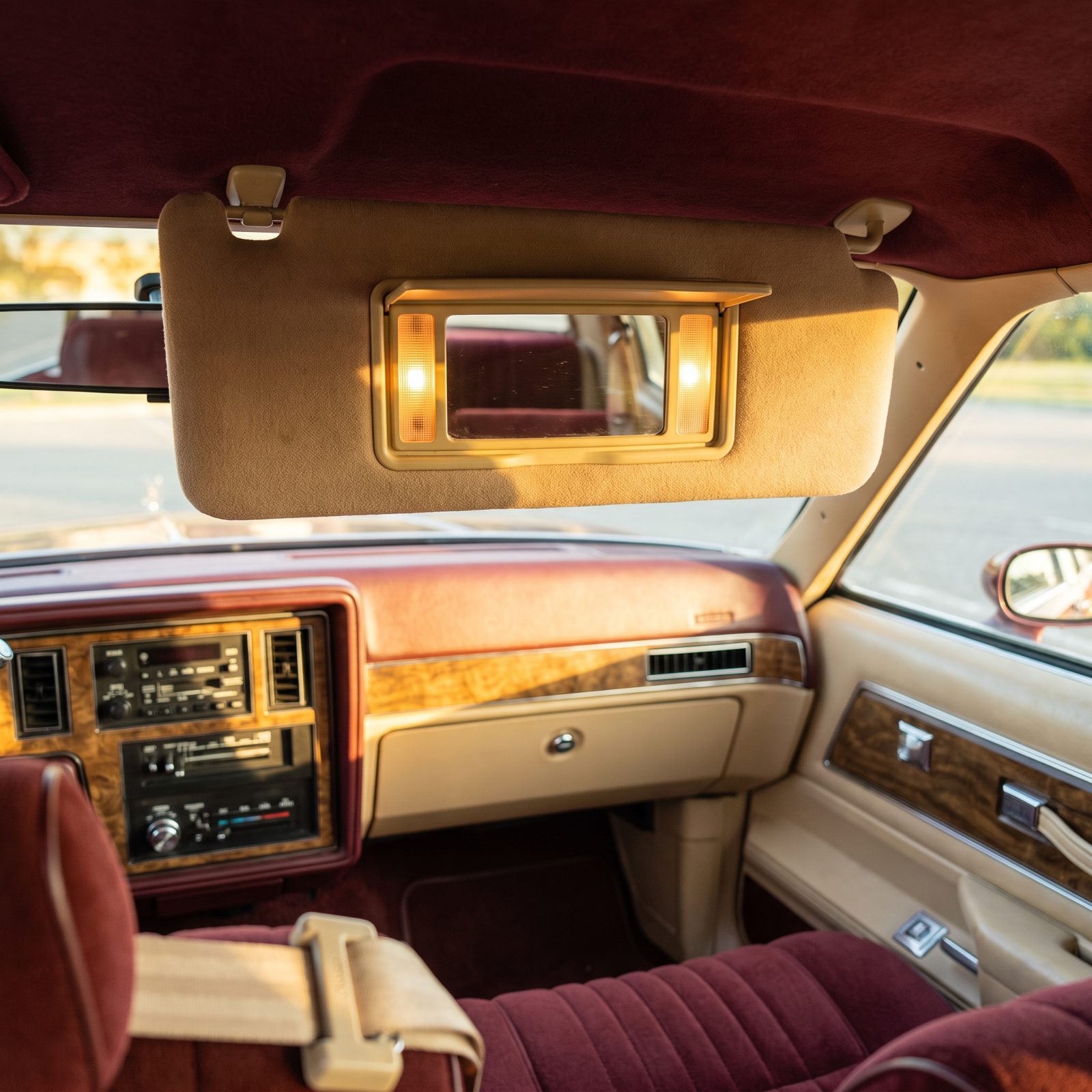
You flipped down the visor, slid the little cover aside, and there it was — a mirror ringed with bulbs that lit up like you were backstage at a theater. For checking your lipstick at a stoplight, it was pure overkill, and that’s exactly why people loved it.
Those tiny incandescents ran warm and burned out eventually, and good luck finding the right replacement at the parts counter by 1998. But when they worked? The whole cabin got this soft amber glow after dark. Plenty of Oldsmobile Cutlass owners swore it was the fanciest thing the brand ever did.
Carmakers knew the game. A row of bulbs in your sun visor didn’t make the car go faster or stop better. It just made you feel like the thing cost more than it did.
2. Seat Controls Shaped Like Miniature Chairs
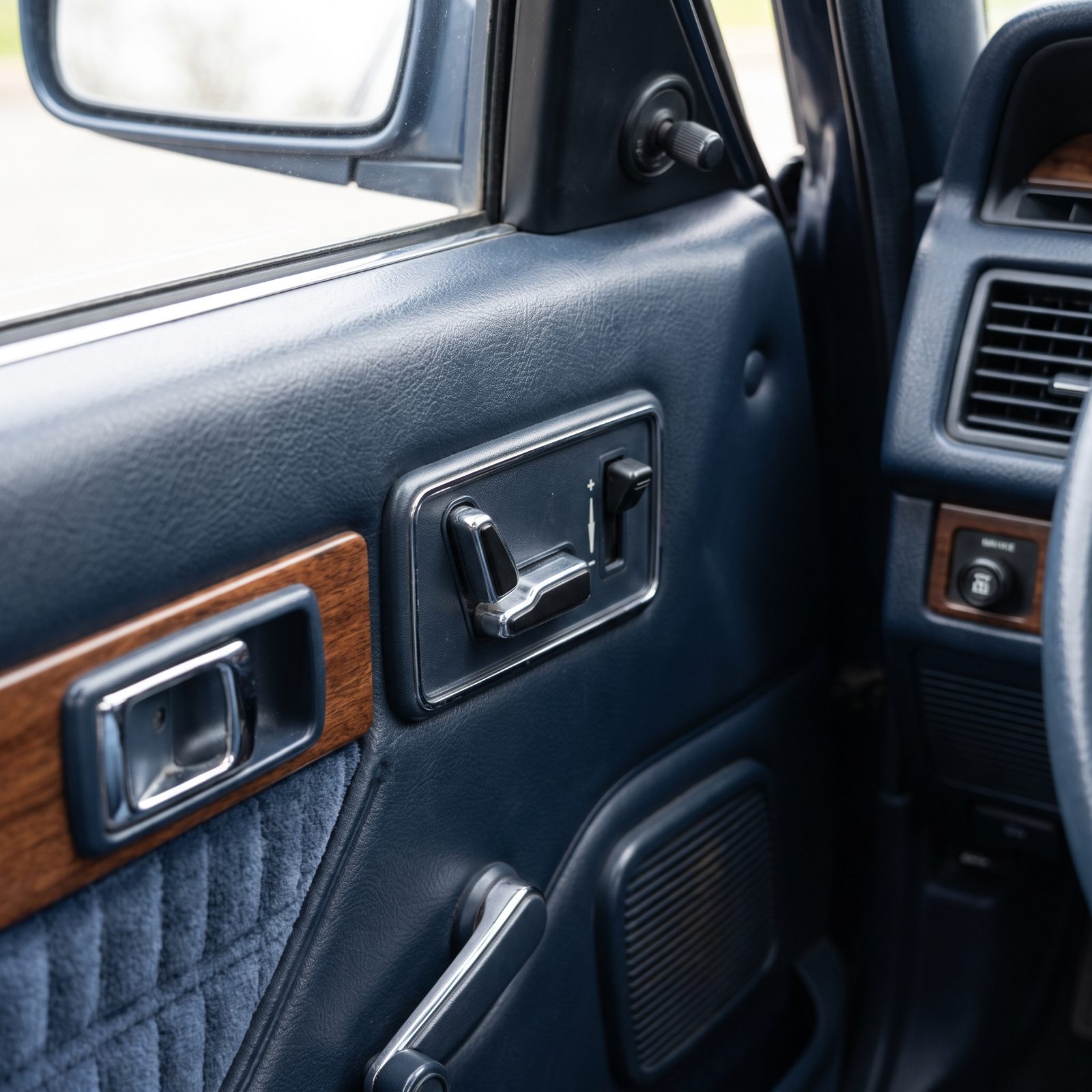
Here’s a design idea so clever it almost makes you forgive the rest of the ’80s. The power-seat switch was molded into the shape of a tiny seat — want the backrest to recline? Tilt the little backrest. Want to slide forward? Nudge the little cushion. No manual, no guessing, no squinting at a diagram printed sideways on the door.
You could operate the whole thing with your thumb while merging onto the highway, never once looking down.
Why don’t new cars do this? Half of them bury seat adjustment three menus deep in a touchscreen now, which is progress of a kind, I suppose. The miniature-chair switch just worked. Mercedes-Benz and a handful of others got it right, and plenty of carmakers have since drifted away from it.
1. Talking Dashboards That Scolded You Out Loud
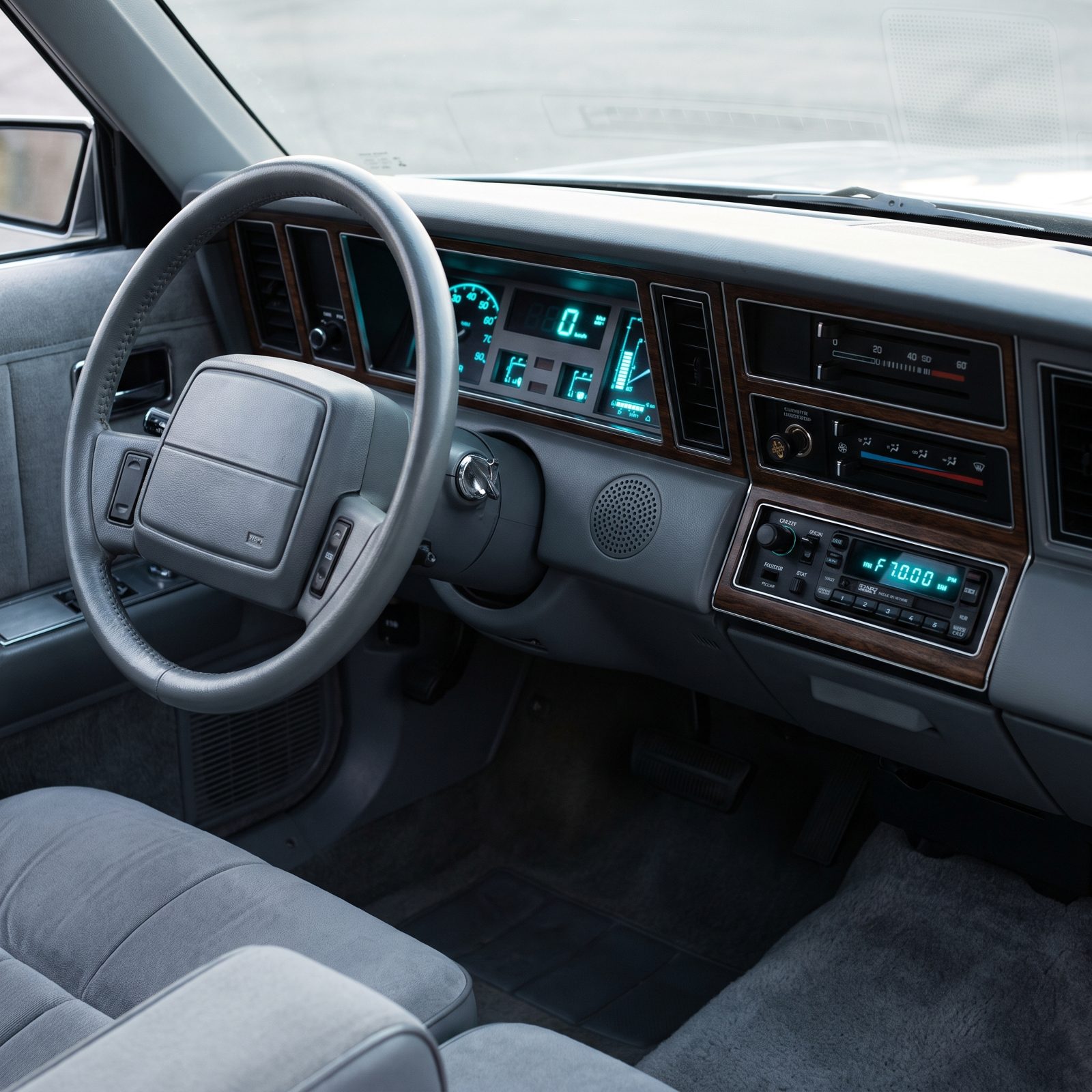
“A door is ajar.” You heard it. You know you heard it. For a stretch in the mid-’80s, Chrysler decided your car should nag you in a flat robot monotone, and the whole country collectively lost its mind over it.
The novelty wore off about forty-five seconds after you drove off the lot. “Your fuel is low.” Yes, thank you, I have eyes. “Please fasten your seatbelt.” I’m trying, the voice startled me and I dropped it.
People yanked the fuses. Dealers got calls asking how to make the thing shut up. The technology was genuinely impressive for its day — a synthesized voice piped through a dashboard speaker felt like the future had arrived early. It arrived, scolded everyone, and got voted off the island within a few model years. Nobody mourned it, but we all do the voice at parties now.