
Would you like to save this?
The heater roared and still lost. Your breath fogged the windshield faster than the defroster could clear it, and the wipers left twin arcs of frozen crud on the glass. Out past the hood, a two-lane highway had gone white and featureless — shoulders swallowed, lane markers a rumor. You drove by memory and the tail-lights ahead. Every storm tested your nerve, your patience, and whatever tricks your old man taught you in the driveway. The ones below will bring all of it rushing back.
Please note that some of the images in this article were created with the assistance of AI.
50. Rear-Wheel-Drive Family Sedans Fishtailing Around Corners
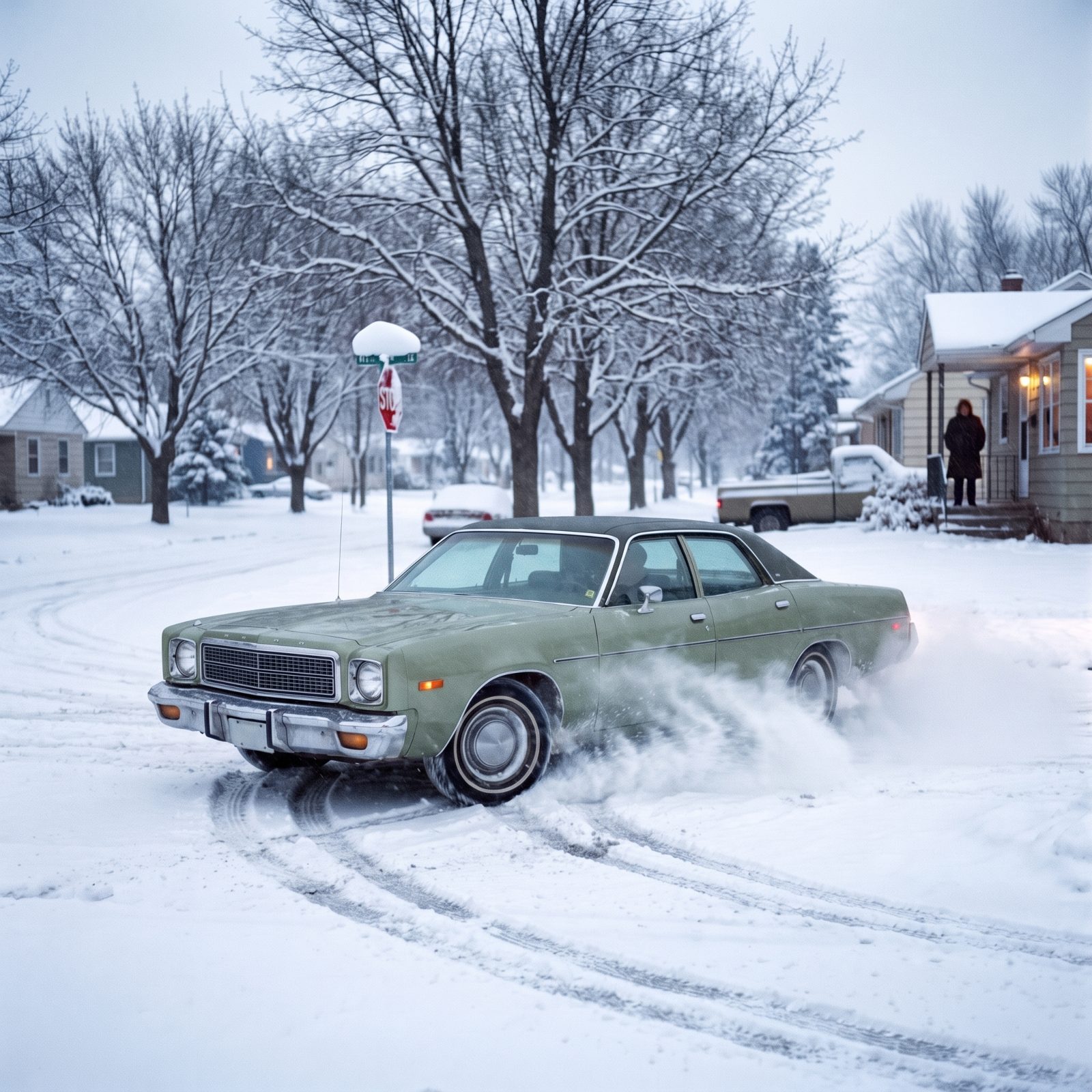
The back end went before you knew it was going. One steady turn onto Elm, a little too much gas, and the rear of that big Impala or Galaxie swung wide like it had a mind of its own. You caught it with a flick of the wheel, gathered it up, and kept your eyes forward so nobody in the car would notice your heart pounding.
All the weight sat over the front while the drive wheels rode empty and light in back, begging to break loose. That was rear-wheel drive in snow, and you learned it the hard way. Usually near a mailbox.
49. Installing Tire Chains by Hand on the Snowy Shoulder
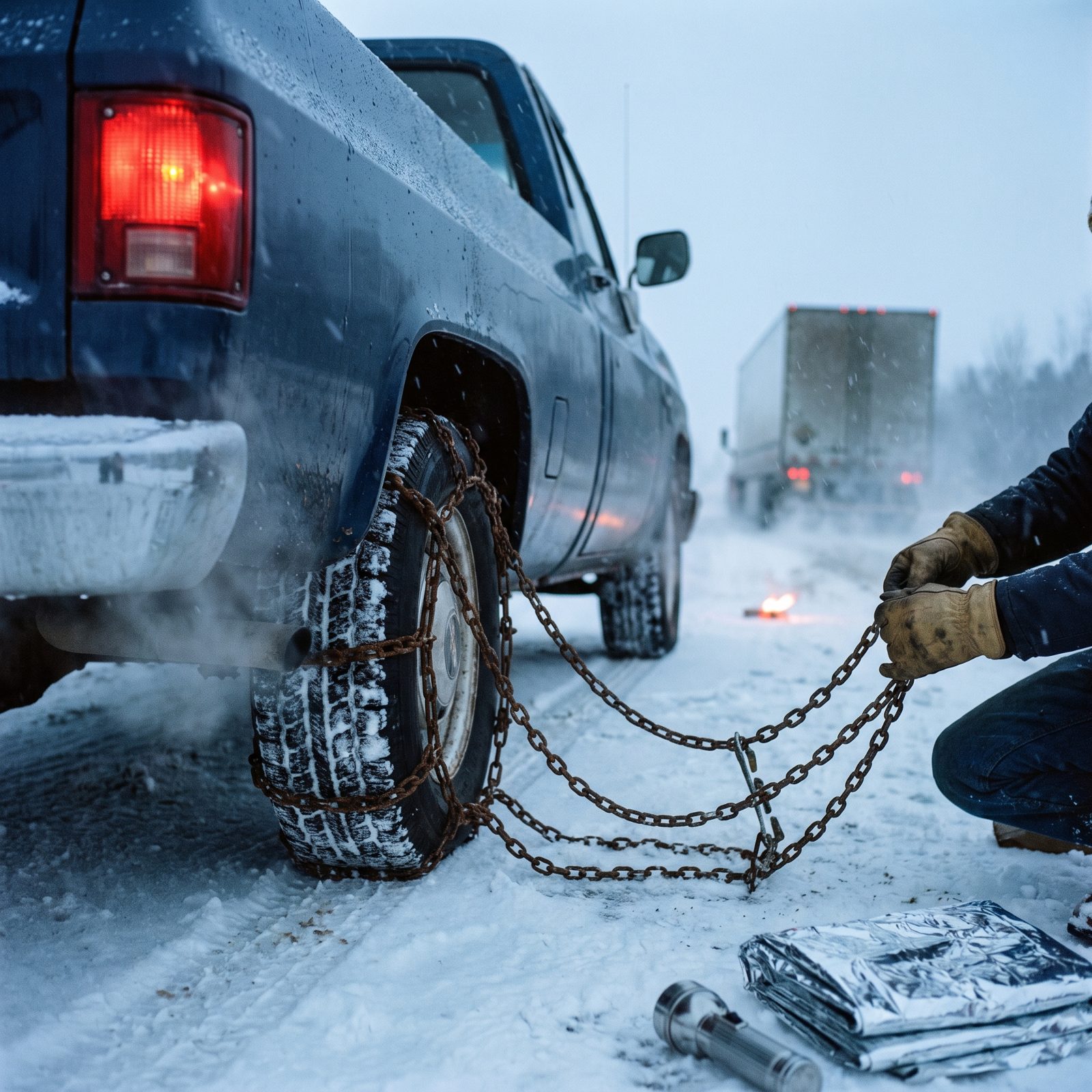
Nobody made this look easy. You’d pull onto the shoulder with snow already down the back of your collar, then lay the chains out flat behind the tire like a set of instructions you’d forgotten how to read.
Then came the crawl. Drape them over the tread, inch the car forward a foot, wrestle the hooks together with numb fingers that wouldn’t bend. The trick your father swore by was to fasten the inside first, then the outside, then drive a few yards and re-tighten because they always went loose. Half the time you skinned a knuckle on the fender. Every time you swore you’d buy chains that actually fit next year.
48. Pumping the Brakes Because Anti-Lock Brakes Were Absent
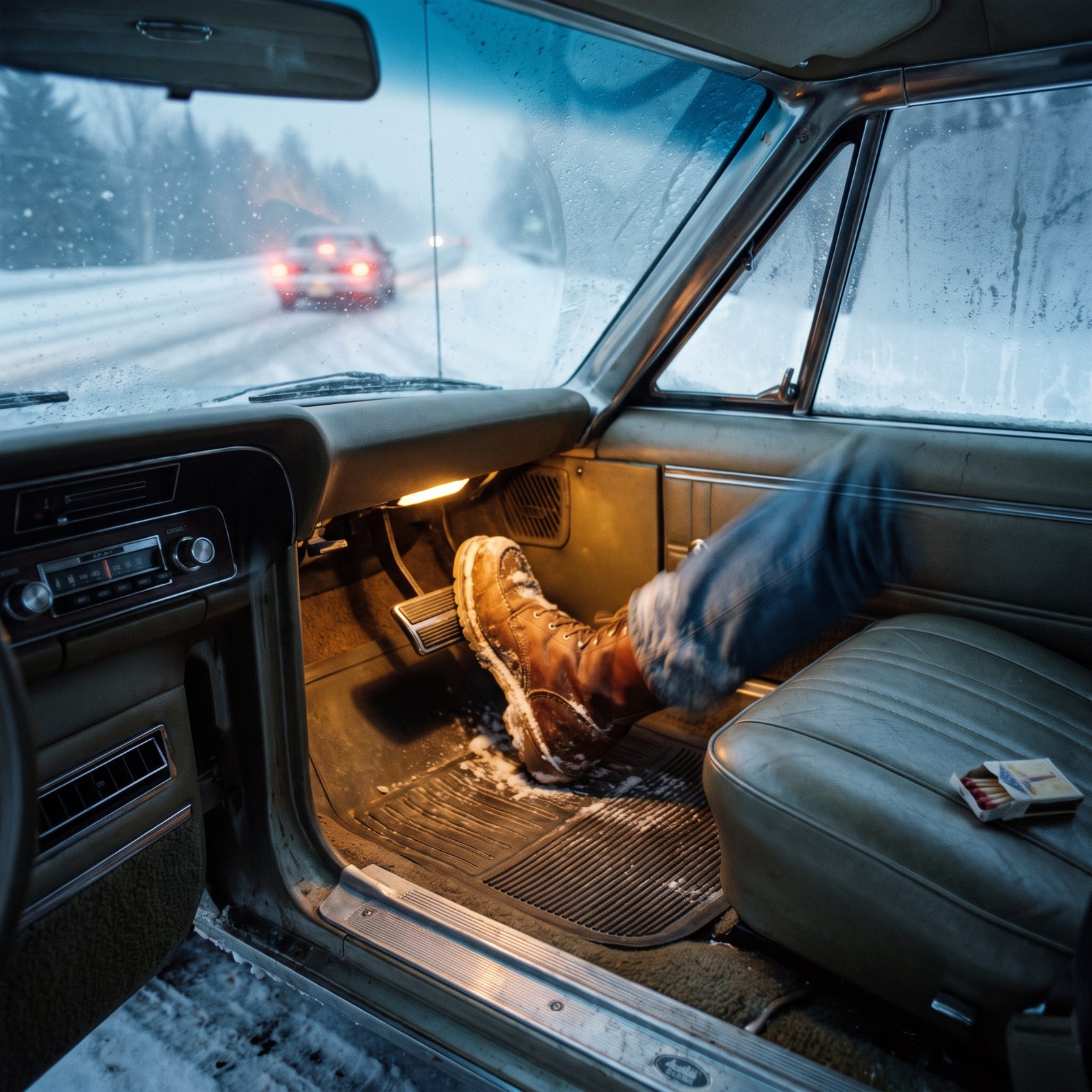
Stomp the pedal on ice and you were a passenger. The wheels locked, the tires went silent, and the car slid dead straight toward whatever it was pointed at, the steering wheel gone useless in your hands.
So you pumped. Squeeze, release, squeeze, release, feeling for the moment the wheels started rolling again so you could steer around trouble. It was a rhythm you built by feel, taught by a scare or two, and it lived in your right foot for the rest of your life. Anti-lock brakes handle it now, faster than any human ankle. But you did it first, and you knew exactly why.
47. Bias-Ply Tires That Became Treacherous on Packed Snow
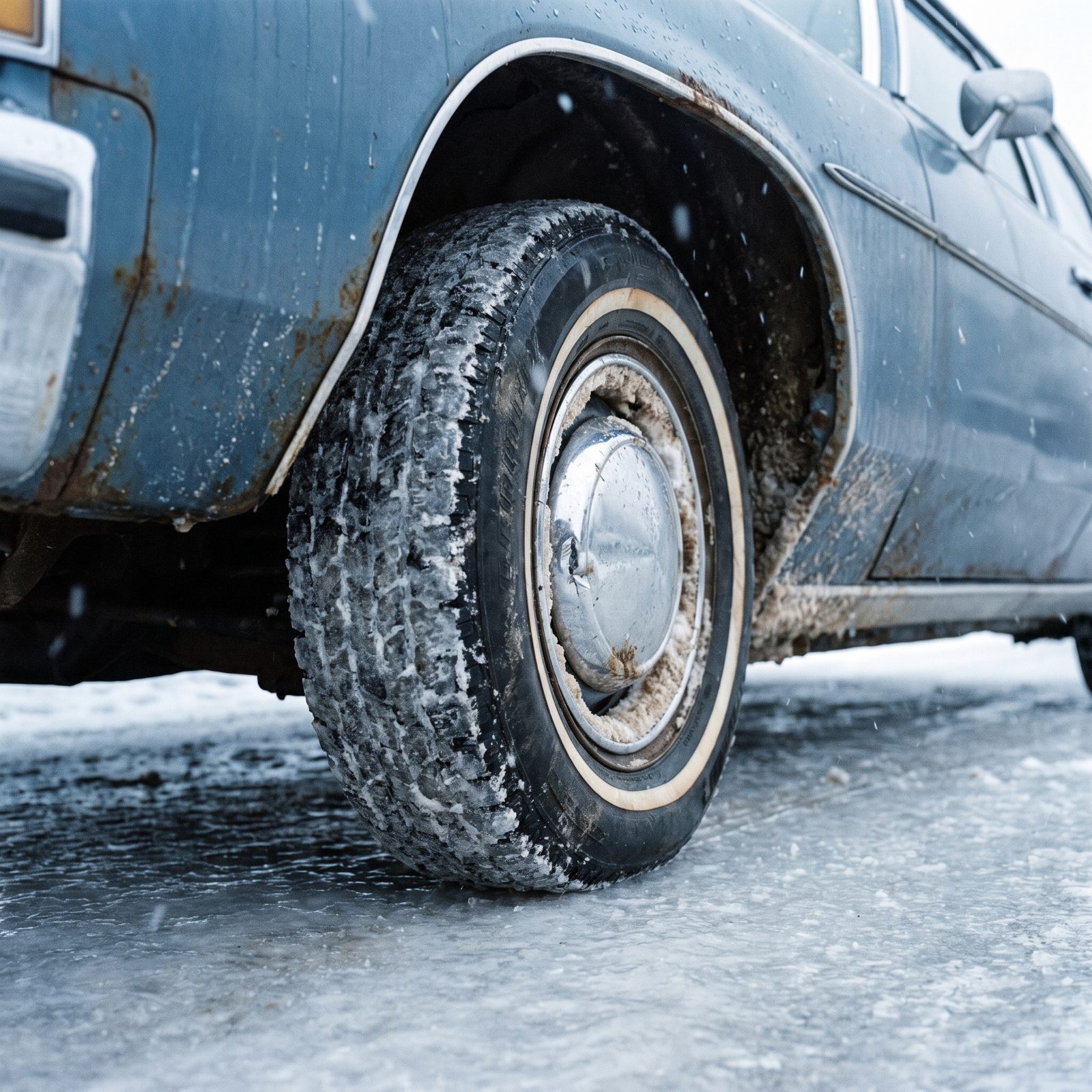
Those tires were fine in July. On packed snow they turned into hockey pucks. The tread ran shallow by anything we’d accept today, the rubber went hard and skittery in the cold, and the rounded shoulder gave you almost nothing to bite with.
You could feel it the moment you left dry pavement — the steering went light and vague, the whole car sort of floating over the surface instead of gripping it. Radials were coming, and they’d grip better in every way. But plenty of families rode the whole winter on bias-plies because that’s what happened to be bolted on when the snow came.
46. Sandbags Piled Inside the Trunk for Extra Traction
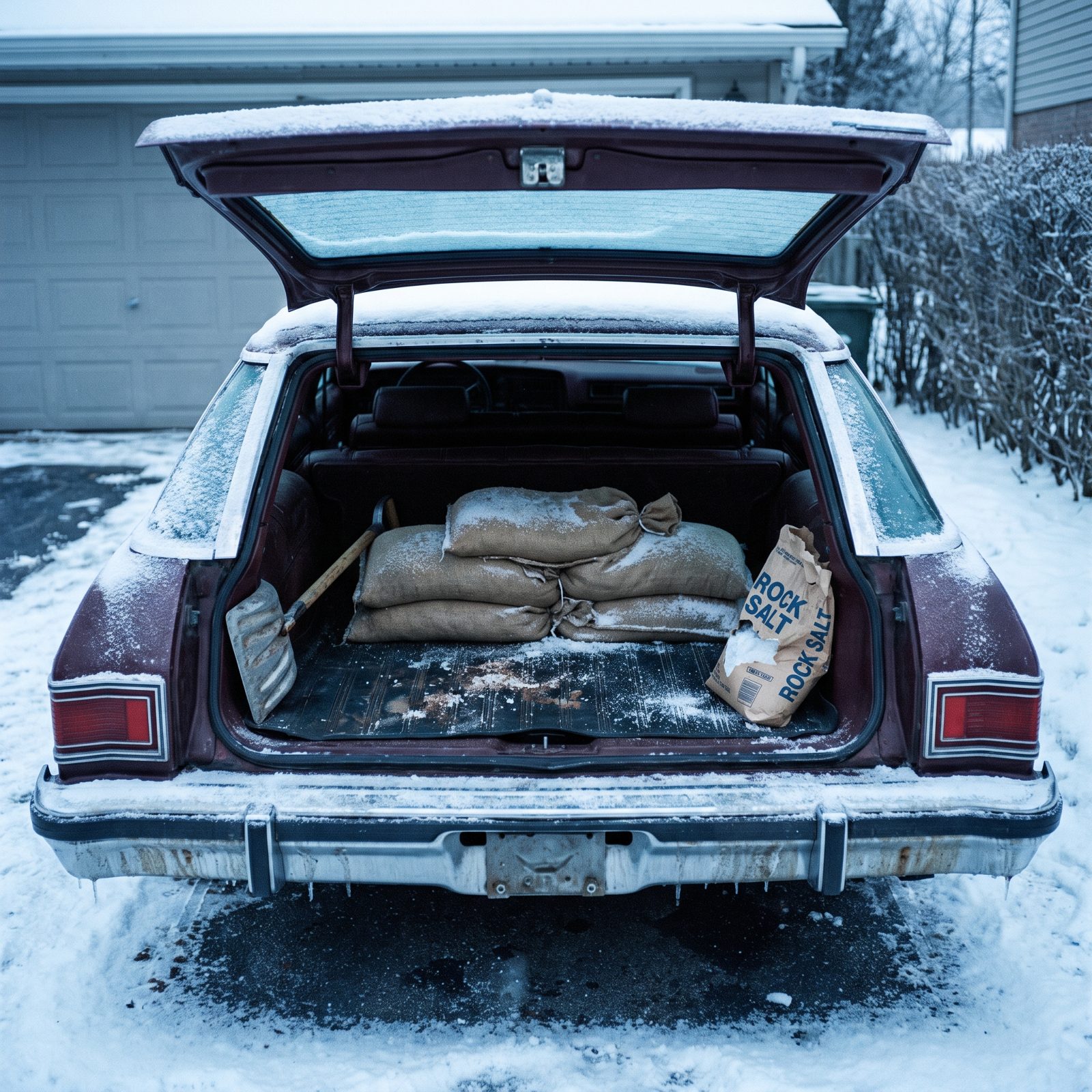
Every fall the sandbags came out of the garage and went into the trunk, right over the rear axle. That’s where the weight earned its keep, pressing those light back wheels down onto the road so they’d grip instead of spin.
Some folks used bags of rock salt so it did double duty, others swore by cinder blocks or a couple of old barbells. Cheap physics that actually worked. The only catch was forgetting to haul them out in April and lugging a hundred pounds of dead weight around all summer, which everyone did at least once.
45. Studded Snow Tires Clattering on Bare Pavement
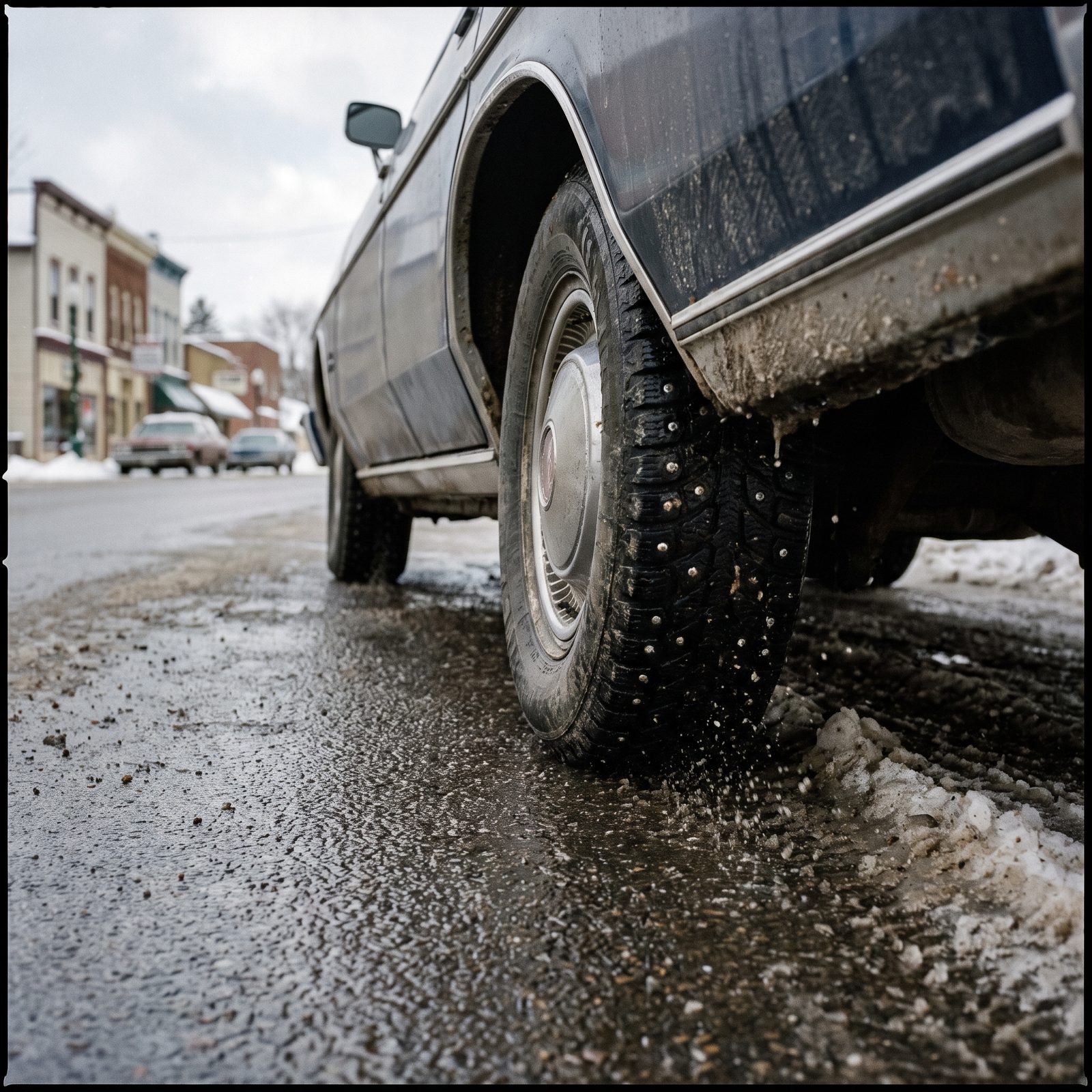
You heard them before you saw them. That machine-gun clatter of steel studs biting bare pavement meant somebody was serious about winter and hadn’t gotten around to swapping tires when the roads cleared.
On ice, studs were the closest thing to magic. On dry road they buzzed, sang, and chewed little grooves into the asphalt, which is precisely why so many states started limiting them. But before the rules tightened, you could roll into a diner lot with your tires howling and everyone inside knew the plows hadn’t kept up out on the county road.
44. Starting a Manual-Transmission Car in Second Gear to Reduce Wheelspin
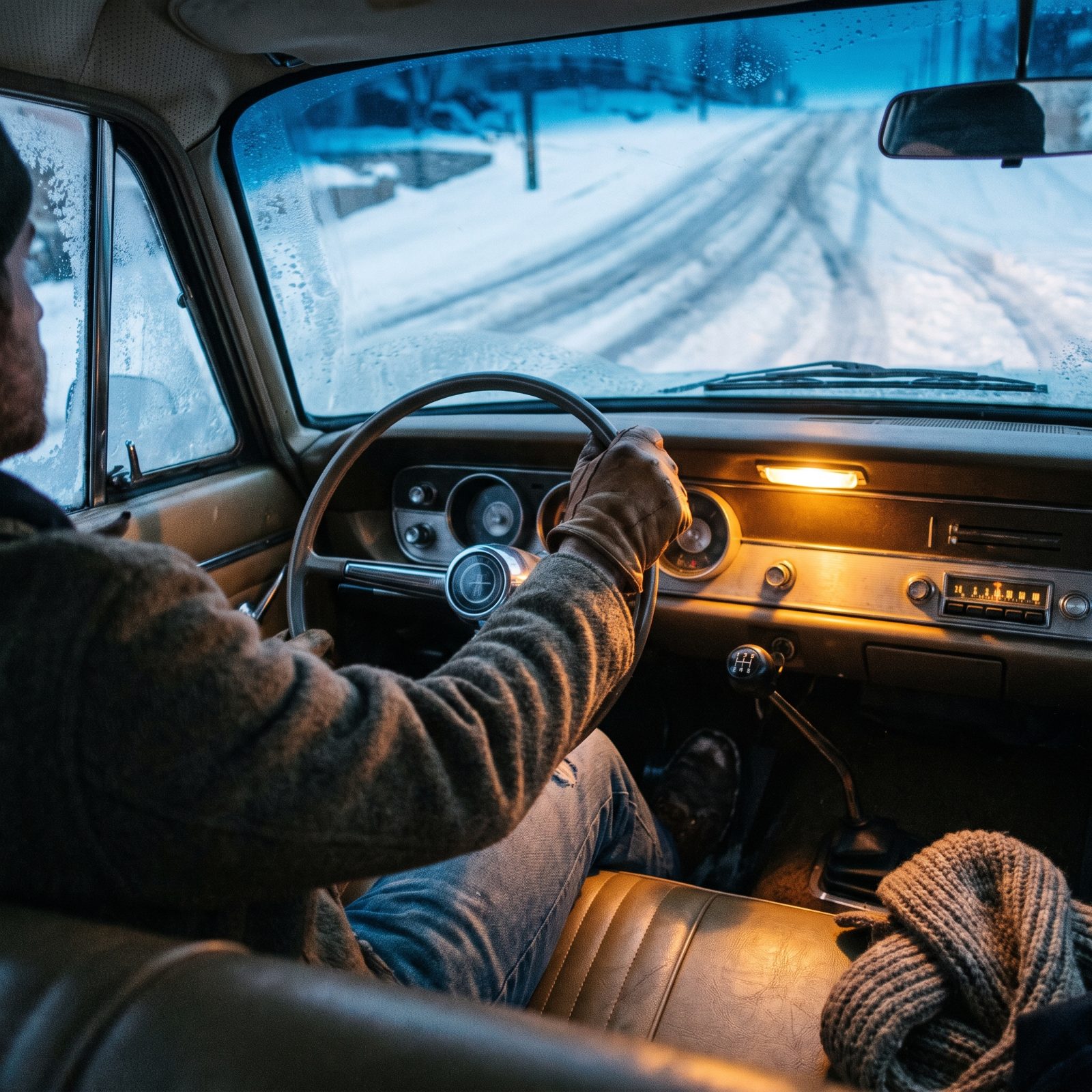
First gear had too much muscle. Let the clutch out on a slick surface in first and the drive wheels lit up, spinning uselessly while you went nowhere and polished a hole in the snow.
Second gear was the answer. Ease out slow, feather the clutch, and the taller ratio fed the power in gently enough that the tires could actually hook up. Anybody who learned to drive a stick in snow country knew this move cold — it spared you the shameful spectacle of the neighbors watching you rock back and forth in your own driveway.
43. Wrestling With Manual Steering in Deep, Rutted Snow
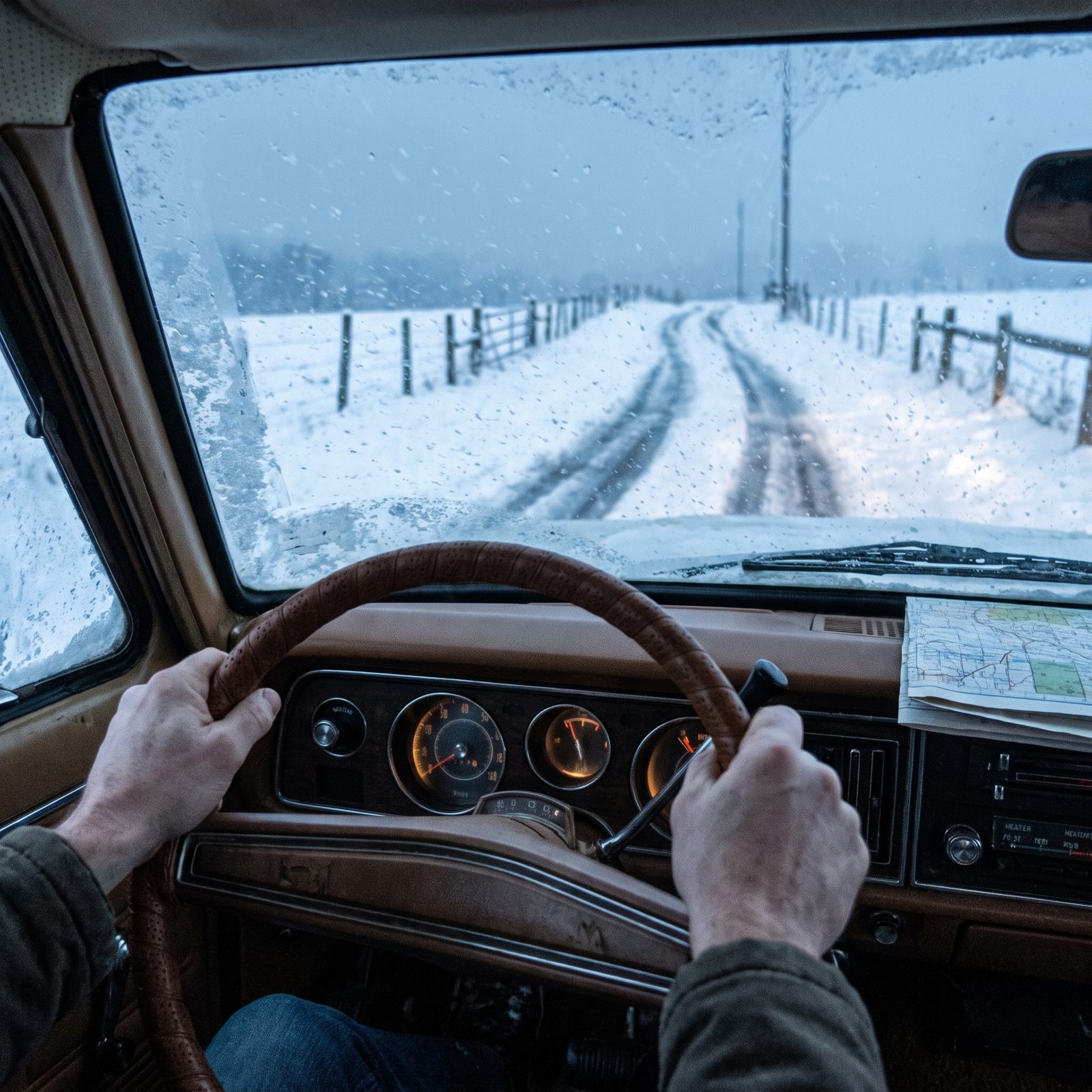
Deep ruts grabbed the front wheels and wouldn’t let go. The car wanted to follow the frozen tracks somebody else had cut, and if you wanted to go a different way, you fought for it.
Cars without power steering made that fight a full-body affair. Big thin wheel, slow steering box, no hydraulic help — you hauled the wheel around with your shoulders while the tires bucked and skated in the trenches. You’d climb out at the end of a bad drive with your forearms aching. That was normal. That was Tuesday.
42. Finding That Frozen Slush Had Locked Up the Drum Brakes
Would you like to save this?
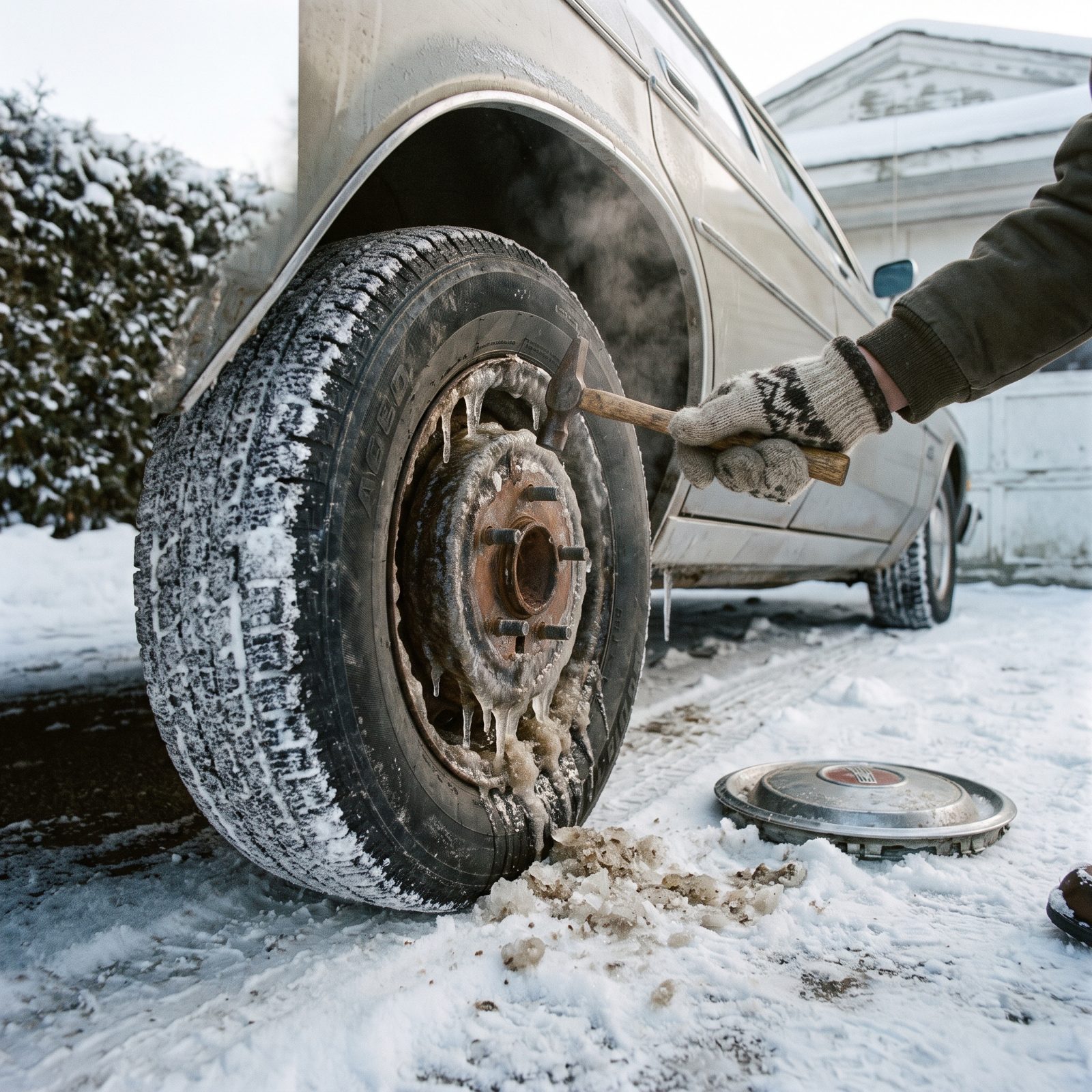
You backed out on a bitter morning and the car just wouldn’t roll right. One wheel dragging, the whole thing lurching, and you knew before you got out to look.
Slush had packed into the drum brakes overnight and frozen solid. Either the shoes were iced to the drum or the parking brake cable had locked in place, and no amount of gas was breaking it loose without doing damage.
The cures were pure improvisation. A kettle of hot water poured over the drum. A few careful taps with a hammer. Rocking the car gently between reverse and drive until the ice cracked and let go with a satisfying thunk. Then you sat a minute, let the exhaust warm things through, and promised yourself you’d park in the garage tonight. You wouldn’t.
41. Setting the Manual Choke and Flooding the Carburetor Anyway
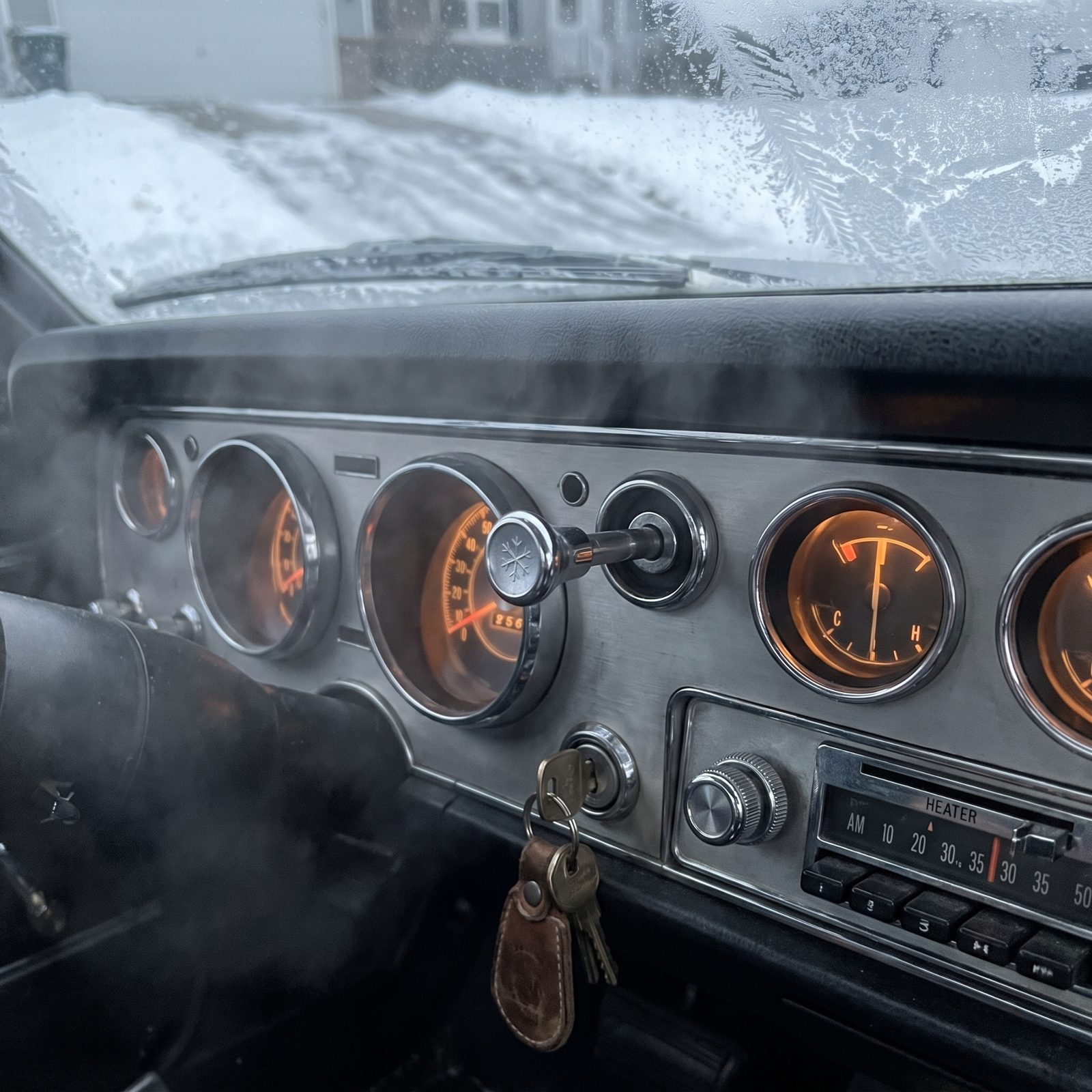
Cold morning, cold engine, and a little chrome knob that held the whole ritual in its hands. You pulled the choke, pumped the gas twice, and turned the key with the reverence of a man asking a favor.
Sometimes it caught on the first crank and settled into a fast, ragged idle you slowly eased down as the engine warmed. And sometimes you got greedy, pumped it three or four times, cranked too long, and drowned the whole thing in raw fuel. Then you’d sit there smelling gasoline, engine dead, waiting it out.
The old fix was to floor the pedal, hold it flat, and crank to clear the flooded carburetor. Fuel injection turned all of this into a memory. You just turn the key now and it goes. Part of us misses the negotiation.
40. Running an Extension Cord From the House to the Engine Block Heater
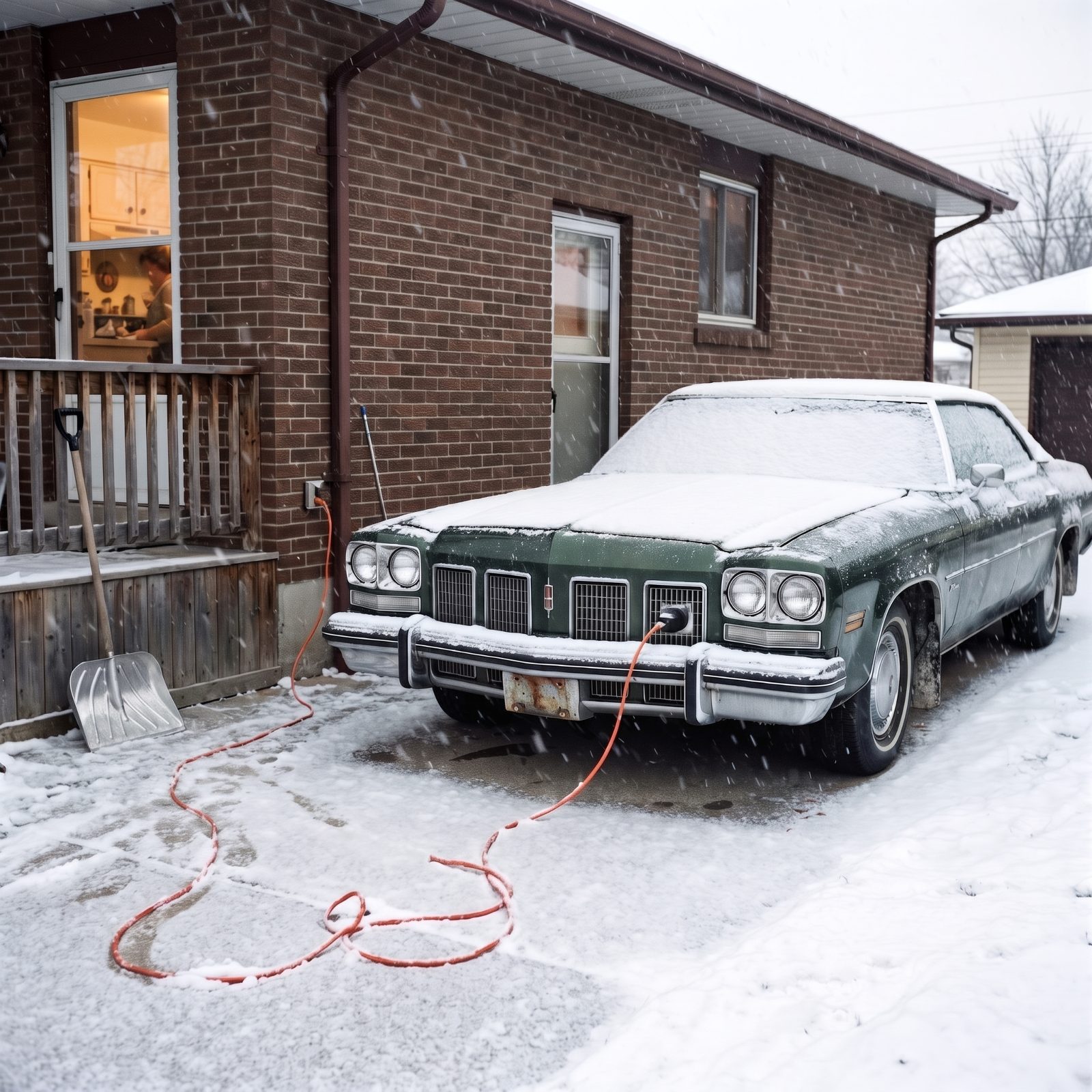
You ran an orange cord from the outlet on the side of the house, across the driveway, and plugged it straight into the grille, and if you didn’t, the block was a solid lump of iron by six the next morning. Nobody called it a block heater at the dinner table. It was just “plug the car in,” barked at whichever kid was closest to the door. The cord got snowed over, iced to the concrete, and yanked loose by the dog at least twice a winter. But that little heating element crouched down in the water jacket was the difference between an engine that turned over and one that just groaned at you like it was insulted. Modern folks with their remote-start apps have no idea. We fed our cars electricity through the night like they were livestock.
39. Warming a Metal Key With a Lighter to Melt a Frozen Door Lock
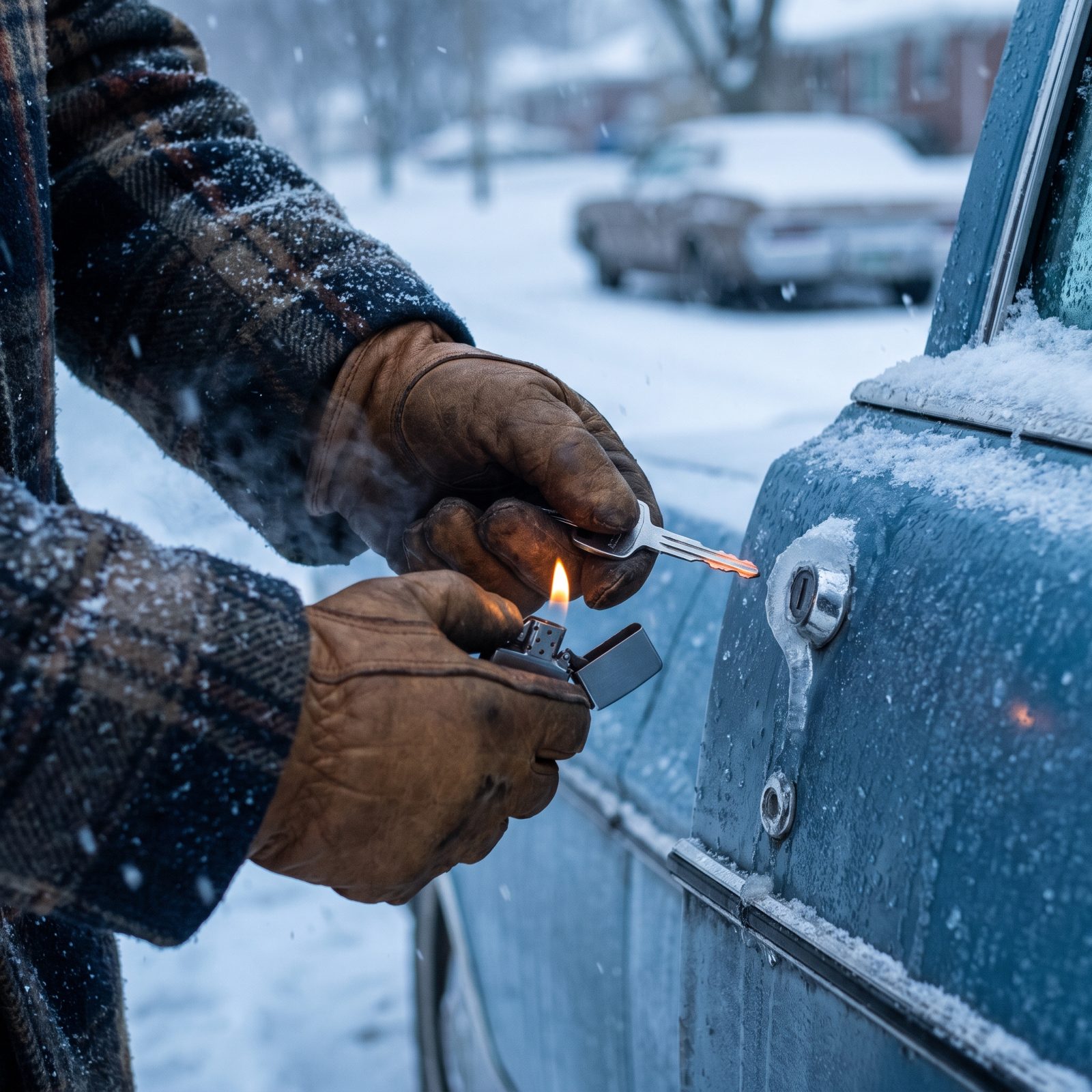
Lock frozen solid? You flicked the lighter, held the key over the flame until you could barely stand to hold it, and shoved it into the cylinder before it cooled off. Half the time you burned your fingers. The other half you dropped the key in the snow and had to start over, cussing. Everybody smoked back then, so a lighter was always in a coat pocket, which meant this trick worked whether you were at home or standing in a parking lot in the dark. It smelled faintly of scorched metal and cheap butane, and the key would leave a little sooty mark on your glove. Crude? Sure. It also worked every single time, which is more than we can say for those aerosol de-icer cans that were always empty when you needed them.
38. Yanking on Doors Frozen Shut Around Their Rubber Weatherstripping
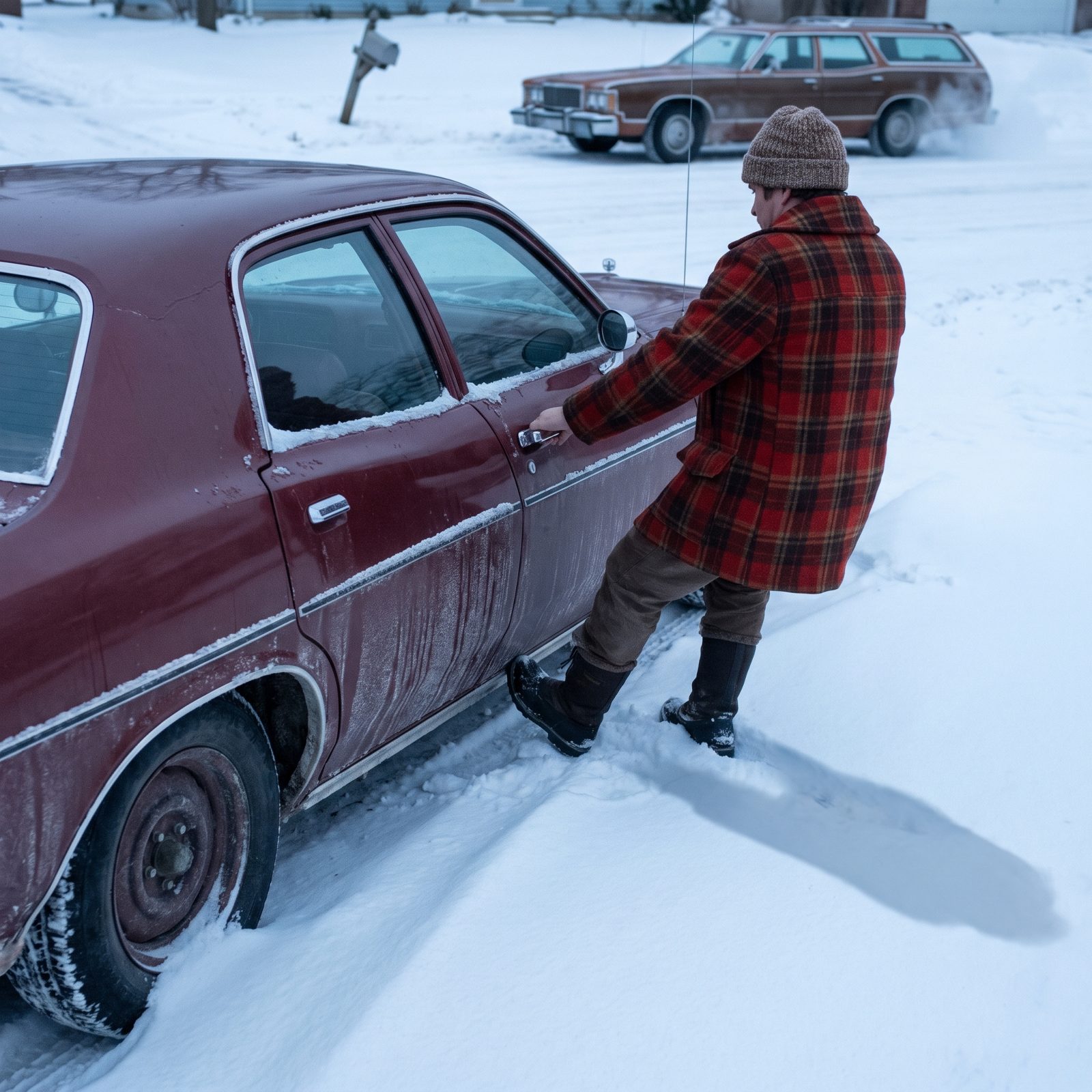
The rubber seal would freeze to the frame overnight and glue the whole door shut. You’d brace a boot against the rocker panel, grab that chrome handle with both hands, and haul back with everything you had, half expecting the handle to snap clean off in your fist. And plenty did. When the door finally let go it came with a sound like ripping cardboard, that ice bond tearing loose all at once, and you’d stagger back a step. Do it wrong on a really cold morning and you’d pull a chunk of weatherstripping right out with the ice. Then you had a door that leaked wind and howled at fifty. The smart move was to lean into the seam and warm it, but nobody was patient at seven in the morning with a job to get to.
37. Driving the First Cold Miles Before Any Warm Air Reached the Vents
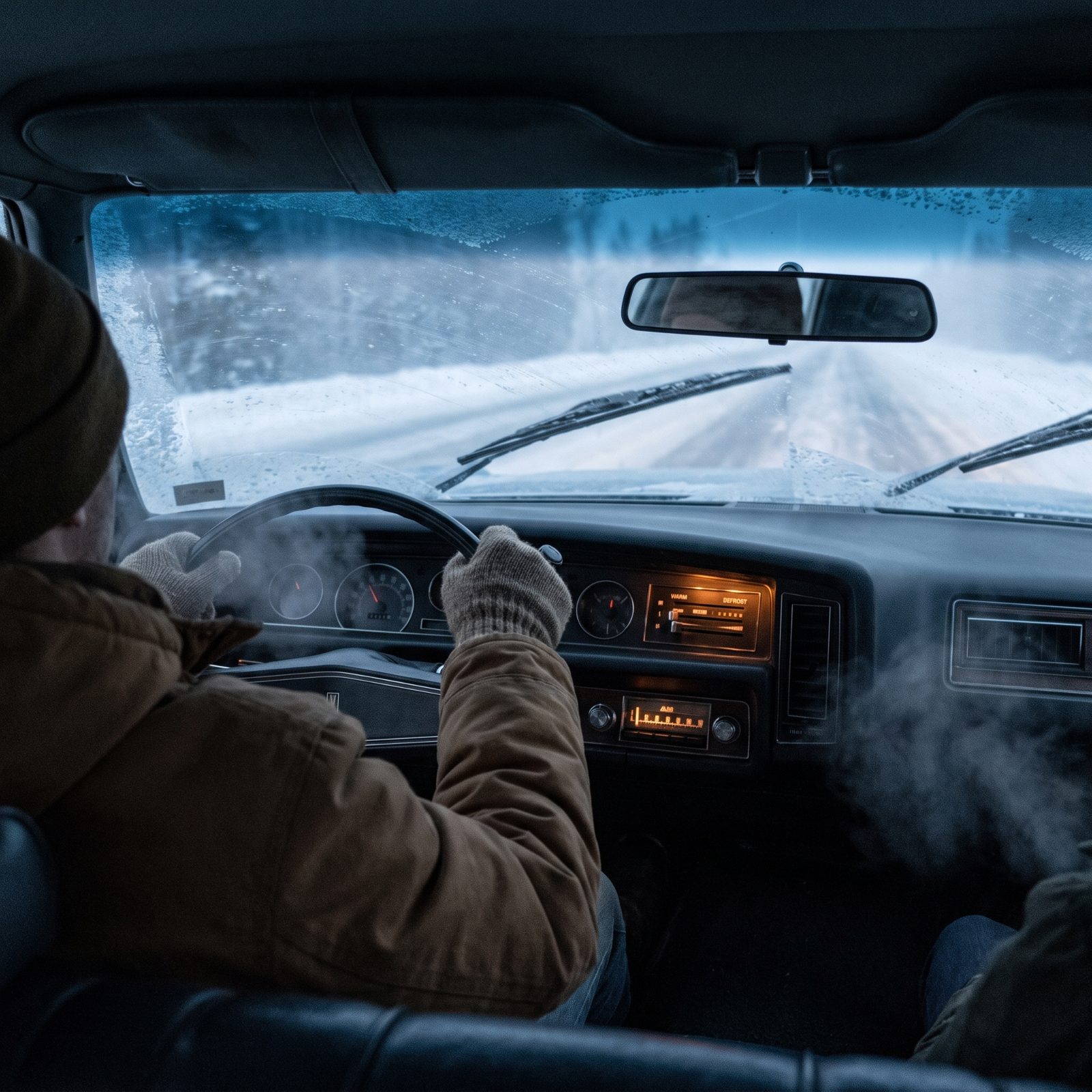
Here’s a thing kids today will never understand. You could drive for a solid ten, fifteen minutes with the heater slider pinned all the way over and get nothing but cold air blowing on your ankles. The engine had to warm the coolant, the coolant had to warm the core, and only then did any of that heat find its way to you. So you drove hunched inside your parka, breath fogging in front of your face, gloves on the wheel, watching your own exhale drift across the windshield. The vinyl seat was hard as a church pew and cold enough to feel through denim. You just waited it out, and somewhere around the edge of town the first breath of real warmth would finally sigh out of the vents, and it felt like a small mercy.
36. Scraping a Bloom of Frost From the Inside of the Windshield
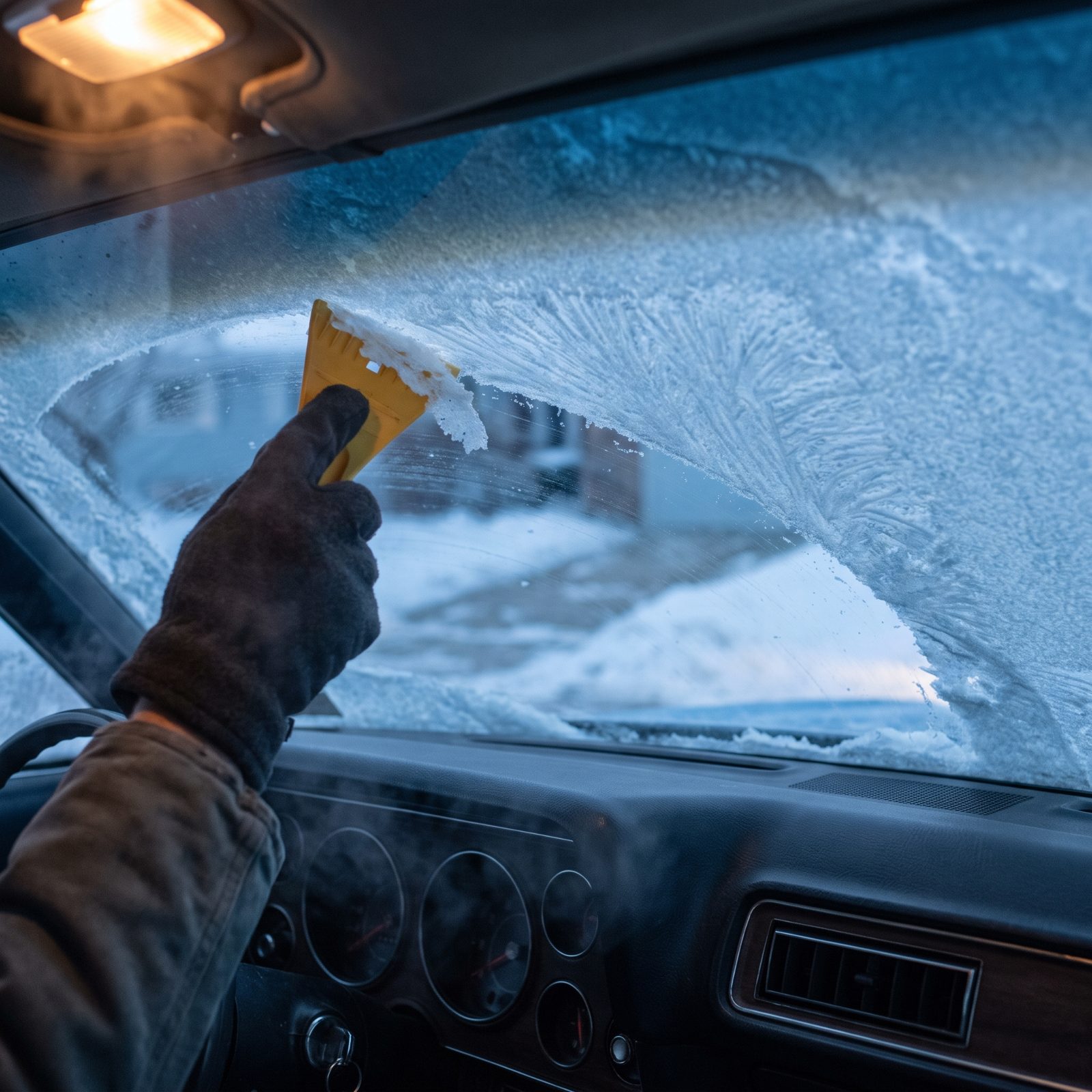
Frost on the outside was expected. Frost on the inside was the special insult. On a truly bitter night the moisture in the cabin would freeze right onto the inner glass in these delicate fern patterns, gorgeous if you weren’t the one trying to see through them. Out came the scraper, and now you were carving ice off the inside of your own car, shavings dropping down onto the dash and into your lap. It never came off clean either. You’d get a smeared, cloudy arc you could sort of see through, and you drove the first few miles peering out of that until the defroster caught up. Pretty in the abstract. Miserable in practice.
35. Swiping Condensation From the Glass With a Rag While Rolling
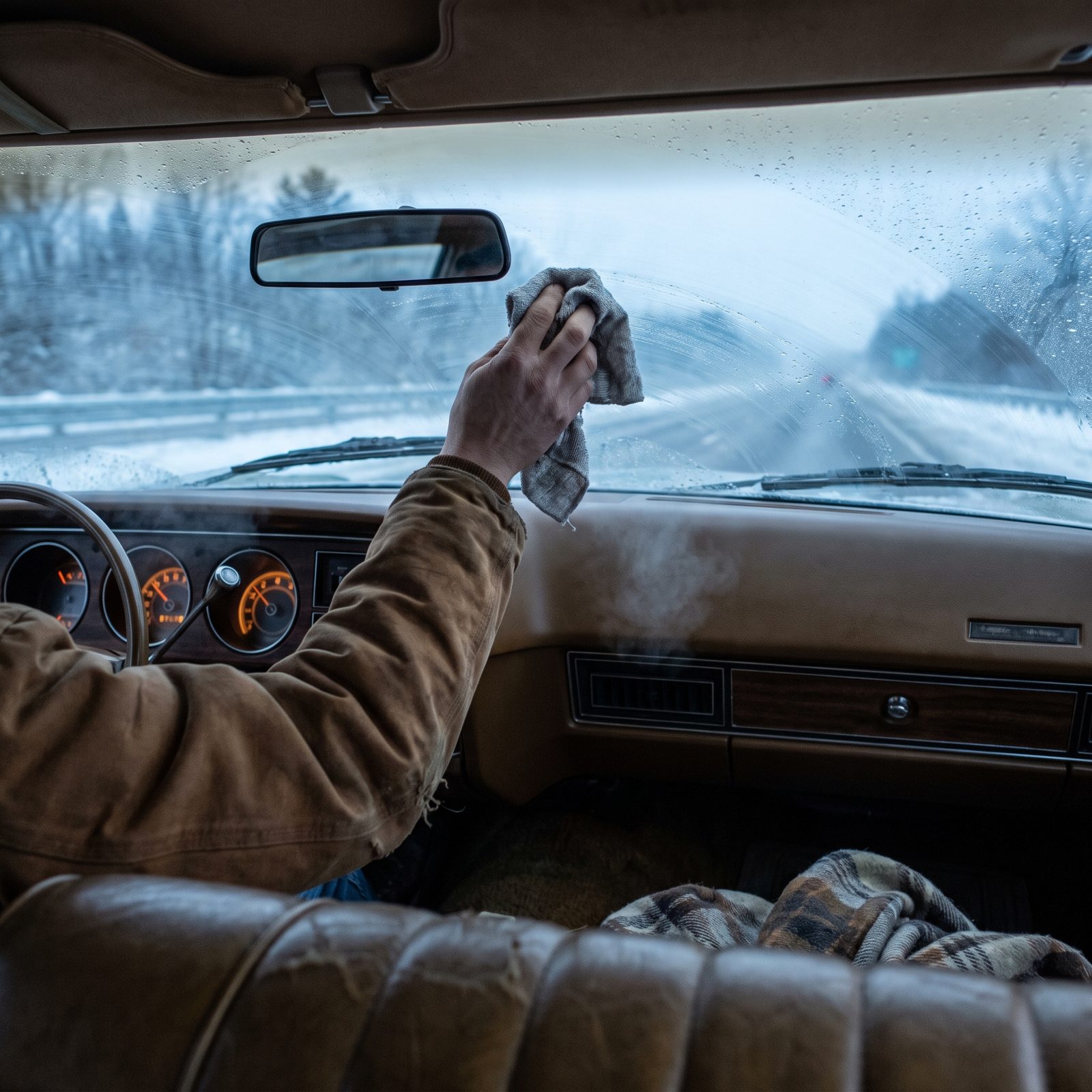
Every car had a rag stuffed somewhere for exactly this. Once the frost melted, it turned into a fog that crept back across the glass faster than you could clear it, and the defroster in an old wagon was more of a suggestion than a system. So you drove one hand on the wheel, the other reaching up to swipe an arc through the mist so you could see the road. The rag left streaks. The streaks caught the oncoming headlights and smeared them into starbursts. You’d wipe, see for maybe a minute, then wipe again. A whole winter commute could pass this way, one damp gray rag doing the work the factory should have handled. We just accepted it as part of the deal.
34. Finding the Windshield-Washer Fluid Frozen Solid
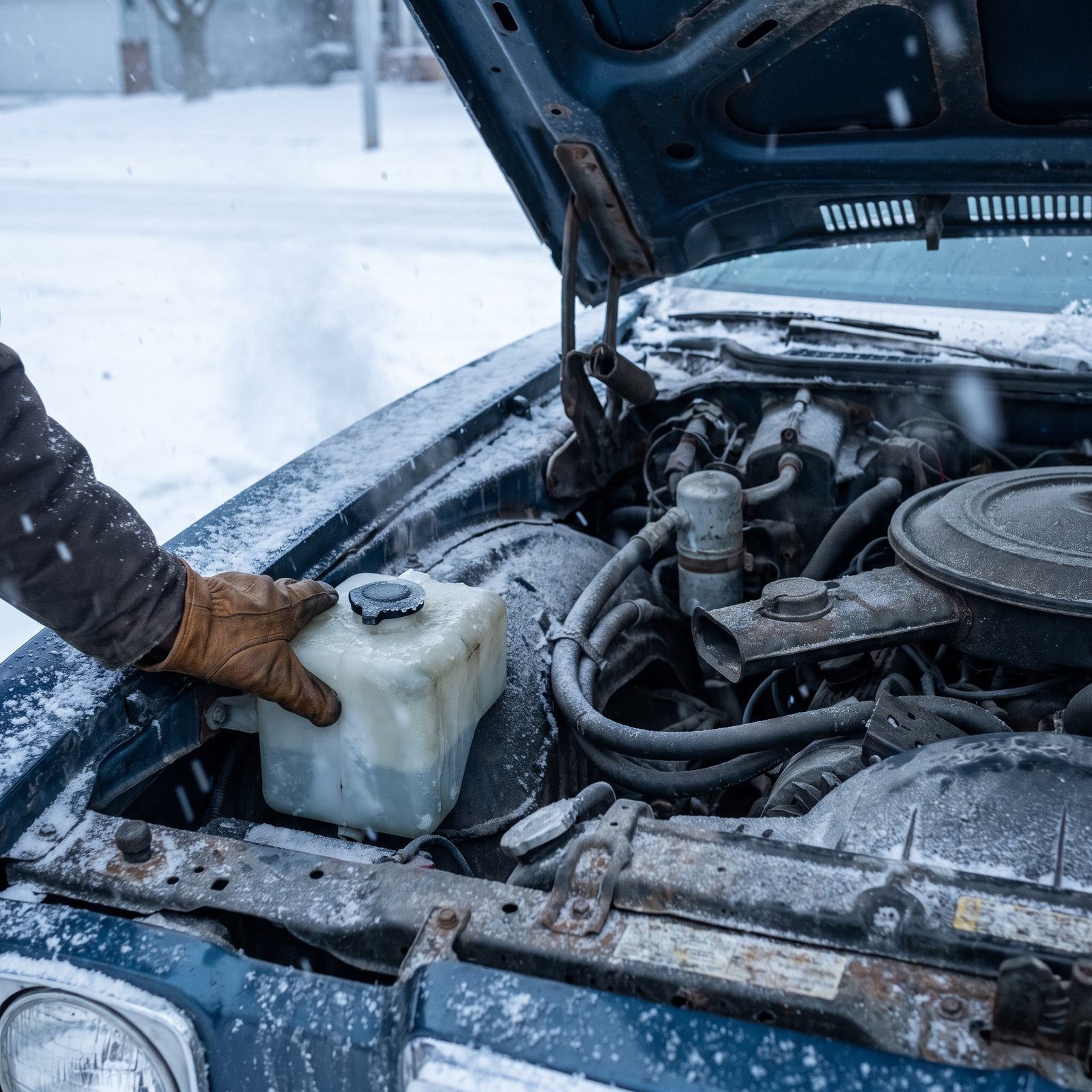
You’d pull the washer lever, hear the little motor whine, and get absolutely nothing. Pop the hood and there it was: the reservoir bag frozen into a cloudy block of slush, the cap crusted with ice. This happened when somebody topped it off with plain water in October to save a few pennies, or when the winter blend just wasn’t rated for a night that cold. And a windshield you can’t wash in a snowstorm is a windshield caked with a gray salty film that no wiper on earth will clear. So you’d drive squinting through that grime, waiting for a gas station where you could beg a squeegee bucket. Some folks kept a jug of the good stuff in the trunk. Most of us just learned our lesson every February and forgot it again by the next.
33. Pulling Over to Knock the Packed Ice Off the Wiper Blades
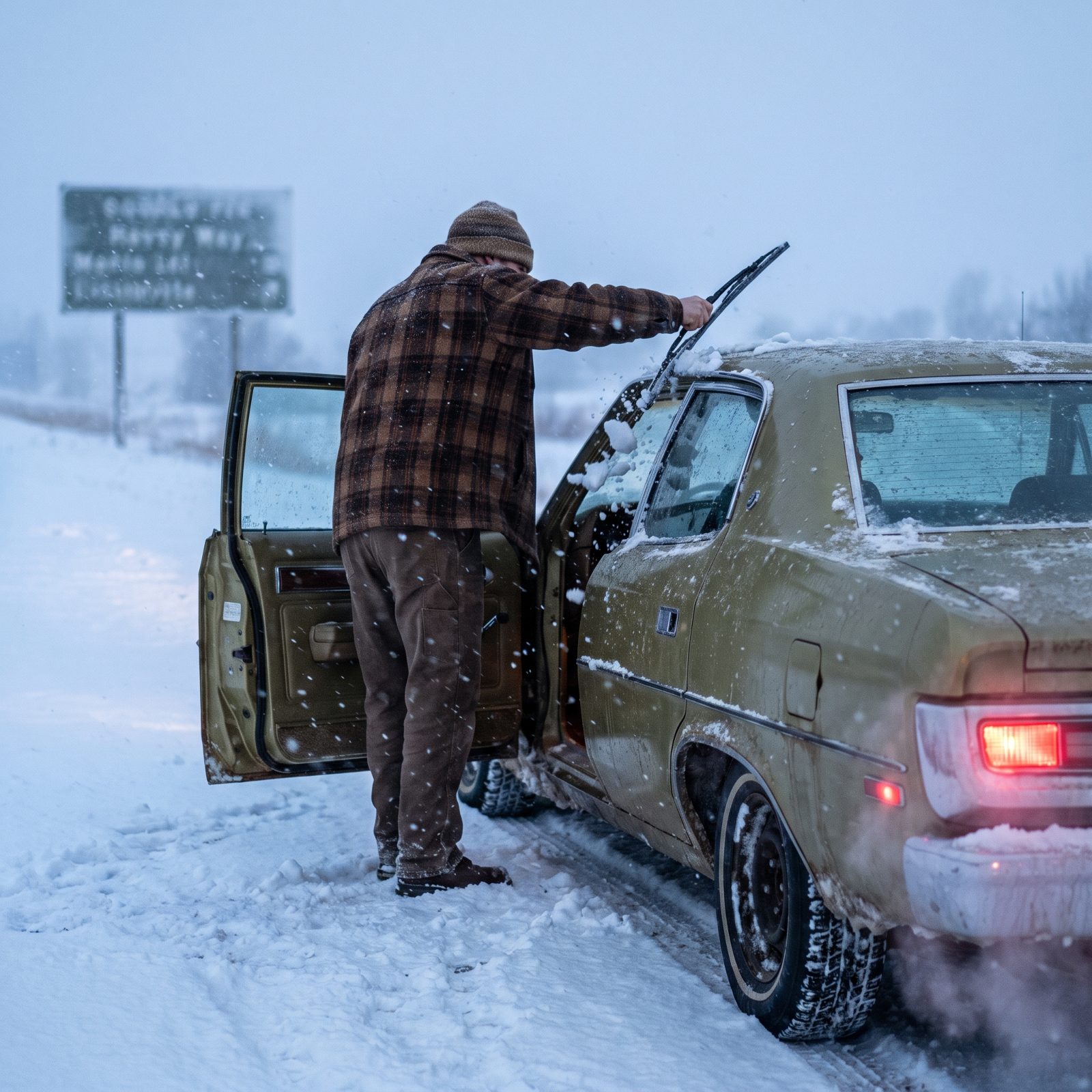
Wet snow packs into the wiper blade until the whole thing is a fat white club that skates over the glass without touching it, leaving smears in both directions. Nothing to do but pull onto the shoulder, get out into the storm, lift the arm, and whack the blade against the windshield frame until the ice cracks off. You’d do this three, four times on a long drive, snow piling on your shoulders each time you stood out there. Bang the blade, knock the slab loose, jump back in shivering, drive another ten miles, repeat. Some drivers learned to flip the wipers up off the glass when they parked so they wouldn’t freeze flat. Never helped much once you were actually rolling through the mess.
32. Feeling Your Way Down the Road Behind Dim Sealed-Beam Headlights
Would you like to save this?
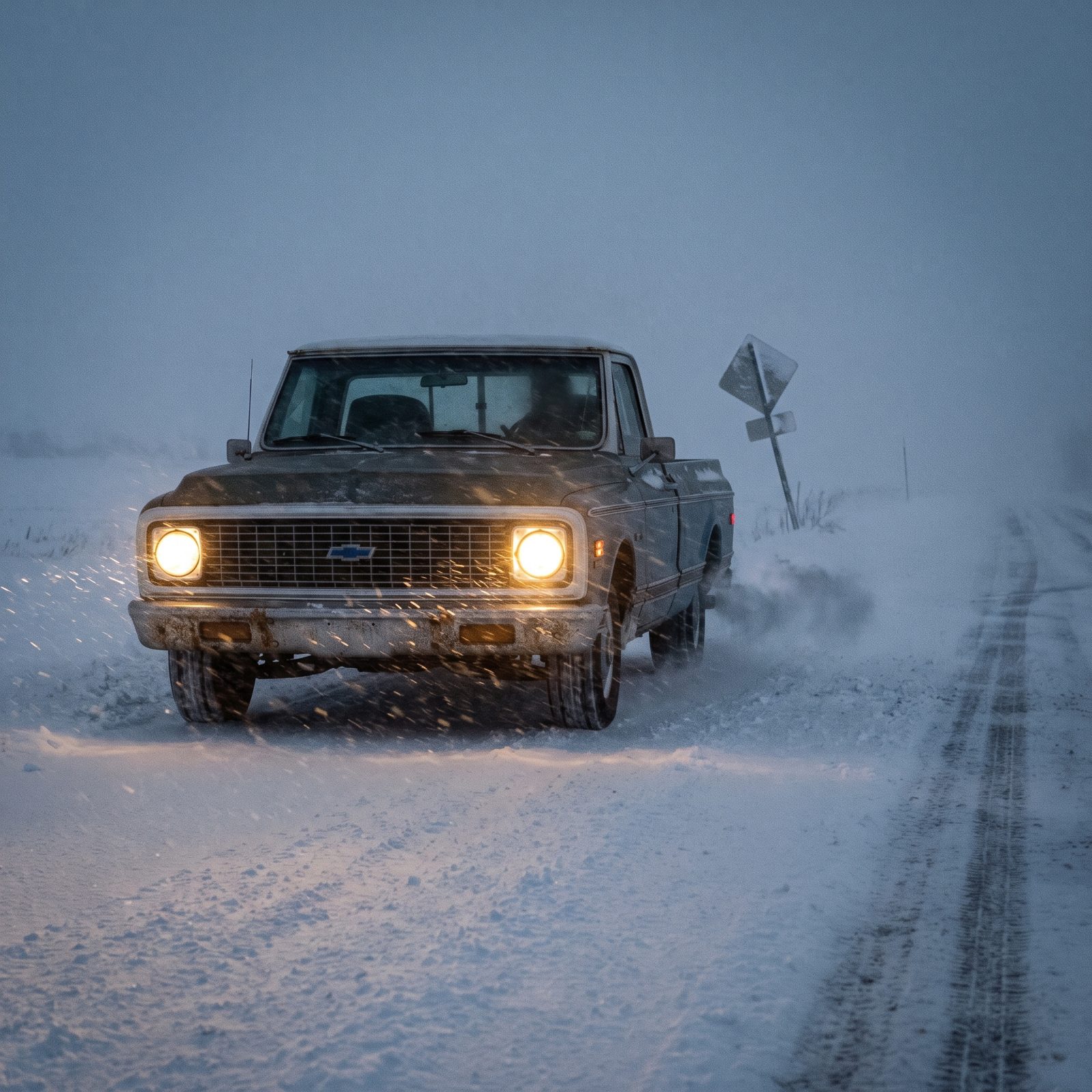
Those old round sealed-beams threw a warm yellow light that looked cozy sitting still and turned near-useless the second snow started coming down. The beams would catch every falling flake and bounce it straight back at you, so you drove into a kind of glowing wall, following the ghost of the tire tracks ahead more than anything you could actually see. Fifteen, twenty miles an hour on a road you knew by heart, leaning forward over the wheel like that would help. High beams made it worse, just lit up the snow closer to your face. So you crept along in the low glow, trusting the road to still be where you left it. People who learned to drive under LEDs bright enough to read a newspaper by simply cannot picture how little we saw out there.
31. Wiping the Snow Off Your Own Headlights at Every Single Stop
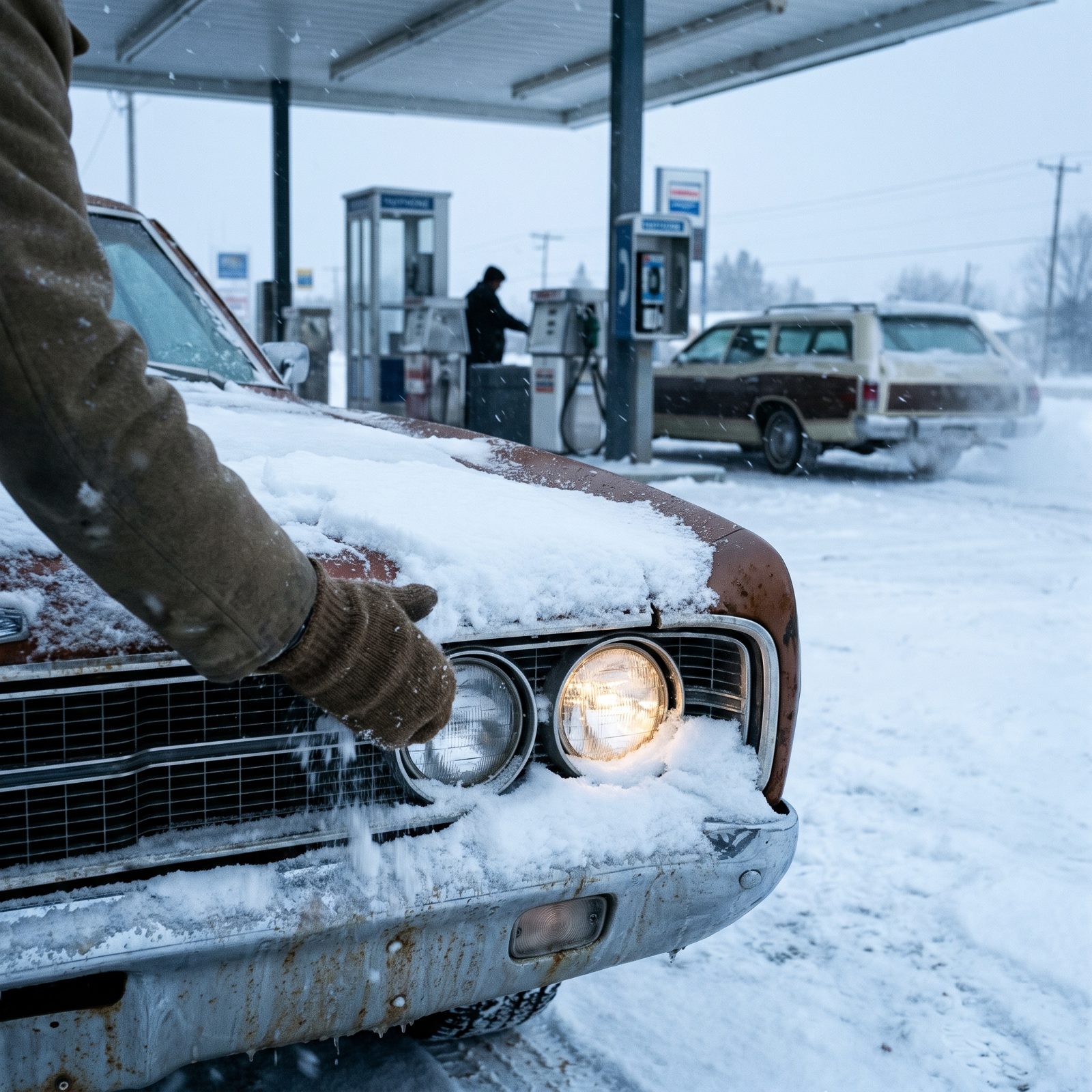
On a bad night, wet snow would build a solid cap right over each headlight until your dim beams got dimmer, then vanished entirely. And there was no washer nozzle aimed at the lights, no fancy wiper hidden in the bumper. Just your gloved hand. Every gas stop, every red light long enough to hop out, you’d swipe the packed snow off both lenses and watch that weak glow struggle back to life. The heat of the bulb never came close to melting it on its own. You could feel the buildup happening on a long stretch too, the road going darker and darker ahead until you pulled over to clear them again. It’s the little chores of a bygone winter that people forget, and this was maybe the most tedious of the lot.
30. Keying Up the CB to Ask Truckers What Was Waiting Up Ahead
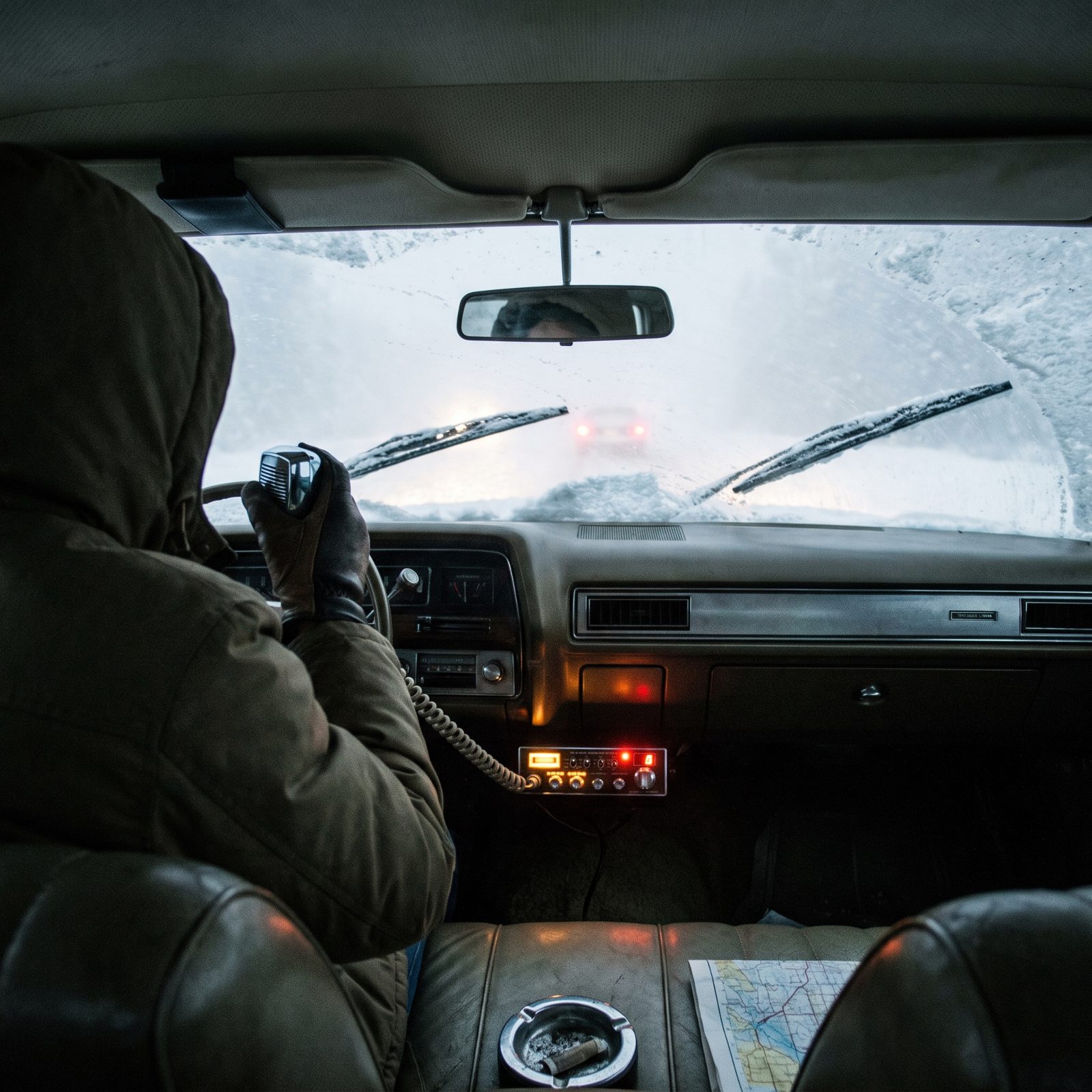
The CB radio was the only real-time weather report you had, and it came straight from the guys who’d already driven through whatever you were about to hit. You’d key up the mic and ask the rig ahead what the road looked like past the next exit. Most truckers answered. They’d tell you where the drifts were piling, which overpass had gone to glass, whether the plows had even bothered yet. No forecast, no map, no dispatcher — just a stranger’s voice crackling out of a metal box under the dash, telling you the truth because he’d seen it ten minutes ago. Try explaining that to someone who’s grown up asking their phone.
29. Sitting in the Cold Waiting for the AM Bulletin That Would Tell You If the Road Was Shut
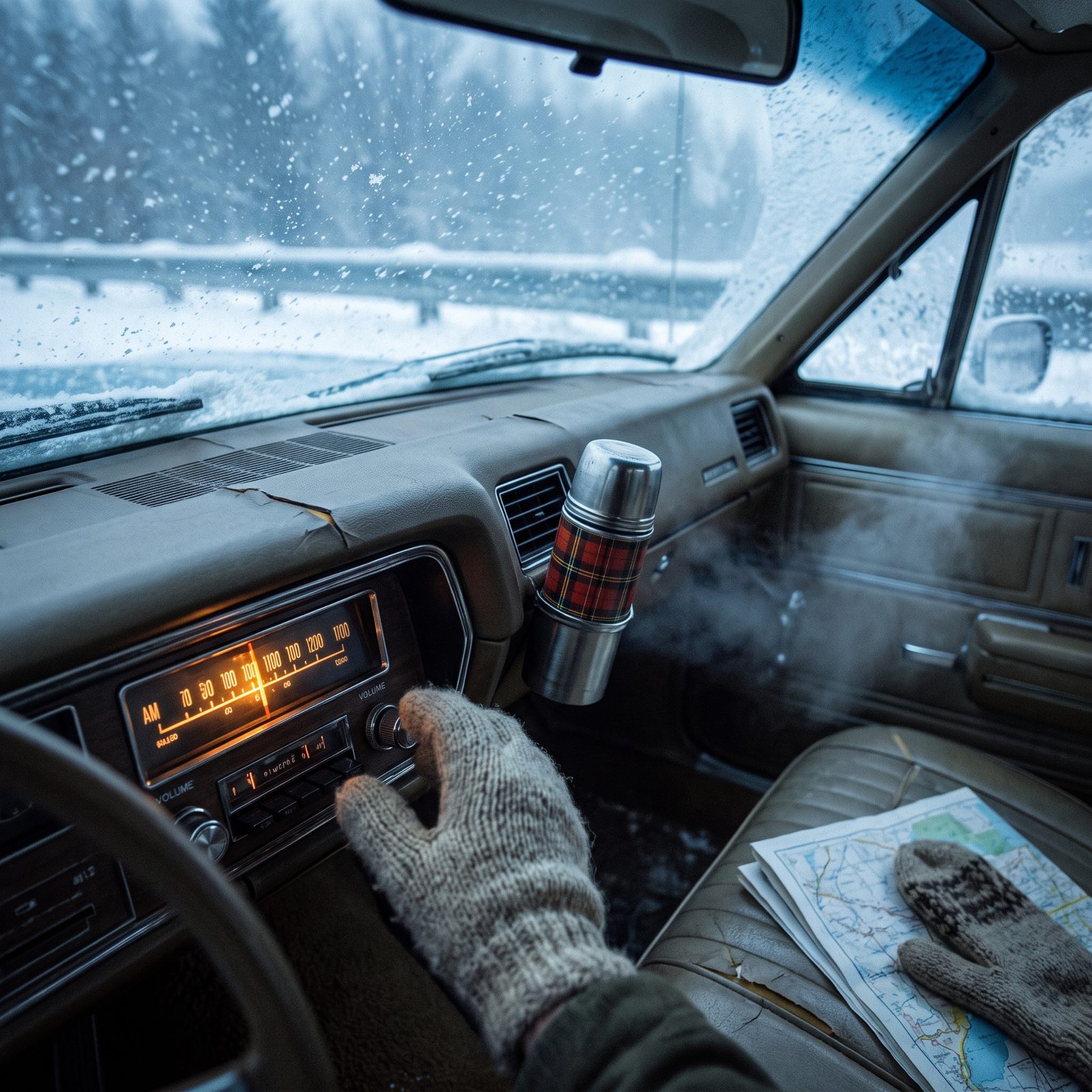
You’d sit there with the engine idling for heat, thermos gone lukewarm, waiting on the local AM station to cycle back around to the road closures. And you had no idea when that would be. The announcer read them on his own schedule, sandwiched between a farm report and a used-car spot, so you leaned in every time the music stopped, hoping this was the break with your highway in it. Miss it, and you waited another twenty minutes. There was something almost prayerful about it — that little amber needle glowing, the whole cabin quiet except for static, everything riding on whether some voice you’d never meet was about to say the number of your route.
28. Wrestling a Folding Paper Road Map Open While the World Went White
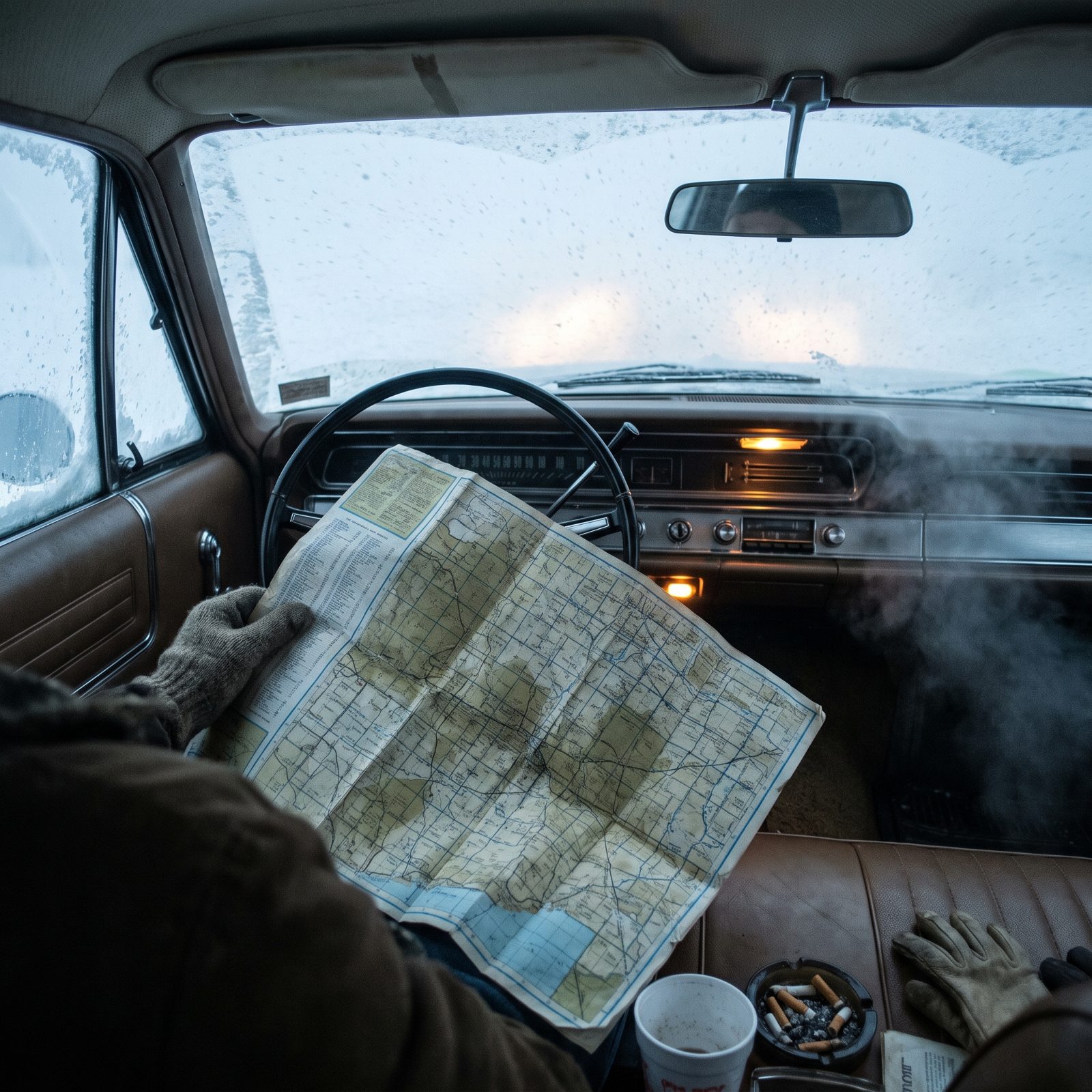
Anybody who lived through it remembers the fight. You’d get one of those state maps open across the wheel, and it never folded back the way it came, the creases going soft and furry from years of the same abuse. Now you’re hunting for a county road you can’t pronounce, tracing lines with a gloved finger while the windshield in front of you shows nothing but white. Trying to figure out a detour off a paper grid when you can’t even see the road you’re on — that’s a special kind of frustration. And half the time the road you wanted to take had a bridge out that the map printed in 1971 knew nothing about.
27. Reading the Road’s Edge Off a Line of Utility Poles
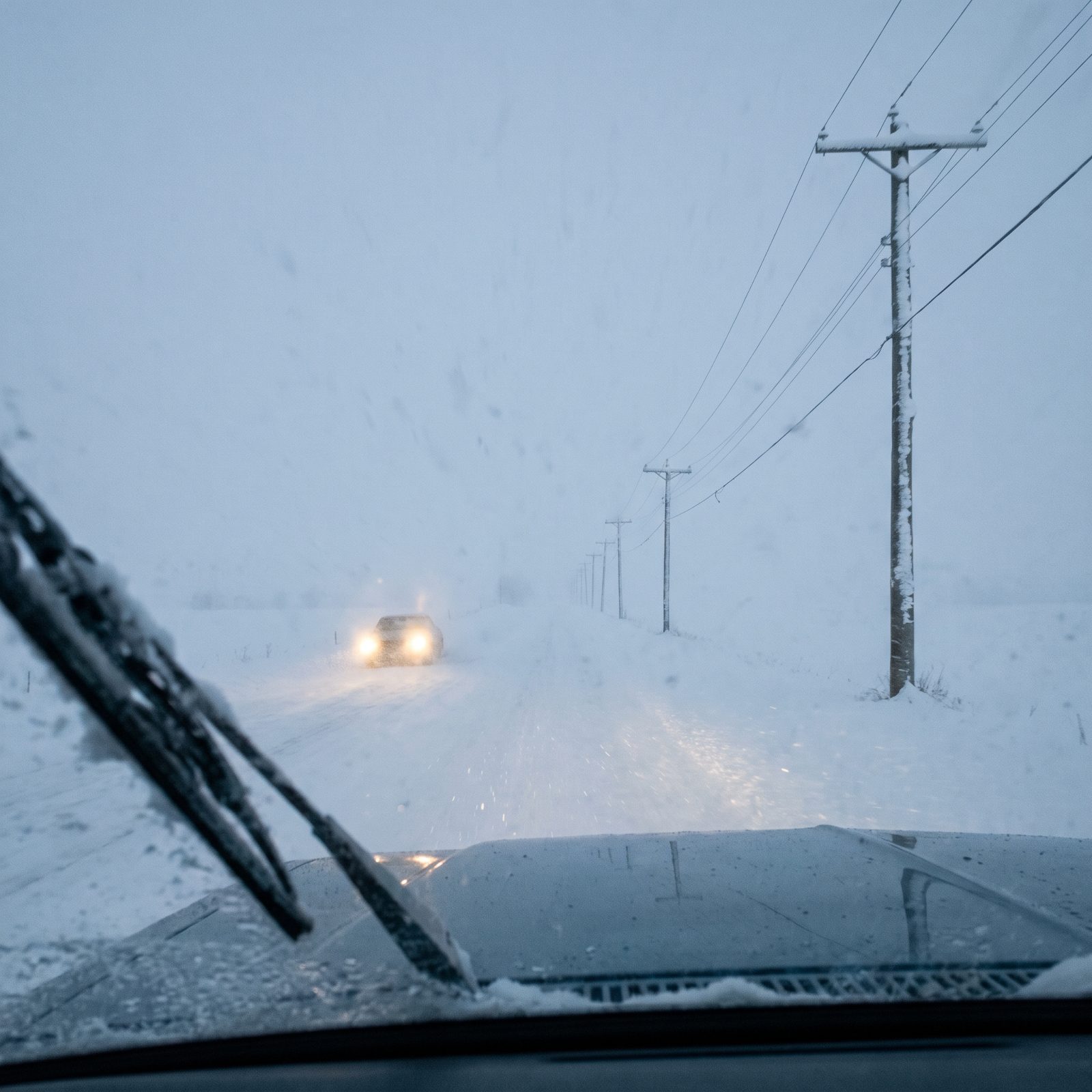
When the snow buried the lane lines and the shoulder both, you steered by the poles. Those wooden utility poles marched along beside the pavement at a steady spacing, and if you kept them a certain distance off your right fender, you were probably still on the road. Probably. It was guesswork dressed up as navigation, and it worked more often than it had any right to. Old-timers passed the trick down like a family recipe. Watch the poles, they’d say, and don’t trust the road to tell you where it is, because it won’t.
26. Locking Onto Another Car’s Taillights Because the Lanes Had Vanished
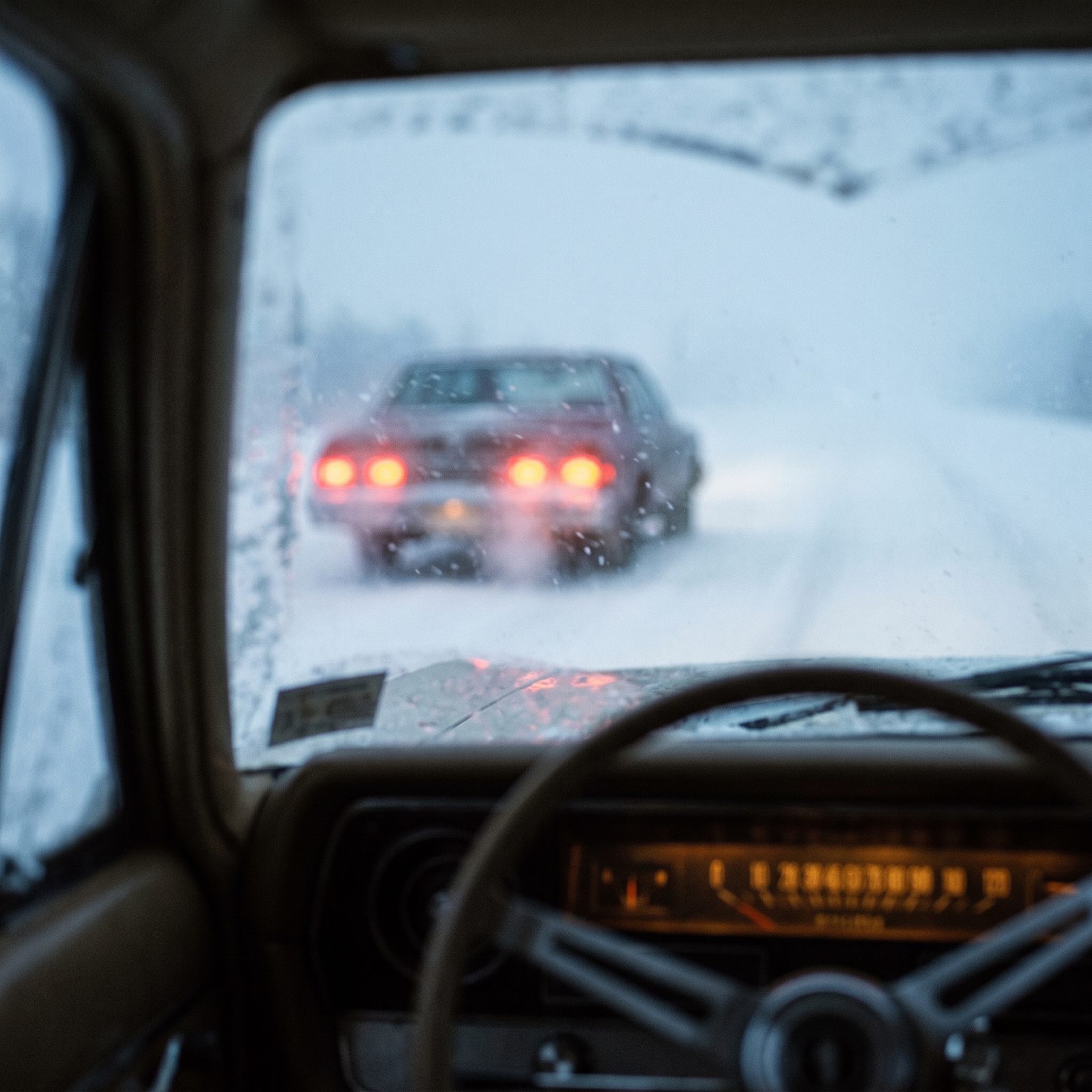
Two red lights floating in the blur ahead of you — that was your whole world for a while. When the storm erased every line and every edge, you found a car in front and you followed it, glued to those taillights like they were the last solid thing left. You had to trust that the driver up there knew where the pavement was. Sometimes they didn’t, and you’d both drift toward the ditch together like a couple of fools tied at the bumper. But mostly it held. A stranger you’d never speak to leading you through the white, and you leading whoever was clinging to your own lights behind. A whole convoy of blind faith, strung together taillight to taillight.
25. Cranking the Window Down to Hear the Plow Before You Saw It
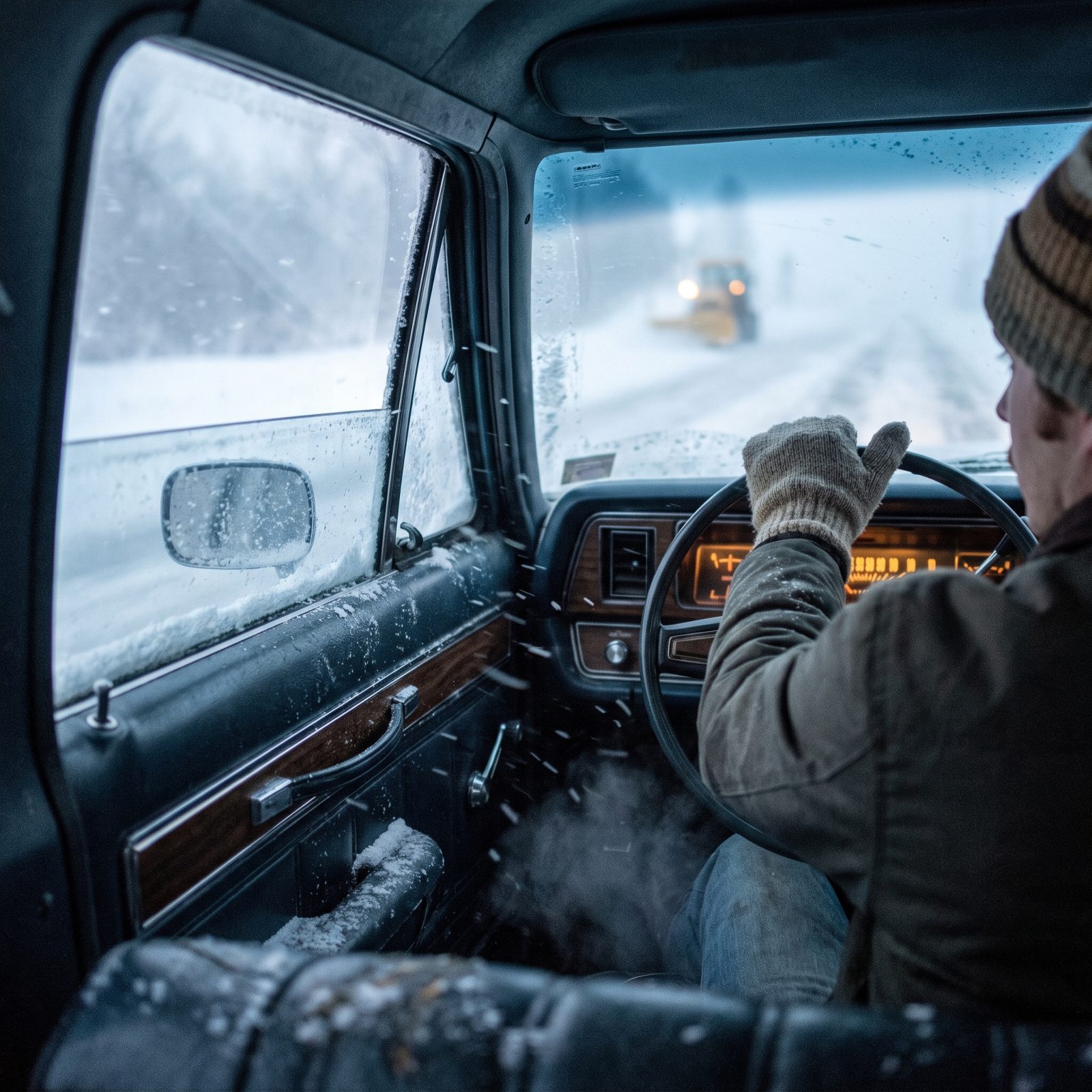
Here’s a trick most people don’t believe until they’ve done it. In a real whiteout you can’t see a snowplow coming, but you can hear one — that low scrape and diesel growl carries a long way through falling snow. So you’d roll the window down a crack, let the cold and a few flakes come pouring in, and just listen. If you caught that grinding rumble, you knew a plow was working somewhere close, which meant cleared pavement was near and you weren’t as alone as it felt. Small comfort, sitting there half-frozen with snow melting on your sleeve. But comfort all the same.
24. Ducking Into the Roadside Diner to Ask Drivers How Bad It Really Was
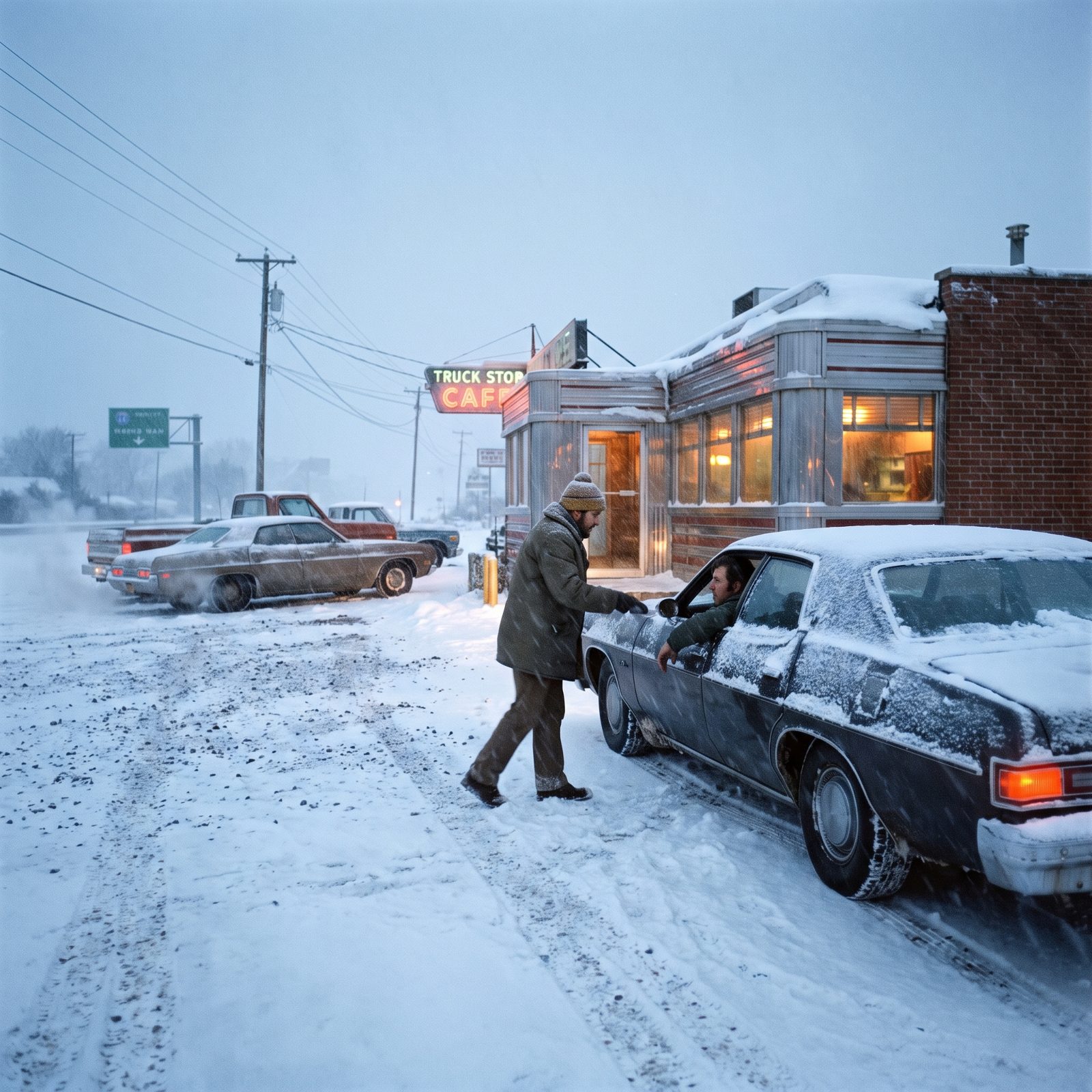
The diner was mission control. When the driving got hopeless you’d pull into the lot, stamp the snow off your boots, and walk into a room full of people who’d just come from every direction you might be headed. That was the whole point of stopping. The trucker at the counter had come up from the south and could tell you the pass was still open. The salesman in the corner booth had turned back at the state line an hour ago. You’d nurse a coffee, trade what you knew for what they knew, and piece together a picture of the storm no radio could give you. Warm booths, foggy windows, a hundred years of collective road wisdom sitting around eating pie. Nobody does that anymore, and something got lost when we stopped.
23. Knocking at a Farmhouse Door to Beg the Use of the Telephone
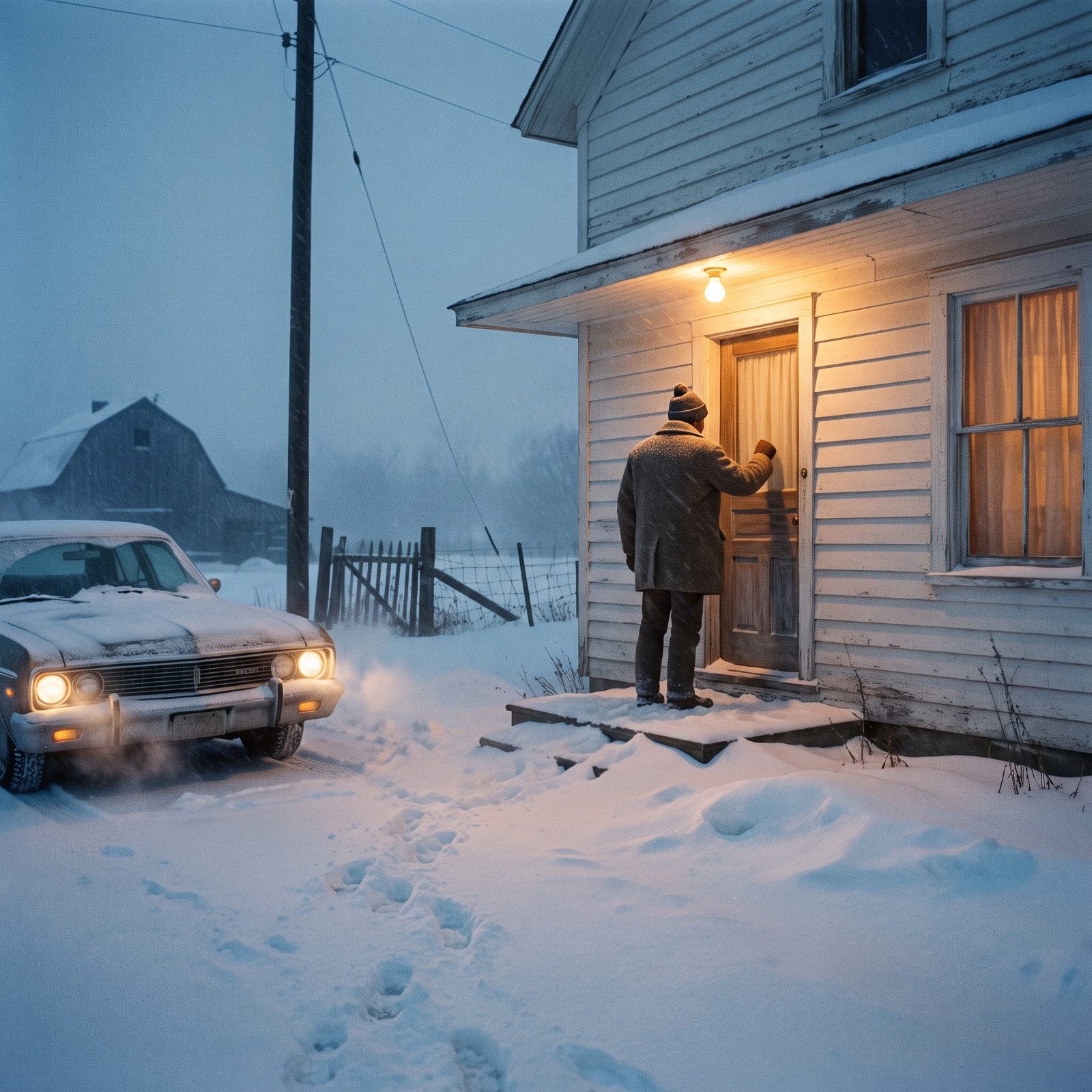
When your car finally quit on you miles from anywhere, the nearest farmhouse was your only telephone. So you’d trudge up a snow-buried lane, climb somebody’s porch steps in the dark, and knock, hoping the folks inside were the neighborly kind. They almost always were. A stranger stamping snow off his boots at the door was just how winter worked out here, and they’d wave you in, point you to the phone on the kitchen wall, and more often than not put a cup of something hot in your hand while you waited. Try picturing that today. Knocking on a stranger’s door at nightfall to use their phone — you’d get a shotgun or a doorbell camera, maybe both. Back then you got a chair by the stove.
22. The Long Wait for a Tow Truck Someone Dispatched by Landline
Would you like to save this?
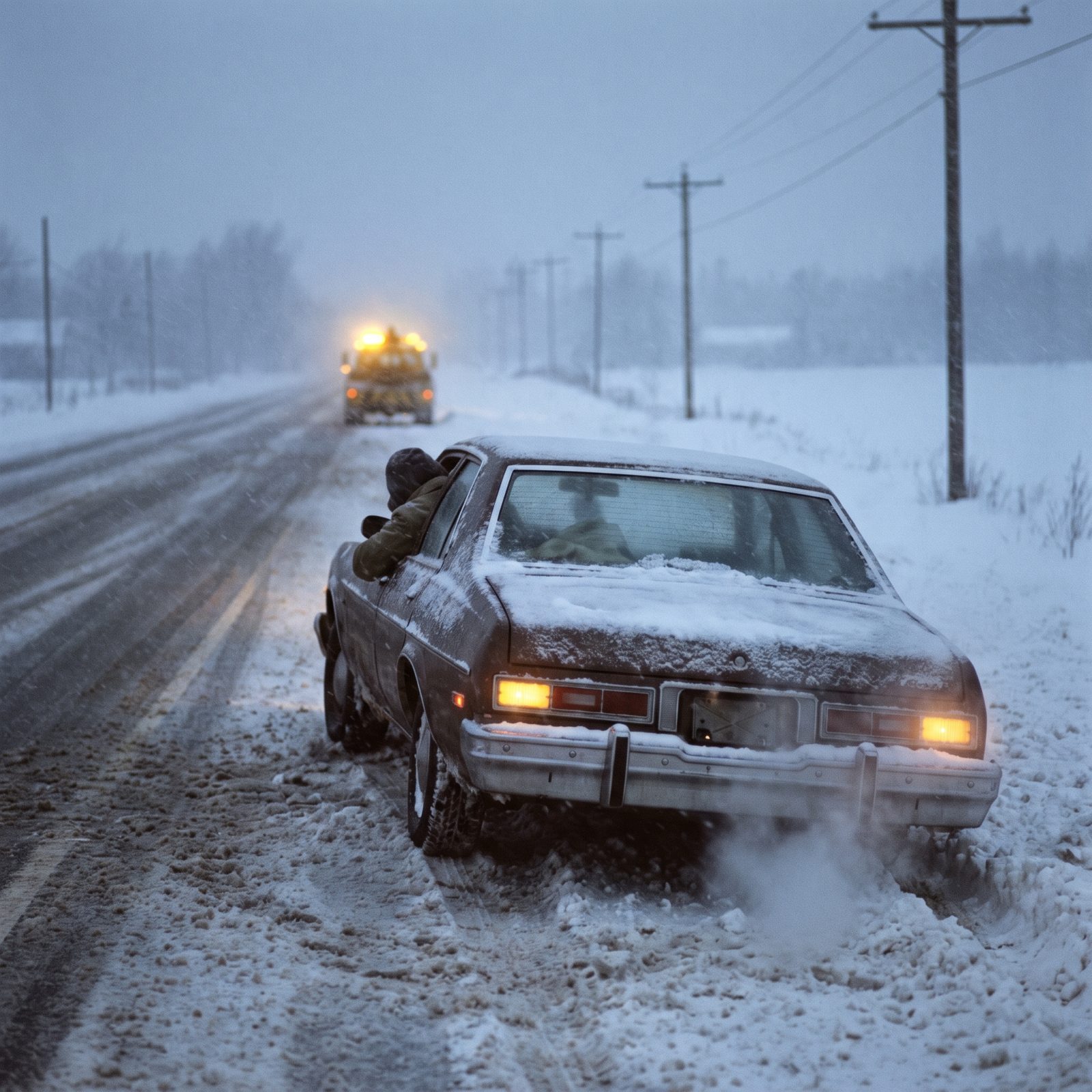
Then came the waiting, and it could stretch for hours. Somebody had called it in over a landline back at the diner or the farmhouse, given the station a rough idea of where you were, and after that all you could do was sit. There was no dot creeping across a screen, no text saying he’s twelve minutes out. Just you, a knit blanket, the engine idling to keep the cold off, and the tailpipe you had to climb out and clear every so often so you didn’t gas yourself. You’d watch the road behind for any hint of amber through the snow. Every distant light lifted your heart and half of them turned out to be somebody else. When that beacon finally did swing into view, slow and yellow and real, you could have hugged the man driving it.
21. Rolling Up on a Closed Road Marked Only by Burning Flares in the Snow
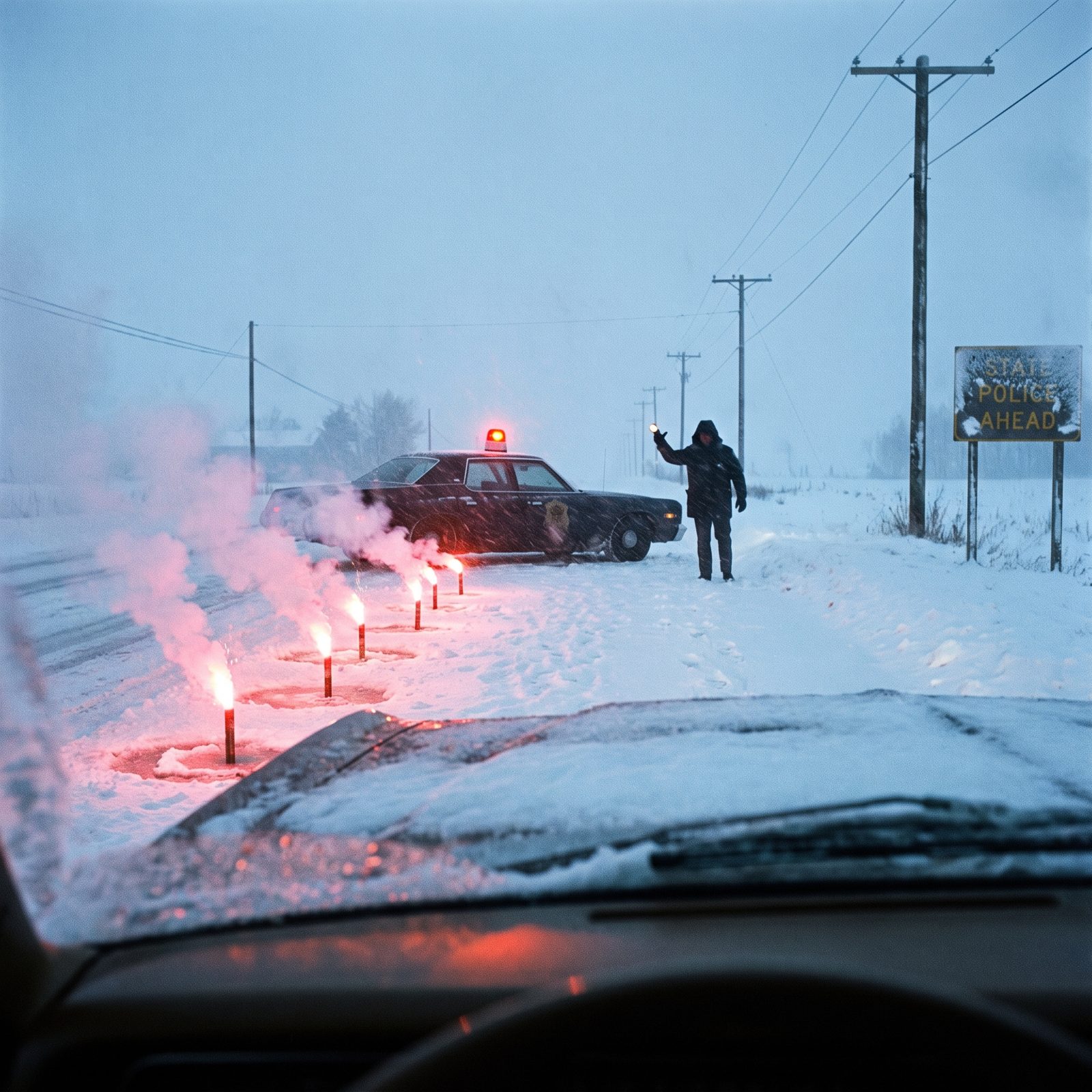
No electronic sign flashing ROAD CLOSED miles back to warn you off. You’d just come around a bend and there they were — a line of red flares burning in the snow, hissing pink smoke, meltwater rings spreading around their bases. A cruiser parked sideways behind them with its beacon smearing through the storm, and a bundled trooper waving you down. That was the whole system, and it was enough. You couldn’t argue with fire. Those flares meant something ahead had gone very wrong, and your night’s plans were finished right here. You’d sit a second in the red glow, let it sink in, then start the slow, careful business of turning around on a road you could barely see, figuring out where in the world you were going to sleep.
20. Tying a Bright Cloth to the Radio Antenna So the Plow Could Find You
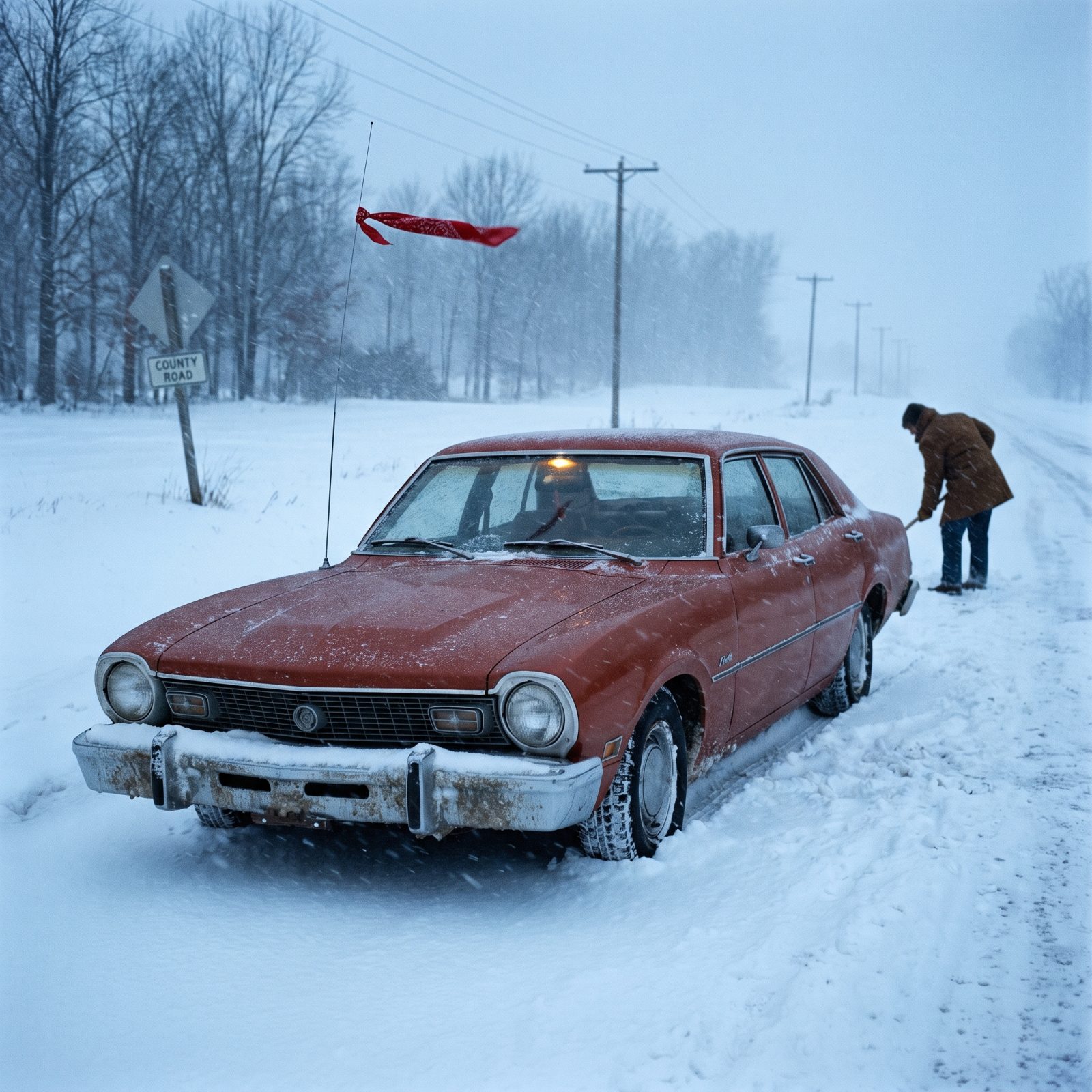
You spot the red flag before you spot the car, and that was exactly the idea. In a whiteout a snowbank looks like any other snowbank, and more than one buried sedan got clipped by a plow that never saw it coming.
So the cloth went up the antenna. A kid’s mitten, a shop rag, somebody’s spare bandana — whatever screamed a color snow could never make, tied high enough to clear the drift line and stand against the gray.
Cost nothing. Worked every time. A plow driver could pick out that flutter of red from a quarter mile off and know a person was down there.
19. The Full-Size Snow Shovel Riding in the Trunk All Winter
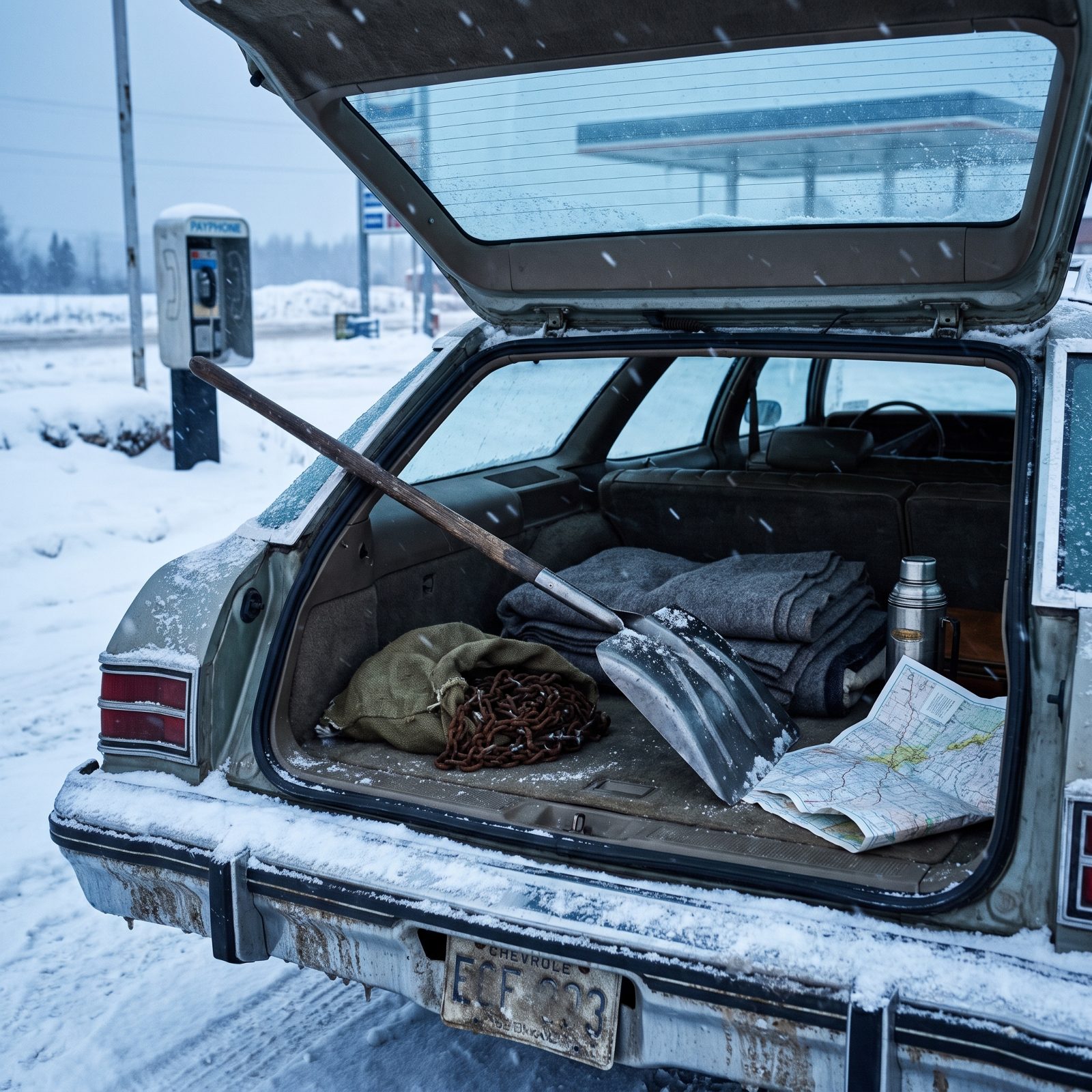
A collapsible plastic scoop would not have survived a real 1970s winter. People carried the genuine article: a steel-bladed, wood-handled snow shovel, the same one that lived by the back door in July.
It ate half the trunk. Nobody cared. When your rear wheels spun down to bare ice in the median, that shovel was the difference between digging out in twenty minutes and waiting three hours for a tow that might never show.
You dug ahead of the drive tires, behind them, and a ramp out either end. Cold, sweaty, and worth it.
18. Kitty Litter, Flattened Cardboard, and Evergreen Branches Under the Spinning Tires
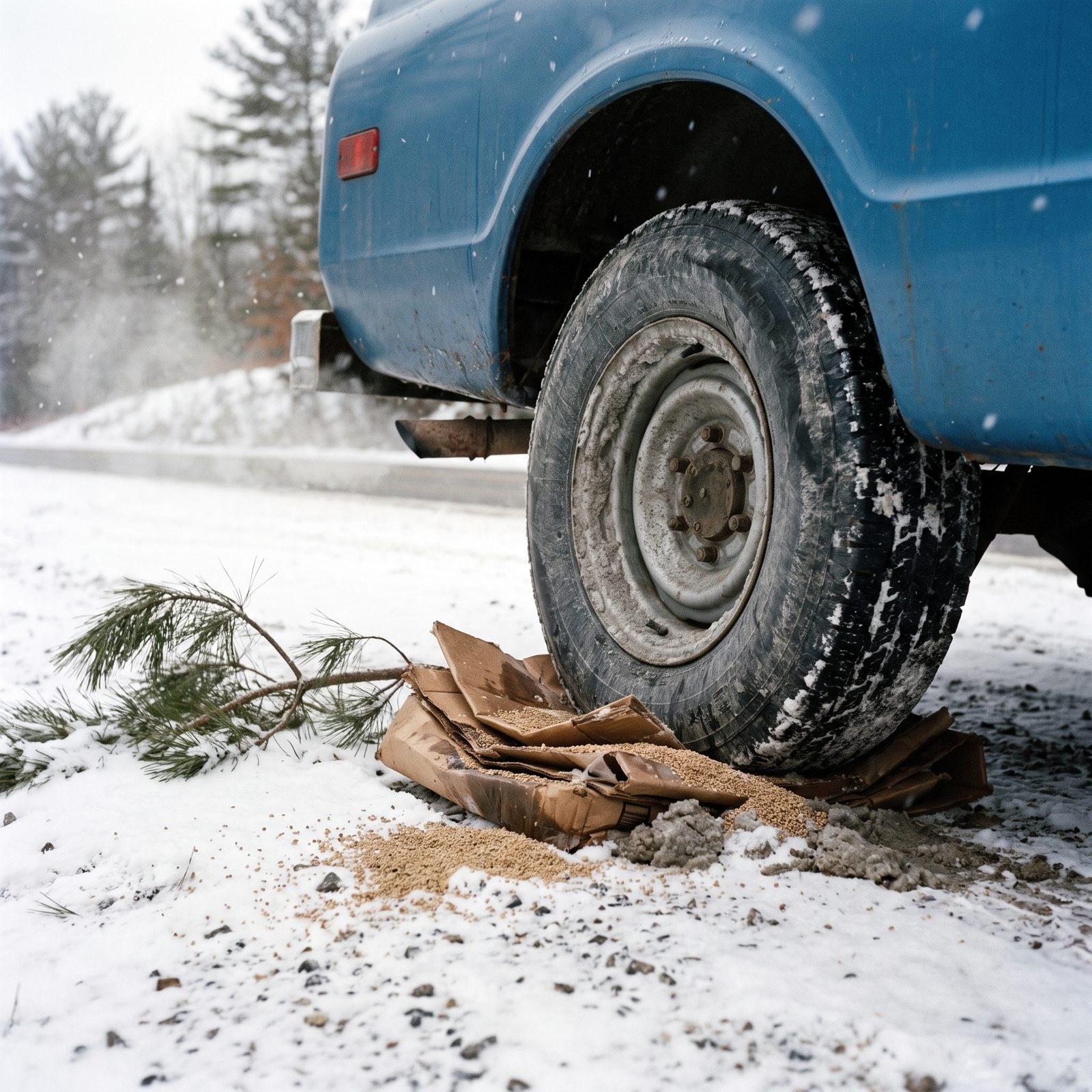
The trick was traction, and traction came from whatever happened to be in the car. A bag of clay kitty litter poured a gritty carpet the rubber could actually bite into. Flattened cardboard salvaged from grocery boxes gave the tire something firmer than glaze ice. Near the woods? You snapped a few evergreen branches and stuffed the needles under the tread.
None of it looked dignified. All of it beat spinning your tires into a polished trench that only got worse the longer you fought it.
17. Rocking the Car Between Drive and Reverse to Climb Out of a Drift
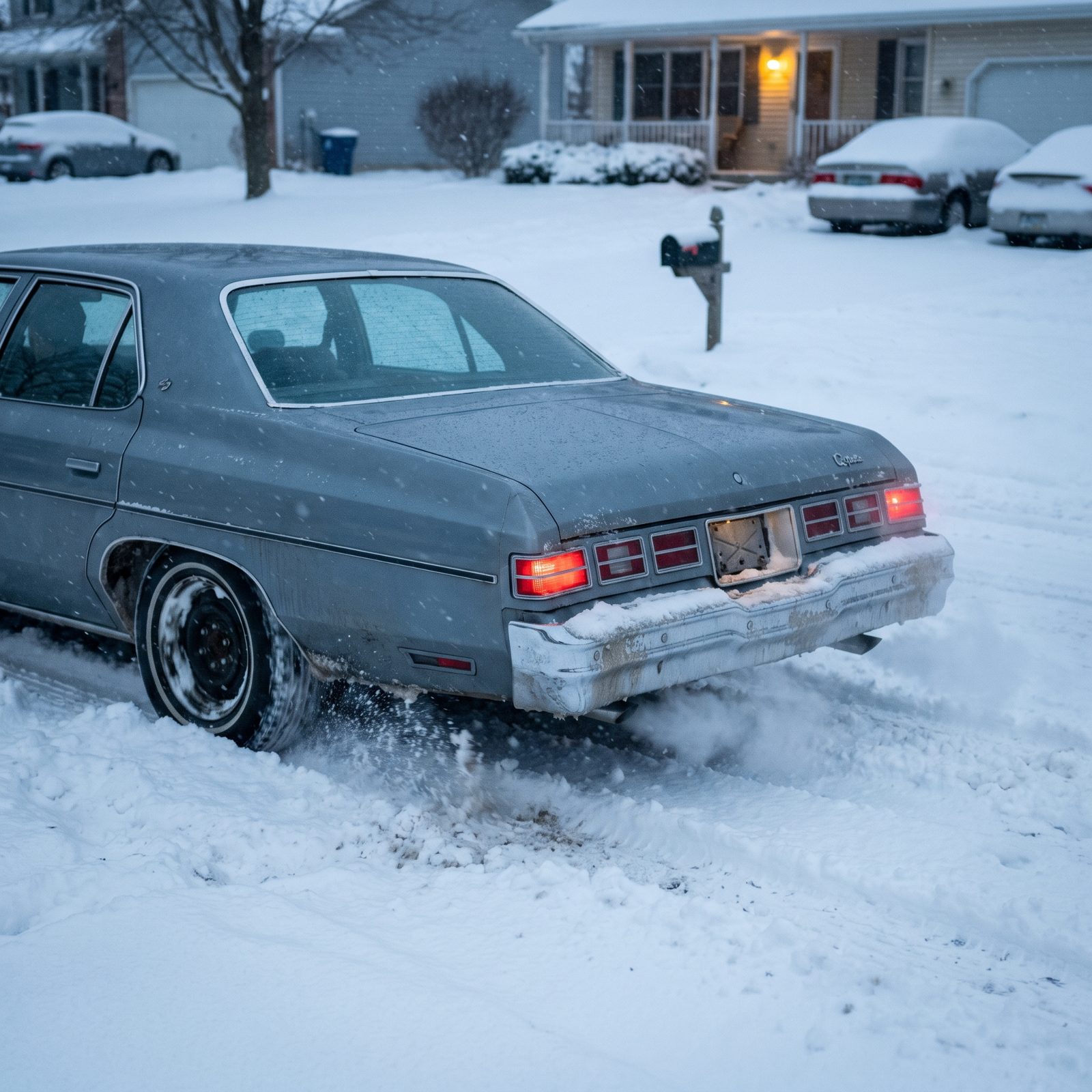
You learned the rhythm by feel. Ease into drive, let the car creep forward an inch, and the second the tires bit and stalled, you dropped it into reverse and rocked back. Forward, back, forward, back, each swing buying a little more travel until momentum finally hauled you up over the lip of the rut.
Done right, it was almost gentle. Done wrong, in a panic, you just polished the ice and cooked the transmission fluid brown.
Automatic or three-on-the-tree, the principle held. Patience over power. A drift always won a shoving match, so you had to outsmart it instead.
16. Flagging Down Strangers to Put Shoulders to the Bumper
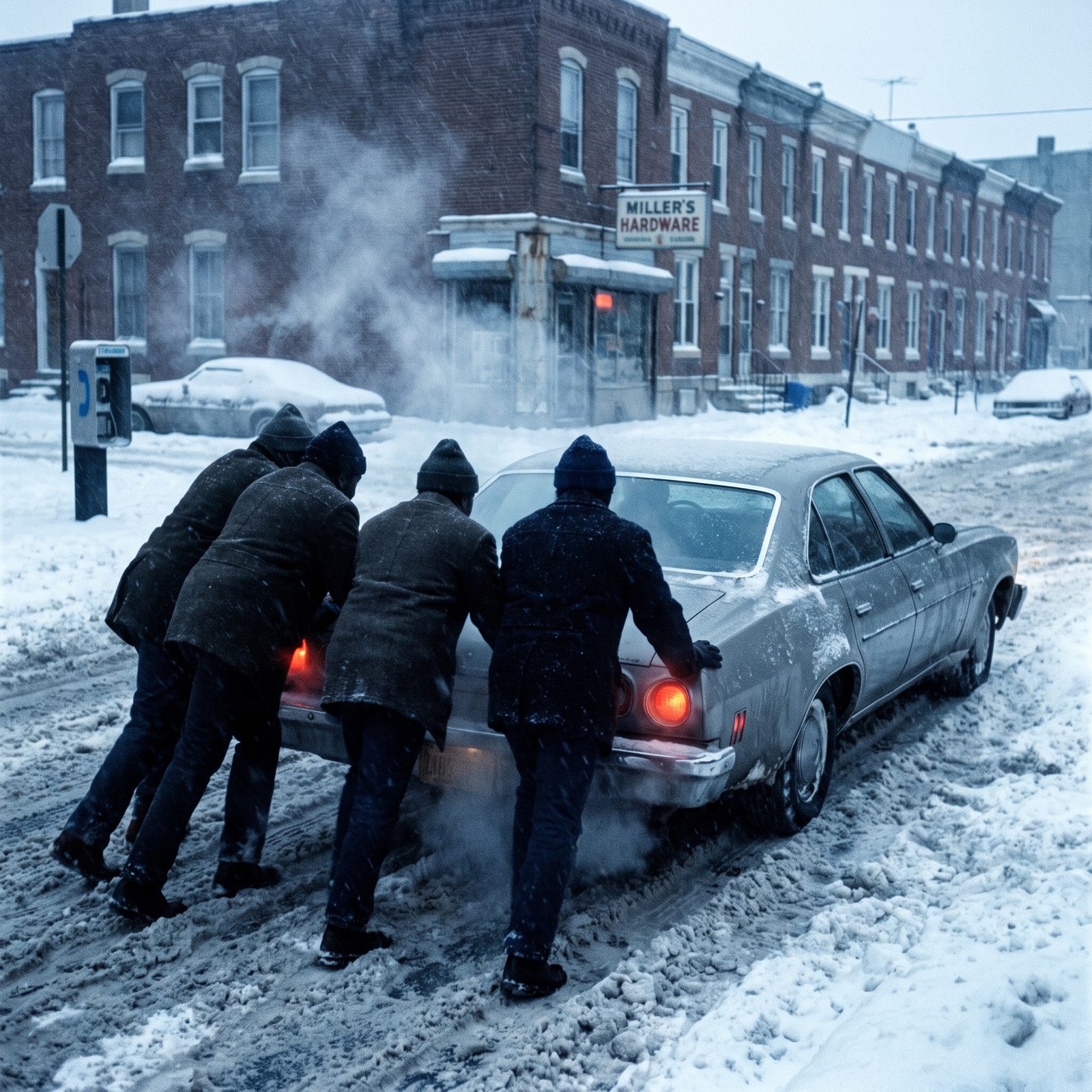
Somebody would slow down. They always did. A stranger in a wool overcoat climbed out of his own idling car, waved a couple more people over from the sidewalk, and set four sets of shoulders against your trunk lid.
You kept it in low gear and feathered the gas so the tires wouldn’t spray the pushers head to foot. On the count of three everybody heaved, the car lurched free, and there was that quick chorus of shouts and waves before the whole crew scattered back into the storm.
Nobody exchanged names. That was winter’s arrangement. You pushed today, someone pushed you next week, and the whole town ran on the ledger.
15. Leaving the Parking Brake Off So It Would Not Freeze Solid
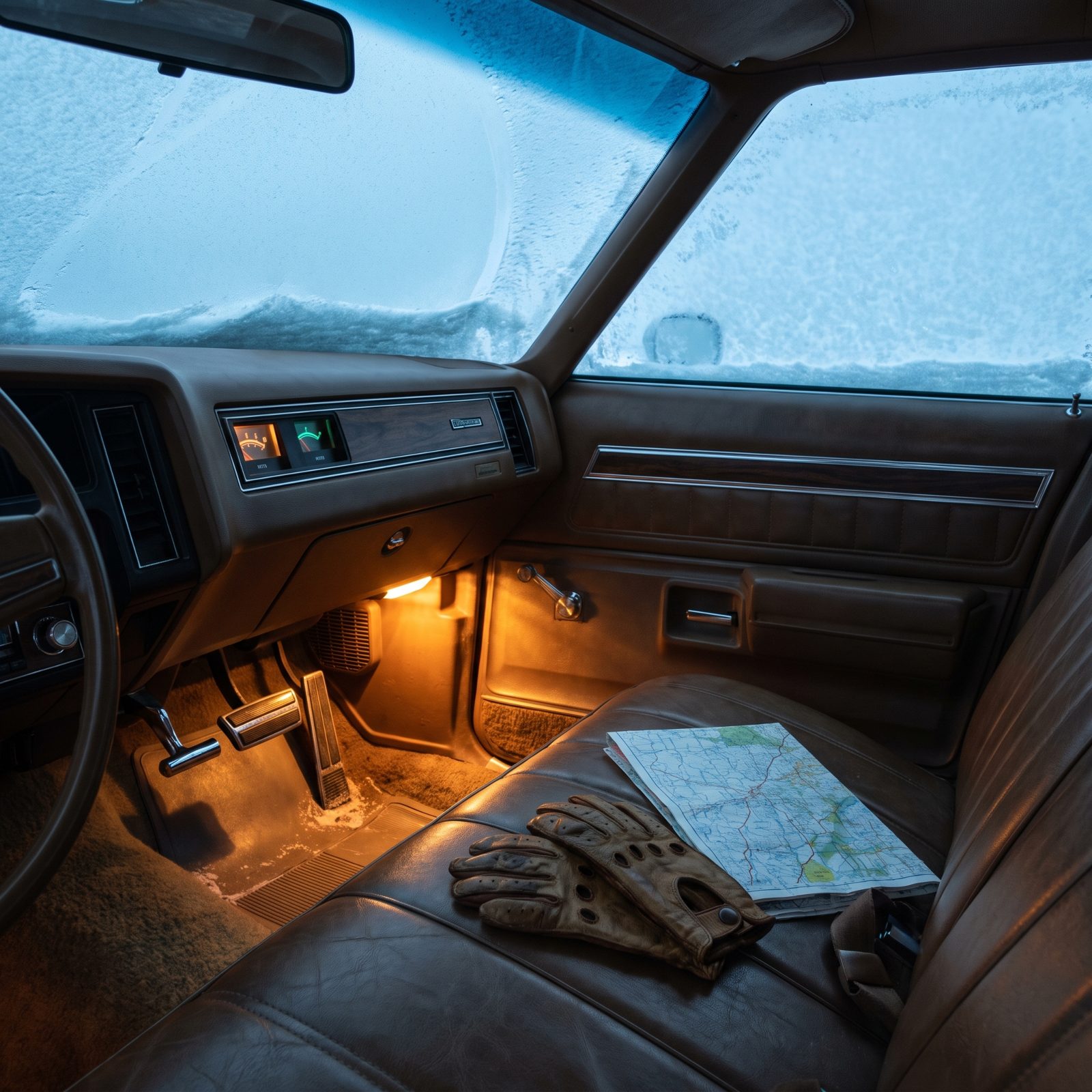
Here is the counterintuitive one that saved a lot of mornings. You did not set the parking brake overnight in a hard freeze.
Moisture crept into the cable and the shoes, and by dawn the whole mechanism sat locked in ice. Set it Friday night and Saturday you had a car that would not budge no matter how hard you yanked the release. So people left it off, dropped an automatic into Park, and on a stick shift left it in first or reverse with the wheels cocked toward the curb.
A small ritual. Learned the hard way once, then never forgotten.
14. Draping Cardboard Across the Windshield Before Bed
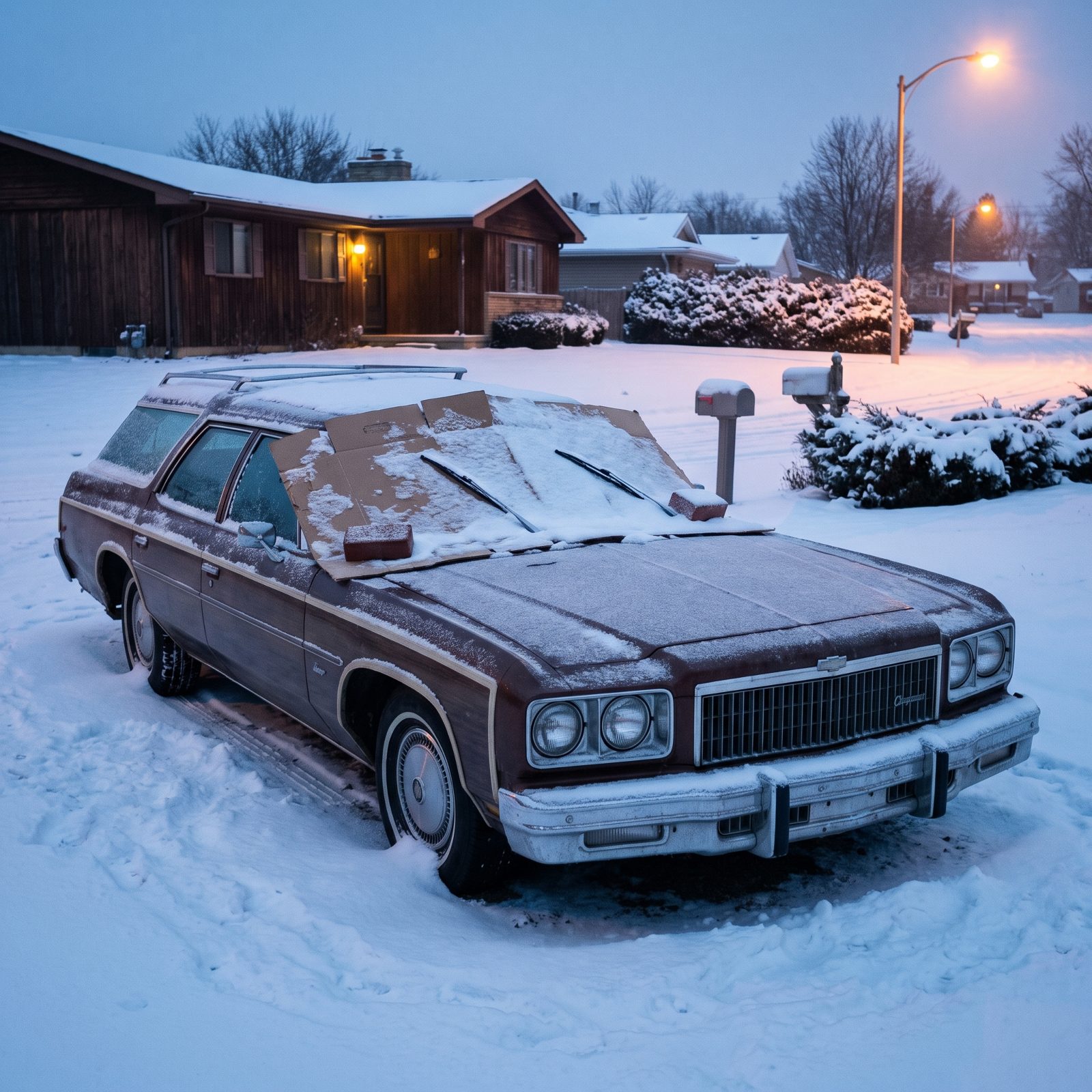
Scraping a windshield at six in the morning with bare hands going numb is a memory the body does not forget. So the smart move happened the night before.
A big flattened box, laid over the glass and pinned under the wiper arms, took the whole night’s ice and snow instead of the windshield. Come morning you peeled the cardboard off, snow and all, and drove away while the neighbors were still chipping at their frozen glass with a credit card.
The best defrosting tool of the decade was a Del Monte box and thirty seconds of foresight.
13. Blocking Half the Radiator With Cardboard to Hold In Engine Heat
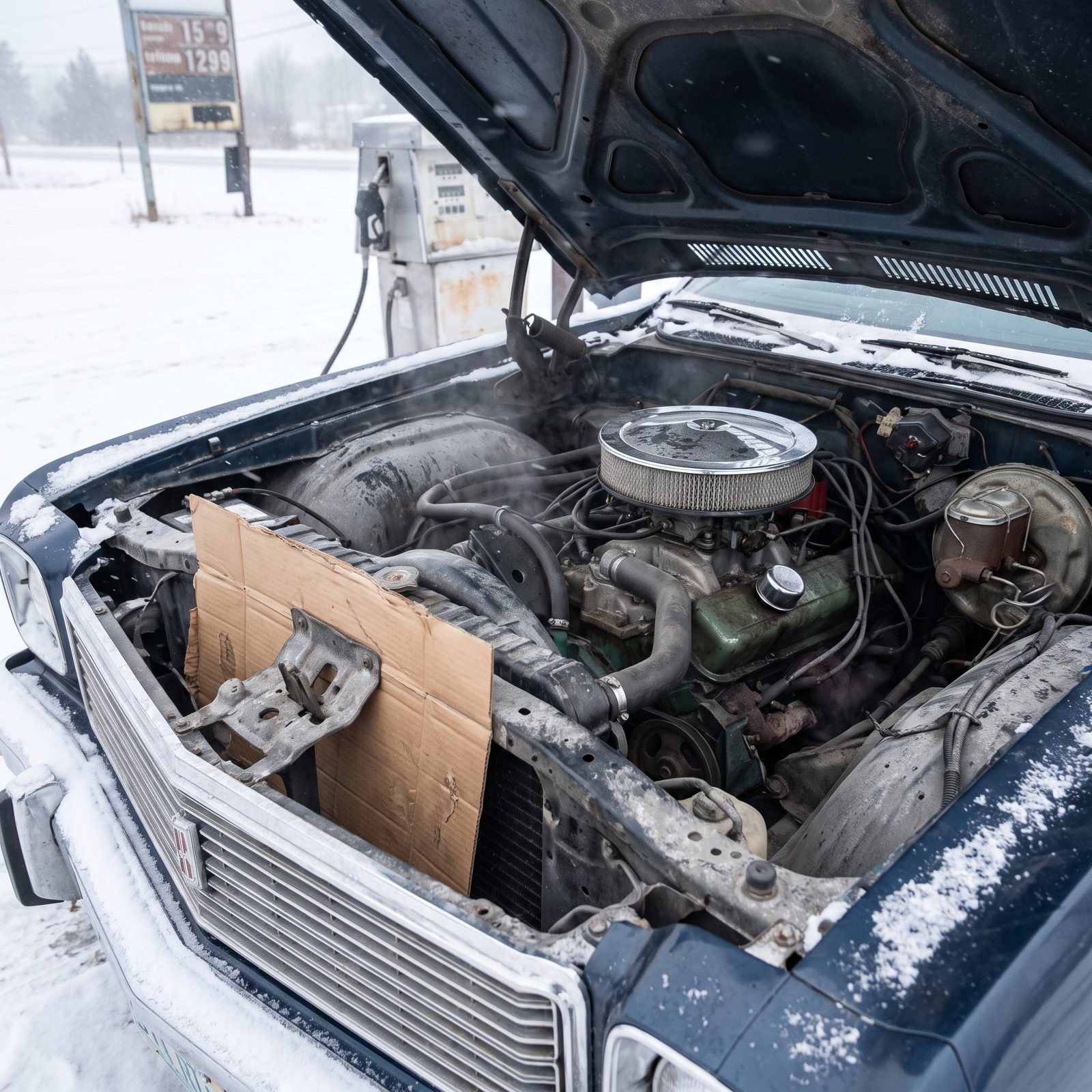
Old carbureted engines ran cold and cranky in a deep freeze, and a heater that never got warm was more than a comfort problem. Frost on the inside of the glass, a choke that would not come off, gas mileage in the basement.
The fix was a strip of cardboard slid in front of the radiator, blocking part of the airflow so the coolant could actually reach operating temperature. Truckers did it. Farmers did it. Anybody who understood their engine did it.
You watched the temperature gauge like a hawk afterward, though. Cover too much on a warm day and you cooked the thing.
12. Digging the Snow Out of the Tailpipe Before Letting It Idle
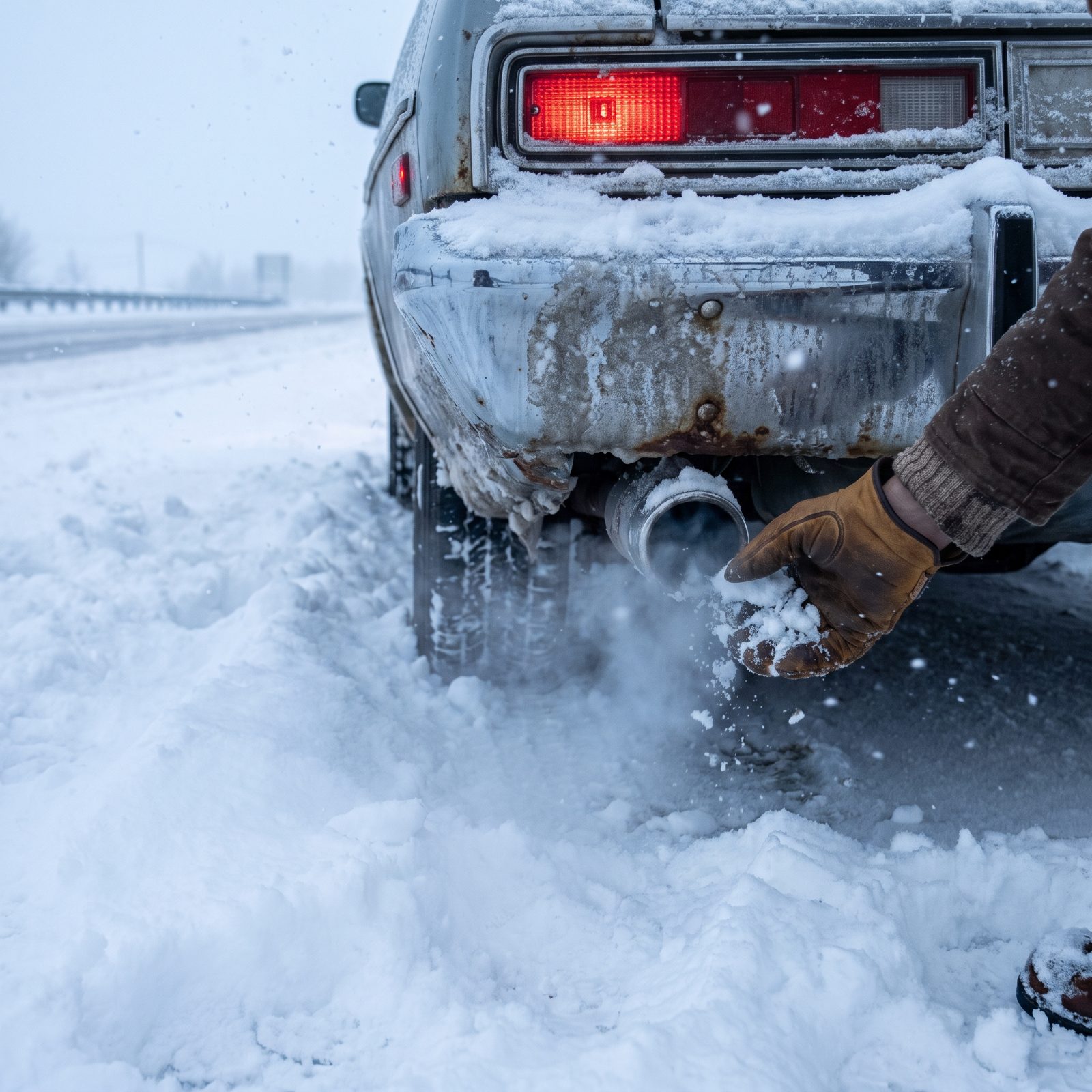
This was the one that could kill you quietly. Stuck in a drift, engine running for warmth, snow packed tight against the back of the car, and carbon monoxide with nowhere to go but back up through the floor.
People who knew got out and cleared the tailpipe first, then dug an air pocket behind the bumper so the exhaust had somewhere to escape. And they ran the engine in stretches — ten minutes on, then off, a downwind window cracked an inch the whole time.
The blizzards of that decade took travelers exactly this way. The ones who came home usually shoveled behind the car before they ever touched the heater.
11. Wool Blankets and a Thermos Instead of a Boxful of Batteries
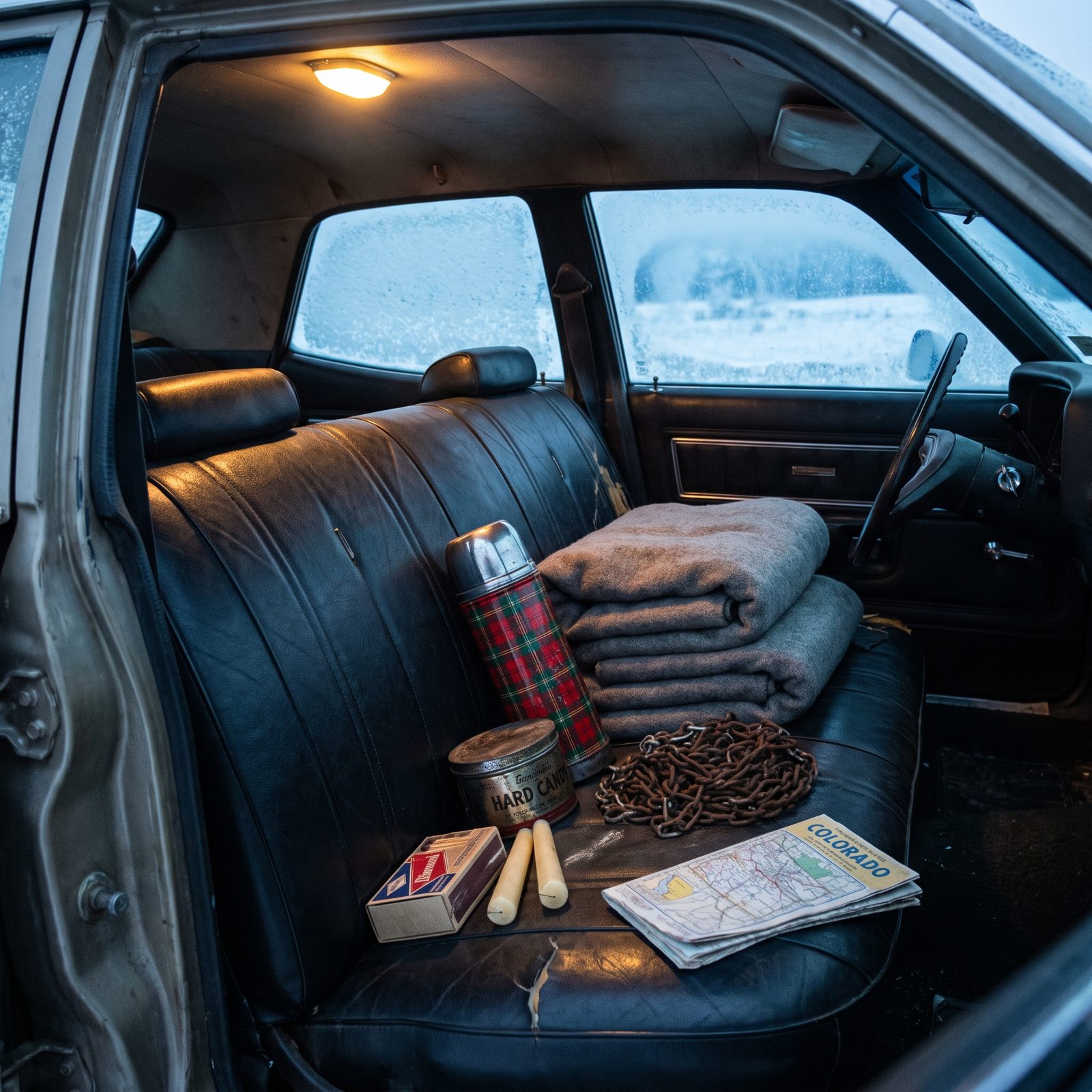
No batteries to die. No screen to freeze. No cell tower to search for. The 1970s survival kit was almost stubbornly analog, and that was its strength.
Two heavy wool blankets in the trunk, folded and forgotten until the night you needed them. A plaid thermos of coffee that stayed hot for hours. A tin of hard candy for the kids and the blood sugar.
You waited out the storm wrapped in wool, sipping coffee gone lukewarm, watching the windshield fill in. Low-tech, low drama, and it brought people home.
10. Using a Candle as an Improvised Emergency Heat Source
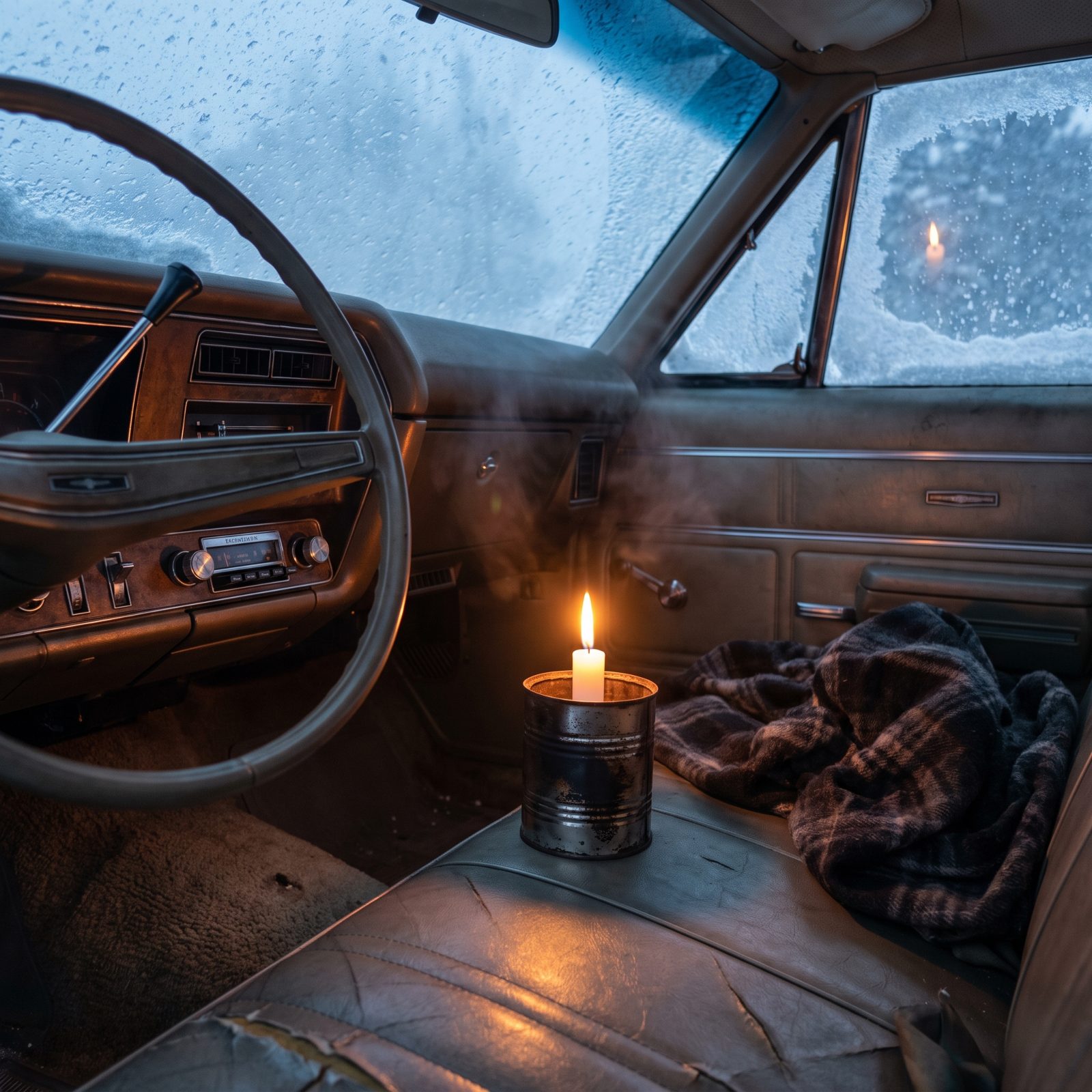
A candle throws off more usable heat in a sealed car than most people expect, and stranded drivers figured that out fast. The trick got passed around like folk wisdom: keep a stub of candle and a book of matches in the glovebox, set it in a coffee can so the wax didn’t ruin the seat, and it would take the killing edge off the cold while you waited for someone to come along.
We’ve seen the coffee-can candle survive in trunk kits well into the 1990s. It was never comfortable. But it was the difference between shivering and something a lot worse.
9. Hitchhiking to the Nearest Gas Station for Help
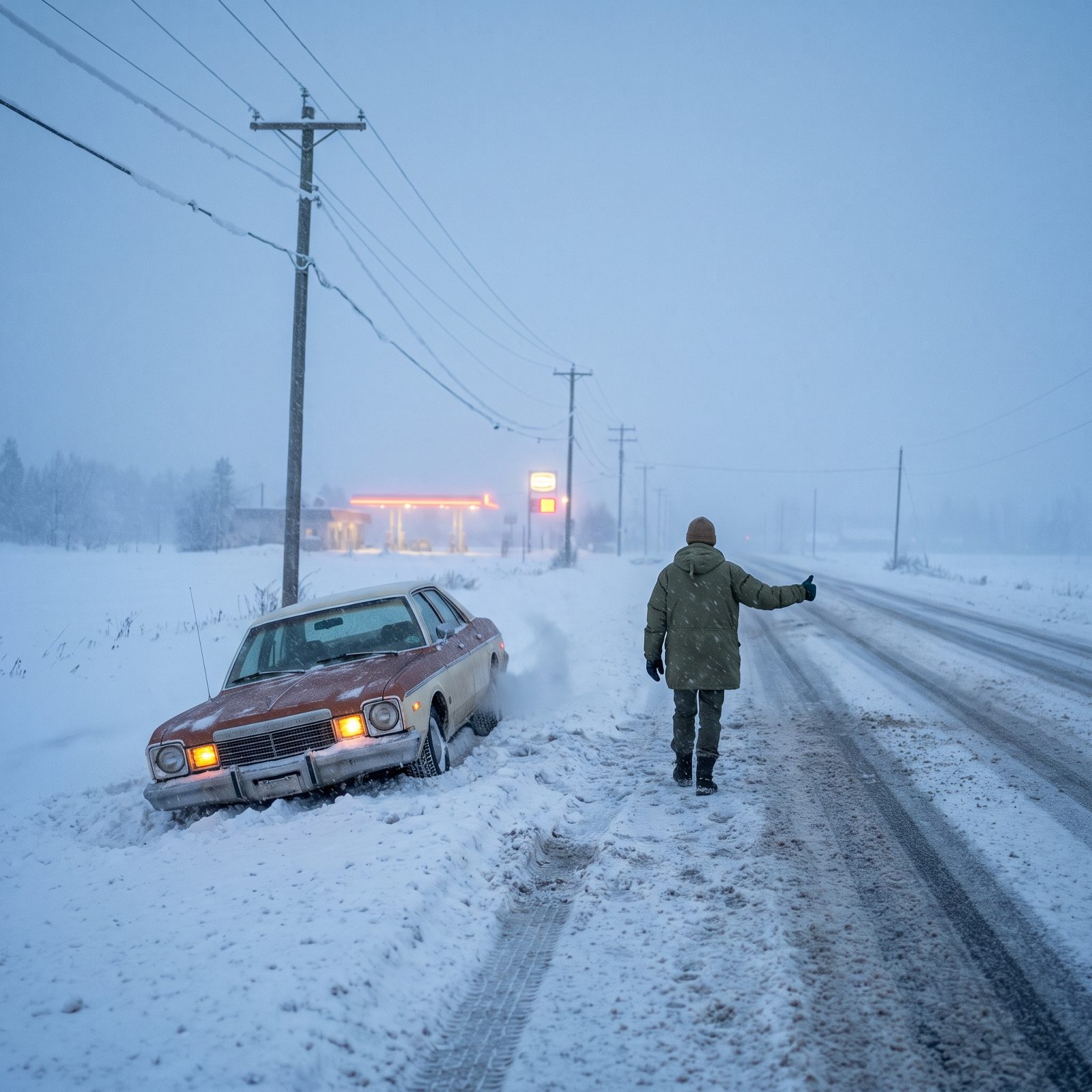
Your car quit, and the only phone for miles sat inside a gas station you could just barely see glowing down the road. So you buttoned up, pulled your collar high, and started walking with your thumb out. Somebody in a warm cab would usually stop, because everybody understood that next time it could be them down in the ditch.
No polite way to say it — this was routine, and it worked because strangers still figured they owed each other something on a bad night. That instinct has mostly gone quiet since. On a snowbound road in 1974, it was the whole rescue plan.
8. Getting Trapped Behind the Hard Snowbank Left by a Plow
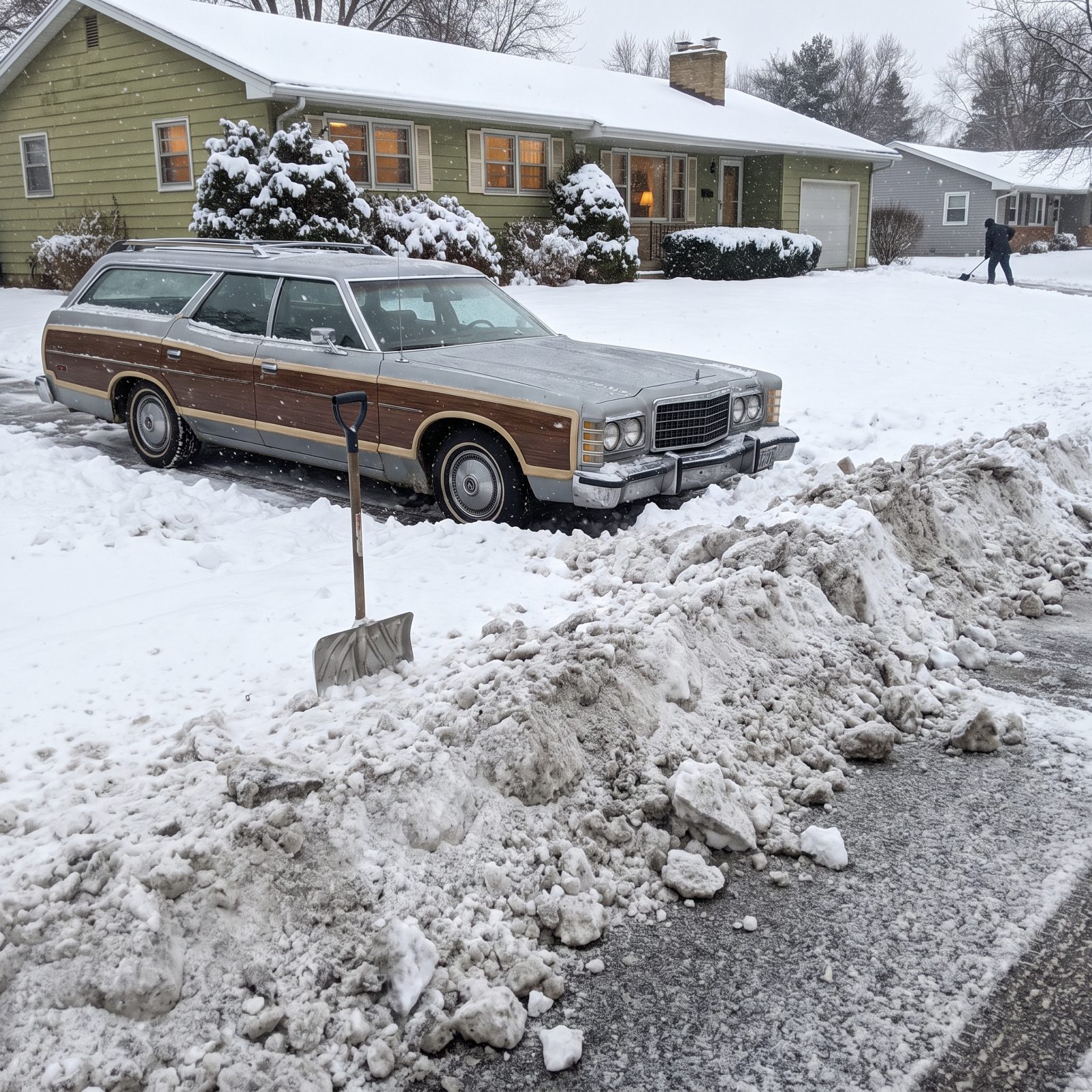
You dug your driveway clean, went inside for coffee, and then the plow came through and sealed you in with a ridge of packed slush the shovel bounced right off of. Plow snow isn’t real snow. It’s compressed grit and ice the width of a truck blade, dumped exactly where you least wanted it.
Chipping through it was a special kind of aggravation — carve out a car-width notch, get the wagon rocking back and forth, and hope the tires caught before your back gave out.
7. Expecting Secondary Roads to Remain Unplowed for Days
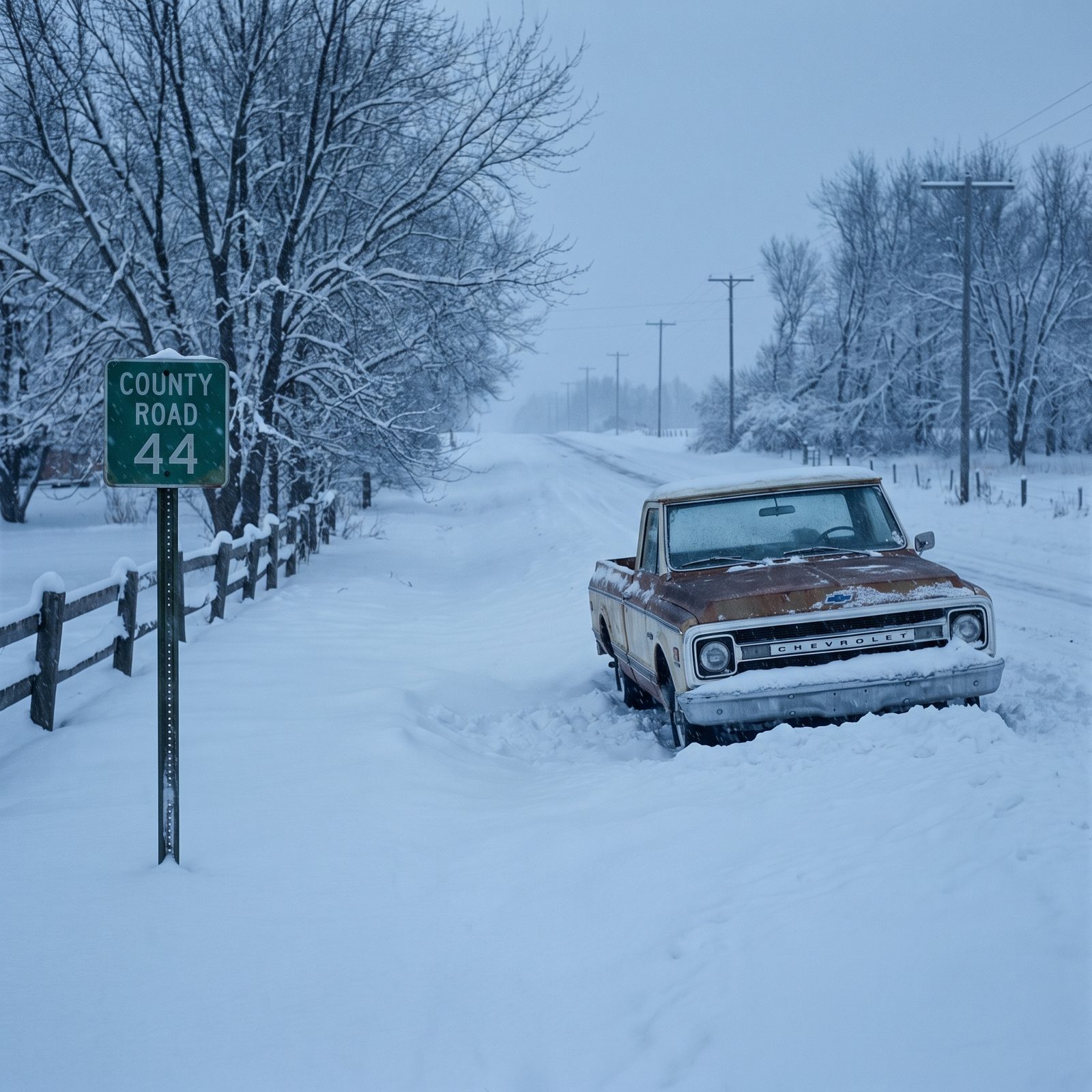
The highway got scraped clear by morning. Your road? You might not see a plow for three or four days, and everybody just accepted it. Towns ran one truck, maybe two, and they worked the main arteries first while the back roads sat under two feet of drift.
So you planned around it. Groceries stocked before the storm, work called off, kids home, the family car left buried at the curb until the county finally got around to your little stretch of nowhere.
6. Driving on Roads Covered With Sand, Cinders, and Coarse Salt
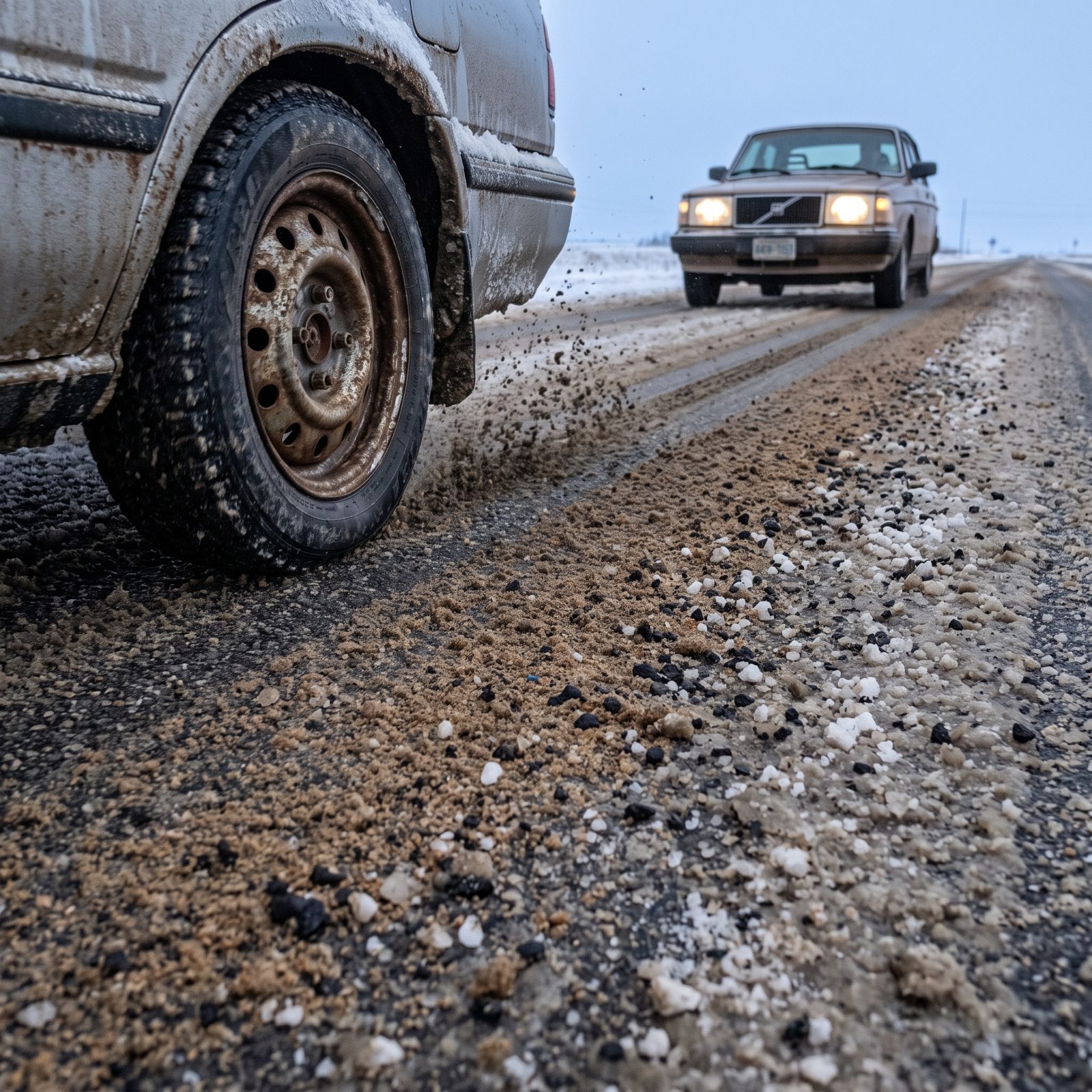
Before the highway departments leaned on straight salt, they threw down whatever bit into ice: sand, coal cinders, coarse rock salt, sometimes all three mixed in a truck. You could hear it under the tires, a steady gritty hiss, and you could see it fanned across the lanes in dark streaks.
It gave you traction and it ate your car alive. That grit is exactly why so many 1970s cars rusted through their rocker panels by year six. You traded body panels for the ability to stop at the light.
5. Shifting a Three-on-the-Tree Transmission While Wearing Mittens
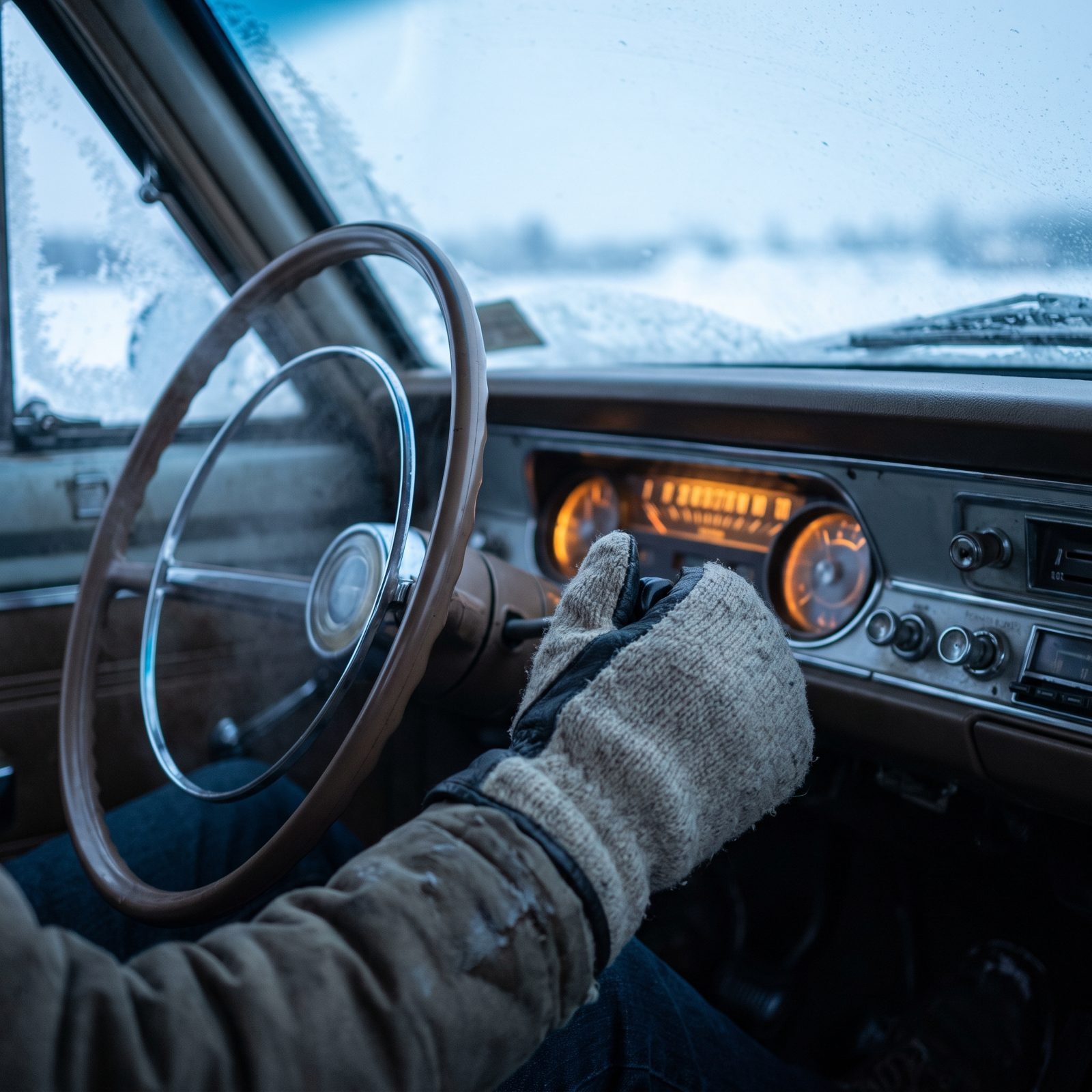
Three gears, a lever poking off the steering column, and a shift pattern you had to feel through a pair of frozen mittens. The three-on-the-tree was awkward on a good day. In a storm, with numb fingers wrapped in wool, finding second without grinding it was its own small victory.
Most people eventually yanked a mitten off with their teeth to do it right, then jammed it back on at the next stoplight. Cold hands or a crunched gearbox. You picked one.
4. Following Directly Behind a Snowplow to Find a Passable Route
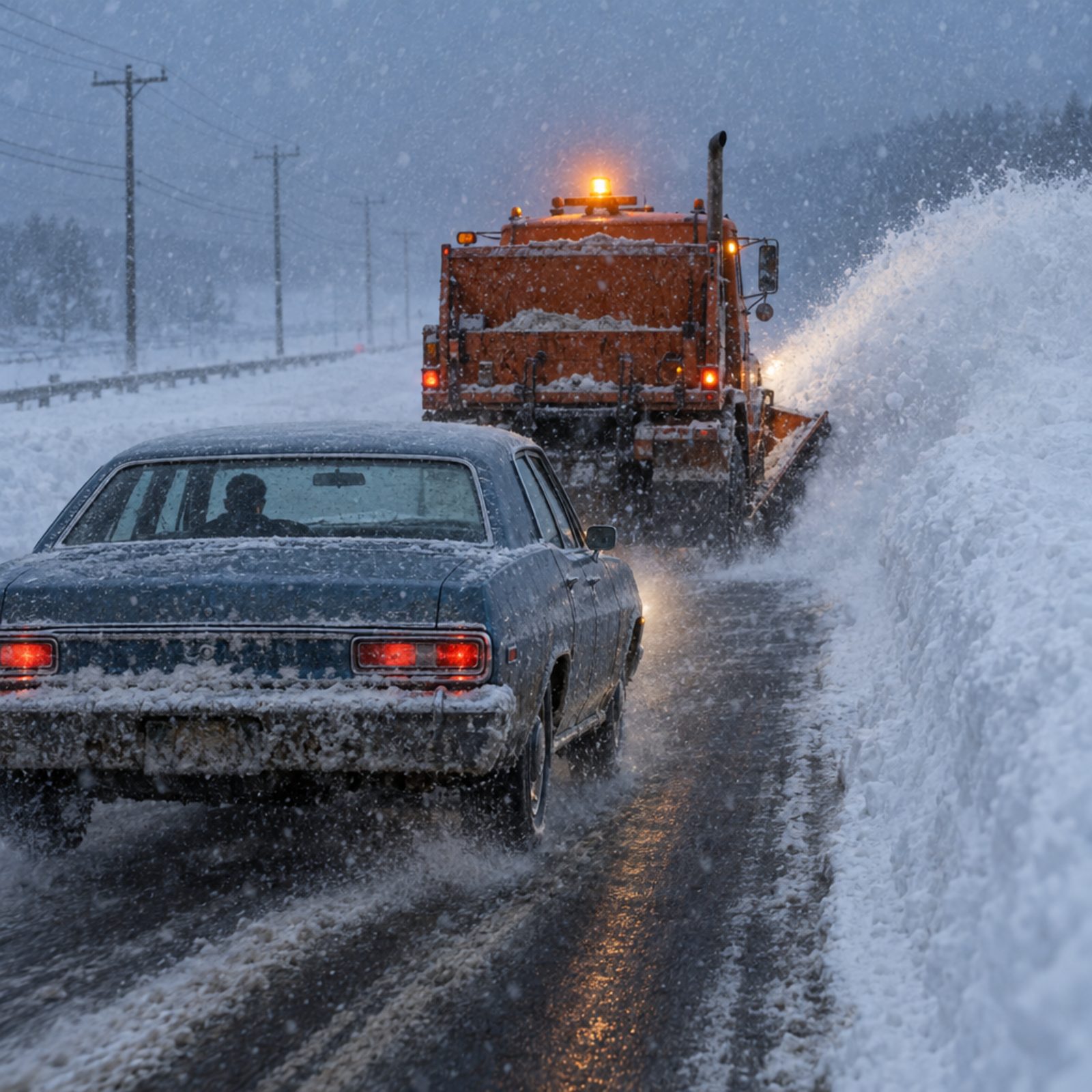
Catch a plow and you had it made. You’d tuck in behind that flashing amber beacon, stay far enough back to dodge the spray and the flying cinders, and let the truck carve you a lane all the way to town. Felt like being escorted through the storm.
The catch was that plows crawled, and they’d turn off onto some side route the second you got comfortable. Then you were on your own again, staring at the fresh ridge it left across your intended path. Still, a few miles behind a plow beat a few miles of guessing.
3. Stopping Repeatedly to Clear Snow From the Taillights
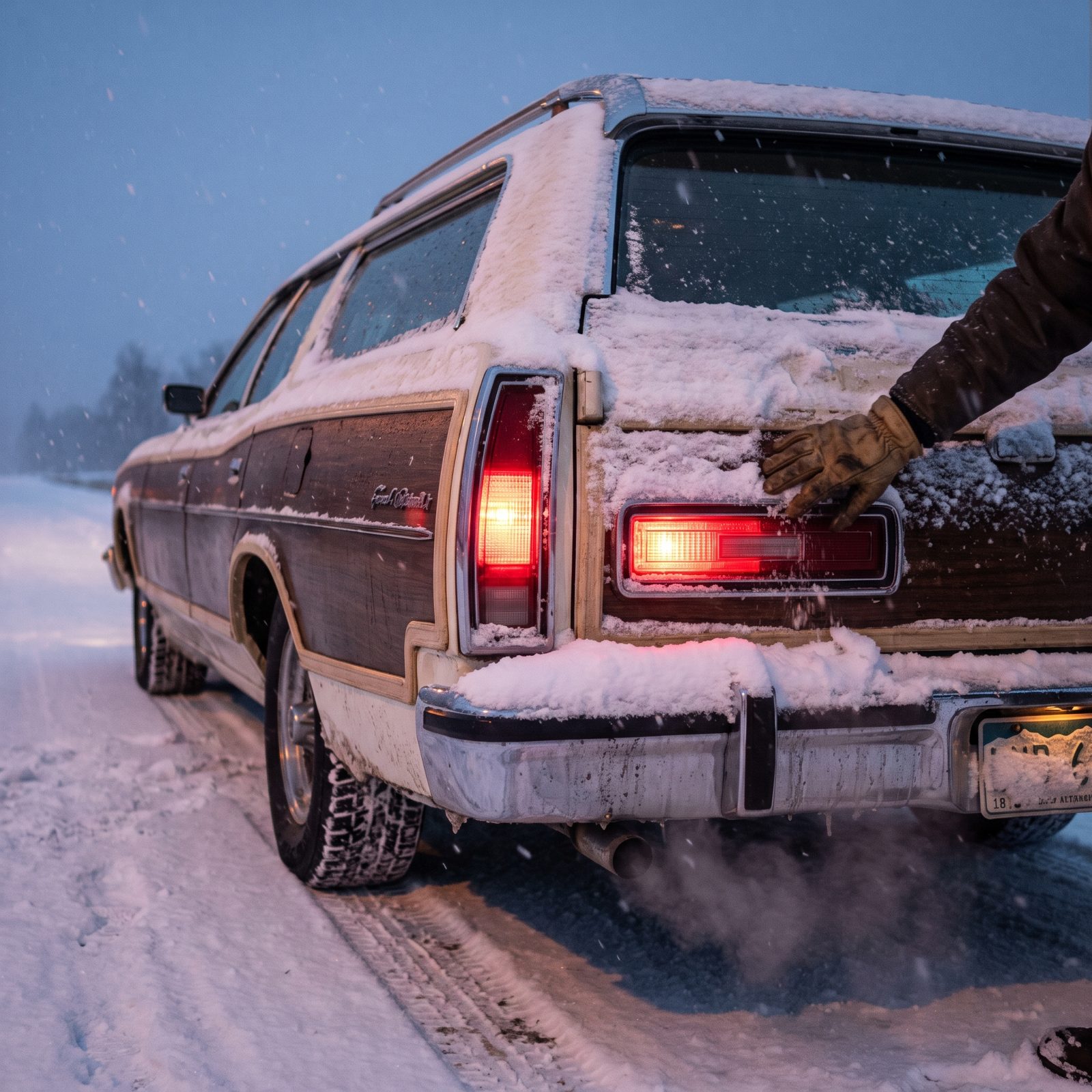
Slush and snow would pack solid over your taillights within a few miles, and just like that the car behind you couldn’t see you braking in a whiteout. So you pulled over, got out into the wind, and swept the lenses clear with a glove or a sleeve. Then you did it again ten minutes later.
Recessed taillights and rear-wheel spray made a bad combination, and staying visible was a chore you repeated the whole trip.
2. Letting Children Ride in the Open Cargo Area of a Station Wagon
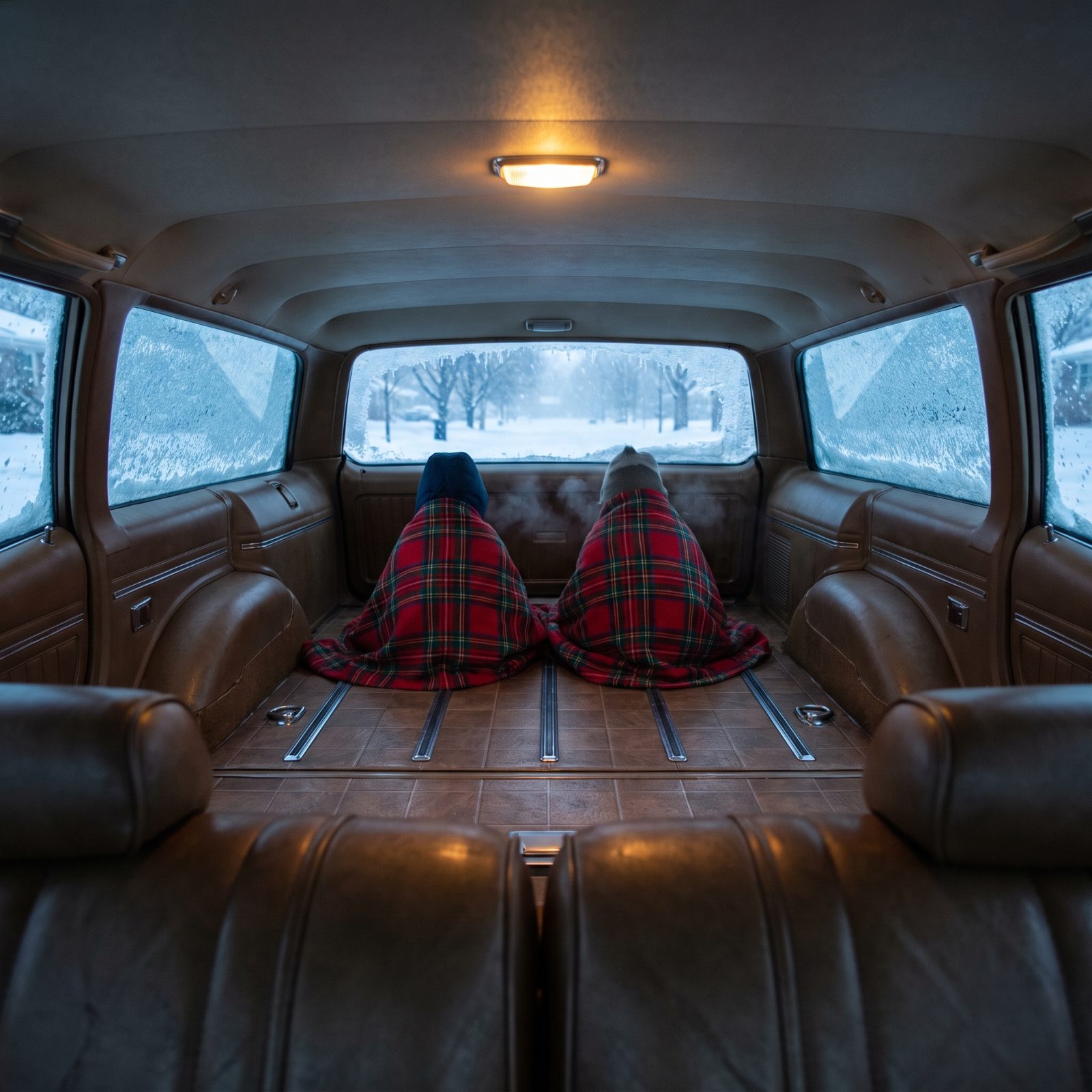
The way-back of the wagon was prime real estate on a winter trip. Kids piled onto blankets over the flat cargo floor, facing out the rear window, waving at whoever was behind you, no belts and nobody thinking twice about it.
On a snowy road it felt cozy, all that warm-breath fog on the glass and a nest of blankets. It was also, by any measure we’d use now, a genuinely risky place to put a child. Different times, different rules, and every family did it.
1. Becoming Completely Unreachable Once the Car Left Home
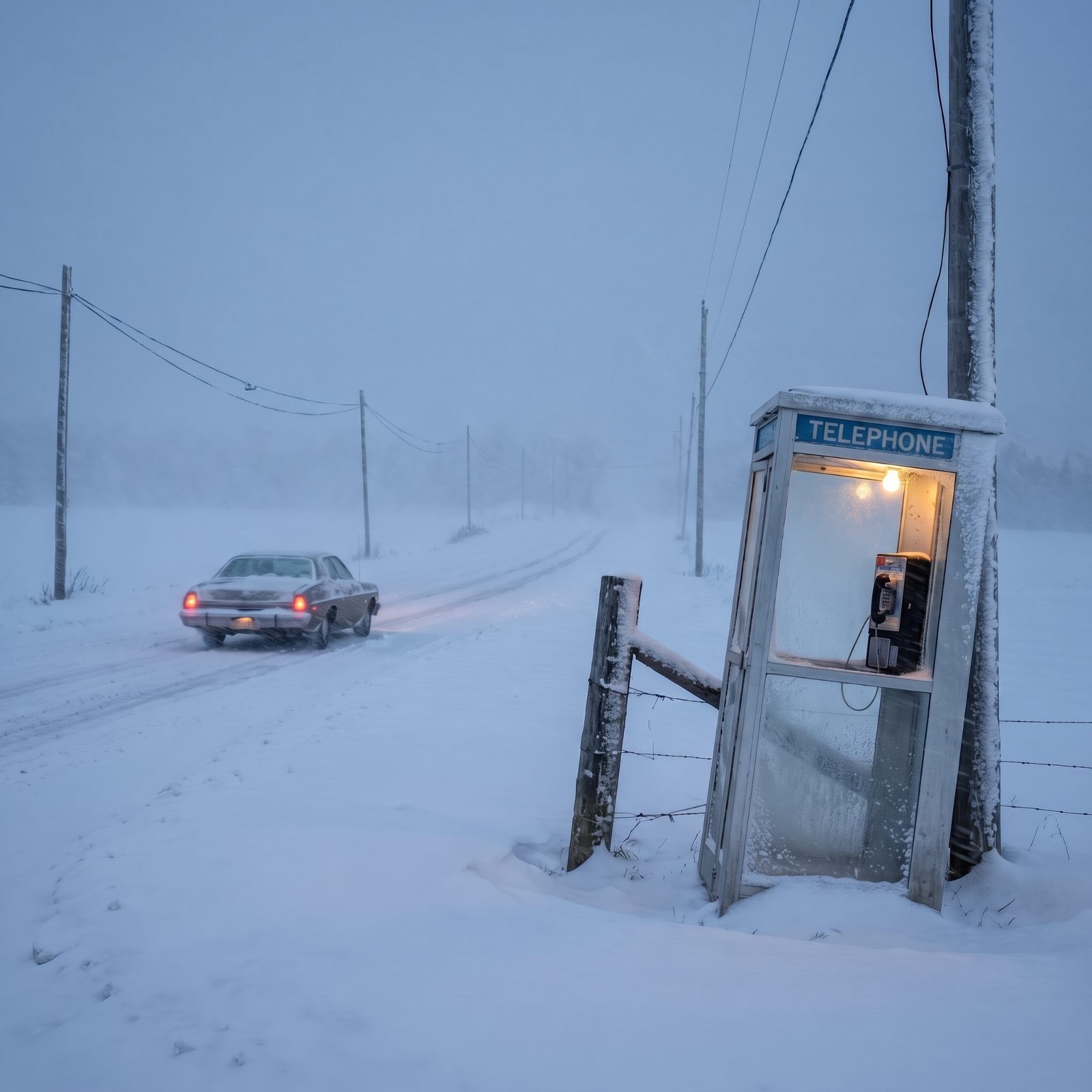
You waved goodbye from the porch, the car pulled out into the snow, and then there was nothing. No call to say they’d made it, no way to check, just hours of not knowing. You’d watch the window and run the arithmetic of how long the drive should take against how long it had actually been.
Once the wheels left the driveway, a person was simply gone until they walked back through the door or found a payphone somewhere. Whole families sat up on storm nights waiting for headlights to swing into the drive.
And that’s the part worth remembering. The car meant freedom, and it also meant silence, both true at once. We got the phones eventually. Gave up a little of that quiet to get them.