
Would you like to save this?
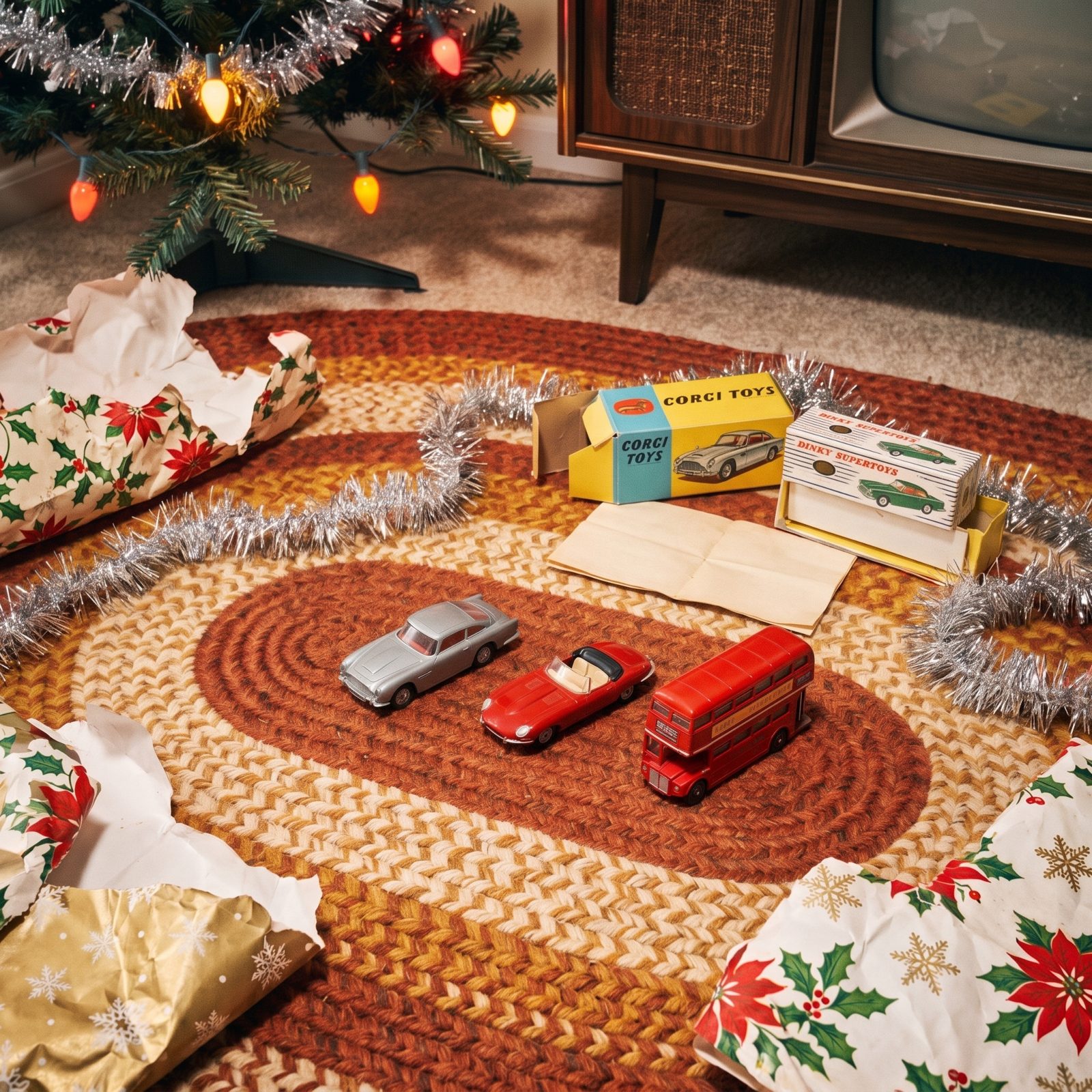
The best gift that year had weight. Not plastic-shell weight — real weight. You’d pull off the paper, feel the little Corgi through the box with that cold zinc heft of a die-cast body, and you already knew what it was before you saw it. Under the tinsel and the big colored bulbs, a whole fleet waited: Bond’s Aston with the ejector seat, a bus you could roll across the braided rug, a red E-type with the top down. These are the ones that got played to death and remembered forever.
Please note that some of the images in this article were created with the assistance of AI.
30. Corgi 261 James Bond Aston Martin DB5
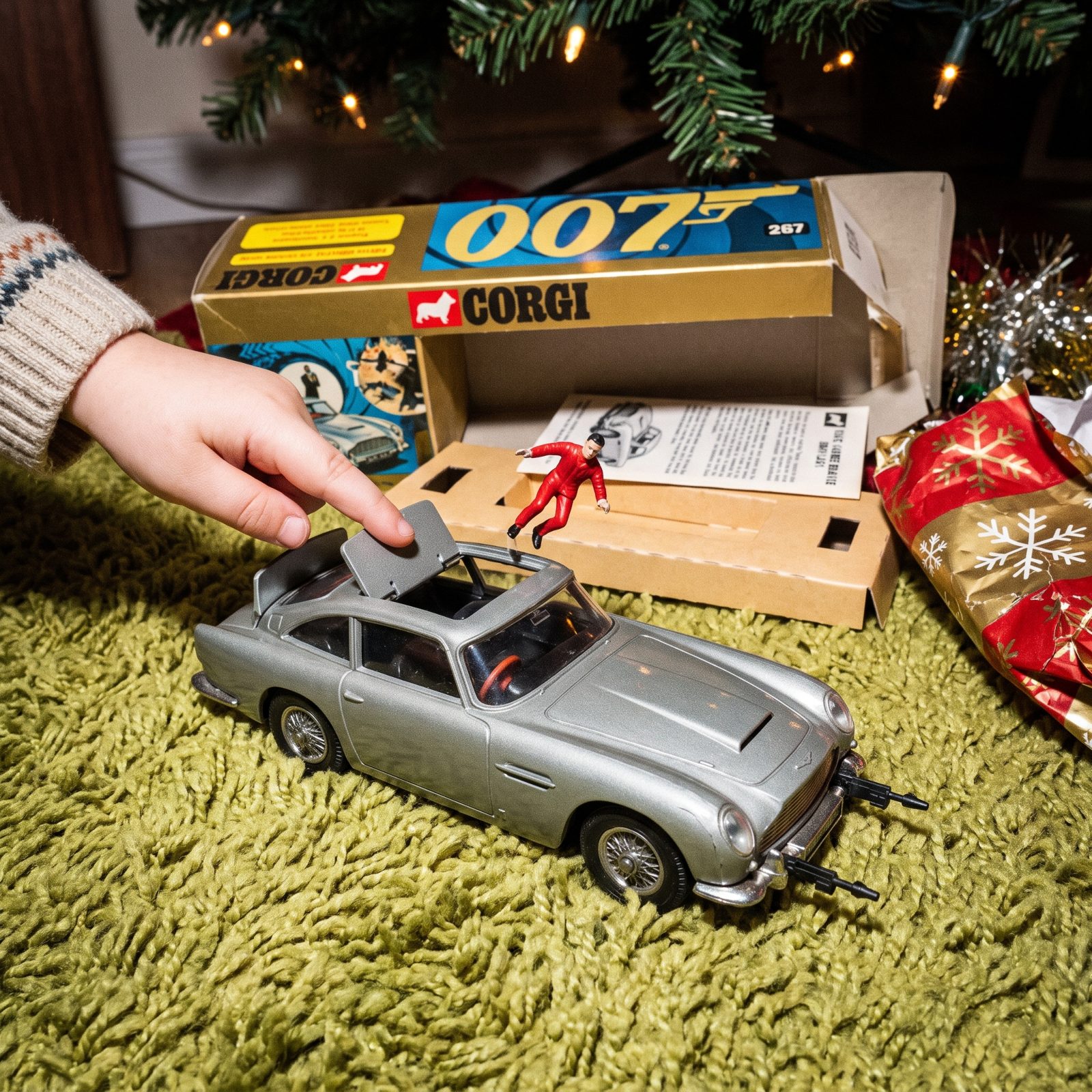
Nothing under the tree in 1965 hit like this one. The Aston came out at the tail end of Goldfinger fever, and every kid on the block wanted the car with the button that flipped a bad guy out through the roof.
You worked that ejector-seat lever until the little figure vanished behind the couch, gone for good. Front guns popped out, rear shield cranked up, and if you got one on Christmas morning you spent the rest of the day making everyone watch the seat launch.
29. Corgi E-Type Jaguar
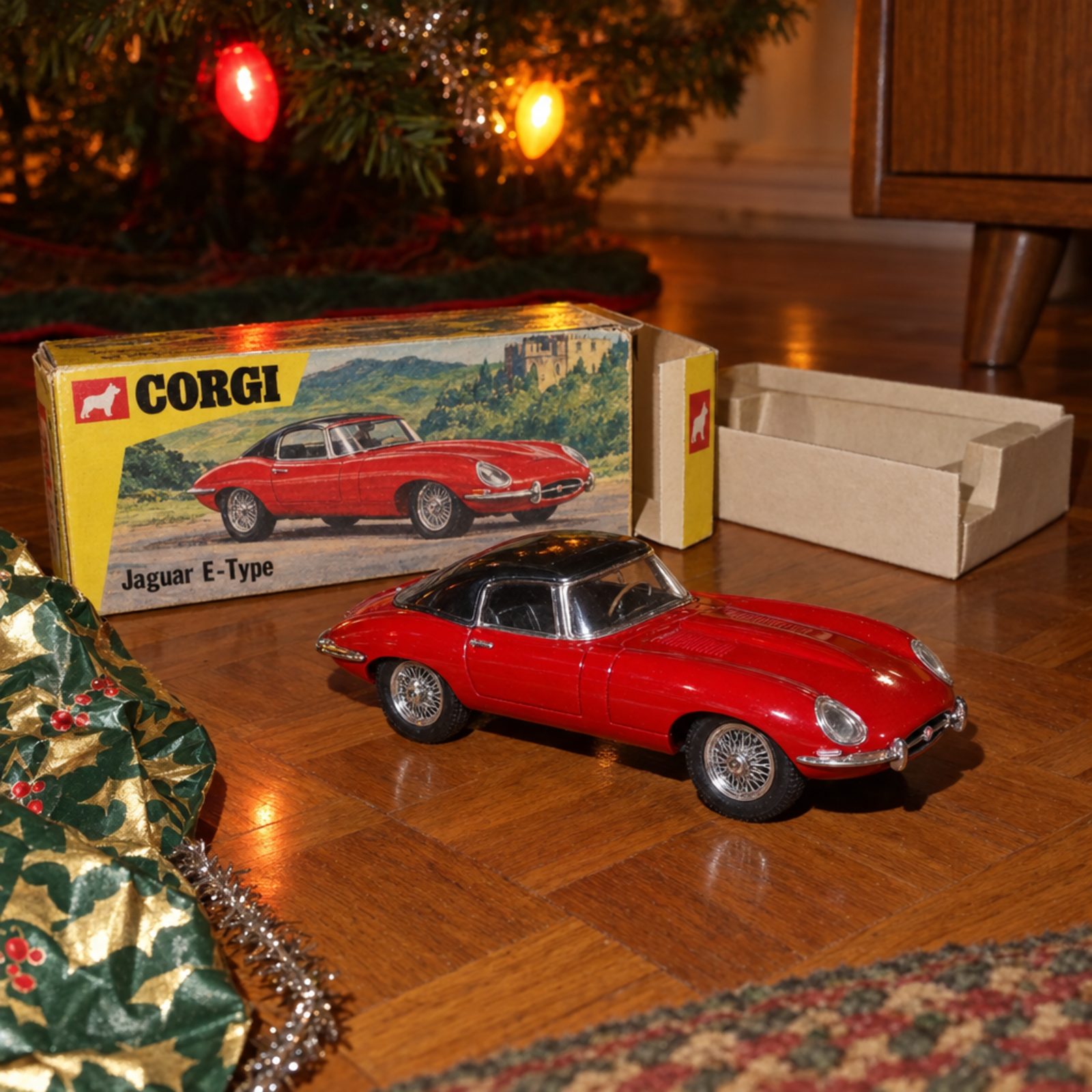
The E-Type looked fast sitting still. That impossibly long hood, the little Corgi headlights, and the removable hardtop you lost within a week.
This was the toy for the kid who already knew the difference between cars. You didn’t just push it — you crouched down and looked at it from the front, hood-height, the way the magazines shot the real one. Corgi nailed the proportions when a lot of makers couldn’t be bothered. Whip it across the linoleum kitchen floor and it tracked dead straight, which felt like a small miracle at seven years old.
28. AMT 1965 Ford Mustang Model Kit
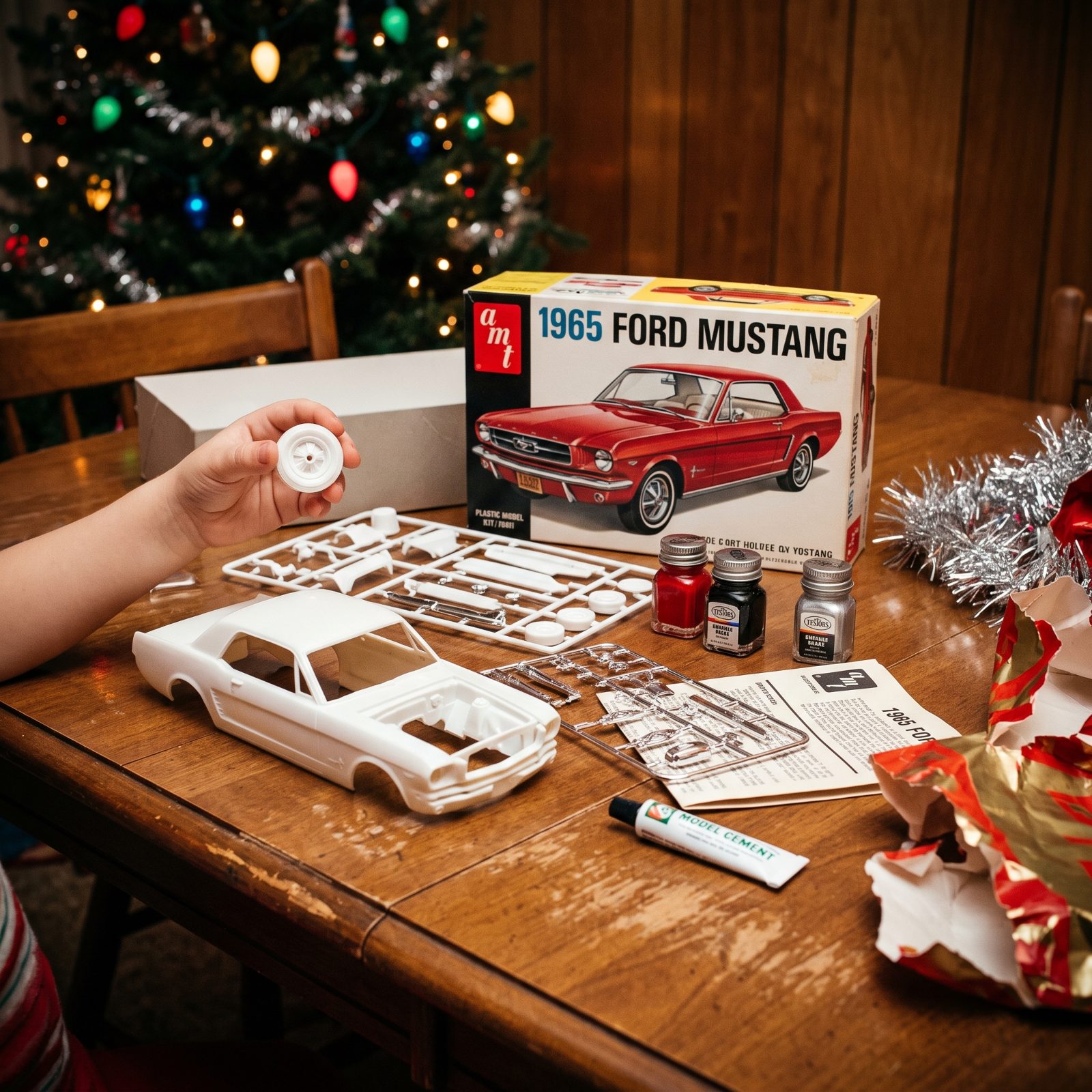
Some gifts you couldn’t play with until January. The AMT Mustang kit was one of them, and half the fun was the wait.
The Mustang was barely a year old and already the car every kid wanted, so a scale one you built yourself felt like real ownership. You’d open it Christmas morning, spread the sprues across the kitchen table, and get exactly nowhere before Dad told you to quit sniffing the glue. The 3-in-1 kits let you build it stock, custom, or drag. Nobody’s ever came out looking like the box lid. Yours had thumbprints in the paint and one door glued shut. Didn’t matter.
27. Corgi Land Rover With Animal Trailer
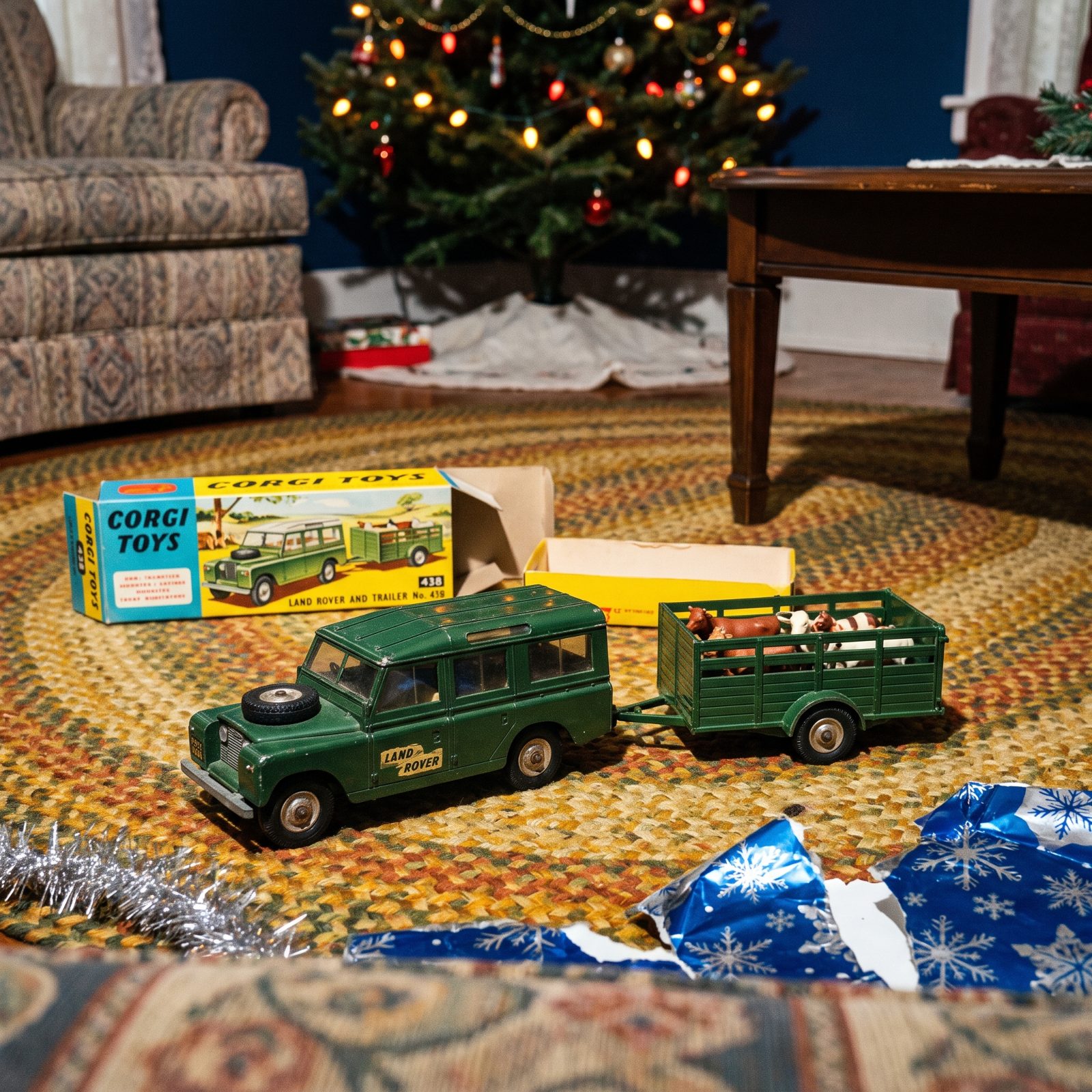
This was the set that came with extra stuff, and extra stuff was everything.
The Land Rover was rugged and boxy, sure, but the real draw was that trailer full of tiny plastic animals you could load and unload a hundred times over. Kids who got this one had entire farms sprawled across the living-room floor by afternoon. The little tailgate ramp dropped down. The figures always went missing under the tree skirt. A working combination like this stretched a lot further on a slow Christmas Day than a single car ever could.
26. Matchbox No. 41 Ford GT
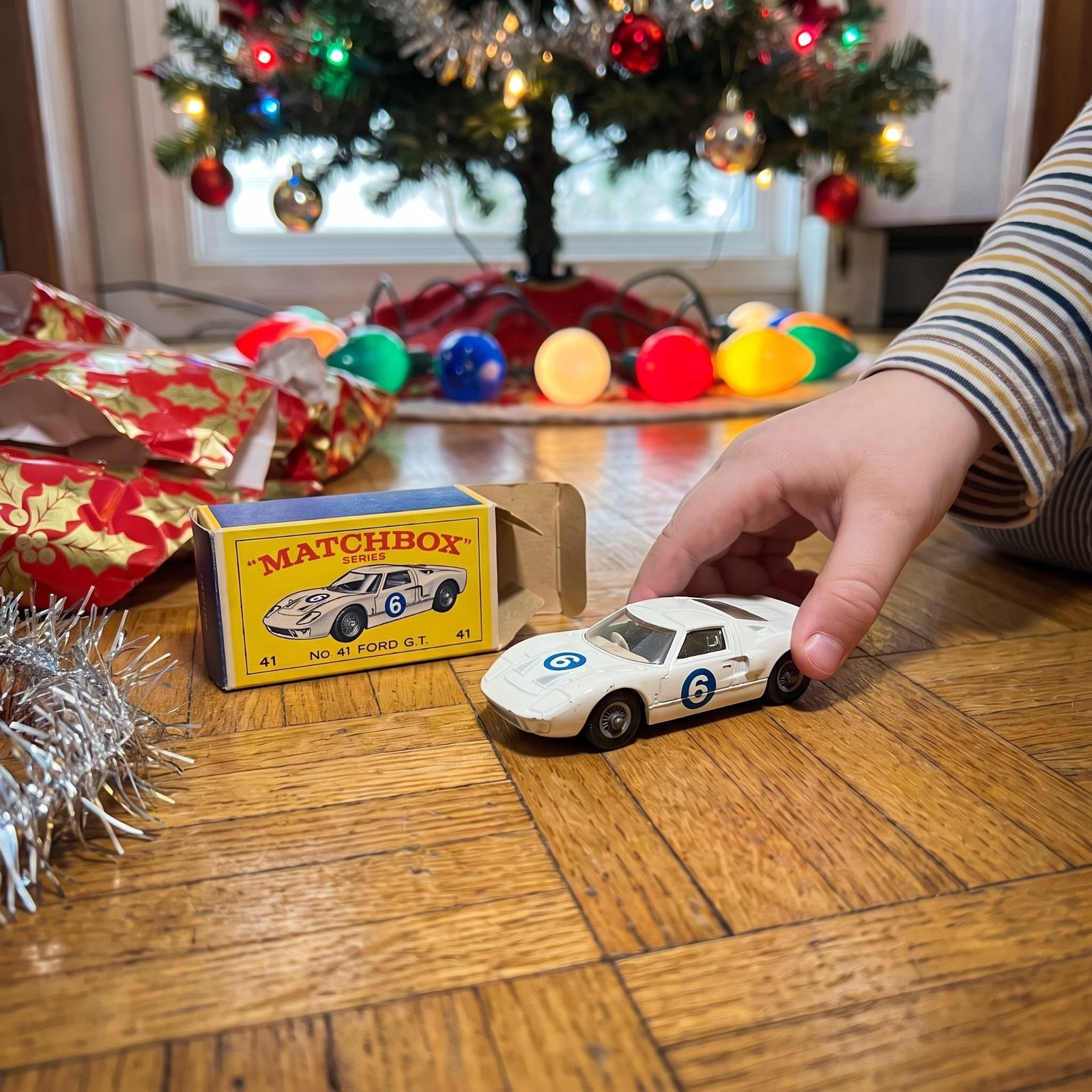
Matchbox cars were the ones that filled the stocking, not the big box under the tree. The No. 41 Ford GT was pocket-sized proof that small could be perfect.
It came in that little yellow box you’d flip open with a thumb, and the car inside was low and mean and cost about half a dollar. Kids collected these by the dozen because you could. This one had the big racing number 6 and the shape of a real Le Mans machine shrunk down to fit inside a fist. You raced it down the arm of the couch and it never once let you down.
25. Corgi Bedford Car Transporter
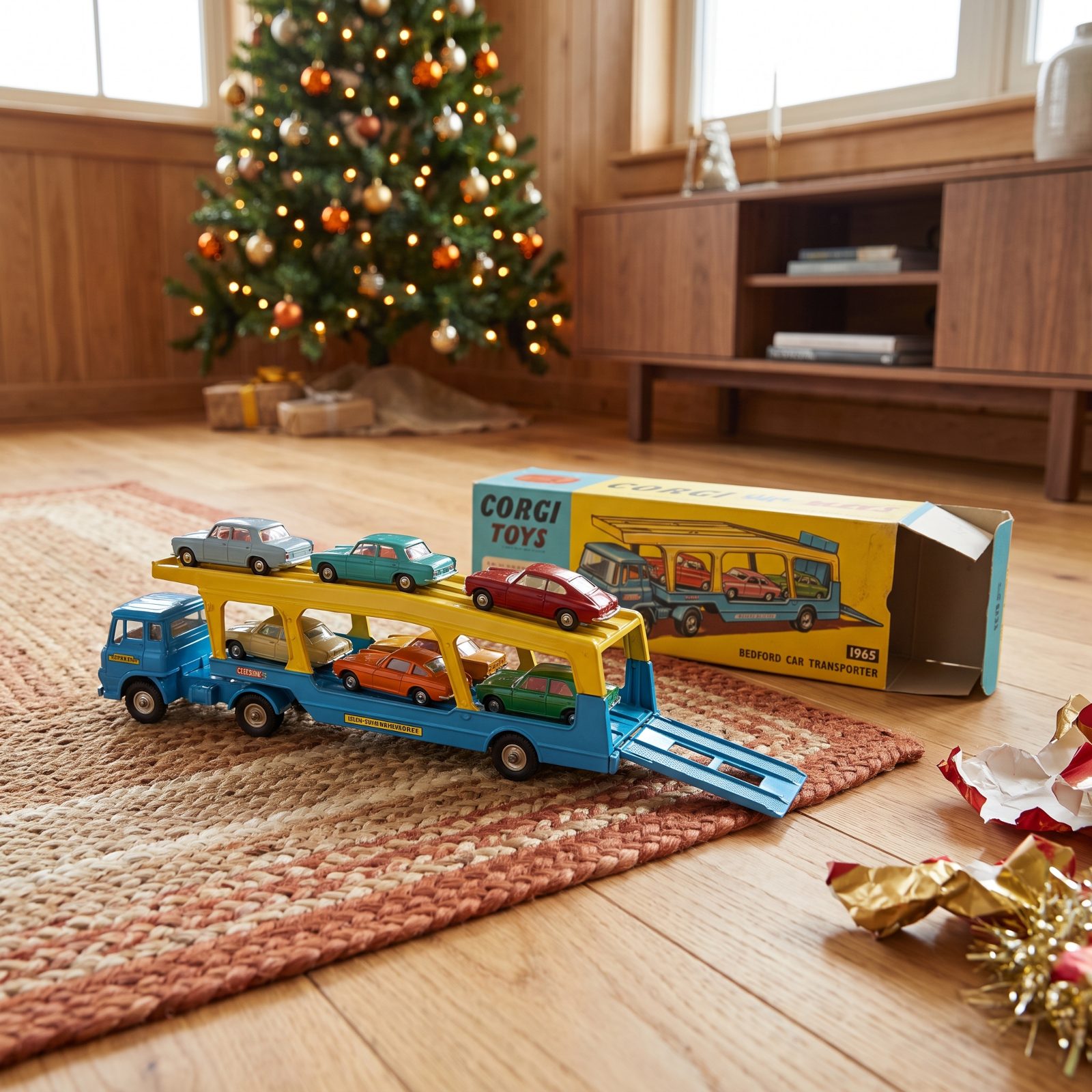
The transporter was the gift that made all your other cars matter more.
Suddenly the fleet had somewhere to go. You’d load the top deck, drop the ramp, roll them off, load it again. The Bedford was so long it barely fit under the tree, and hauling it home in the family car ate up half the trunk.
Any kid with a shoebox of Corgis knew this was the crown of the collection. It turned scattered toys into an operation. Nobody called it psychology back then, but that’s what it was — give a kid a way to organize what they own and they’ll play twice as long.
24. Dinky Toys Chevrolet El Camino
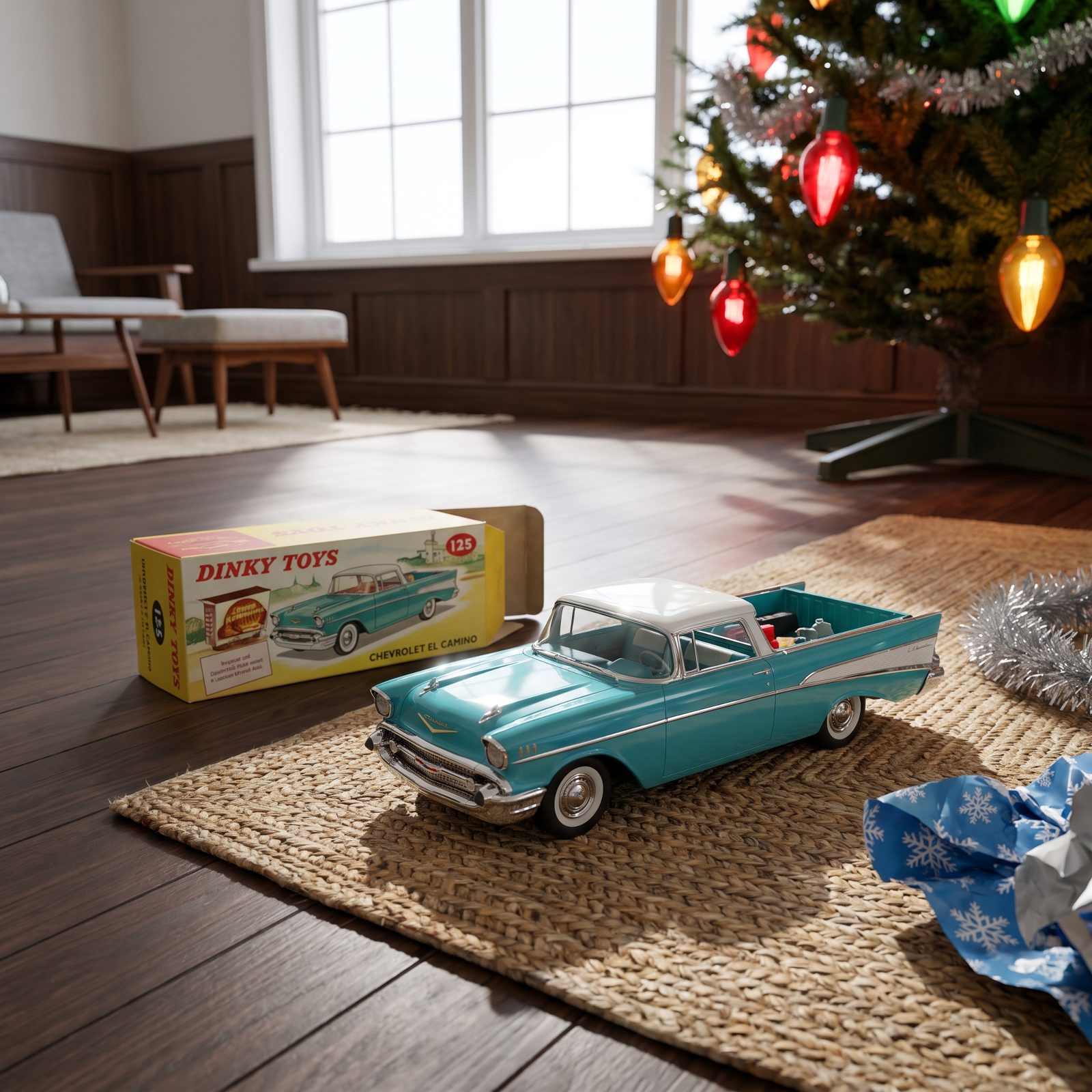
The El Camino confused you a little, and that was the appeal. Car up front, pickup bed out back, and Dinky captured every bit of that oddness in heavy die-cast.
Dinky was the old British name Corgi kept trying to dethrone, and their finishes had a heft and shine kids noticed even if they couldn’t say why. You’d load the bed with pencil erasers and haul them across the floor. What you remember most is the paint — that deep enamel two-tone that chipped at the corners the first week and never fully recovered.
23. Matchbox No. 5 London Bus
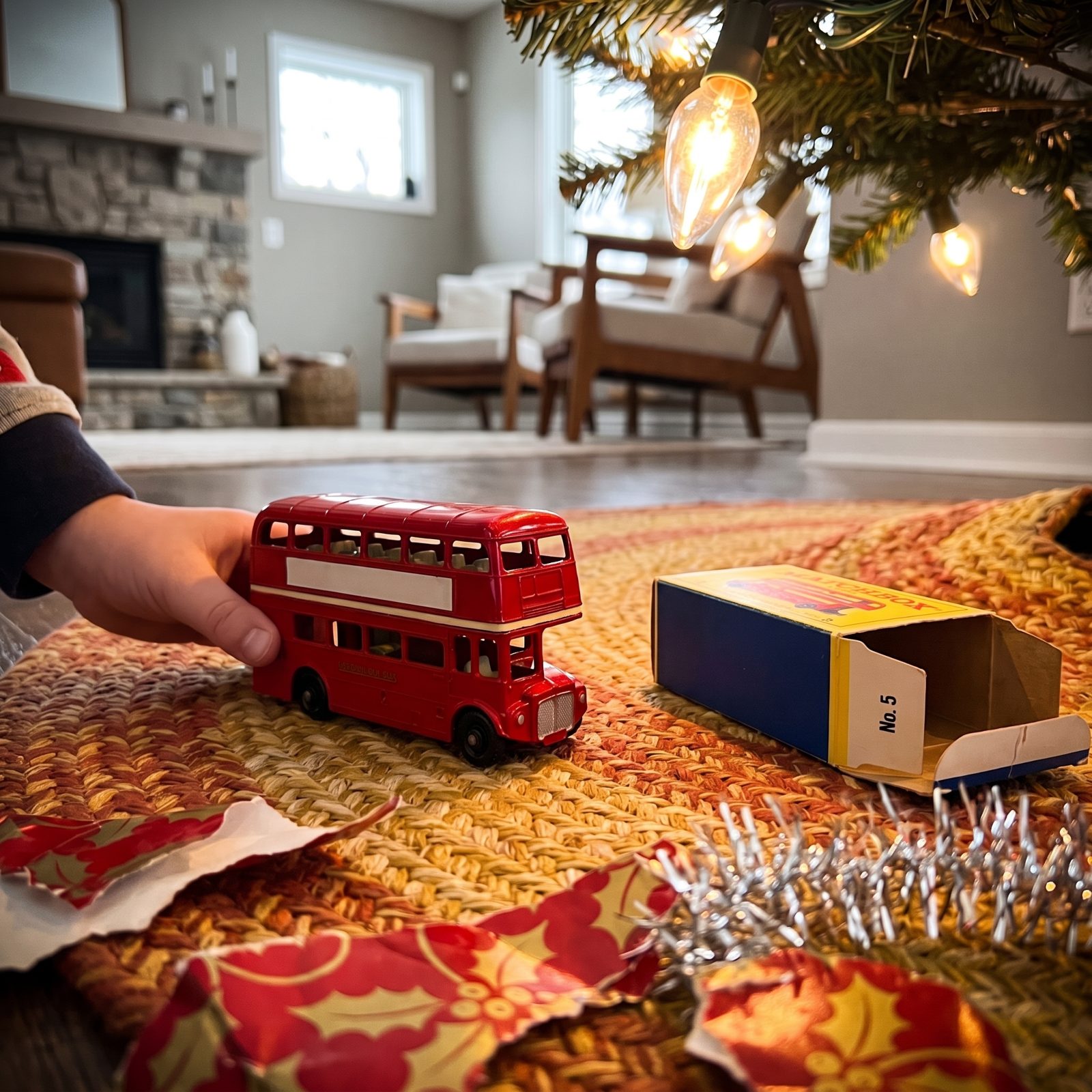
Every kid had one. The little red double-decker was the most common Matchbox on any bedroom floor in 1965, and somehow nobody ever got tired of it.
It rolled true, it stacked well against the wall, and the cream band down the side made it feel like a real thing from a real city most kids had never seen. Cheap enough to be a stocking filler, sturdy enough to survive being stepped on in the dark. You could lose it for two years and find it behind the radiator — still red, still ready.
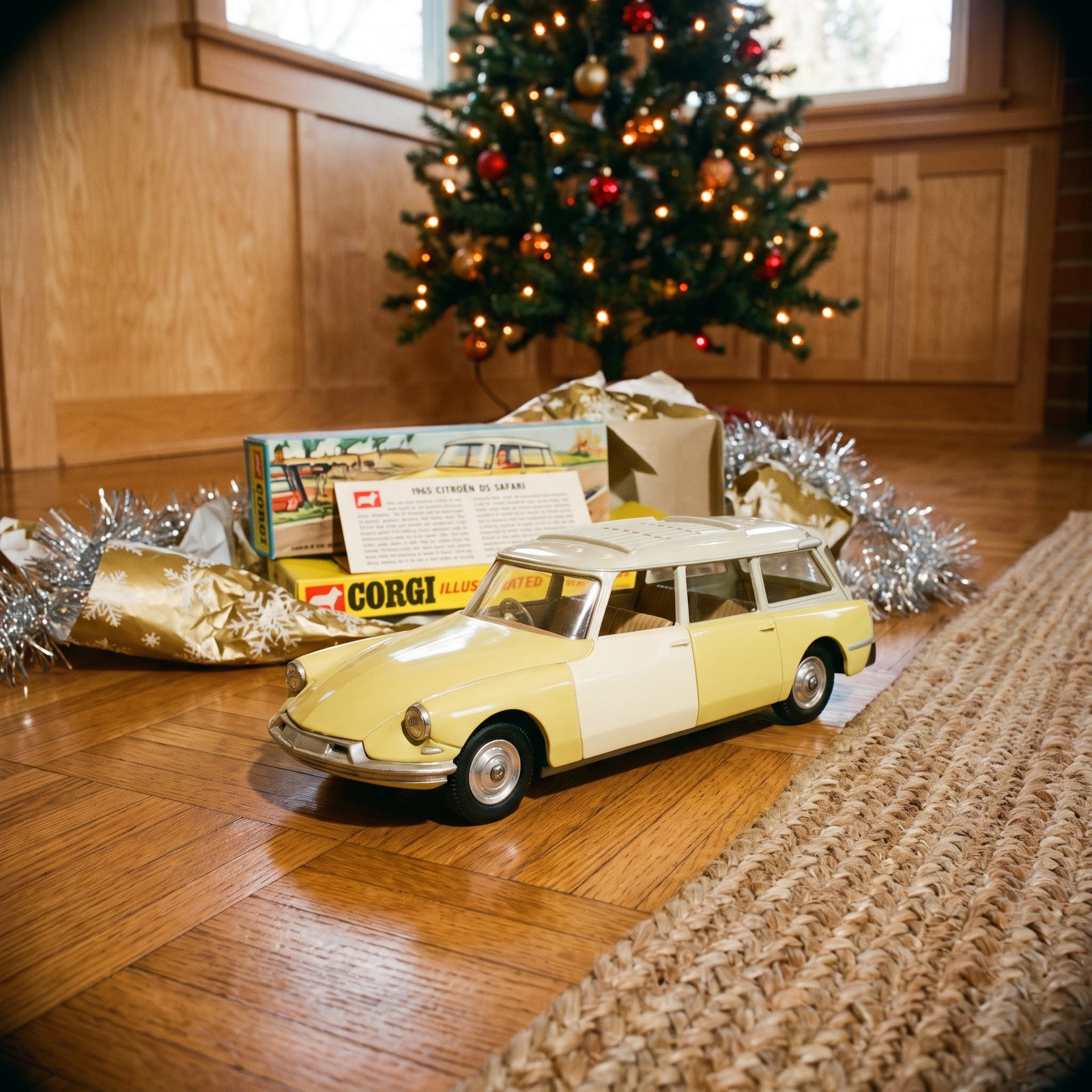
22. Corgi Citroën DS Safari
Would you like to save this?
The Citroën looked like nothing else in the box, and that was exactly why the right kid loved it.
Low, long, and swoopy where every other car was square, the DS Safari wagon marked you as a kid who noticed odd things. Corgi caught that strange French shape beautifully in die-cast. It wasn’t the popular pick, so if an aunt gave you one she probably grabbed it off the shelf blind. Lucky you. It cornered flat and looked ten years ahead of everything parked next to it under the tree.
21. MPC 1965 Pontiac GTO Model Kit
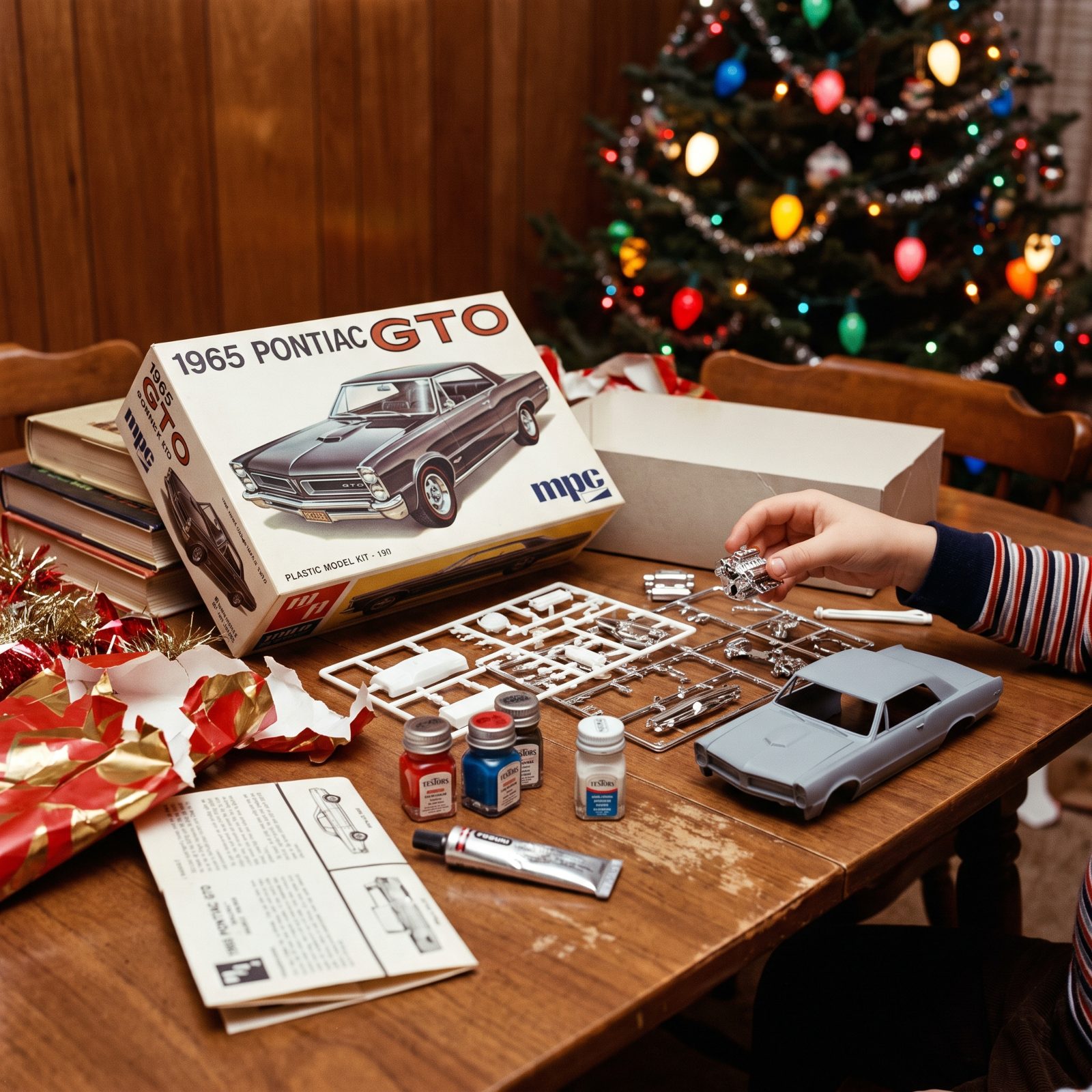
The GTO kit was for the older kid, the one who’d graduated from rolling cars to building them.
The real Goat lit the whole muscle-car fuse, and MPC put a scale version of it in a box for teenagers who couldn’t drive yet but sure could dream. You built the engine first — every little chrome piece — then wrestled the body over it and prayed it fit.
Half of these got painted metallic blue with a spray can in a cold garage, drips and all. The kid who finished one set it on his dresser and studied it every morning. It was the closest he’d get to the real thing for years, and it was enough.
20. The Matchbox No. 18 Caterpillar Bulldozer With the Yellow Body and Real Rubber Treads
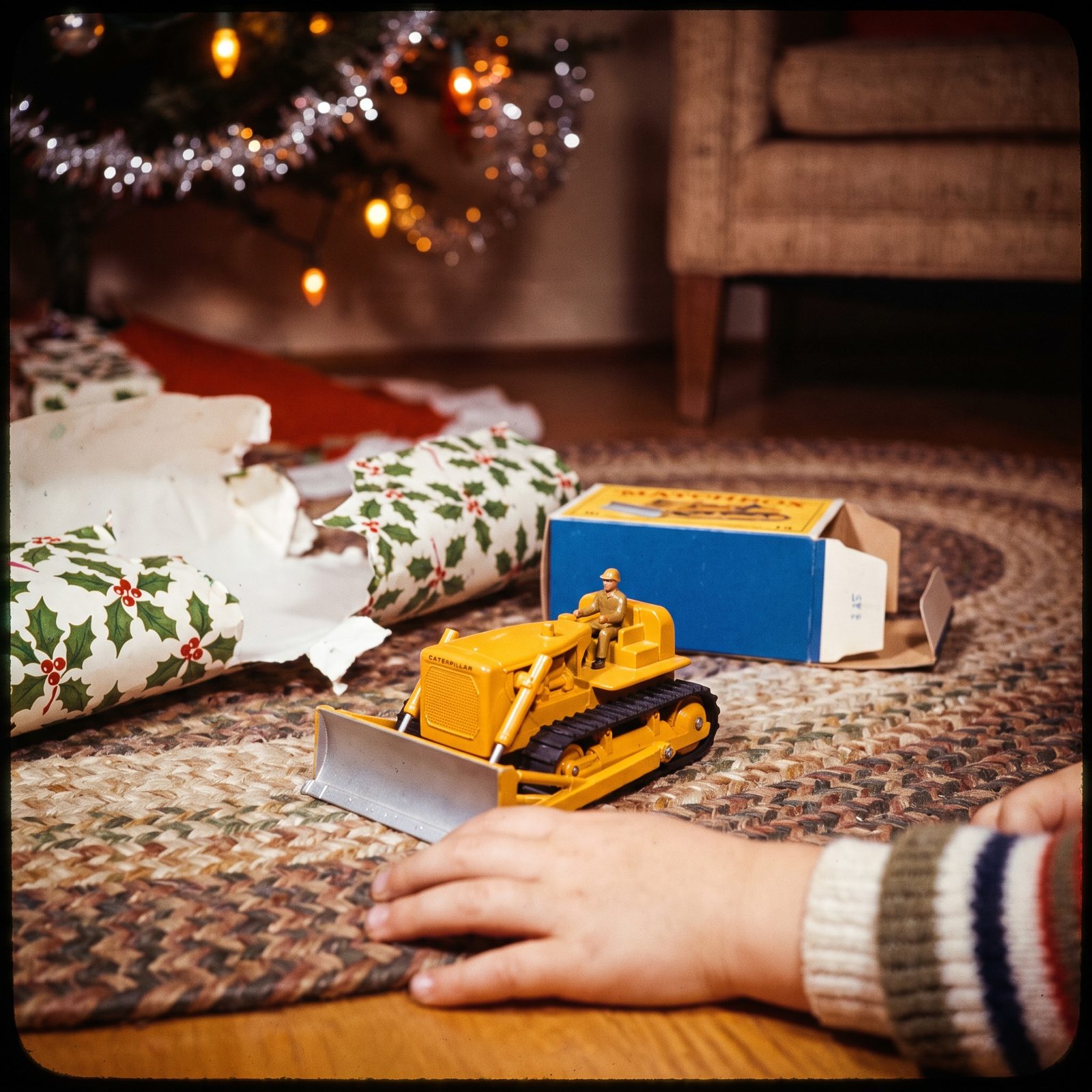
Every kid who got the No. 18 did the same thing within about four seconds of tearing the paper — dropped to the floor and pushed it across the rug, watching those little rubber treads pick up carpet lint and drag it along.
The blade actually raised and lowered on the later versions, which meant you could bulldoze a pile of torn wrapping paper into a heap and call it construction. The yellow paint chipped if you looked at it wrong, and half of us were missing the seated driver by New Year’s. Didn’t matter. This was the one you kept in your coat pocket to school.
19. The Dinky Toys Ford Zodiac in Two-Tone Paint With the Rolling Rubber Tires
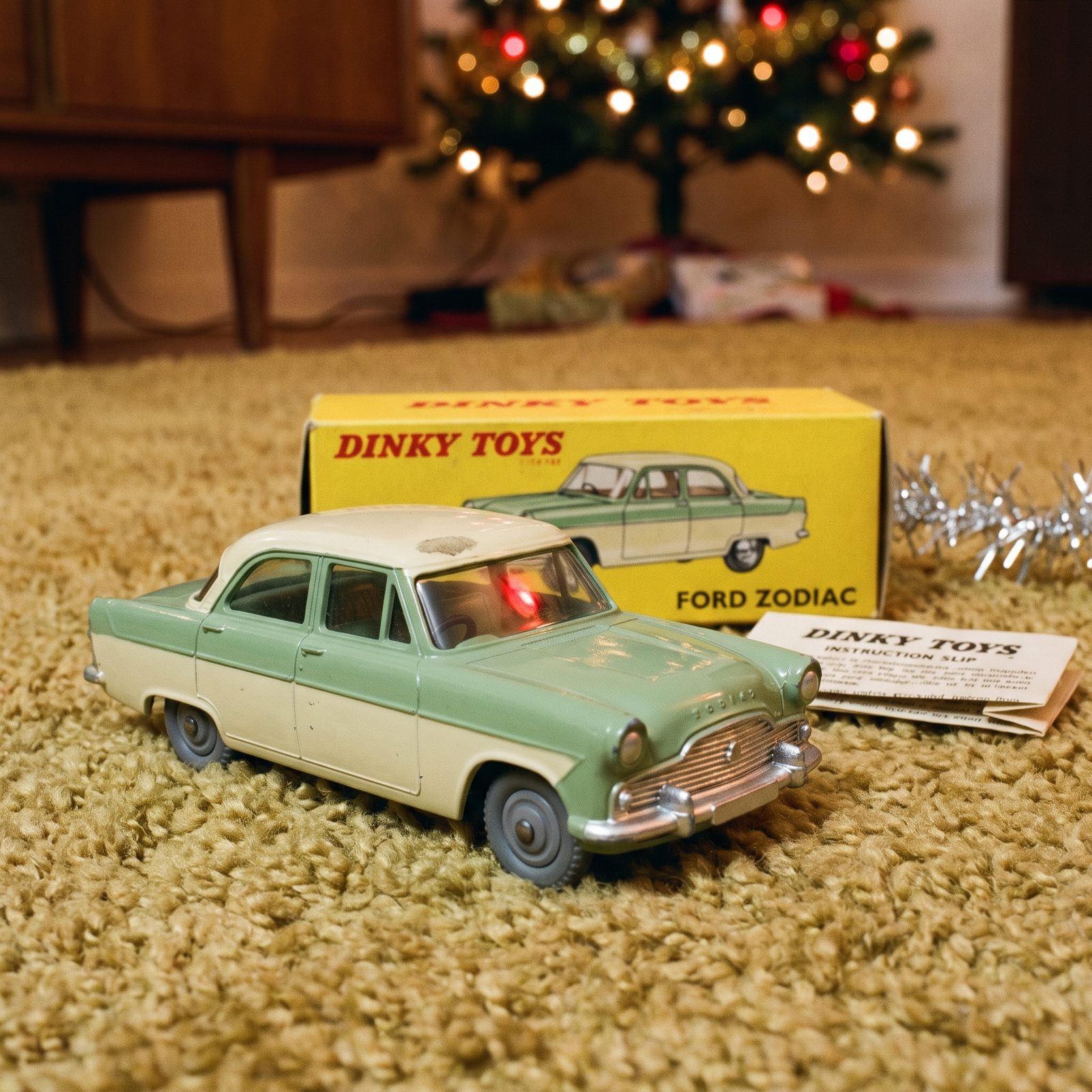
The Zodiac felt heavier than it looked, and that weight was the whole appeal — Dinky die-cast had a density to it, a real thunk when you set it down on a hardwood floor.
You rolled it across the kitchen linoleum just to hear the rubber tires hum. Cream over pale green made it look like a car a bank manager would drive, which is exactly why kids wanted the flashier ones instead. But somebody’s dad always steered the gift toward the Zodiac because it looked respectable. Decades on, a mint one in the box is worth more than the real car ever was per pound.
18. The Corgi Volkswagen 1200 Beetle With Windows You Could Actually See Through
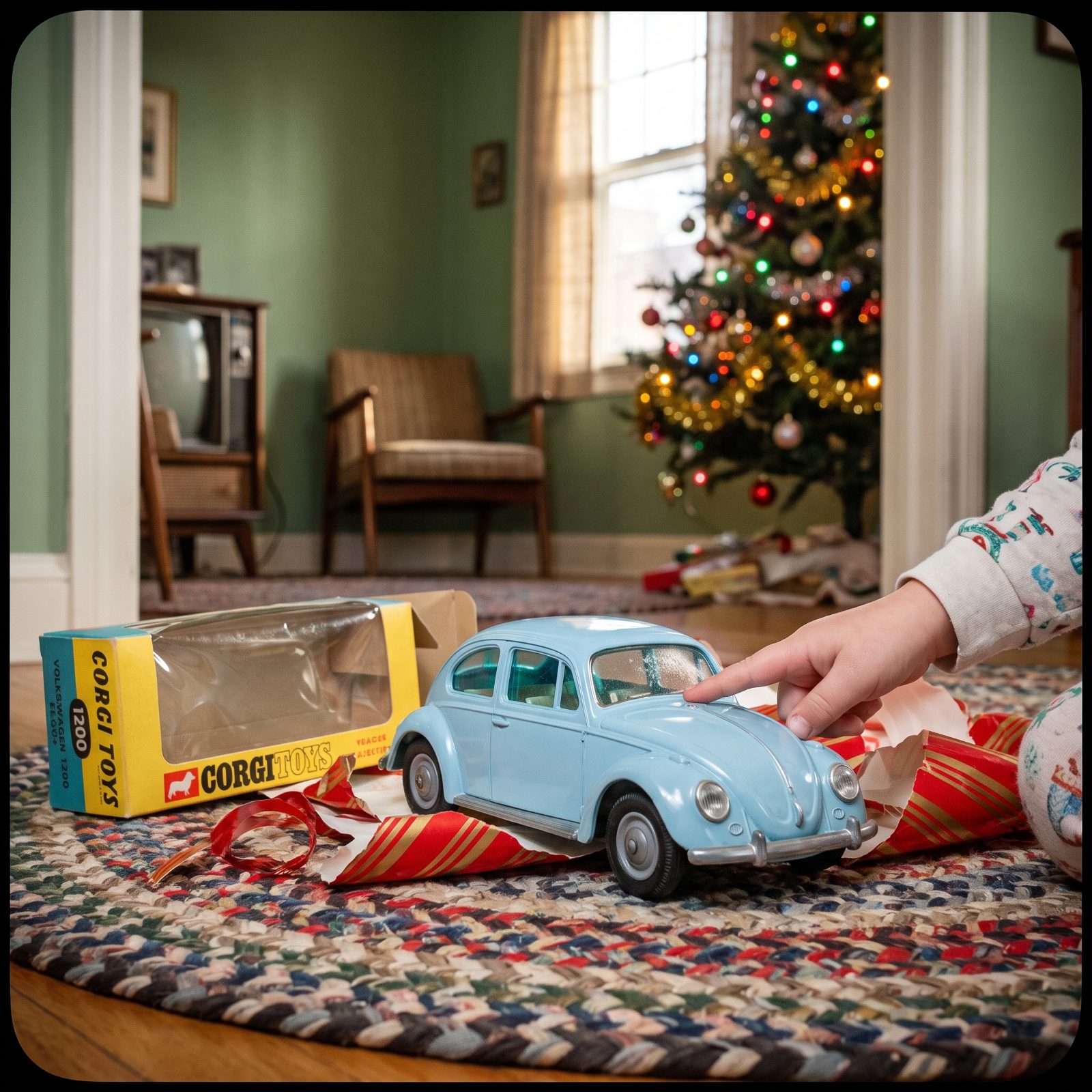
Corgi’s big trick was the windows, and it landed every time. Before clear plastic glazing, toy cars had painted-over blanks where the glass should be. The moment a kid held a Corgi up to the tree lights and could see straight through the cabin — that was the magic.
The 1200 Beetle had that friendly rounded shape you could palm in one hand. Those tiny opening features on some Corgis, hood and doors, never quite worked after the third slam. But the windows always did. This was the toy you set on the windowsill and looked into like it had a little world inside.
17. The Matchbox No. 44 Rolls-Royce Phantom V, the Fancy One You Weren’t Allowed to Lose
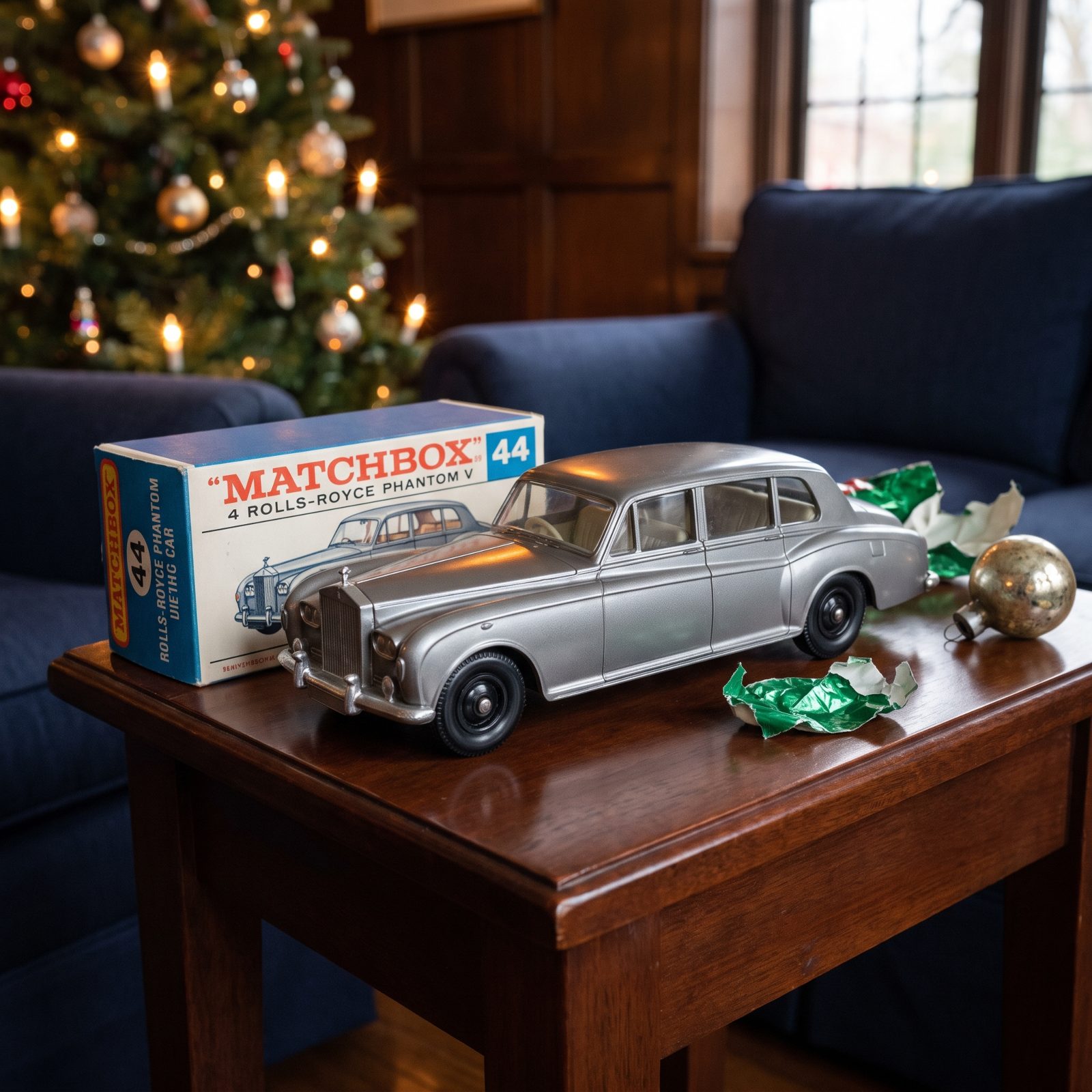
This was the grown-up gift. The Phantom V had a body long enough to feel important, a proper Rolls grille no bigger than a fingernail, and paint that caught the tree lights along its entire flank.
Parents handed you this one with a look. Don’t lose it under the couch. Don’t leave it in the yard. And you tried, you really did, and by February it was somewhere in the toy box with a bulldozer parked on its roof. The nicest Matchbox in the range, treated exactly like the rest of them — which is the honest fate of every toy a kid actually loves.
What Our Readers Say
- Chrome still wins people over: in Jalopy Talk readers’ votes, real cars with lots of chrome got hearts 89% of the time, versus 84% for the other images in the same articles.
From Jalopy Talk reader polls and votes.
16. The Corgi Chevrolet Corvair, the American Car That Snuck Into British Toy Boxes
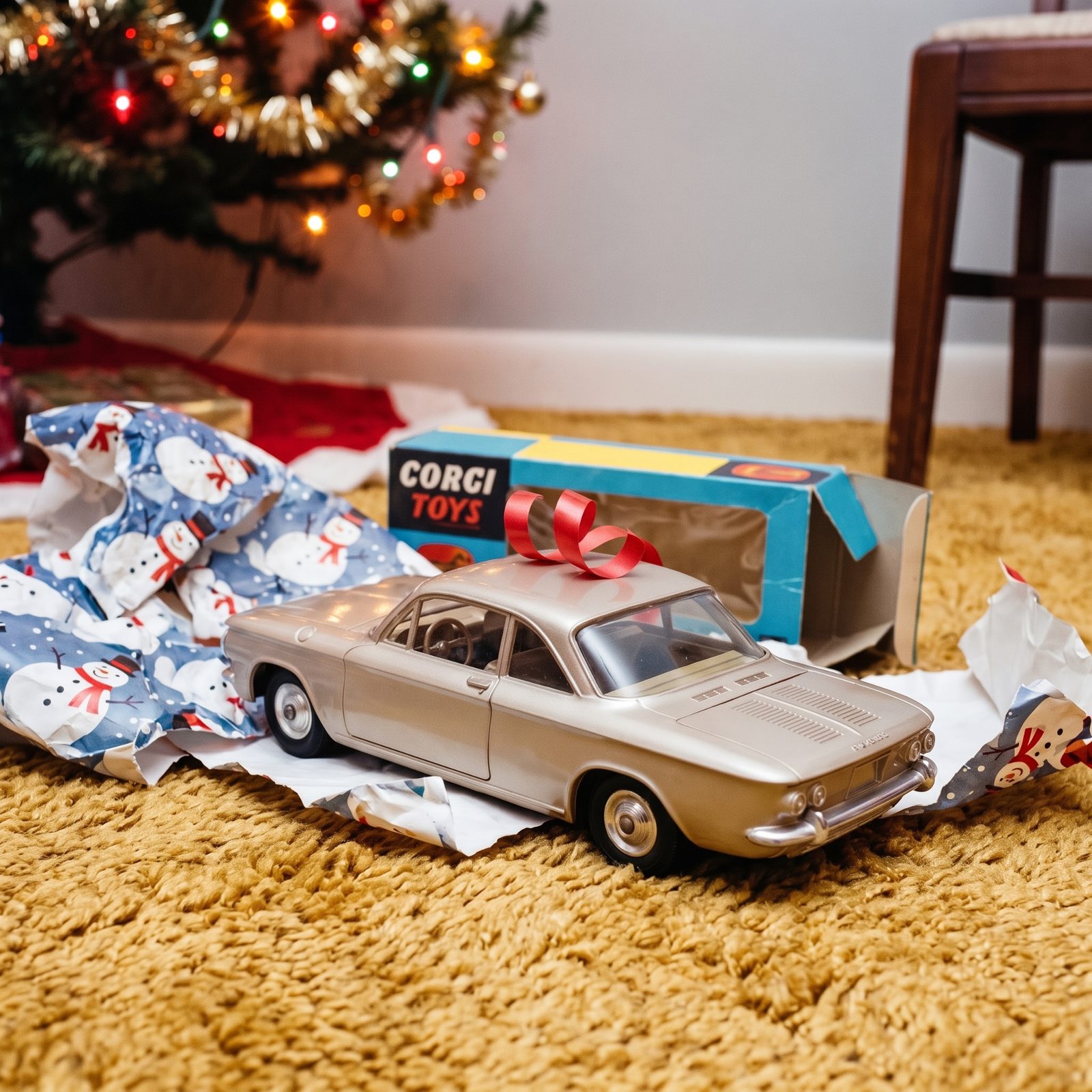
Funny thing about a British toy company casting an American compact. The Corvair felt exotic to English kids and utterly familiar to American ones, and both got a kick out of it.
The flat rear deck. The low wide stance nothing else in the box had. Corgi’s clear windows let you peer straight down into the interior, and you rolled it across the floor imagining a highway you’d only seen in magazines. A toy of a car that would later become famous for all the wrong reasons — but in December 1965 it was just a cool-looking American ride you got to own for a shilling or two.
15. The Revell Shelby Cobra Model Kit With the Glue That Got Everywhere
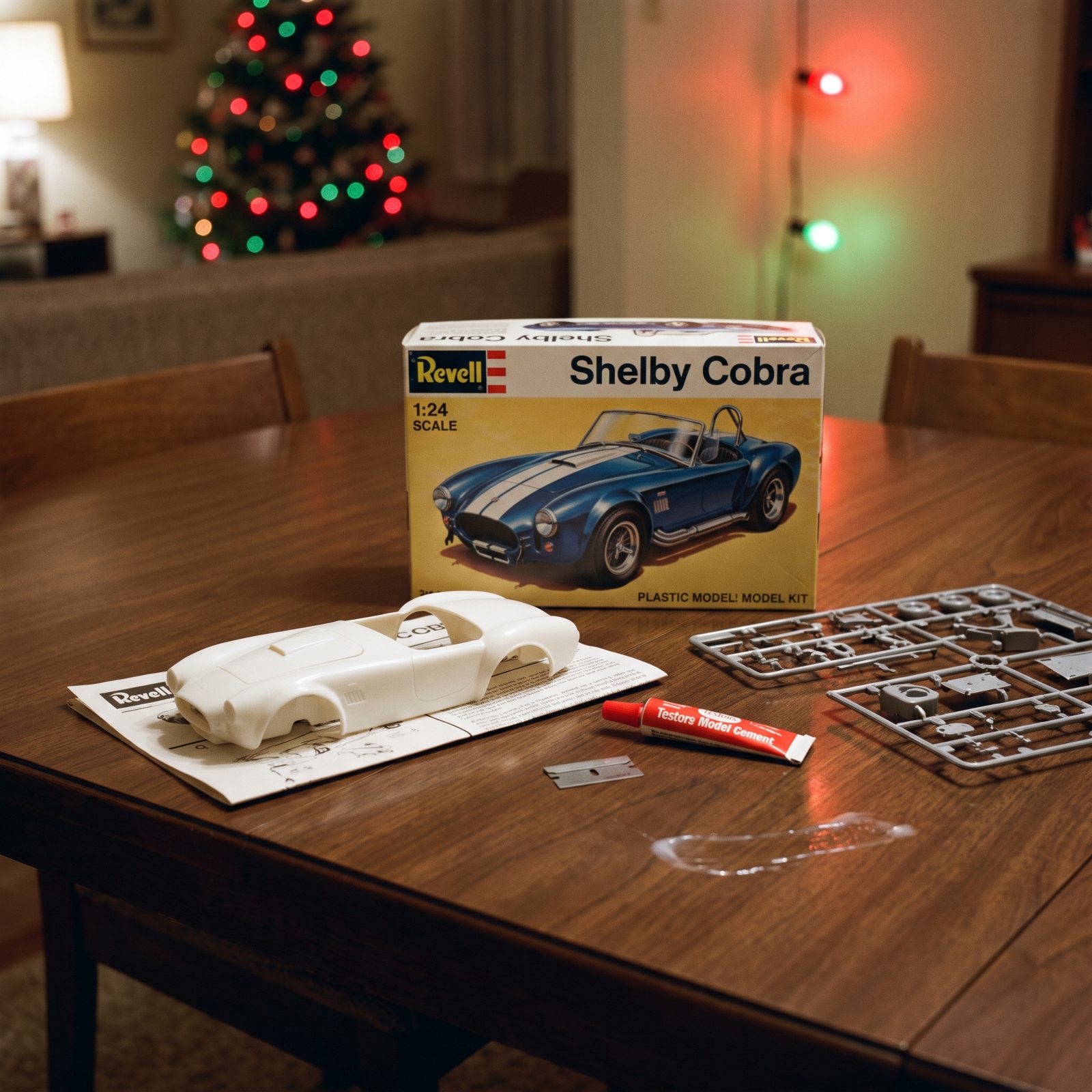
The Cobra kit separated the patient kids from the rest of us. Revell’s box art alone — that low blue roadster with the racing stripes — was worth the price.
Then you opened it Christmas afternoon, spread the sprues across the kitchen table, and learned the hard way that model cement bonds skin about as well as plastic. Glue on the clear windshield. A thumbprint in the paint. The finished Cobra never looked like the box, and it didn’t matter one bit, because you built it, and it sat on your dresser as proof.
A model kit was the rare Christmas gift that took days to finish. The gift kept giving, one fumbled part at a time.
14. The Dinky Toys Cadillac Eldorado, the Land Yacht That Filled Both Your Hands
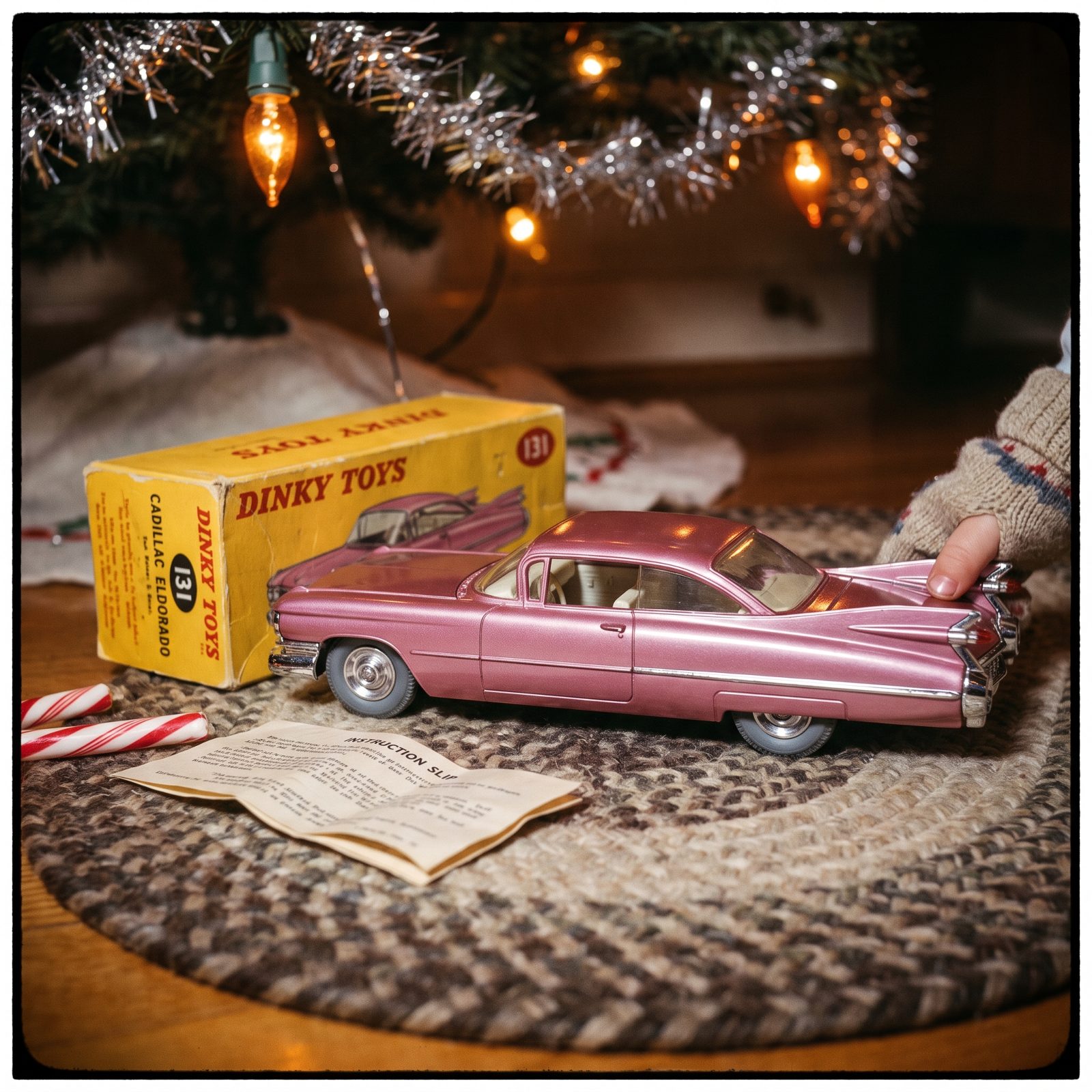
Big. That was the point of the Eldorado — the toy that made every other car in the box look like it skipped a meal.
The tail fins alone. Chrome running the whole length of the body. You needed two hands to really appreciate it, and there was something satisfying about the sheer heft of Dinky’s die-cast on a car this size. It rolled slow and heavy across the floor like the real thing must have rolled down a boulevard somewhere far away. Aspiration in miniature, and every kid who got one understood exactly what it was saying.
Today, our readers still have a soft spot for the full-size originals: photos of land yachts got more hearts than the other images in the same articles, 87% versus 79%.
13. The Matchbox No. 53 Mercedes-Benz 220SE Coupe in That Cherry Red Finish
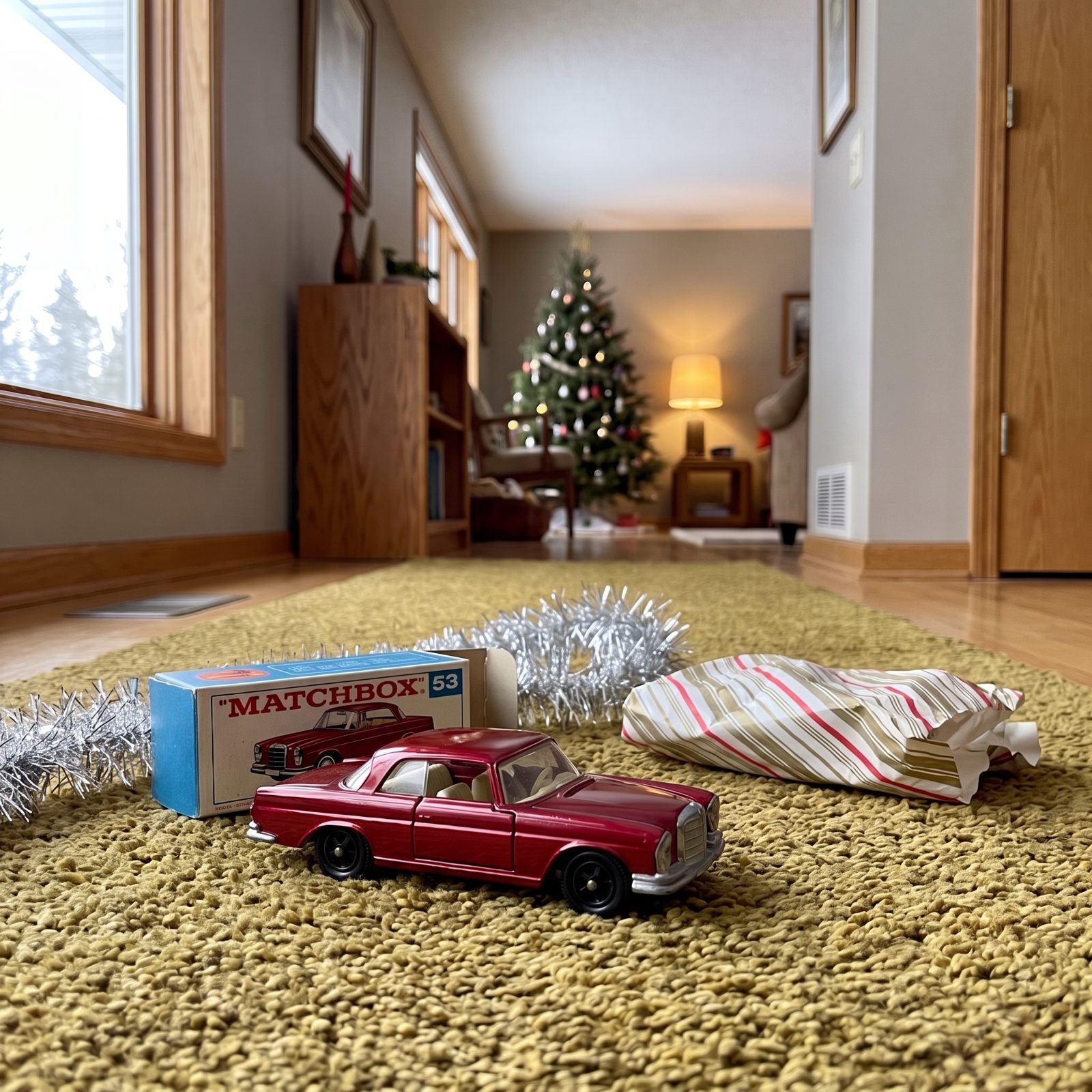
The 220SE looked expensive out of all proportion to its price. That cherry red finish, glossy enough to reflect the tree lights, made it the standout in a lineup of gray saloons and yellow diggers.
European coupe lines, clean and low, a chrome grille the size of a postage stamp. Matchbox got the shape right, which mattered to the kids who cared about that sort of thing — and there were more of us than adults ever realized. This was the little car you parked at the front of the shelf so everybody saw it first.
12. The Aurora Aston Martin DB4 Model Kit Every Bond-Obsessed Kid Wanted
Would you like to save this?
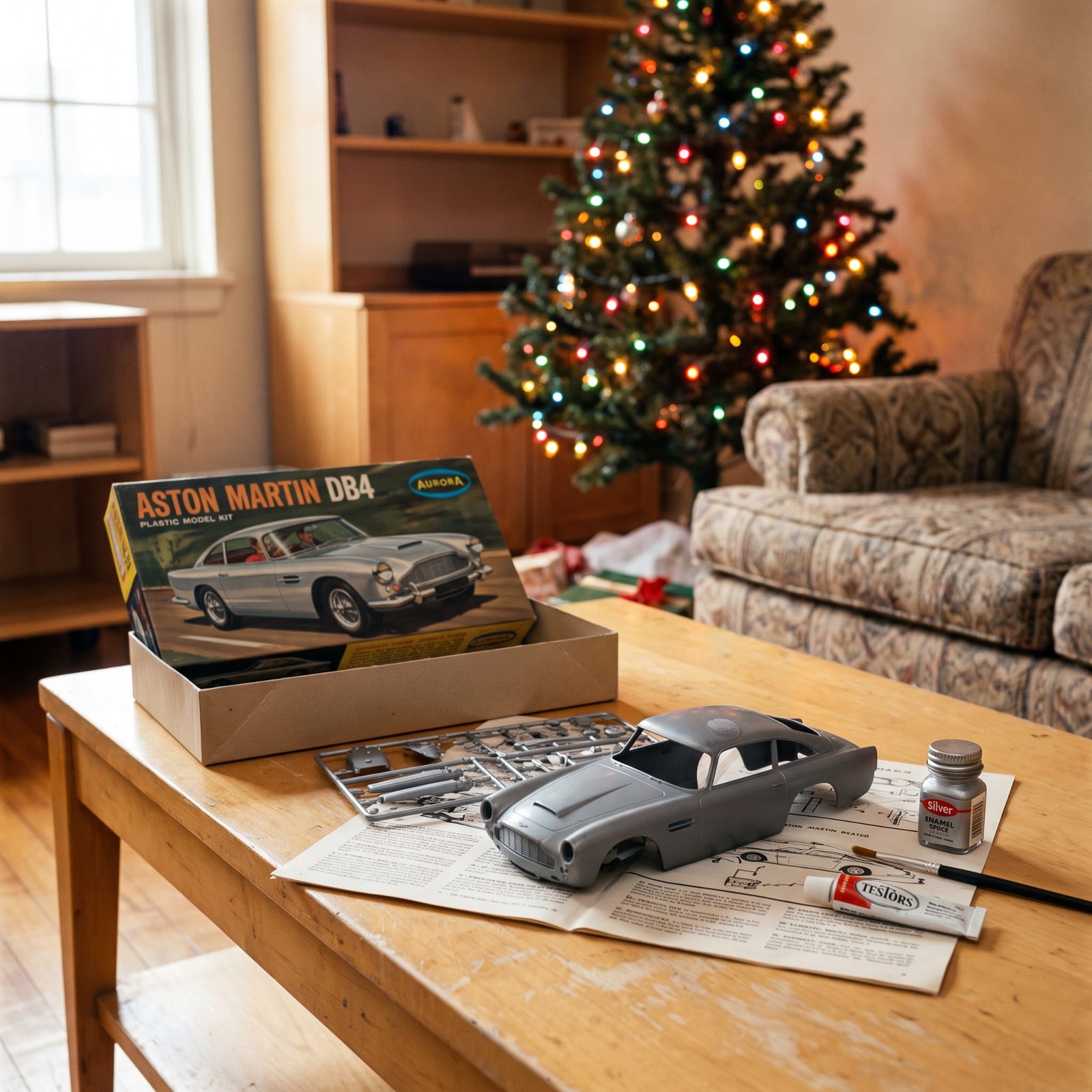
Two words did all the work here: James Bond. The Aston Martin DB4 landed on wish lists because a kid had seen one, or its cousin the DB5, up on a movie screen and lost his mind.
Aurora’s kit gave you the silver coupe you couldn’t stop thinking about, minus the ejector seat — though plenty of us tried to imagine one in. The build took patience most of us didn’t have, and the silver enamel never went on as smooth as the box promised. Still, holding the finished DB4, even a lumpy glue-fingered version of it, made you feel like you’d built a secret agent’s car in your own kitchen.
11. The Matchbox No. 52 B.R.M. Racing Car, the Little Green Rocket for the Living Room Floor
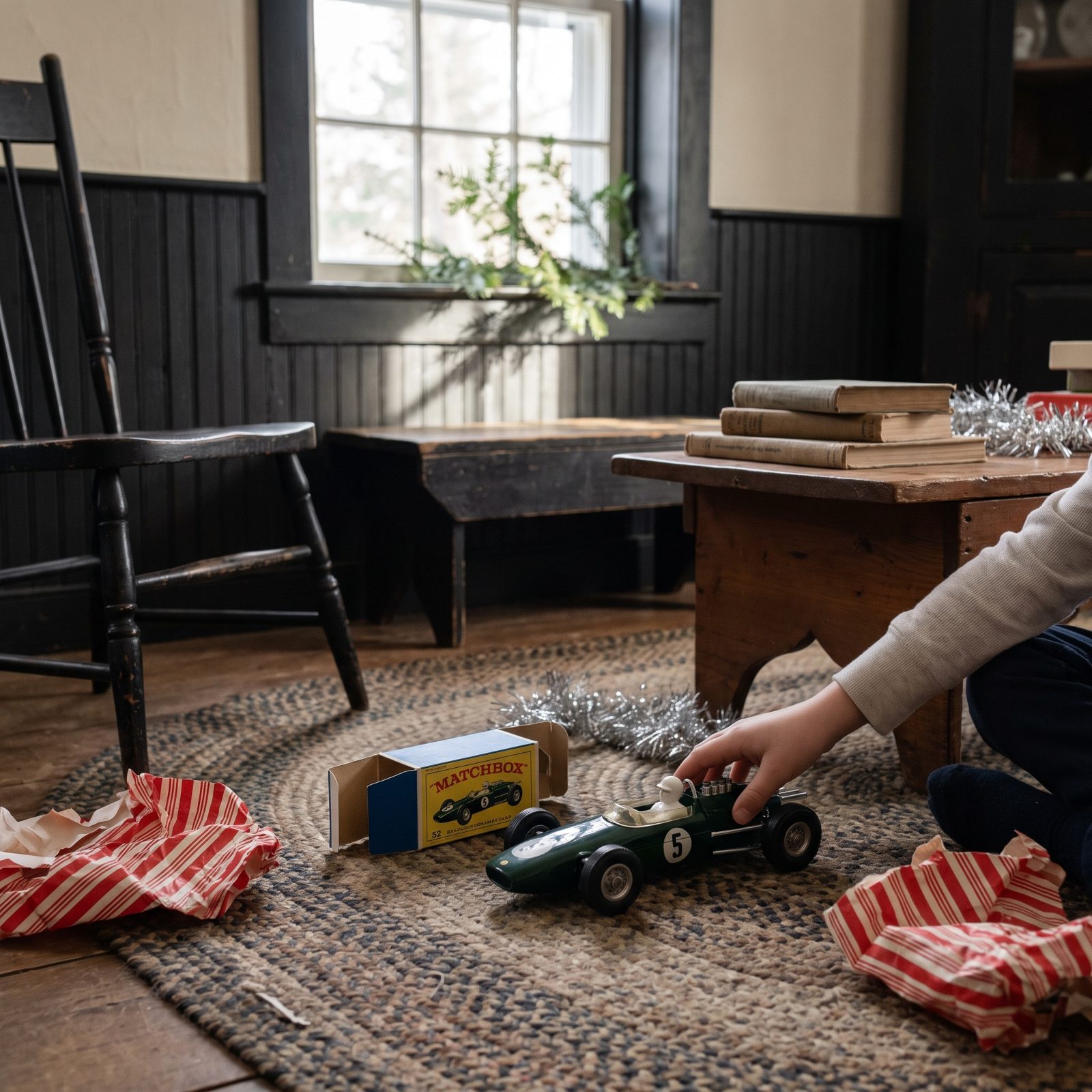
Low, green, and built to be pushed hard across a hardwood floor until it slammed into the baseboard. The B.R.M. racer was the one you got on your belly for.
Open wheels, a tiny driver hunched in the cockpit, a number decal on the nose that made it feel like it had somewhere to be. You’d line it up against a friend’s racer, count to three, and shove them both across the room to see whose hit the wall first. Simple game. Never got old.
Half the fun of a die-cast Christmas was that the racing started the same morning the paper came off. No batteries, no setup — just a kid, a floor, and a little green car that went exactly as fast as you could throw it.
10. The AMT 1965 Chevrolet Impala Model Kit With the Three-in-One Building Options
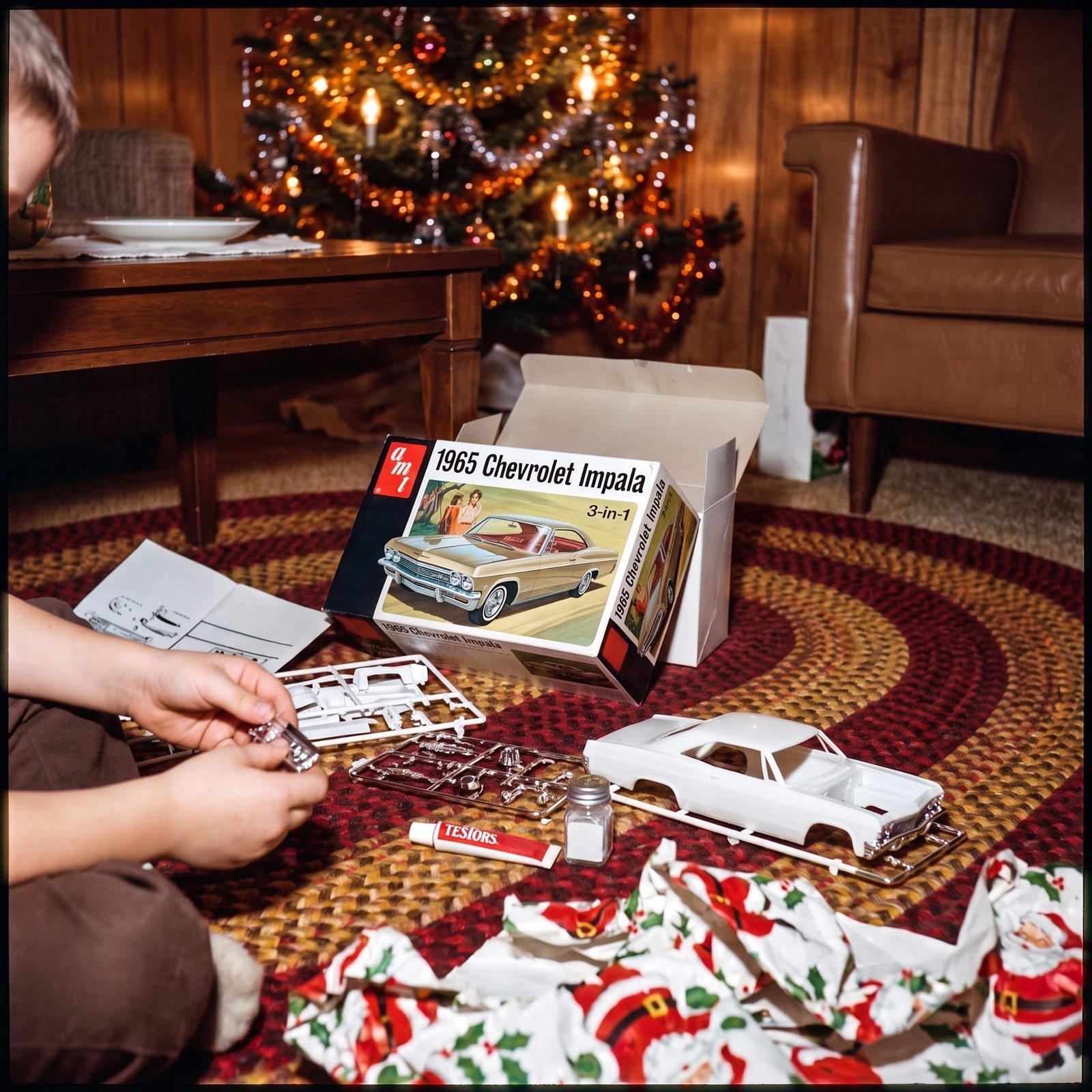
Every kid who got the AMT Impala knew the smell before the box was even open: styrene and enamel and that faint banana-oil bite of the glue. You’d spread the sprues across the instruction sheet and try to figure out which of the three versions you were brave enough to build.
That was the hook — stock, custom, or competition, all from one box. Build it showroom-clean, or chop the top and drop it to the ground. Most kids ruined the first one with too much glue and a thumbprint sunk in the wet paint, then got smart on the second.
9. The Dinky Toys Volkswagen Karmann Ghia in Its Little Yellow Box
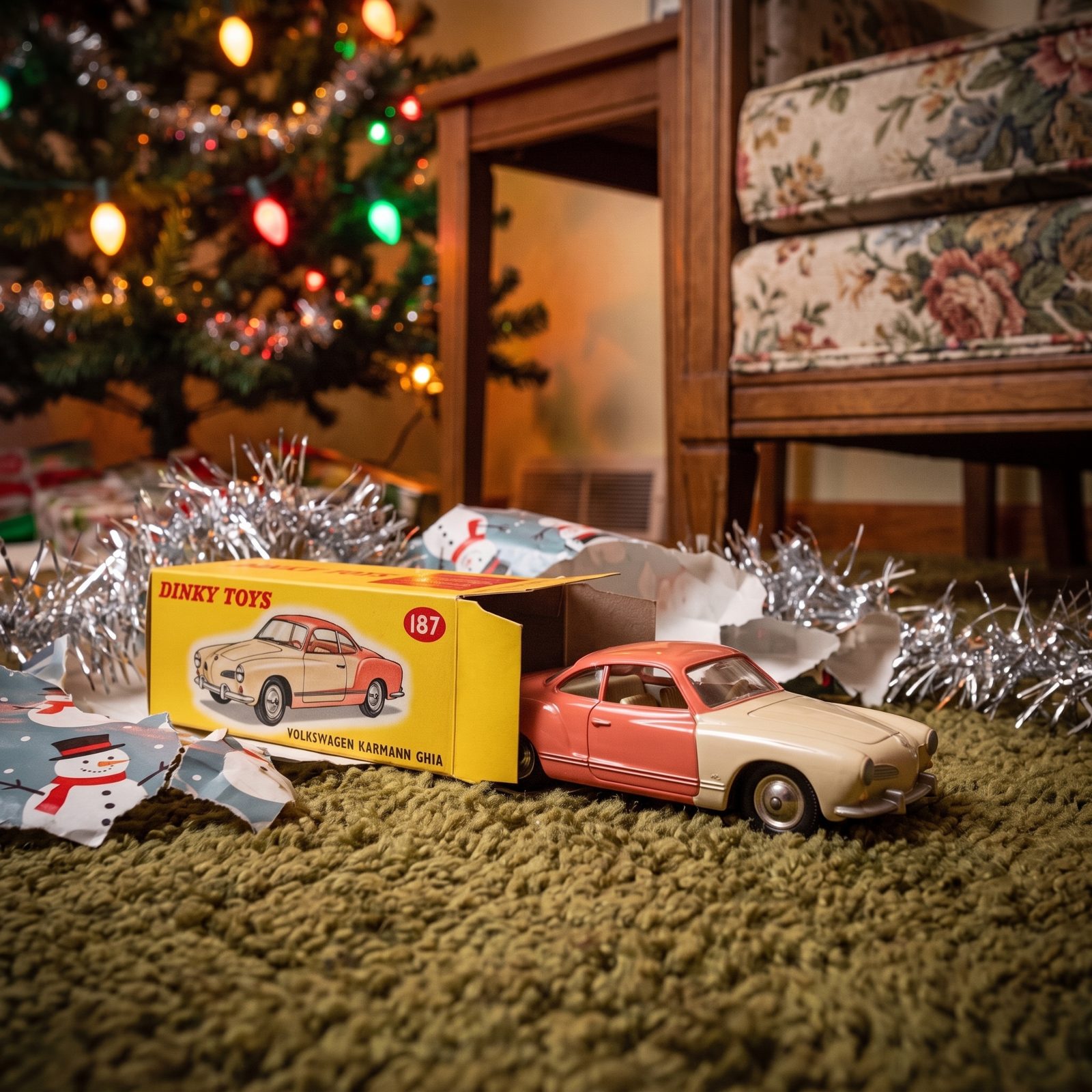
The Karmann Ghia was the pretty one. Not fast, not flashy, just a smooth little shape that looked like it cost more than it did — which was exactly the trick Volkswagen was pulling in real life too.
Dinky nailed the curves. You’d run your thumb along the roofline and feel how the metal swept down to the tail, heavier than the Matchbox stuff and cold in your palm on a December morning. No friction motor, no opening doors. It just sat there being handsome, and a nine-year-old understood that instantly.
8. The Matchbox No. 68 Mercedes Coach That Fit in a Coat Pocket
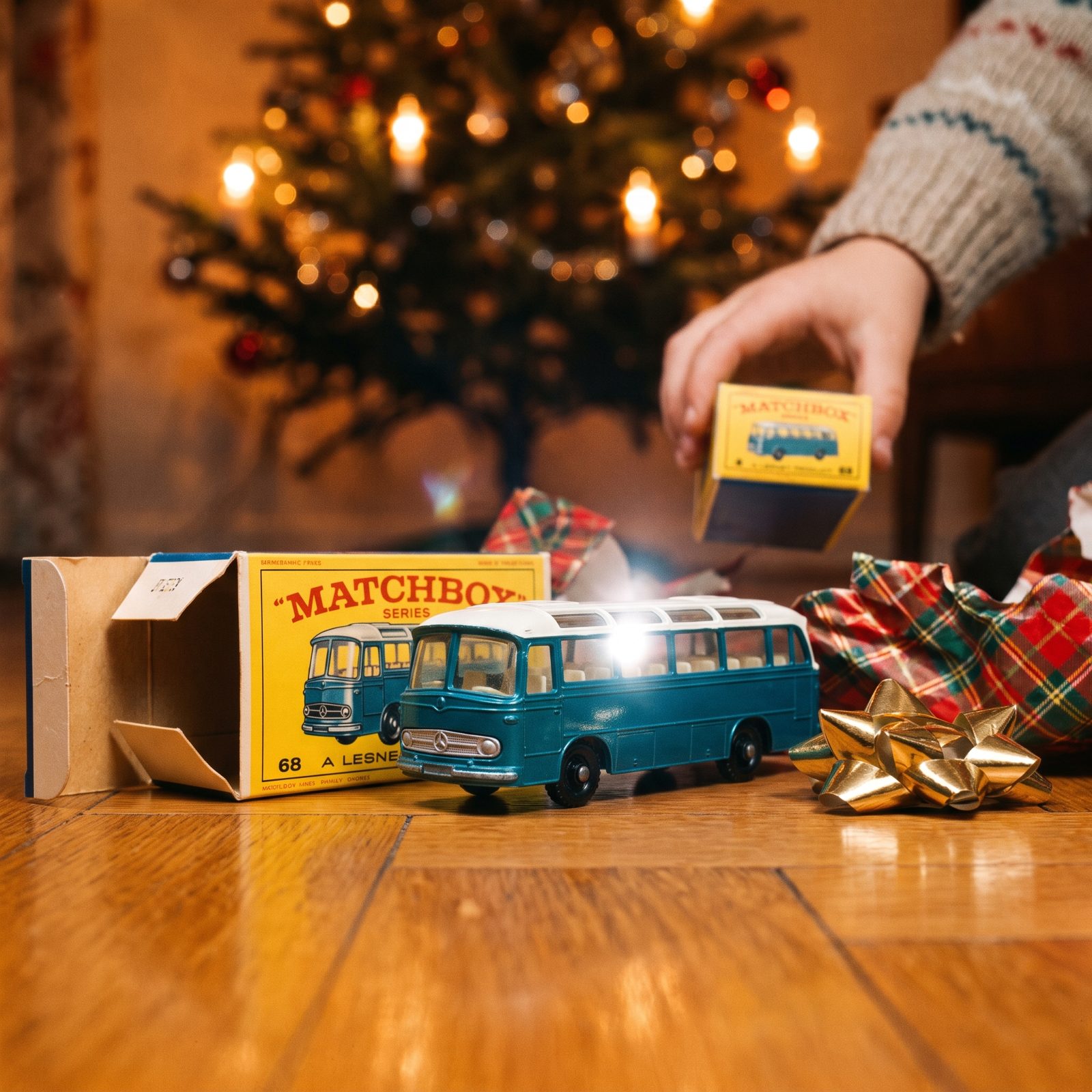
Matchbox knew what it was doing with the coach. Buses looked bigger than they were, so for the same price you felt like you got more car in your fist.
The No. 68 came in that turquoise you never saw on a real vehicle, which somehow made it better. Line it up nose-to-tail with the rest of your fleet and it always anchored the back — the big rig of a pint-sized traffic jam on the kitchen linoleum.
7. The Matchbox No. 70 Grit-Spreading Truck Nobody Asked For But Everybody Kept
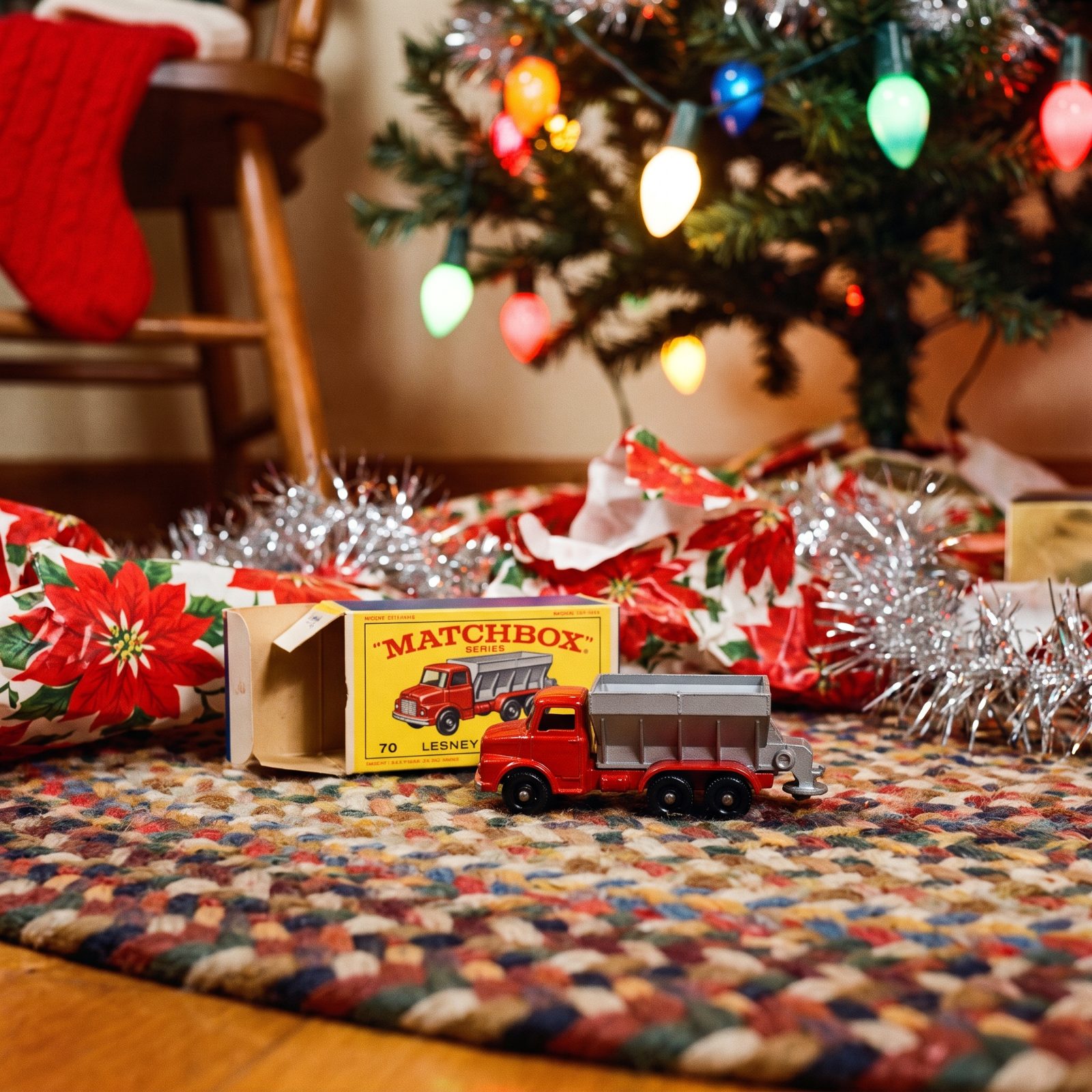
A truck that spread grit on winter roads. About the least glamorous job in the whole toy-vehicle world. And yet the darn thing had a hold on you.
The little spreader disc at the back actually turned when you rolled it, and that was enough. You’d push it across the floor watching that tiny mechanism spin, imagining you were salting the driveway before your dad had to. Odd gift, honest little machine — it outlasted half the sports cars in the shoebox fleet.
6. The Matchbox No. 75 Ferrari Berlinetta, the Speed Demon of the Shoebox
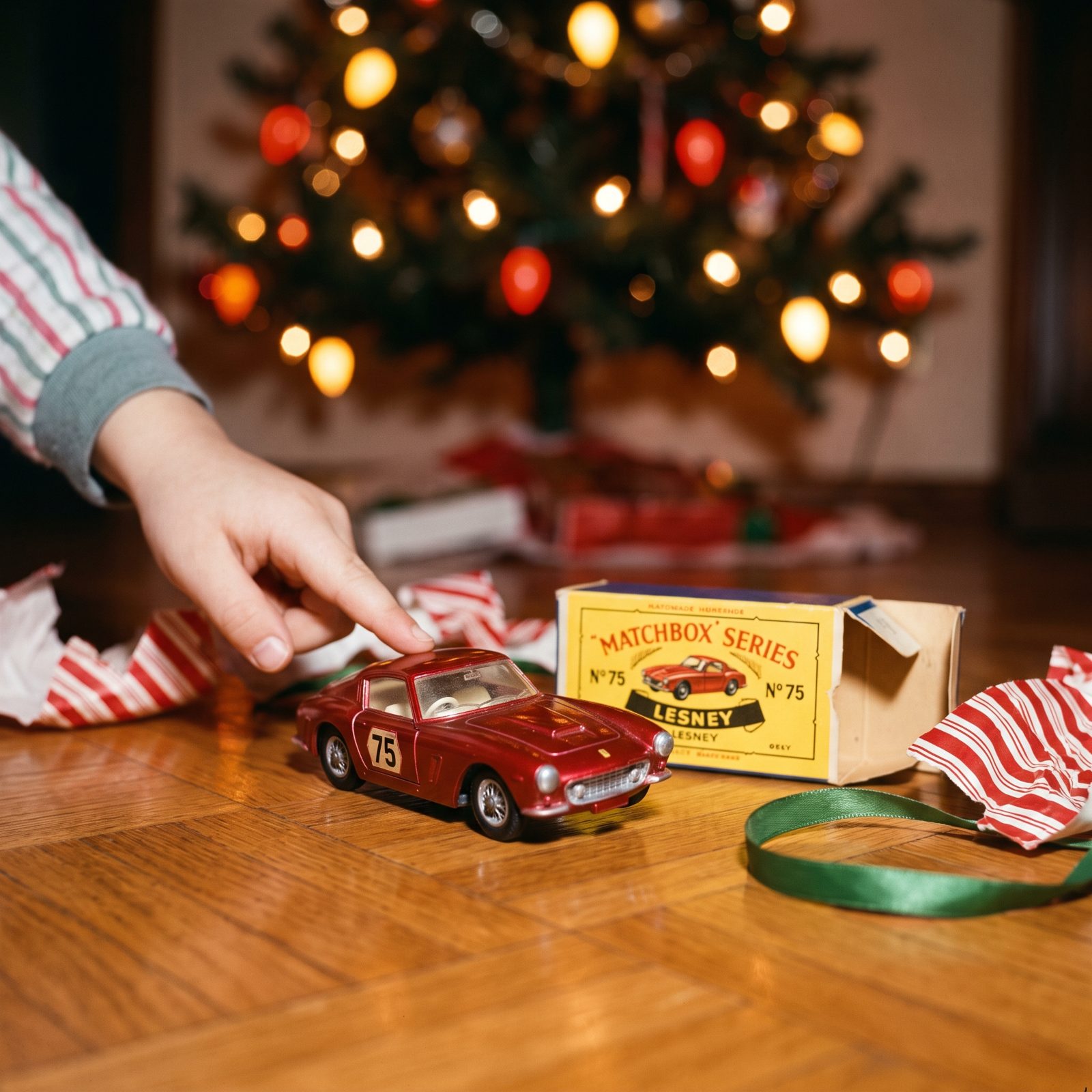
Every fleet needed a fast one, and the No. 75 Ferrari was it — low, red, mean around the nose, the car you saved for the last run down the hallway when you wanted something to fly.
Physics didn’t care that it was two inches long. You’d get it going on the linoleum, let go, and watch it skitter under the couch, where it lived for a week until somebody vacuumed. Half the reason Matchbox cars turned up years later behind the furniture was this exact car. Always the one you launched too hard.
5. The Matchbox No. 64 M.G. 1100 With the Tiny Driver and Dog Inside
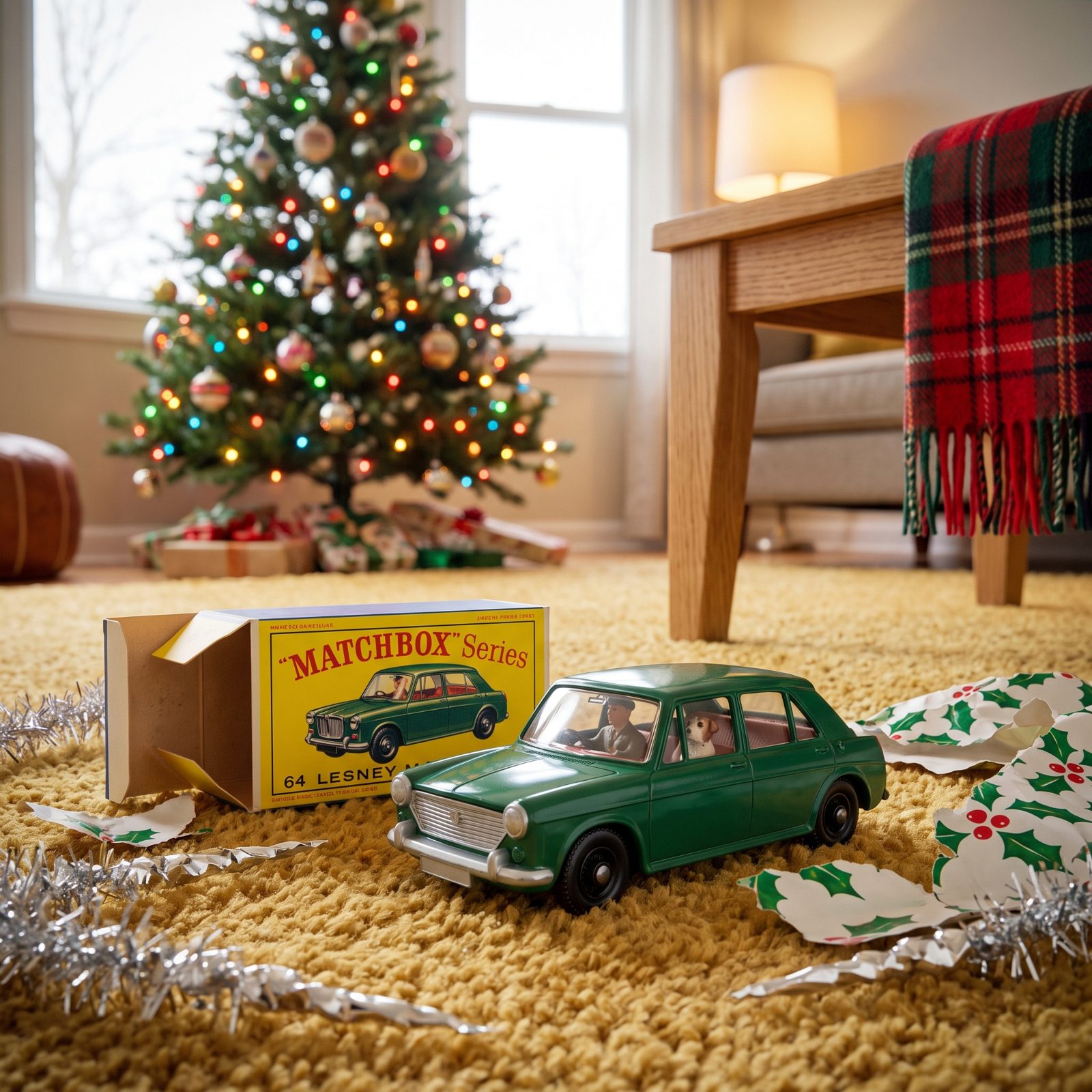
The detail everybody remembers is the little figure inside. Peer through the clear windows of the No. 64 and there sat a molded driver, sometimes with a dog riding shotgun — a passenger nobody expected in a car that small.
That’s what made it precious. It felt inhabited. In real life the M.G. 1100 was a humble economy sedan, nothing you’d write home about, but Matchbox slipped a soul the size of a raisin inside it. Kids noticed. Kids always noticed the small hidden thing an adult would have walked right past.
4. The Monogram Big Deuce Hot-Rod Kit That Taught a Generation to Paint
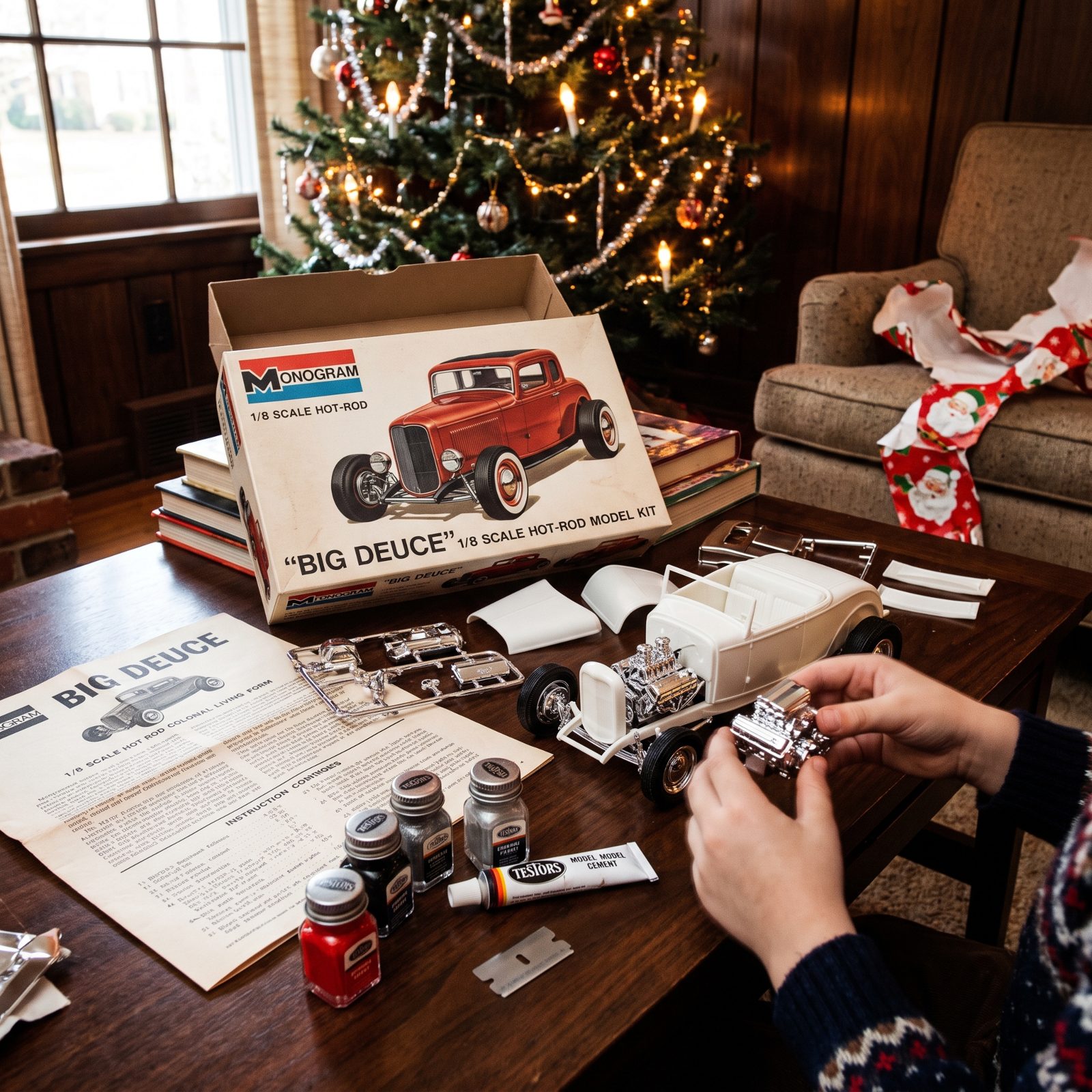
The Big Deuce was a rite of passage. A ’32 Ford hot rod with a chromed engine you could actually see, fat rear tires, and enough parts to keep a kid busy from the day after Christmas straight through New Year’s.
This is where a lot of us learned that model glue does not come off skin easily, and that a thumbprint in wet chrome enamel is forever. Monogram’s kits ran heavier and finer than the rest — you learned patience or you learned frustration, and either way you learned something.
3. The Strombecker 1/32-Scale Road-Racing Set and the Hum of the Transformer
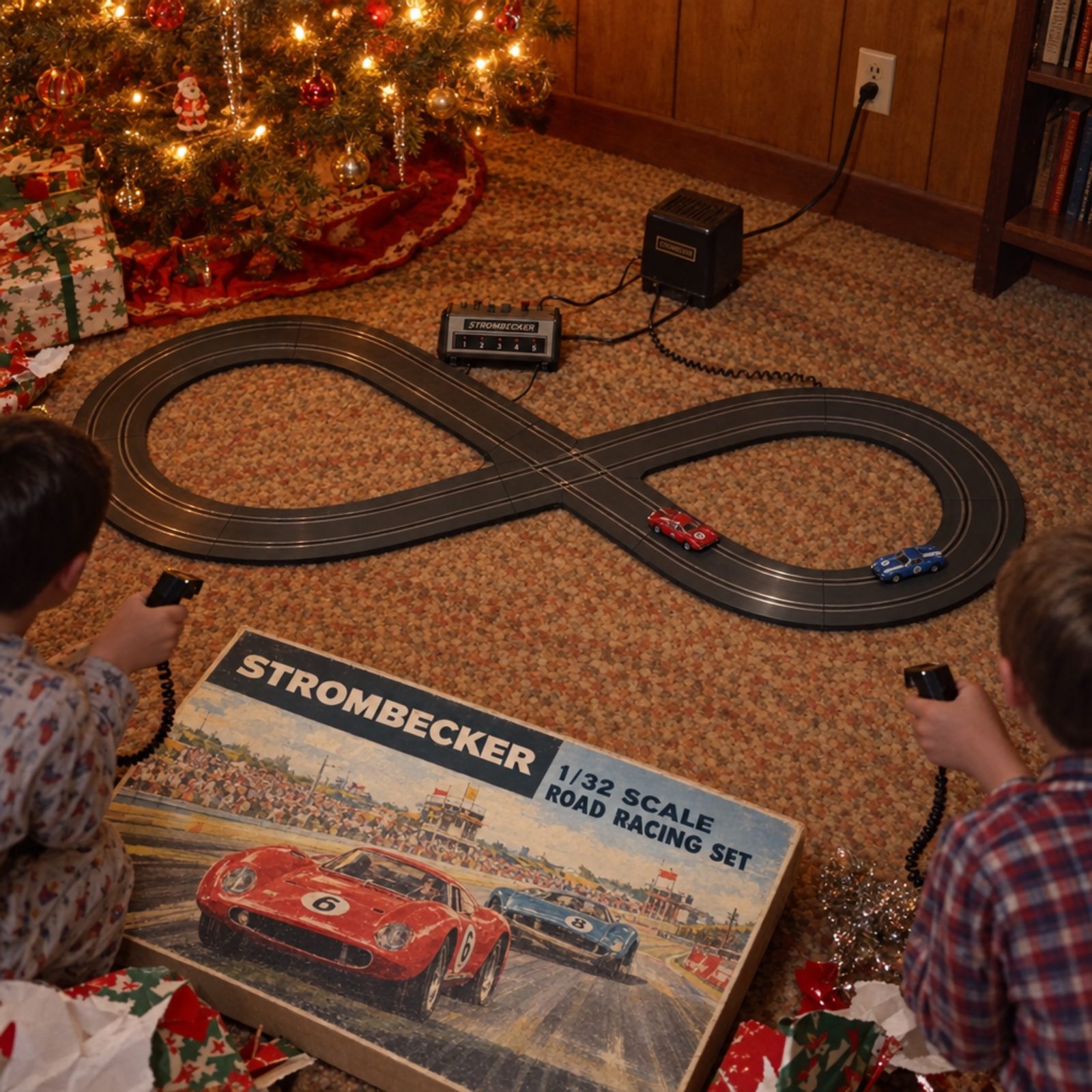
You heard it before you saw it. That low electric hum off the transformer, then the whine of the little motors as two cars screamed around a figure-eight laid out on the den carpet.
Strombecker’s 1/32 sets were the good stuff. Squeeze the trigger too hard on the corner and your car flew off the track and vanished under the tree; feather it just right and you took the turn clean while your brother’s car spun out. Slot racing was the video game of its day, and the whole family ended up on the floor before noon. Nobody planned that. It just happened, every single time.
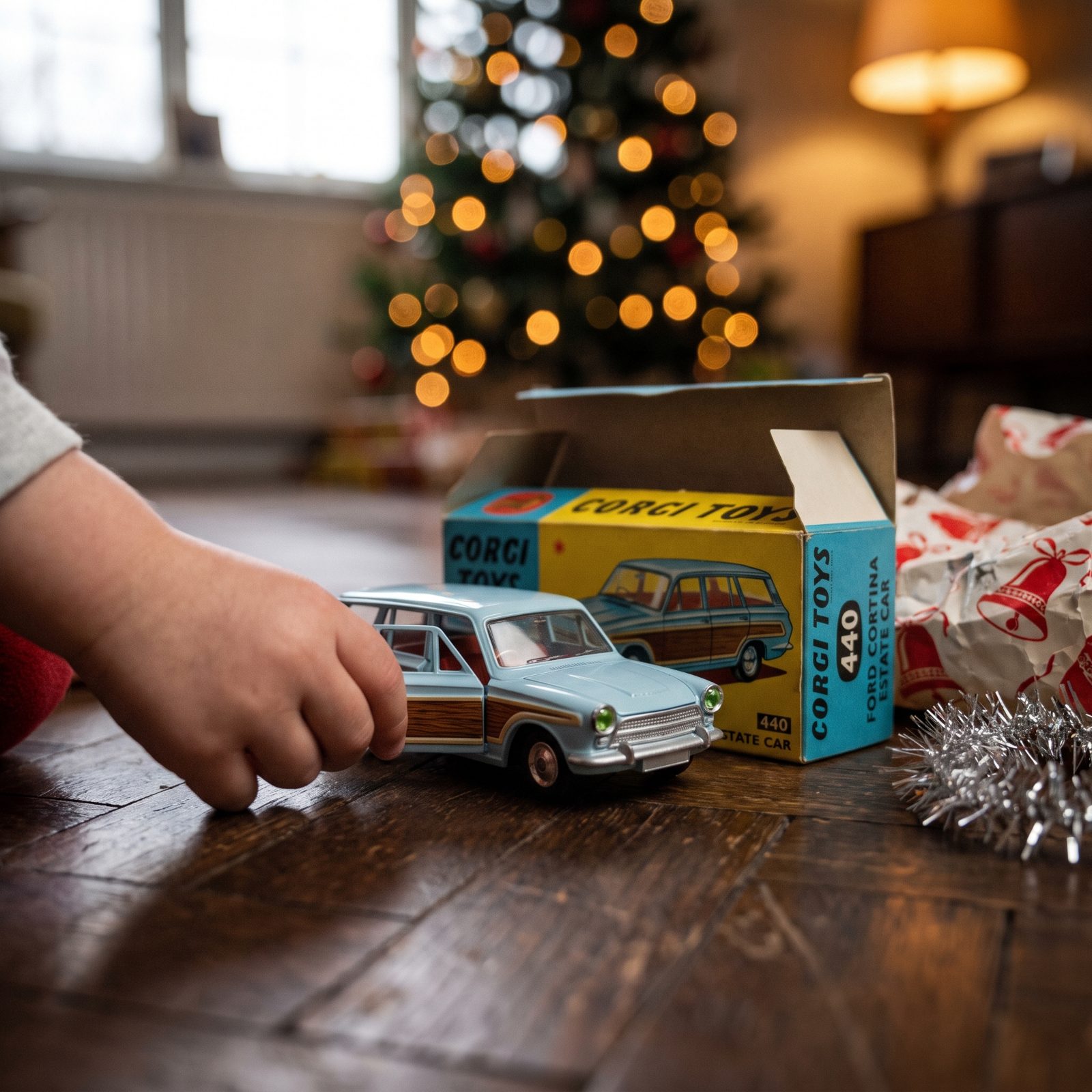
2. The Corgi Ford Consul Cortina Estate With Working Doors and a Wood-Grain Flank
Would you like to save this?
Corgi’s whole pitch was the moving parts, and the Cortina Estate delivered. Doors that opened. A tailgate that dropped. Windows you could see clean through, and that wood-grain print down the flank that made it a proper family wagon in miniature.
Kids obsessed over the doors, opening and closing them until the tiny hinges wore loose from loading imaginary luggage for a trip across the rug. Corgi cost more than Matchbox, so one under the tree meant somebody had splurged. You knew it. You took care of it — for about a week.
The real-life wagons have aged well too, since station wagons got hearts 88% of the time from Jalopy Talk readers, compared with 83% for the other cars pictured alongside them.
1. The Marx Tinplate Friction-Powered Sedan, Loud, Bright, and Built Like a Tank
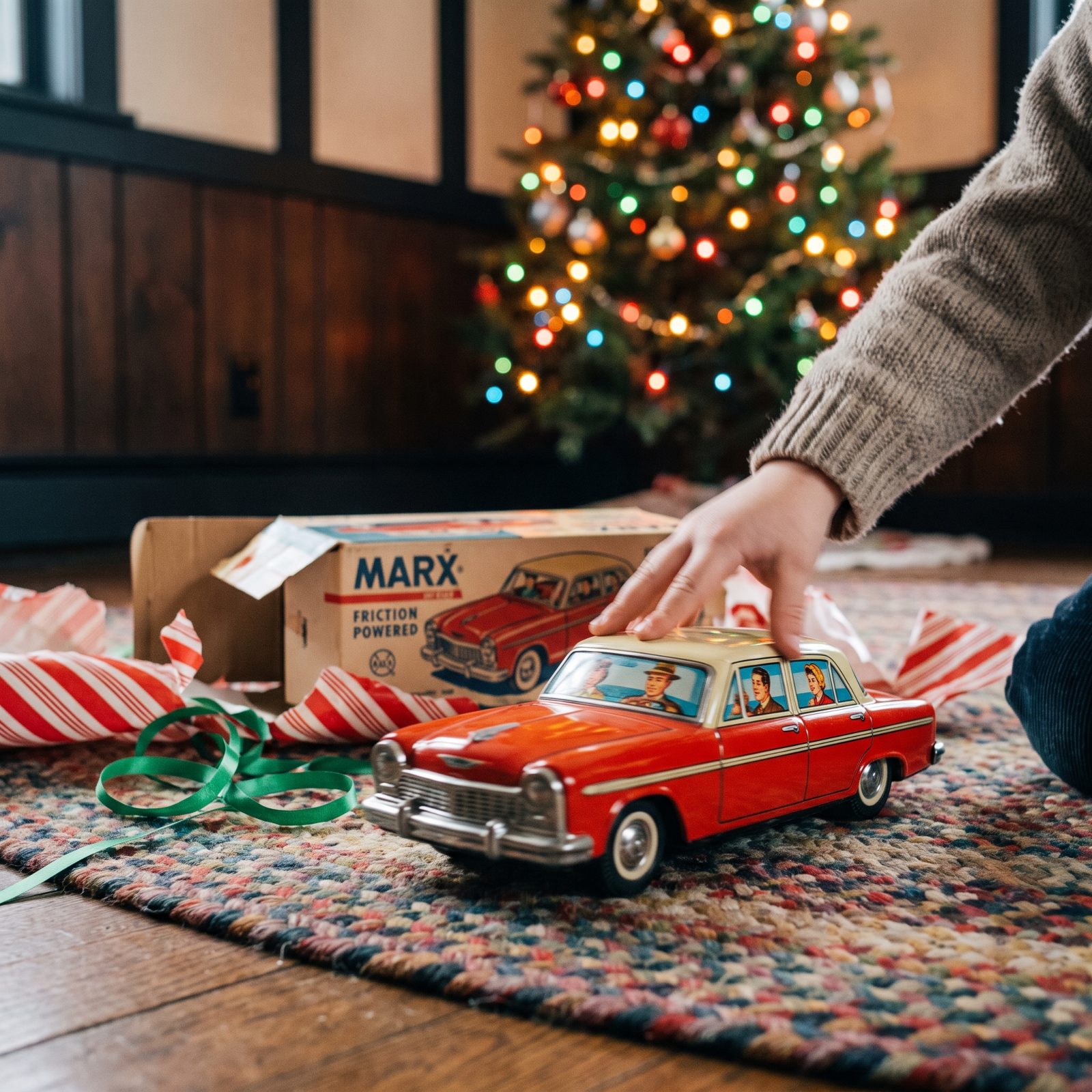
The Marx sedan didn’t whisper. You’d press it down hard, run it forward three times to wind the flywheel, then let it go and it roared across the linoleum with that unmistakable metallic zzzzt.
Pressed steel and litho tin, printed with windows and passengers right on the metal. Heavier than they looked, sharp on the edges if you weren’t careful, and nearly impossible to break — a kid could slam it into the baseboard all morning and it just kept going.
Louis Marx built toys to survive childhood, not a collector’s shelf. That’s why the ones that made it to adulthood are dented and scratched and worth hanging onto anyway.